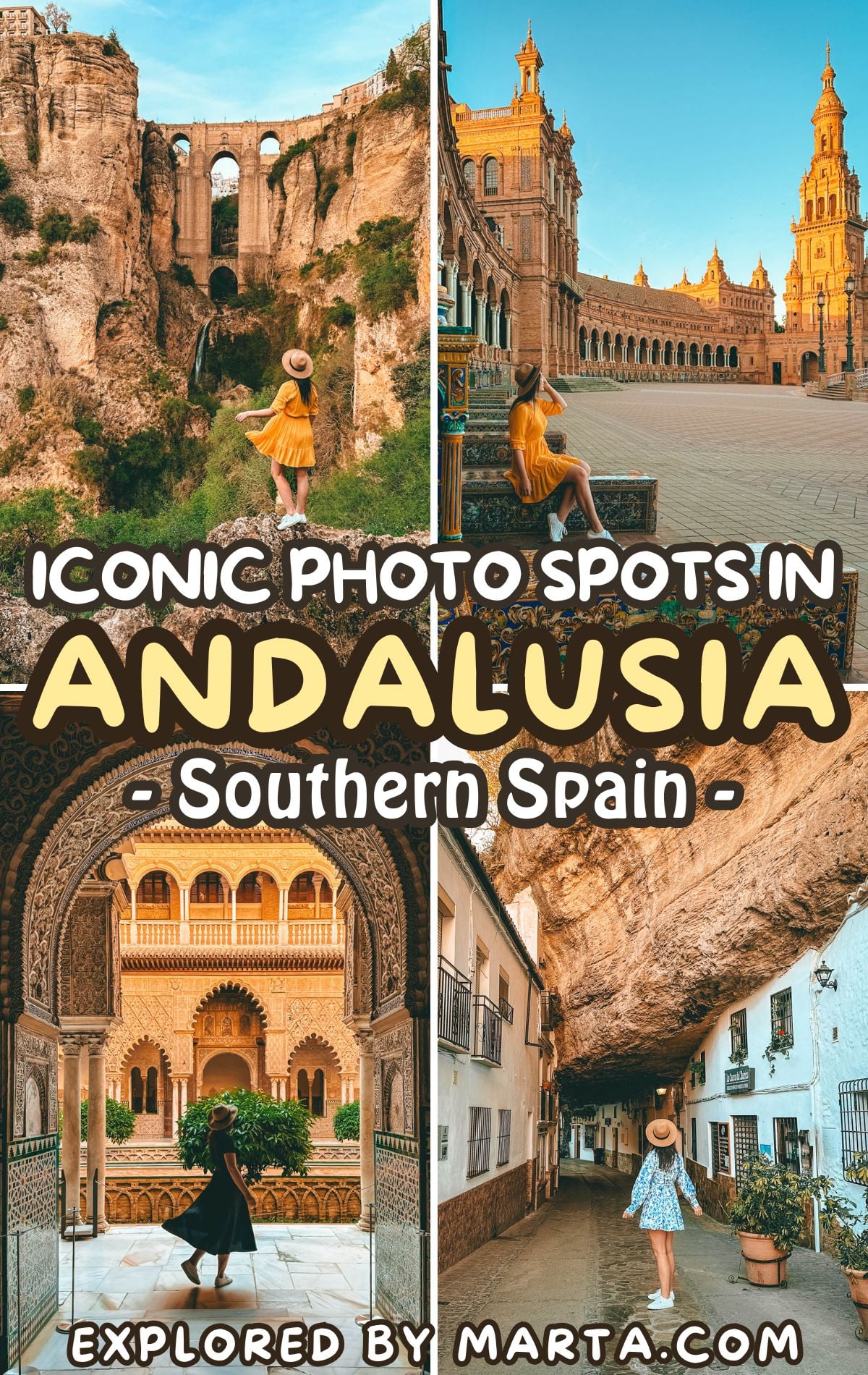
25 iconic photo spots in Andalusia, Southern Spain
This post may contain affiliate links. If you use these links to make a purchase or booking, I may earn a small commission at no extra cost to you! Thank you for your support!
Let me share the most iconic photo spots in Andalusia, Southern Spain, so you never come home from this stunning region without a camera roll full of beautiful shots!
Andalusia is truly one of the most photogenic places in all of Europe. We spent a couple of months road-tripping around the region, exploring everything, from grand Moorish palaces to flower-filled white villages and dramatic clifftop views.
These are the spots that wowed us the most, the ones worth building your itinerary around if you love taking photos (or just want to stand somewhere really beautiful).
In this guide, you’ll find all the best photo spots in Andalusia, Southern Spain, with descriptions, my own photos (you can use them as inspiration for your own shots!), and exact locations on Google Maps. Let’s get into it!
1. Puente Nuevo bridge in Ronda
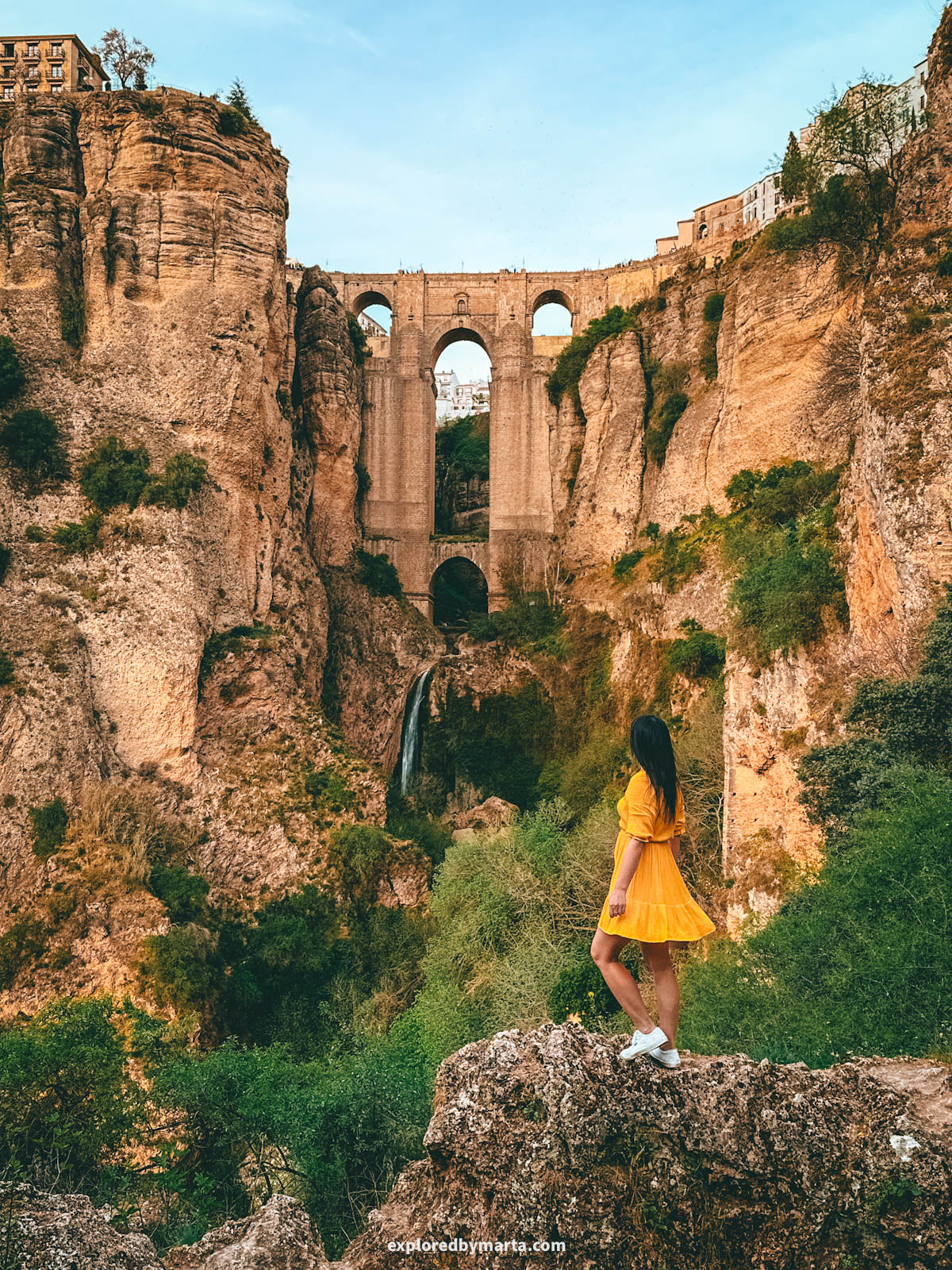
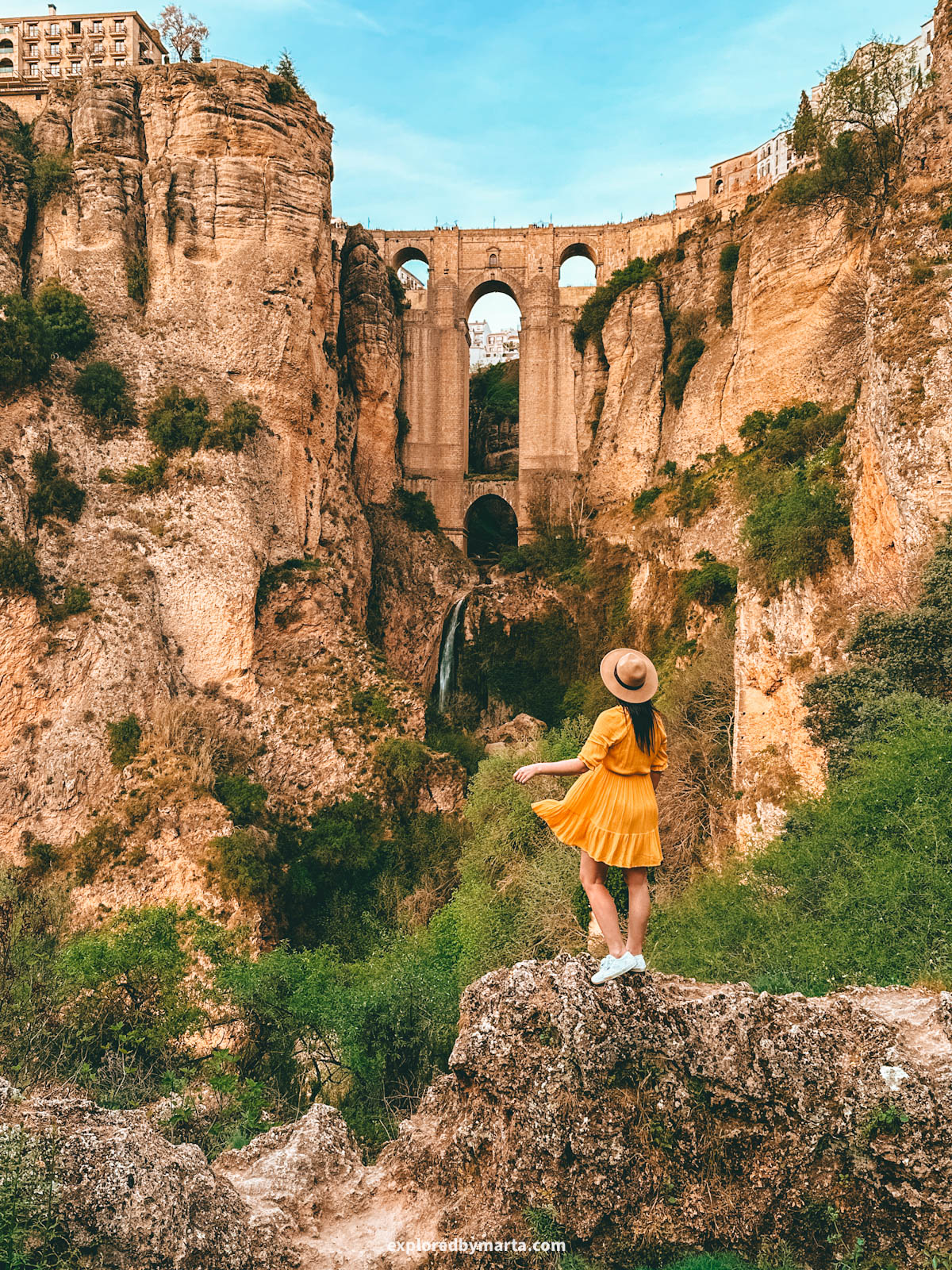
If there’s one photo spot in Andalusia just about everyone has seen online, it’s the Puente Nuevo bridge in Ronda. And take my word for it, no photo really does it justice. You have to see this place in person.
The bridge connects the two halves of Ronda, a clifftop town split down the middle by El Tajo, a 120-meter-deep (394 ft) gorge. Built between 1751 and 1793, it’s a masterpiece of engineering and one of the most photographed spots in all of Spain.
For the most iconic shot, head to the Arco del Cristo viewpoint. It’s a short downhill walk from the town center and gives you that postcard angle, the bridge framed by the dramatic cliffs of the gorge, with a waterfall tumbling down beneath it. This is THE shot you came for.
If you want even more angles, there are plenty more viewpoints of Puente Nuevo scattered around town, some from above, some from below, some from the sides. But the one you see in the picture is THE ONE.
Location: Arco del Cristo viewpoint
2. Calle Cuevas de la Sombra in Setenil de las Bodegas
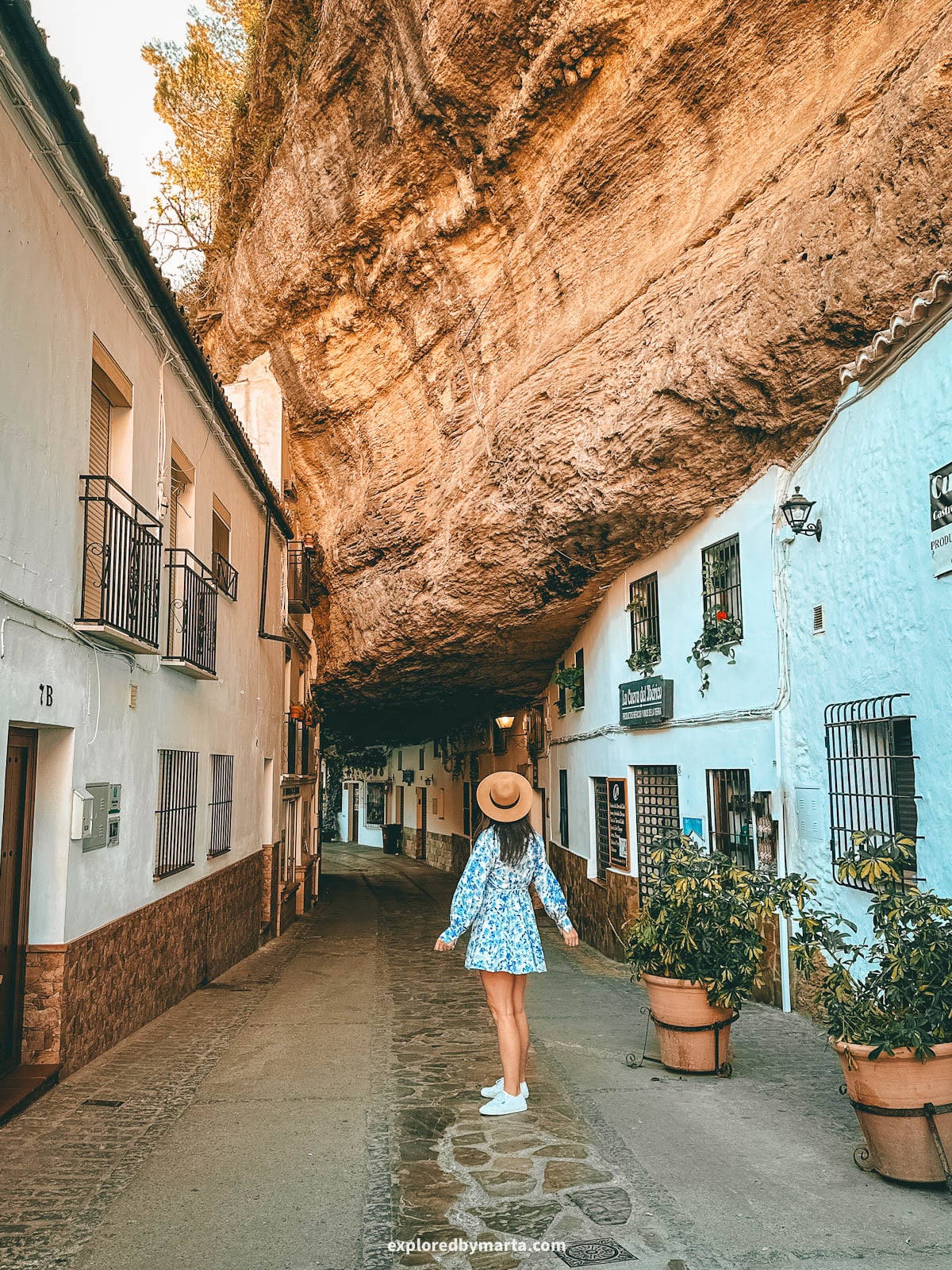
It’s hard to think of a more unique place to photograph in Southern Spain than Setenil de las Bodegas. What makes the village so special is that people still live in cave houses and run shops and cafés built right under the rocks.
The most famous spot here is Calle Cuevas de la Sombra, the Street of the Shadow Caves. It’s the only street in the village completely covered by an overhanging rock, and that’s exactly why it’s one of the best photo spots in Andalusia.
We stayed a couple of nights here, but most people visit Setenil as part of a day trip from Malaga, often combined with Ronda since the two towns are only a 20-minute drive apart.
Even if you only have a few minutes, this is a must-visit spot, so add it to your itinerary. And if you have more time, shopping in a cave or grabbing tapas under one of those rock overhangs are among the best things to do in Setenil de las Bodegas.
Location: Calle Cuevas de la Sombra
3. Royal Alcázar of Seville
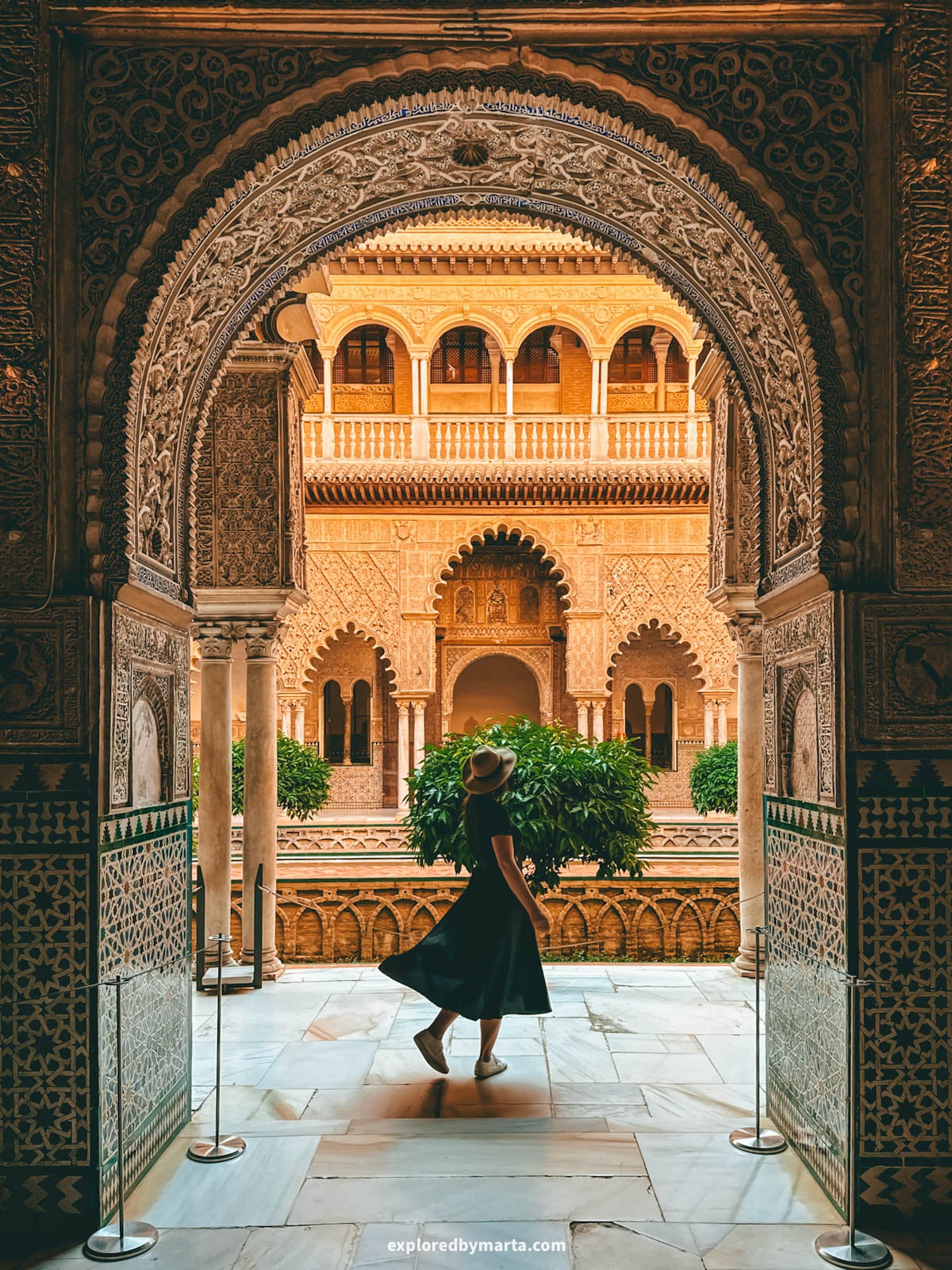
The Royal Alcázar of Seville is the crown jewel of the city and one of the most beautiful palaces in Andalusia. It was built as a home for kings and still is one – the upper floors host the Spanish royal family when they visit Seville!
It’s a whole complex of palaces, patios, courtyards, staterooms, unique bathing rooms, and massive gardens with ponds, fountains, pavilions, and even a maze. And it’s packed with photo spots at every turn. Truly.
The Alcázar has been around in some form since the 10th century, when it started as a Moorish fort. The palace you mostly see today was built in the 14th century, which is why it’s a prime example of Mudéjar architectural style!
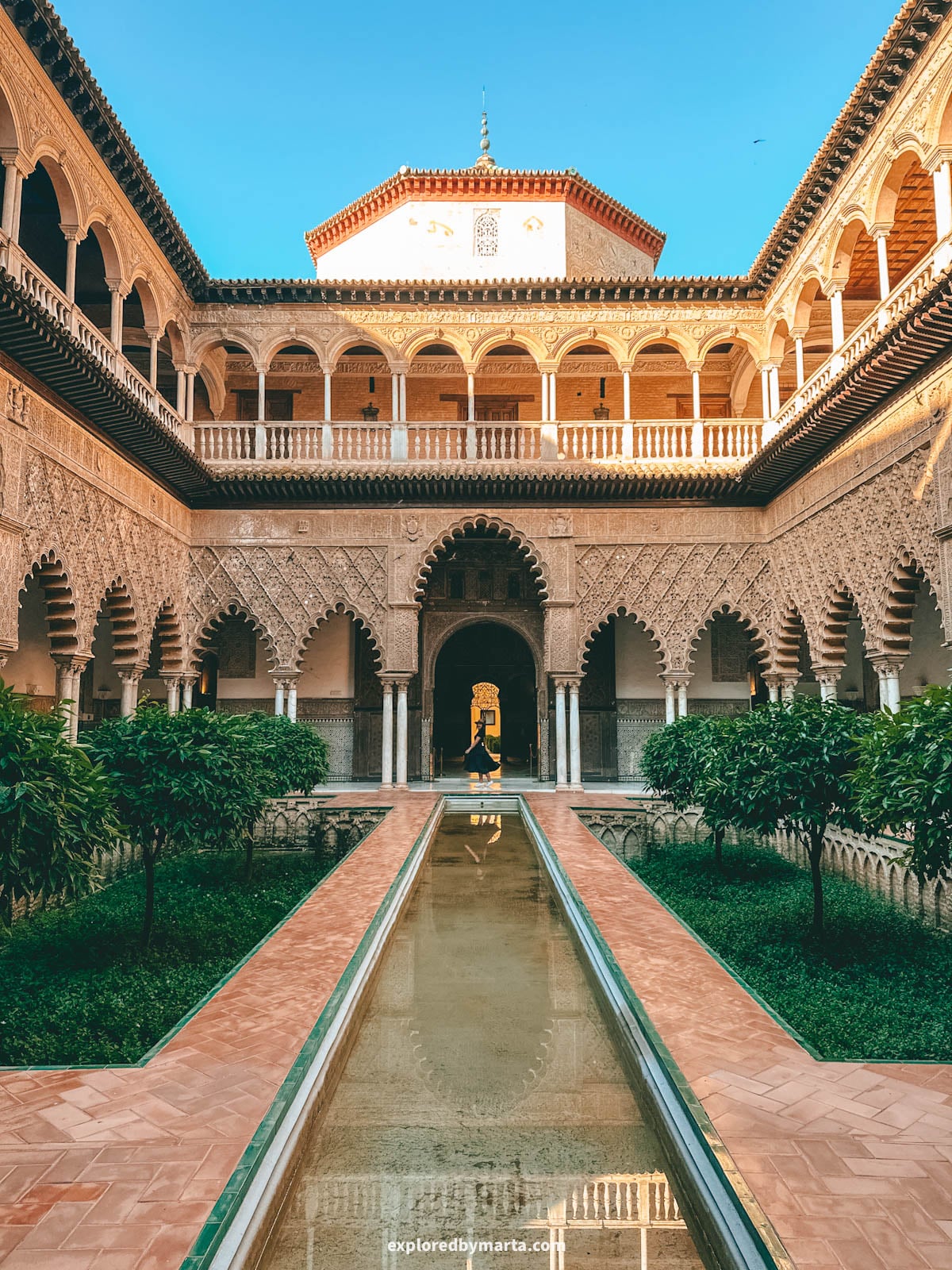
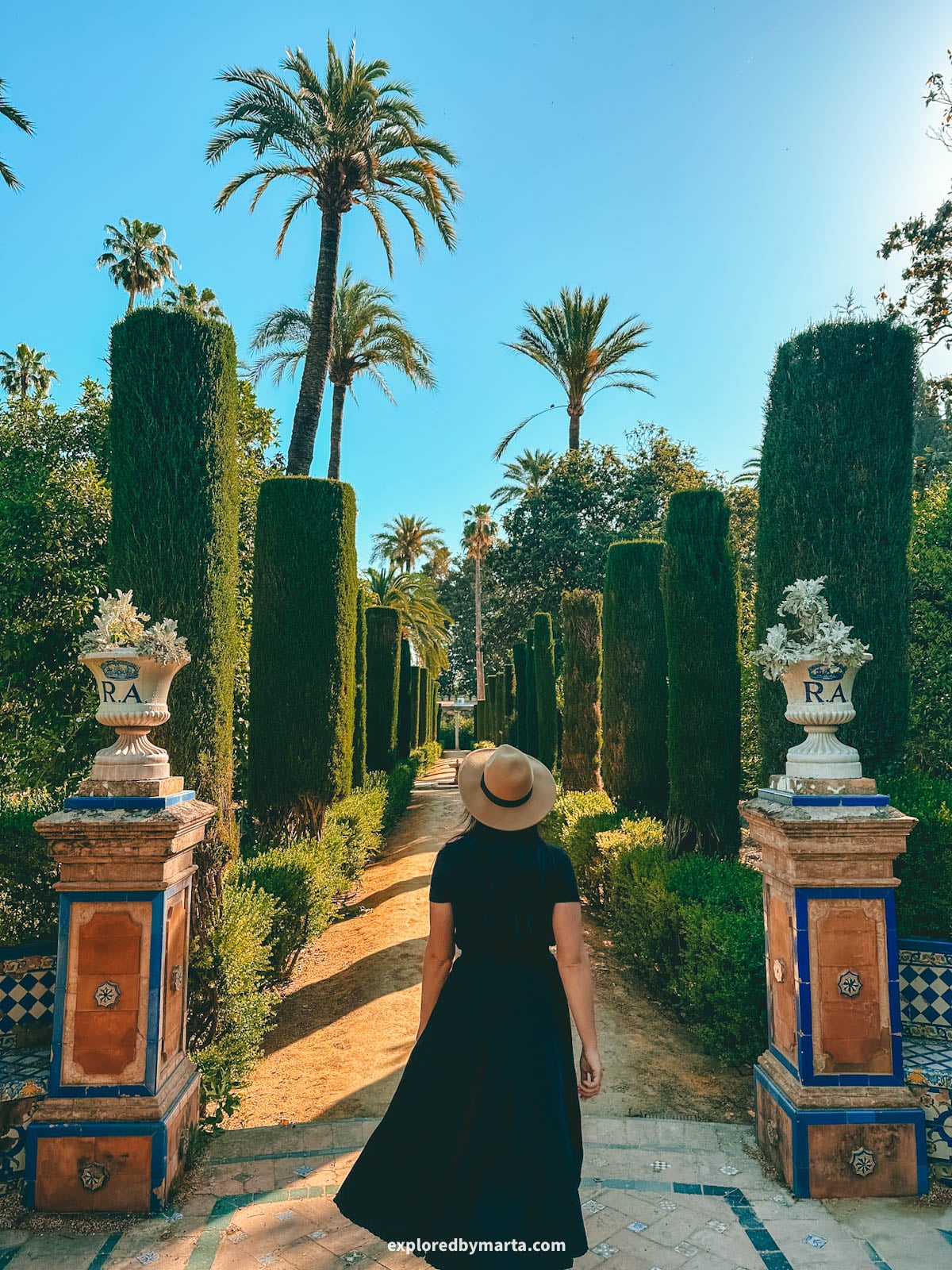
Here’s a fun one for fellow fans: parts of the Alcázar were used as a filming location in Game of Thrones, standing in for the Water Gardens of Dorne. If the palace and gardens feel cinematic in person, that’s because they literally are!
To me, the most photogenic spots are the Patio de las Doncellas, the main courtyard with its long reflecting pool and Mudéjar arches all around, and the Salón de Embajadores with its jaw-dropping ornamentation.
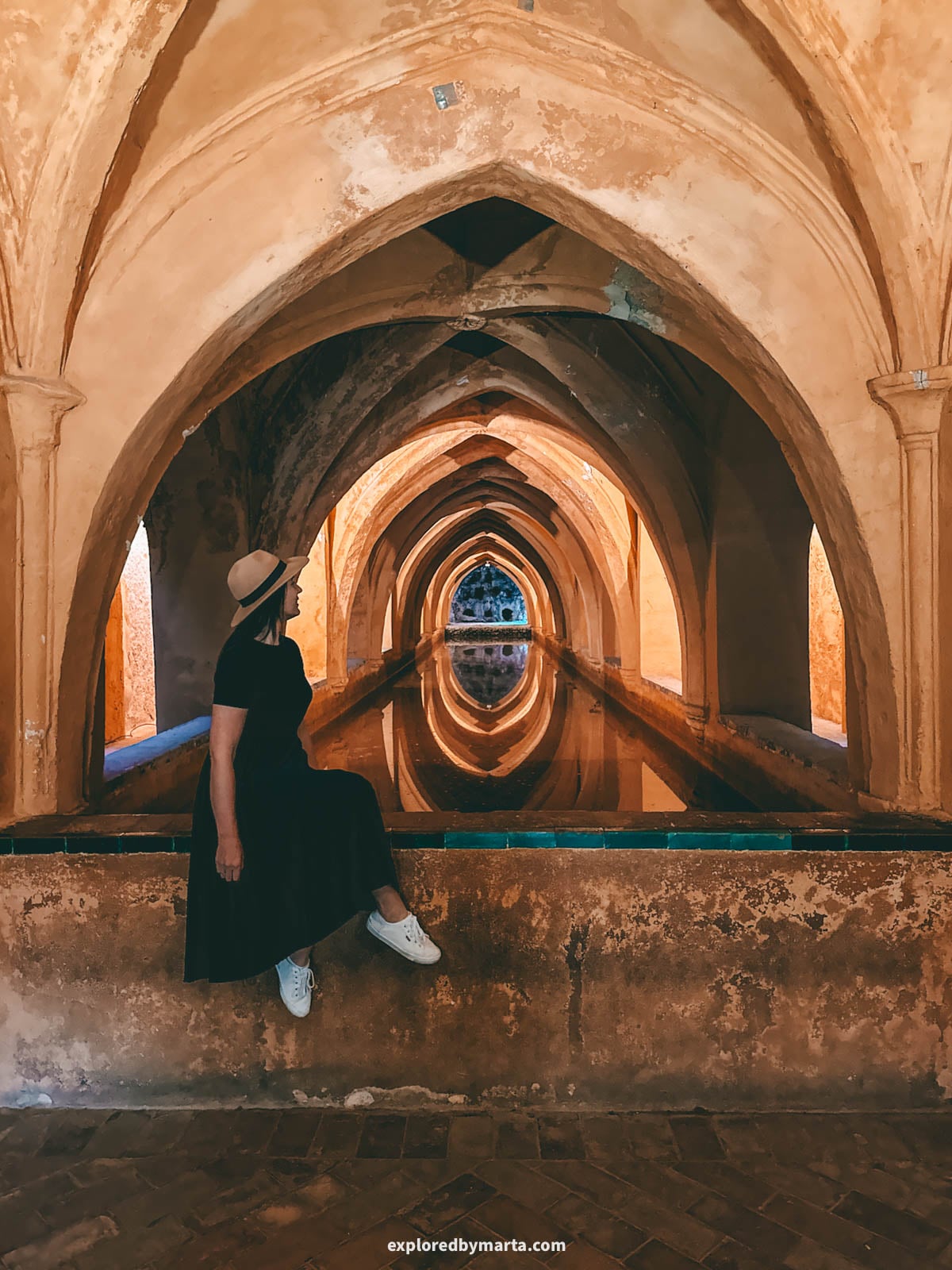
Don’t miss the Baños de Doña María de Padilla, a bathing house with a pool in an arched room down in the basement. Those arches and their reflection in the water make for one of the coolest shots in the whole palace (see my photo!).
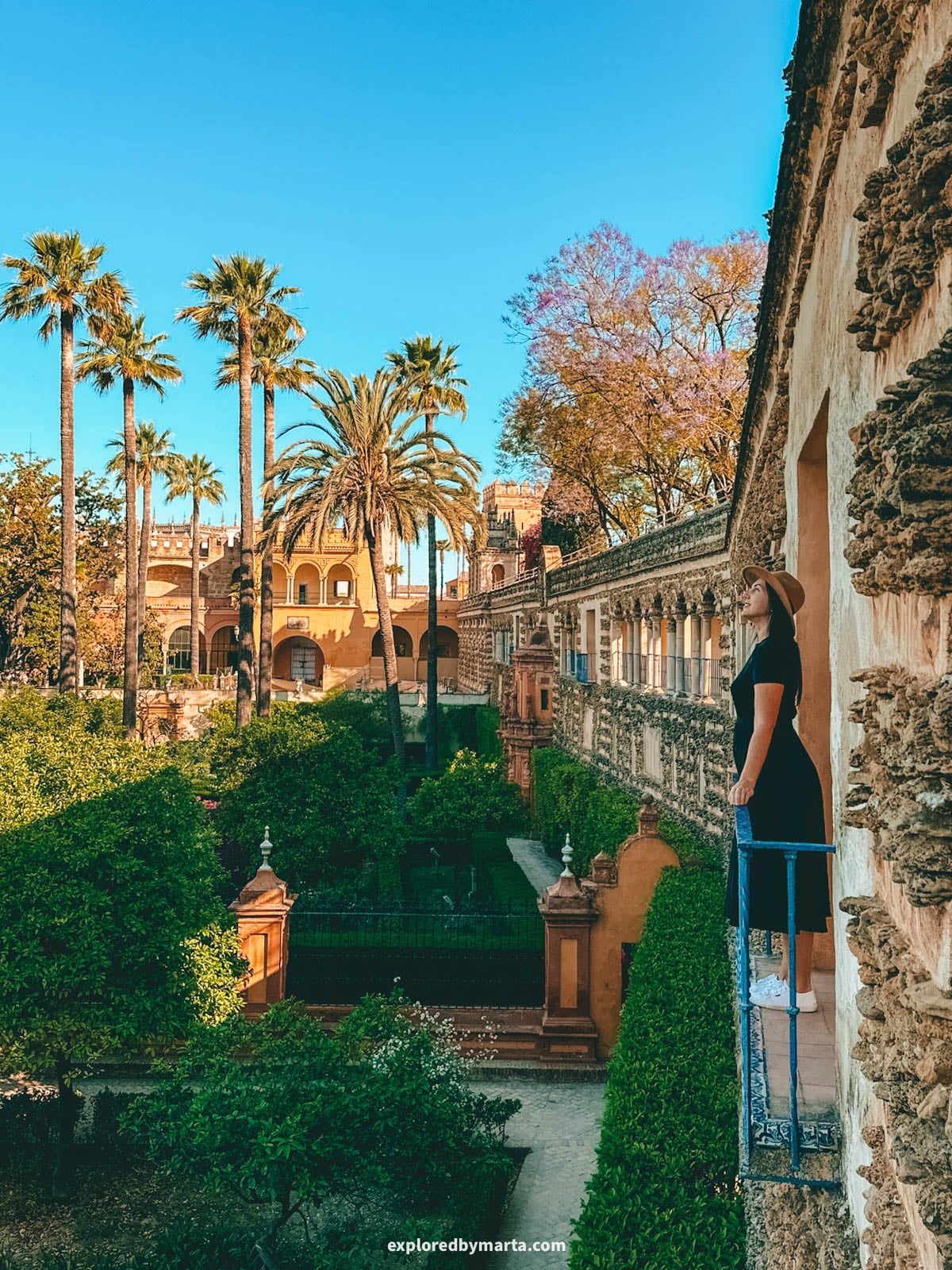
Also, don’t rush the gardens. They’re huge, with palm trees, fountains, hedges, and shaded pathways (there’s even a small maze!), and they’re a completely different photo mood from the ornate palace rooms.
We spent ages just wandering around, and some of my favorite shots came from out there rather than inside. I especially loved the beautifully trimmed trees and the fountains!
Take my word for it, come for the earliest slot in the morning and book your tickets online in advance. It’s one of the most visited places in Seville, and the line was sooo long before opening when we went. Luckily, the crowd spreads out when you enter the palace, so we were okay.
Location: Royal Alcázar of Seville
4. Plaza de España in Seville
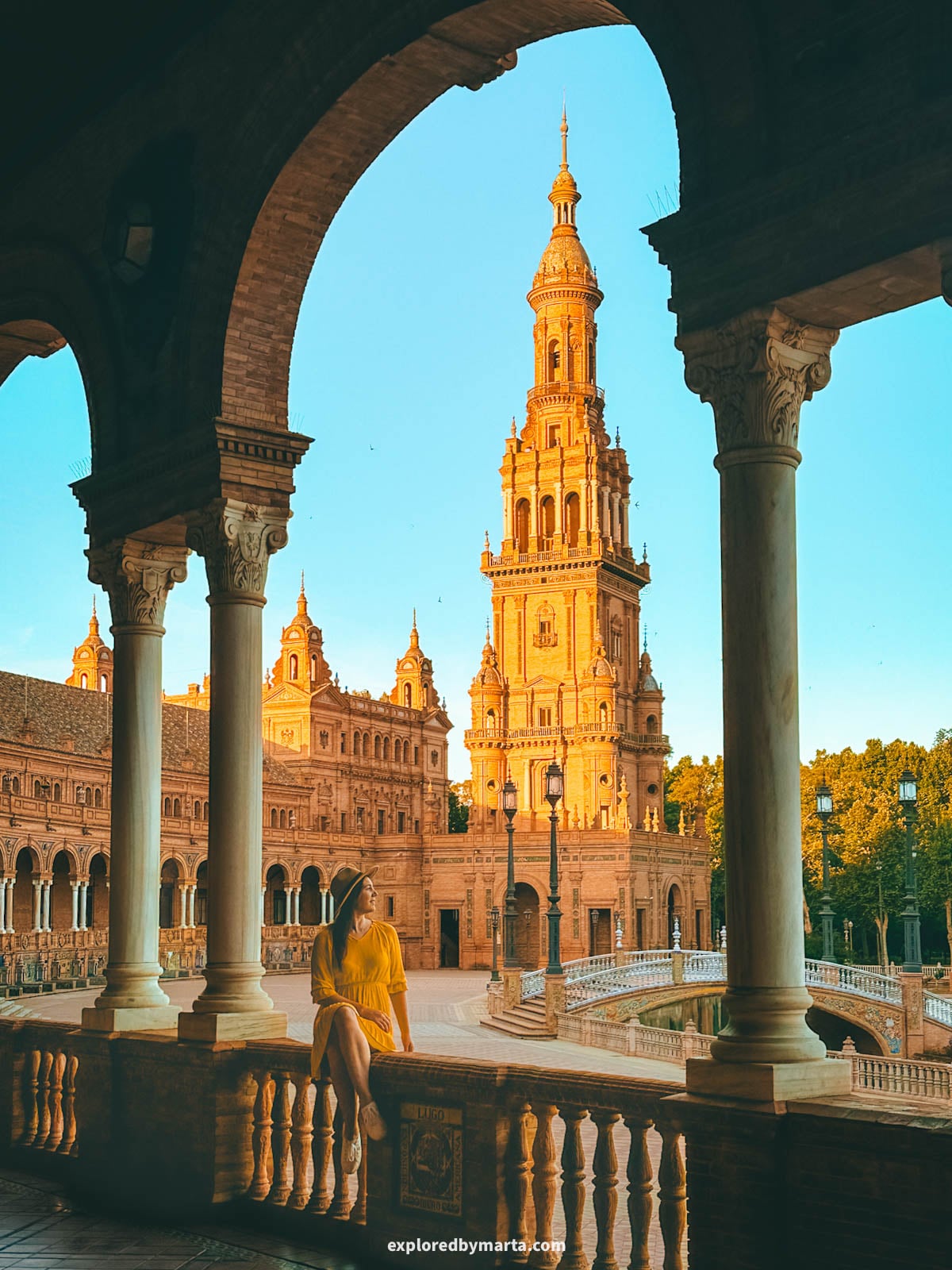
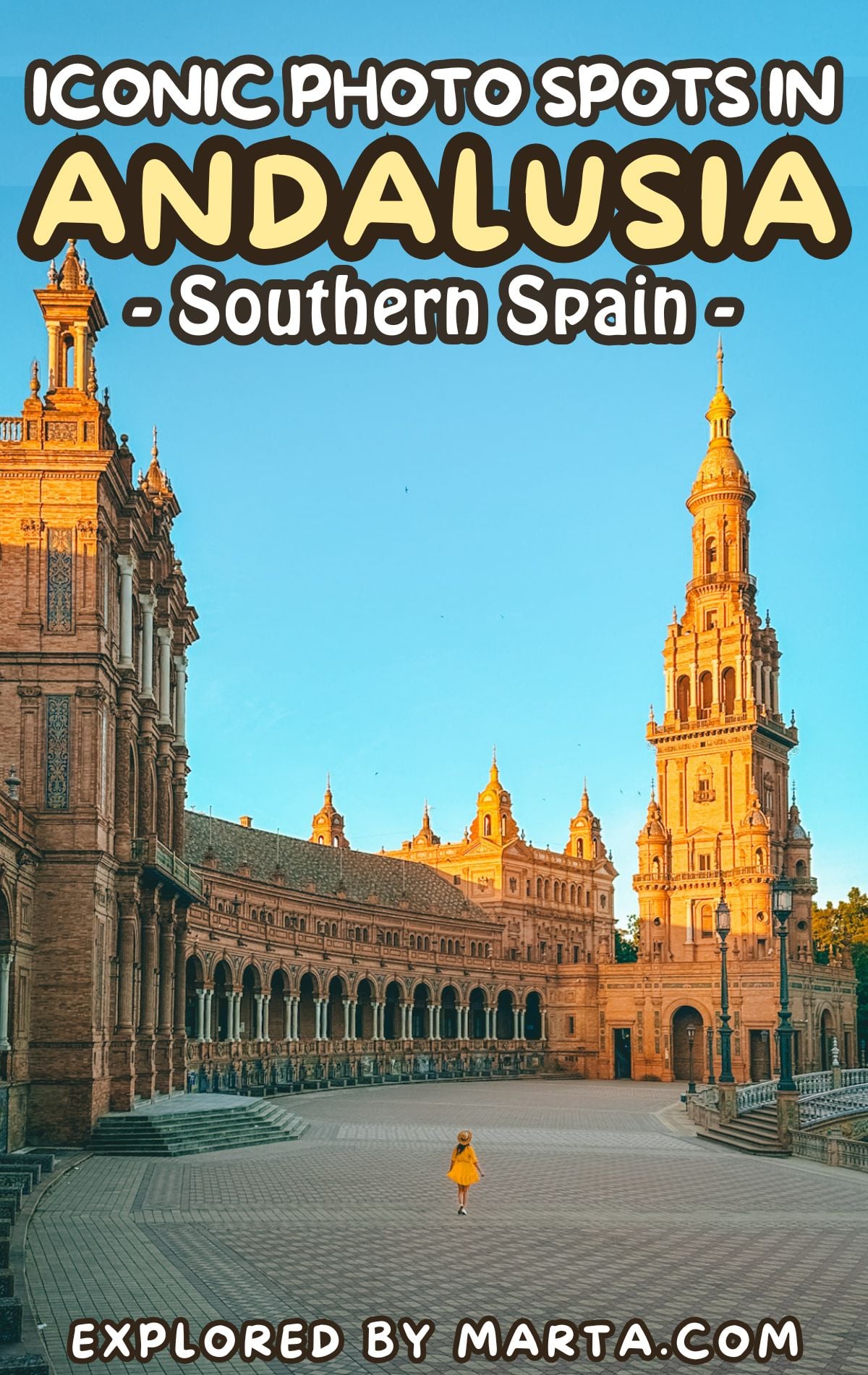
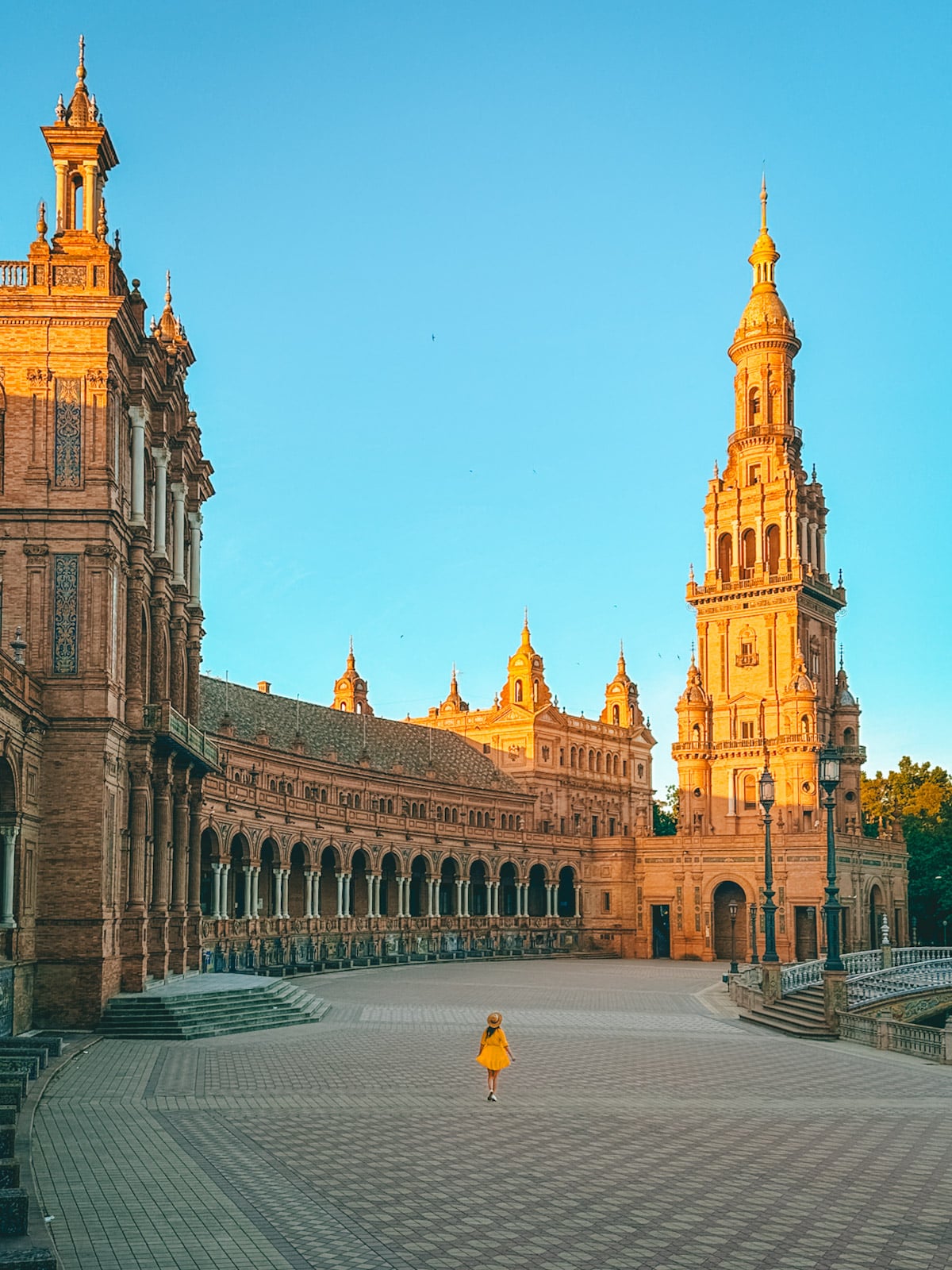
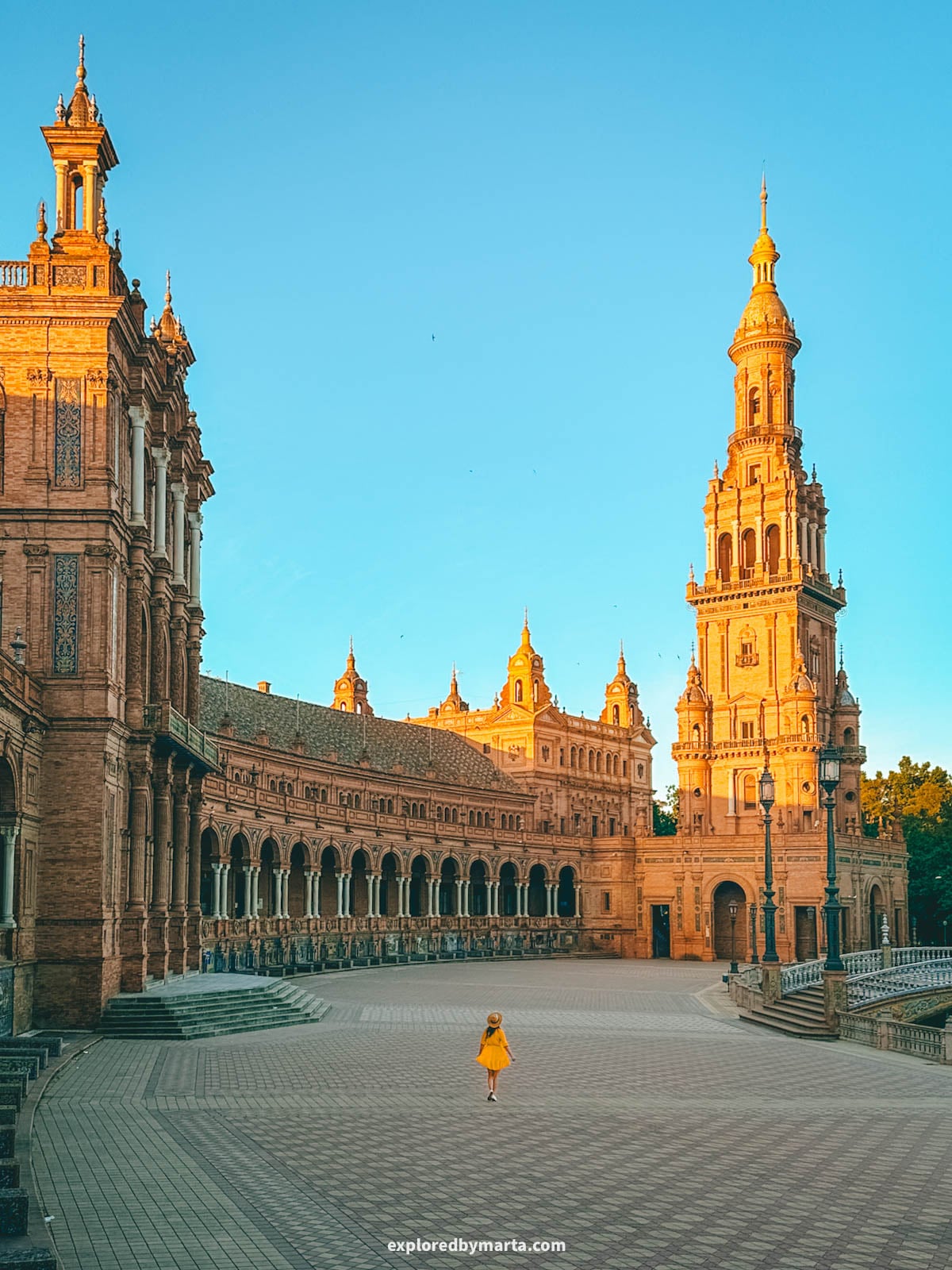
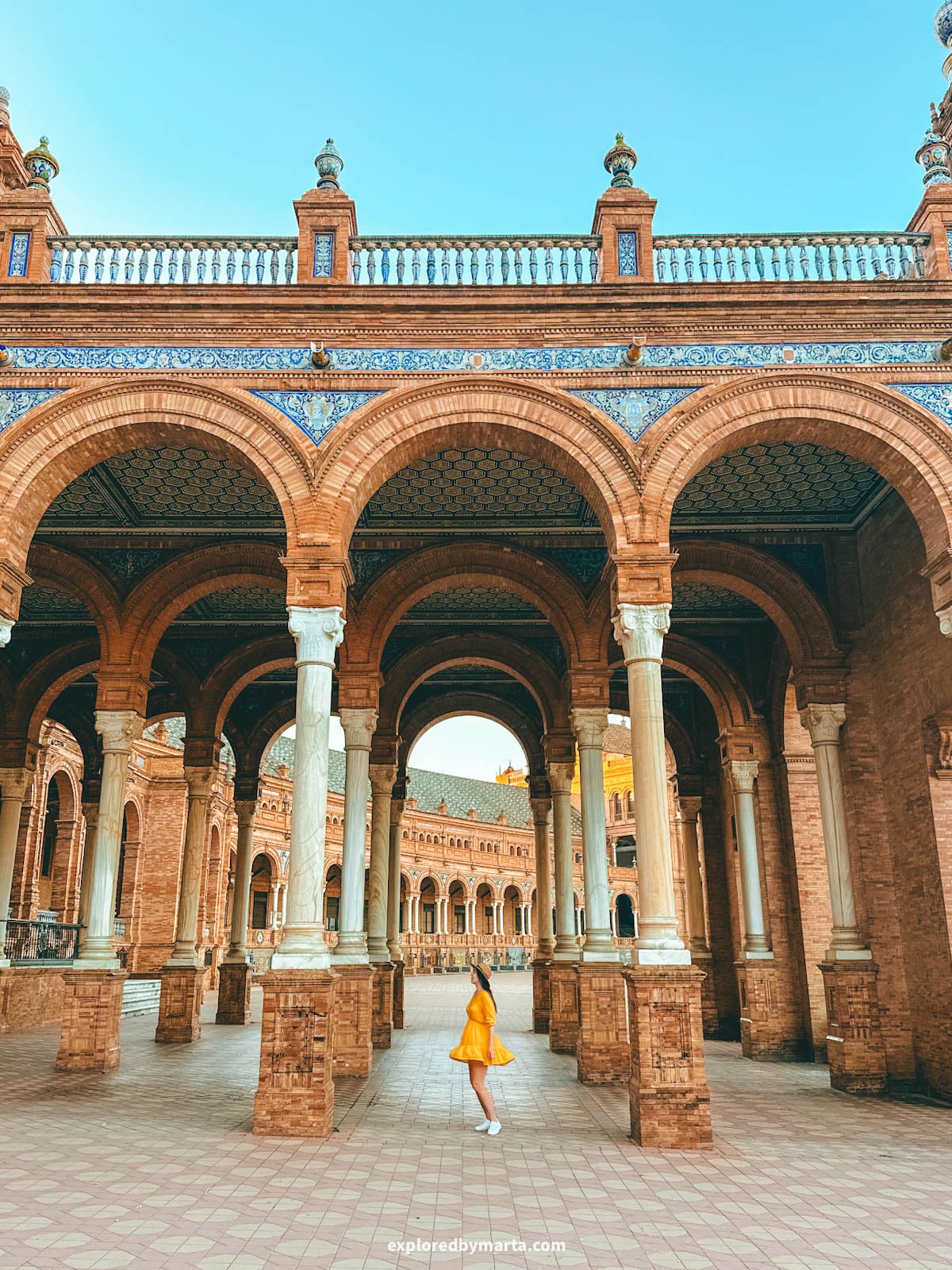
The Royal Alcázar is stunning, but my actual favorite place to take photos in Seville is the Plaza de España, with its pointed towers, arches, colorful tiles, and little bridges. One of the most picture-perfect places in Andalusia!
Turns out, Plaza de España was built for the 1929 Ibero-American Exposition. It’s shaped in a huge half-circle with two towers, a canal with bridges crossing it, and a long arched walkway.
One of the most popular spots to photograph here is the row of tiled alcoves running along the base of the building. There’s one for each province of Spain, 48 in total, each decorated with colorful azulejo tilework and a little scene from that region’s history.
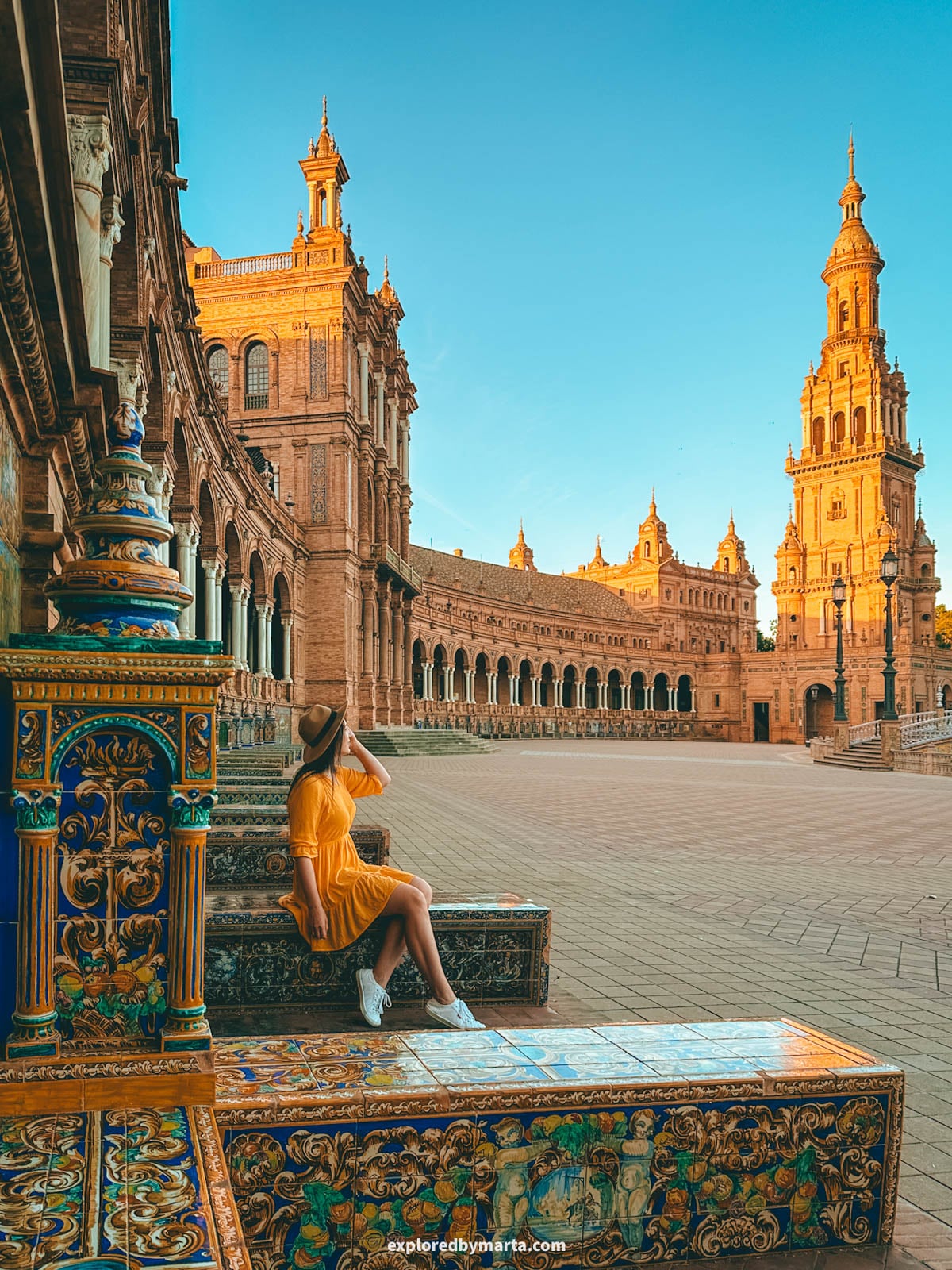
Find the one for your favorite Spanish city and you’ve got a ready-made photo backdrop! I don’t have a favorite region, so I just picked the one where I could get a nice angle of the square. 😃
Later in the day, you can also rent a little rowboat and paddle along the canal under the bridges, which makes for a really fun, different kind of shot. Even if you don’t go out on the water yourself, the boats gliding past add a nice bit of life to your photos of the square.
The architecture and detail are simply stunning, the bridges with their lanterns, the archways, and the colorful tilework everywhere you look. It’s a place like no other. And the best part? It’s completely free to visit.
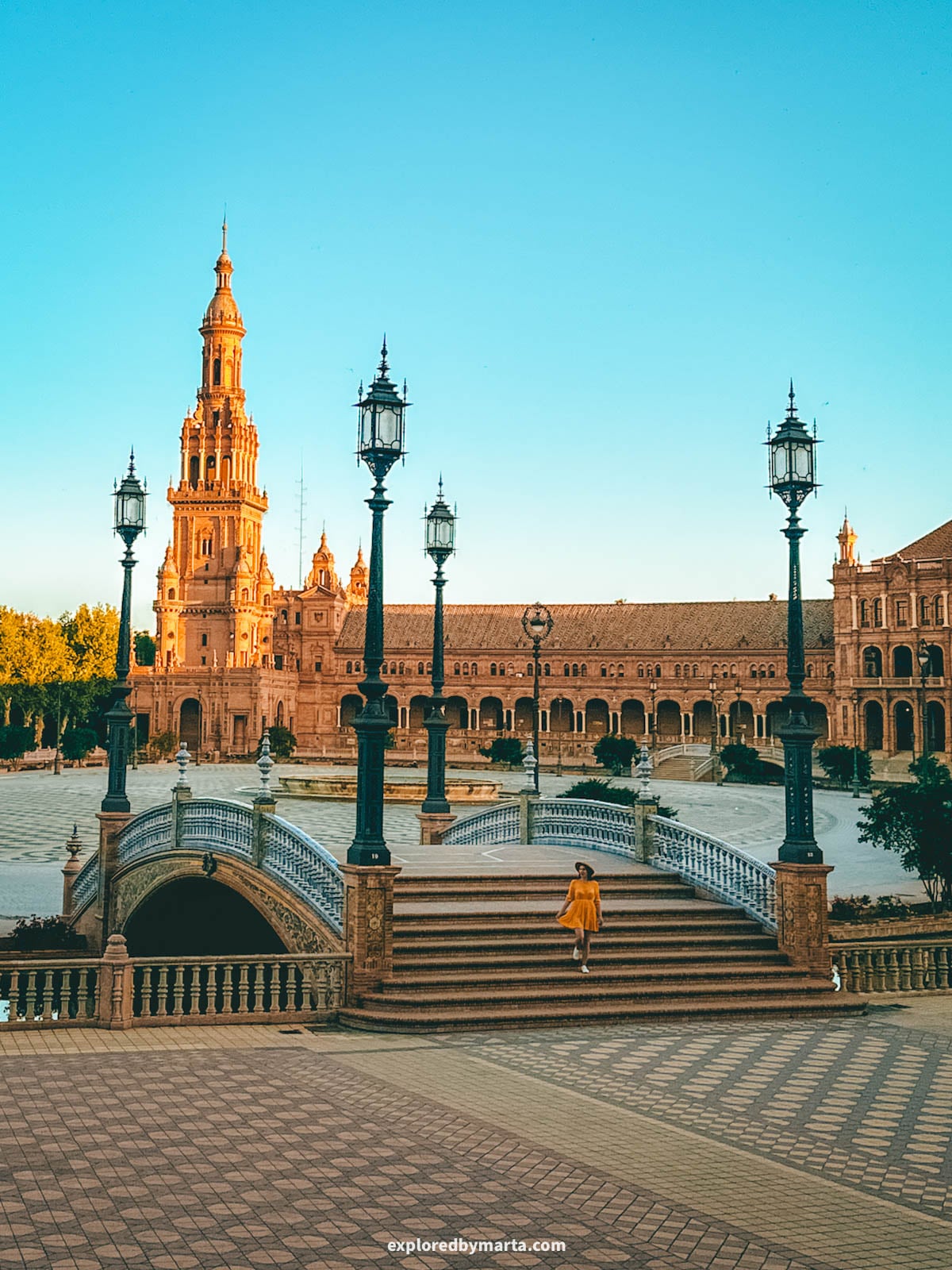
If the whole place looks oddly familiar (does it?), there’s a reason. Plaza de España has appeared in some pretty big films, including Star Wars (as the city of Theed on Naboo) and Lawrence of Arabia. So you’re in a genuine movie location! No wonder it photographs so well! 😄
For a photo without the crowds, come early, ideally by 9 AM. We arrived a bit after 8 and had it almost to ourselves, but it gets very busy as the day goes on. However, if you want to rent a boat, you need to come later – they won’t be available that early!
There are loads of creative photo angles around the square. I’ve mapped out all the exact spots in my guide to the best photo spots in Seville, so go check it out for the precise coordinates.
Location: Plaza de España
5. La Giralda from Patio de Banderas in Seville
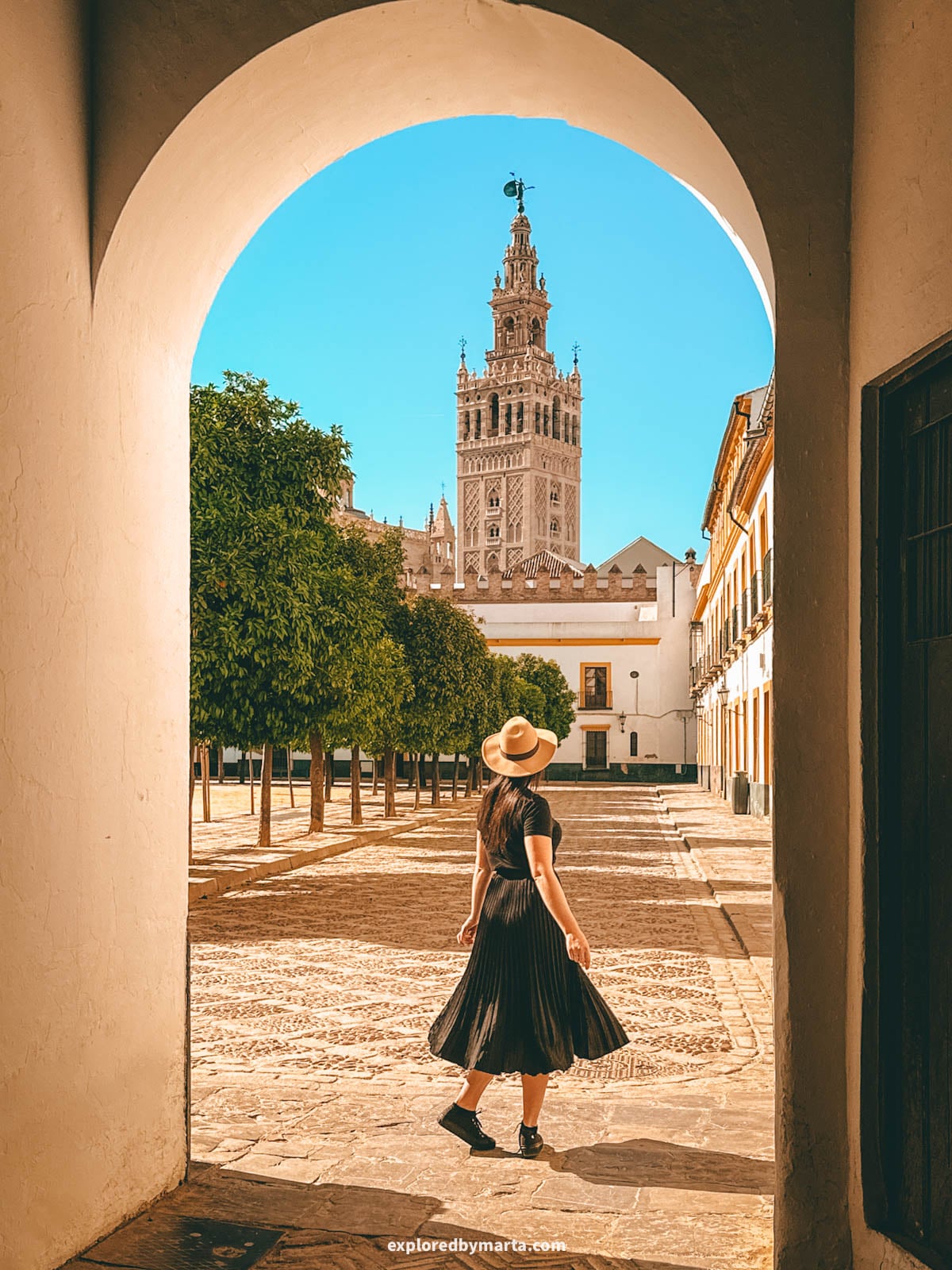
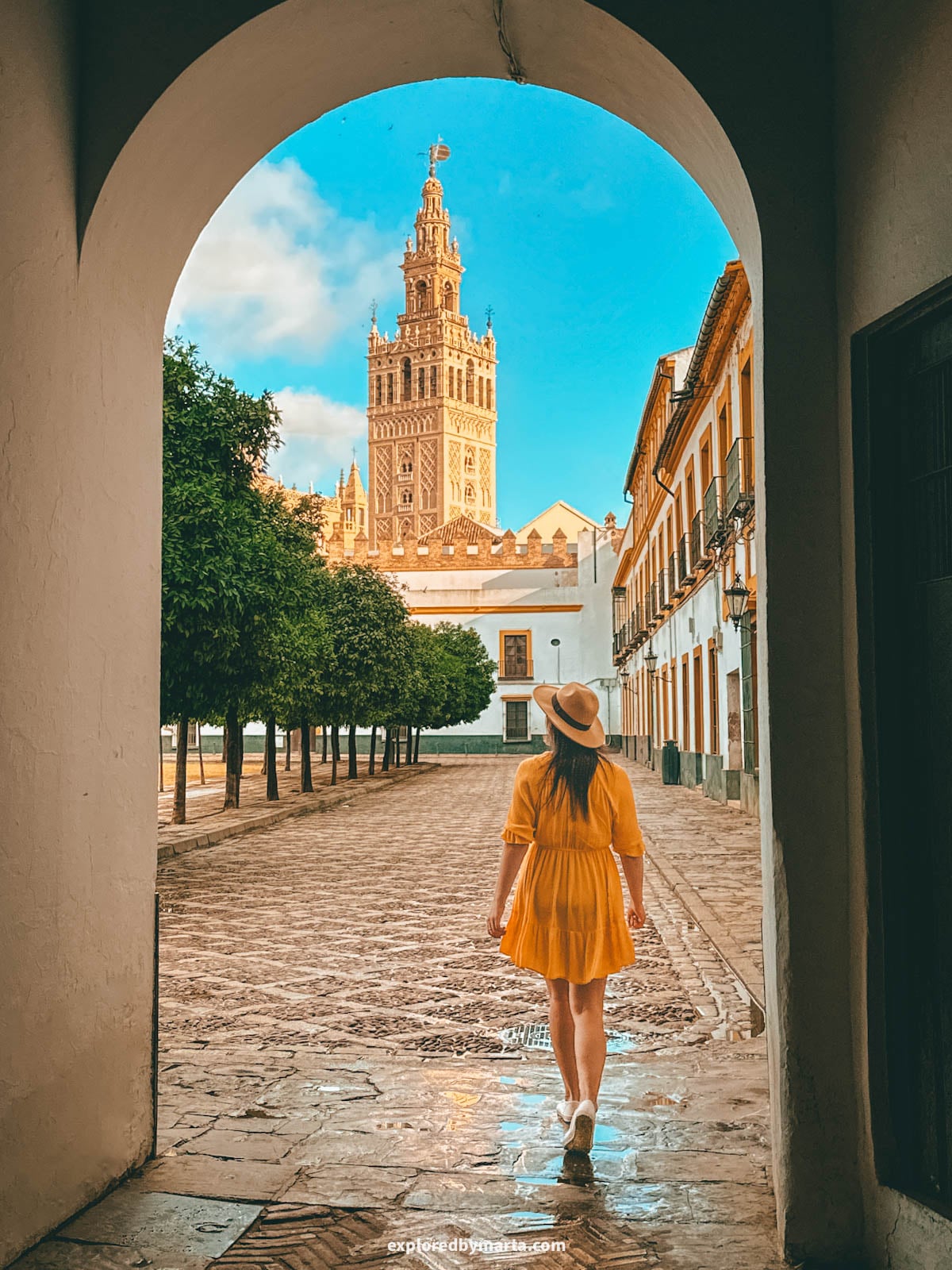
There is one more iconic Seville photo spot I really like – La Giralda view from Patio de Banderas!
La Giralda, the bell tower of the cathedral, is one of the main symbols of Seville. It was built in the 12th century as a minaret for a mosque during the Islamic period in Andalusia.
Usually, the area around the cathedral is incredibly crowded, so it is hard to take a nice postcard photo without people walking in the frame.
Luckily, you can take such a postcard shot even during the day! You need to go to Patio de Banderas, which is a historic square in the heart of the Old Town.
At first glance, there’s nothing special about this simple tree-lined square, but, lucky for you, I’m here to tell you that there’s a secret passage in the far corner of the square.
Not many tourists know about it because people mostly use the streets to walk around the old town. However, if you look through this passage, you will get a stunning combination of the iconic La Giralda in the middle of the archway. So beautiful!
The best part? This spot usually stays crowd-free even in the middle of the day (unless a walking tour passes through)!
Location: Patio de Banderas
6. Comares Palace in the Alhambra, Granada
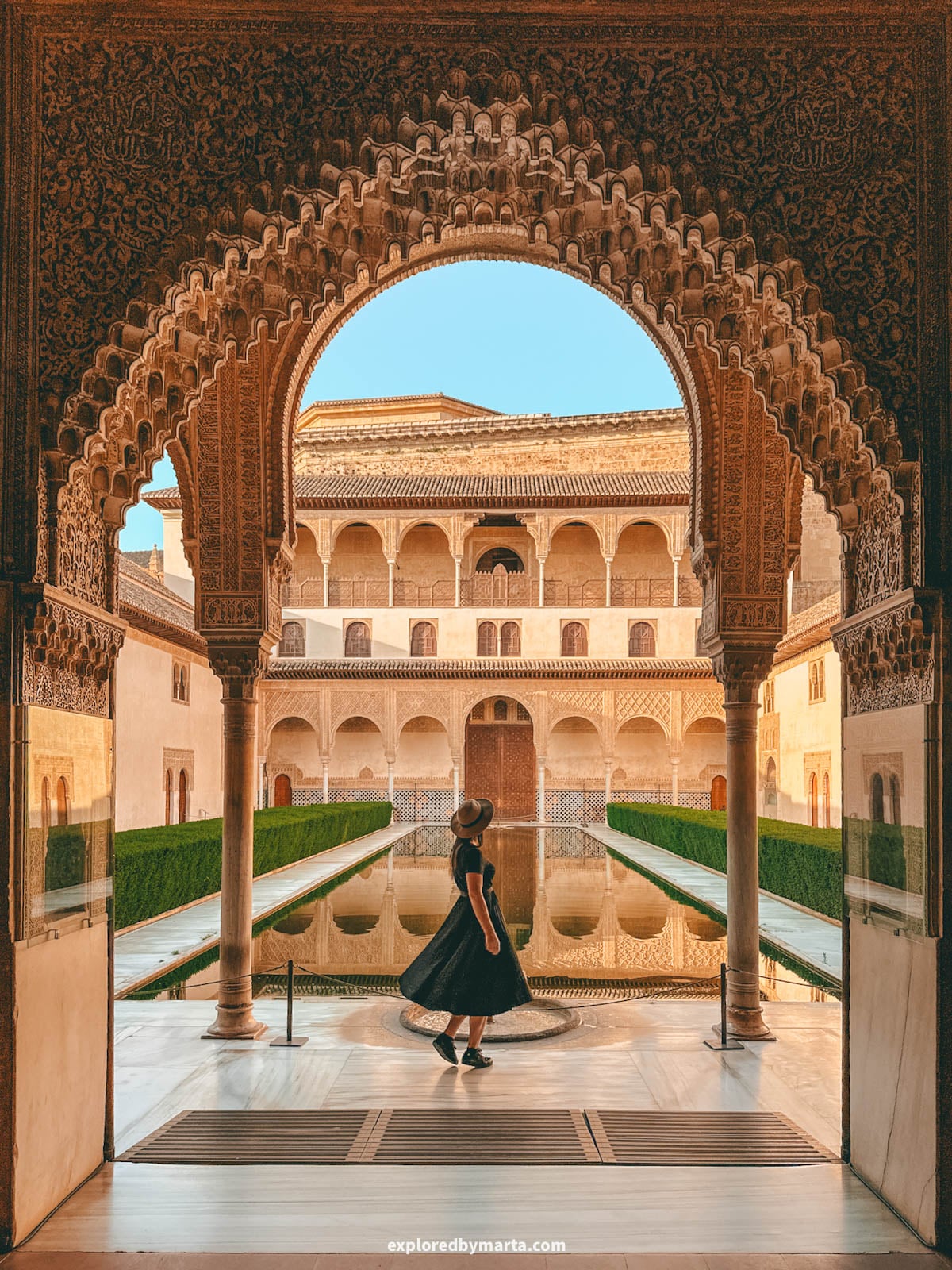
The Alhambra is the most famous attraction in Granada, and maybe in all of Spain. This huge medieval fortress sits on a hill above the city, and inside you’ll find some of the most beautiful photo spots in Andalusia.
The Nasrid Palaces, multiple royal palaces built by different rulers of the Nasrid dynasty, are the crown jewel of the Alhambra. If you don’t visit them, you haven’t really seen the Alhambra.
One of the most beautiful of the Nasrid Palaces is the Comares Palace, one of the first you’ll walk through, and the star here is the Patio de los Arrayanes – an inner courtyard with a long rectangular reflecting pool typical of Moorish architecture.
The reflection of the arches in the still water is one of those classic Alhambra shots you’ve definitely seen before, and it’s even better in person. We got a beautiful, peaceful moment here because we arrived 30 minutes before opening and were first in line.
Yes, we were the first ones inside the Alhambra that day! Miracles happen! 😅
Location: Comares Palace in the Alhambra
7. Palace of the Lions in the Alhambra, Granada
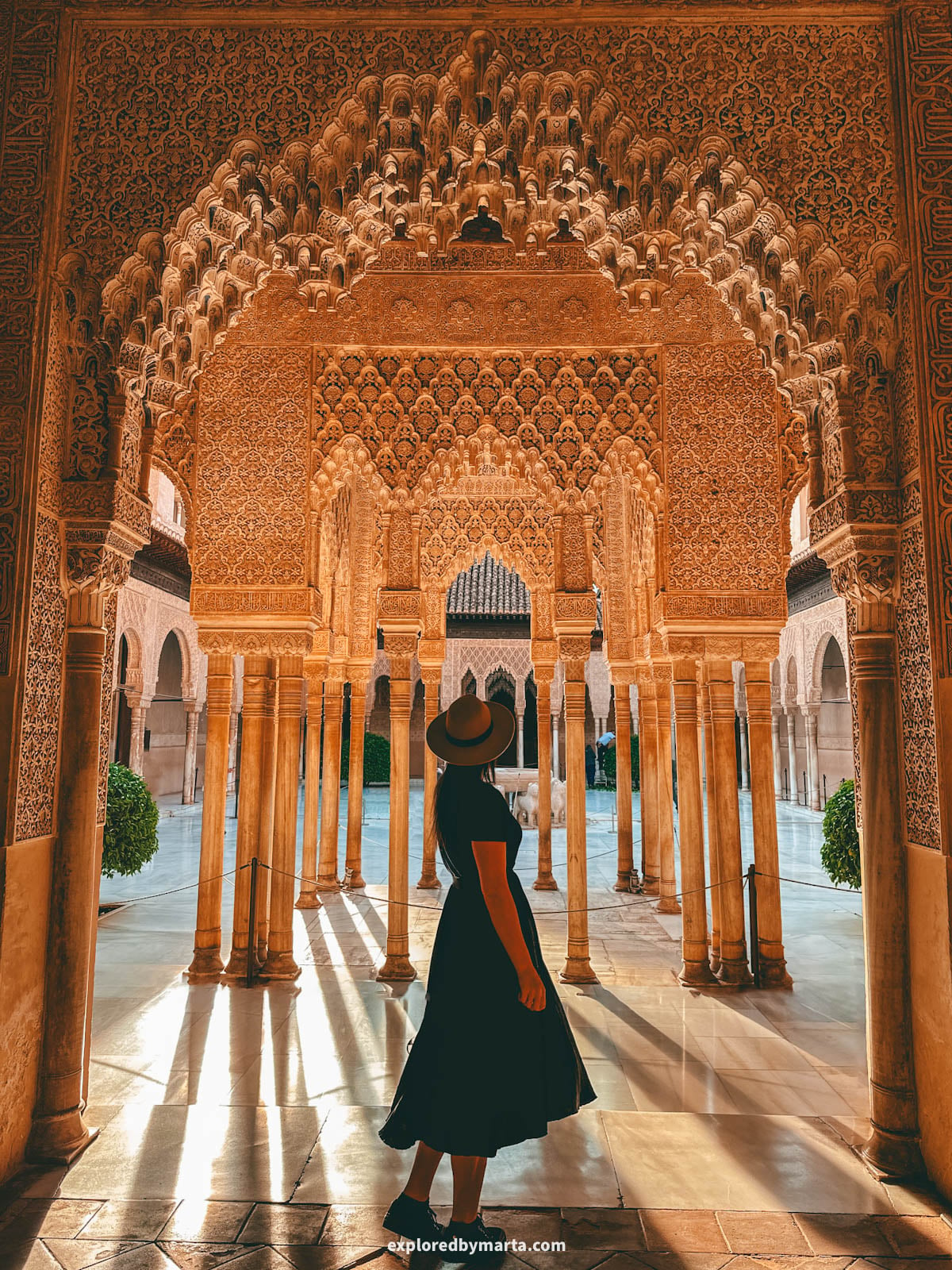
As you move to the next palace in the Nasrid complex, you reach the Palace of the Lions, one of the most famous works of Islamic architecture in the world and, hands down, one of the best photo spots in Andalusia. It’s my favorite spot in the Alhambra!
The centerpiece is the Patio de los Leones, the Courtyard of the Lions. It’s a wide courtyard surrounded by a forest of slender columns covered in ornate carvings and Arabic inscriptions.
In the middle of the courtyard sits a marble fountain held up by twelve sculpted lions, which is how the palace got its name. The whole setting is just breathtaking! No wonder the Alhambra was a finalist in the New 7 Wonders of the World contest.
My favorite spots to shoot were the column forests at each end of the courtyard. The carvings are incredible and easily make this one of the most beautiful palaces in Andalusia.
Location: Patio de los Leones
8. Generalife in the Alhambra, Granada
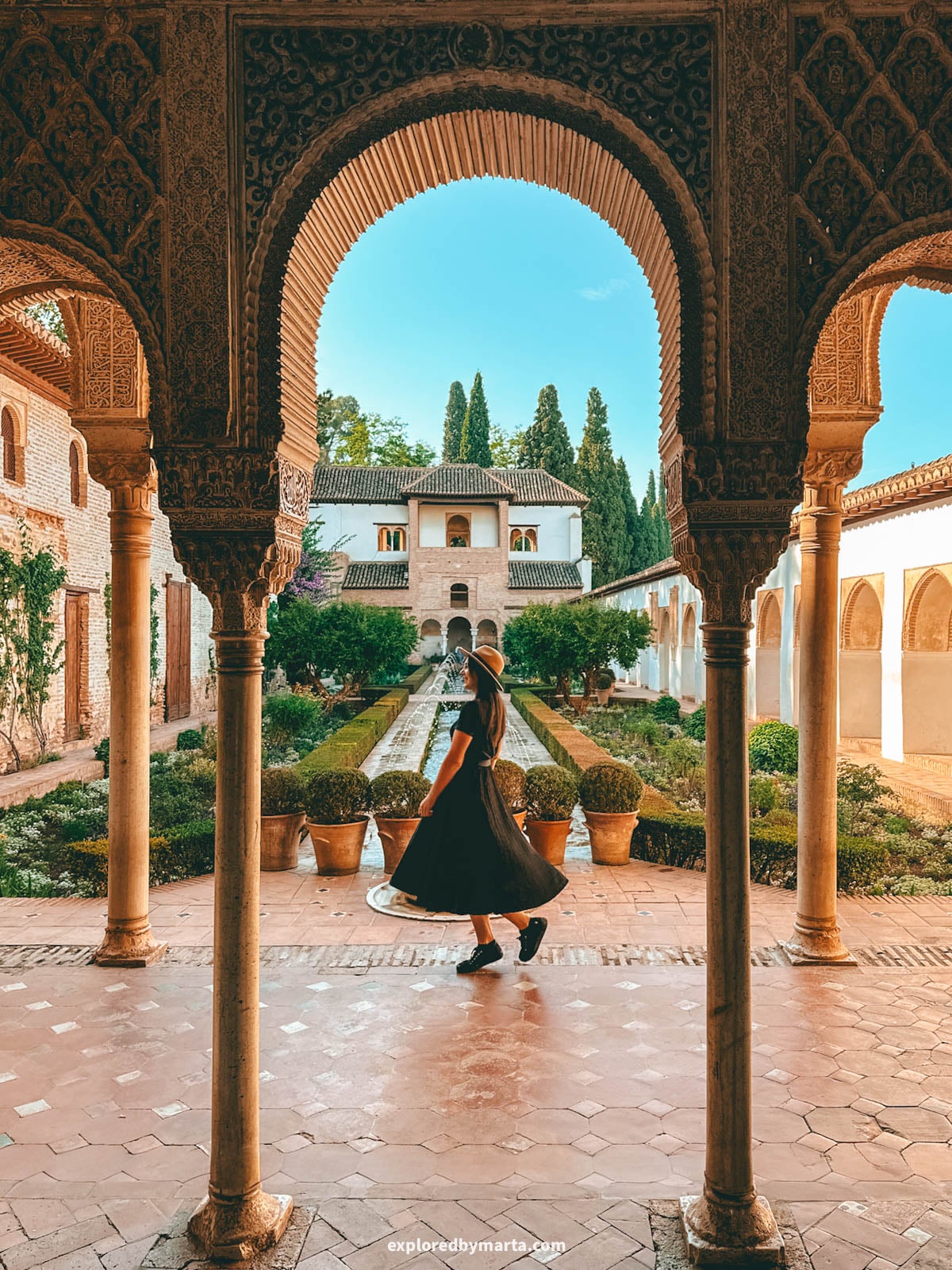
The Generalife was the summer palace and garden retreat of the Nasrid rulers, and it’s the greenest, calmest corner of the whole Alhambra. After the intense detail of the Nasrid Palaces, it feels like a deep breath.
The most photogenic part is the Patio de la Acequia, a long courtyard with a narrow pool running down the middle, fountains arcing over the water, and greenery on either side. This is the spot you’ll want to photograph (see my photo above!).
The whole place is beautifully kept, with hidden corners, viewpoints, and halls decorated in that Moorish style. For me, the Generalife was the oasis of the Alhambra. One thing is for sure – they needed a lot of water to upkeep this palace!
Location: Generalife
9. Montefrío, the village with the most beautiful view
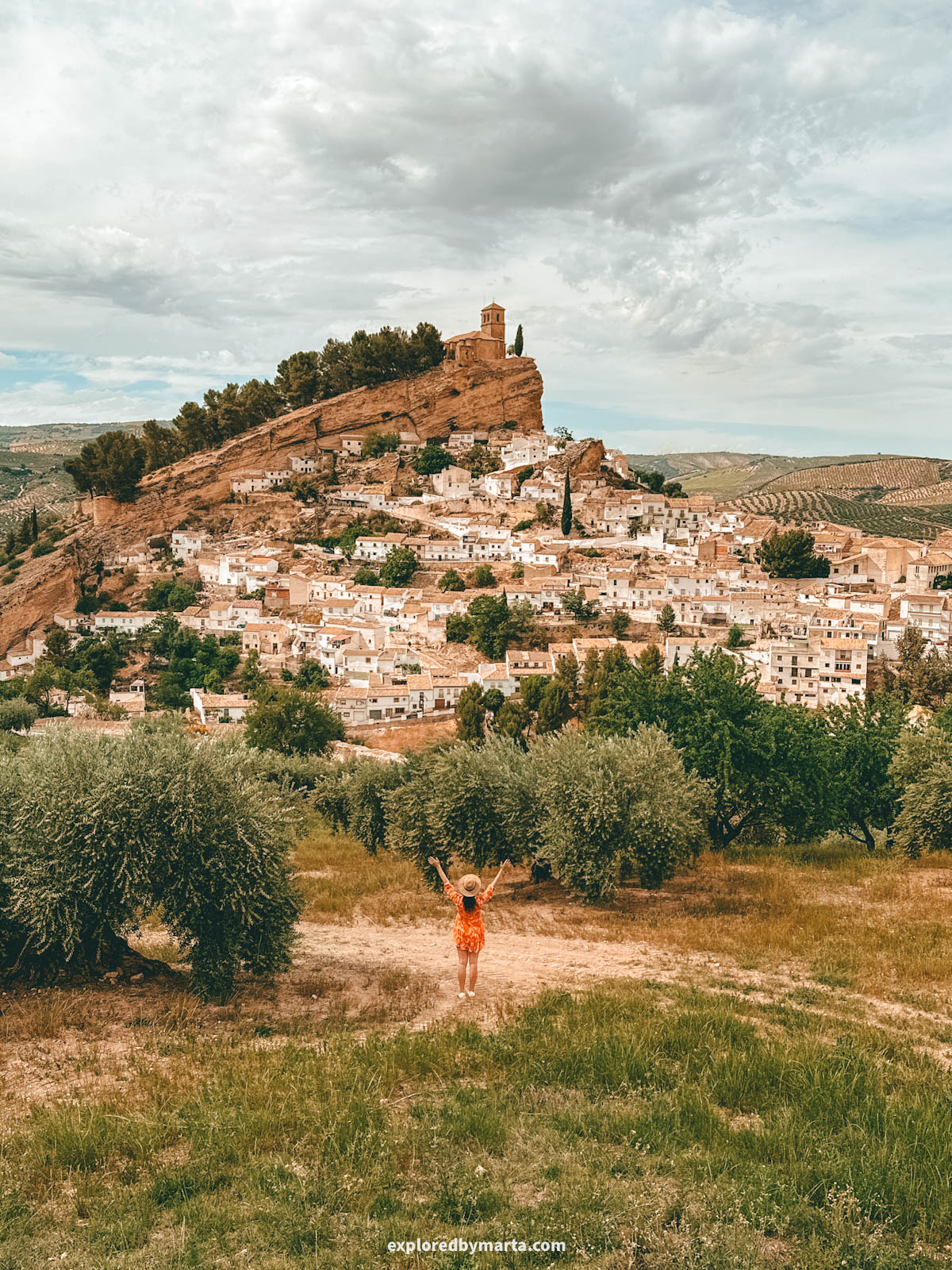
Montefrío in Granada province is one of the villages with the best views in the world, and that’s not just me talking. Did you know National Geographic put together a list of villages with the best views on the planet, and Montefrío made the cut?
There’s a viewpoint named after National Geographic where you can capture the exact view that wowed the world (location below).
Whitewashed houses cascade down a hillside, with a 16th-century church (which happens to be one of the very few completely round churches in Spain) and an old castle on top of dramatic rocky cliffs. The whole scene looks almost too perfect to be real!
Location: Montefrío
10. Mirador de la Coracha on Gibralfaro hill in Málaga
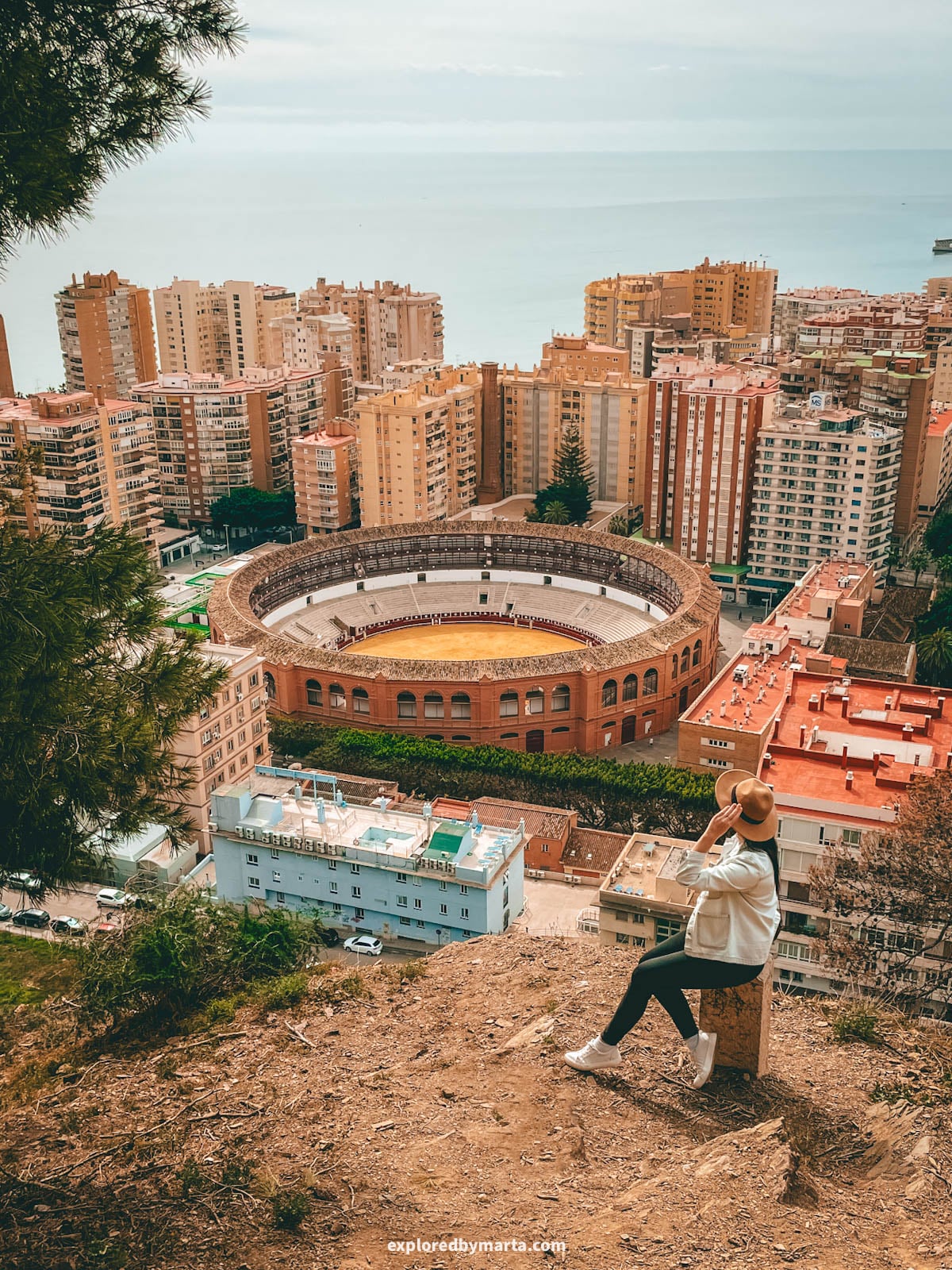
There’s really only one place in Andalusia where you can get that iconic shot of a perfectly round Spanish bullring from above, and it’s from Mirador de la Coracha on Gibralfaro hill in Málaga.
From here you’ll see the port, the bullring (a perfect round “La Malagueta” arena!), the Mediterranean Sea, and a part of the Old Town including the cathedral tower. Gibralfaro Hill really is one of the best places to see Malaga from above.
To get up to the viewpoint, there’s a paved path that starts at the Roman Theatre and zigzags uphill until you reach the viewpoint. It is not difficult, but it can be exhausting on a hot summer day. Luckily, there are benches along the way where you can catch your breath!
Location: Mirador de la Coracha
11. Mezquita-Catedral de Córdoba
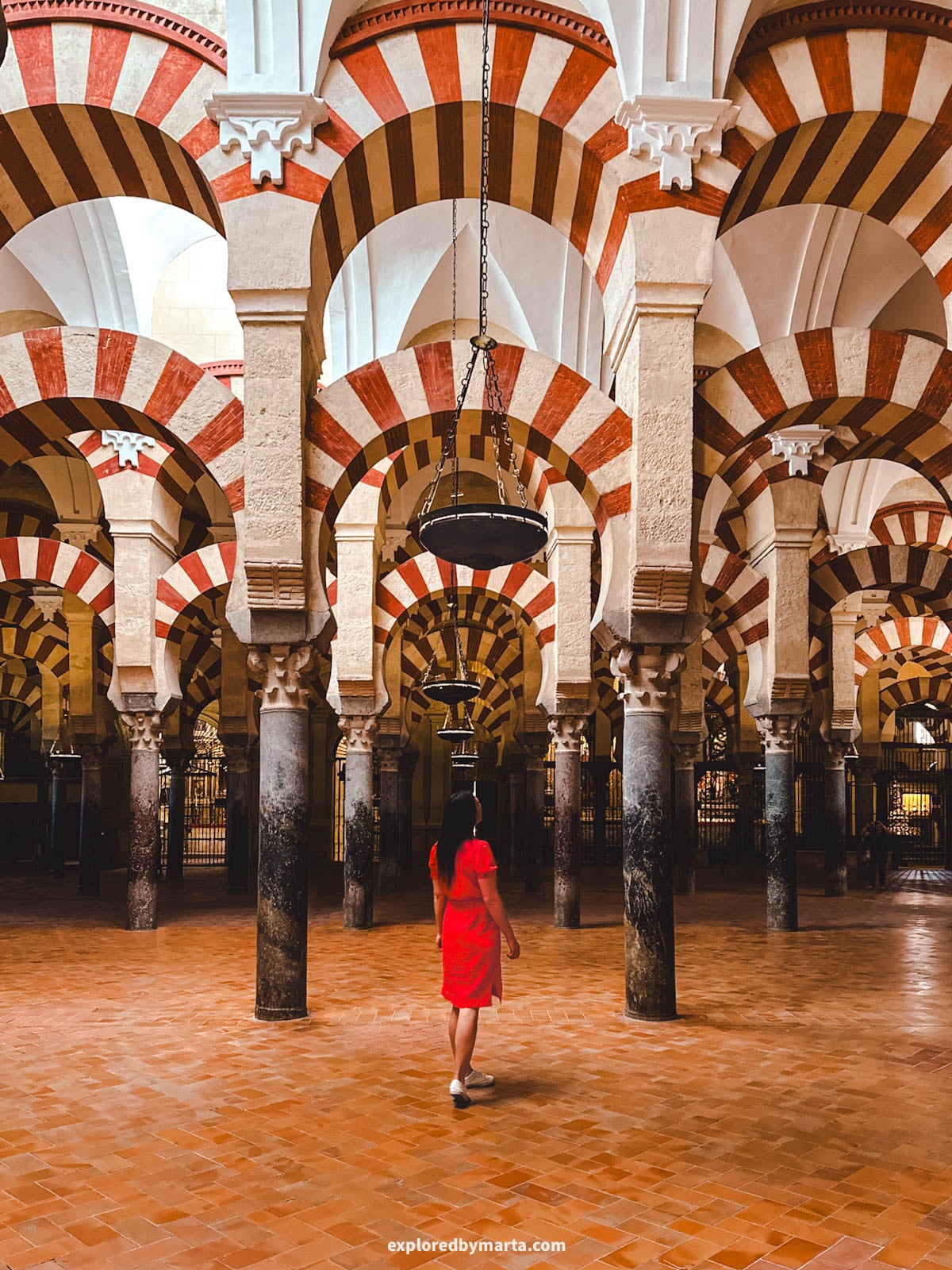
The Mezquita-Catedral de Córdoba is easily one of the most iconic photo spots in Andalusia. If you only have time for one place in Córdoba, I’d say make it this one.
The building started as a mosque during the Islamic period, when Córdoba was the capital of Islamic Spain. After the Christian conquest, it was turned into a cathedral, so you’re basically walking through more than a thousand years of history in one building. Not casual at all!
Inside, you get this incredible mix of mosque and cathedral architecture, red and white striped arches, endless columns, chapels, Moorish details, and ornate corners everywhere you look.
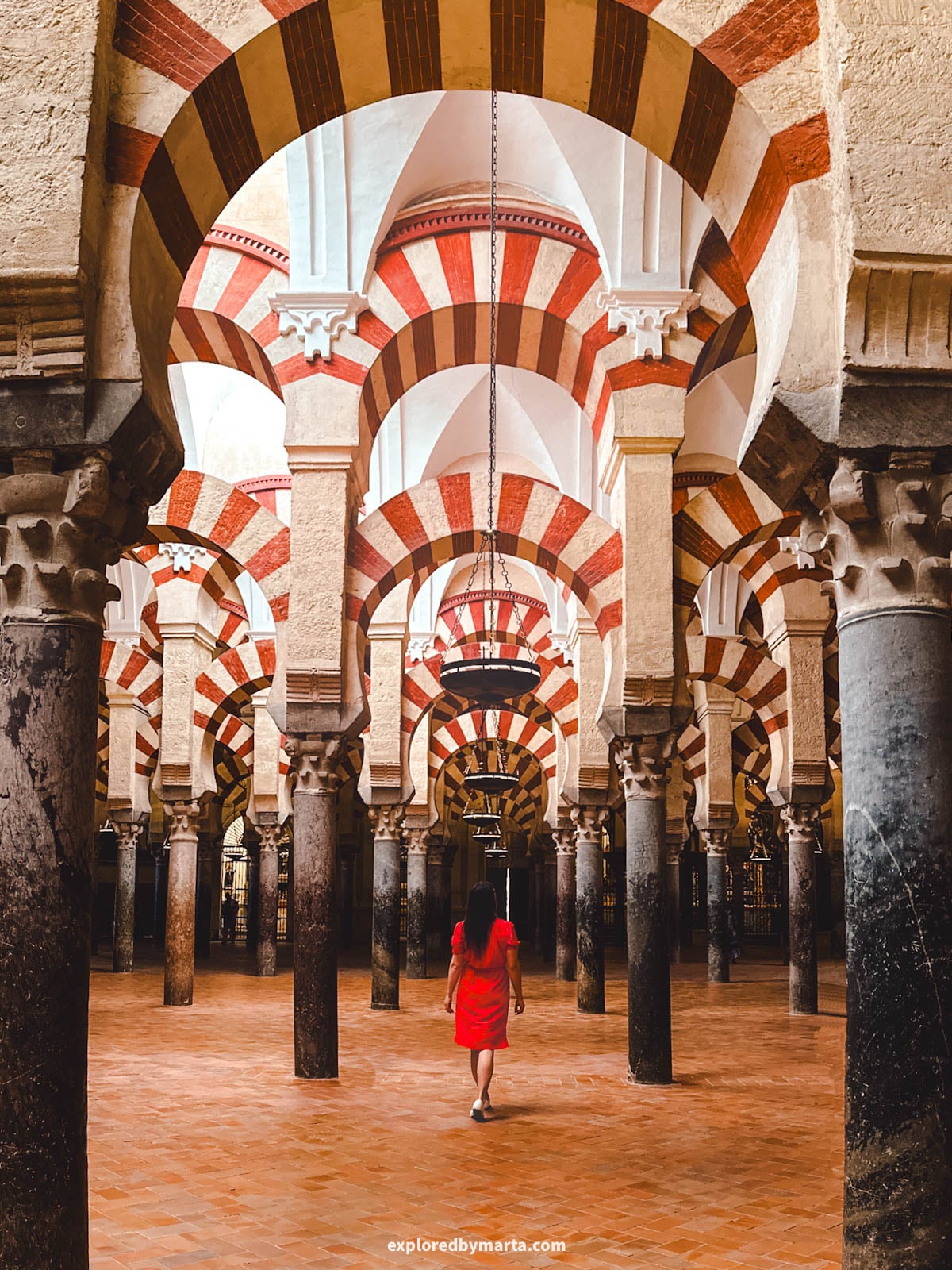
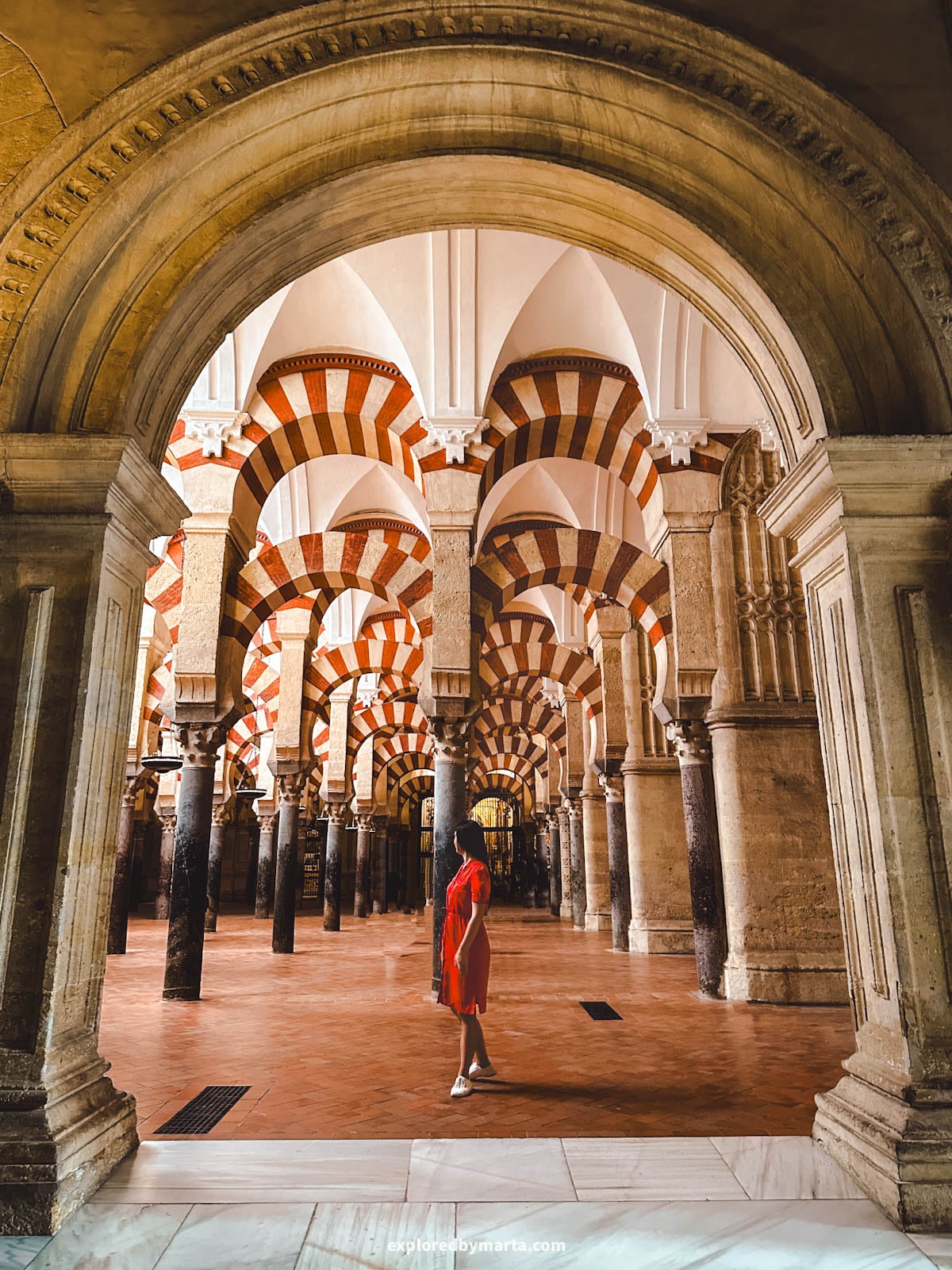
For photos, my biggest tip is to walk past the entrance and head deeper into the building. Most people stop right away to start taking photos as soon as they enter the cathedral, so the back corners actually stay almost empty and quiet.
That’s what we did, at least. We arrived at the earliest opening time, but there was already a long line of people in front of us. However, once we got inside, we went straight to the farthest corner of the cathedral, and it was almost completely empty.
So we got easy photos without crowds! You need a ticket to enter, and I really recommend booking online in advance. It’s one of the most famous places to visit in Andalusia, so it’s always busy!
Location: Mezquita-Catedral de Córdoba
12. Patios de Córdoba
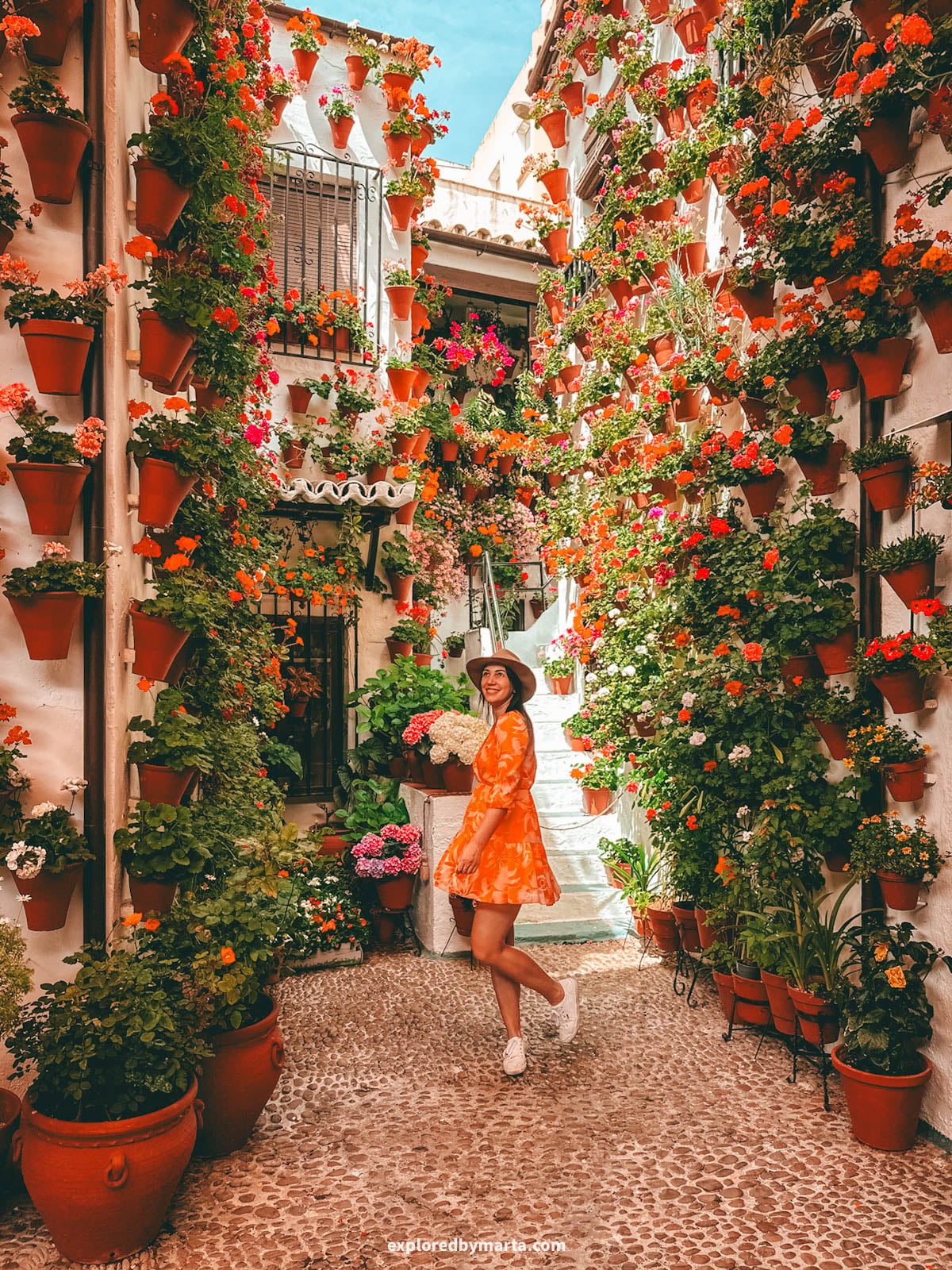
The famous Patios de Córdoba are some of the most colorful photo spots in Andalusia. Think whitewashed walls, blue flower pots, tiled floors, fountains, and flowers absolutely everywhere.
Córdoba is famous for its patio culture, and the biggest celebration is the Fiesta de los Patios in May. During the festival, private courtyards open to visitors and compete for the title of most beautiful patio in the city.
May is the most impressive time to see them because everyone goes all in with the flowers. But it’s also the busiest, so don’t expect a peaceful little flower paradise without people, haha.
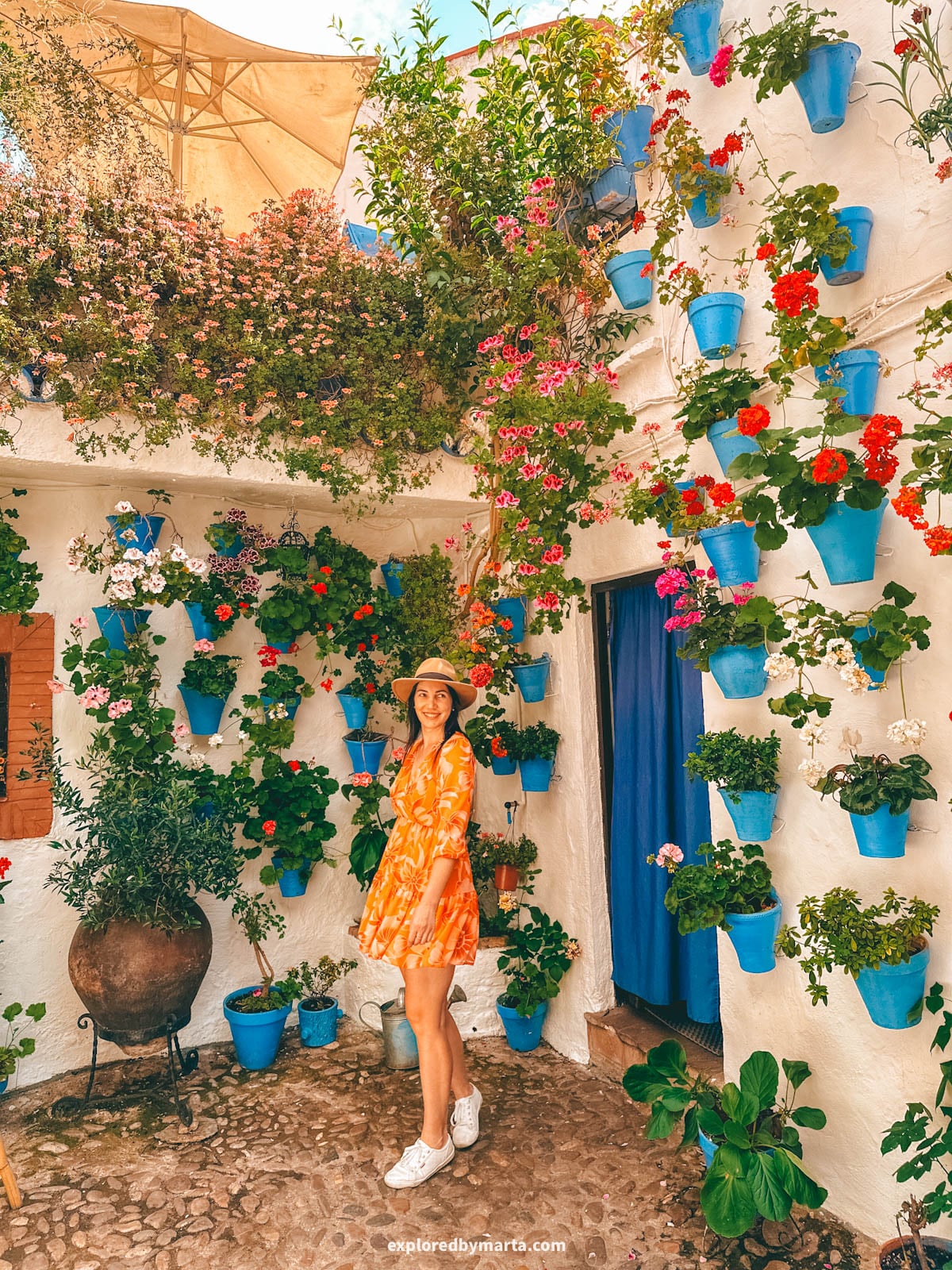
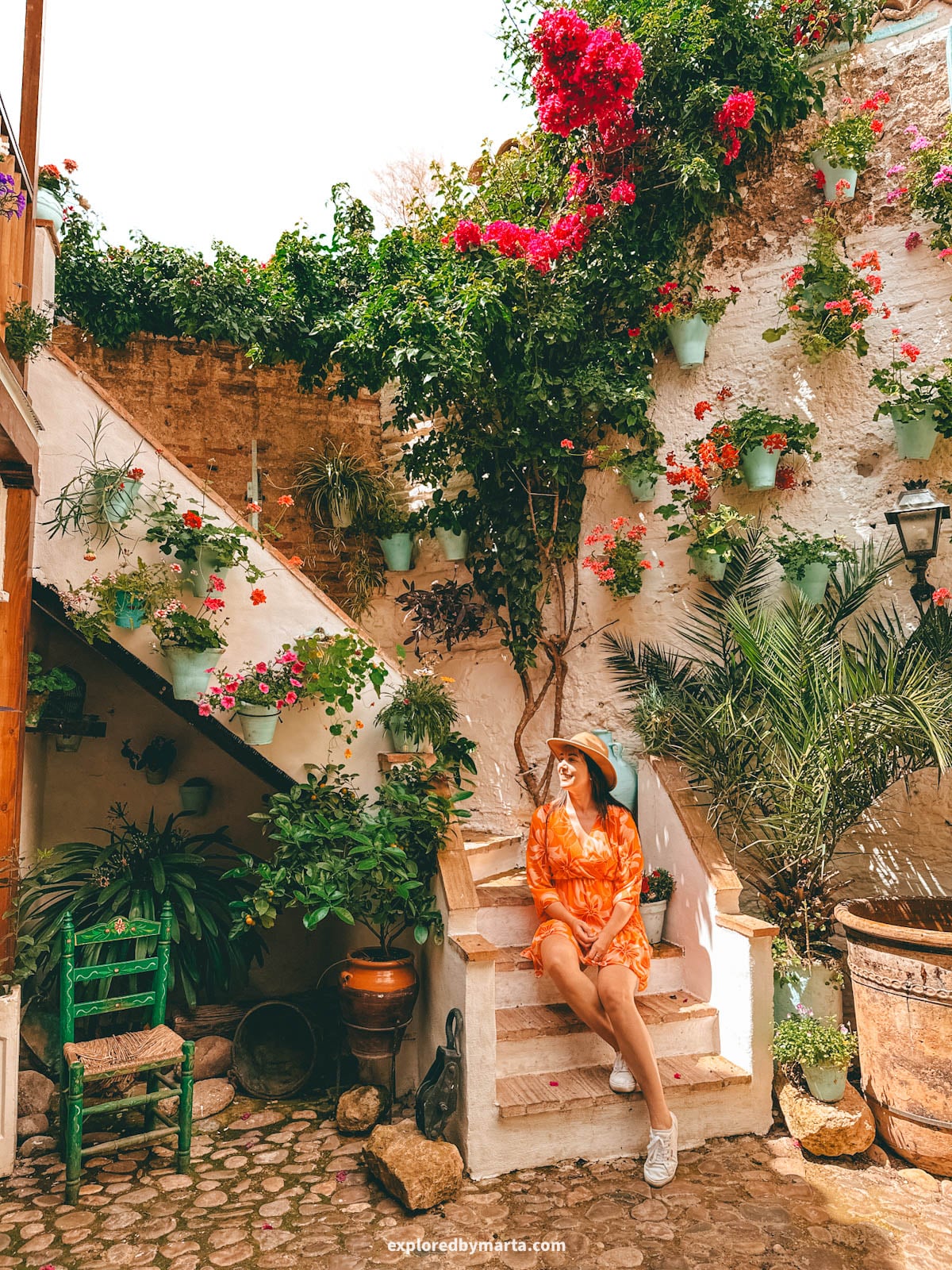
The good news is you don’t have to visit in May to see them. Many courtyards are kept up year-round, especially in spring, summer, and autumn.
We did the Ruta de Patios Córdoba in the San Basilio neighborhood, and I loved it. You buy a ticket, get a map, and visit a set of beautiful patios at your own pace, no guessing which ones are open.
But you can also just wander the neighborhood, which is full of them, and look for the street signs marking which are open (they usually ask for a small donation).
Location: Patios Cordobeses
13. Puente Romano de Córdoba
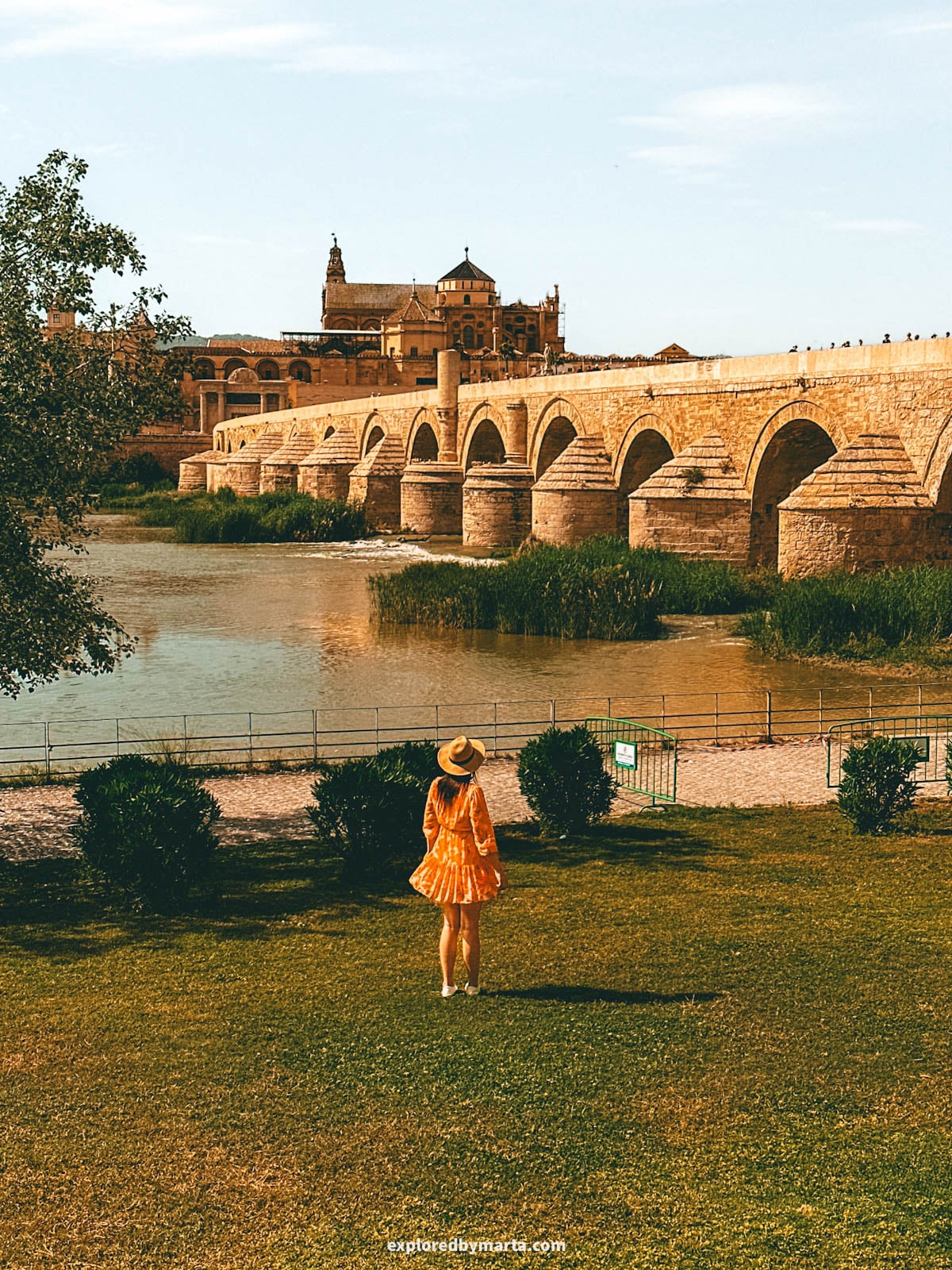
Puente Romano is one of the most iconic photo spots in Córdoba and one of the most recognizable landmarks in the city. The original bridge dates back to the 1st century BC, though it’s been rebuilt and restored many times since.
This bridge crosses the Guadalquivir River and connects the historic center with the area around the Torre de la Calahorra.
For photos, the best view isn’t from the bridge itself, but from the riverbank on the far side. From there, you can frame the whole bridge with the Córdoba skyline and the Mezquita-Catedral behind it. Loved this spot!
And a fun one: the Roman Bridge of Córdoba was used as the base for the Long Bridge of Volantis in Game of Thrones. The final version was heavily edited, but still, a pretty cool fact to know!
Location: Puente Romano de Córdoba
14. Calleja de las Flores in Córdoba
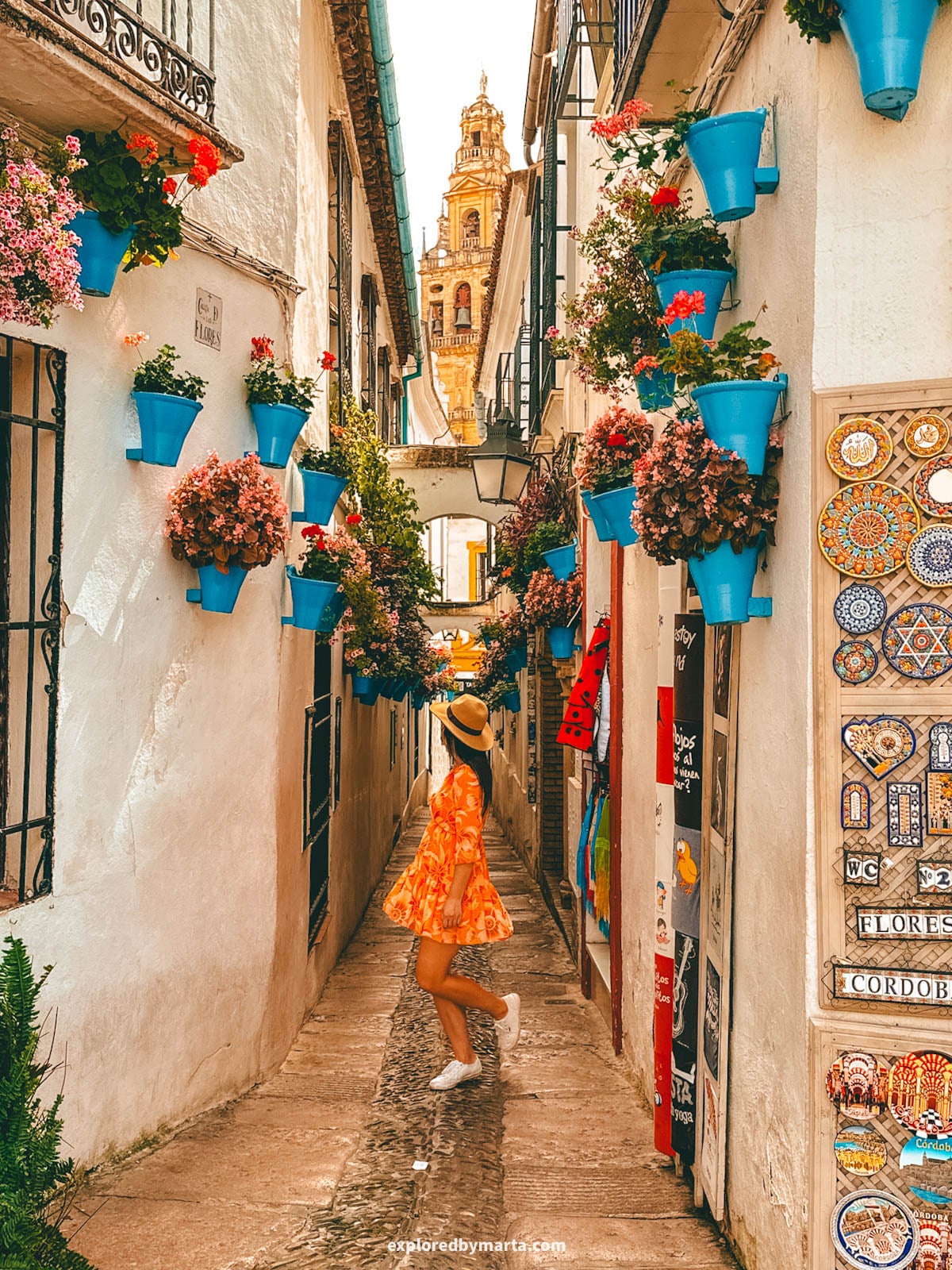
Calleja de las Flores is an iconic street in Córdoba, and it fully deserves the hype. It’s a bit of a hidden gem in Córdoba, though it can still get quite busy during the day since it’s right next to the Mezquita.
This narrow whitewashed alley is decorated with colorful flower pots and arches, and ends with one very iconic view, the Torre Campanario bell tower perfectly framed between the buildings. Soooo picturesque!
It’s one of those Córdoba spots you’ve probably already seen on social media, but seeing it in real life is still impressive. It feels like the city understood the assignment and built a perfect postcard corner. 😍
We visited at the end of April and took our photos shortly before 5 PM, when many tourists were at a late lunch, and the old town felt calmer. Early morning would work here, too, to avoid crowds.
Location: Calleja de las Flores
15. Iznájar, the flower-filled village on a hill
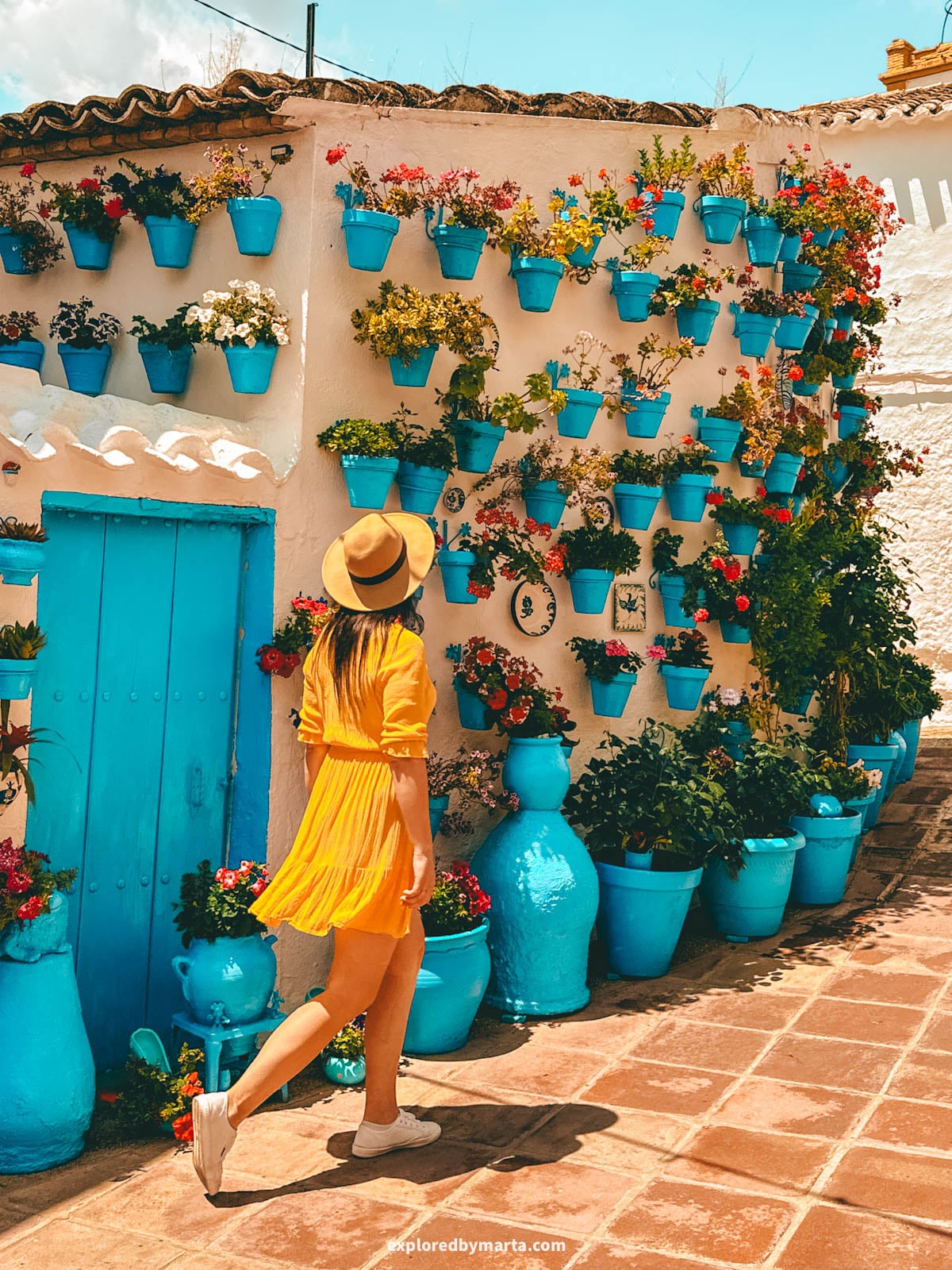
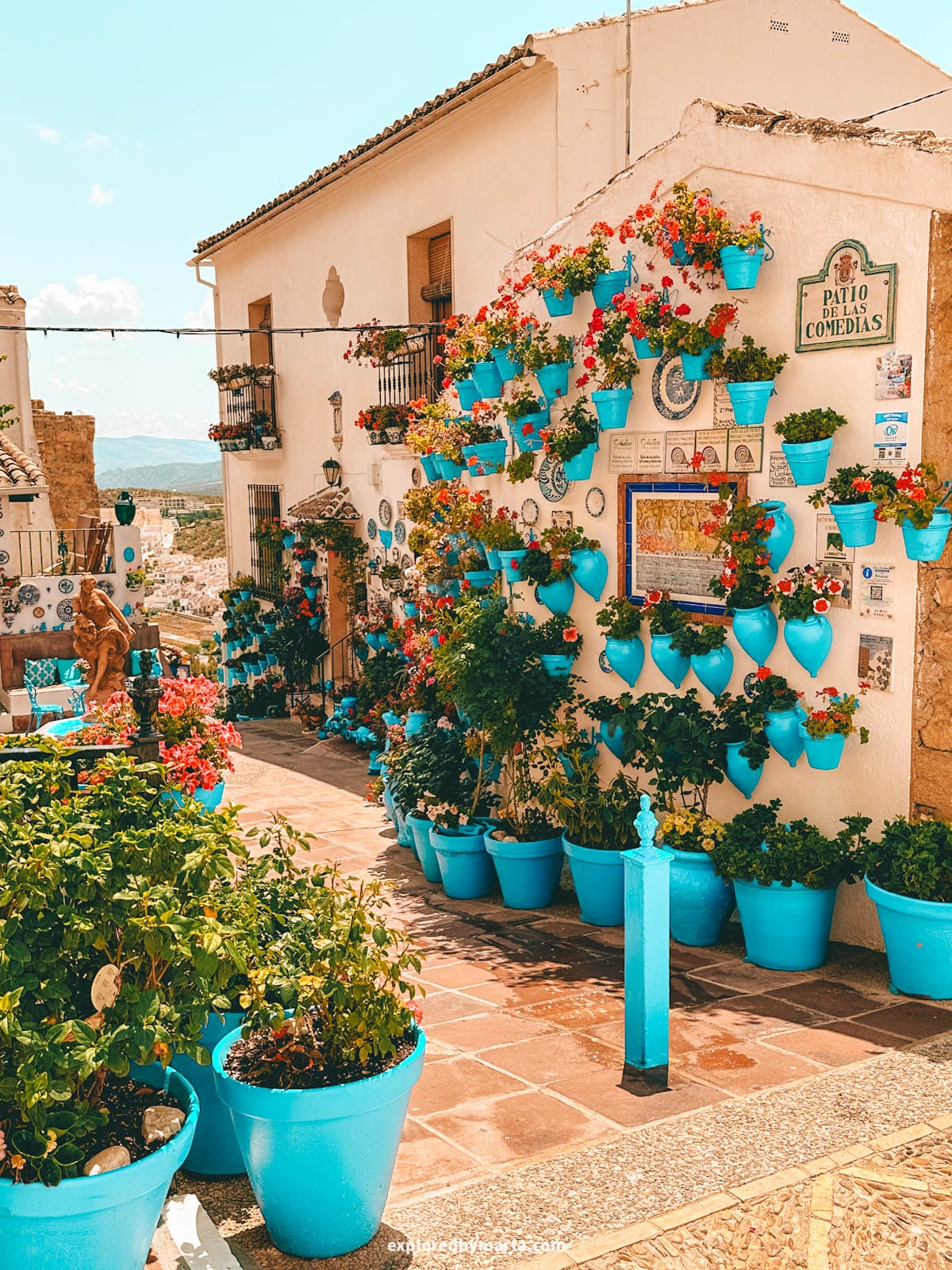
Compared to other white villages, Iznájar is still a bit of a hidden gem in Andalusia and doesn’t get as much attention. But if you’re after the prettiest photo spots in Andalusia, Iznájar is such a good one to add.
Located in Córdoba province, Iznájar sits on top of a hill with a huge reservoir below, which already gives you some really nice photo spots with wide views.
And once you start wandering, you’ll find flower-filled corners, small squares, and viewpoints basically made for photos. Every few minutes, you’ll probably stop again, haha.
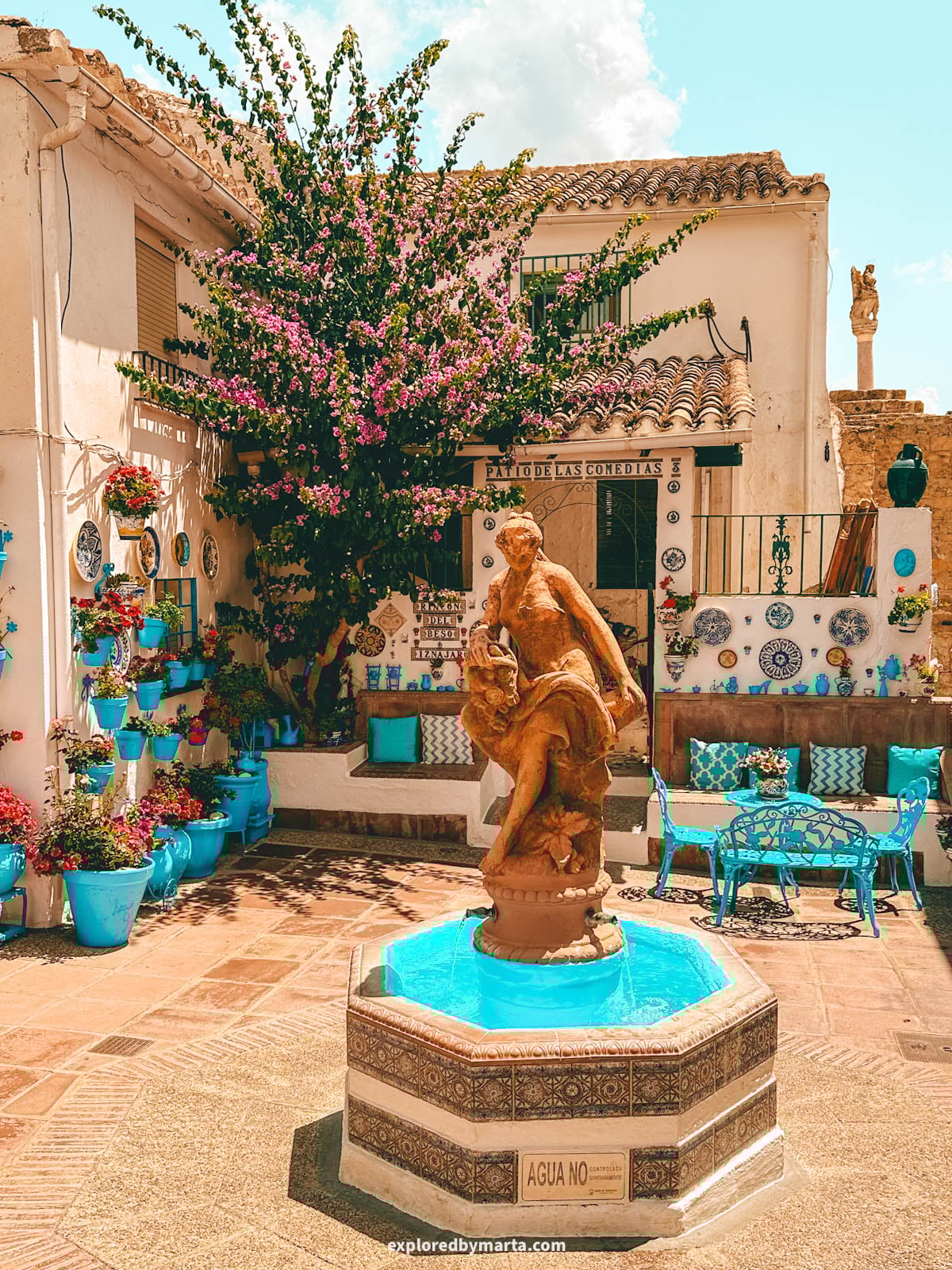
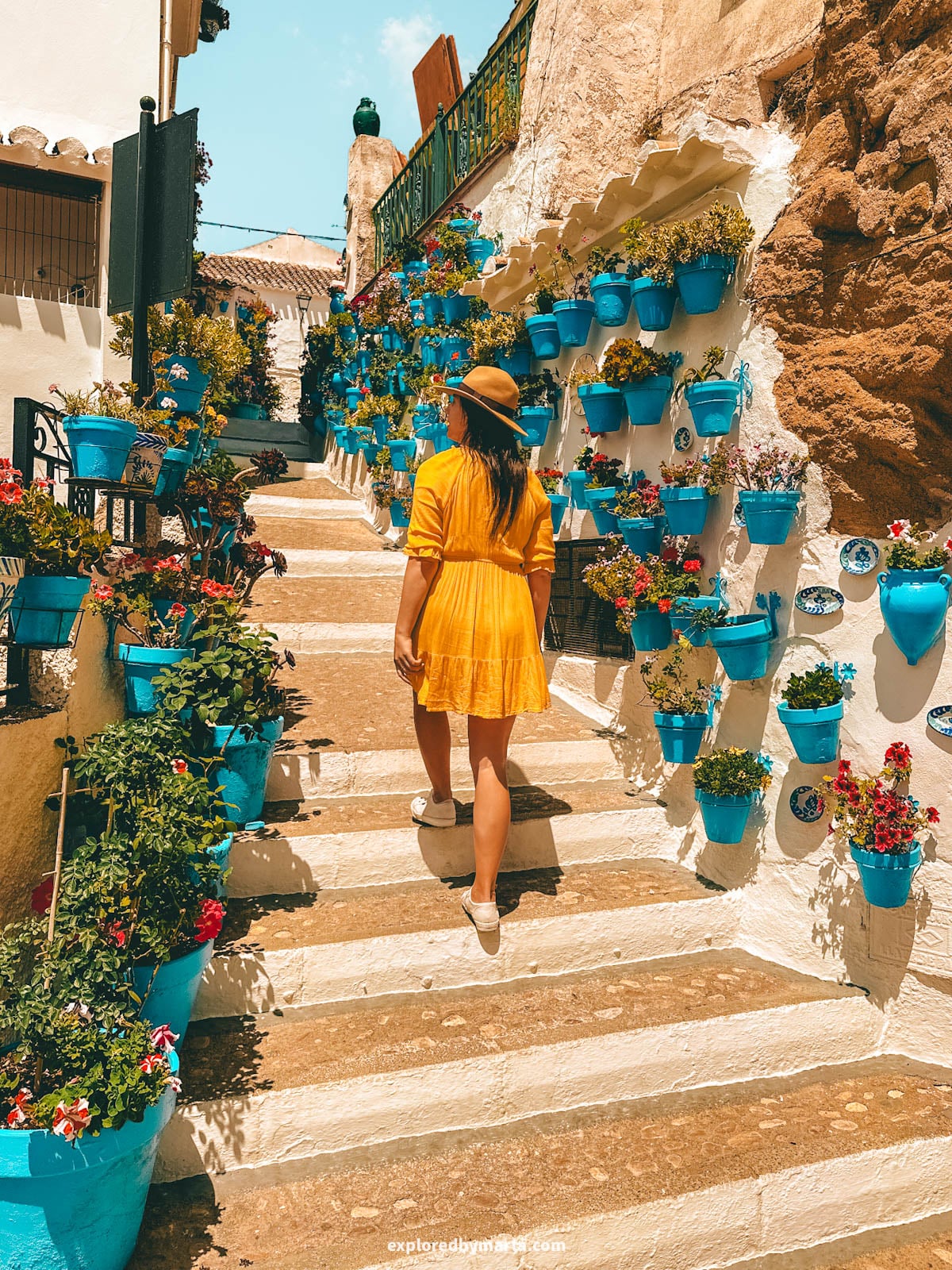
The most beautiful place for photos in Iznájar is Patio de las Comedias, a small courtyard covered in blue flower pots and colorful details like plates, chairs, tiles, and a fountain.
I mean, it’s easily one of the prettiest places in all of Andalusia!
Iznájar is perfect for a short stop during a road trip or a half-day trip from one of the nearby cities – Malaga, Granada, or Córdoba. A few hours is plenty to explore, find the viewpoints, and wander the village. I highly recommend visiting this place!
Location: Patio de las Comedias
16. Castillo de Colomares near Málaga
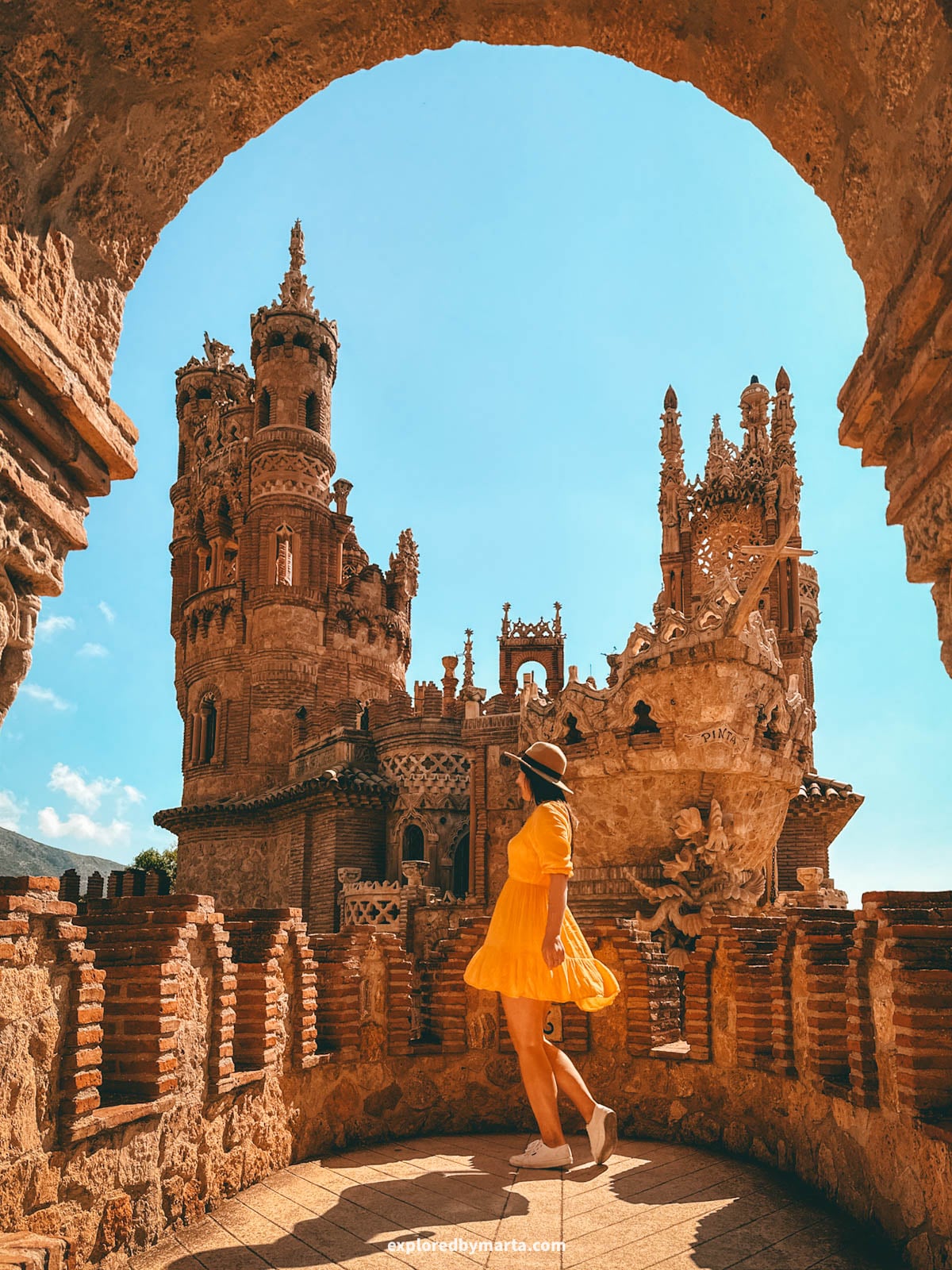
Castillo de Colomares looks like an ancient castle, but here’s the twist – it’s actually a monument built in the shape of one, dedicated to the life and voyages of Christopher Columbus.
It’s one of the most unique photo spots in Málaga province!
What makes it so unusual is that it looks like a centuries-old castle, but it was actually finished in 1994 after seven years of construction.
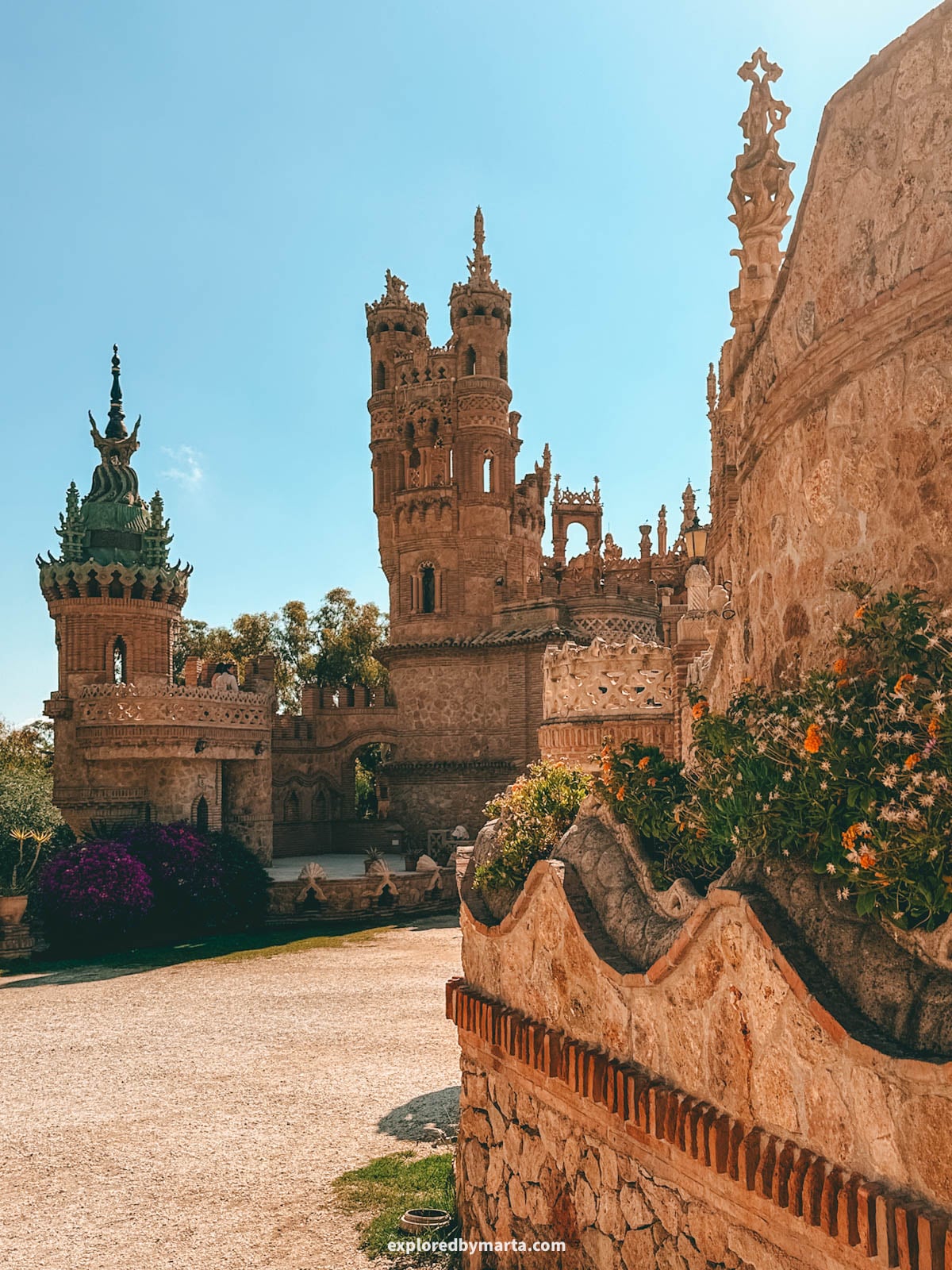
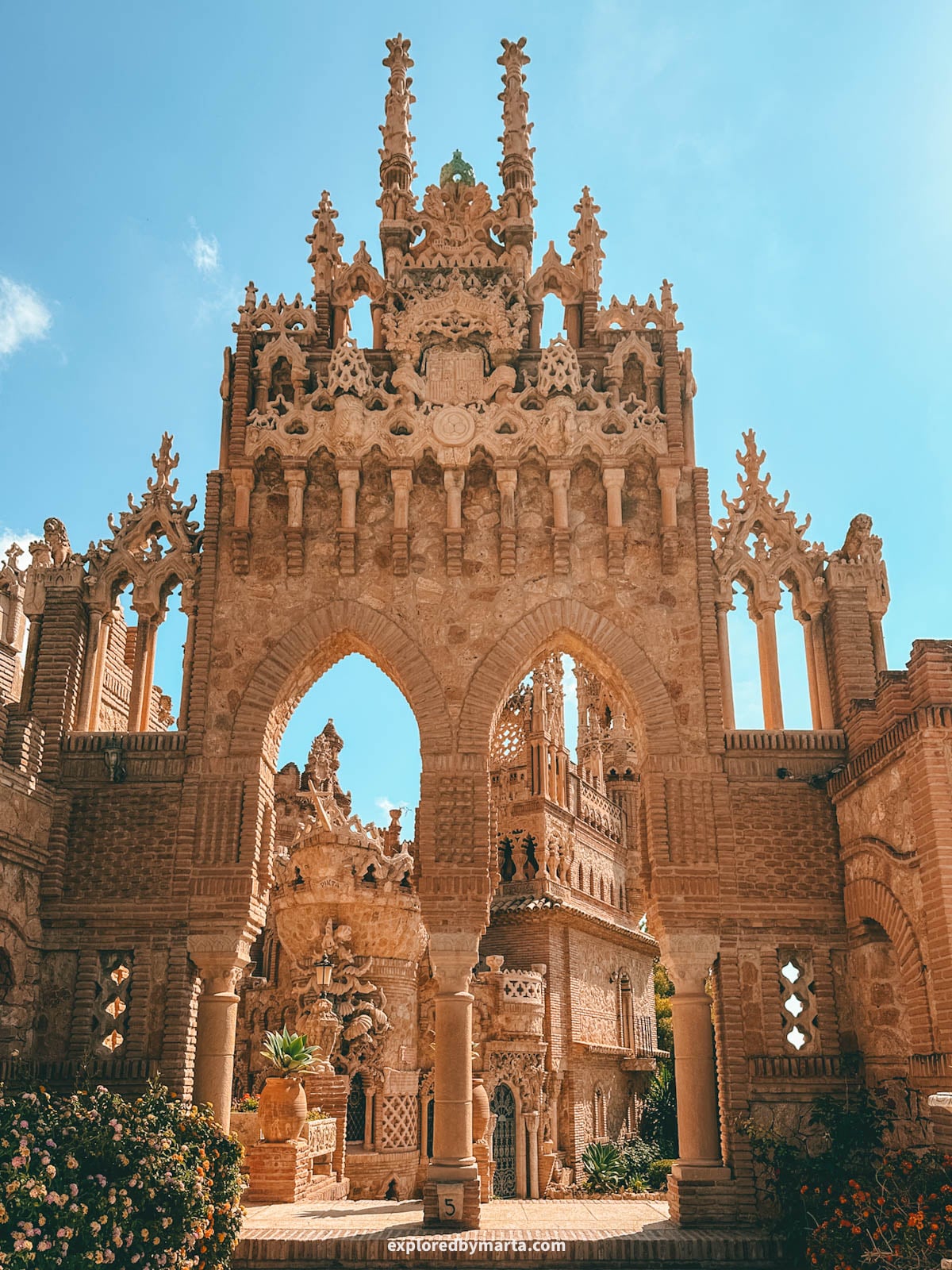
The design mixes Gothic, Romanesque, and Byzantine styles all in one, with tons of little carvings, towers, and symbols telling the story of Columbus. The architectural details are honestly amazing! You’ll keep spotting new things every time you walk around.
And here’s the detail that gets everyone: the monument is home to the smallest church in the world, measuring less than 2 square meters. Can you imagine a church that tiny?
You can visit this fairytale-like hidden gem for a small entrance fee (3.50 EUR per adult).
Location: Castillo de Colomares
17. Flower wall and church view in Marbella
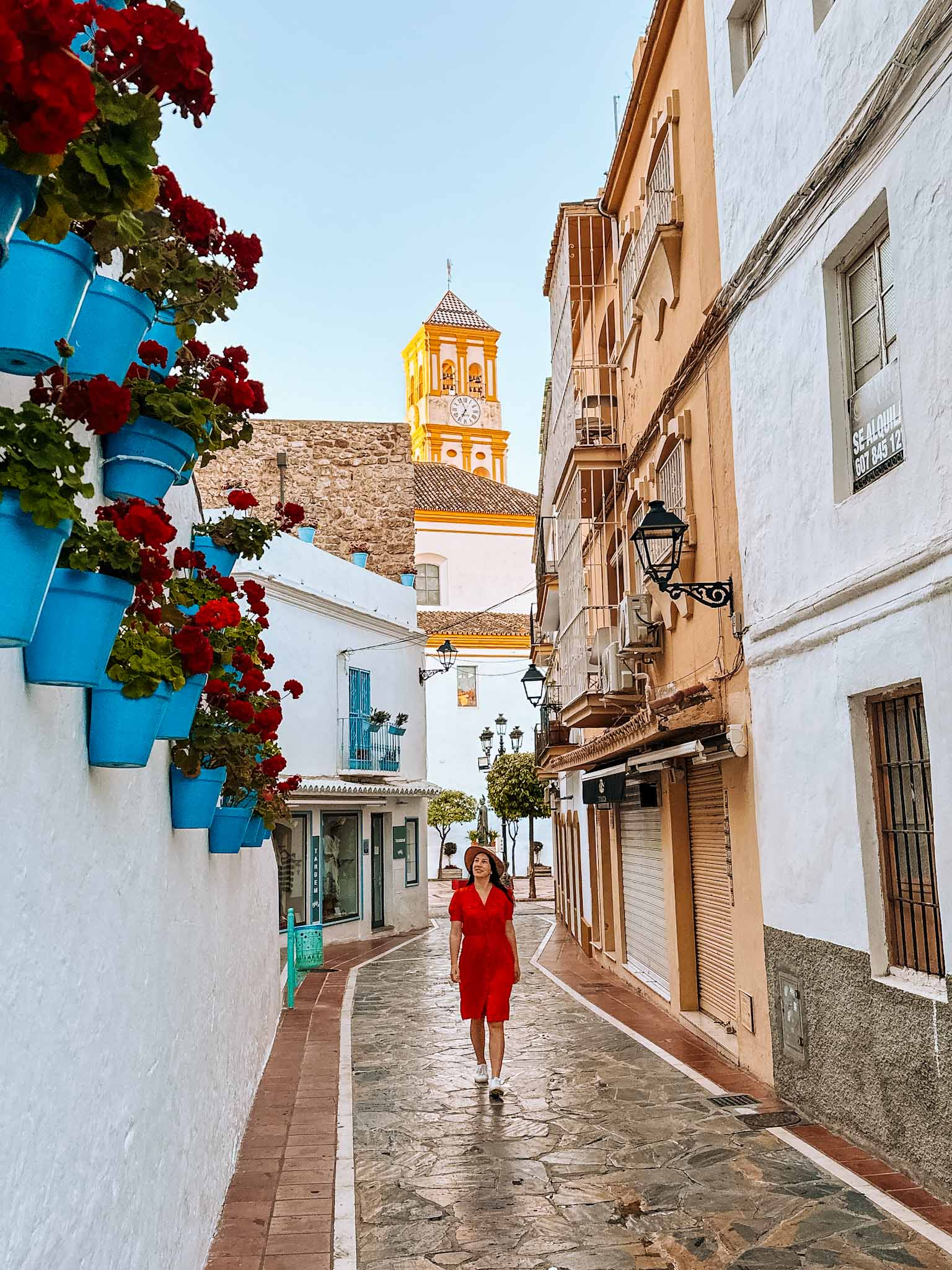
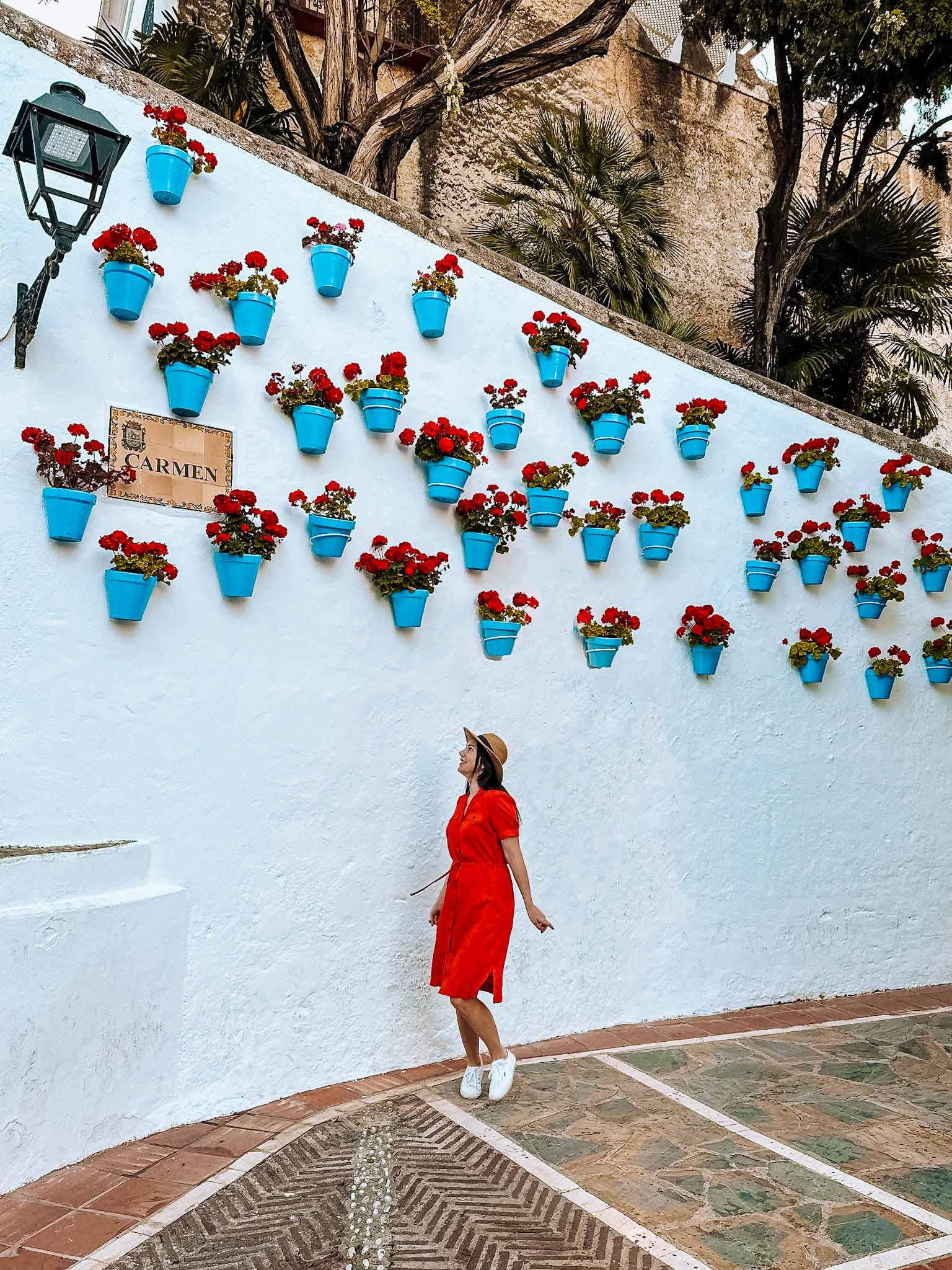
Marbella is a charming coastal town in Málaga province, and it’s often said to have the most beautiful old town in Andalusia, which makes it well worth a stop on your travels.
There are two iconic photo spots in Marbella – the historic Plaza de los Naranjos, and this flower spot on Calle Carmen you see in the photo above. It’s a very short street, but it’s pretty iconic. One of the most beautiful streets in Marbella (and Marbella is full of beautiful, charming streets!).
What makes this exact spot so special is that classic Andalusian combination – whitewashed houses covered with blue flower pots and red flowers, plus a church tower in the background. The perfect postcard photo! If you’re in the area, make sure to stop by Marbella!
Location: Calle Carmen in Marbella
18. Caminito del Rey
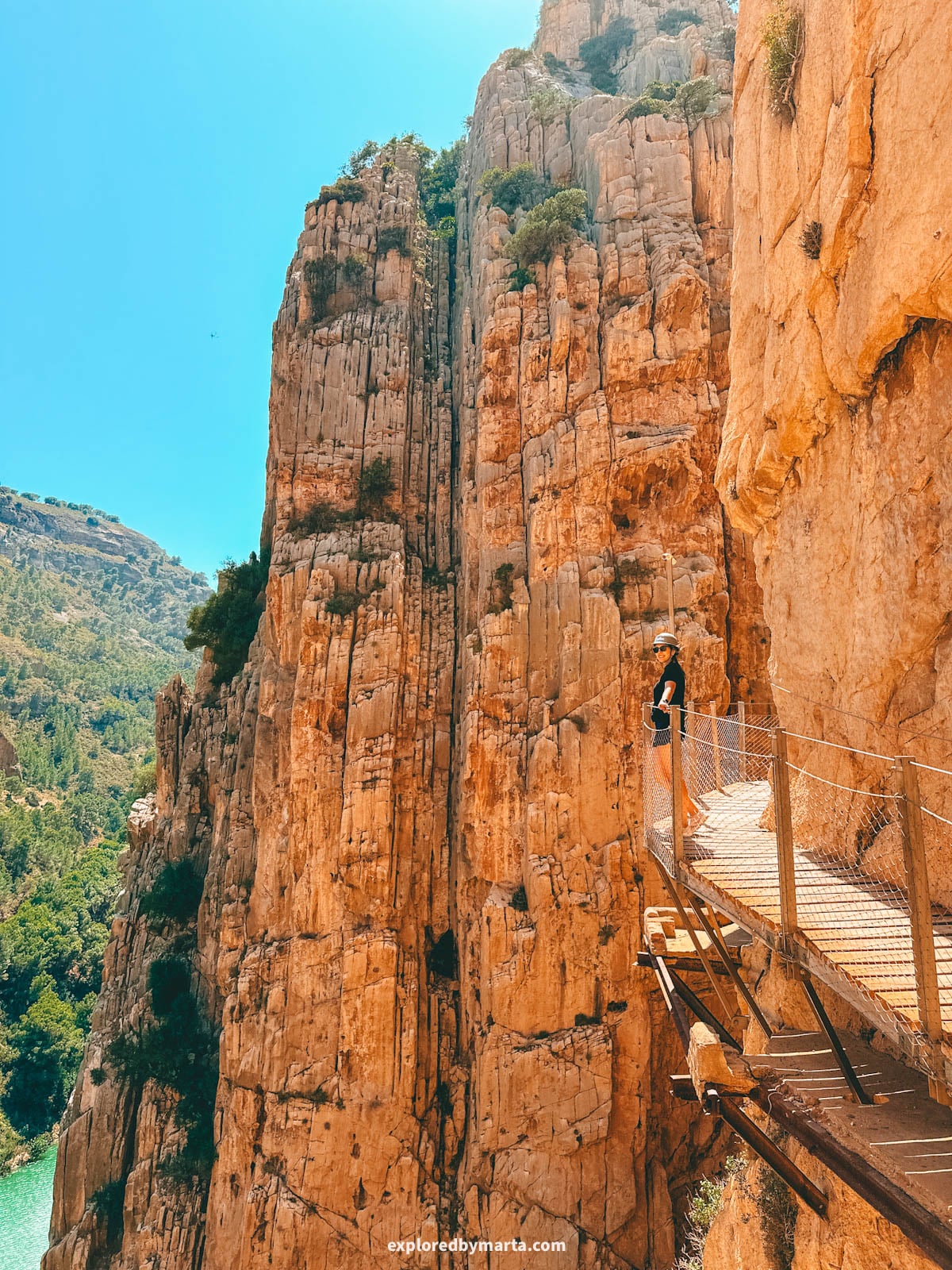
Walking the iconic Caminito del Rey hike is one of the bucket list things to do in Andalusia. This was once considered one of the most dangerous hikes in the world, but after reconstruction, it’s now a relatively safe and easy walk.
The name means “the King’s Little Path”, and yes, a king really did walk here. King Alfonso XIII crossed the path back in 1921 for the opening of a nearby dam, and the name stuck ever since.
It’s a unique walkway pinned along the steep walls of a narrow gorge, making it one of the most scenic places in Andalusia. If you are visiting Southern Spain, make sure to plan a visit to this place!
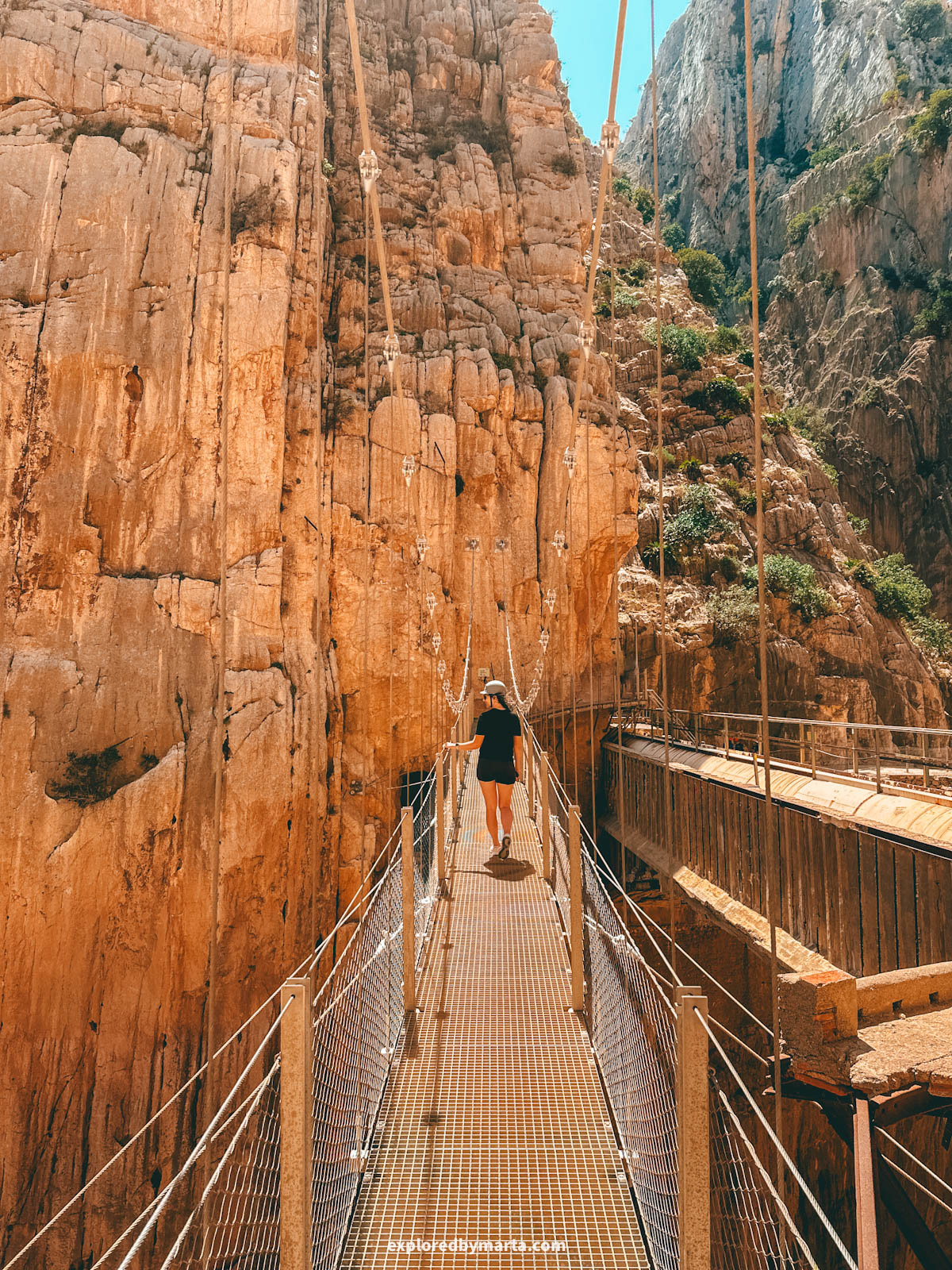
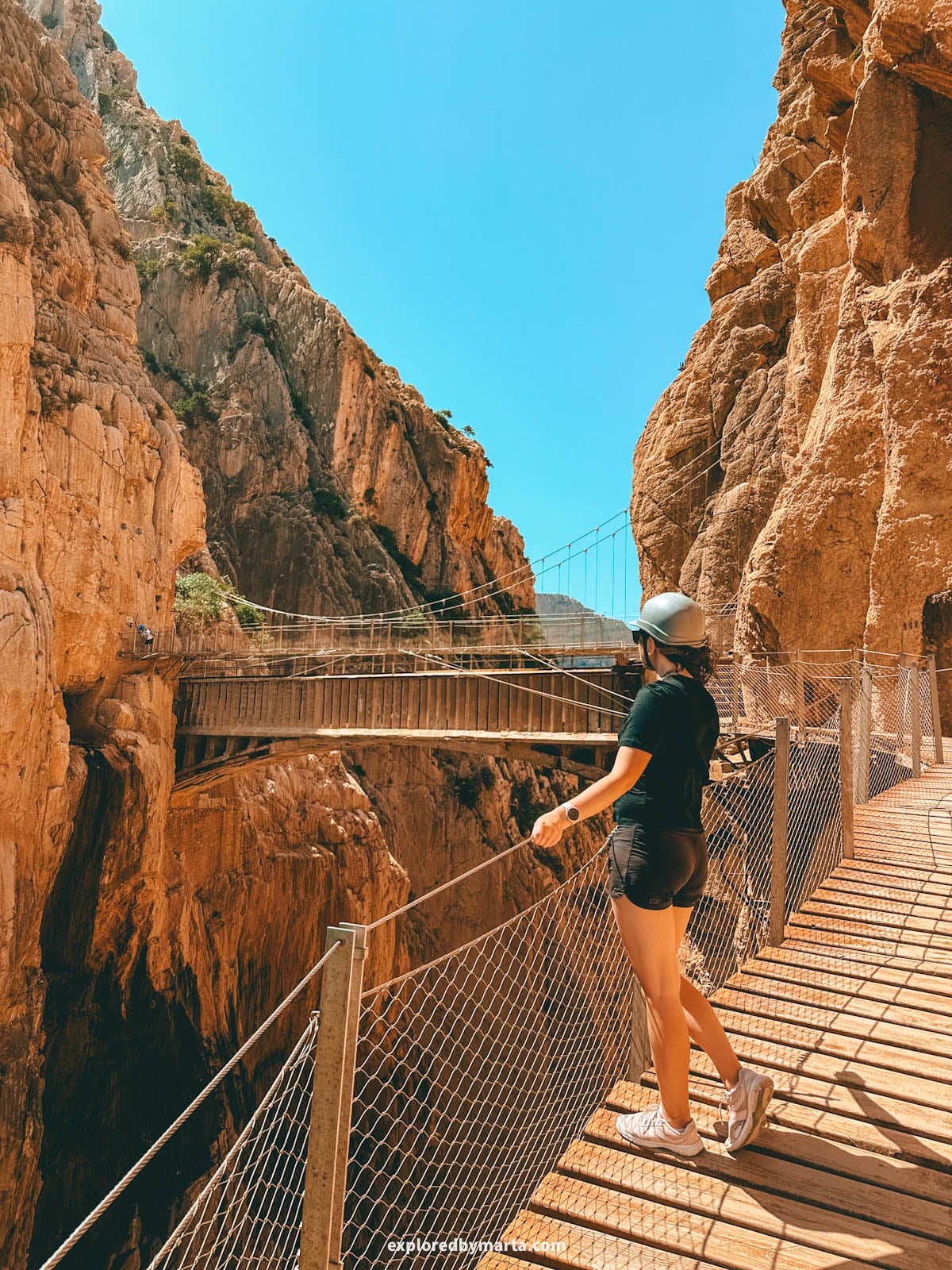
The path is around 7–8 km long and mostly downhill, following the direction of the Guadalhorce River through the gorge. You don’t need to be super fit, but you should be comfortable with heights. Some sections are super high!
One of the most memorable parts is the suspension bridge at the end of the trail (see my photos above!). It’s slightly wobbly, haha! But the views from there are amazing and definitely worth it, just don’t look down!
To walk in complete safety and learn about the gorge along the way, I recommend joining a guided tour. We did, and our guide was fun and energetic. One of my favorite memories from Andalusia!
Location: Caminito del Rey – Parking lot
19. The Balcony of Europe in Nerja
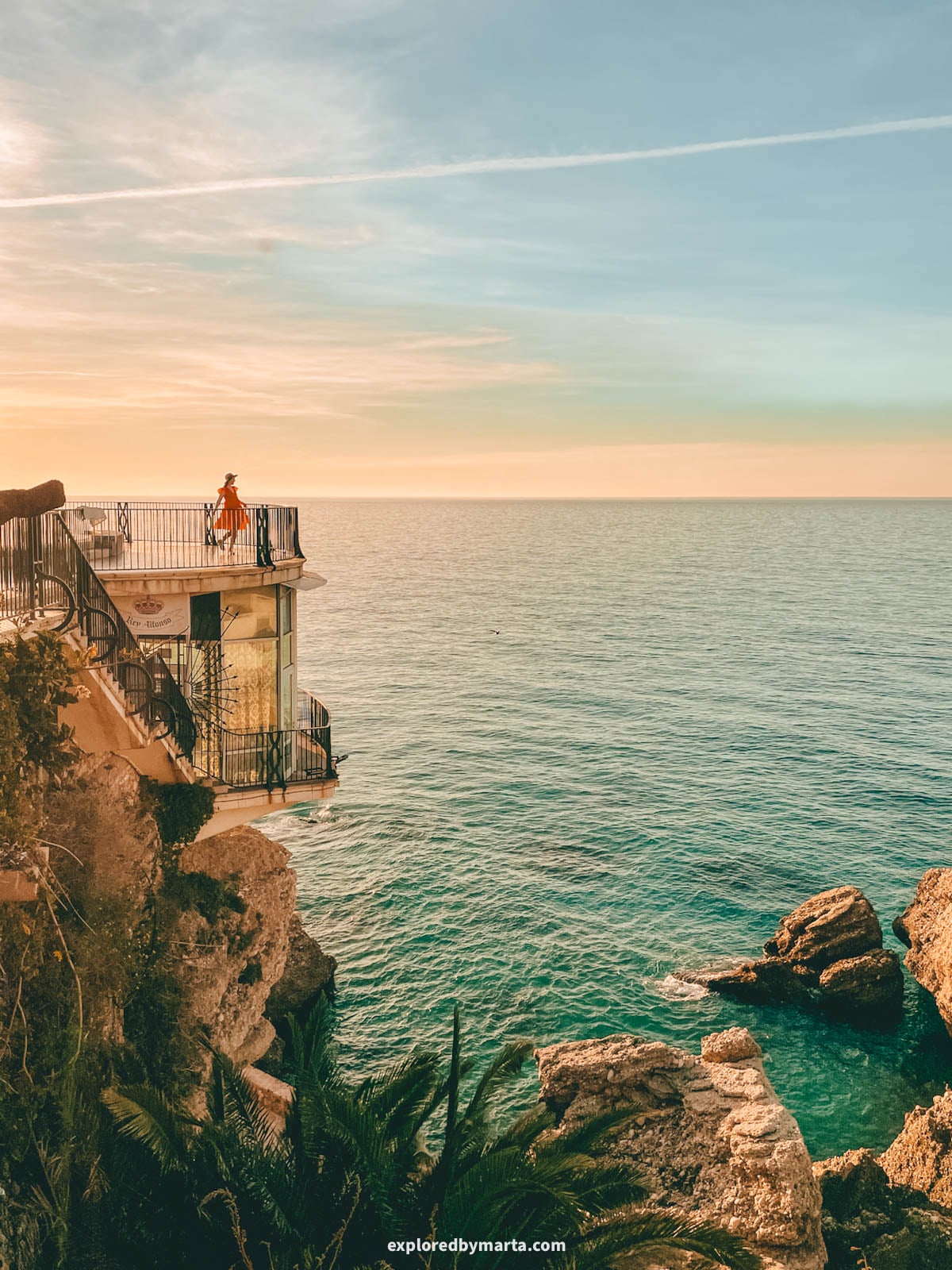
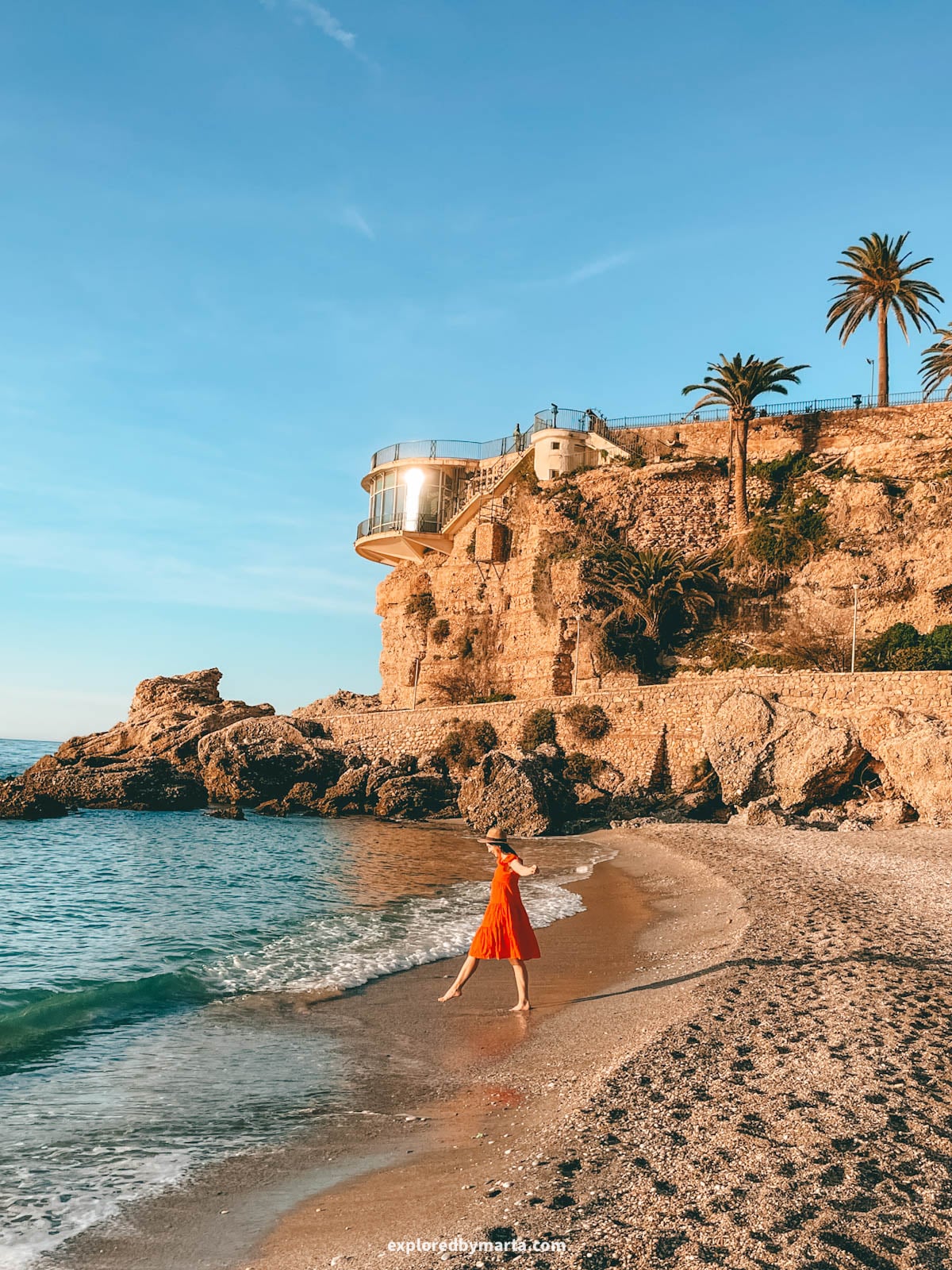
Nerja is a fantastic coastal town and perfect for you if you want a mix of coastline, viewpoints, and a more laid-back atmosphere than the big Andalusian cities. Many travelers actually prefer staying in smaller towns, like Nerja, instead of Malaga or Seville.
But what about places to take photos in Nerja?
The most famous spot here is the Balcony of Europe – a viewpoint built on top of a cliff, which is basically a wide platform stretching into the sea with fantastic views over the Mediterranean, the mountains, and the coastline.
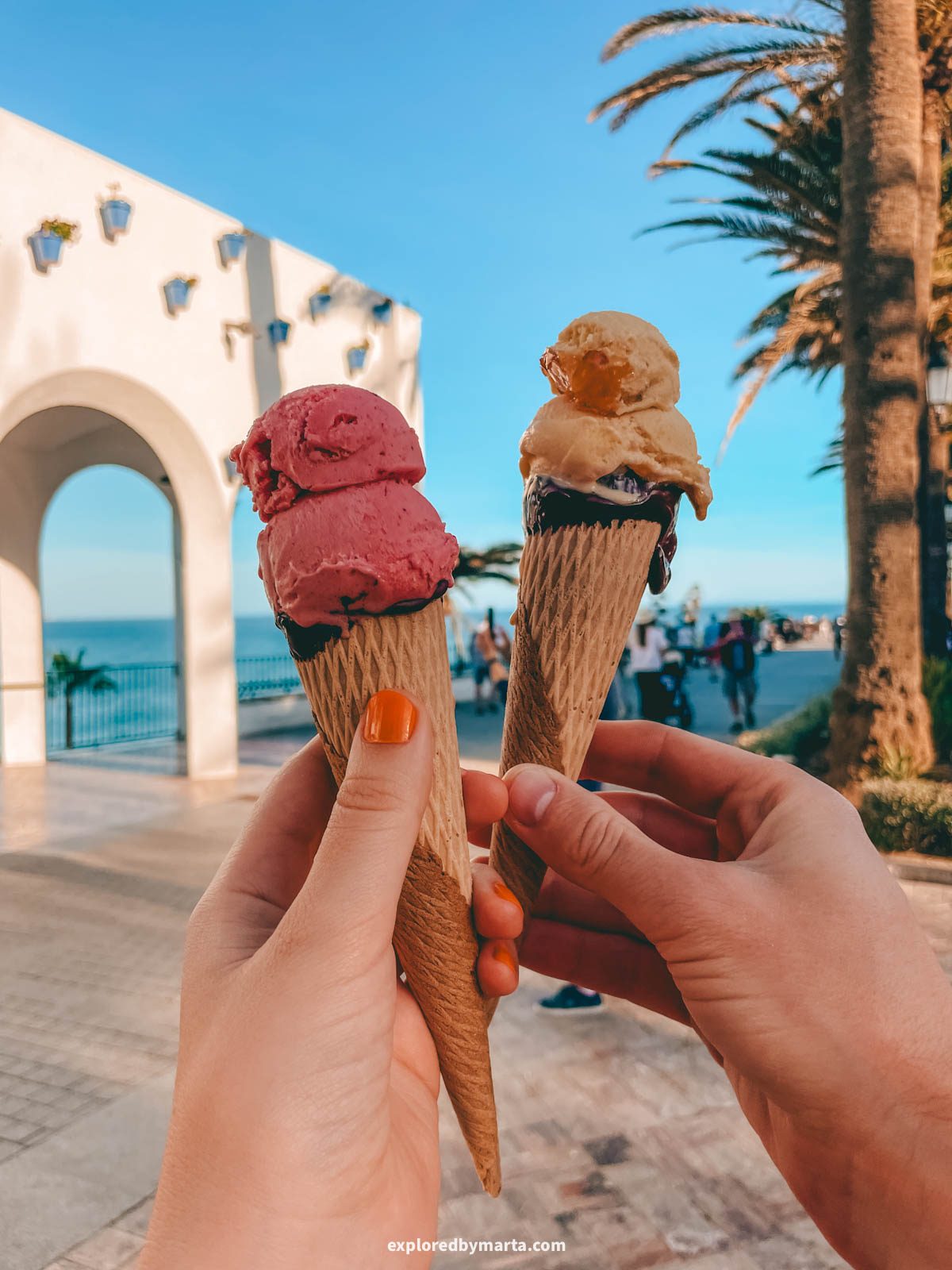
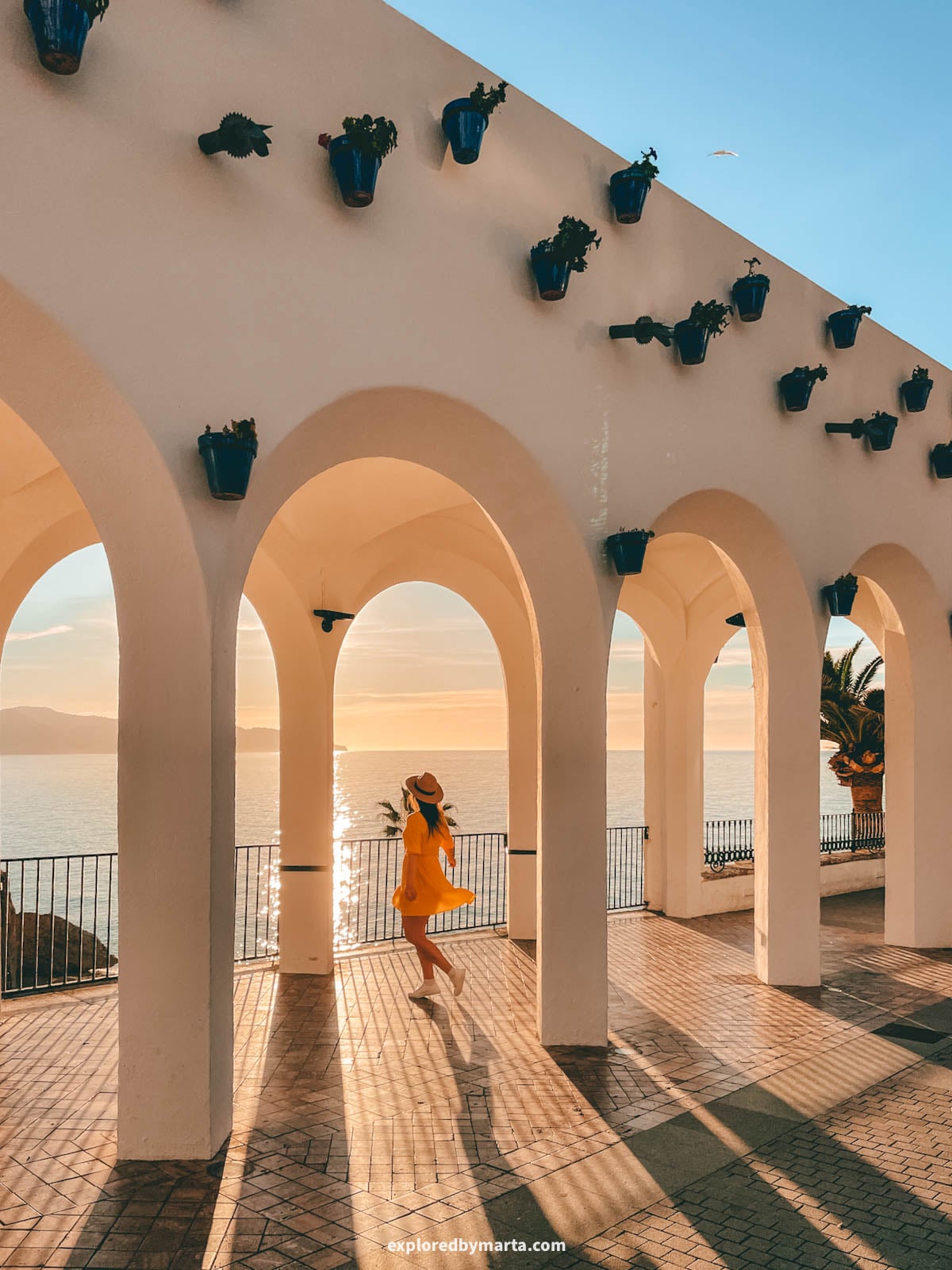
This is the busiest spot in Nerja, lined with benches, restaurants, ice-cream shops, and palm trees. People come here just to relax and socialize, and it’s a great place to watch the sunrise.
The square next to the balcony is also lined with beautiful white double arches decorated with Andalusian blue flower pots. We came here for sunrise, and it was one of my favorite memories from our visit to Nerja!
I recommend grabbing an ice cream to eat by the balcony or sitting down for a snack at one of the restaurants by the viewpoint. Nerja has that classic white village feel, but with a coastal bonus, plus plenty of places to eat, shop, or slow down. We really loved this town!
Location: Balcón de Europa
20. Frigiliana, the charming whitewashed flower village
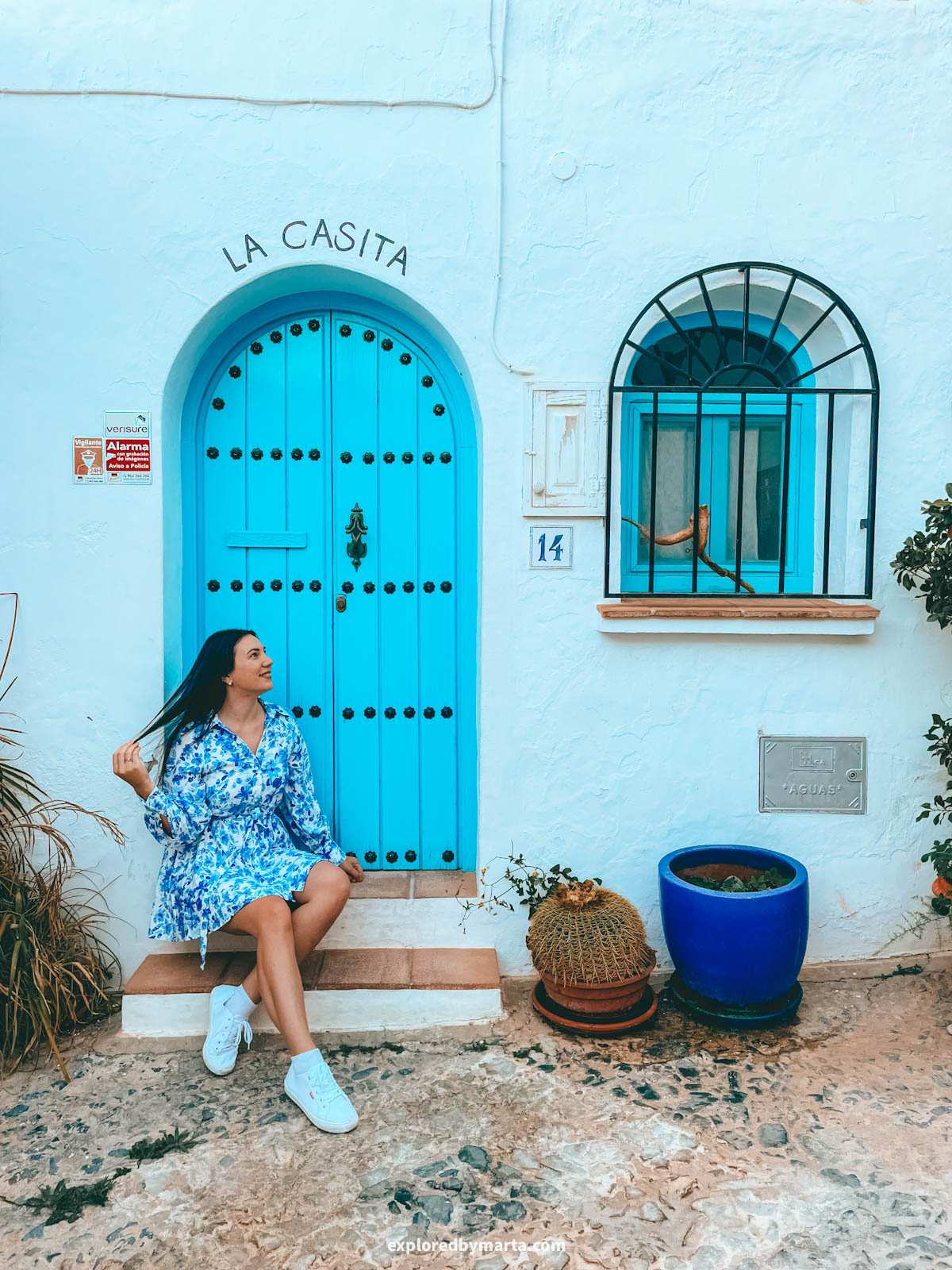
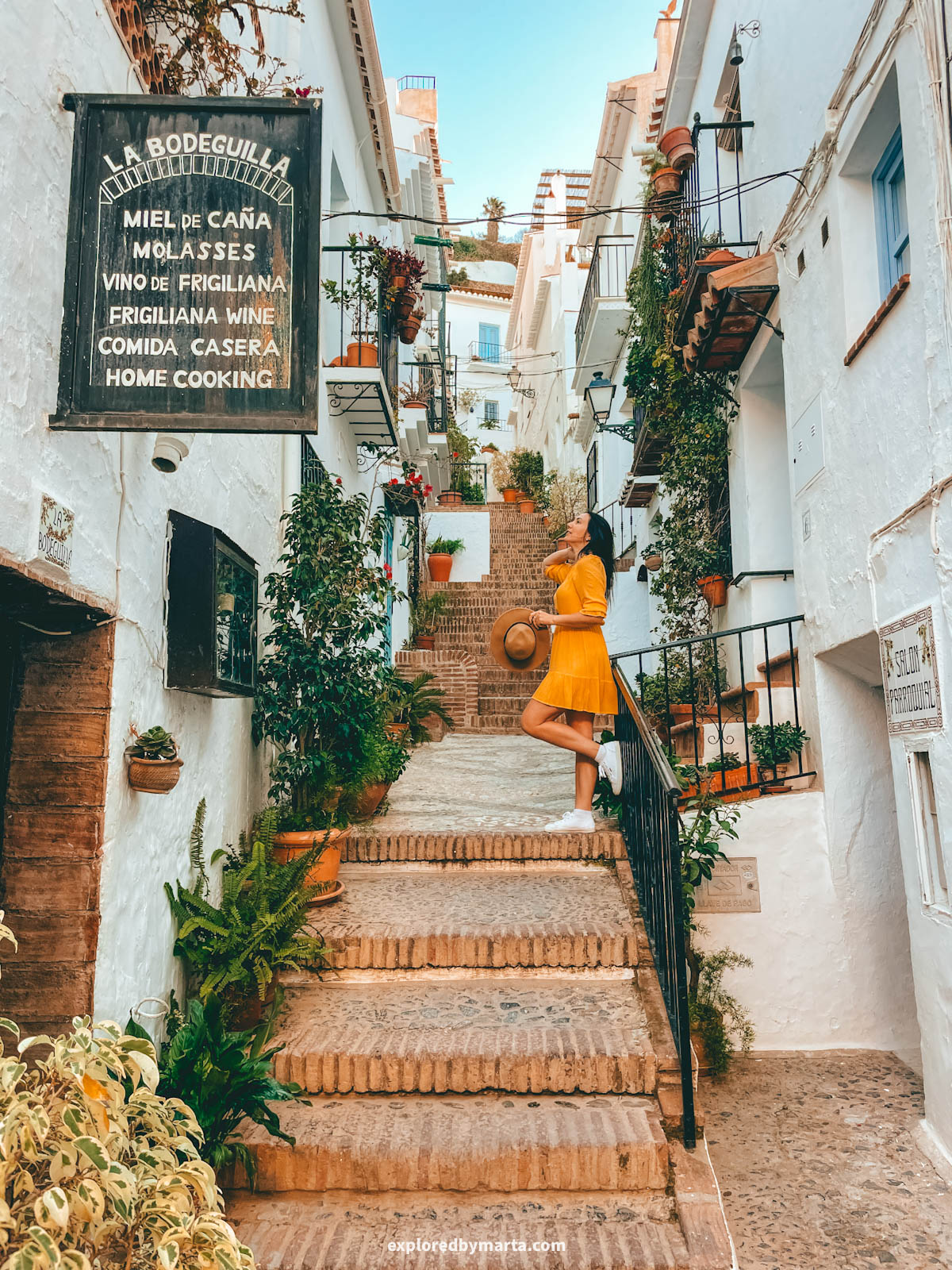
Frigiliana is easily one of the most photogenic places in Andalusia! Sometimes it felt like the whole village was made for photos! No wonder it’s known as one of Spain’s most beautiful villages.
Frigiliana is about 50 minutes from Malaga, and it is best to combine a visit to Frigiliana with a visit to Nerja, which is just 10 minutes away.
What makes Frigiliana special is its super charming old town (Centro Histórico de Frigiliana). This is where you’ll find narrow cobblestone streets, whitewashed houses, and stairs decorated with flowerpots pretty much everywhere you look.
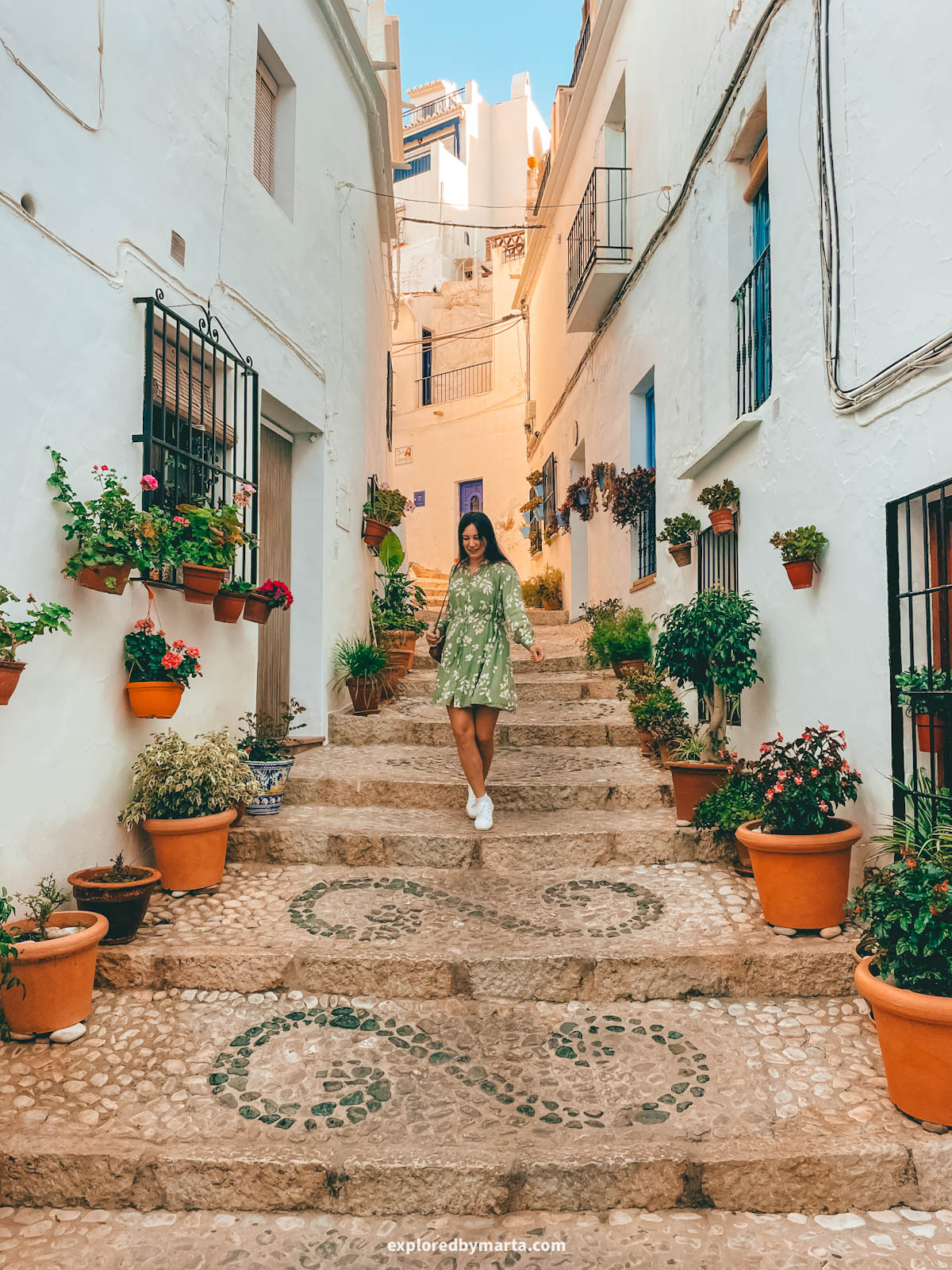
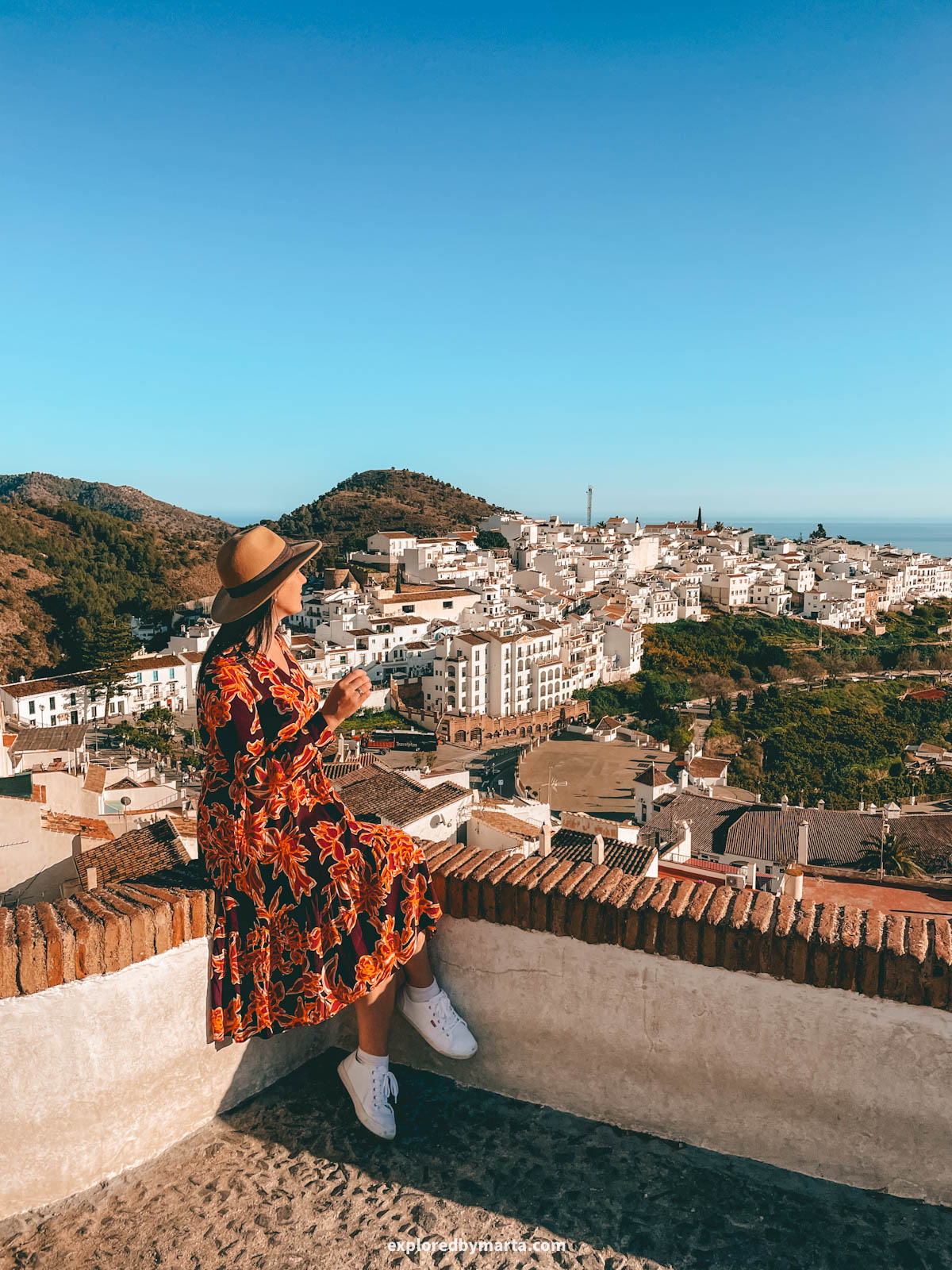
As you wander the old town, you’ll find little corners, staircases covered in pots, quiet alleys, arches, and random doorways that somehow look perfect for a photo even without trying.
Some of the most beautiful places in Frigiliana include Calle Zacatín, Calle Hernando el Darra, Calle El Garral, and the viewpoints higher up. But honestly, half the fun is just wandering and finding your own charming corners.
You can easily see Frigiliana in 3 to 4 hours, but if you can, come early in the morning or stay overnight. It gets busy during the day, but early hours mean empty streets, soft light, and way better shots, so try to time your visit right!
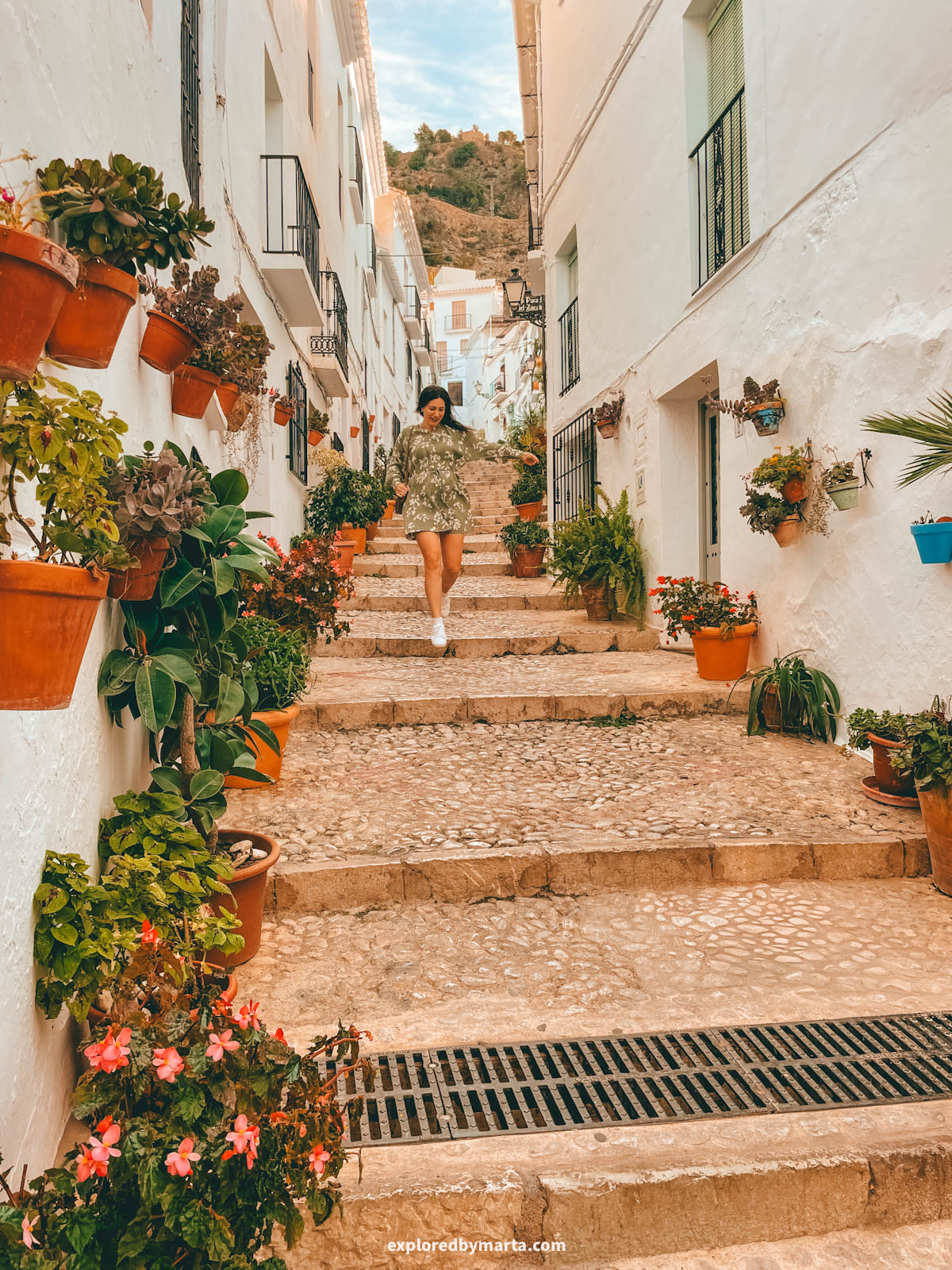
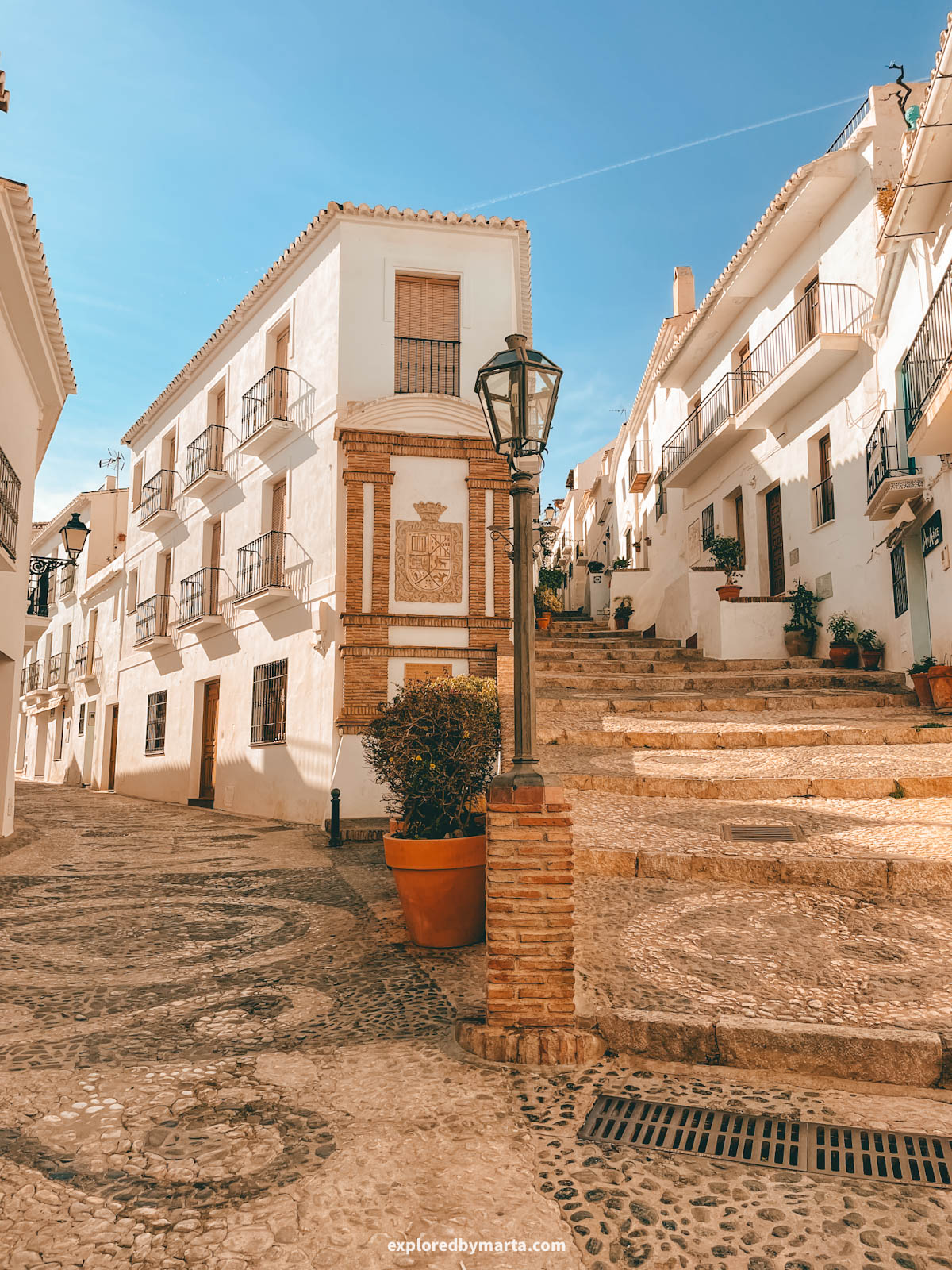
If you want to get away from the crowds and discover Andalusia off the beaten path, Frigiliana is a great choice. And it helps that it is sooo charming and so beautiful!
However, if you can only arrive at midday with the crowds, I recommend climbing up to the upper level of the village (less crowds!) – it offers amazing views over the village, the surrounding mountains, and even the Mediterranean in the distance.
All in all, Frigiliana is less about big landmarks and more about small, lovely details. We spent a few wonderful days here, and I especially loved the quiet mornings and evenings once the daytrippers were gone.
Location: Frigiliana
21. Calle Ciegos in Jerez de la Frontera
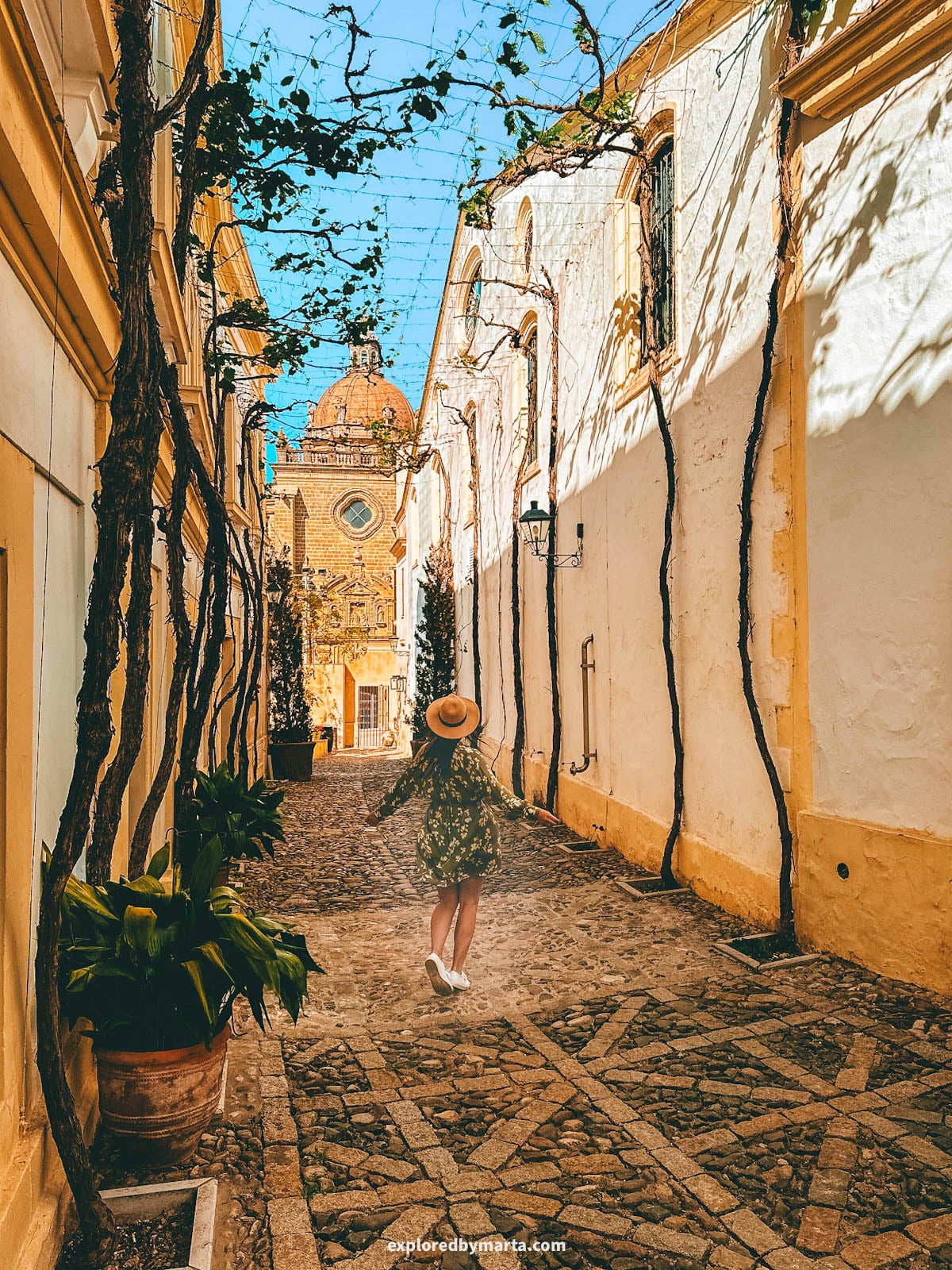
Calle Ciegos in Jerez de la Frontera is one of the most iconic photo spots in Andalusia if you love historic streets, vine-covered corners, and framed cathedral views (well, who doesn’t?).
This narrow street, also known as the Alley of the Blind, is sometimes called one of the most beautiful streets in Spain. It’s easy to see why – it’s covered with vines and has the Cathedral of Jerez framed at the end! So picture-perfect!
When the leaves are fully grown (usually around late spring or early summer), Calle Ciegos turns into a green tunnel. We visited in spring, so the vines weren’t fully out yet. A tiny bit disappointing? Yes. Still beautiful? Also yes.
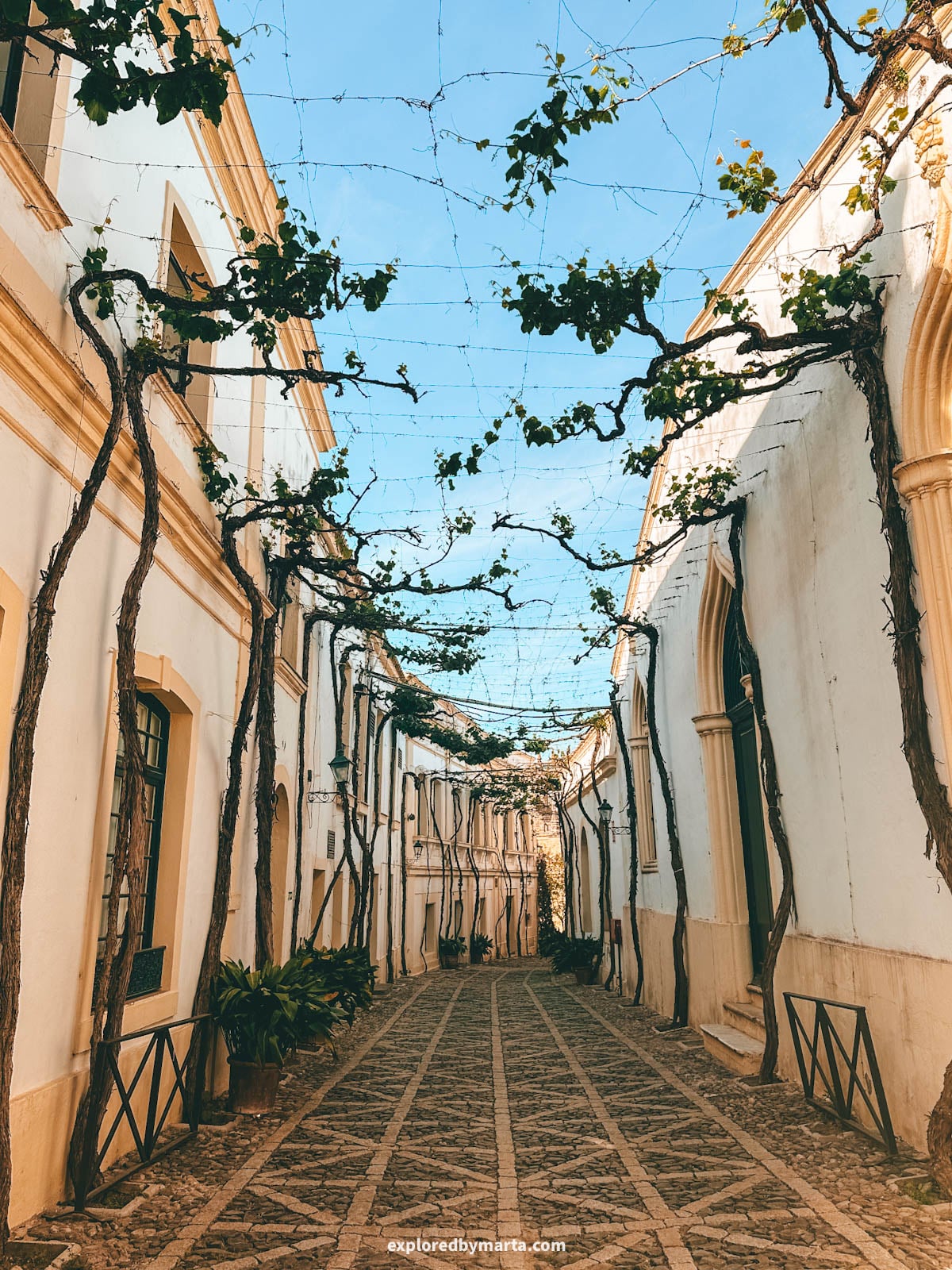
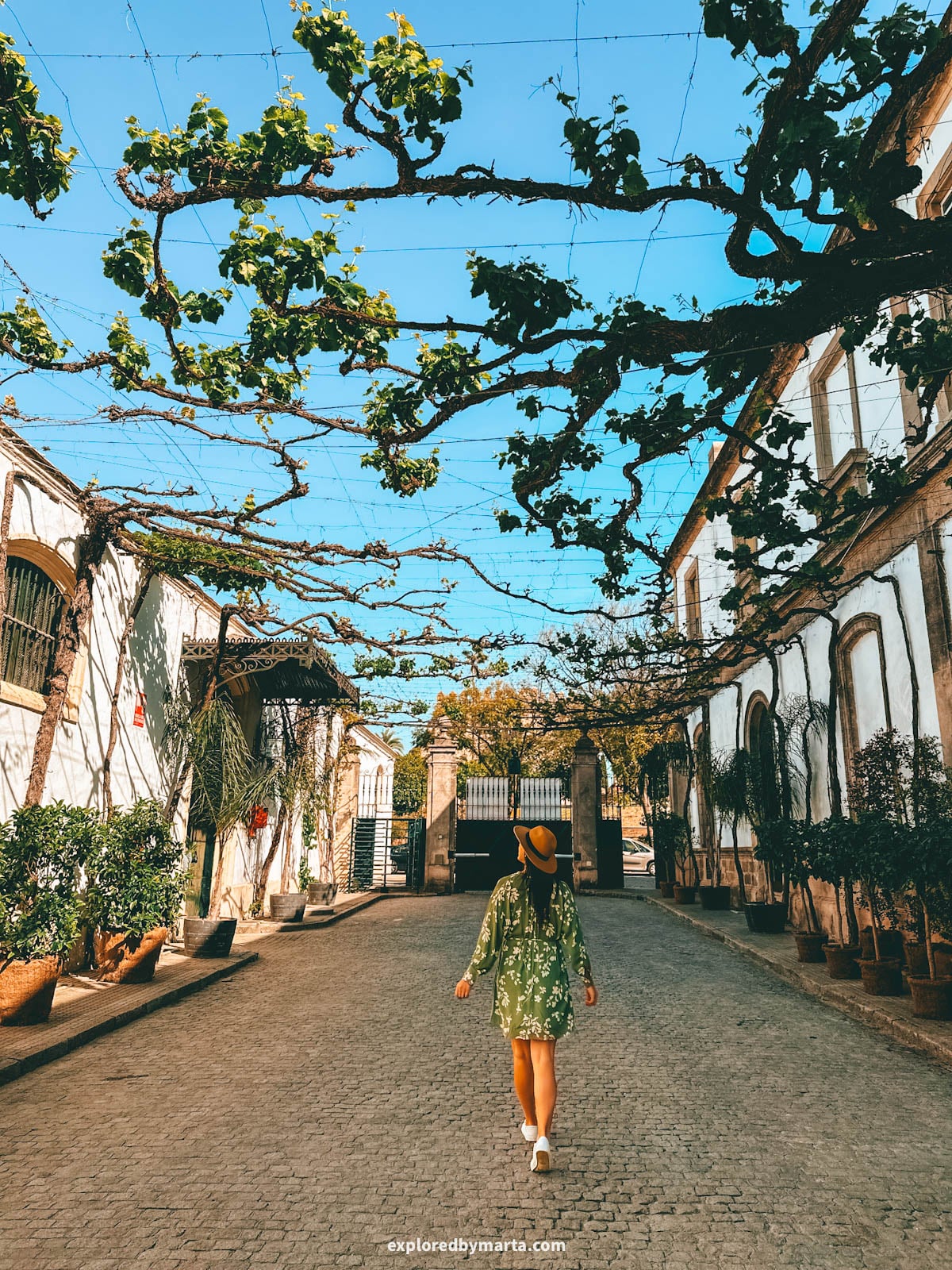
Even without the full green-tunnel effect, Calle Ciegos was one of the prettiest places we saw in Jerez. The view toward the cathedral is the main angle, but the cobblestones, white walls, and vine-covered roof make the whole street feel special.
One thing to know: Calle Ciegos isn’t a public street anymore. It used to be, but today it’s part of the González Byass / Bodega Tio Pepe grounds, so you can’t just walk in from the city whenever you want.
We visited during our Bodega Tio Pepe tour and crossed the street a few times along the route. Then we came back after the sherry tasting to take some more photos. You can also see it by booking a table at Restaurante Pedro Nolasco, which sits right on the street inside the bodega grounds.
Location: Calle Ciegos – Bodega Tio Pepe
22. Catedral de Cádiz from Campo del Sur
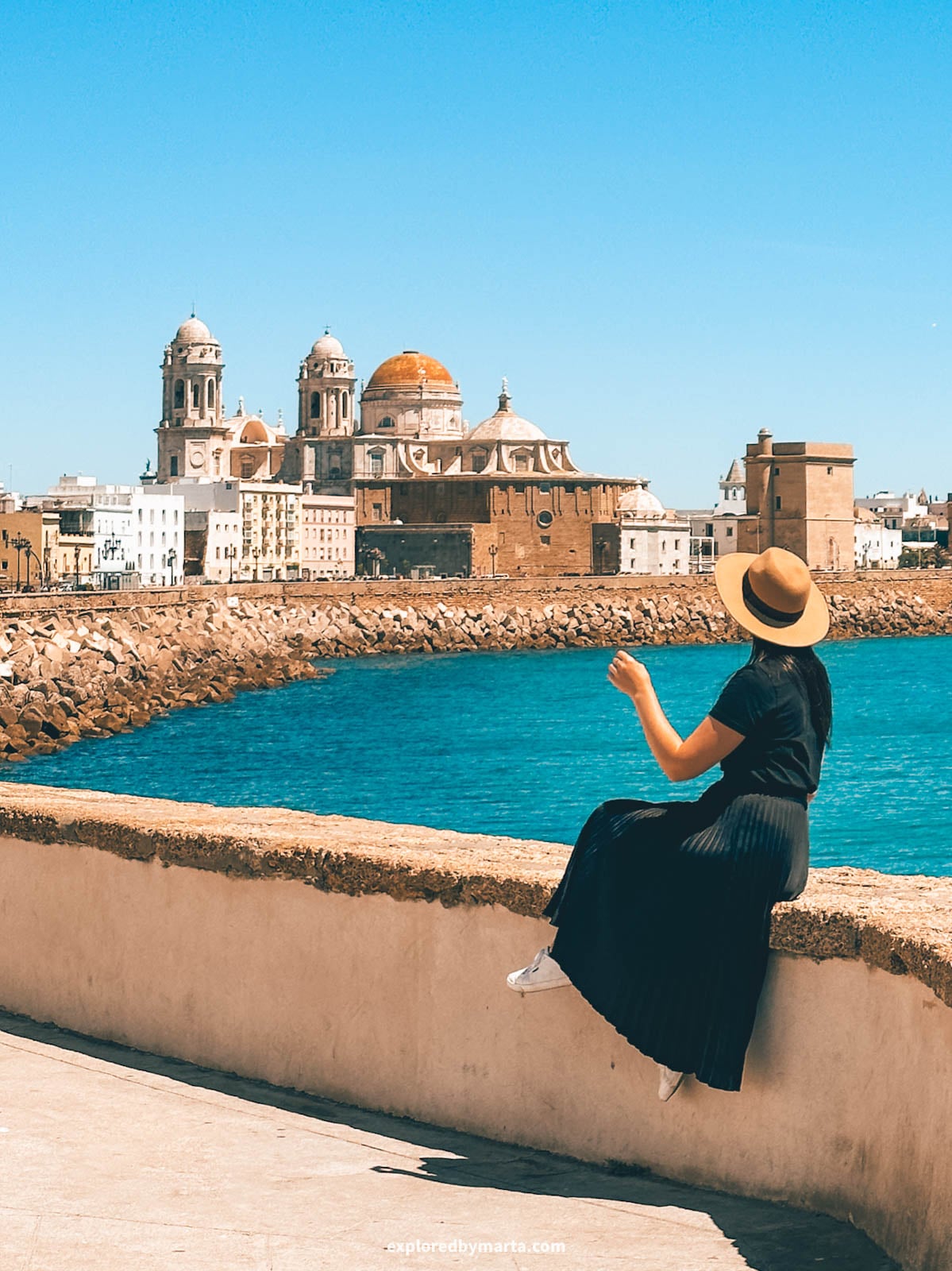
If there’s one photo that captures the coastal character of the historical city of Cádiz, it’s the iconic seaside view of the Catedral de Cádiz from the Campo del Sur promenade.
This is one of the most photographed views in all of Andalusia! I mean, just look at the photo!
Cádiz is one of the oldest cities in Western Europe, sitting on a thin strip of land surrounded by the Atlantic on three sides. The cathedral with its golden dome dominates the seafront and is the most iconic landmark in the city.
For the best photo, head to Mirador El Vendaval along the Campo del Sur promenade. This viewpoint gives you that perfect angle of the cathedral with the ocean as the backdrop. Stunning!
Location: Mirador El Vendaval
23. La Caleta Beach in Cádiz
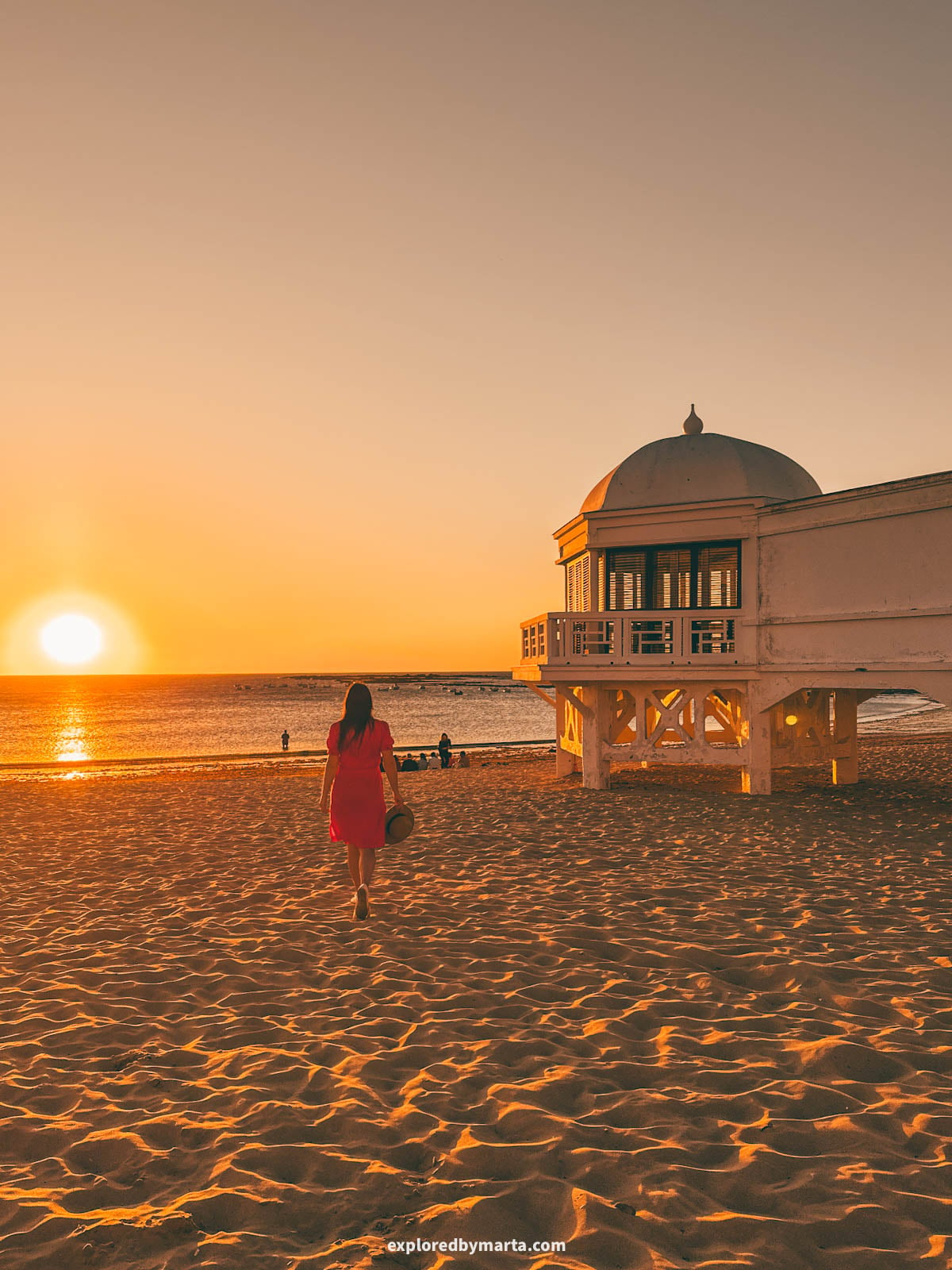
Another absolutely beautiful photo spot in Andalusia is La Caleta Beach in Cádiz, especially at sunset. This small crescent-shaped beach sits right in the heart of the Old Town, with the white curved Underwater Archaeology Center in the middle of the bay.
The photo opportunities here are everywhere: the curved white building, colorful fishing boats in the bay, the historic fortresses of Castillo de Santa Catalina and Castillo de San Sebastián on either side, and the Atlantic stretching into the distance.
La Caleta is also famous for appearing in the James Bond movie Die Another Day!
For the best photos, come at sunset. I’m serious! If there is one place to watch the sunset while road tripping around Andalusia, it is in Cádiz! Very few places in Southern Spain come close to this golden hour view!
Location: La Caleta Beach
24. Olvera, the town with the most picturesque views
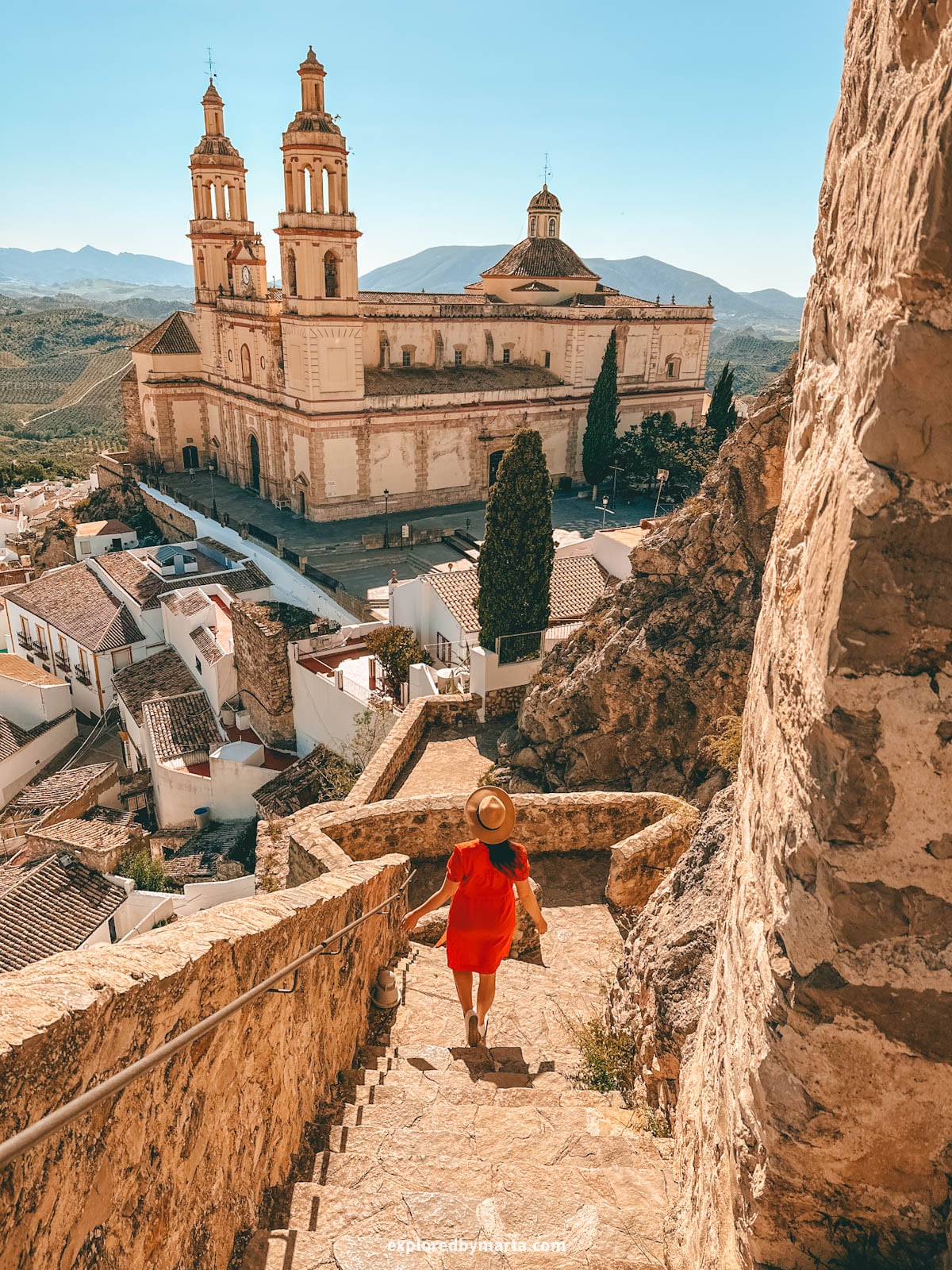
With its jaw-dropping views, Olvera is one of the most beautiful towns in Andalusia. It sits on a hilltop with a church and castle standing high above the rest of the village.
The must-do things in Olvera include exploring the historic center and climbing Calle Calzada up to the scenic Iglesia Mayor Parroquial hilltop church. From there, the next best place to visit is Olvera Castle.
I learned it was built in the 12th century as part of the defensive system of the Nasrid Kingdom. It sits on a rock at 623 meters (2,044 ft) above sea level and offers some of the most picturesque views in Andalusia. It was amazing!
If you visit the castle (it has set hours and an entrance fee), there are stone stairs leading up the cliff, and at one point, you get this iconic view of the massive church below you (see photo above!). One of the most picture-perfect photo spots in Andalusia!
Location: Olvera
25. Where the Atlantic meets the Mediterranean in Tarifa
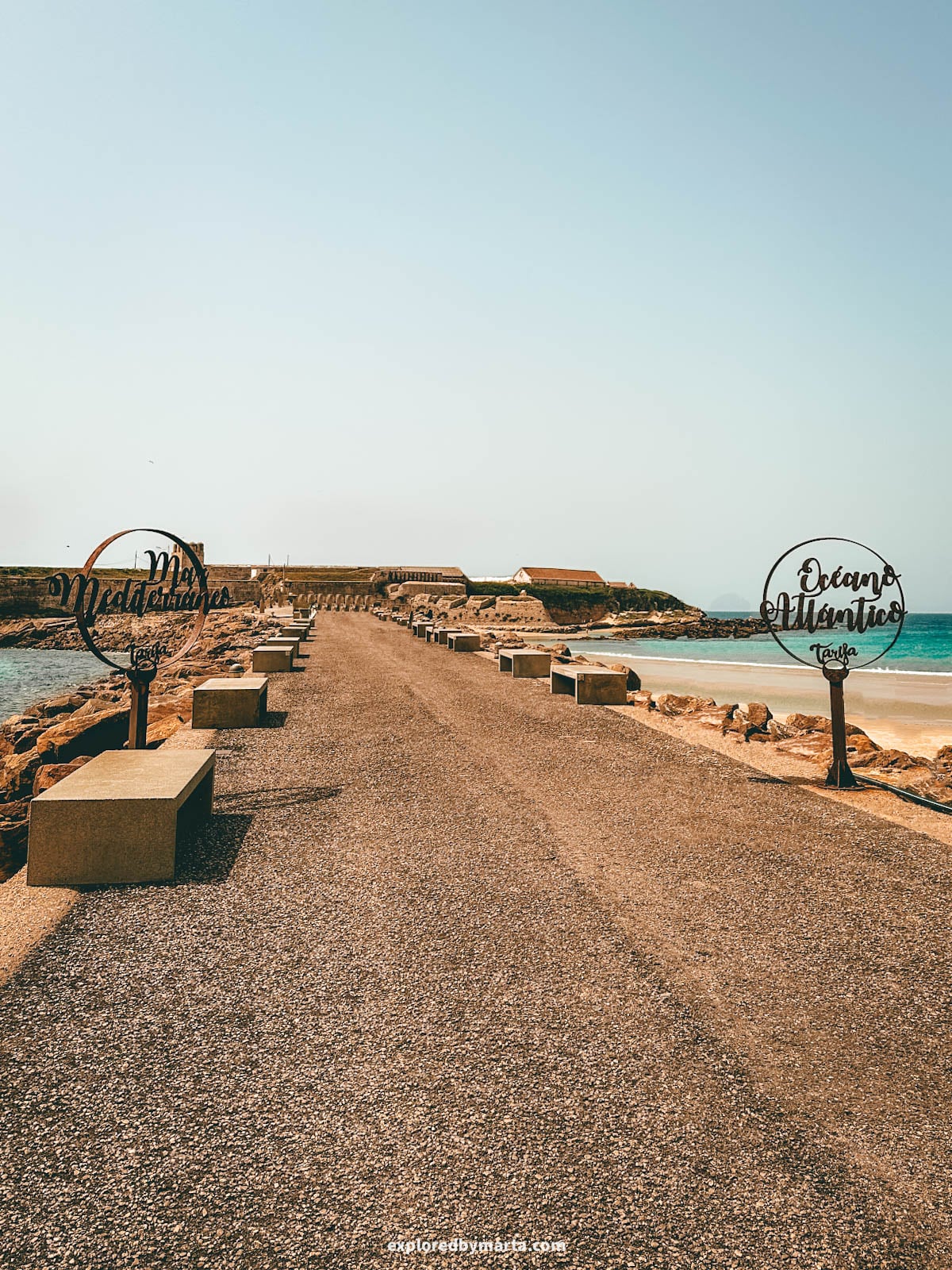
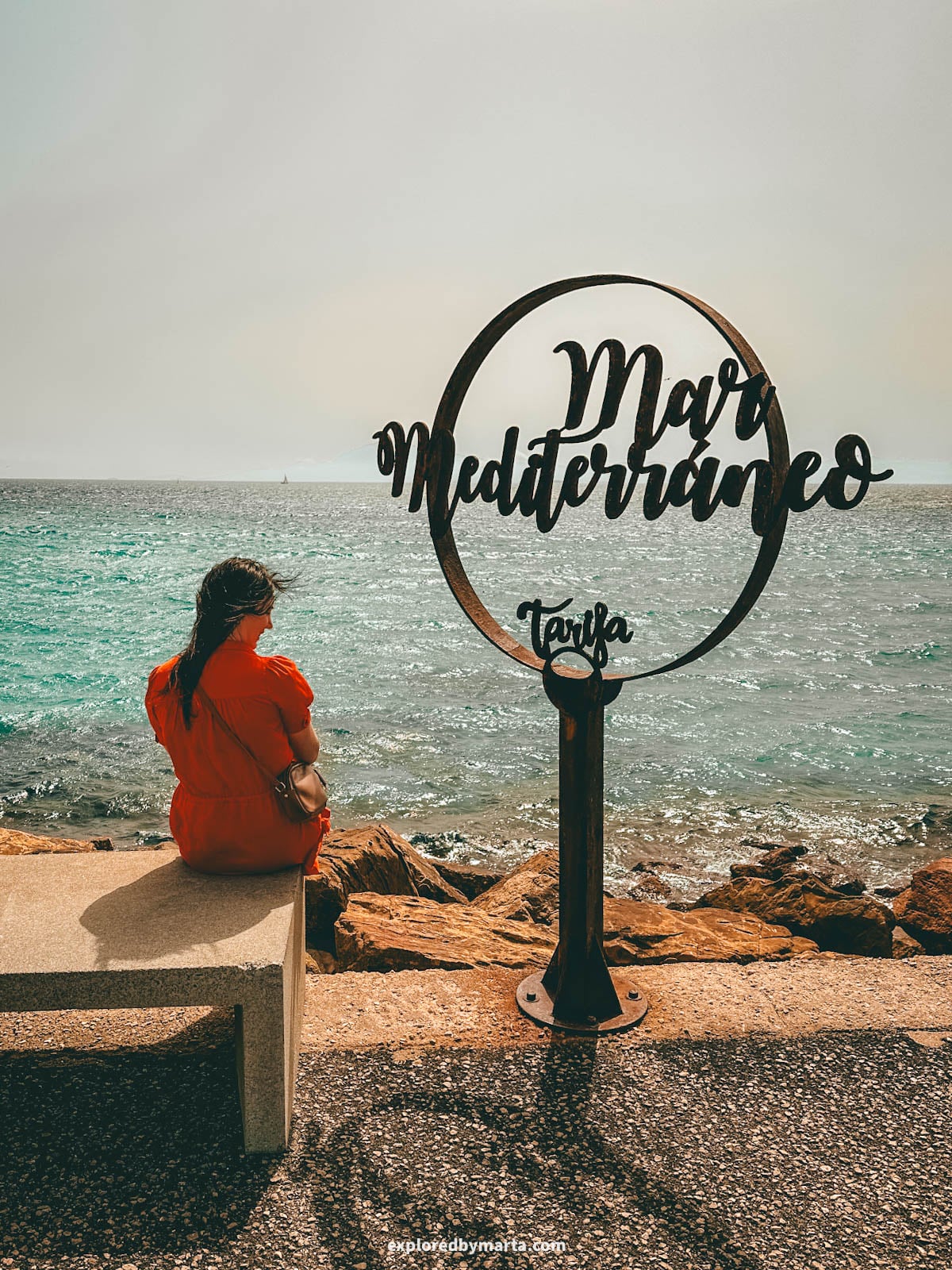
This is one of the most unique photo spots in all of Andalusia, and for good reason! This narrow causeway in Tarifa literally marks the official border between the Atlantic Ocean and the Mediterranean Sea.
Yep, two completely different bodies of water meeting right at your feet. Pretty special, right?
The causeway stretches about 100 meters (330 ft) into the sea, connecting the mainland with Isla de Tarifa. Along the way, you’ll spot two metal signs pointing out which side belongs to the Atlantic and which to the Mediterranean, so a photo on this iconic border is a must!
Walking down the causeway is one of the most popular things to do in Tarifa, and the whole thing feels surreal, especially because the mountains of Africa are visible just 14 km (8.7 miles) across the strait. It’s like the end of the world or something, haha.
Location: Border between the Atlantic and the Mediterranean
FAQs about photo spots in Andalusia
What is the most photogenic place in Andalusia?
It’s hard to pick just one, but the Puente Nuevo bridge in Ronda, the Alhambra in Granada, and Plaza de España in Seville are probably the three most iconic photo spots in Andalusia. If you want flower-filled villages, Frigiliana and Iznájar are hard to beat.
When is the best time of day to photograph in Andalusia?
Early morning is by far the best time. Popular spots like Plaza de España, the Royal Alcázar, and the white villages get crowded by mid-morning, so arriving early means soft light, empty streets, and far fewer people in your shots. Sunset is also beautiful for coastal spots like La Caleta in Cádiz and the Balcony of Europe in Nerja.
Do you need to book tickets for the Alhambra and the Royal Alcázar?
Yes, definitely. Both are among the most visited places in Spain and sell out days or even weeks ahead in high season. Book online in advance and choose the earliest slot for the best light and smallest crowds. Make sure your Alhambra ticket includes the Nasrid Palaces.
What is the best month for photography in Andalusia?
Spring (April to June) is ideal, with flowers in bloom, green landscapes, and pleasant weather. May is especially good for the Patios de Córdoba festival. Autumn is also lovely and less crowded, while summer is very hot and busy at popular spots.
Are these photo spots good for phone cameras too?
Absolutely. I took all my photos with my phone, so you be the judge! But the architecture, flowers, and views do most of the work. But, for the most part, the biggest factor isn’t your camera, it’s the timing – go early and use the soft morning or golden-hour light! Midday sun is super harsh!
Read more about traveling in Southern Spain
Andalusia is honestly a dream for photography. After a couple of months road-tripping around the region, I still can’t get over how much beauty is packed into one corner of Spain, from grand Moorish palaces and flower-filled villages to dramatic gorges and golden-hour coastlines.
If you only have time for a few, I’d prioritize Ronda, the Alhambra in Granada, Seville, and one or two white villages like Setenil de las Bodegas, Frigiliana, or Iznájar. But truly, every spot on this list earned its place.
Wherever you go, my biggest tip is the same: show up early (or sometimes – late!), take your time, and use my photos as a starting point for finding your own perfect angles. Yes, you can use my photos as inspiration, too! Happy travels!
More Andalusia travel inspiration:
- 21 most beautiful white villages in Andalusia
- 27 hidden gems you should see in Andalusia
- 20 most beautiful castles and palaces in Andalusia, Spain
- 40 best places to visit in Andalusia, Spain
City and town guides:
- Seville, Spain: 19 awesome bucket list things to do in Seville
- Córdoba bucket list: 18 best things to do in Córdoba, Spain
- 17 best things to do in Granada, Spain
- Ronda bucket list: 15 best things to do in Ronda, Spain
- 13 things to do in Frigiliana, Spain
PIN FOR LATER!