
15 best things to do in Granada, Spain (Alhambra and beyond)
This post may contain affiliate links. If you use these links to make a purchase or booking, I may earn a small commission at no extra cost to you! Thank you for your support!
If you’re looking for the best things to do in Granada, Spain for your first time in the city, this guide covers the places and experiences I’d actually recommend after spending a full week in the city.
Granada is best known for the Alhambra, and yes, it absolutely deserves the hype. But there is so much more to this Andalusian city than one famous palace complex.
You also get old Moorish neighborhoods, golden churches, Arab baths, sunset viewpoints, local pastries, tapas, hidden gardens, and lots of uphill walking because apparently Granada likes to make you earn the views.
In this guide, I’m sharing the best places to visit in Granada, plus practical tips on tickets, timing, crowds, what surprised me, and what I think is actually worth adding to your itinerary.
Quick guide to Granada
Short on time? Here are a few quick picks before we get into the full list.
Best overall experience: Alhambra. This is the big one. Book your ticket ahead, make sure it includes the Nasrid Palaces, and plan a few hours for the visit.
Best view in Granada: Mirador de San Nicolas. It is famous and crowded for a reason. Go for the classic Alhambra view, especially around sunset, but don’t expect to have it to yourself.
Best neighborhood to explore: Albaicín. The narrow streets, white houses, viewpoints, and uphill lanes make this one of the most atmospheric areas in Granada.
Best surprise: Basílica de San Juan de Dios. I’m not usually someone who needs to visit every church, but this one was absolutely worth it. The interior is a lot.
Best quieter stop: Carmen de la Victoria. This garden has Alhambra views, shade, flowers, and a calmer feel than many of the busier spots in Granada.
Best local food to try: pionono. Granada’s small syrup-soaked pastry is sweet, messy in hot weather, and definitely something to try with coffee.
Best evening experience: Flamenco show. Choose a cave-style venue in Sacromonte for the most atmospheric option, or a central venue if you want easier logistics.
Best quick historic stop: El Bañuelo. These old Arab Baths are small, but they are one of the most unique historic places to visit in Granada.
1. Explore the famous Alhambra
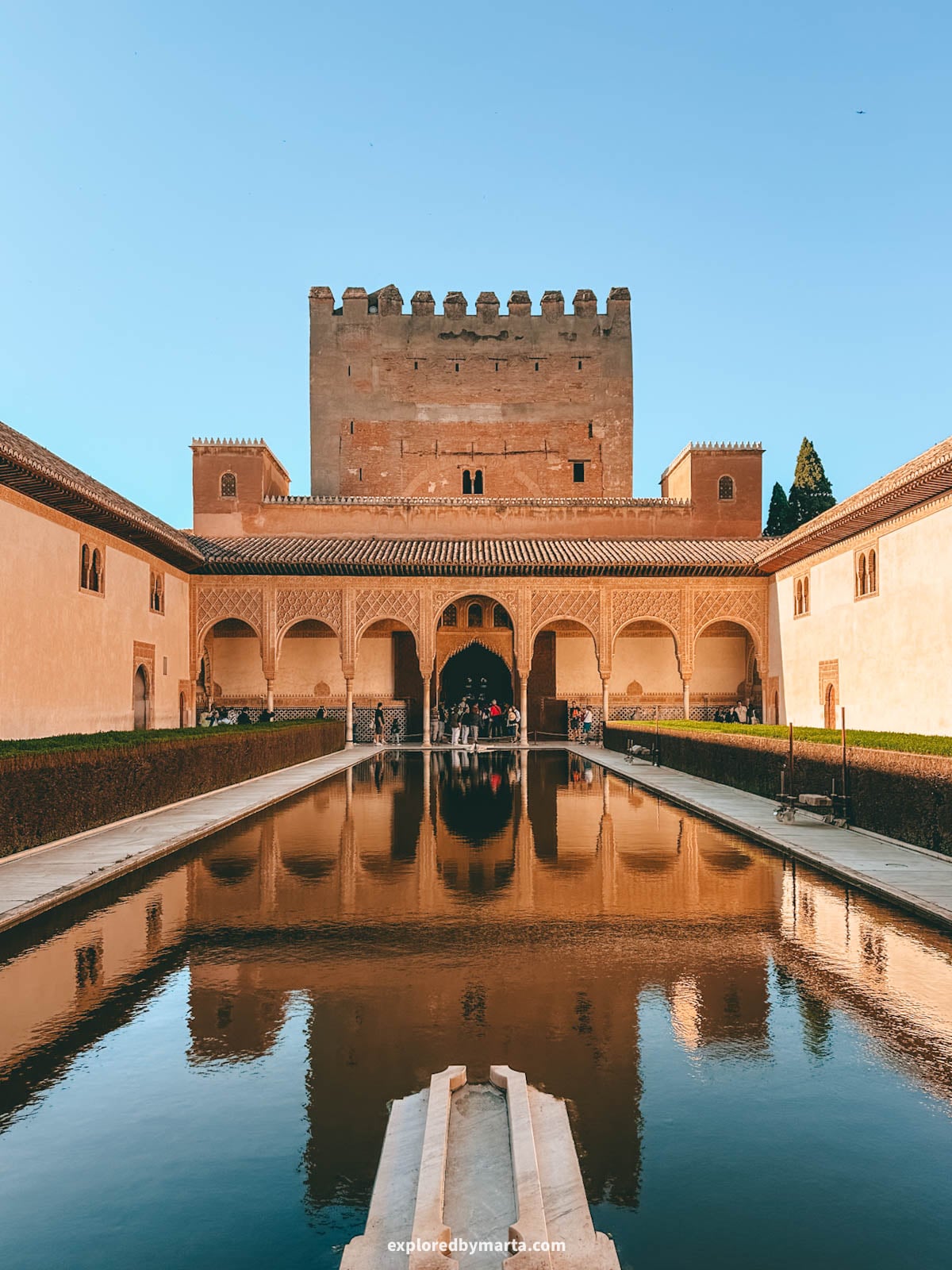
If you only have time for one big thing in Granada, make it the Alhambra. It is one of Spain’s top tourist attractions, and yes, it is famous for a reason.
The Alhambra is a huge palace and fortress complex sitting above Granada, with royal palaces, gardens, towers, courtyards, fountains, and some of the most detailed Moorish architecture you’ll see in Spain.
The Alhambra, together with the Generalife and Albaicín, is part of a UNESCO World Heritage Site.
It was the royal palace complex of the Nasrid dynasty, the last Muslim rulers of Granada, and it was not just one palace. The Alhambra was basically a whole fortified city with palaces, baths, houses, defensive walls, gardens, and viewpoints.
First major tip – book your ticket immediately! They tend to sell out weeks and weeks in advance.
The name Alhambra is often translated as “the red fortress,” which comes from the reddish color of its walls. But honestly, once you get inside, the walls are not the main thing you’ll remember.
The real wow moment is all the detail.
The main ticketed areas are the Nasrid Palaces, Generalife, and Alcazaba. If you want to see the best part of Alhambra, make sure to book the general ticket that includes all three.
Most importantly, make sure your ticket includes the Nasrid Palaces. This is the part everyone dreams about when they picture the Alhambra, with carved walls, peaceful courtyards, Arabic inscriptions, arches, fountains, and ceilings that make you stop mid-walk.
I’d say the Nasrid Palaces are the one part you really shouldn’t miss. The rest of the Alhambra is interesting and worth seeing, but the palaces are the reason the whole place feels so special.
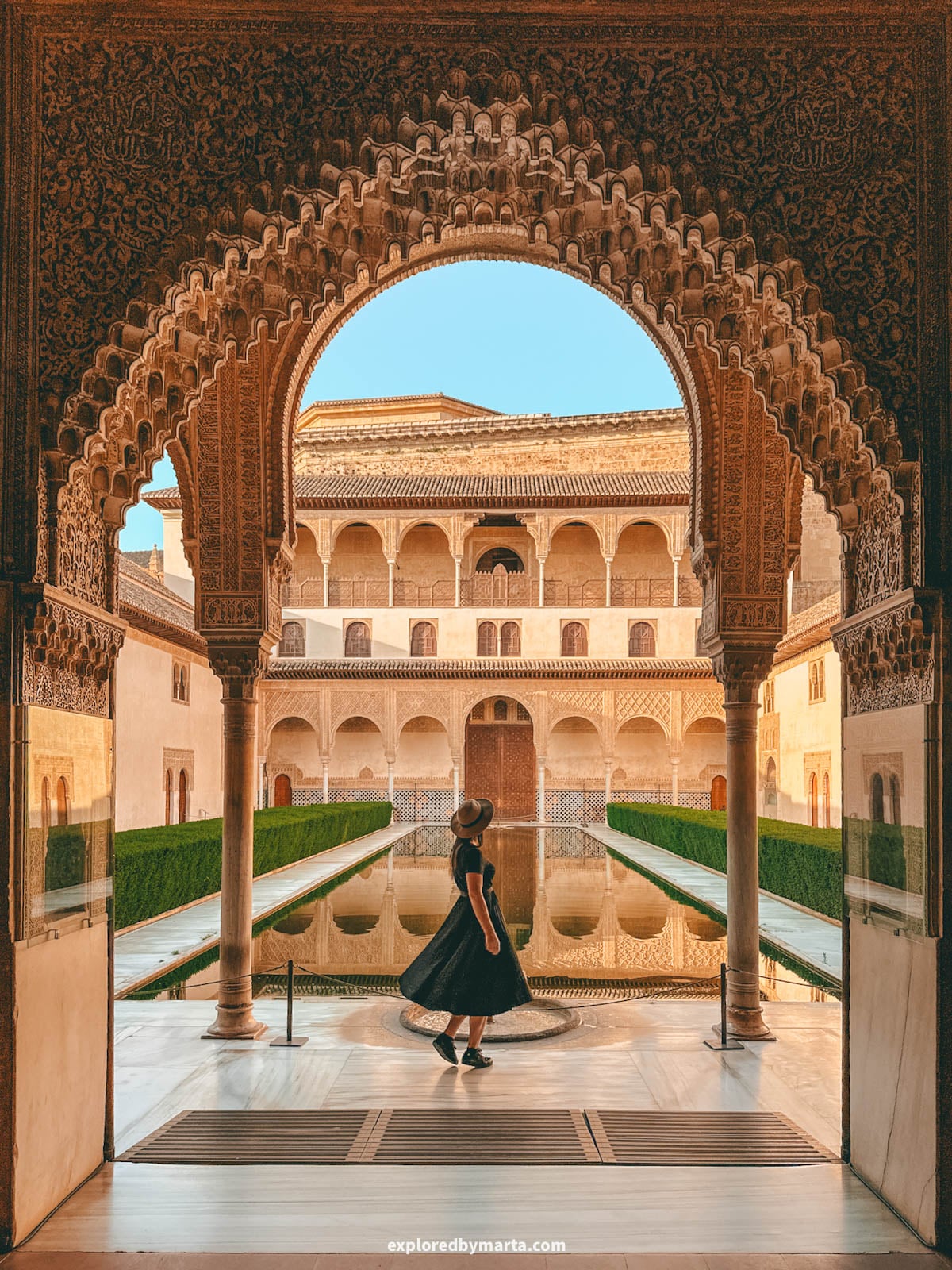
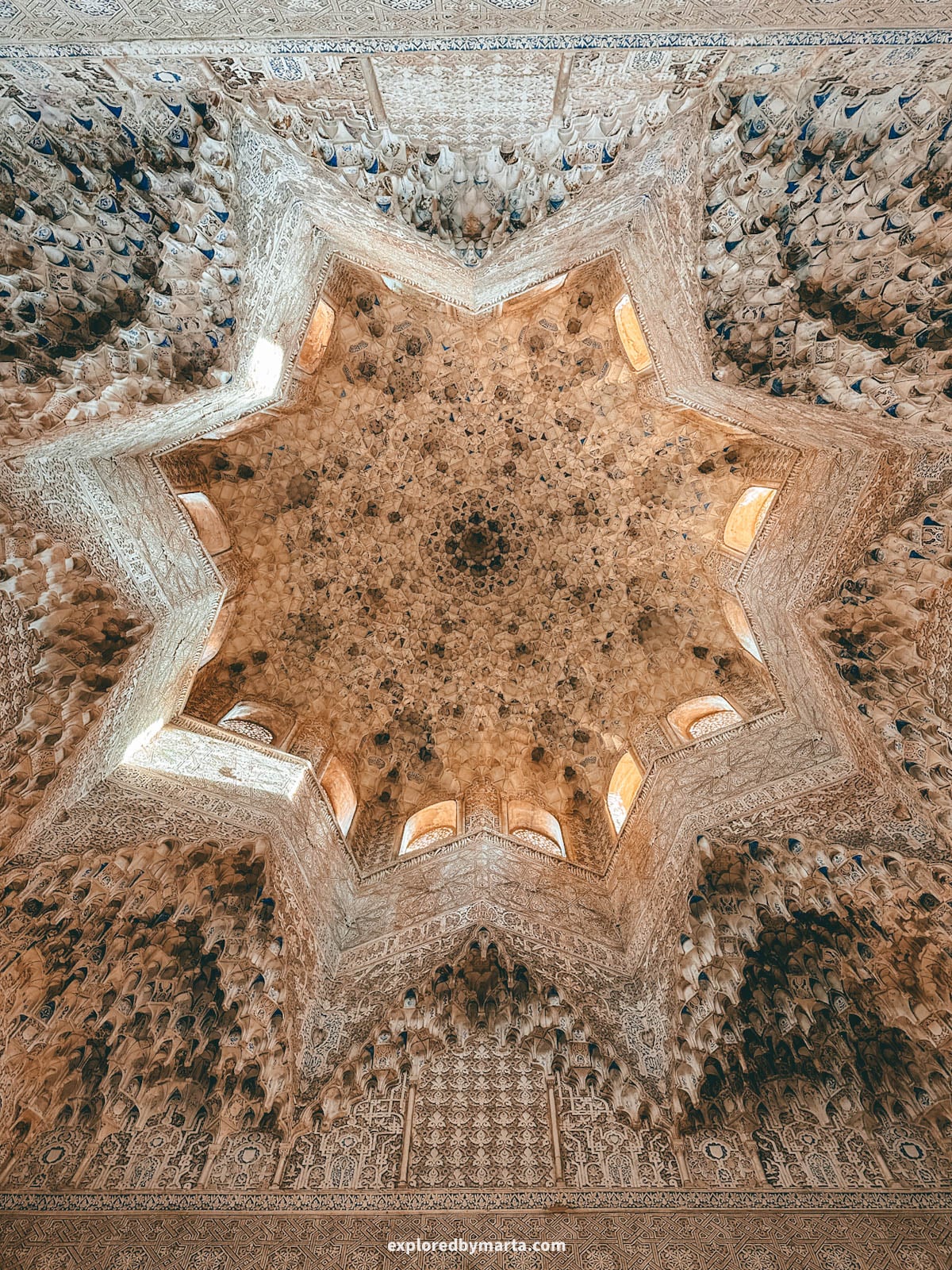
When you book your Alhambra ticket, you’ll choose a specific time slot for the Nasrid Palaces. Don’t treat this like a casual suggestion. This is the time you need to enter the palaces, so plan the rest of your visit around it.
We booked the first entrance time in the morning and arrived early because I did not want to start the day stressed and confused. Somehow, we ended up first in line, and it made such a difference.
For a few minutes while we were in the palaces alone, the courtyards felt almost peaceful, which is basically a small miracle at one of the most visited places in Spain. 😅
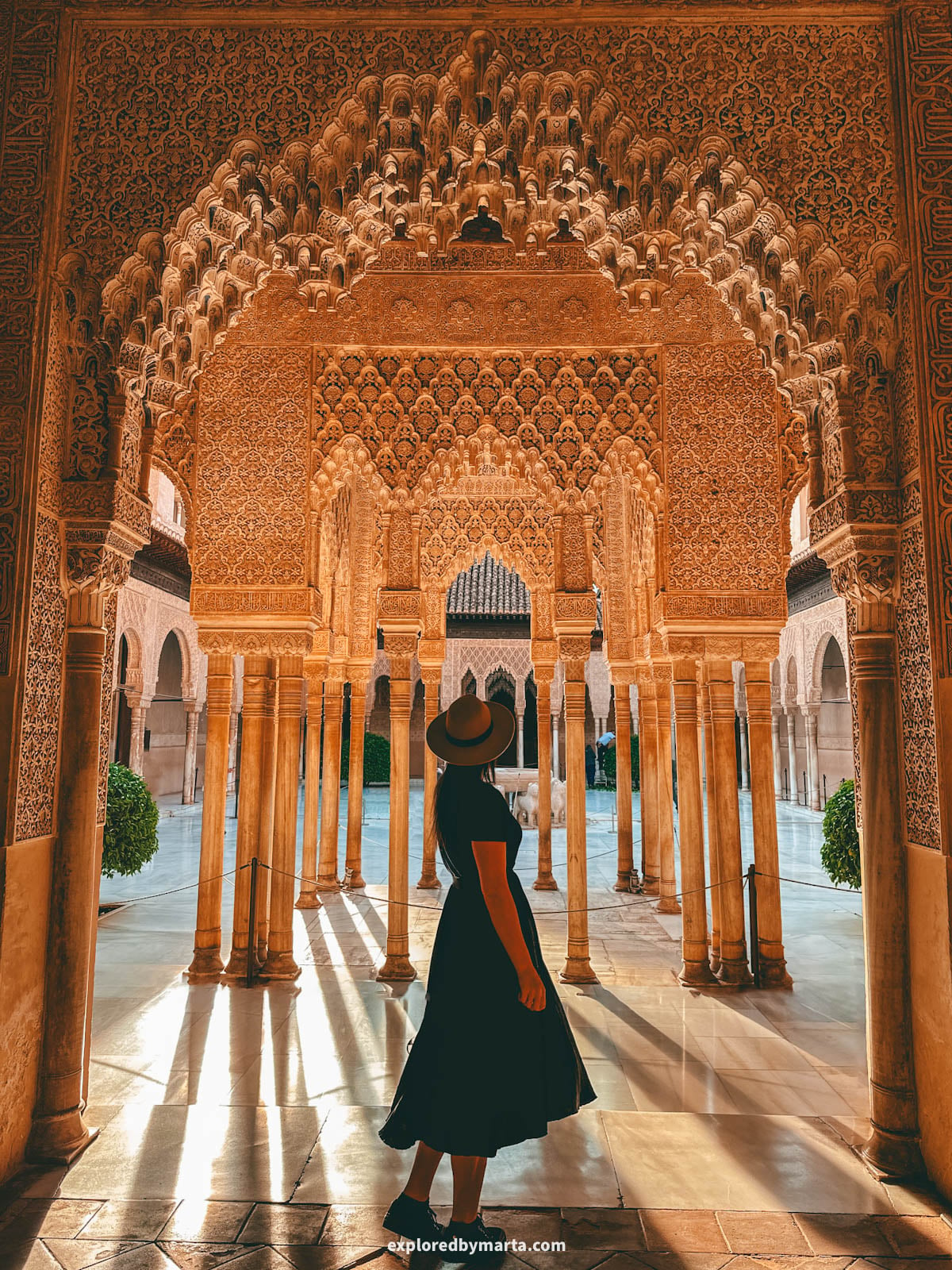
My favorite part was the Patio de los Leones. The columns, carved arches, and muqarnas ceilings are just ridiculous in the best way. Don’t forget to look up, because the ceilings are part of the show here. This is where you can take some of the most beautiful photos in Granada!
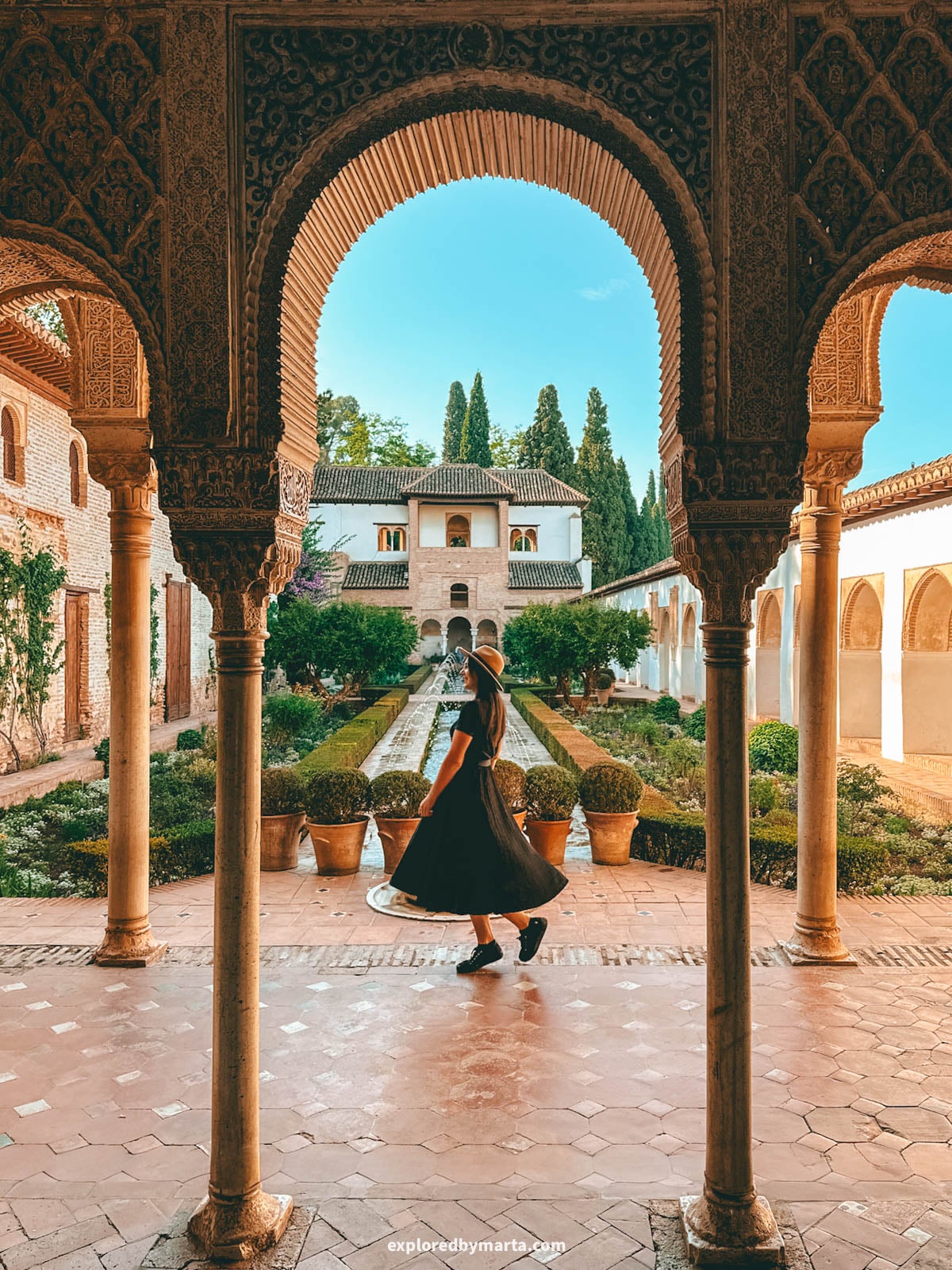
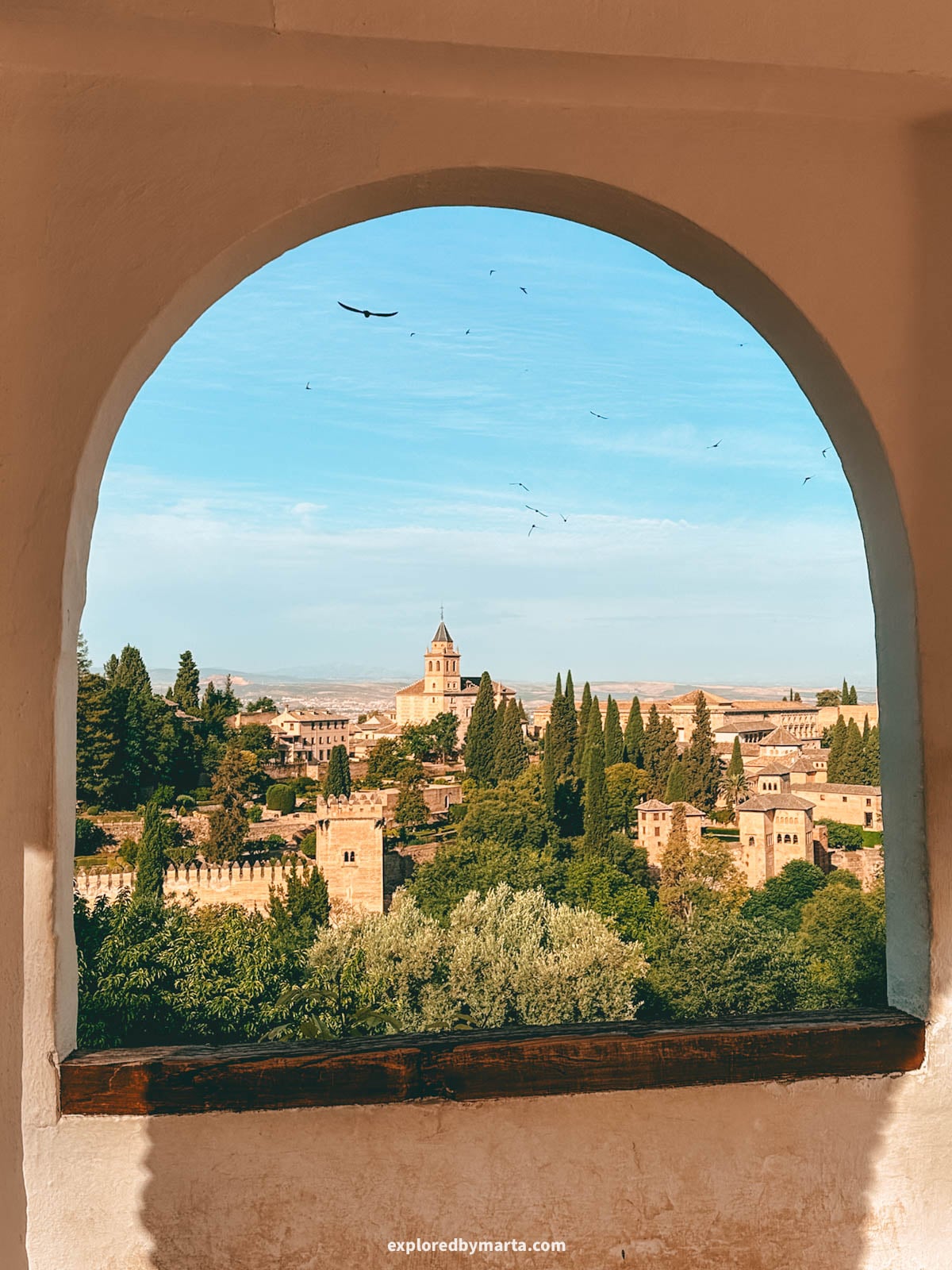
After the Nasrid Palaces, you can continue through the Generalife gardens and the Alcazaba fortress. Generalife is greener and calmer, while the Alcazaba is the oldest part of the Alhambra and gives you some of the best views over Granada.
The full Alhambra visit takes around 3 hours for most people, but I’d leave extra time if you love photos, gardens, or walking slowly through places while pretending you’re not taking the same photo 12 times.
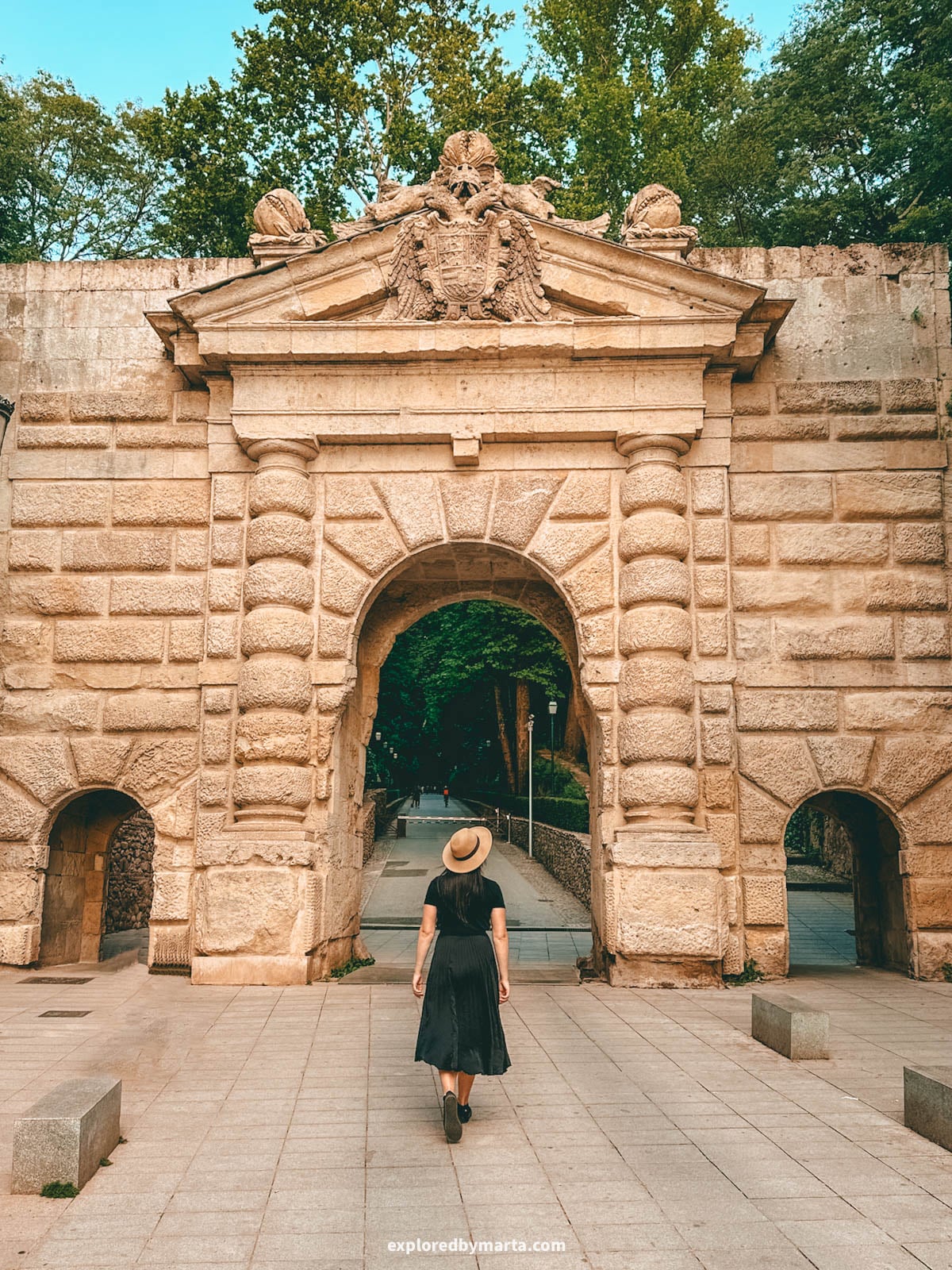
The main entrance to the Alhambra is the Pabellón de Acceso, near the Generalife and the Alhambra parking area. If you walk up from Granada city center, you may also enter the complex through Puerta de la Justicia (this is where we entered).
I also have a full Alhambra guide with ticket tips, entrance details, timing, and what I’d do differently, because the Alhambra is one of those places where having a plan really helps.
Location: Main entrance – Entrance to the Nasrid Palaces
2. Visit the free Palace of Charles V
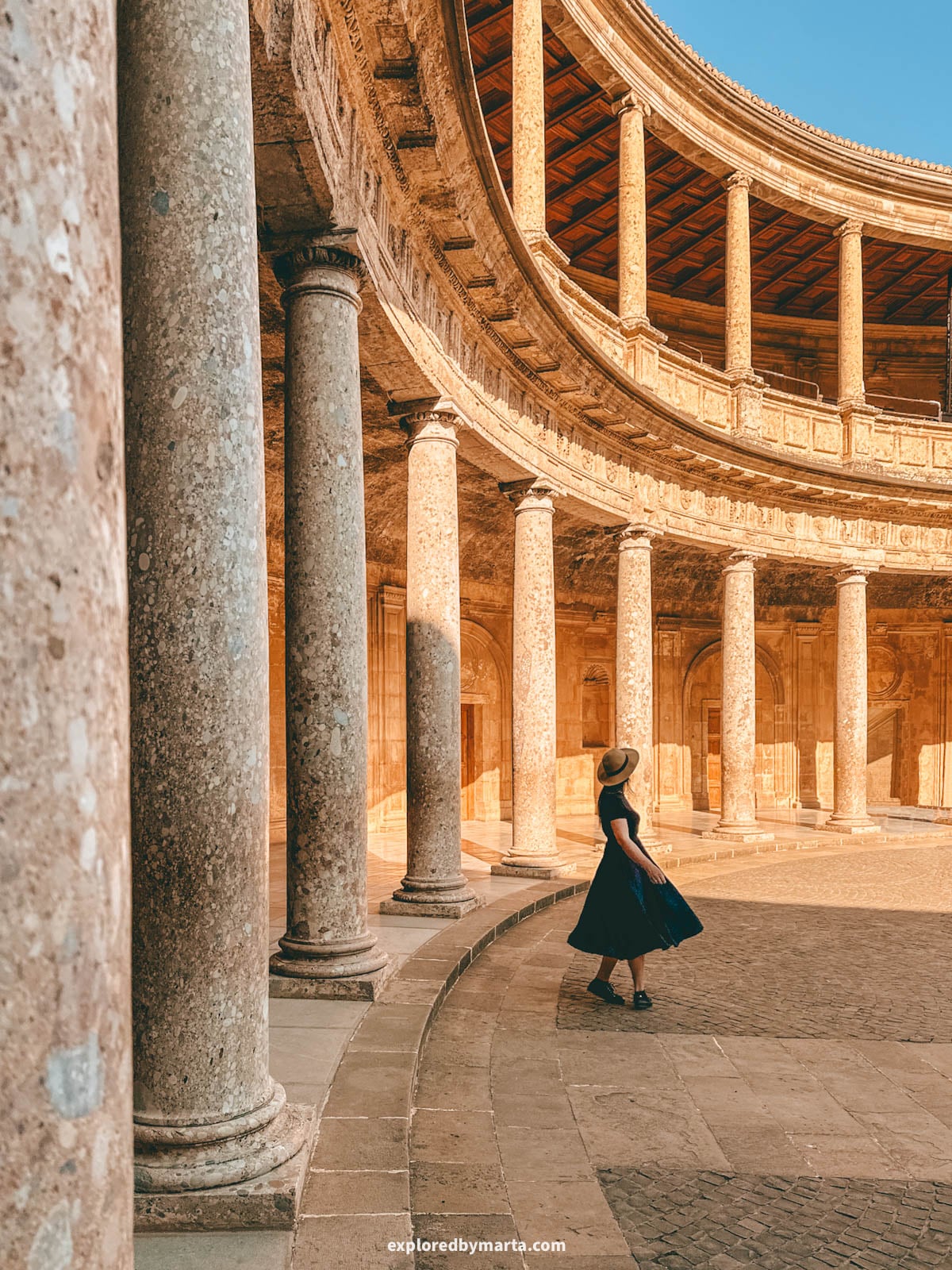
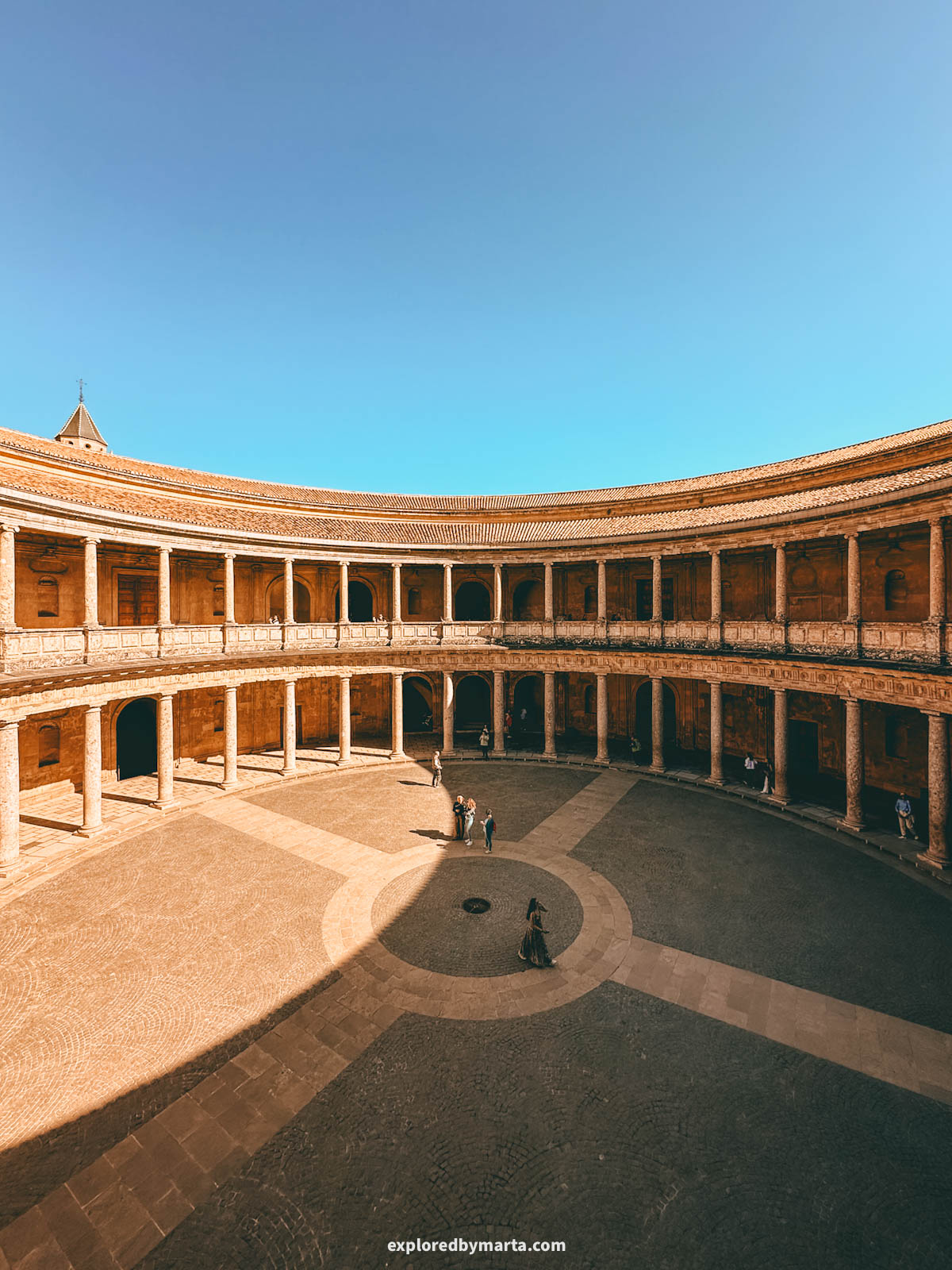
One thing that surprised me about the Alhambra is that not everything inside the complex requires a ticket.
You can visit some areas for free, and the Palace of Charles V is the best example. It sits right inside the Alhambra complex, but you don’t need a Nasrid Palaces ticket to step inside the courtyard.
This is especially useful if Alhambra tickets are sold out or if you want to see a small part of the complex without committing to the full visit.
The palace was ordered by King Charles V in the 16th century after the Christian conquest of Granada. And yes, building a Renaissance palace inside the former Muslim royal city was definitely a statement.
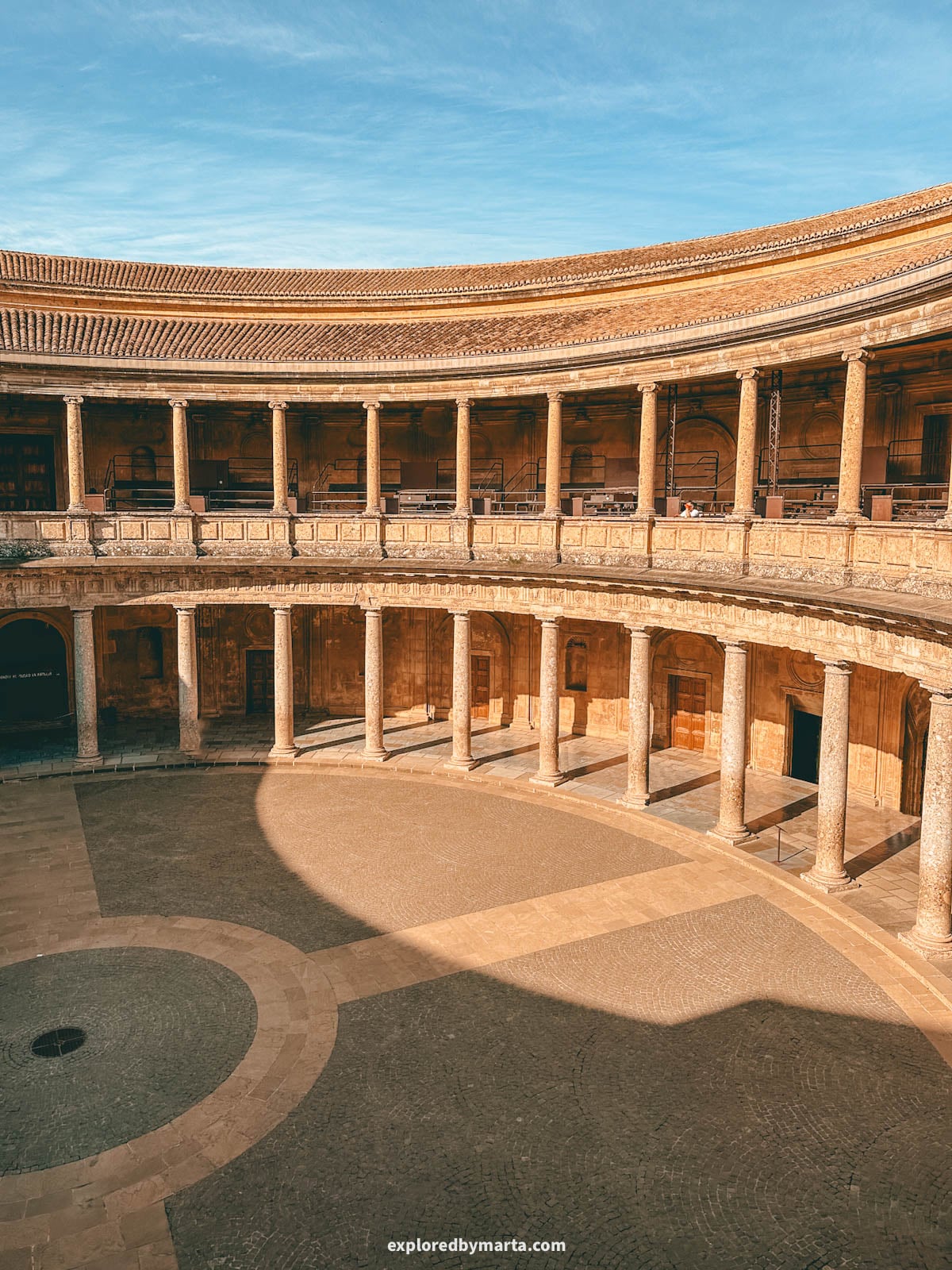
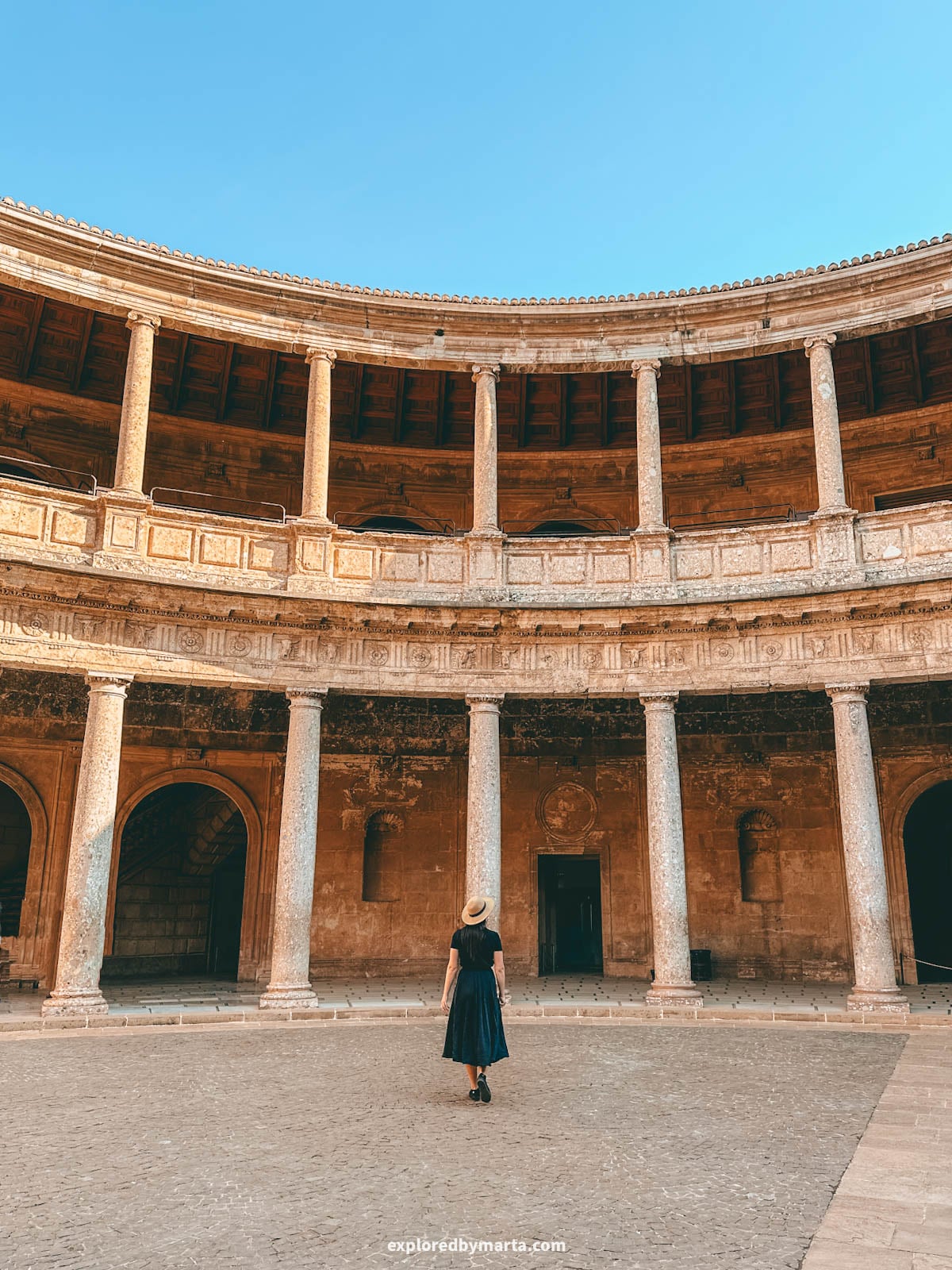
The outside looks quite serious, but the inside is what makes it worth a stop. The courtyard is completely circular, surrounded by two levels of columns, and it feels totally different from the Moorish architecture nearby.
Here’s a fun fact – the circular courtyard is actually the first circular courtyard ever built in a European royal palace. Pretty wild for a place most travelers walk past!
It’s not the most emotional place in the Alhambra, at least not for me, but it is a very cool contrast. One minute you are looking at delicate Nasrid details, and then suddenly you are in this massive Roman-inspired courtyard. Granada really said, “why choose one style?” 😅
You don’t need a lot of time here. I’d say 10 to 20 minutes is enough unless you also want to visit the museums inside. It is also one of the easiest places to add before or after your Alhambra visit, since it is located right near the Nasrid Palaces entrance.
Location: Palace of Charles V
3. Visit the Granada Cathedral and Royal Chapel
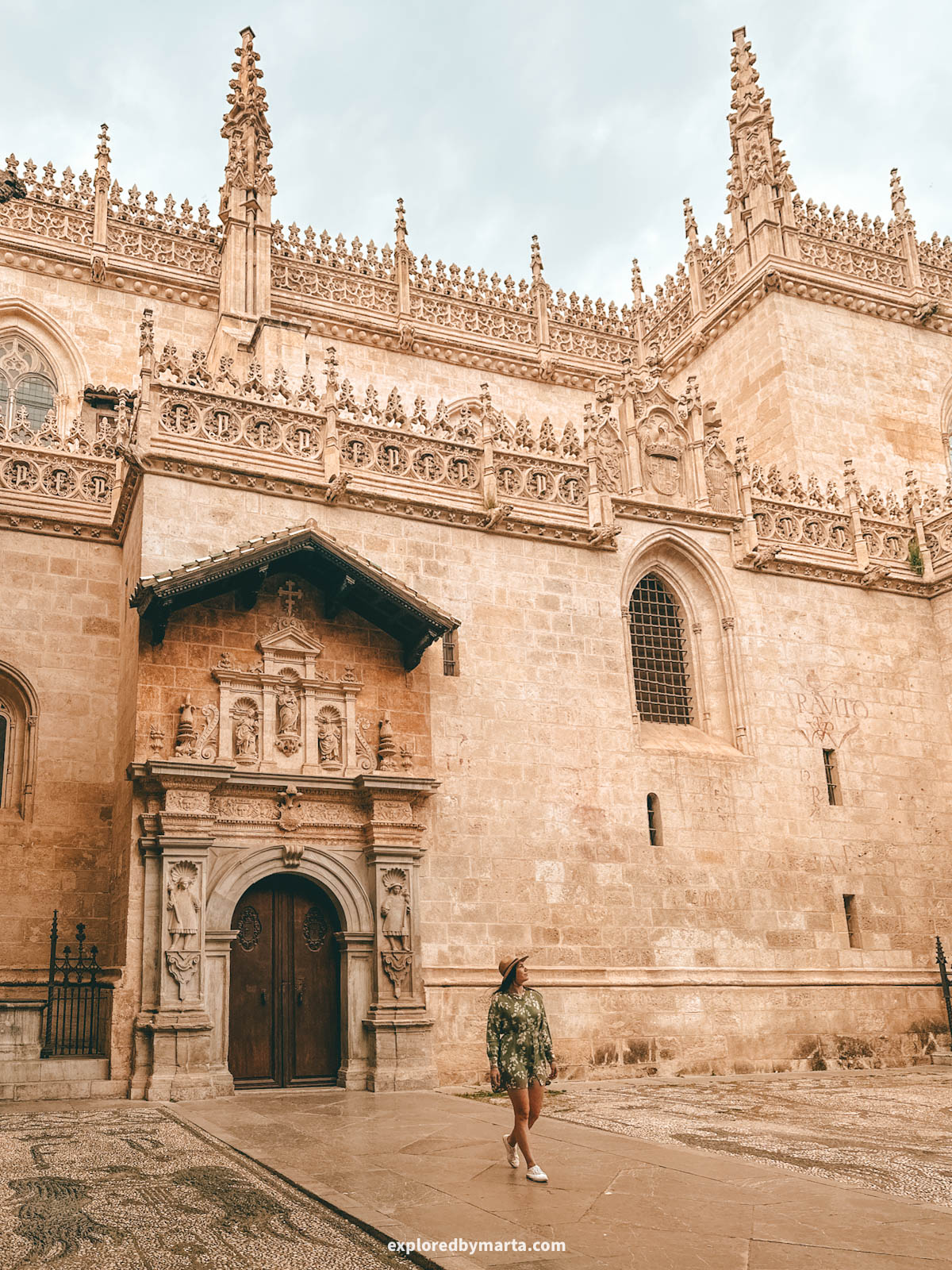
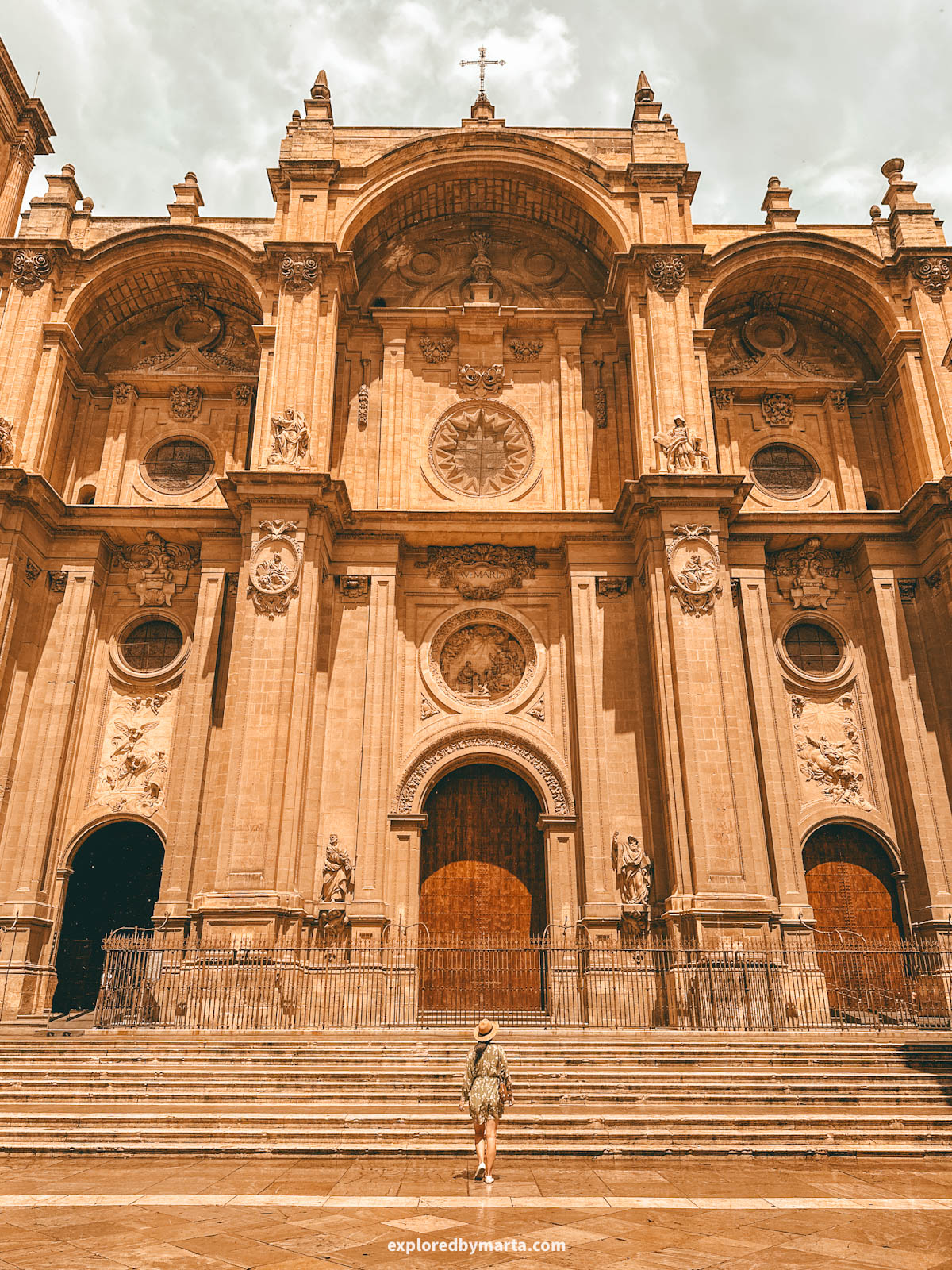
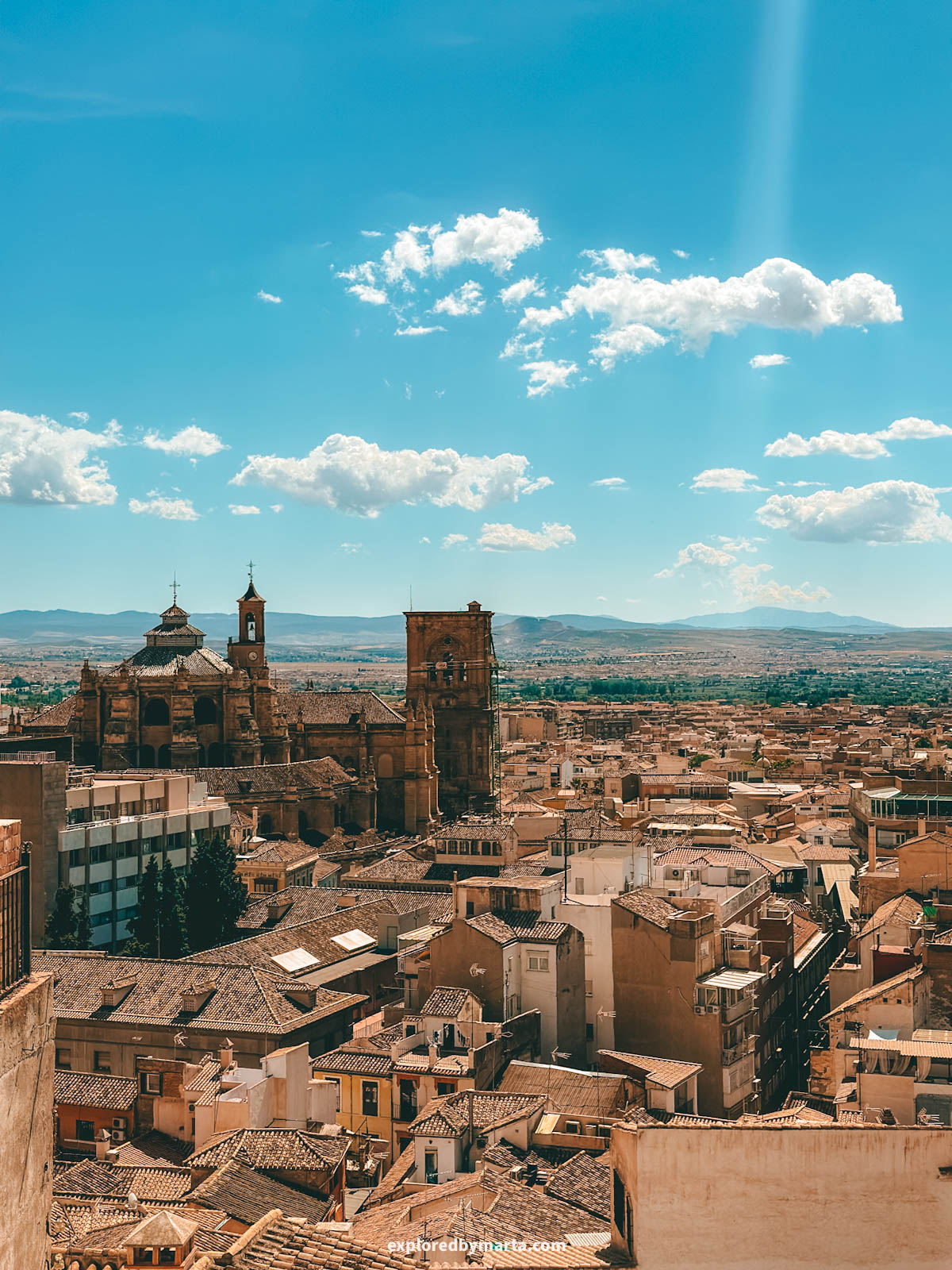
The Cathedral of Granada is one of the main places to visit in the historic center, and it is very easy to combine with La Alcaicería, the Royal Chapel, and the surrounding old streets.
Catedral de Granada was built in the 16th century, after the Catholic Monarchs conquered Granada. Like many major churches in Andalusia, it was built where a mosque once stood, so there is a lot of layered history here.
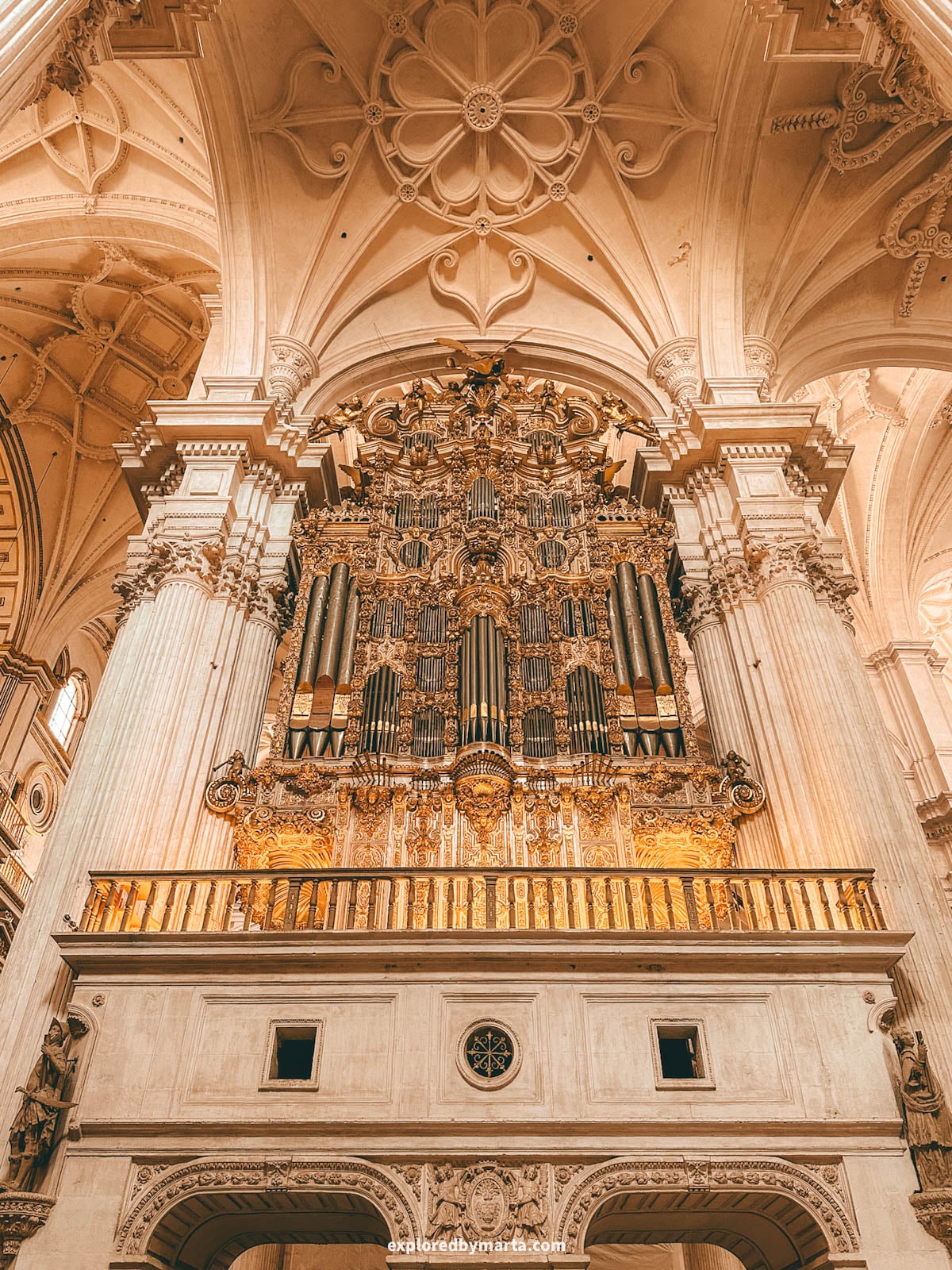
Inside, the cathedral feels bright, huge, and very different from the darker, more dramatic churches you might expect. The white-and-gold interior, tall columns, chapels, and massive dome make it worth stepping inside if you have time.
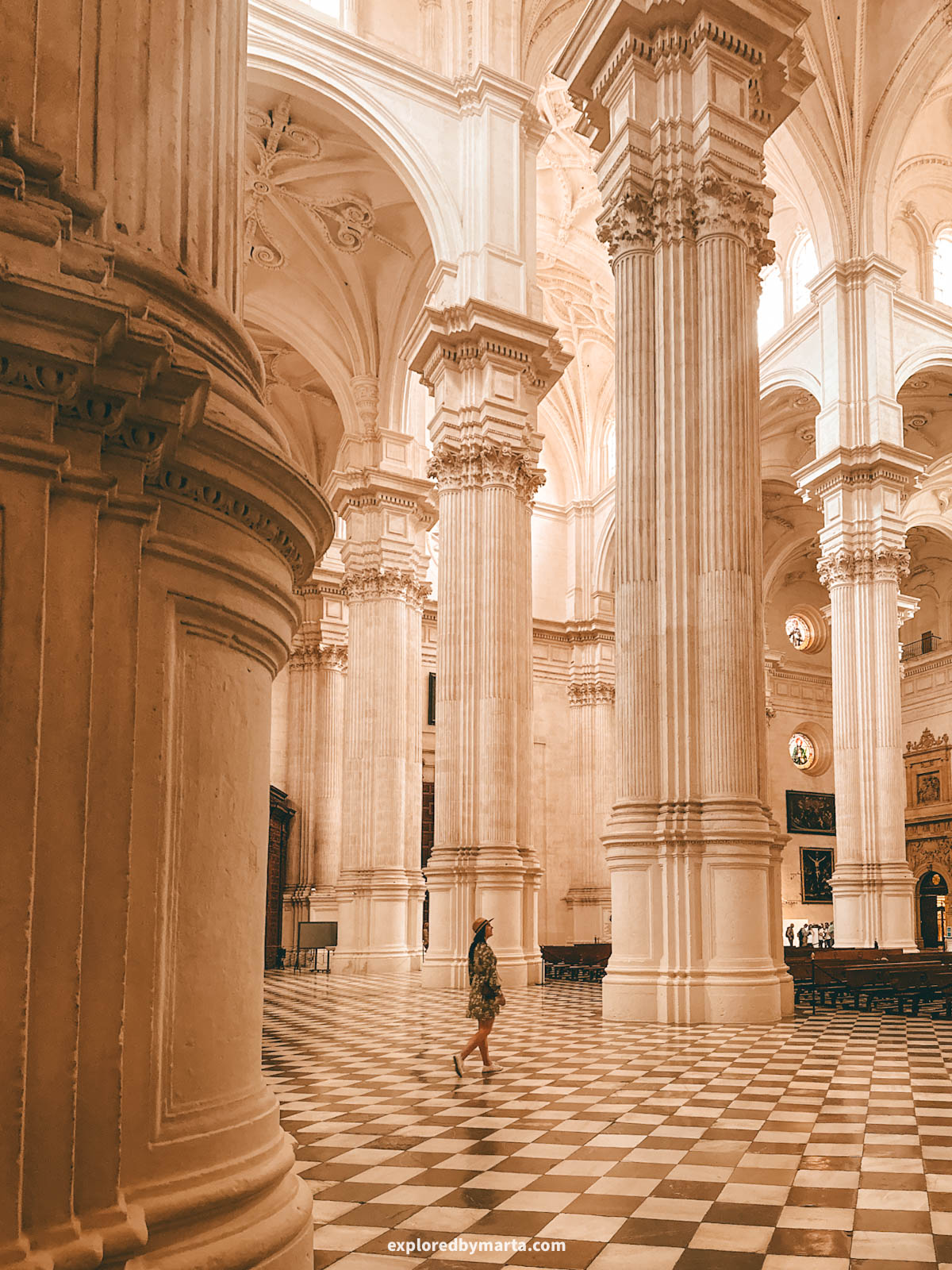
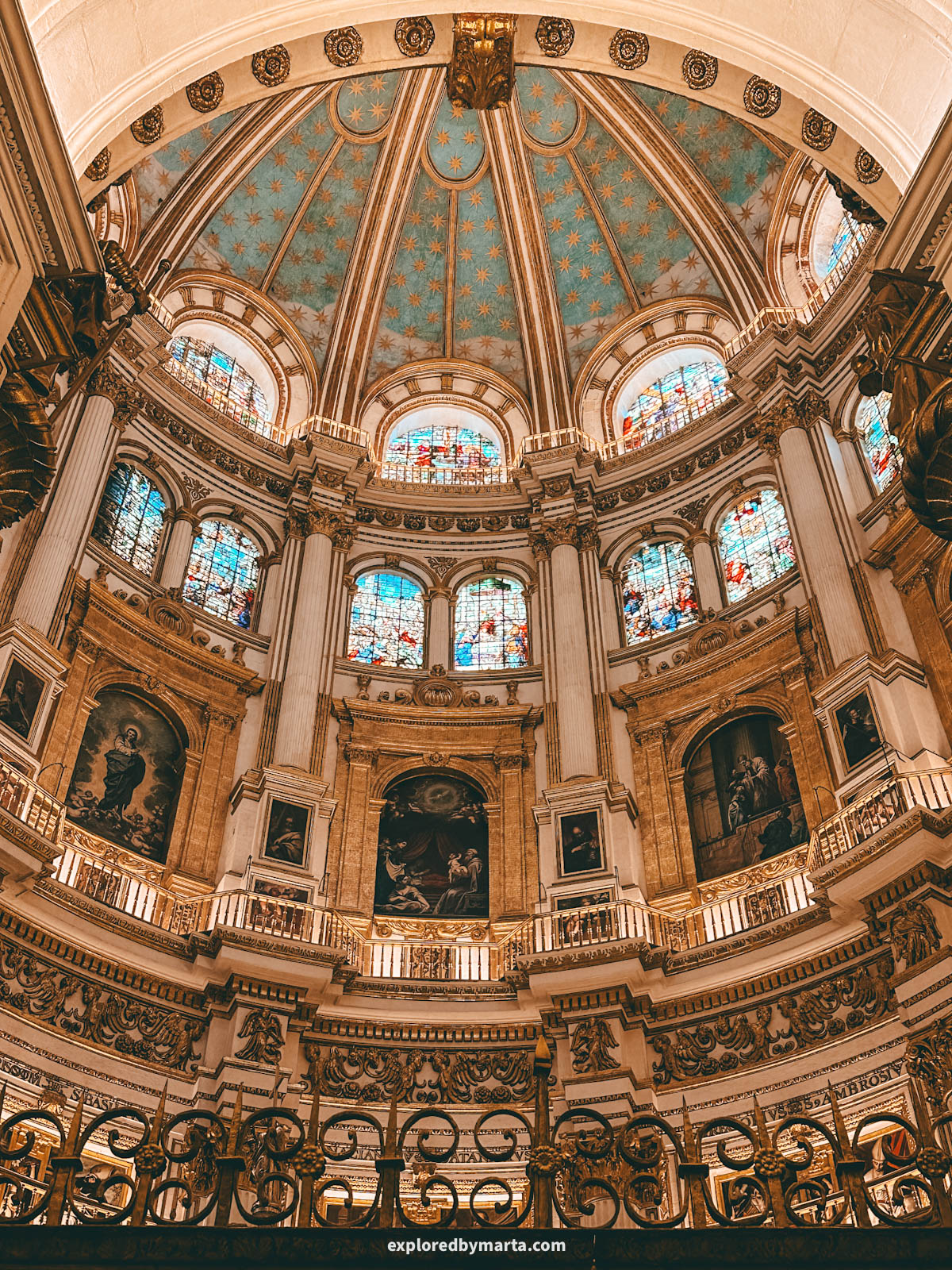
That said, Granada has a lot of impressive interiors, so I wouldn’t say the cathedral was my biggest surprise in the city. But as a first-time visitor, it definitely belongs on your Granada itinerary.
Right next to the cathedral, you’ll find the Royal Chapel of Granada. This is where Queen Isabella I and King Ferdinand II, the Catholic Monarchs, are buried (yes, you can walk downstairs to the crypt to see their burial site).
They are the monarchs who completed the Christian conquest of Granada in 1492, so this small chapel is a pretty important stop if you want to understand the city’s history.
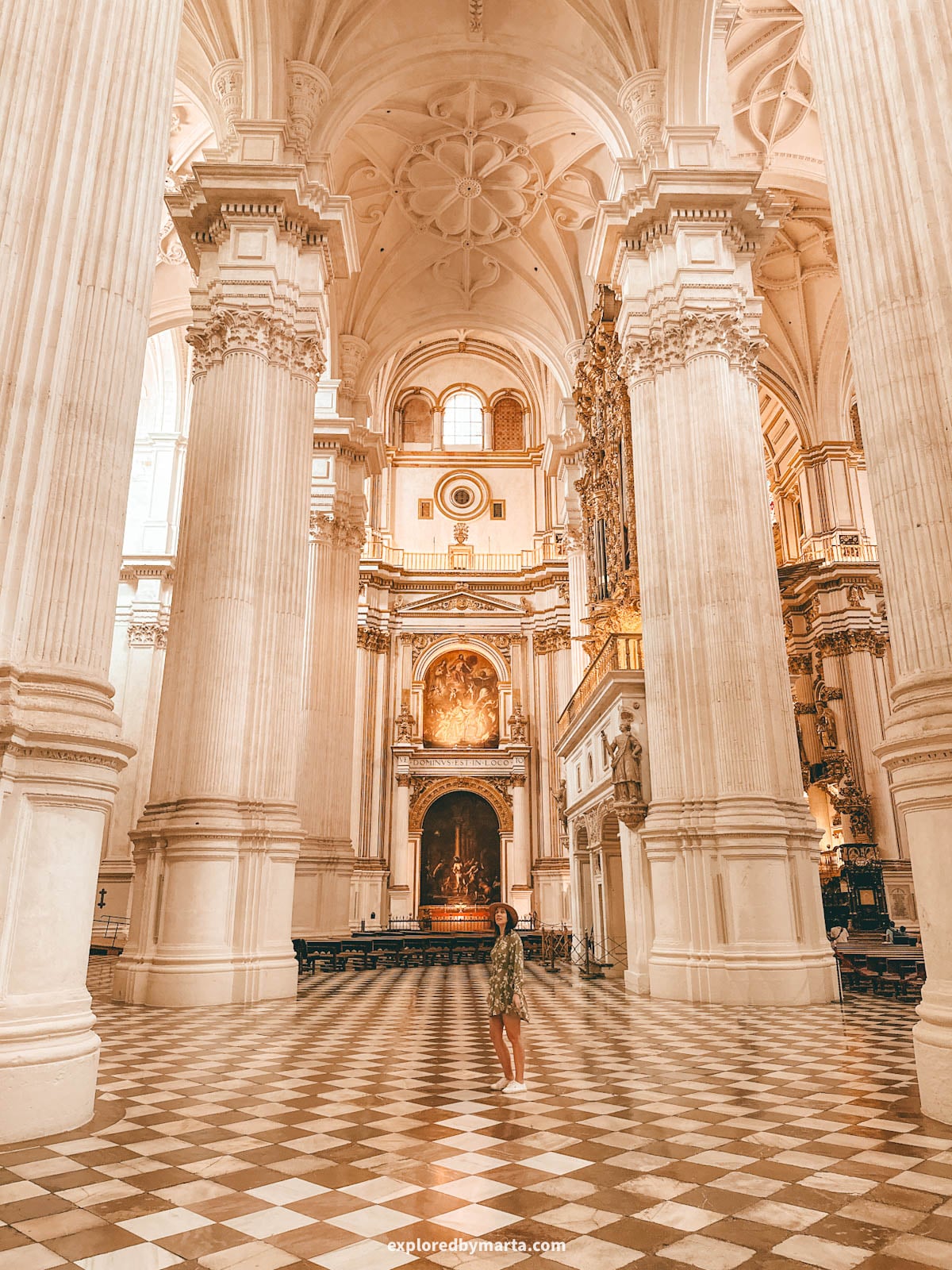
Turns out, the Royal Chapel of Granada was built specifically to be the burial place of Ferdinand and Isabella, so this spot was not chosen by accident. Granada had huge meaning for them because it was the last Muslim-ruled kingdom on the Iberian Peninsula.
Taking Granada in 1492 became one of the biggest moments of their reign!
By choosing to be buried here, they forever tied their legacy to the city where they completed the Christian conquest and strengthened their image as the Catholic Monarchs.
So the chapel is not just another beautiful church in Granada – it is also a very clear statement about power, religion, and how they wanted to be remembered.
The cathedral and Royal Chapel have separate entrances and separate tickets, so don’t assume one ticket covers both. Also, when we visited, photos were not allowed inside the Royal Chapel.
You can visit both on your own, but a guided tour can be useful if you want more context. Otherwise, I’d simply plan to see this area while exploring the historic center and La Alcaicería nearby.
I’d allow around 1 to 1.5 hours if you want to visit both the cathedral and the Royal Chapel without rushing.
Location: Granada Cathedral – Royal Chapel of Granada
4. Go souvenir shopping at La Alcaicería and La Calderería
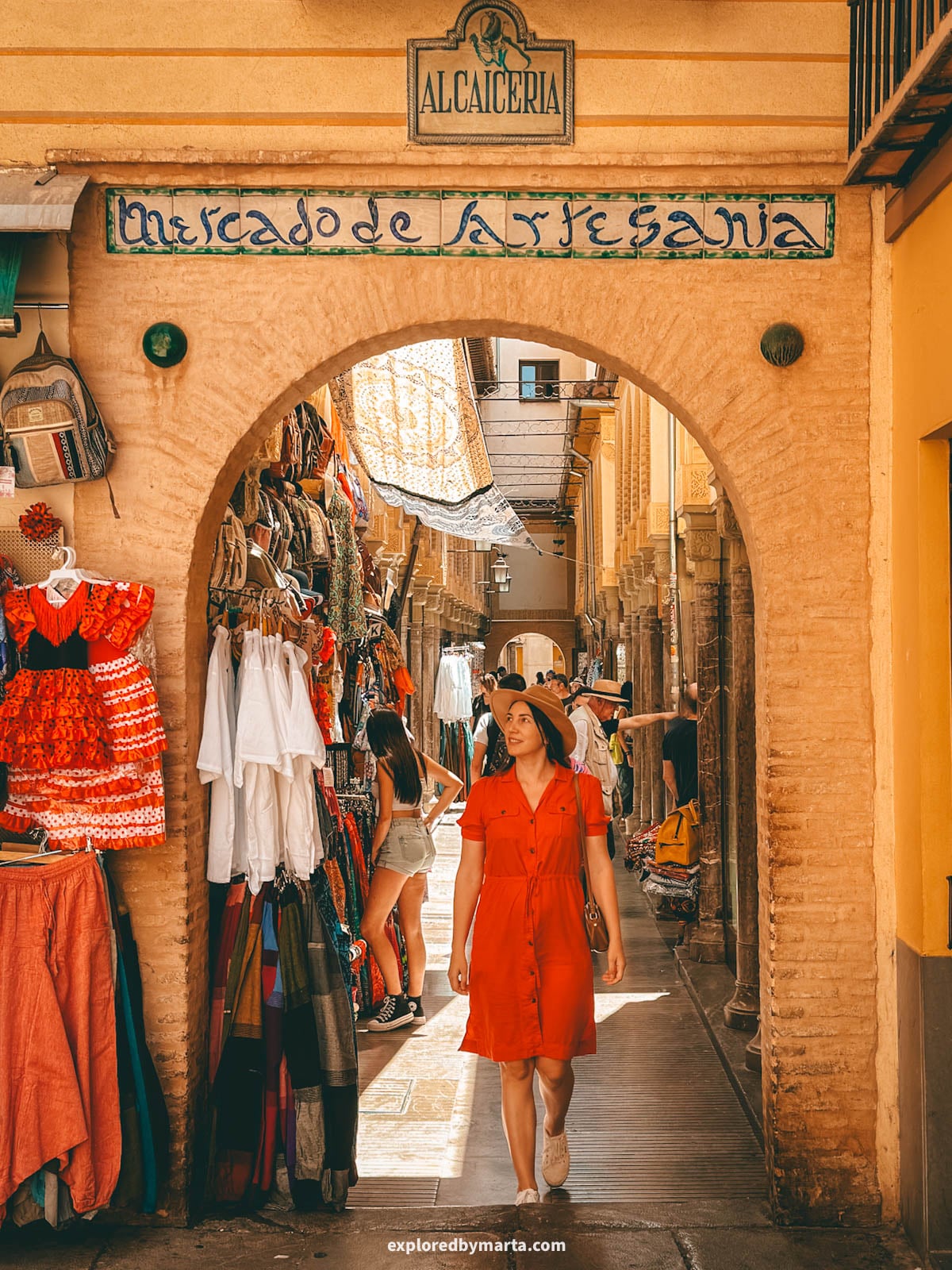
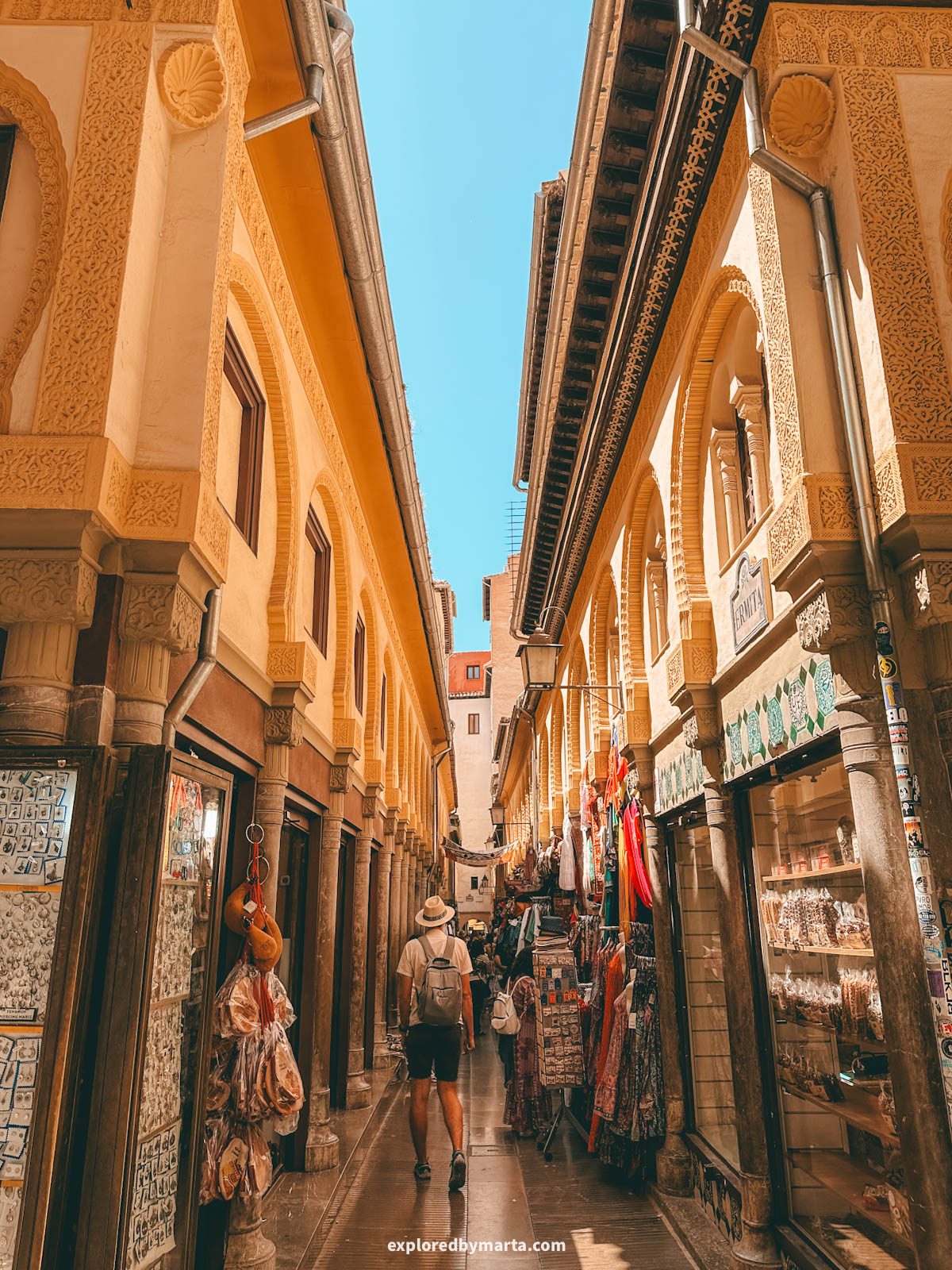
If you want to do a bit of shopping in Granada, the two best areas to know are La Alcaicería and La Calderería. They sit just a few minutes apart in the historic center, both have that distinct Moorish feel, and together they make for one of the best little walks in the city!
I’d start at La Alcaicería, right next to Granada Cathedral. This is the historic side of the two. Back in the day, this whole area was Granada’s old silk market under Muslim rule, full of narrow lanes and shops selling silk, spices, and other valuable goods.
Turns out, the original market was huge, but most of it burned down in a fire in the 19th century and what you see today is a rebuilt version. So yes, the current La Alcaicería is smaller and more tourist-focused than the old bazaar, but it still gives you a hint of what this area used to feel like.
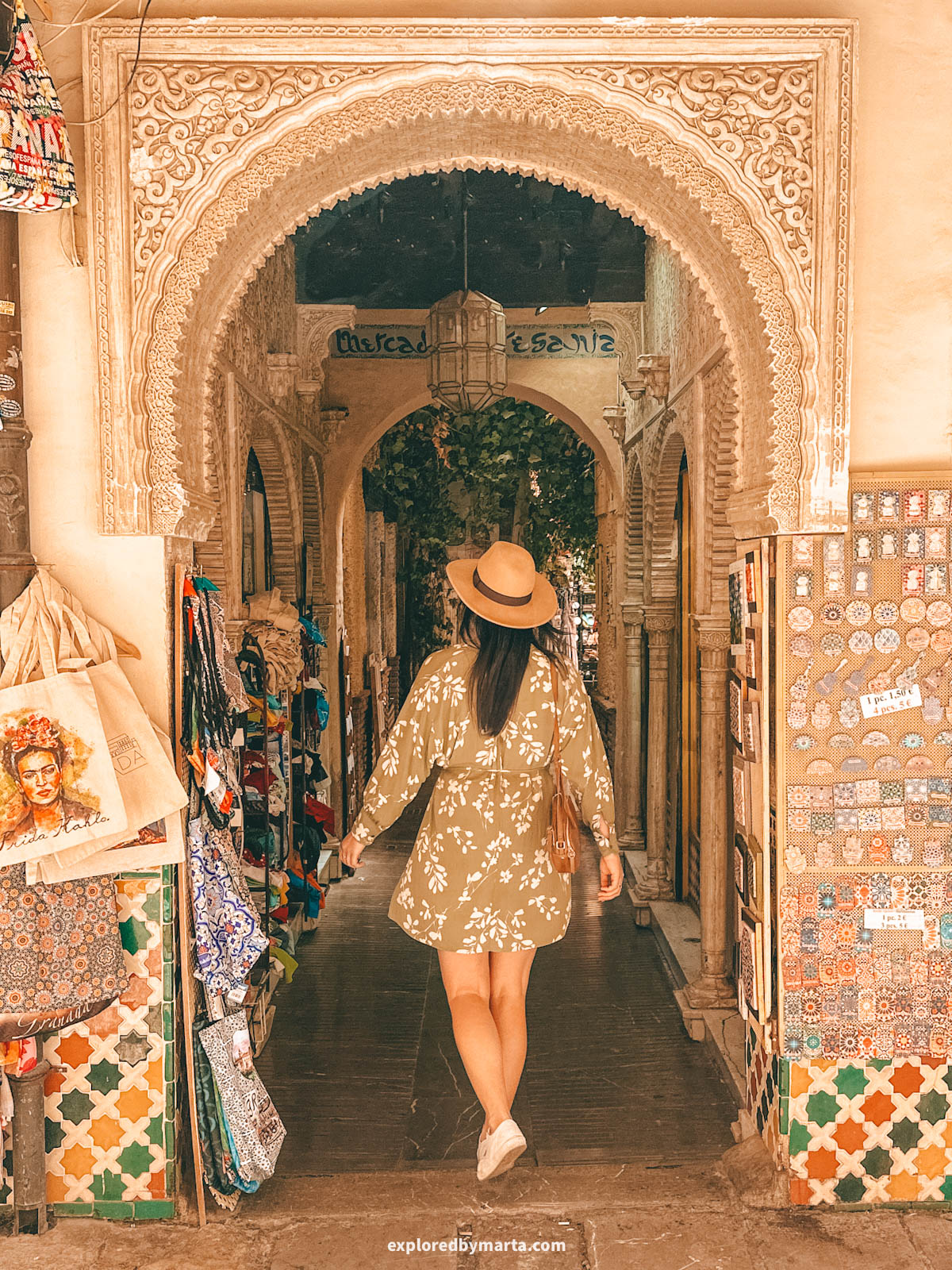
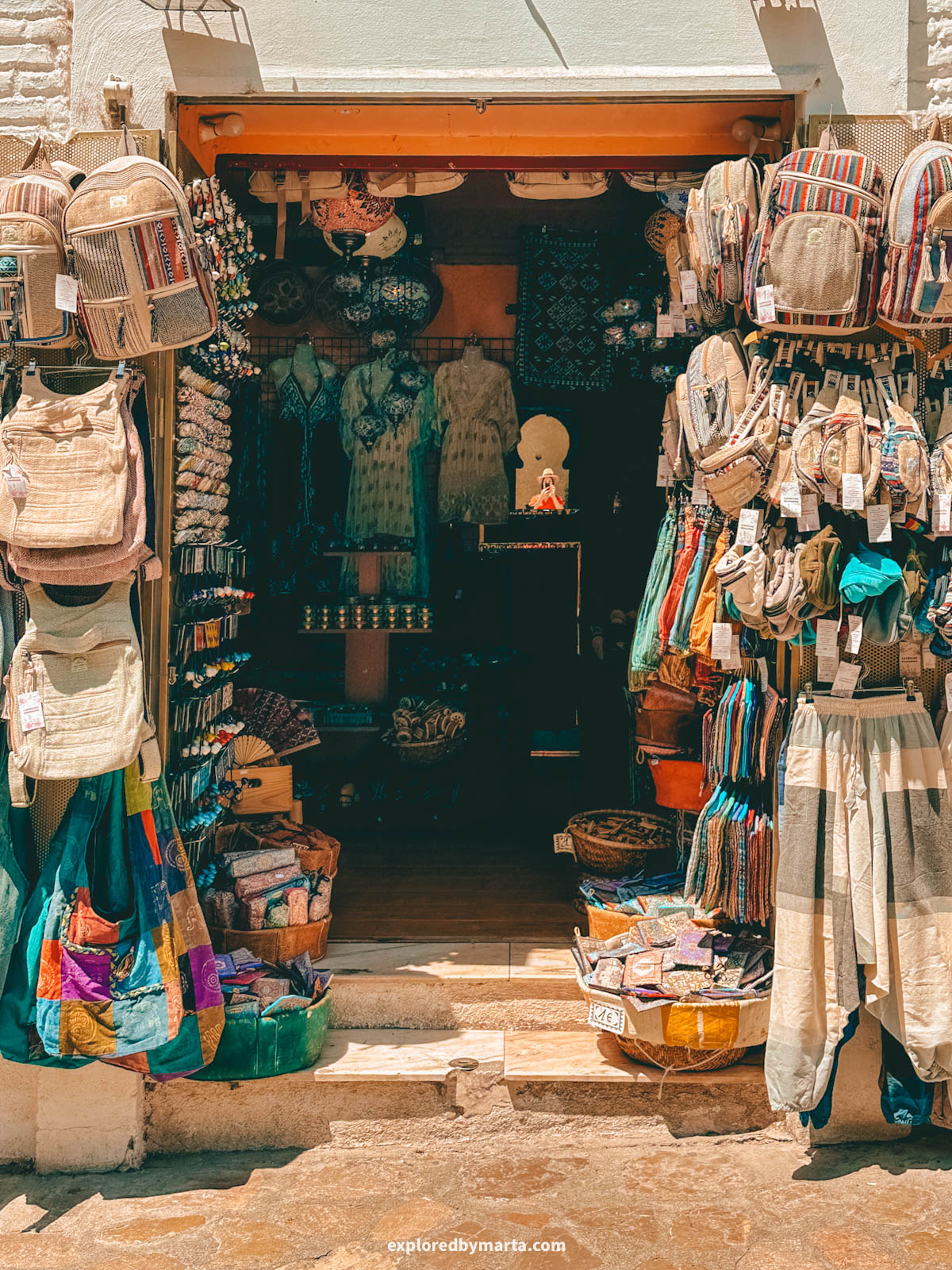
While walking around, it truly felt like a narrow maze of souvenir shops selling ceramics, lamps, fabrics, tea sets, leather goods, tiles, and decorative pieces. It reminded me a little of the souks in Marrakech, just much smaller and easier to navigate.
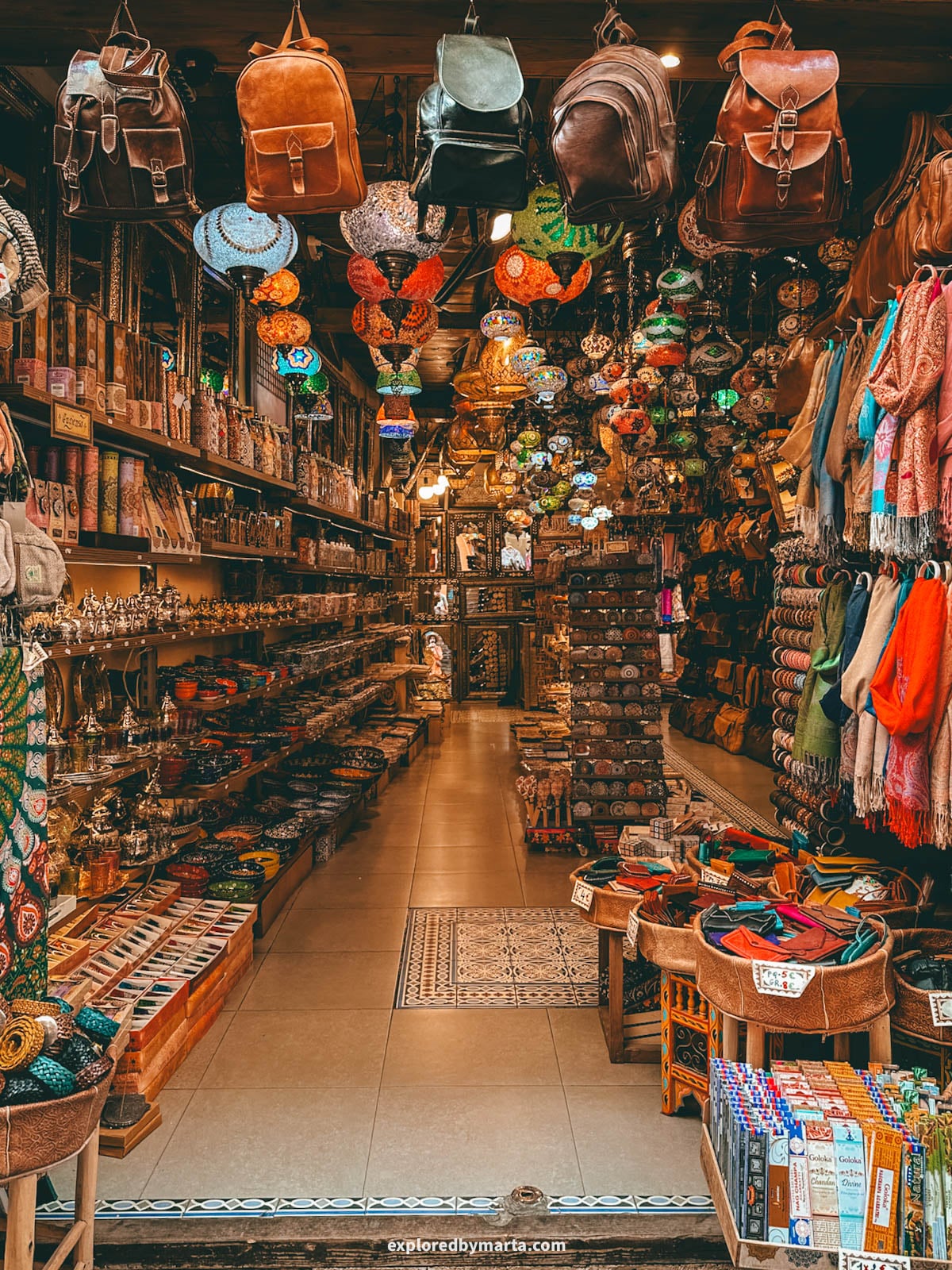
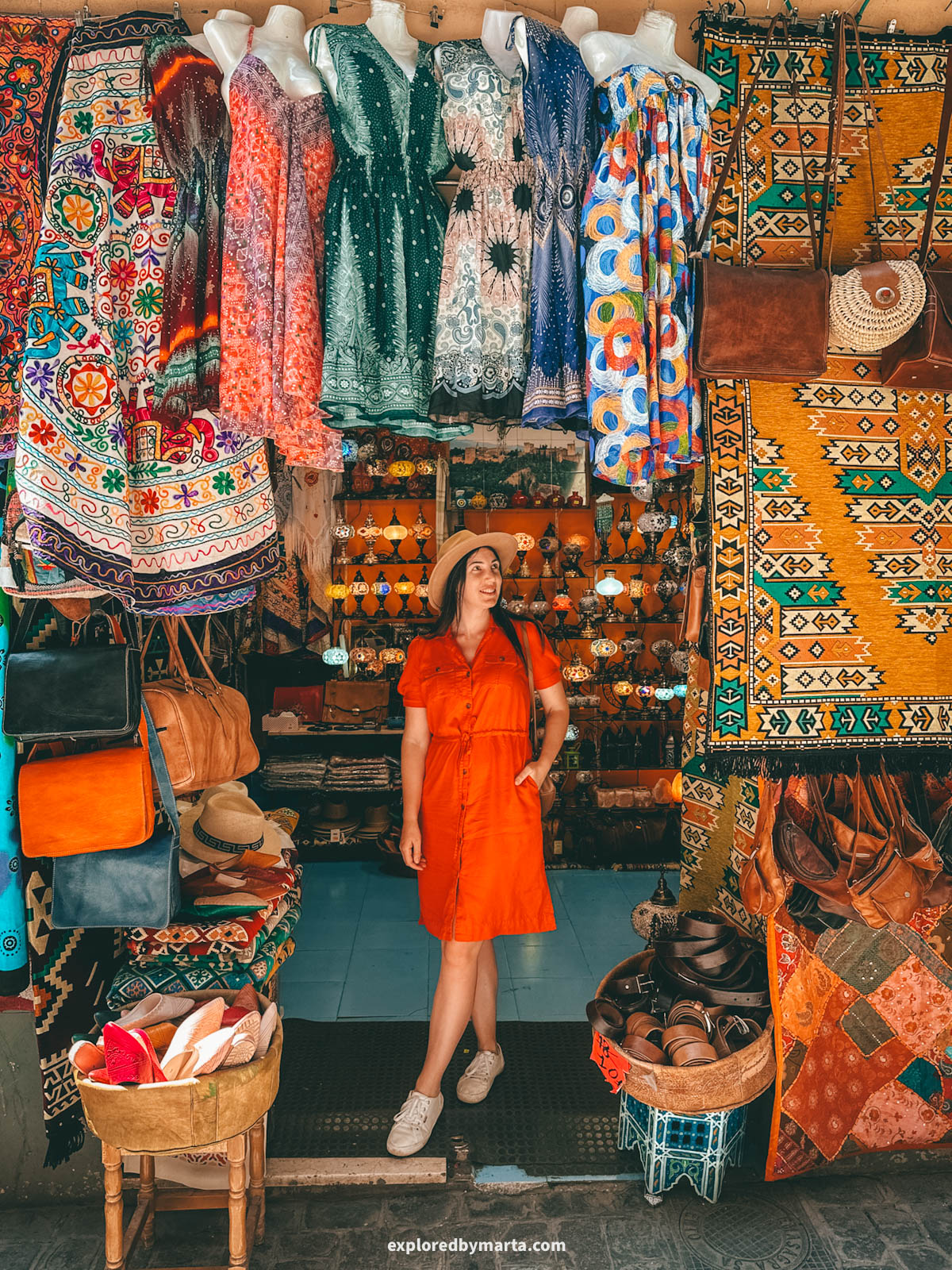
I especially liked the Moorish-style arches and narrow covered streets. It is one of those places where you walk in “just to look” and then suddenly start convincing yourself that a painted bowl or tiny lamp would absolutely fit in your luggage. 😂
A quick tip: compare a few shops before buying, because most sell pretty similar items and prices can vary. If you are looking at ceramics or textiles, check the quality too, because not everything is locally made.
From there, walk a few minutes north toward Calle Calderería Nueva, locally known as Calle de las Teterías, or “Tea House Street.” This is where the Moorish-market atmosphere reallllly turns up.
The street climbs uphill toward the Albaicín, and the whole stretch is lined with teterías (Moroccan-style tea houses), hookah shops, spice stalls, leather goods, lamps, and Moroccan textiles.
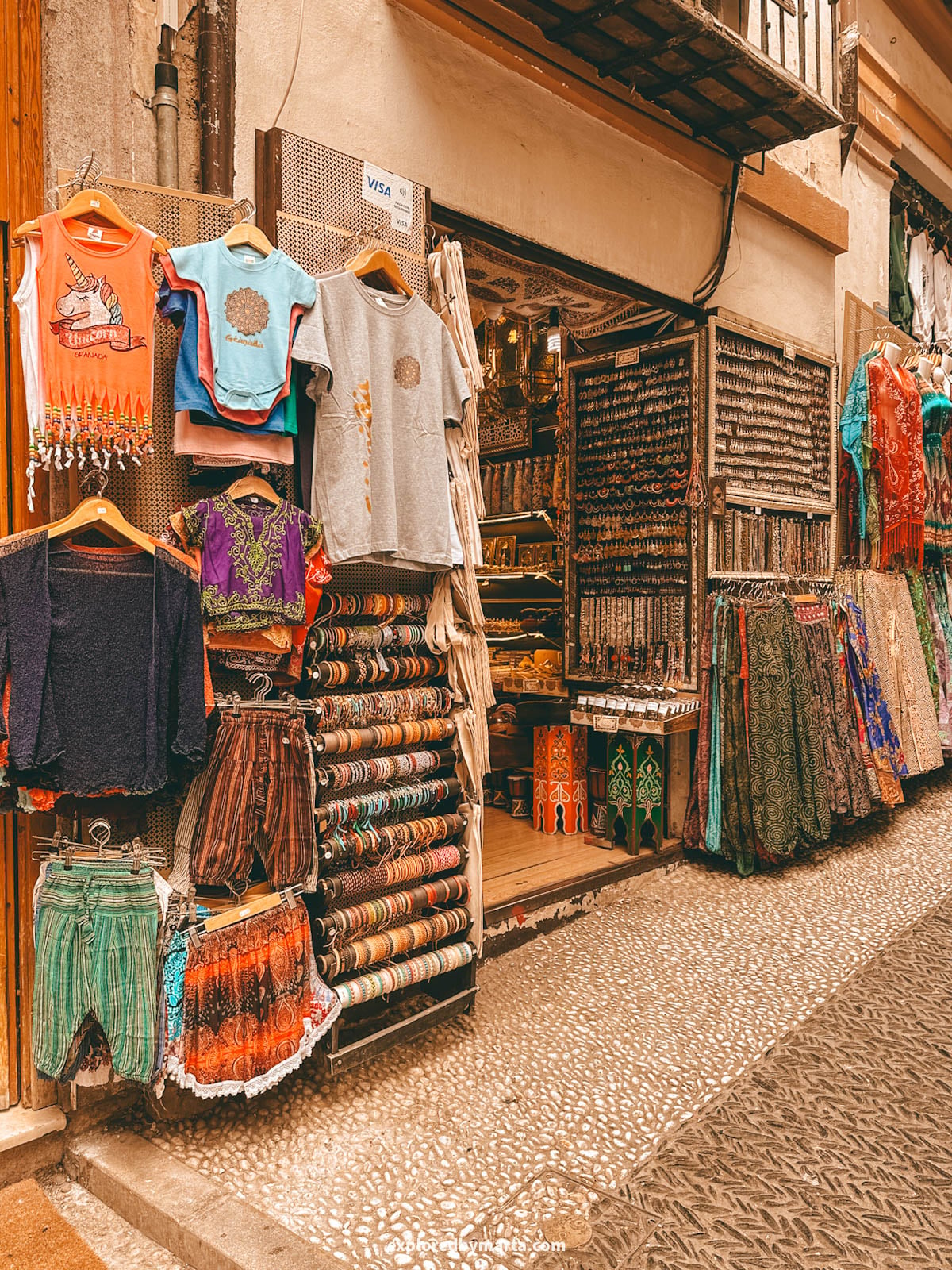
It is sometimes called the “little Marrakech of Granada,” and once you walk through it, you’ll see why. The smell of mint tea and incense pretty much takes over the entire street.
I learned that the name Calderería actually comes from old craftsmen who used to make copper pots and cauldrons here. No cauldrons in sight today, but you will see glass lanterns, colorful ceramics, and tiny tea glasses stacked in every shop window.
If you can, stop at one of the teterías for a mint tea and a Moroccan pastry. From here, the street also connects to Calle Elvira, which has more Arabic-style shops and tapas bars if you want to keep wandering.
Between La Alcaicería and La Calderería, you basically get two different sides of Granada’s Moorish heritage in one short walk. One is the rebuilt old silk market and the other is the living, more modern version of Granada’s North African connection.
Both are very classic Granada and worth the small detour, even if souvenir shopping isn’t really your thing.
Location: La Alcaicería – La Calderería – Calle Elvira
5. Walk Carrera del Darro, the prettiest old town street
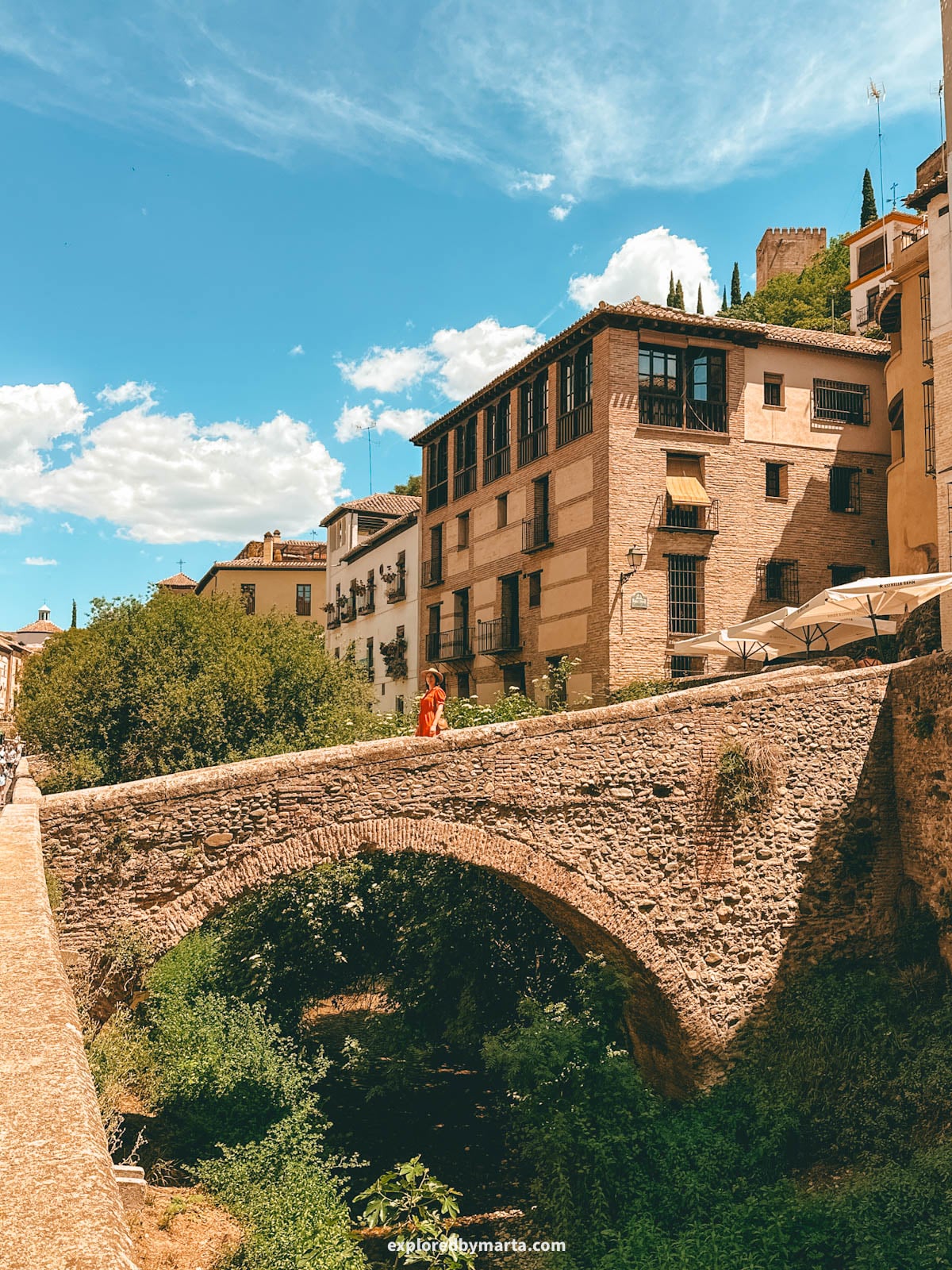
If there is one walk in Granada Old Town that feels impossible to skip, it is Carrera del Darro and the stretch toward Paseo de los Tristes.
This is easily one of the most beautiful streets in Granada, and for me, it captures so much of what makes the city special.
You have the Darro River running next to you, old stone bridges crossing over the water, historic buildings leaning into the narrow street, and the Alhambra rising above the trees on the hill.
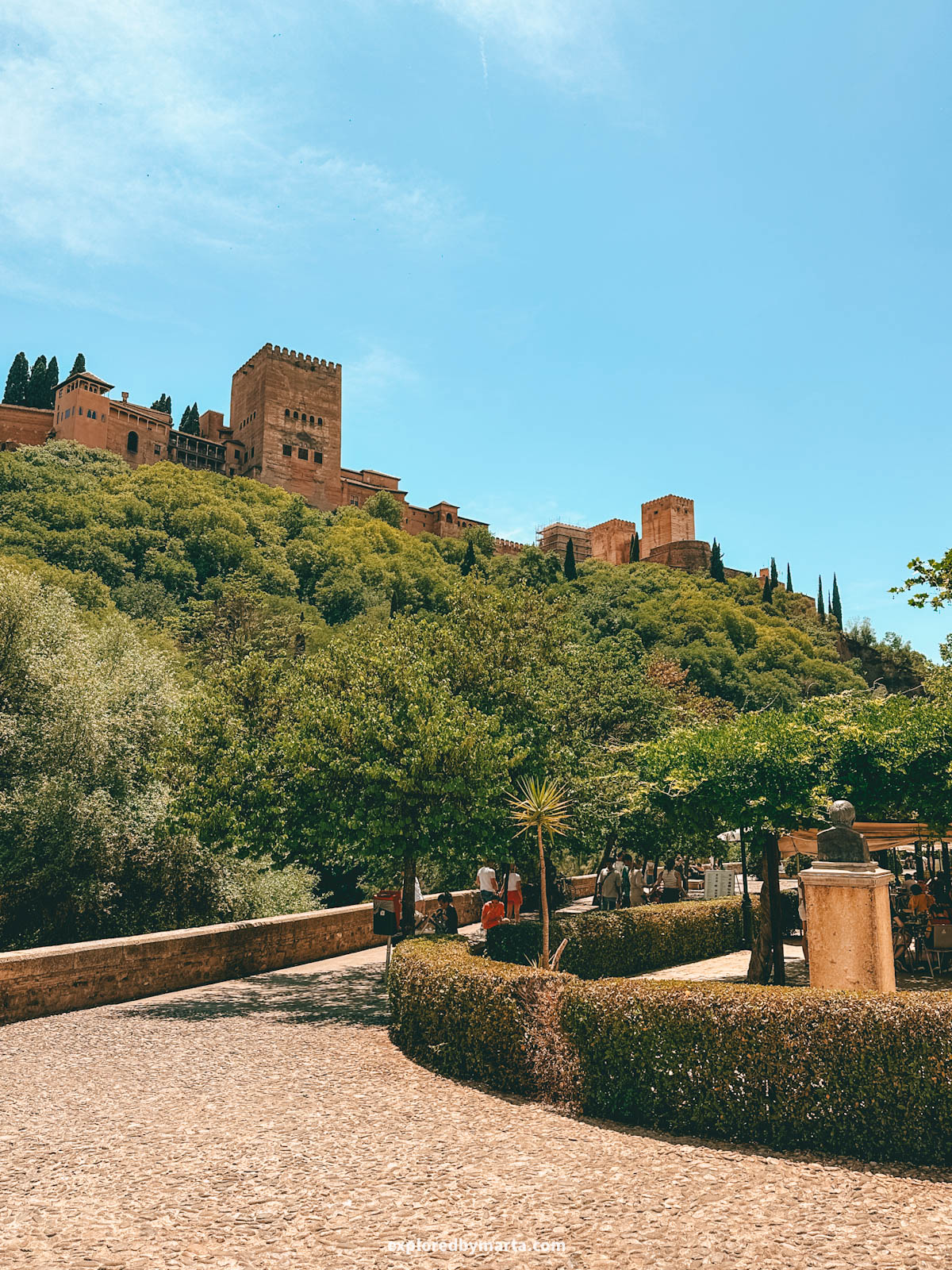
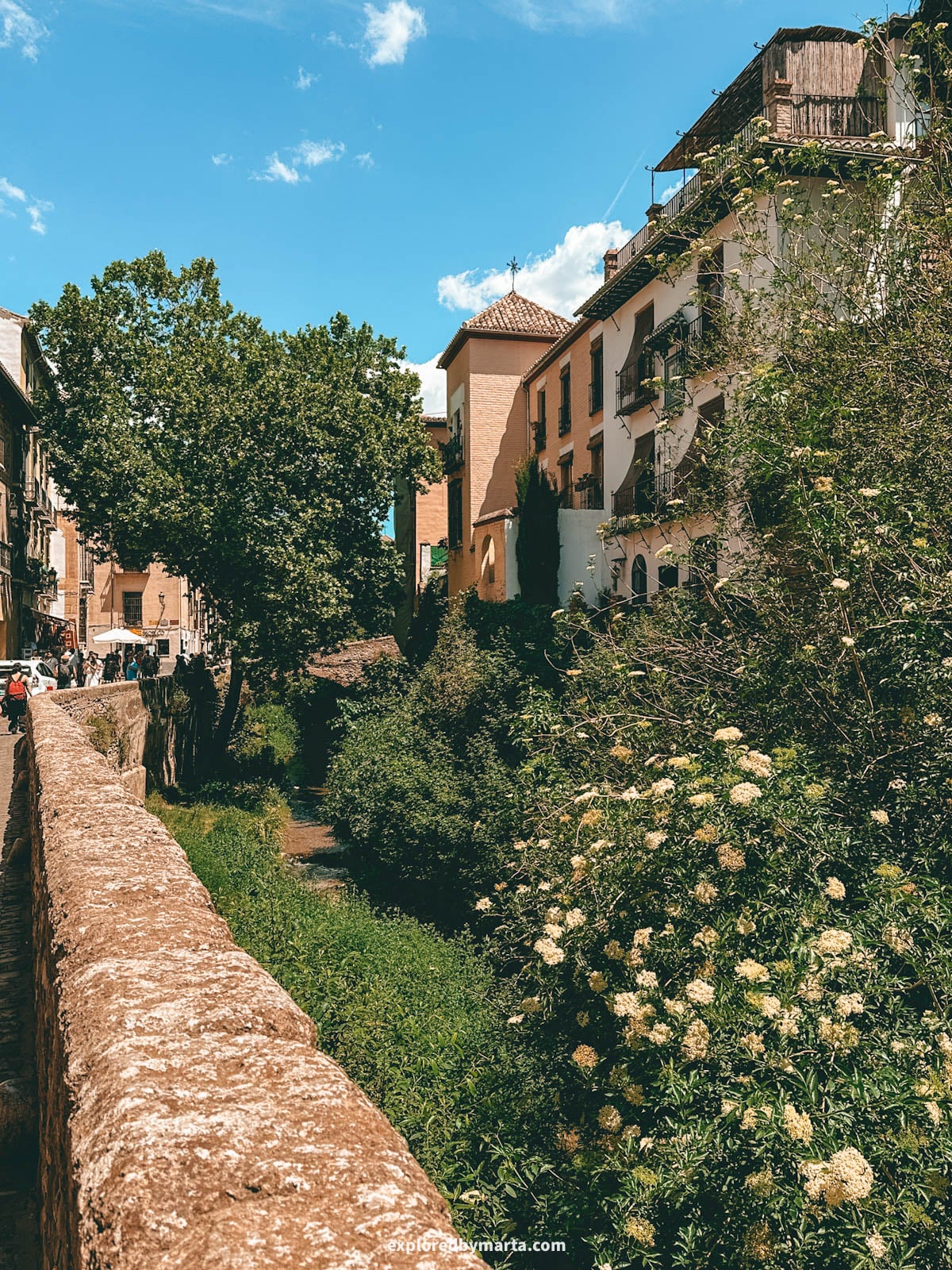
It feels like Granada packed river views, old architecture, little shops, cafés, and Alhambra glimpses into one short walk and then said, “you’re welcome.”
Carrera del Darro starts close to Plaza Nueva, so it is very easy to reach while exploring the historic center. The street is narrow and busy in parts, but that is also part of the charm.
You’ll pass small souvenir shops, restaurant terraces, old doorways, stone walls, and a few little corners that make you stop for photos even if you were not planning to. Classic Granada behavior, honestly.
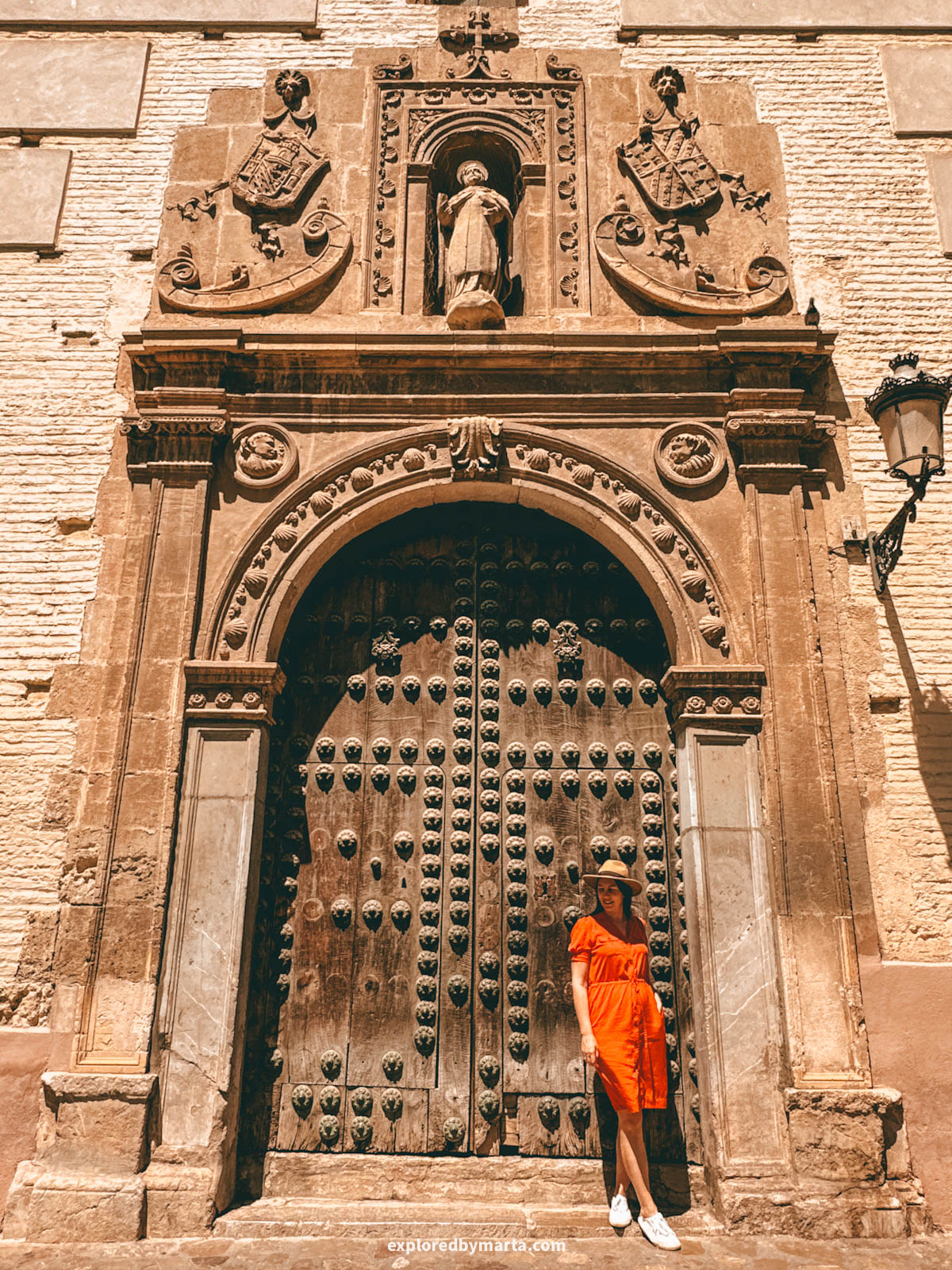
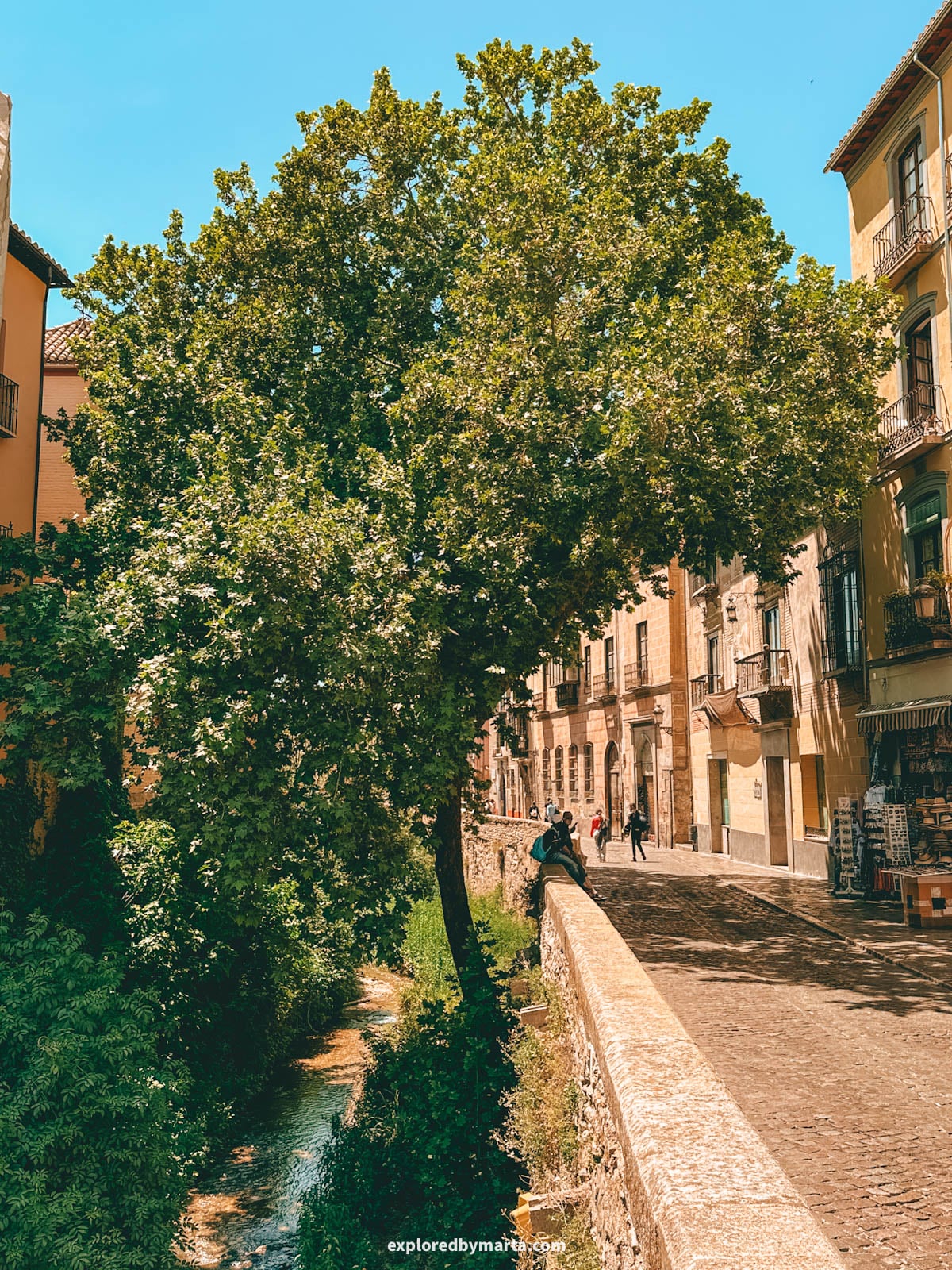
As the street opens up toward Paseo de los Tristes, the views get even better. This area sits right below the Alhambra, so you can look up and see the fortress walls above you while people sit at outdoor terraces below.
Despite the dramatic name, Paseo de los Tristes is not sad today. It is actually one of the liveliest and most charming areas in Granada, with cafés, restaurants, benches, shops, and a beautiful old-town atmosphere.
This is also a great way to move between the historic center, Albaicín, and Sacromonte, but honestly, I’d walk here even if it didn’t lead anywhere. It is just that pretty.
Location: Carrera del Darro – Paseo de los Tristes
6. Visit El Bañuelo Arab Baths on Carrera del Darro
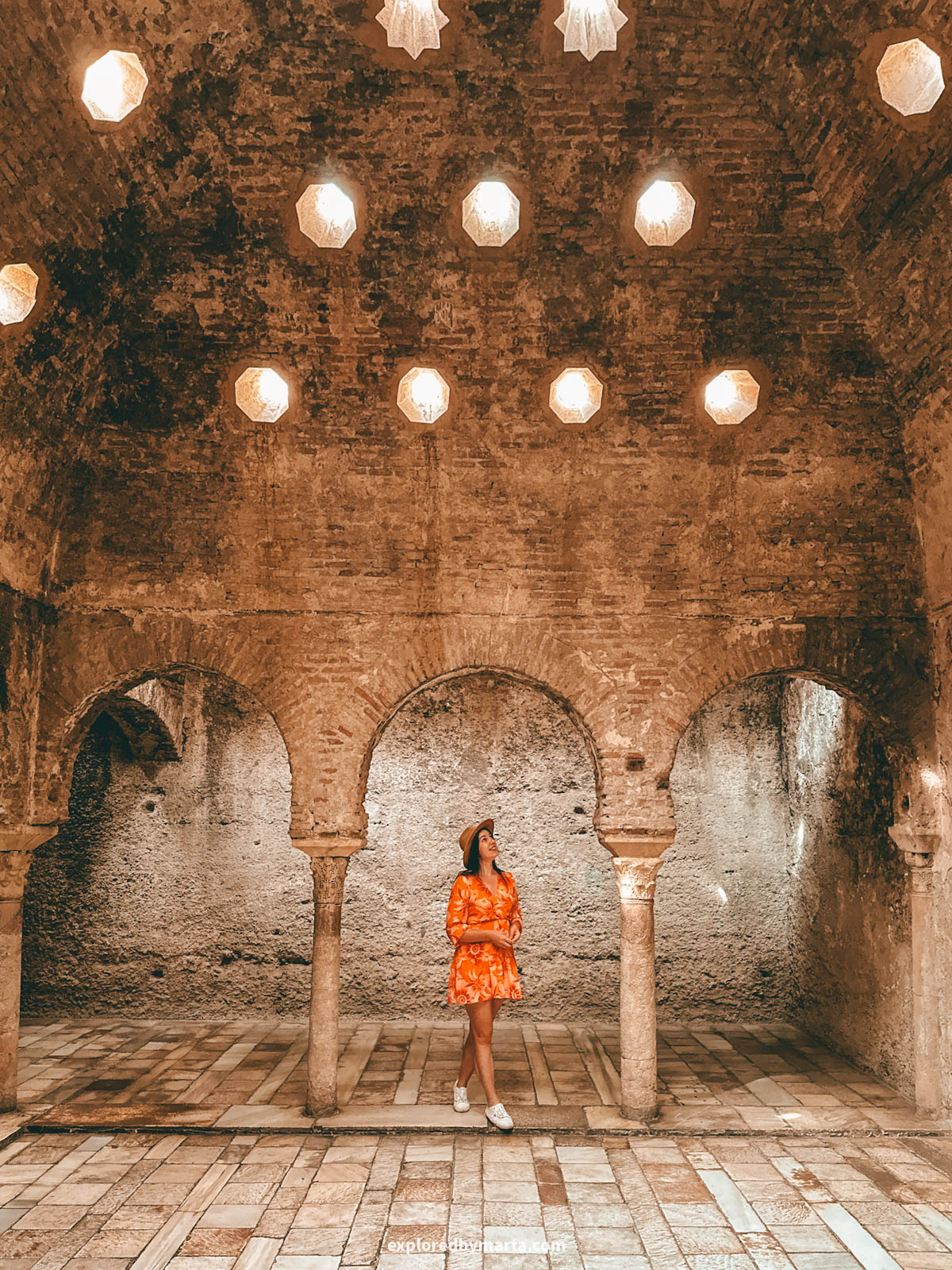
As you walk along Carrera del Darro, don’t miss El Bañuelo, one of the best historic stops on this street.
It is easy to walk right past it if you don’t know it’s there, because the entrance is quite simple from the outside. But inside, you’ll find one of the best-preserved Arab Baths in Granada.
El Bañuelo dates back to the 11th century, when public bathhouses were an important part of daily life in Moorish Granada. People came here to wash, relax, socialize, and move between cold, warm, and hot rooms.
The visit is not long, but the space is really interesting, especially if you haven’t visited traditional Arab baths in Andalusia before. You’ll see brick arches, vaulted ceilings, stone columns, and those beautiful star-shaped and octagonal openings in the roof.
Those ceiling openings were not just decorative. They helped bring in daylight and let steam escape from the baths, which is such a simple but clever detail.
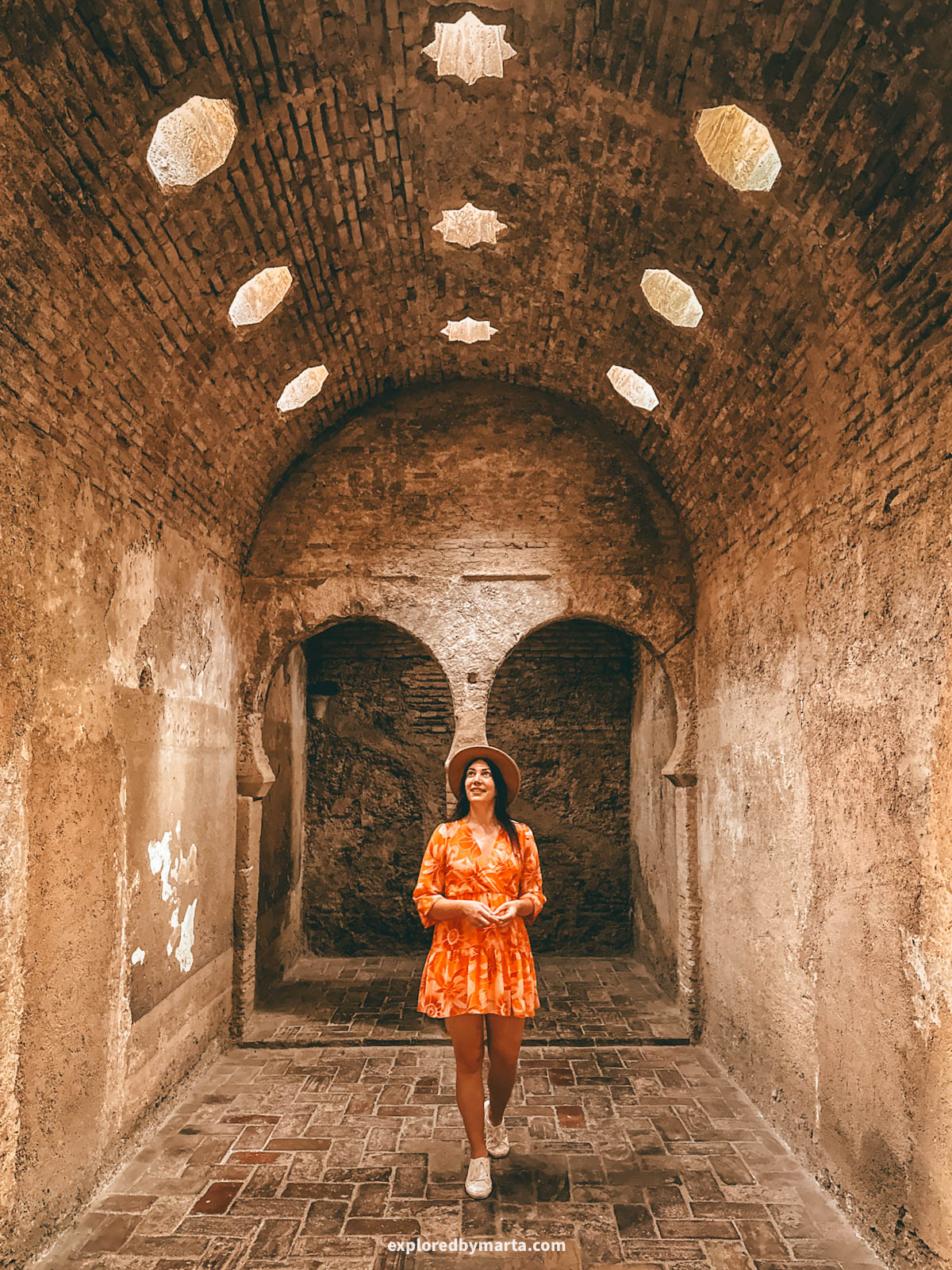
For me, El Bañuelo is worth visiting because it adds a completely different layer to the Carrera del Darro walk. One minute you’re outside with river views and Alhambra glimpses, and the next you’re standing inside a bathhouse that is nearly 1,000 years old.
It is small, so don’t expect a huge monument. I’d see it more as a quick but memorable stop, especially if you like Moorish history or smaller places that help you understand how people actually lived here.
When we visited, we bought a combined ticket for several Moorish monuments, including El Bañuelo, Palacio Dar al-Horra, and Casa Árabe de Horno del Oro. If you enjoy historic sites, it can be worth it.
If you’re short on time, I’d prioritize El Bañuelo from those smaller monuments. It is easy to reach, quick to visit, and fits perfectly while walking from the historic center toward Paseo de los Tristes or Sacromonte.
After seeing the historic Arab Baths, I can totally see why booking a modern hammam experience in Granada is so popular. Imagine finishing a long day of exploring with warm baths, steam rooms, tea, and maybe a massage… A dream!
Location: El Bañuelo
7. Explore Sacromonte and the cave museum
After walking along Carrera del Darro and stopping at El Bañuelo, you can continue toward Paseo de los Tristes and up into Sacromonte.
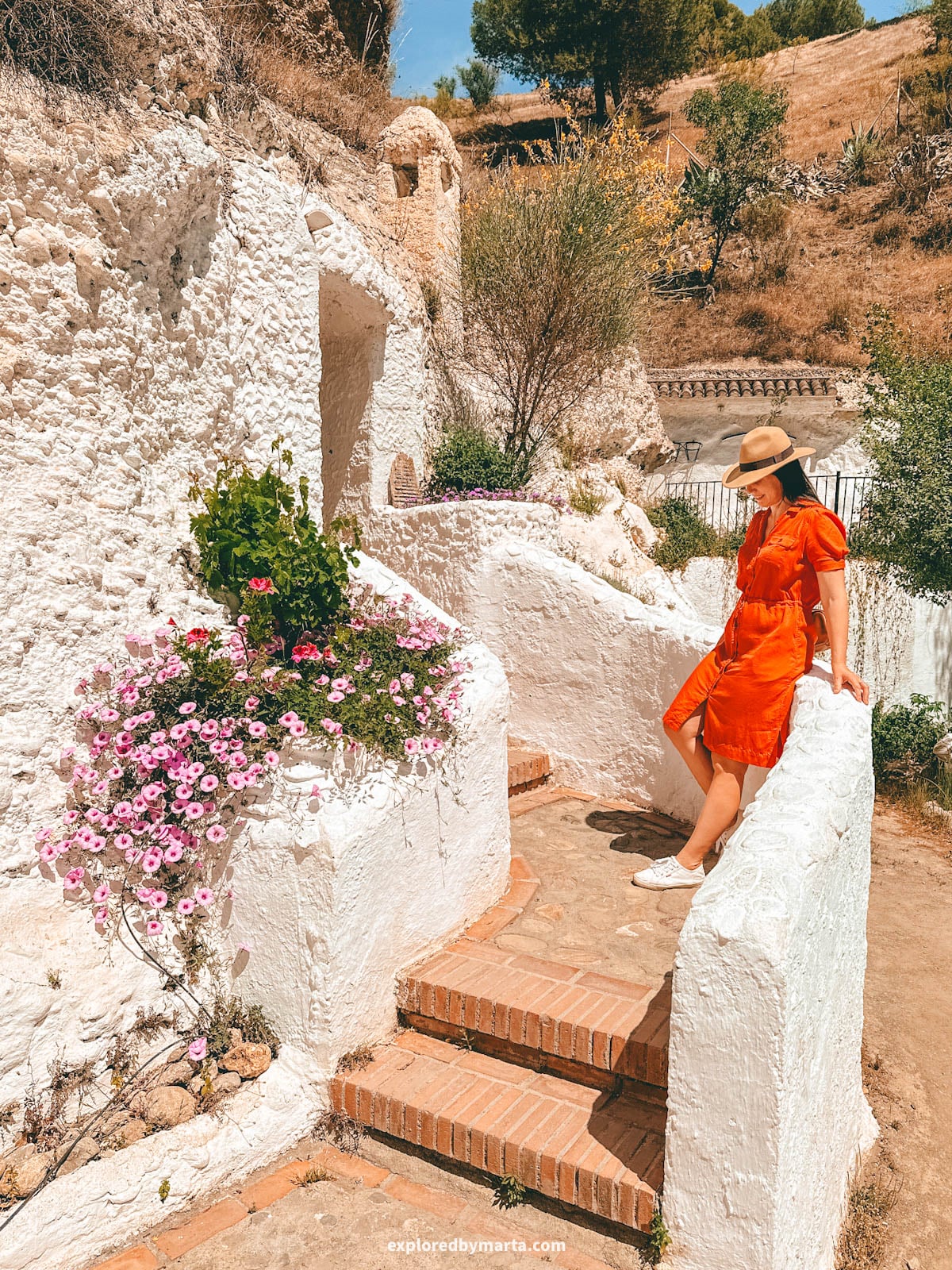
Sacromonte is one of the most interesting areas in Granada because it feels completely different from the Cathedral area or the Alhambra. The Sacromonte district is famous for its white cave houses, flamenco culture, hillside views, and steep streets.
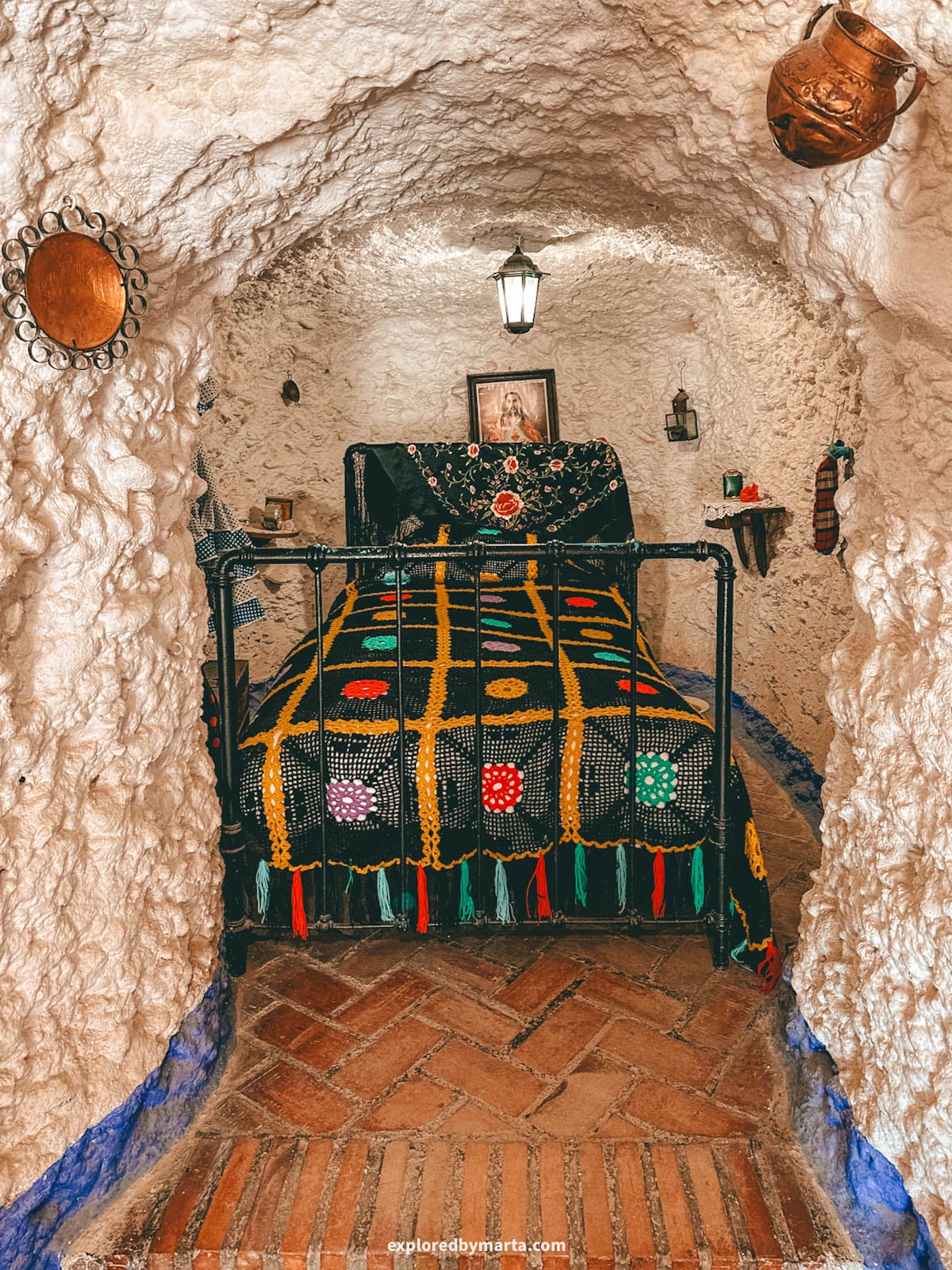
The main place I’d visit here is Museo Cuevas del Sacromonte, an open-air cave museum where you can step inside traditional cave homes and learn how people lived in this part of Granada.
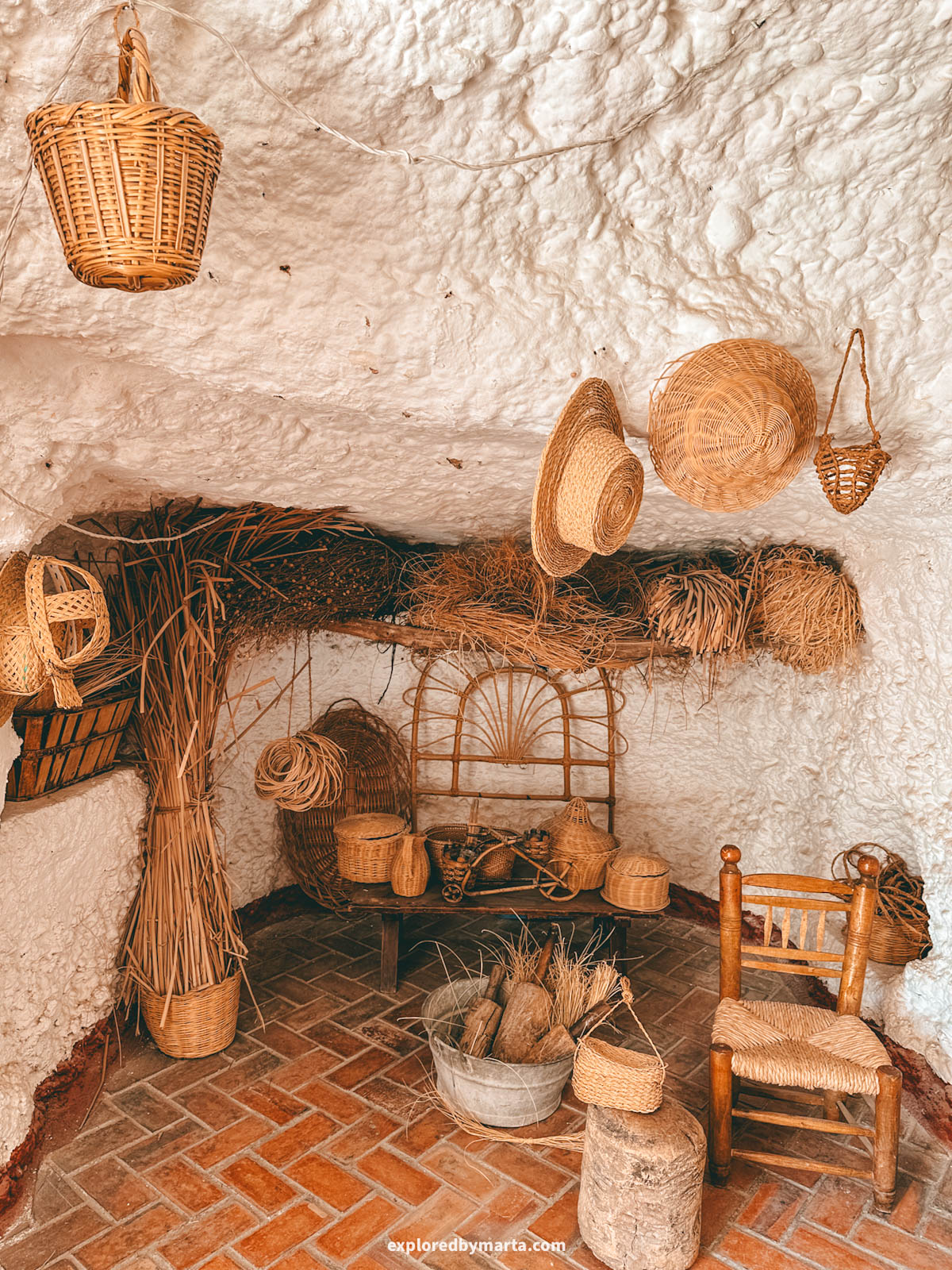
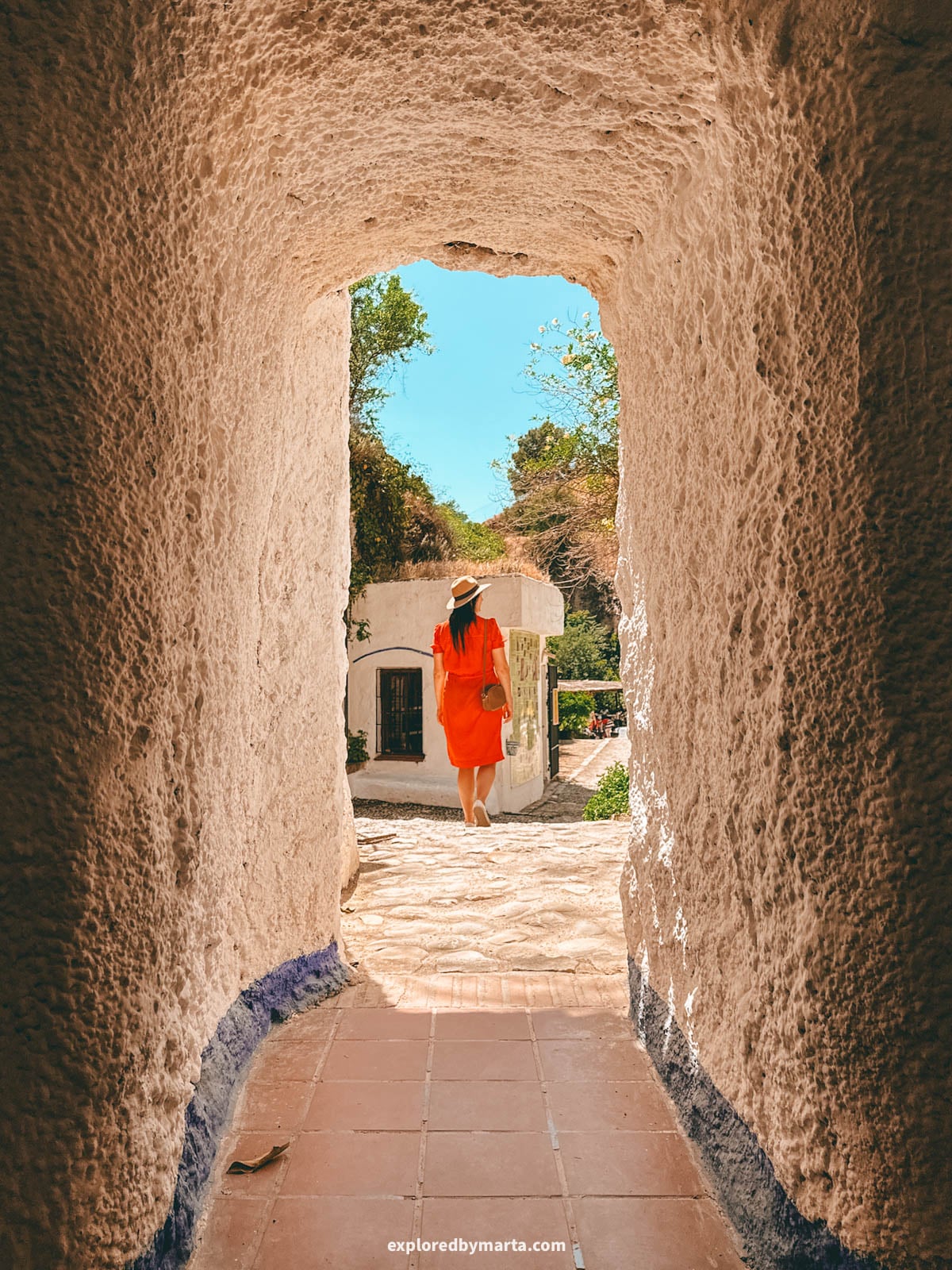
Sacromonte’s cave houses were traditionally home to marginalized communities, especially Roma/Gitano families, who settled on the hillsides outside the city after Granada’s Christian conquest.
Carving homes into the soft hillside was practical, affordable, and away from the main city, and over time these caves became closely tied to Sacromonte’s flamenco culture.
The caves are set up as different rooms, like a kitchen, bedroom, stable, pottery space, and other everyday living areas. It is not a huge museum, but it gives useful context instead of just walking past cave houses and wondering what life was actually like inside.
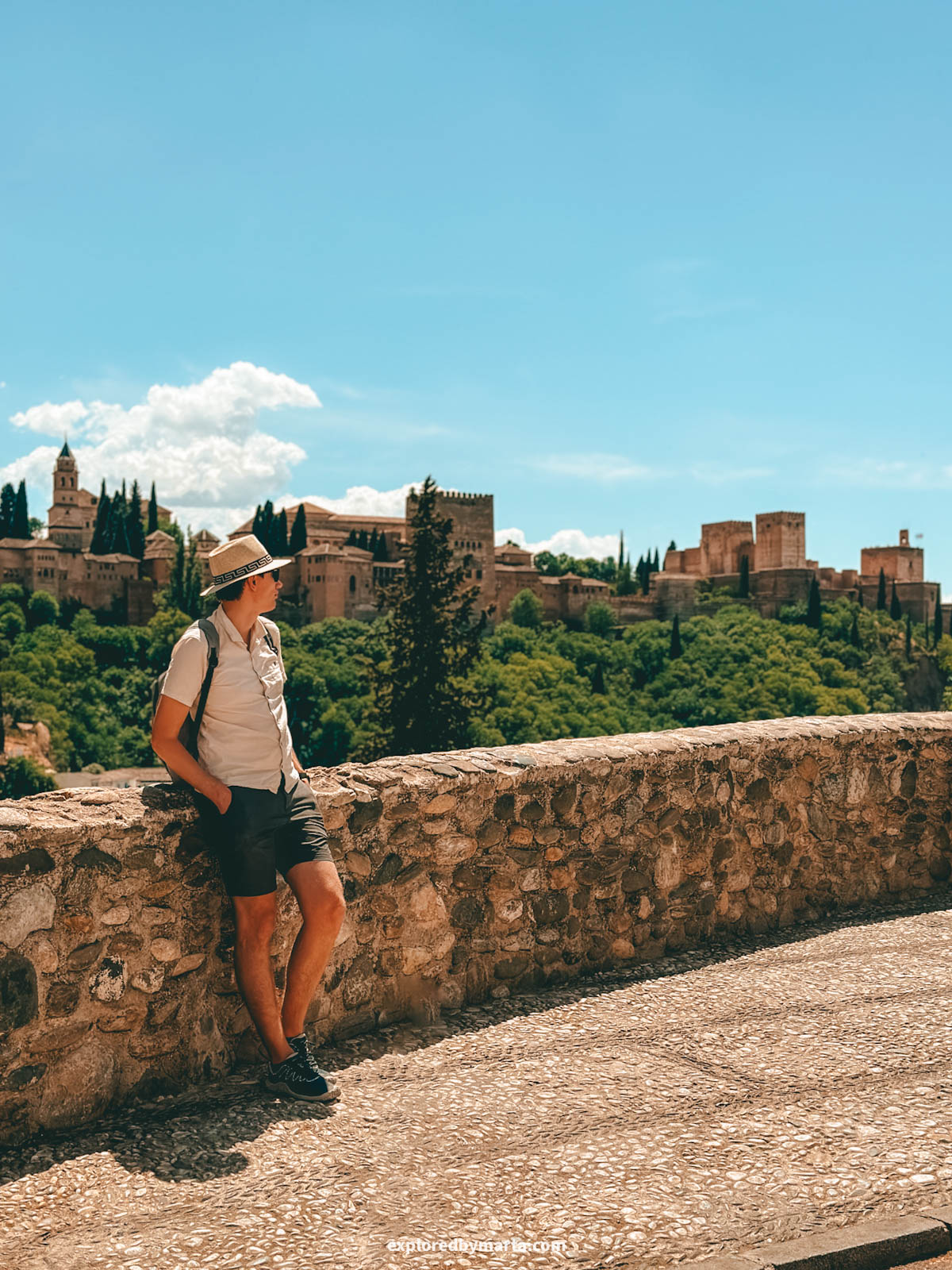
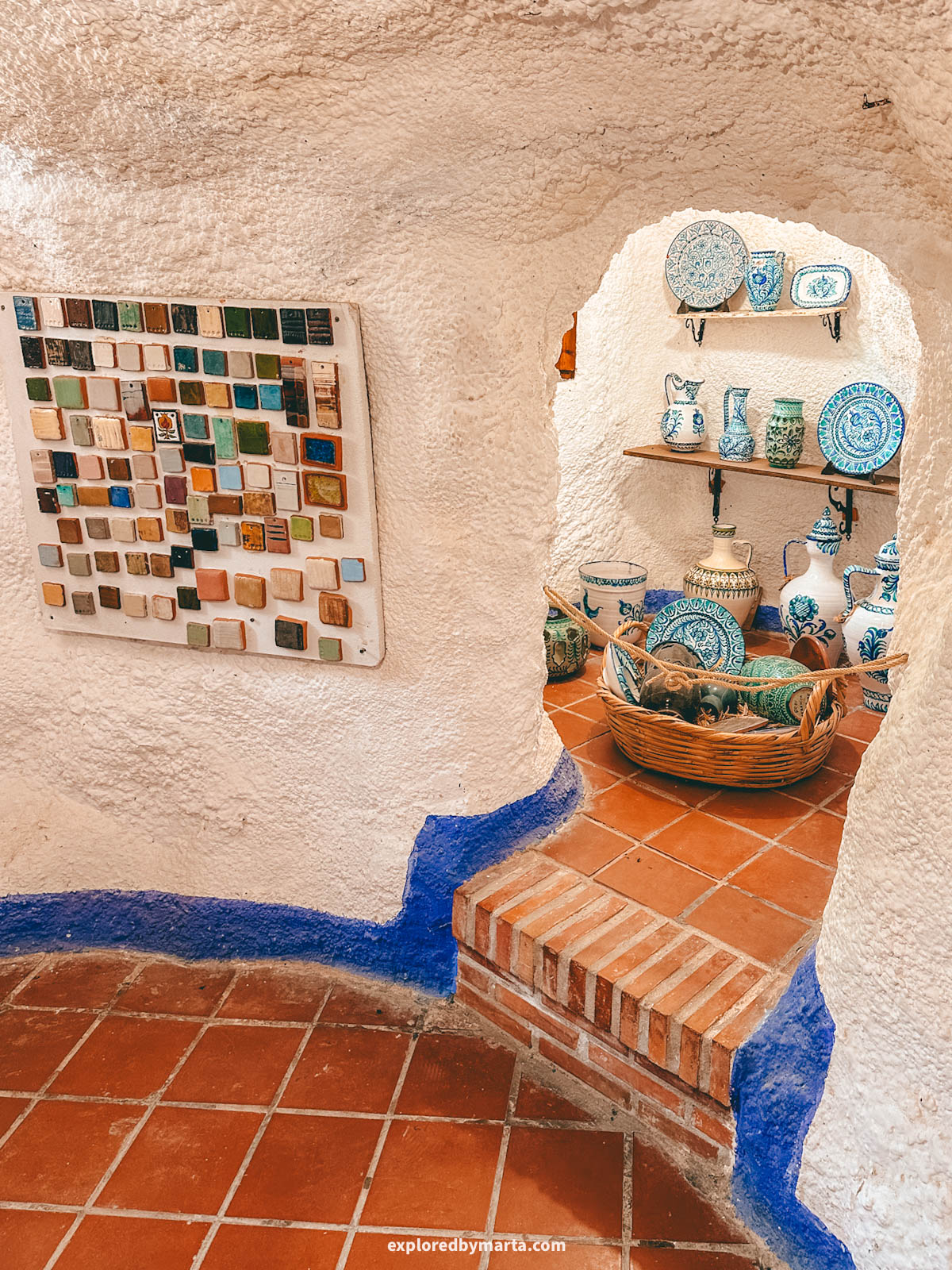
For me, this was one of the more unique things to do in Granada because it shows a side of the city that feels very local and very connected to its hillside geography. You also get some great views over Granada and the Alhambra along the way.
The walk up to the museum can feel challenging, especially on a hot day. It is not technically difficult, but it is uphill, exposed in places, and slower than it looks on the map.
I’d bring water, comfortable shoes, and a little patience. If you are visiting in summer, I would avoid the hottest part of the day unless you enjoy suffering for culture.
The museum itself takes around 30 to 45 minutes, but I’d allow extra time for the walk, viewpoints, and maybe stopping at small shops or photo spots along the way.
Sacromonte is also known for flamenco cave shows, especially zambra-style performances. We focused on the cave museum and viewpoints, but if you want to add something cultural in the evening, this is one of the classic areas to consider for a flamenco show.
Is it worth it? I’d say yes if you have extra time in Granada and want to see more than palaces and churches. Sacromonte adds a very different layer to the city, and the views alone make the uphill walk feel a little more justified.
Location: Museo Cuevas del Sacromonte
8. Explore the Albaicín and see Mirador de San Nicolás
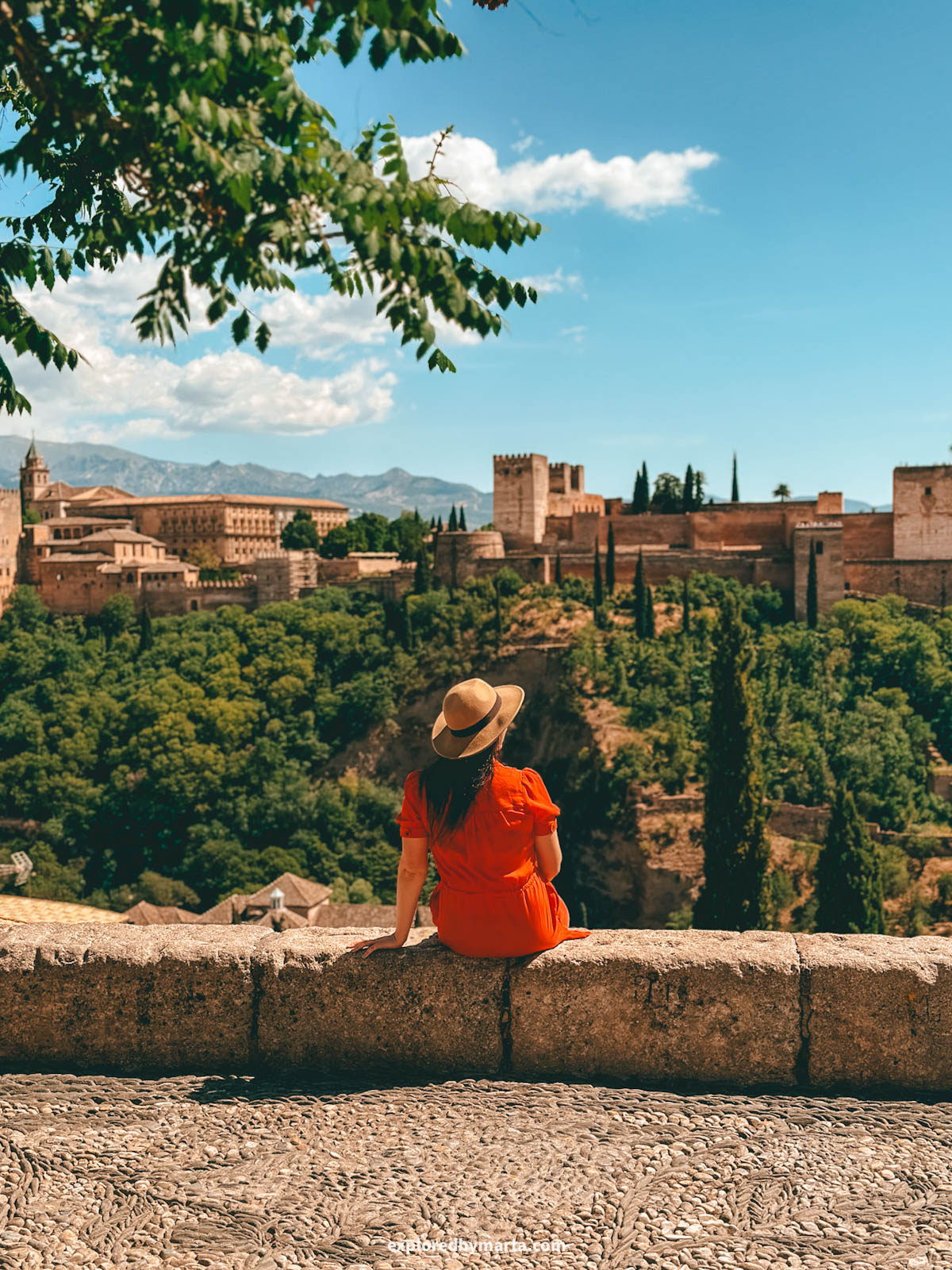
If you continue from Sacromonte back toward the historic center, the Albaicín is the natural next area to explore.
The Albaicín is one of Granada’s most famous old neighborhoods, and it is THE place to wander around and “get lost” in the city, but I don’t think “just get lost here” is the most helpful advice.
I mean, getting lost in pretty streets sounds romantic until you are tired, hungry, walking uphill, and Google Maps starts spinning in circles. 😅
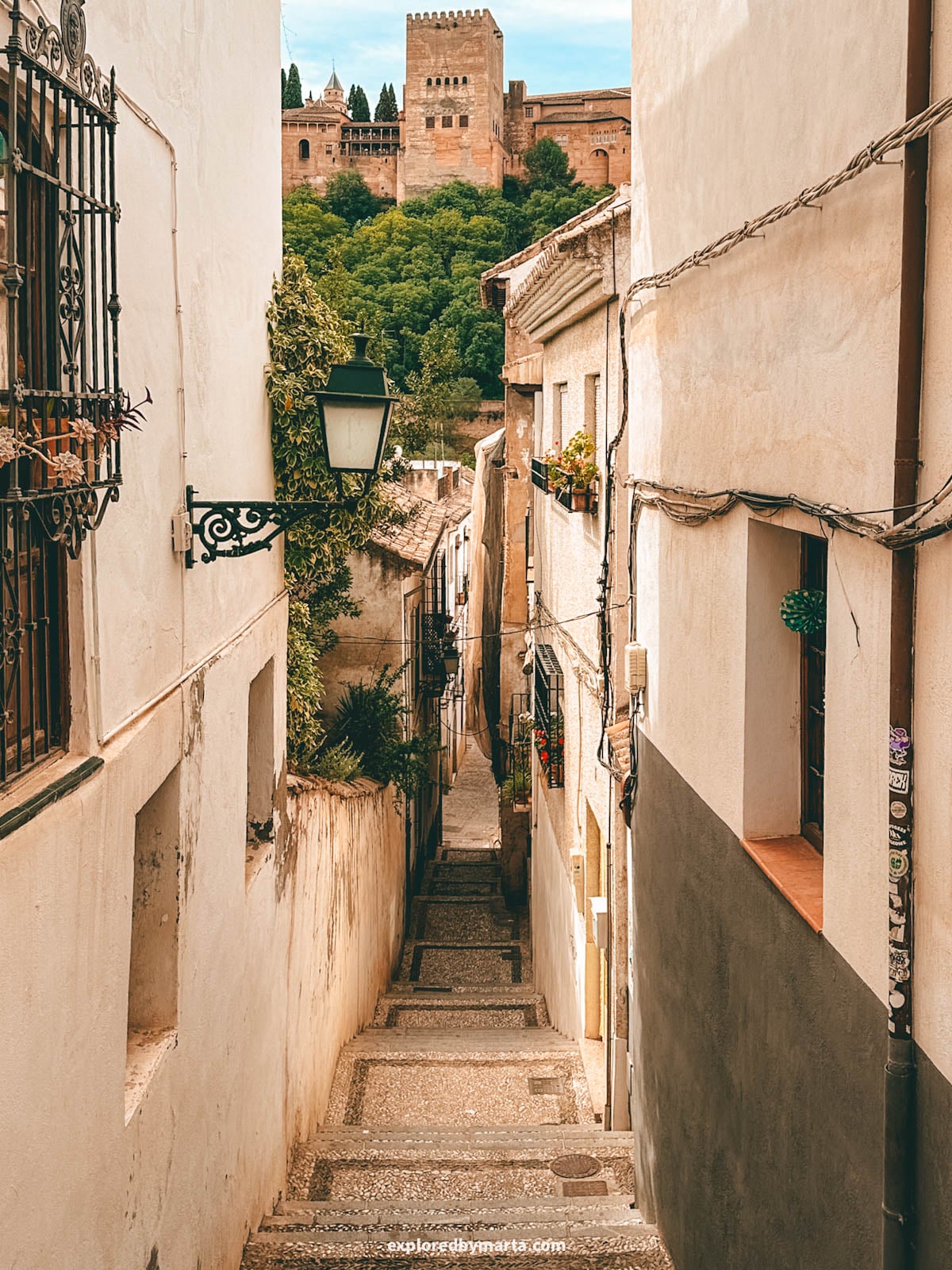

So instead, I’d explore the Albaicín with a few specific stops in mind. You don’t need a strict route, but having a few anchor points makes the whole walk much easier and more useful.
A guided walking tour can also make sense here, especially if you want to understand the Albaicín’s history instead of just walking around pretty streets with Google Maps open.
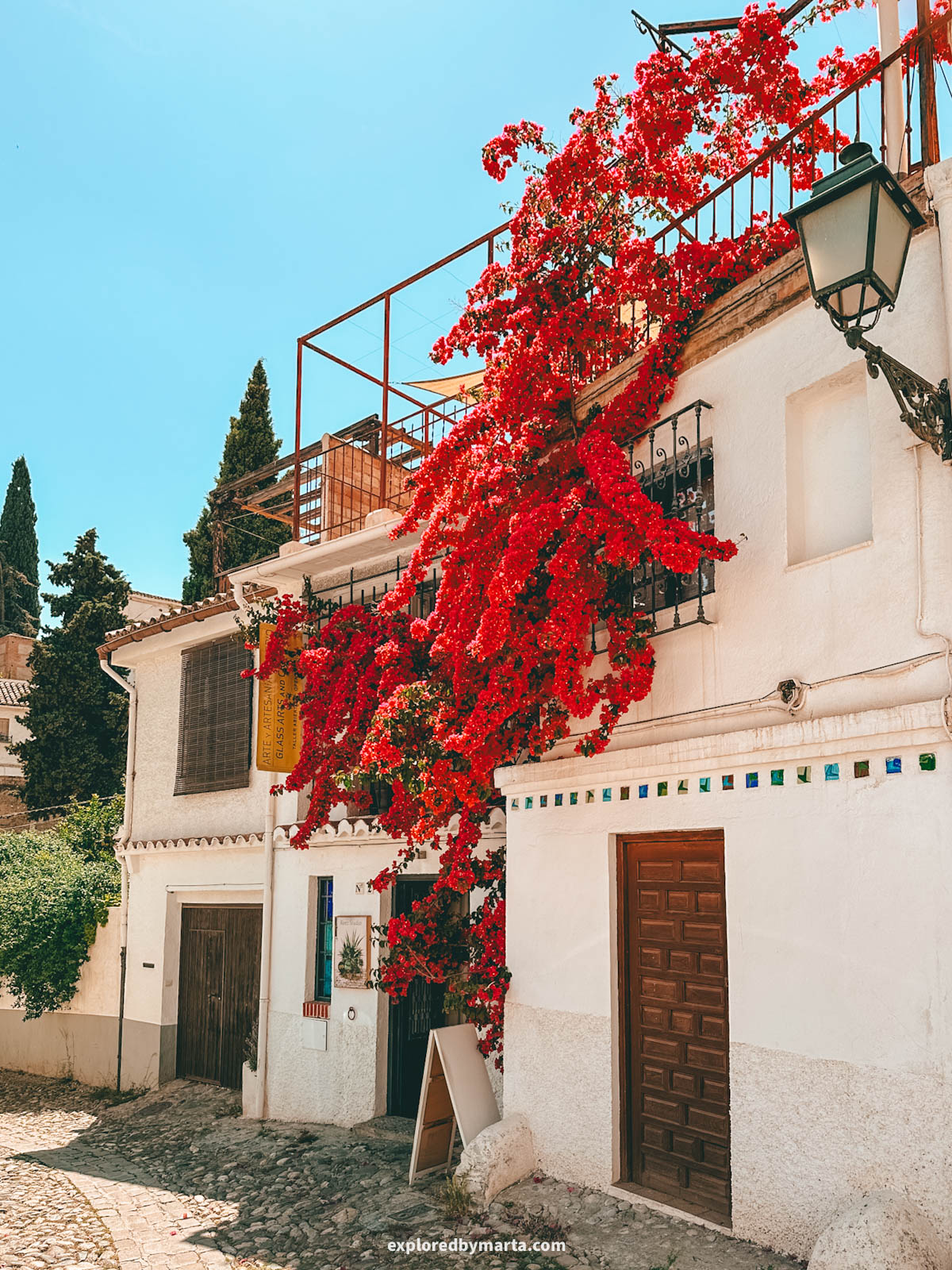
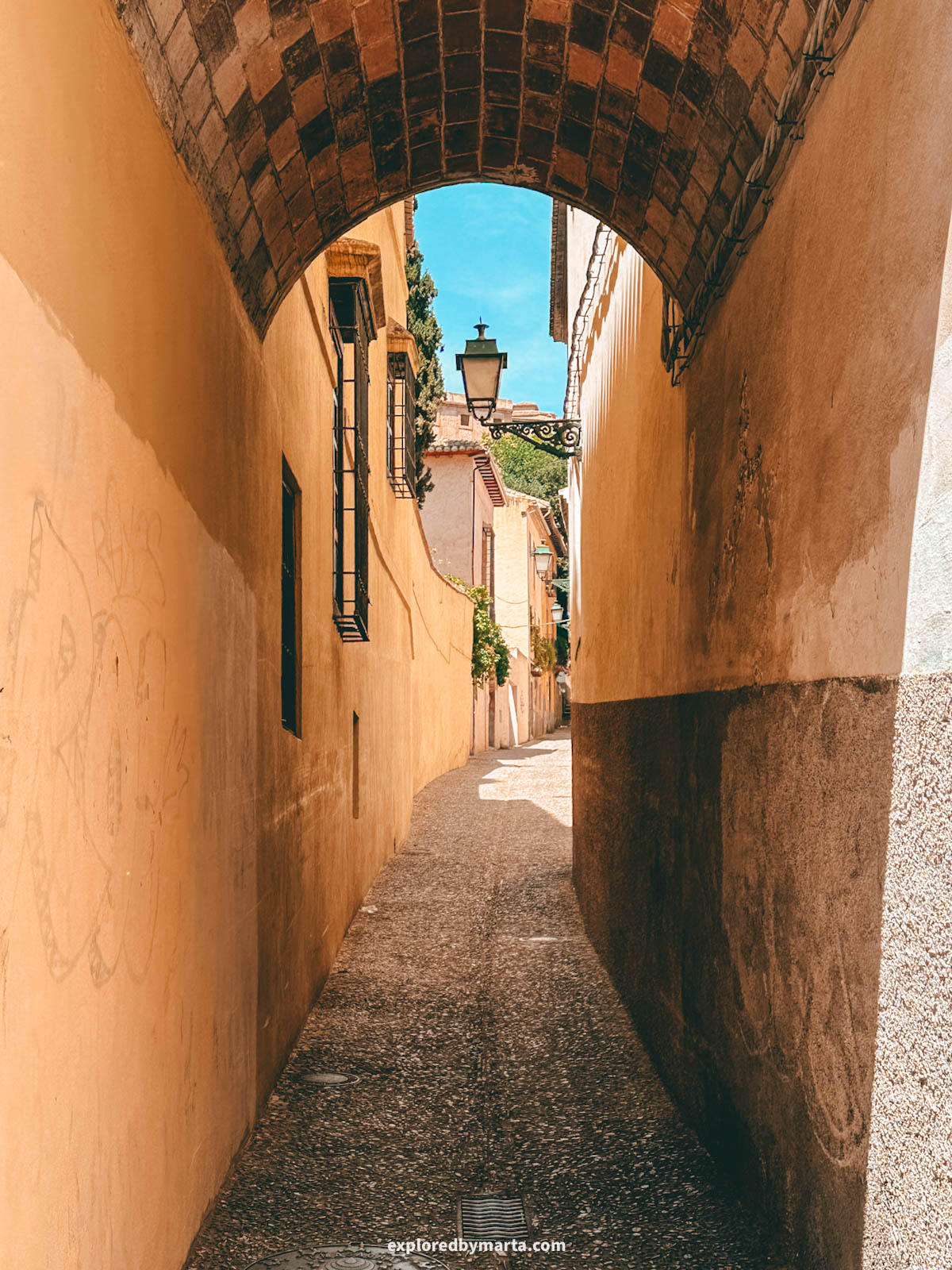
The Albaicín is the old Moorish quarter of Granada, sitting on the hill opposite the Alhambra. This is where you’ll find narrow cobbled streets, whitewashed houses, tiled details, small squares, hidden courtyards, and sudden Alhambra views between buildings.

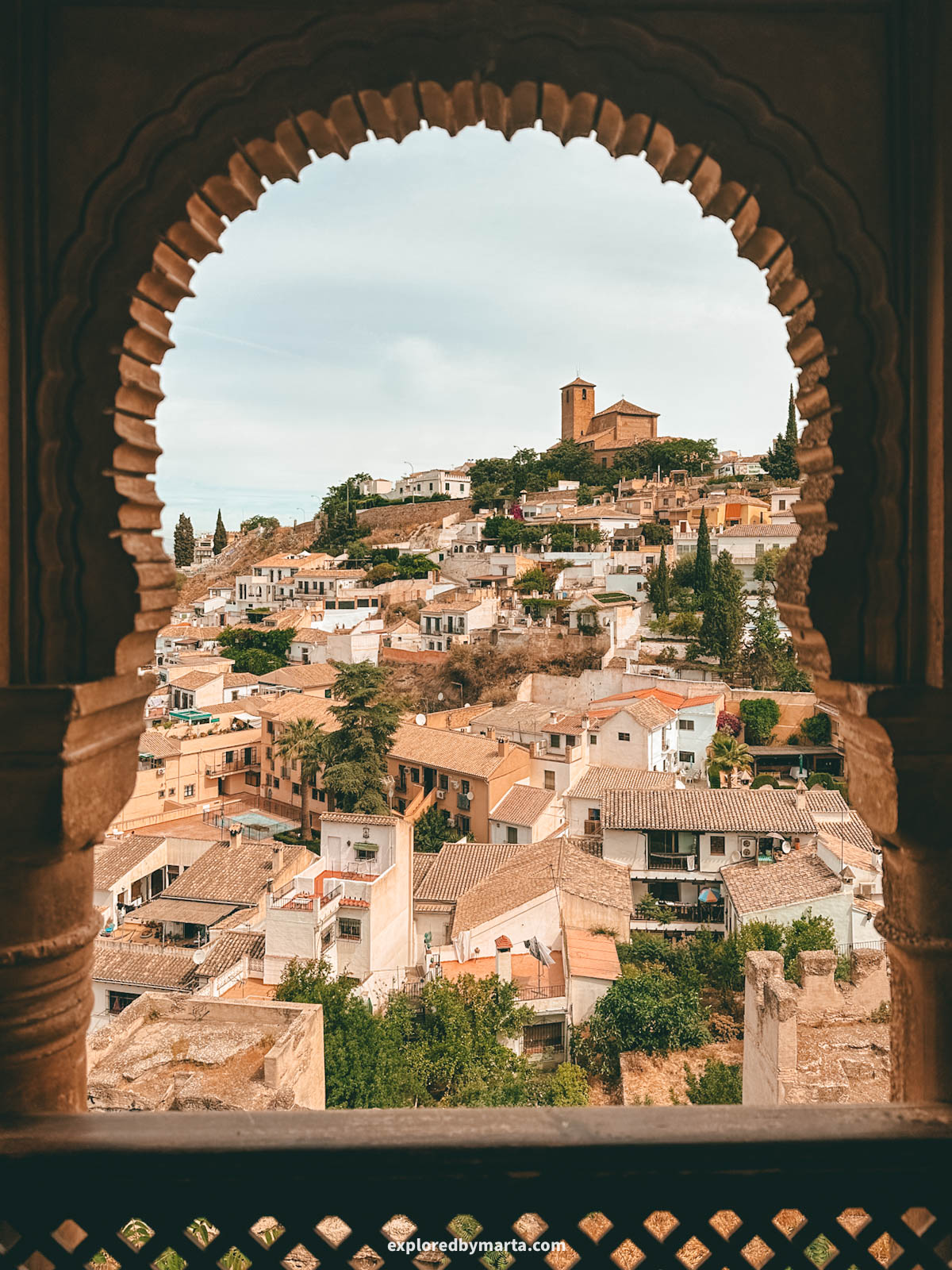
It is beautiful, but it is also hilly. Very hilly. So wear comfortable shoes and don’t trust distances on the map too much, because “only 8 minutes away” in the Albaicín can still mean stairs, slopes, and a small personal crisis.
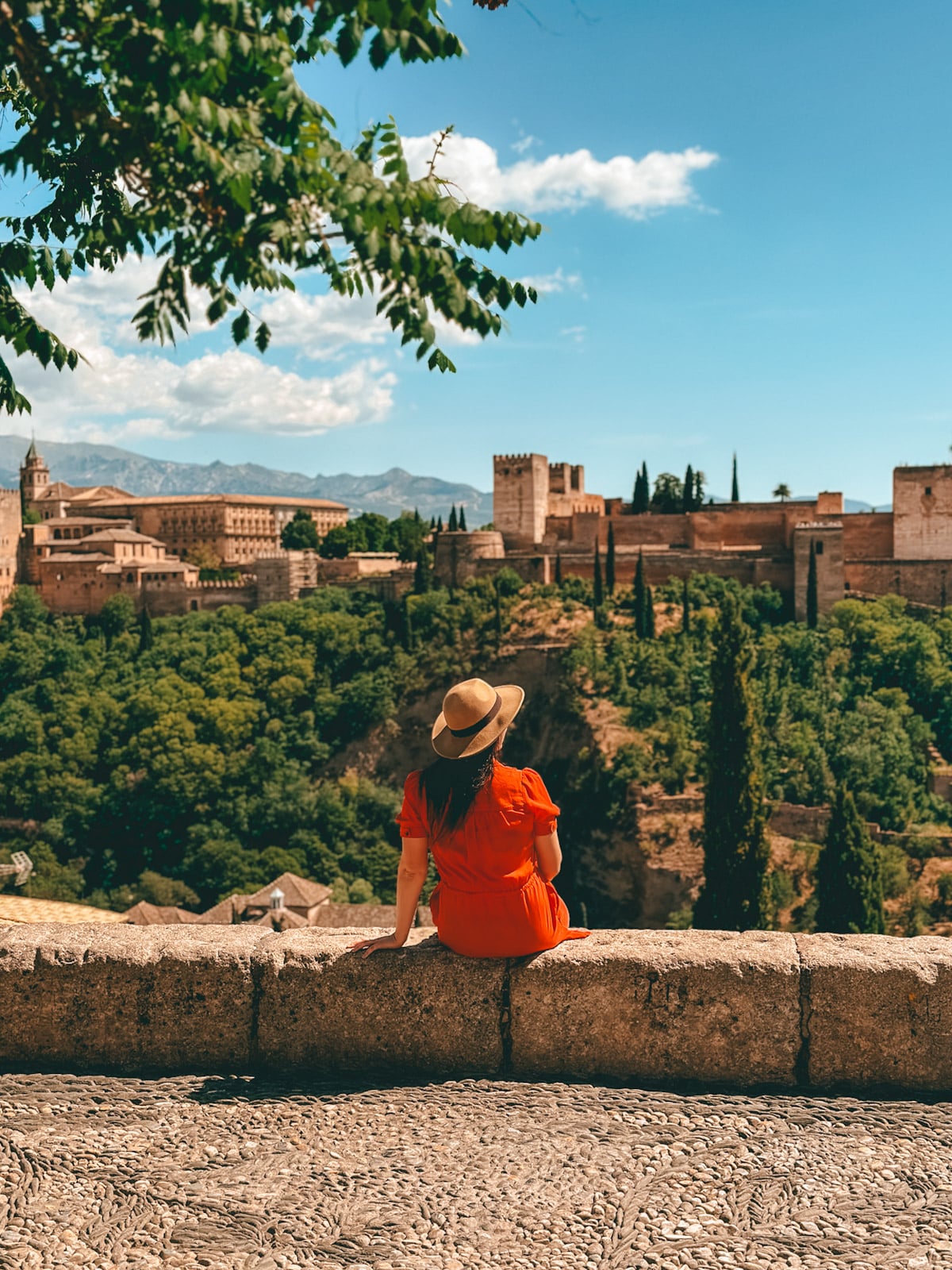
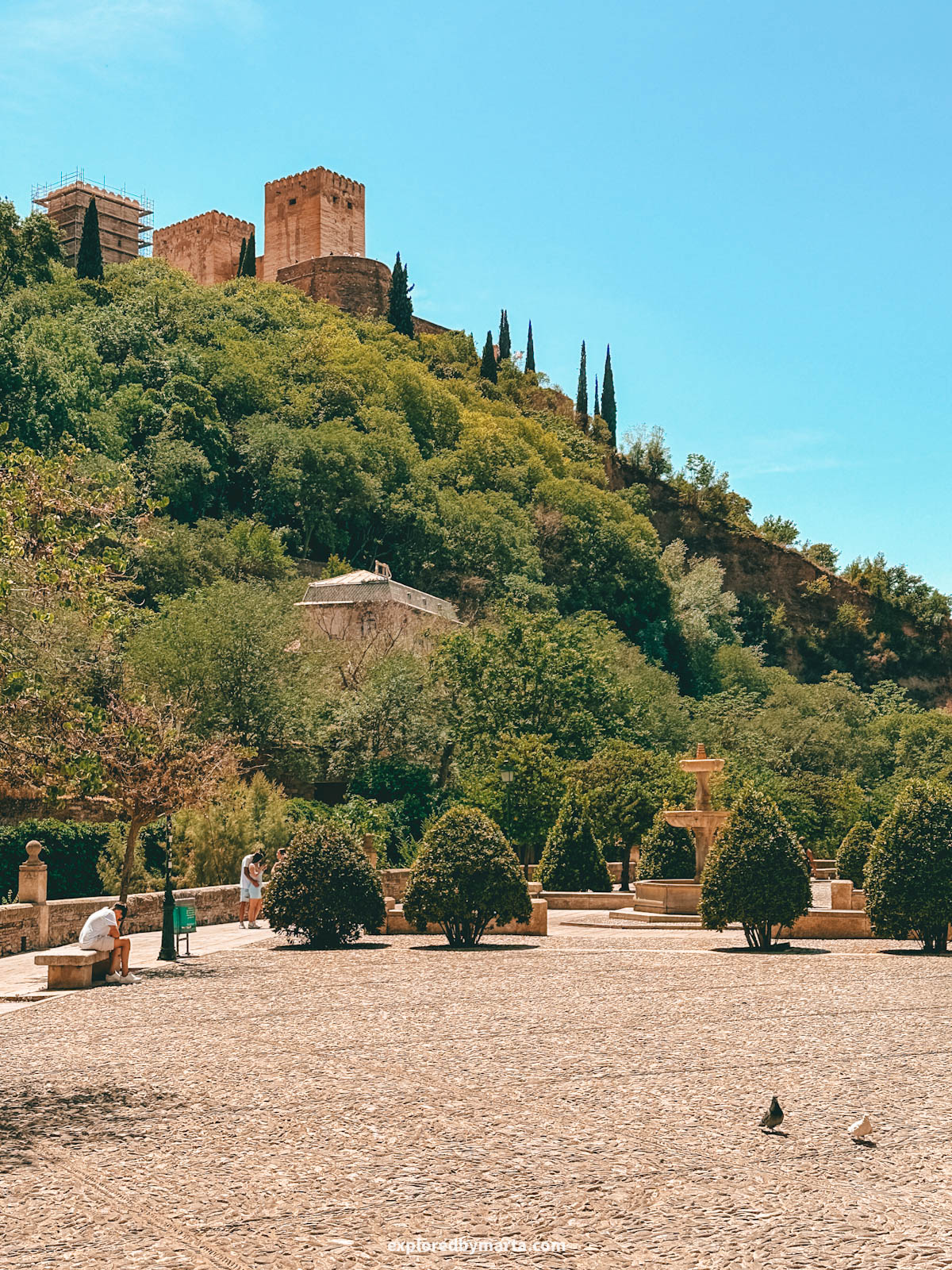
The main stop in the neighborhood is Mirador de San Nicolás, the famous viewpoint with the classic view of the Alhambra and the Sierra Nevada mountains behind it. It’s got to be my favorite viewpoint in the city of Granada!
It is also one of the most popular viewpoints in the city, especially at sunset. And yes, it gets crowded, but I still think it is worth seeing on your first trip. Some views are famous for a reason, and this is one of them.
Besides Mirador de San Nicolás, keep a few other places saved on your map.
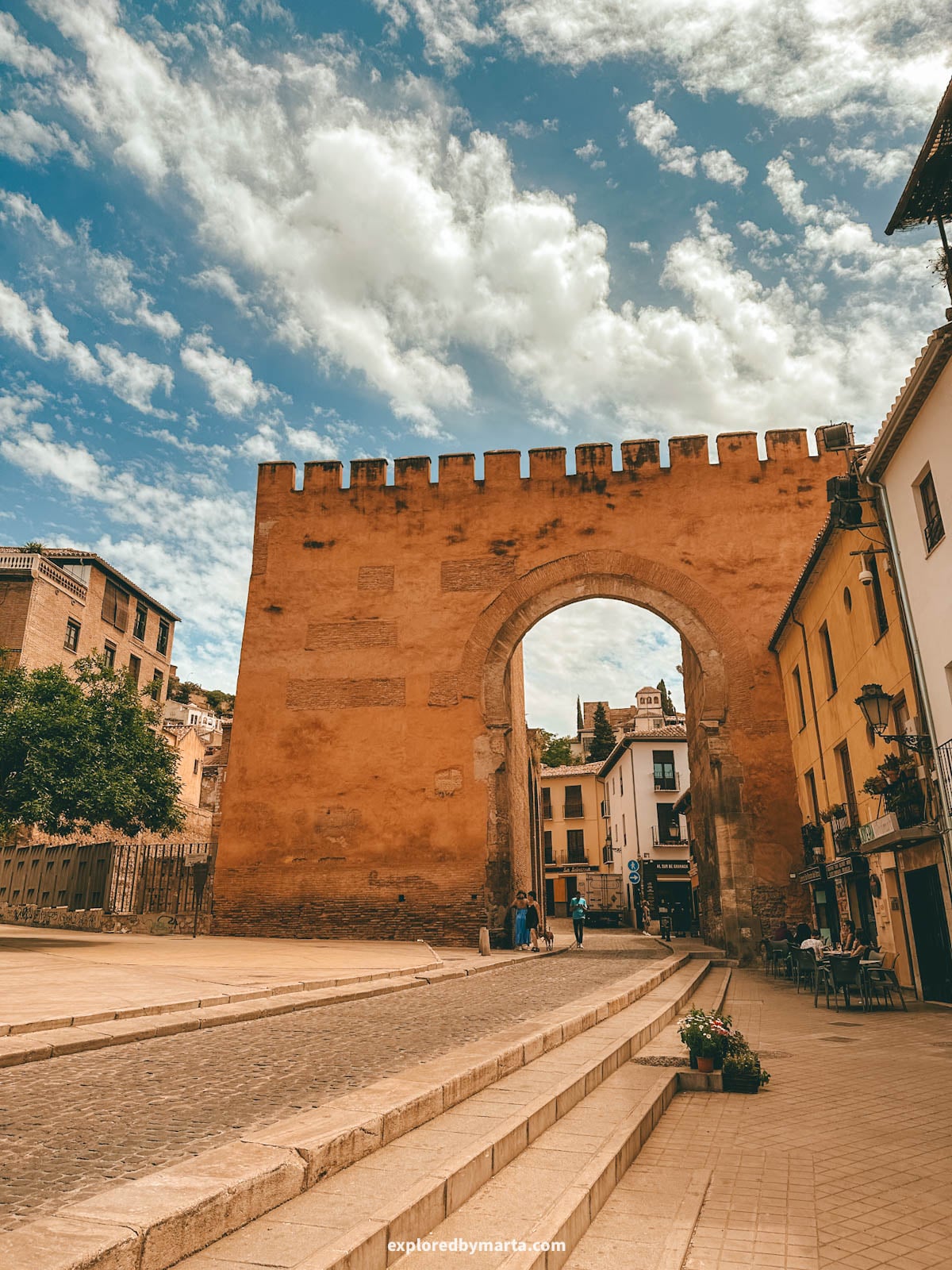
We actually stayed just outside the historical center near Albaicín, and, for us, the easiest way to enter the neighborhood was through Puerta de Elvira, an 11th-century Moorish gate at the foot of the Albaicín.
It is one of the original gates of the city, and the Catholic Monarchs allegedly entered Granada through this very gate in 1492. So symbolic!
I’d also save El Mirador de Tato, which is actually a restaurant at a viewpoint. It is the kind of place where sitting down for a drink suddenly feels like the smartest decision you have made all day.
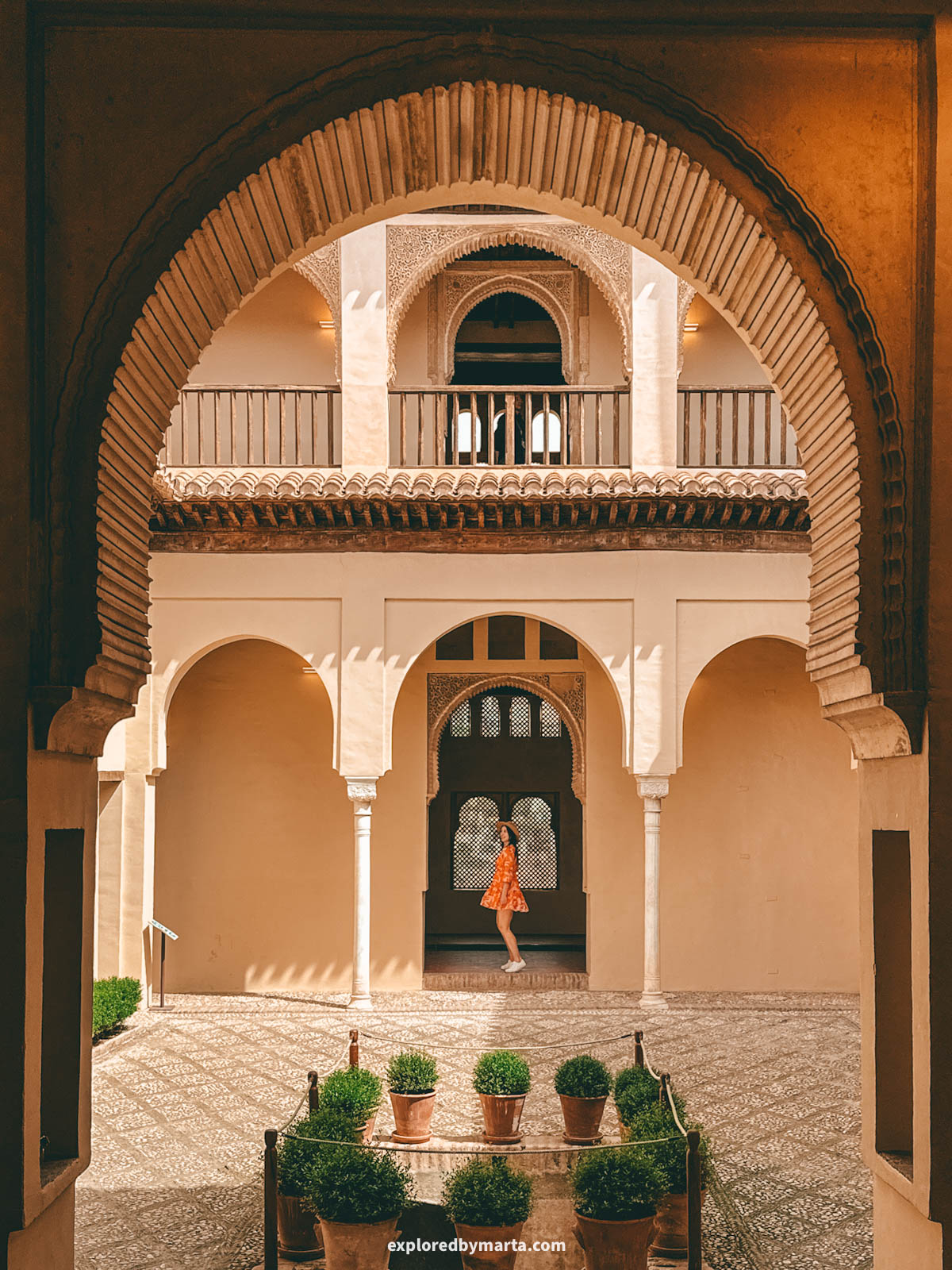
If you enjoy smaller historic places, add Palacio Dar al-Horra. It was once the residence of a Nasrid queen, and while it obviously doesn’t compete with the Alhambra, it is quieter and still worth a look if you like Moorish architecture.
Arco de las Pesas is another quick stop. It is one of the old gates of the Albaicín, so it adds a nice bit of history without requiring much time.
One more spot to keep on your map is the door of Carmen de la Media Luna, on Cuesta de San Gregorio. A carmen is a traditional Granada house with a walled garden, and most of them are private homes you can’t enter.
But the door of Carmen de la Media Luna is one of the prettiest in the entire Albaicín, with a Moorish arch covered in green and blue tilework. It is a quick stop, but a really lovely one if you enjoy photogenic Albaicín corners.
For more views, check out Mirador de San Cristóbal and Mirador Placeta de Carvajales, two less famous viewpoints, but still with beautiful views over Granada and the Alhambra.
You don’t need to visit every single stop. I’d choose a few, keep your map open, and let the streets in between do their thing.
Location: Mirador de San Nicolás – Arco de las Pesas – El Mirador de Tato – Palacio Dar al-Horra – Mirador de San Cristóbal – Mirador Placeta de Carvajales
9. Step inside Basílica de San Juan de Dios
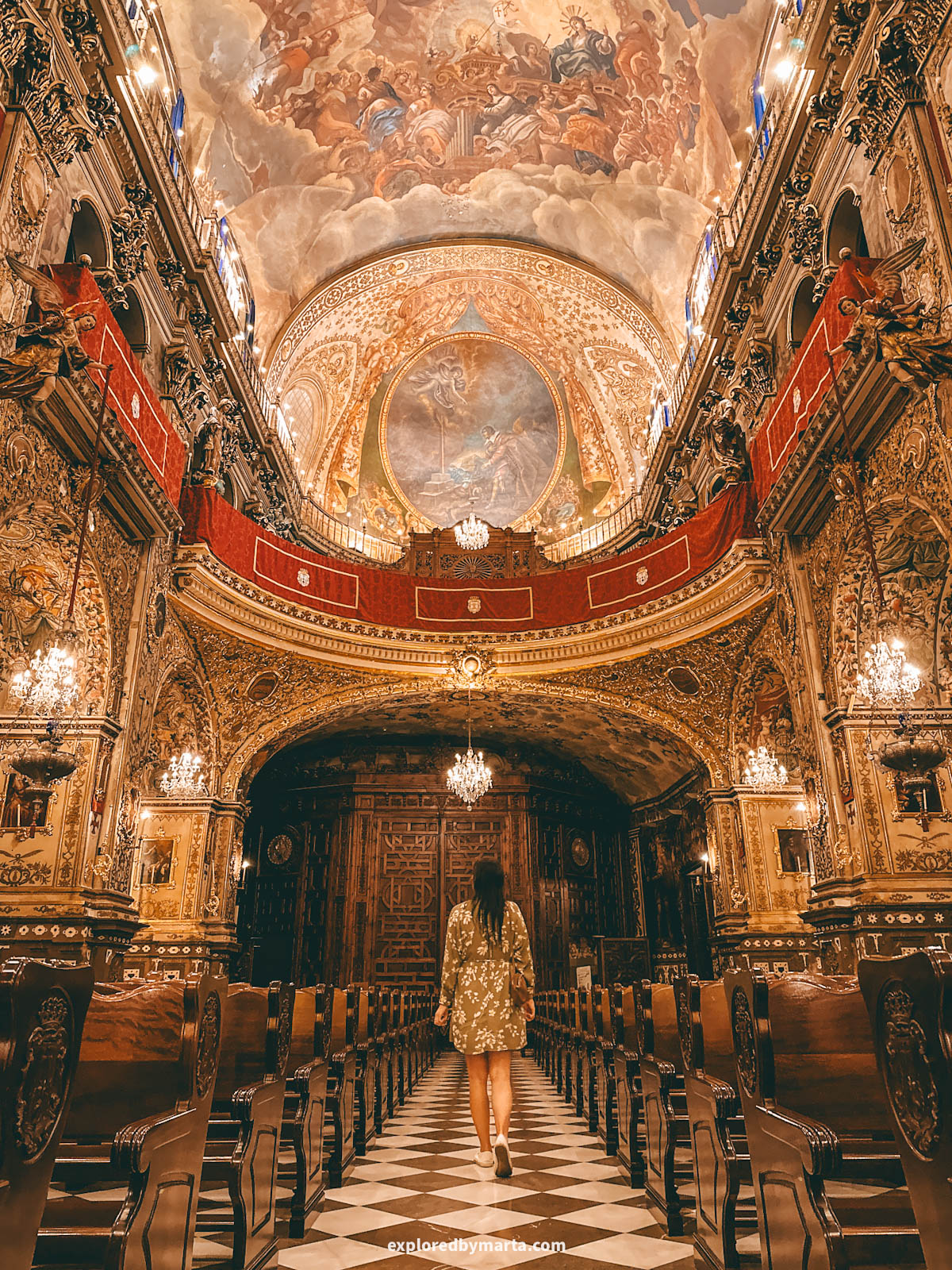
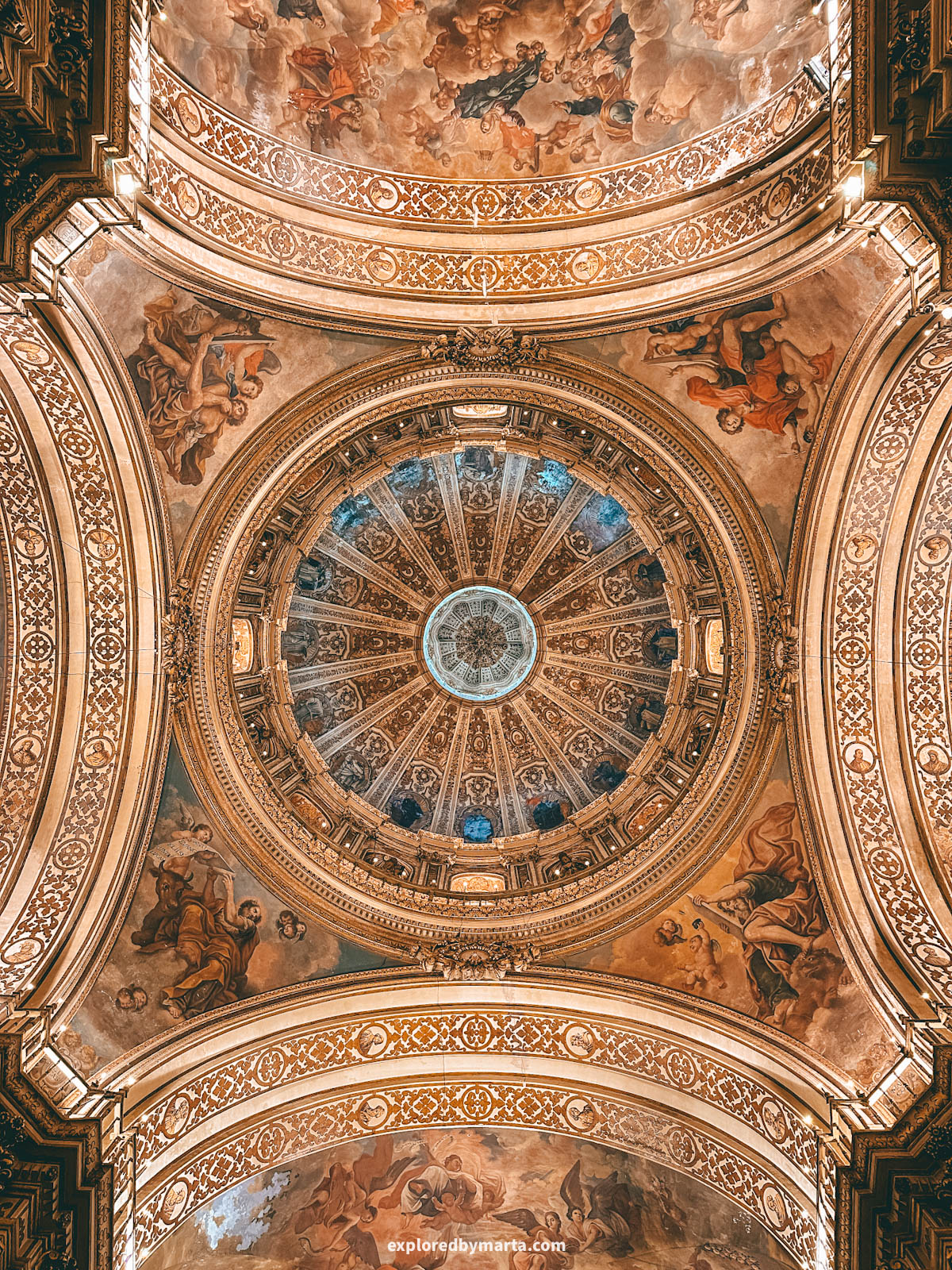
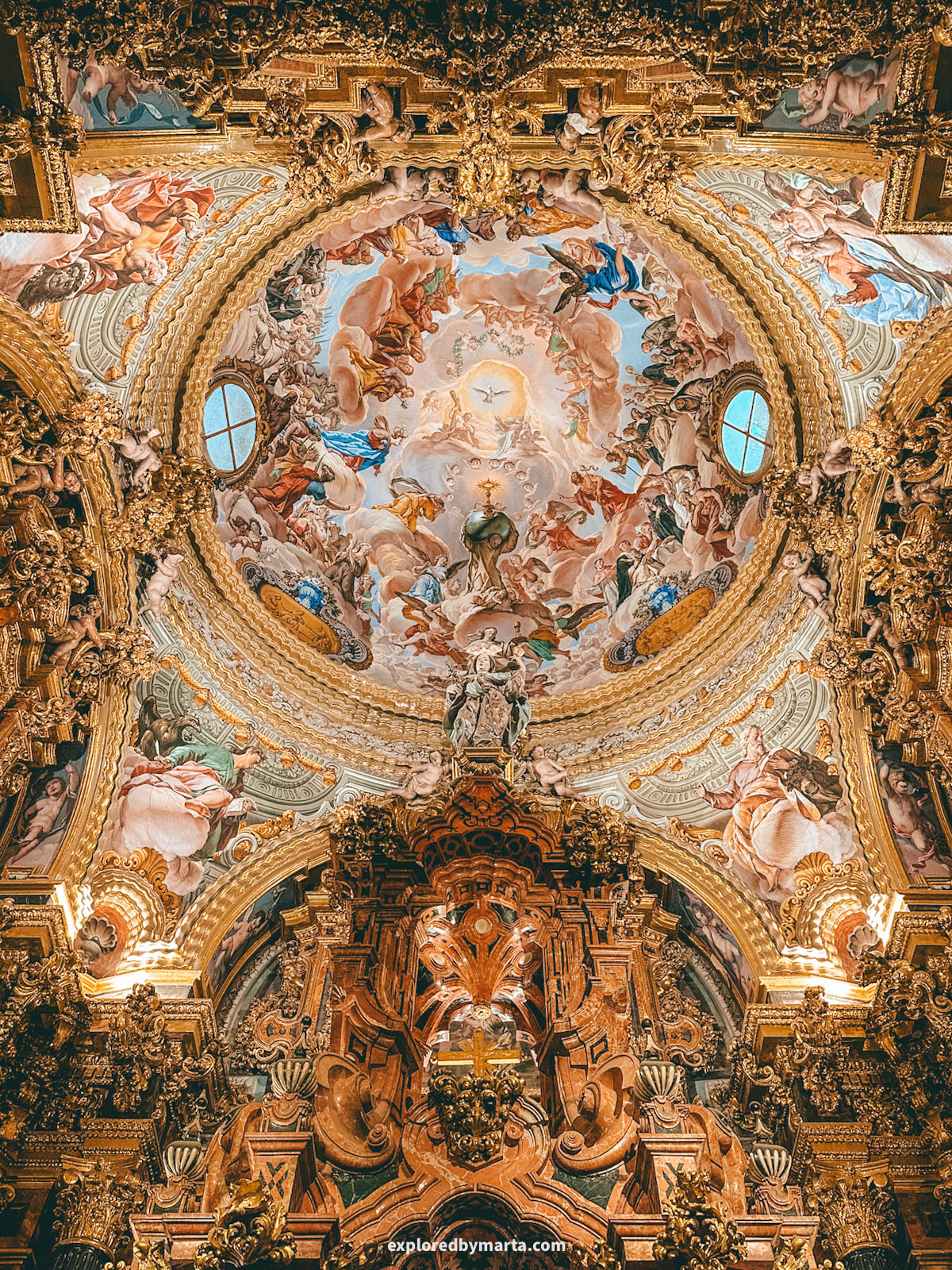
I’m not usually someone who feels the need to visit every church in every city, but Basílica de San Juan de Dios was absolutely worth it.
From the outside, it doesn’t fully prepare you for what is inside. Then you walk in, and suddenly there is gold, frescoes, sculptures, chapels, painted ceilings, and decorations everywhere.
It is very dramatic, very Baroque, and definitely not subtle. I won’t lie, I loved it.
The best part is that you don’t only see the main nave. The visit also takes you into rooms behind the altar, side chapels, the sacristy, and upper areas where you can look down over the interior.

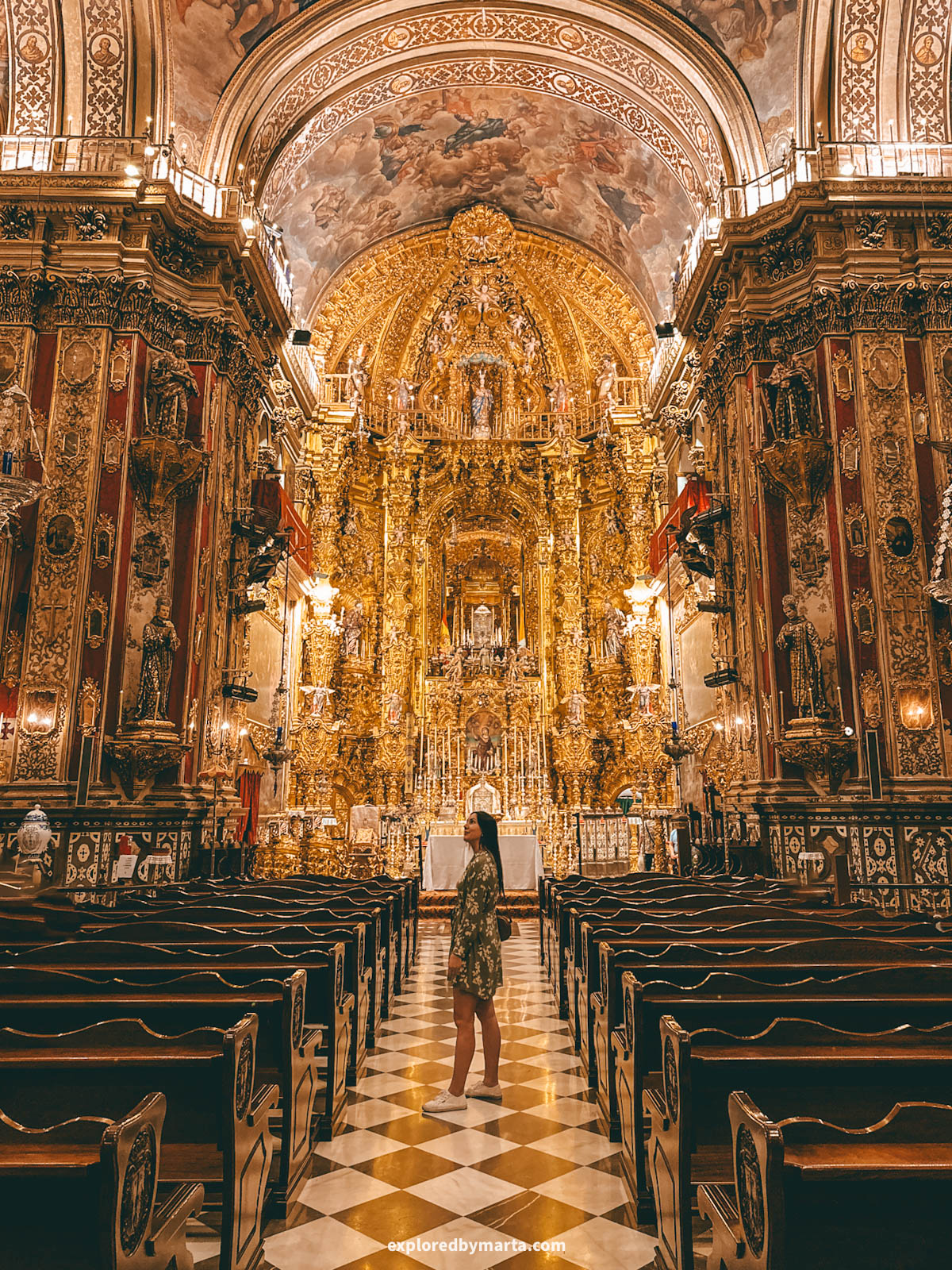
My favorite spot was the upper balcony, because seeing the whole golden interior from above really puts the scale of the place into perspective. It is stunning!
Last time I checked, there is an entrance fee of 10 EUR per adult. Yes, it’s a bit pricey, but for me, it was one of the most surprising places we visited in Granada.
I thought it would be a quick church stop, and then suddenly I was walking through room after room thinking, okay, they really committed to the gold here. We also got an audioguide, so we learned a thing or two about this place, too.
I’d plan up to 1 hour for the visit, especially if you like detailed interiors or photography.
Location: Basílica de San Juan de Dios
10. Visit Monasterio de la Cartuja
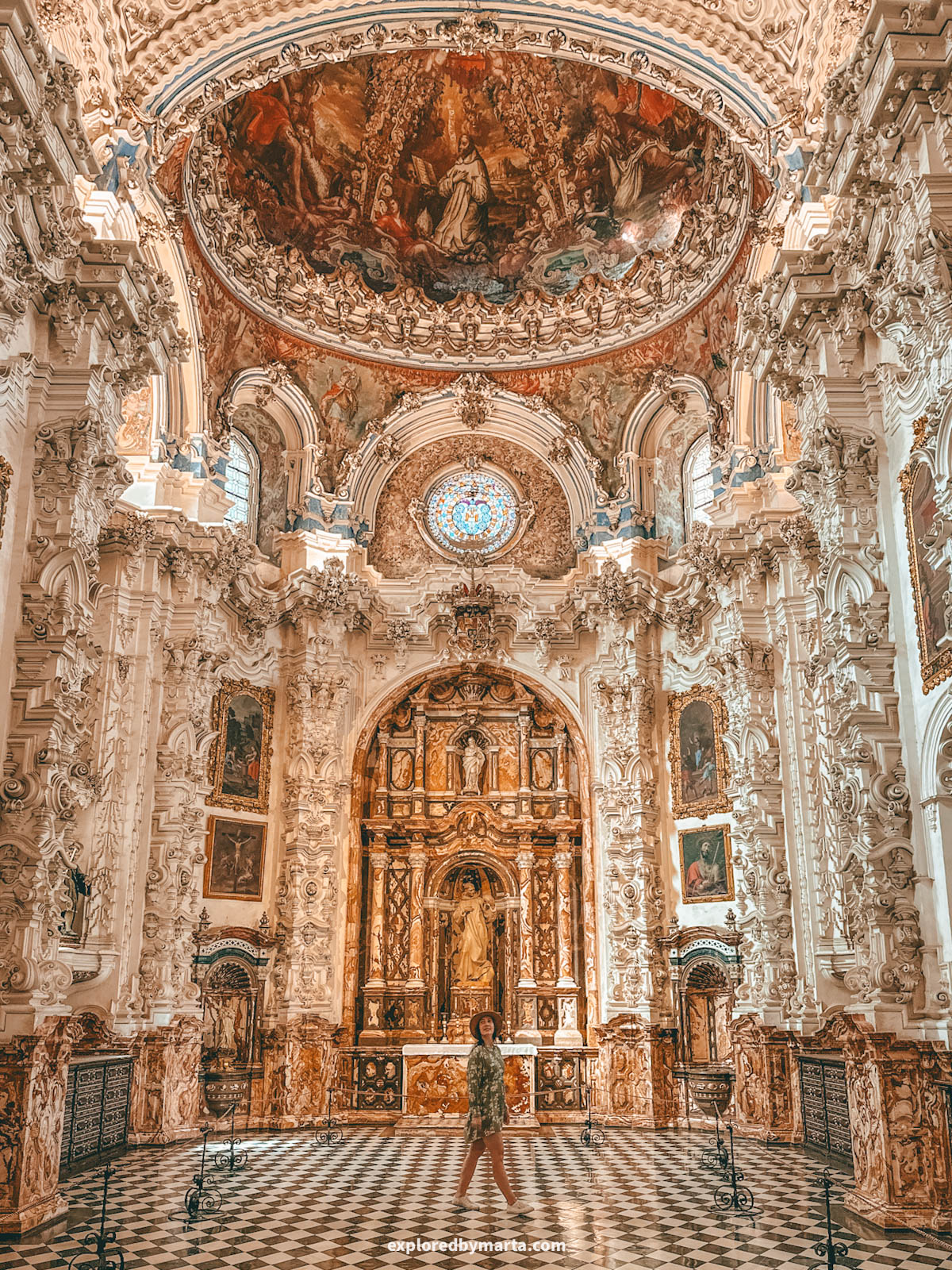
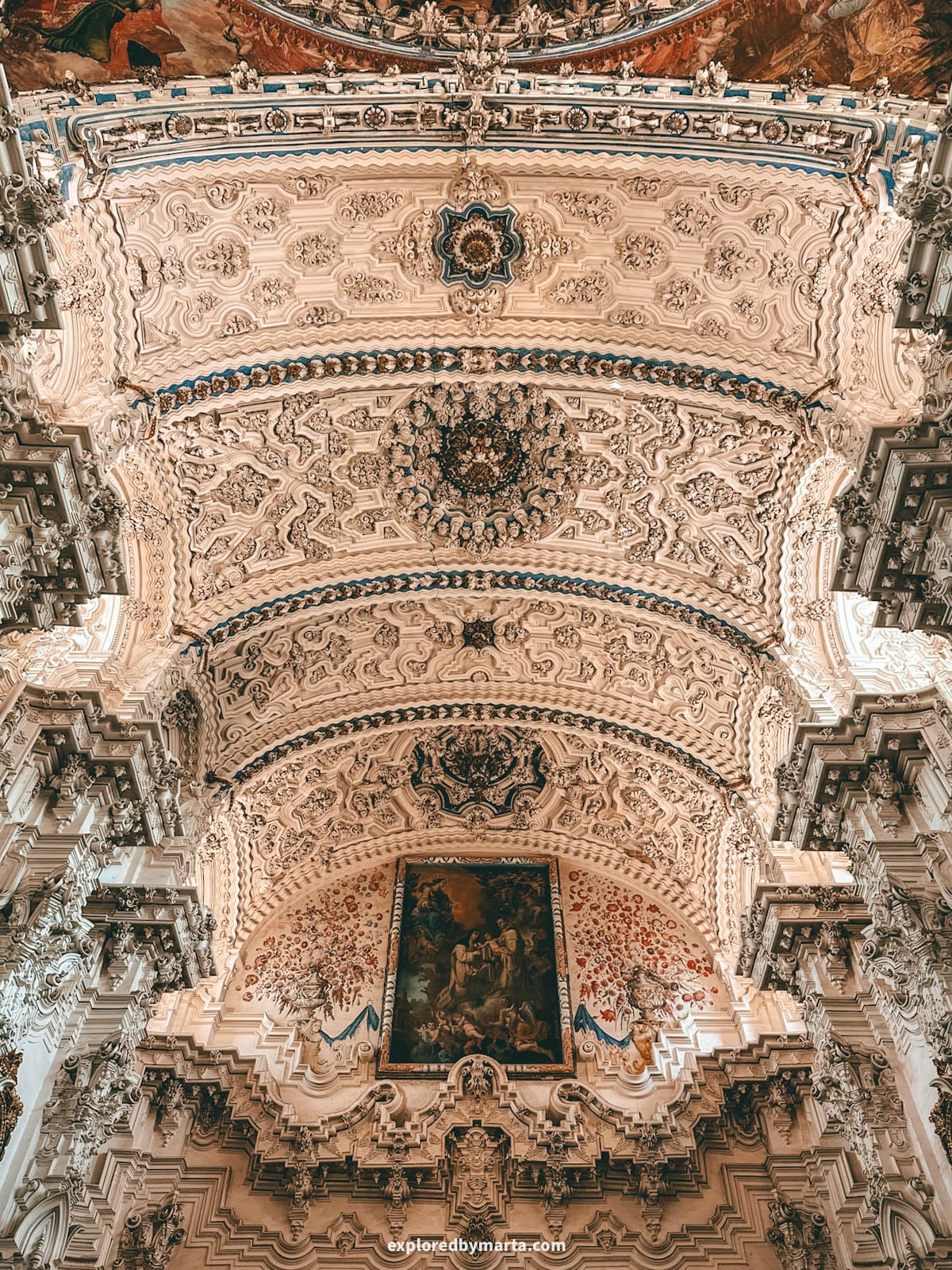
If you are a fan of beautiful historic architecture, you’ll want to see this place, too. Monasterio de la Cartuja is one of those places where the outside gives you absolutely no warning about what is waiting inside.
The exterior is quite plain, and then you step inside and find one of the most detailed interiors in Granada. It is very much a “wait, this was hiding in here?” kind of place. 🤩
The monastery was built from the 16th century onward, and the visit takes you through different rooms, courtyards, the church, and the famous sacristy.
The sacristy is the main reason to come here. It is often called one of the most beautiful sacristies in the world, and honestly, I get it. The marble, paintings, carvings, and decorative details are almost too much to process at once.
For me, this was one of my favorite hidden gems in Granada. The Nasrid Palaces get all the attention, obviously, but Granada has some seriously impressive interiors outside the Alhambra too.
The monastery is located a little outside the main old town, so you’ll probably want to take a bus or taxi unless you enjoy adding extra walking just for character development.
They have Bolt and Uber apps, so we just booked a taxi through there. Last time I checked, there is an entrance fee of 7 EUR per adult, and I’d plan around 1 hour for the visit.
If you like historic interiors, religious art, or less obvious places in Granada, I’d definitely add this to your itinerary. How did people build all this back then? It’s just all too beautiful.
Location: Monasterio de la Cartuja de Granada
11. Try pionono, Granada’s local pastry


One of the easiest local foods to try in Granada is pionono, a small sweet pastry that is usually eaten with coffee or as a quick treat during the day.
It is made with a thin layer of rolled sponge cake soaked in syrup and topped with toasted cream. Basically, it is tiny, sweet, sticky, and very committed to being dessert!
You’ll see piononos in bakery and pastry shop windows around Granada, especially in the historic center. They are usually small enough to eat in a couple of bites, which is convenient because they can get messy fast.
And if you visit Granada on a hot day, be warned: the cream does not care about your photo plans. Eat first, take artistic pastry portraits later.
We tried piononos at Casa Ysla 1897 near the Cathedral and at Café Pastelería López-Mezquita. I can also recommend checking Croissantería La Blanca Paloma, especially if you are walking toward the Alhambra.
Is it my favorite pastry in Spain? Maybe not. But is it something very Granada-specific that you should try at least once? Absolutely.
Location: Casa Ysla 1897 Piononos – Café Pastelería López-Mezquita – Croissantería La Blanca Paloma
12. Relax in Granada’s unique carmen gardens
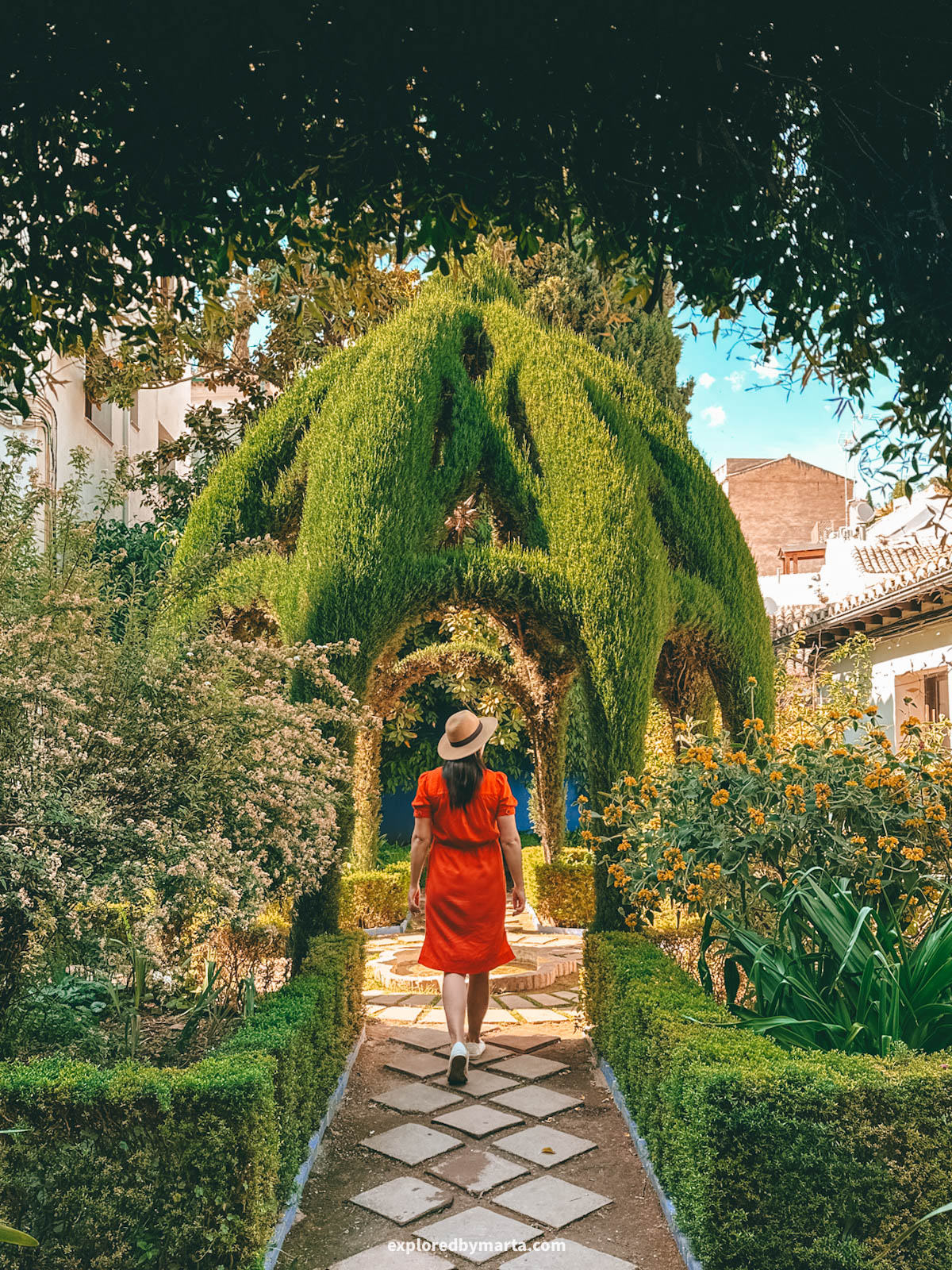
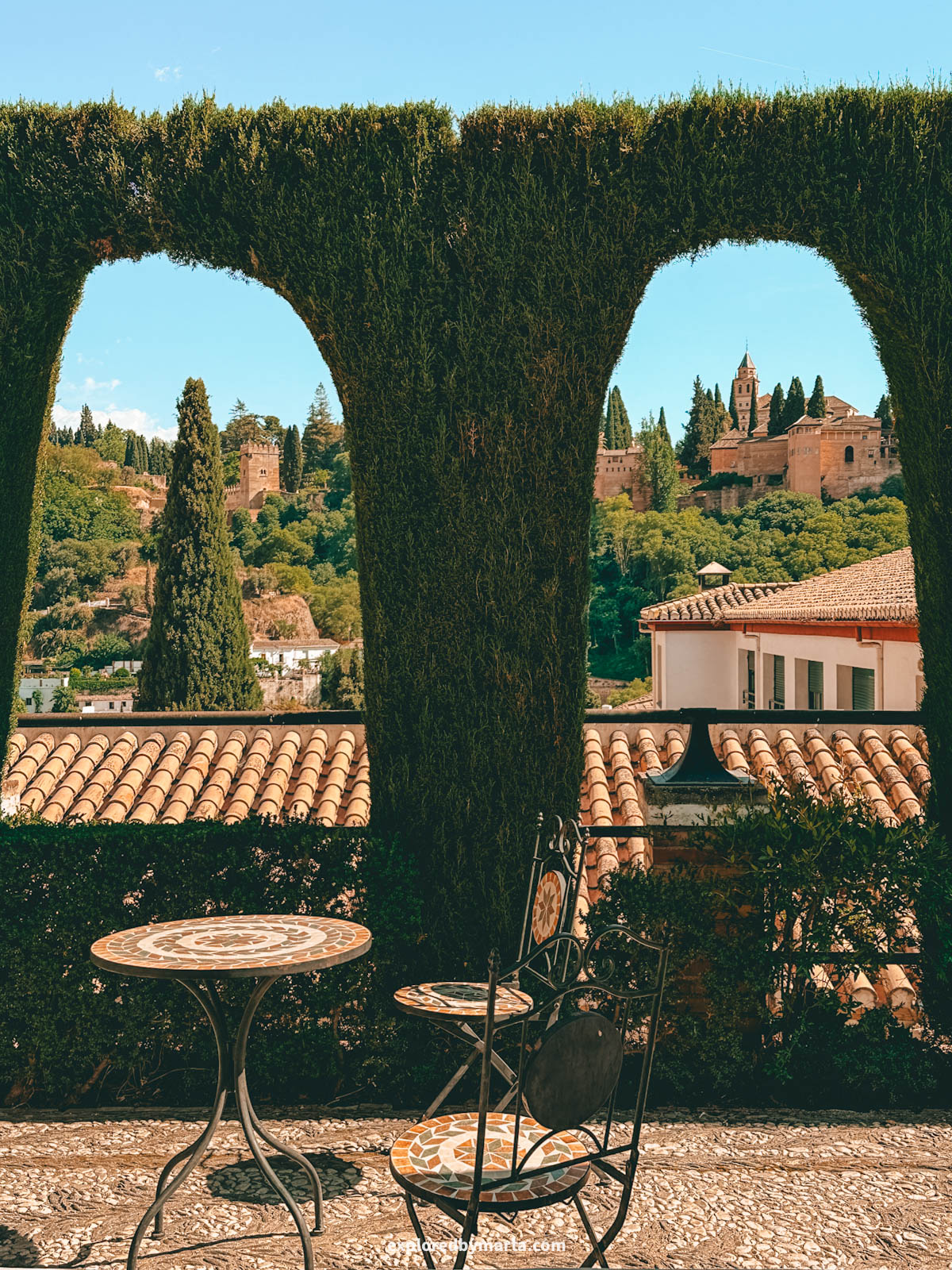
One of the things I found really unique in Granada was the idea of a carmen garden. And no, Carmen is not a woman in this case, haha.
In Granada, a carmen is a traditional house with a private garden, usually surrounded by walls. The word comes from the Arabic karm, which refers to vines or a vineyard, and these places were designed as little green escapes inside the city.
That is what makes them so special. From the street, you might just see a wall or a gate, but behind it there can be fountains, fruit trees, flowers, pathways, shaded corners, and views of the Alhambra.
We visited two carmen gardens in Granada: Carmen de la Victoria and Carmen de los Mártires. Both are free to visit during opening hours, and both are great if you need a slower break between all the palaces, churches, hills, and cobbled streets.
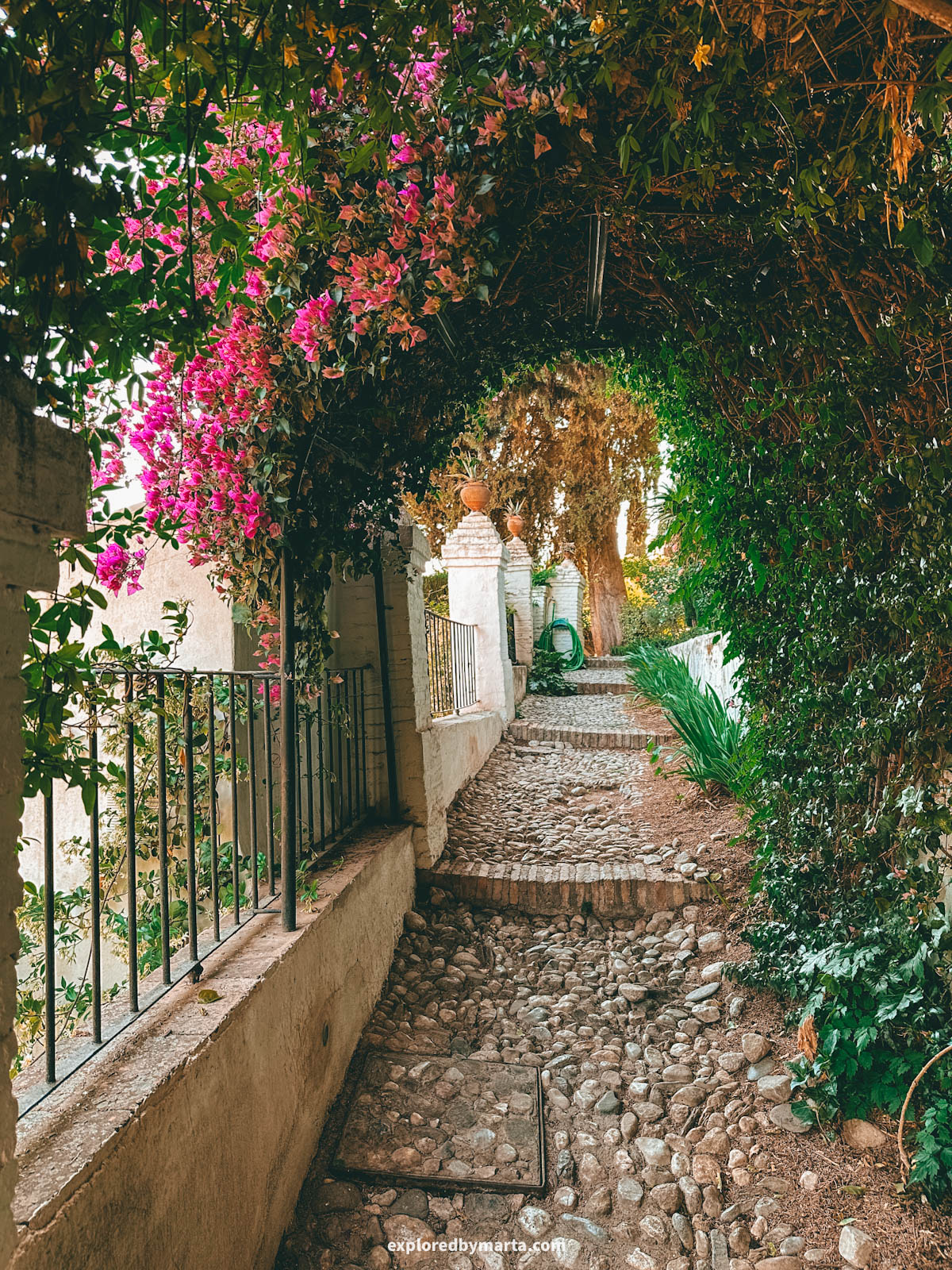
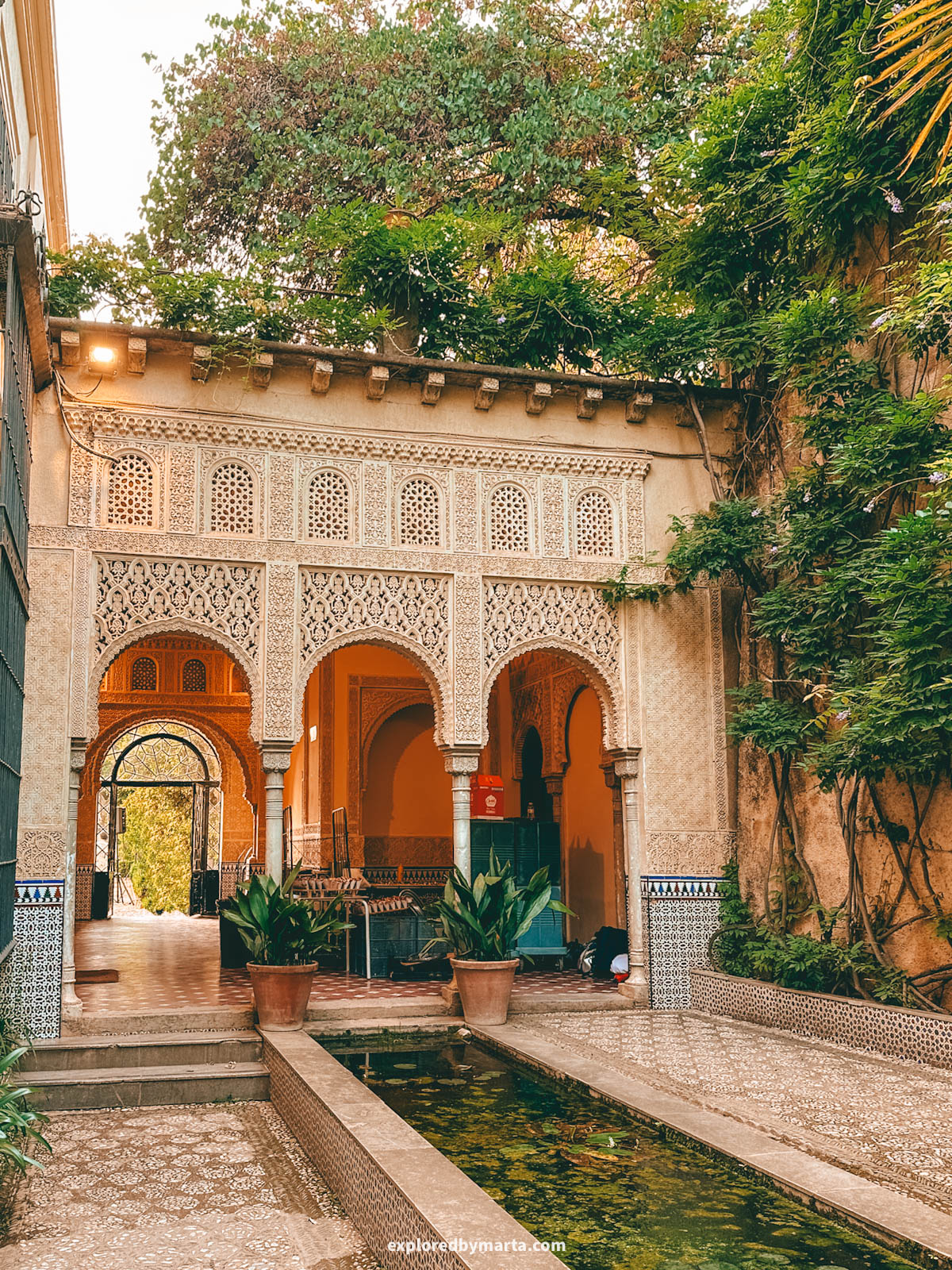
Carmen de la Victoria was my favorite. It is part of the University of Granada complex and sits near the Albaicín, with beautiful views toward the Alhambra. The garden is not huge, but it feels intimate and peaceful.
There are fountains, trimmed trees, flowers, little pathways, and a terrace-like view over the Alhambra. It felt like one of those places where you suddenly lower your voice without even thinking about it.
To visit the garden, you need to book a (free) appointment as a visitor online. It is not the most visited place in Granada, so you don’t need to book weeks in advance. Just make sure you have a reservation before you go.
Carmen de los Mártires is much larger and sits closer to the Alhambra area. This one feels more like a big public garden, with ponds, statues, leafy paths, a small forest-like area, and even an aqueduct.
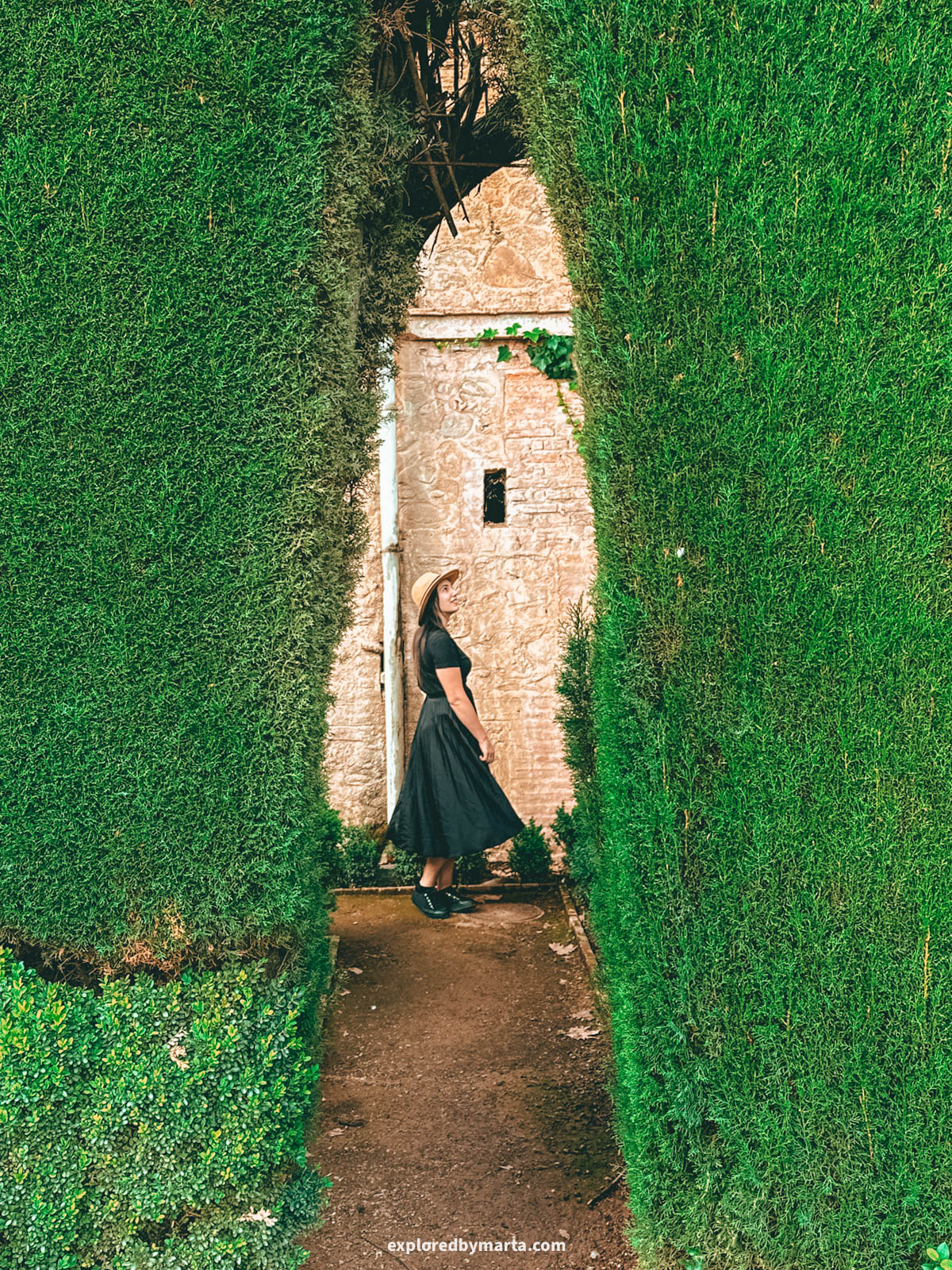
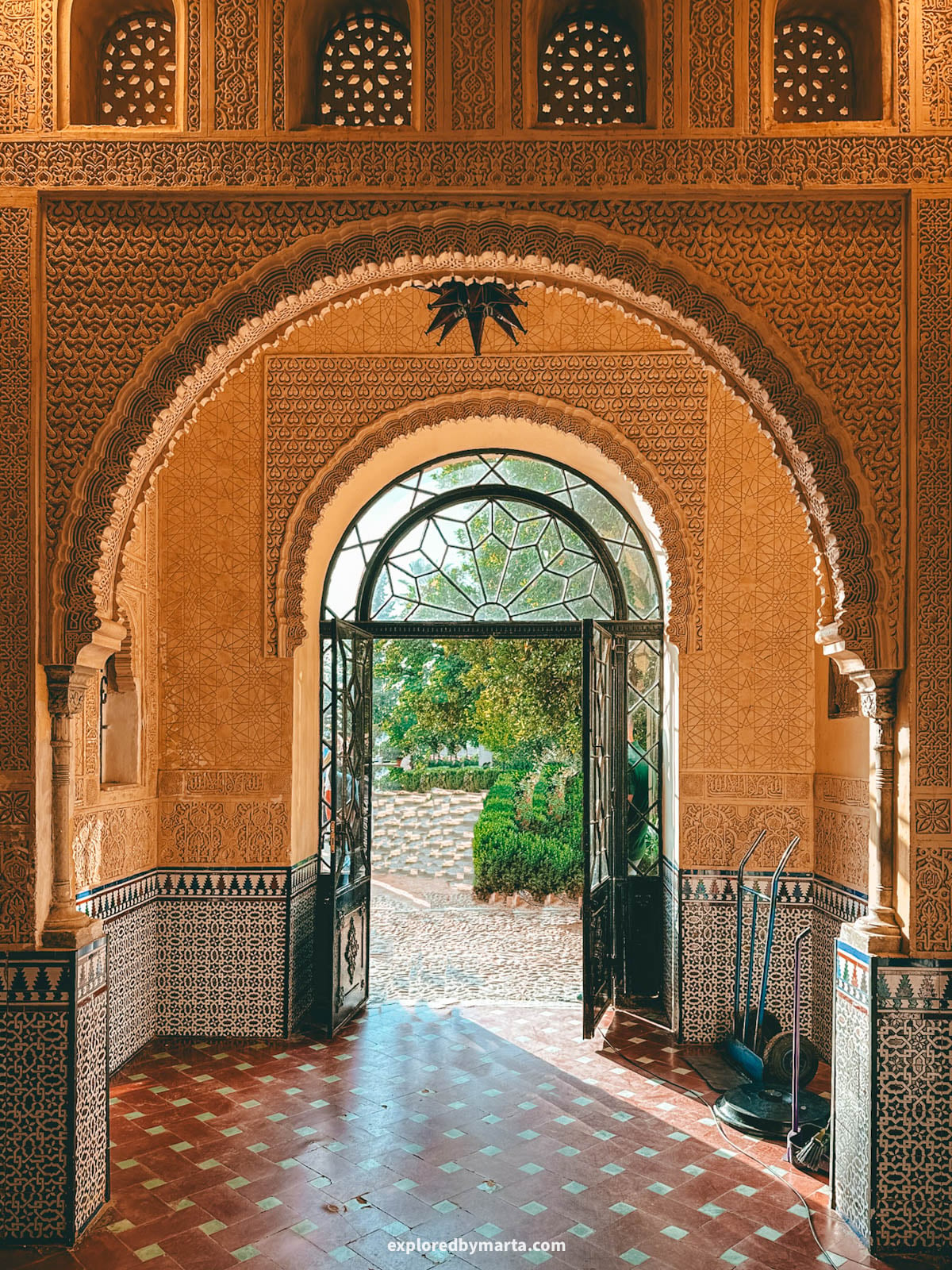
We visited Carmen de los Mártires on a day when there was a private event happening, but the gardens were still open to the public. So there we were, casually walking around while people in fancy clothes were doing their event thing. As one does. 😅
For me, Carmen de la Victoria felt more charming and special, but Carmen de los Mártires is better if you want a bigger garden walk or a quiet place near the Alhambra.
I’d add at least one carmen garden to your Granada itinerary, especially if you visit in spring, summer, or early fall. After a few hours of sightseeing, a shaded garden with Alhambra views feels very necessary.
Just check the opening hours before going because these are not the kind of places I’d visit randomly and hope for the best. Granada already has enough uphill walking – no need to climb somewhere just to find a closed gate.
Location: Carmen de la Victoria – Carmen de los Mártires
13. Try Granada tapas or join a food tour
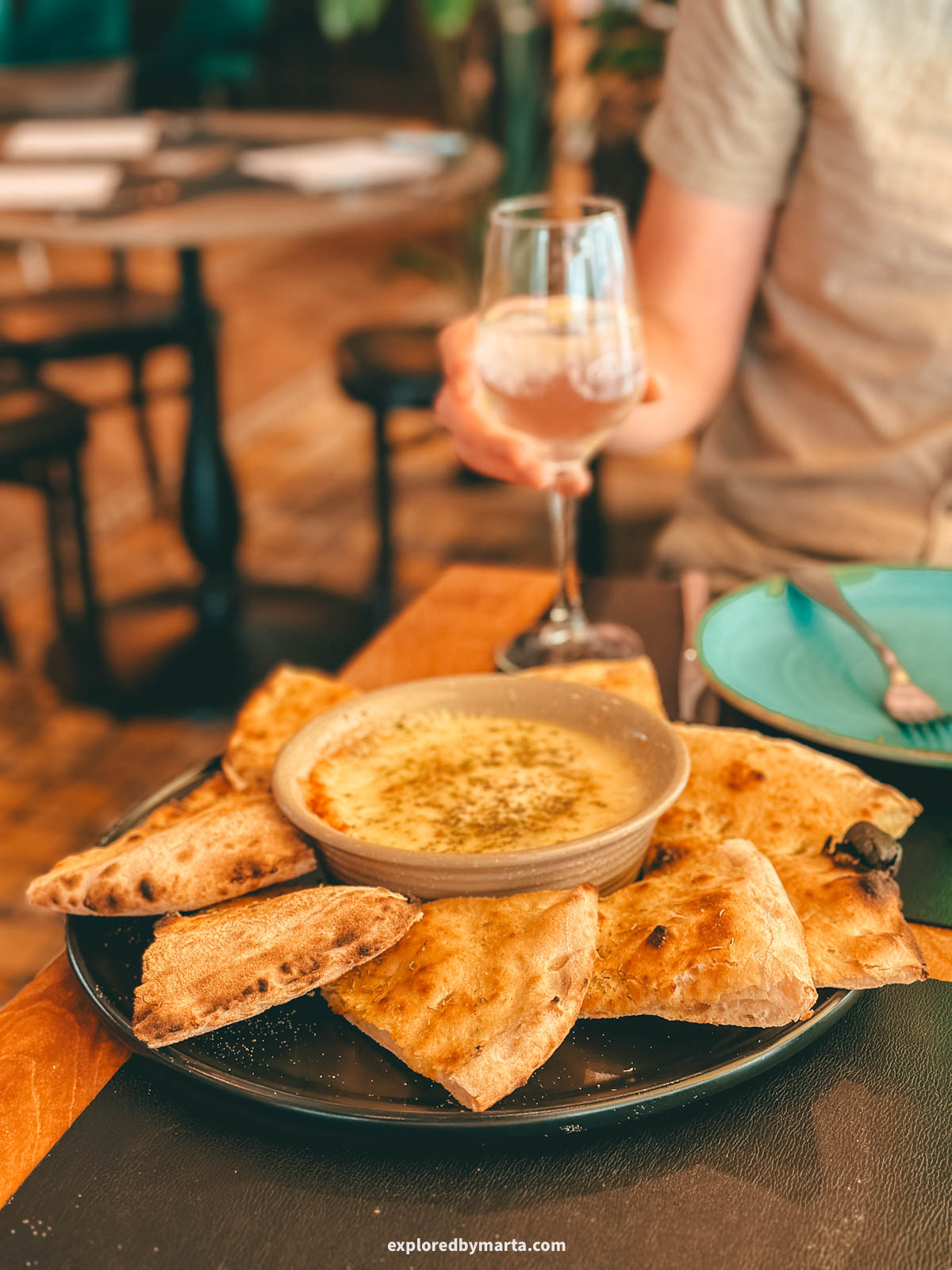
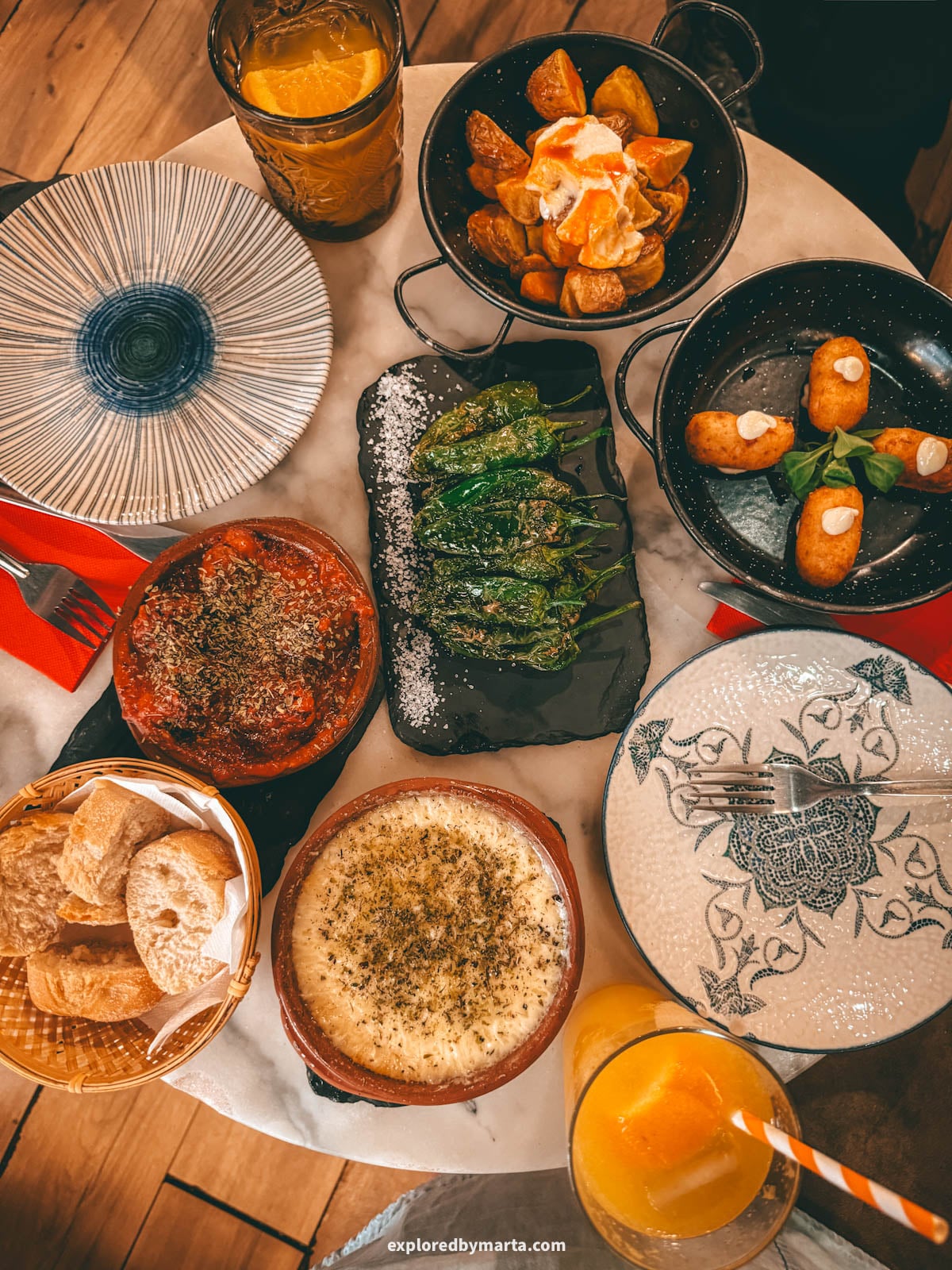
Food should definitely be part of your Granada itinerary, because sightseeing is better when there are tapas involved. I don’t make the rules.
Granada is especially known for tapas culture, and one of the best ways to enjoy the city is to leave time for a relaxed lunch, a casual bar stop, or a slow evening with small plates and drinks.
Here are a few well-rated tapas bars and restaurants in Granada to keep on your map:
- Bar Los Diamantes – one of Granada’s classic tapas spots, especially popular for seafood and fried fish. It gets busy, so don’t expect a quiet little hidden corner.
- Bodegas Castañeda – a very traditional Granada tapas bar near the historic center, known for vermouth, Iberian ham plates, and generous tapas with drinks.
- Los Manueles – a popular restaurant/tapas option in central Granada, useful if you want something easy and central rather than hunting for a tiny bar.
- Taberna La Tana – a great choice if you care about wine, with a strong reputation for wines by the glass and simple, quality food.
- Bar Casa Julio 1947 – a small classic tapas bar, especially if you want something traditional and casual.
- La Gran Taberna – another traditional option that appears on local tapas bar lists, good to keep in mind if you want a more classic Granada tapas stop.
Granada is famous for tapas, so I wouldn’t over-plan every meal, but it helps to have a few saved places on your map. That way, when hunger hits, you’re not standing in the middle of a busy street panic-Googling restaurants like a normal tourist. 😅
If you prefer having someone explain the local food scene, a Granada food tour can be a good shortcut, especially on your first evening in the city. It is also useful if you don’t want to spend half the night reading menus and wondering if you picked the right place.
Whether you go solo or join a tour, I’d definitely leave space for tapas in your Granada itinerary. After a full day of hills, palaces, and viewpoints, sitting down with food and a drink feels very well earned.
14. Admire Monasterio de San Jerónimo
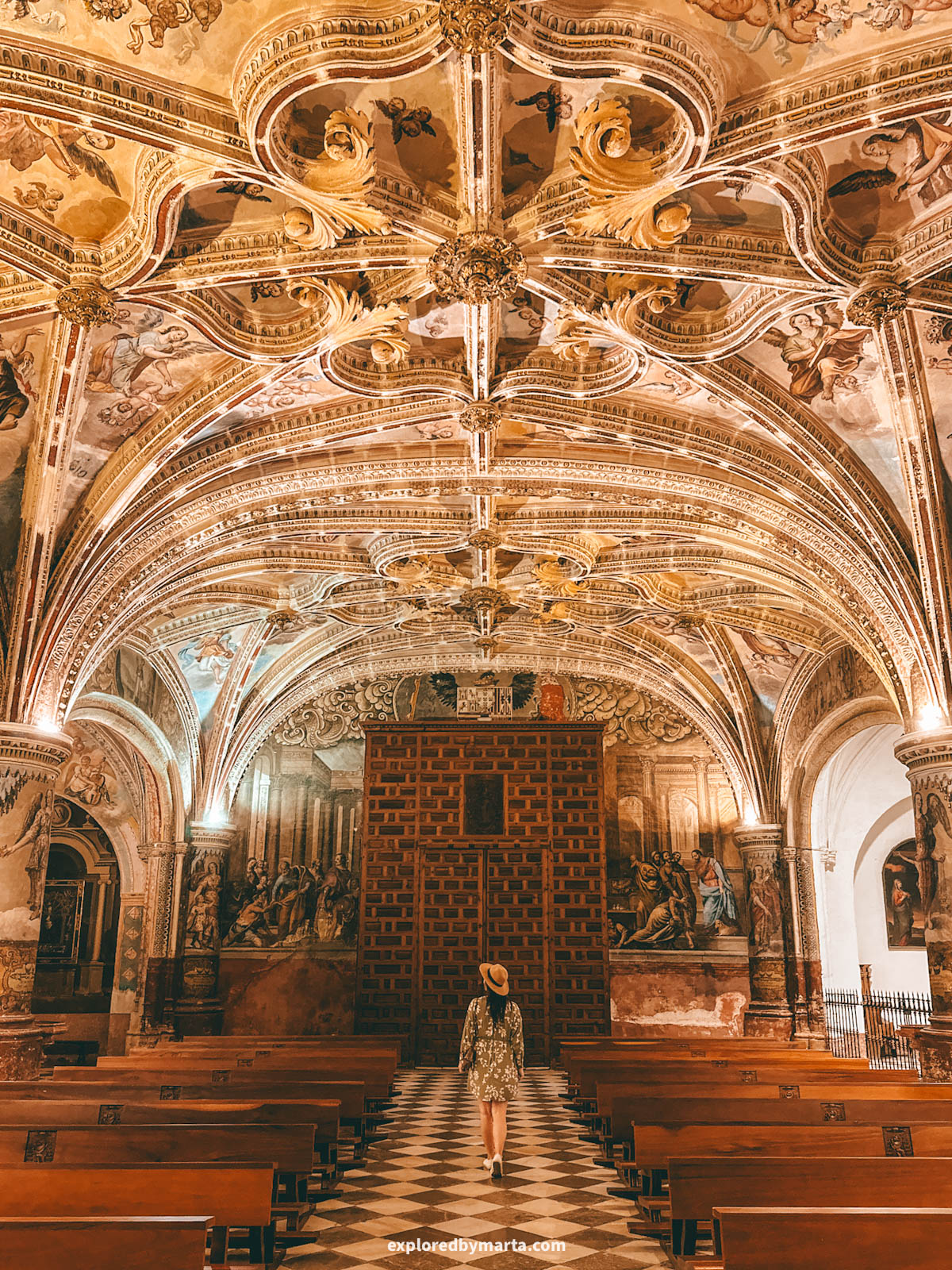
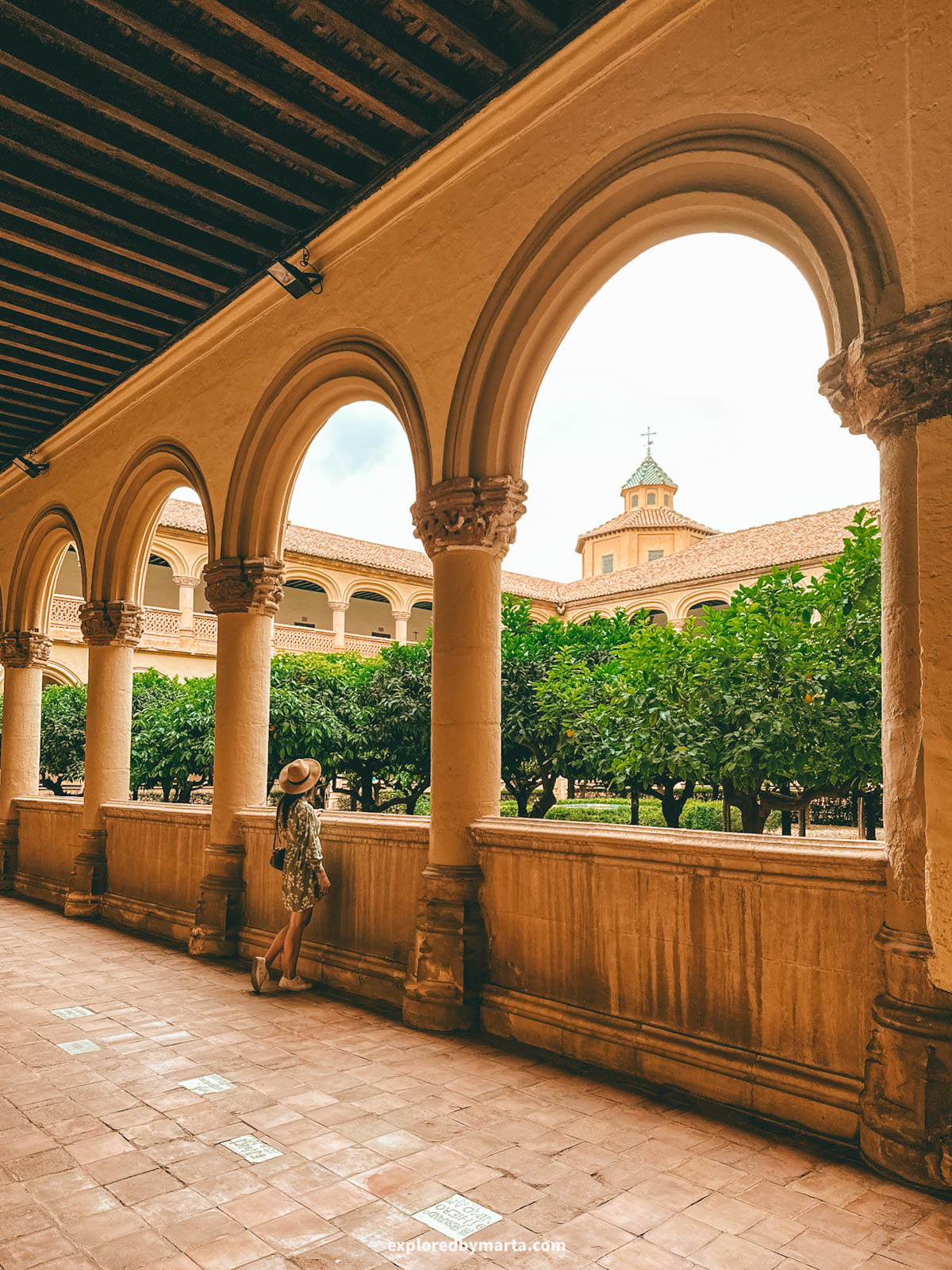
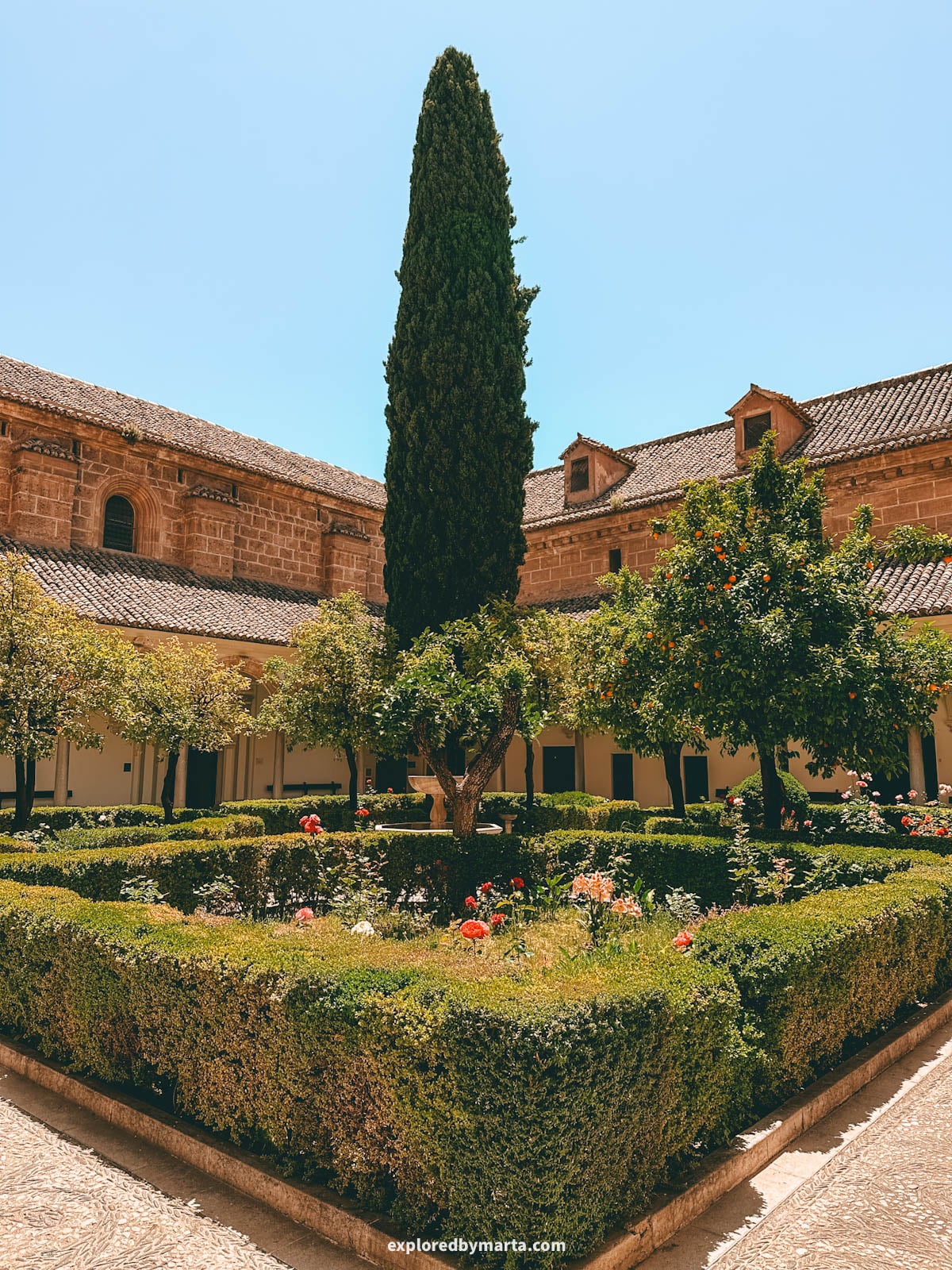
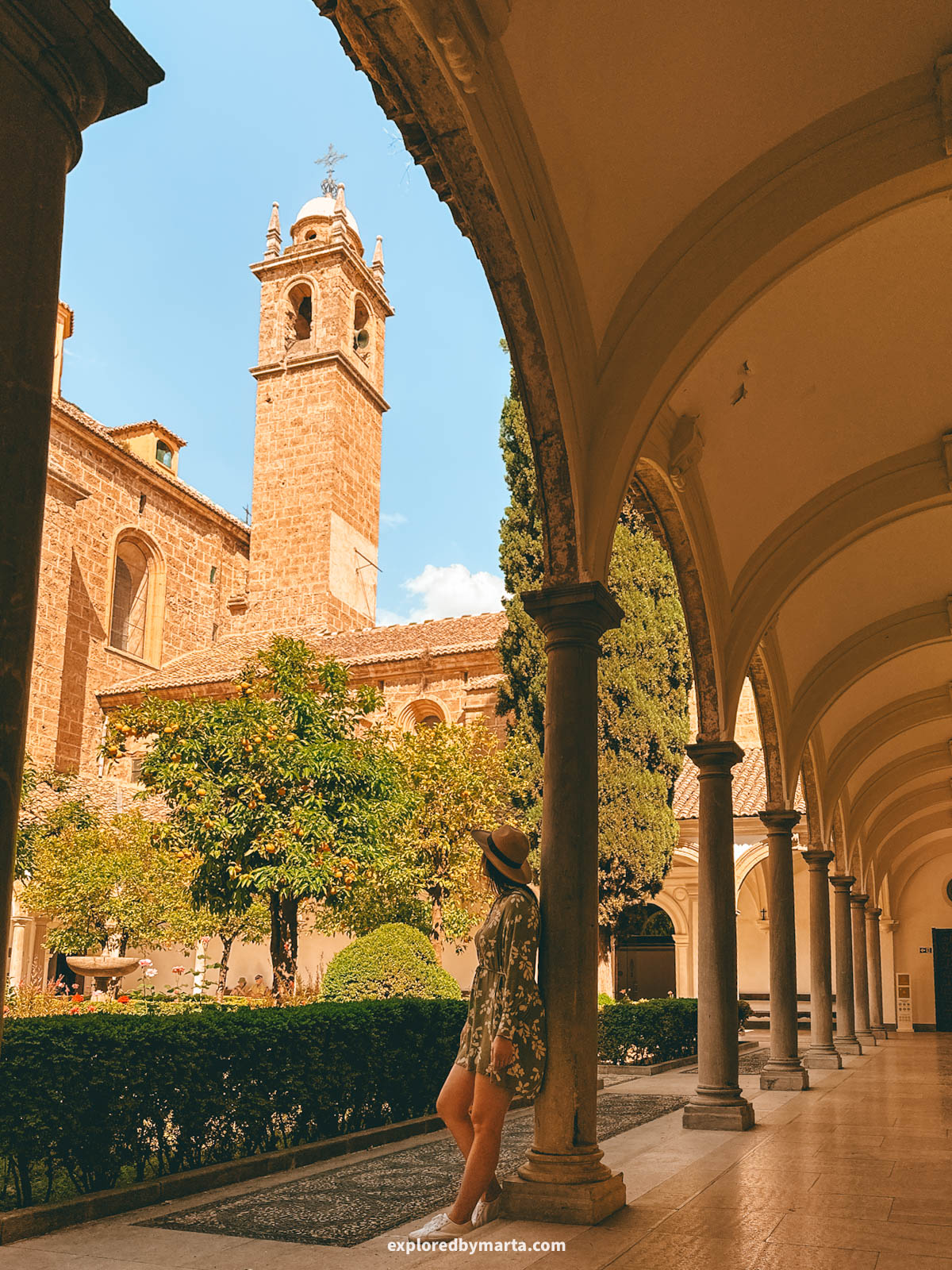
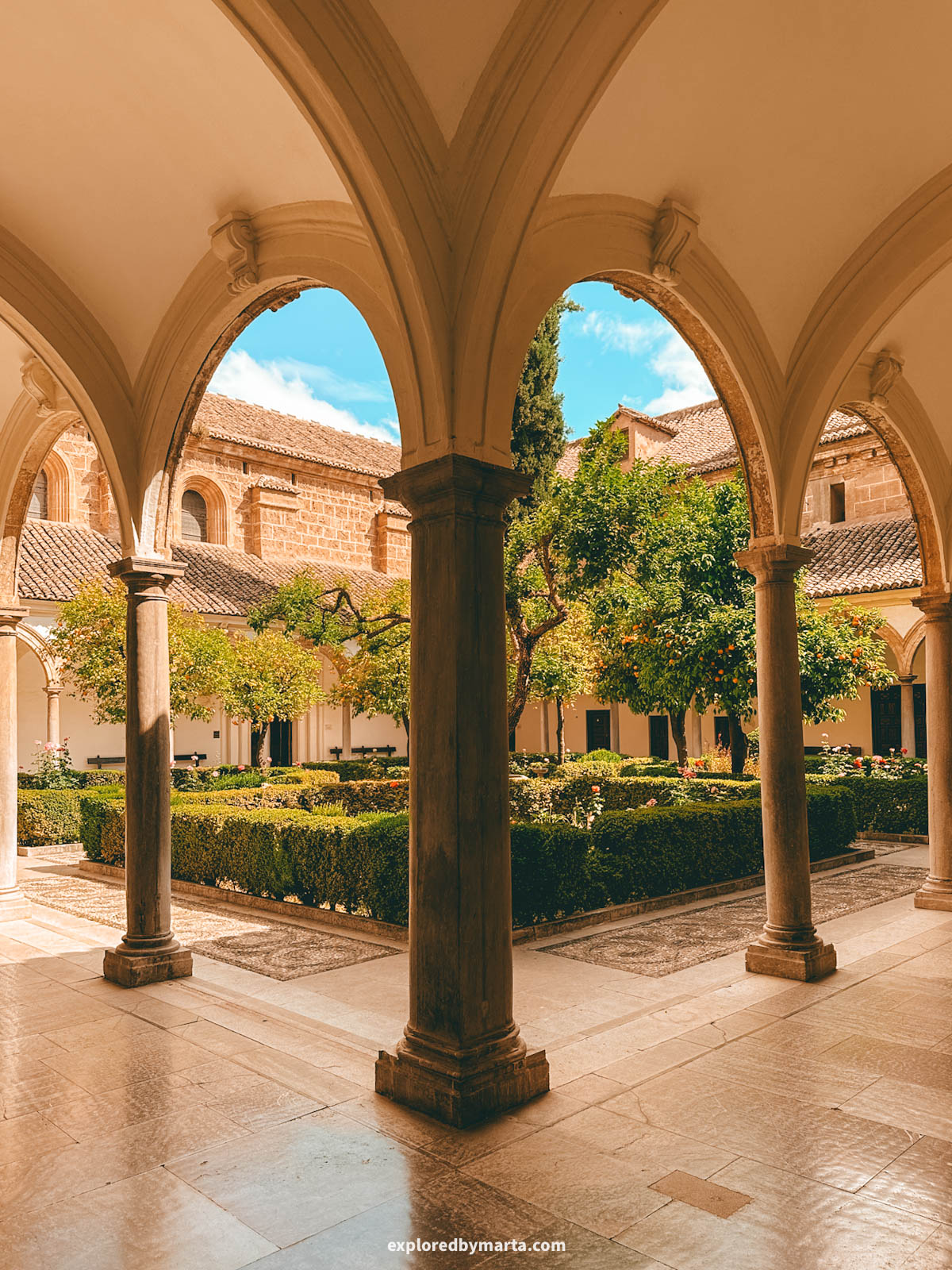
If you still have time for one more historic stop in Granada, the Monastery of San Jeronimo is a good one to keep on your list. It is much more central than Monasterio de la Cartuja and has a peaceful courtyard with orange trees and a richly decorated church.
From the outside, it doesn’t look like one of the most exciting places in the city. But once you step inside, the courtyard, arches, and quiet atmosphere make it feel like a nice break from the busier Granada streets.
I wouldn’t put it above the Alhambra, Basílica de San Juan de Dios, or Monasterio de la Cartuja, but it is still a beautiful stop if you like quiet historic places.
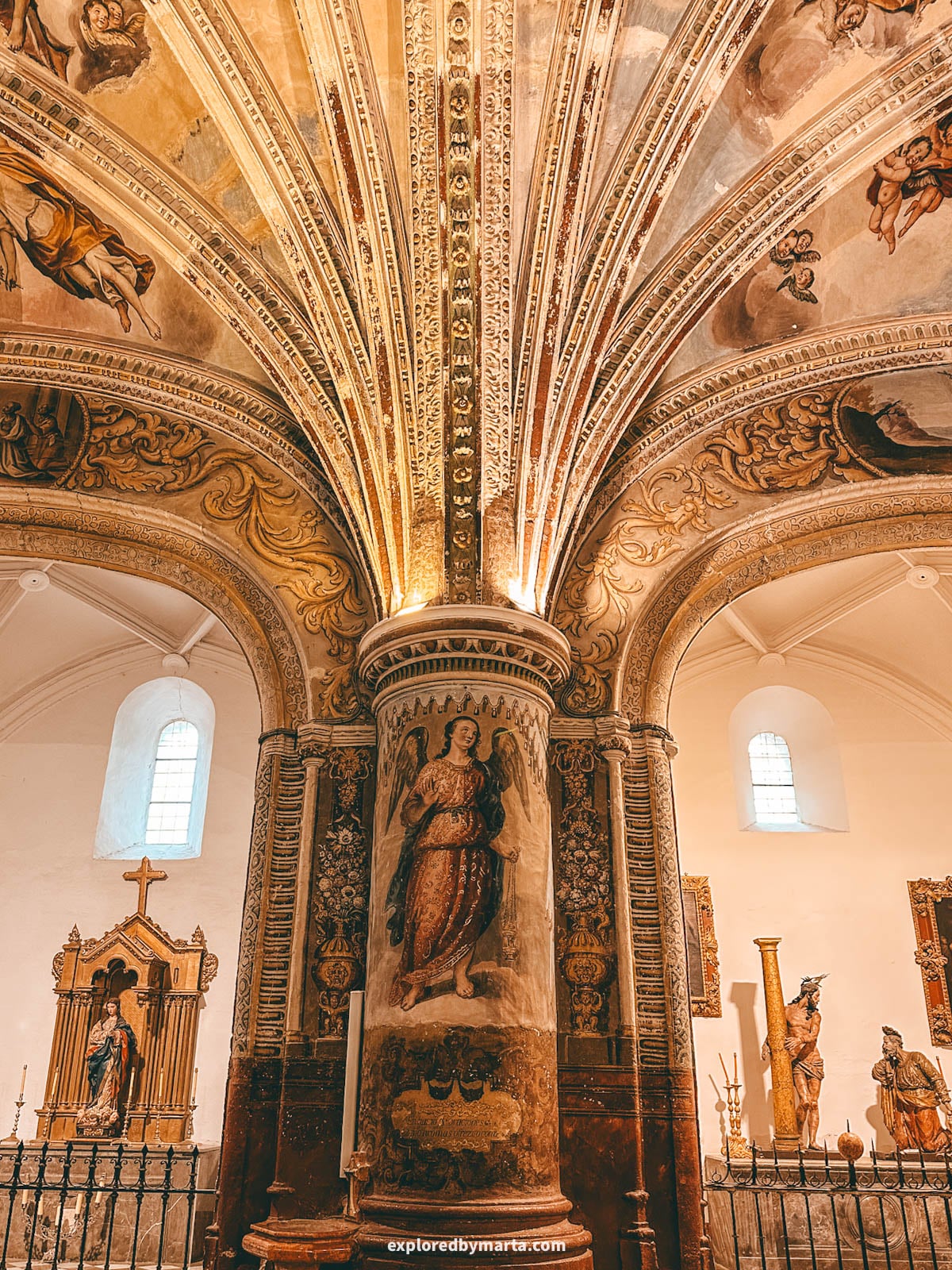
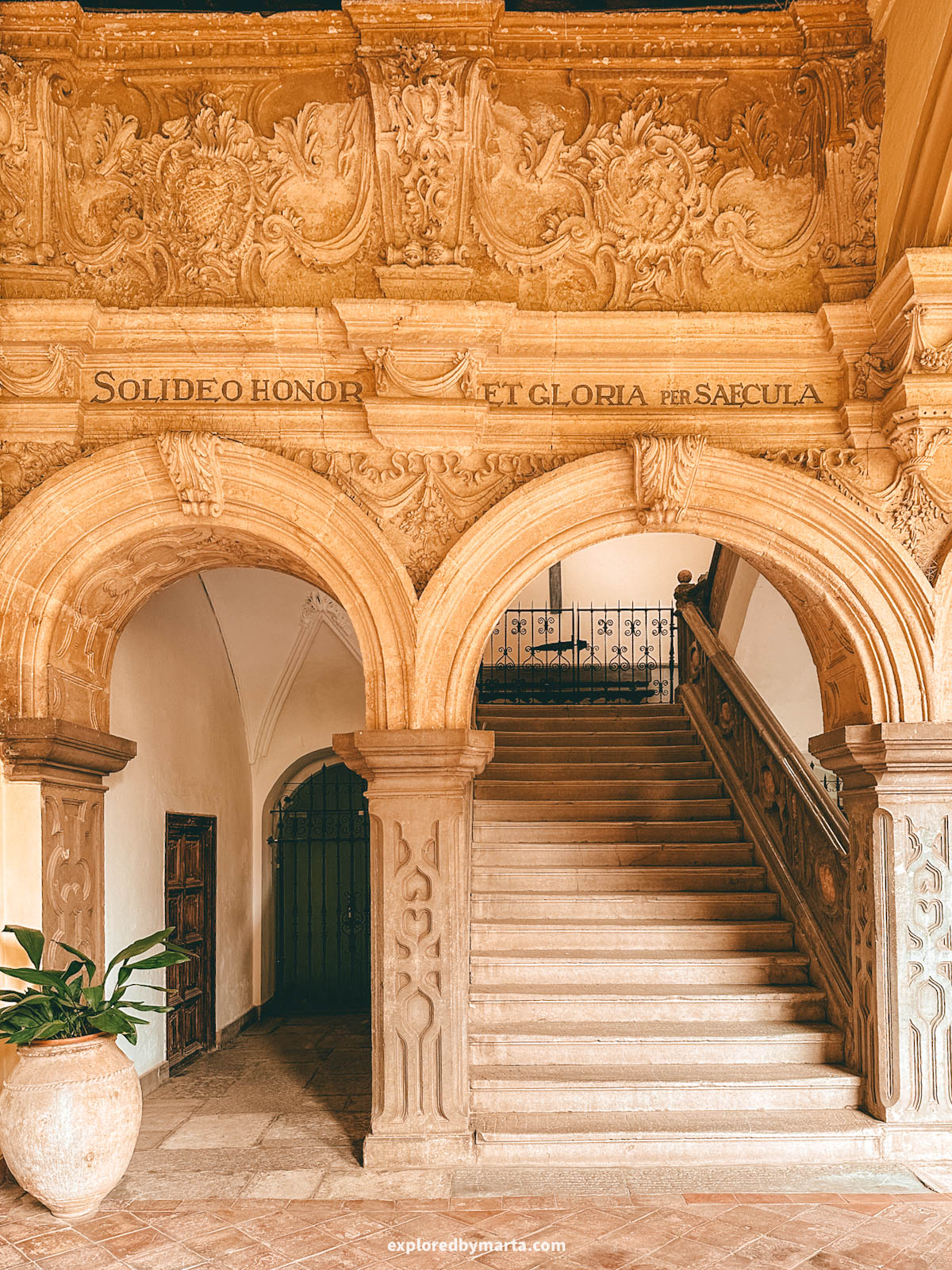
The courtyard was one of my favorite parts. It felt calm and very different from the busier streets outside, which is always appreciated in a city where your step count gets ambitious very quickly.
The church is the other highlight, with detailed decoration, sculptures, and painted ceilings. It is not as over-the-top as Basílica de San Juan de Dios, but it has that quiet “okay, this is actually very beautiful” feeling, which I really liked.
Because it is close to the center, this is an easy place to add if you have extra time between bigger sights. I’d plan around 30 to 60 minutes.
Last time I checked, there is an entrance fee of 7 EUR, so I’d prioritize it if you enjoy monasteries, courtyards, and religious interiors. If you are short on time, I’d choose Basílica de San Juan de Dios or Cartuja first.
Location: Monasterio de San Jerónimo
15. Watch a flamenco show in Granada
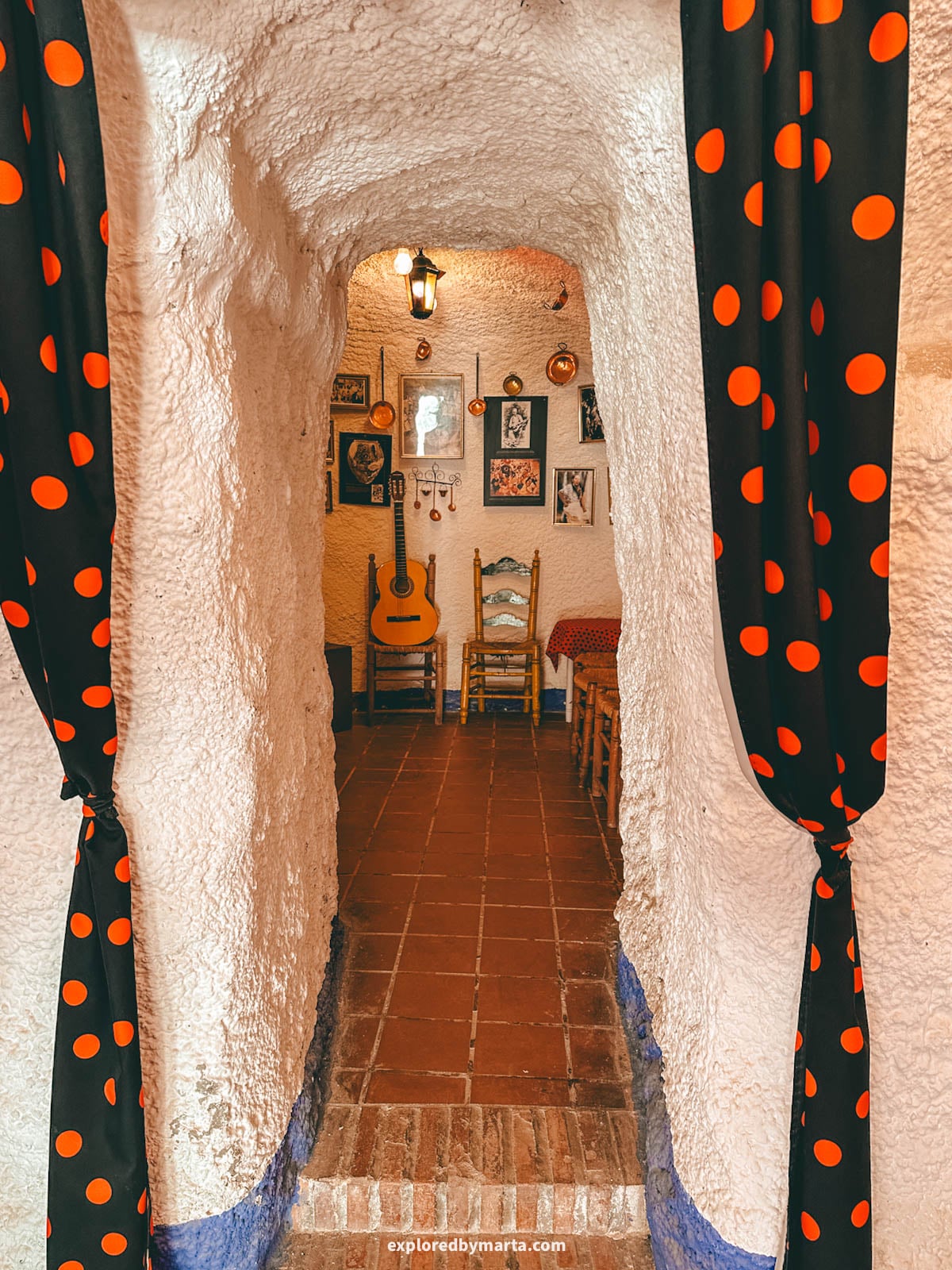
Seeing a flamenco show in Granada is one of the most classic evening experiences to add to your trip, especially after a full day of palaces, viewpoints, and uphill streets.
Flamenco is a huge part of Andalusian culture, and Granada has one of the most atmospheric settings for it: Sacromonte. This neighborhood is famous for its cave houses, and many shows take place in intimate cave-style venues (see photo above!).
The traditional style here is often called zambra, a type of flamenco closely linked to Sacromonte’s Roma/Gitano community. Expect guitar, singing, clapping, dancing, and a lot of emotion in a small space.
If you want the most atmospheric option, book a flamenco cave show in Sacromonte. If you prefer easier logistics, there are also flamenco venues closer to the historic center, around Plaza Nueva and the Cathedral area.
I’d book ahead, especially in high season, because smaller venues can fill up. Also check whether your ticket includes a drink, dinner, or hotel transfer, because every show works a little differently.
Is it touristy? Sometimes, yes. But some experiences are popular because they really do belong on a first trip. And in Granada, flamenco is one of them.
Things to know before visiting Granada

Before you plan your Granada itinerary, here are a few practical things that are good to know.
How many days do you need in Granada?
I’d say 2 days in Granada is the sweet spot for most first-time visitors.
With 1 day in Granada, focus on the Alhambra, the Cathedral area, Albaicín, and Mirador de San Nicolás. It will be a full day, but it is doable if you plan well.
With 2 days in Granada, you can add Sacromonte, El Bañuelo, tapas, Basílica de San Juan de Dios, and a few slower wandering moments without feeling like you are sprinting through the city.
With 3 days in Granada, you can add Monasterio de la Cartuja, Monasterio de San Jerónimo, carmen gardens, more viewpoints, and some of the smaller hidden gems without rushing.
We spent a full week in Granada, which was more than most first-time visitors need, but it gave us time to explore beyond the obvious places and really understand the city better.
FAQ about things to do in Granada

Is Granada worth visiting?
Yes, Granada is absolutely worth visiting, especially if you’re planning a trip around Andalusia. The Alhambra alone makes Granada worth the trip, but the city also has old Moorish neighborhoods, Arab Baths, sunset viewpoints, tapas, local pastries, cave houses, and some surprisingly impressive churches and monasteries.
For me, Granada felt very different from Seville, Córdoba, or Málaga, so I definitely wouldn’t skip it.
How many days do you need in Granada?
I’d say 2 days in Granada is the sweet spot for most first-time visitors.
One day is enough to visit the Alhambra and see a few highlights in the historic center, but it will feel rushed.
With 2 days, you can add Albaicín, Sacromonte, Mirador de San Nicolás, El Bañuelo, tapas, and a few smaller places without turning your trip into a sightseeing marathon.
What is Granada best known for?
Granada is best known for the Alhambra, the famous palace and fortress complex overlooking the city. But Granada is also known for the Albaicín neighborhood, Sacromonte cave houses, flamenco culture, Arab Baths, tapas, pionono pastries, and views of the Sierra Nevada mountains. So yes, come for the Alhambra, but don’t leave right after seeing it.
What should you not miss in Granada?
The one thing you should not miss in Granada is the Alhambra, especially the Nasrid Palaces. I’d also make time for the Albaicín, Mirador de San Nicolás, El Bañuelo, Sacromonte, and at least one local food stop for pionono or tapas.
If you have extra time, Basílica de San Juan de Dios, Monasterio de la Cartuja, and a flamenco show are also great additions to a Granada itinerary.
Can you visit Granada without a car?
Yes, you can visit Granada without a car.
Most of the main places are walkable, especially around the historic center, Albaicín, Sacromonte, and the Cathedral area. Just know that Granada is very hilly, so comfortable shoes are important.
For places a bit farther away, like Monasterio de la Cartuja, you can use a bus or taxi.
Do you need to book the Alhambra in advance?
Yes, definitely book the Alhambra in advance.
This is especially important if you want to visit the Nasrid Palaces, because they have timed entry and can sell out. Don’t leave this one for the last minute unless you enjoy unnecessary travel stress. 😅
Is Granada expensive?
Granada can be fairly affordable compared with some other popular cities in Spain. The Alhambra is the main attraction to budget for, and several churches, monasteries, and smaller monuments also have entrance fees. But you can still enjoy plenty of free things in Granada, like viewpoints, neighborhood walks, market streets, and some gardens. Food can also be pretty budget-friendly, especially if you enjoy tapas and casual local spots.
Read more about traveling in Southern Spain
Granada ended up being one of my favorite cities in Andalusia because it has such a good mix of history, viewpoints, food, and smaller places that surprised me.
Most people come to Granada for the Alhambra, and I get it. But I really think Granada is worth more than just showing up for the Alhambra and leaving.
Give yourself time for Albaicín, Sacromonte, local pastries, tapas, and a few slower walks around the city. Granada has a lot going on once you look past the main palace complex.
If you’re planning more of your trip around southern Spain, check out my other Andalusia guides:
More Andalusia travel inspiration:
- 21 most beautiful white villages in Andalusia
- 27 hidden gems you should see in Andalusia
- 17 most beautiful castles in Andalusia, Spain
- Córdoba bucket list: 18 best things to do in Córdoba, Spain
- Seville, Spain: 19 awesome bucket list things to do in Seville
- 20 best things to do in Malaga, Spain (+locations & tips!)
Travel guides to nearby towns:
- Ronda bucket list: 15 best things to do in Ronda, Spain
- 12 best things to do in Cádiz, Western Europe’s oldest city
- Fairytale Frigiliana: 13 things to do in Frigiliana, Spain
- 10 things to do in Iznájar, Spain (flower village)
- 10 best things to do in Jerez de la Frontera, Spain
- 10 things to do in Tarifa, Spain’s southernmost town
PIN FOR LATER!