
13 unusual places and hidden gems in Granada, Spain
This post may contain affiliate links. If you use these links to make a purchase or booking, I may earn a small commission at no extra cost to you! Thank you for your support!
Looking for unusual spots and hidden gems in Granada, Spain? You’re in the right place! Most travelers come to Granada for the Alhambra and call it a day, but this city has so many secret corners, lesser-known monuments, and unusual spots that are worth your time.
We spent a whole week in Granada exploring everything beyond the famous palace complex. From hidden Moorish palaces and free spots inside the Alhambra to fairytale villages and Spain’s iconic cave houses, there is plenty to add to your itinerary.
In this guide, I’m sharing my favorite hidden gems in Granada, plus a few unique day trips from the city. Each one comes with practical tips, my honest opinion, and exact locations on Google Maps. Let’s dive in!
1. Corral del Carbón, a 14th-century Moorish treasure
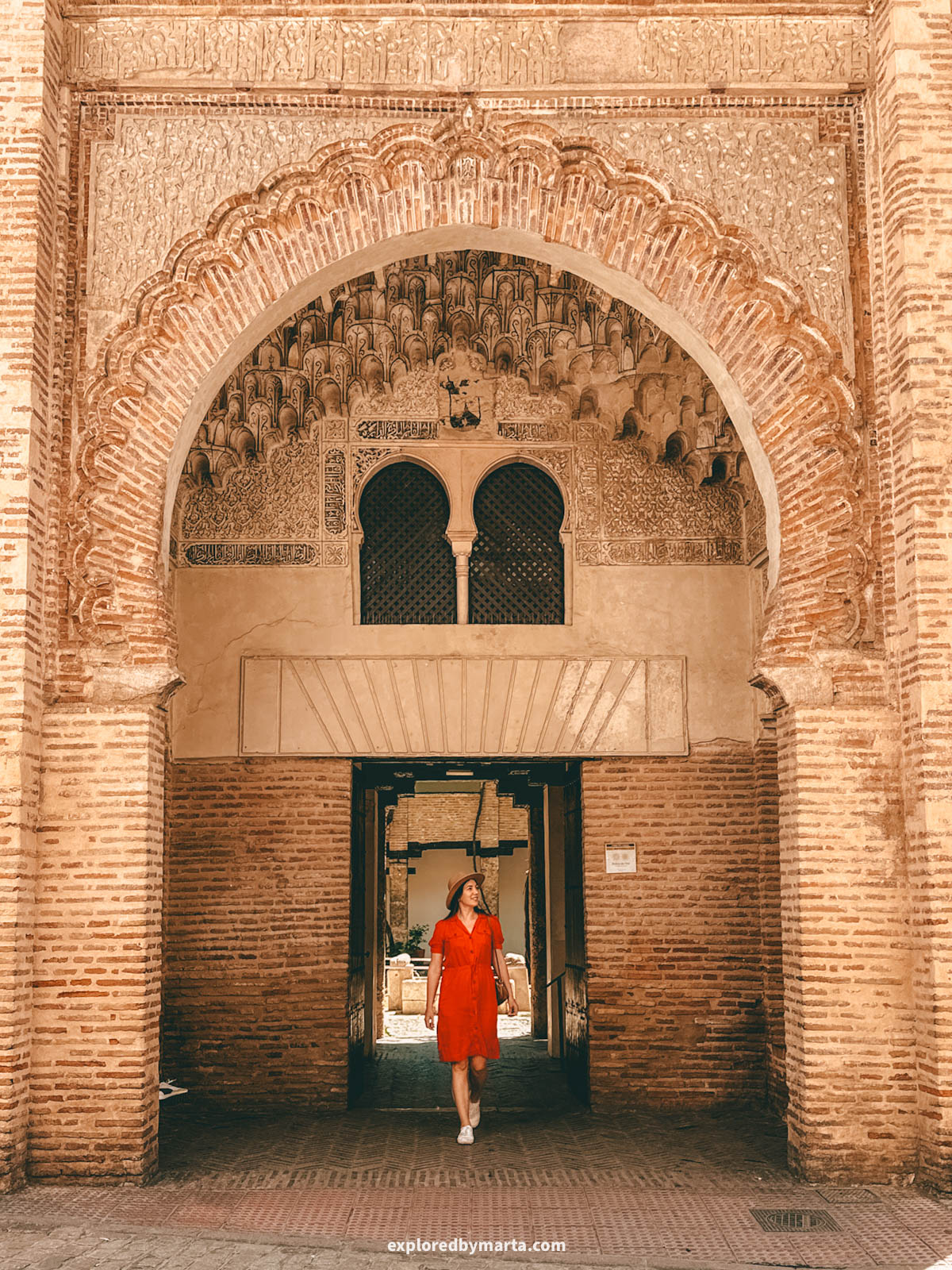
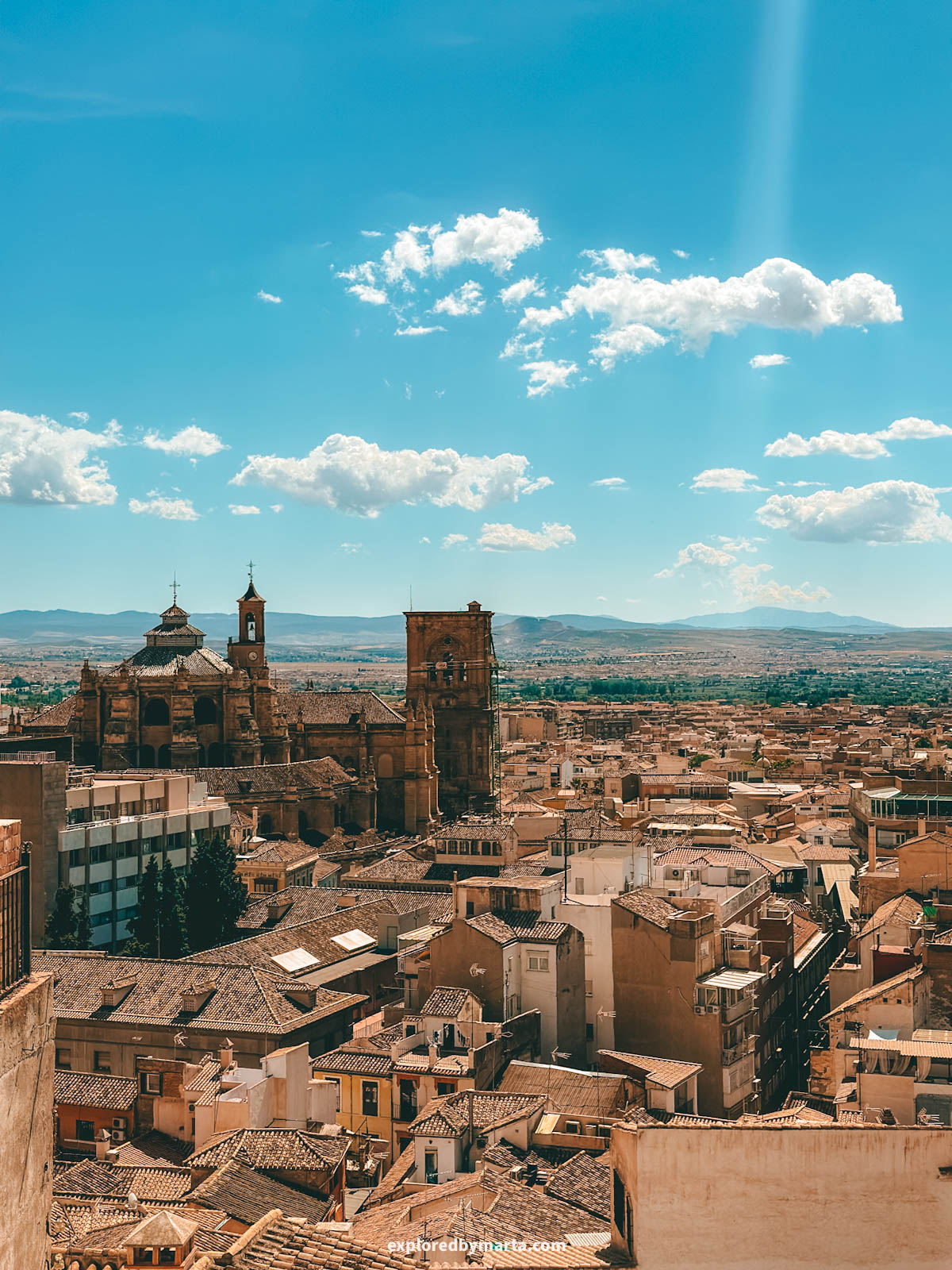
Right in the heart of Granada’s historic center, just a short walk from the Granada Cathedral and the Royal Chapel, you’ll find Corral del Carbón, one of the most overlooked Moorish monuments in the city. Honestly, most travelers walk past it without realizing what it is.
This 14th-century Moorish building has had many lives. Originally built as an alhóndiga (an inn and warehouse for merchants traveling with goods), it is actually the only Nasrid-era alhóndiga that has survived intact on the entire Iberian Peninsula.
So yes, you’re looking at the last one of its kind. 🤯 After the Christian conquest, it served as a coal yard, which is where its current name, “Corral del Carbón,” comes from.
The best part of Corral del Carbón is the entrance – the beautiful horseshoe-shaped Moorish archway is decorated with intricate brick carvings and Arabic inscriptions, and it is one of the most authentic Moorish entrances you’ll see in Granada outside the Alhambra.
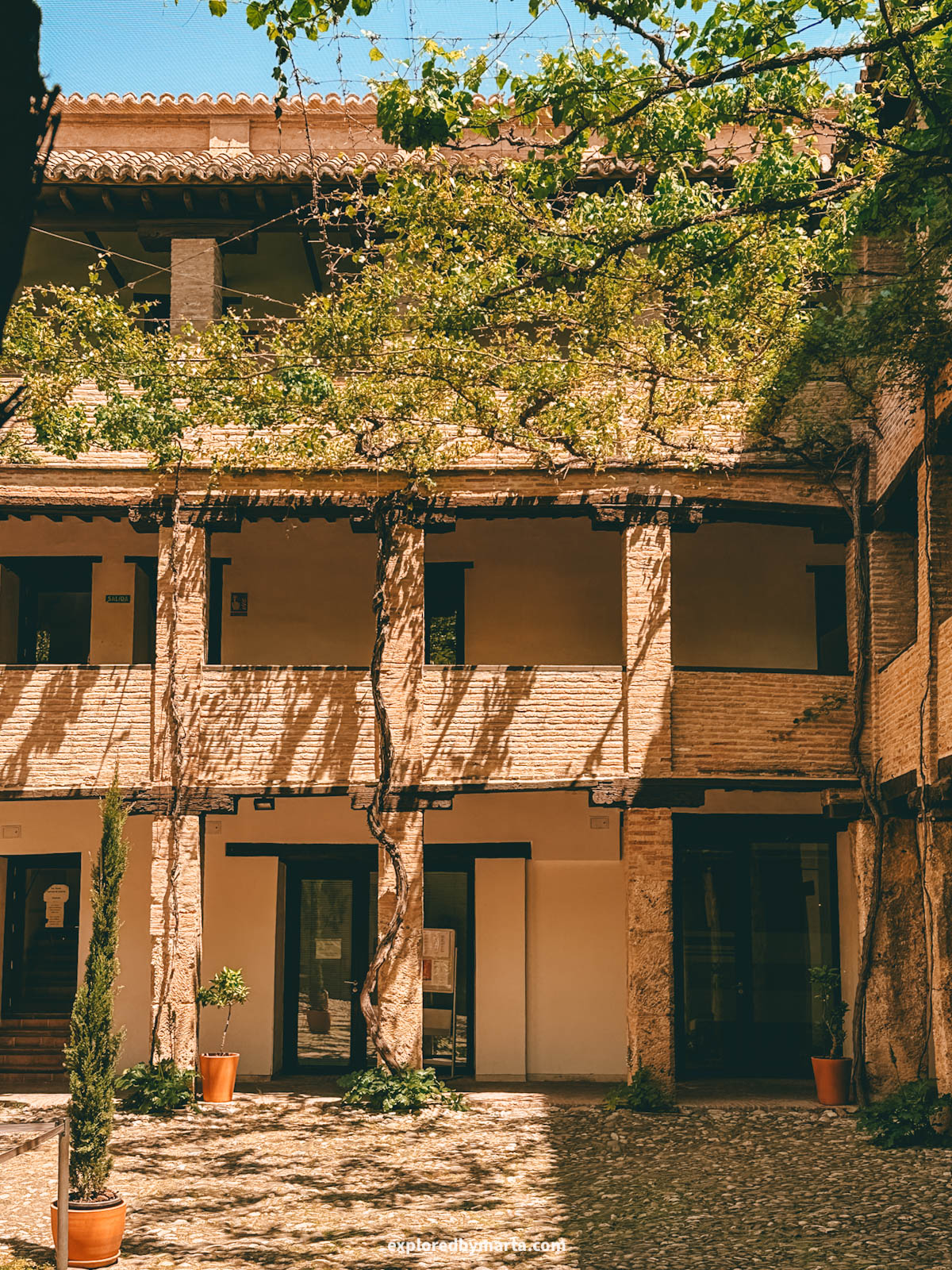
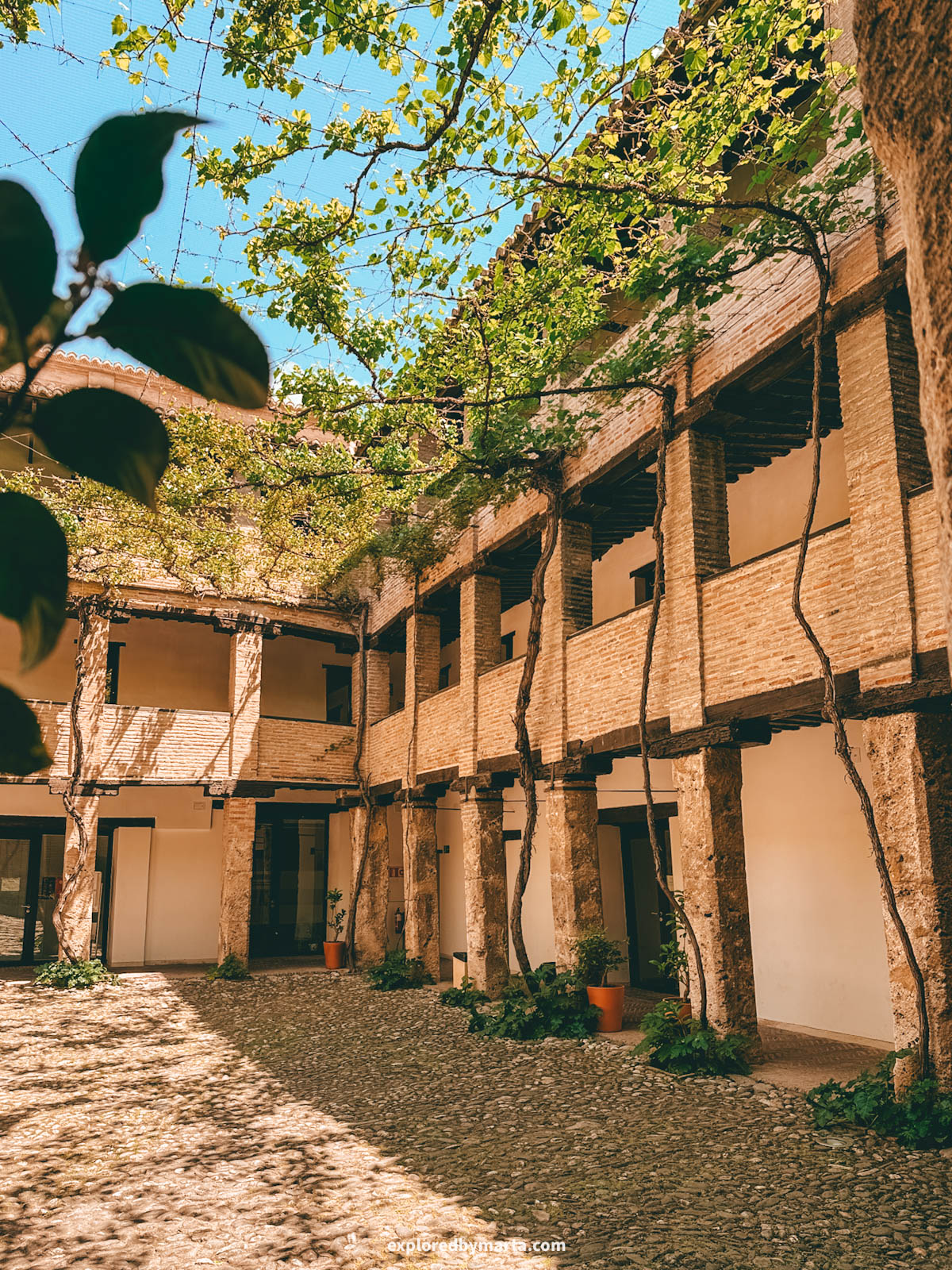
Once you walk through the archway, you’ll find a simple inner courtyard with a fountain and a few cypress trees. There is not a lot to see beyond the entrance, but the building itself is the experience here.
The entrance is free, and the visit only takes about 10 minutes, so it is a great quick stop to add while exploring the historic center. Just check the opening hours before you go, because it does close in the afternoon and is sometimes closed on weekends.
For me, Corral del Carbón is one of those quiet, easy-to-miss places that adds a really cool layer to your Granada visit. If you love Moorish architecture, definitely don’t skip it. 🤩
Location: Corral del Carbón
2. Palacio de la Madraza, an Alhambra-style gem next to the Cathedral
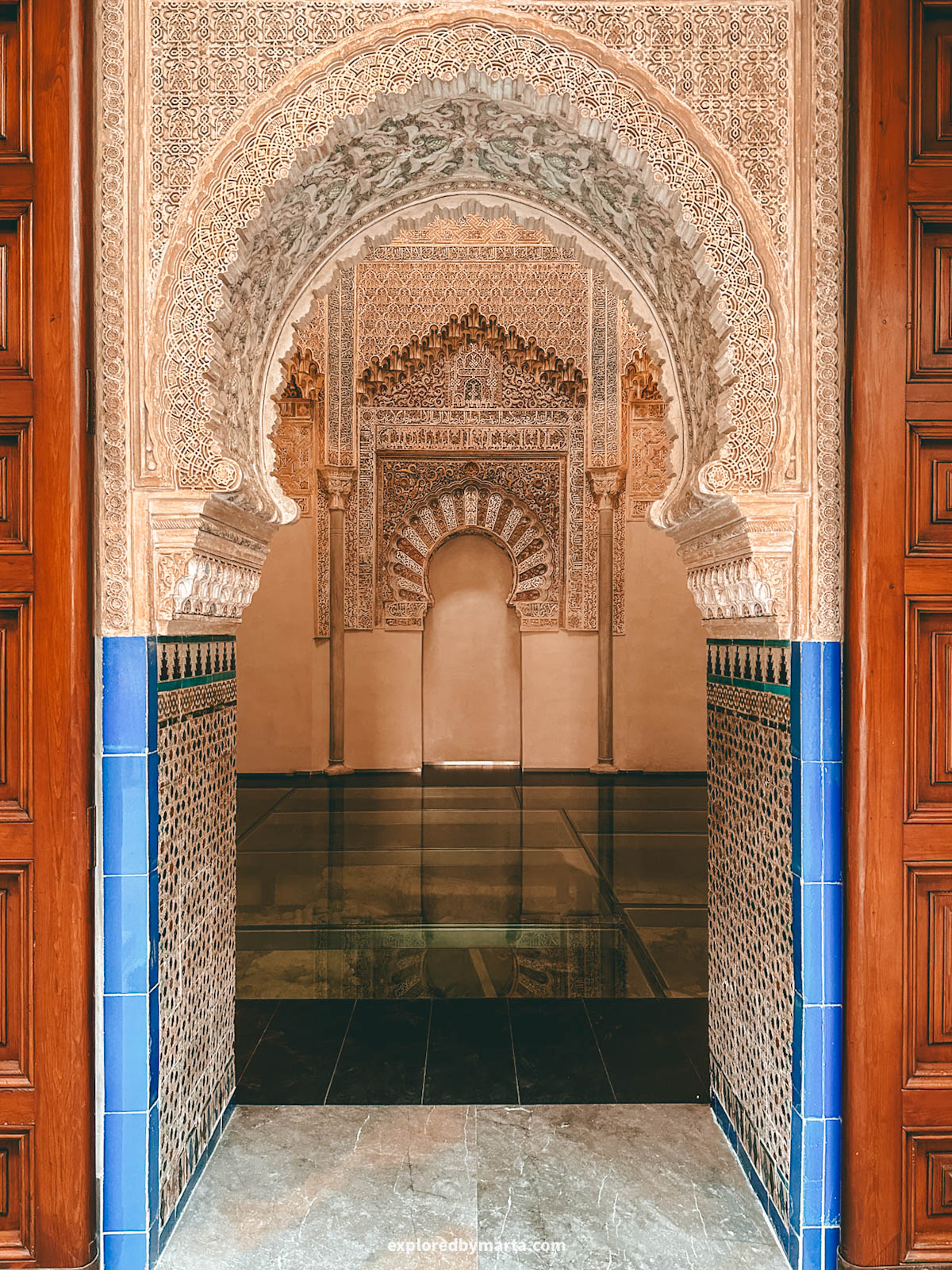
Right next to the Granada Cathedral and across from the Royal Chapel, you’ll find another easy-to-miss gem: Palacio de la Madraza. From the outside, it looks like a Baroque palace, so most travelers walk straight past it without realizing what’s inside.
And the story behind it is pretty fascinating. Turns out, this was actually Granada’s first university, founded back in 1349 by Sultan Yusuf I. It was one of the most important centers of learning in Moorish Spain, where students studied law, medicine, theology, and astronomy.
The original Madraza was mostly demolished in the 18th century to build the current Baroque palace, but thankfully, parts of the Nasrid building survived inside.
Now for the honest part. The palace is free to visit at certain opening hours, but they only let a small number of people in at once, and you can only walk around the courtyard and entrance area.
From the ground floor, you can actually see the famous mihrab (the ornately decorated prayer niche from the original Moorish oratory) through a doorway, and even just that view is worth coming here for. The carvings are as detailed as anything inside the Alhambra.
But to actually explore the palace, you need to book in advance and join a guided tour with limited daily spots. We didn’t know that and didn’t book ahead, so we missed out on the full visit.
If you’re already exploring the Cathedral and the Royal Chapel area, the Madraza is just steps away. Pop in for 5 minutes, admire what you can see from the ground floor, and add a little hidden Moorish layer to your visit.
Location: Palacio de la Madraza
3. Monasterio de la Cartuja and the world’s most beautiful sacristy
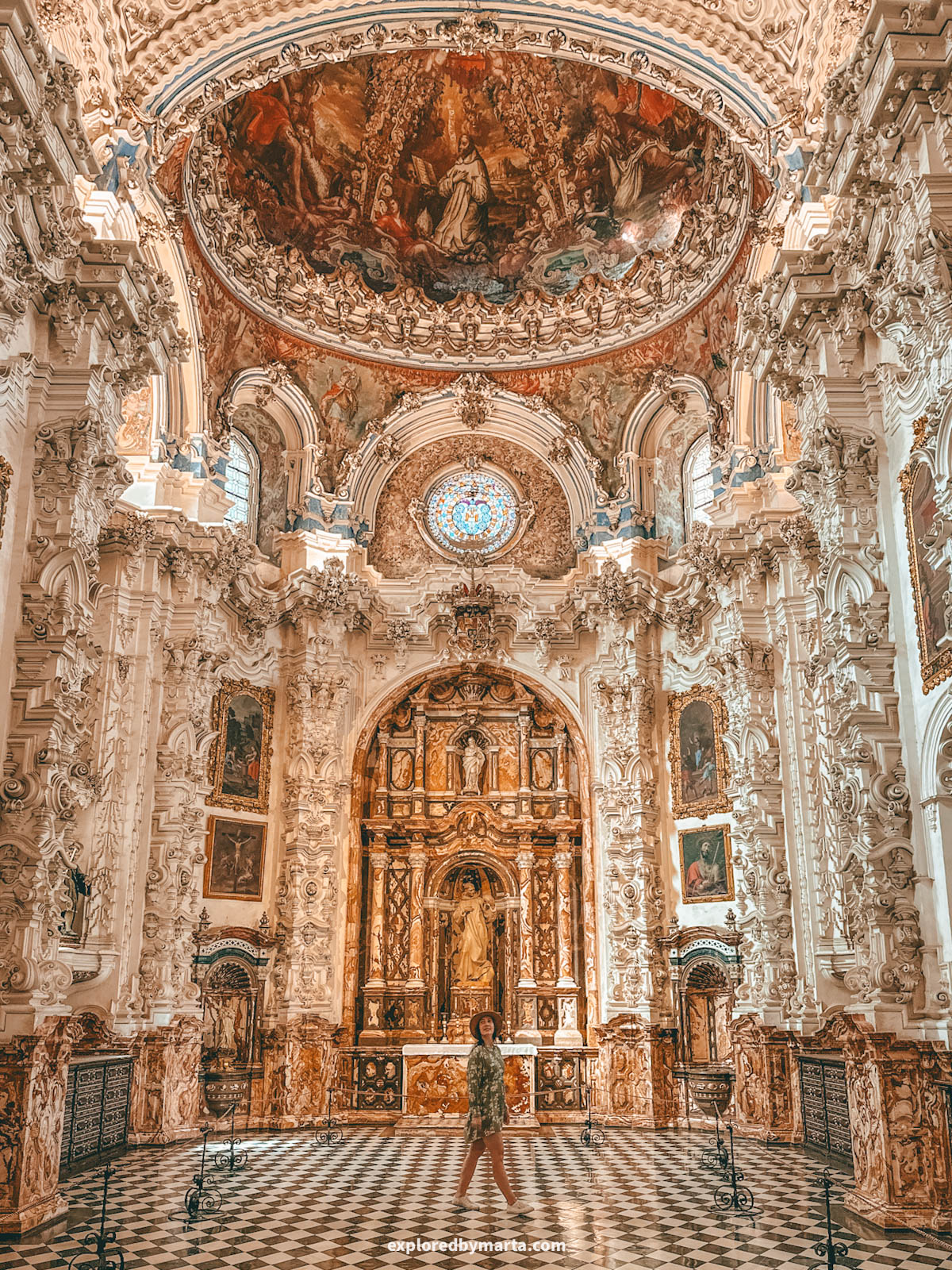
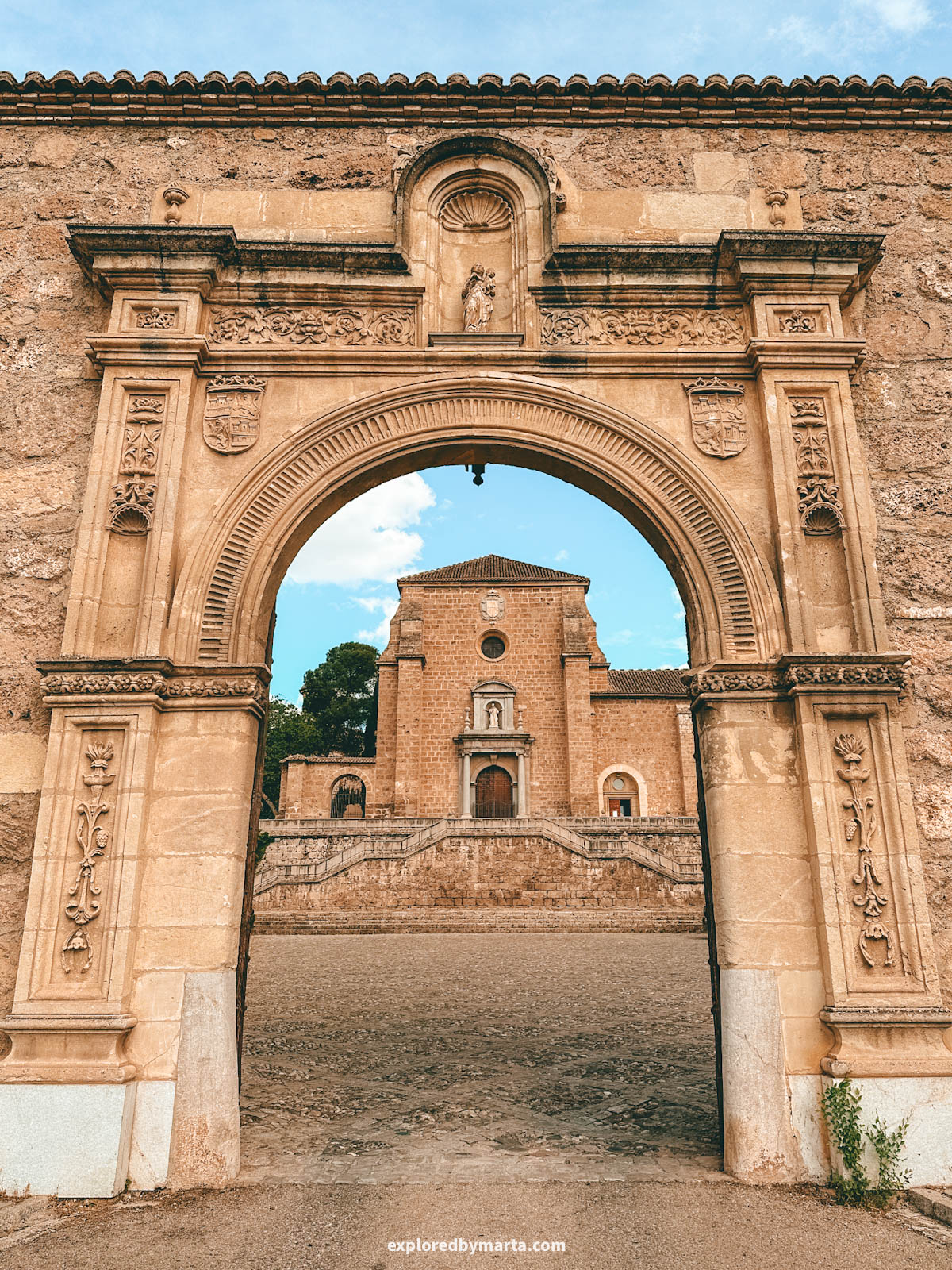
If there is one unusual place you should not skip in Granada, it is Monasterio de la Cartuja. From the outside, this 16th-century monastery looks completely plain. Then you step inside and find one of the most jaw-dropping interiors in all of Spain.
It is honestly one of those “wait, this was hiding in here?” kind of places. And it gets even better as you walk deeper into the complex.
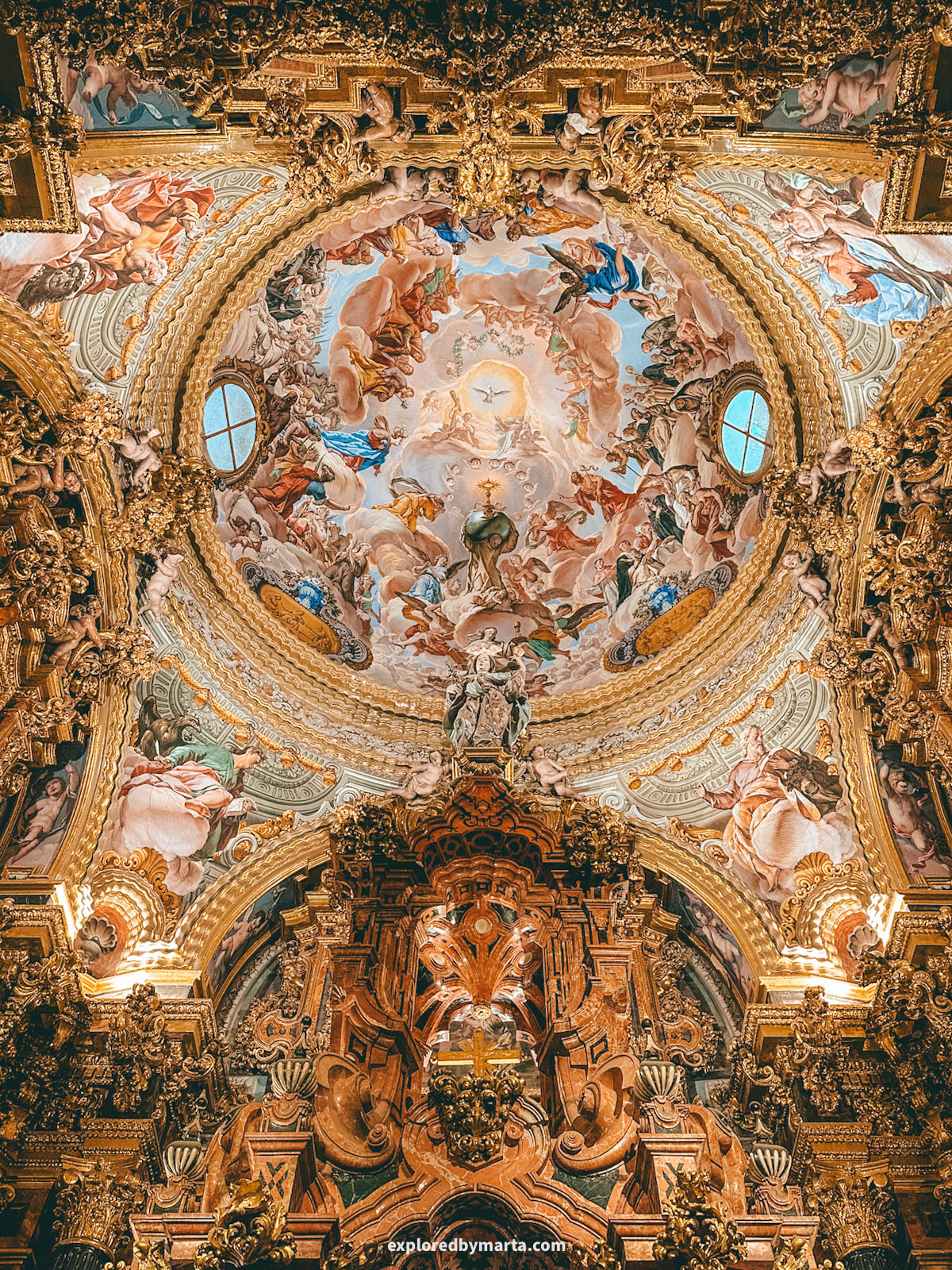
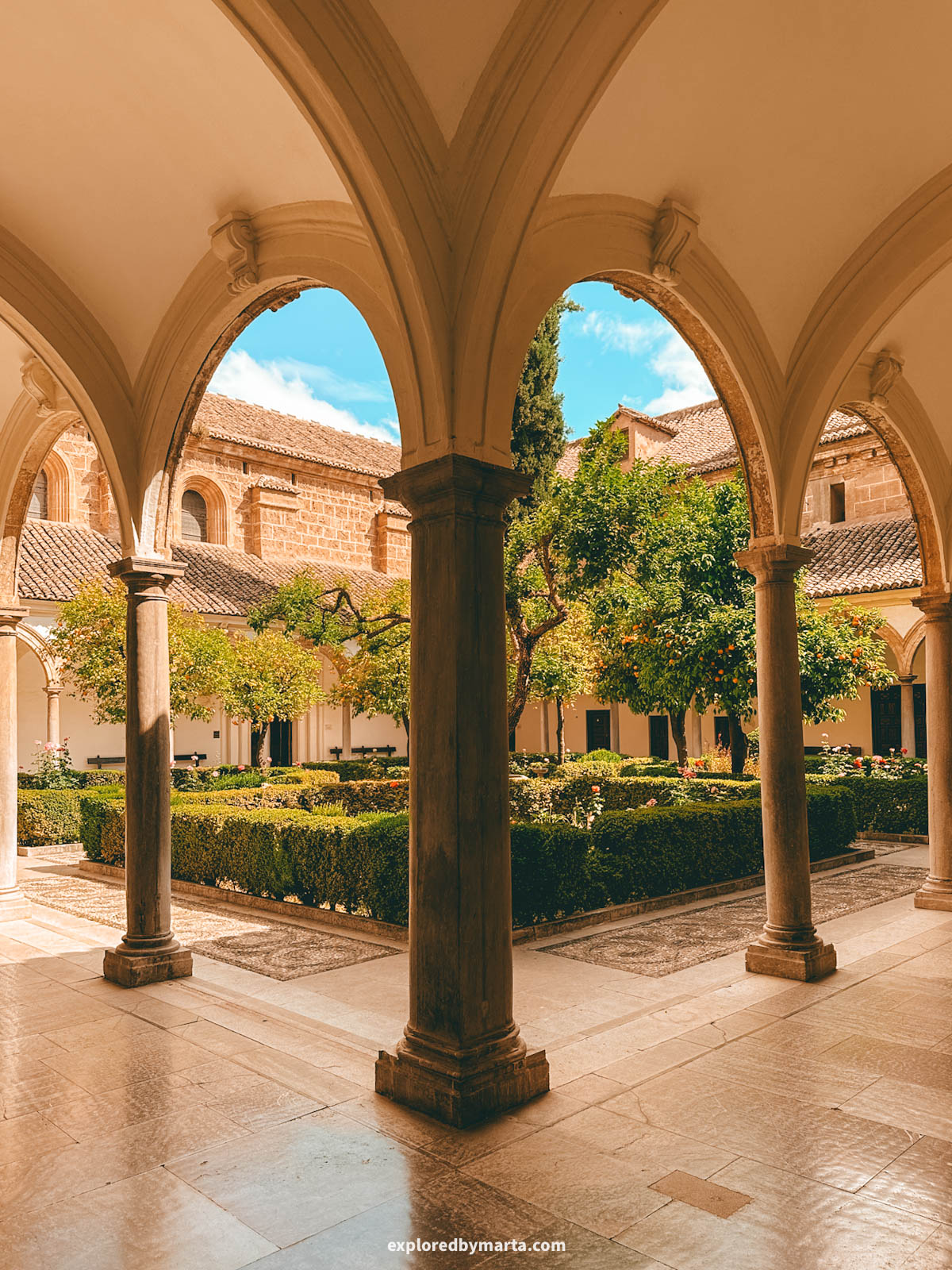
The visit takes you through different rooms, courtyards, the church, and the famous sacristy. Yes, the sacristy is often called the most beautiful sacristy in the world, and after visiting it in person, I completely understand why.
The marble, paintings inside the dome, exquisite carvings, and bedazzling art are something I will never forget. The Nasrid Palaces in the Alhambra have some serious competition here!
The church is also stunning, with detailed sculptures, an elaborate altarpiece, and beautiful frescoes on the ceilings. And the courtyard with orange trees is a peaceful spot to take a break between rooms.
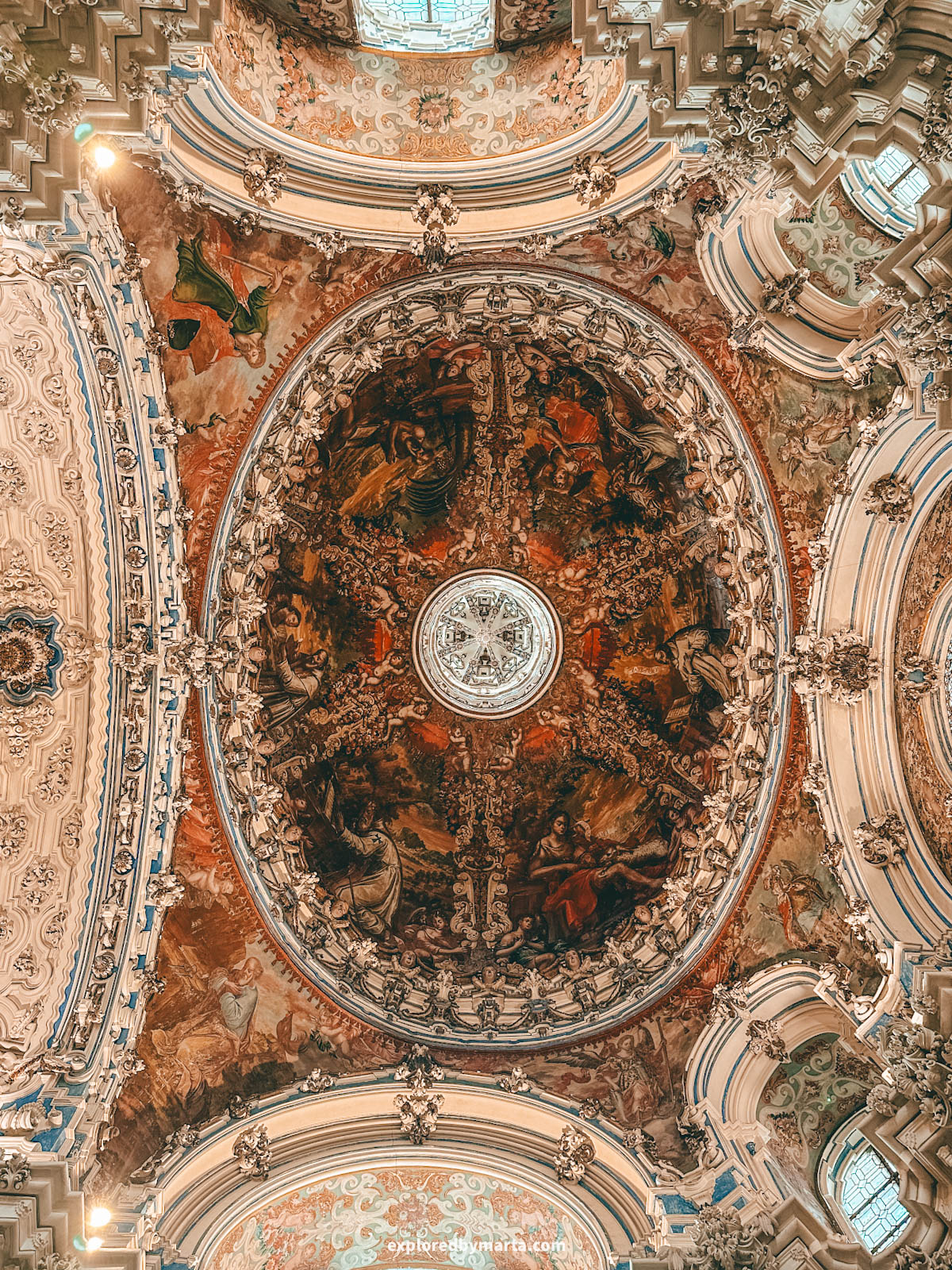
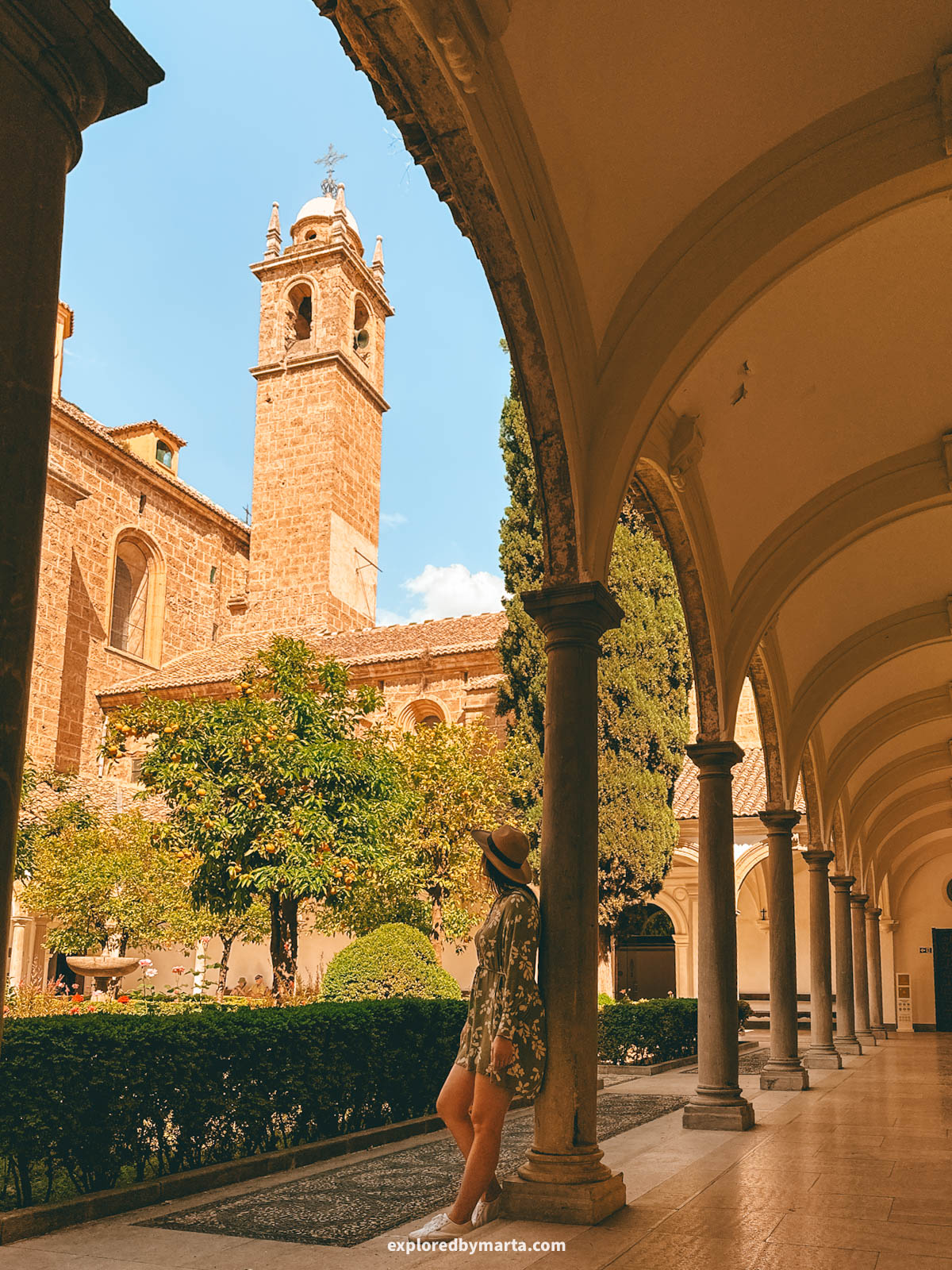
The monastery is located a little outside the main old town, so you’ll probably want to take a bus or taxi to get there. We just booked a taxi through the Bolt app, and it was super easy. But it’s worth it – it is honestly one of the best places to visit in Granada!
Last time I checked, there is an entrance fee of 7 EUR per adult, and I’d plan around 1-2 hours for the visit. If you like historic interiors or want to see something completely different from the Alhambra, this is one of the most rewarding stops in Granada.
Location: Monasterio de la Cartuja de Granada
4. Palacio Dar al-Horra, a Nasrid queen’s hidden palace
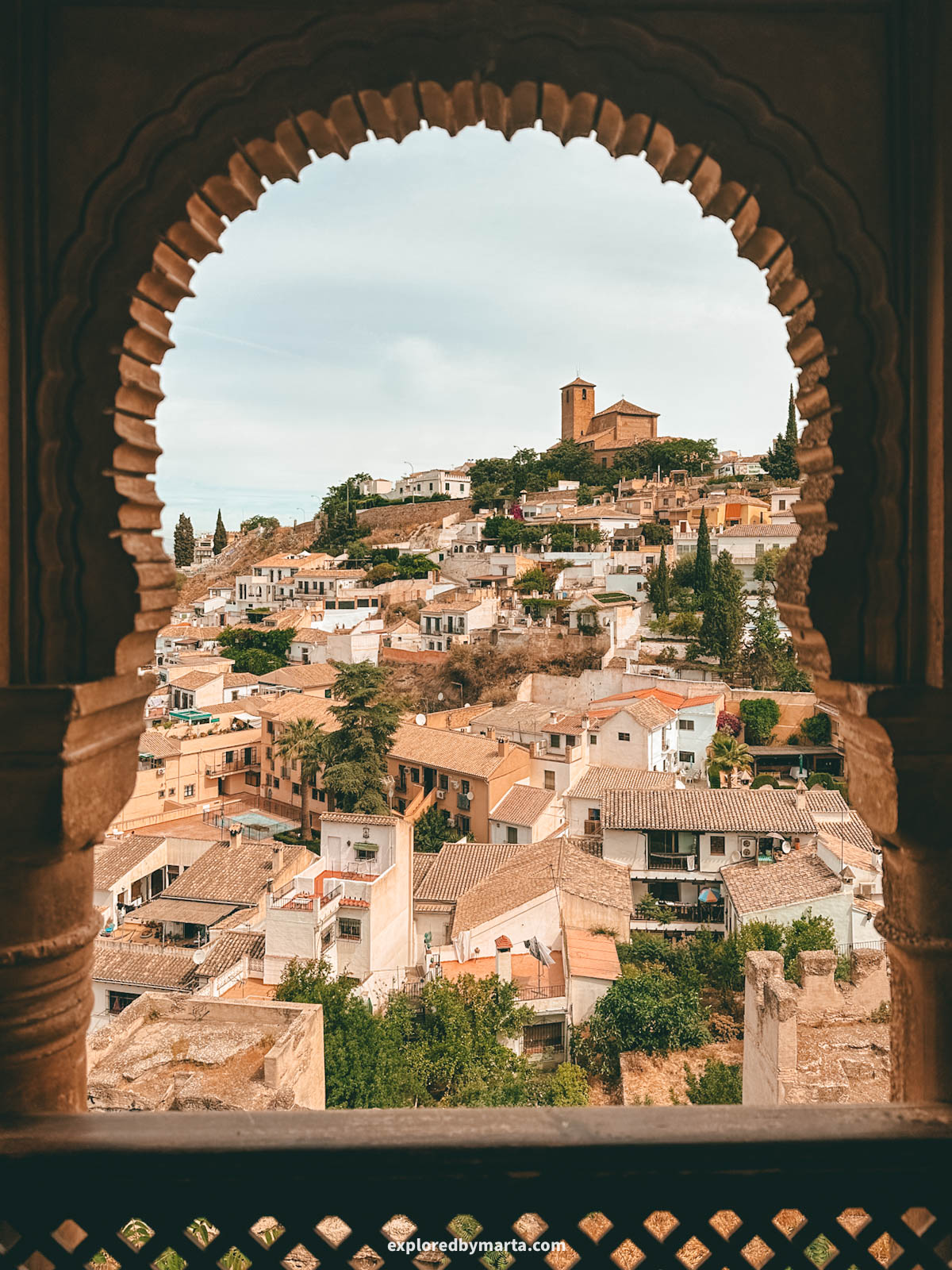
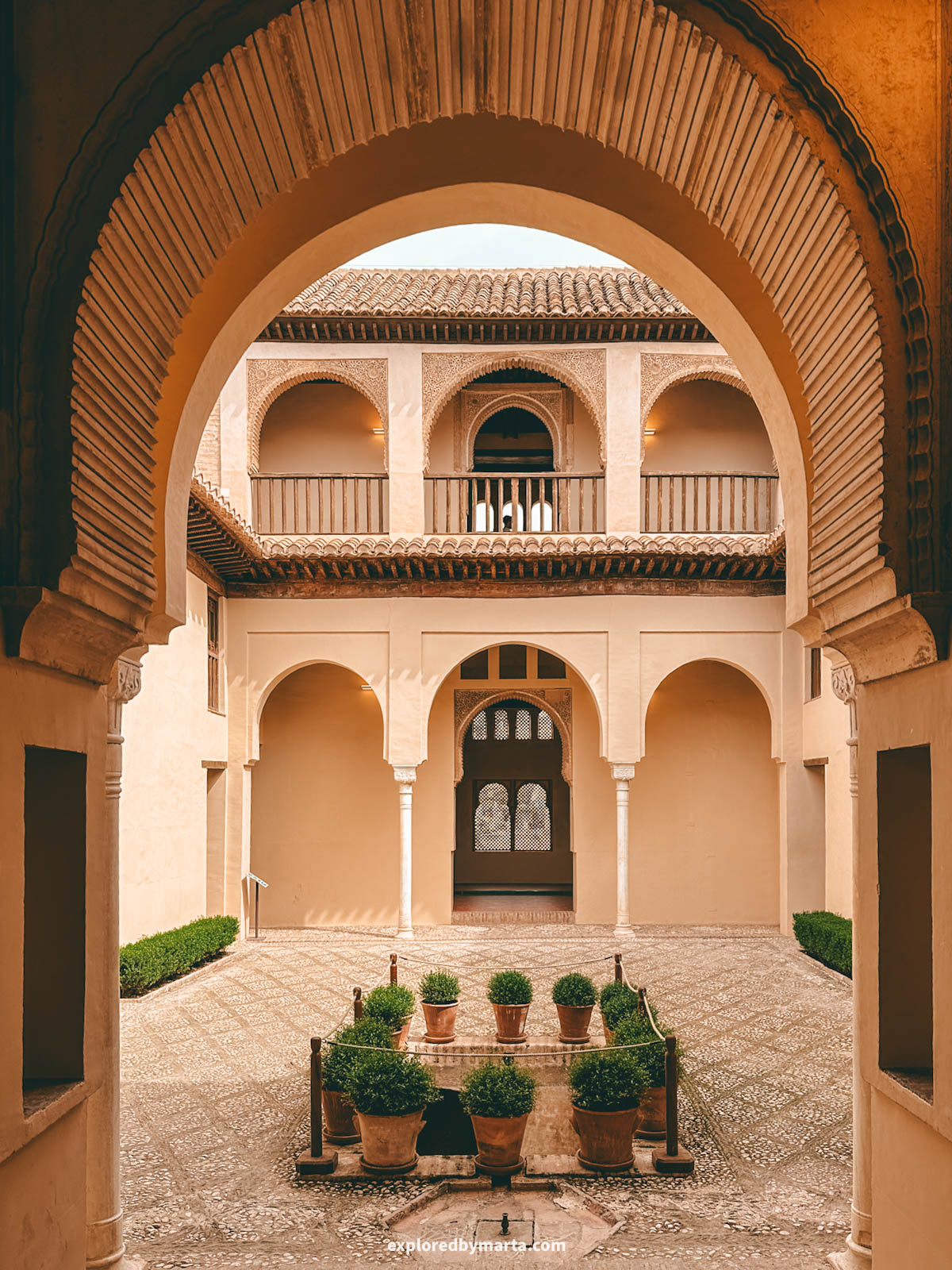
Tucked into the upper part of the Albaicín, Palacio Dar al-Horra is one of those truly hidden gems in Granada that most travelers walk right past. And honestly, I don’t get why it is so overlooked, because it is beautiful. 🤩
This 15th-century Moorish palace was once the residence of Aixa, the mother of Boabdil, the very last Nasrid ruler of Granada. So yes, this was basically the home of a Nasrid queen, and the name “Dar al-Horra” translates as “House of the Honest Lady.”
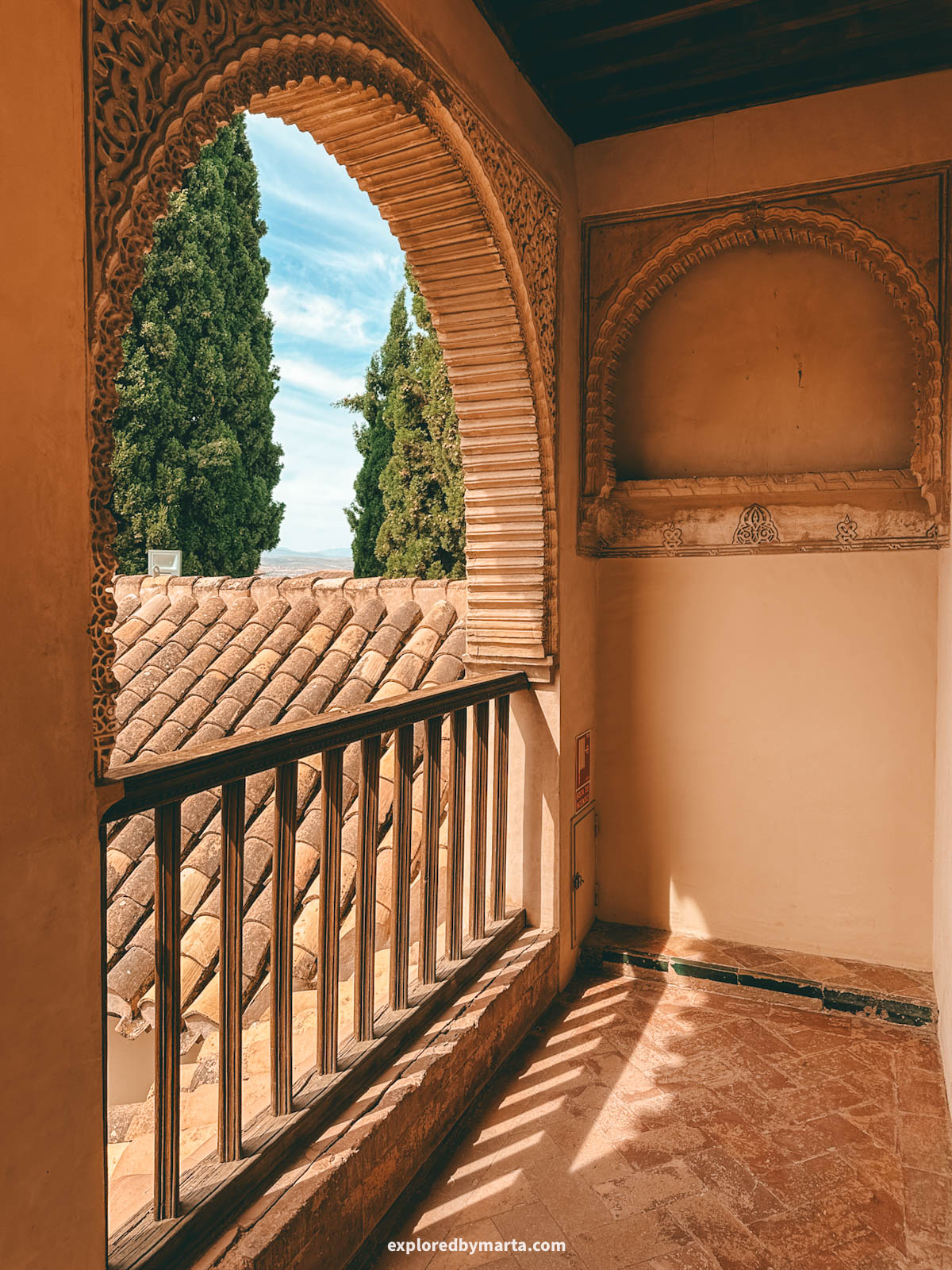
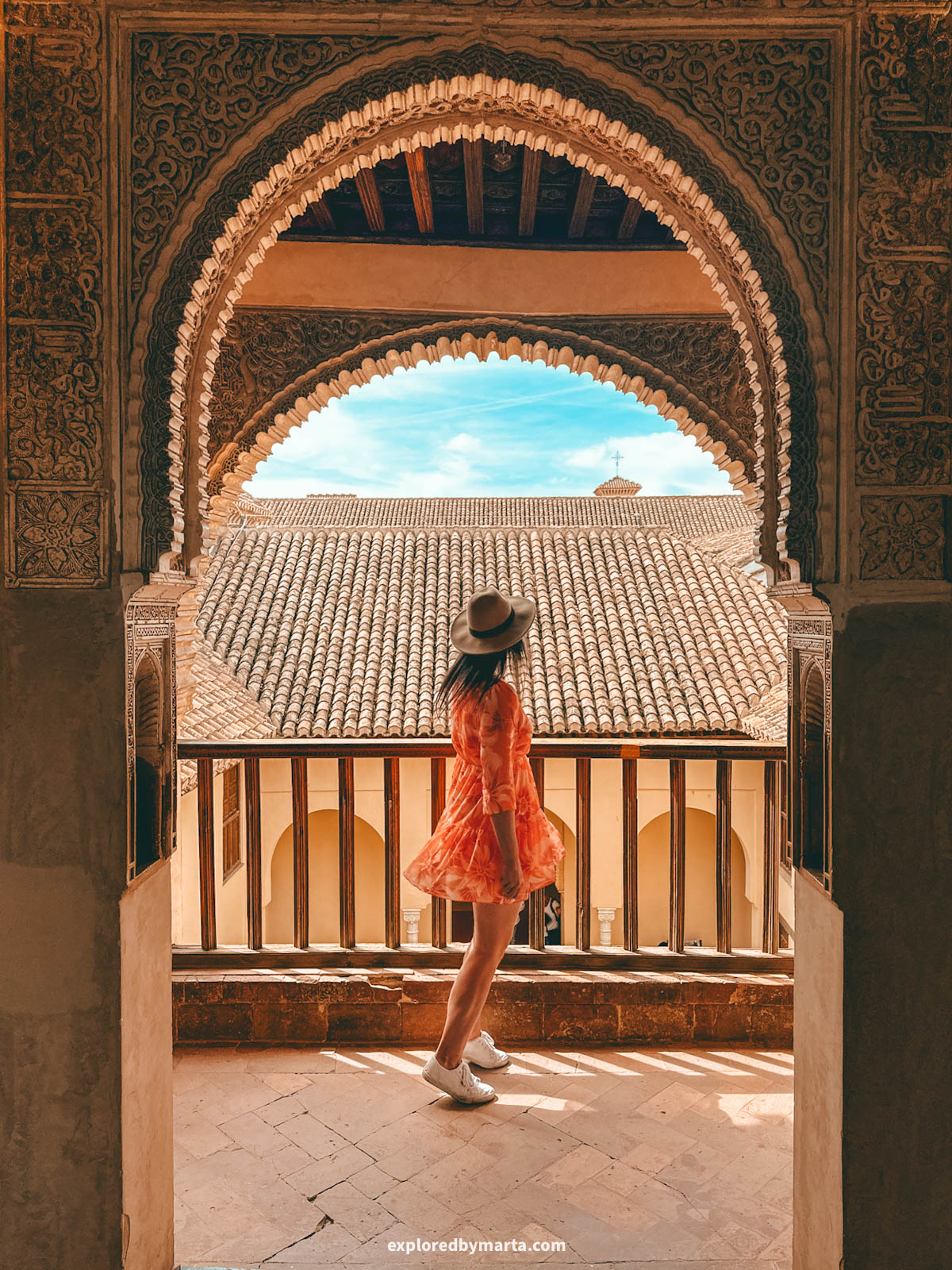
The palace was built in the typical Moorish style, with a rectangular patio surrounded by columns, ornate archways, carved details, and a quiet inner courtyard. It feels like a smaller, more intimate version of what you see in the Alhambra.
One of the best things about Palacio Dar al-Horra is the location. The palace sits on a hillside in the Albaicín, so you also get really scenic views over the rooftops of Granada from the windows and terraces.
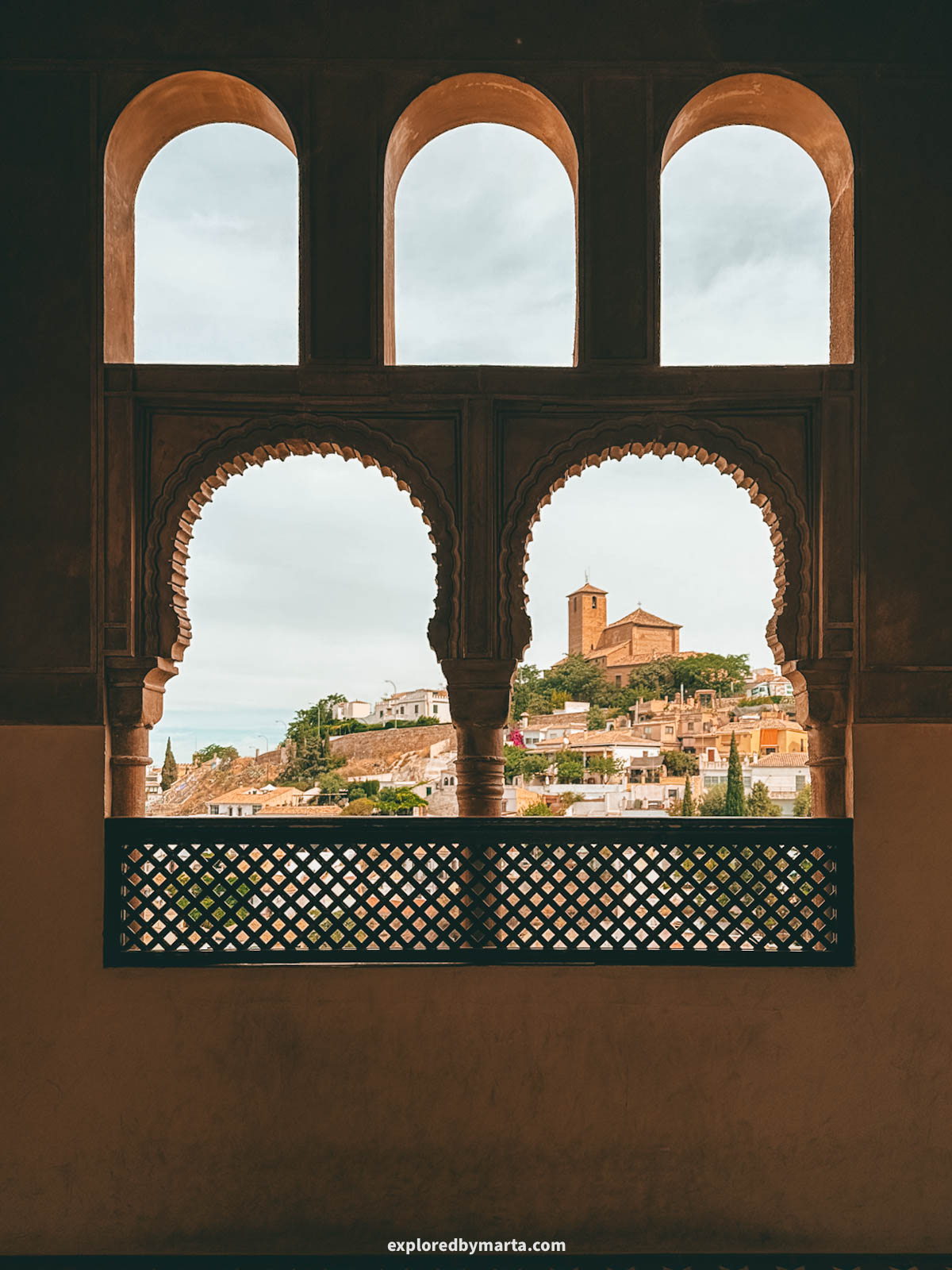
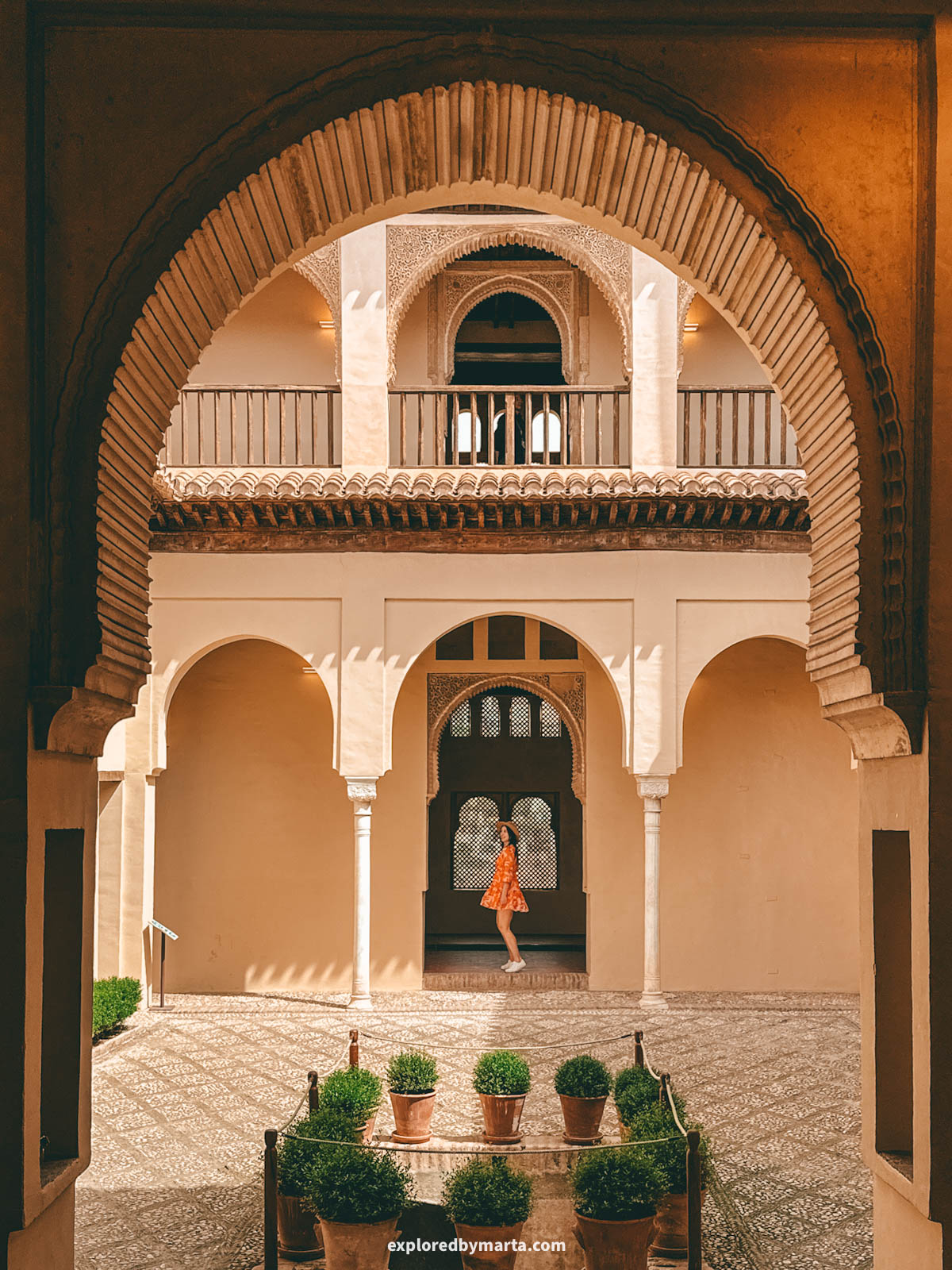
You can visit Palacio Dar al-Horra with a combined ticket that includes several other smaller Moorish monuments, like El Bañuelo and Casa Árabe de Horno del Oro. Or you can visit on Sundays for free, which is honestly a great deal.
The visit is short, around 30 minutes, but it is one of those quietly impressive places that adds so much depth to your Granada itinerary. If you love Moorish architecture, you will enjoy this one. Especially if you get to visit it for free on Sunday.
Location: Palacio Dar al-Horra
5. Silla del Moro, the sunset gem above the Alhambra
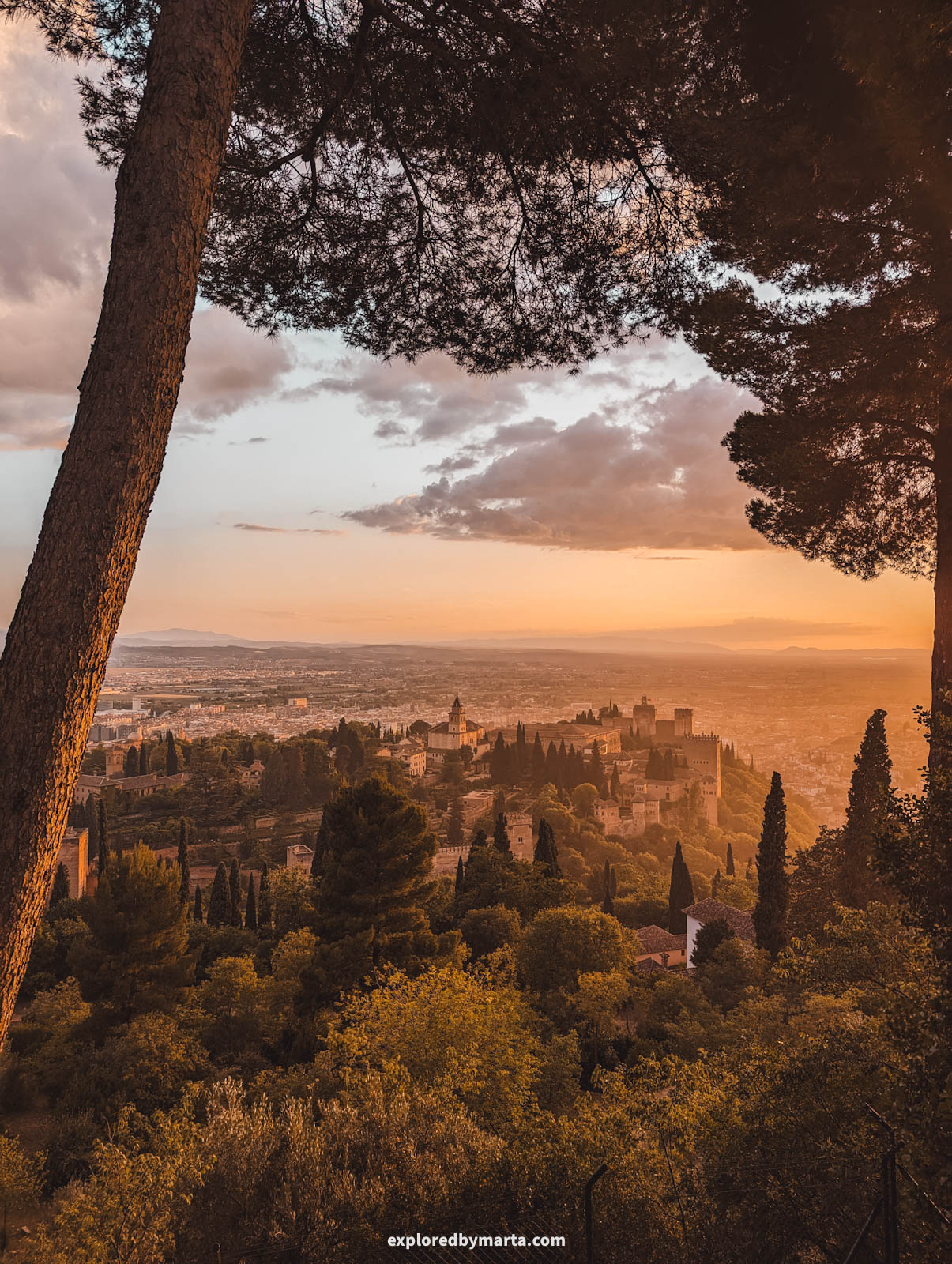
Most travelers head straight to Mirador de San Nicolás for the famous Alhambra view. And yes, it is beautiful, but it gets really crowded, especially at sunset.
If you want a quieter alternative with arguably an even more dramatic view, head up to Silla del Moro (also known as Saint Helen’s Castle).
Silla del Moro is a 13th-century castle ruin sitting on a hill behind the Alhambra. The name literally translates as “the Moor’s chair”.
The walk up here is uphill and takes some effort, but the views are completely worth it. From the ruins, you get an amazing perspective of the Alhambra below you, the Albaicín neighborhood across the valley, and the Sierra Nevada mountains in the distance.
It is honestly one of the best viewpoints in Granada. And the best part? Almost no one comes here (probably because you have to walk uphill!). We had the whole viewpoint mostly to ourselves while Mirador de San Nicolás was probably overpacked at the same time.
To get to Silla del Moro, you can hike up from the Alhambra area or from Cuesta del Rey Chico. The path is not technically hard, but it is a steady uphill, so be prepared. And give yourself enough time to be up there before sunset.
Location: Silla del Moro
6. Mirador de Tato, an easier alternative viewpoint
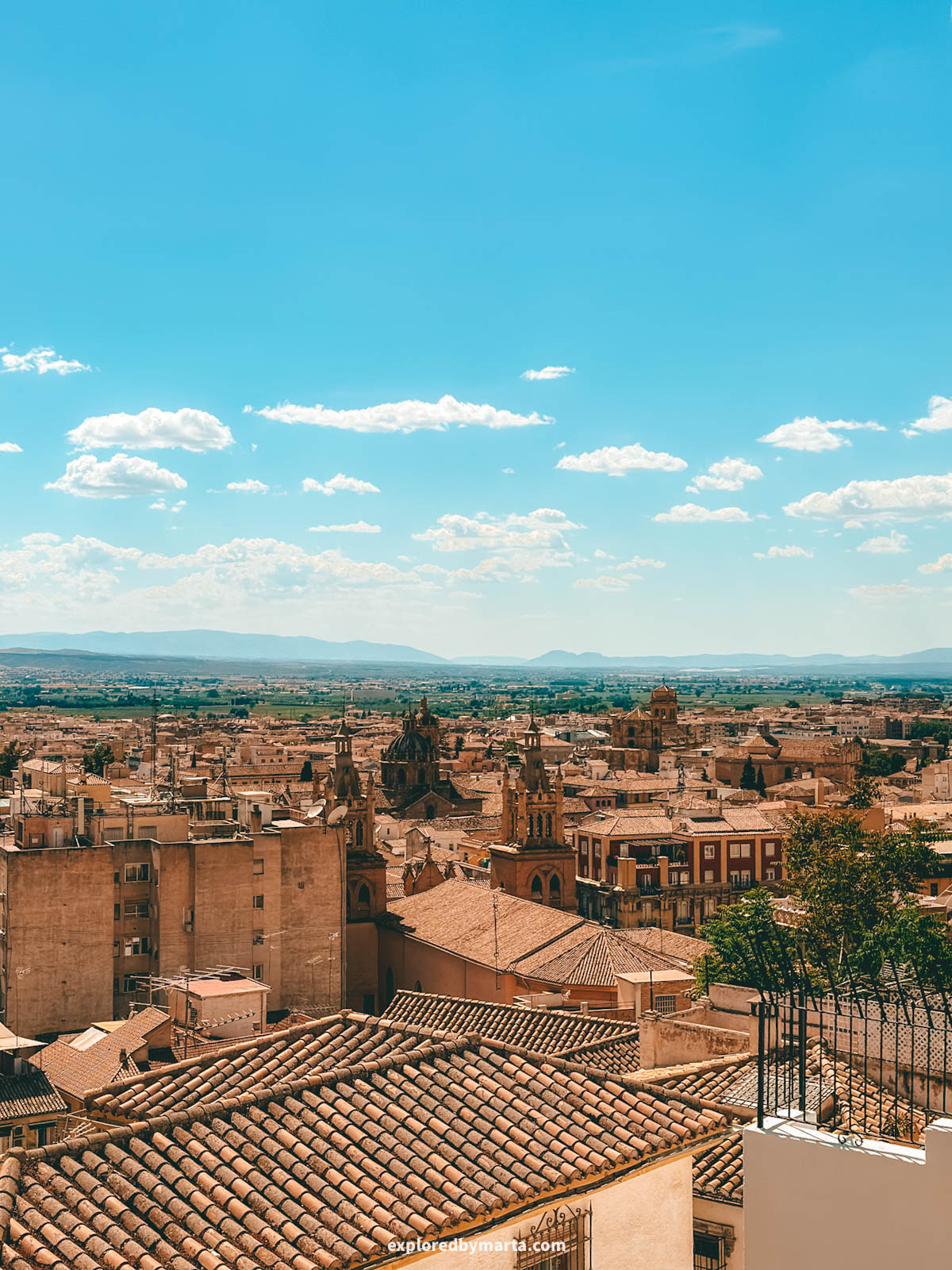
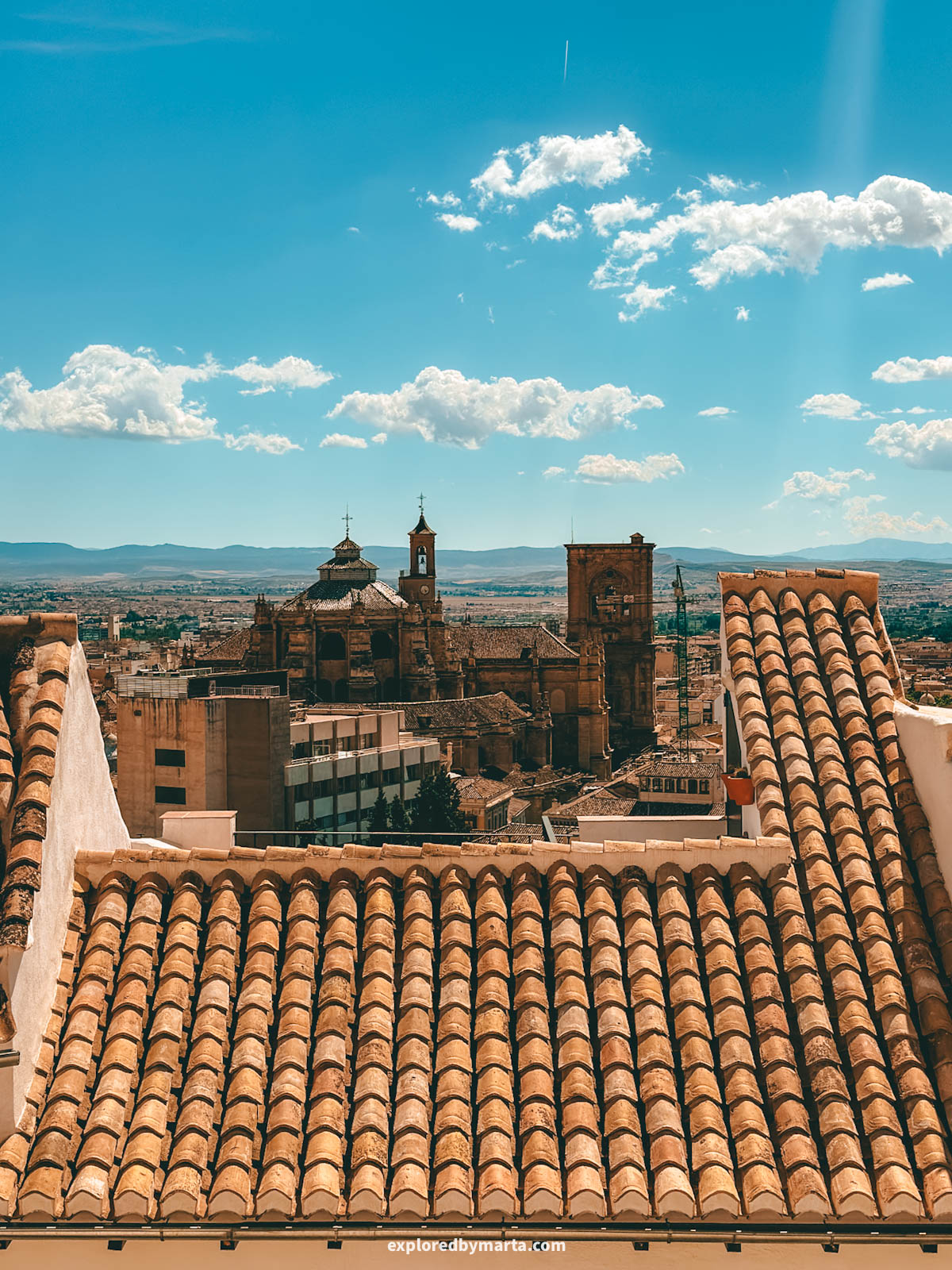
If Silla del Moro sounds like too much uphill effort, here is a much easier alternative. Mirador de Tato is a smaller viewpoint located on Plaza Maria Santisima de la Aurora in Granada, and it is one of those underrated spots that not many travelers know about.
The viewpoint sits on a quiet square, and right next to it there is a really nice restaurant of the same name where you can enjoy a meal on the terrace while taking in the views. Honestly, this is one of those places where sitting down with a drink and a view feels like the right move. 😄
The vibe there is super relaxed and noticeably less crowded than the more famous Mirador de San Nicolás.
One thing to know – you can’t really see the Alhambra from Mirador de Tato. So if your main goal is the iconic Alhambra view, this is not the right spot for that. But if you want a peaceful place to enjoy city views without crowds, this is a great pick.
Location: El Mirador de Tato
7. Palace of Charles V inside the Alhambra
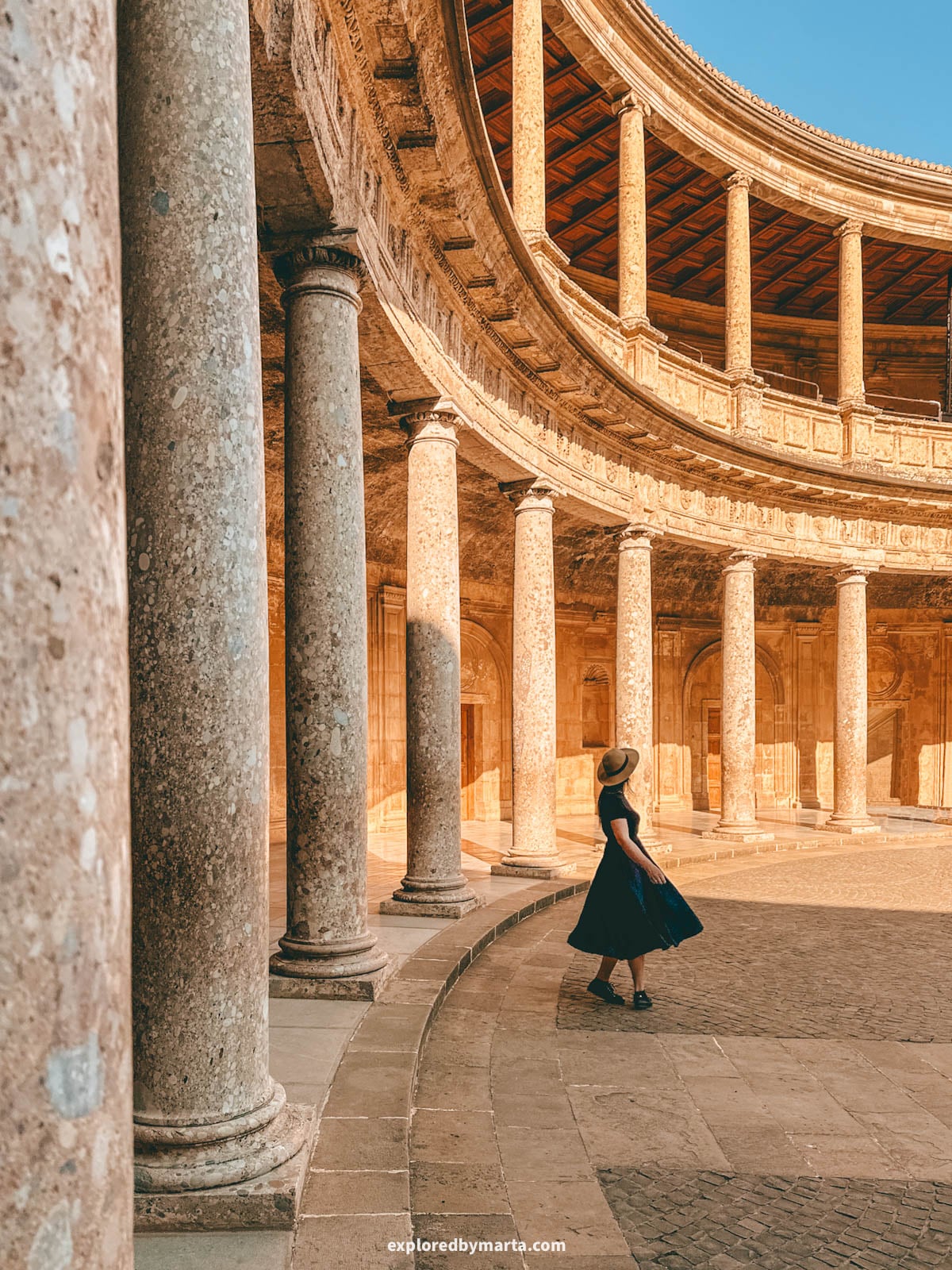
Here is something many travelers don’t realize – you can actually visit part of the Alhambra for free! And no, I’m not joking.
The Palace of Charles V sits right inside the Alhambra complex, but you don’t need a paid Alhambra ticket to step into its courtyard.
This is especially useful if Alhambra tickets are sold out (which happens a lot, learn from my mistake!) or if you just want a quick taste of the complex without committing to the full visit.
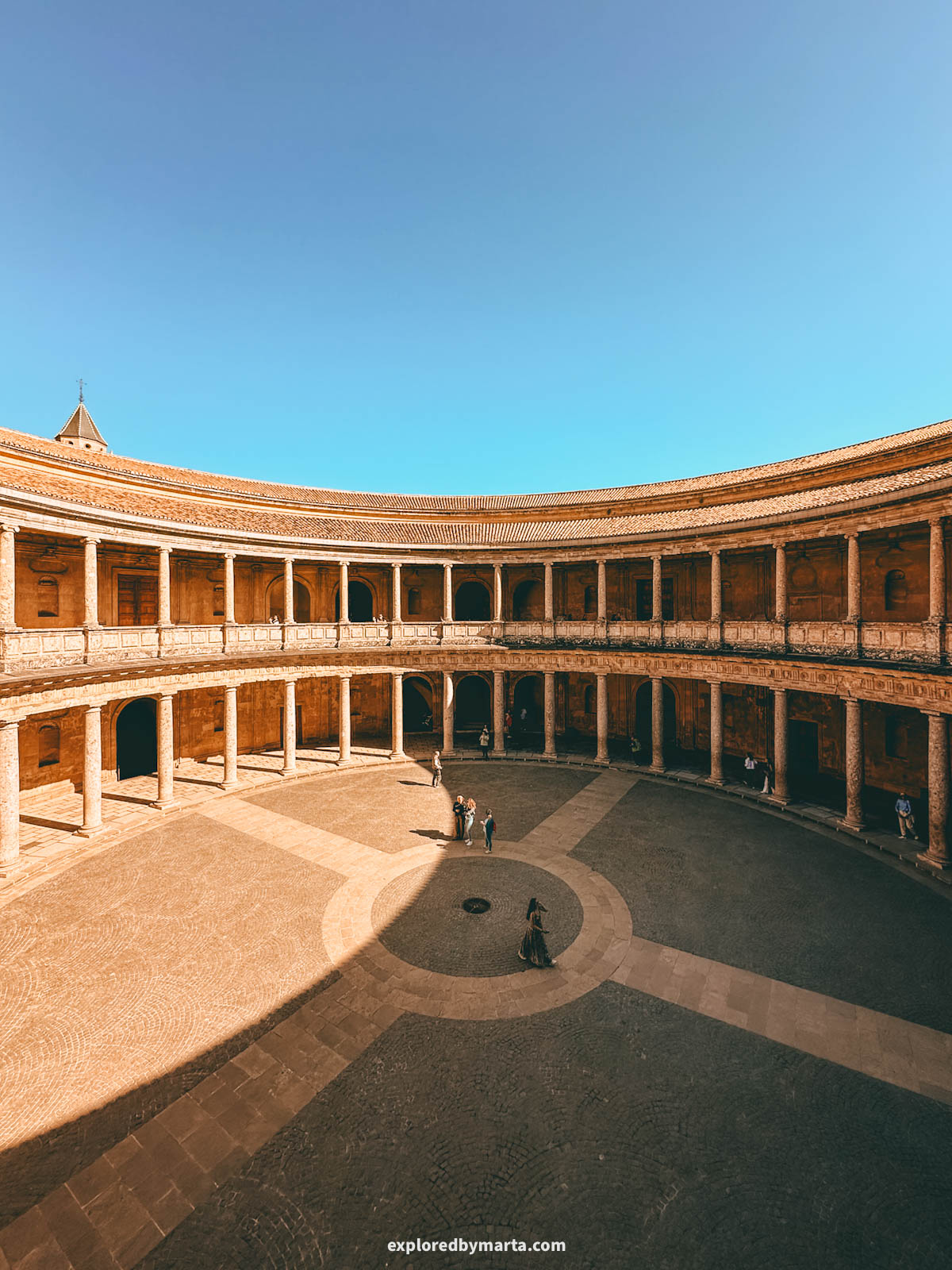
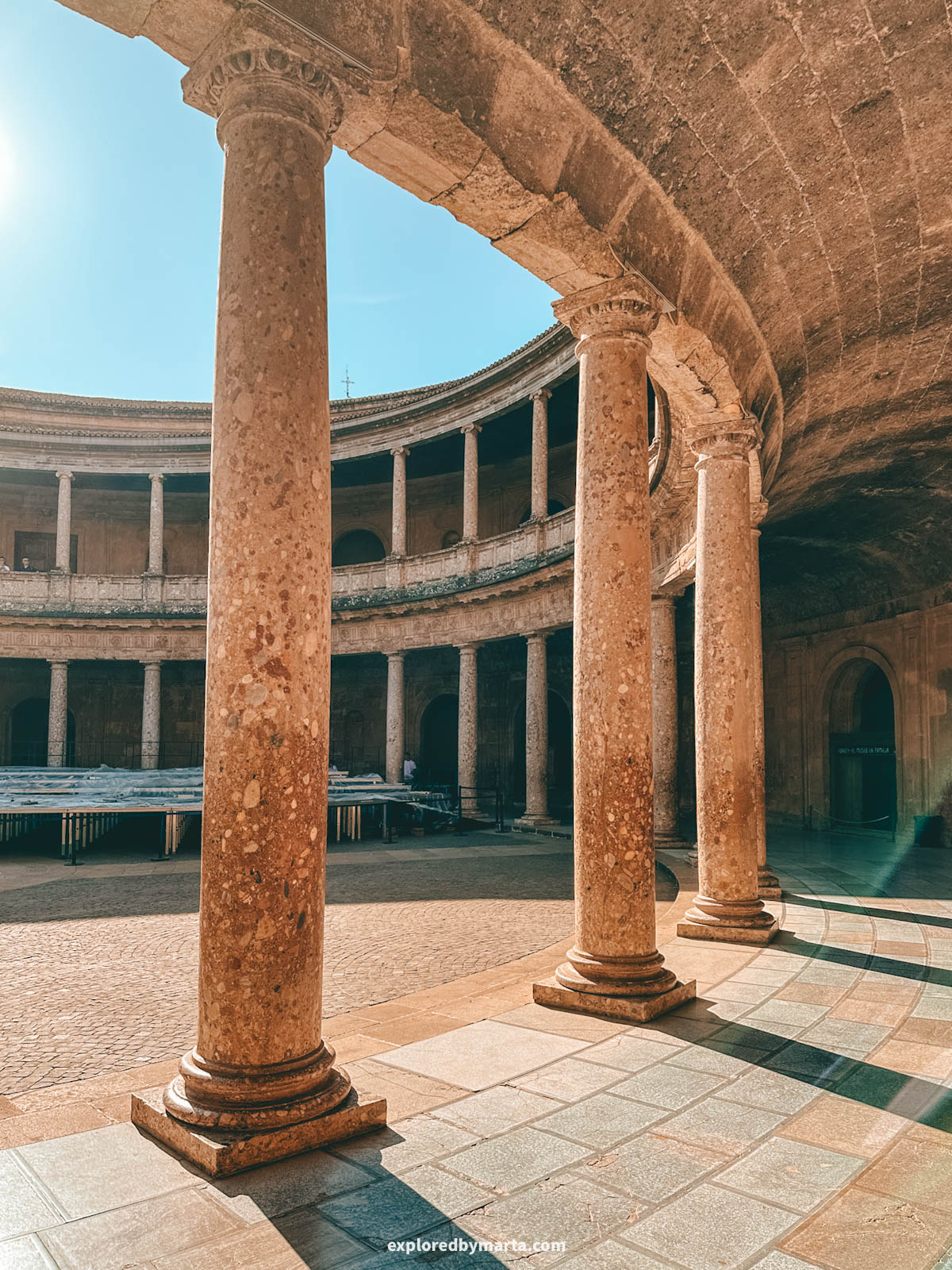
The Palace of Charles V was ordered by King Charles V in the 16th century, after the Christian conquest of Granada. Building a Renaissance palace right inside the former Muslim royal city was definitely a power move.
The inside is what makes it really cool. The courtyard is completely circular, surrounded by two levels of columns, and it is actually the first circular courtyard ever built in a European royal palace.
Pretty wild detail for a place most travelers walk past!
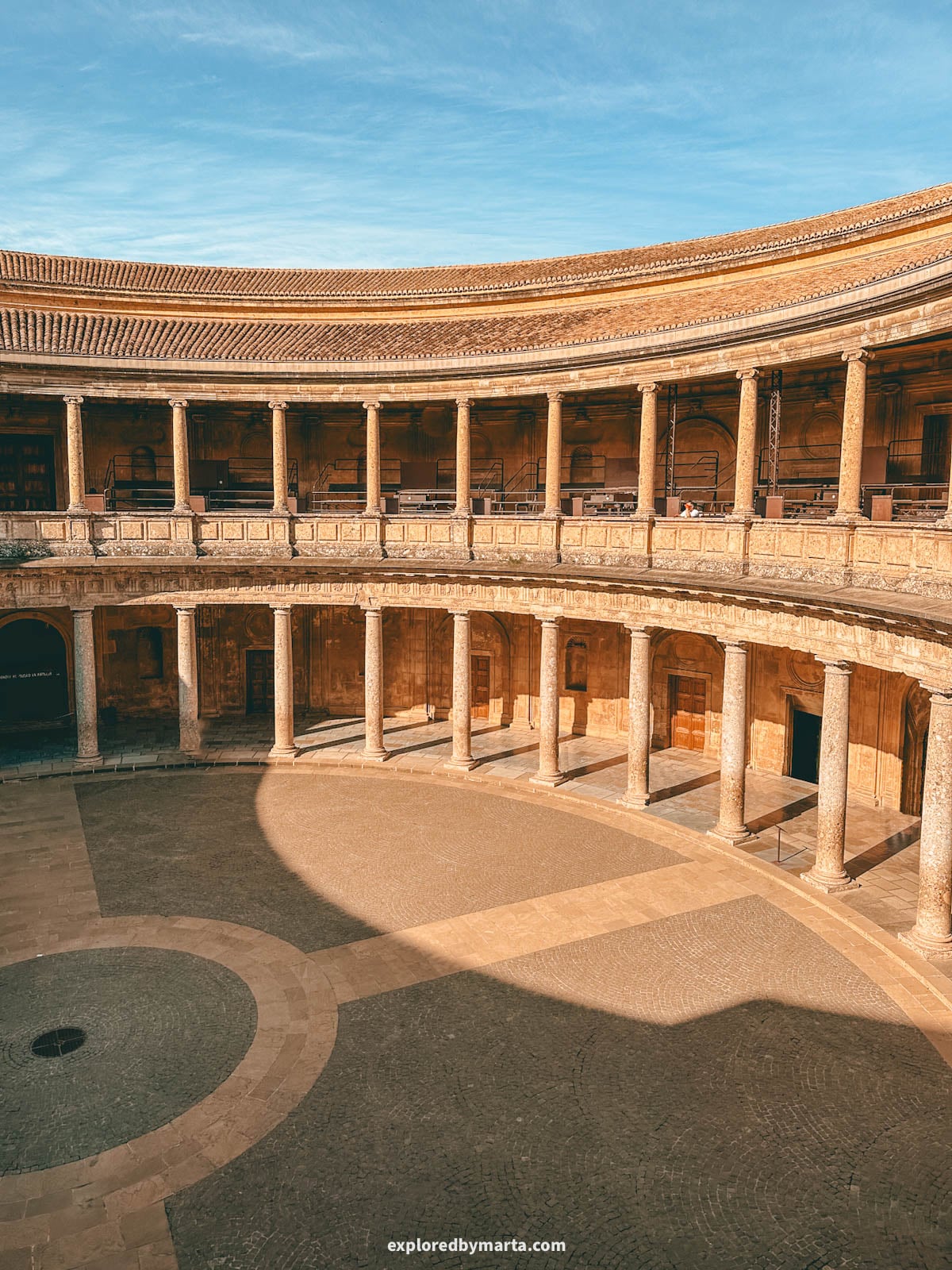
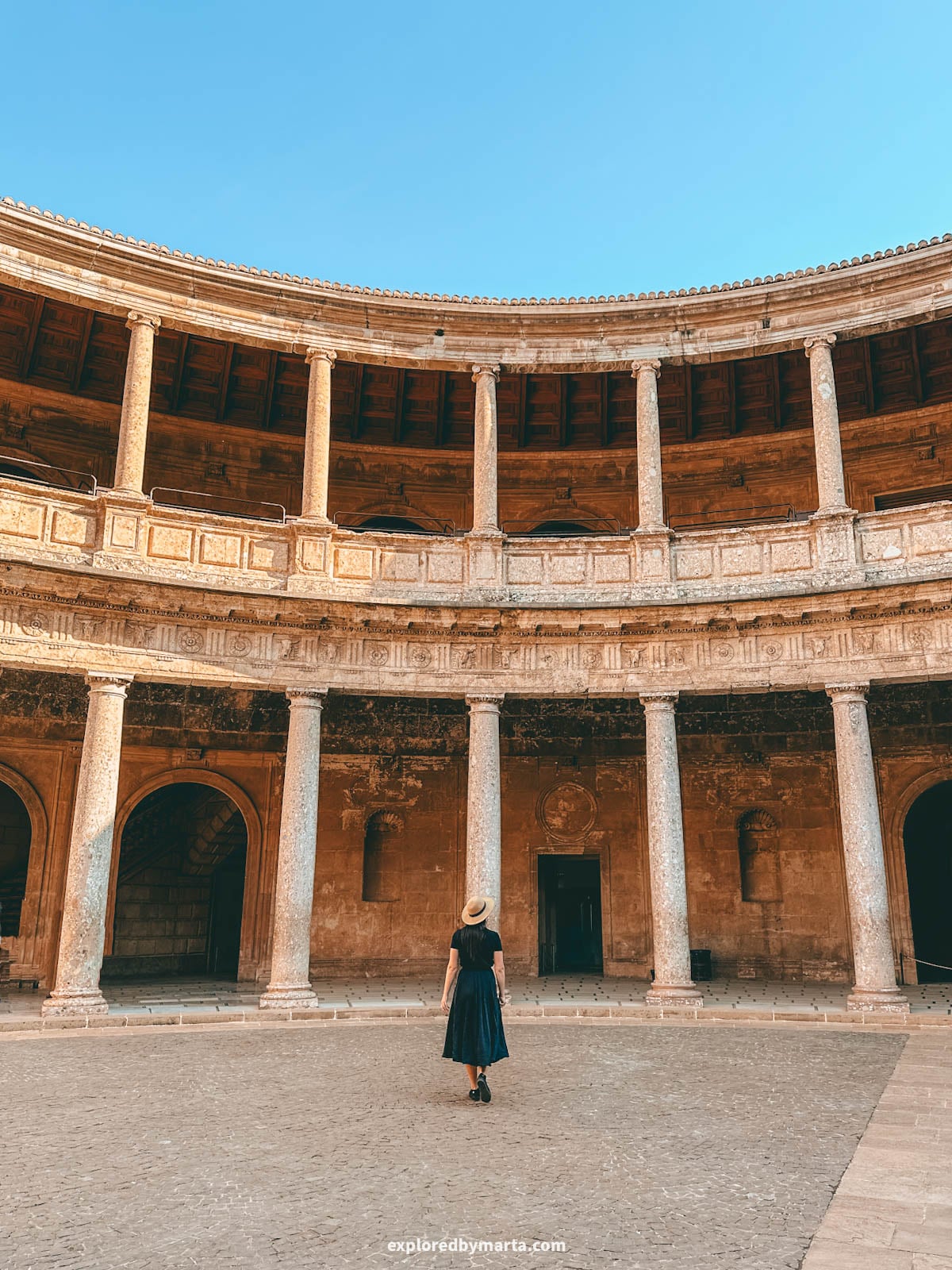
The contrast is honestly fascinating – one minute you can be looking at Nasrid arches, and the next you’re inside this massive Roman-inspired courtyard. Granada really said, “why choose one style?” 😅
We really enjoyed visiting the palace! With all the beautiful columns surrounding the circular courtyard, it is also one of the most photogenic places in Granada.
You don’t need a lot of time here. About 10 to 20 minutes is enough unless you also want to visit the small museums inside. It is also located right next to the Nasrid Palaces entrance, so it is super easy to combine if you are visiting the rest of the Alhambra too.
Location: Palace of Charles V
8. Granada’s unique carmen gardens
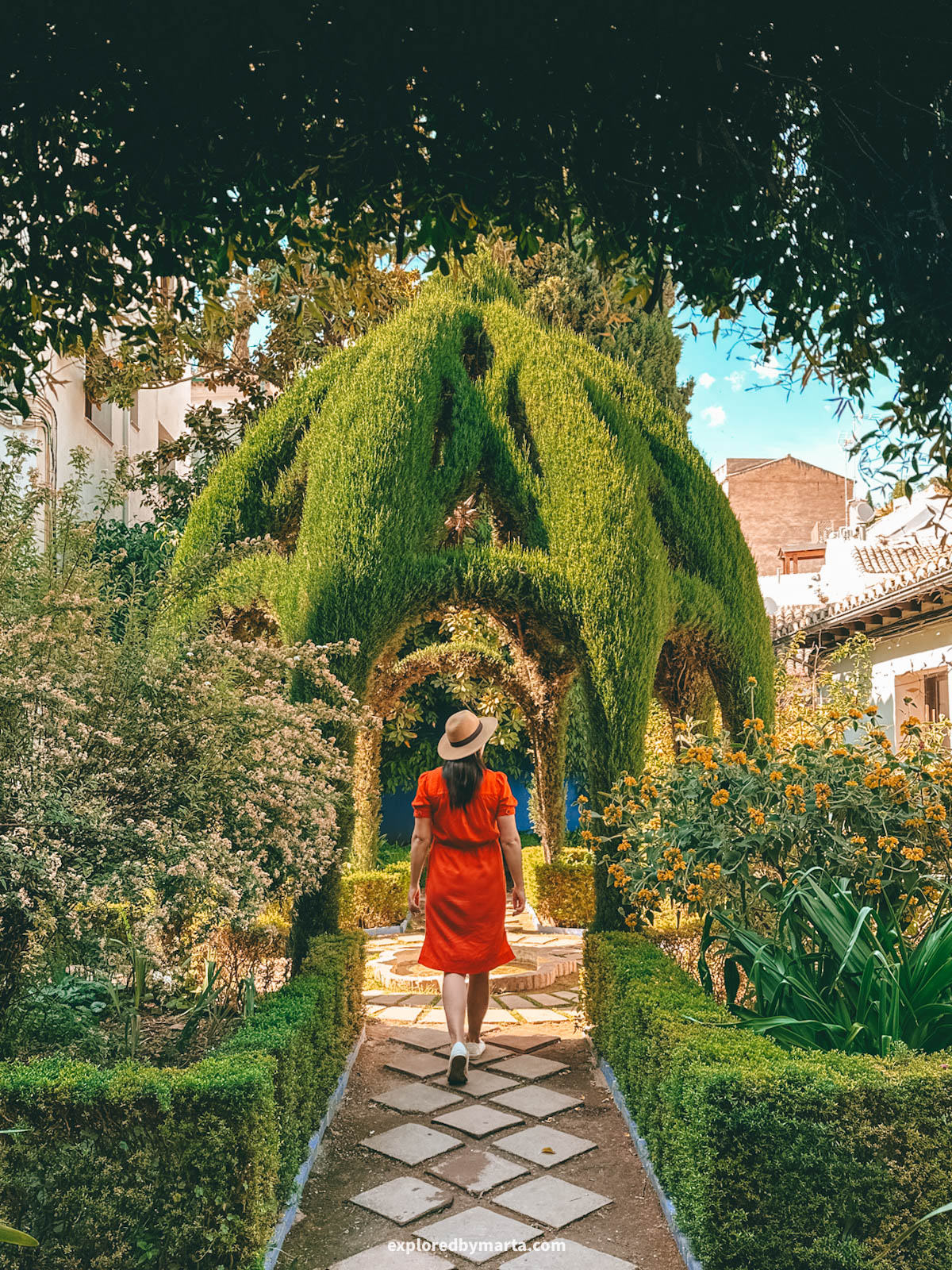
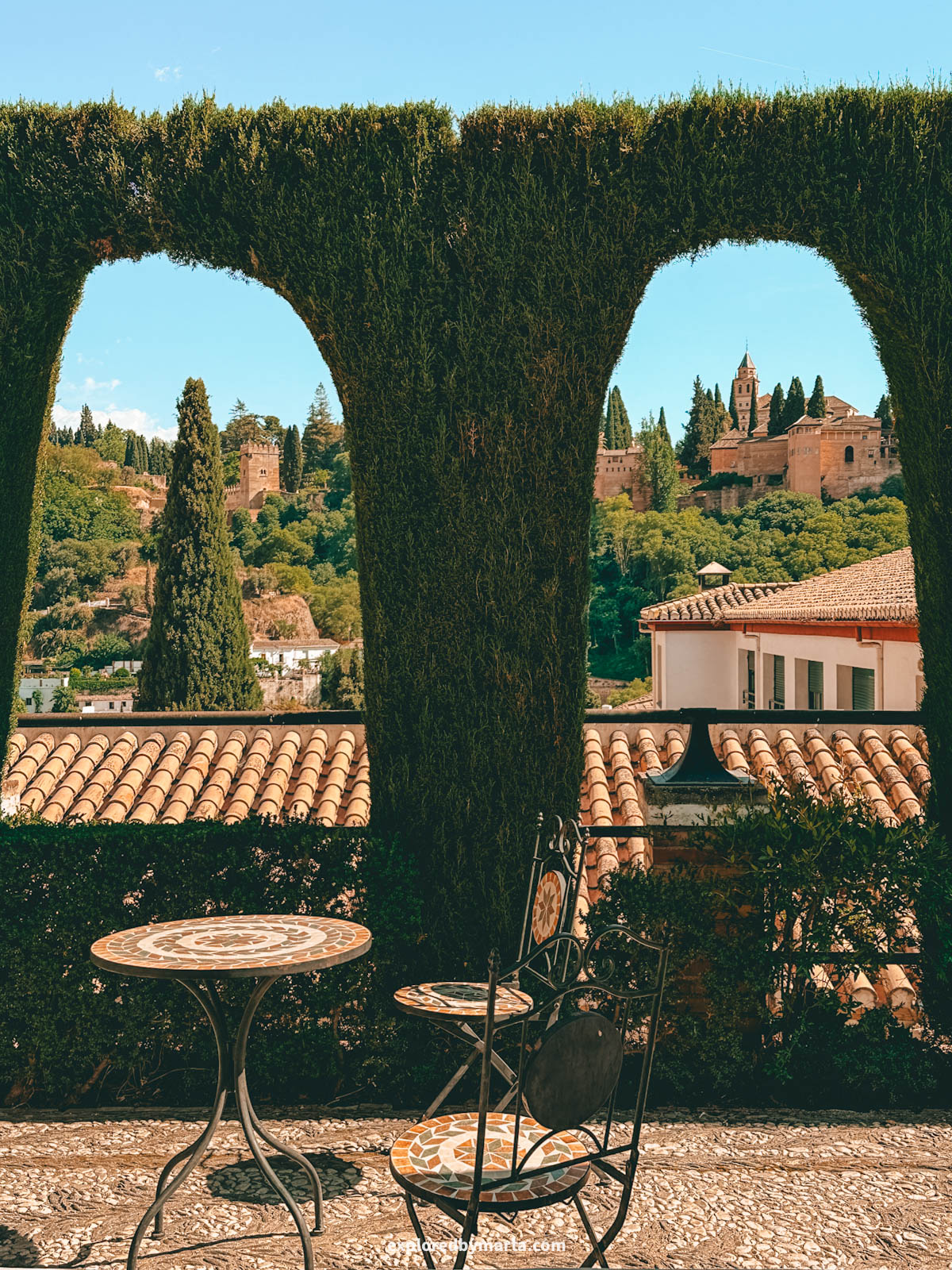
One of the most unique things about Granada is the idea of a carmen garden. And no, in this case, Carmen is not a woman’s name, haha.
A carmen in Granada is a traditional house with a private walled garden. The word comes from the Arabic karm, meaning vines or vineyard, and these places were designed as little green escapes inside the city, away from the busy streets.
What makes carmen gardens so special is the surprise factor. From the outside, you might just see a wall or a gate, but behind it, there can be fountains, fruit trees, flowers, pathways, shaded corners, and amazing views of the Alhambra.
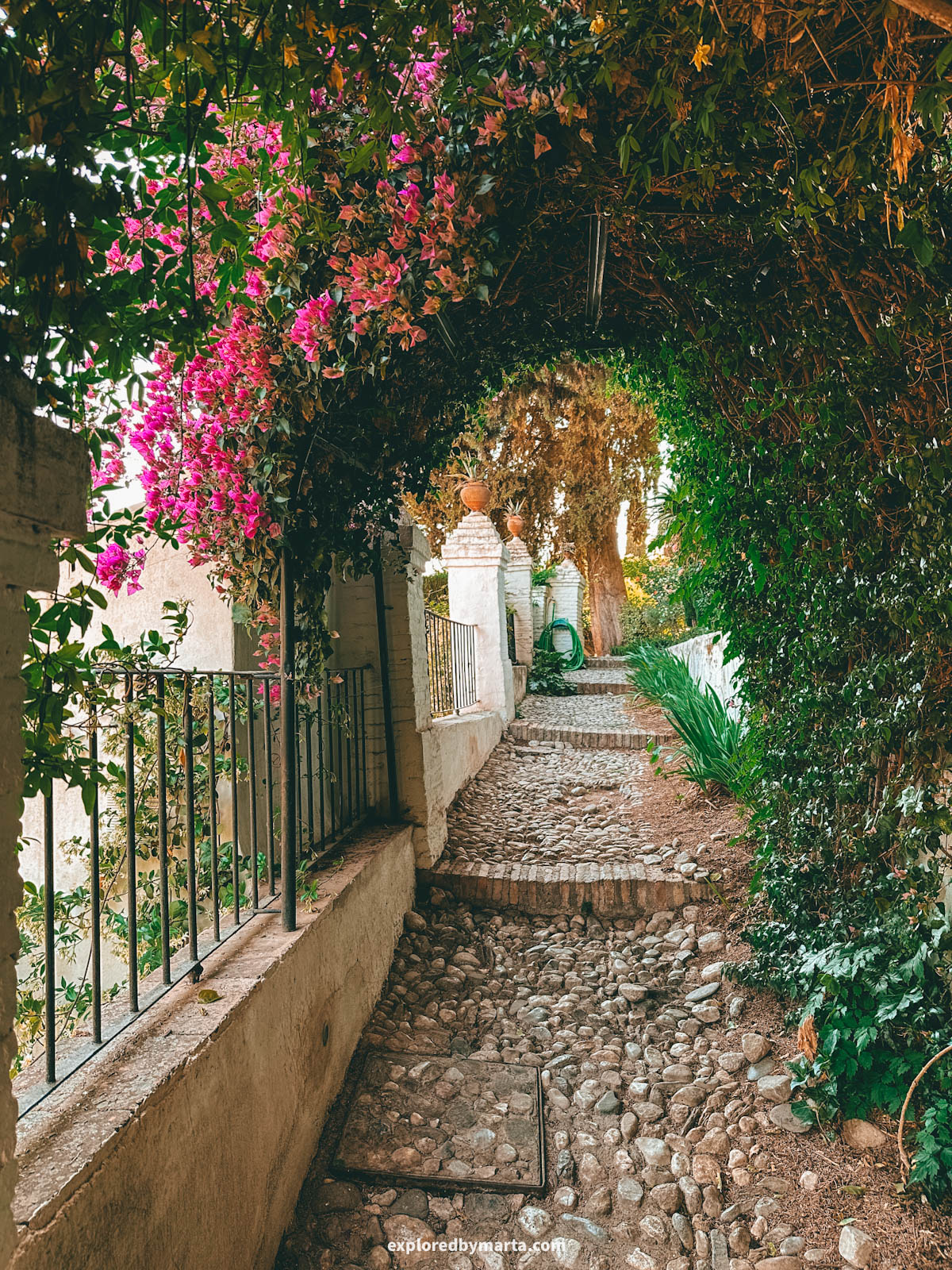
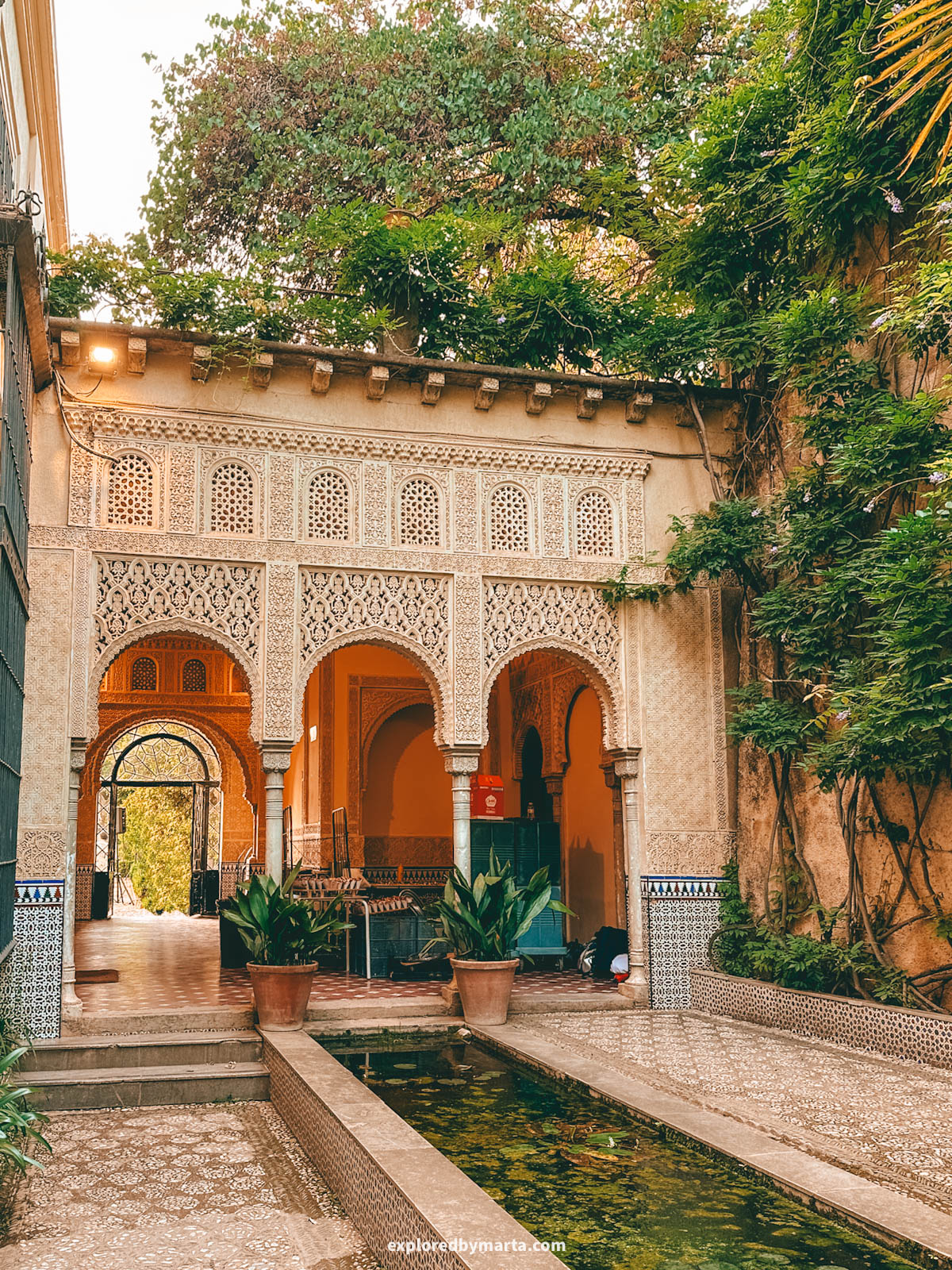
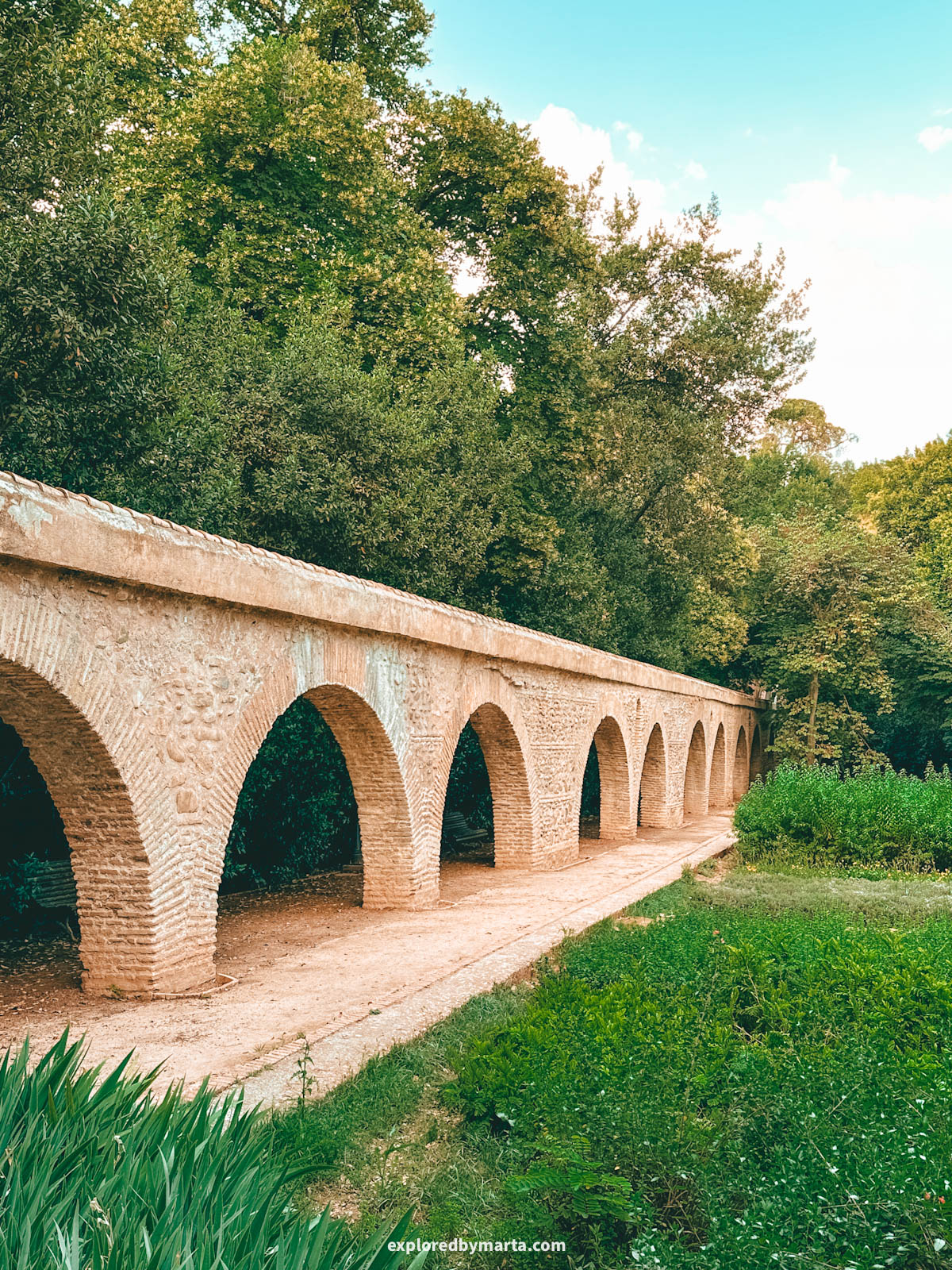
We visited two carmen gardens in Granada – Carmen de la Victoria and Carmen de los Mártires. Both are free to visit during opening hours, and both are great if you need a slower break between all the palaces, churches, and uphill walking.
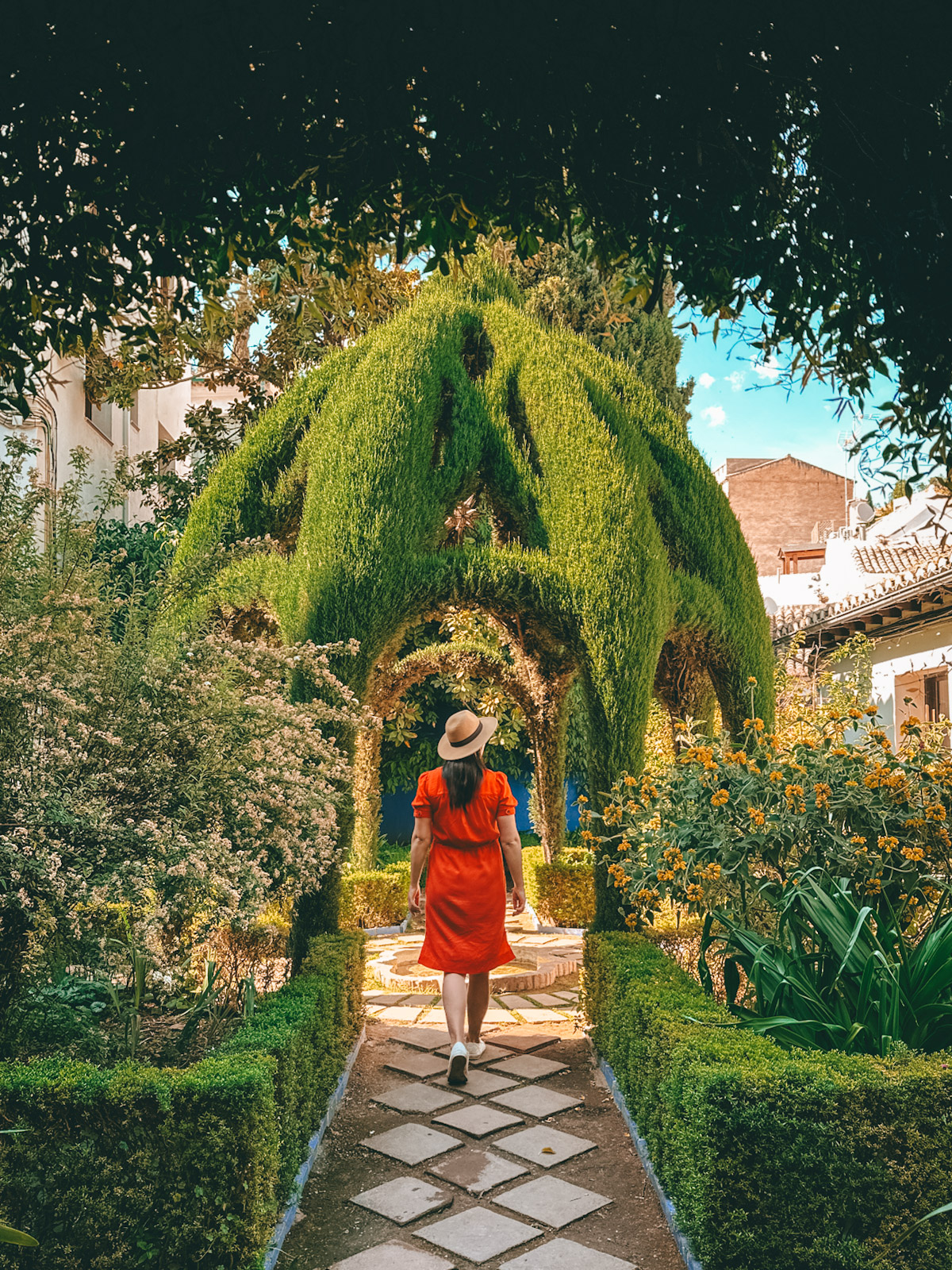
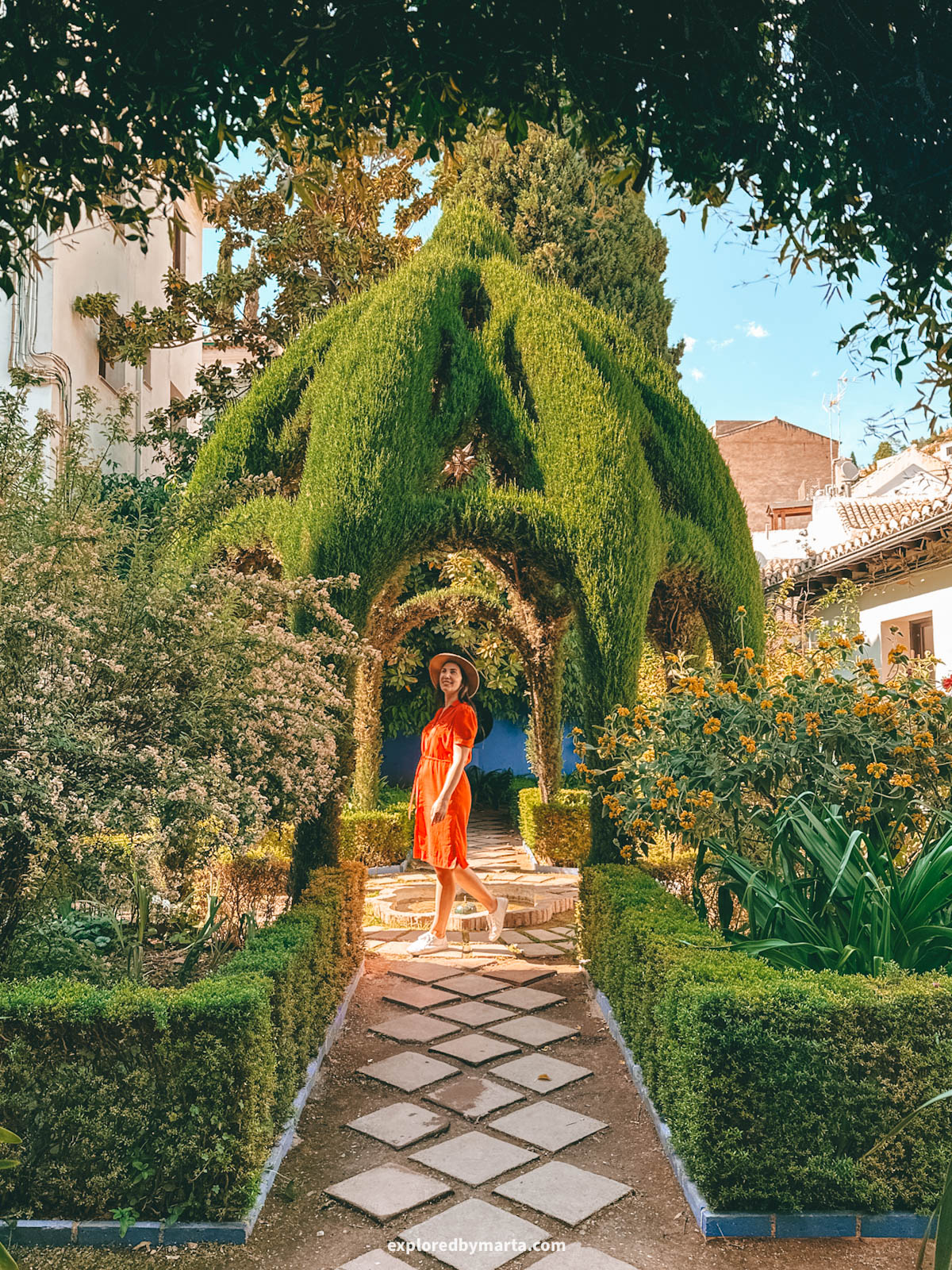
Carmen de la Victoria, with the uniquely shaped trees, was my favorite. It is part of the University of Granada complex and sits near the Albaicín, with beautiful views toward the Alhambra.
This beautiful garden is not big, but it feels intimate and peaceful, with fountains, trimmed trees, flowers, and little pathways.
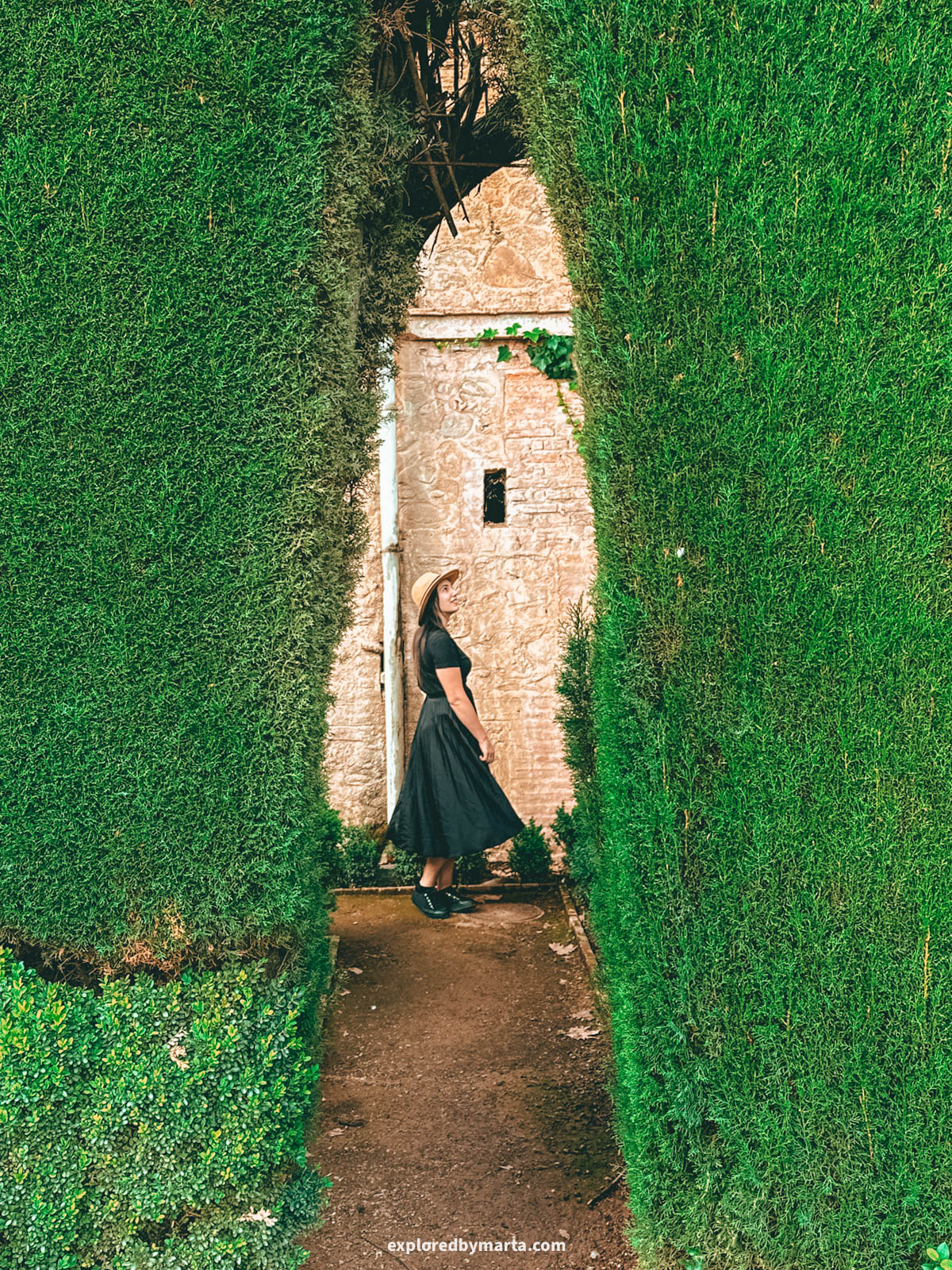
To visit Carmen de la Victoria, you need to book a free appointment online. It is not the most visited place in Granada, so you don’t need to book weeks ahead. Just make sure you have a reservation before you go.
Carmen de los Mártires is much larger and sits closer to the Alhambra area. This one feels more like a big public garden, with ponds, statues, leafy paths, a small forest-like area, and even an aqueduct.
For me, Carmen de la Victoria felt more charming and special, but Carmen de los Mártires is better if you want a bigger garden walk or a quiet, but special place near the Alhambra. Honestly, I’d check them both out if you have time.
Location: Carmen de la Victoria – Carmen de los Mártires
9. Experience modern Arab baths at Hammam Al Ándalus
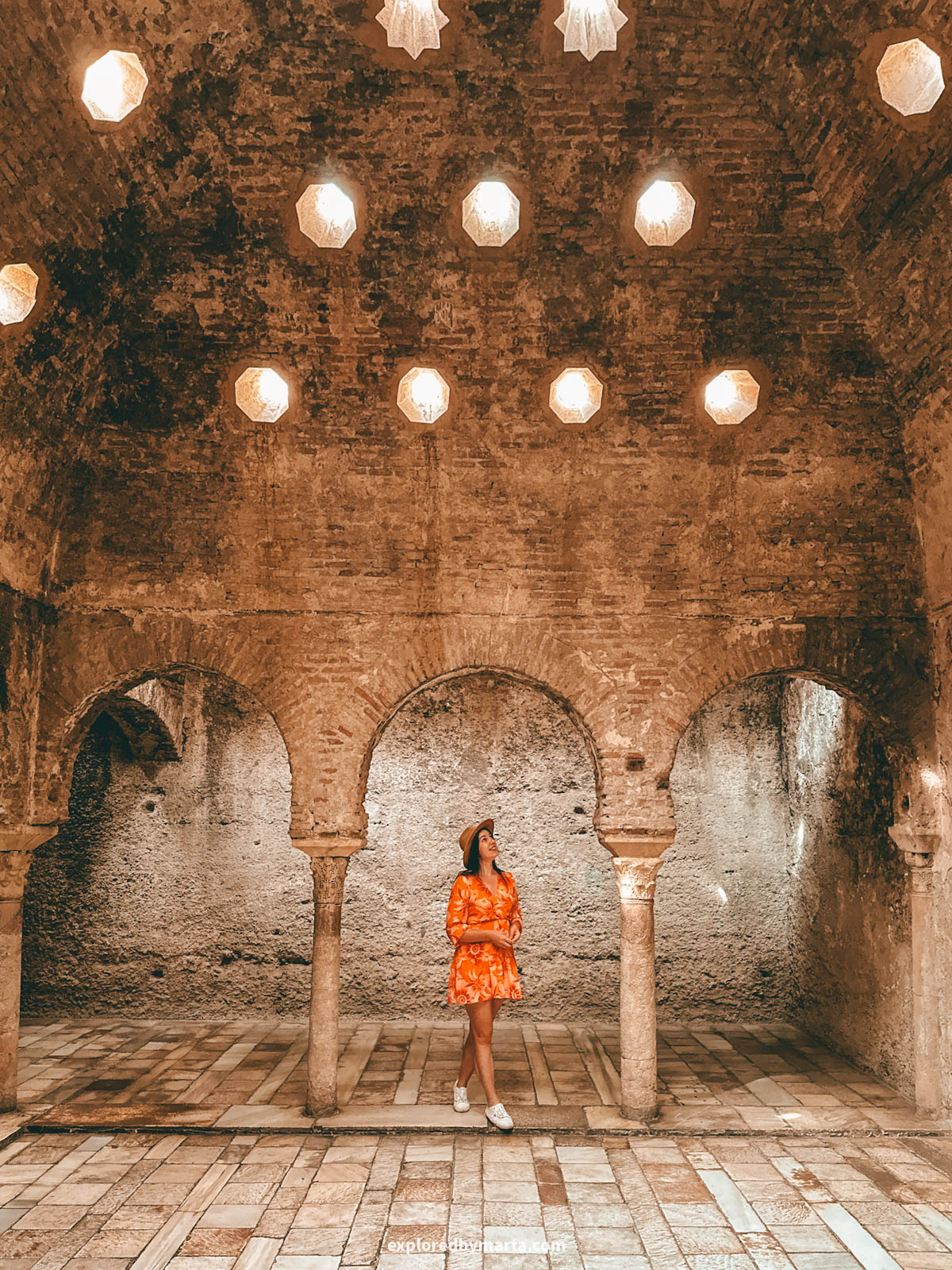
After visiting El Bañuelo, the historic 11th-century Arab Baths in Granada, you might find yourself thinking the same thing I did – “okay, but can I actually try this for real today?”
Good news, you can! Hammam Al Ándalus is a modern Arab bath experience in the heart of Granada that lets you enjoy the same kind of bathing ritual that locals practiced centuries ago. Warm pools, steam rooms, tea, and yes, optional massages.
The setting is gorgeous, with Moorish-style arches, lanterns, tiled details, and a calm, candlelit atmosphere. It feels like stepping into a different world, which is exactly the point after a long day of uphill walking around Granada.
This is honestly one of the most unique experiences you can have in the city, and it pairs really nicely with visiting the historic baths at El Bañuelo earlier in the day.
10. Casa Árabe de Horno del Oro, a small Moorish home
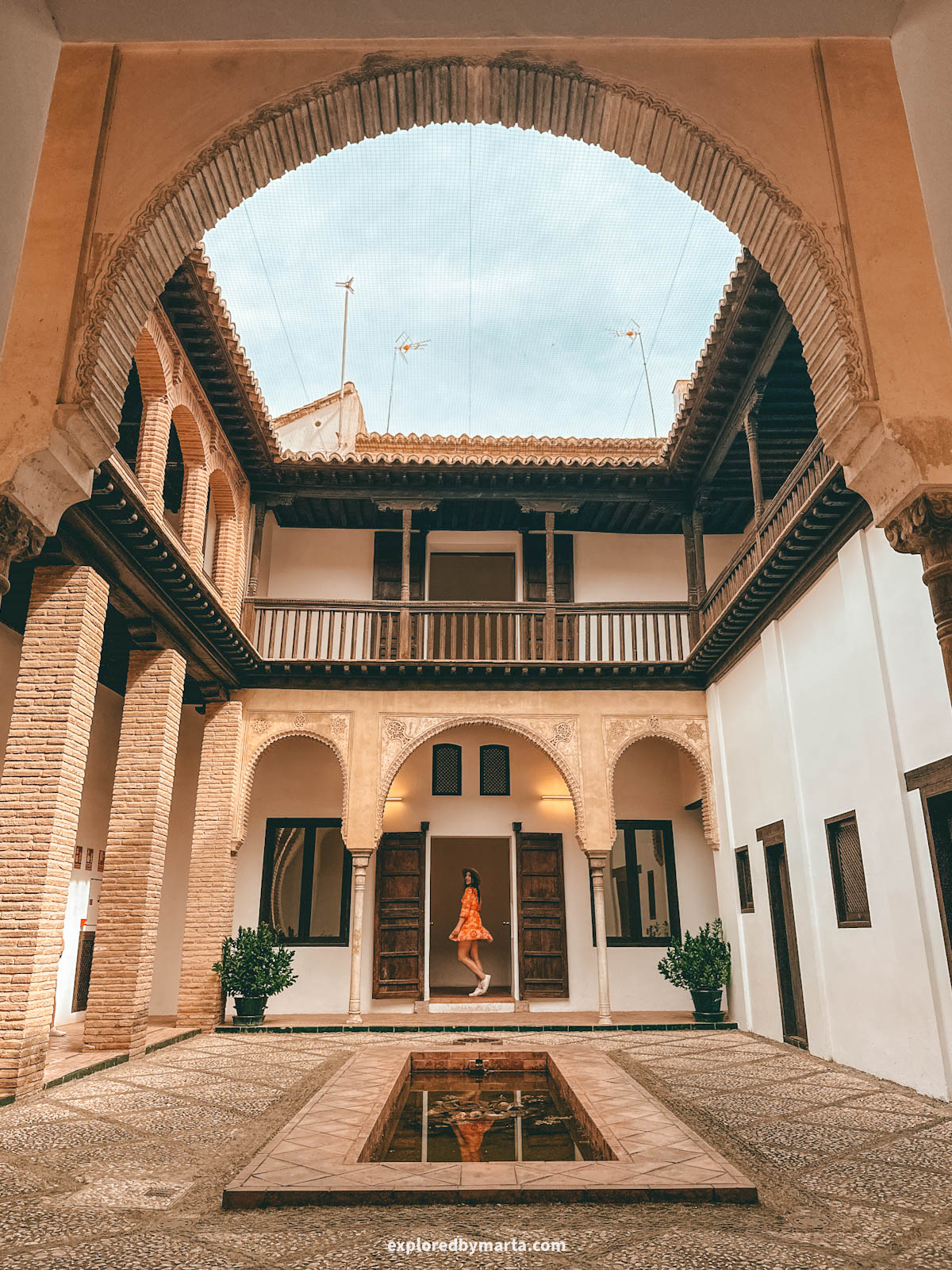
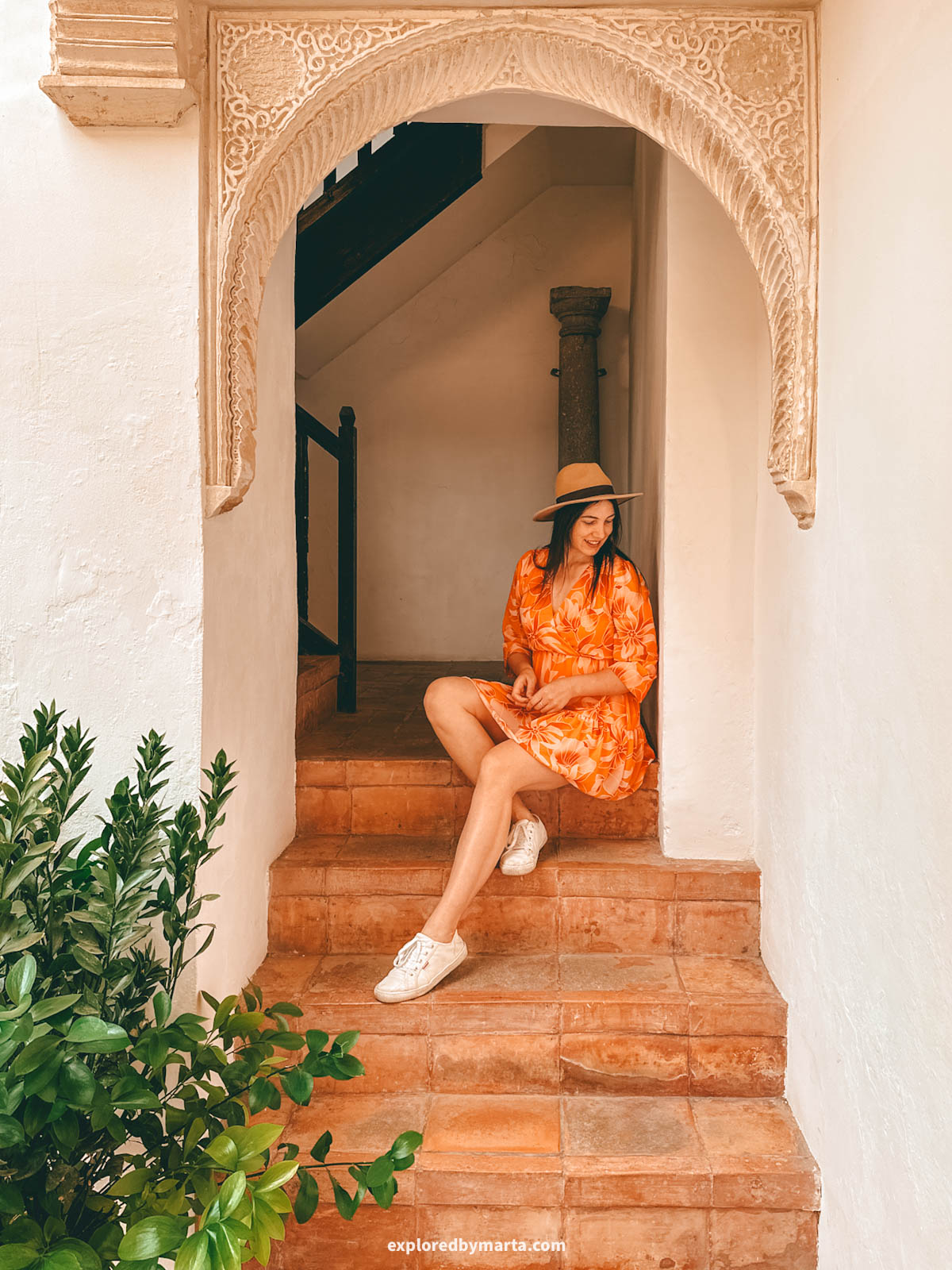
Tucked into the streets near Carrera del Darro, Casa Árabe de Horno del Oro is one of the smaller and lesser-known Moorish monuments in Granada. Most travelers walk right past it because there really is nothing on the outside that signals what is inside.
This is a small Nasrid-era house built in the typical Moorish architectural style. Originally, it only had one floor, but a second floor was added in the 16th century after the Christian conquest. The main thing to see here is the traditional courtyard with columns and arches.
I’ll be honest, this is the smallest and most modest stop on this list. Some ornaments are well-preserved, but it is not the kind of place that will blow you away. So if you are short on time in Granada, you can skip this one.
However, if you are visiting El Bañuelo and Palacio Dar al-Horra with the combined Moorish monuments ticket, Casa Árabe de Horno del Oro is included, and it is right on the way. So you might as well pop in for a quick visit. It is also free to visit on Sundays.
For me, this place was interesting because it shows how regular Nasrid families lived, not just the royals. It is a small but useful piece of the bigger Moorish picture in Granada.
Location: Casa Árabe de Horno del Oro
11. Montefrío, with the world’s most beautiful view
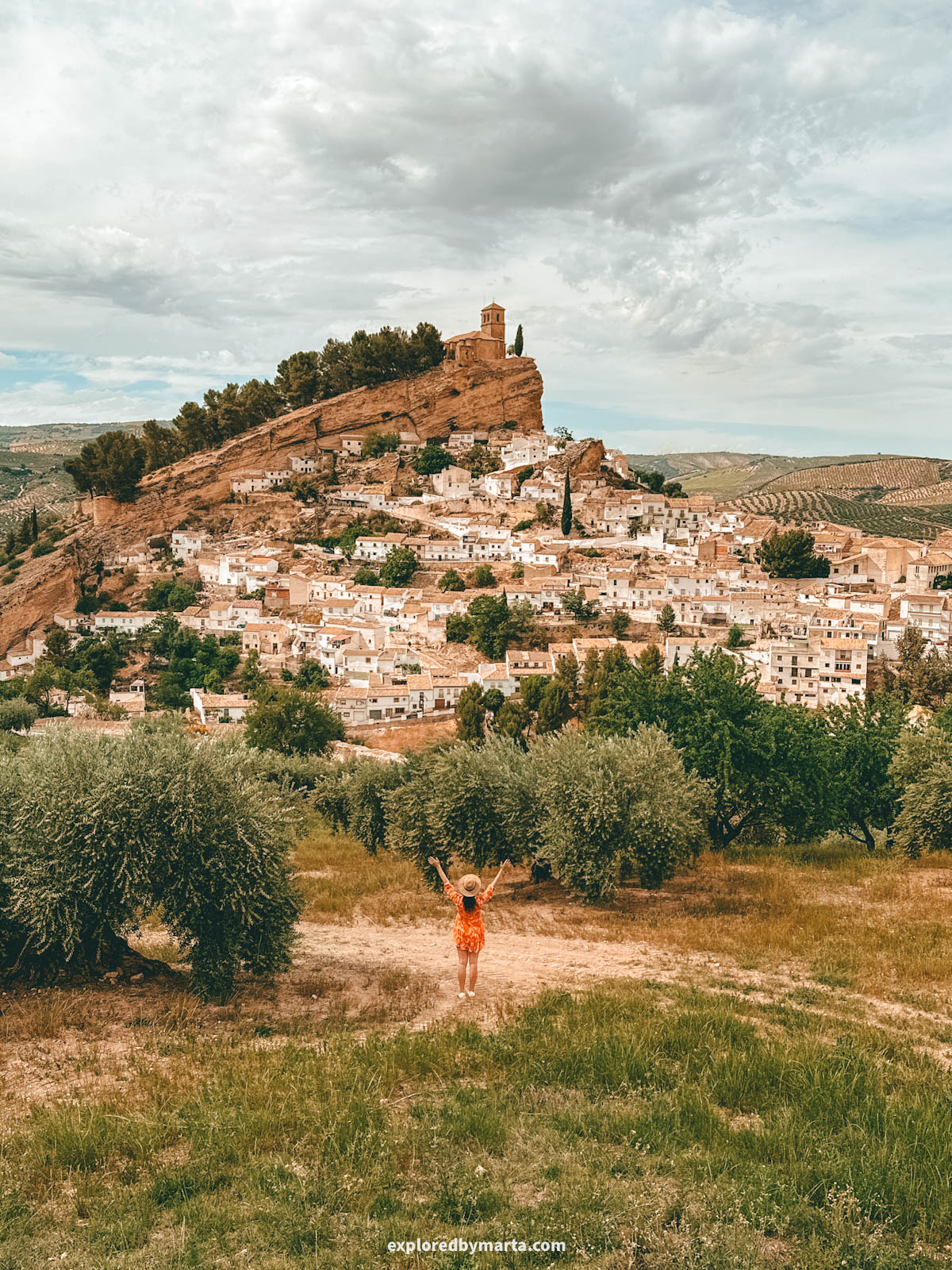
Now we’re moving into trips, and the first one is honestly one of the most unusual places you can visit from Granada – Montefrío, one of the most beautiful Pueblos Blancos in Andalusia.
This small whitewashed village sits about 50 km (31 miles) from Granada, around a 50-minute drive. And it has earned itself a pretty wild reputation. Did you know that National Geographic once named Montefrío one of the villages with the best views in the world?
Yes, that is a real thing. And when you actually stand at the viewpoint and look at the village, you completely understand why. 🤯
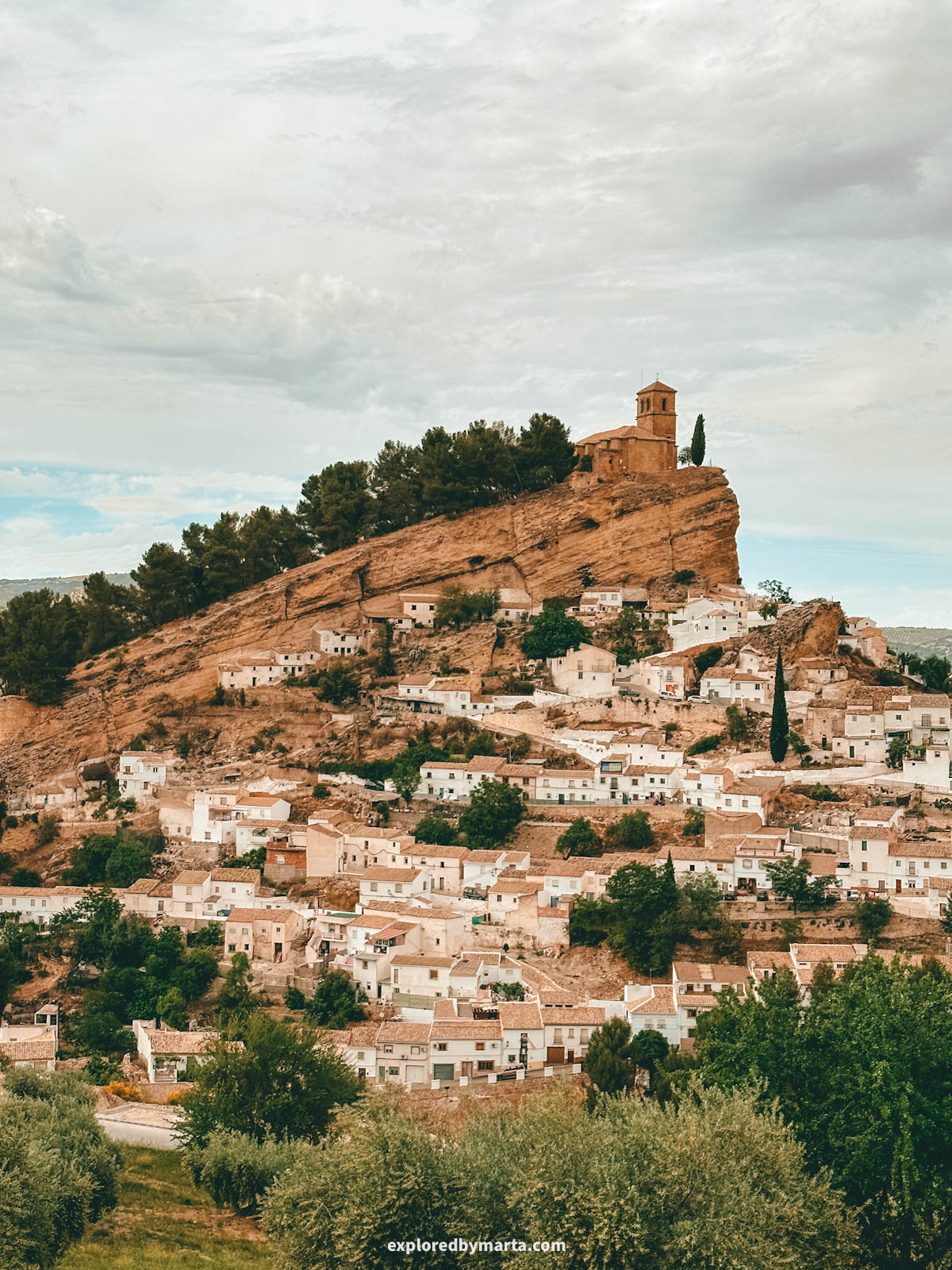
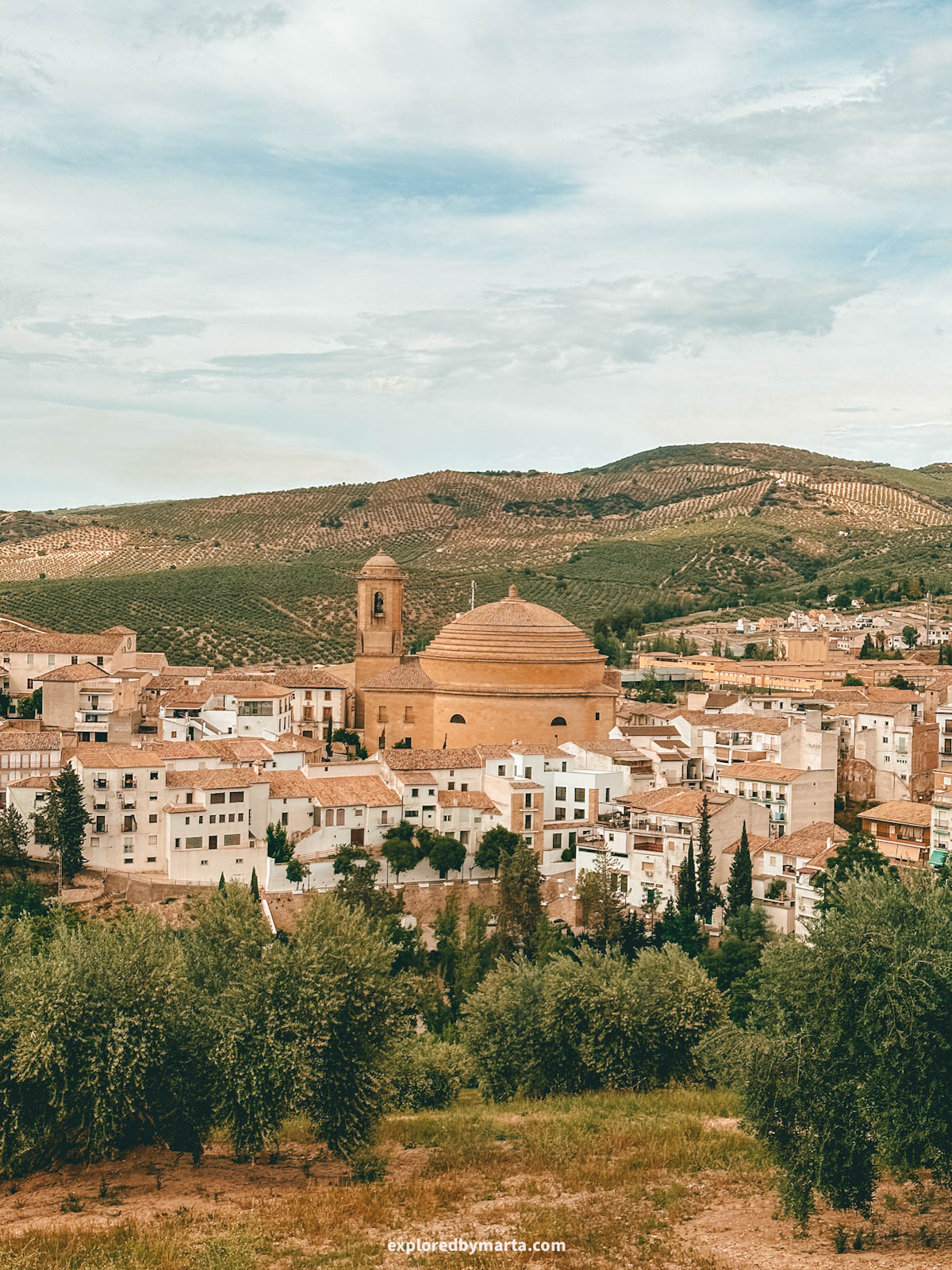
Whitewashed houses cascade down a hillside, with a 16th-century church (Iglesia de la Encarnación, which happens to be the only completely round church in Spain) and an old castle on top of dramatic rocky cliffs. The whole scene looks almost too perfect to be real.
The famous viewpoint is called Mirador National Geographic, named after the magazine that put this village on the map. You can drive right to it and snap your photos in just a few minutes.
If you have more time, drive up into the village itself to explore the round church, climb up to the old castle, and walk through the narrow whitewashed streets. The village is small but full of personality, and the views from the top are even more incredible.
Location: Montefrío from Mirador National Geographic
12. Soportújar, the witches’ village in Sierra Nevada
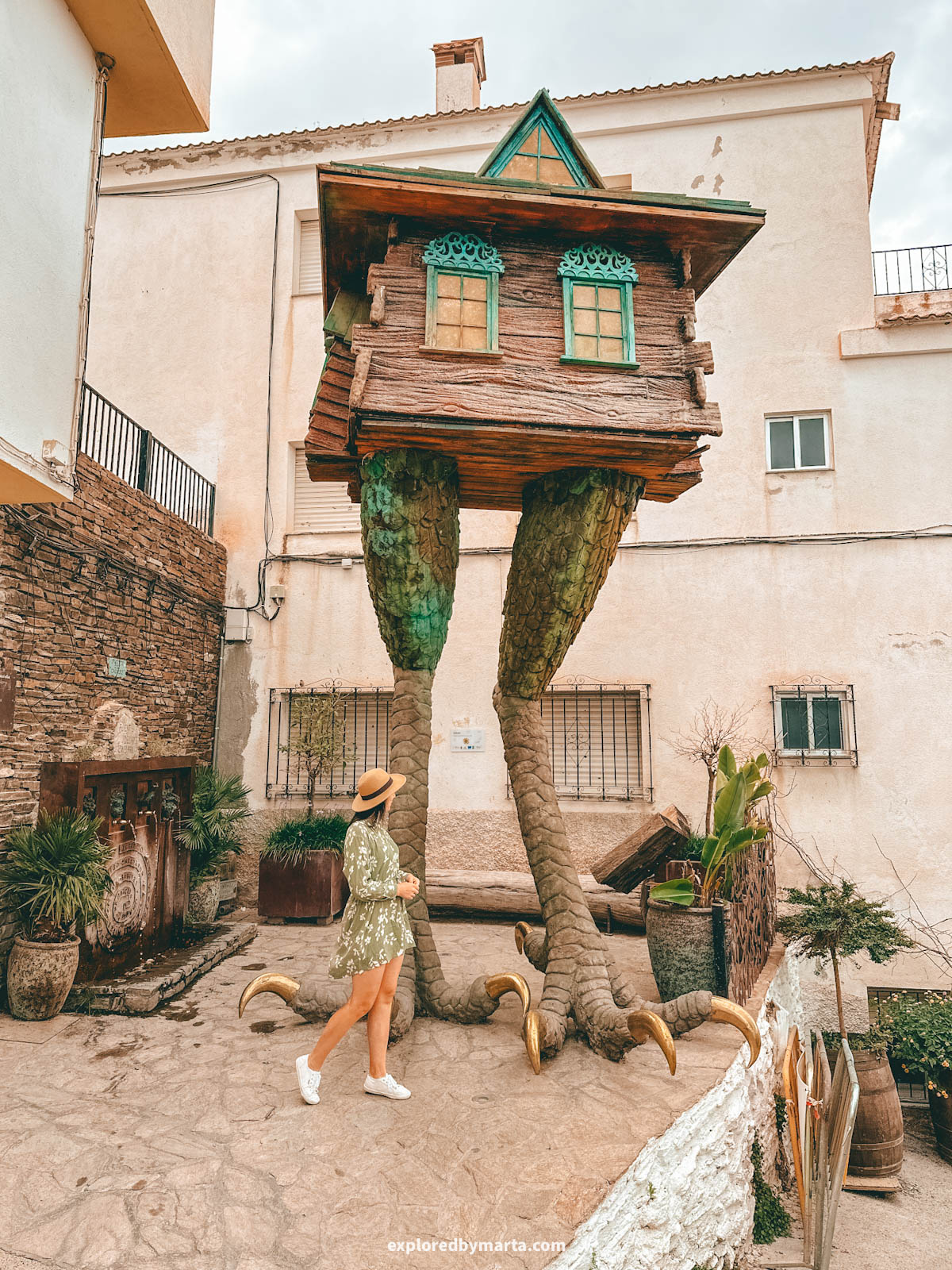
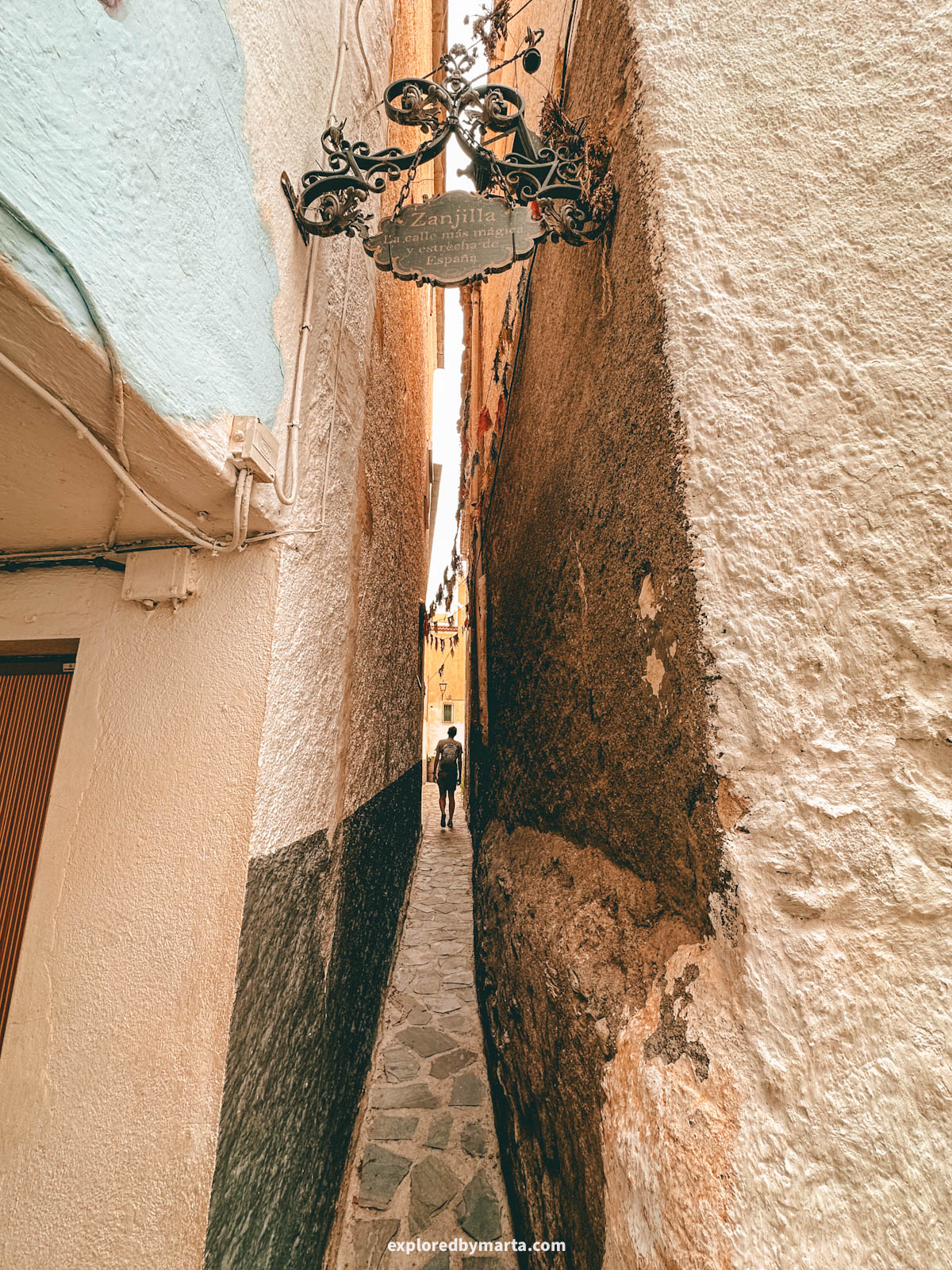
If you want a truly unusual day trip from Granada, this is the one. Soportújar is a small mountain village deep in the Sierra Nevada, about 70 km (44 miles) from Granada and around a 1h 15min drive. And honestly, it is one of the most unique villages I’ve visited anywhere in Andalusia.
Why? Because Soportújar is known as the witches’ village of Andalusia. 🧙♀️
The narrow streets are filled with sculptures, statues, and references to magical creatures from world-famous fairytales and folklore.
And no, this is not a temporary exhibition – this is just how the village is decorated all year round. Locals just go about their daily lives with all these magical creatures around. 😅
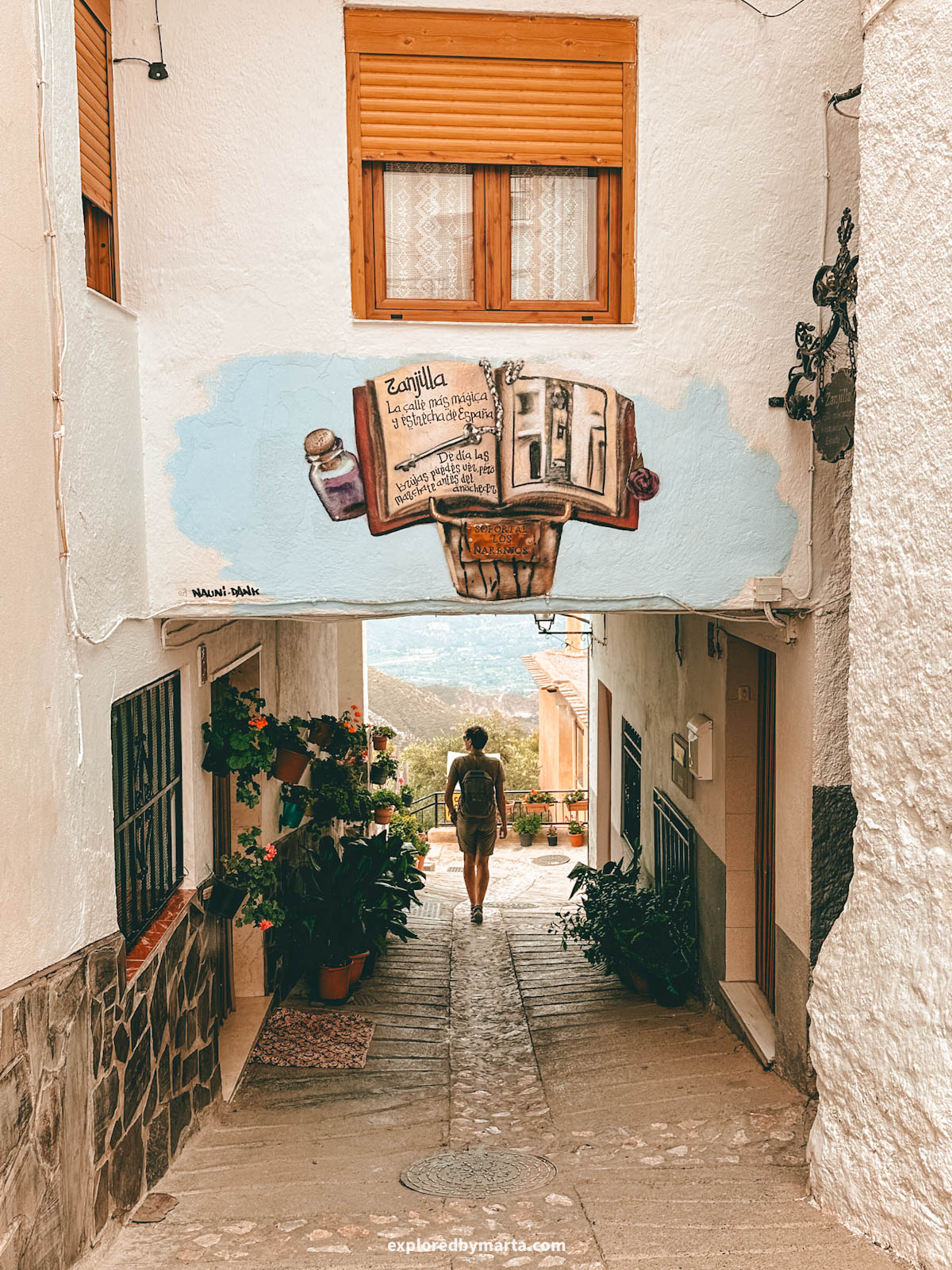
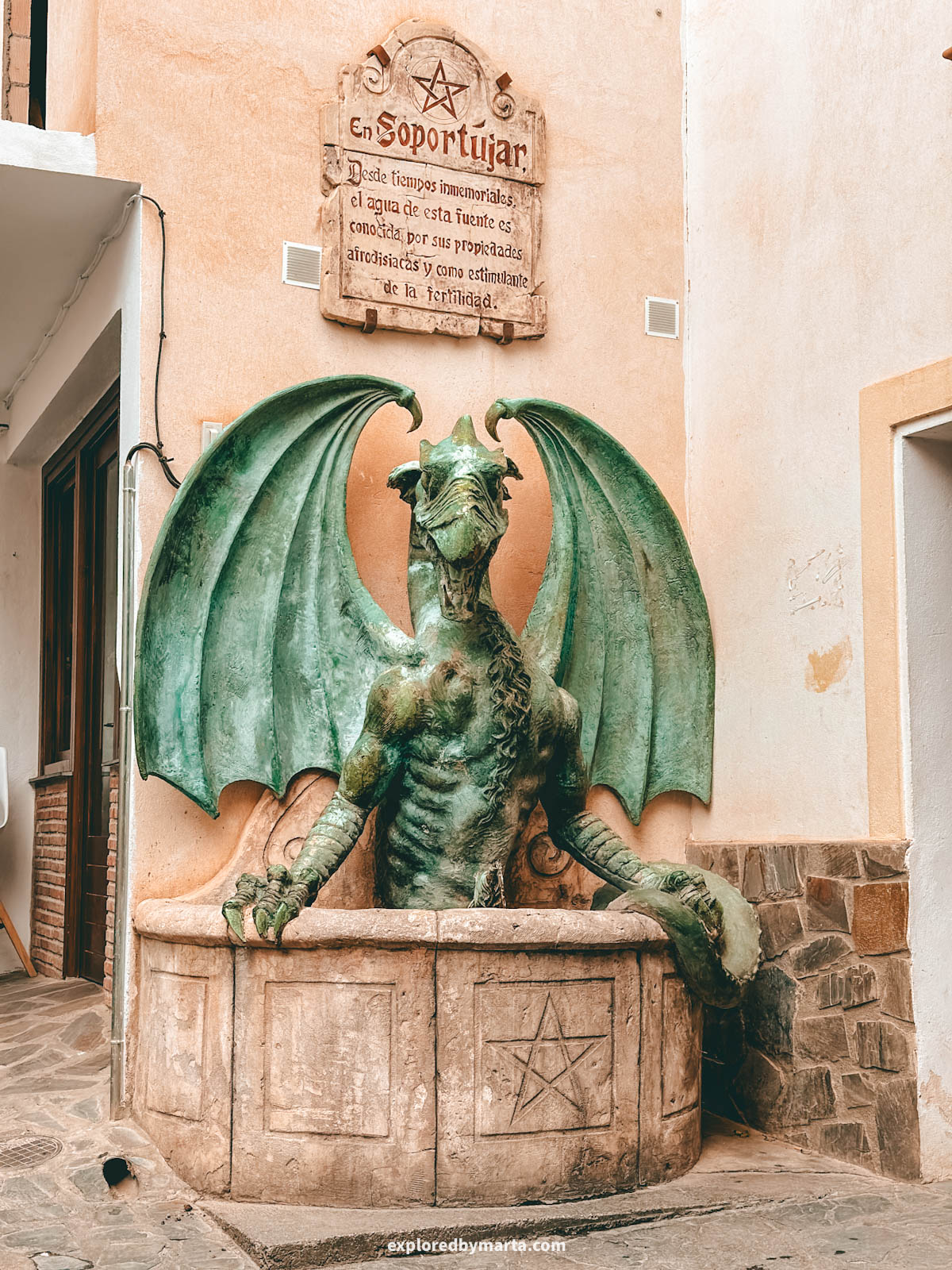
Some of the most iconic spots include the Baba Yaga house on chicken legs, the witches’ house from Hansel and Gretel, and the fountain of the dragon. There are creatures from fairytales you’ll recognize and others that I didn’t, which made the whole walk a bit of a treasure hunt.
Honestly, it sounds like a playground for kids, but I had so much fun exploring it as an adult. The whole village is so different from typical Andalusian whitewashed towns that it really felt like stepping into a completely different world.
And, of course, Soportújar is also surrounded by the Sierra Nevada mountains, so the drive there is super scenic. If you love hiking or mountain views, you can easily combine this trip with exploring more of the Alpujarras region.
Location: Soportújar
13. Guadix, Spain’s iconic cave houses neighborhood
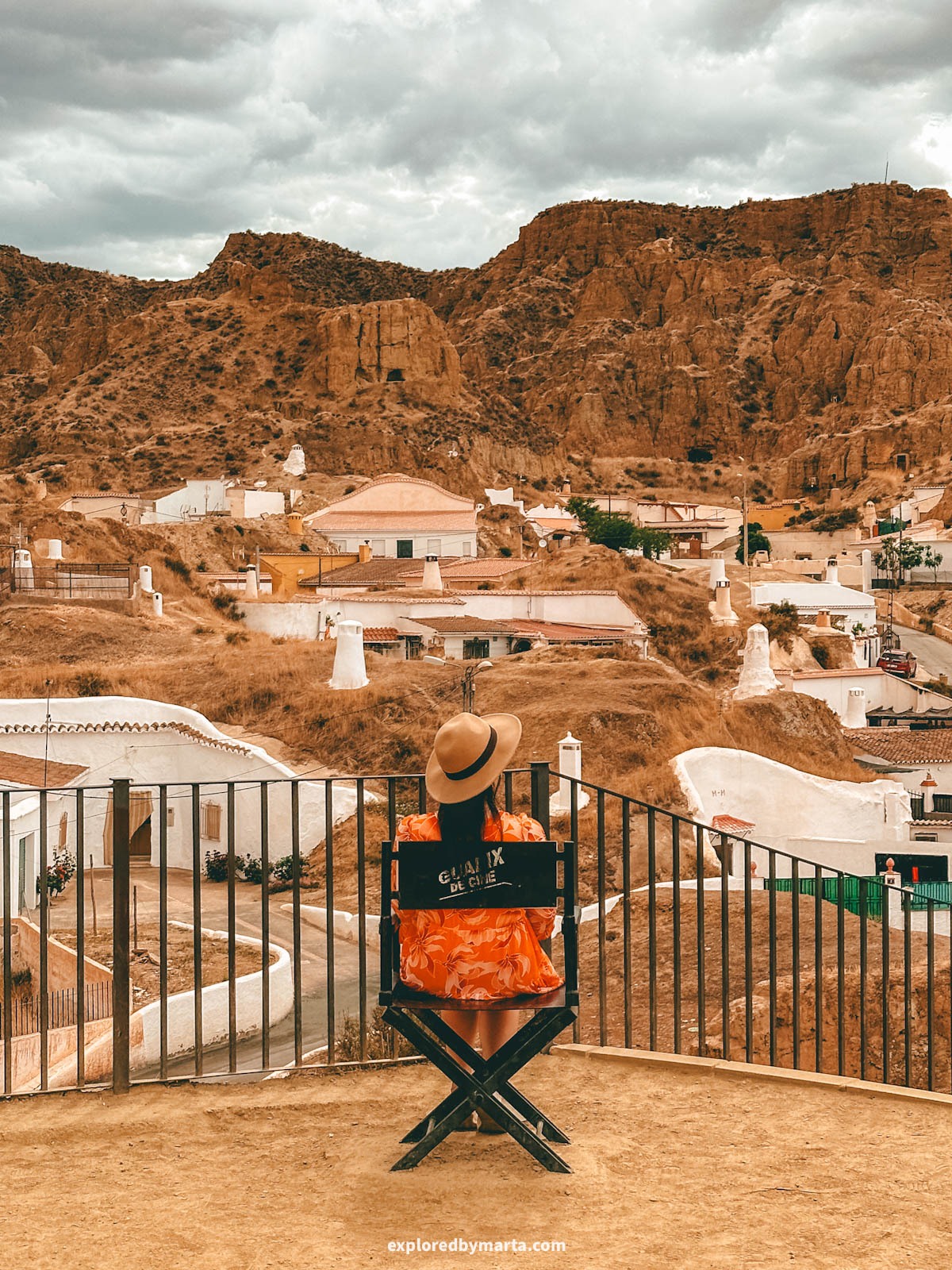
Guadix town sits about 60 km (37 miles) from Granada, around a 45-minute drive, and it is honestly one of the most one-of-a-kind places in all of Andalusia.
What makes Guadix so special? It is home to one of the largest cave house neighborhoods in Europe. And the wild part is, these aren’t ruins or museums. These are still actively lived-in homes, carved straight into the soft hillside.
Around 2,000 people still live in cave houses in Guadix today, and many of them have been passed down through generations. From the outside, you just see whitewashed doors and chimneys sticking out of the hills, but the interiors are surprisingly modern and very comfortable.
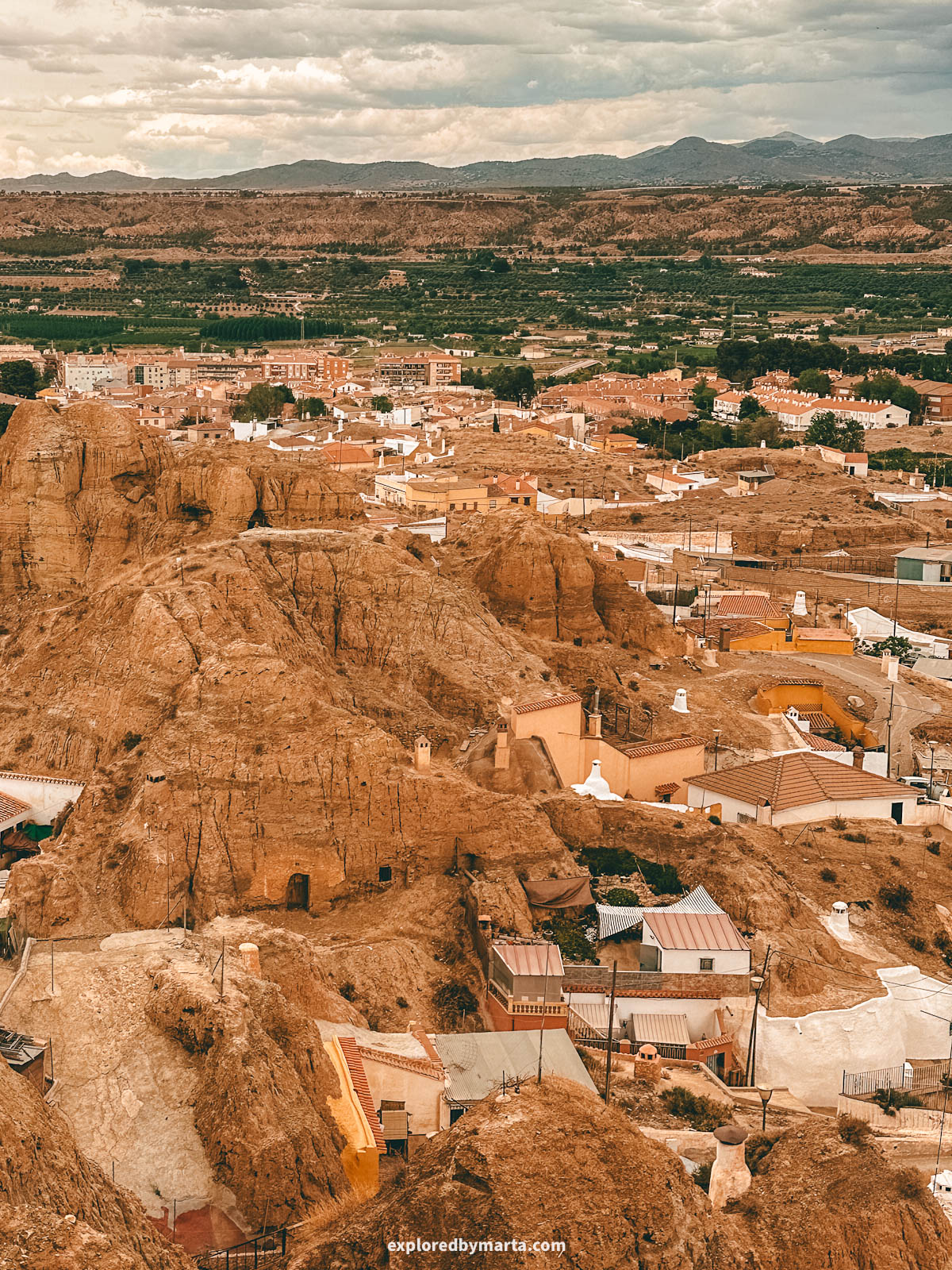
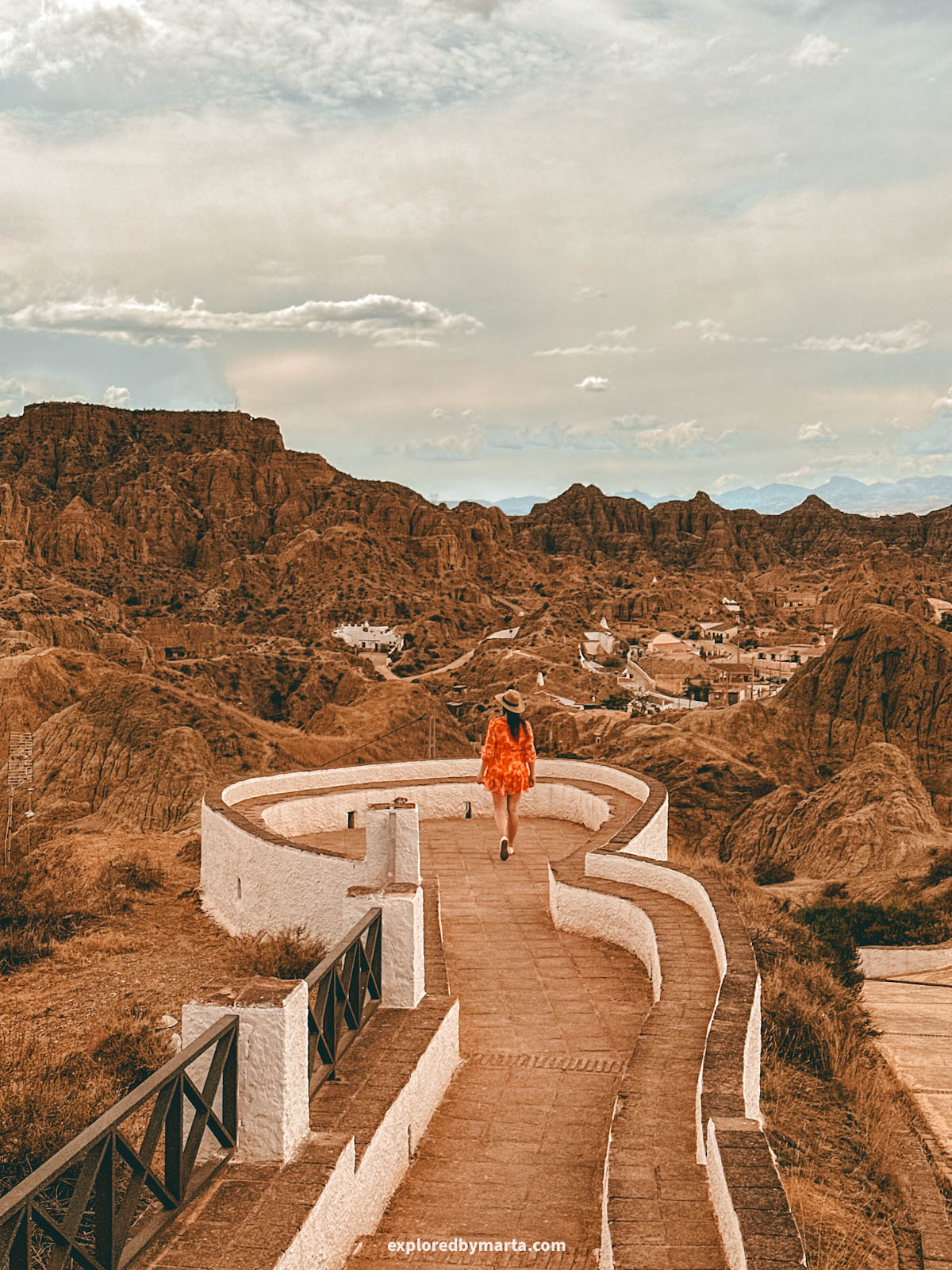
The main neighborhood to visit is called Barrio de las Cuevas, the cave houses district. The best way to experience it is to simply walk through the streets, take in the unusual landscape, and visit the Mirador del Cerro de la Bala viewpoint for the iconic panoramic shot of cave houses stretching across the hillside.
There is also a Cave Museum (Cueva Museo) where you can step inside a real cave home and learn about the lifestyle, history, and how these homes have evolved over the centuries. It is small but really informative.
Beyond the caves, Guadix also has a beautiful Renaissance cathedral and an old Moorish alcazaba (fortress) in the historic center, so there is plenty to explore beyond just the cave neighborhood. If you have time for one unusual day trip from Granada, Guadix should seriously be on your list.
Location: Guadix cave houses neighborhood
FAQ about hidden gems in Granada
What are the best hidden gems in Granada?
Some of the best hidden gems in Granada include Palacio Dar al-Horra (a Nasrid queen’s palace), Palacio de la Madraza (Granada’s first university with an Alhambra-style oratory hiding inside), Corral del Carbón (the only Nasrid alhóndiga left on the Iberian Peninsula), Monasterio de la Cartuja (home to the most beautiful sacristy in the world), and Silla del Moro for sunset views without crowds. For something different, take a day trip to Guadix cave houses, Soportújar witches’ village, or Montefrío with the famous National Geographic viewpoint.
Is Granada worth visiting beyond the Alhambra?
Absolutely yes! While the Alhambra is the main reason many people visit Granada, the city has so many unusual places and hidden gems worth exploring. From smaller Moorish palaces and free spots inside the Alhambra to unique carmen gardens, Spain’s only round church nearby, and the fascinating cave houses of Guadix, you could easily spend several days in Granada and still find new places to discover.
Can you visit any part of the Alhambra for free?
Yes! The Palace of Charles V inside the Alhambra is completely free to visit. It is a Renaissance palace with a unique circular courtyard, and it is right next to the Nasrid Palaces entrance. So even if Alhambra tickets are sold out, you can still see this part of the complex without paying.
What is an unusual day trip from Granada?
Some of the most unusual day trips from Granada include Soportújar, the witches’ village in Sierra Nevada with sculptures and references to fairytale creatures everywhere; Guadix, home to one of Europe’s largest cave house neighborhoods; and Montefrío, a whitewashed village named by National Geographic as having one of the best views in the world.
What can you do in Granada besides the Alhambra?
Granada has so much to offer beyond the Alhambra! You can explore lesser-known Moorish palaces like Palacio Dar al-Horra, visit Spain’s most beautiful sacristy at Monasterio de la Cartuja, relax in carmen gardens (a Granada-only thing), or experience modern Arab baths at Hammam Al Ándalus. For day trips, Montefrío offers the famous National Geographic viewpoint, Soportújar is a quirky witches’ village in Sierra Nevada, and Guadix is home to one of Europe’s largest cave house neighborhoods.
Read more about traveling in Southern Spain
Granada is one of those cities that gives you so much more than just one famous palace complex. Yes, the Alhambra is incredible and absolutely worth all the hype, but Granada’s places off the beaten path are what made our week in Granada feel really special.
From lesser-known Moorish palaces and free spots inside the Alhambra to a witches’ village in the mountains and Spain’s iconic cave houses, there is so much to discover beyond the typical tourist trail. I hope this guide gave you some inspiration to explore Granada a little differently and find places that most travelers miss.
And if you are planning a bigger trip around southern Spain, Granada fits perfectly with places like Córdoba, Seville, Ronda, Málaga, and the white villages. So many beautiful corners to explore!
More Andalusia travel inspiration:
- 21 most beautiful white villages in Andalusia
- 27 hidden gems you should see in Andalusia
- 17 most beautiful castles in Andalusia, Spain
- Córdoba bucket list: 18 best things to do in Córdoba, Spain
- Seville, Spain: 19 awesome bucket list things to do in Seville
- 20 best things to do in Malaga, Spain (+locations & tips!)
Travel guides to nearby towns:
- Ronda bucket list: 15 best things to do in Ronda, Spain
- 12 best things to do in Cádiz, Western Europe’s oldest city
- Fairytale Frigiliana: 13 things to do in Frigiliana, Spain
- 10 things to do in Iznájar, Spain (flower village)
- 10 best things to do in Jerez de la Frontera, Spain
- 10 things to do in Tarifa, Spain’s southernmost town
PIN FOR LATER!


Hi Marta! Great pictures 🙂 May I know the exact name/ location/ GPS on Google map of the last photo on the right (the one with you being in the middle of the two big bushes/ trees) that was taken inside Carmen de los Mártires? Thank you.
Hi, Joanne! Thank you! 🙂 That spot would be around here: https://maps.app.goo.gl/Egr824XN9Wb6wRzBA There was a path lined with these evergreen ornamental trees winding around the mansion, one lever lower than the square in front of the building. Stairs connecting the square and the lower level path are somewhere right nearby. Happy travels!