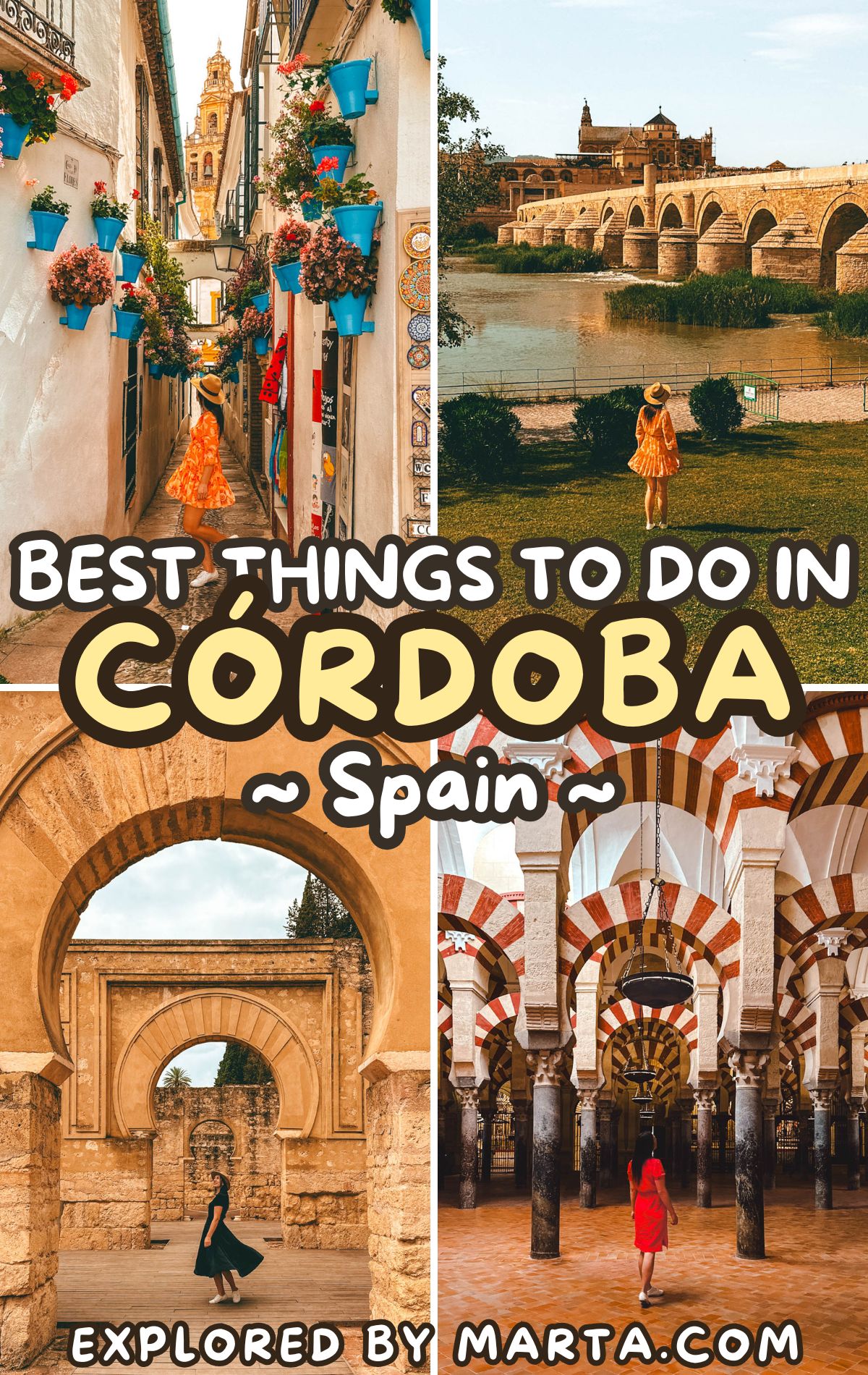
Córdoba bucket list: 18 best things to do in Córdoba, Spain
This post may contain affiliate links. If you use these links to make a purchase or booking, I may earn a small commission at no extra cost to you! Thank you for your support!
Looking for the best things to do in Córdoba, Spain? You are in the right place! This Andalusian city is one of the most special places in southern Spain, with a wild mix of Moorish architecture, flower-filled patios, ancient Roman ruins, and some seriously good food.
We spent a whole week in Córdoba, which gave us plenty of time to wander through narrow alleys, explore palaces, climb bell towers, cross centuries-old bridges, and slowly soak up the Andalusian atmosphere of the city. Honestly, every corner of Córdoba is worth a stop.
In this guide, I am sharing my favorite things to do in Córdoba with descriptions, photos, locations, and a few honest tips. From the iconic Mezquita-Catedral to traditional flamenco shows, here is everything you need to plan an amazing Córdoba trip! 🙌
A few things to know about Córdoba
With a population of around 325,000 people, Córdoba is one of the most important historic cities in Andalusia and a place with a seriously impressive past.
Córdoba has roots going back to Roman times, when it was known as Corduba. Later, during the Islamic period, Córdoba became the capital of the Caliphate of Córdoba and one of the most important cultural, political, and intellectual centers in Europe.
Córdoba is also often called the only city in the world with four UNESCO recognitions. These include the Mezquita-Catedral and historic center, the Fiesta de los Patios, and the nearby Medina Azahara archaeological site. Not bad for one city, right?
And yes, Córdoba also has a little Game of Thrones connection. The Roman Bridge was used as the base for the Long Bridge of Volantis (but the final version was heavily edited). Nearby Castillo de Almodóvar del Río also appeared in the series as Highgarden.
So, what are the best things to do in Córdoba? Let’s dive in!
1. Visit the iconic Mezquita-Catedral de Córdoba
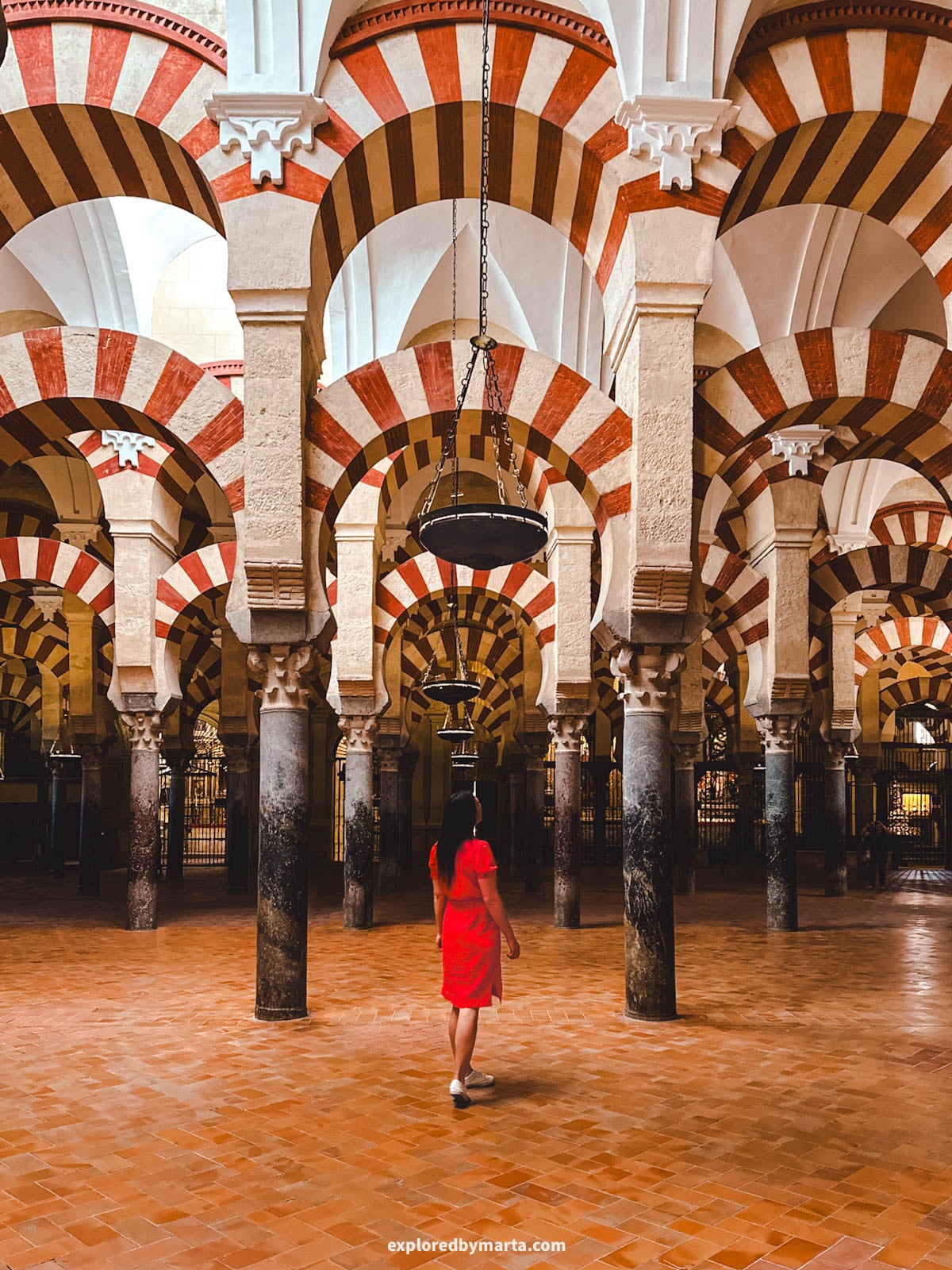
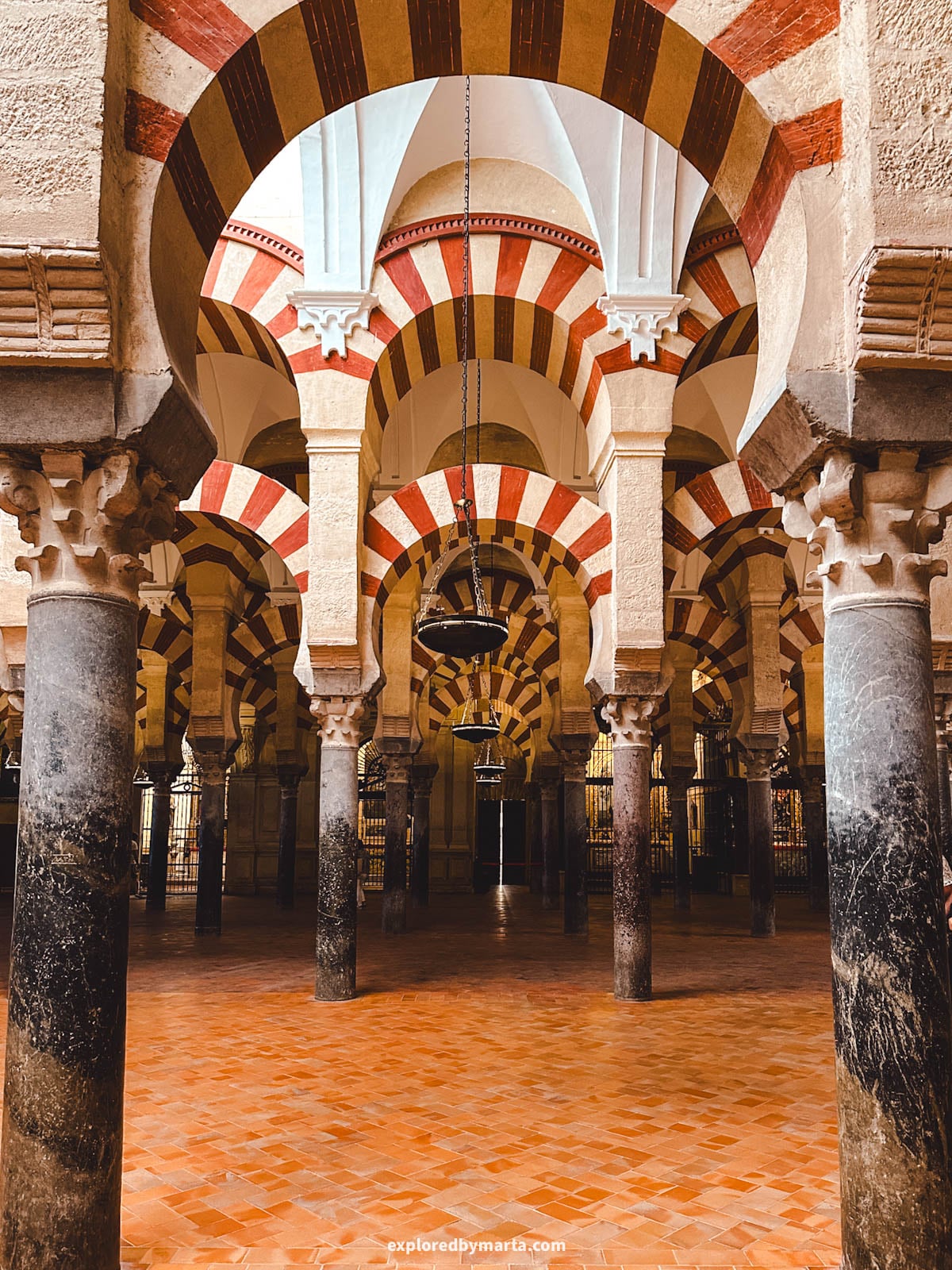
If there is one thing you absolutely cannot skip in Córdoba, it is the Mezquita-Catedral de Córdoba. This is THE landmark of the city, and for many travelers, the main reason to visit Córdoba in the first place.
Before we started our road trip around Andalusia, the famous mosque-cathedral was the only thing I really knew about Córdoba. And I was very excited to visit this special place!
I had already been there many years prior to that during my studies abroad (I studied one year in Spain), but I was more than willing to visit Córdoba again to visit the Mezquita and explore this city properly.
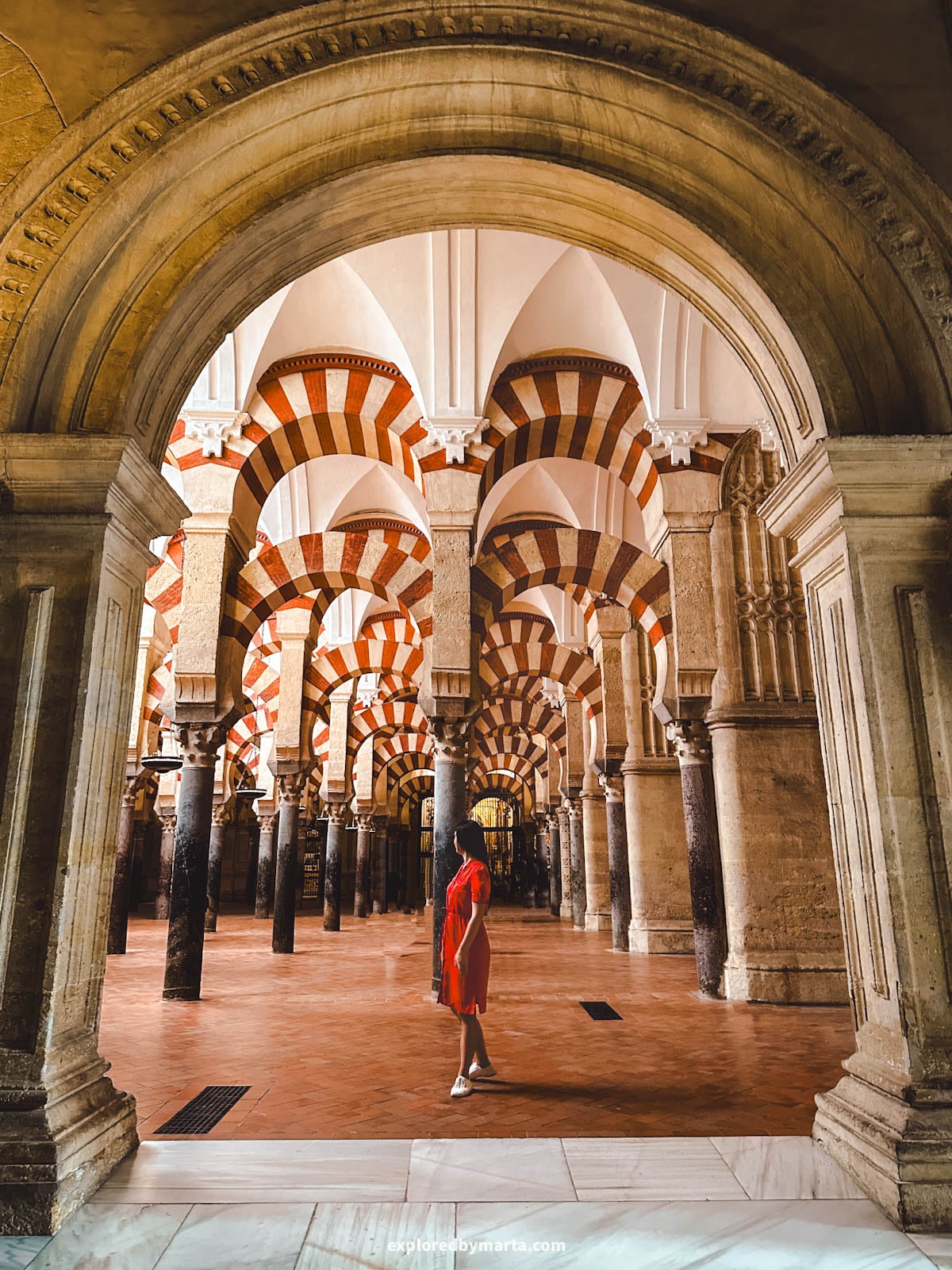
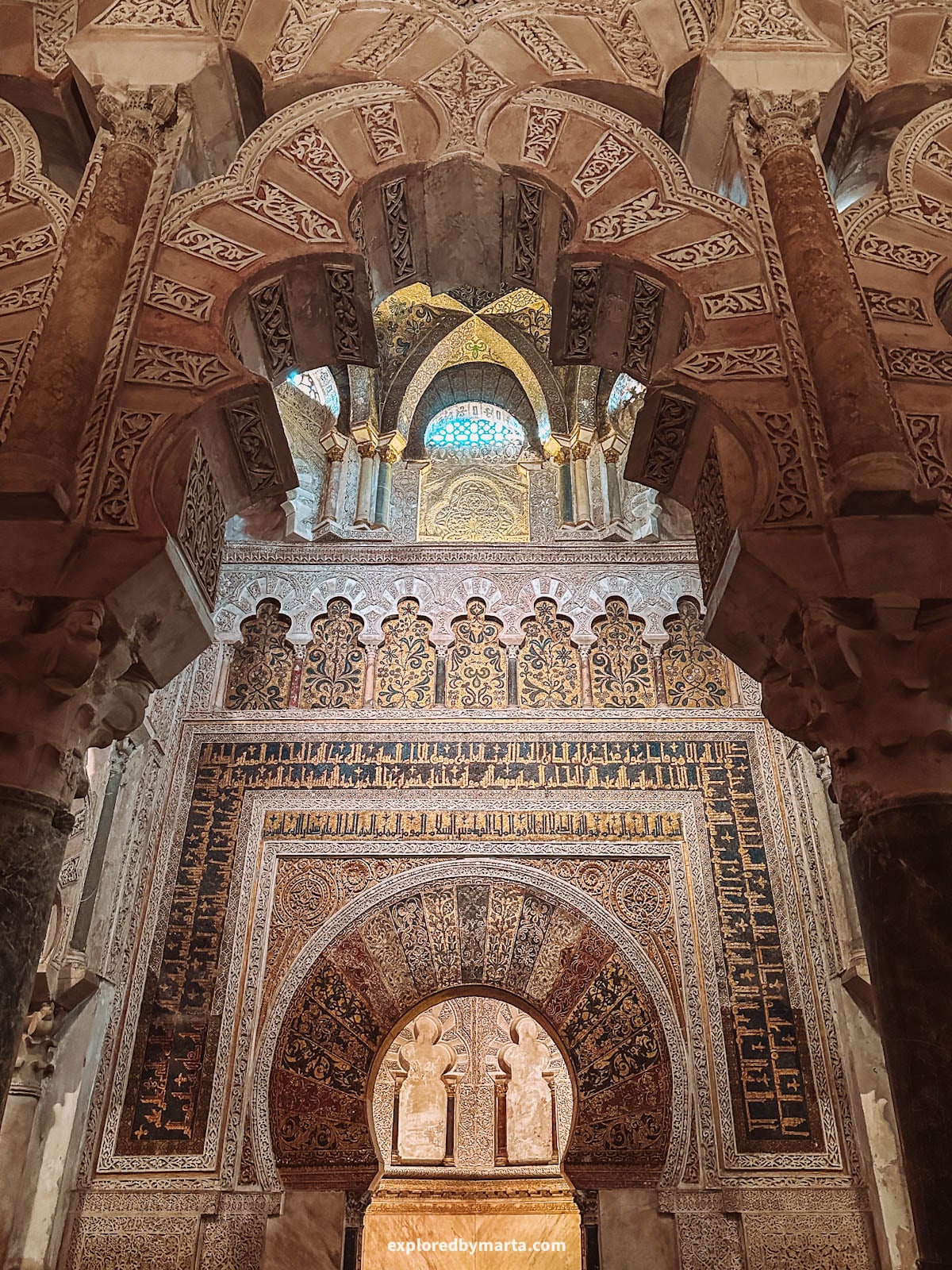
The Mezquita started as a mosque during the Islamic period, when Córdoba was the capital of Islamic Spain. It was built back in the 8th century, so we’re talking about more than a thousand years of history here!
Over the centuries, it was expanded, but after the Christian conquest in the 13th century, it was redesigned into a cathedral.
So today, you walk into this wild mix of mosque and cathedral – red and white striped arches, columns, chapels, and ornate Moorish details all in one place. And it’s a mix of architectural styles, too (obviously!).
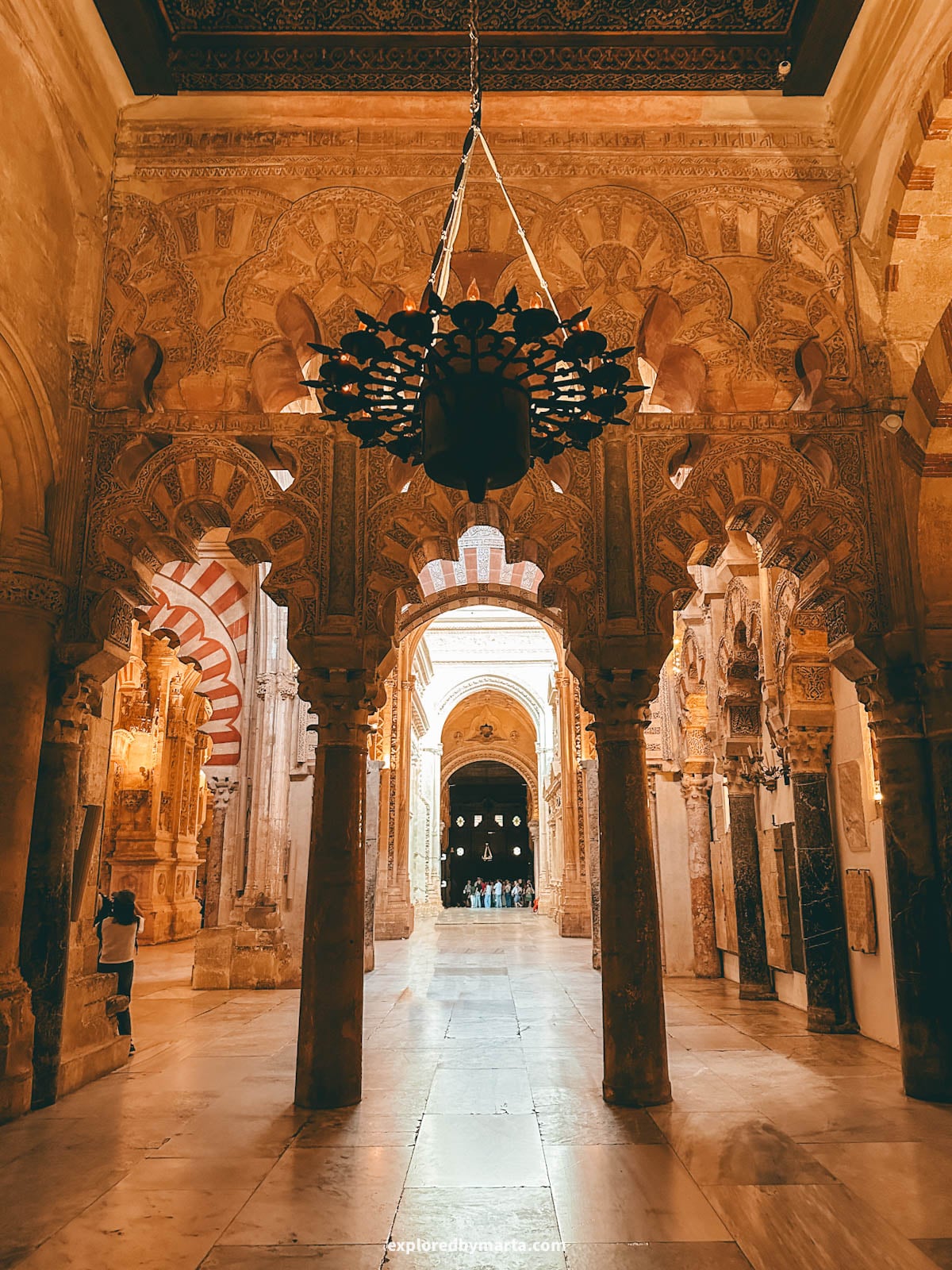
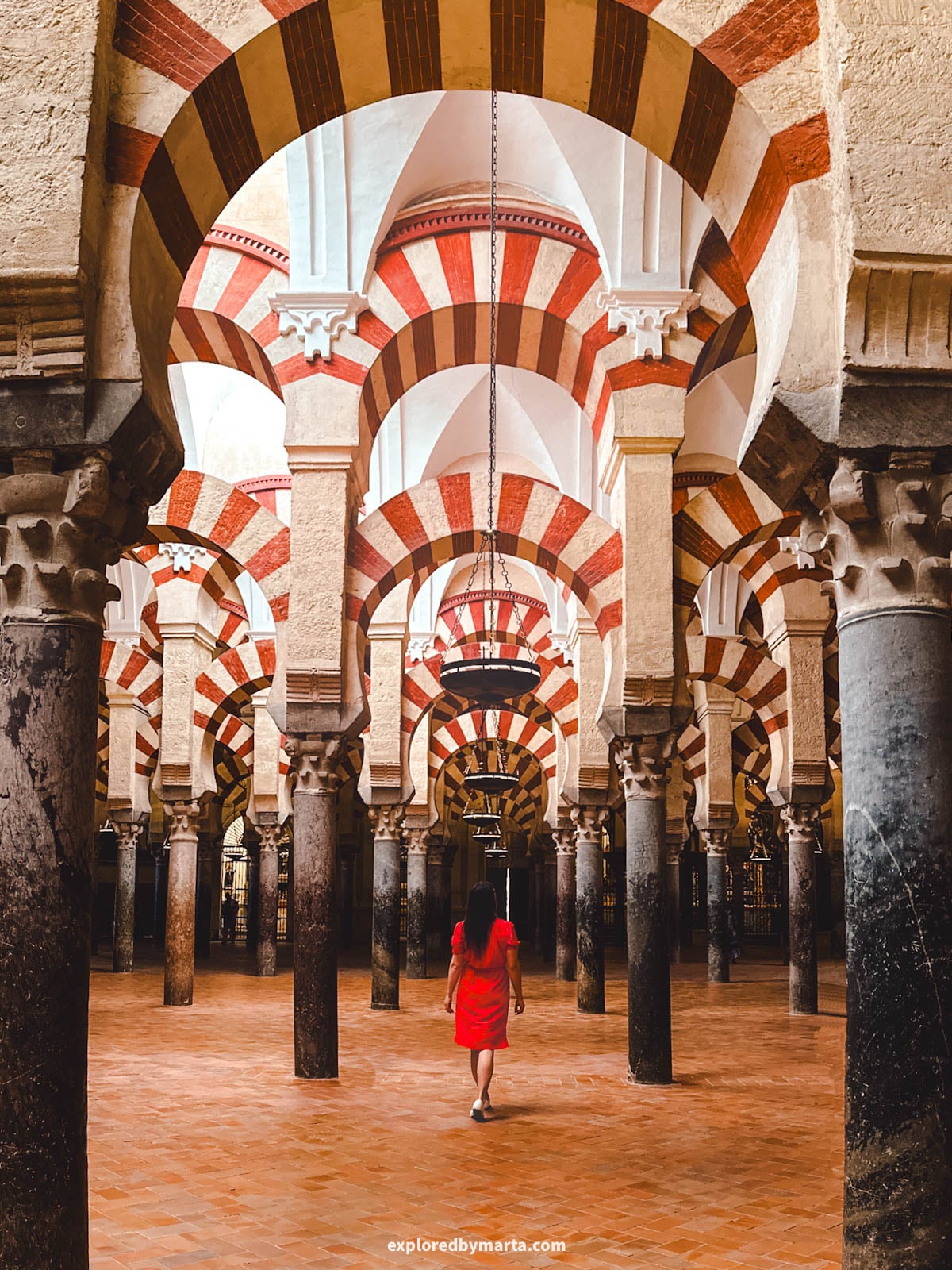
It is honestly one of the most unique landmarks in all of Spain, and it is a UNESCO World Heritage Site, so definitely add it to the top of your Córdoba bucket list.
You have to buy tickets in advance to enter, and I really recommend doing it online. The lines outside the cathedral can get massive, especially in the morning.
When we arrived for the opening, the line was about 200 meters long. The good news? The line does move fast.
My honest tip – come as early as possible if you want quieter photos and a more peaceful visit. Once inside, walk past the entrance and head straight to the back corners. Most people stop right at the entrance to take photos, so the deeper corners stay empty and quiet. 😉
Location: Mezquita-Catedral de Córdoba
2. Climb up the Torre Campanario
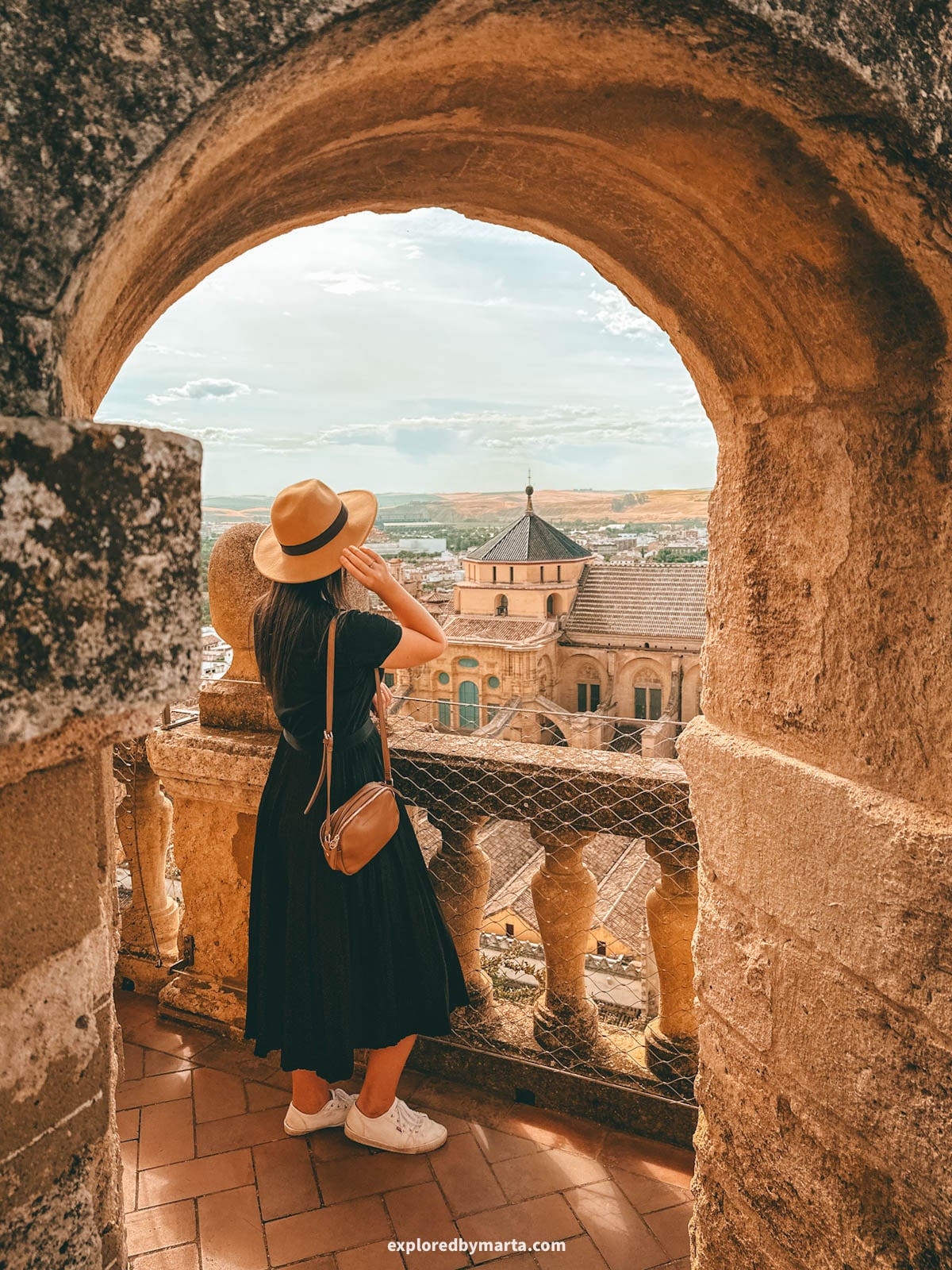
While most travelers only visit the inside of the Mezquita-Catedral, there is one part not many people notice – the Torre Campanario!
This is the historic bell tower of the cathedral, and you can actually climb up to see Córdoba and the Mezquita from above.
The bell tower is around 54 meters high, making it the tallest building in the entire historic center of Córdoba. From the top, you get 360-degree views over the rooftops, the river, and the massive Mezquita-Catedral right below you. So cool!
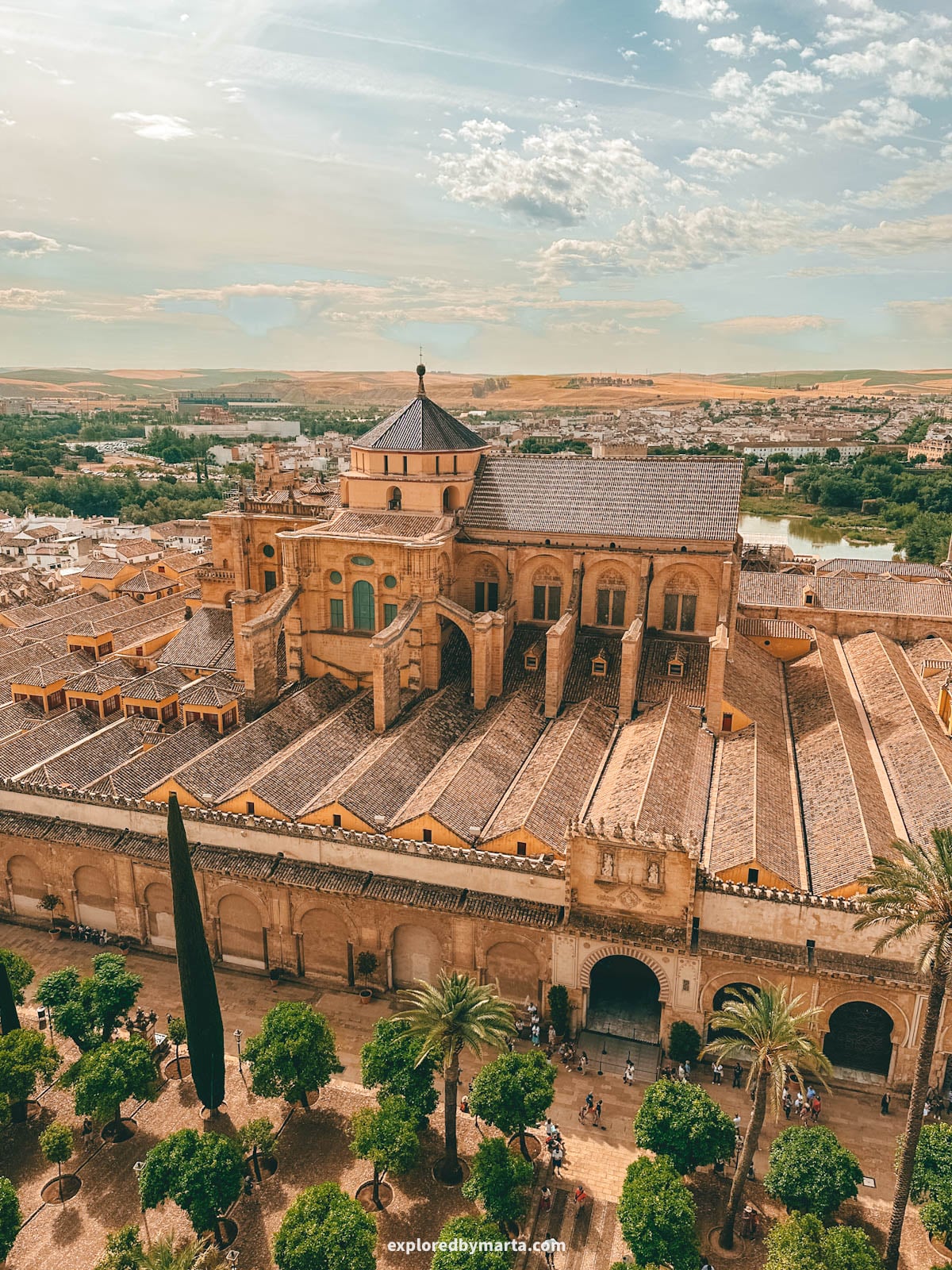
The best part for me was seeing the cathedral from above. You really get a sense of how huge the whole complex is, and suddenly all those arches and courtyards make a little more sense. Kind of, haha. 😅
Visits to the tower are not included in your main Mezquita ticket, so you have to buy a separate ticket. It costs 4 EUR per person, and you should book online in advance for a specific time slot.
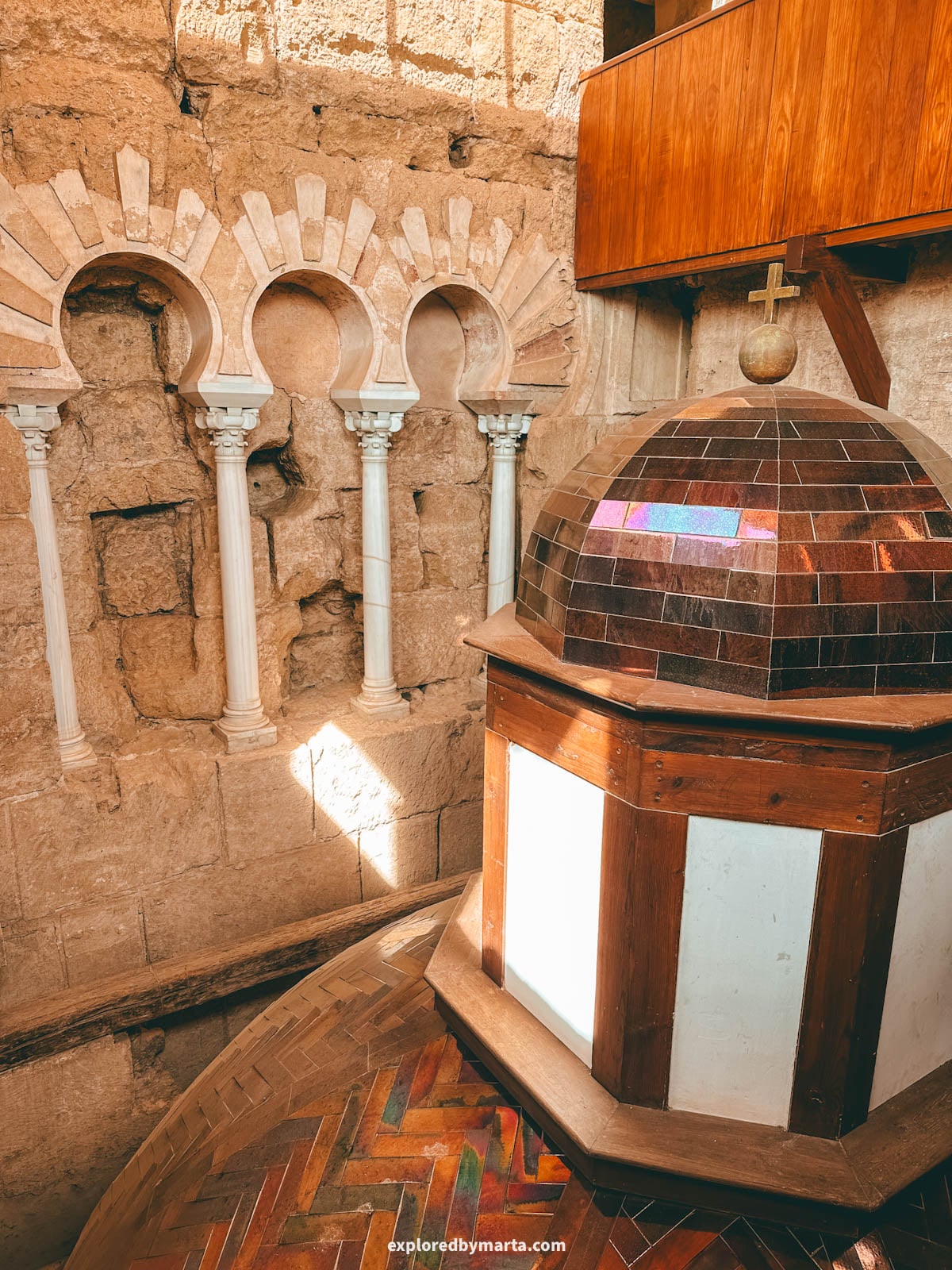
You climb the tower with a small group, and a guide manages the timing at each level. The highest level is definitely the best one for views, but the lower levels are interesting too – you get different angles through the arches and the bells.
Honestly, this was one of my favorite things to do in Córdoba!
Location: Torre Campanario
3. Explore the charming Patio de los Naranjos
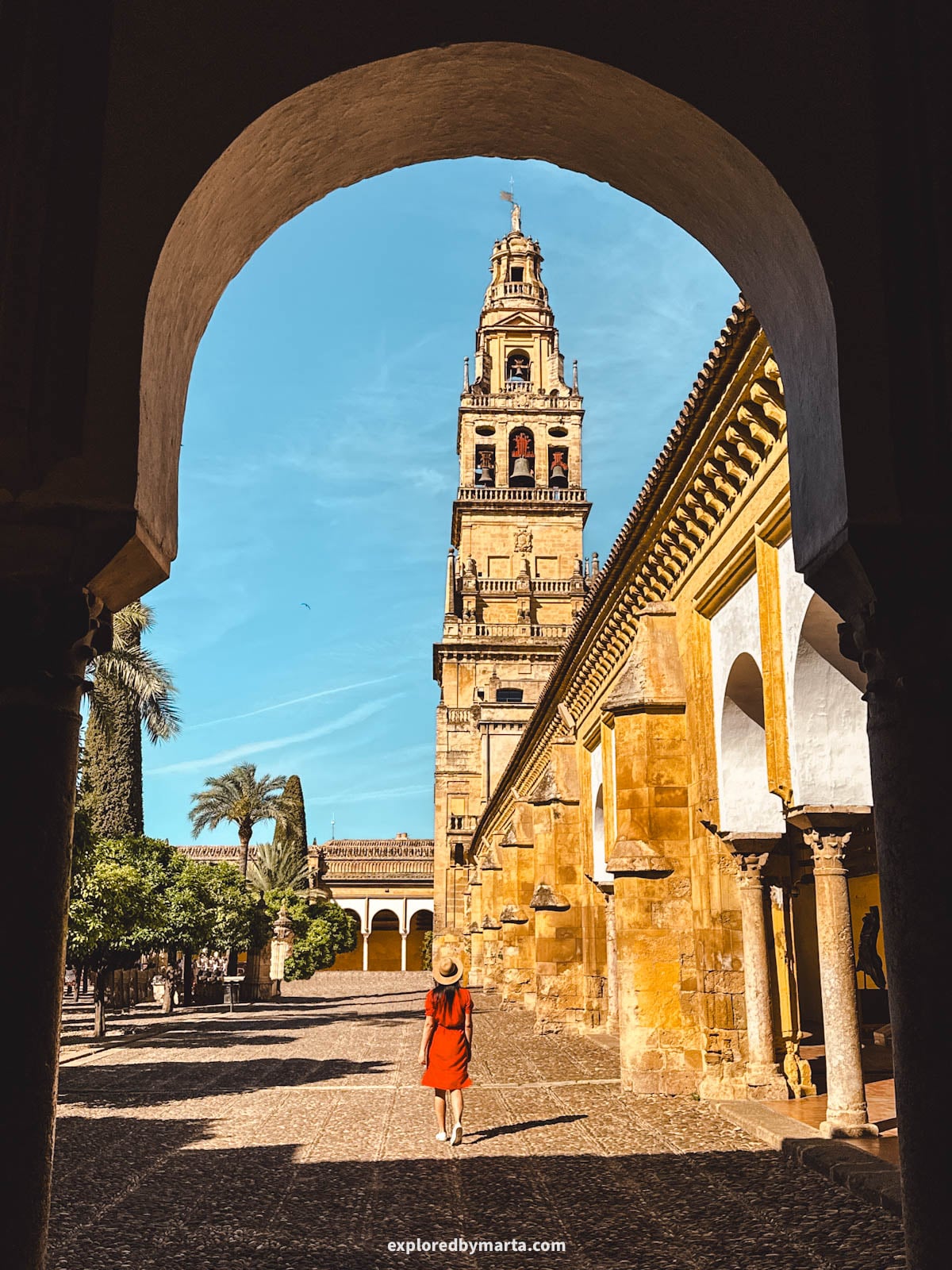
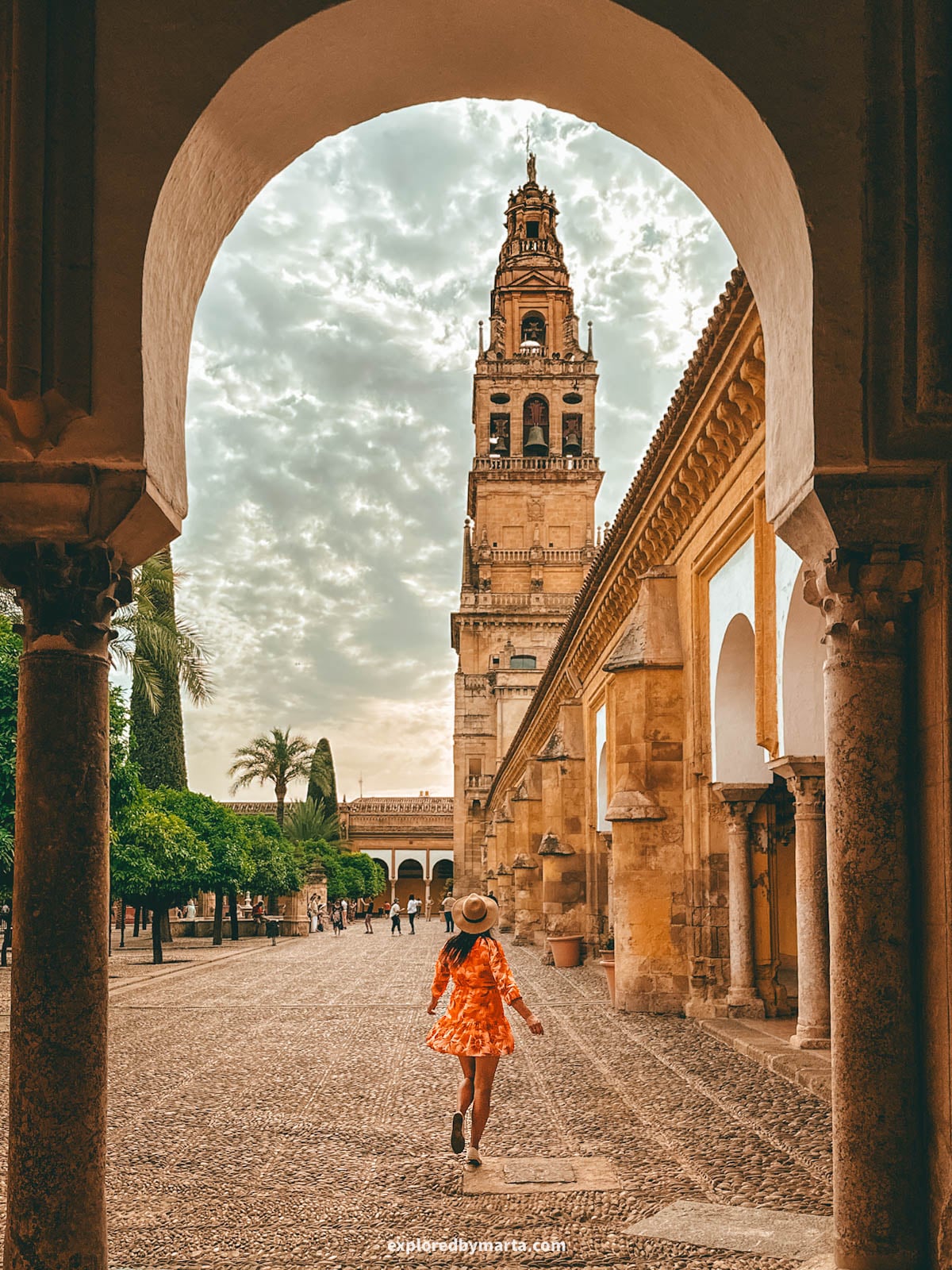
Right before or after visiting the Mezquita, make some time for the Patio de los Naranjos. This iconic orange tree courtyard sits right inside the cathedral walls and is one of the easiest stops to add to your Córdoba itinerary.
The best part? You can enter the courtyard for free during opening hours. The cathedral and the bell tower both require tickets, but the patio is open to everyone, so it is a great quick stop even if you are not going inside the Mezquita right away.
The courtyard is filled with orange trees, cypresses, fountains, and beautiful old stone walls. It is also a perfect spot to hide from the sun for a few minutes – and trust me, in Córdoba, you will need it. 😅
One of my favorite things here was finding the archway where you can frame the Torre Campanario in the background. It is a classic Córdoba postcard and one of my favorite photo spots in the city. See the photo location below.
The patio gets quite busy during the day because everyone passes through this area. So if you want fewer people in your photos, come early in the morning. Otherwise, patience is your best friend!
Location: Patio de los Naranjos – Photo location
4. See the iconic view from Calleja de las Flores
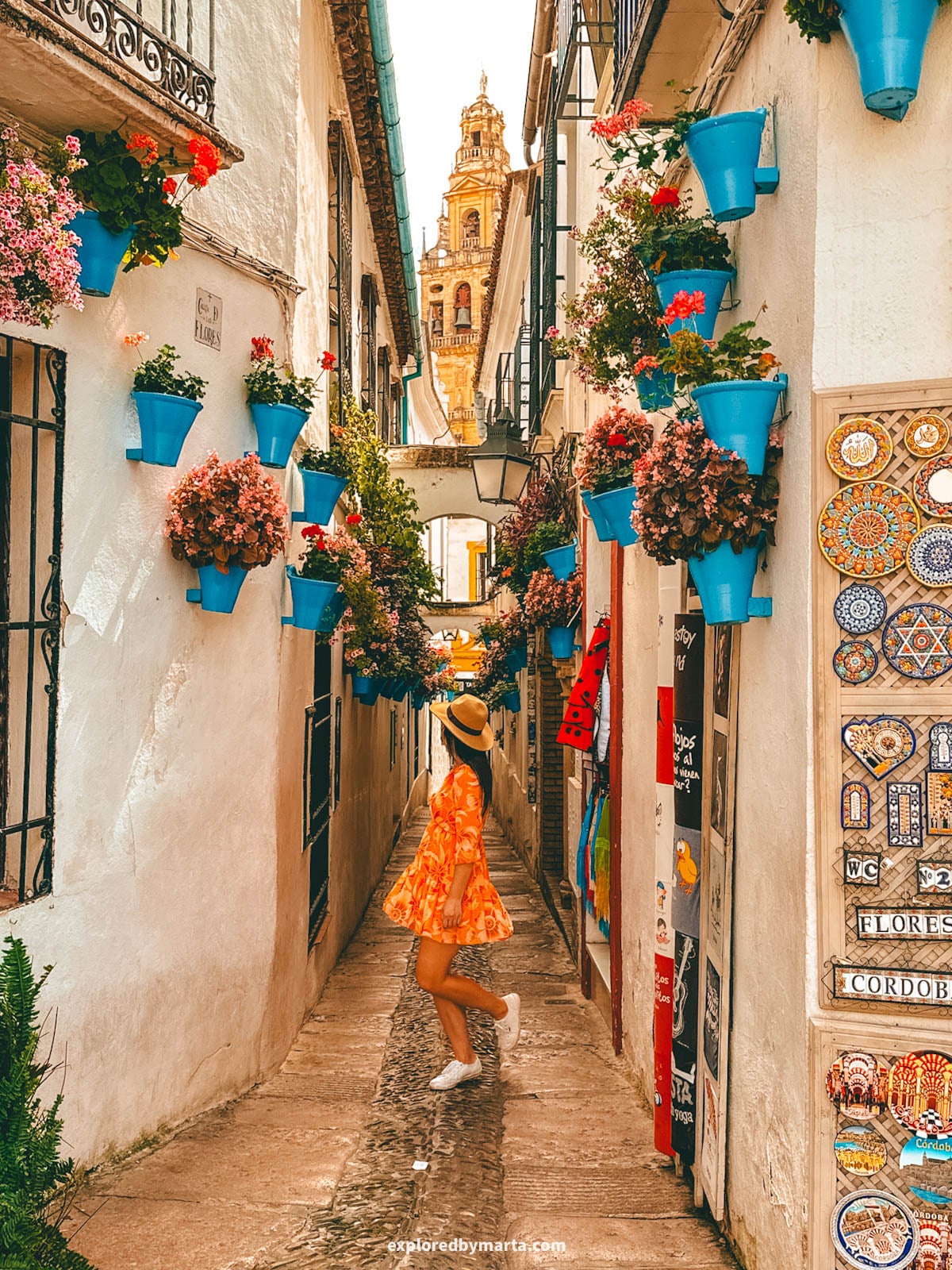
Just a short walk from the Mezquita-Catedral, you will find one of the most iconic spots in all of Córdoba – Calleja de las Flores!
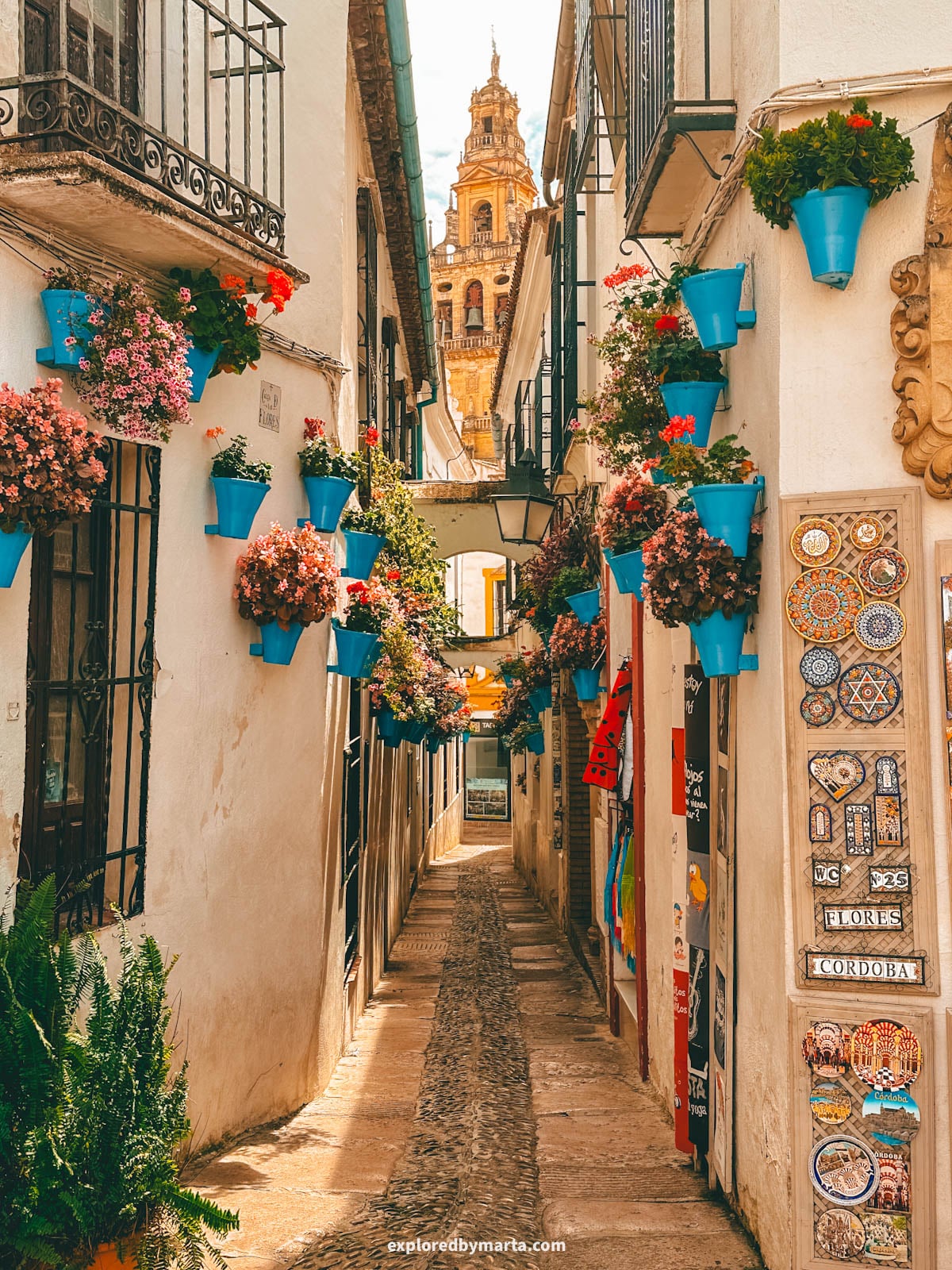
Calleja de las Flores is a super narrow whitewashed alley filled with colorful flower pots hanging from the walls. There are also two charming arches in the middle of the alley.
But the most magical thing about this place? At the end of the alley, you can see the striking Torre Campanario bell tower of the Mezquita standing tall above the rooftops, framed perfectly between the white houses on both sides.
It is one of those compositions you have probably seen on Pinterest a million times – and yes, it is even more picture-perfect in person! 🤩
I still consider Calleja de las Flores a bit of a hidden gem in Córdoba, but these days it can get crowded during the day, especially around midday. So my honest tip is to come early in the morning or later in the afternoon to enjoy it without all the crowds.
We visited Córdoba at the end of April and took this photo shortly before 5 PM, when most tourists were eating late lunch and guided tour groups were already finished exploring the old town streets. So it was much easier to take a photo without crowds.
It is also one of the most beautiful spots in Córdoba in spring, when the flowers are in full bloom. Definitely add this to your Córdoba bucket list!
Location: Calleja de las Flores
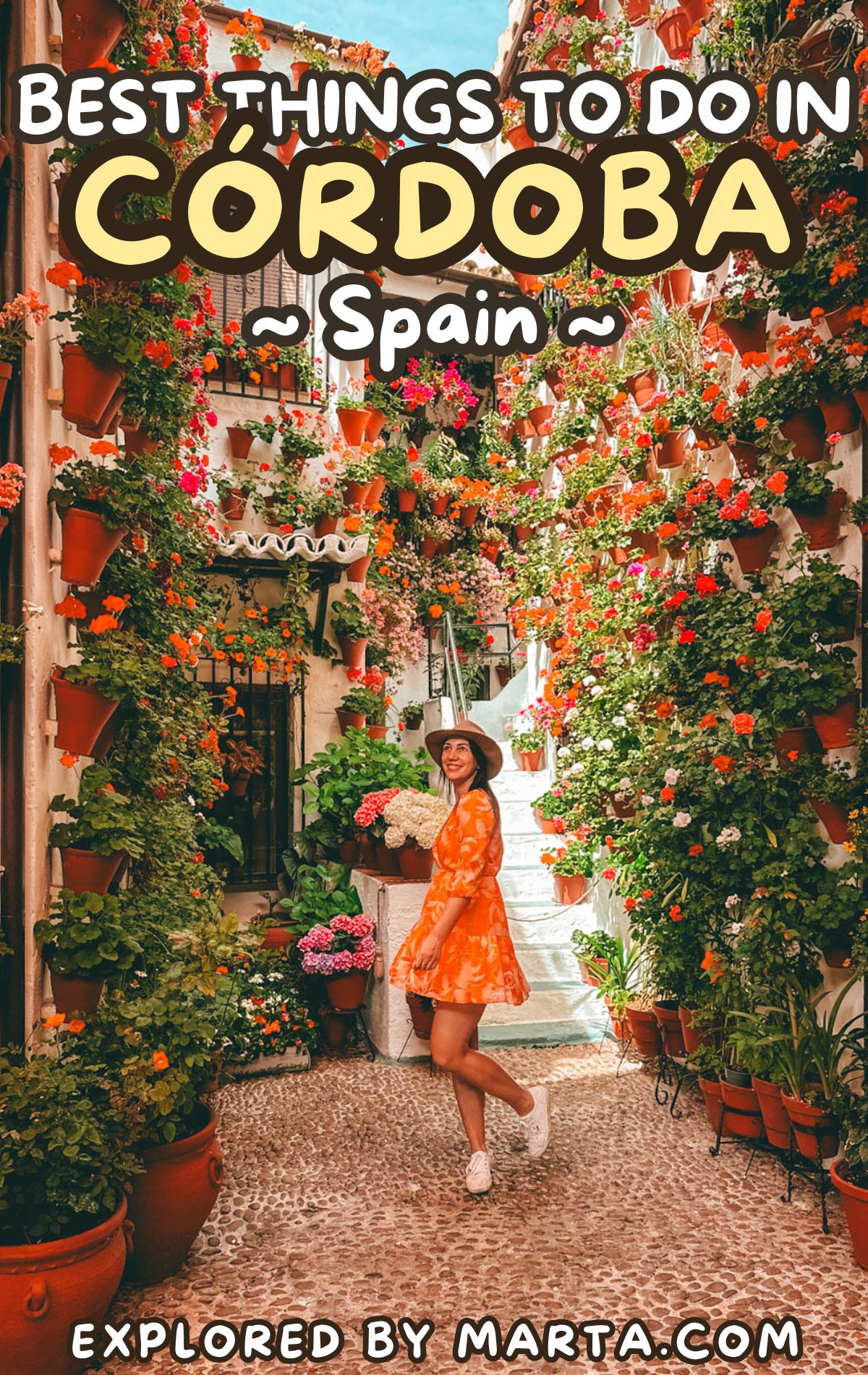
5. See the famous flower courtyards – Patios de Córdoba
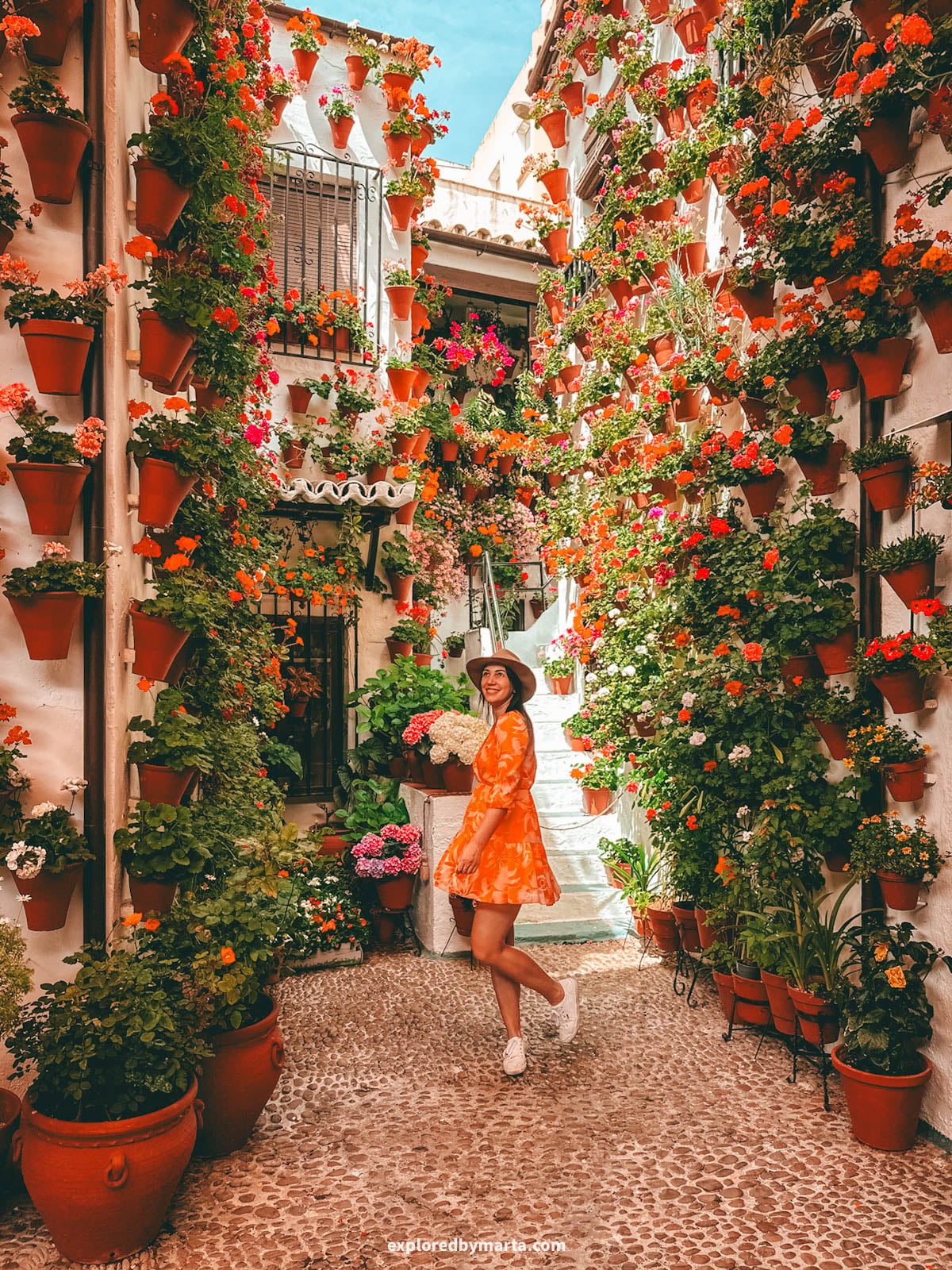
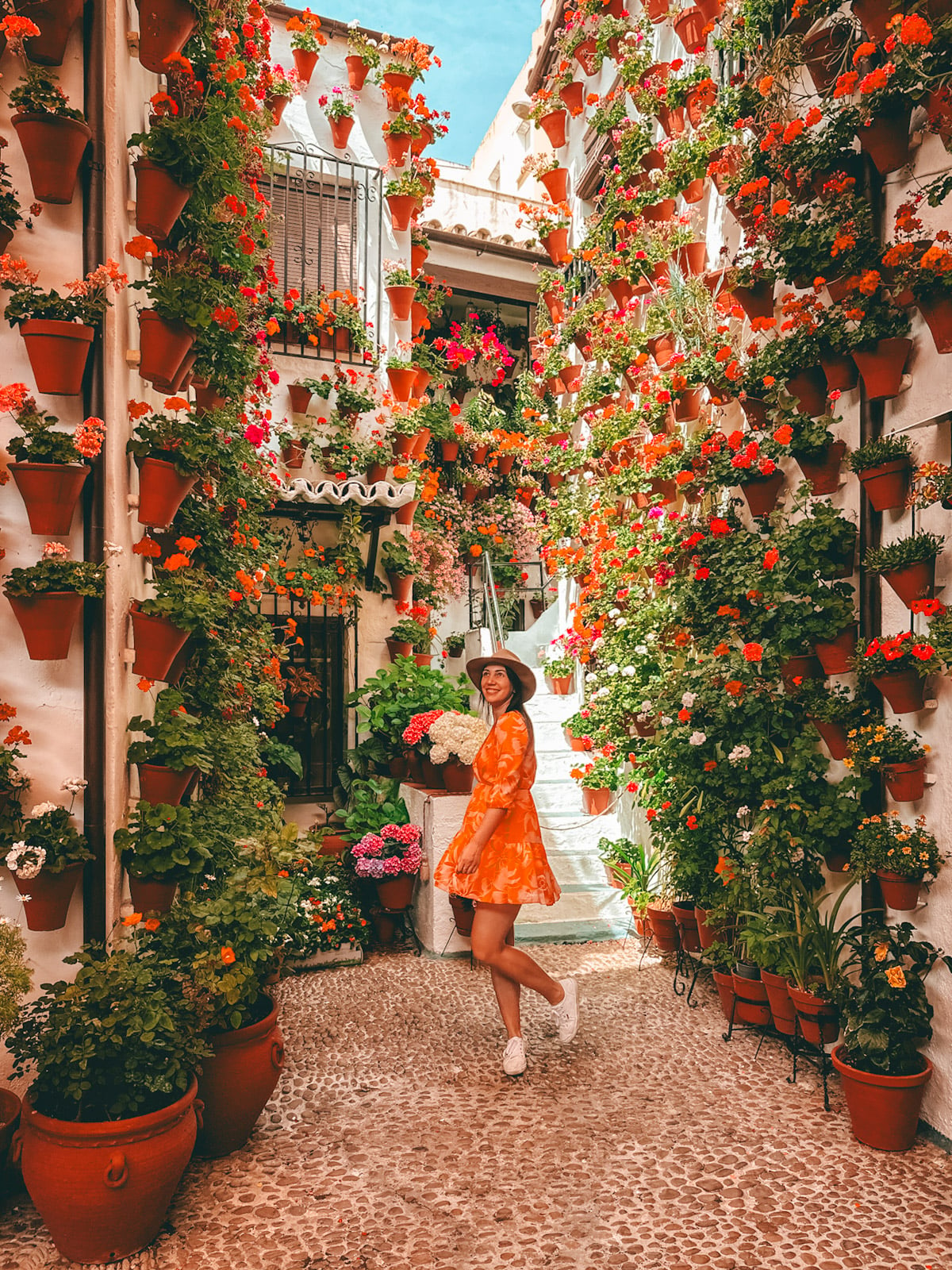
Córdoba is famous for its beautiful flower-filled patios (inner courtyards), and visiting them is honestly a must when you are in the city!
Whitewashed walls, colorful flower pots, tiled floors, fountains, and flowers everywhere – this city really knows how to decorate a courtyard.
Córdoba is especially famous for its patio tradition, and the biggest celebration is the Fiesta de los Patios in May. During the festival, private courtyards open to visitors, and they actually compete for the title of the most beautiful patio in the city!
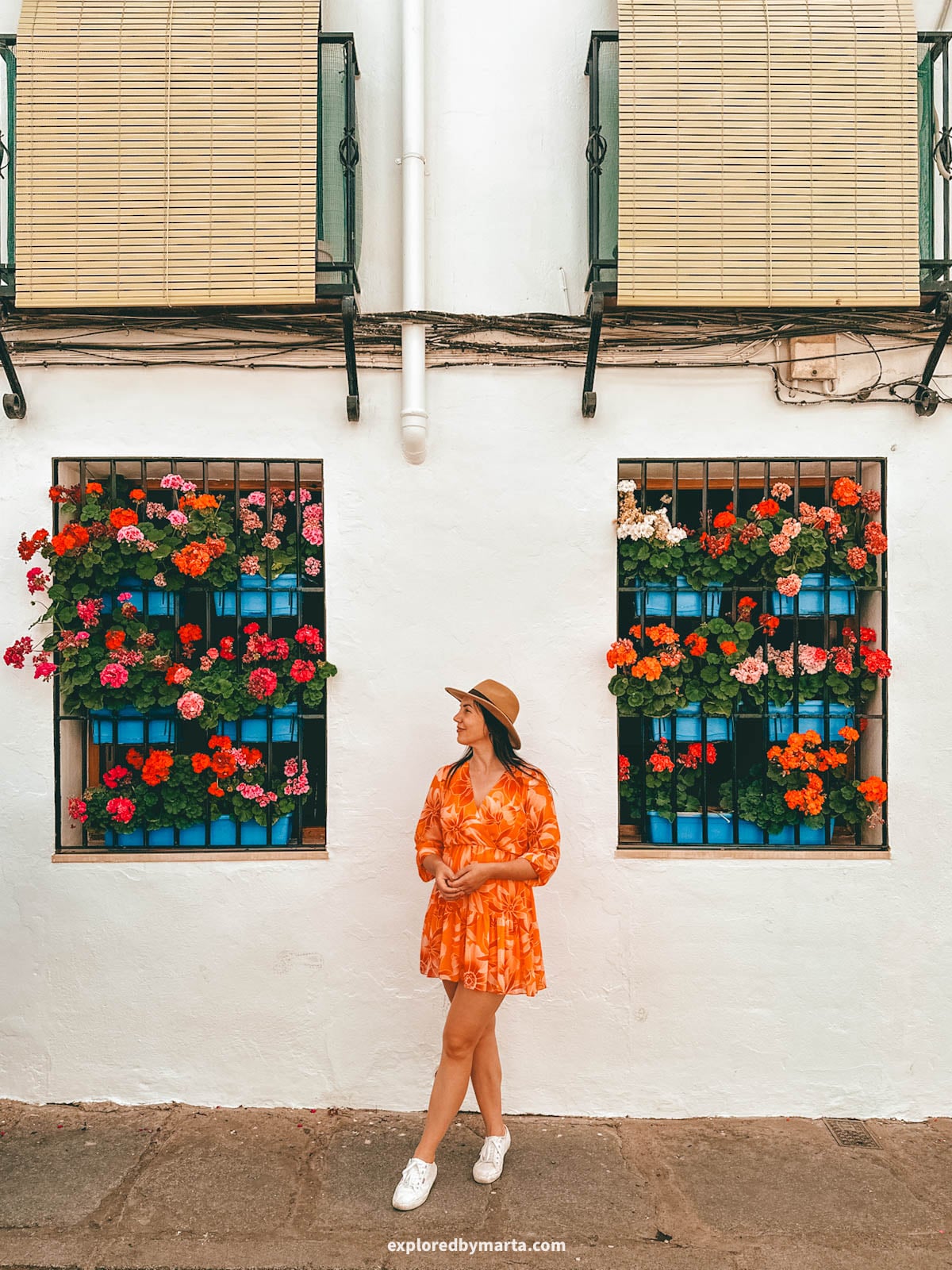
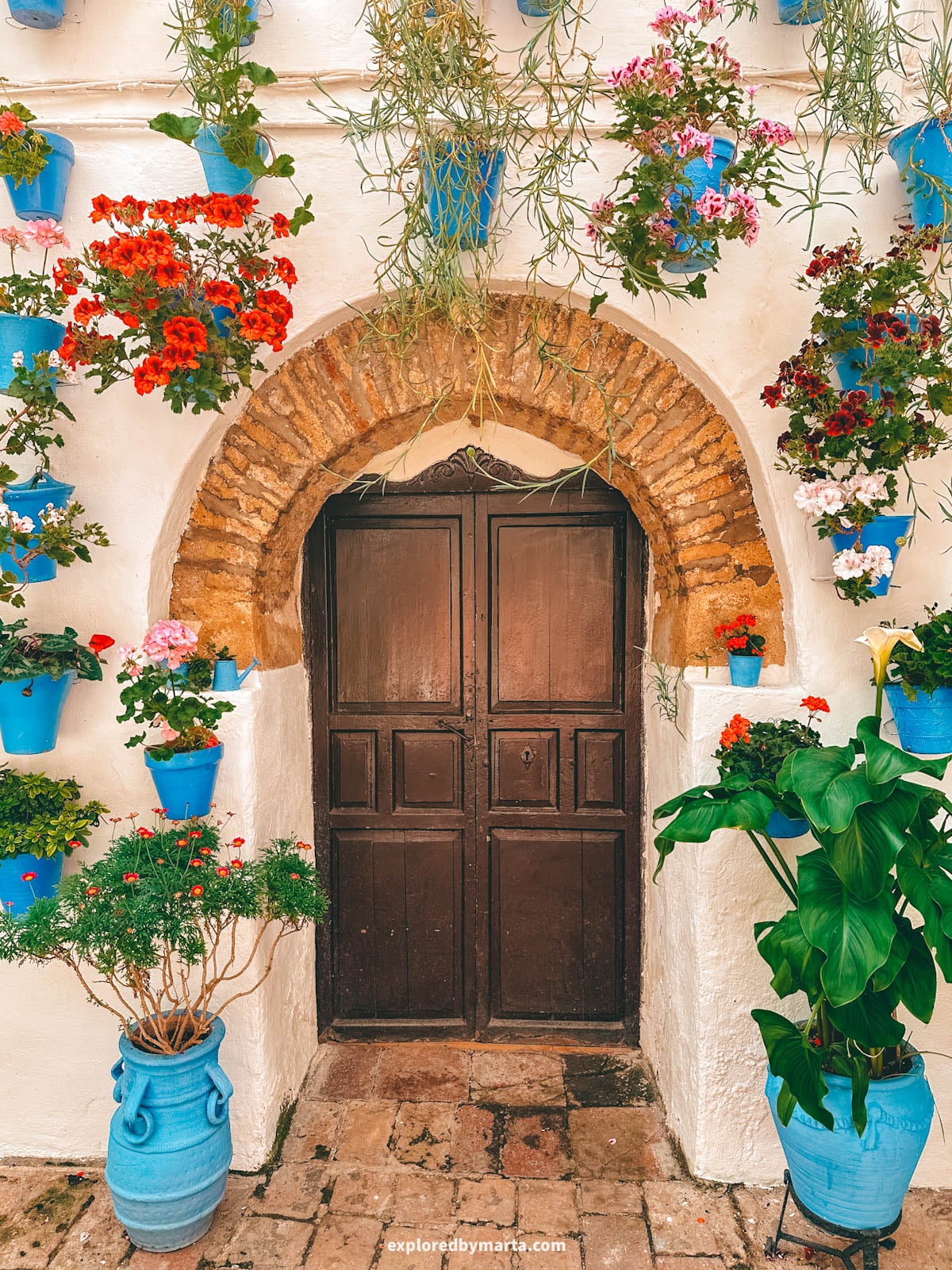
Tens of private courtyards open up to visitors during this time, and access to all the patios is completely free.
If you happen to visit during the festival, there is a whole official program, map, and timetable so you can plan your visits. May is the most impressive time because every patio owner really goes all out to win the prize. The patios are at their most flowery and beautiful!
Just keep in mind – the festival attracts a LOT of people. The city gets very busy. Beautiful? Yes. Peaceful? Not really, haha. 😄
But what to do outside the patio festival season?
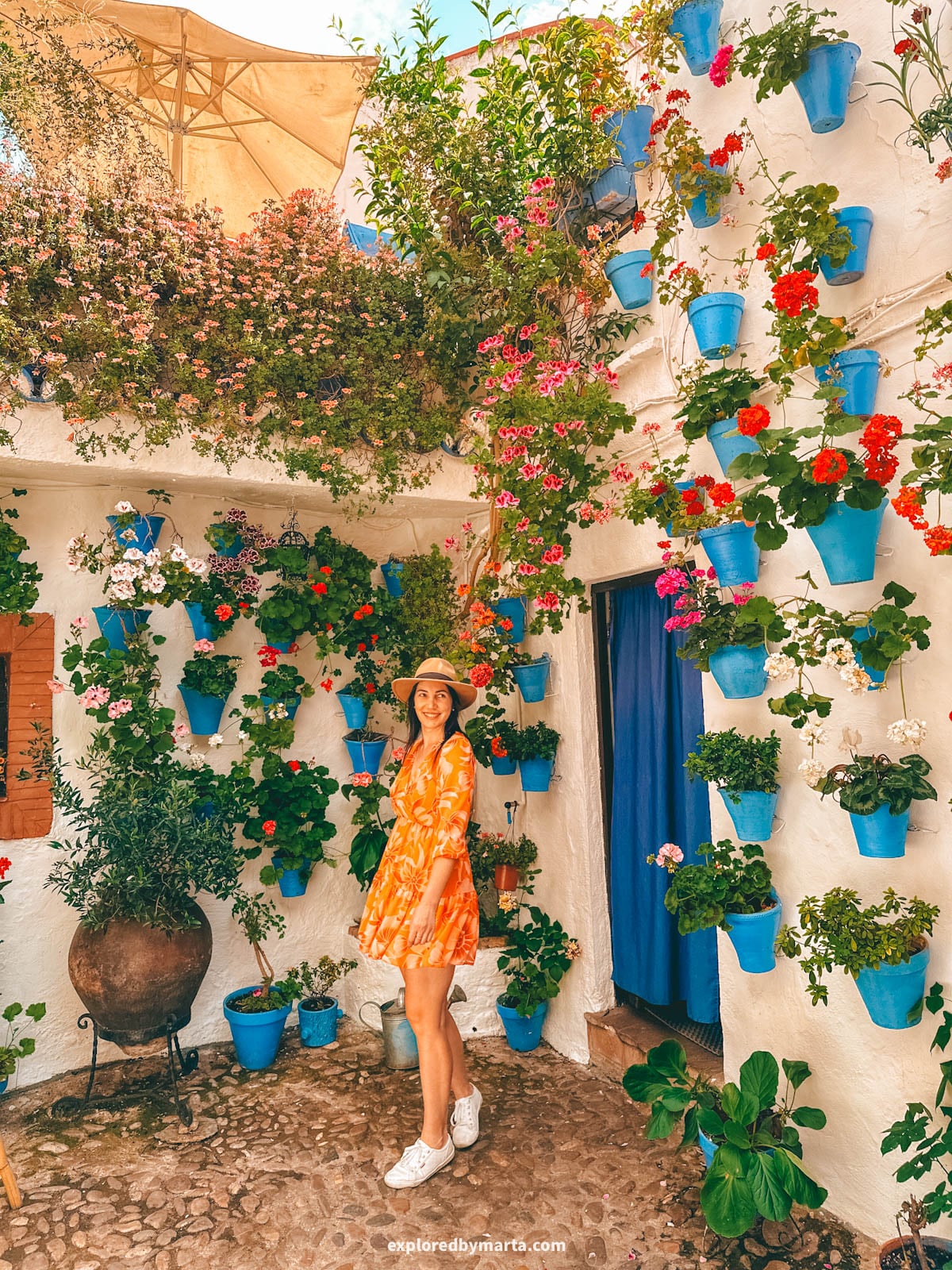
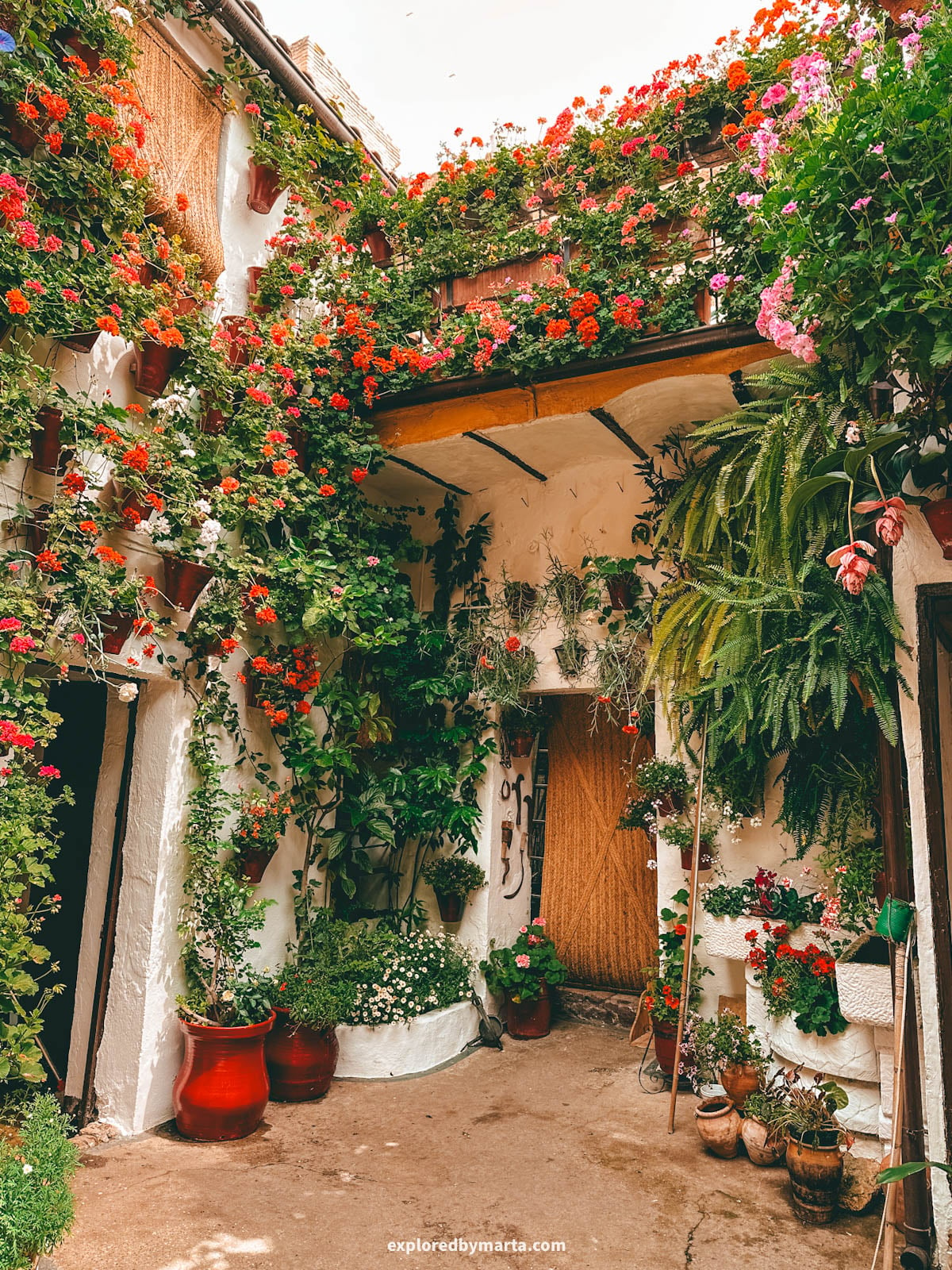
No, you do not have to visit Córdoba in May to see the patios! Many courtyards are maintained throughout the year, especially in spring, summer, and autumn when there are still plenty of flowers in bloom.
You can check this Córdoba tourism website for a list of patios you can visit on your own. They even have a downloadable PDF with a map and information about each patio.
However, the fastest and easiest way to see the most beautiful and awarded patios in Córdoba is by joining a guided tour.
You will get to learn about the patio tradition, hear stories about each courtyard, and see the most beautiful ones without wandering around endlessly.
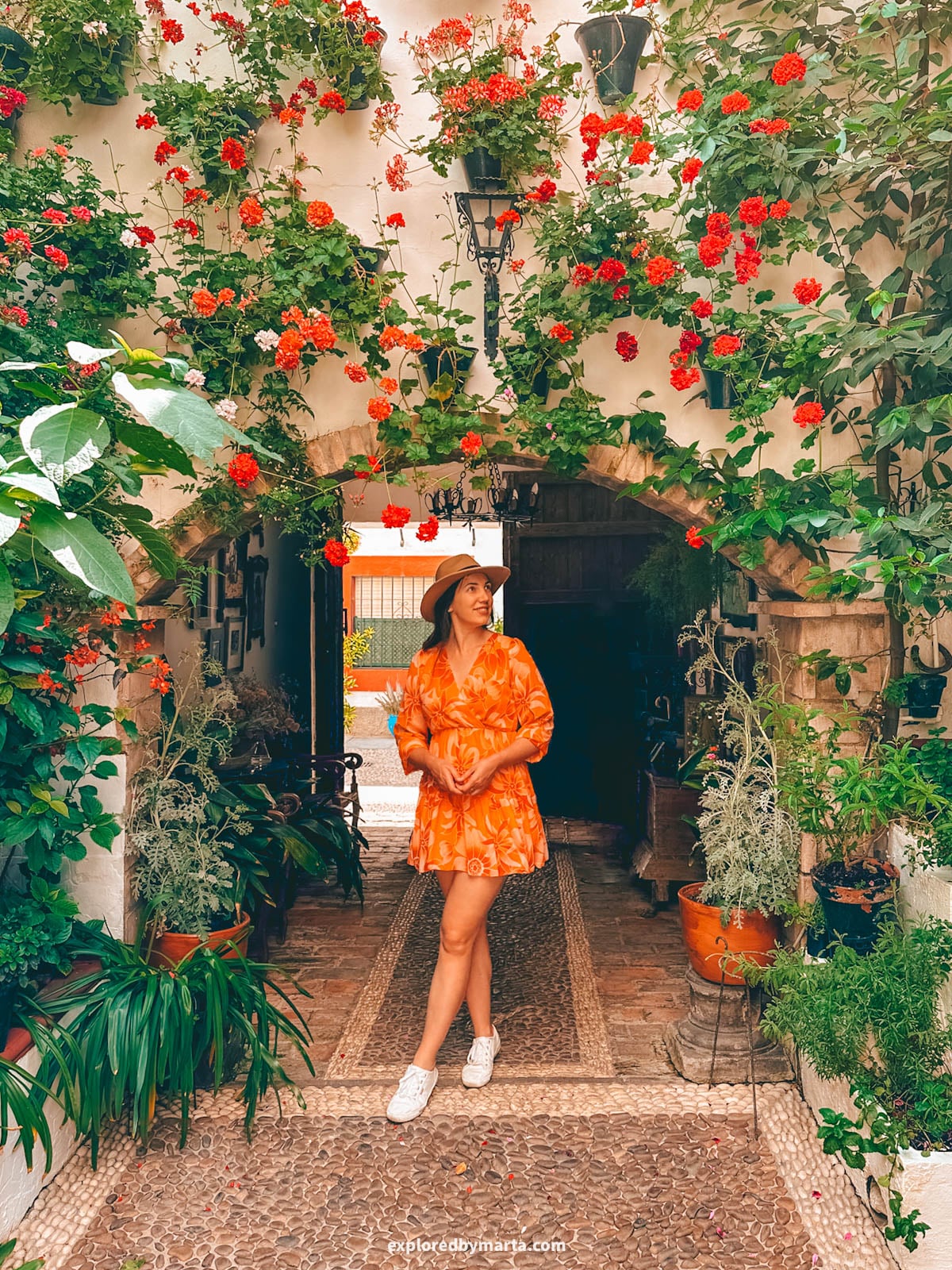
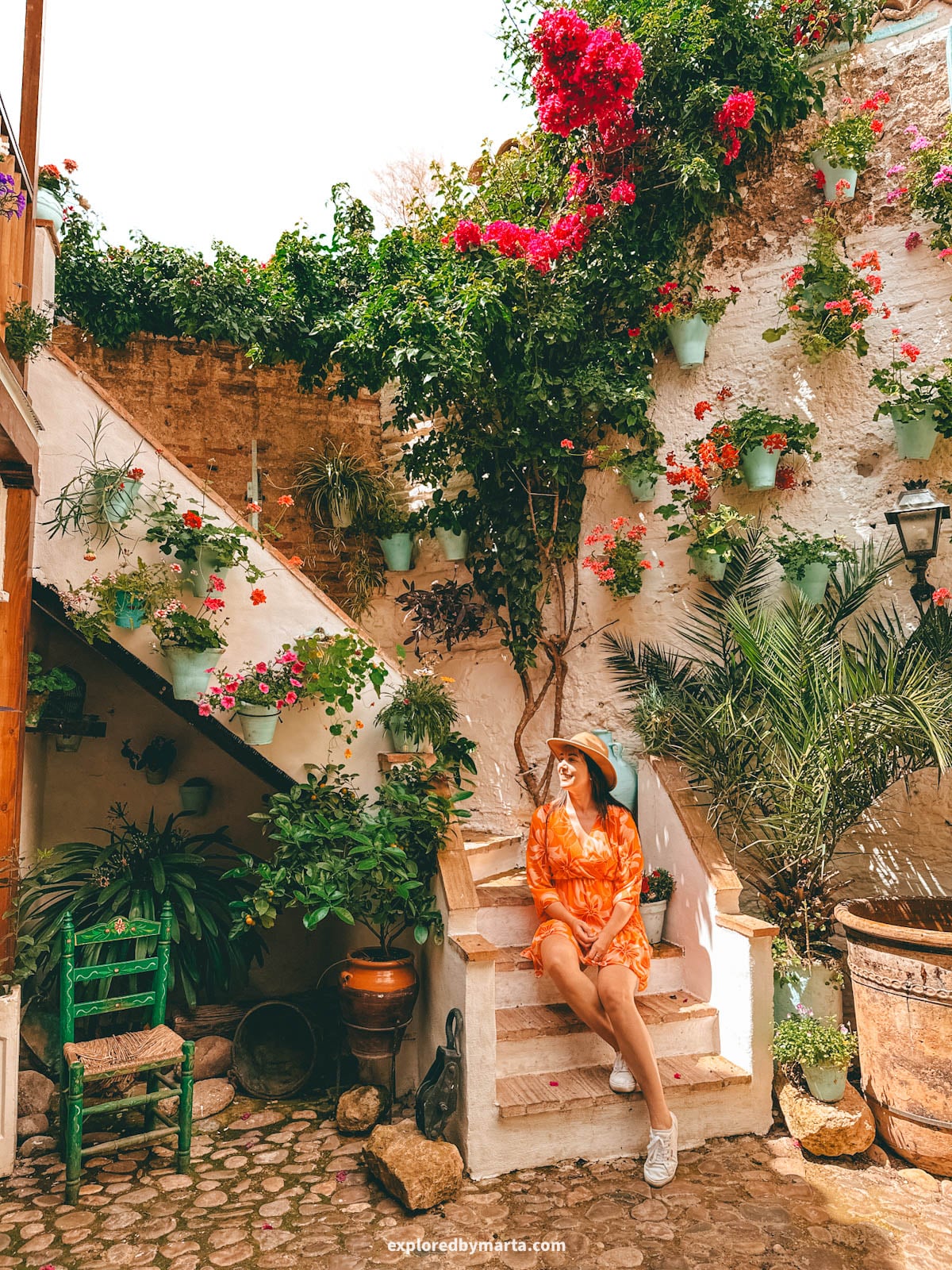
If you visit Córdoba between February and June, you can also walk the Ruta de Patios Córdoba route. This is a self-guided patio route where you can visit specific patios for a set price – 6.50 EUR per adult.
We did this tour and did not regret it. Those are some of the most beautiful and awarded patios in the city, so we felt like we got exactly what we wanted.
To do this route, go to Ruta de Patios Córdoba ticket office, buy a ticket, get a map, and explore. They do have specific opening hours, so you need to time your visit to do this route.
If their timetable doesn’t work for you, just wander around that area and the adjacent streets, and you’ll see signs on the street marking private patios that are open to visitors (usually for a small donation). Just find those and enjoy!
6. Explore the gardens at Alcázar de los Reyes Cristianos
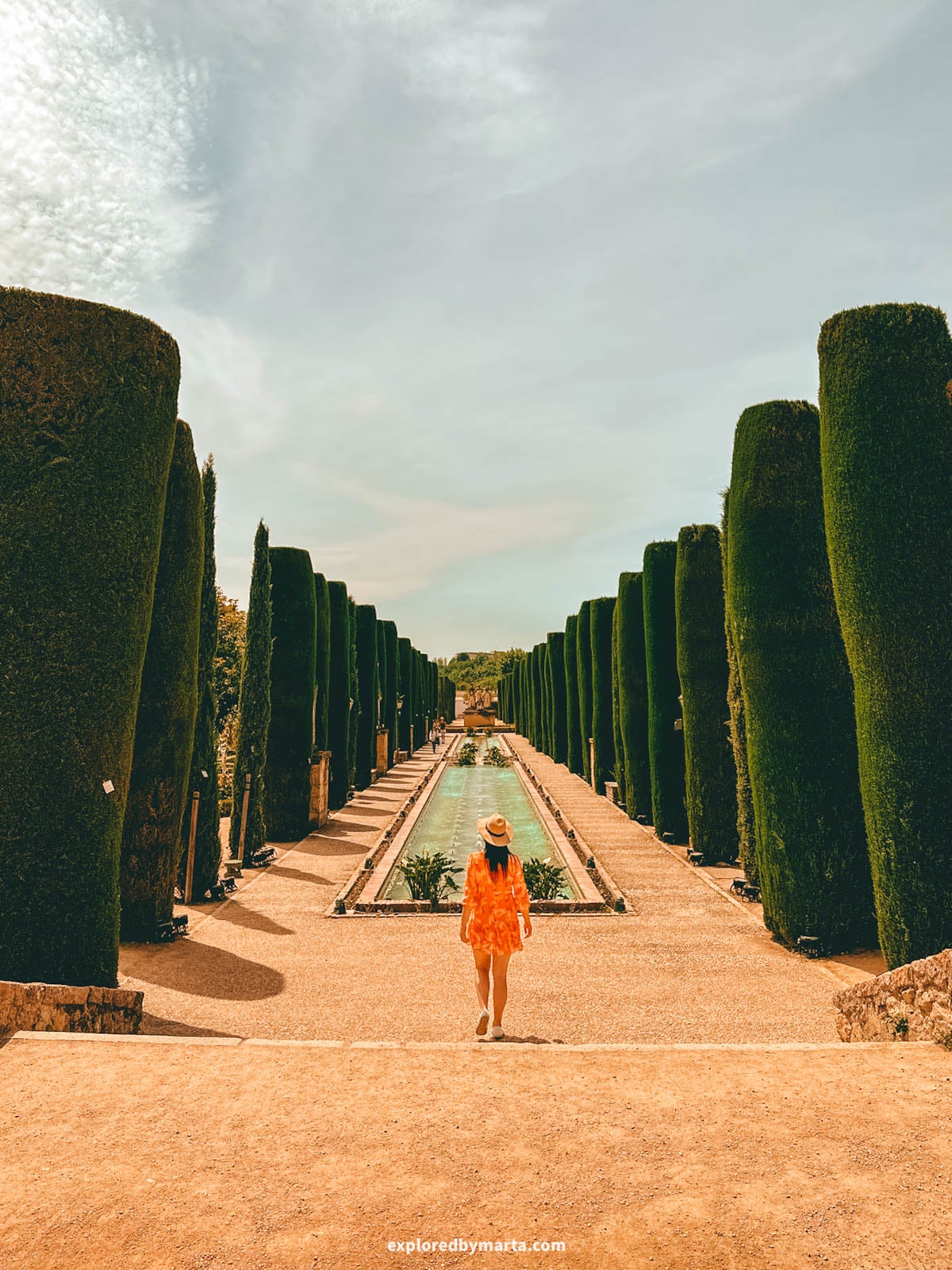
Alcázar de los Reyes Cristianos (Castle of the Christian Monarchs) is one of the most important historic sites in Córdoba and a definite must-visit when you are in the city.
It is a 14th-century palace complex with towers, defensive walls, courtyards, and seriously stunning gardens. You can climb up the defensive walls and towers for some great views over Córdoba.
One thing I didn’t know before visiting is that the Alcázar has a Christopher Columbus connection – while he was trying to get support for his voyage across the Atlantic, he spent time in Córdoba and met with the Catholic Monarchs, Isabella and Ferdinand, at the Alcázar de los Reyes Cristianos.
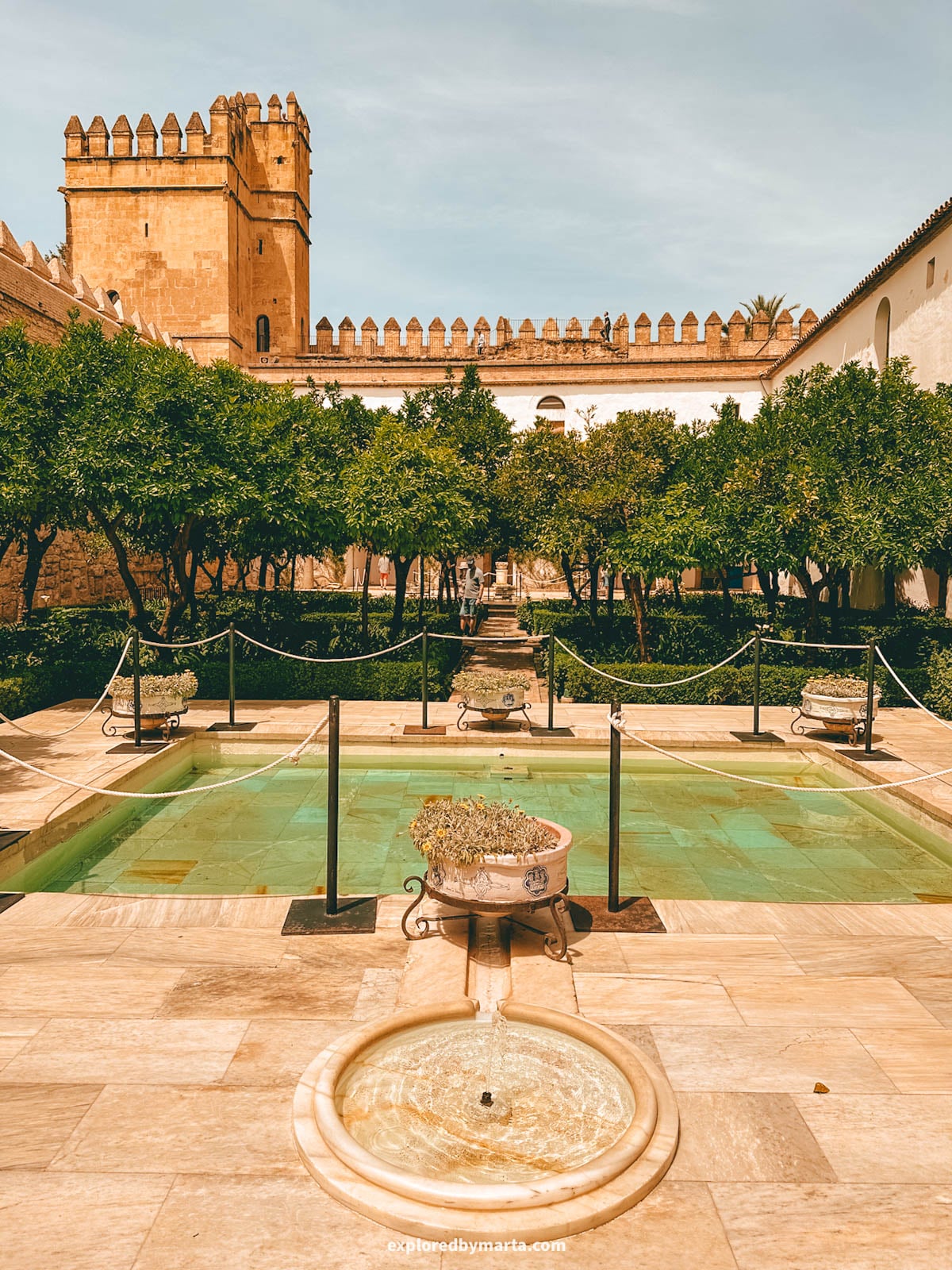
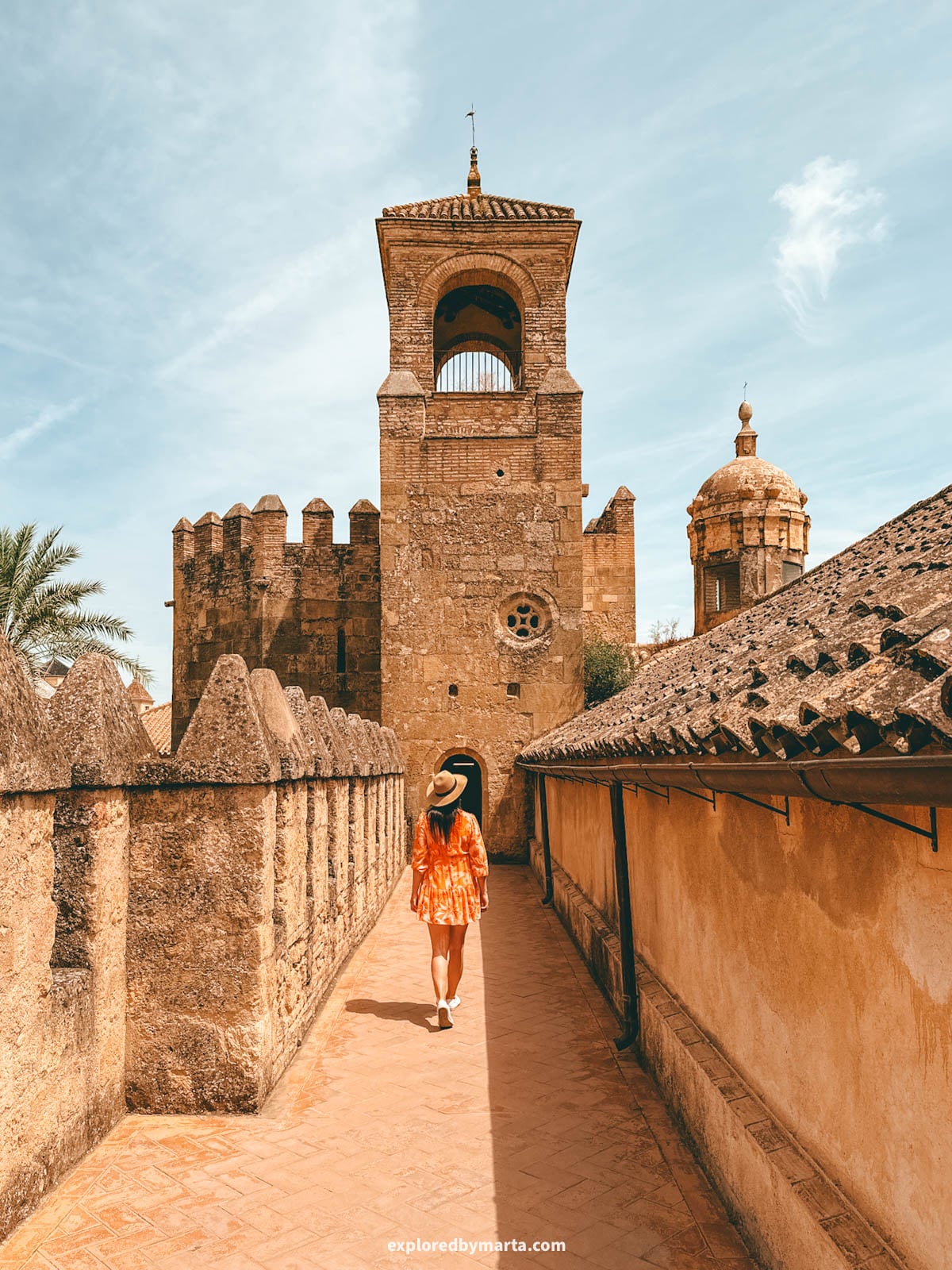
Columbus also met a local woman in Córdoba who later became the mother of his son, Hernando Colón. So yes, this place has some pretty big history attached to it beyond just the towers and gardens.
I will be honest, the palace itself was not the most exciting part for us.
The real highlight here is the gardens. They are massive, super well-maintained, and have a large pool with fountains, decorative trees cut into different shapes, and statues of the Christian monarchs lined up alongside the walkways.
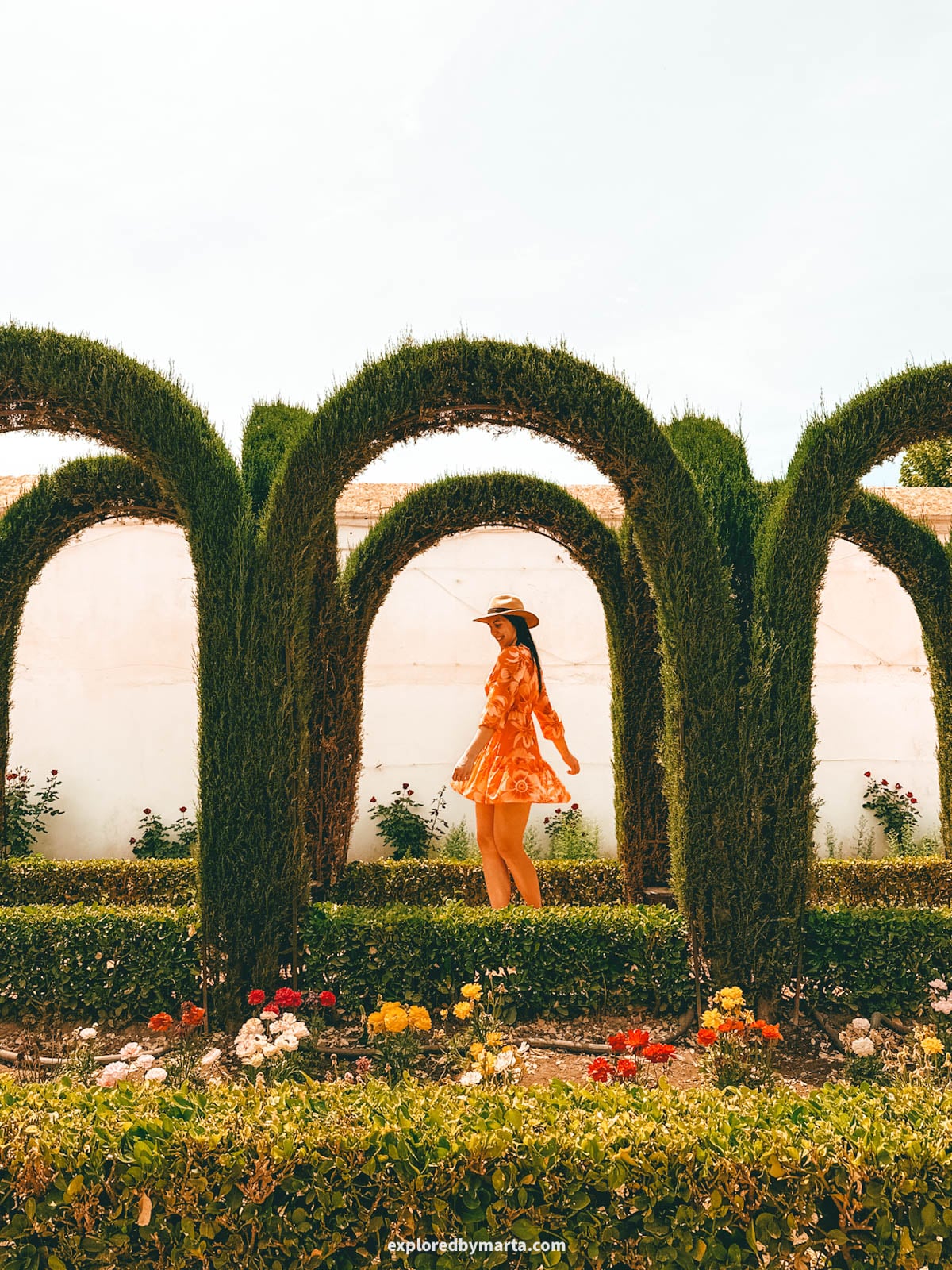
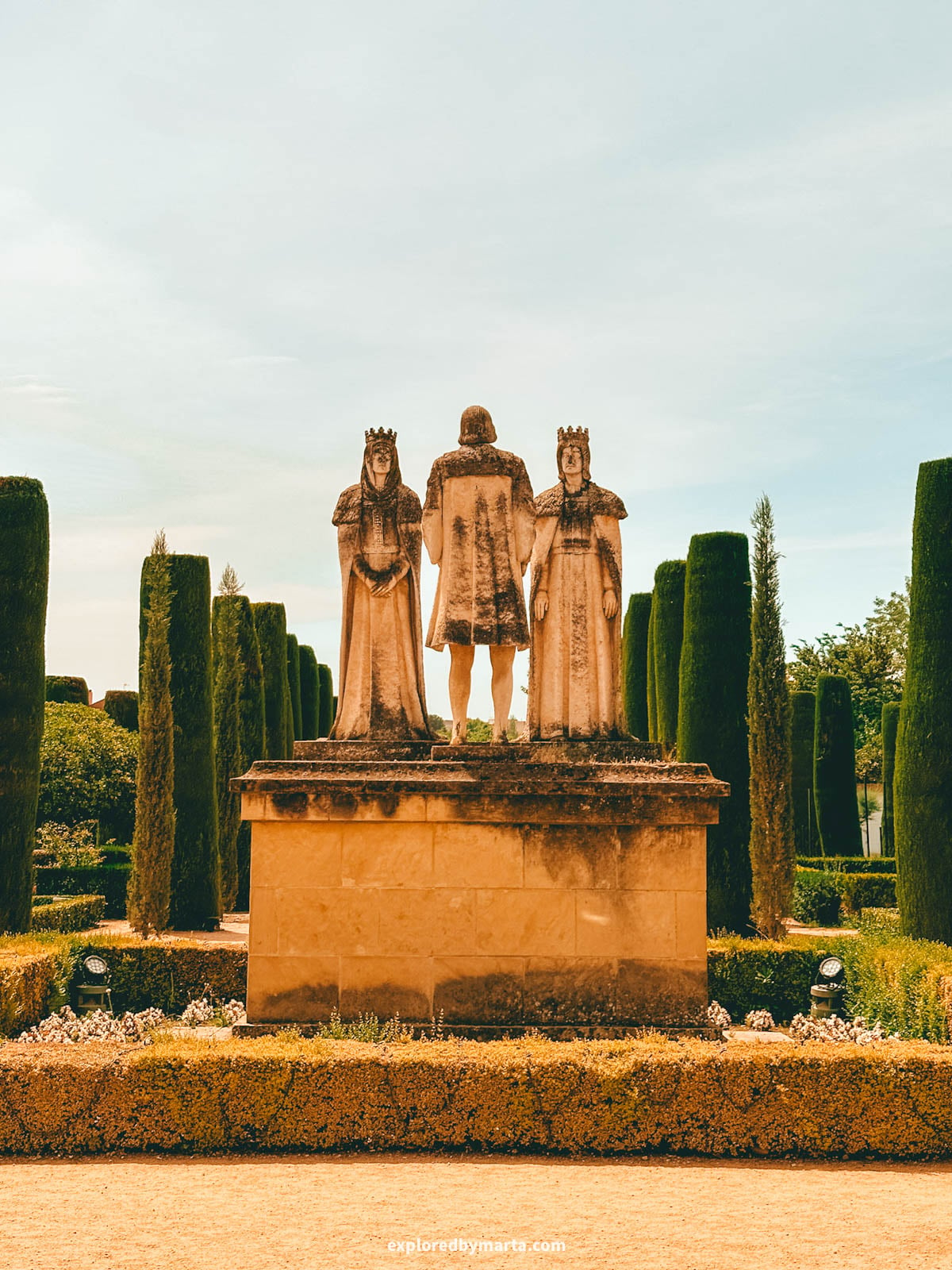
Honestly, the gardens of the Alcázar were among the most beautiful ones we saw in all of Andalusia! And considering how hot Córdoba gets, I kept thinking about how much effort it must take to keep them looking this good. 🥵
You need a ticket to enter the Alcázar (5 EUR per person). You can buy them online or at a ticket office in the nearby park. We spent about 1 to 2 hours here.
If you are visiting during high season, I really recommend booking ahead or going early to avoid the lines. Or – my honest and a bit crazy tip – go in the middle of the day during the heat (like we did!).
People usually stay away from open spaces in the afternoon, so the gardens were almost empty when we showed up at 2 PM during a heat wave. Just bring water and sunscreen, haha. 🤪
Location: Alcázar de los Reyes Cristianos
7. Walk across the iconic Puente Romano bridge
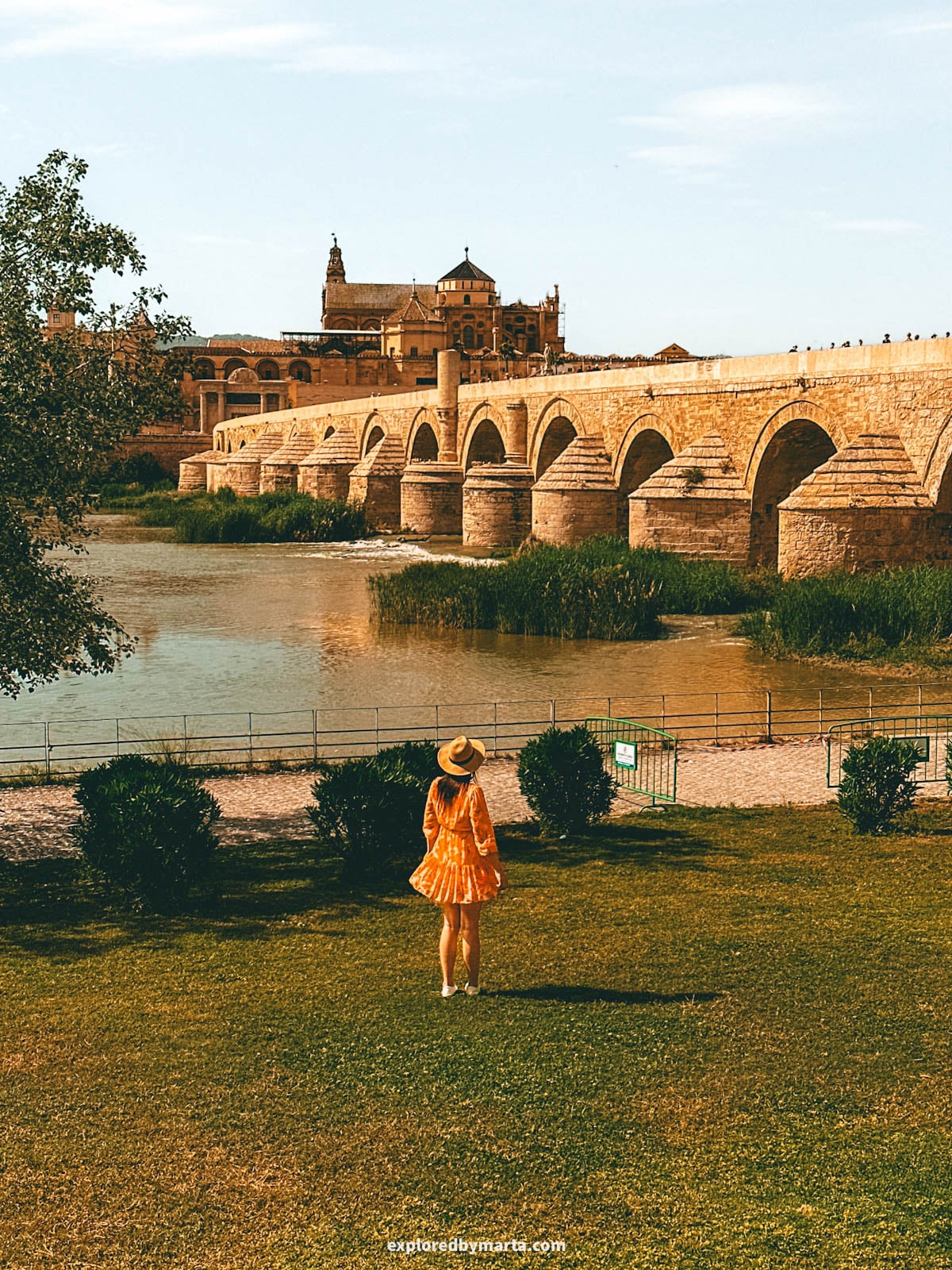
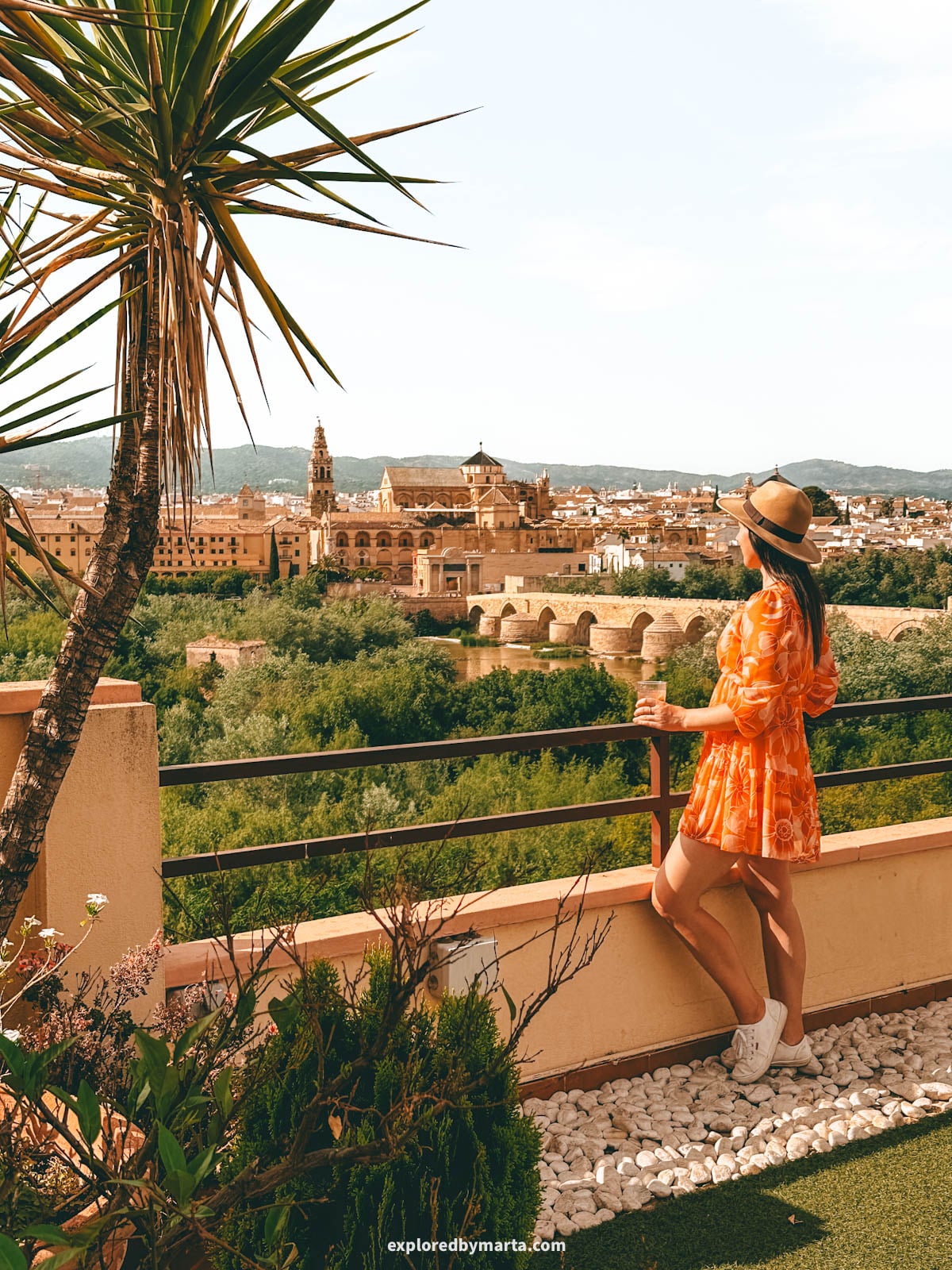
Crossing the Puente Romano is honestly a must-do thing when visiting Córdoba! This iconic Roman bridge crosses the Guadalquivir River and connects both sides of the city. It is the symbol of the city!
The original bridge dates back to the 1st century BC, when it was built by the Romans (yes, that old!). Of course, the bridge has been reconstructed many times over the centuries, but the structure you walk across today still gives you serious historic vibes.
Before you cross the bridge, on the historic center side of the bridge, you will find the Puerta del Puente (Gate of the Bridge).
This massive stone gateway was built in the 16th century and was once part of the defensive walls of Córdoba, serving as one of the entrances to the city.
Today, the gate is purely a beautiful reminder of the past. It has two columns, sculptures on both sides, and a coat of arms in the middle. Definitely take a moment to admire it on your way to the bridge!
Fun fact: The Roman Bridge of Córdoba was used as the base for the Long Bridge of Volantis in the Game of Thrones TV series, although the final version was heavily transformed.
Location: Puente Romano de Córdoba – Puerta del Puente
8. Climb up Torre de la Calahorra
Once you cross the Puente Romano bridge, you will find Torre de la Calahorra waiting for you on the other side. This is a big medieval stone tower that sits right at the end of the bridge – and it is one of the most underrated stops in Córdoba!
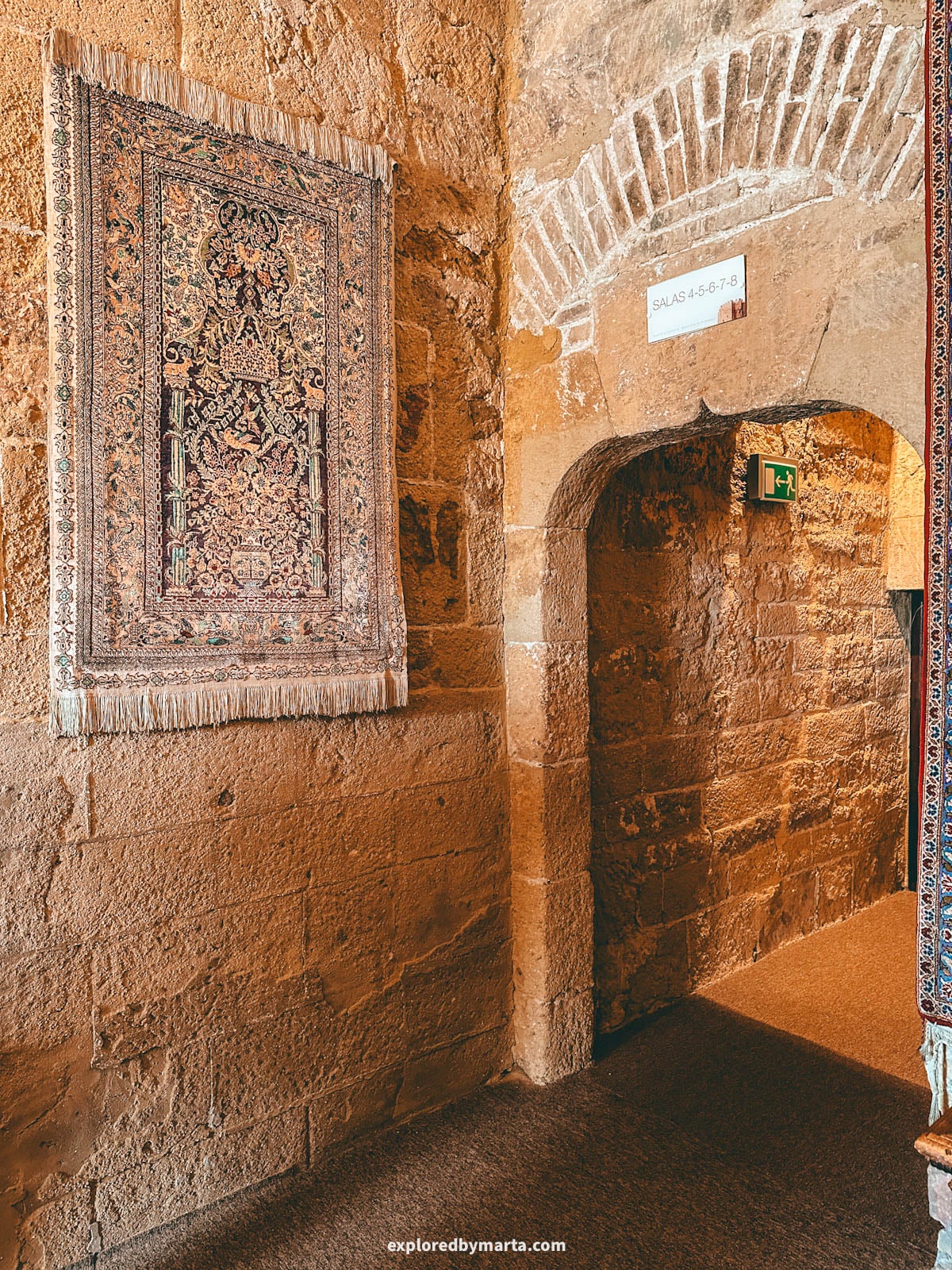
Turns out, the tower hosts a small museum about the history of Córdoba (Museo Vivo de Al-Andalus), where you can learn about the city’s Moorish past, the era of religious tolerance, and the cultural influences that shaped Córdoba into what it is today.
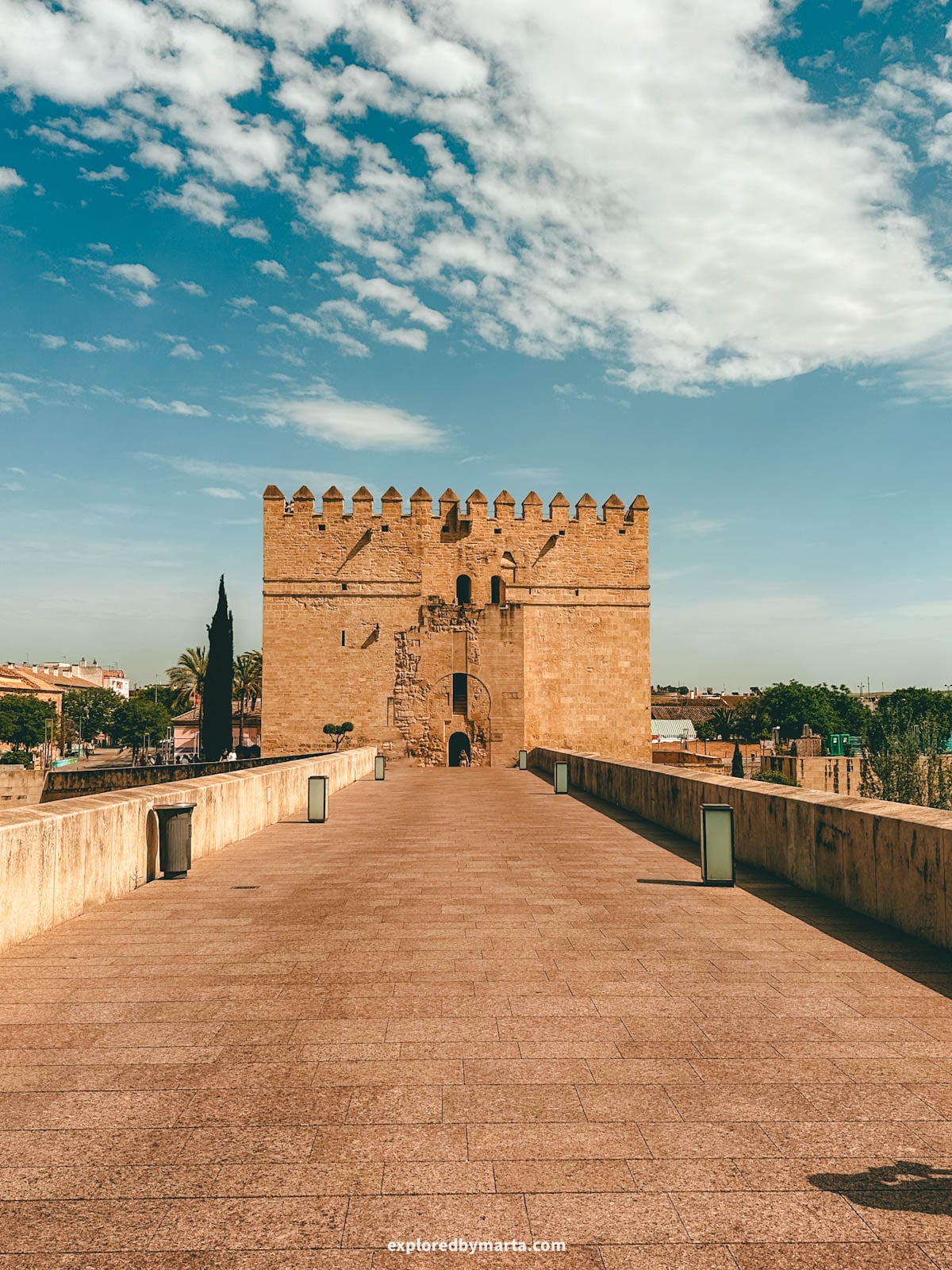
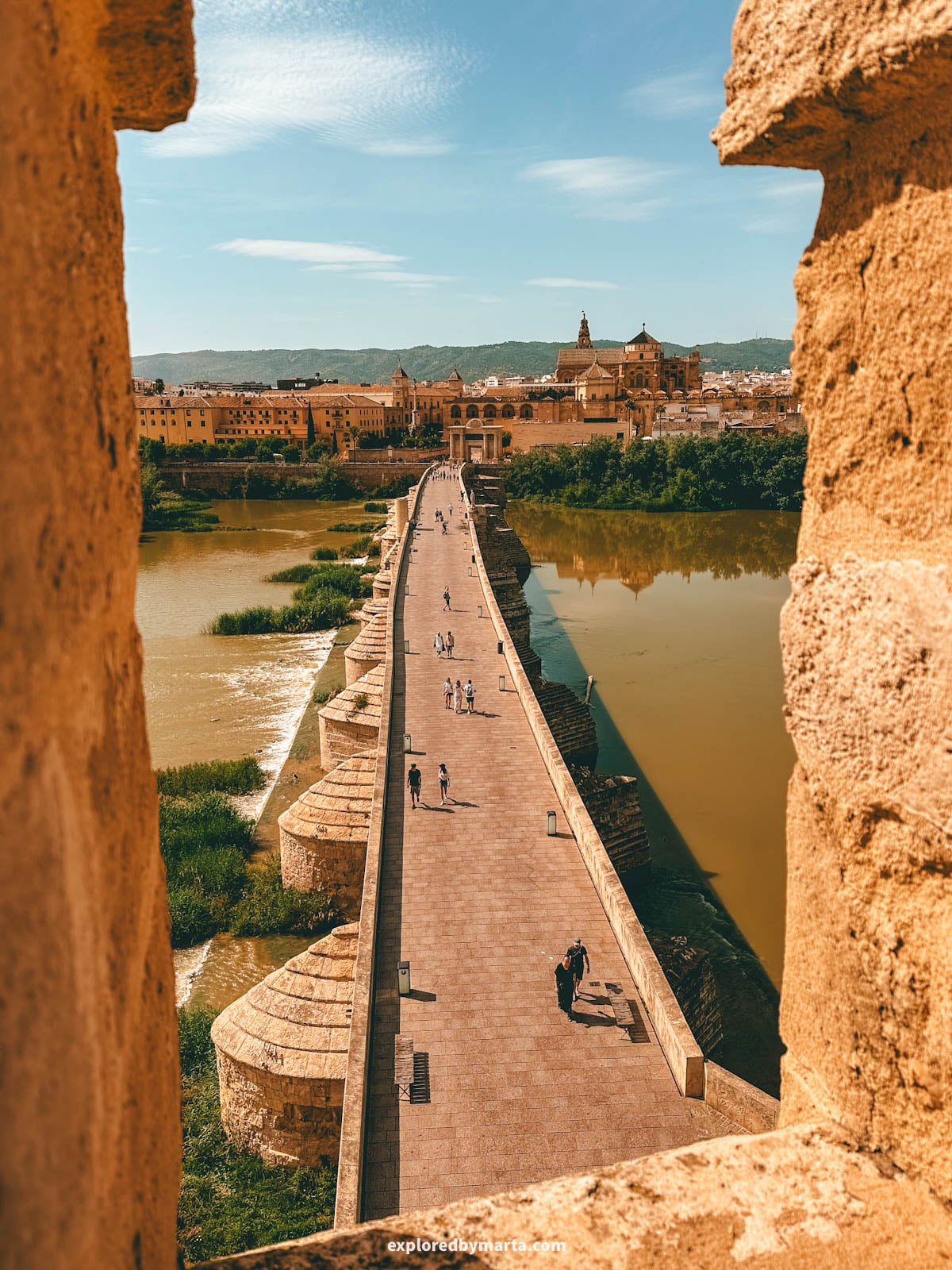
We did visit the museum, and it was quite nice, but, honestly, my favorite part was climbing up to the rooftop! From the top, you get amazing panoramic views over Córdoba – the bridge, the river, the Mezquita-Catedral, and the city skyline all in one shot.
It is such a different perspective than walking around at street level.
If you have 30 minutes to spare, I recommend visiting the tower and climbing up to the roof. You do have to pay an entrance fee of 4.50 EUR per adult to enter, though.
Location: Torre de la Calahorra
9. Admire the courtyards of Palacio de Viana
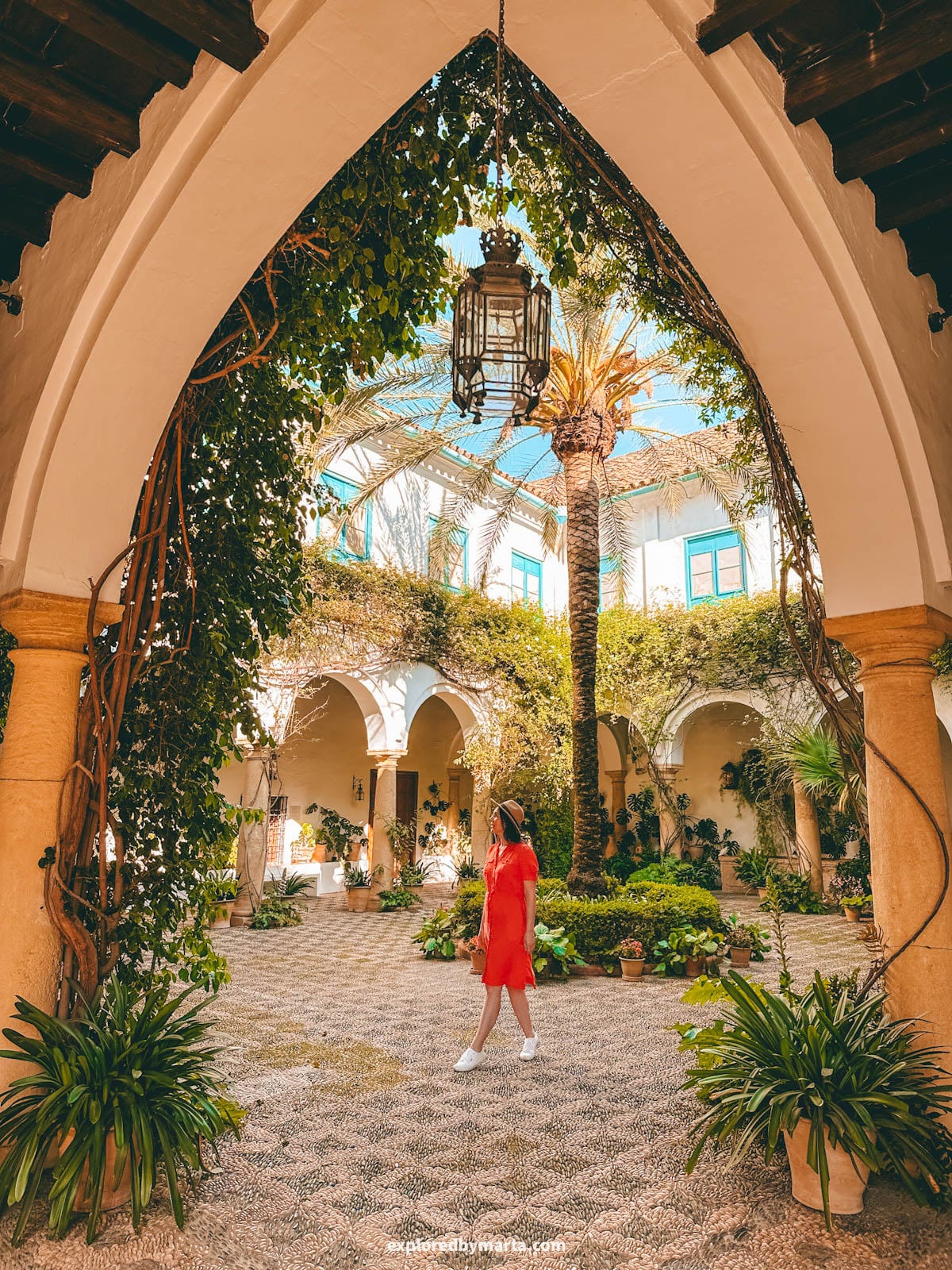
Palacio de Viana is a stunning Renaissance palace in Córdoba with rooms full of art, historical collections, and the most beautiful patios you can imagine.
If you visit Córdoba outside the regular patio season, this is THE place to come to see the city’s famous flower courtyards!
This palace-house gives you a glimpse into how aristocratic and wealthy families lived in Córdoba centuries ago.
Every room inside is filled with original relics, furniture, tapestries, and tools that were used in daily life. It was pretty cool to see how they lived back in the day!
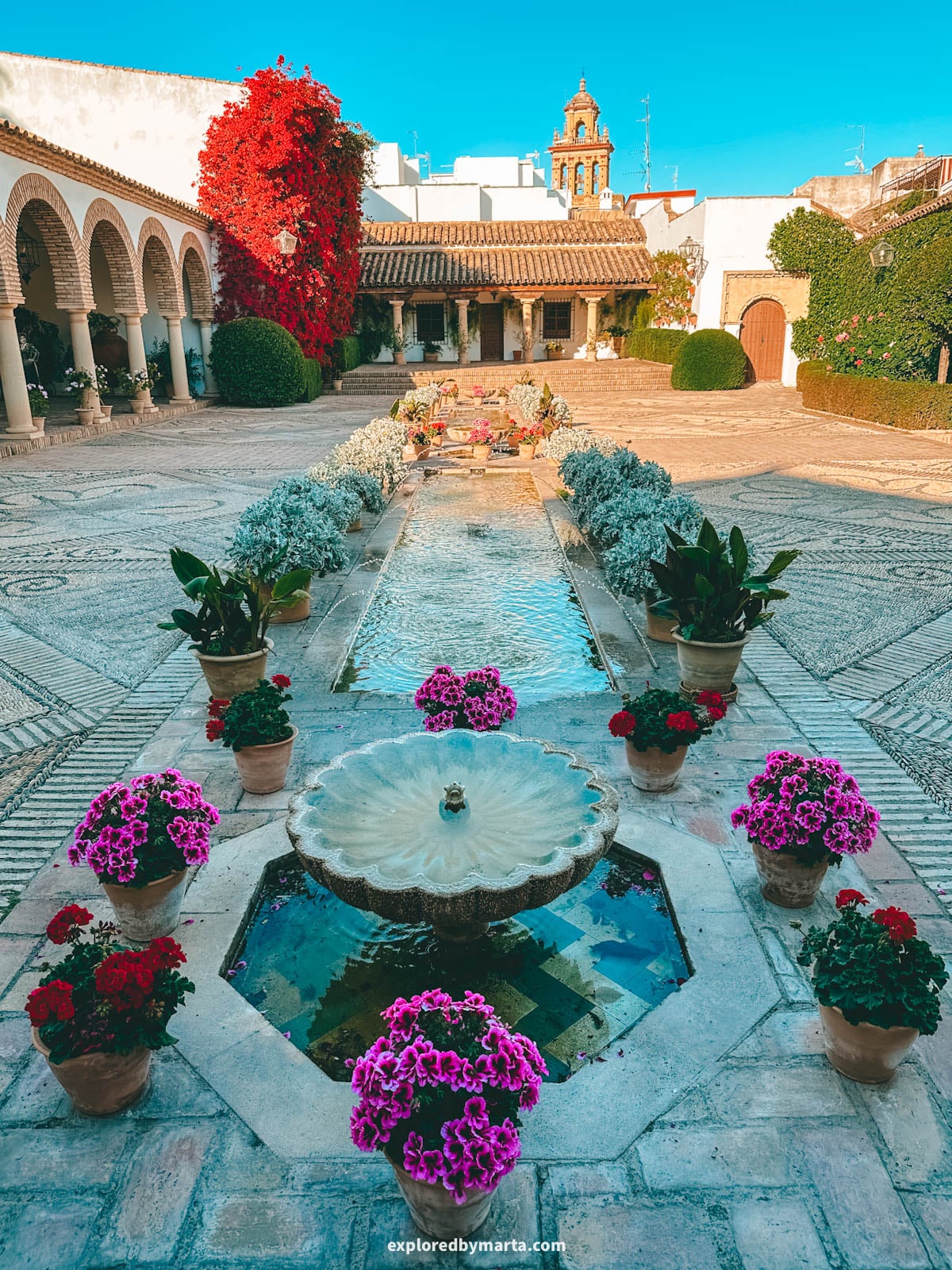
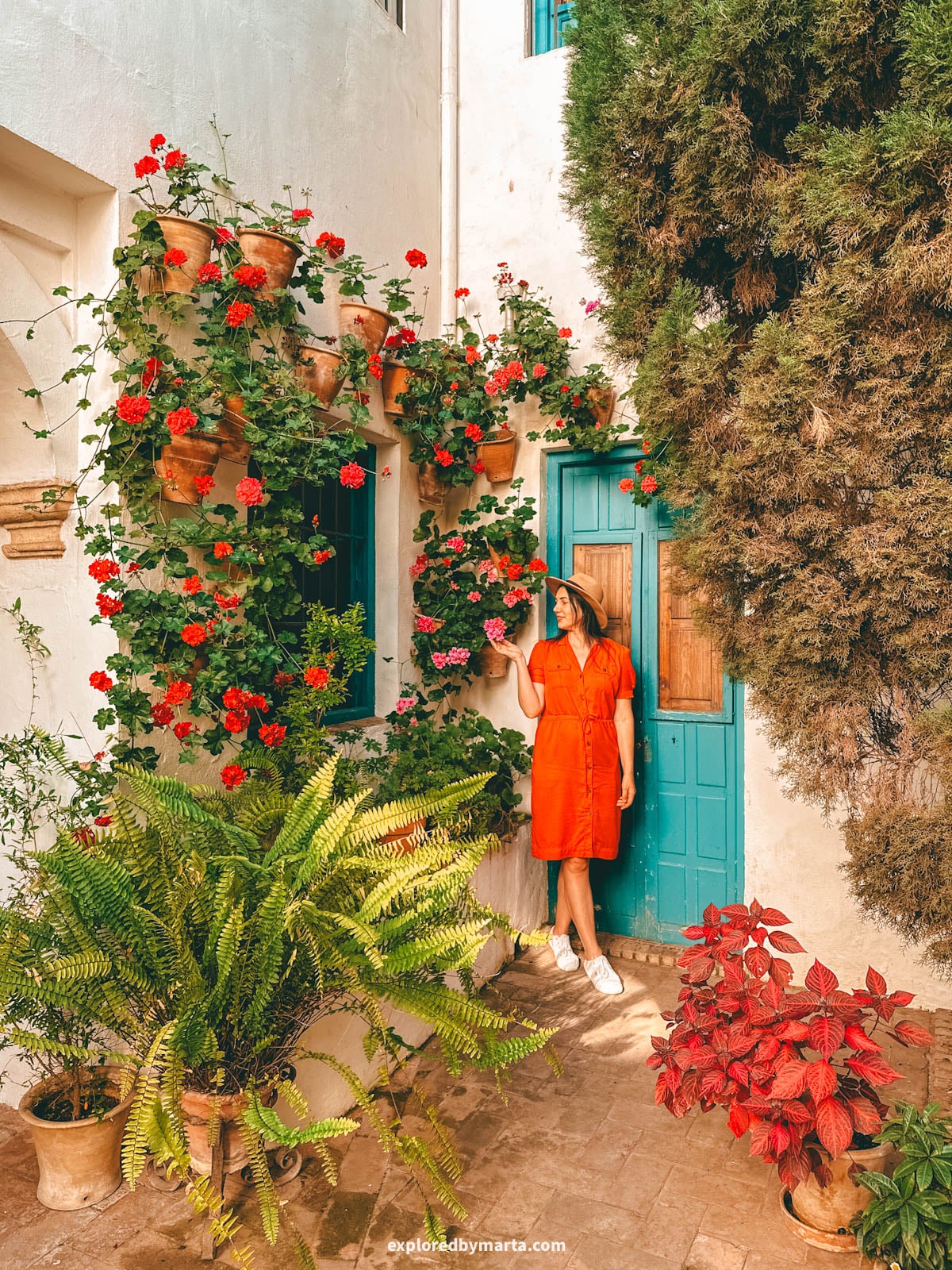
But honestly, the real highlight here are the patios. Palacio de Viana has multiple courtyards, and each one is unique with its own style, plants, fountains, and beautiful tiled details.
We strolled around flower-filled gardens, walked through archways, and explored leafy corners. The whole palace felt like a maze of patios! 🤩
We arrived not long before closing and had limited time, but I was stunned by how big this place was. If I could do it again, I would come earlier in the day to give myself more time to wander slowly.
The entrance fee is 8.50 EUR per adult (ground floor only). Make sure to check their website before going, because they are not open every day. It’s definitely pricey, but they somehow have to take care of all those flowers, so I didn’t mind paying.
Location: Palacio de Viana – Entry tickets
10. Discover the secrets of the Jewish Quarter (Judería)
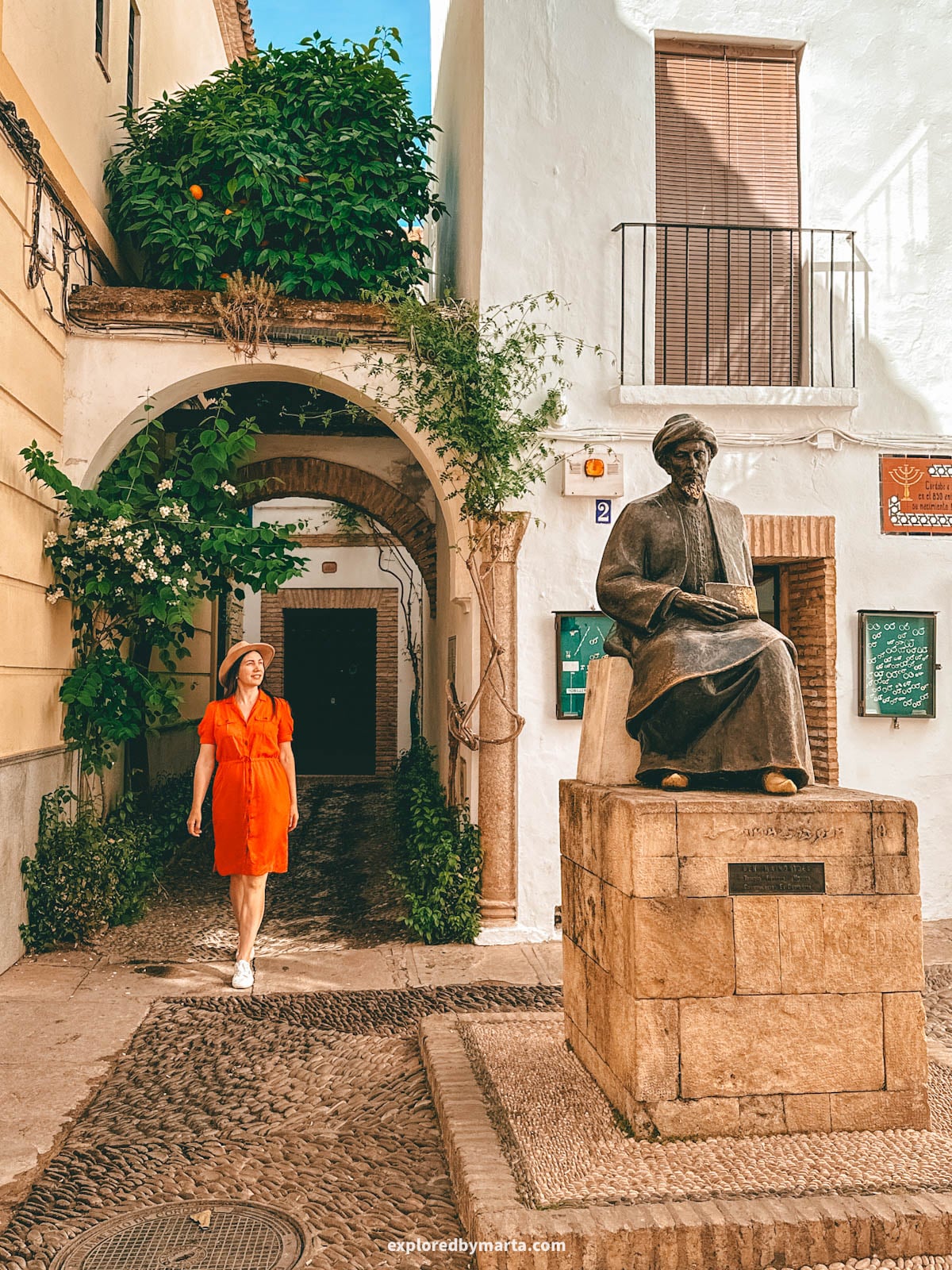
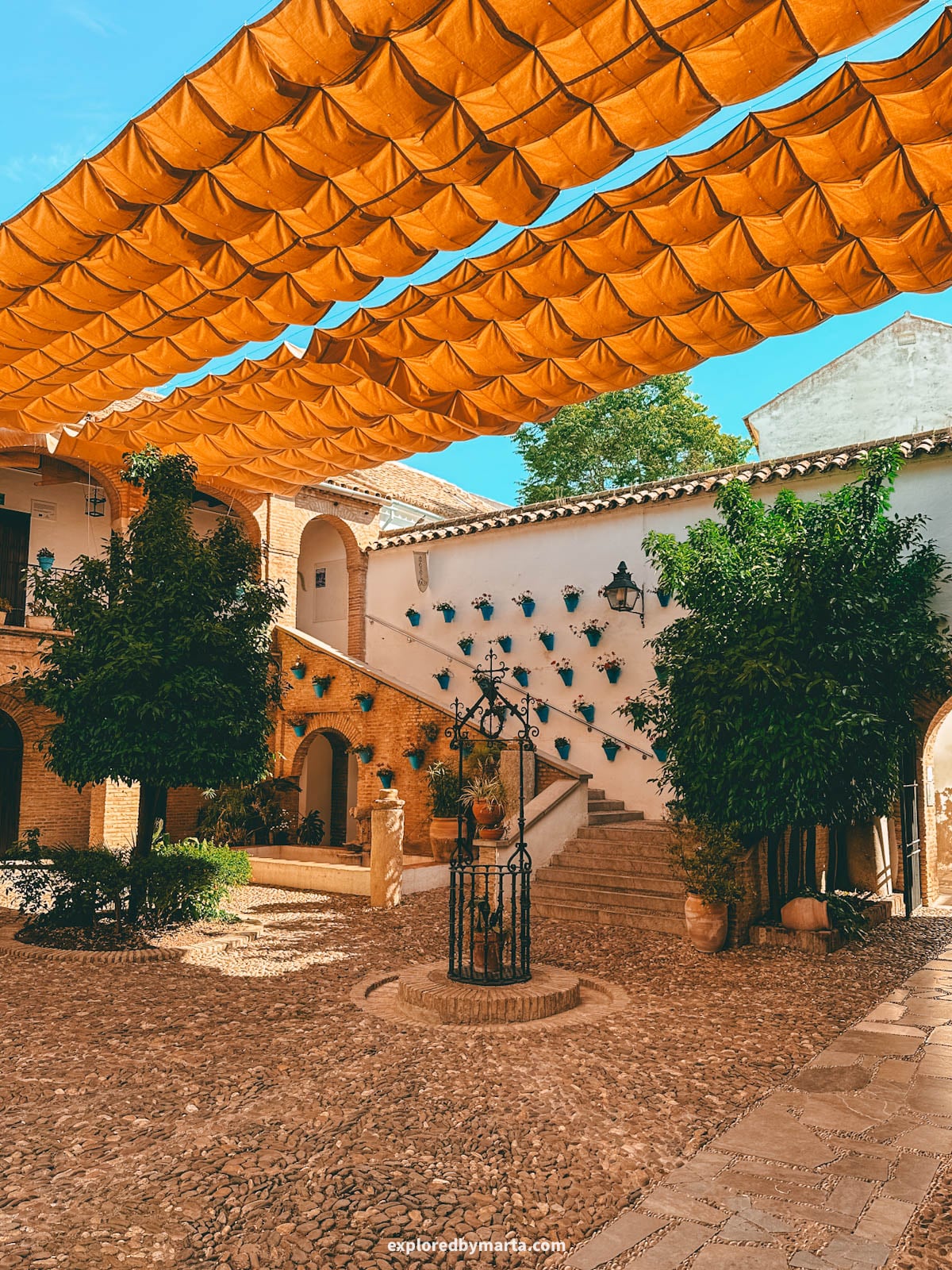
The Jewish Quarter (Judería) is one of the most magical neighborhoods in all of Córdoba and one of the most visited areas of the historic center. Walking through these narrow, winding streets must be on every Córdoba itinerary.
And it is so fun – you never know what you will discover around the next corner!
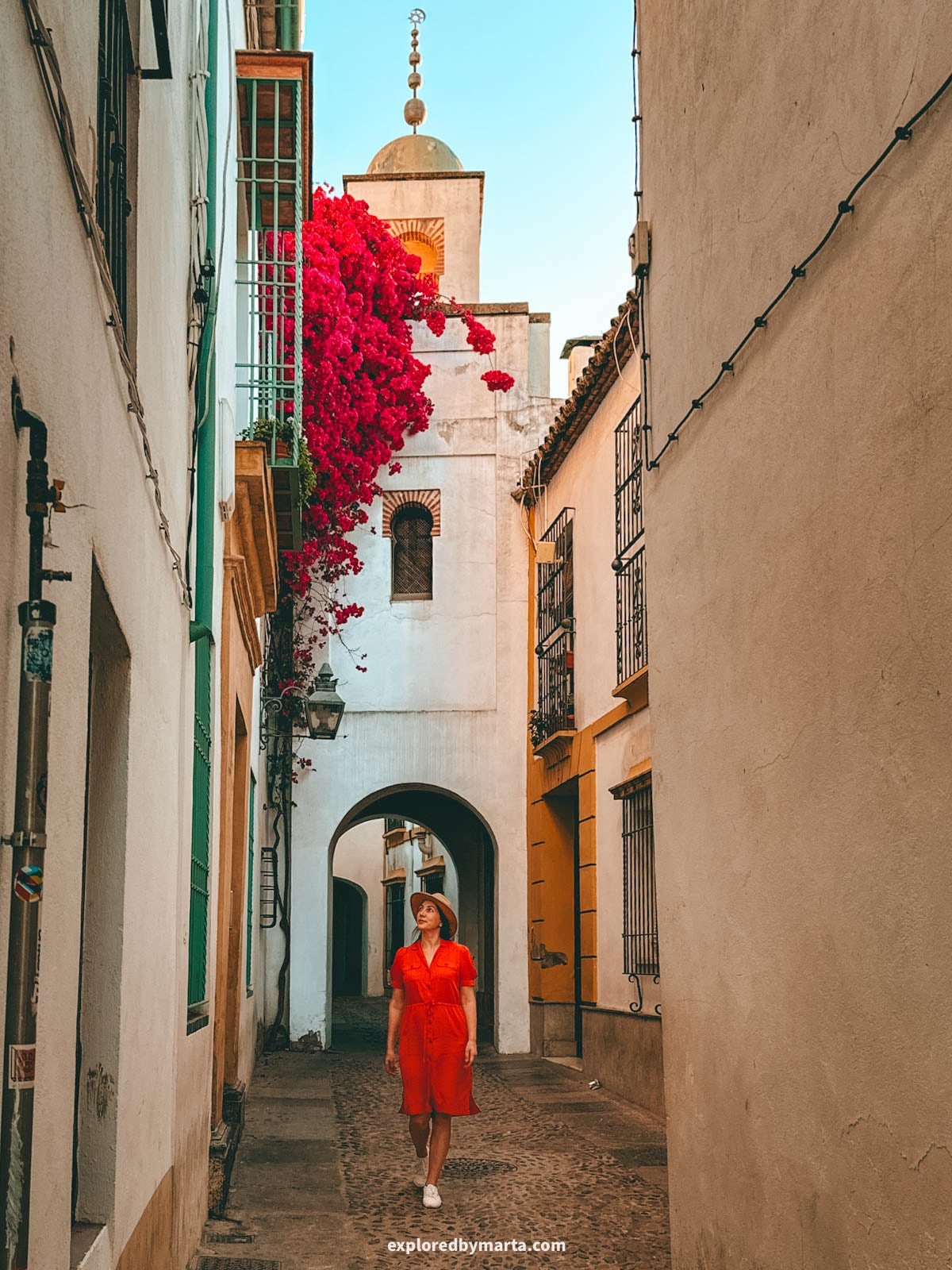
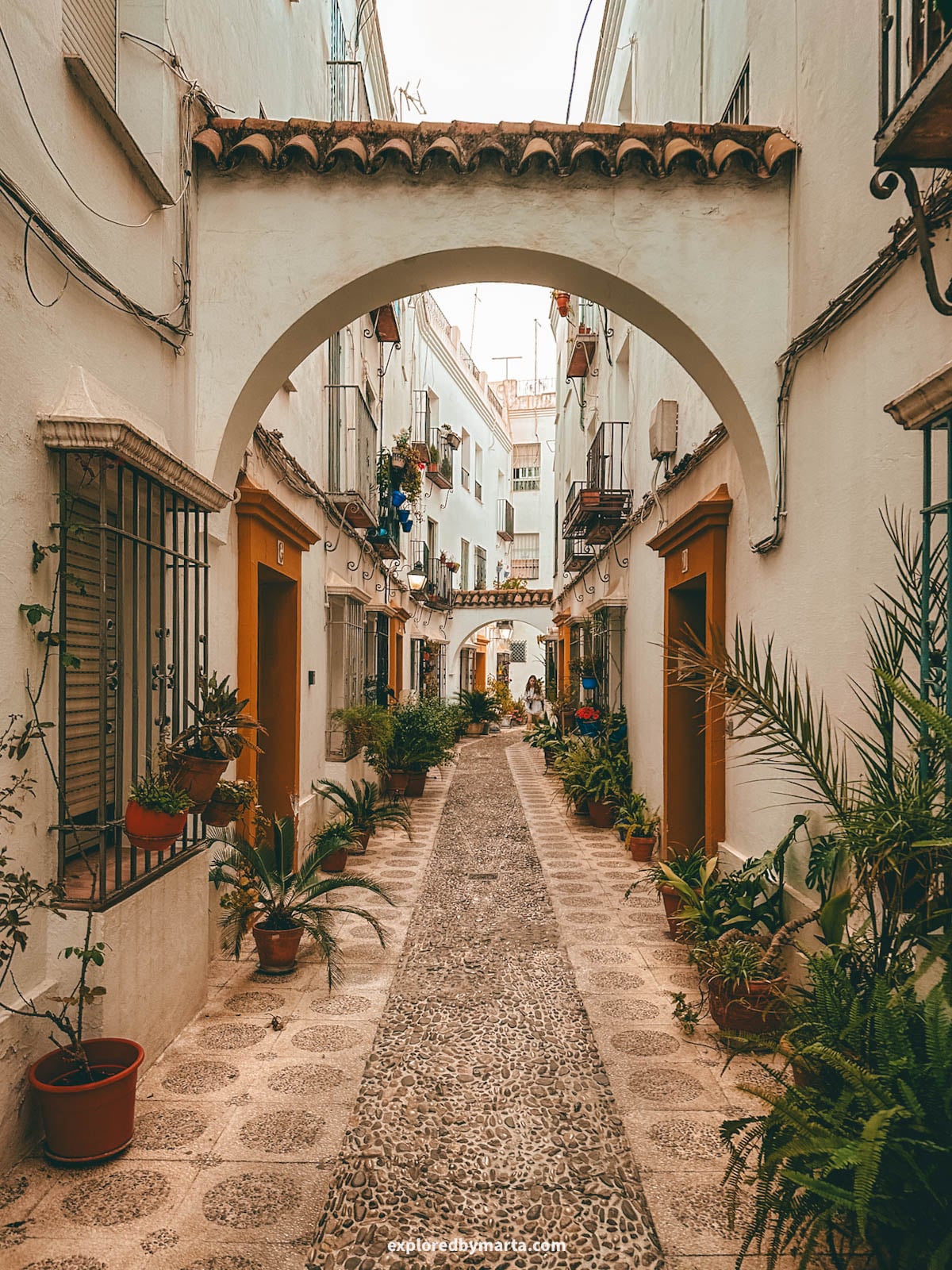
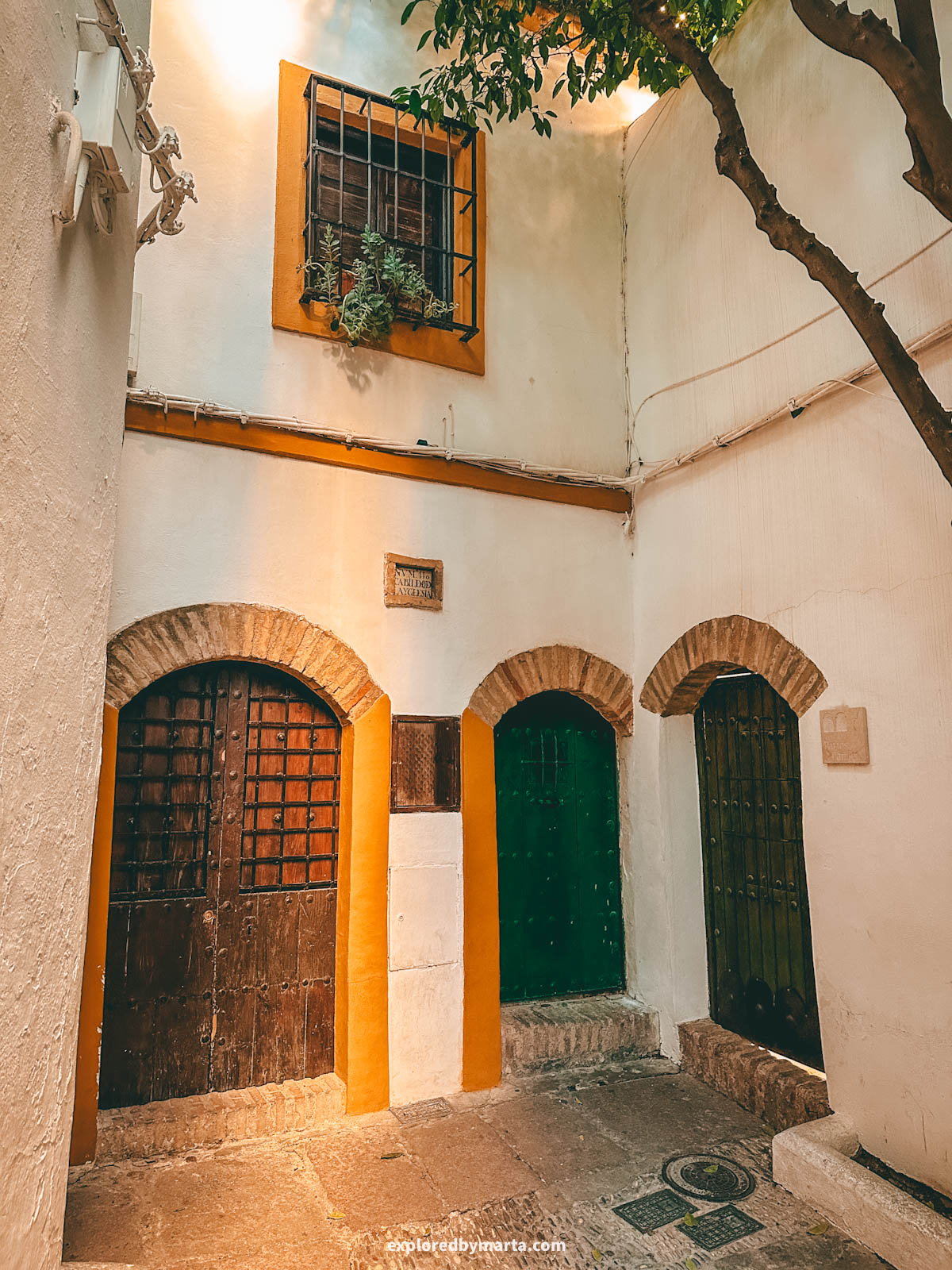
The Judería is full of whitewashed houses, hidden alleys, charming squares, flower pots hanging from the walls, and tiny streets that lead to the most picturesque corners.
The whole neighborhood feels like a maze!
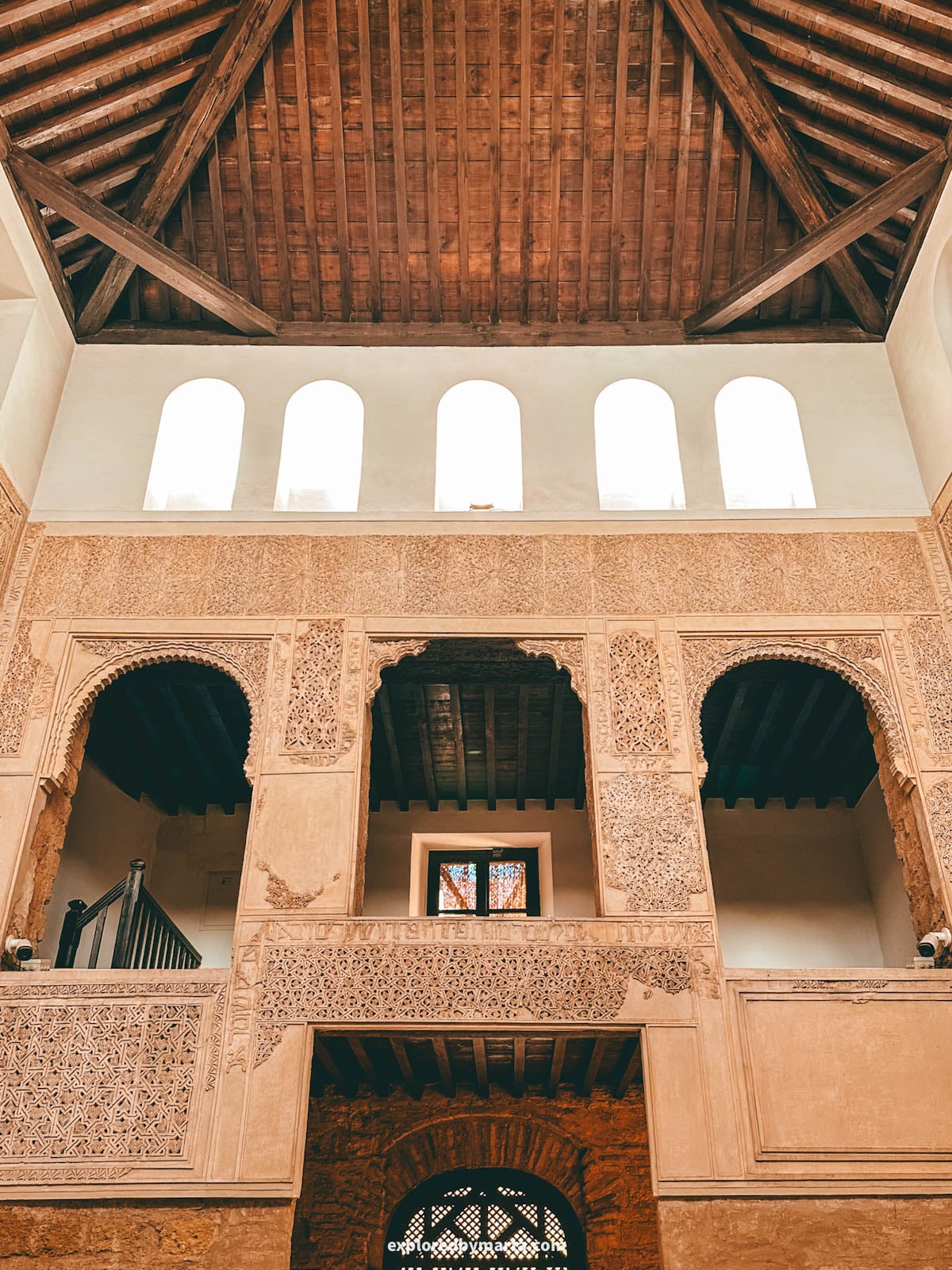
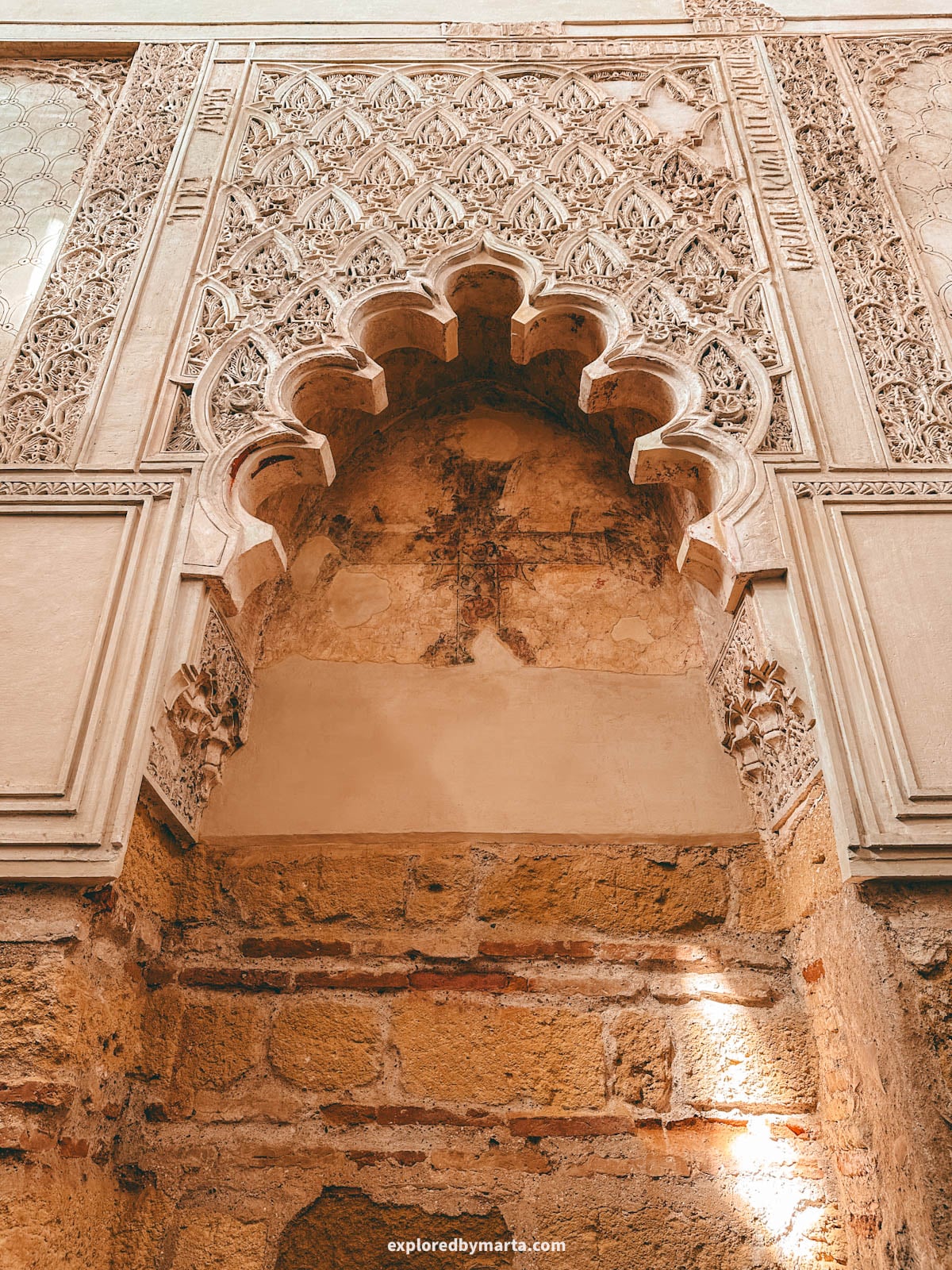
One of the must-visit spots inside the Jewish Quarter is the Córdoba Synagogue. Built in the 14th century, this small synagogue is one of only three medieval synagogues left in all of Spain after the expulsion of the Jews in 1492. So yes, it has a HUGE historical significance!
Today, the synagogue is a National Monument, free to visit, and absolutely worth the quick stop. The interior was designed in the Mudéjar architectural style with beautiful ornate decorations, Hebrew inscriptions on the walls, and a peaceful atmosphere. It is small, but full of meaning.
Besides the Synagogue, the Jewish Quarter is full of hidden corners and beautiful spots that are absolutely worth checking out as you wander around.
What are the top spots to visit in Judería?
One of my favorites was Calleja del Pañuelo – one of the narrowest streets in Europe, just 50cm at its narrowest point. It opens up to a tiny square called Plaza de la Concha with a fountain and an orange tree – reportedly one of the smallest squares in the world!
Then the super charming Plaza Tiberíades and the Maimónides statue. It’s a little square with a bronze statue of the famous 12th-century Jewish philosopher who was born here in Córdoba. Simply beautiful!
Also, the hidden Zoco Municipal de Artesanía, an artisan patio between houses with traditional workshops, fountains, and Andalusian arches (free to enter!). It has opening hours, so check that before you go.
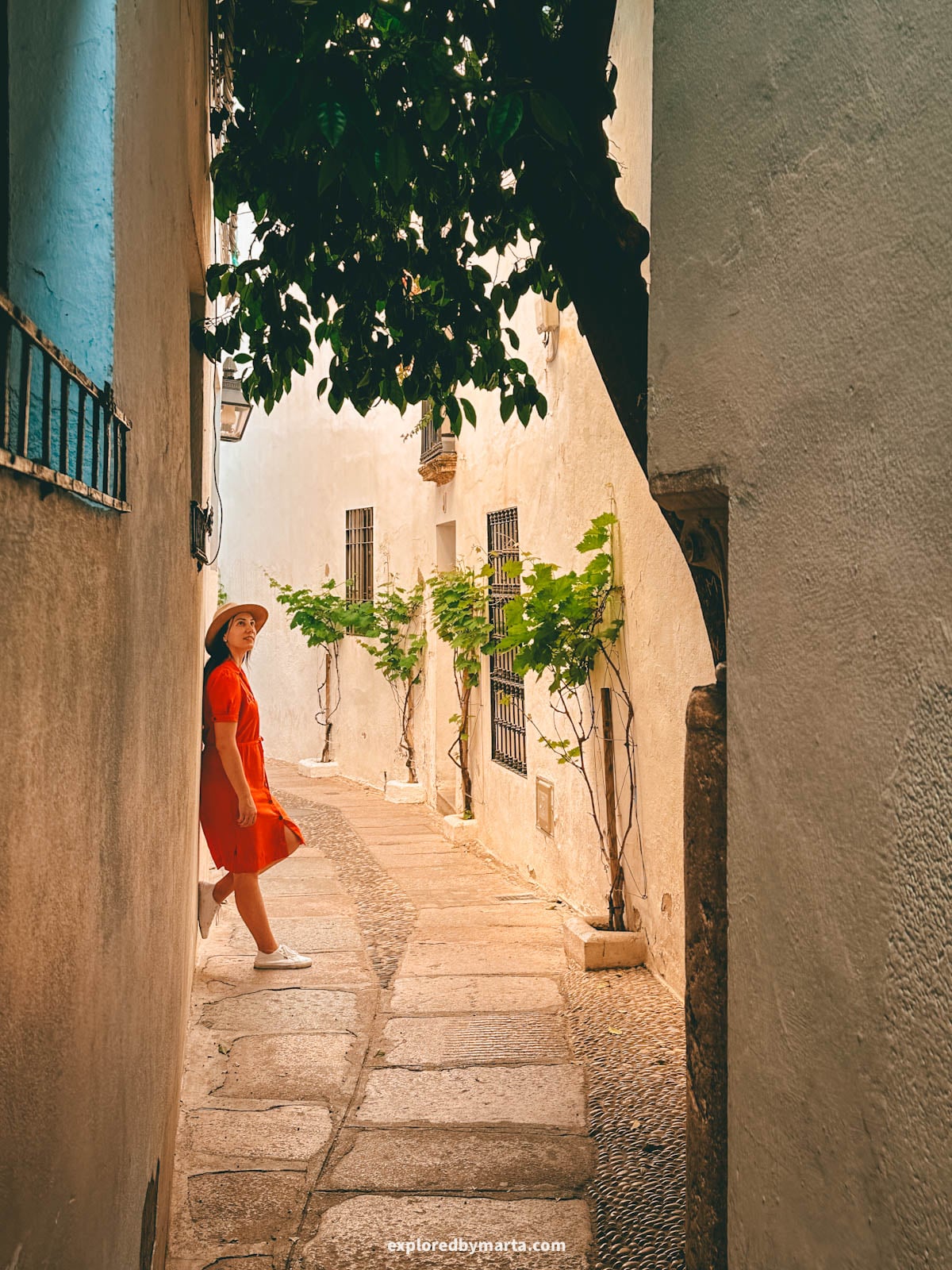
I also loved Calleja de la Hoguera – a narrow alley where you actually walk under an old minaret through a tiny tunnel – so unique! It’s a very quick stop along the way.
Then, a hidden gem, Callejón del Indiano, a street hiding behind the doors of an old 15th-century palace facade. Push the doors open and discover a whole secret alley behind them! Okay, you probably won’t have to push them – it should be open.
One of my favorite corners in Judería – Calleja de la Luna, the magical Moon Alley with ancient gates, archways, and a charming little plaza filled with flowers. Soooo many archways!
The Jewish Quarter is full of these tiny photogenic streets and secret Córdoba corners that you can easily spend hours exploring. Honestly, just “getting lost” here is one of the best things you can do in Córdoba!
Location: Córdoba Synagogue – Jewish Quarter (Judería)
11. See an authentic Andalusian home at La Casa Andalusí
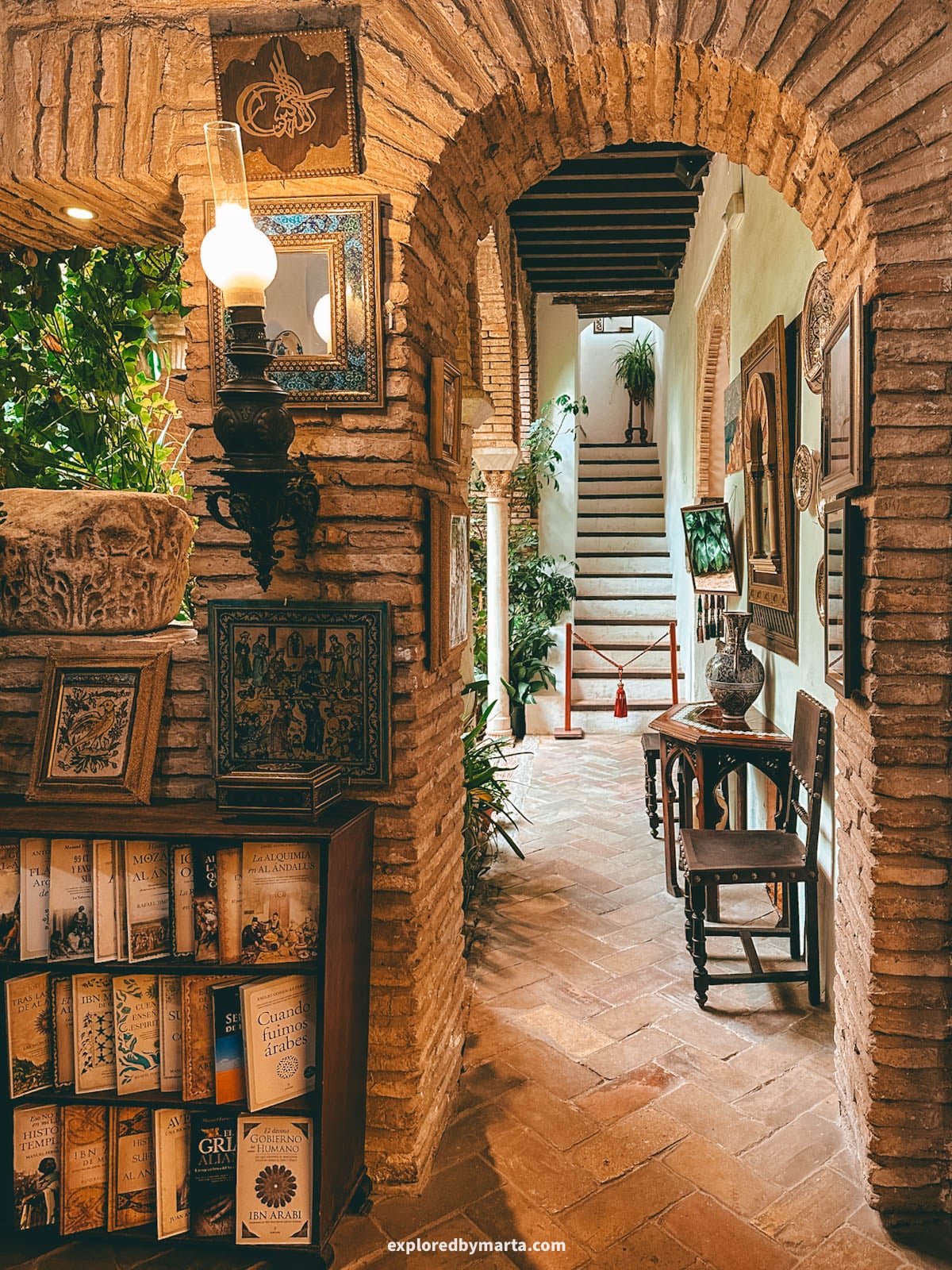
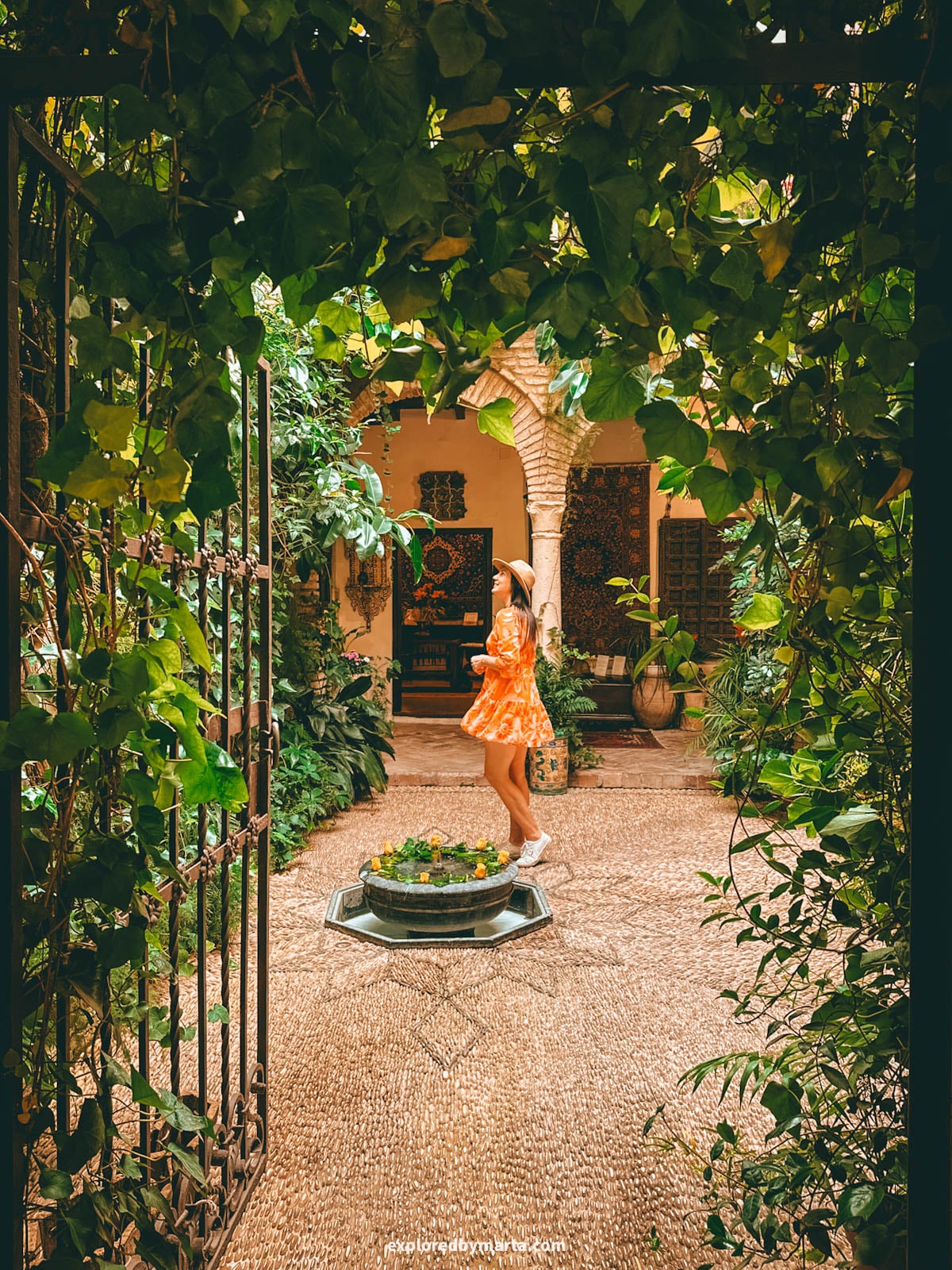
La Casa Andalusí (or the Andalusian House) is a charming little museum-house in the Jewish Quarter that gives you a real glimpse into what life was like in Moorish Córdoba.
The house was built in the 12th century, and inside you will find design pieces, decor, and objects typical to Islamic architecture and Moorish style.
The entrance fee was just 4 EUR when we visited, so it is a really affordable activity to add to your Córdoba itinerary.
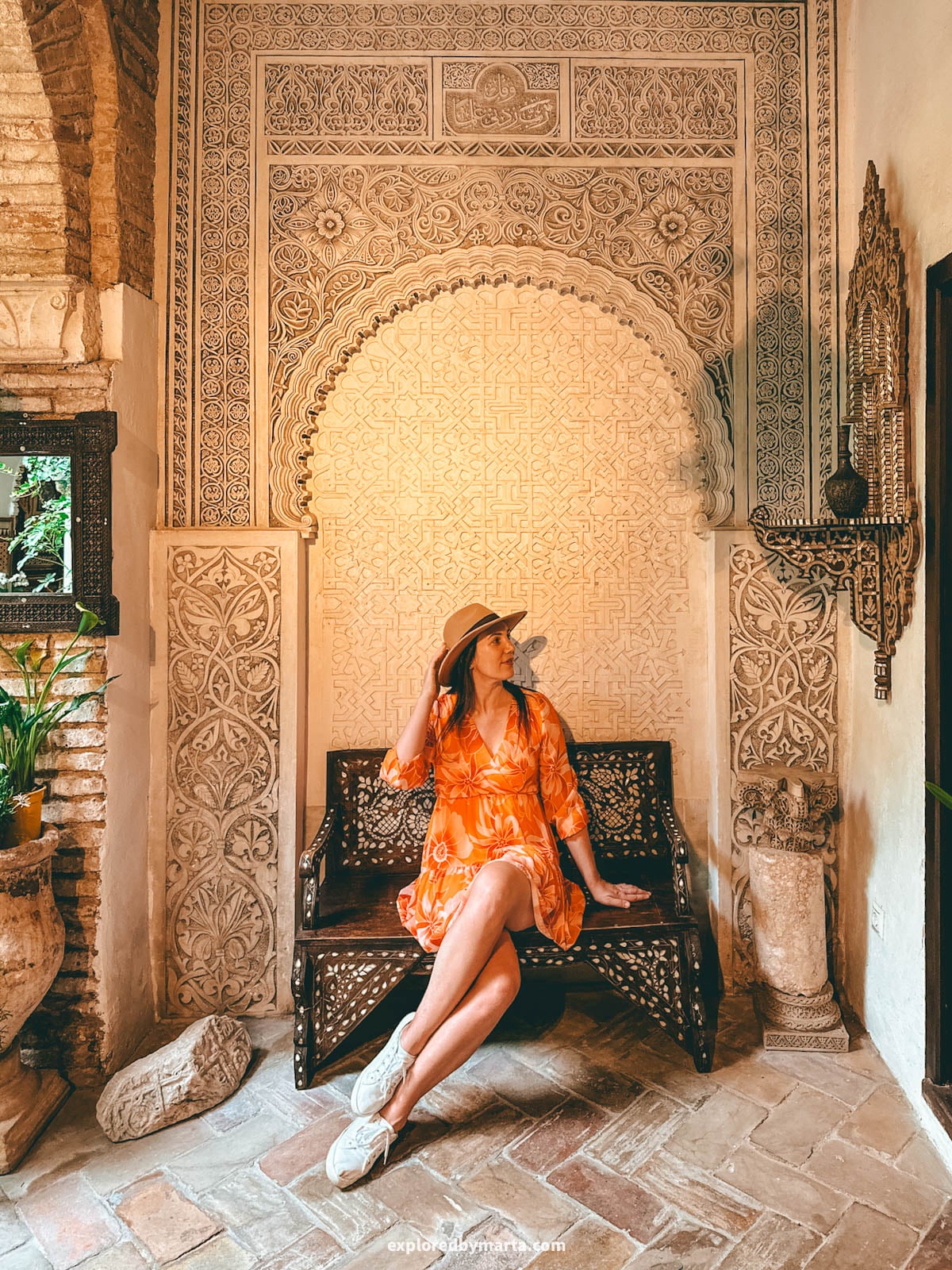
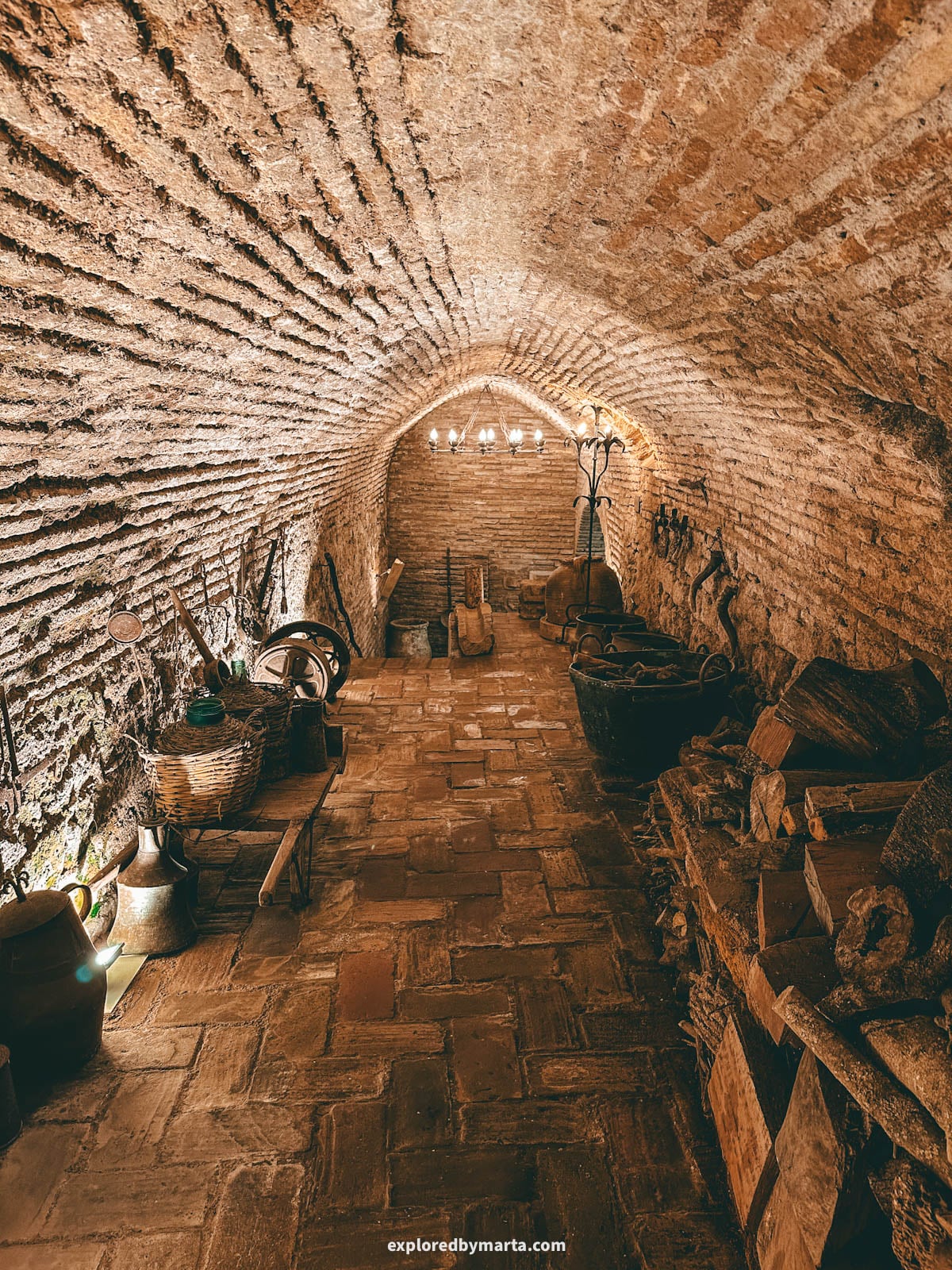
It is more of a “hidden” stop that not many travelers know about, which made it feel even more special. It is not big at all, so we spent around 45 minutes exploring all the rooms and basement areas.
They have a small Paper Museum, a coin collection, a wonderful patio, and even a Roman mosaic and many artifacts. It was wonderful.
With the same ticket, you can also enter the Alchemy Museum next door (we did not go, but it is right there!).
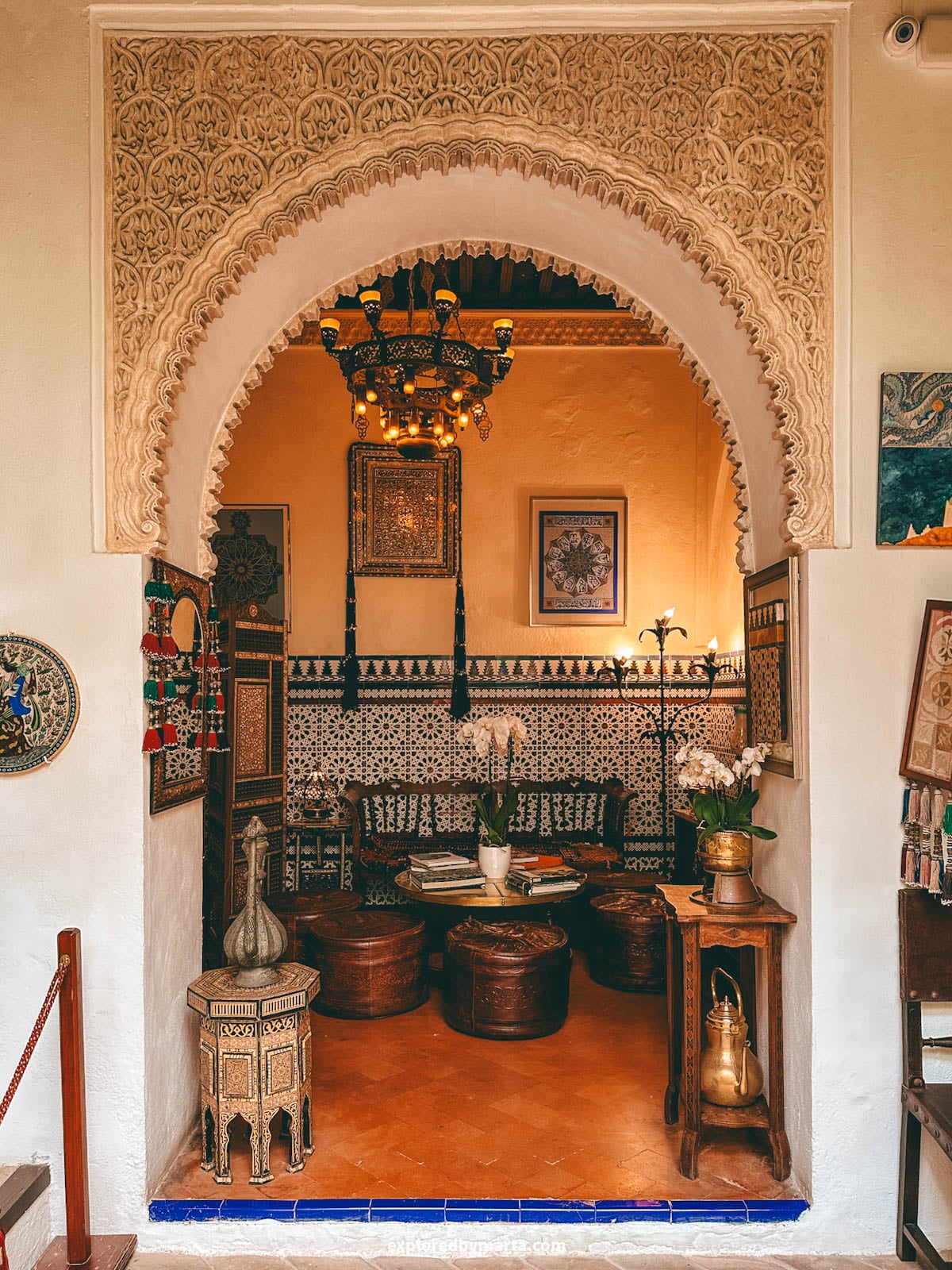
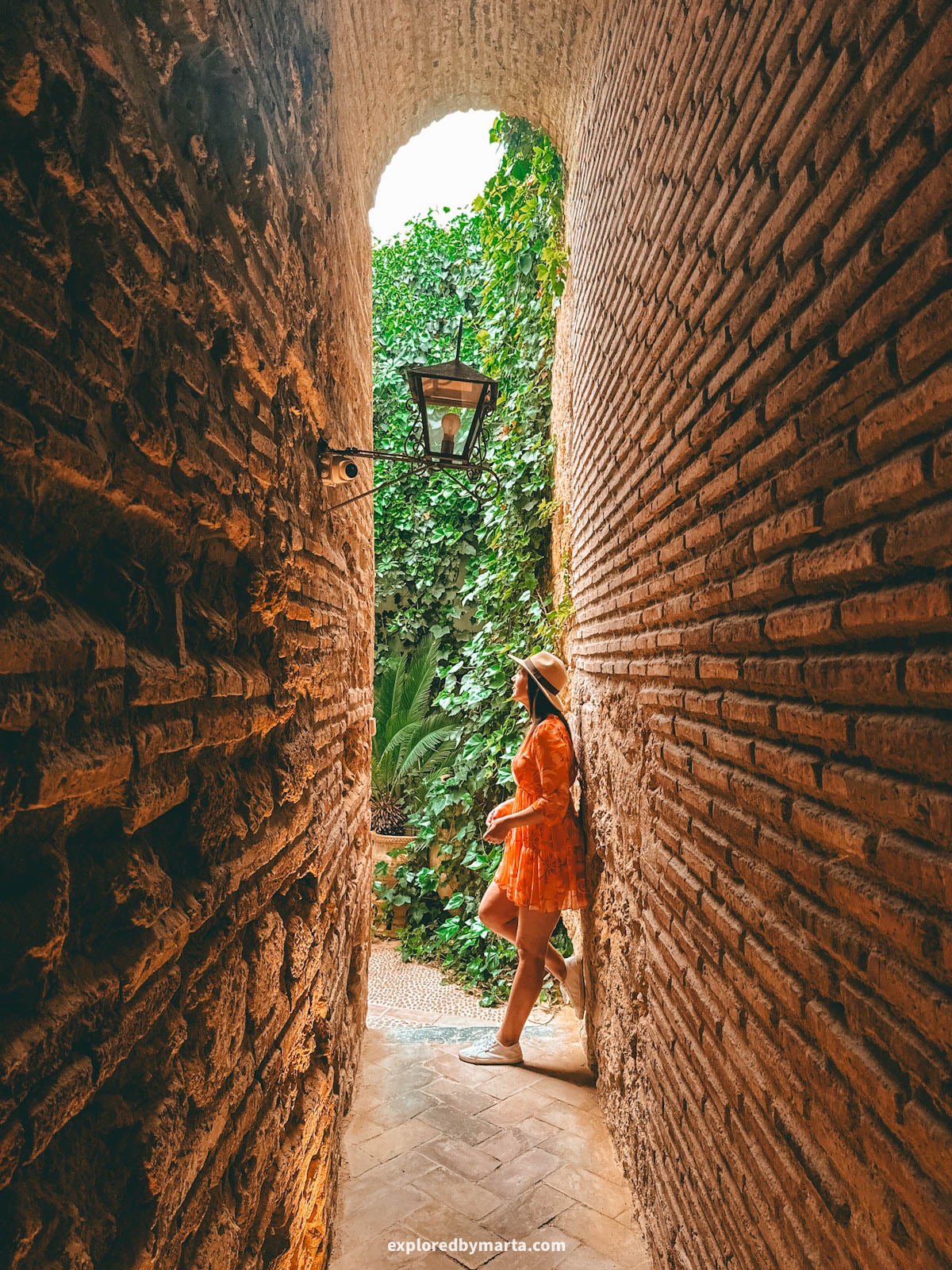
Honestly, La Casa Andalusí is a great place to add to your itinerary if you have already seen Córdoba’s main attractions and have some extra time.
Although the place is quite small, we really enjoyed walking around and discovering all the secret corners.
When traveling, I always try to use that opportunity to learn something about the place I’m visiting, so this was one of those moments for me in Córdoba.
Location: La Casa Andalusí
12. Try traditional Córdoba food on a tapas tour


Honestly, there is no better way to experience local culture than through food and drinks – and Córdoba has some seriously amazing traditional dishes you have to try!
Some of the most famous traditional Córdoba dishes include:
- Salmorejo – a thick cold tomato soup, similar to gazpacho but creamier, usually topped with hard-boiled egg and serrano ham
- Flamenquín – a roll of pork loin wrapped around serrano ham, then breaded and fried (super tasty!)
- Rabo de toro – a slow-cooked oxtail stew, traditional and rich in flavor
- Berenjenas con miel – fried eggplant drizzled with sweet honey or molasses
- Mazamorra – a cold almond and garlic soup similar to salmorejo but with almonds
Did you know that Córdoba province is also home to one of Spain’s historical wine regions – Montilla-Moriles? Locals are super proud of their winemaking tradition, so trying Córdoba’s wine alongside the food is a must too!
Now, you can definitely just walk into restaurants and order these dishes on your own. But honestly, the BEST way to experience Córdoba’s food culture is by joining a local tapas tour.
On a tapas tour, a local guide takes you through the historic center, hopping between traditional taverns and tapas bars.
You get to taste a variety of local dishes and wines while learning about the history and food culture of Córdoba. It is the perfect way to discover restaurants you would never find on your own!
If you want to try traditional Córdoba dishes on your own, here are some of the most-loved tapas spots in the city:
- Taberna Salinas – one of Córdoba’s oldest taverns, opened in 1879, with azulejo-tiled walls, barrel seating, and known for its salmorejo
- Bodegas Mezquita – a popular spot with multiple locations near the Mezquita, great for trying a wide variety of traditional tapas in one sitting
- Taberna La Montillana – open since 1948, awarded by Spain’s Repsol Guide, perfect for traditional Córdoba dishes with a creative twist
- Bodegas Campos – a gastronomic institution since 1908 with rambling patios, oak wine barrels, and traditional Cordoban tapas at their best (great for rabo de toro and salmorejo)
- Casa Pepe de la Judería – a Córdoba institution since 1928, serving classic Andalusian tapas in a beautiful old house right in the Jewish Quarter
- Bar Santos – a no-frills local tavern next to the Mezquita, famous for serving Spain’s largest tortilla (you can grab a slice and eat it on the steps of the cathedral – so fun!)
- Garum 2.1 – a modern bistronomic tapas bar serving innovative dishes like deconstructed salmorejo with apple matchsticks and Amontillado wine jelly cubes
My honest tip – skip the touristy restaurants right next to the Mezquita and walk just a few blocks further into the Jewish Quarter or the streets north of it. The tapas there are so much better and more authentic!
Or just pick any of the above tapas restaurants in Córdoba. There likely is no wrong choice among them!
13. See the ancient Roman Temple ruins
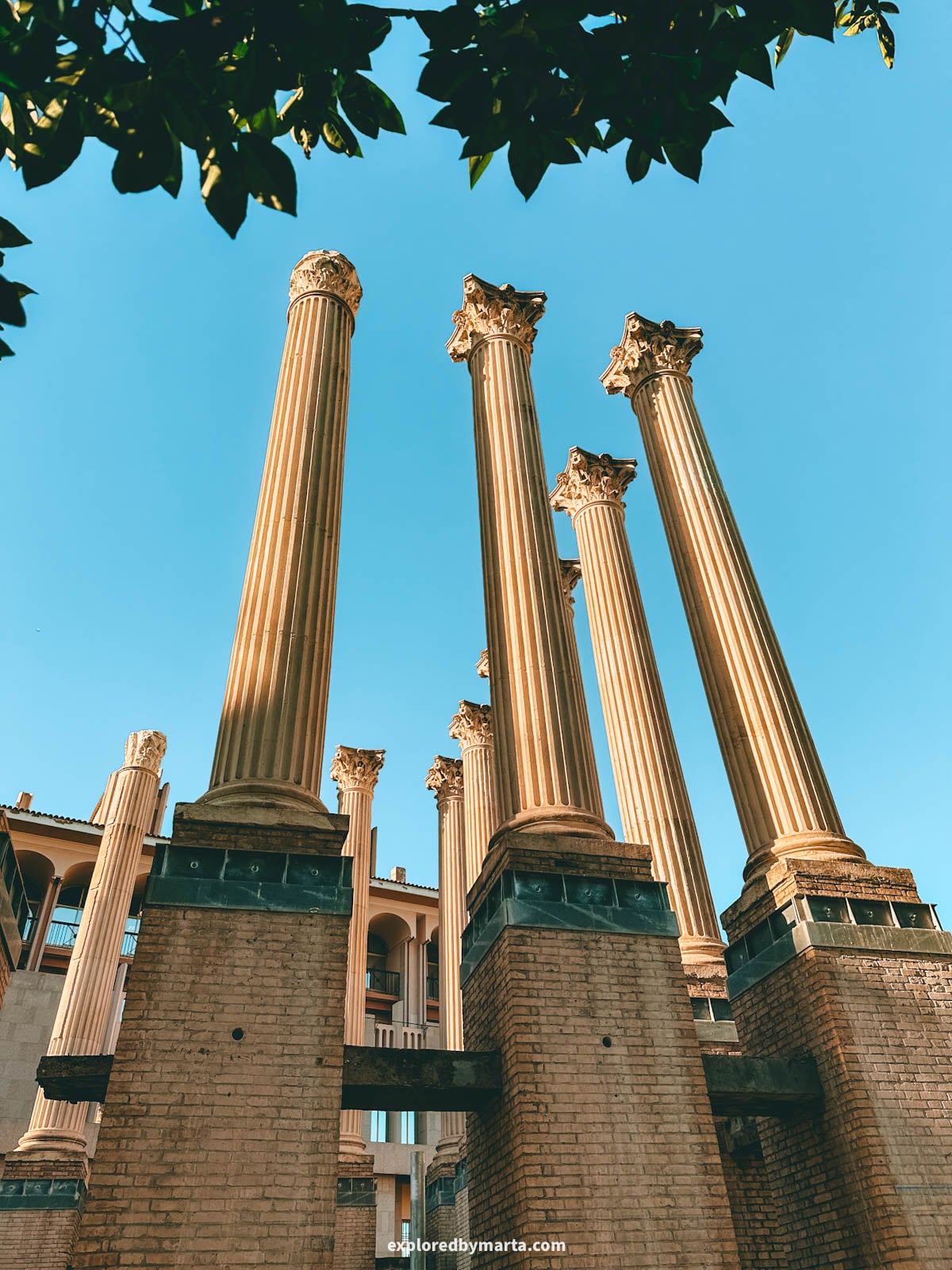
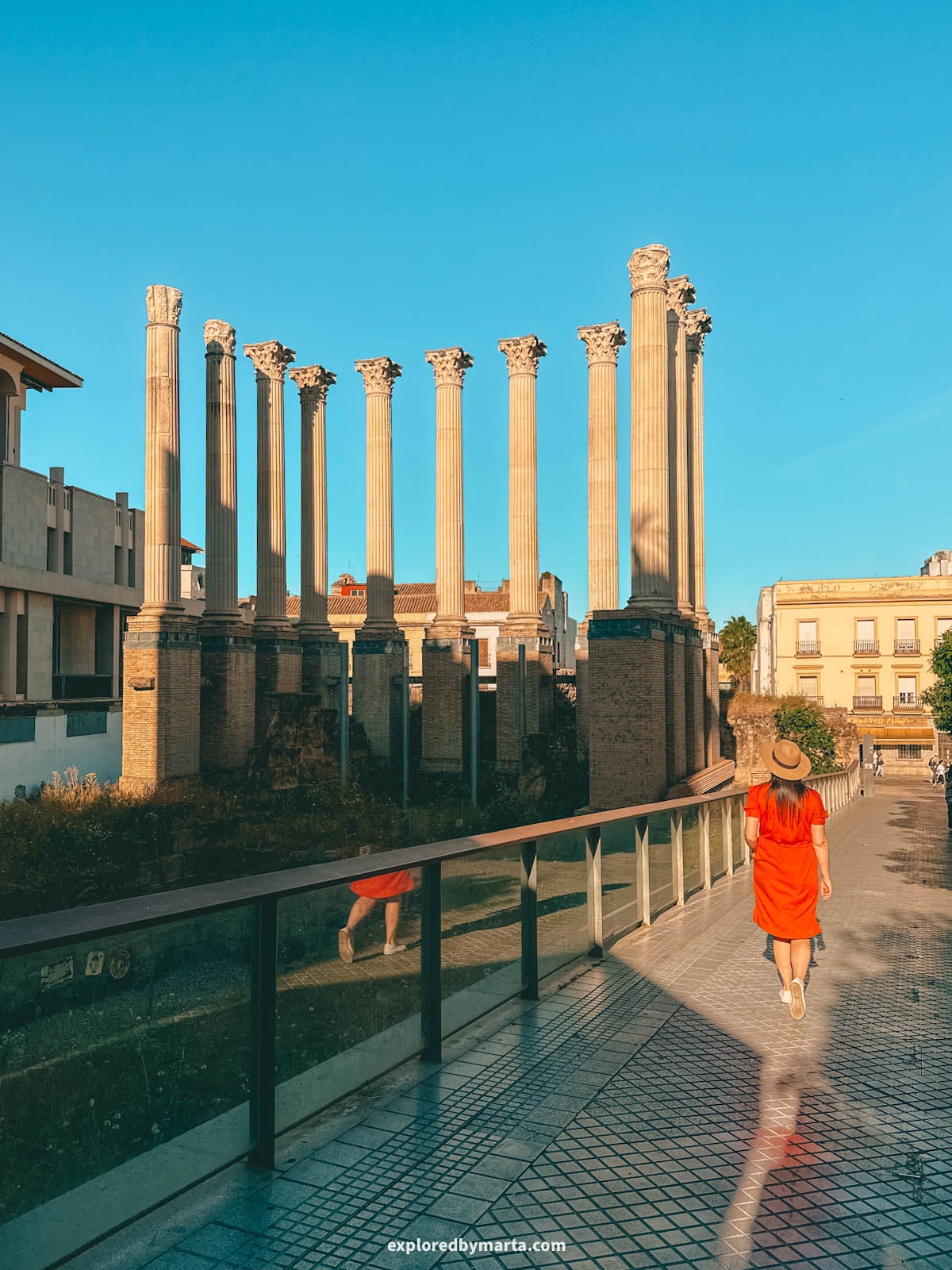
Right in the heart of Córdoba’s old town, squished between a busy street and modern buildings, you will find the ancient ruins of a Roman temple. Yes, an actual Roman temple from the 1st century AD just sitting there in the middle of the city! So cool!
The temple was originally part of the provincial forum of Córdoba (back then called Corduba) when the city was ruled by the Romans. Today, only the marble columns and the foundation remain, but they are massive and absolutely impressive to see in person.
What makes this archaeological site so unique is the contrast – ancient Roman columns standing tall right next to modern Spanish architecture. It really shows the rich history of Córdoba and how many cultures and eras have left their mark on this city.
The site is small and you can pretty much see everything in 5 minutes from the street that runs alongside it. There is no entrance fee, and you can stop by any time of day to take a look. So convenient!
Location: Templo Romano
14. See an authentic flamenco show
Did you know that the art of flamenco was created right here in Andalusia? Yes, it is true! So seeing an authentic flamenco show is honestly a must when you visit Córdoba (or any city in Andalusia, really). 💃
There are two amazing flamenco show options in Córdoba, and honestly, both are worth experiencing.
The first option is a traditional flamenco show performed by national flamenco winners. You will see demonstrations of different flamenco styles – baile (dance), cante (singing), and guitarra (guitar) – while enjoying a drink included in the price.
The atmosphere is intimate, the artists are seriously talented, and the whole experience really pulls you into the heart of Andalusian culture.
The second option is honestly so unique – an equestrian show that combines Andalusian dancing horses with a flamenco dancer. Yes, you read that right! Imagine elegant Andalusian horses performing alongside a flamenco artist. 🤩
The 70-minute show takes place inside the historic 16th-century Royal Stables of Córdoba (Caballerizas Reales). The setting is gorgeous, the choreography is impressive, and it is one of those experiences you will not get anywhere else!
Both shows are fantastic, but if you want something extra special, go for the equestrian one. It is one of the most memorable experiences you can have in Córdoba!
15. Eat at Mercado Victoria food market
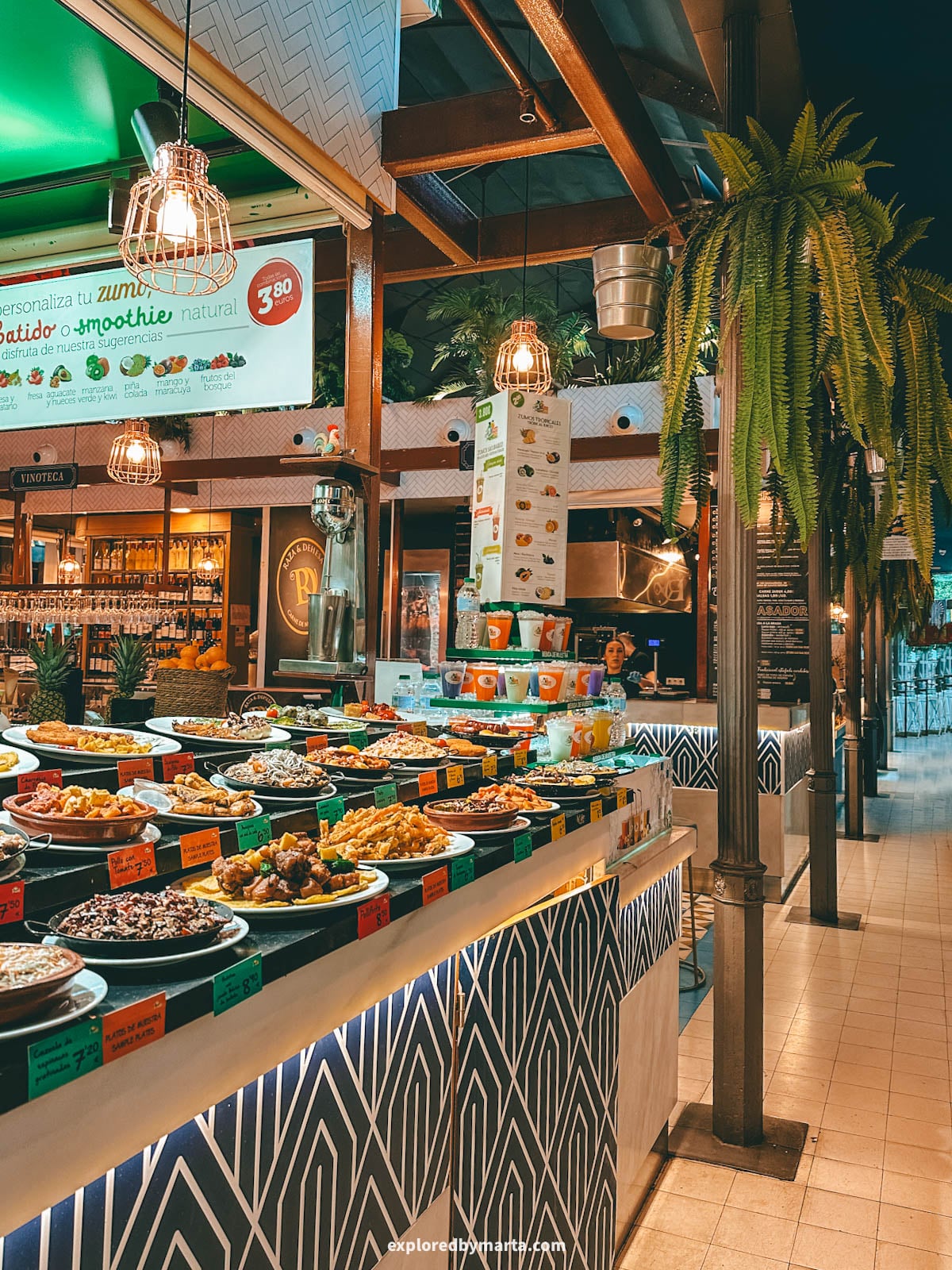
Mercado Victoria is a modern food market in Córdoba featuring gastro bars and food stands serving traditional Andalusian tapas alongside dishes from around the world.
It is one of the best places to eat in Córdoba, especially if you want variety and a casual vibe!
The market is located inside one of Córdoba’s most beautiful parks – Jardines de la Victoria. You get to enjoy delicious food while sitting in a green, peaceful park atmosphere.

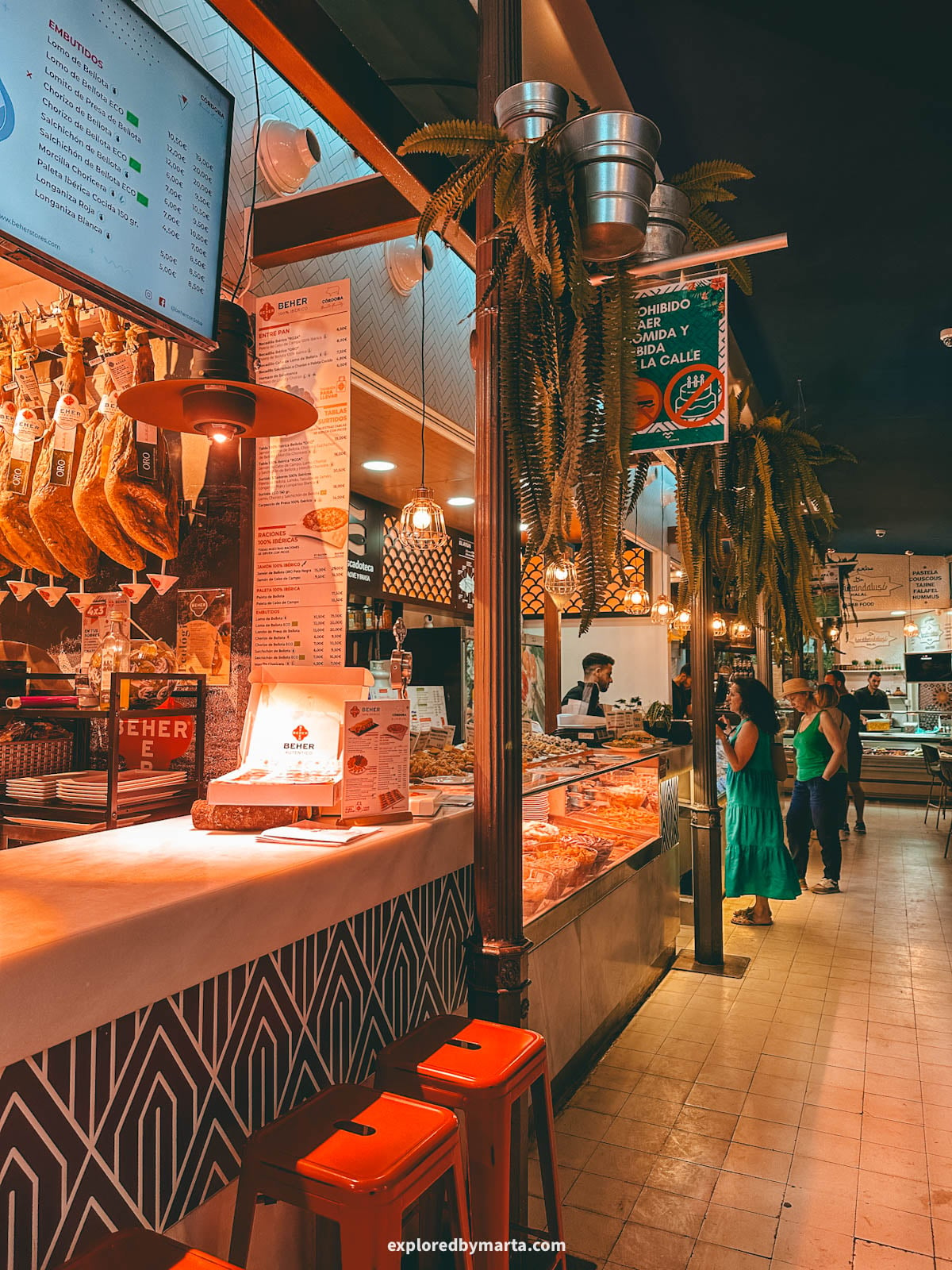
The variety inside the market is impressive. You can find Spanish local cuisine alongside Mexican, Italian, Arabic, and pretty much every other cuisine you can think of.
The way it works is super easy – you walk around, pick what you want from any of the stands, and then sit down at one of the tables inside or outside the market.
We did not have a ton of time when we visited, so we ended up grabbing a tasty takeaway pizza, but I walked around the whole market and honestly, so many places looked amazing.
If we had more time, I would have gone back to try a bunch of other stalls! 😅
Location: Mercado Victoria
16. Go shopping in the Old Town near the Mezquita
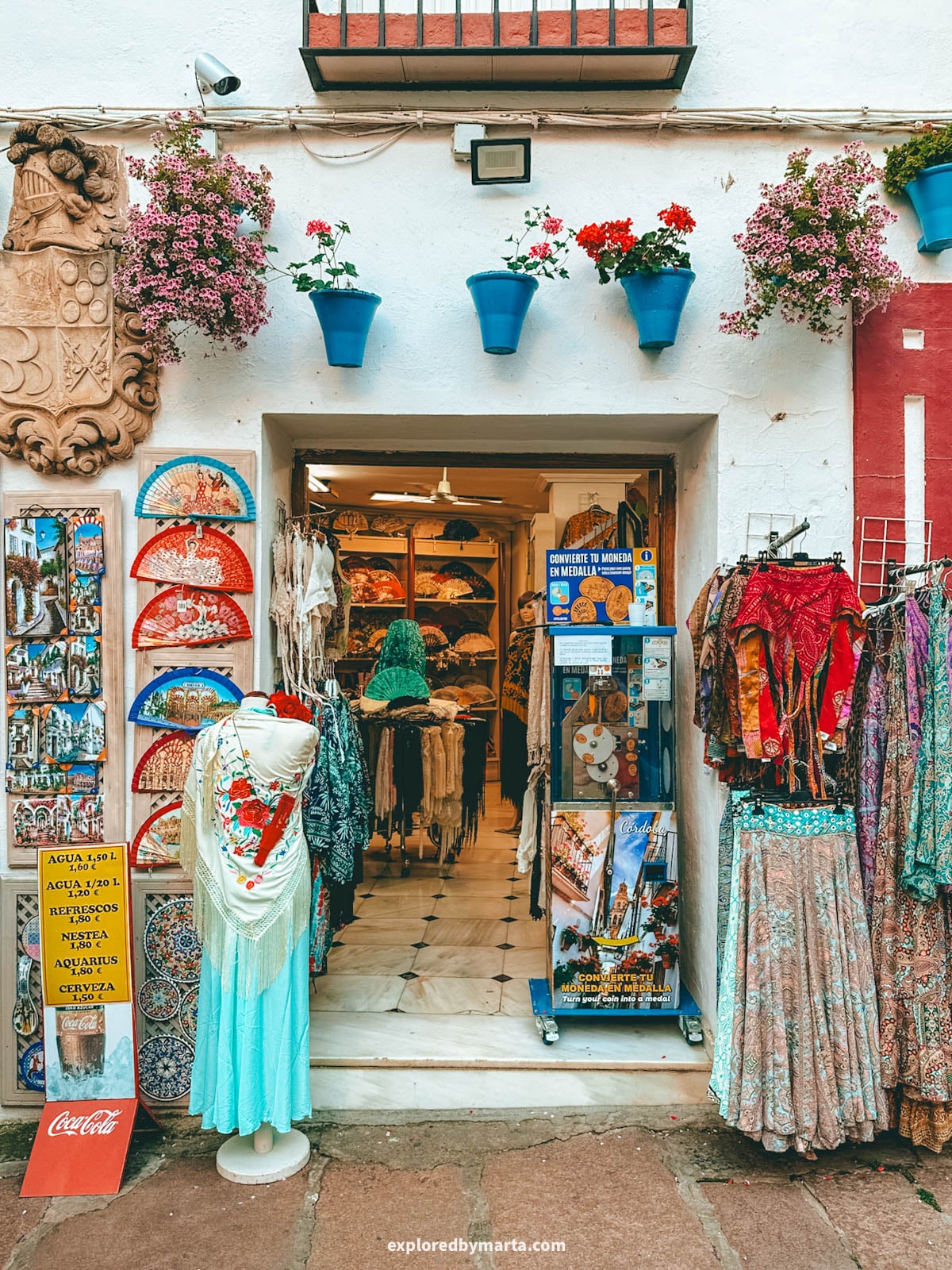
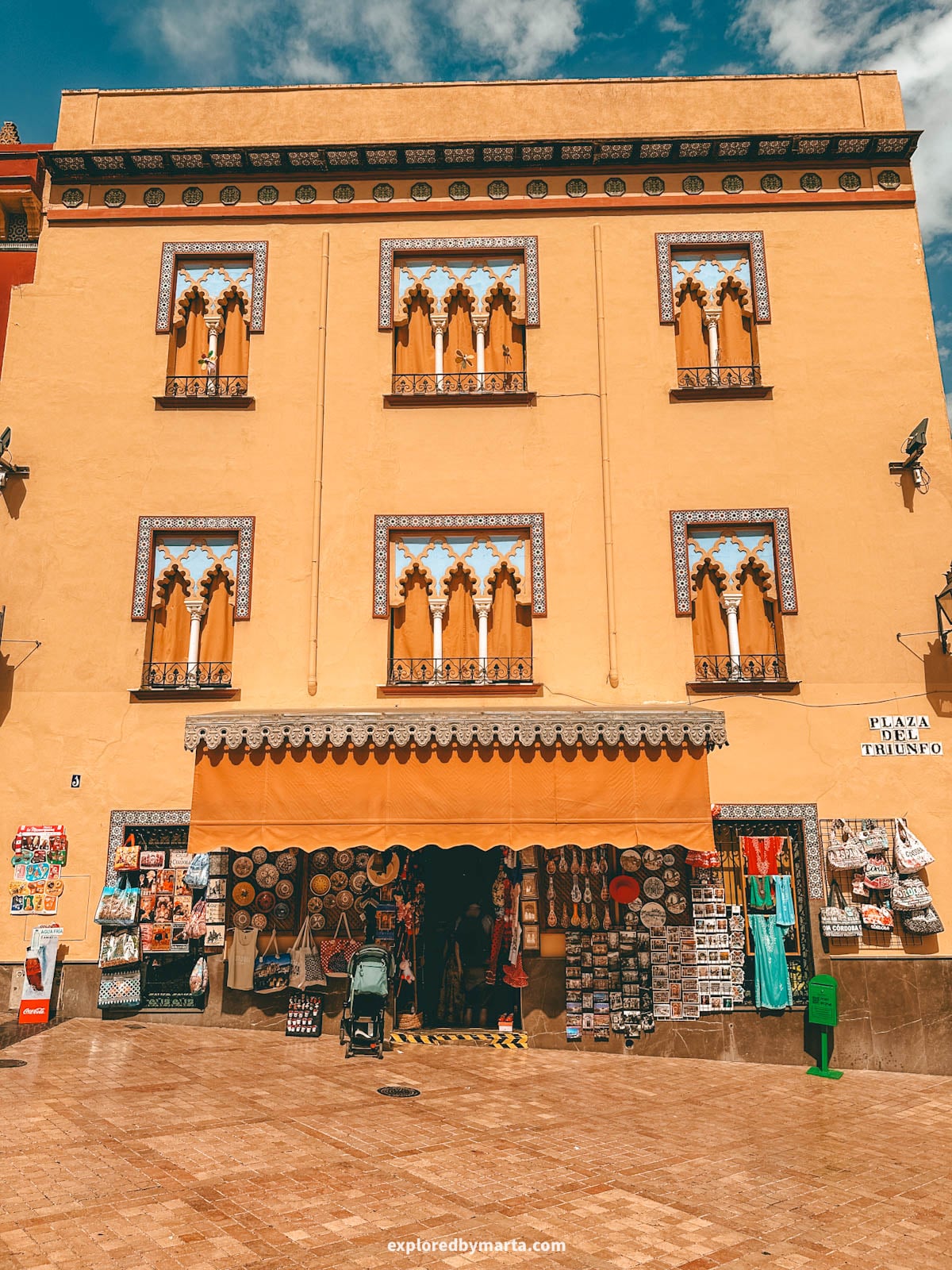
If you love shopping for unique souvenirs and authentic local crafts, the streets surrounding the Mezquita-Catedral are the best place to go in Córdoba.
The whole area is full of charming boutique shops and traditional artisan workshops, and honestly, just wandering through them is an experience in itself!
Córdoba has a long tradition of artisan craftsmanship, and the city is famous for a few local specialties. Some of the most iconic things or food items to look out for include:
- Cordobán leather goods – Córdoba was historically famous for its high-quality embossed leather, and you will still find beautiful leather bags, belts, and decorative pieces in many shops
- Silver filigree jewelry – Córdoba has the largest concentration of silver workshops in Spain, and the delicate filigree pieces are absolutely beautiful
- Ceramics and pottery – colorful Andalusian ceramics with traditional patterns make for great souvenirs to take home
- Andalusian fans and shawls – perfect for a touch of southern Spanish flair
- Local olive oil – Córdoba province is one of the largest olive oil producers in the world! Look out for extra virgin olive oils with the Denomination of Origin (DO) labels Baena or Priego de Córdoba – both are world-famous
- Montilla-Moriles wines – the local sweet and dry wines from the nearby wine region make a great gift to bring home
The streets right around the Mezquita are packed with these kinds of shops. We loved just wandering in and out of them – the prices vary a lot, so you can find both budget-friendly souvenirs and more high-end artisan pieces.
My honest tip – try to shop in the smaller boutique stores and local workshops rather than the touristy souvenir shops. The quality is much better, and you are supporting actual local artisans!
17. Visit Medina Azahara, the largest archaeological site in Spain
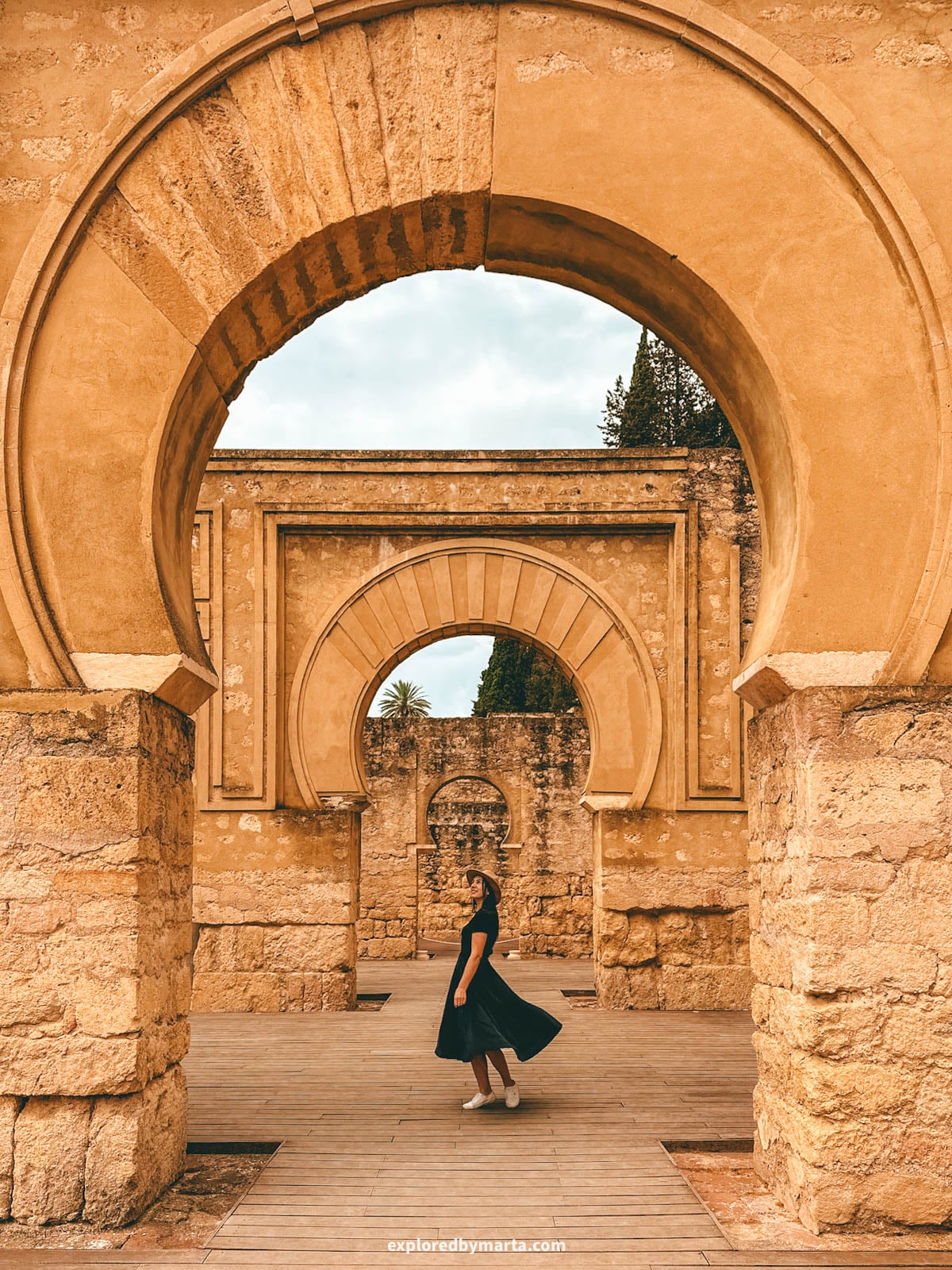
If you have an extra day in Córdoba, do not miss Medina Azahara, the largest archaeological site in Spain!
This UNESCO World Heritage archaeological site is honestly one of the most impressive places in all of Andalusia, and it is just a short trip from the city.
Medina Azahara was built in the 10th century as the splendid capital of the Caliphate of Córdoba – a massive palace-city designed to display the power and wealth of the rulers at the time.
The city was inhabited for less than 80 years before it was destroyed and abandoned, then forgotten for almost 1000 years!
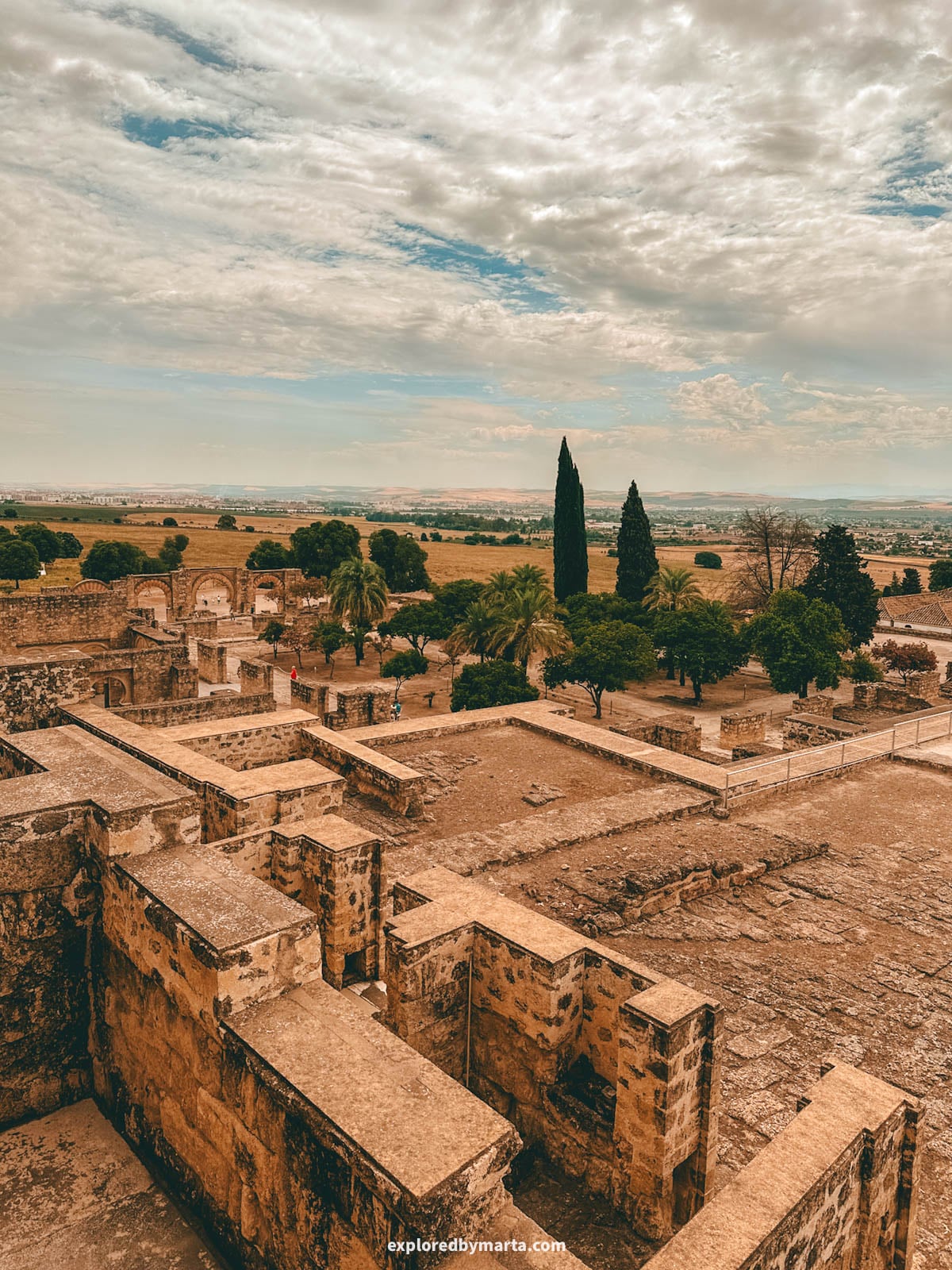
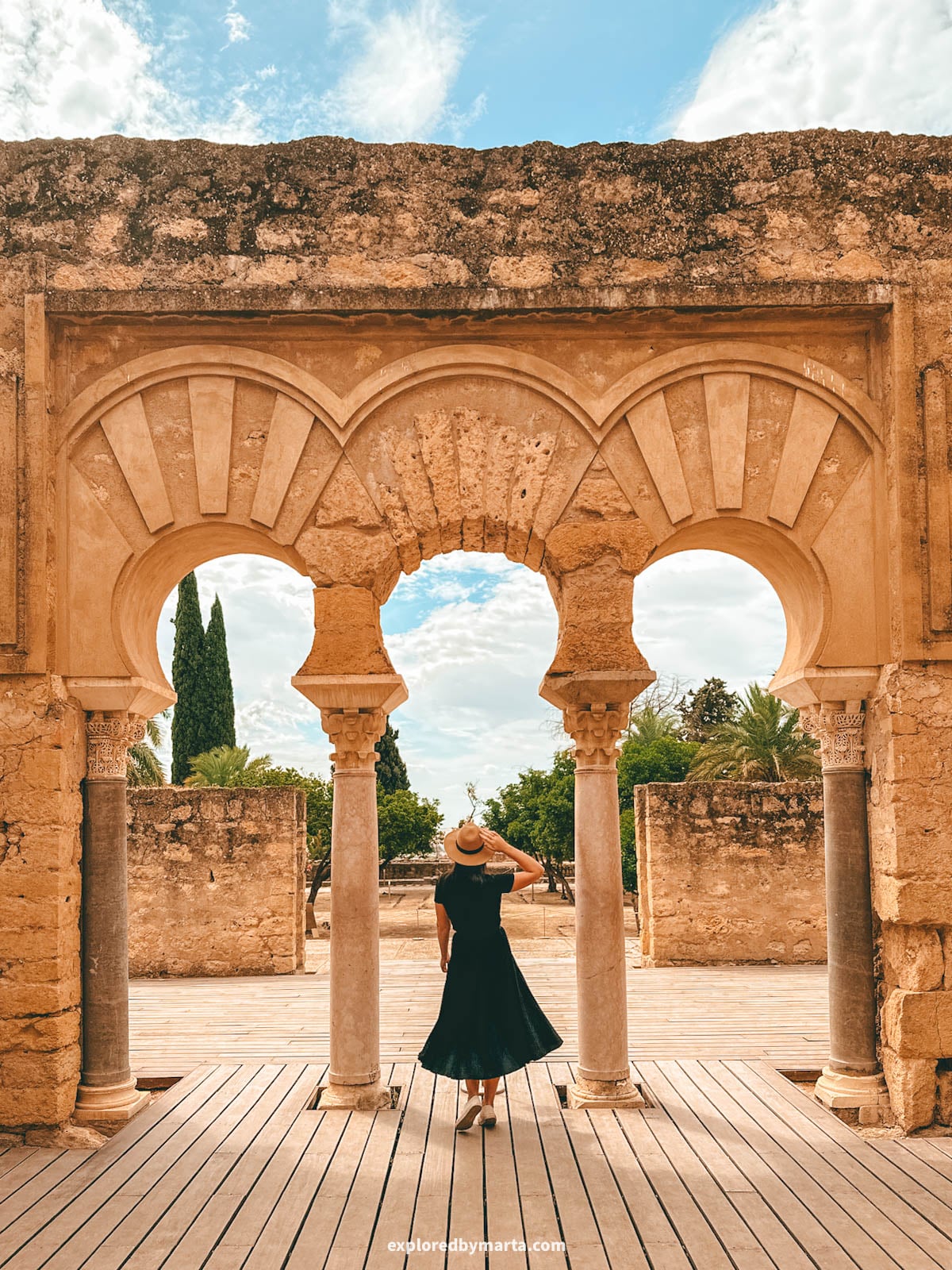
Today, the site has been partially excavated and restored, and you can walk through the remains of palaces, gardens, courtyards, and government buildings.
The intricate Moorish arches, columns, and decorative details are absolutely stunning, and it gives you a real glimpse into the Islamic Golden Age in Spain.
The archaeological site is located about 5 miles (8 km) west of Córdoba. You can get there by car, by tour bus, or by joining a guided tour from the city. The visit usually takes around 3-4 hours, so plan for half a day.
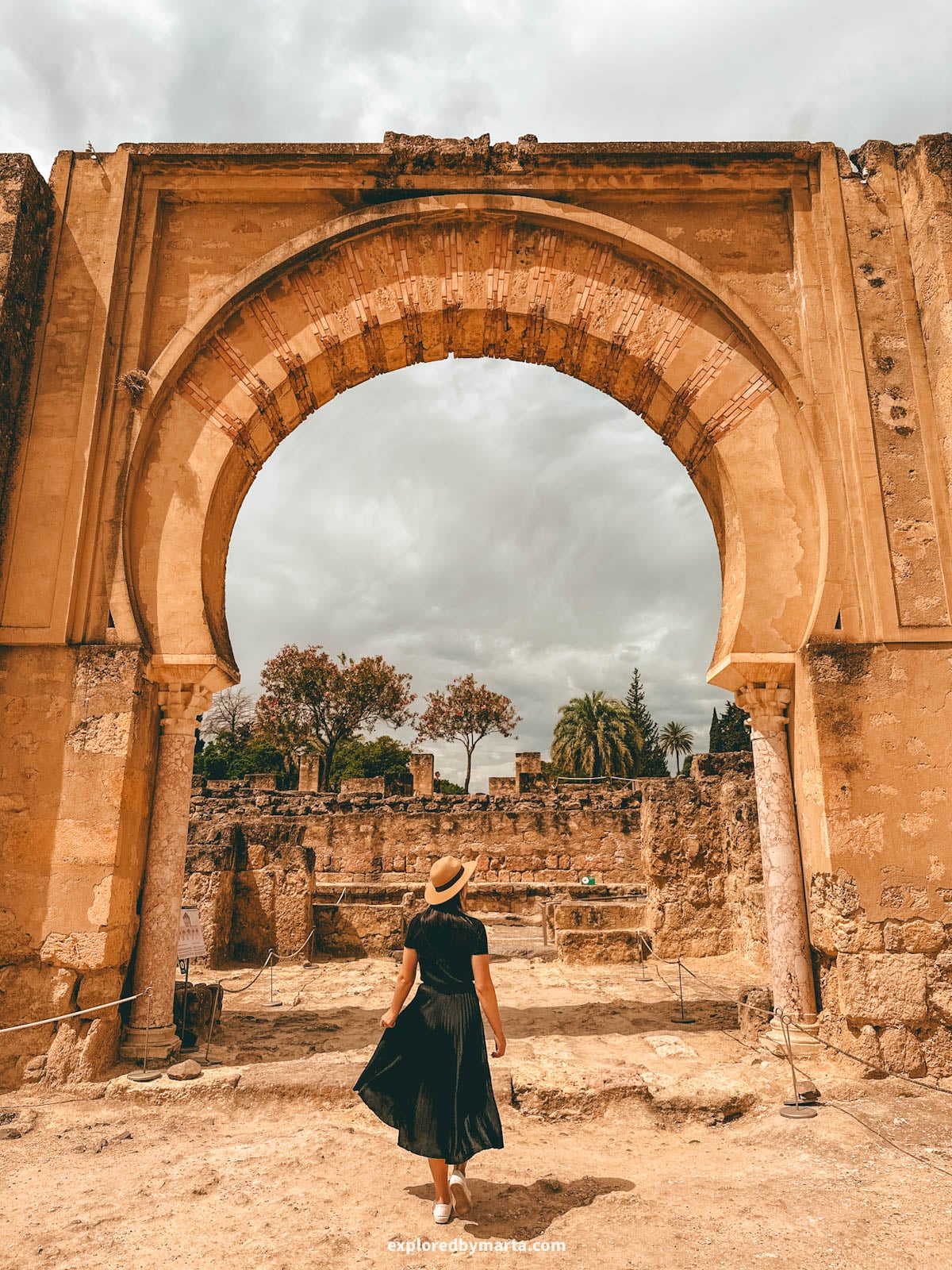
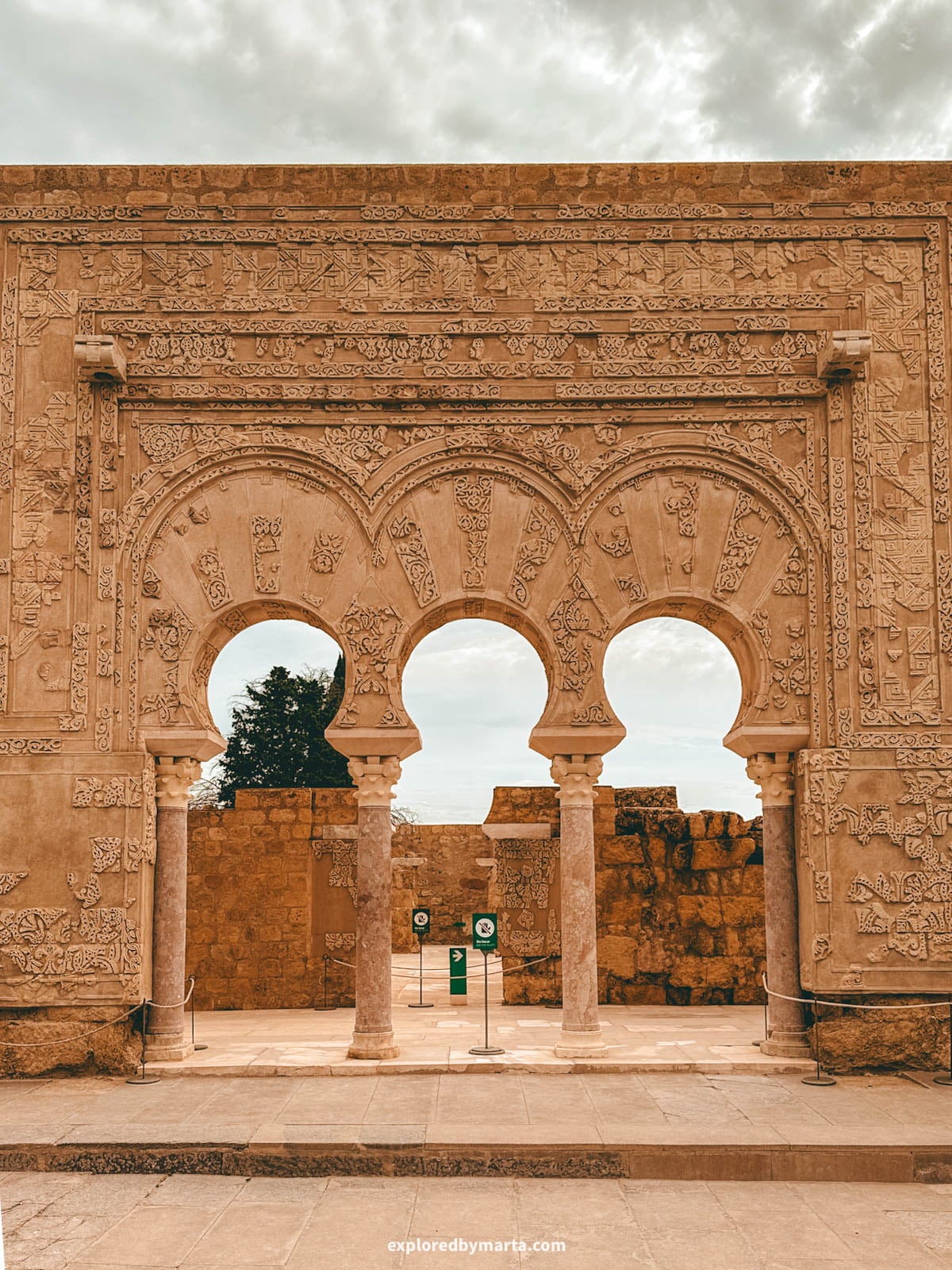
We loved visiting this place. At first, I didn’t think much of it, but it turned out to be one of my favorite places we visited around Córdoba. Such a fascinating place!
To get to the site, you first need to go to the visitor’s center. The entrance is free for EU citizens (1.50 EUR for visitors from other countries), but you still need to obtain a free ticket from them!
From the ticket office, you have to take a bus (3 EUR round trip) to the archaeological site. There are no parking spots next to the ancient city, so this is how you can visit.
Unless someone drives and leaves you there and then comes back for you later.
Location: Medina Azahara
18. Take a trip to Castillo de Almodóvar del Río
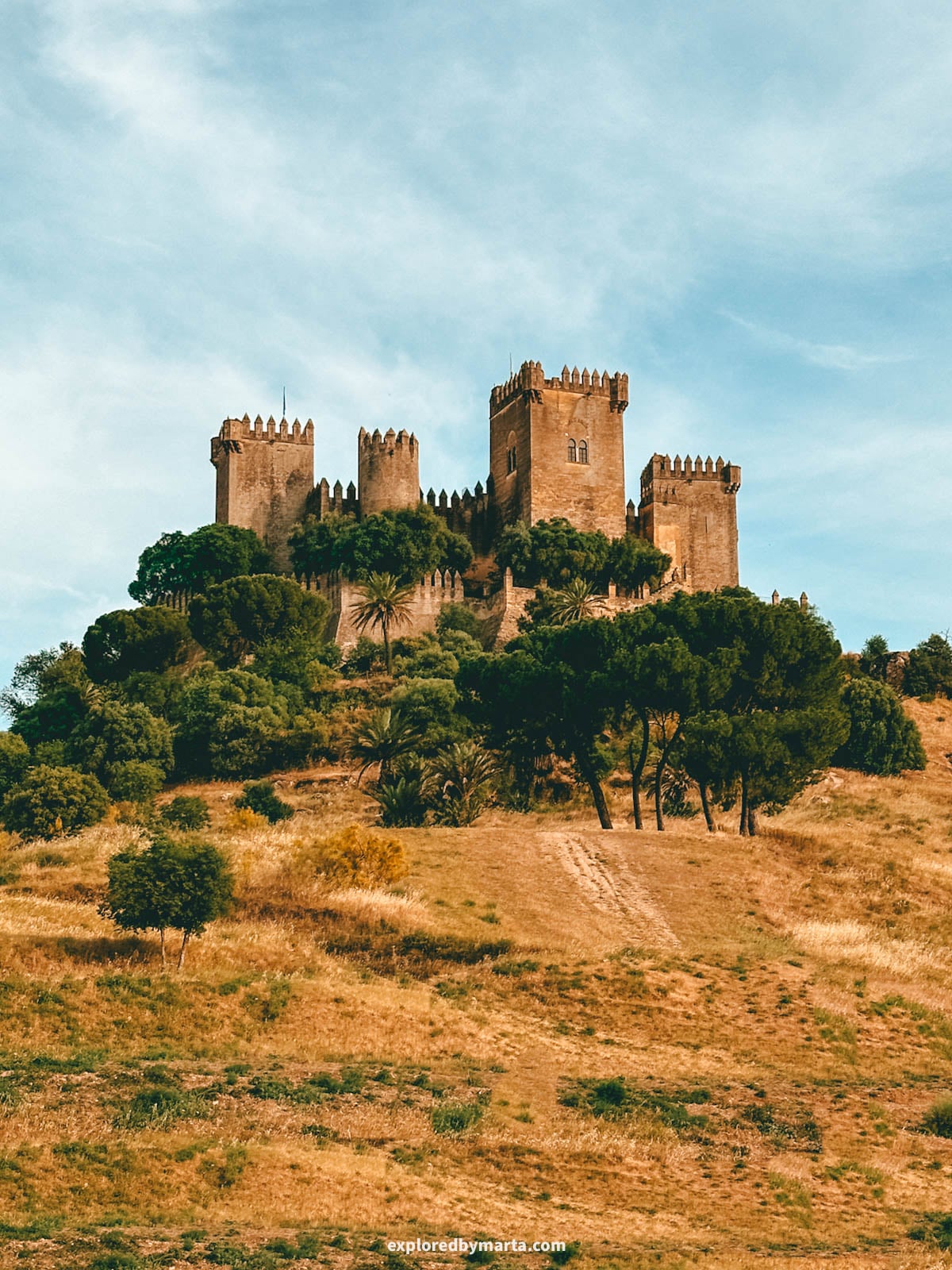
Just 30 minutes west of Córdoba, you will find one of the most photogenic castles in Andalusia – Castillo de Almodóvar del Río.
This medieval fortress sits dramatically above the Guadalquivir River, and you can see it from miles away. I am a huge fan of these kinds of medieval castles. You know, sitting on top of hills and with those majestic defensive towers.
And here is a fun fact – this castle gained international fame as a filming location for Game of Thrones! It was used as Highgarden, the home of House Tyrell, in seasons 7 and 8.
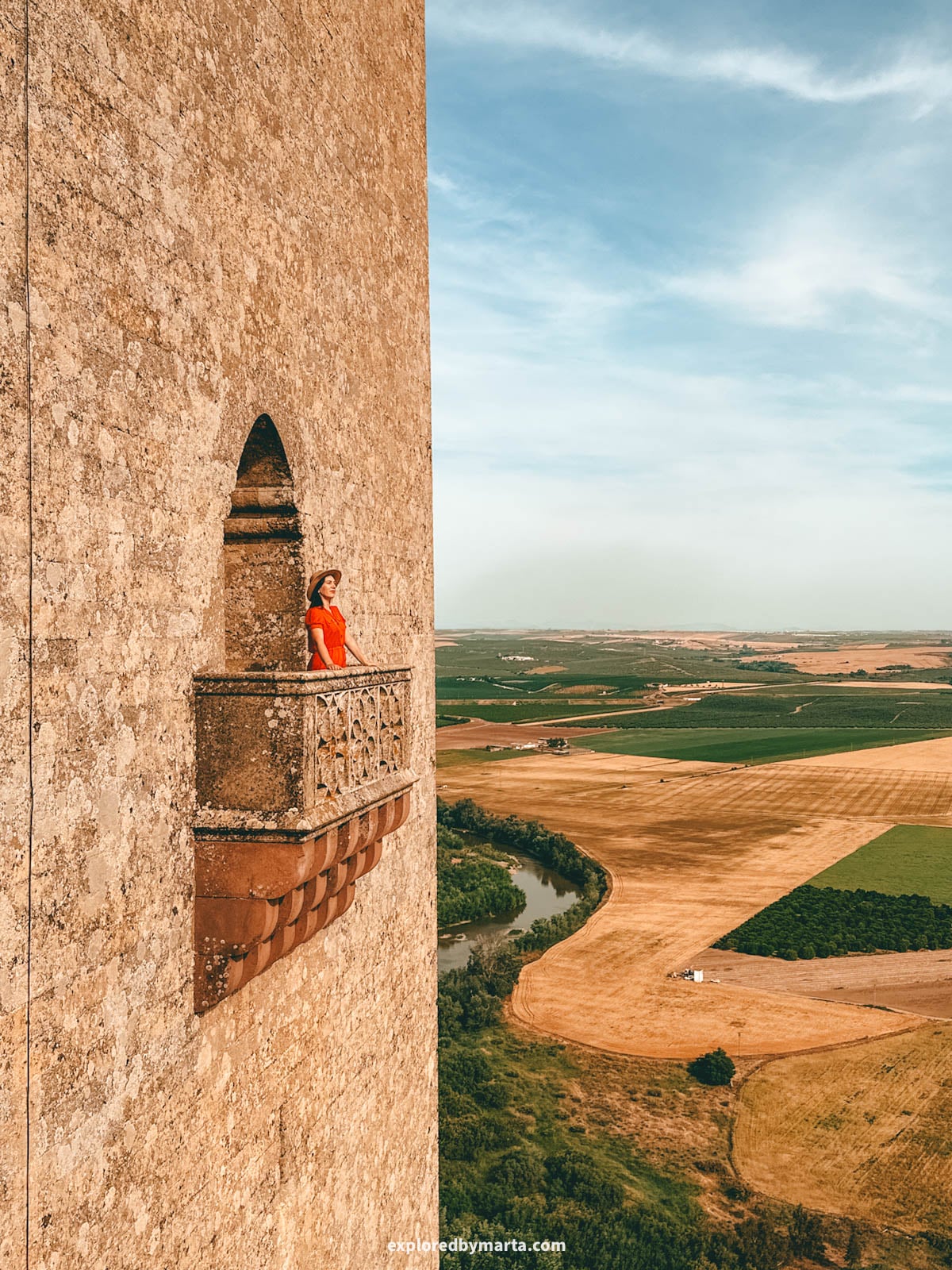
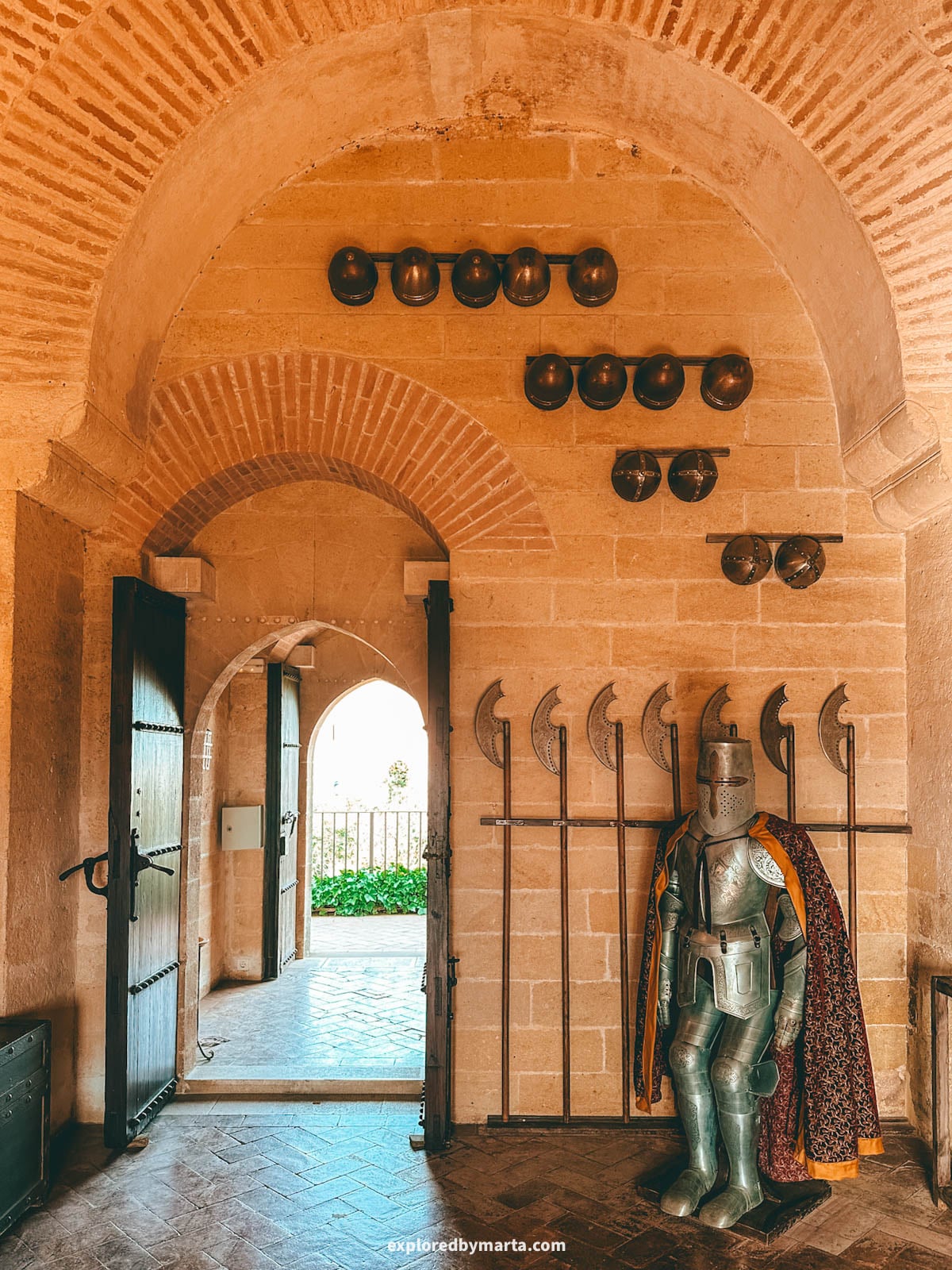
Yes, this is THE castle from the show – and once you see it in person, you will totally see why they picked it. 🤩
The castle has Roman, Islamic, and Christian roots, and walking through its towers, courtyards, and stone corridors feels like stepping back in time. No, really!
The views from the top are incredible too – you can see the Guadalquivir River, the surrounding countryside, and the village below. So beautiful!
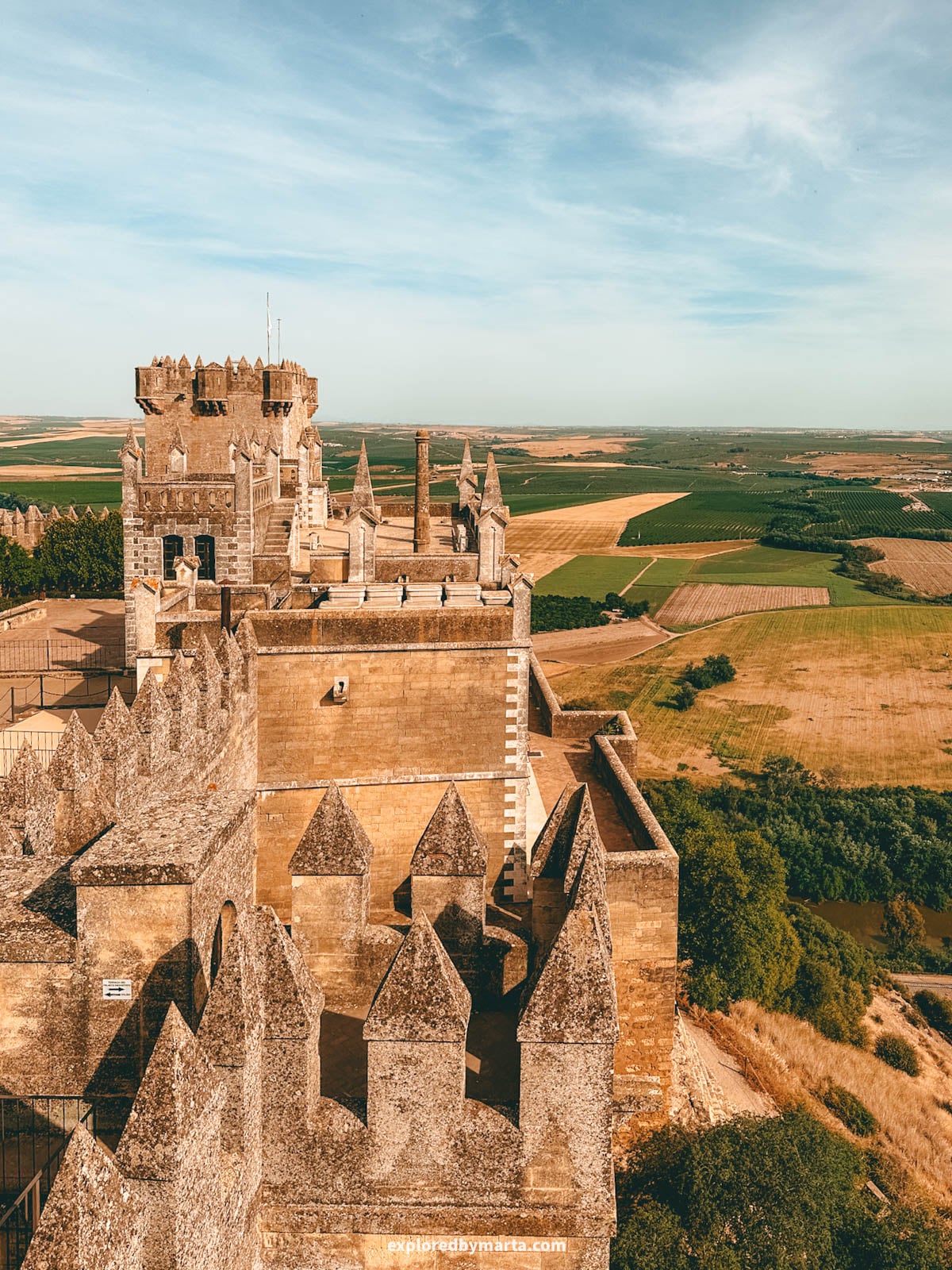
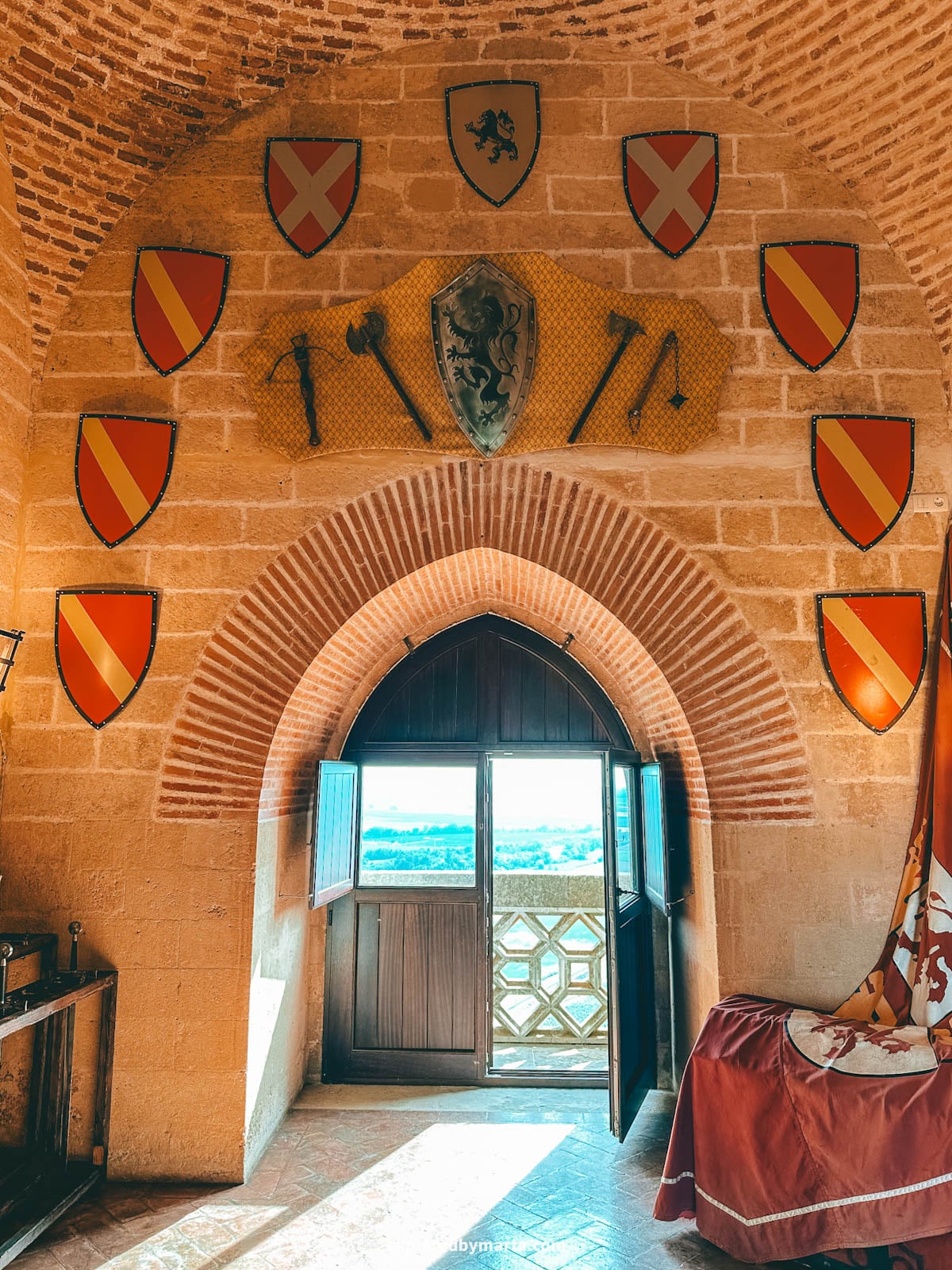
Honestly, this is one of those bucket-list spots that you really should not miss if you have an extra day. It is truly unique and one of the most photogenic places in the Córdoba area!
The castle is open to visitors year-round, and there is an entrance fee to go inside. Yes, it costs 11 EUR per adult, but I always think of it as a contribution to helping preserve such historic sites. It costs money, so it’s fine for me.
Location: Castillo de Almodóvar del Río
FAQs about things to do in Córdoba
What are the best things to do in Córdoba?
Some of the best things to do in Córdoba include visiting the iconic Mezquita-Catedral, climbing the Torre Campanario bell tower, exploring the famous flower-filled Patios de Córdoba, walking through the magical Jewish Quarter, crossing the Puente Romano bridge, visiting the Alcázar de los Reyes Cristianos gardens, and seeing the courtyards of Palacio de Viana. For an extra special experience, take a tapas tour to try traditional Andalusian dishes or see an authentic flamenco show.
How many days do you need in Córdoba?
I would recommend at least 2 full days in Córdoba to see the main attractions like the Mezquita-Catedral, the Patios, the Roman Bridge, and the Jewish Quarter. Plan your time carefully if you want to add trips to Medina Azahara or Castillo Almodóvar del Río.
Is Córdoba worth visiting?
Absolutely yes! Córdoba is one of the most magical cities in Andalusia and southern Spain. The Mezquita-Catedral alone is worth the trip, but the city also has beautiful flower patios, ancient Roman ruins, charming Moorish architecture, magical hidden alleys, and incredible local food. It is one of my favorite cities in southern Spain!
What is Córdoba famous for?
Córdoba is most famous for its iconic Mezquita-Catedral – a unique mosque-cathedral that is a UNESCO World Heritage Site. The city is also famous for its flower-filled patios (especially during the Patios Festival in May), its Moorish history as the former capital of Islamic Spain, its high-quality olive oil and Montilla-Moriles wines, and traditional Andalusian dishes like salmorejo and flamenquín.
When is the best time to visit Córdoba?
The best time to visit Córdoba is in spring (March to early June), especially in May during the famous Fiesta de los Patios festival, when the city is at its most flowery and beautiful. Early autumn (September to October) is also great with milder temperatures. Avoid July and August because Córdoba is one of the hottest cities in Spain in summer, with temperatures regularly above 100°F (38°C). 🥵
Read more about traveling in Southern Spain
Córdoba is one of the most majestic cities in Andalusia, and honestly, there is so much to discover here. From the iconic Mezquita-Catedral and the famous flower patios to ancient Roman ruins, charming Moorish alleys, and incredible traditional food.
We spent a week in Córdoba, which gave us plenty of time to explore all the main sights as well as spend time wandering through hidden alleys and slowly soak up the magical Andalusian atmosphere of the city.
I really hope this guide gives you some inspiration for your trip and helps you plan an amazing visit. If you are planning a trip through Andalusia, here are some of my other Andalusia guides to help you discover this beautiful region:
More Andalusia travel inspiration:
- 21 most beautiful white villages in Andalusia
- 27 hidden gems you should see in Andalusia
- 17 most beautiful castles in Andalusia, Spain
- Malaga bucket list: 11 best things to do in Malaga
- Granada bucket list: 17 best things to do in Granada
- Seville, Spain: 19 awesome bucket list things to do in Seville
Travel guides to nearby towns:
- Fairytale Frigiliana: 13 things to do in Frigiliana, Spain
- 10 things to do in Iznájar, Spain (flower village)
- Ronda bucket list: 15 best things to do in Ronda, Spain
- 12 best things to do in Cádiz, Western Europe’s oldest city
- 10 best things to do in Jerez de la Frontera, Spain
- 10 things to do in Tarifa, Spain’s southernmost town
PIN FOR LATER!