
Ronda bucket list: 15 best things to do in Ronda, Spain
This post may contain affiliate links. If you use these links to make a purchase or booking, I may earn a small commission at no extra cost to you! Thank you for your support!
Looking for the best things to do in Ronda? You are in the right place. This dramatic mountaintop town in Andalusia is one of the most iconic places to visit in southern Spain.
Ronda sits high on top of a hill, with the deep El Tajo gorge cutting right through the middle of the town. The two sides are connected by the spectacular Puente Nuevo bridge – one of the most famous landmarks in Spain.
We spent a few days here exploring cobblestone streets, descending deep into the gorge, and climbing church rooftops for views. In this guide, I am sharing the best things to do in Ronda with photos, descriptions, and travel tips for your visit. Happy travels!
1. Walk across Puente Nuevo bridge
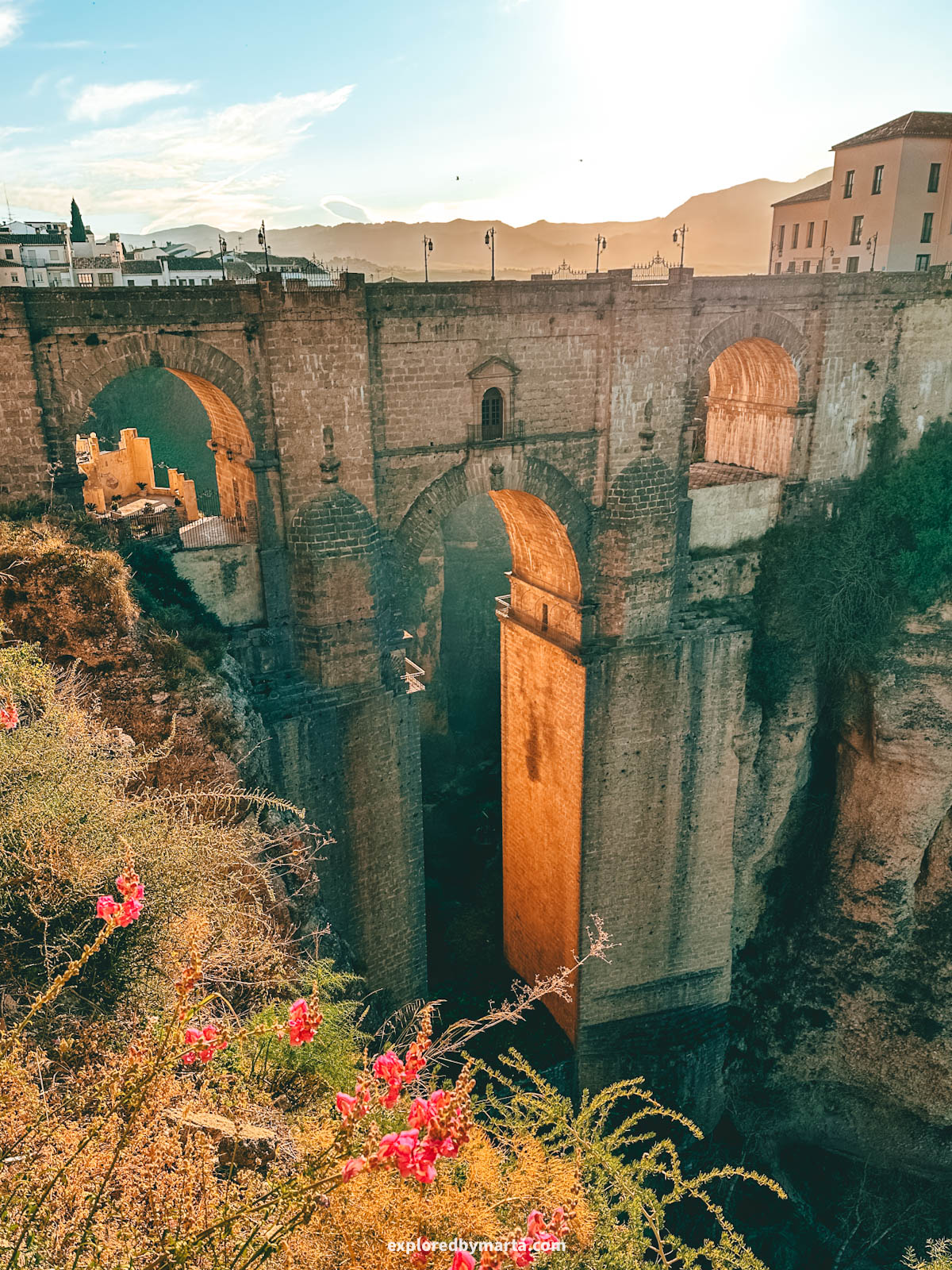
The Puente Nuevo bridge is the heart and soul of Ronda – and the main reason most people come to visit. This dramatic 18th-century stone bridge stretches over the deep El Tajo gorge, connecting the old and new parts of the town.
Crossing this iconic bridge in Ronda is a must for every visitor.
Construction started in 1759 and lasted for 34 years, with the bridge finally completed in 1793. At nearly 100 meters (328 feet) tall, Puente Nuevo is one of the highest bridges in Andalusia (but definitely the most spectacular one!).
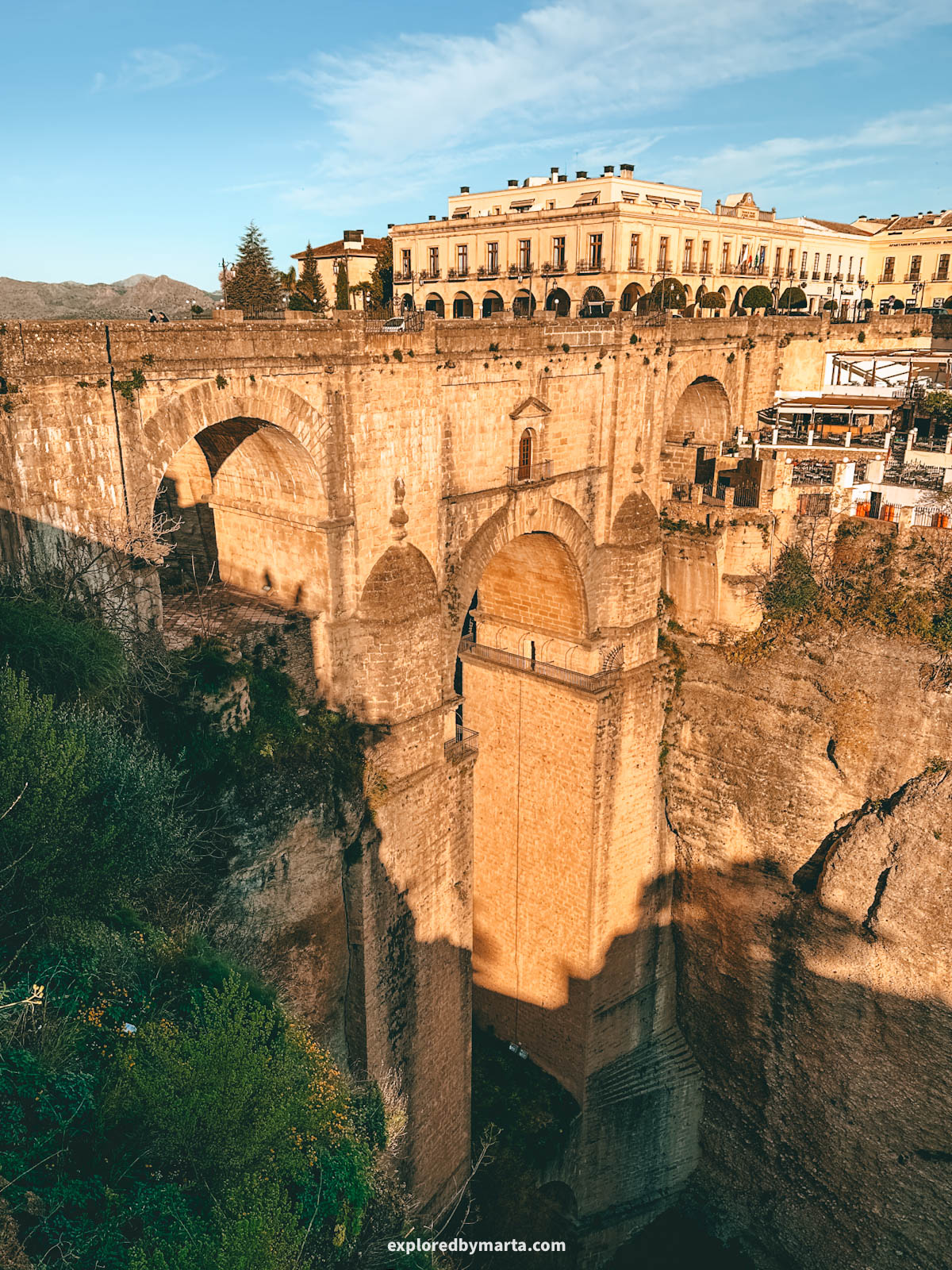
The views looking down into the gorge are honestly hard to describe – you really have to see it in person!
For the best close-up view of the bridge from the city side, head straight to Mirador de Aldehuela. This viewpoint is right next to the bridge, requires no climbing, and gives you a beautiful angle of the bridge with the gorge stretching below it.
Walking across the bridge is free, and the views from both sides are equally beautiful.
On the other side, stop by Paseo de Kazunori Yamauchi cliffside promenade. From here, you can see the bridge from the opposite side – plus there is a small hut here where you can buy entrance tickets to visit the inside of the bridge!
Location: Puente Nuevo bridge – Mirador de Aldehuela – Paseo de Kazunori Yamauchi
2. Visit the inside of Puente Nuevo bridge
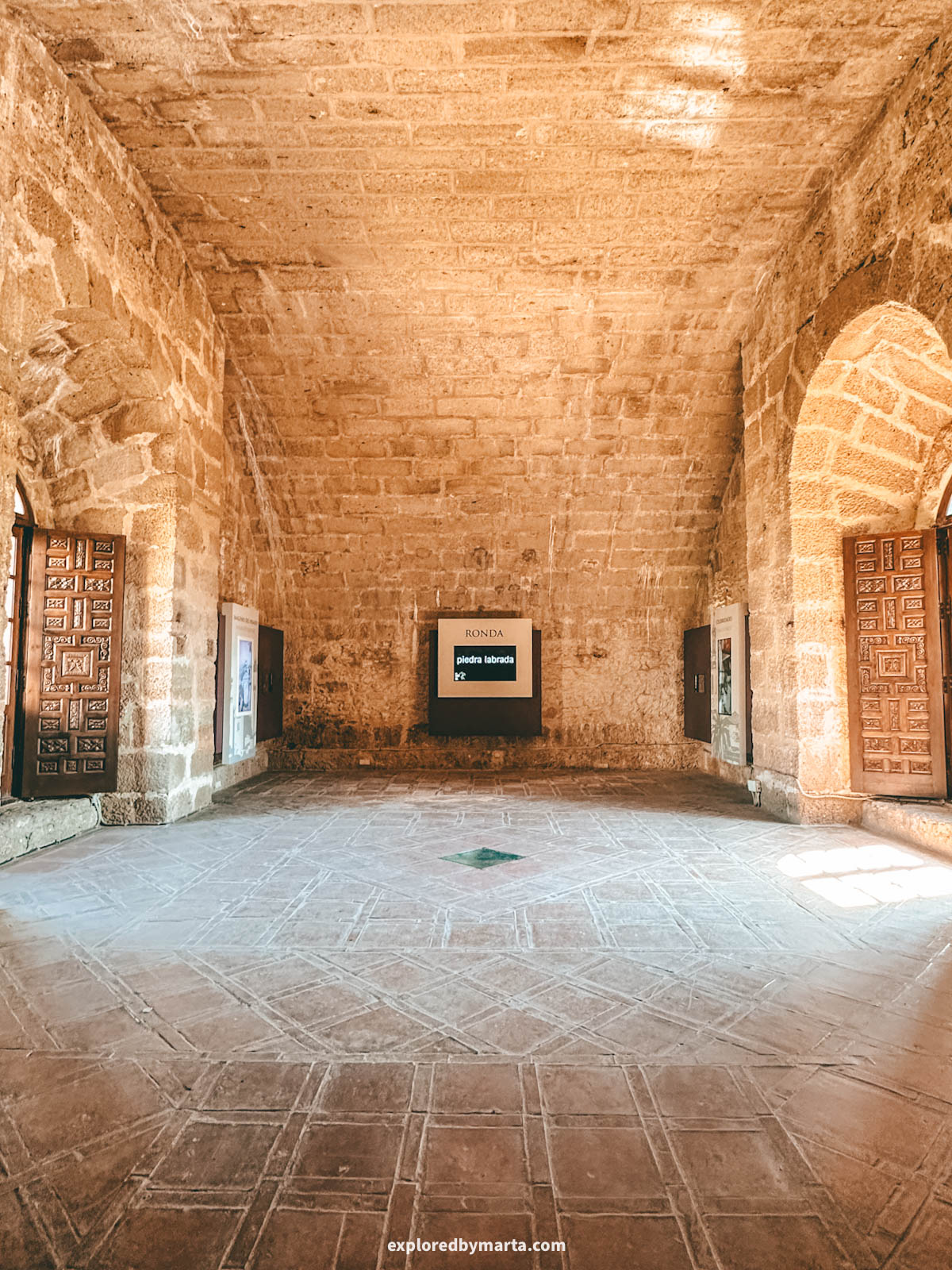
Did you know you can actually go INSIDE the Puente Nuevo bridge? This is one of the most underrated experiences in Ronda – and probably one of my favorite hidden surprises in the city! 🤯
Inside the central arch of the bridge, there is a hidden chamber that once served as a prison and a guardhouse during turbulent times in Ronda’s history.
Today, it is open to visitors as a small museum where you can learn about the bridge’s construction and the role this bridge played over the centuries.
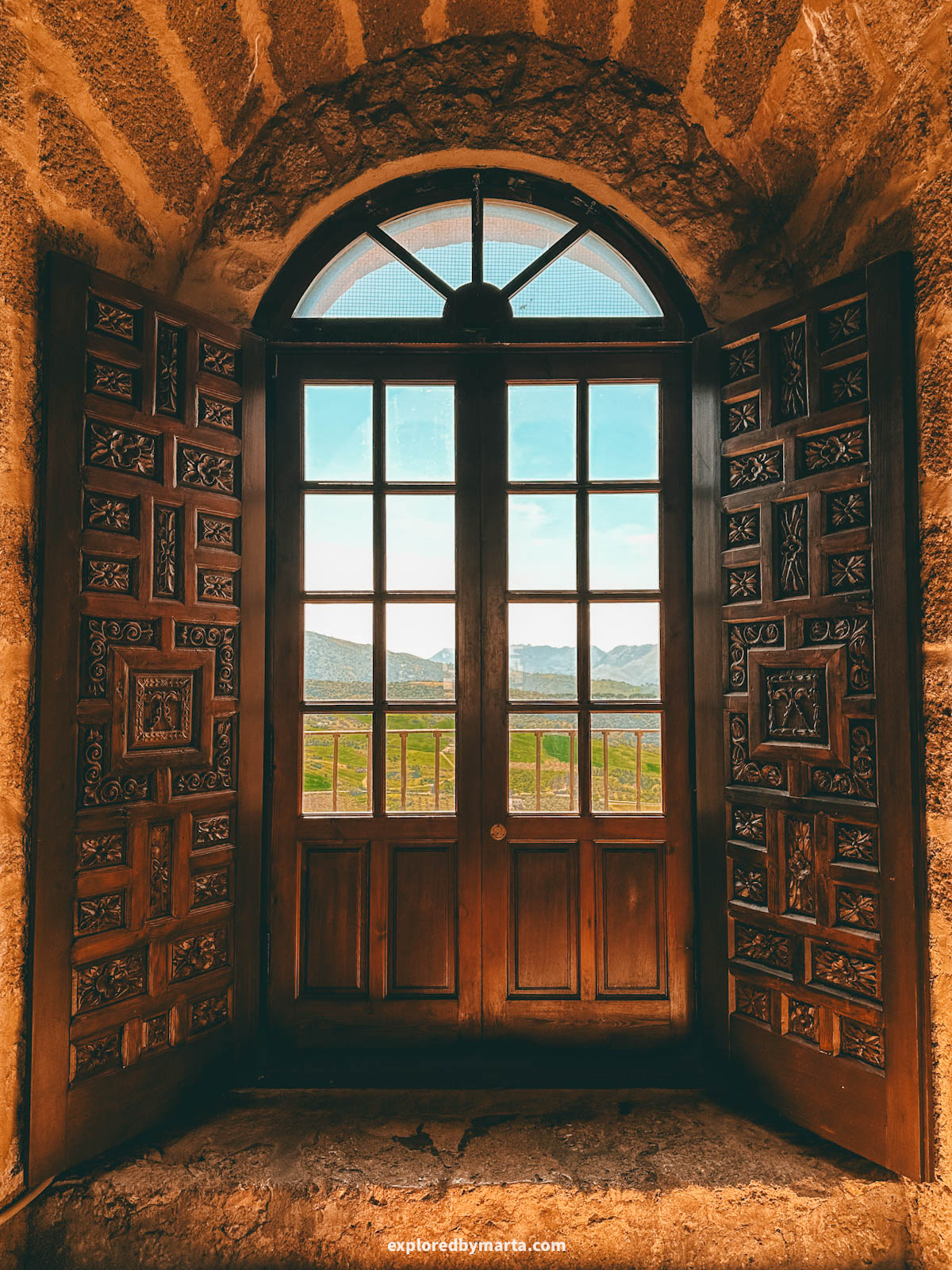
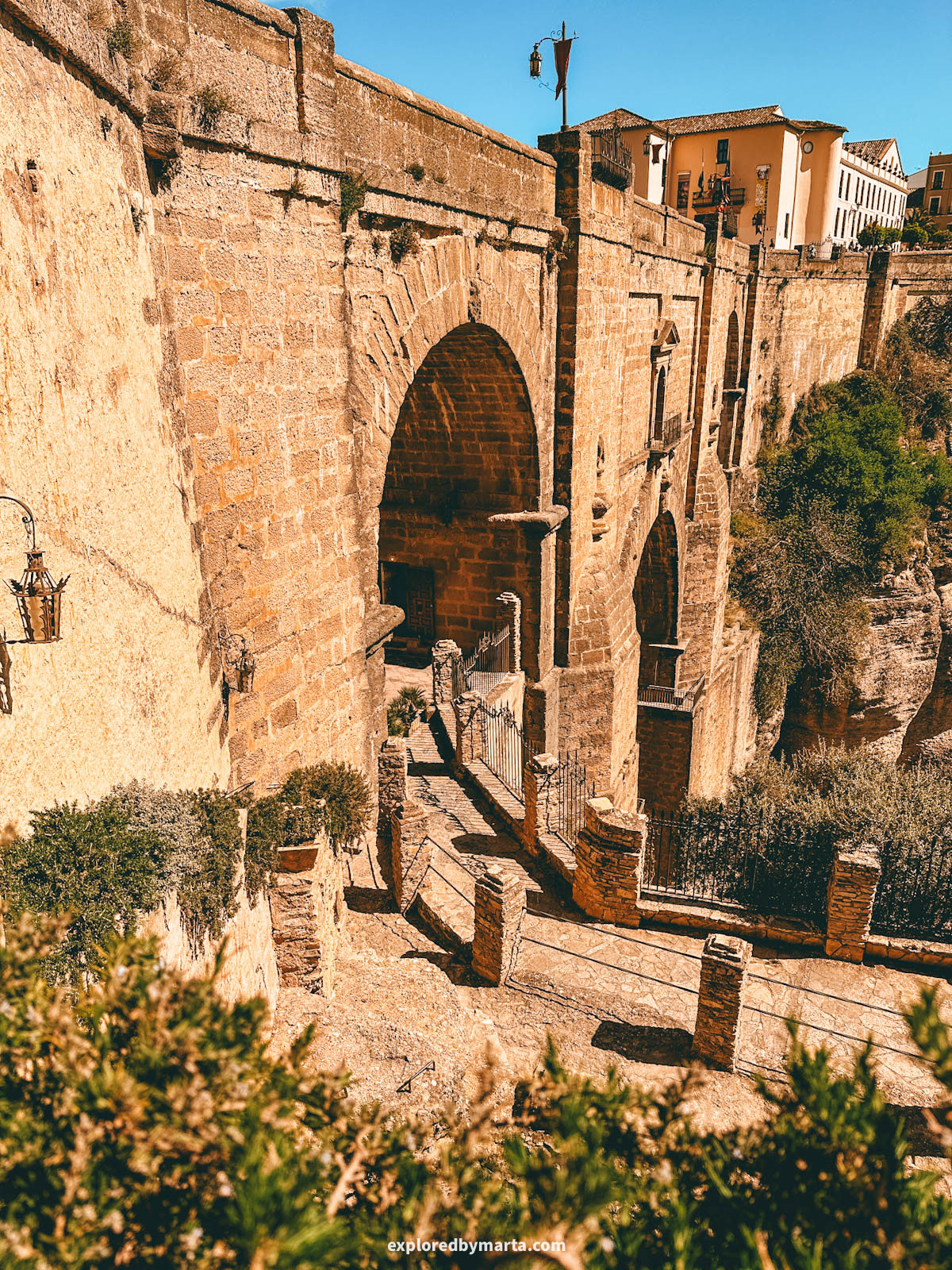
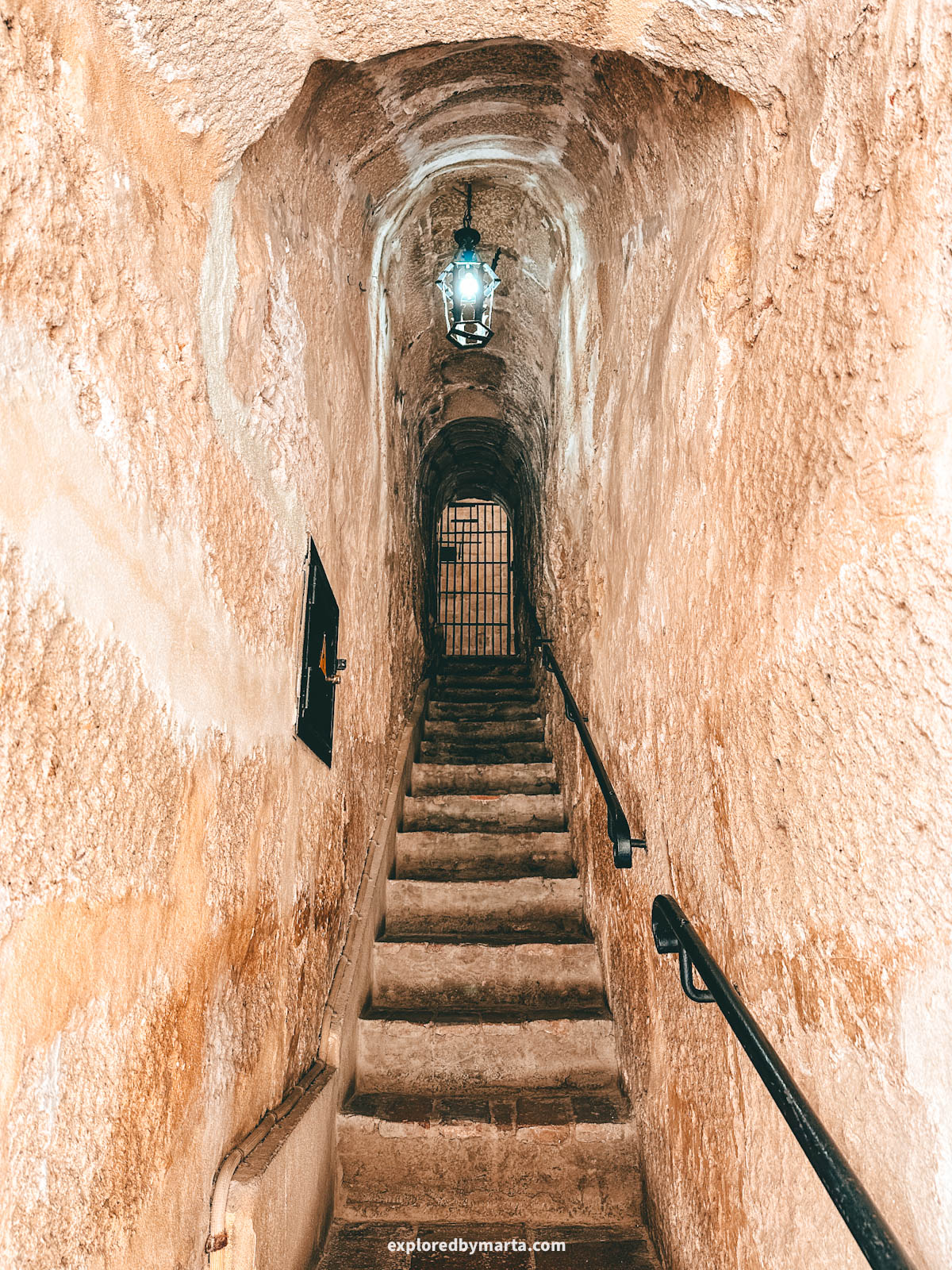
To get inside, head to the small hut on Paseo de Kazunori Yamauchi (right next to the bridge) and buy your entrance ticket. You can also buy it online. From there, you walk down a few steps to the ‘legs’ of the bridge and enter through a small door.
Once inside, you climb a narrow staircase that takes you to the middle level of the bridge. If you look at the bridge from the side, you will notice small windows in the upper-middle part of the structure – that is exactly where you end up!
The chamber itself is a big stone hall with windows on both sides looking out over the gorge. The exposition is small (honestly, there’s not much to see), but the experience of being INSIDE such an iconic landmark is honestly very cool.
Quick note: The entrance fee is small (2.50 EUR right now), and the visit takes around 20 to 30 minutes. Do not expect a huge museum – the real magic is just being inside the bridge!
Location: Paseo de Kazunori Yamauchi
3. Visit the hanging Jardines de Cuenca gardens
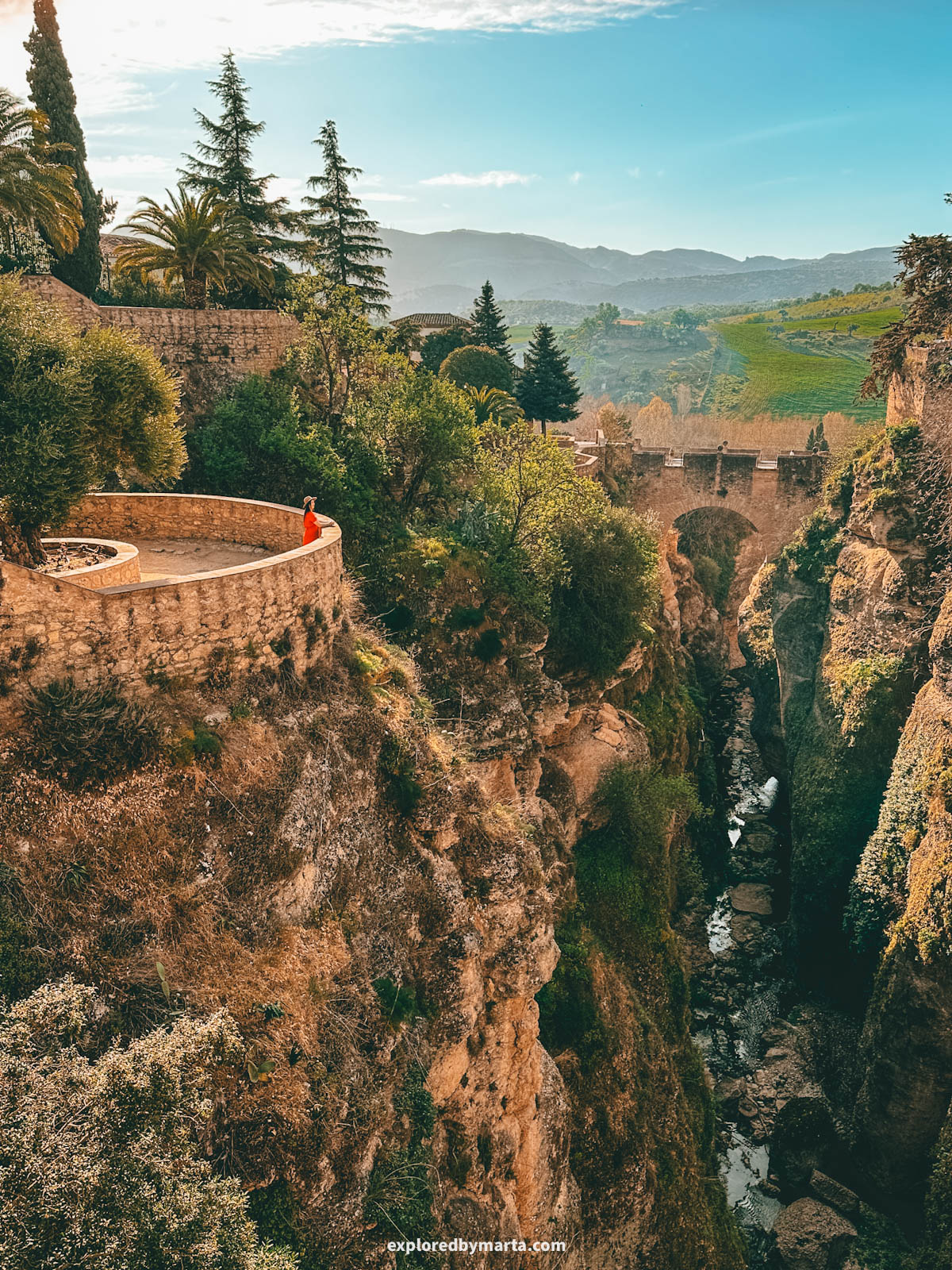
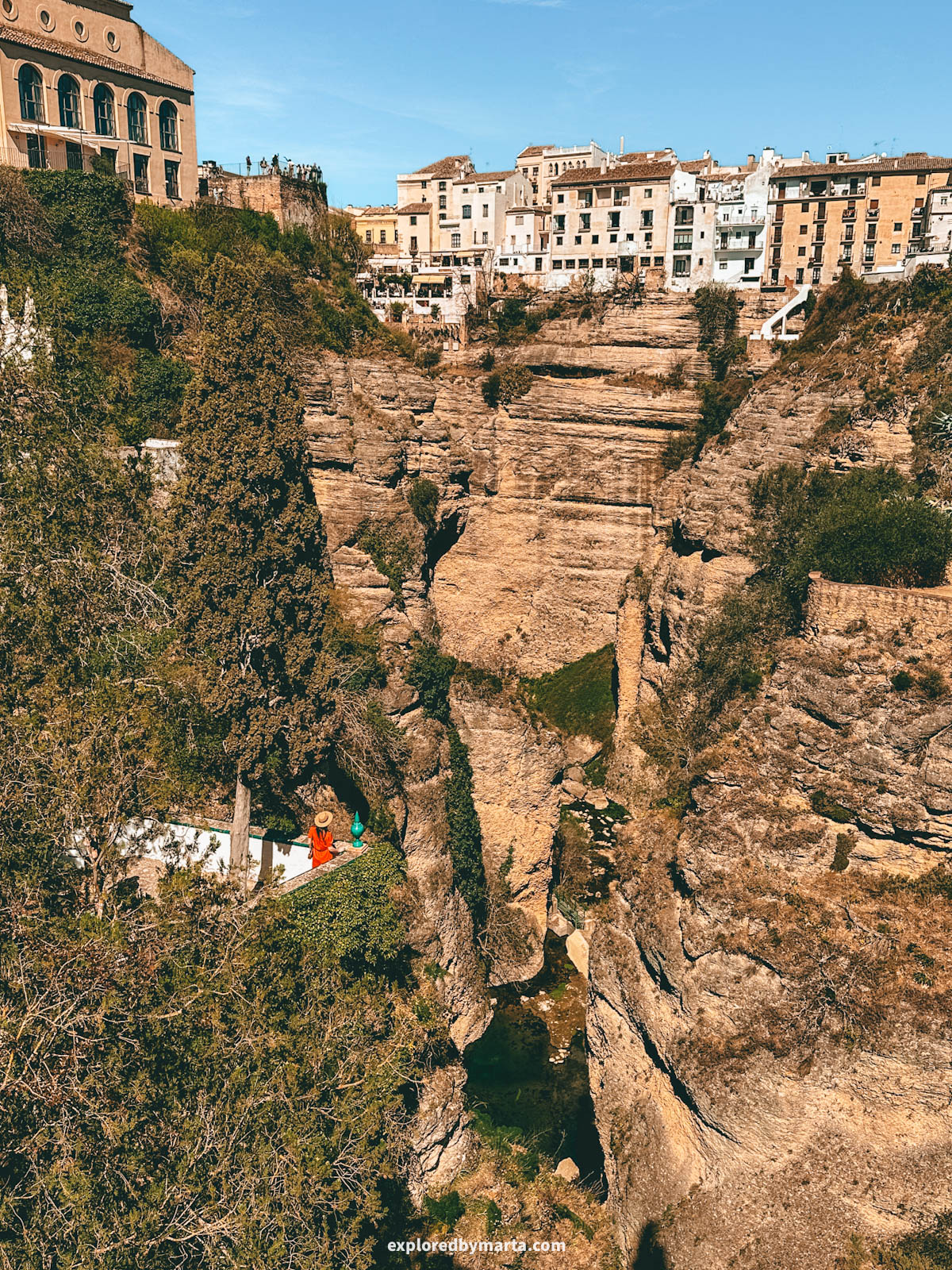
Just a few minutes of walking from Puente Nuevo bridge, you will reach one of my favorite hidden spots in Ronda – Jardines de Cuenca. These beautiful gardens hang above the El Tajo gorge and give you one of the most beautiful side views of the famous bridge.
Most tourists head straight to the viewpoints on the other side of the gorge, which means Jardines de Cuenca is much quieter. For me, this was actually one of my favorite spots to admire the bridge from the side!
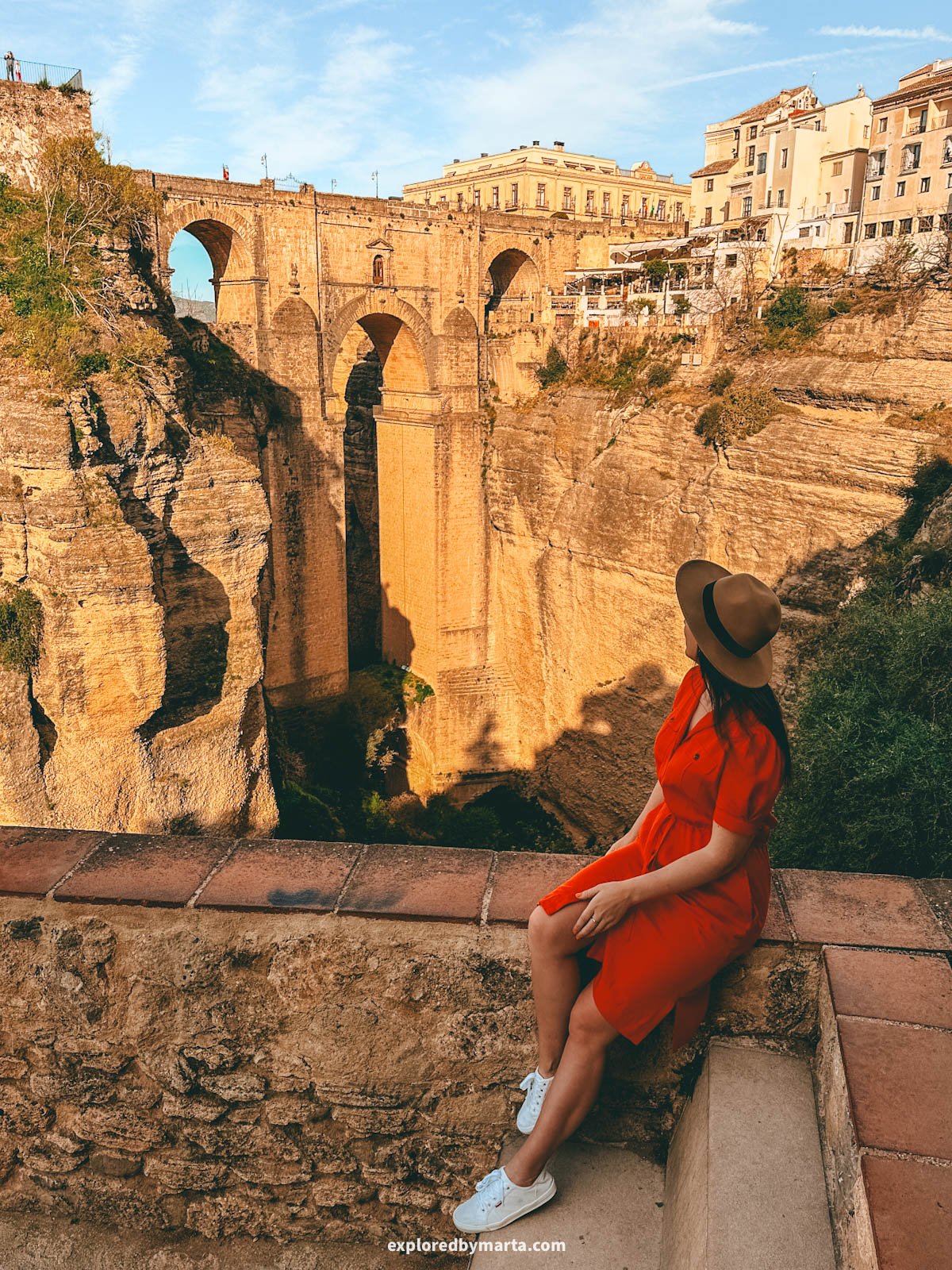
The main highlight of the gardens is Mirador de Cuenca – a fantastic viewpoint at the lower end of the terraces.
From here, you can see Puente Nuevo bridge from the east side, the deep El Tajo gorge dropping below, and the Guadalevín River flowing at the bottom.
The terraced gardens themselves are beautiful too. There are stairs to manage, but it is much less climbing than the famous viewpoints on the other side of the bridge. Definitely worth the visit!
Quick note: The gardens have working hours, so check them before you go. The entrance is free.
Location: Jardines de Cuenca – Mirador de Cuenca
4. Cross Puente Viejo and admire Arco de Felipe V
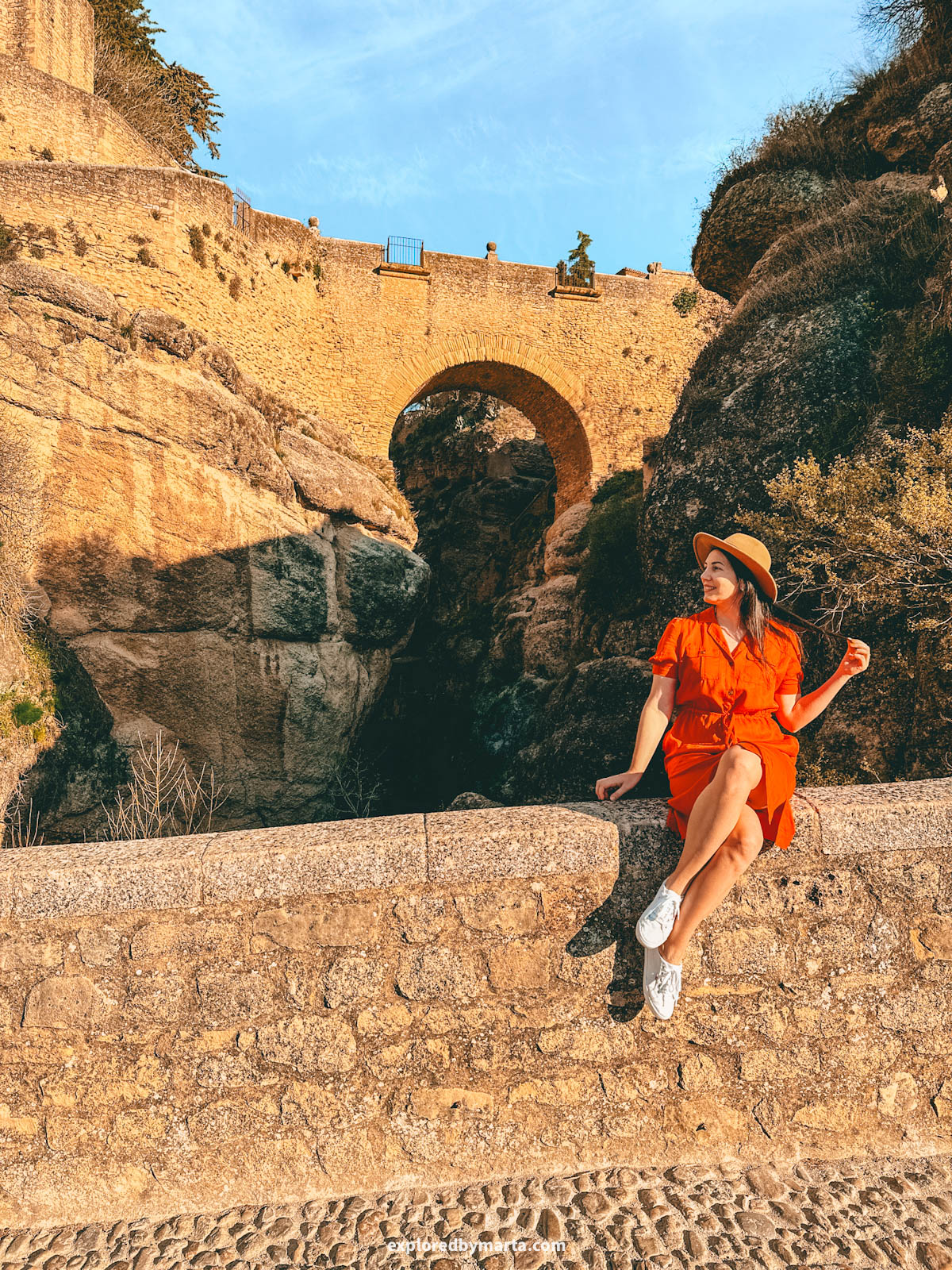
From Jardines de Cuenca, walk along the side of the gorge and you will reach another beautiful spot in Ronda – Puente Viejo, or the Old Bridge.
While all the attention goes to its famous younger brother, Puente Nuevo, crossing this lower bridge must be among the things you do in Ronda.
Puente Viejo is a 16th-century stone bridge that connects both sides of Ronda at a much lower level than Puente Nuevo. The setting is more peaceful here, and crossing the bridge gives you yet another angle of the El Tajo gorge.
For the best photos of Puente Viejo, walk a few more steps downhill to Puente de las Curtidurías (also known as Puente Romano). From this lower bridge, you can capture Puente Viejo perfectly framed by the gorge in the background.
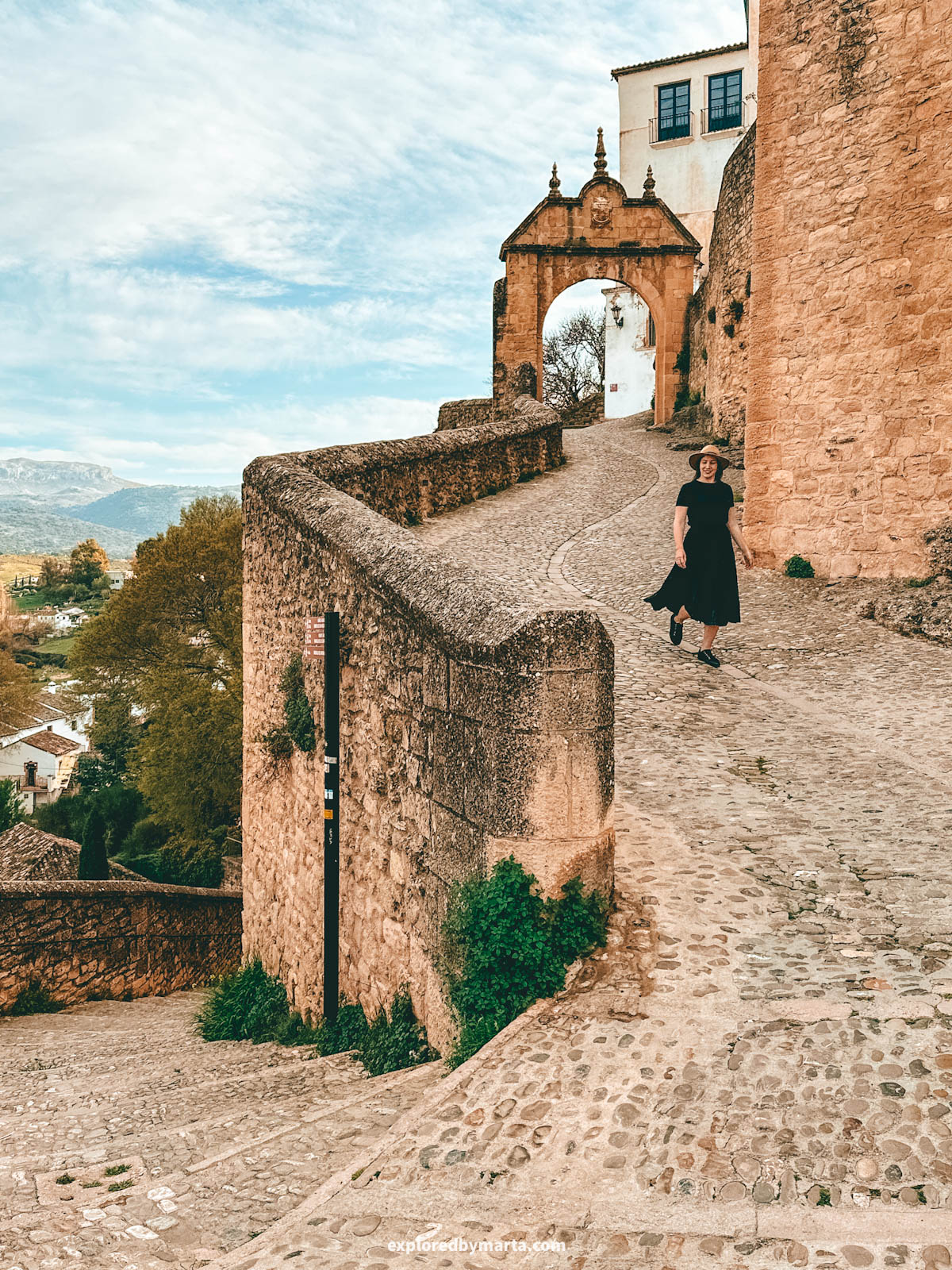
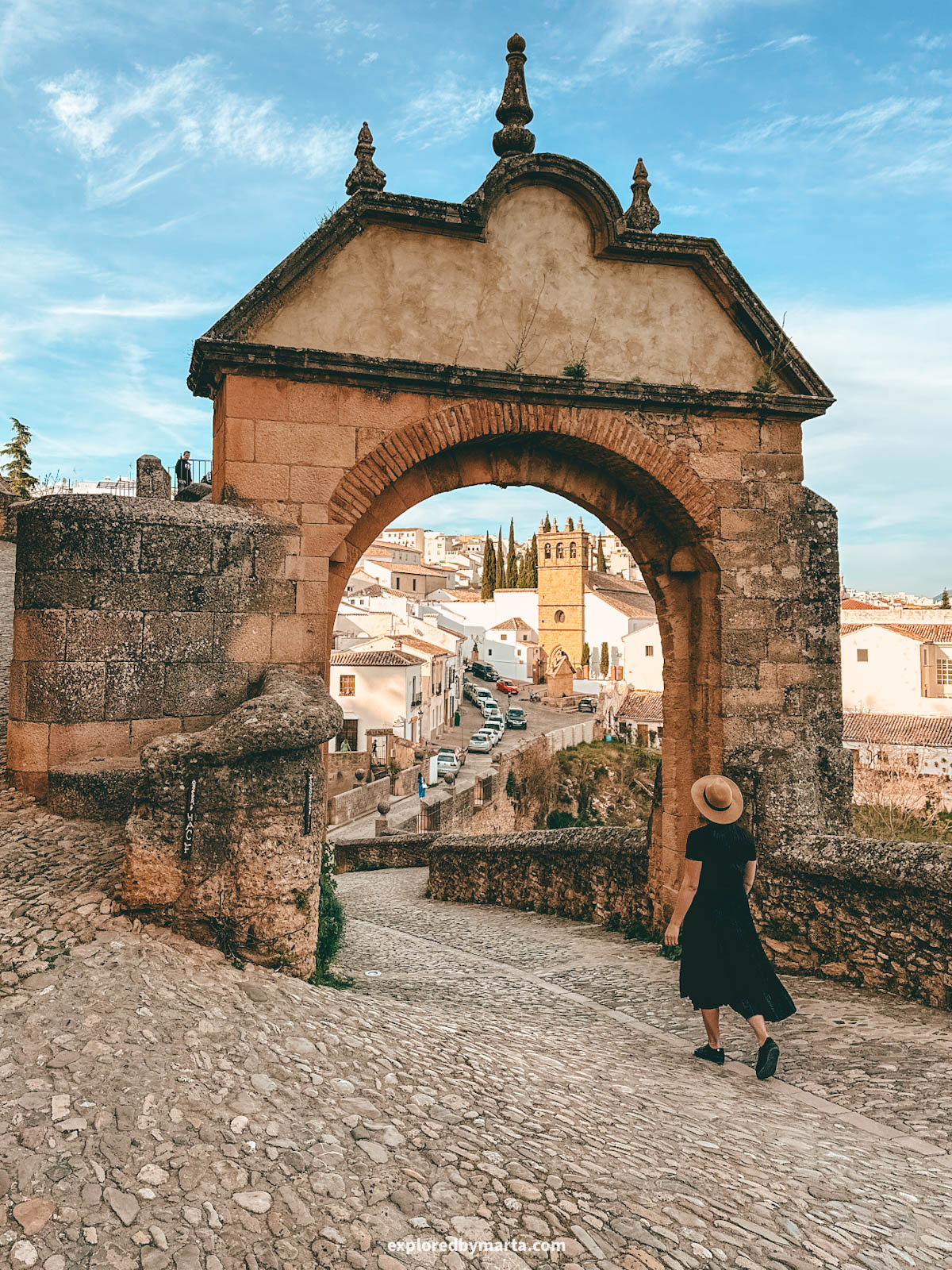
Right next to Puente Viejo, you will find another beautiful attraction – Arco de Felipe V. This 18th-century stone arch sits on the cobblestone path just steps from the bridge and used to serve as one of the entrance gates to the city.
The arch is named after King Felipe V, who ruled Spain when it was built. It is a beautiful monument with a double arch, three pointed pillars on top, and the royal coat of arms on one side. So pretty from both sides!
Location: Puente Viejo – Puente de las Curtidurías – Arco de Felipe V
5. Learn about Ronda’s past at Baños Árabes
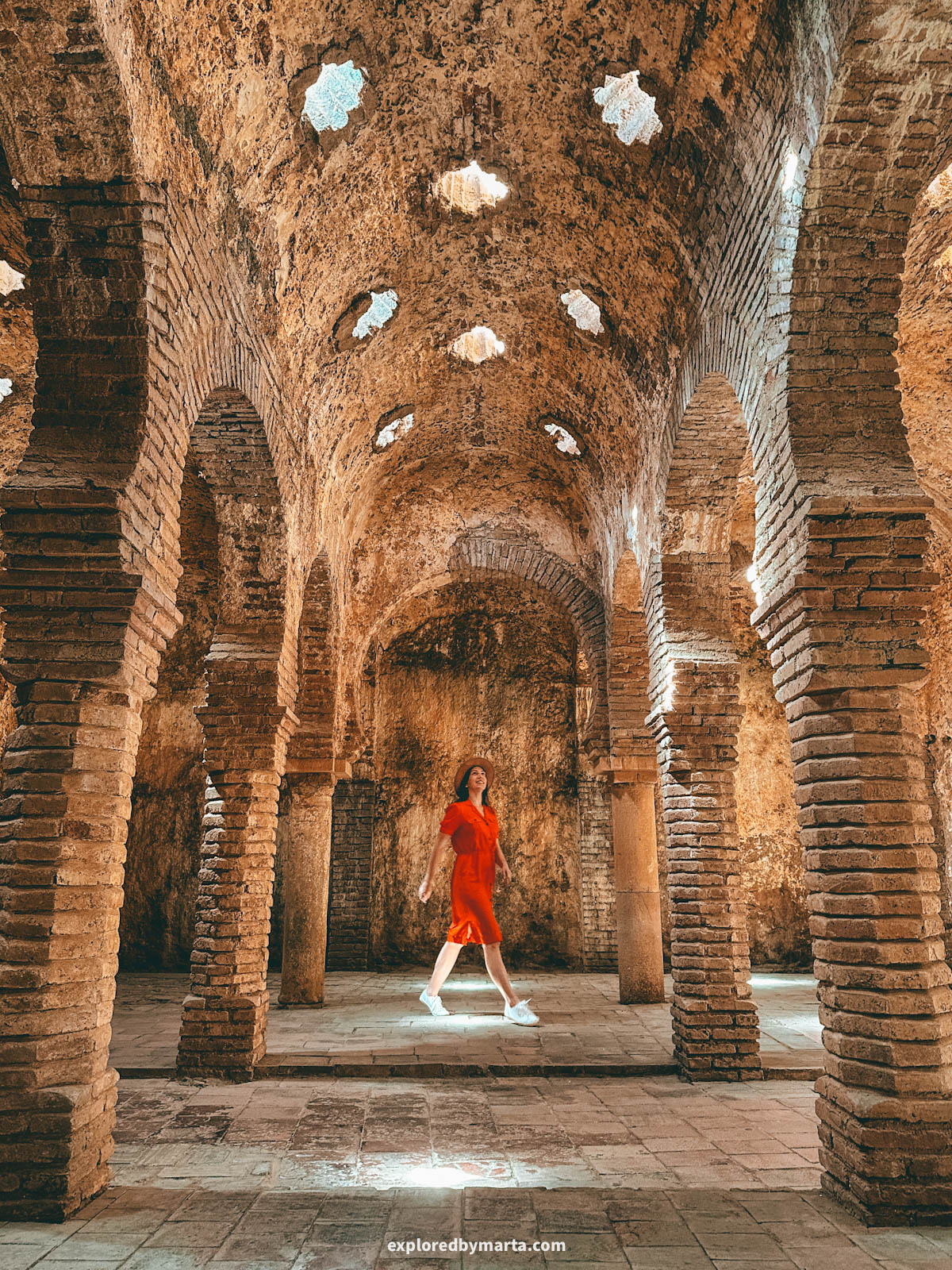
Just a few steps away from Puente Viejo and Arco de Felipe V, you will find one of the most fascinating things to do in Ronda – the Baños Árabes or Arab baths.
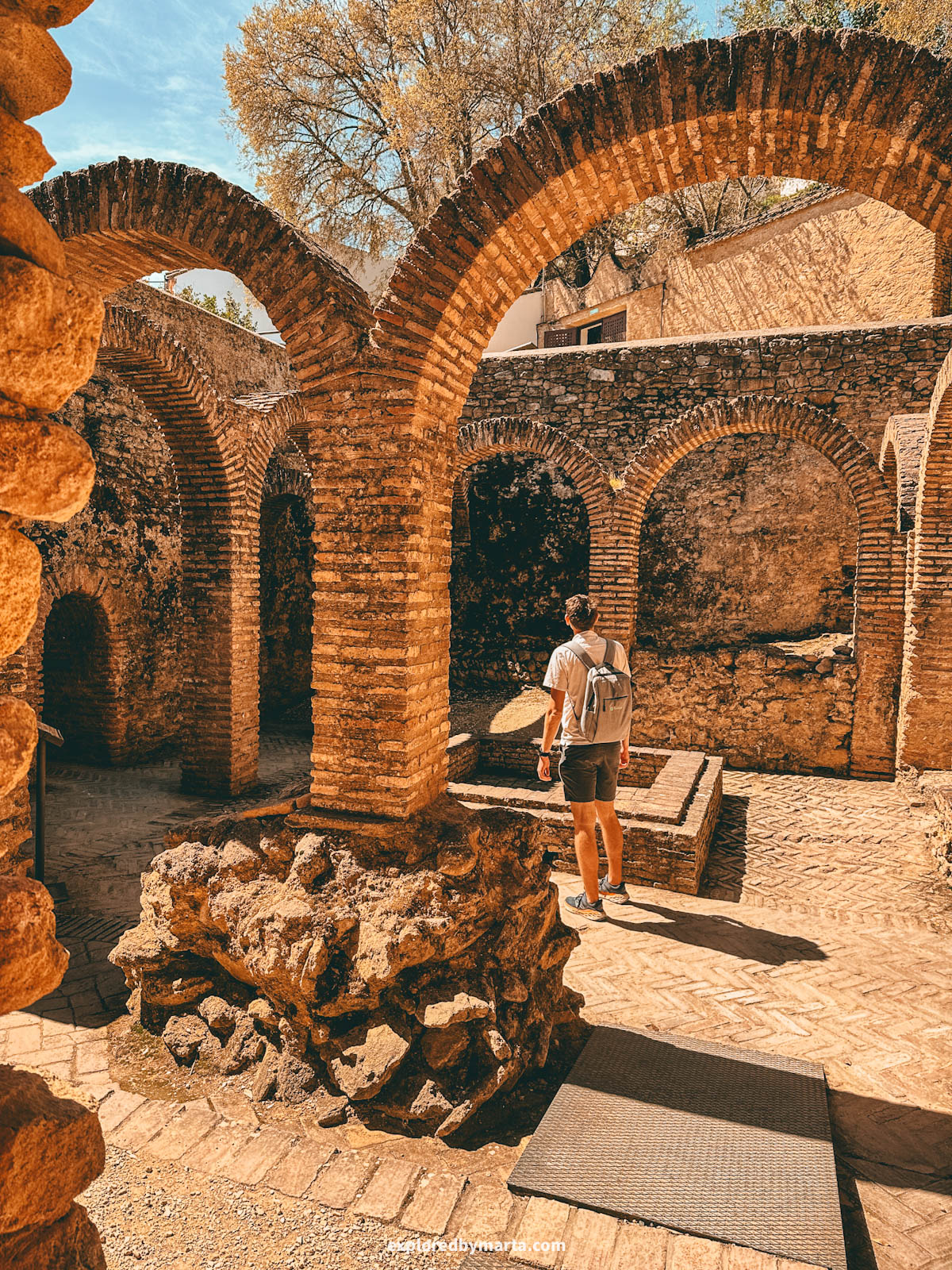
This is a unique archaeological site showcasing a 13th-century bathhouse that was built during the Islamic period in Ronda. If you come to Andalusia, you must visit the Arab Baths at least in one city, and Ronda is a great place to do that.
Honestly, I was very skeptical about visiting this place at first. There are Arab baths in many places around Andalusia, and I did not think there was anything special about them. But these ones really were worth the visit!
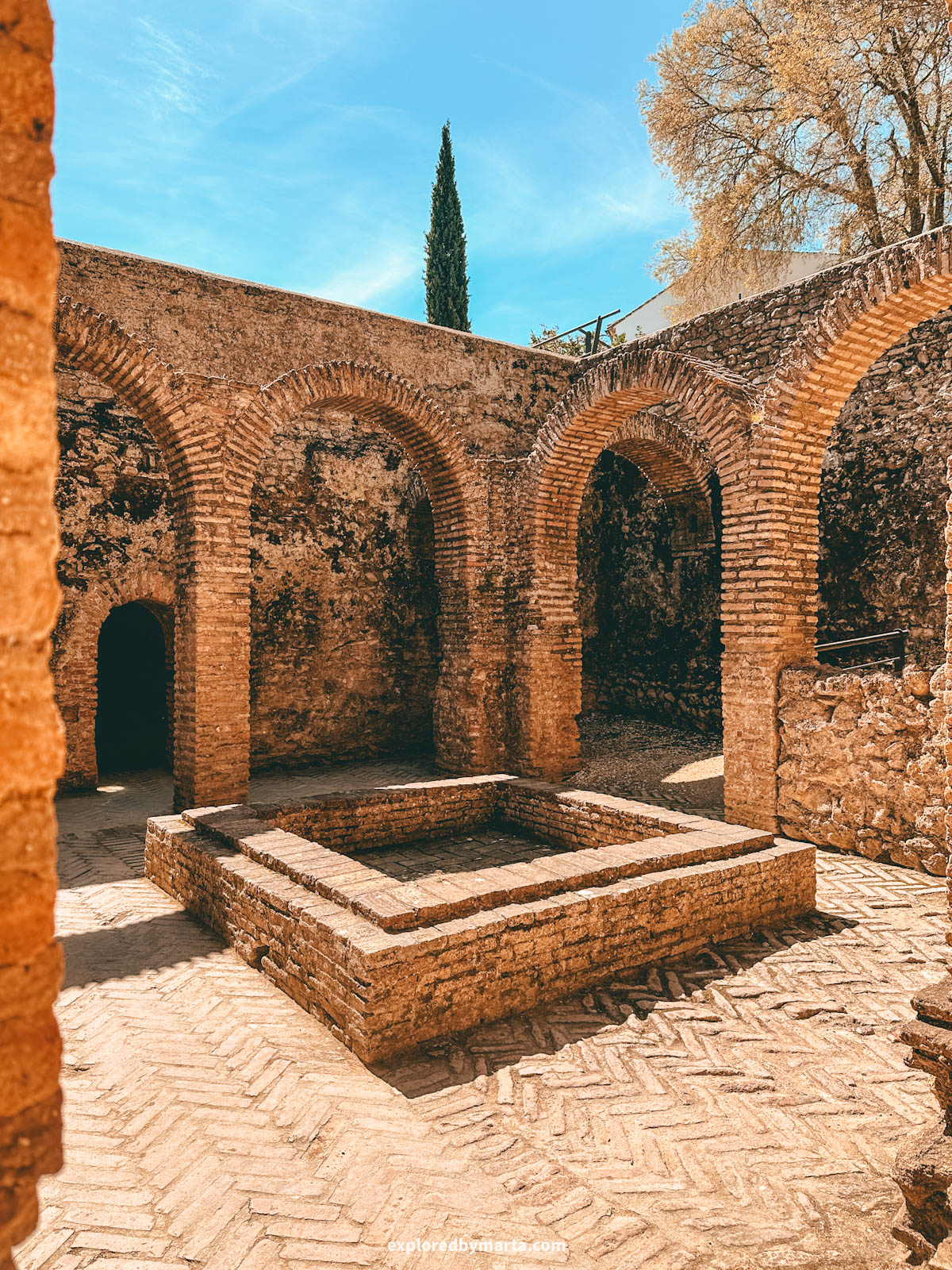
Once you enter the site, you will be instructed to go inside one of the rooms in the Arab baths to watch a short video. The video explains everything about the baths with illustrations and photos – how they worked, how they looked, and what happened in each room.
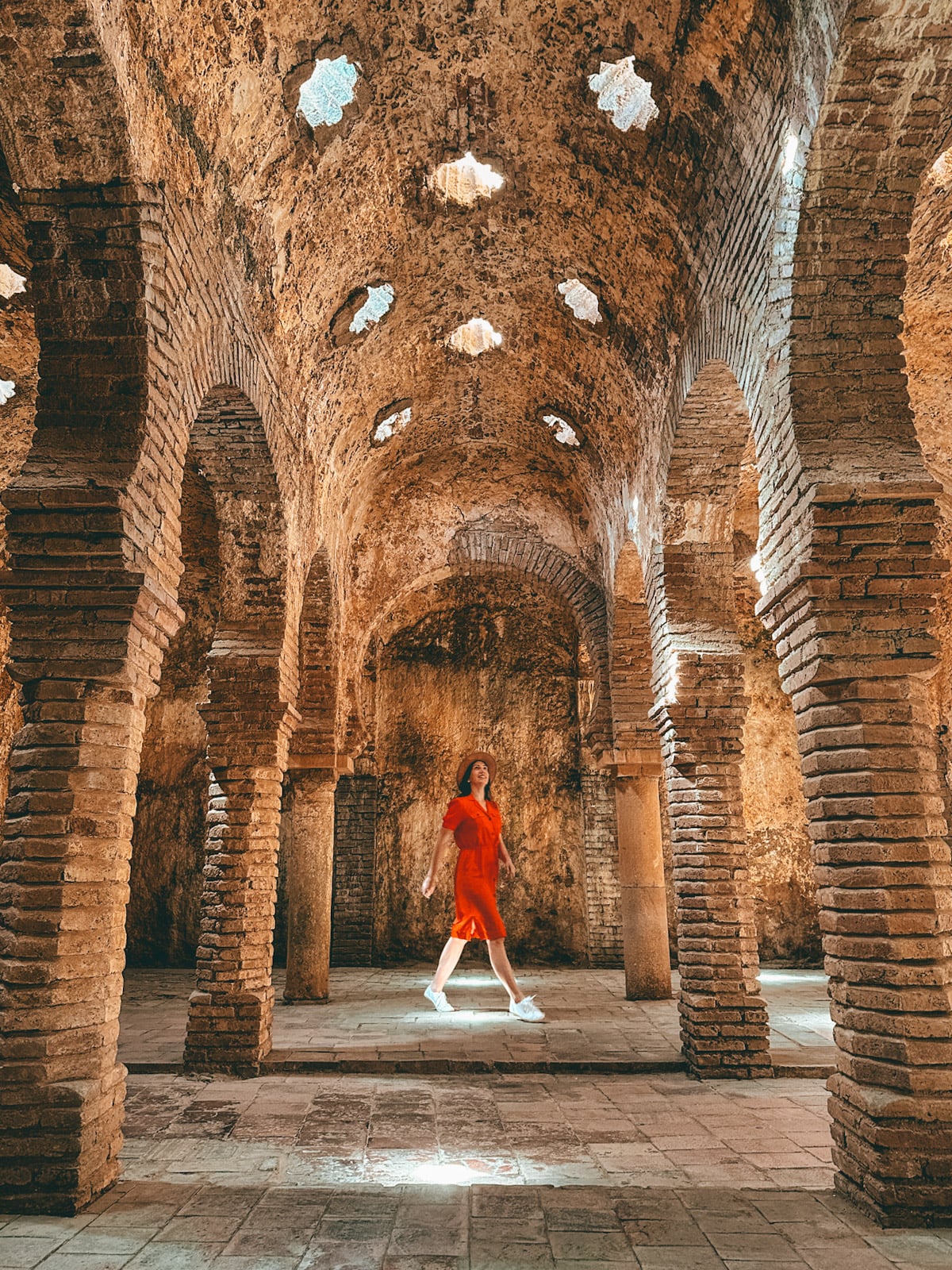
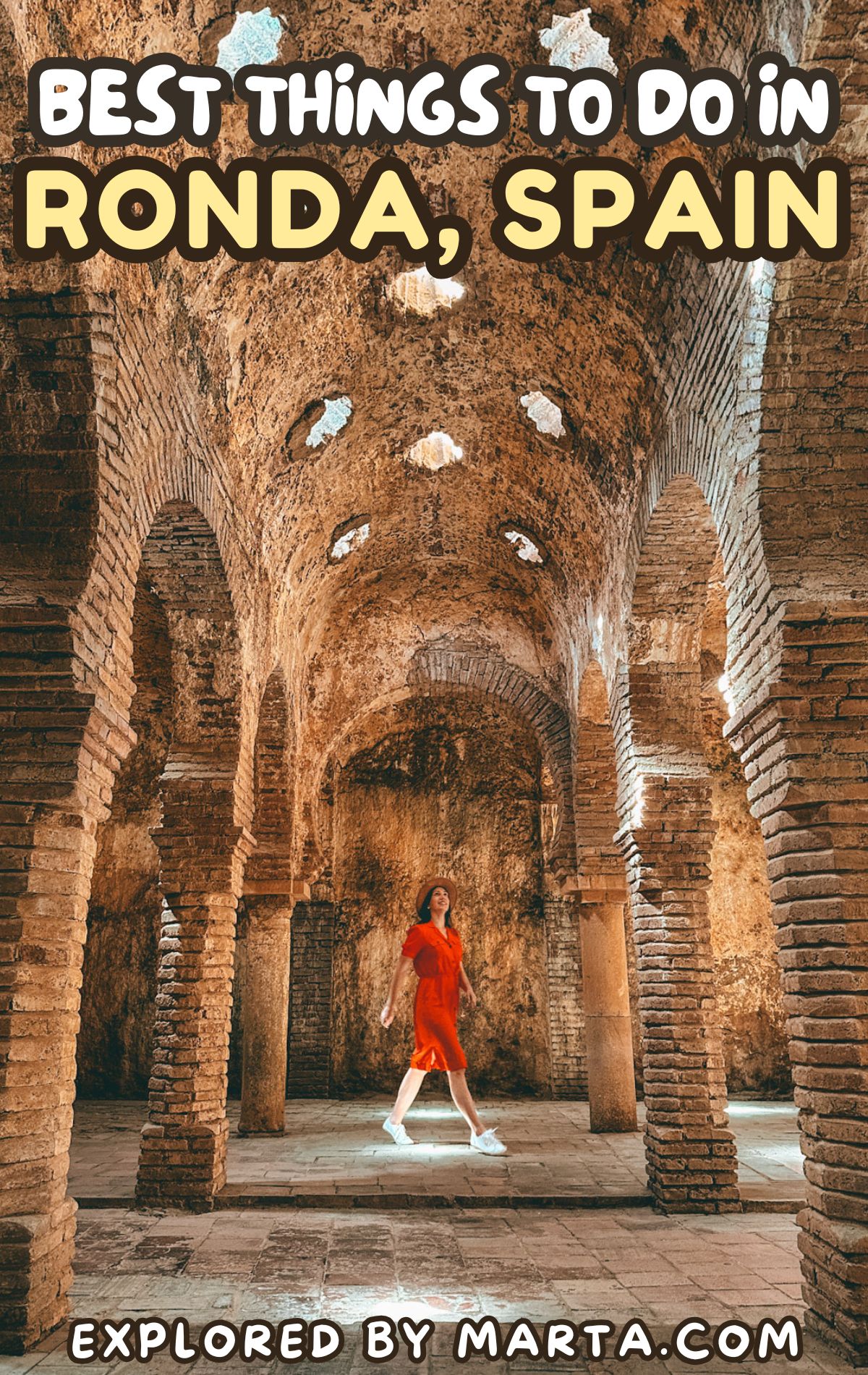
Then you walk through the actual baths, which feature beautiful horseshoe-shaped brick arches with star-shaped holes in the rounded ceilings. The arches and the play of light through the star-shaped openings make this one of the most photogenic spots in Ronda.
I have seen many Arab baths around Andalusia, but these are honestly the best in terms of explaining how everything worked. Good hygiene was very important in Muslim culture, and it was fascinating to see the efforts that were taken to provide it to the people centuries ago. ✨
Quick note: There is a small entrance fee of 4.50 EUR to visit the Arab baths.
Location: Baños Árabes of Ronda
6. Walk along the medieval defensive city walls
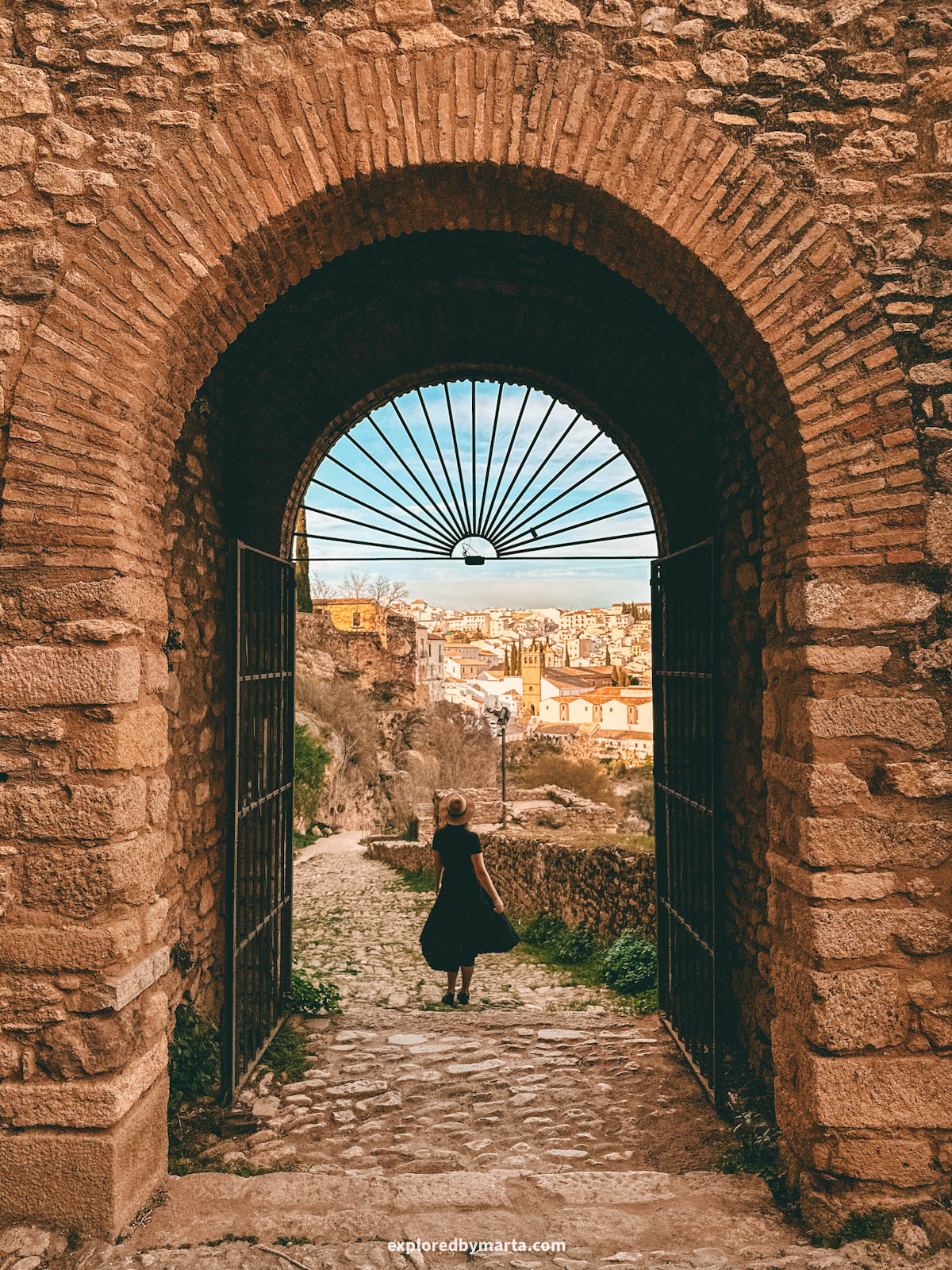
When you leave the Arab baths, climb up a few meters uphill and look for a small narrow path with steps next to La Ermita de San Miguel.
This path takes you along the medieval defensive city walls of Ronda and right through some of the old city gates – one of my favorite off-the-beaten-path walks in Ronda!
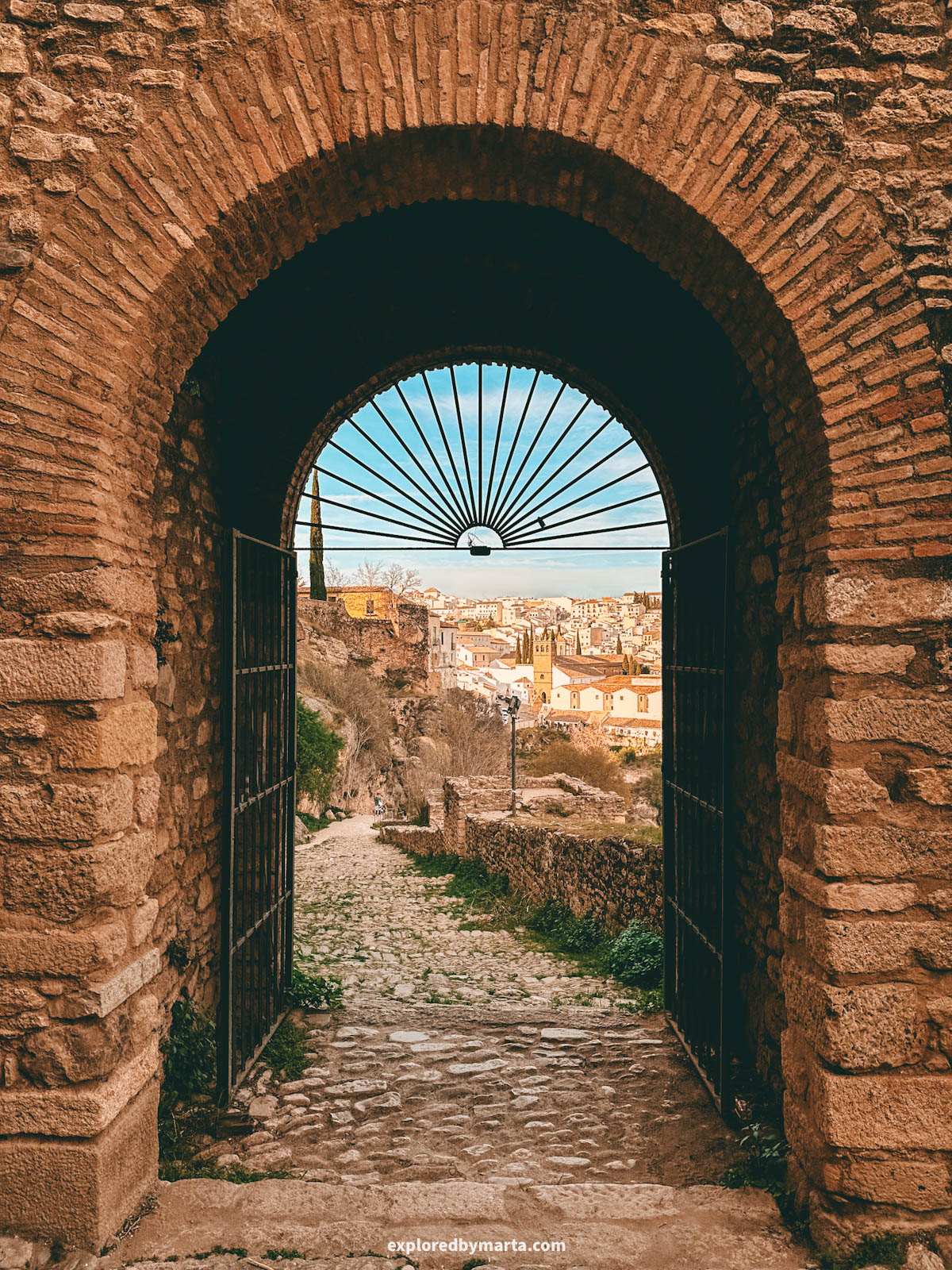
The first gate you will reach is Puerta de la Cijara, an arch-shaped gateway built into the old defensive walls. The gate served as one of the main entrance points to the city during the Islamic period in Spain.
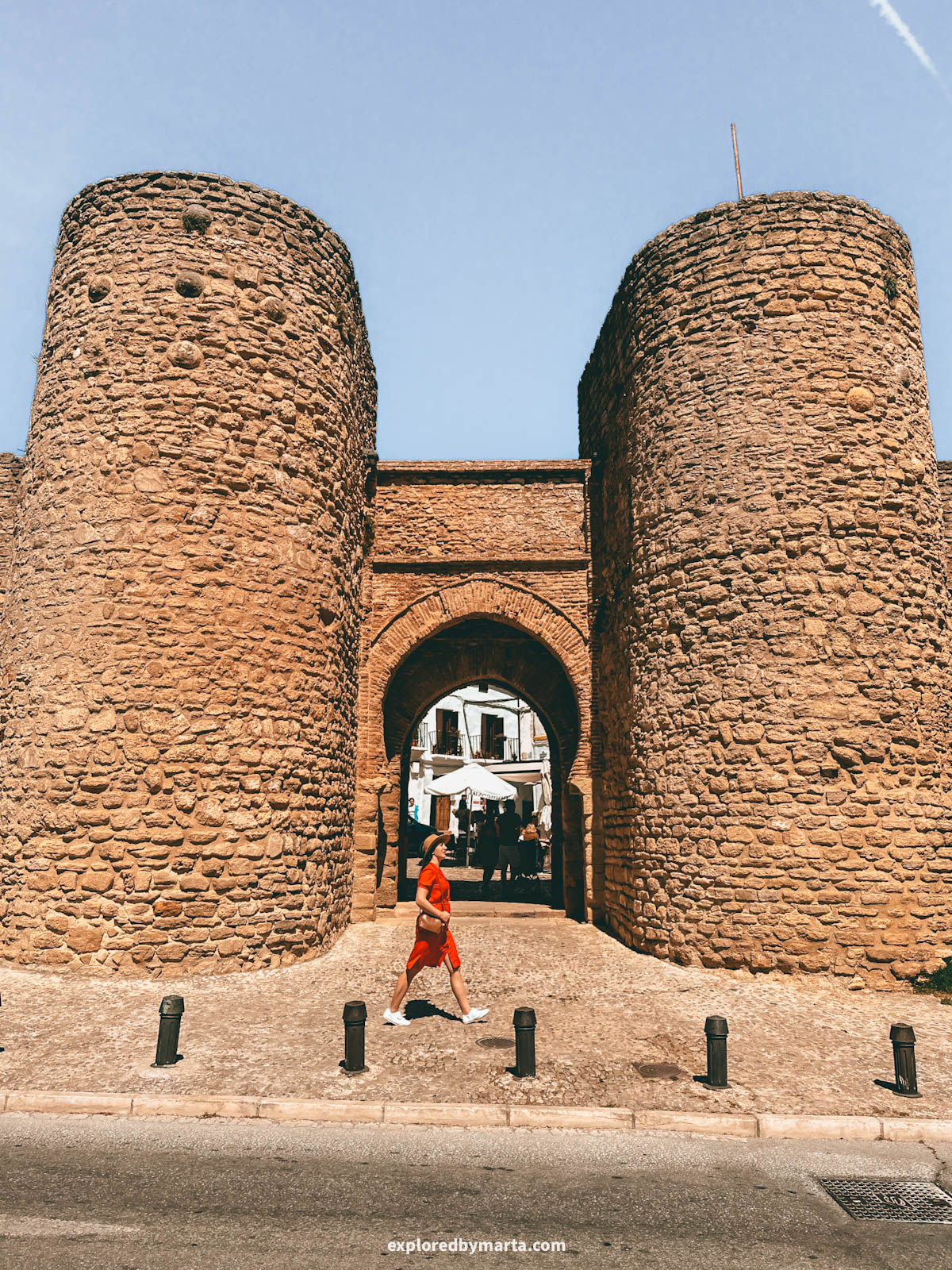
A beautiful cobblestone pathway leads to the gate, with amazing views overlooking the surroundings of Ronda along the way. Honestly, this whole walk feels like stepping back in time!
As you continue uphill, you will walk along the Murallas del Carmen and Murallas de la Cíjara old city walls. The cobblestone path is steep in places, but the walk is genuinely scenic, and you will see Ronda from angles most tourists miss.
If you keep going uphill, you will reach Puerta de Almocábar – the most impressive entrance gate to the city. This 13th-century stone gateway has two gigantic towers on both sides.
Quick notes: There is no fee. This walk is uphill and takes around 20 to 30 minutes. Wear comfortable shoes!
Location: Puerta de la Cijara – Puerta de Almocábar
7. See Ronda from above at Iglesia de Santa María la Mayor
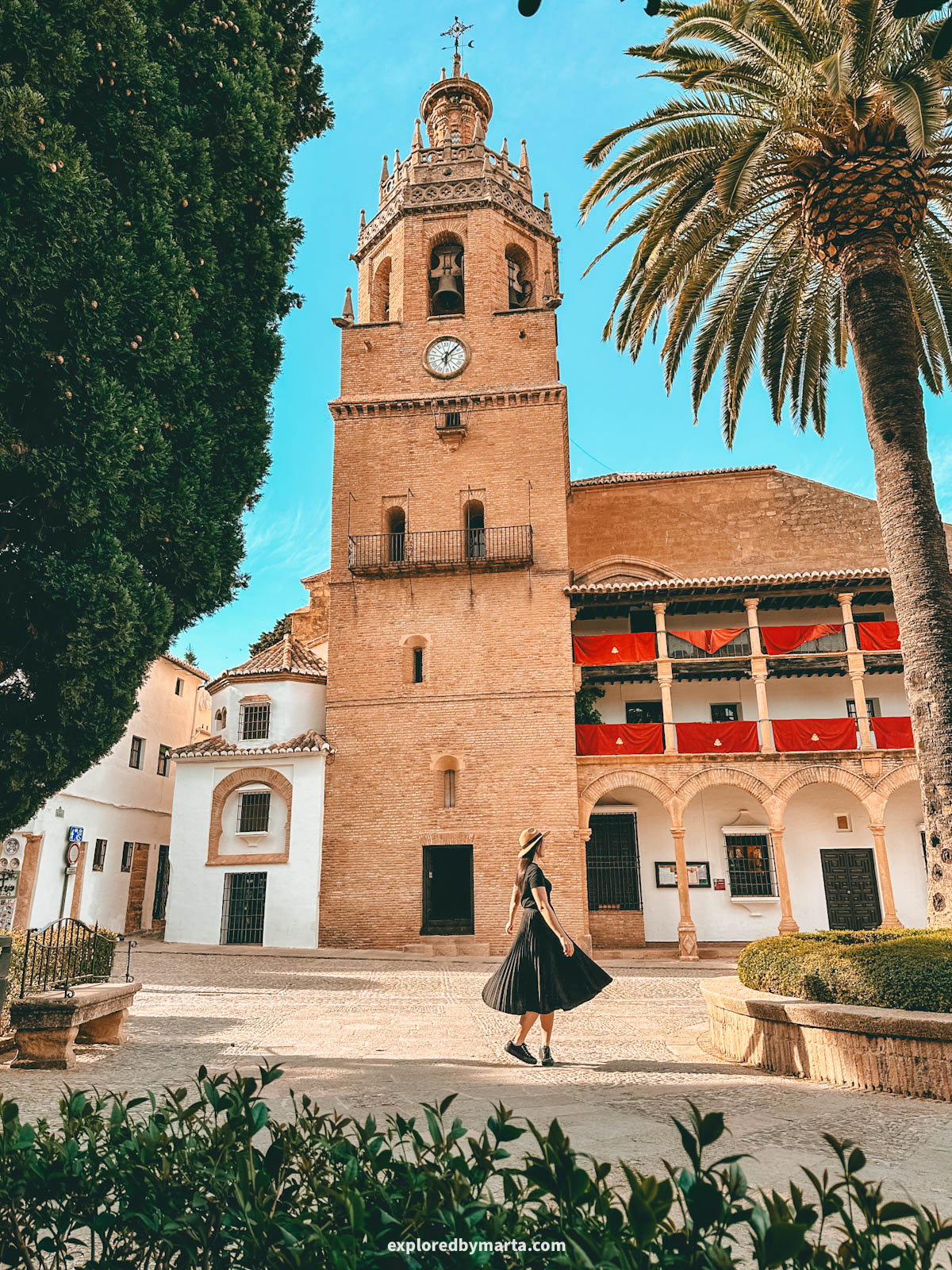
One of my favorite hidden gems in Ronda was the Iglesia de Santa María la Mayor church.
It is very common to enter and visit churches in Spain, but the best thing about this church in Ronda is that you can climb on the roof and see the whole city from above! ⛪
This beautiful Renaissance and Baroque-style church was originally a mosque built during the Islamic period in Spain, then later redesigned as a Catholic church (something very common in Andalusia).
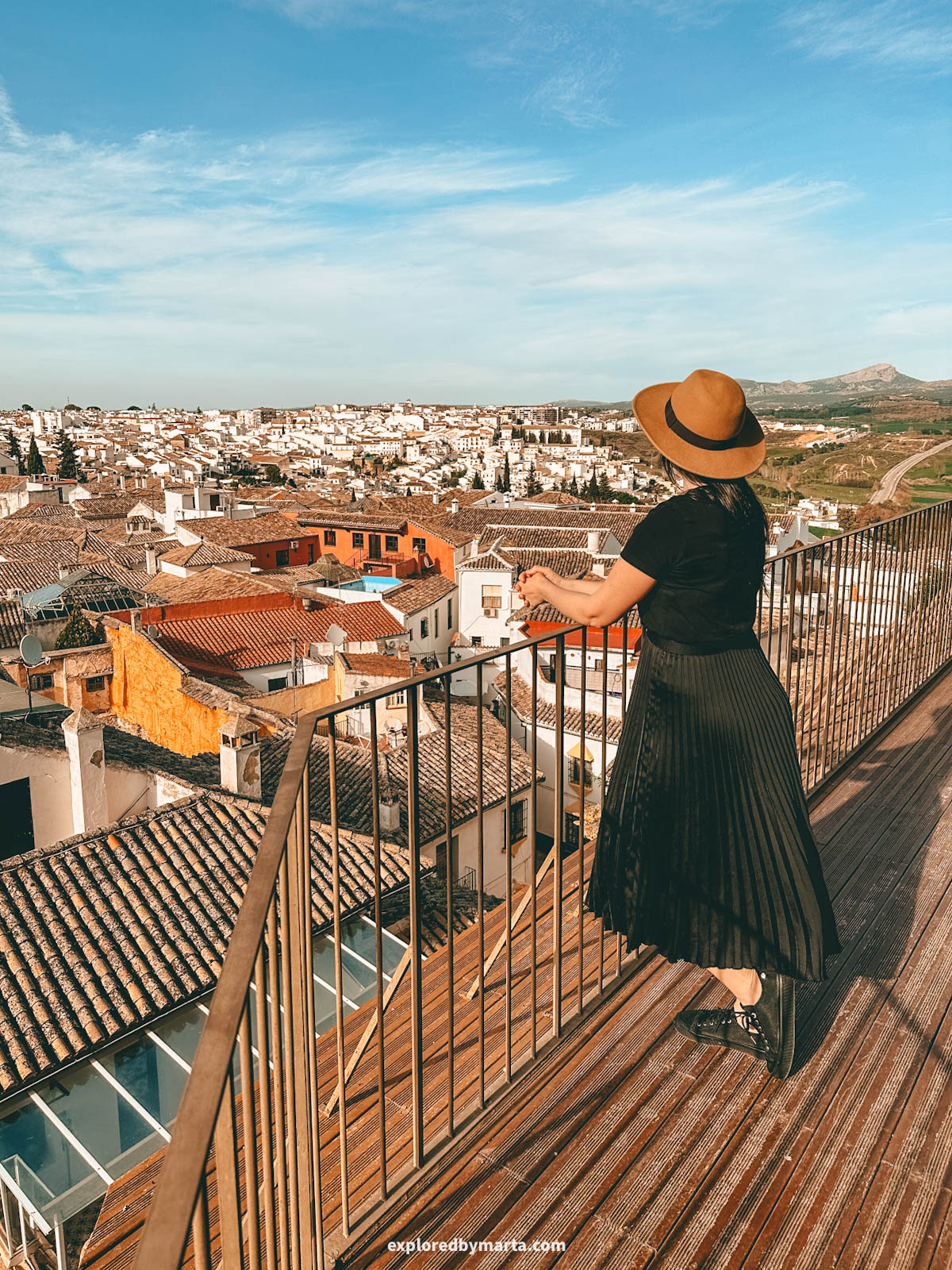
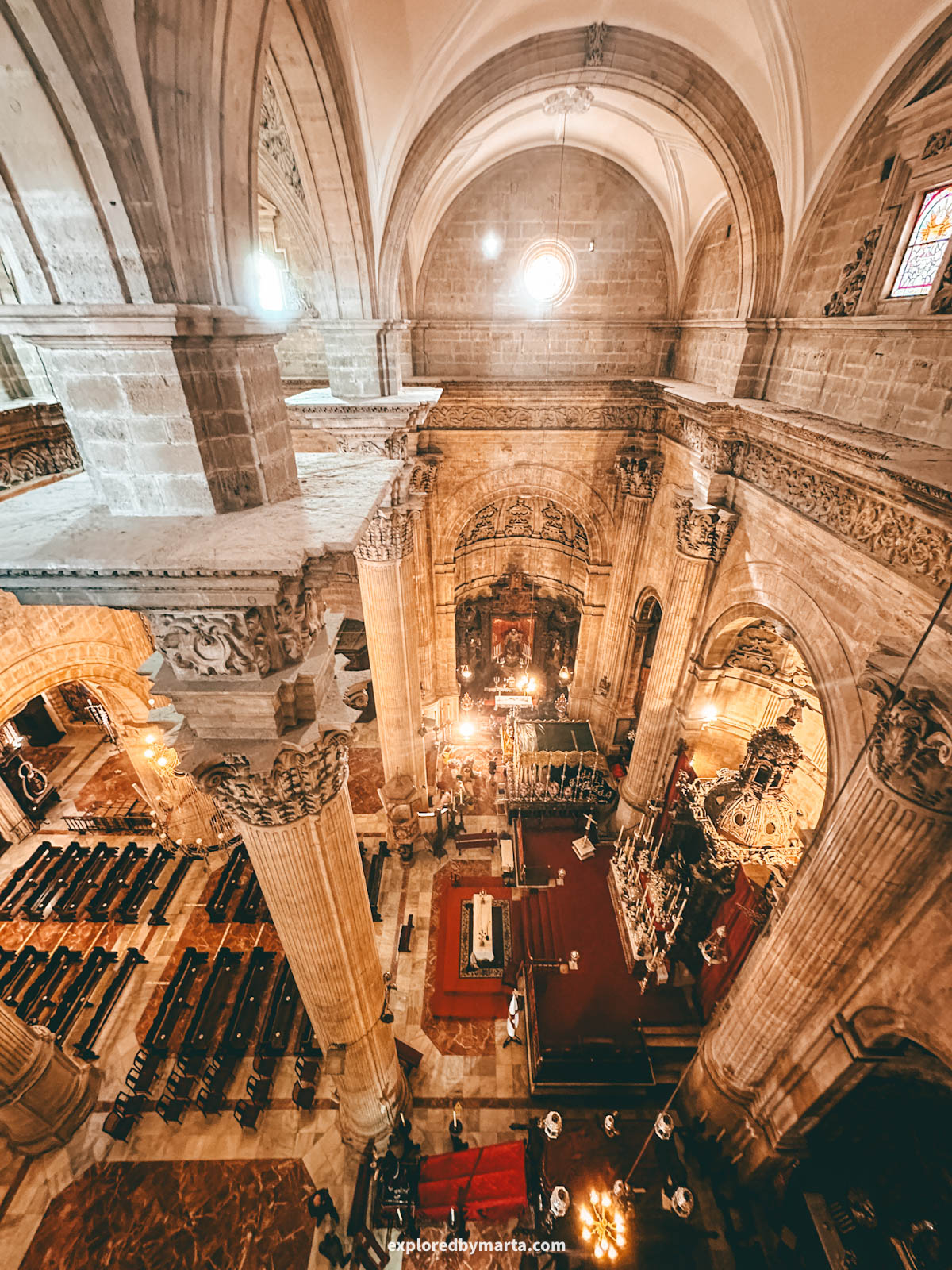
Once you enter the church, you can explore the main nave and the crypt. But to get to the roof, look for the small doors near the altar. There is a narrow staircase that leads up to the roof.
The roof is one of the few places in Ronda where you can see this mountaintop city from above, and the views are truly beautiful.
Here is something cool – at the top of the staircase on the rooftop, you will notice another small door.
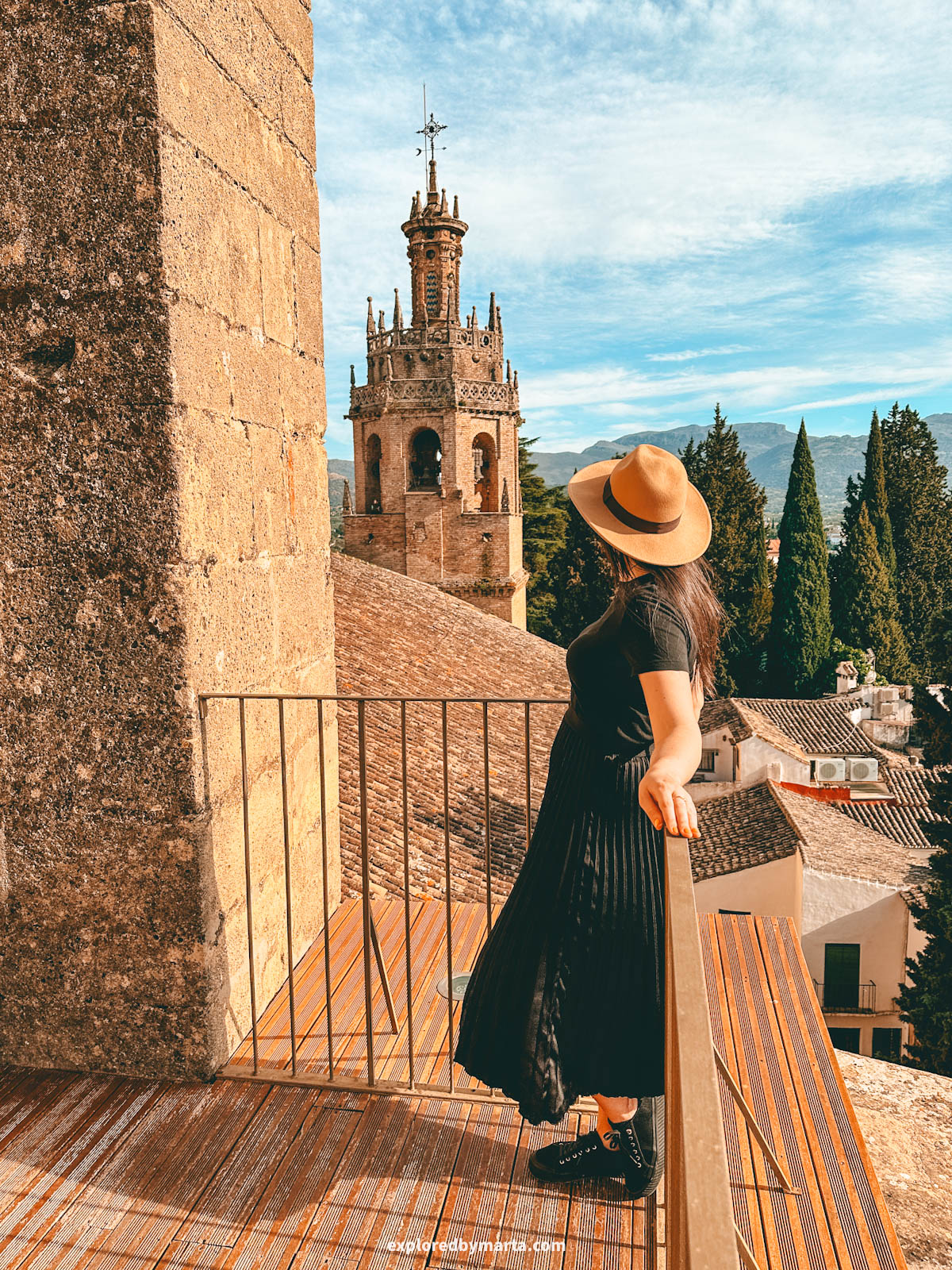
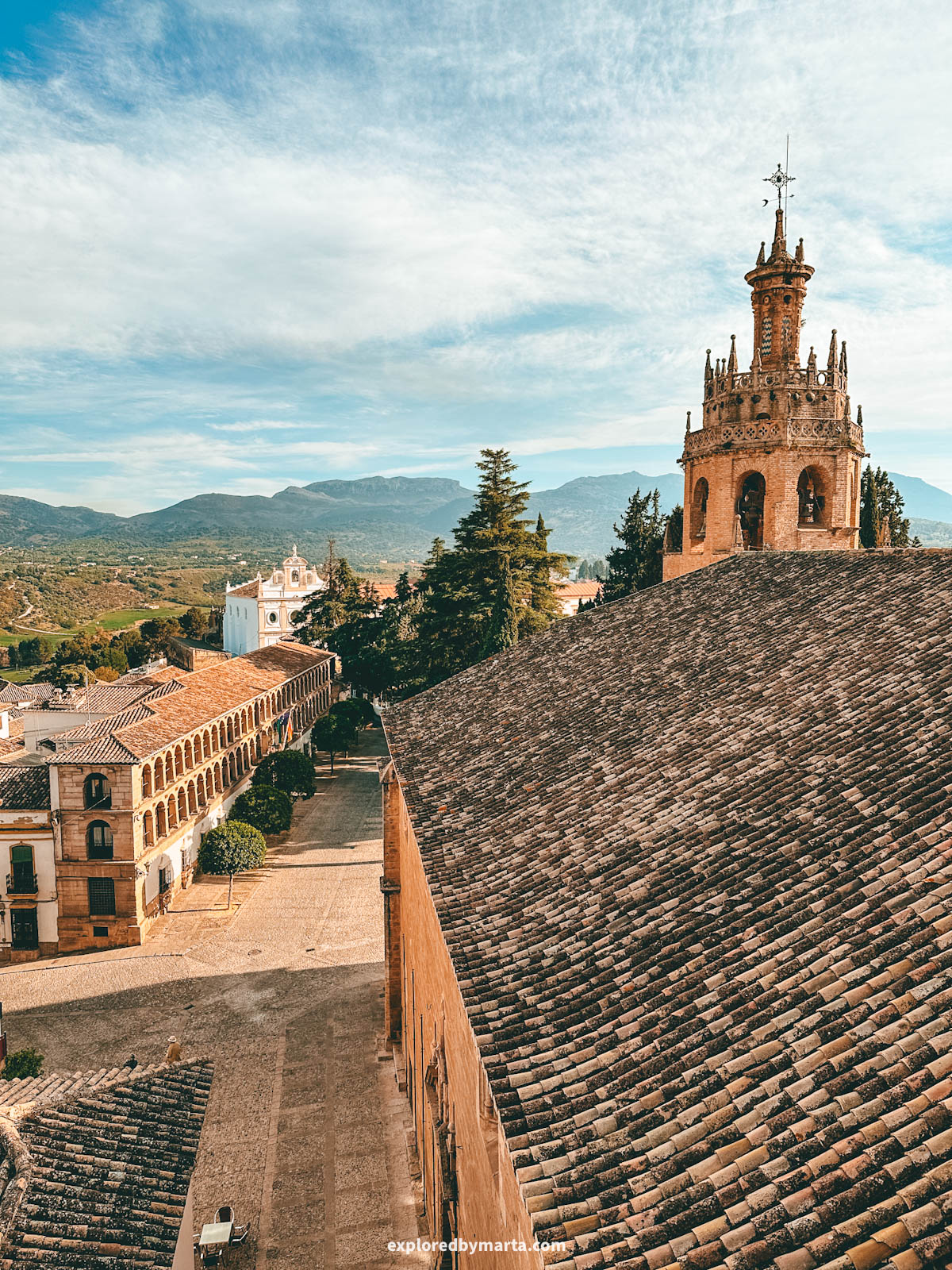
Although it looks like it was made for children, do not hesitate to bend over and walk through. You will be surprised by what you find!
After entering the small door, you will find yourself on a tiny balcony INSIDE the church, located right at the ceiling level.
From here, you get to look down at the main church nave from above – I had never seen a church from this perspective before. So cool!
Quick note: There is an entrance fee of 4.50 EUR to visit the church, and the working hours are limited, so check before you go.
Location: Iglesia de Santa María la Mayor
8. Hike down the gorge to Puente Nuevo viewpoints
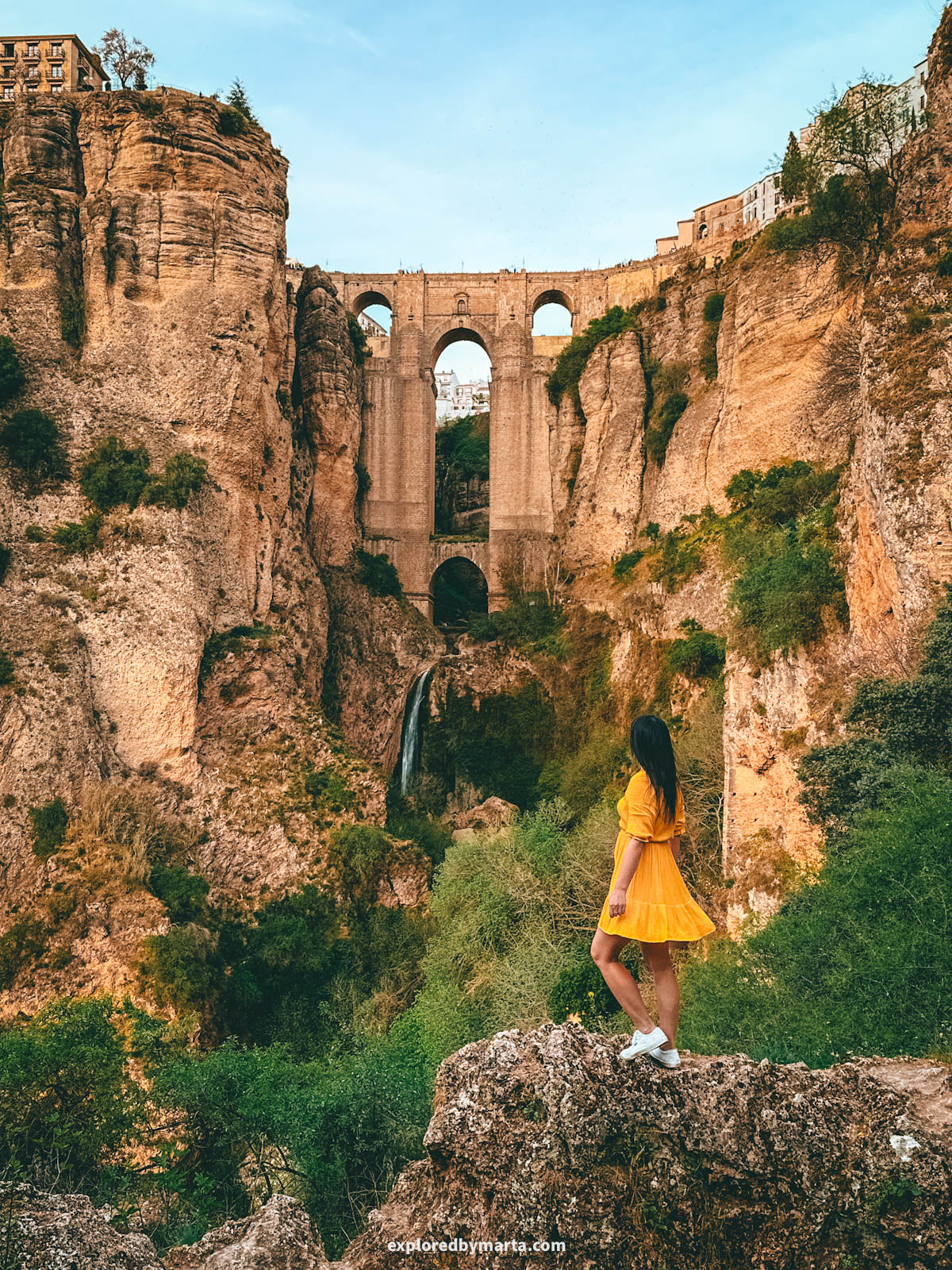
A fitting cherry on top of any visit to Ronda has to be hiking down the El Tajo gorge to see Puente Nuevo bridge from below.
For that, you have two options – Mirador Puente Nuevo de Ronda, a paid viewpoint, but with extra access to the bottom of the bridge, and Arco del Cristo viewpoint, which is free (my favorite).
Visiting the cliffside viewpoints is honestly one of the most unforgettable things to do in Ronda – and where you will get those iconic photos you have probably seen on the Internet. 📸
The path down to both viewpoints begins at Plaza María Auxiliadora, where a steep cobblestone path zigzags down into the gorge. The walk down takes around 15 minutes – just keep in mind you will need to climb back up at the end!
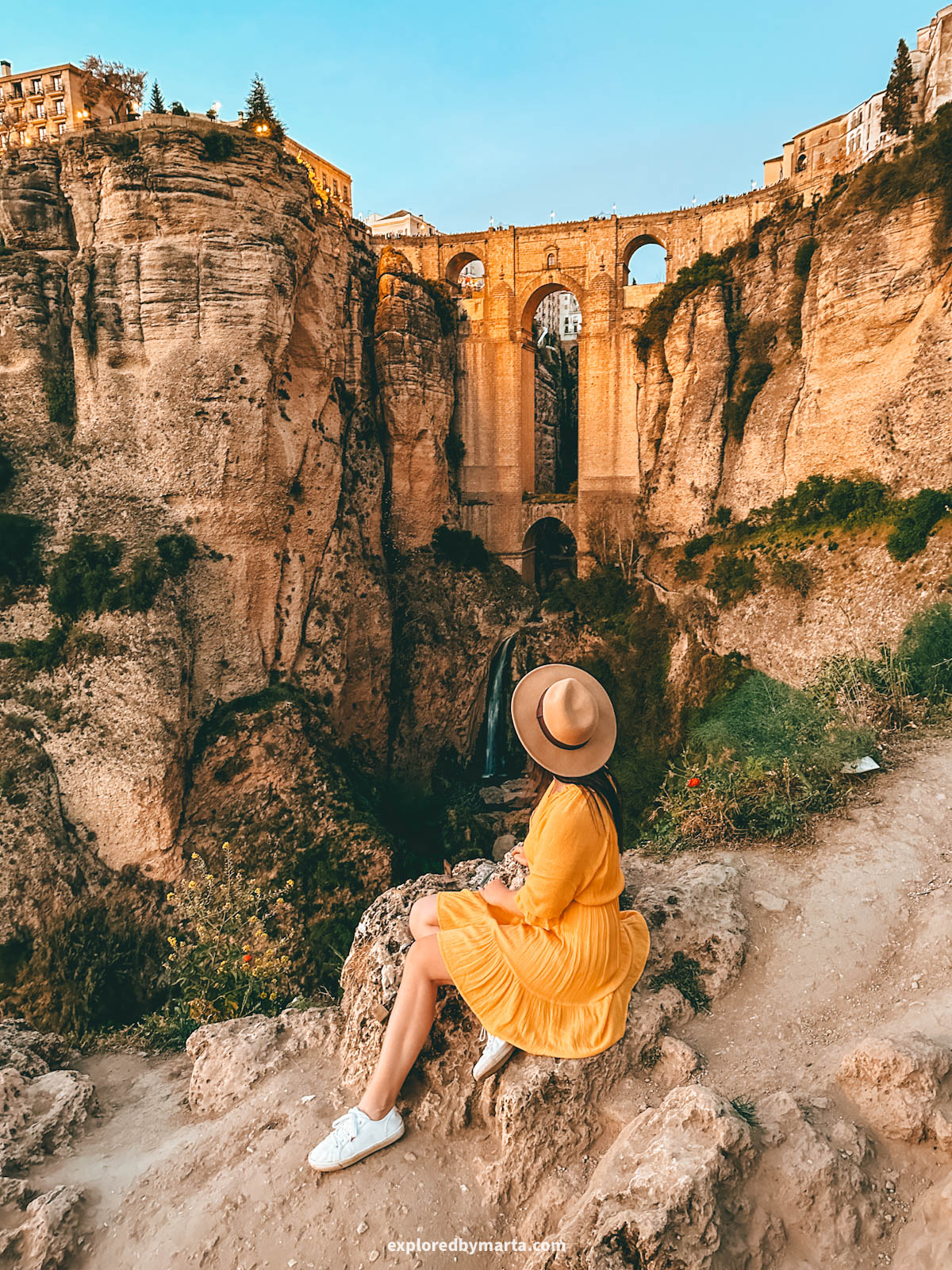
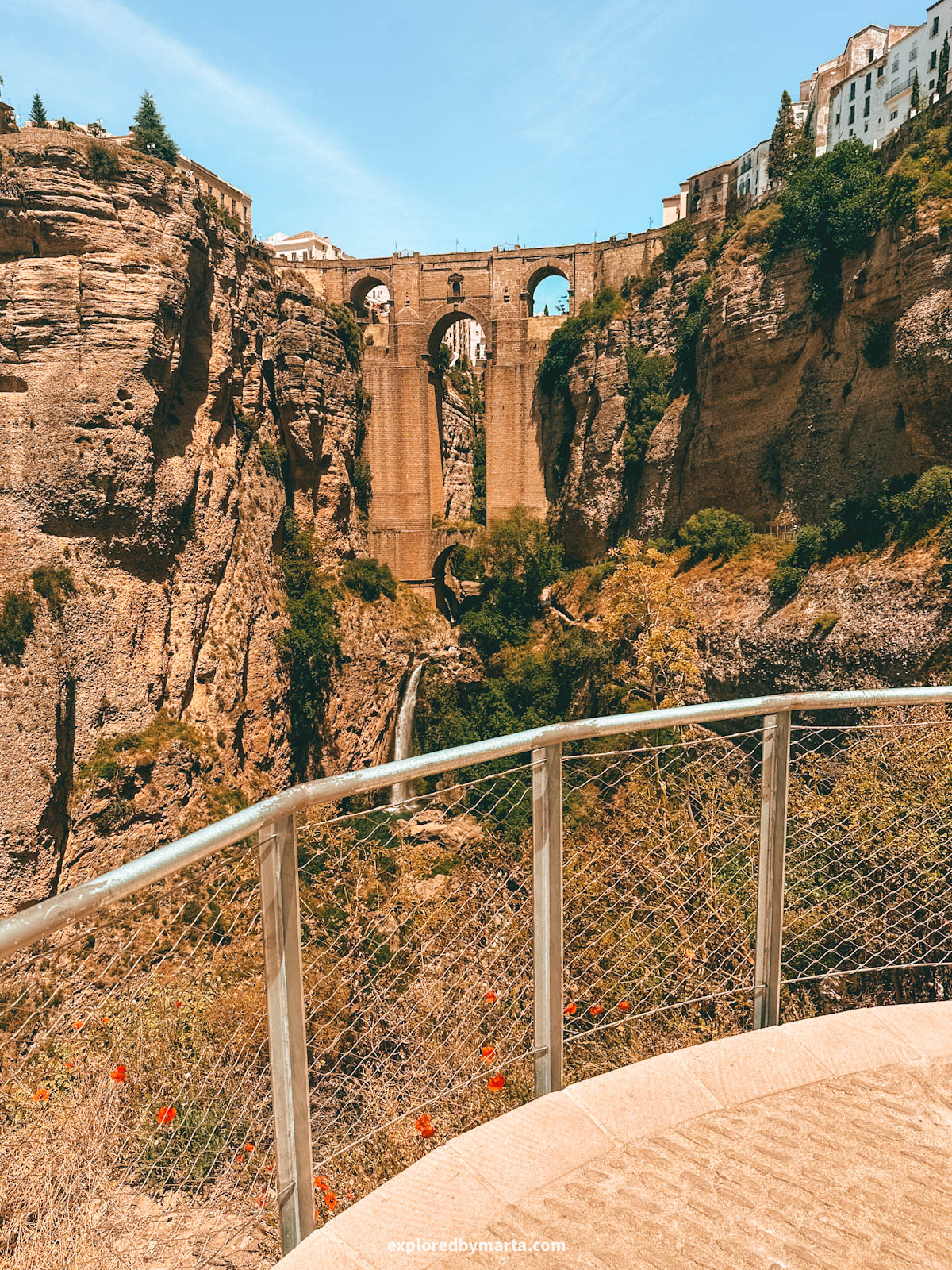
About halfway down the path, you will reach the Camino del Desfiladero del Tajo – a new paid tourist attraction that opened in 2024.
This is where you will find Mirador Puente Nuevo de Ronda, which used to be a free outcrop, but now it is a built platform with an entrance fee (see comparison photos above), plus a built narrow walkway that takes you all the way down to the base of Puente Nuevo bridge.
Walking along this cliffside pathway and standing right beneath the massive arches of the bridge is a really cool experience – especially because you can see the proportions of the bridge up close from below.
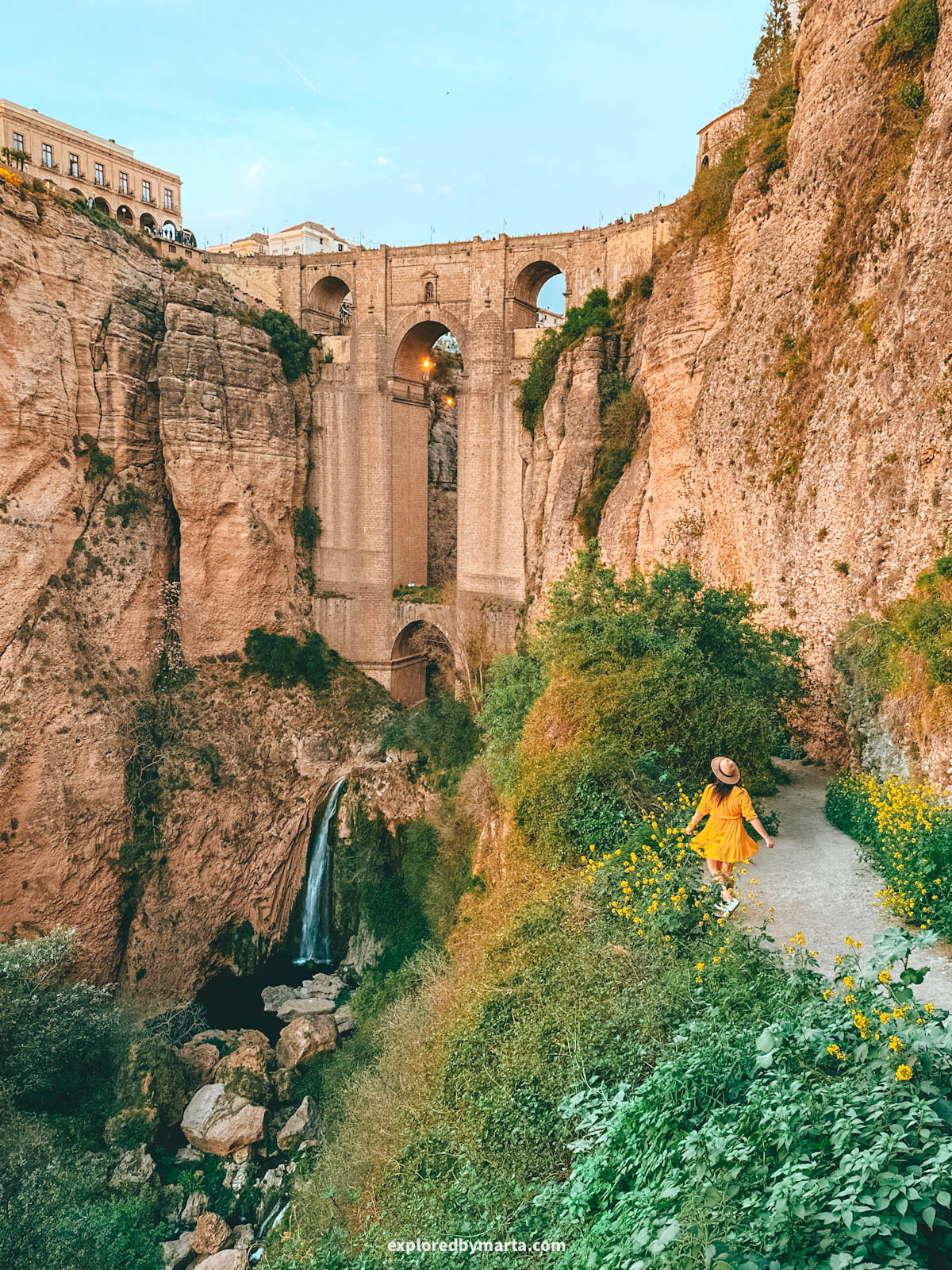
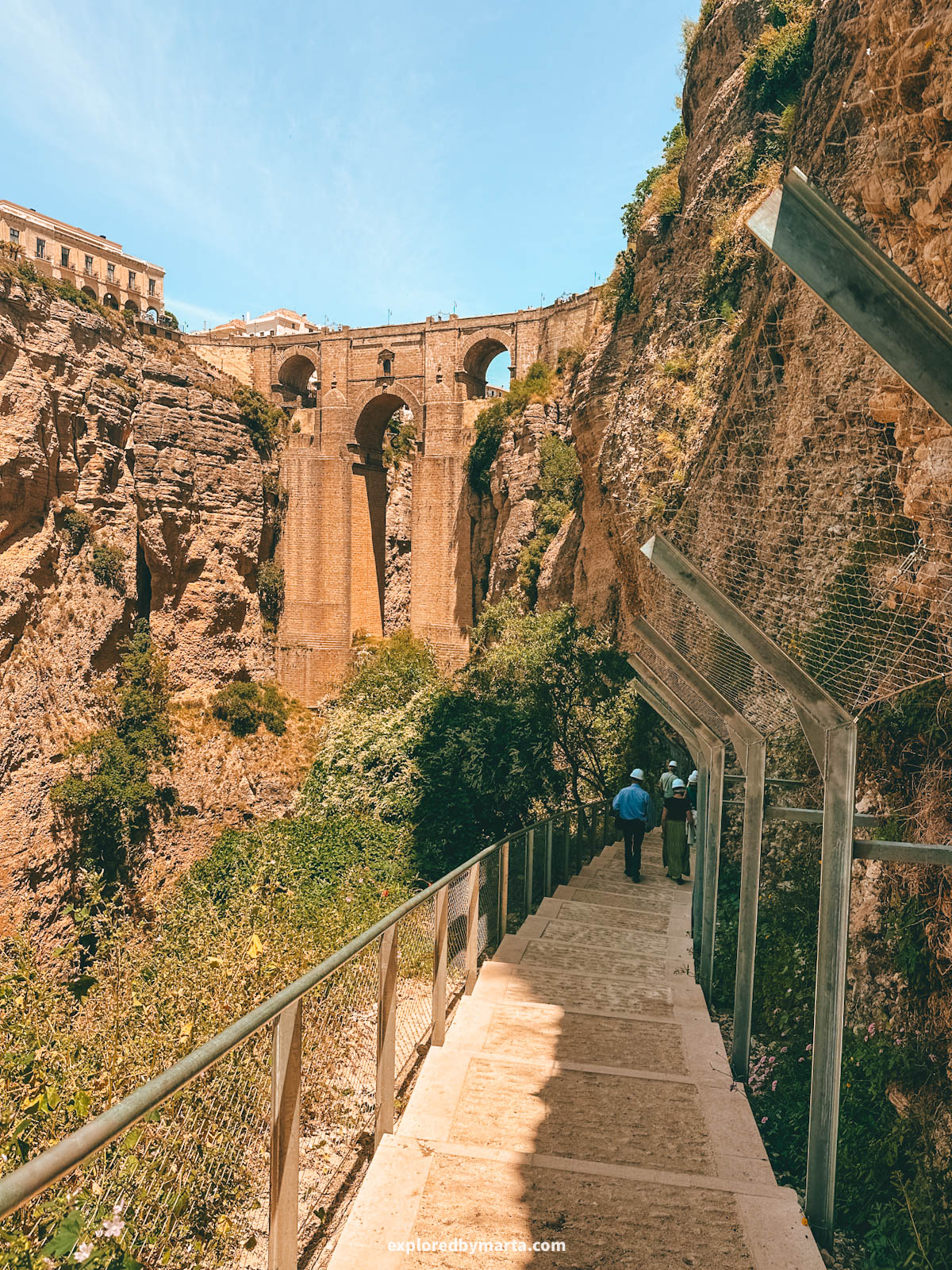
There are plans to extend the suspended path even further in the future, eventually allowing visitors to walk under the bridge and continue along the gorge all the way to the Arab baths!
Entrance to Camino del Desfiladero del Tajo costs 5 EUR, and you have to book tickets in advance on the official website. Once you enter, they will give you a helmet and send you on your way to the bottom of the bridge. Children under 8 are not allowed.
Once you return, you can leave the helmet and take some photos of the bridge from Mirador Puente Nuevo de Ronda. It’s a different experience than before, when it was a rocky outcrop and was free, but I can agree that it wasn’t super safe before all this.
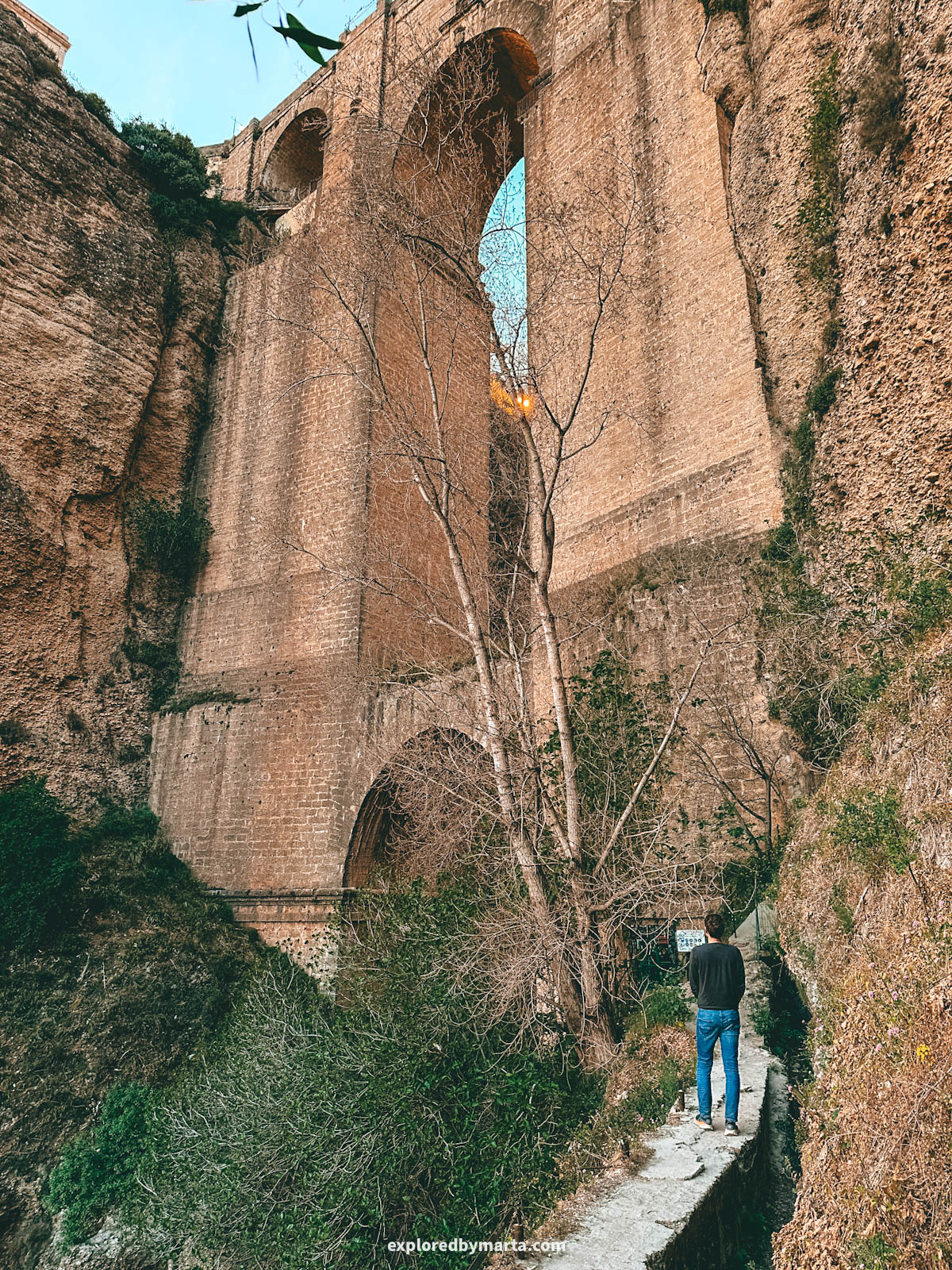
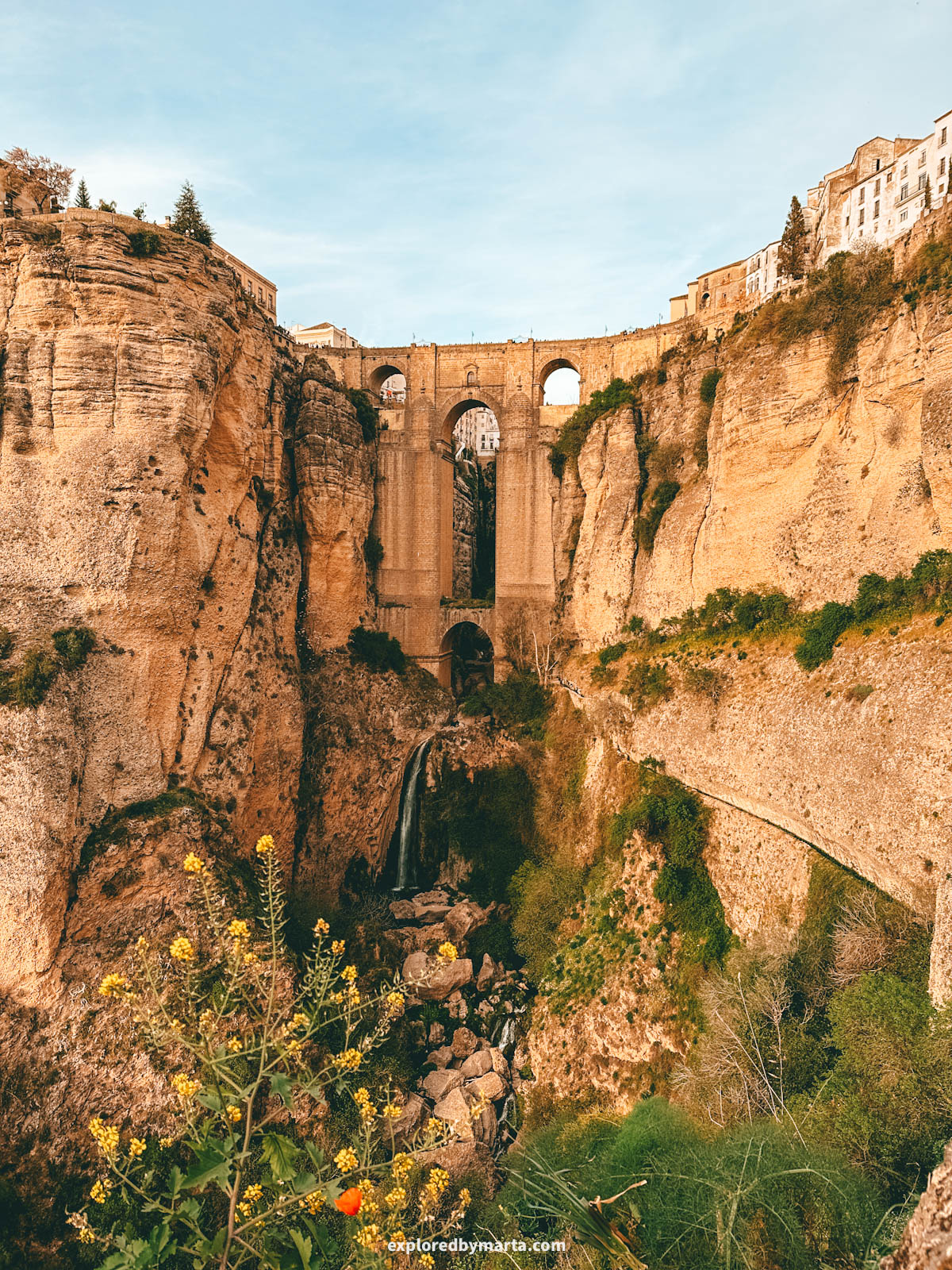
If you do not want to pay the entrance fee (which I totally understand!), I have good news for you – there is another viewpoint a bit further down that you can visit for free!
Just continue walking past the kiosk along the path down the hill, and you will reach the Arco del Cristo viewpoint (also known as Puerta de los Molinos). I personally think this actually is the best view of Puente Nuevo in all of Ronda – and it is completely free to visit!
But you have to earn this free view – it will be a higher climb back up to Ronda!
Quick note: If you have a car, you can also drive down to the very bottom of the gorge to Mirador La Hoya del Tajo and see the bridge from there. It’s not ideal, because it is a bit further away from the bridge, so it looks smaller from afar. But it works if you don’t want to hike!
Location: Plaza María Auxiliadora – Mirador Puente Nuevo de Ronda – Arco del Cristo viewpoint
9. Try local Andalusian food (where to eat in Ronda)

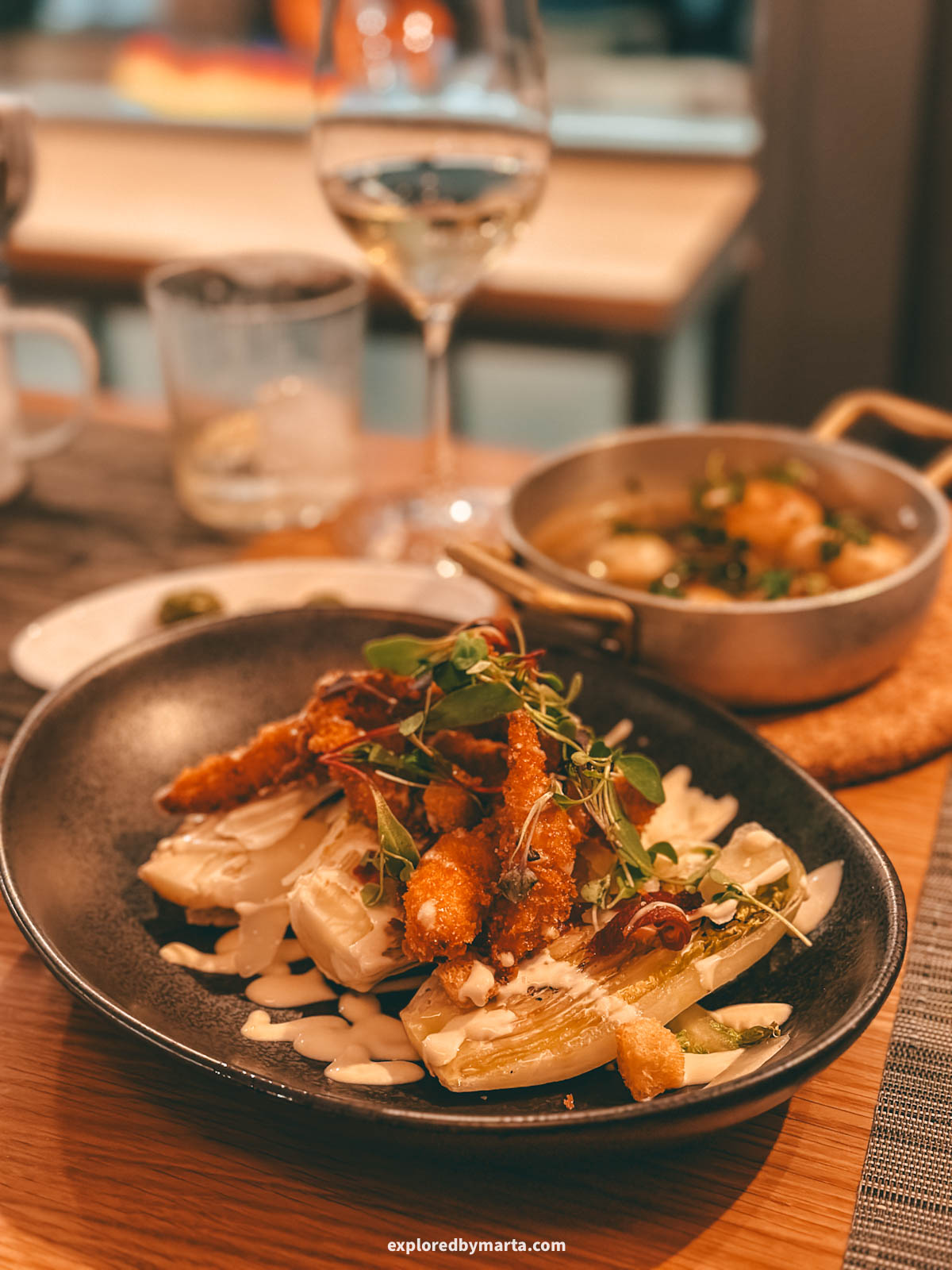
No visit to Ronda is complete without trying the local Andalusian food. Ronda has a strong food culture, with plenty of tapas bars, traditional restaurants, and even Michelin-starred spots tucked into the cobblestone streets.
Sitting down for a glass of wine and tapas after a long day of walking around is one of the best parts of visiting any Andalusian town, and Ronda is no exception. Wine (Ronda sits on a wine route in Andalusia), sangría, tinto de verano – take your pick and enjoy!
If you’re thinking about trying something very local, some of the top local foods in Ronda include rabo de toro (oxtail stew), slow-cooked bull’s tail in red wine sauce (one of the most classic dishes in Ronda), or Queso Payoyo (unique local cheese).
We really enjoyed the queso Payoyo – it has a rich, tangy flavor and pairs beautifully with the local wines, salads, or in tapas!
Here are some of the most loved tapas spots in Ronda you should check out:
- Arrabal Restaurante – cliffside dining with panoramic views (where we had lunch!)
- El Lechuguita – local tapas favorite, very affordable and authentic
- Albacara – traditional Mediterranean and Andalusian food with stunning gorge views
- Casa María – cozy spot in the old town, no menu – chef cooks based on what is fresh that day
- Tragatá – creative tapas by Michelin chef Benito Gómez (where we had dinner!)
- Bardal – the famous two-Michelin-starred restaurant in Ronda by chef Benito Gómez
- Restaurante Pedro Romero – historic restaurant near the bullring, classic Spanish food
- Entre Vinos – local wine bar serving local bottles paired with simple tapas
- Bodega San Francisco – traditional Andalusian classics in the charming Barrio San Francisco
- Casa Ortega – traditional flavors with imaginative preparation
Tip! Many of these places fill up fast in peak season, so make sure to book ahead online or by phone if you want to be sure of a table. That’s why I loved Arrabal Restaurante – they have good food, amazing views, and an option to reserve a table online. 😀
10. Check out cliffside viewpoints at Alameda del Tajo
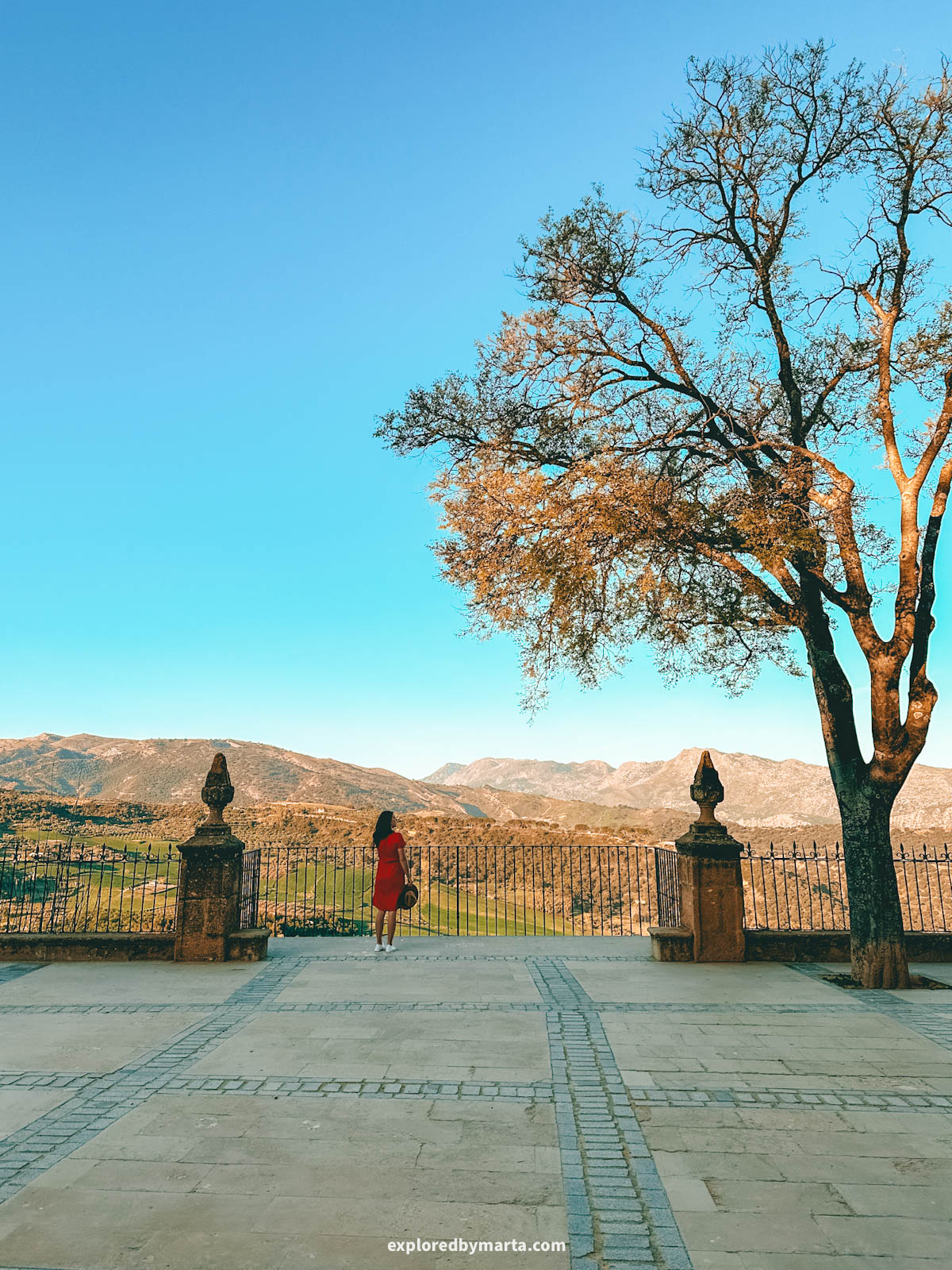
After all the food, treat yourself to a scoop of ice cream and walk along the beautiful cliffside promenade on the new town side – one of the most relaxing and scenic things to do in Ronda. 🍦
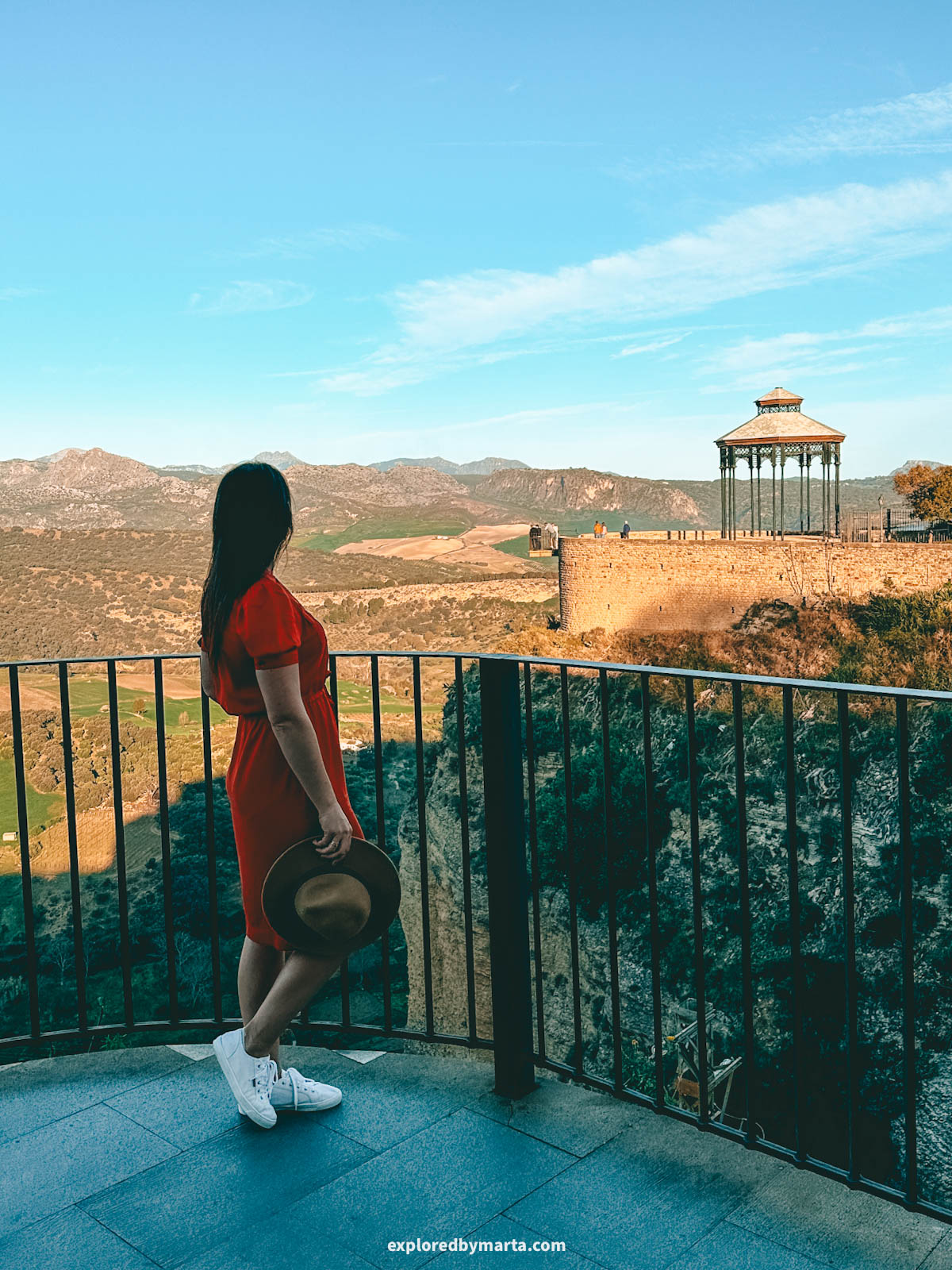
You can start your walk at Paseo de Kazunori Yamauchi (you know this – it’s right next to Puente Nuevo bridge) and continue along the edge of the cliff, passing several viewpoints with stunning panoramas, such as Mirador de Aves and the famous Mirador de Ronda.
Mirador de Ronda has a charming bandstand with a small canopy, and the views from here stretch all the way across the Andalusian countryside. Honestly, one of the most magical views in Ronda!
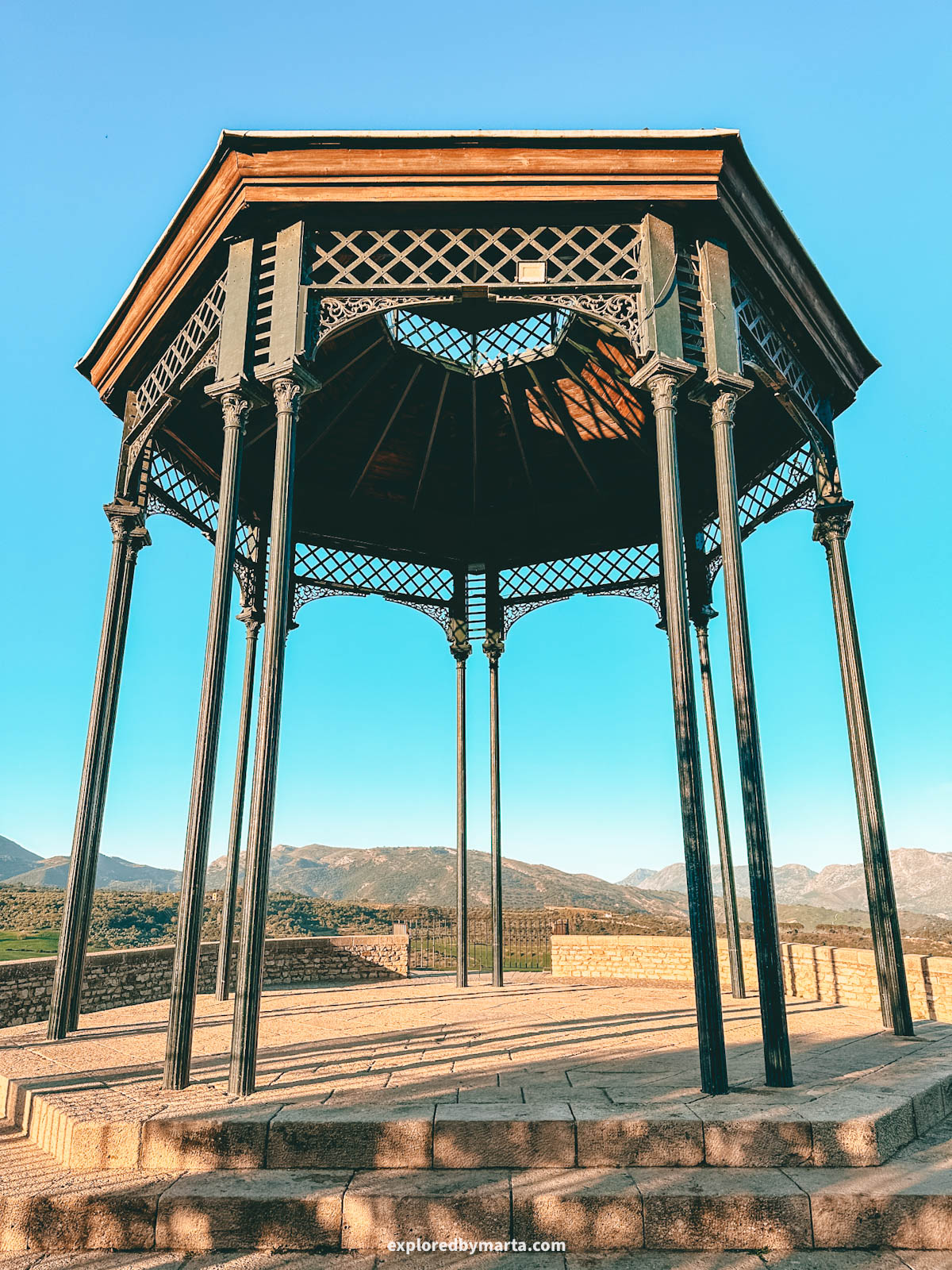
As you keep walking, you will reach Alameda del Tajo – a beautiful 19th-century park with tall trees, walking paths, and benches under the shade. The park is a lovely spot to take a break, especially during the hot summer afternoons.
From the park, the promenade continues for a bit along Paseo de los Ingleses – a charming cliffside walkway (some sections are named Paseo de Ernest Hemingway or Paseo de Blas Infante, but it is essentially the same walk).
For me, the entire cliffside walk is one of the best sunset spots in Ronda. The light hits the surrounding mountains in the most beautiful way, and many locals come here to relax in the evenings too.
Location: Paseo de Kazunori Yamauchi – Mirador de Ronda – Alameda del Tajo – Paseo de los Ingleses
11. Visit Plaza de Toros de Ronda (the largest in the world!)
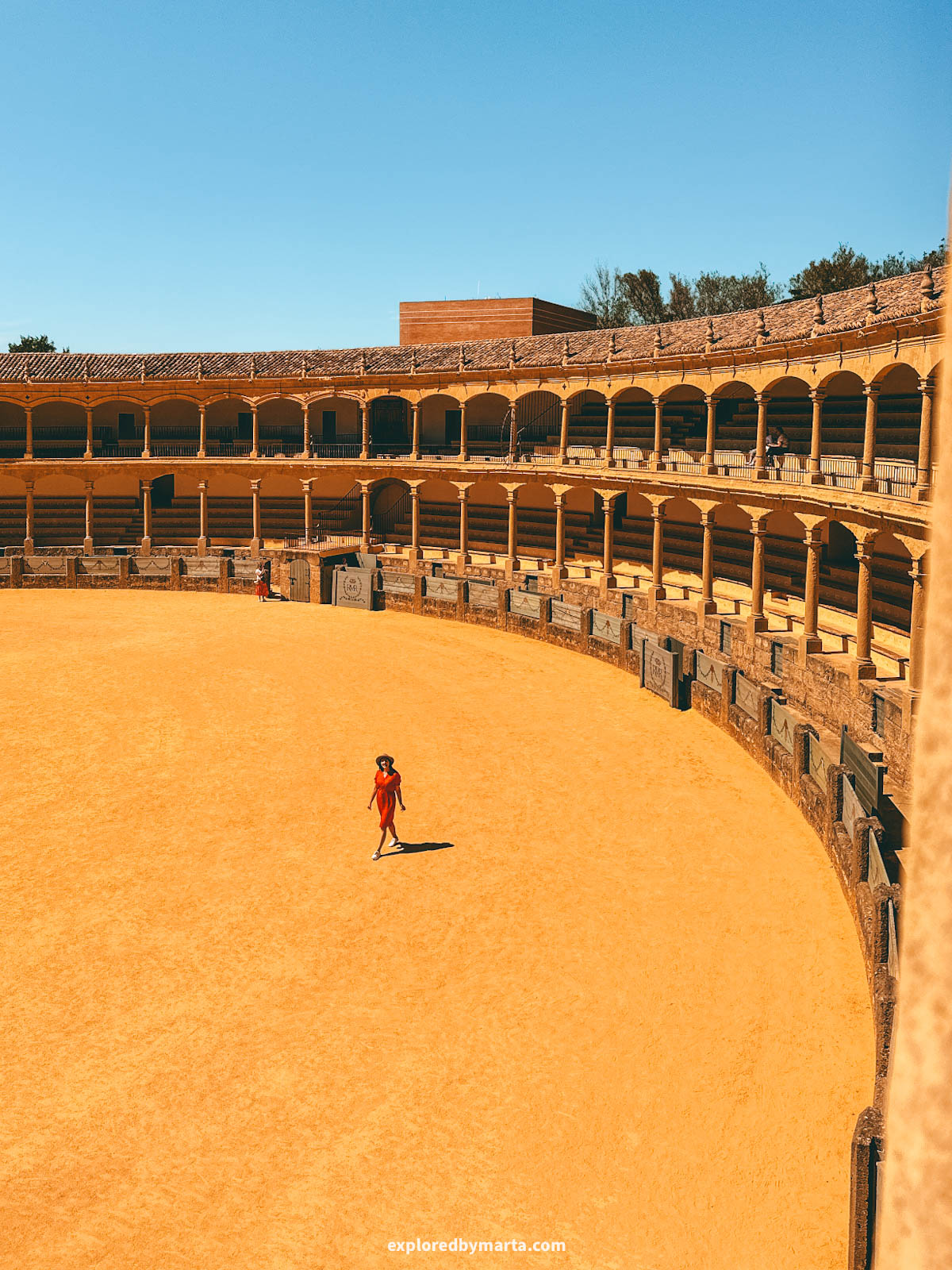
Right next to Alameda del Tajo park, you will find one of the most iconic landmarks in Ronda – Plaza de Toros de Ronda.
This historic bullring is the largest bullring in the world by ring diameter, and visiting it is one of the most popular things to do in Ronda.
Plaza de Toros was built in the 18th century and is considered the birthplace of modern Spanish bullfighting.
The arena measures 66 meters (216 feet) in diameter, and the whole structure is built in beautiful Neoclassical style with two levels of arches and stone columns.
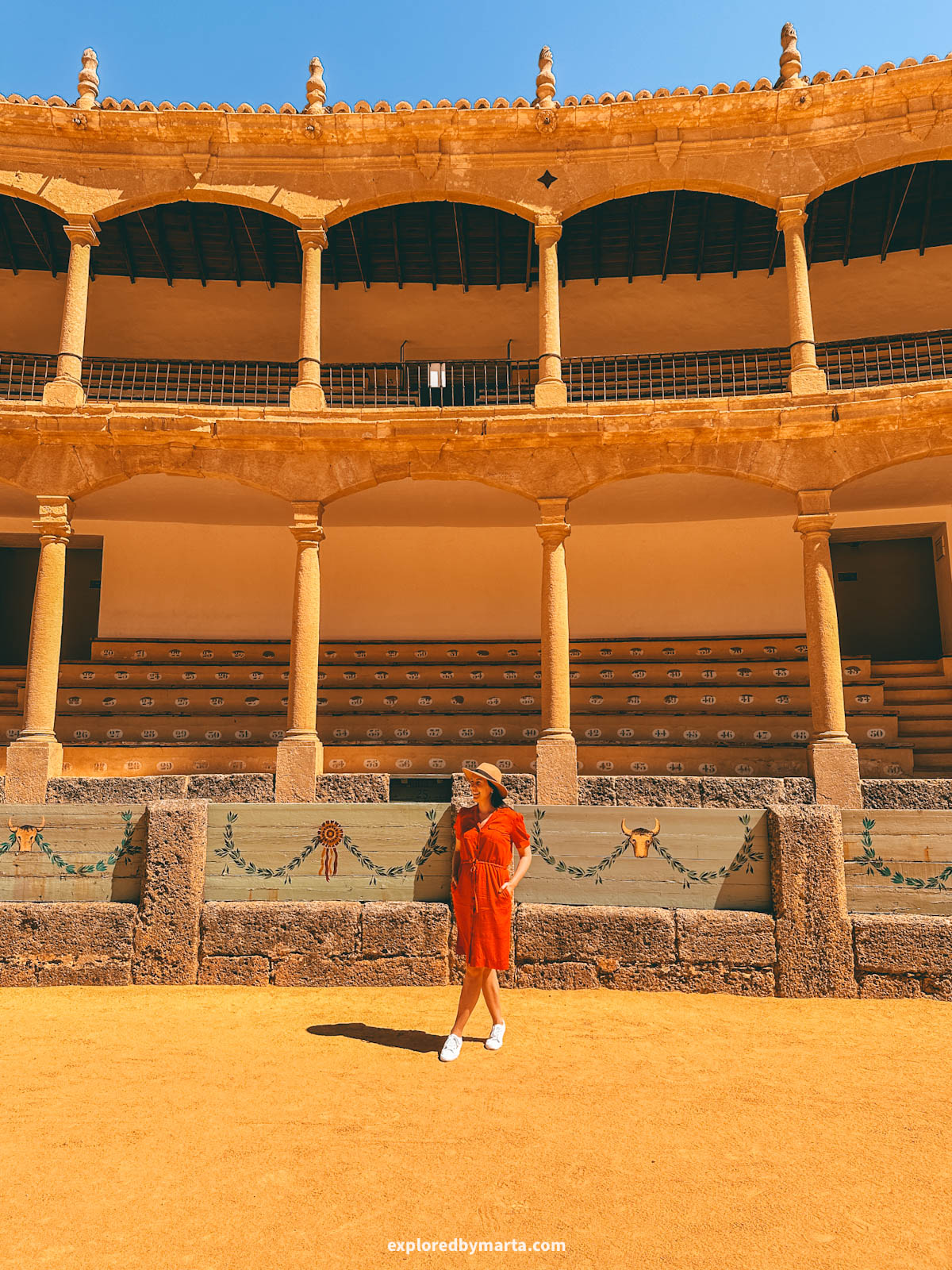
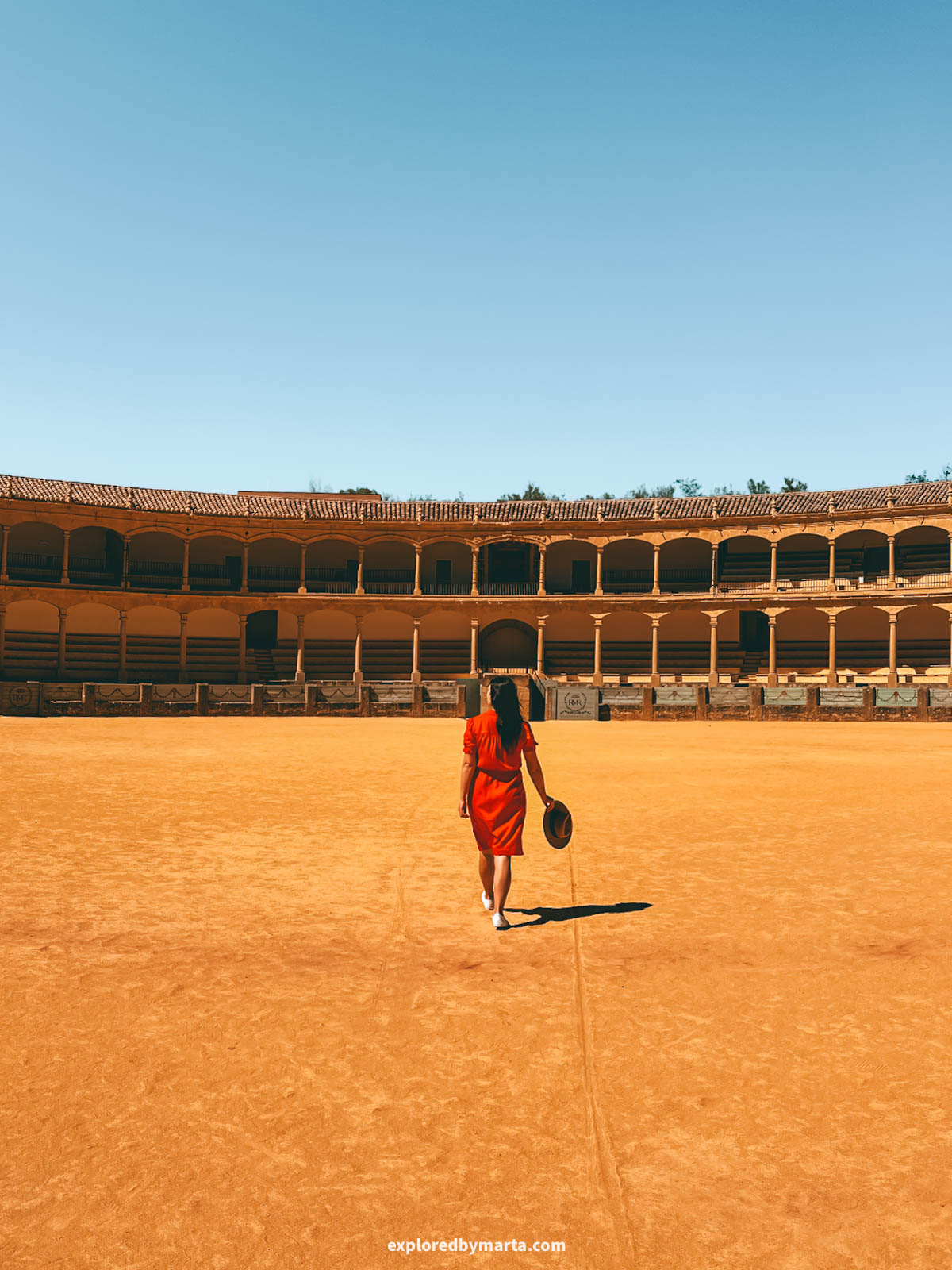
Inside, you can walk down onto the sand of the arena itself – which is honestly very cool. Standing in the middle and looking up at the empty stands gives you a real sense of the scale. The stands seat around 5,000 spectators!
The site also includes the Bullfighting Museum (Museo Taurino), where you can learn about the history of bullfighting in Ronda. The museum displays old costumes, weapons, posters, and photographs from past bullfighters.
Quick note: There is an entrance fee of 9 EUR to visit the bullring and museum. Audio guides are available in multiple languages. Allow around 1 hour for your visit.
If you do not want to enter the bullring or support the bullfighting industry, you can still admire the building from outside – it is beautiful from every angle!
Location: Plaza de Toros de Ronda
12. Discover the hidden gem of Casa Museo Don Bosco
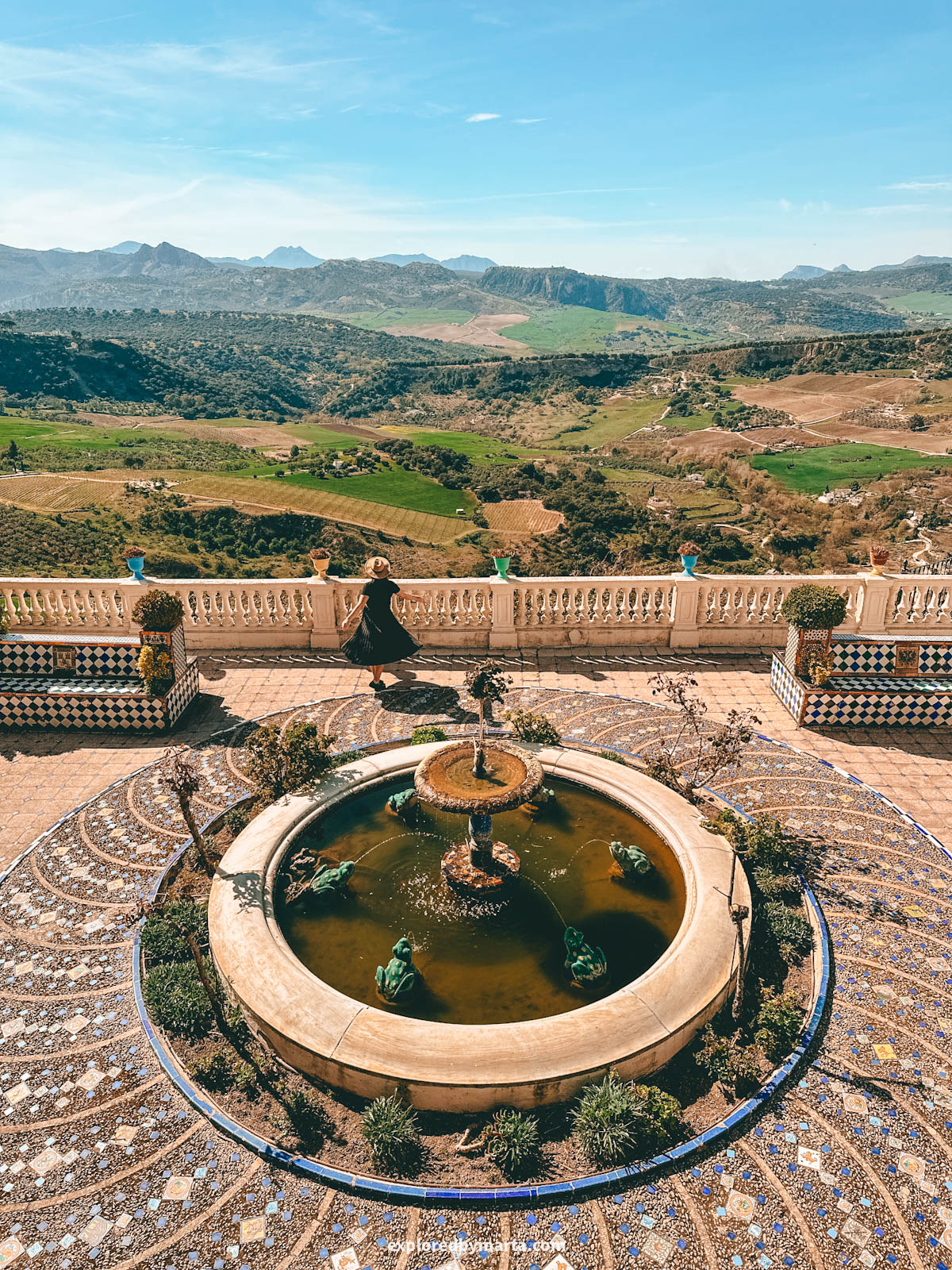
Tucked away in the heart of Ronda’s old town, Casa Museo Don Bosco is honestly one of my favorite hidden gems in Ronda – and one of the most beautiful spots in town that most tourists completely miss! ✨
This stunning 19th-century mansion sits right on the edge of the cliff and offers some of the most spectacular views of the Ronda countryside, the El Tajo gorge, and even the famous Puente Nuevo bridge in the distance.
Yes, they have the bridge views!
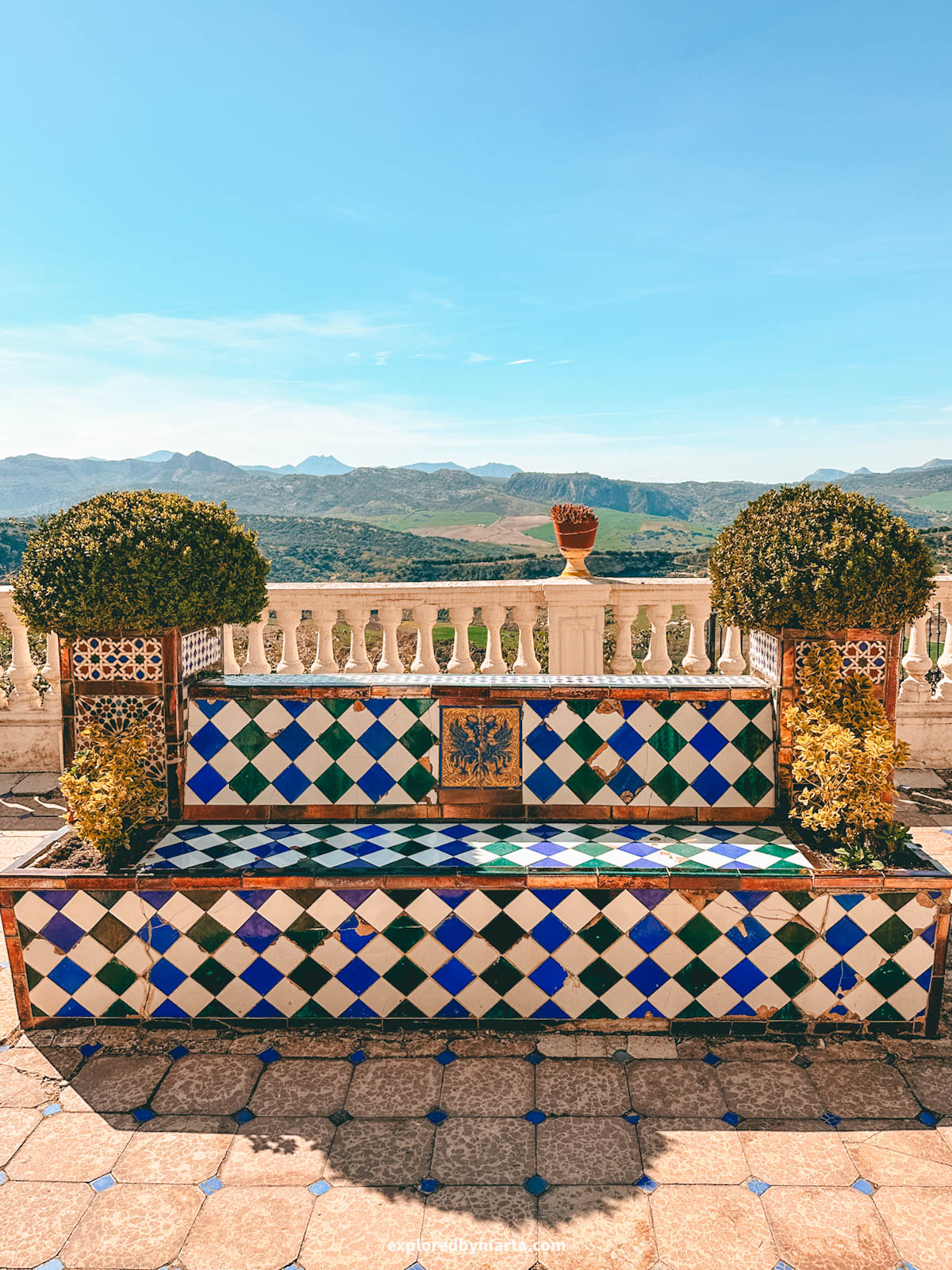
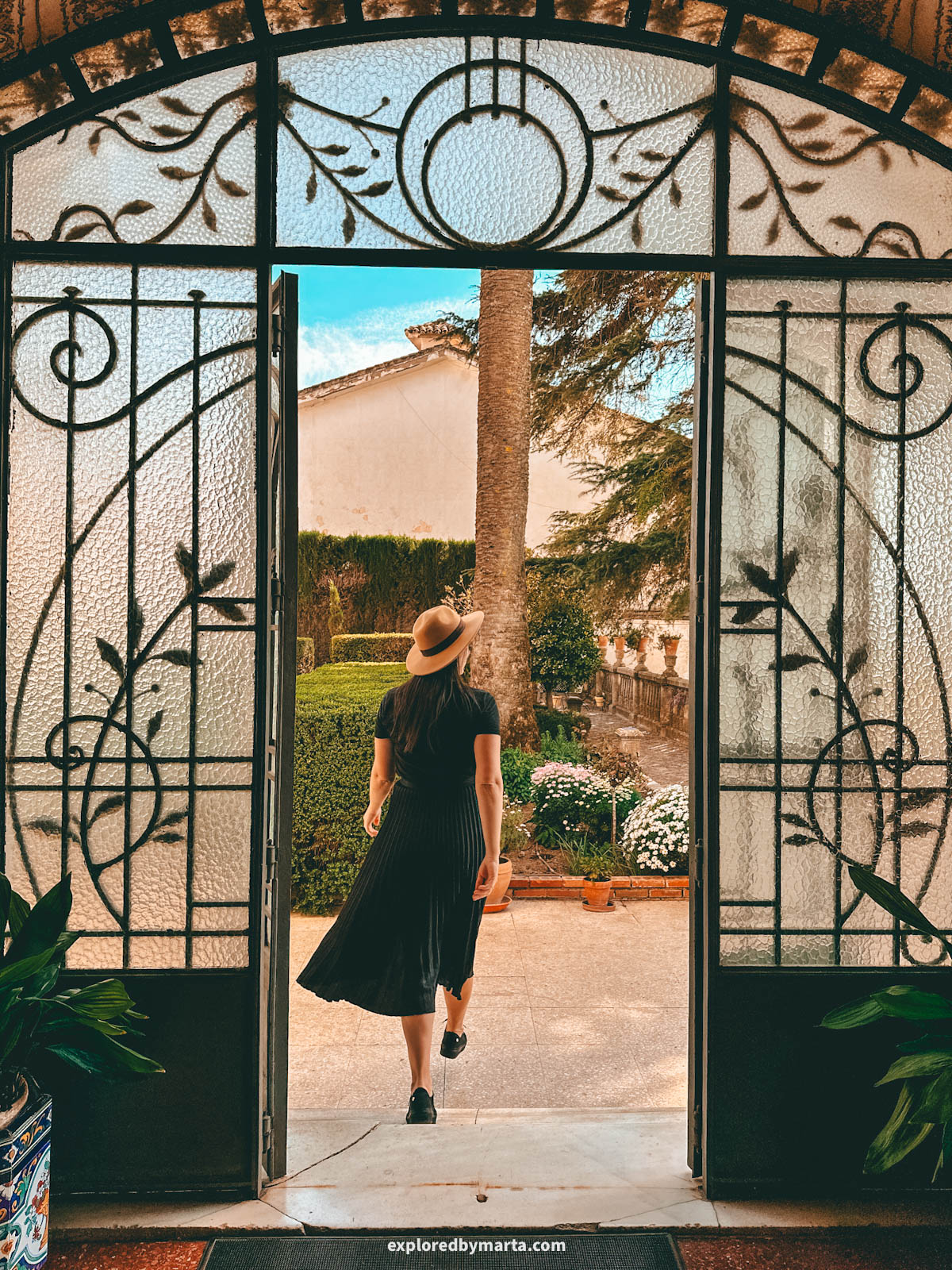
The house was built in 1850 as a private residence for a wealthy Ronda family, and was later donated to the Salesian order.
Today, it is open to the public as a small museum showcasing the original furniture, artwork, and Modernist style of the early 1900s.
The interior is honestly a step back in time – elegant rooms with original furniture, antique pianos, and beautiful tilework. It feels like the family just stepped out for a moment.
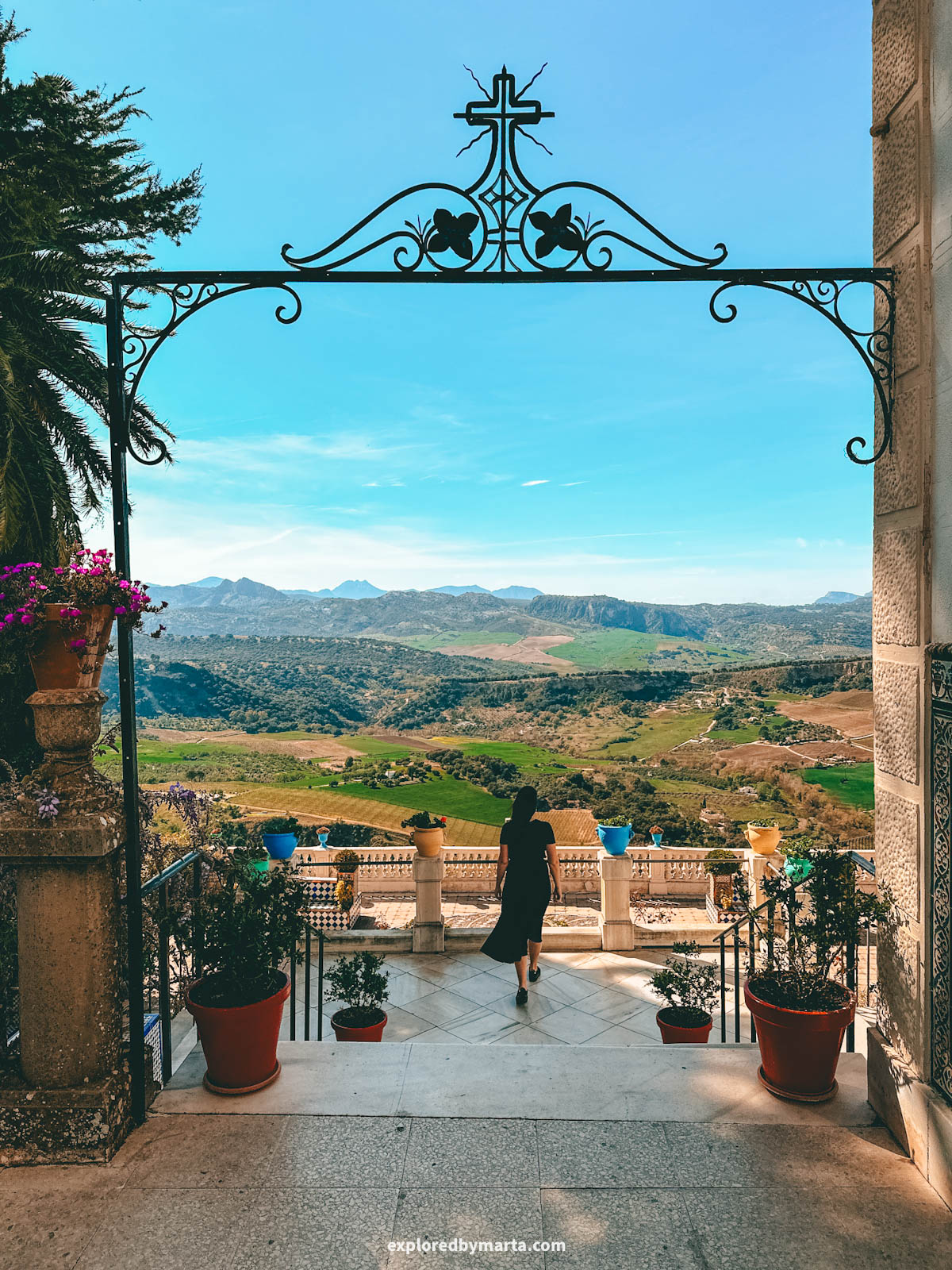
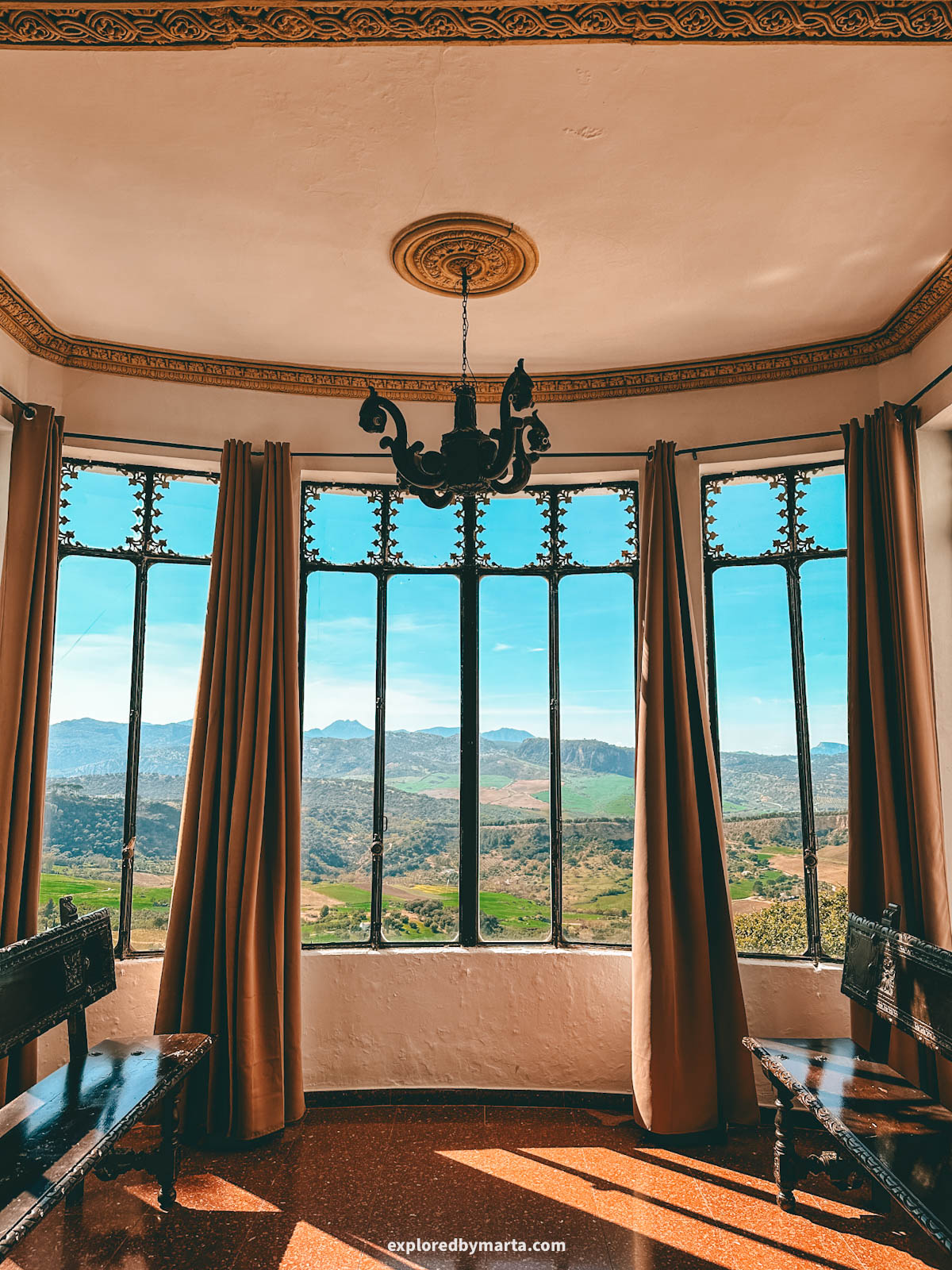
But the real magic is at the back of the house. Step out onto the cliffside garden terrace and you will find beautiful, colorful tile benches, fountains, and the most stunning panoramic views over the Ronda countryside. So picture-perfect!
Casa Don Bosco has a lovely outdoor café right on the terrace, where you can sit at a table with a coffee, a glass of wine, or a fresh juice, and just enjoy the views in peace. For me, this is hands down one of the nicest places in Ronda to take a break from sightseeing.
Quick note: There is a 3 EUR entrance fee to visit Casa Museo Don Bosco. Working hours are limited, so check before you go.
Location: Casa Museo Don Bosco
13. Descend into the gorge at Casa del Rey Moro
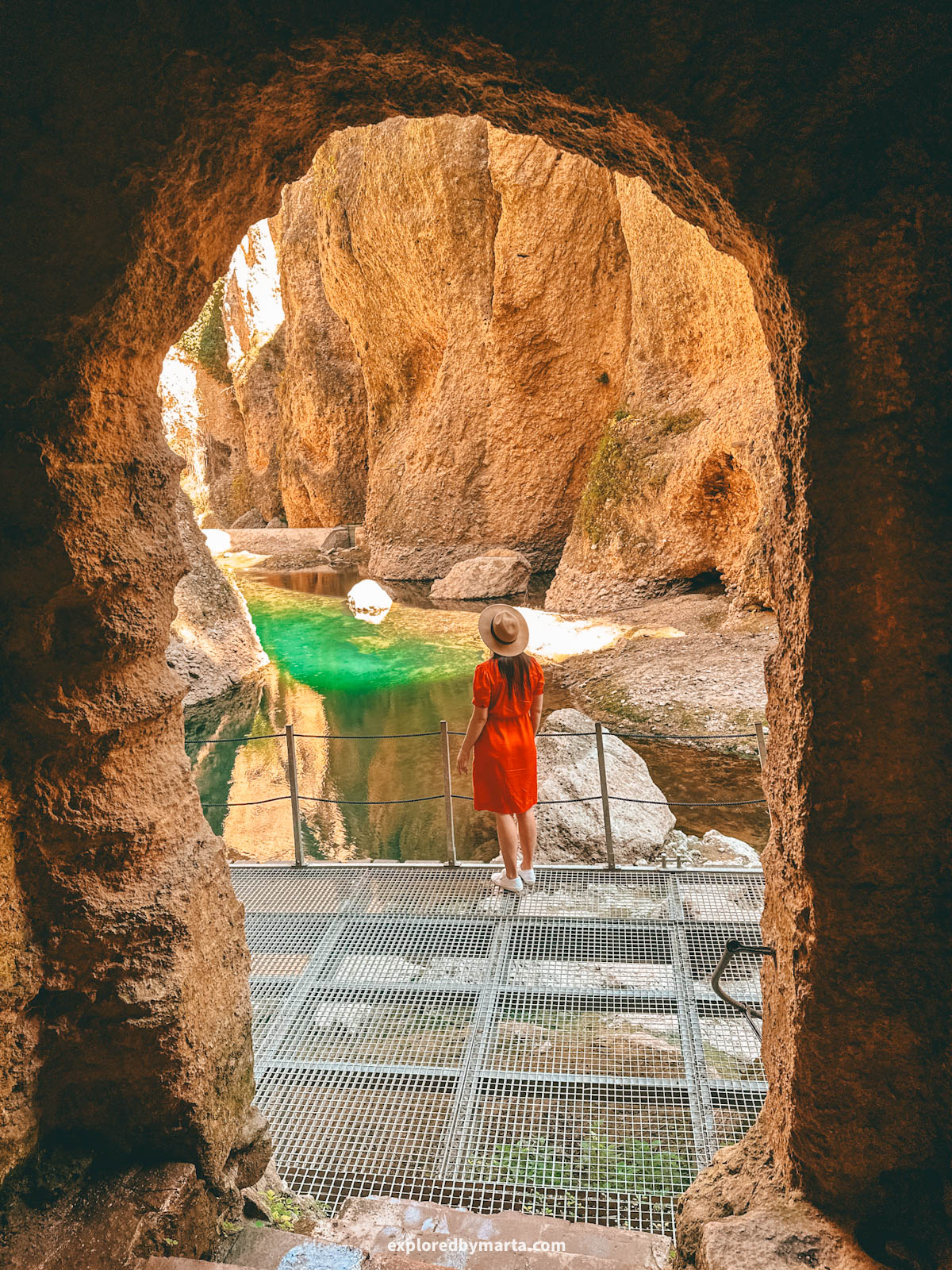
Another hidden gem in the heart of Ronda’s old town is Casa del Rey Moro – or the House of the Moorish King.
This historic mansion sits right on the edge of the El Tajo gorge and is famous for one incredible feature: an underground water mine that takes you all the way down to the bottom of the gorge! 🤯
The mansion itself was built in the 18th century on top of older Moorish foundations. The name ‘House of the Moorish King’ comes from a legend connecting it to a Moorish ruler.
The grounds include a beautiful terraced Andalusian garden, designed in the early 20th century by the famous French landscape architect Jean-Claude Forestier (yep, the same person who designed parts of the stunning Maria Luisa Park in Seville).
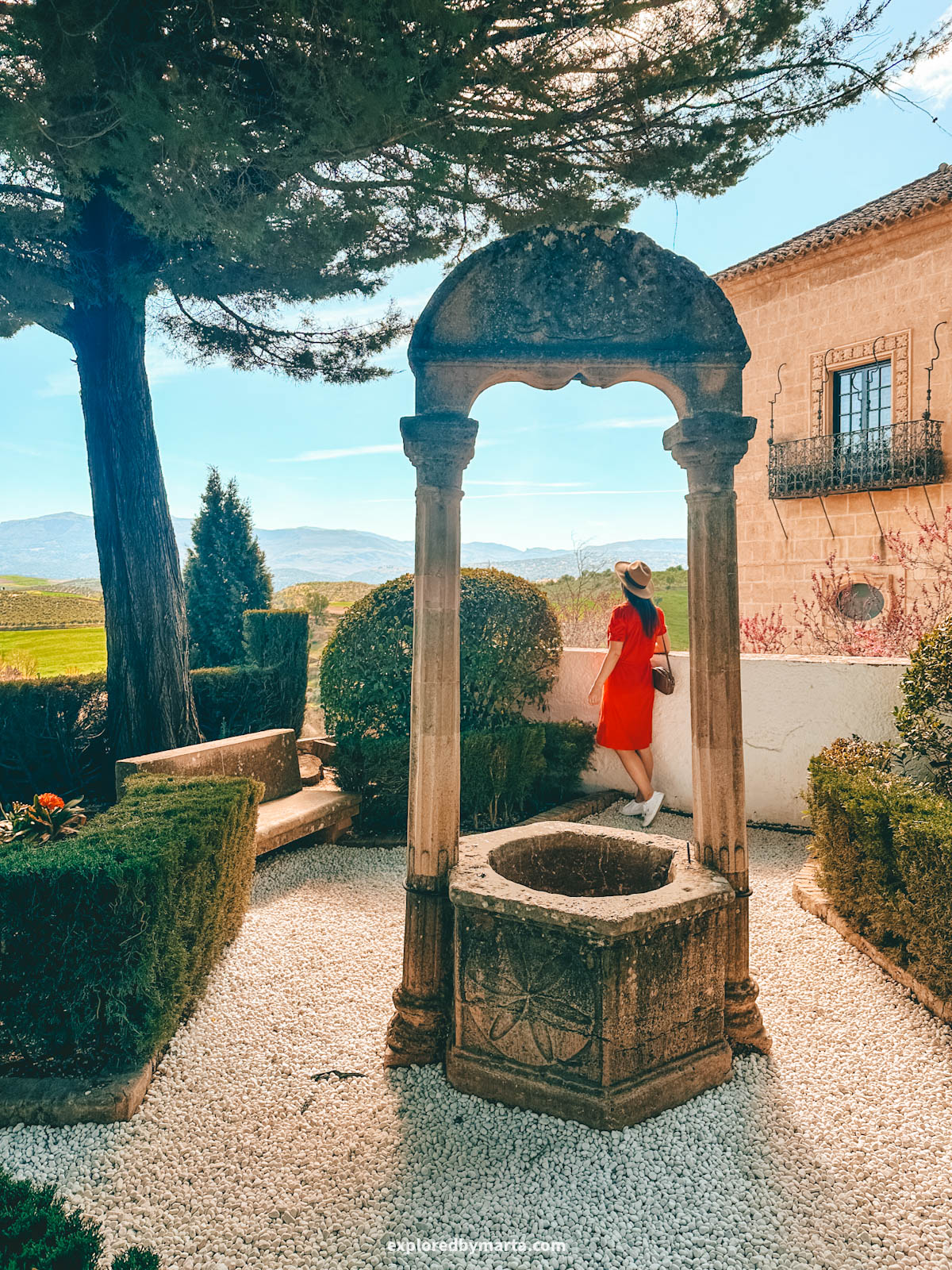
The garden has fountains, water features, peacocks, and stunning views over the gorge. It is quite small, though, so some will say it’s not worth the entrance fee.
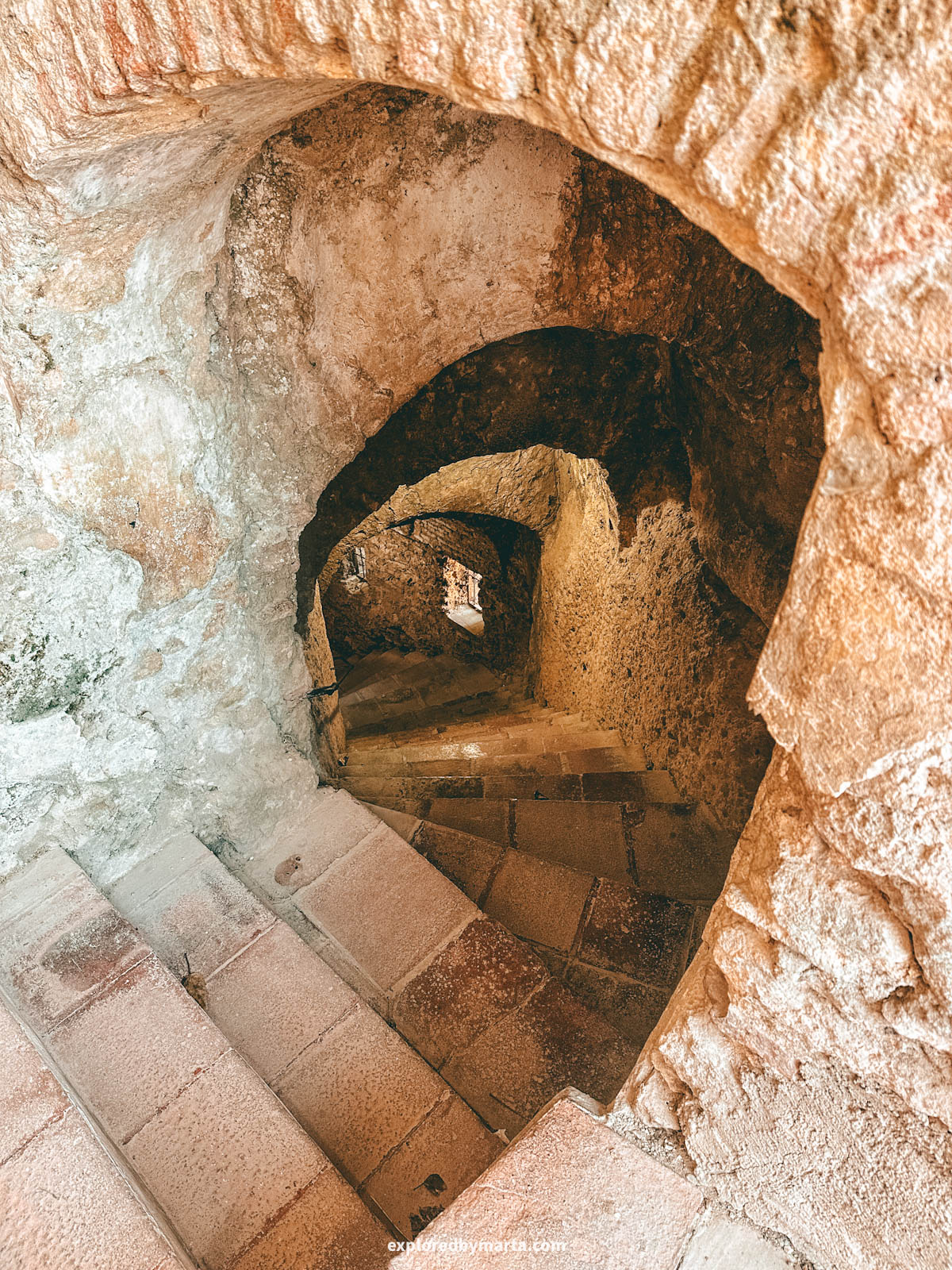
But the real adventure is the water mine (called La Mina).
It was built in the 14th century by Moorish rulers to ensure a secret water supply during sieges.
To access the mine, you walk down 231 steep stone steps carved into the rock, descending around 60 meters (197 feet) into the gorge.
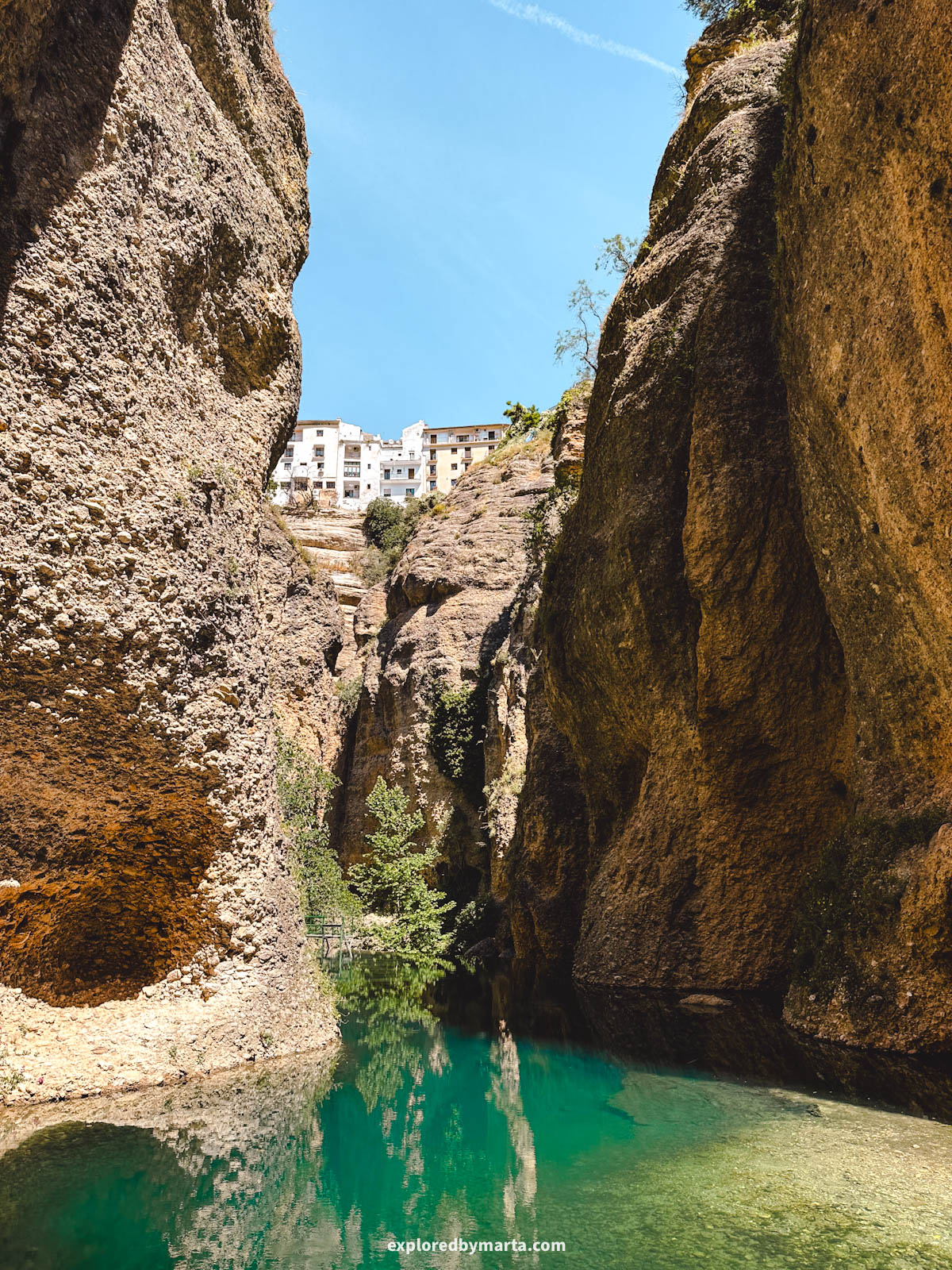
Heads up! The descent is no joke – it is steep, slippery in places, and you have to climb back up the same way. 🙃 At least it was quite cool inside the mine.
At the bottom, you reach a small platform right at river level, with a beautiful view looking up at the cliffs. I loved this spot!
There is a 10 EUR entrance fee to visit Casa del Rey Moro, the gardens, and the water mine. While the mine is really cool and such a memorable experience, the garden is small, and the house itself is being renovated.
Location: Casa del Rey Moro
14. Explore the historic Mondragon Palace
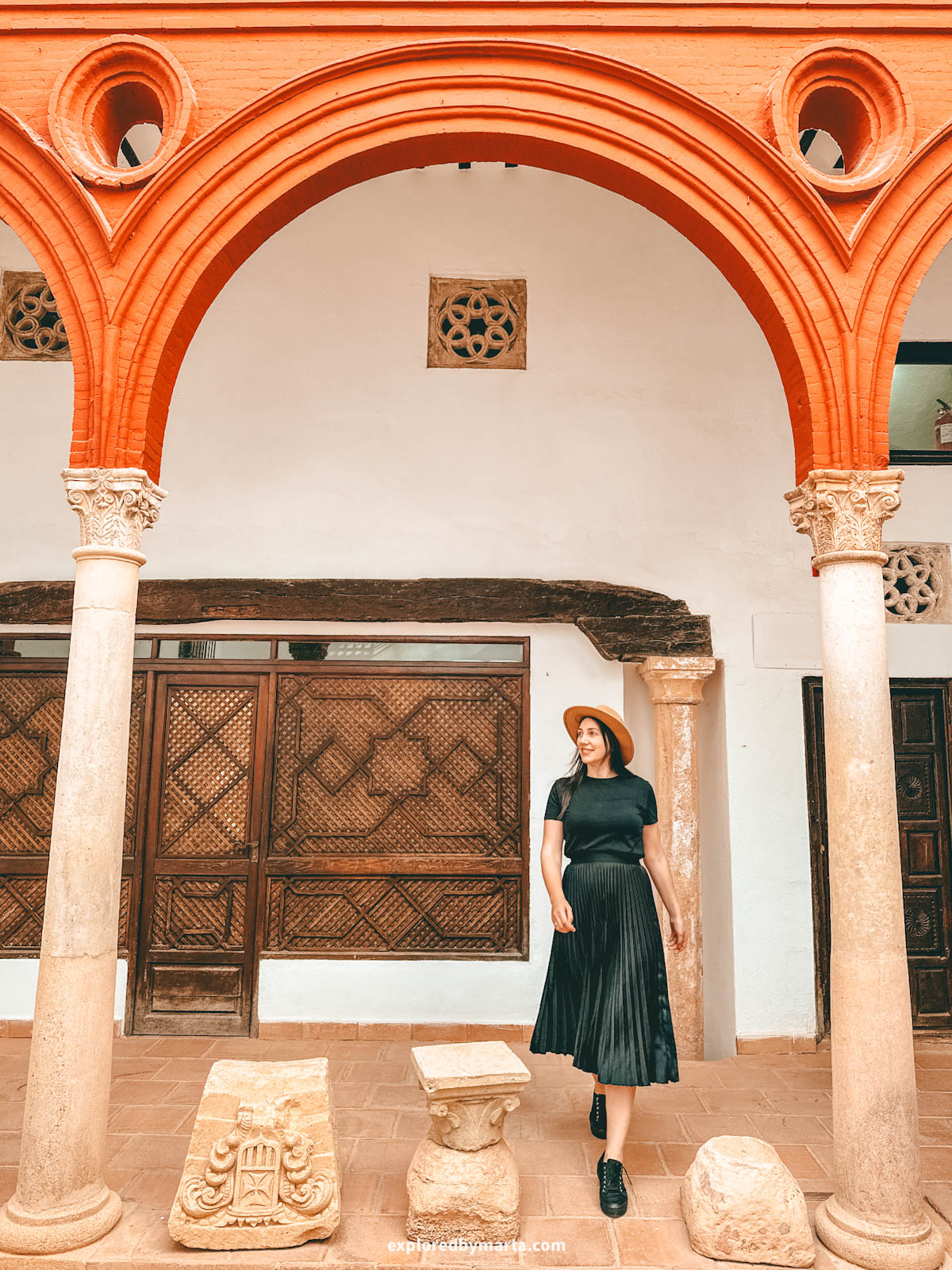
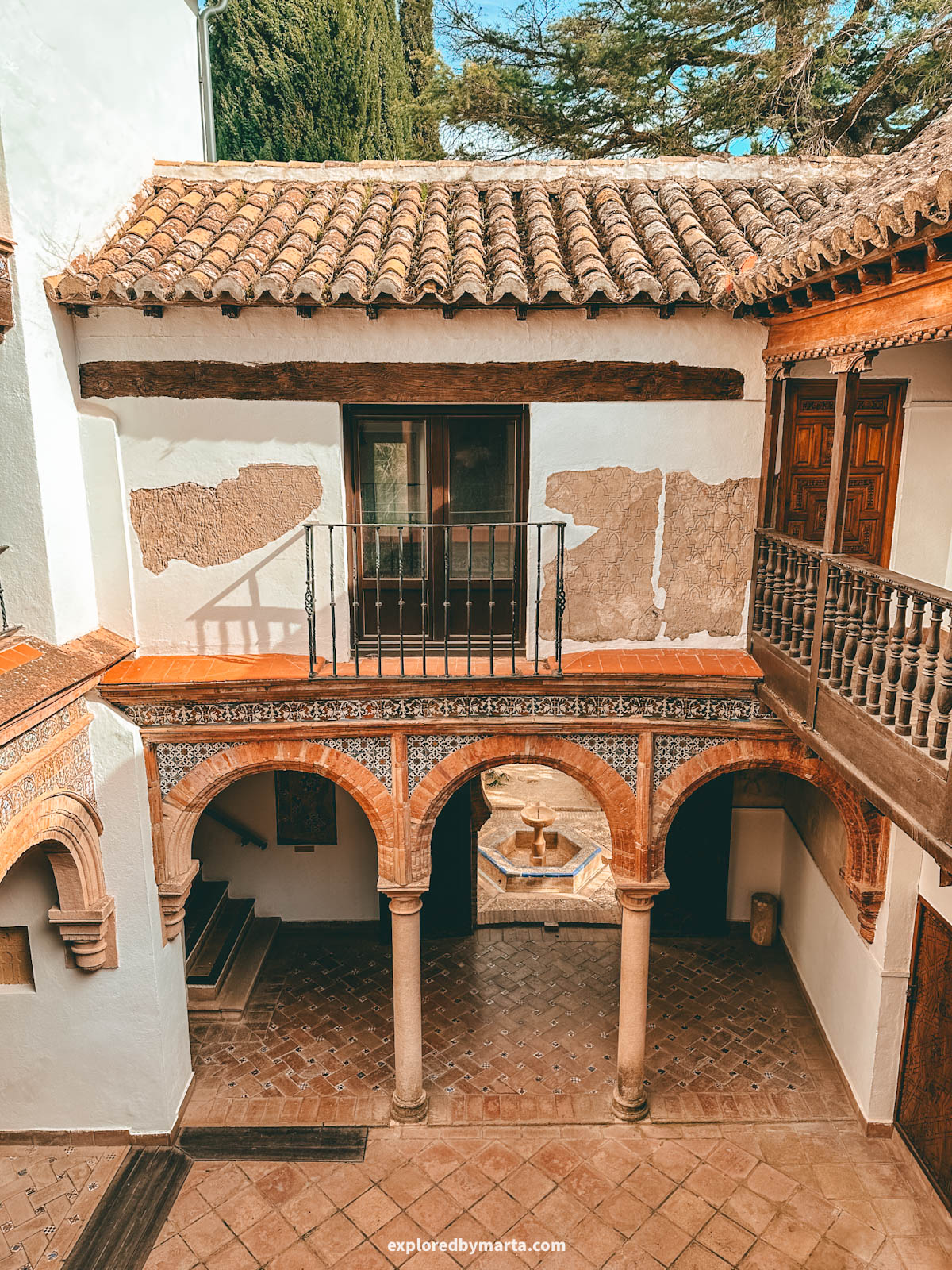
If you have more time and want to explore more of Ronda, the Mondragon Palace is one of the most beautiful historic buildings in town.
This stunning 14th-century palace was originally built during the Islamic period in Spain and later became the residence of the Catholic Monarchs Ferdinand and Isabella after the Christian reconquest of Ronda.
The architecture itself is a mix of Moorish, Mudéjar, and Renaissance styles, with beautiful arches, decorative tilework, and intricate carvings.
I loved that the palace has two beautiful inner patios – the entrance patio with elegant brick arches and Corinthian columns, and the Mudéjar patio with stone columns and a wooden gallery.
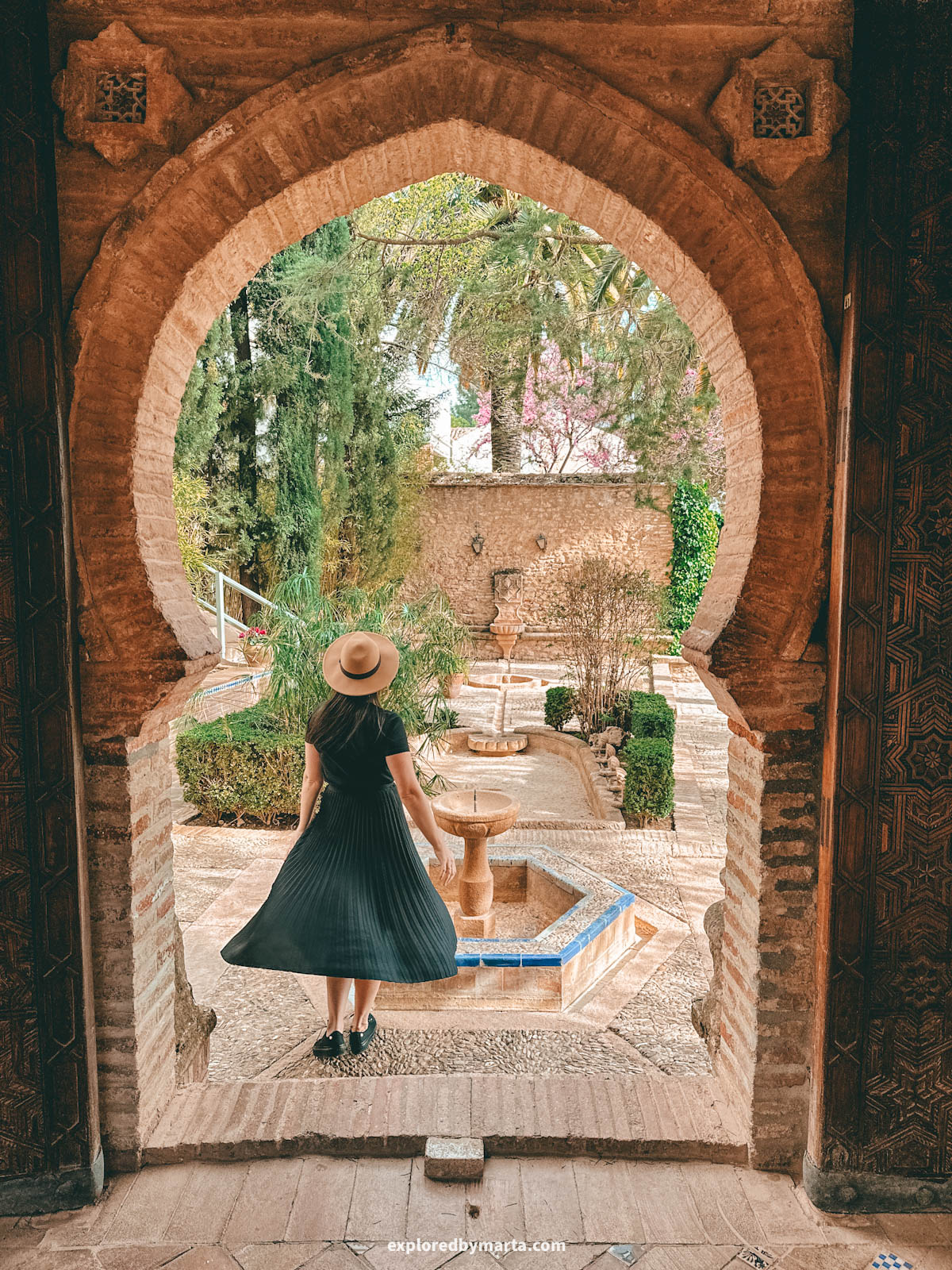
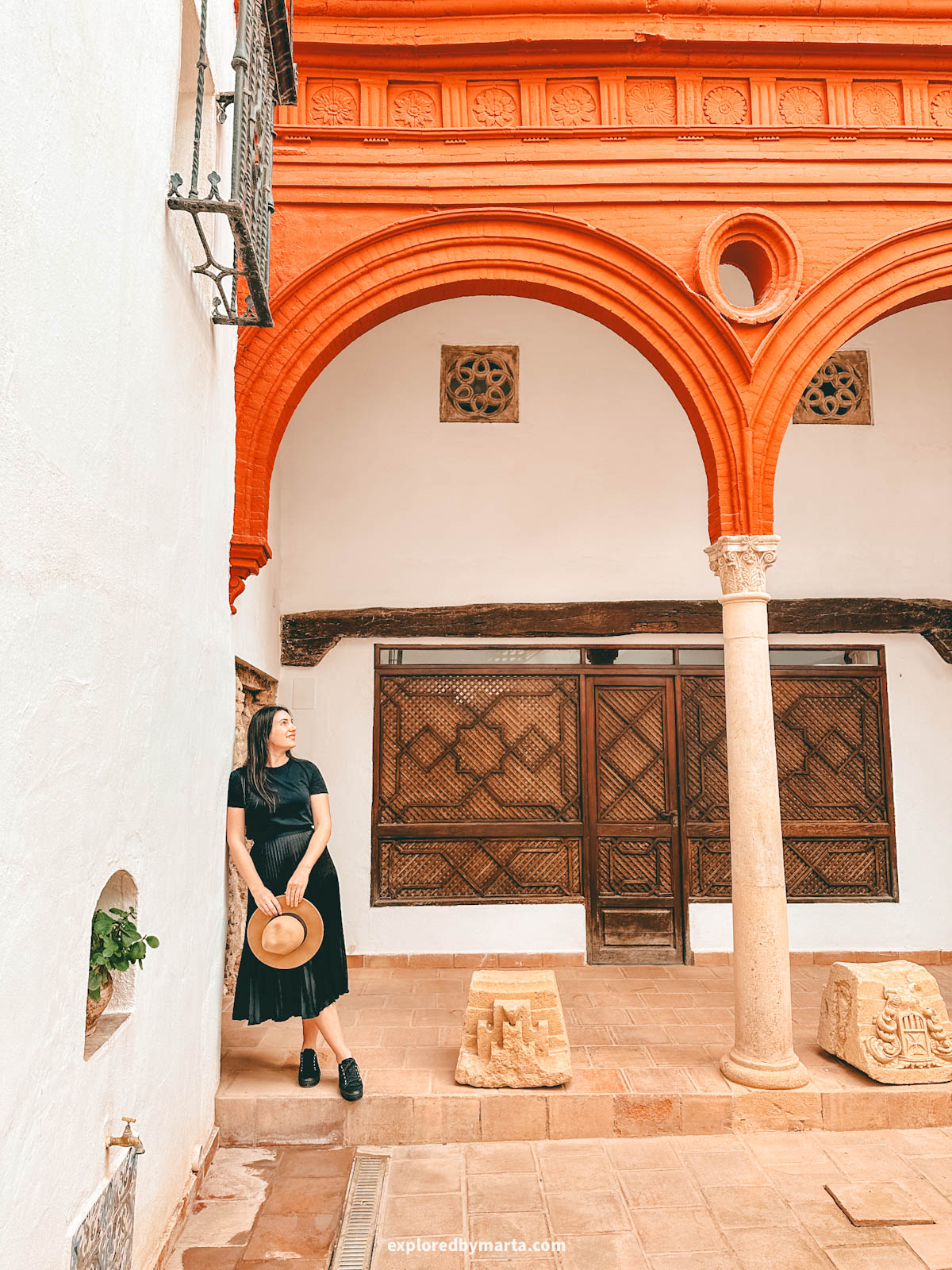
Today, the palace houses the Municipal Museum of Ronda, which displays archaeological finds from the area covering prehistoric times all the way to the Roman period. It is a lovely little museum to learn about the deeper history of Ronda, but I skipped most of it.
The real highlight for me, though, is the palace garden – it sits right on the edge of the cliff and offers beautiful views over the Ronda countryside. The water garden was inspired by the Generalife at the Alhambra in Granada.
Such a beautiful spot to take a break from sightseeing!
Quick note: There is an entrance fee of 5 EUR to visit the Mondragon Palace. Working hours are limited, so check before you go.
Location: Mondragon Palace
15. Take a trip to Setenil de las Bodegas
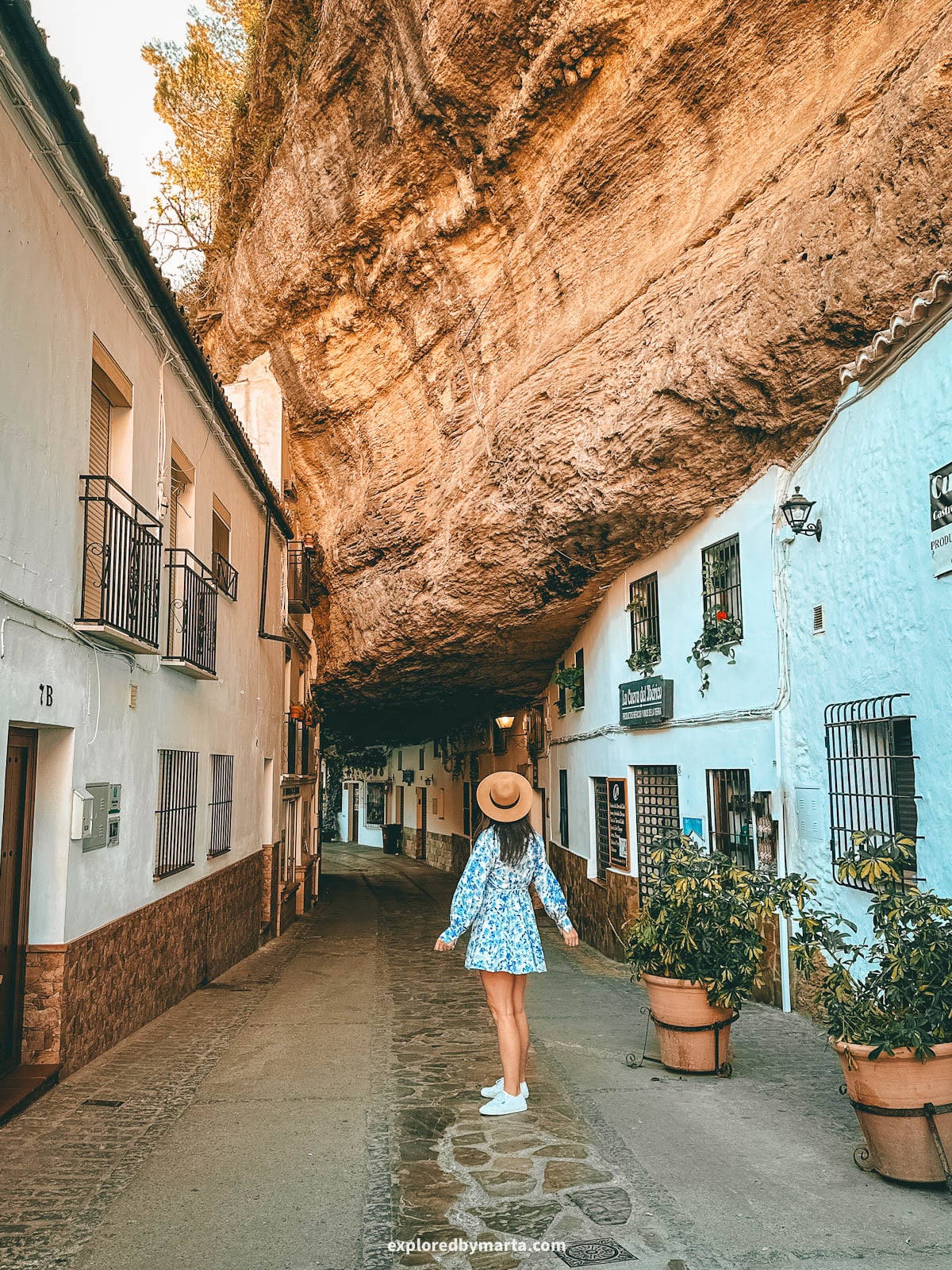
If you have a bit of extra time on your trip, do not miss taking a trip to Setenil de las Bodegas – one of the most unique villages in all of Andalusia!
This famous cave village is located just 20 minutes by car from Ronda, and most travelers visit both on the same day during their road trip through Southern Spain.
What makes Setenil so special? People here actually live in cave houses, and the village is famous for its streets and homes built directly under massive rock overhangs. You will find cafés, shops, and restaurants tucked under huge cliffs that act as natural roofs.
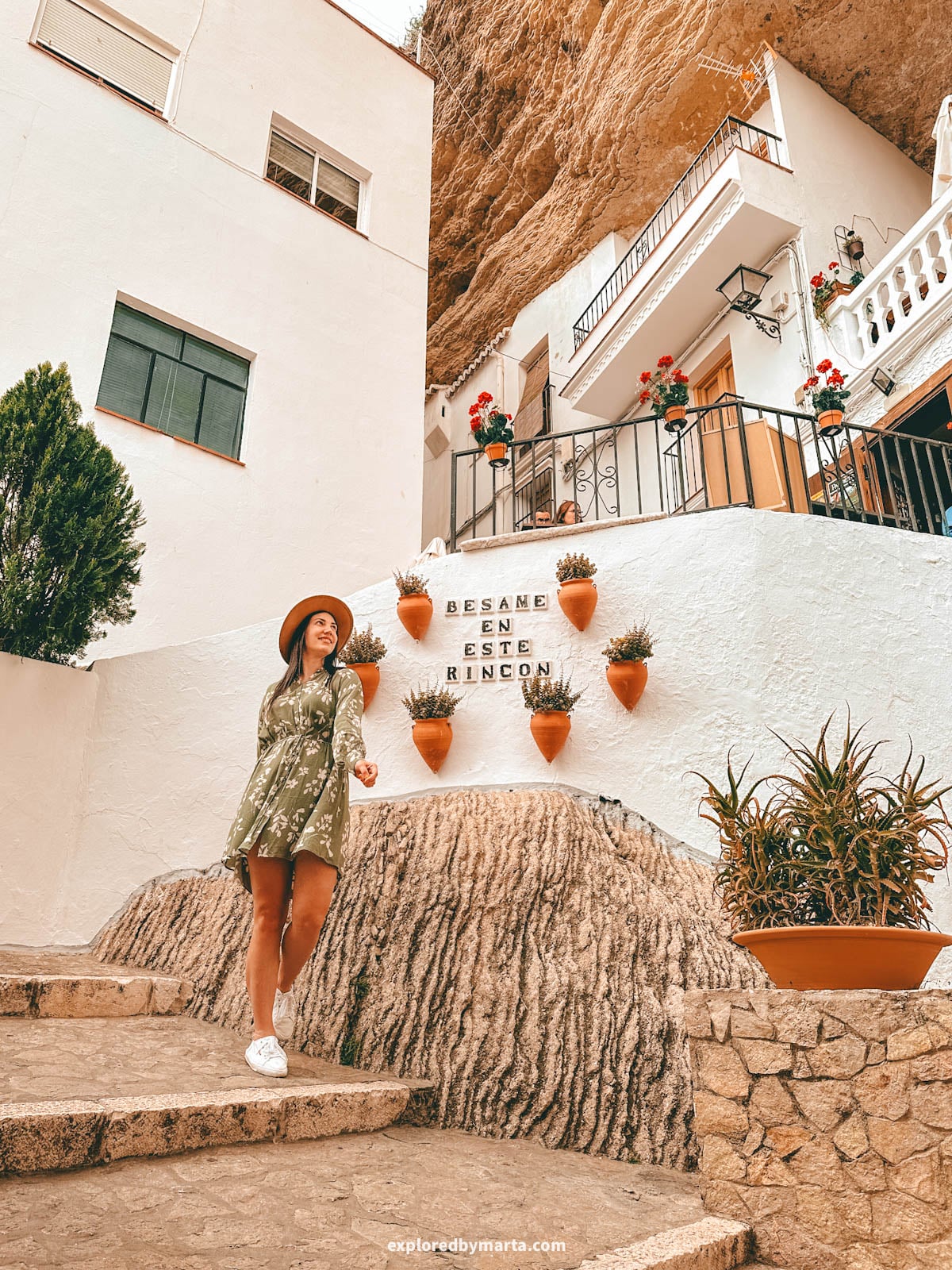
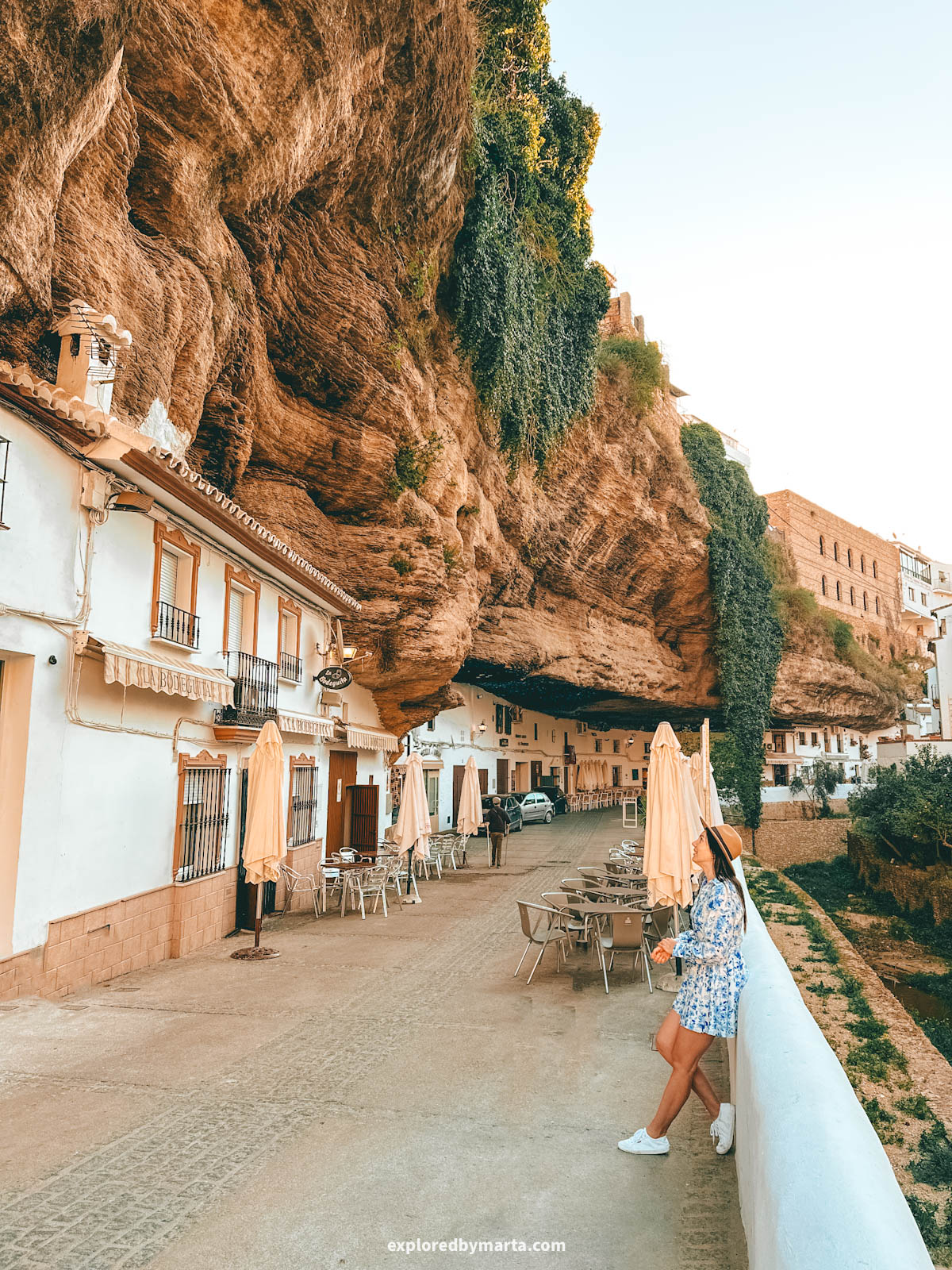
The two most famous streets are Calle Cuevas del Sol (Street of the Sun Caves) and Calle Cuevas de la Sombra (Street of the Shadow Caves). The second one is the most iconic photo spot – the rock literally covers the street! 🤯
Beyond the famous streets, you will also find amazing viewpoints over the village, charming hidden corners with poetic phrases written on the walls, and a 12th-century castle tower you can climb for panoramic views.
There are honestly so many unique things to do in Setenil de las Bodegas that you can easily spend a couple of hours exploring. We loved it so much, we actually stayed there a couple of days – though, yes, most travelers just visit for a few hours.
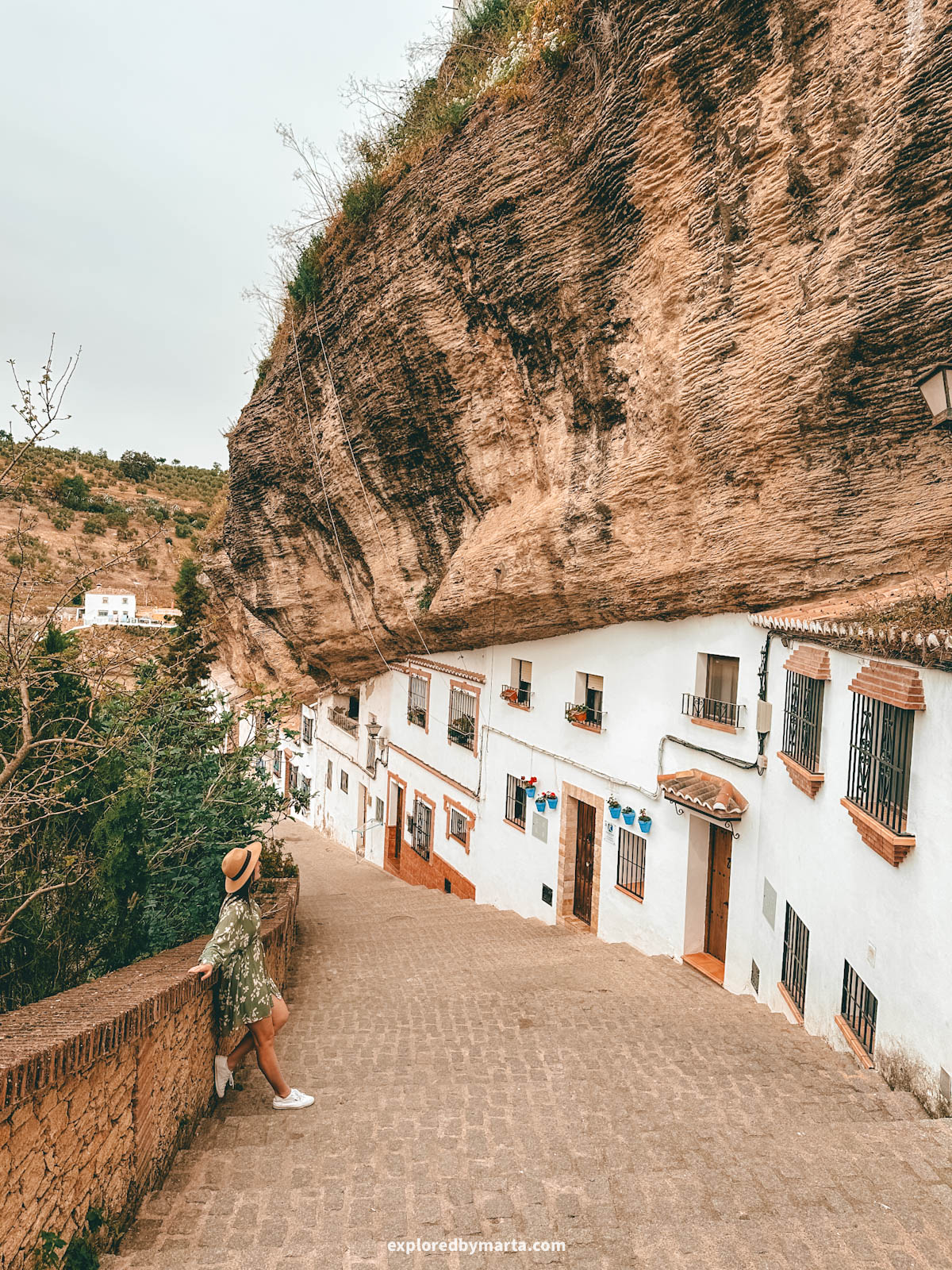
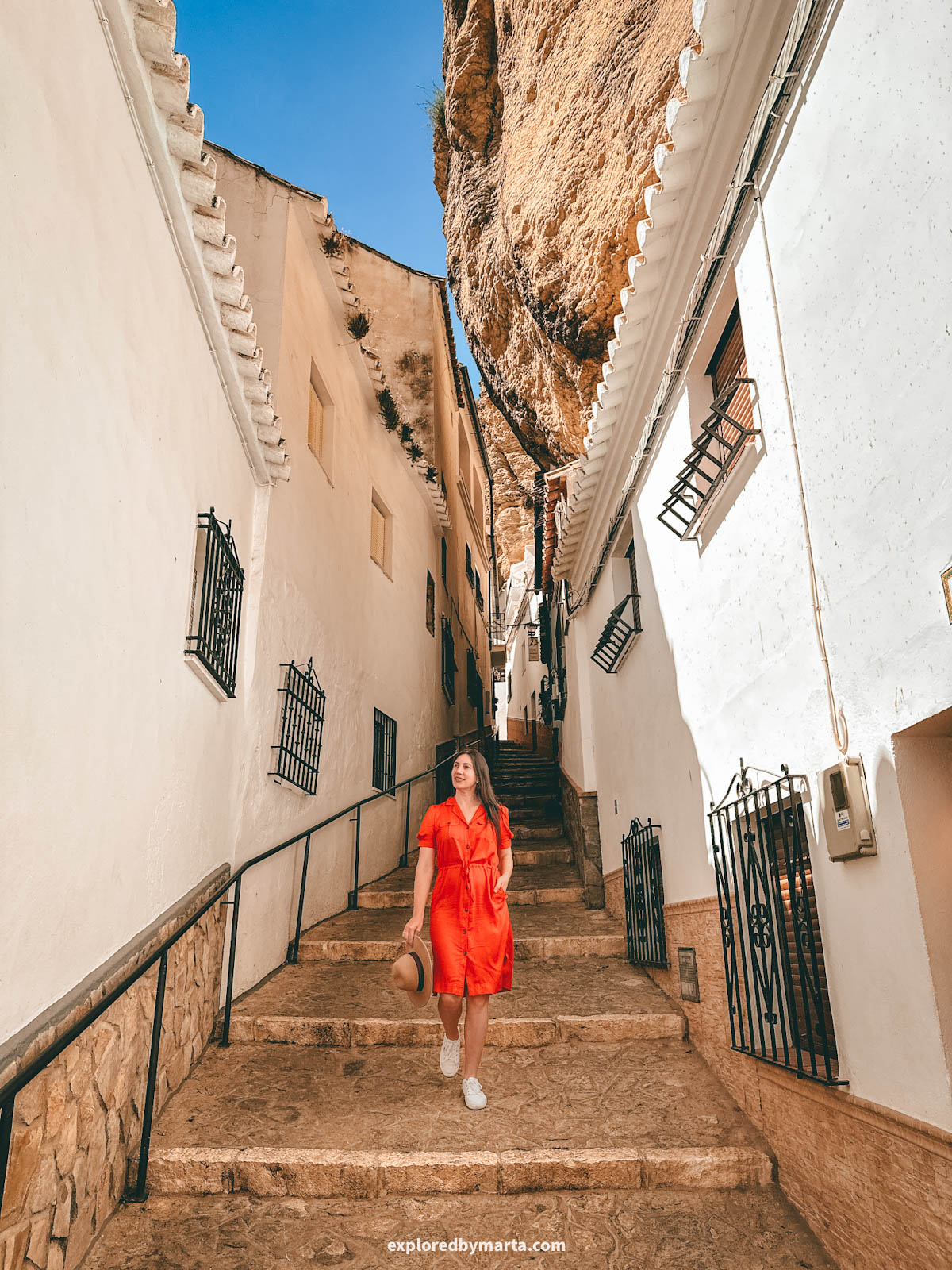
You can spend most of your day in Ronda, then drive over to Setenil in the late afternoon for an hour or two when the day-trippers have already left. This way, you get to enjoy the village without the crowds.
How to get to Setenil from Ronda: The easiest way is by car (around 20 minutes). If you do not have a car, you can take a local taxi from near the Plaza de Toros bullring in Ronda, which takes around 20 minutes and costs around 25 to 30 EUR one-way.
There is also a local bus operated by Autobuses Paco Pepe (Monday to Saturday only, around 2 EUR one-way), but the journey takes 45 minutes and departures are very limited – check the timetable at the Tourist Office in Ronda.
Location: Setenil de las Bodegas
FAQs about visiting Ronda
Is Ronda worth visiting?
Yes, Ronda is absolutely worth visiting and one of the best destinations in Andalusia. This dramatic mountaintop town offers incredible views, the iconic Puente Nuevo bridge, beautiful old streets, historic sites, and one of the most unique settings of any town in Spain. For me, Ronda was honestly one of the highlights of our entire Andalusia road trip.
How many days do you need in Ronda?
I would say 1 to 2 full days in Ronda is a good amount of time for a first visit. One day is enough to see the main highlights – Puente Nuevo bridge, the Arab baths, see the old town, and a hike down to the gorge viewpoints. Two days gives you time for the optional spots like Casa del Rey Moro water mine and Mondragon Palace, plus a slower pace to enjoy the cobblestone streets.
Can you visit Ronda as a day trip?
Yes, Ronda works as a day trip from cities like Malaga, Seville, or anywhere in the Costa del Sol area. The historic center is compact and walkable, so you can see the main sights in a few hours. That said, I think Ronda is better if you stay one night. Watching the sunset from Paseo de los Ingleses and exploring the cobblestone streets in the evening are part of the charm.
What is Ronda known for?
Ronda is most famous for Puente Nuevo bridge, the dramatic 18th-century stone bridge that stretches across the deep El Tajo gorge cutting through the town. Ronda is also known for being one of the oldest bullfighting cities in Spain, the cliffside setting, the cobblestone old town, and being the inspiration for famous writers like Hemingway and Orson Welles.
Is Ronda walkable?
Yes, Ronda is very walkable. The historic center is compact, and most of the main sights are within walking distance of each other. You can easily explore Puente Nuevo, the old town, Puente Viejo, the Arab baths, the bullring, and Paseo de los Ingleses on foot. Just keep in mind that Ronda has some steep streets and stairs, especially if you want to hike down to the gorge viewpoints.
What is the best time to visit Ronda?
The best time to visit Ronda is in spring (April to June) or autumn (September to October). The weather is warm but not too hot, the light is soft for photos, and the crowds are thinner than in peak summer. Summer in Ronda can be very hot (over 100°F or 38°C), and winter can be chilly with some rain – though the views are still beautiful year-round.
Read more about traveling in Southern Spain
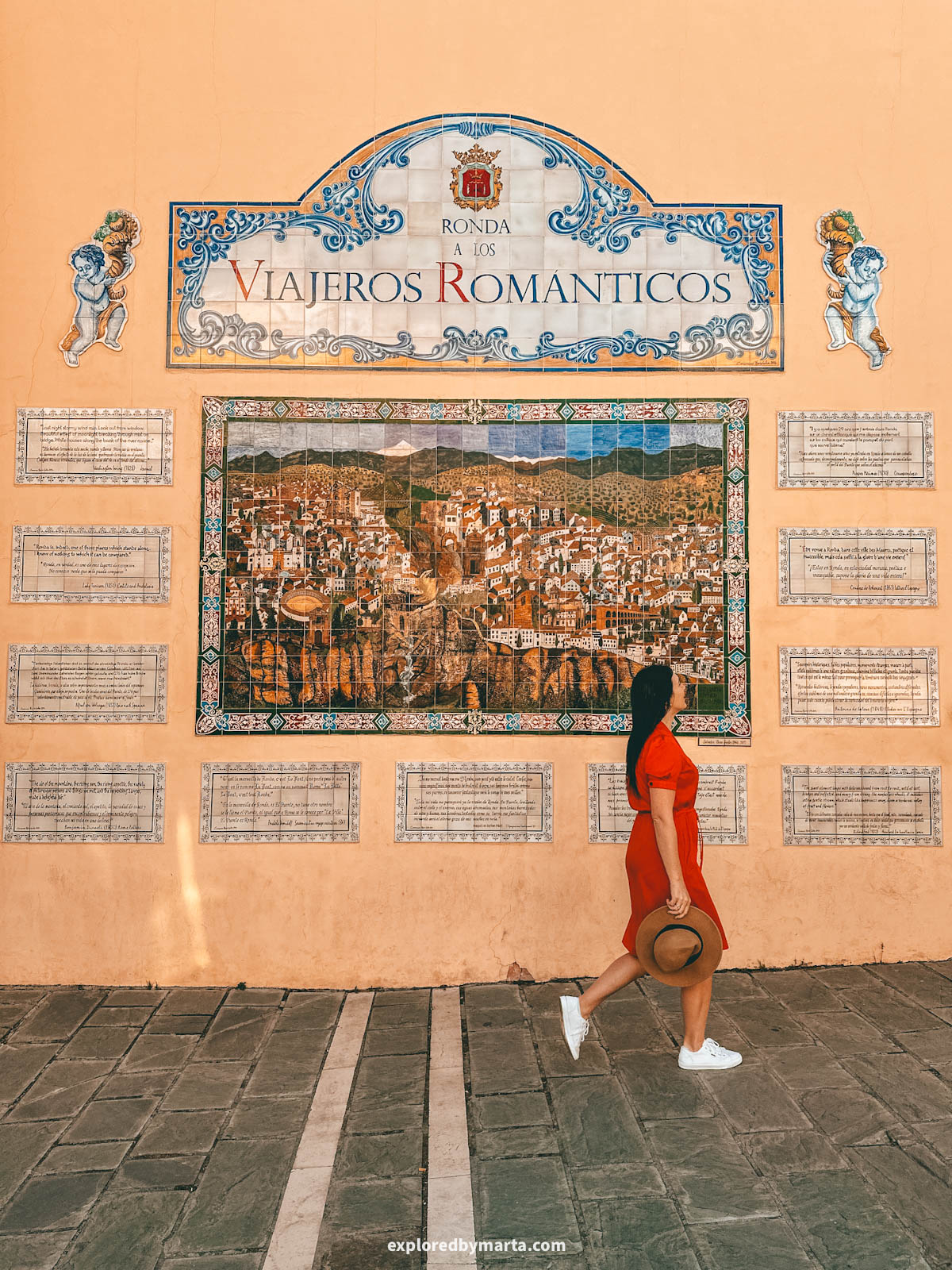
Ronda is honestly one of the most spectacular towns in all of Spain. The dramatic mountaintop setting, the iconic Puente Nuevo bridge, the cobblestone streets, and the hidden corners of the old town make it one of those places you just cannot forget.
Three days here were just enough to soak up the main highlights, climb church rooftops for views, descend deep into the gorge, and walk across centuries-old bridges. Honestly, every corner of this town is worth a stop.
If you are planning a road trip through Andalusia, do not miss Ronda! Here are some of my other Andalusia guides to help you plan further:
More Andalusia travel inspiration:
- 21 most beautiful white villages in Andalusia
- 27 hidden gems you should see in Andalusia
- 17 most beautiful castles in Andalusia, Spain
- 20 best things to do in Malaga, Spain (locations & tips!)
- Córdoba bucket list: 18 best things to do in Córdoba, Spain
- 15 best things to do in Granada, Spain (Alhambra and beyond)
Travel guides to nearby towns:
- 12 best things to do in Cádiz, Western Europe’s oldest city
- 10 best things to do in Jerez de la Frontera, Spain
- 10 things to do in Tarifa, Spain’s southernmost town
- Fairytale Frigiliana: 13 things to do in Frigiliana, Spain
- 10 things to do in Iznájar, Spain (flower village)
- 10 best things to do in Setenil de las Bodegas, Spain
PIN FOR LATER!

Merci Marta pour cette visite précise et détaillée de Ronda, c’est exactement ce que je cherchais pour préparer mon voyage.
Bon voyage! 🙂
Hi Marta,
I read your article and am so happy I did! We are coming to Europe, staying in Malaga, and taking a day trip to Ronda on 21/09/2026. We will definitely follow your advice and looking forward to seeing all of the sites. I also especially love your outfits and would like to know if you have a dress shop and hat shop that you would recommend. 🙂
Thanks!
Melanie