10 things to do in Tarifa, Spain’s southernmost town
This post may contain affiliate links. If you use these links to make a purchase or booking, I may earn a small commission at no extra cost to you! Thank you for your support!
Looking for the best things to do in Tarifa? You are in for a treat – this small Andalusian town is one of the most unique places in all of Spain.
Tarifa is the southernmost point of mainland Europe, the place where the Atlantic Ocean meets the Mediterranean Sea, and where you can see the mountains of Africa just 14 kilometers across the strait. ⛵
We stopped by during our road trip around Andalusia, and Tarifa surprised us with its laid-back vibe, ancient walls, and beautiful old town. It is also known as the wind and kitesurfing capital of Europe, with consistent winds blowing for over 300 days a year.
In this guide, I am sharing the best things to do in Tarifa with photos, descriptions, and practical travel tips for your visit. Happy travels!
1. Stand on the border between the Atlantic Ocean and the Mediterranean Sea
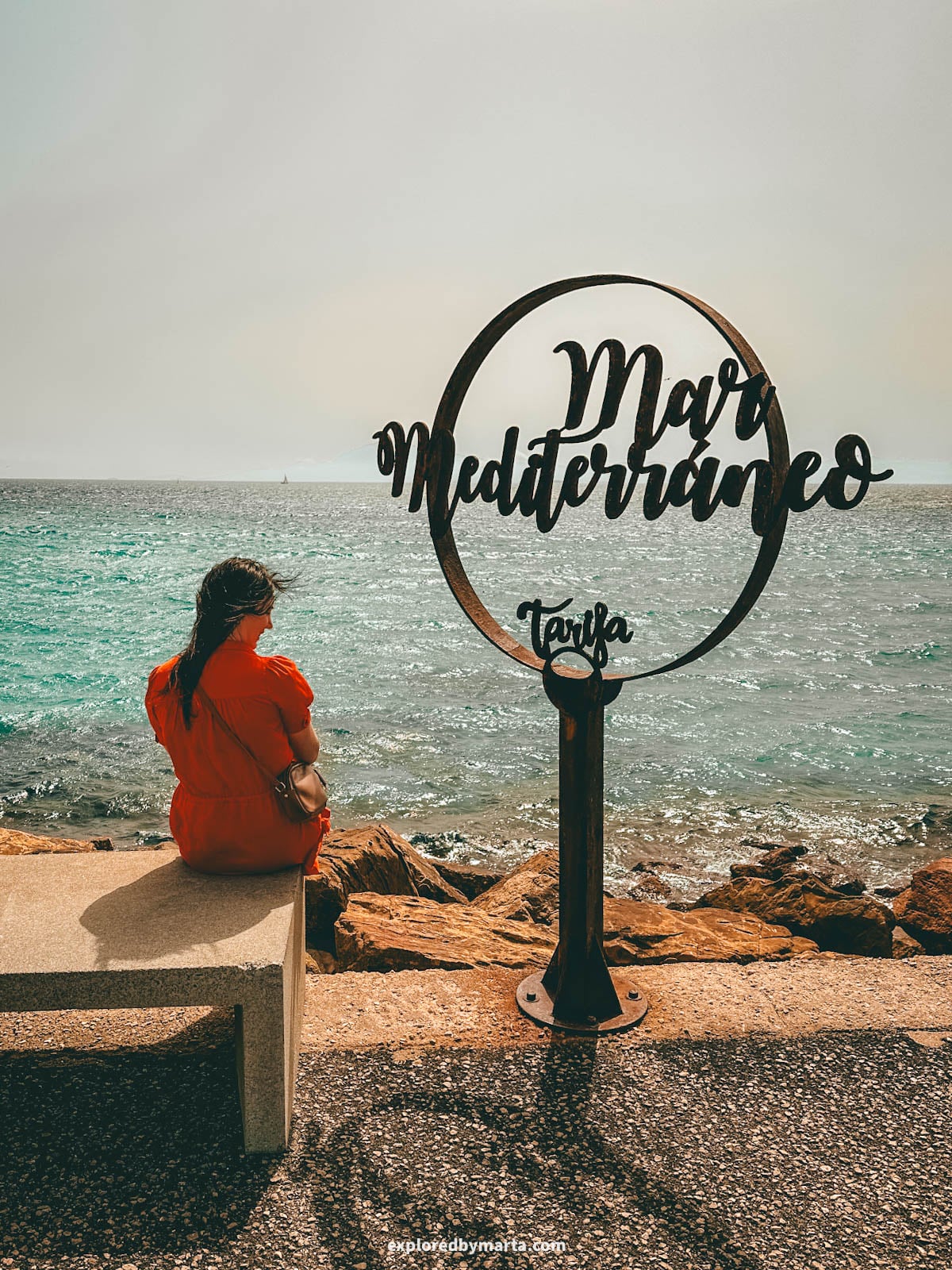
This is hands down the most unique thing to do in Tarifa, and probably the reason most people visit in the first place.
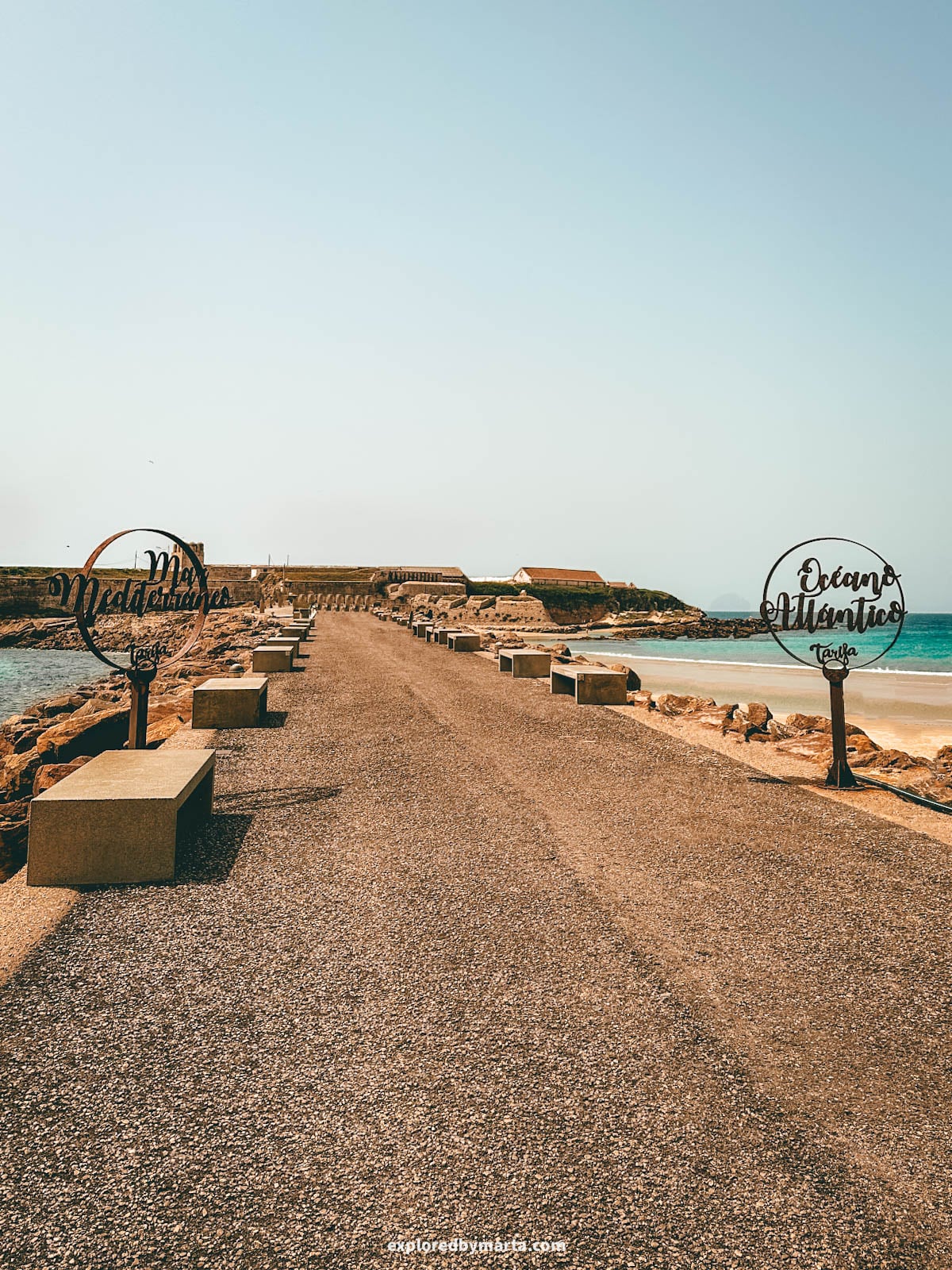
Right next to the town, there is a narrow causeway about 100 meters long that stretches into the water and connects mainland Europe with Isla de Tarifa.
The passage marks the official border between the Atlantic Ocean and the Mediterranean Sea – one body of water on each side – and there are two metal signs along the way to point it out.

Don’t forget to take a photo here while standing between the sea and the ocean! For sure, one of the coolest places we visited in Southern Spain!
The wind here is absolutely wild, and I am not exaggerating. Tarifa experiences exceptionally strong and consistent winds for over 300 days a year, and standing right on this exposed strip of road, it almost swept us off our feet. 😄
The causeway is open all the time, so you can visit any time of day. It is free, takes about 10 minutes to visit and explore, and is a must-do for anyone visiting Tarifa. We loved every windy second of it!
Location: Frontera Mar Mediterráneo – Océano Atlántico
2. Walk over to Isla de Tarifa, the southernmost point of mainland Europe
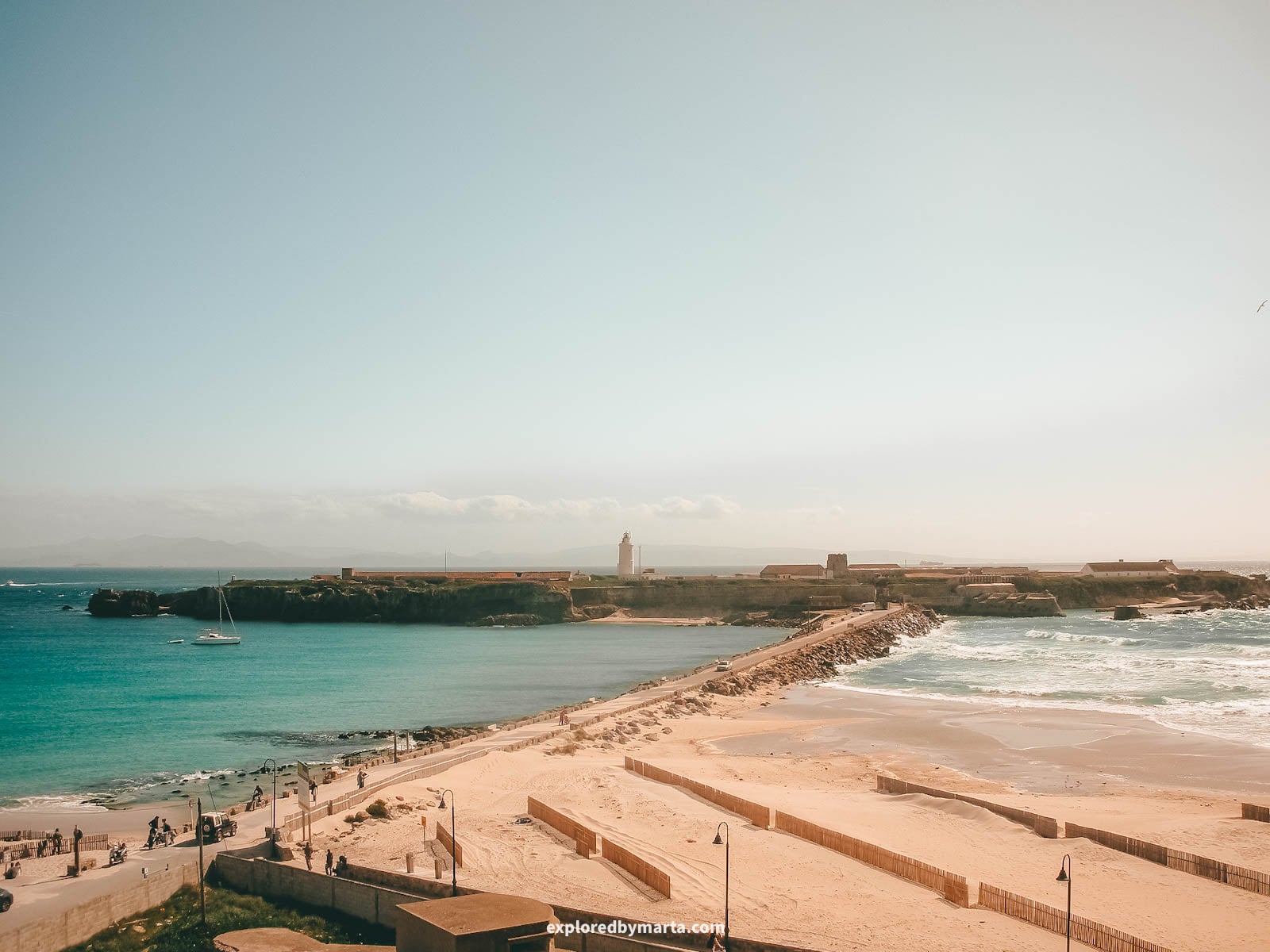
If you walk all the way down the causeway, you will reach Isla de Tarifa, also known as Isla de las Palomas (Island of the Doves).
This little island is the *actual* southernmost point of mainland Europe. So basically, you cannot get any further south on the continent without hopping on a boat.
The island has been a place of significance throughout the centuries.
It was once a sacred place for the Phoenicians, and later home to a fort built during the French invasions in the 19th century. Today, it has a lighthouse, some old fortifications, and a small beach.
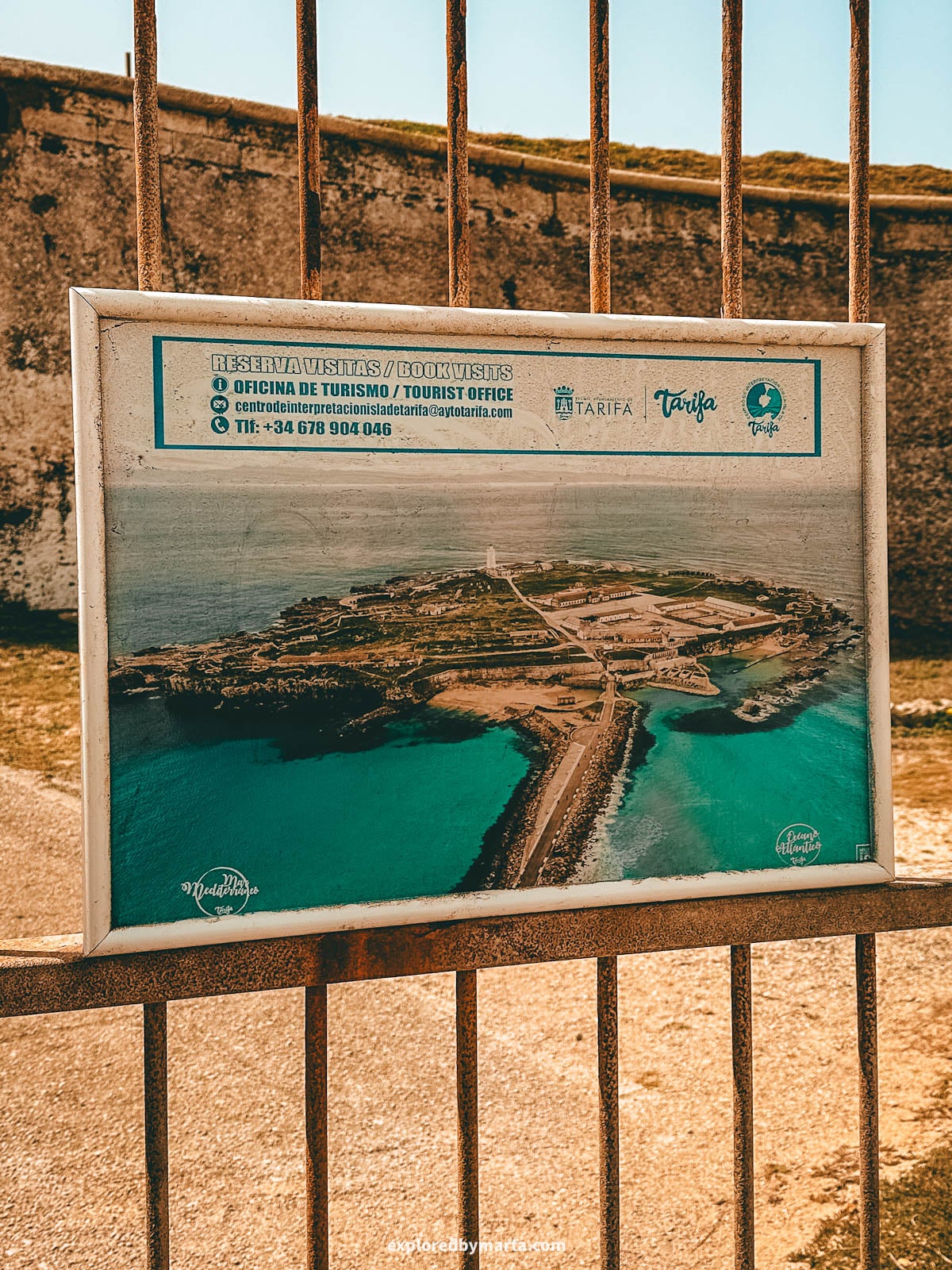
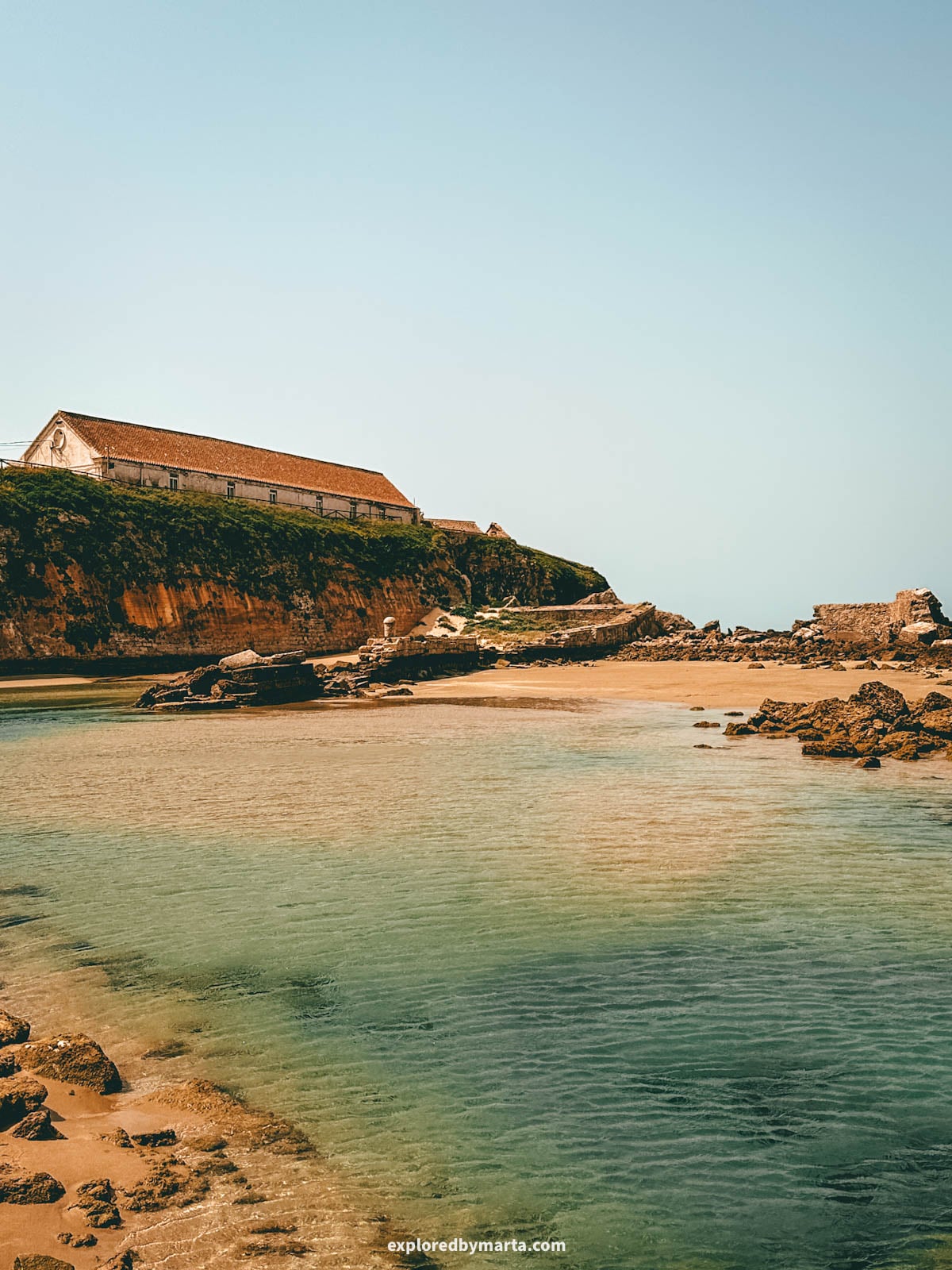
Unfortunately, the island is closed to the public. It was used by the military, and today it is still managed by the Civil Guard. So, unless you book a guided tour in advance, you cannot actually explore the island.
But honestly, that is okay. The walk along the causeway already gives you the full experience – the views, the wind, that feeling of being at the very edge of Europe.
We got down on the beach on the island, spent some time just watching the ferries come and go, and the kitesurfers riding the waves. It is a special place to be.
Fun fact – Africa is only 14 kilometers (8.7 miles) away from Tarifa across the strait. On a clear day, you can see the Moroccan coastline super clearly.
Location: Isla de Tarifa
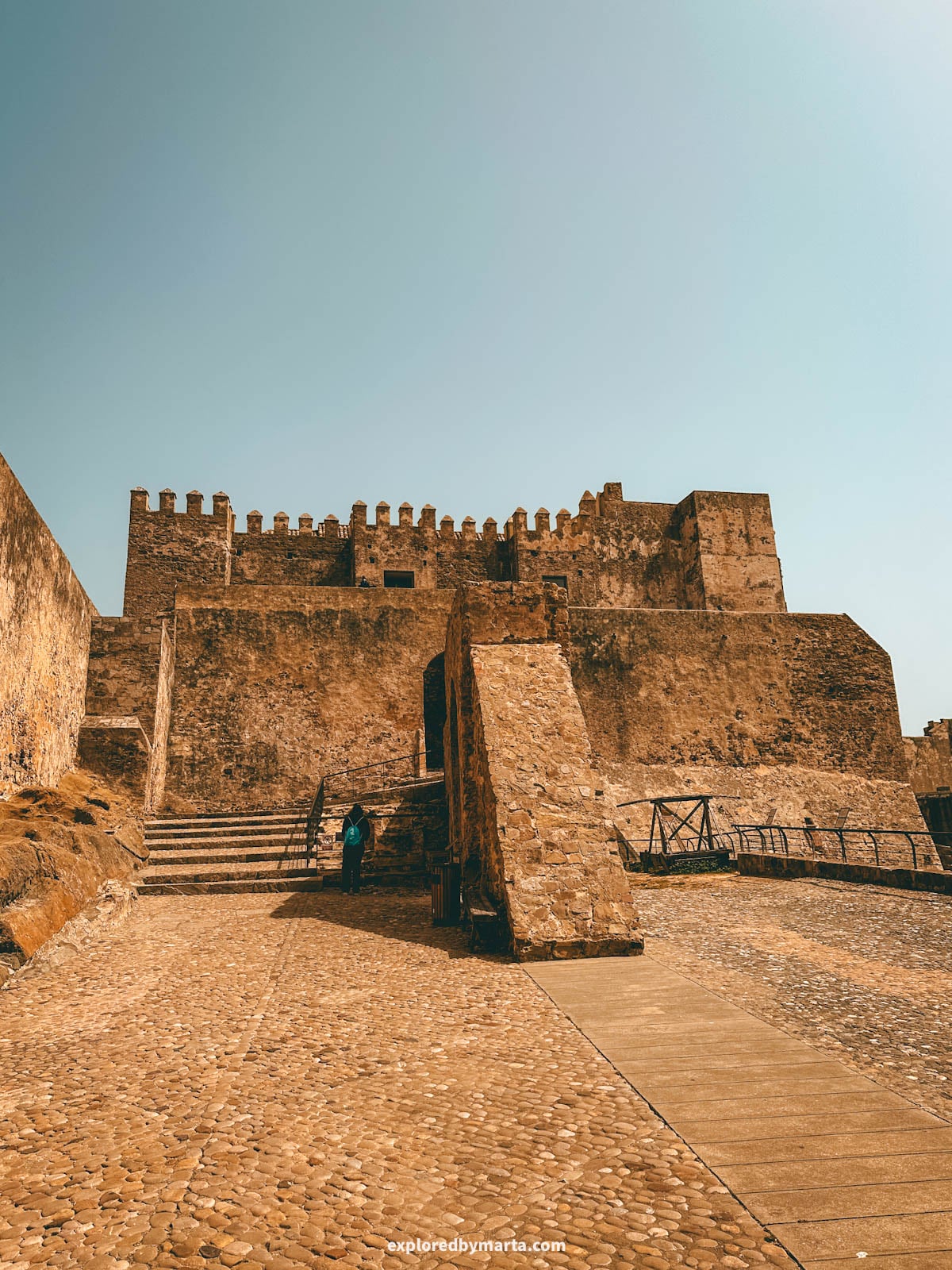
3. Visit the majestic Castillo de Guzmán el Bueno
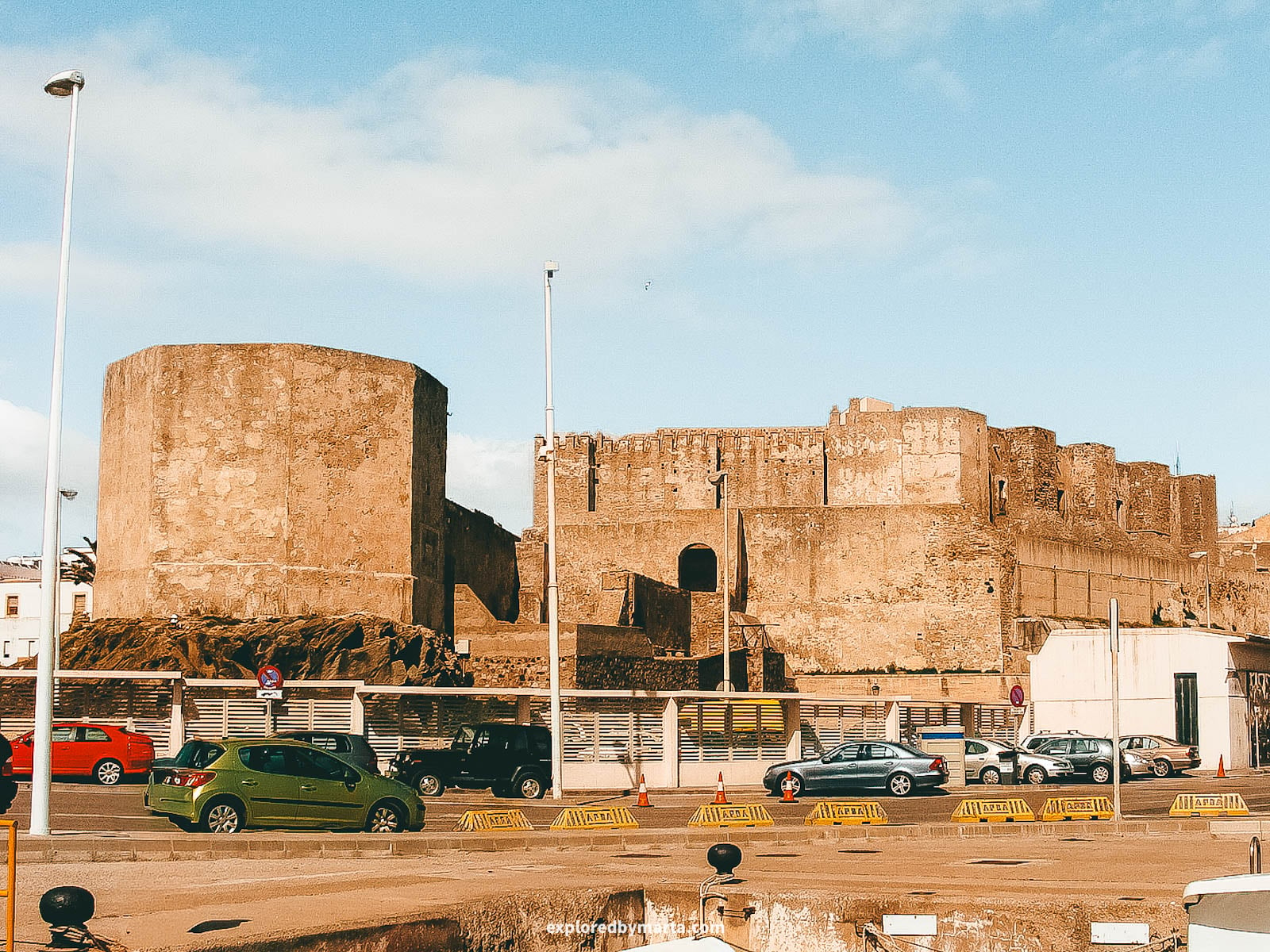
Castillo de Guzmán el Bueno is probably the main tourist attraction in Tarifa, and one of the most emblematic castles in Southern Spain. If you only have time for one historical site, this is the one to pick.
The castle dates back to the 10th century and was originally built during the Moorish period to defend the town.
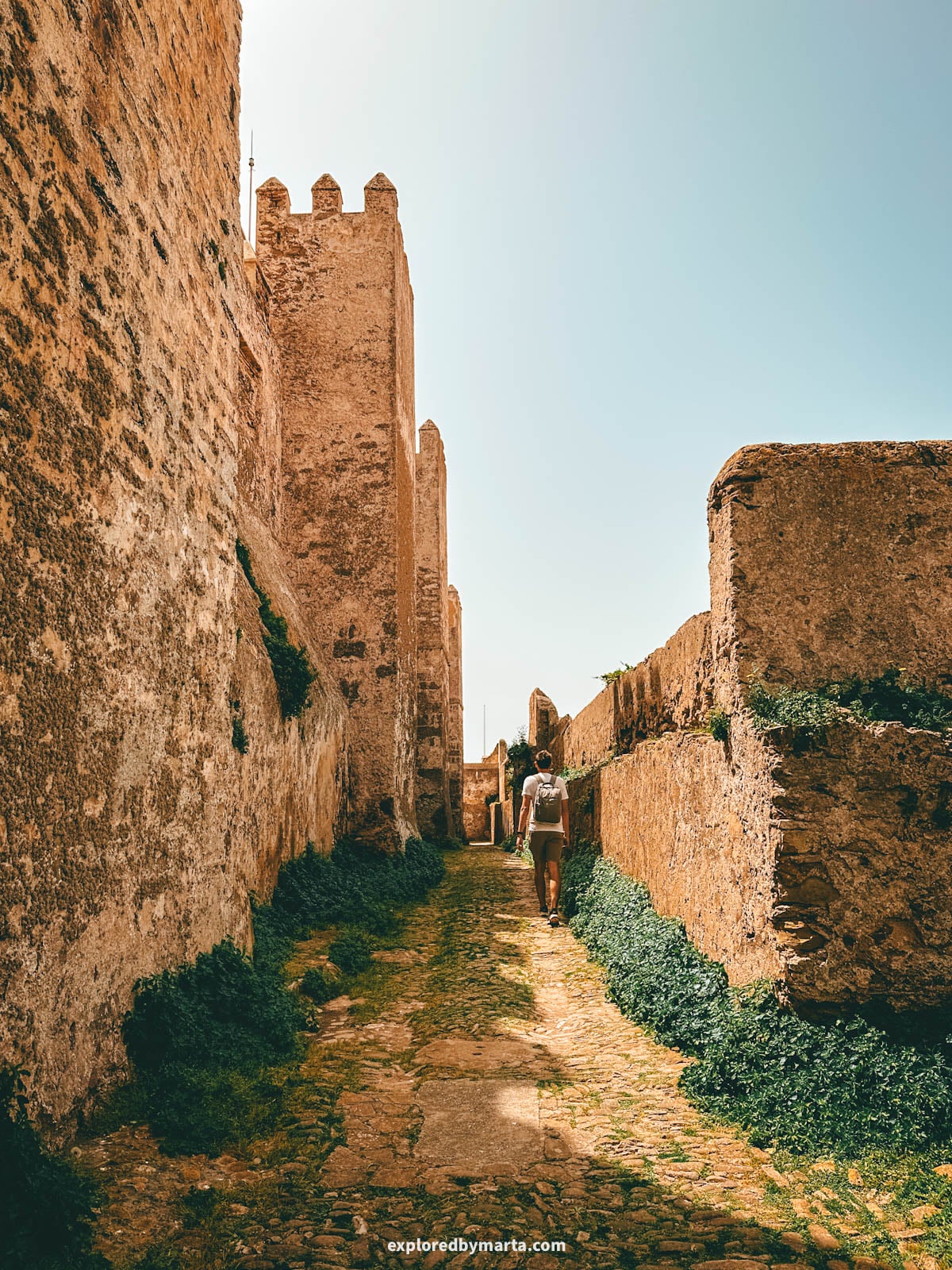
With its impressive defensive walls and watchtowers, it is honestly the kind of place that makes you stop and think about how much history this little town has seen. Plenty is the answer!
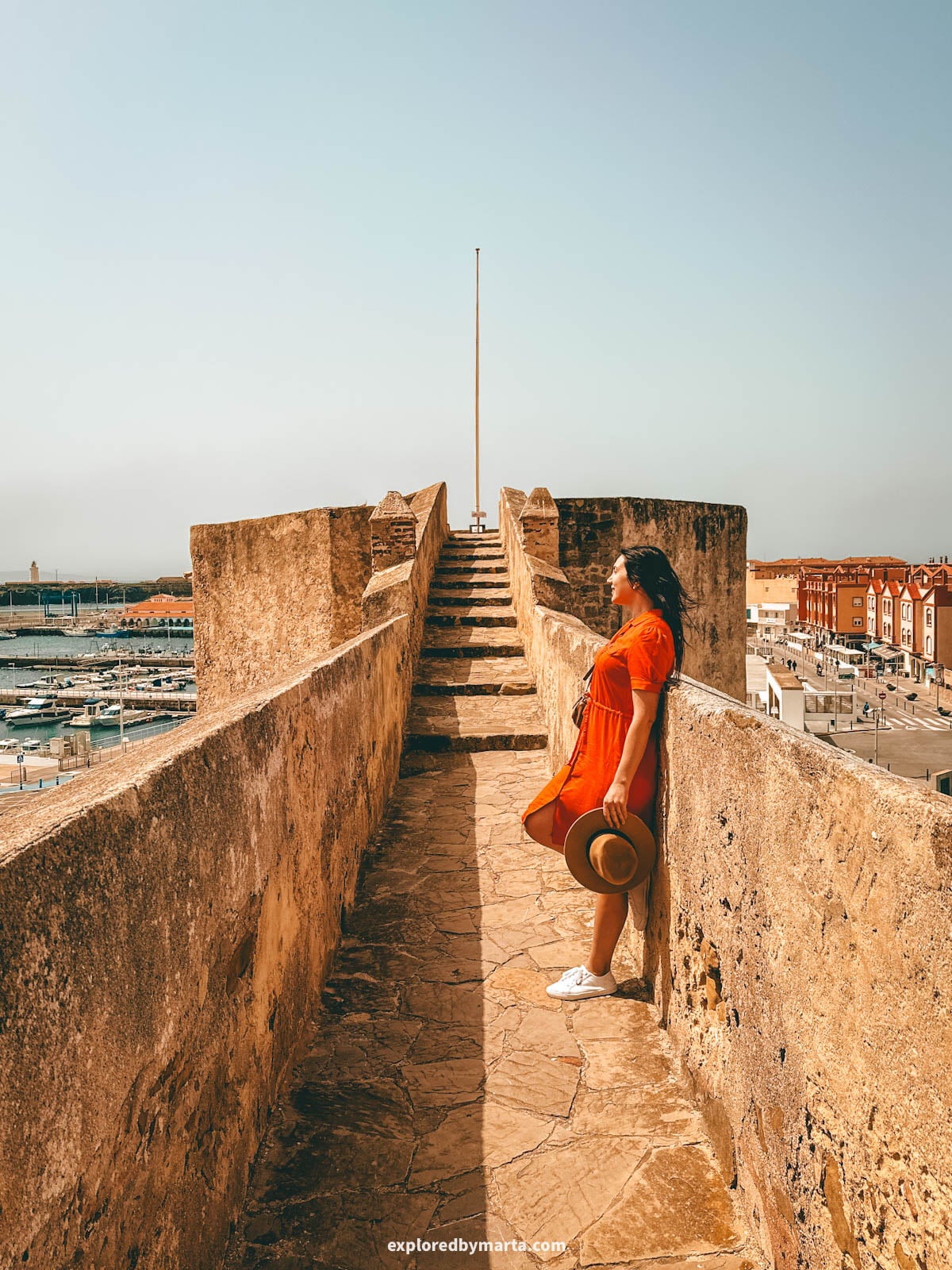
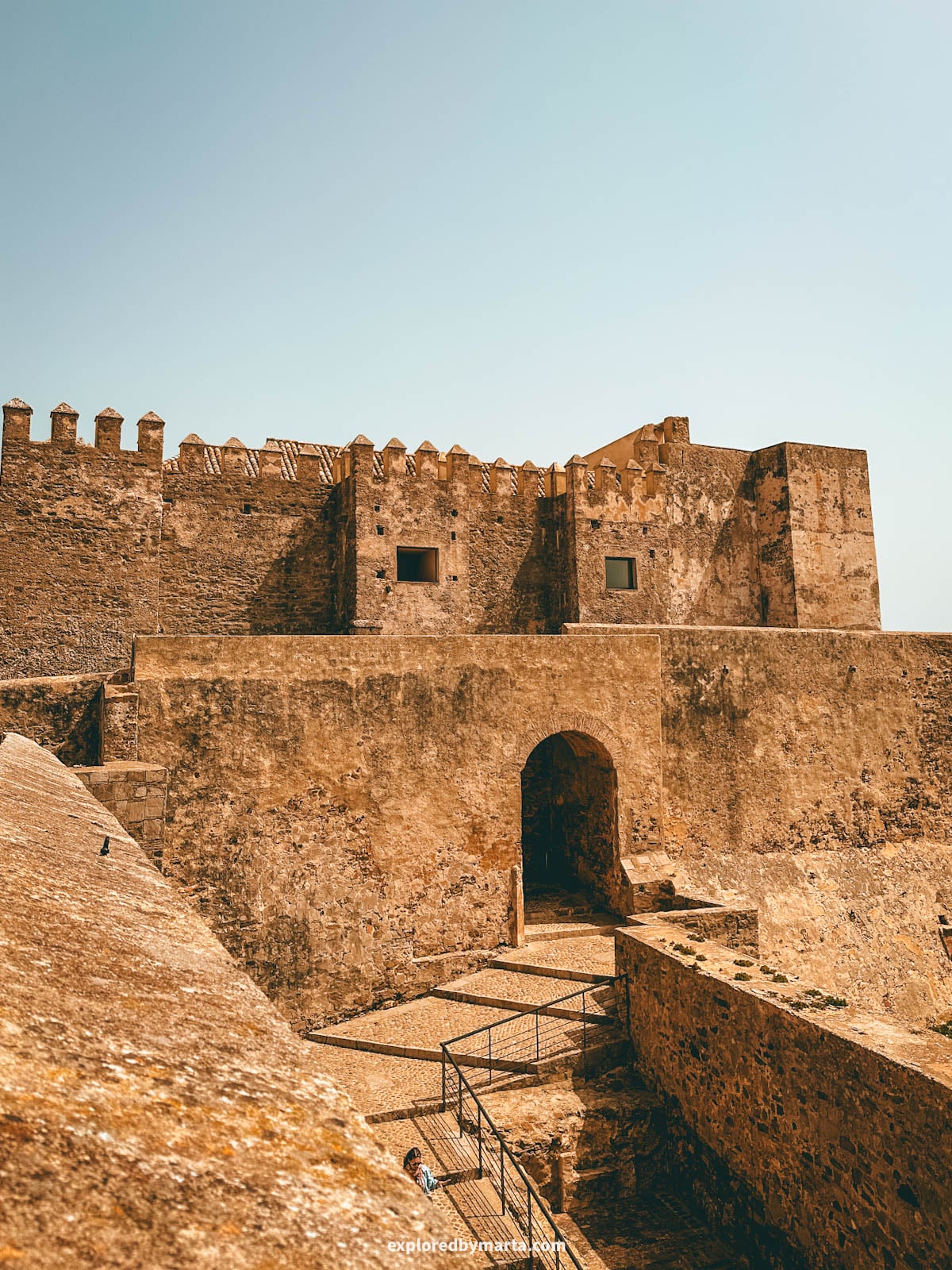
The Medieval castle is named after Alonso Pérez de Guzmán, also known as Guzmán el Bueno (Guzmán the Good), one of the most famous figures in Tarifa’s history.
The legend goes that during a siege in 1294, the enemy captured his son and threatened to kill him unless Guzmán surrendered the castle.
Instead of giving up, he reportedly threw down his own dagger from the wall, saying he would rather lose his son than betray his town. I don’t know what to think of that. 😬
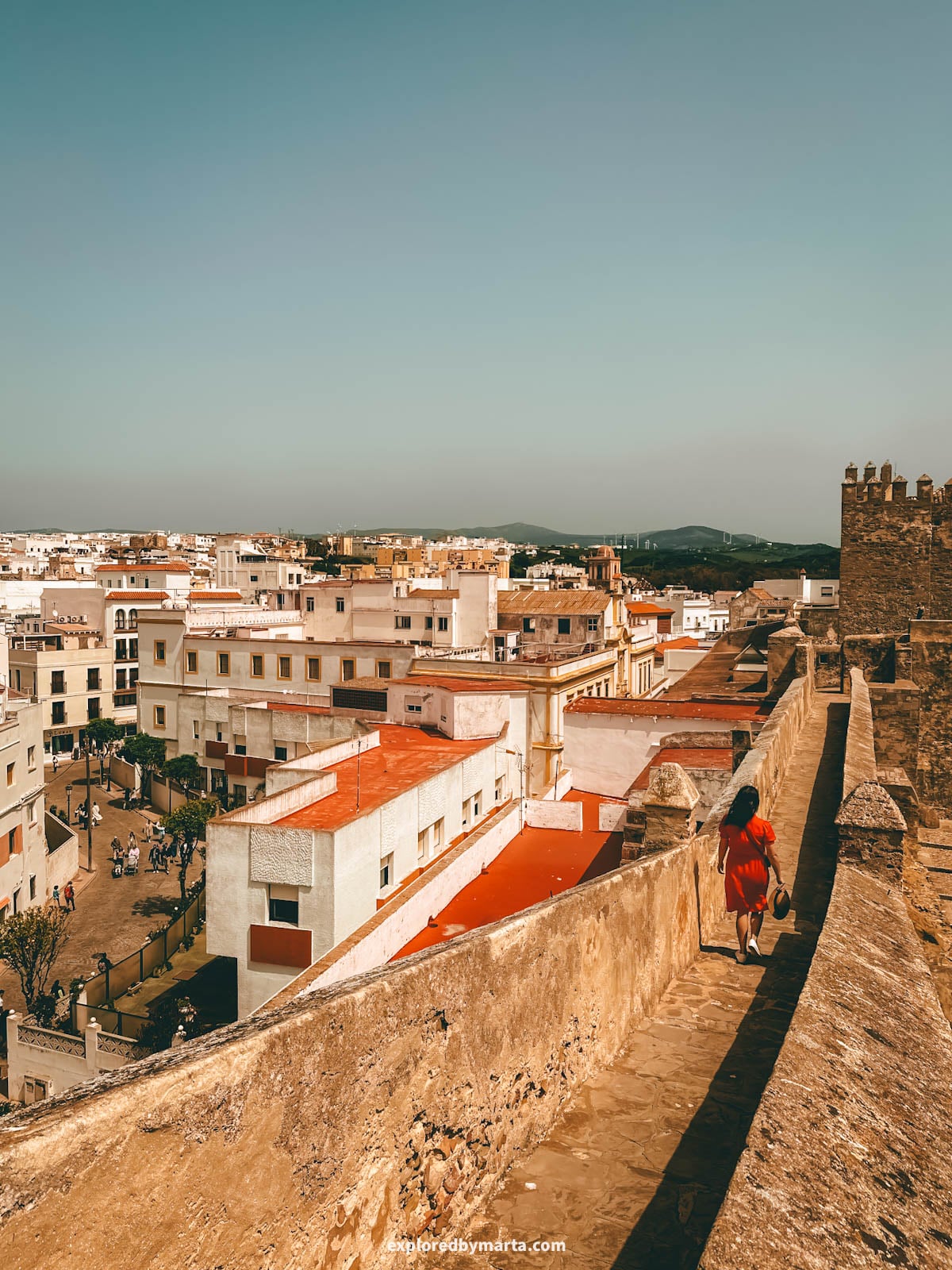
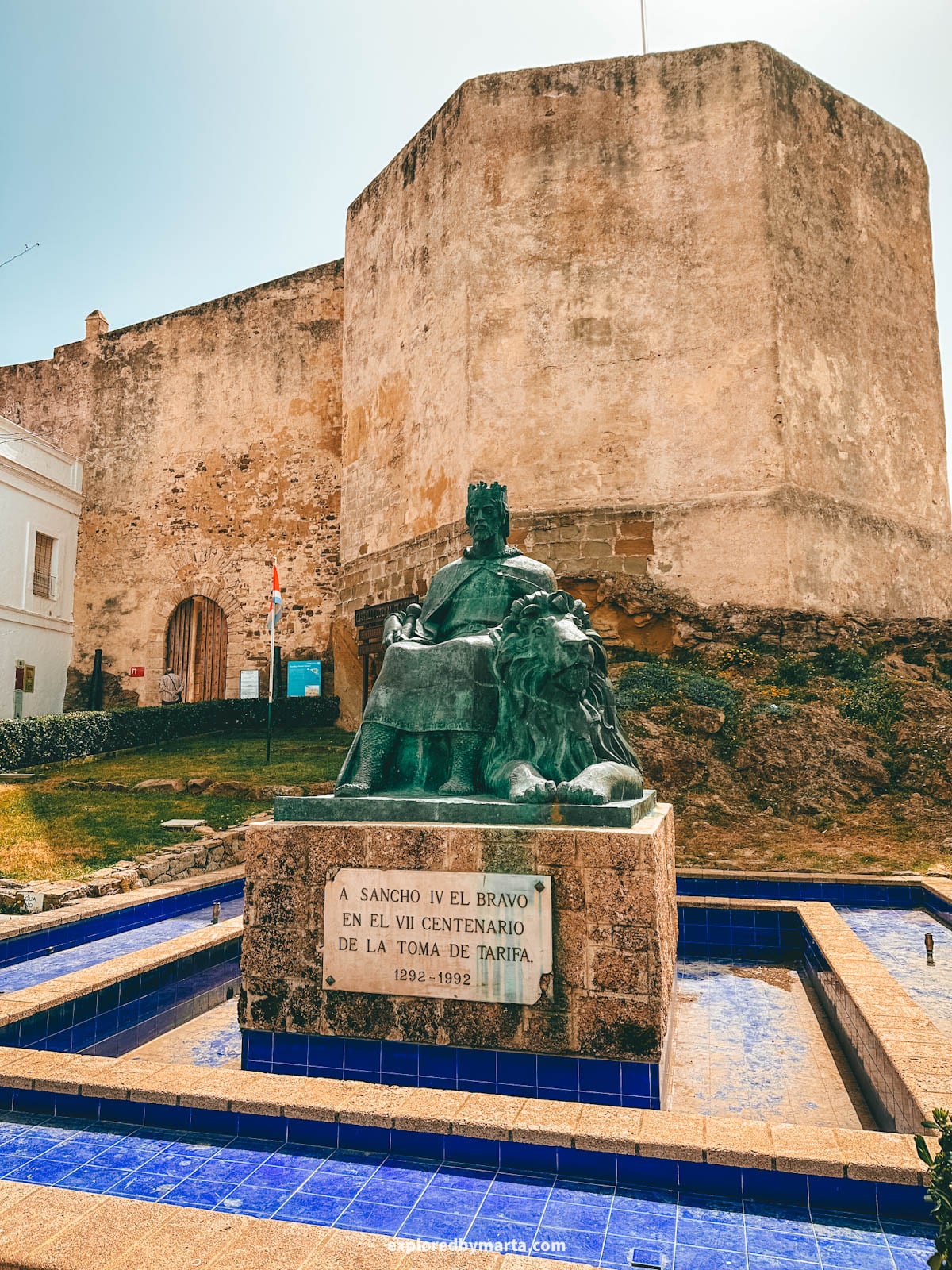
Inside the castle grounds, you can wander around the towers, see thousand-year-old artifacts, and read about the town’s history.
The route is self-guided and pre-planned, so you just follow the directions and explore at your own pace. We spent about an hour here.
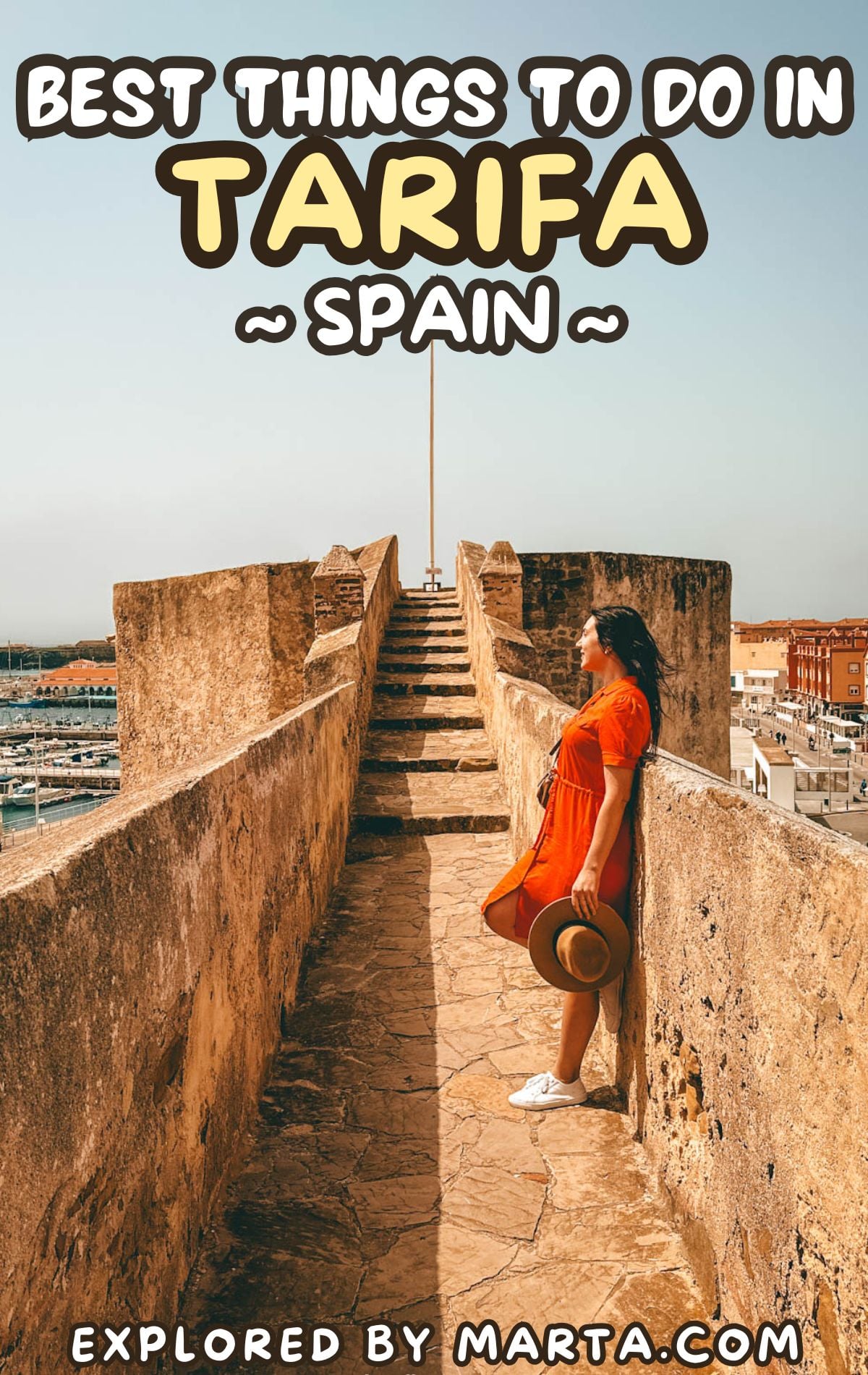
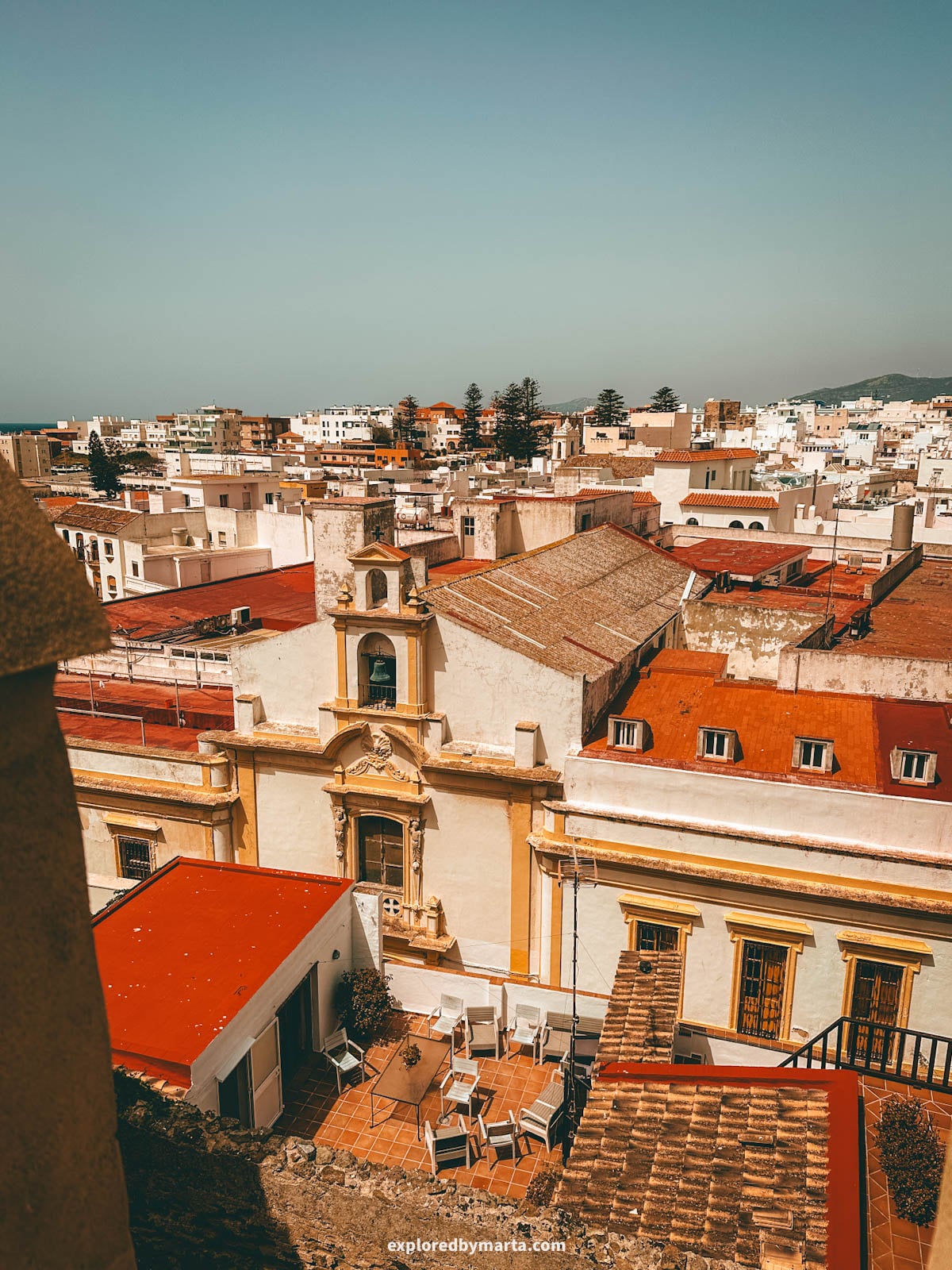
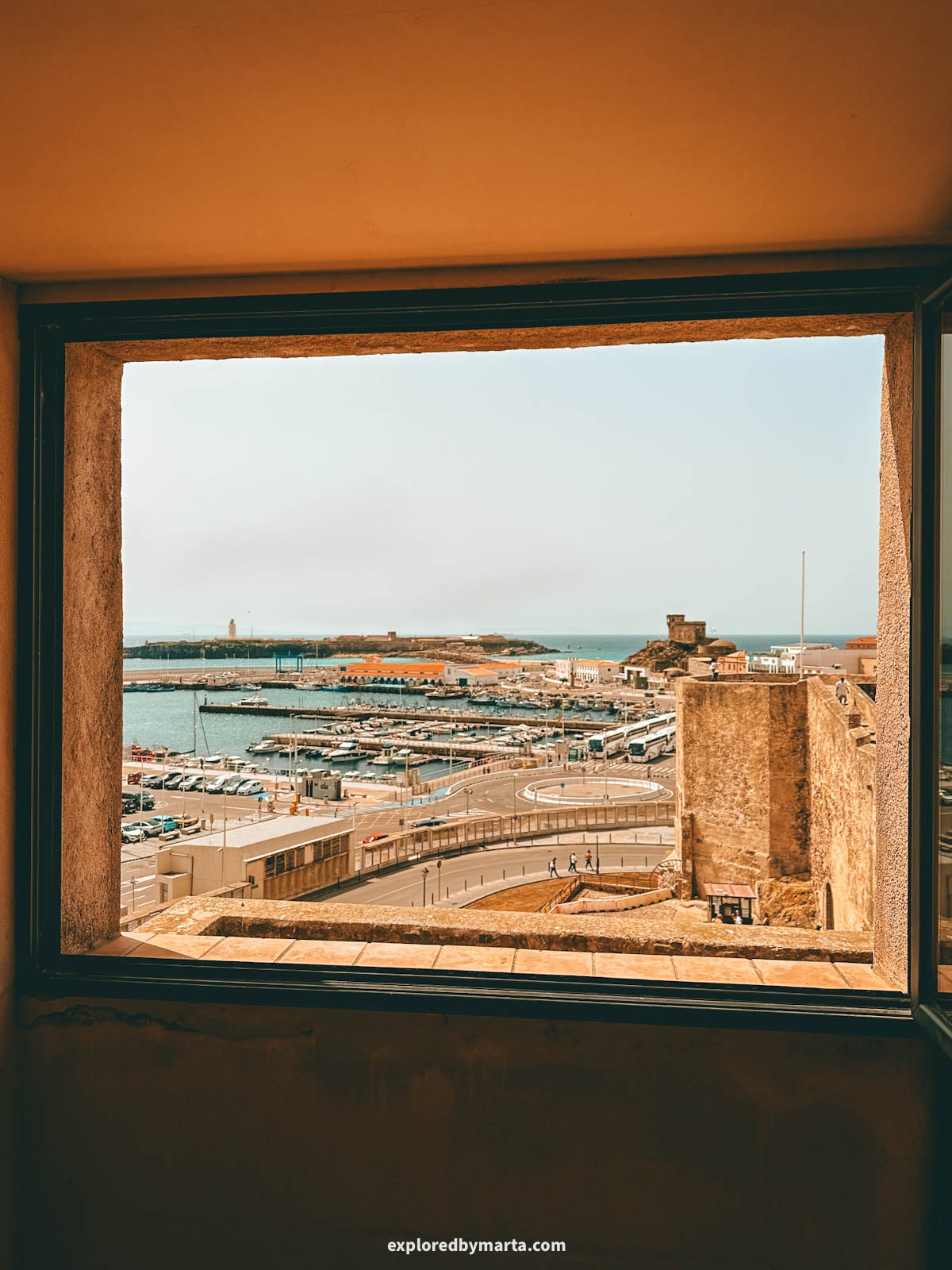
But honestly, the best part for us was the views from the top. You get a full panorama of Tarifa, the port, and on a clear day, even the mountains of Africa across the Strait of Gibraltar. Definitely worth the climb.
Entry fee: 4 EUR per person. Allow about 1 to 1.5 hours for a proper visit.
Location: Castillo de Guzmán el Bueno
4. Walk through the historic Puerta de Jerez
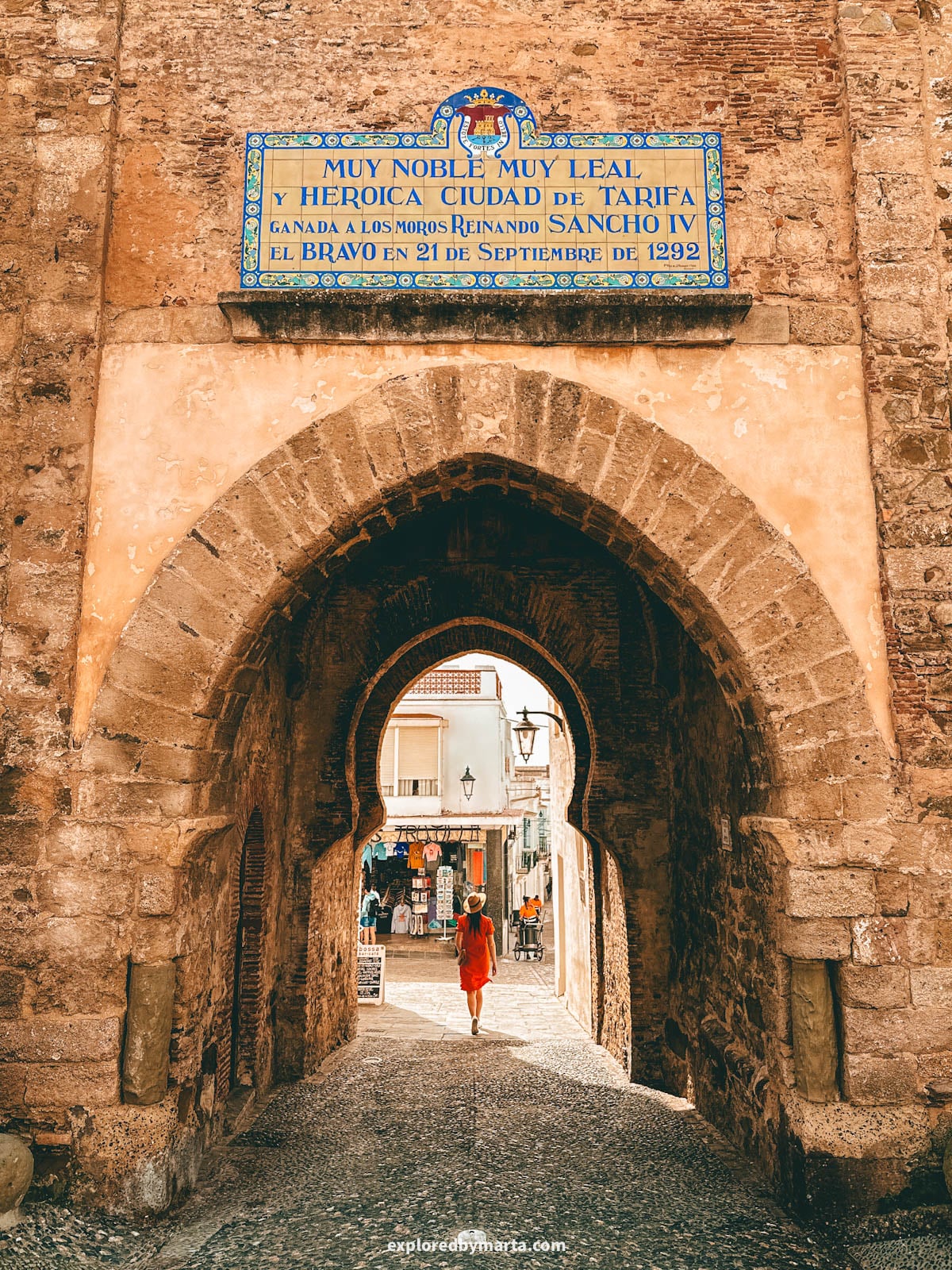
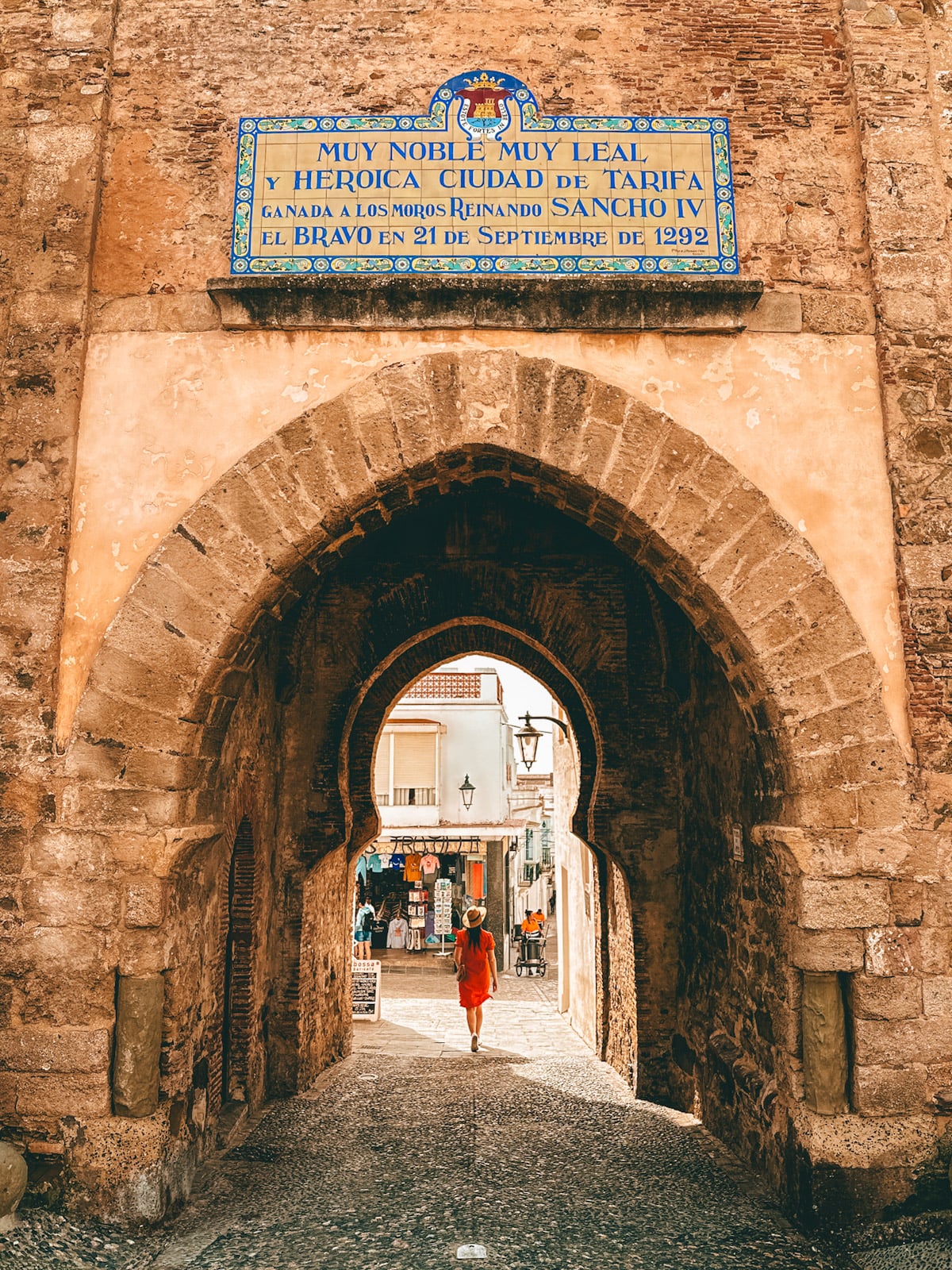
Puerta de Jerez is one of the most emblematic landmarks in Tarifa and the only original city gate that has survived to this day.
Tarifa was once surrounded by massive defensive walls with multiple gates that controlled access in and out of the town. Most of them are gone now, but Puerta de Jerez is still standing – and it is gorgeous.
The gate is a medieval arch with two big towers, and you can clearly see the Moorish architectural design in the shape of the arches.
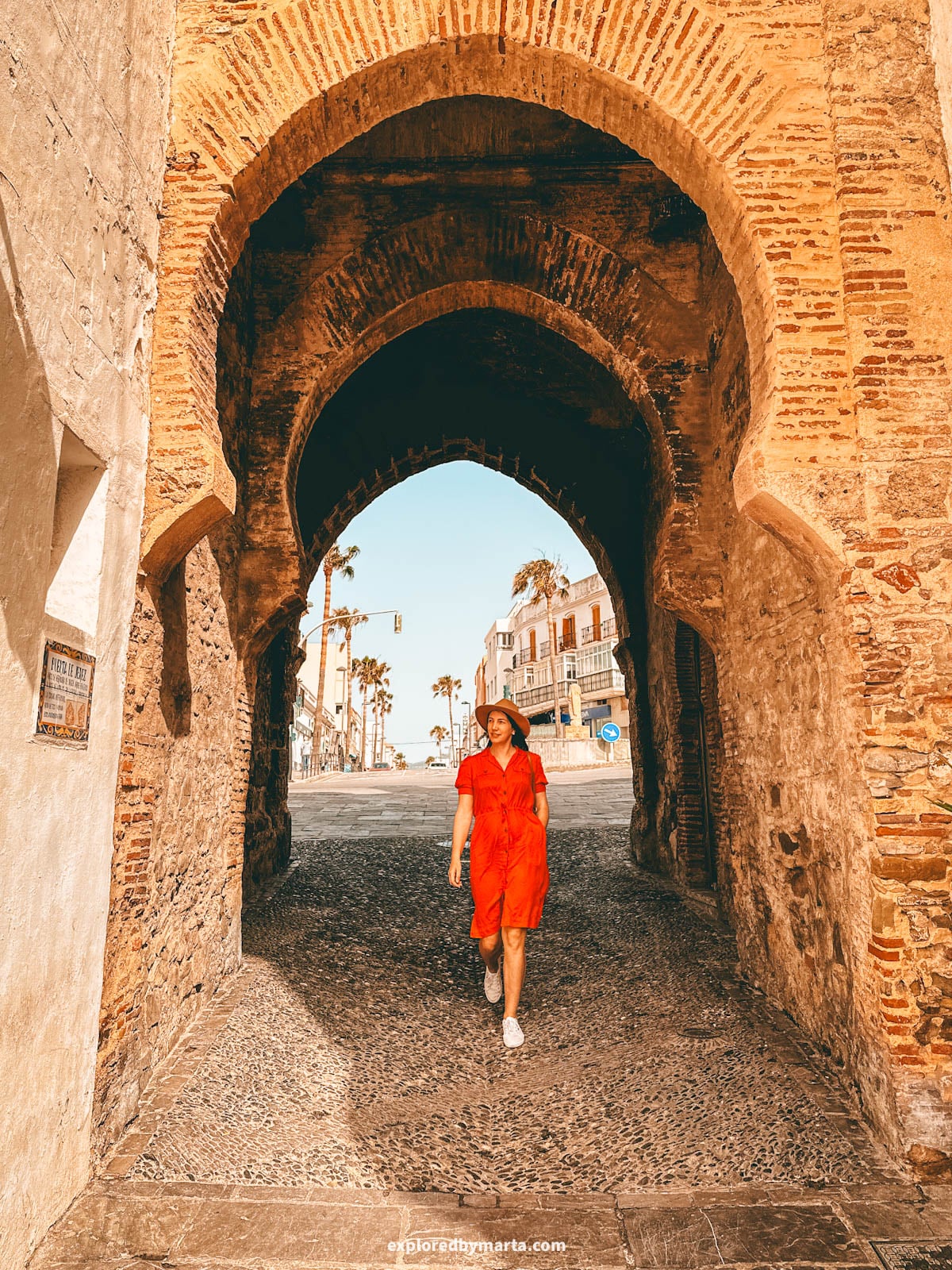
It was built in the 13th century and restored in 2000, and it still serves its original purpose as the main entrance to the old town.
So as you walk through it, you are literally following the same path travelers have taken for over 700 years!
Did you know the gate’s name comes from its position? Puerta de Jerez means “Gate of Jerez” because it faced the road that led north toward the nearby city of Jerez de la Frontera!
Location: Puerta de Jerez
5. Get lost in the charming Tarifa old town
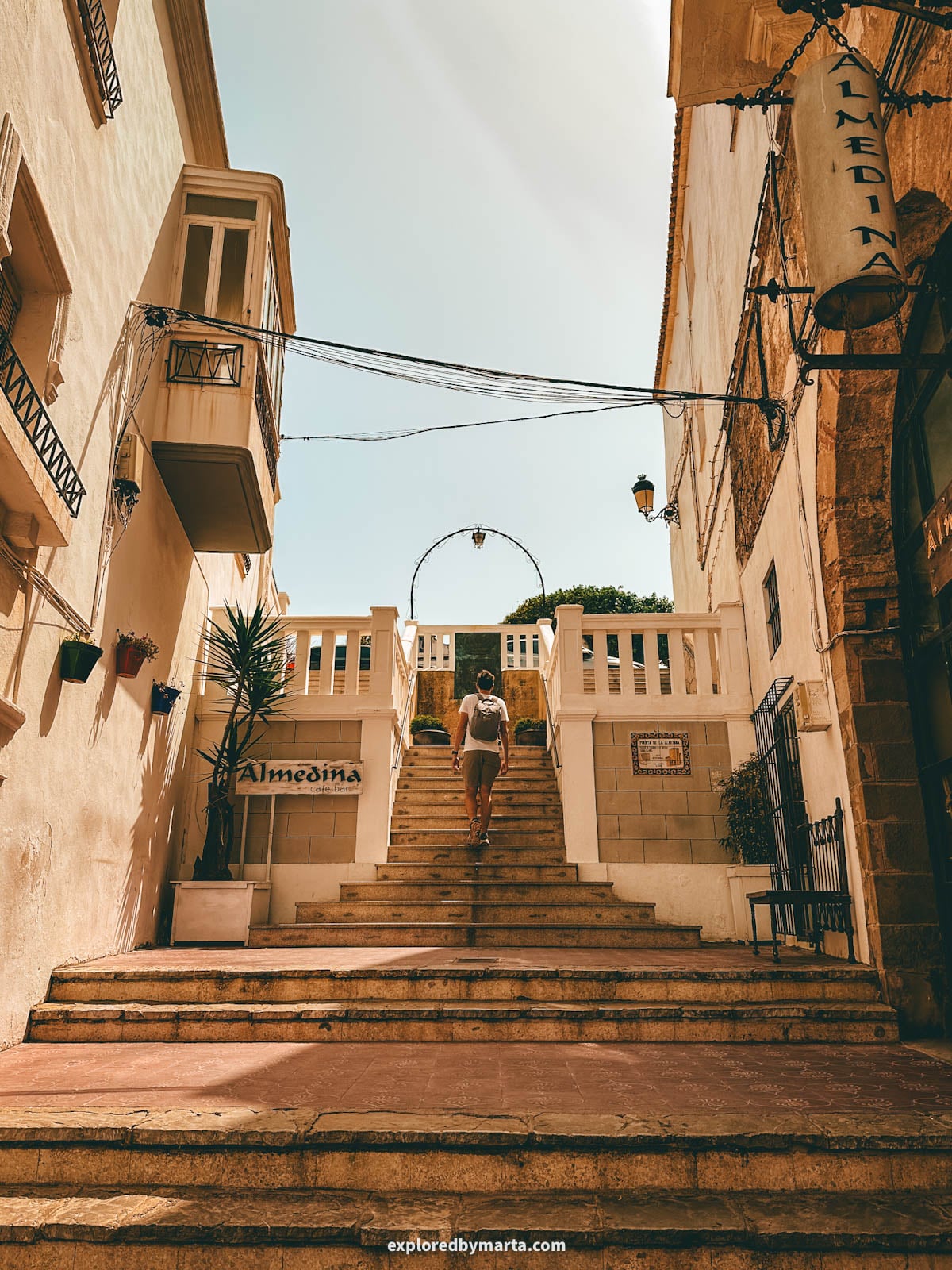
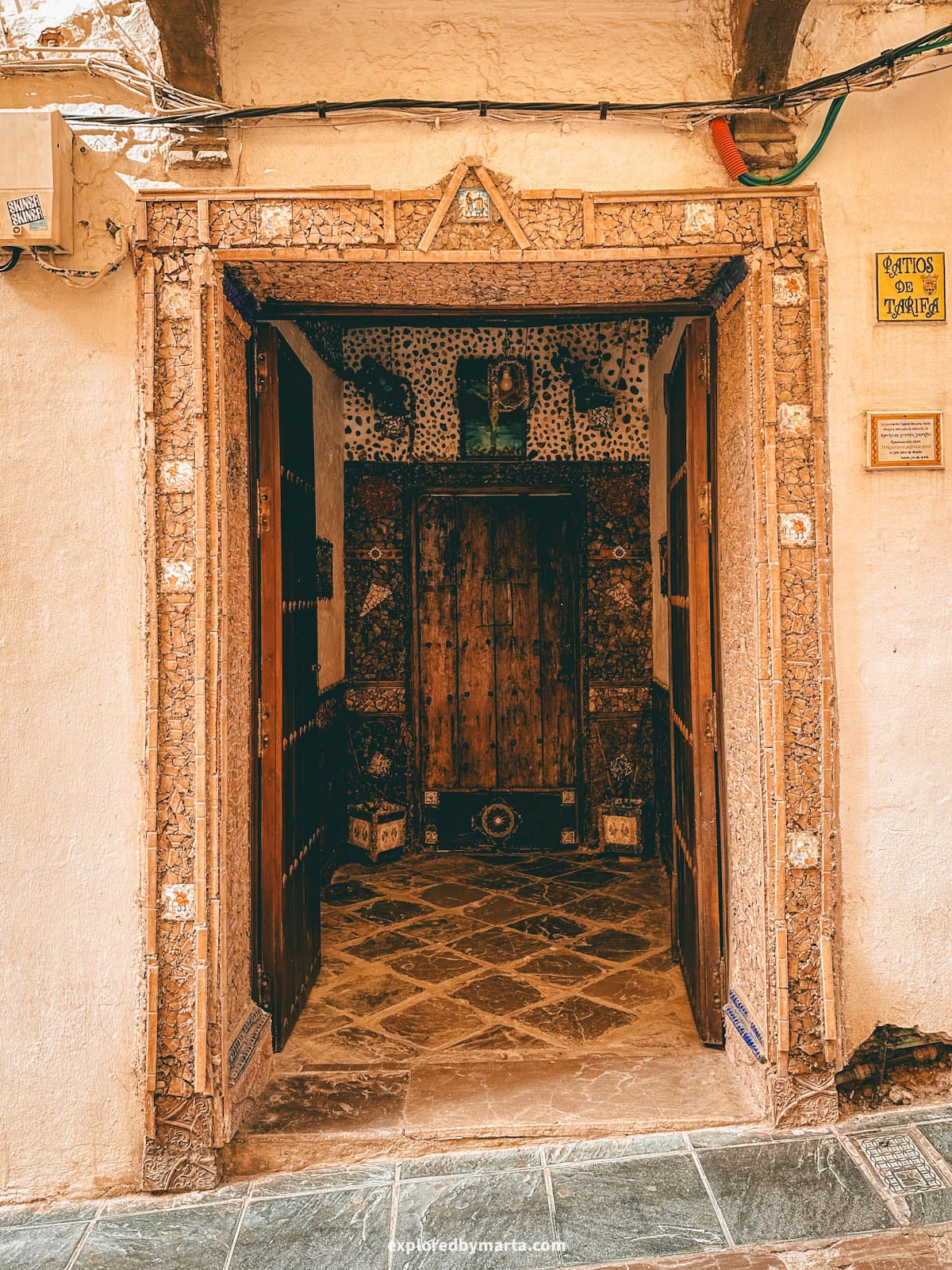
Once you walk through the Puerta de Jerez, you are in the historic old town of Tarifa – a maze of whitewashed buildings, cobblestone streets, ancient stone walls, and hidden corners that are easy to miss if you are not paying attention.
This was probably my favorite place in Tarifa. Okay, the second favorite right after the border between the Atlantic Ocean and the Mediterranean Sea.
We loved just wandering around without a real plan. The old town is small, so you can cover most of it in an hour or two, but it is worth taking your time.
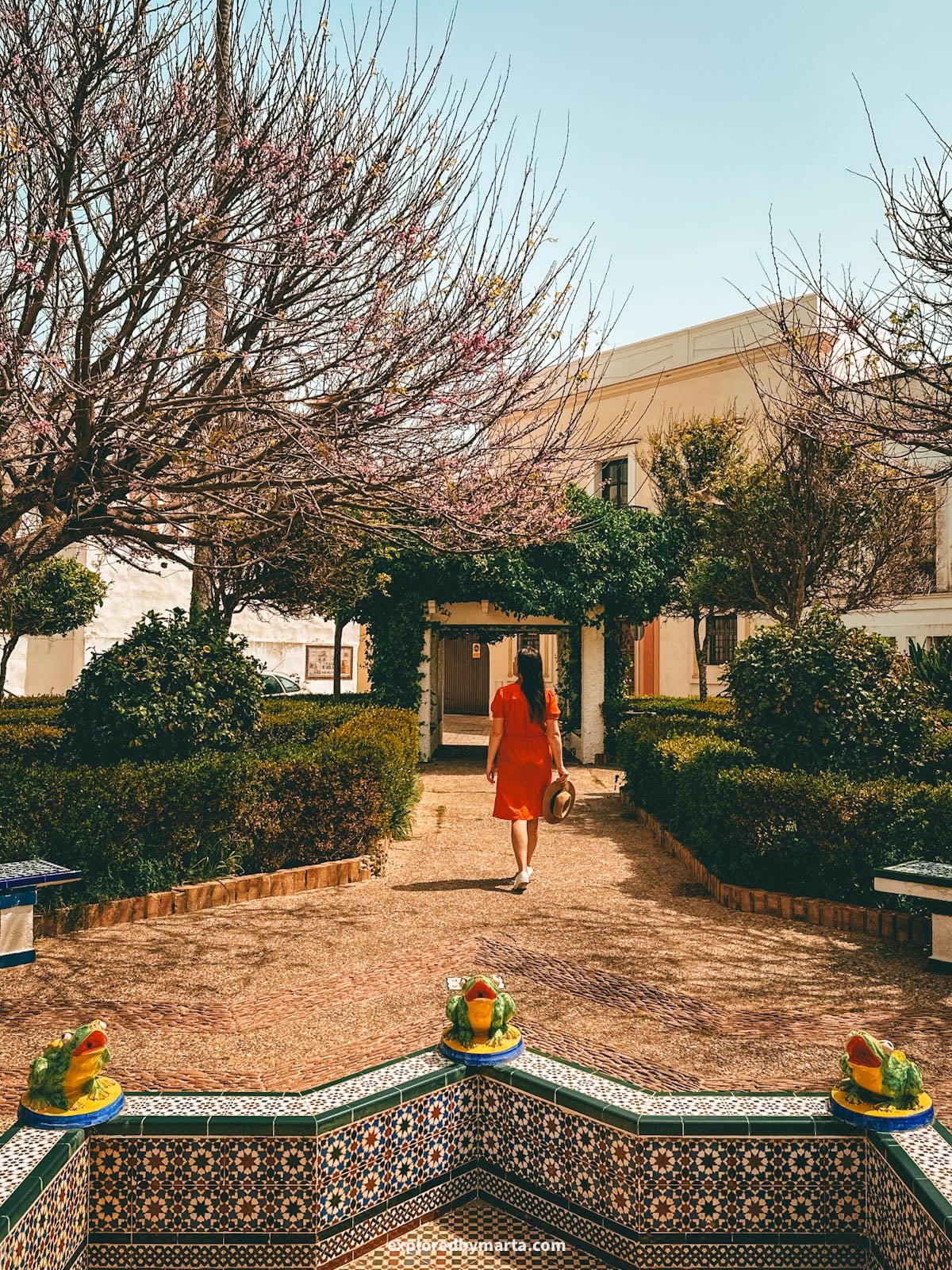
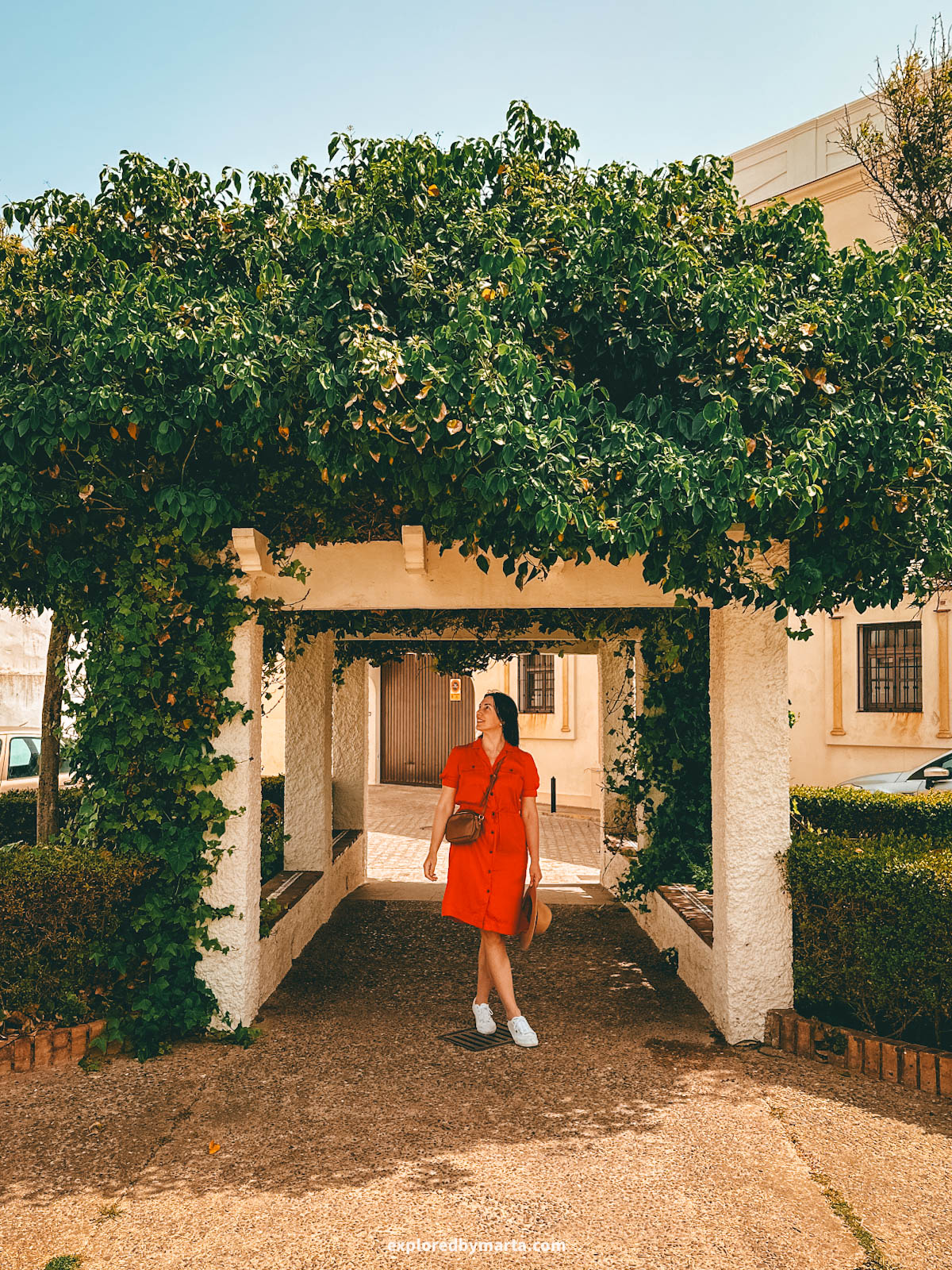
A few spots worth keeping an eye out for:
Plaza de Santa María is one of the most charming squares in Tarifa. It sits right in front of the local government building and is full of blooming trees, fountains, and little tunnel-like passages overgrown with plants in each of the four corners.
There is also a fountain with frog figures in the middle – super cute. Grab a coffee at one of the cafes nearby and just sit for a while.
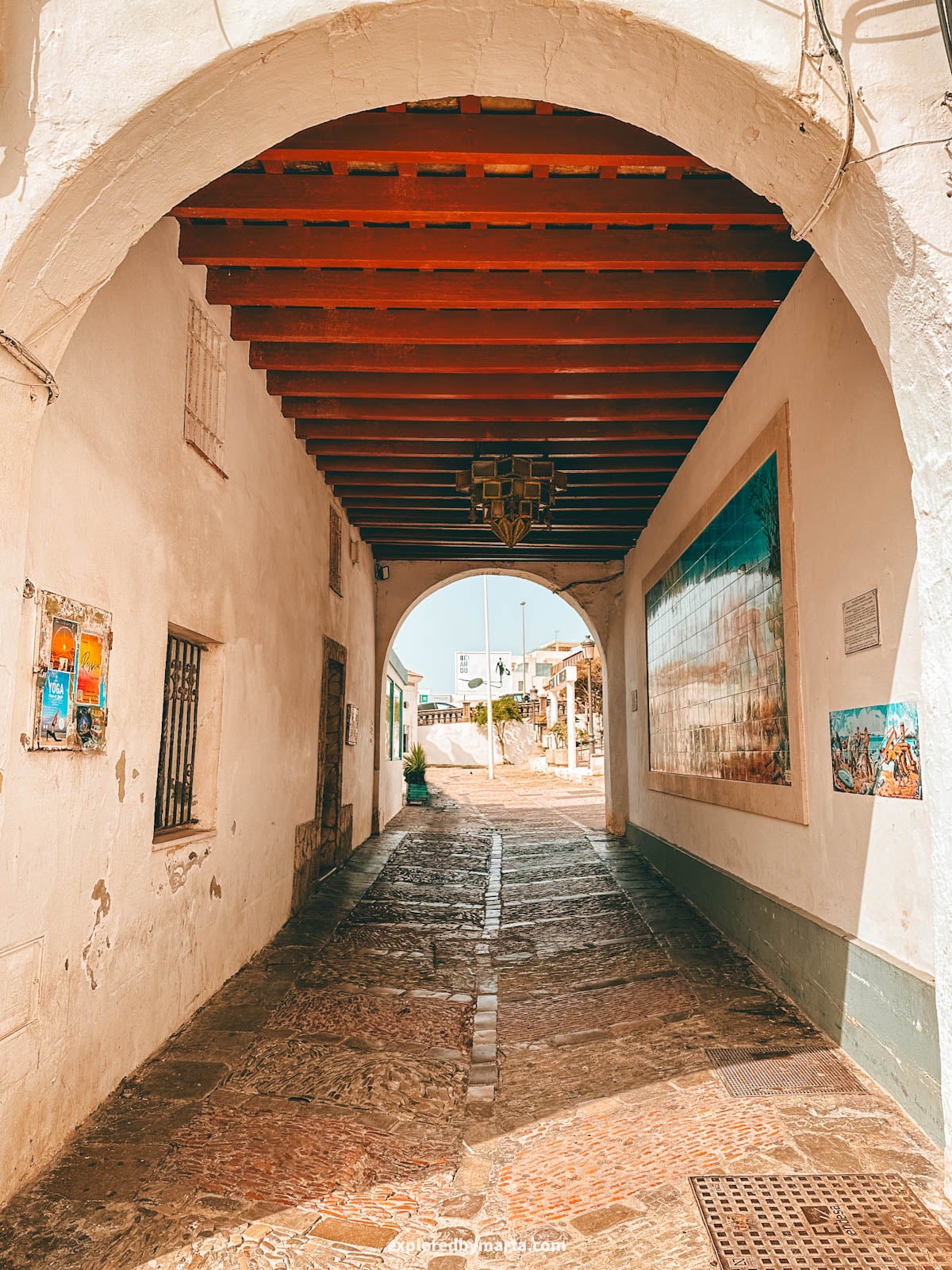
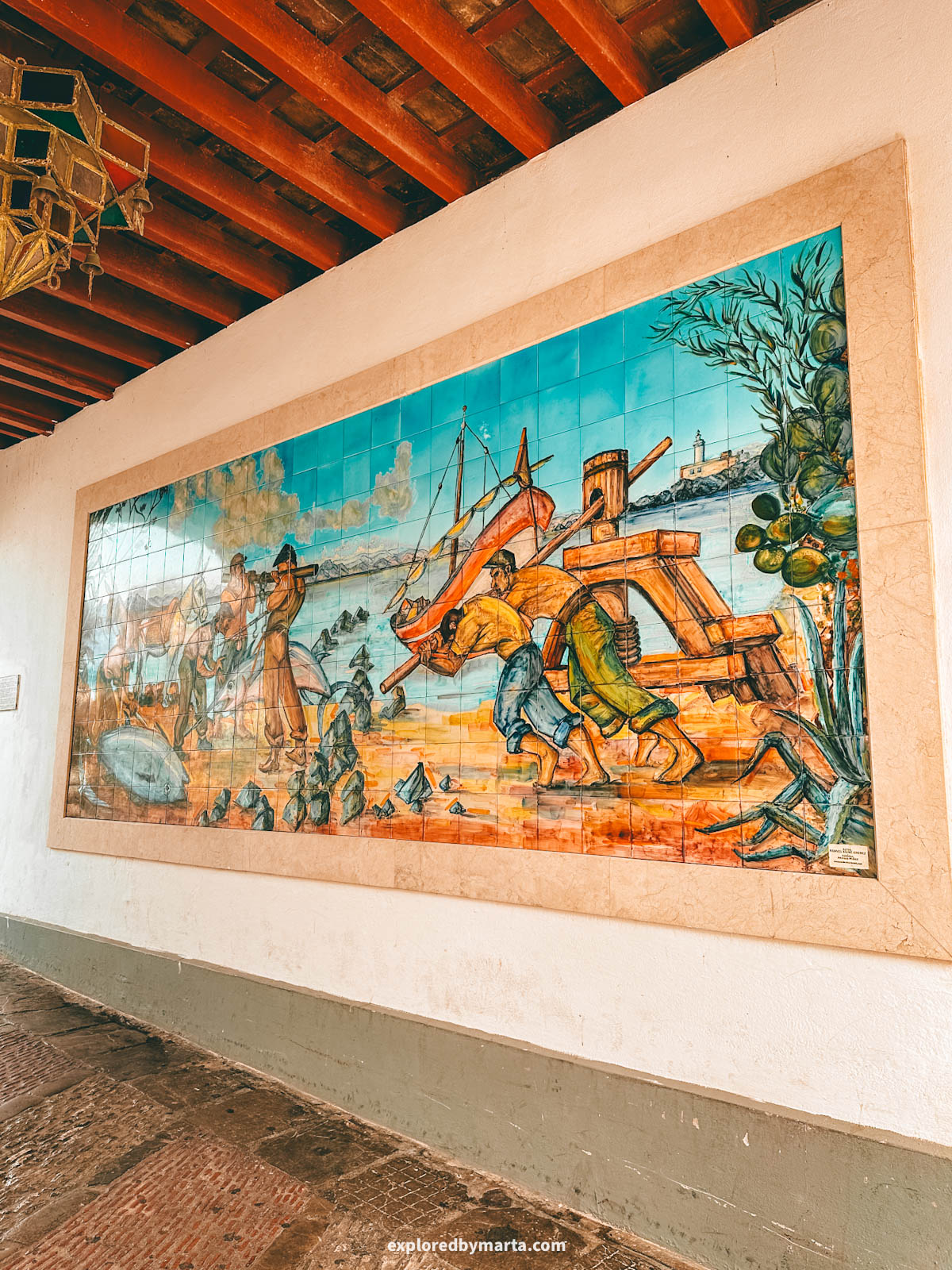
Tunnel of the Lamp of the Winds is one of those hidden gems you might walk right past. It is a small passage next to the tourism office with a beautiful tile illustration on the wall and a unique lamp that doubles as a weathervane.
Small ring bells are attached to it that chime in the wind. Quirky and quiet – a hidden gem in Tarifa.
Puerta de la Almedina is another historic city gate, but unlike Puerta de Jerez, the original structure has not survived.
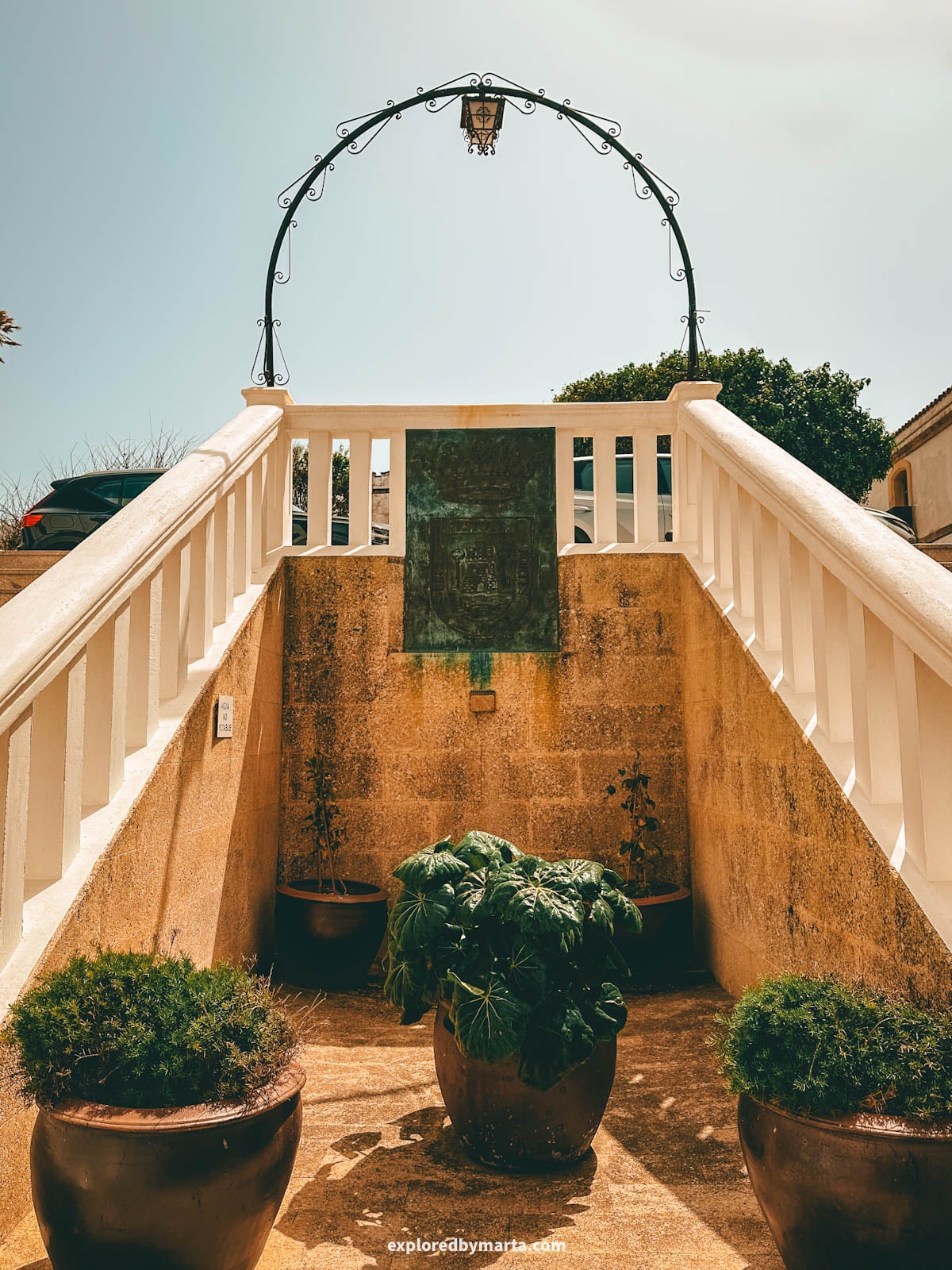
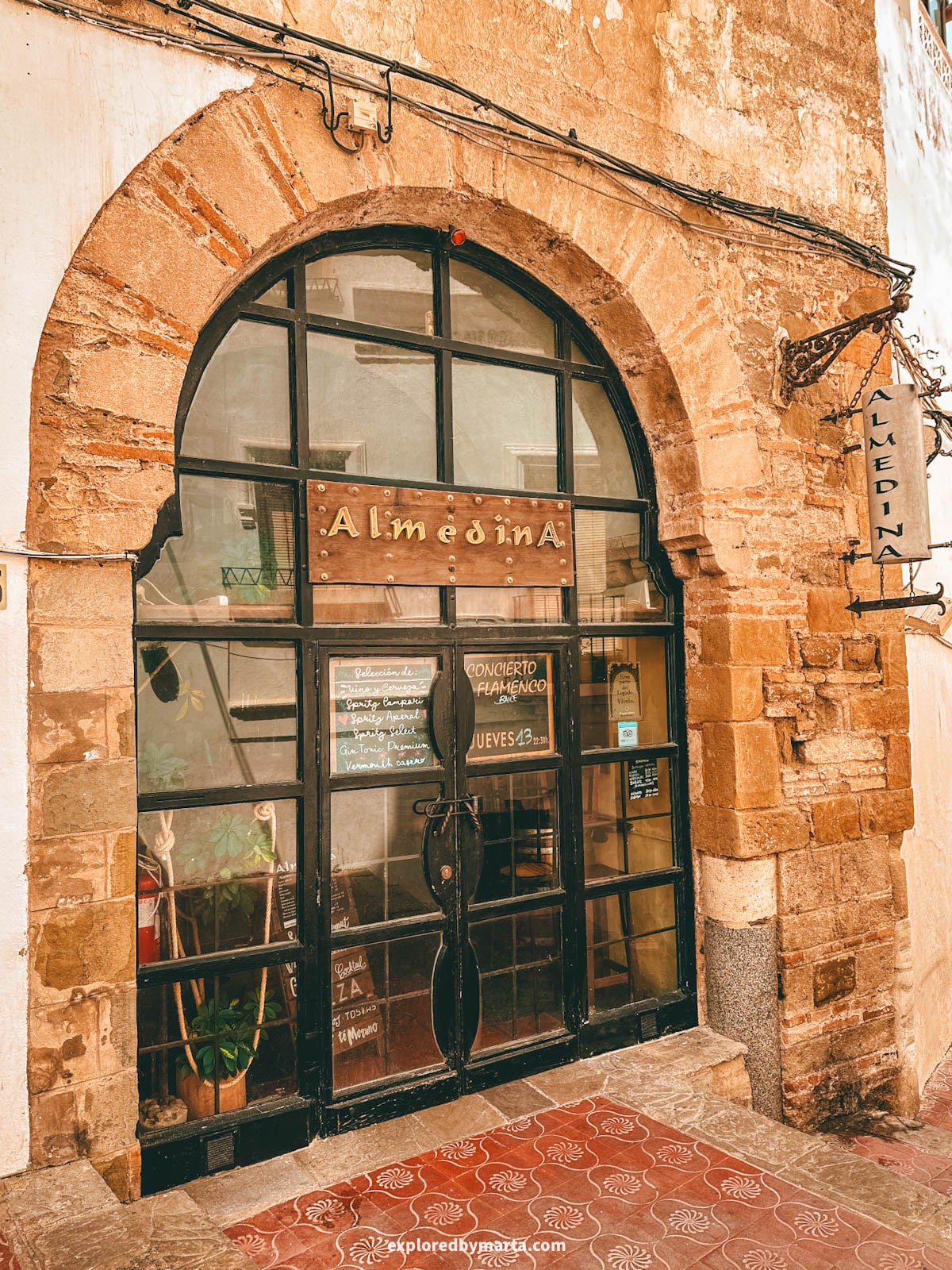
You will find it at the end of a small staircase off Calle Almedina, and it is still worth a look as the entry point to what used to be the walled enclosure of the old town.
There’s a nice wine bar marking its location, Almedina Cafe Bar.
Iglesia de San Mateo Apóstol is the main Catholic church in Tarifa. It was built in the 16th century on top of an old mosque and features a beautiful Baroque facade. Both the inside and outside are worth a quick visit.
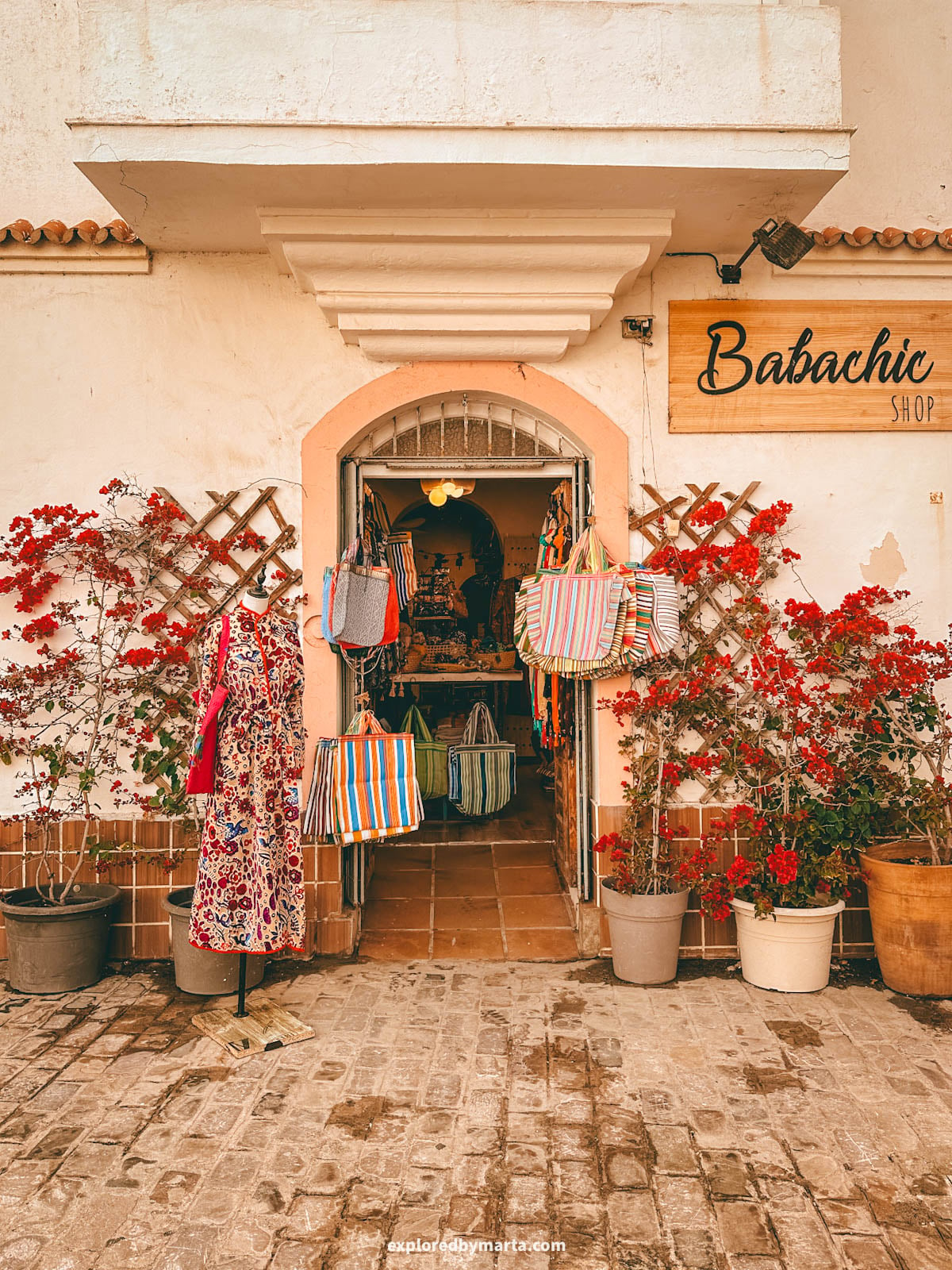
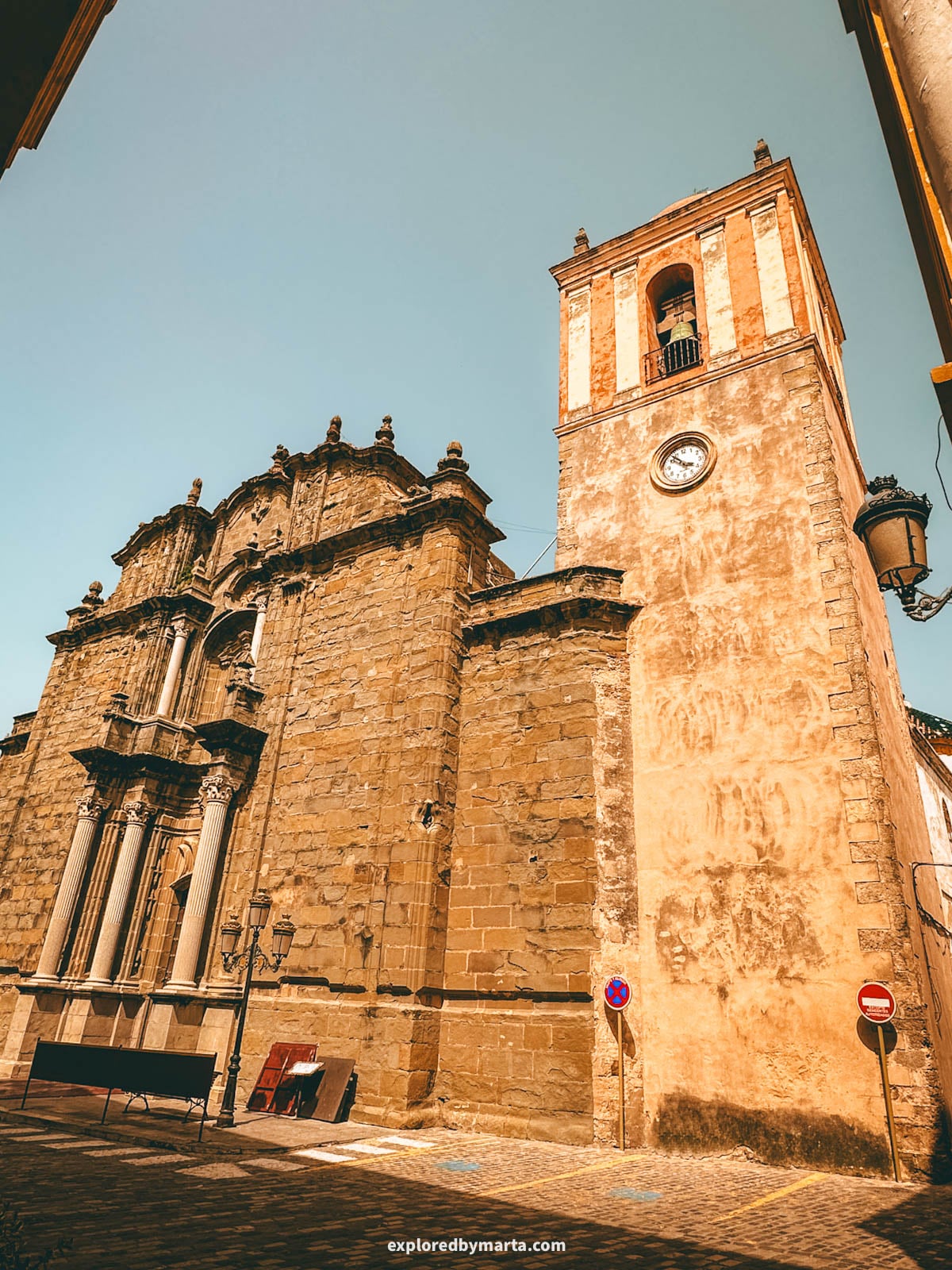
The old town is also a great place to do some shopping. There are plenty of small boutique shops, artisan pastry places, and independent stores tucked into the narrow streets.
If you are visiting from Monday to Saturday, then I highly recommend stopping by the Mercado Público de Tarifa. The local market has a beautiful interior and is a fun spot to soak up some everyday Tarifa life.
The old town is easy to explore on foot. If you see just some of these places I’ve mentioned, you’ll cover most of the things to do in Tarifa’s old town.
Location: Plaza de Santa María – Tunnel of the Lamp of the Winds – Puerta de la Almedina – Iglesia de San Mateo Apóstol
6. See Africa from El Mirador de Africa
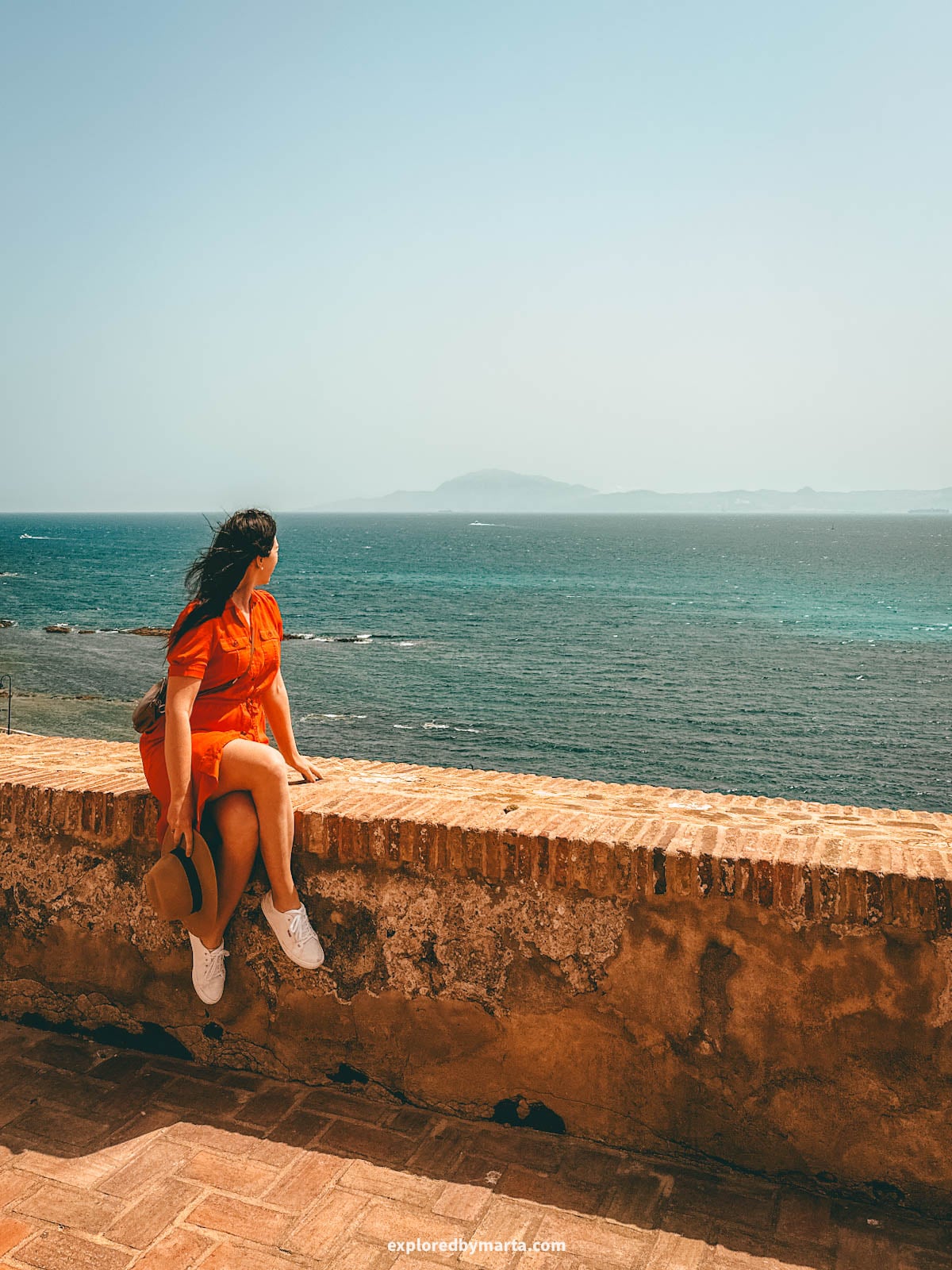
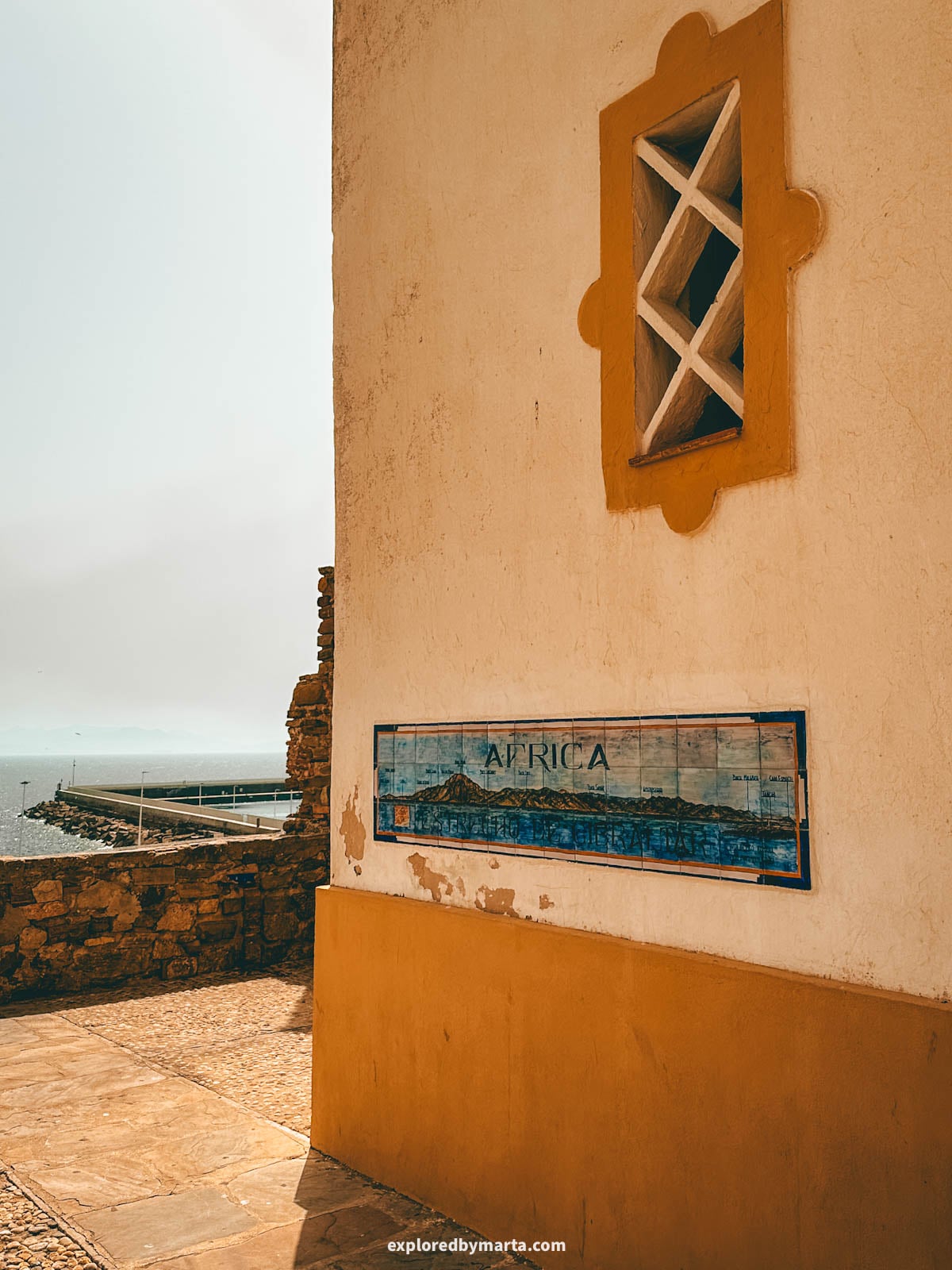
El Mirador de Africa, or the Viewpoint of Africa, is a charming little square in the old town and a nice spot to check out while you are exploring. No, Africa didn’t suddenly move closer to this viewpoint, but still, you get beautiful views from here.
I loved this little viewpoint – not only because of the views, but because of how charming the whole square is. It is small, with plants, benches, and that quiet old town vibe.
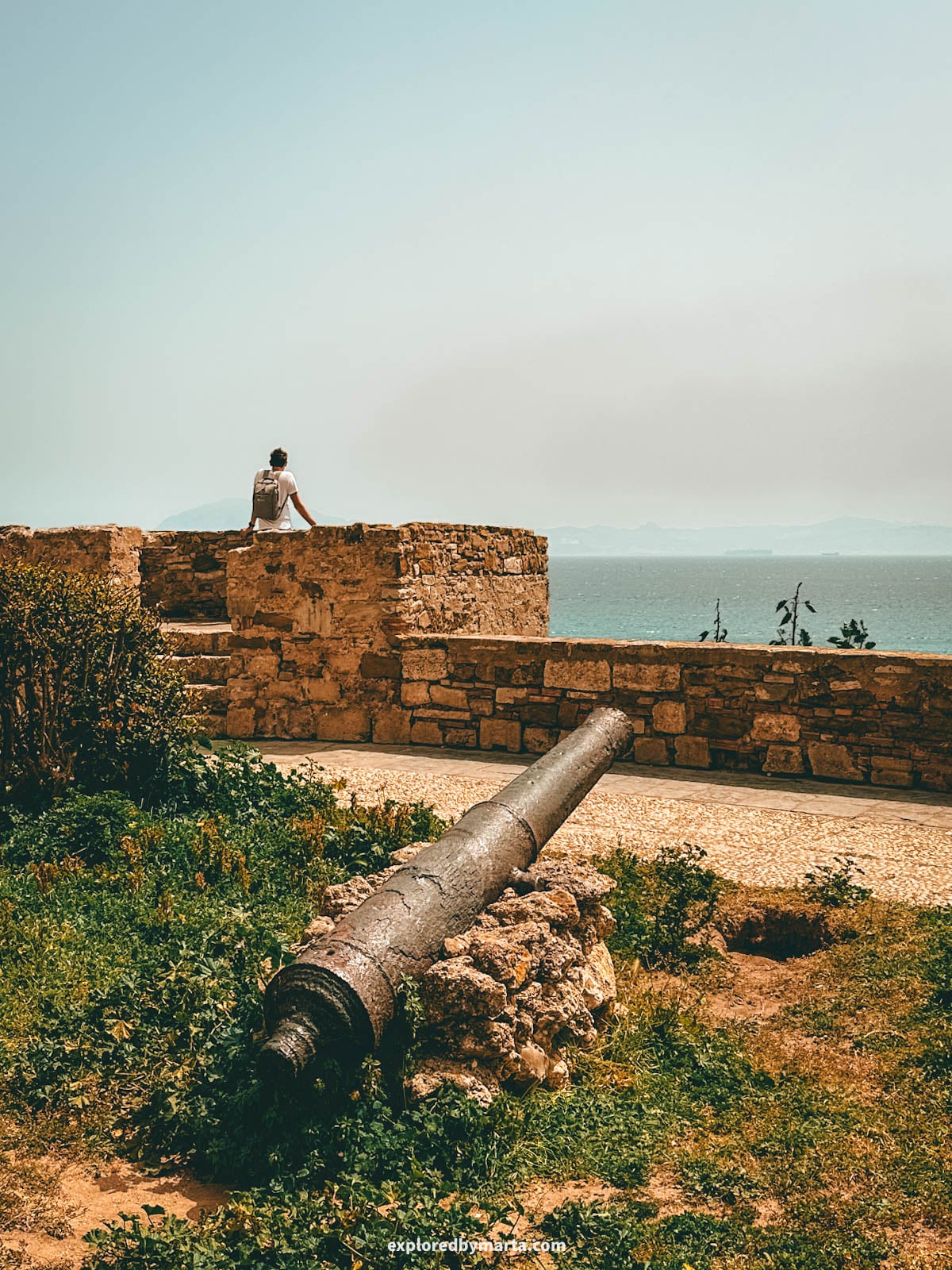
It sits right on top of the old Medina wall, and in one corner you will spot an old tower integrated into the wall, Torre del Miramar. You can climb up there for a nice view of the coastline. Just keep in mind it has working hours.
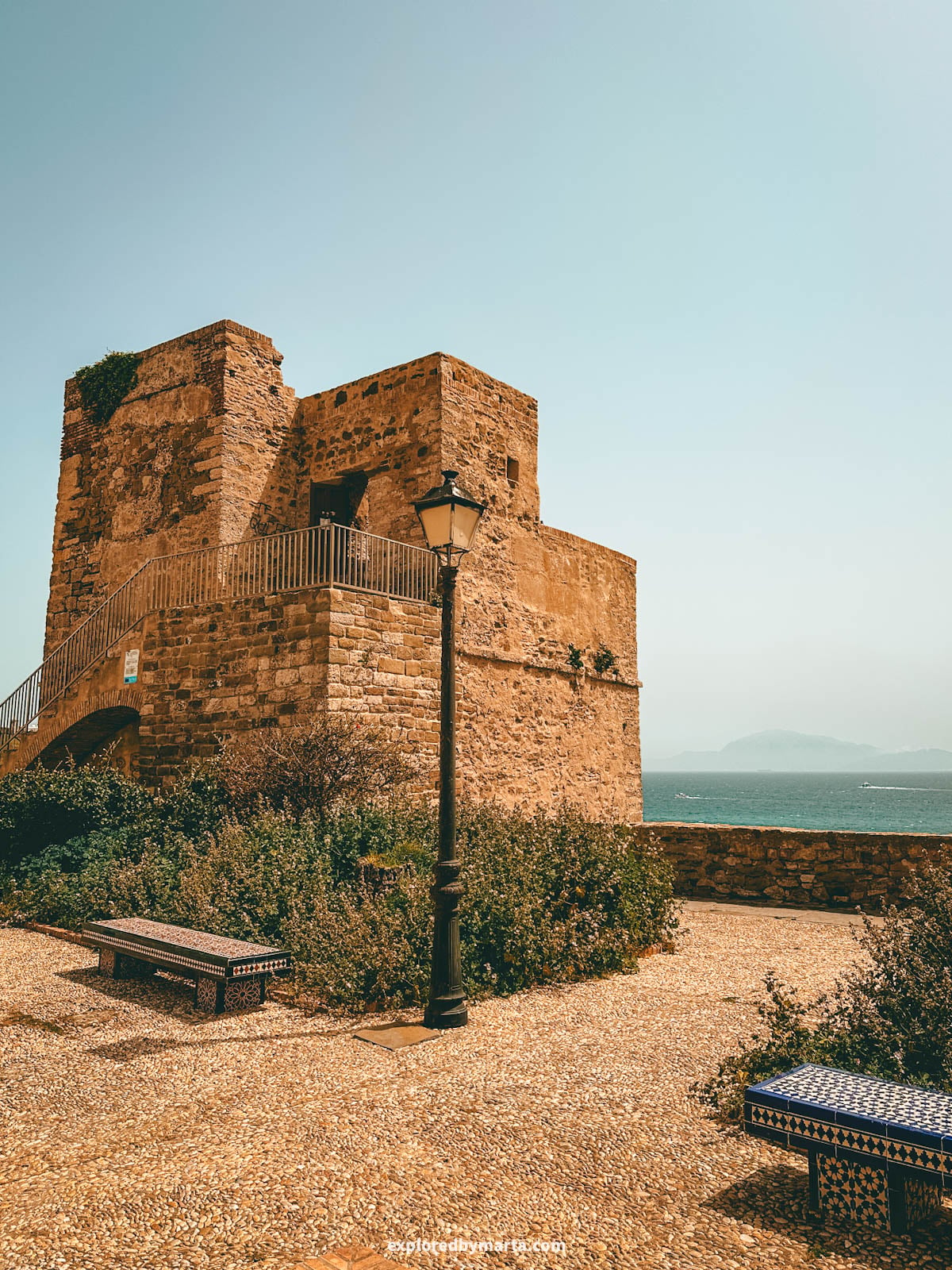
I also loved the painted illustration of the African mountain range on a yellow-and-white building on the opposite side of the square. You can match the painted shapes with the real mountains across the strait and figure out which peak is which.
Honestly, you can see the mountains of Africa from pretty much anywhere along Tarifa’s coast – it is not like the views are better here than elsewhere. But the square itself has a special atmosphere, and the Africa-themed details make it worth a quick stop.
By the way, did you know that the Strait of Gibraltar is only 14 kilometers (8.7 miles) wide at its narrowest point? That is why Africa looks so close – because it really is. On a clear day, you can see the Moroccan coastline really clearly.
Just hope there is no calima (a Saharan dust haze) when you are there!
Location: El Mirador de Africa
7. Enjoy Tarifa beaches and watch the kitesurfers
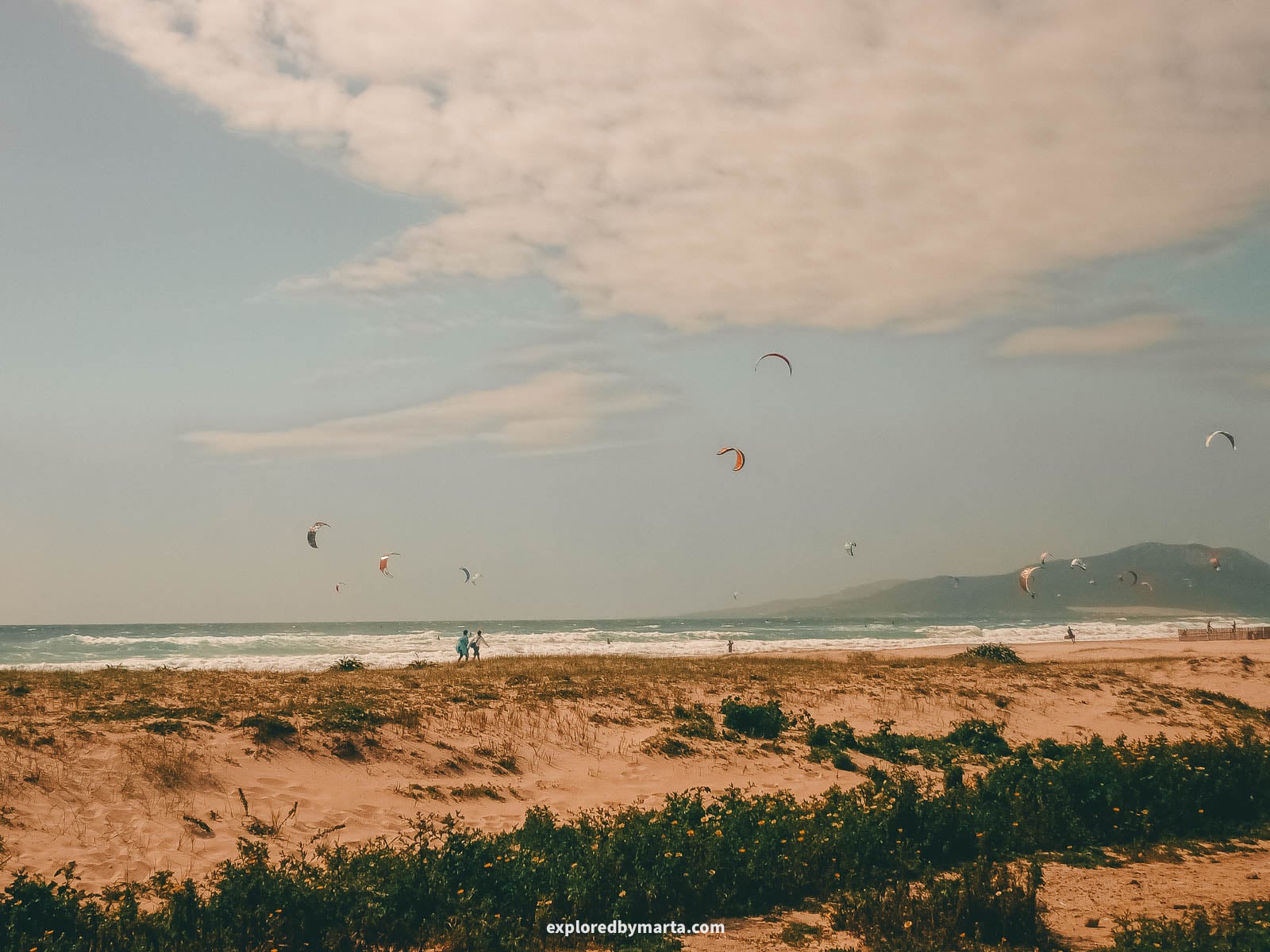
Tarifa might be known for its history and southernmost-point status, but what it is really famous for are its beaches. Tarifa is one of the most unique beach destinations in Spain.
The town is basically surrounded by long sandy beaches, with around 10 kilometers (6.2 miles) of white sand stretching along the coast.
The main one is Playa de los Lances, a 7-kilometer (4.3-mile) beach with shallow water and soft sand stretching north along the Atlantic side of the coast.
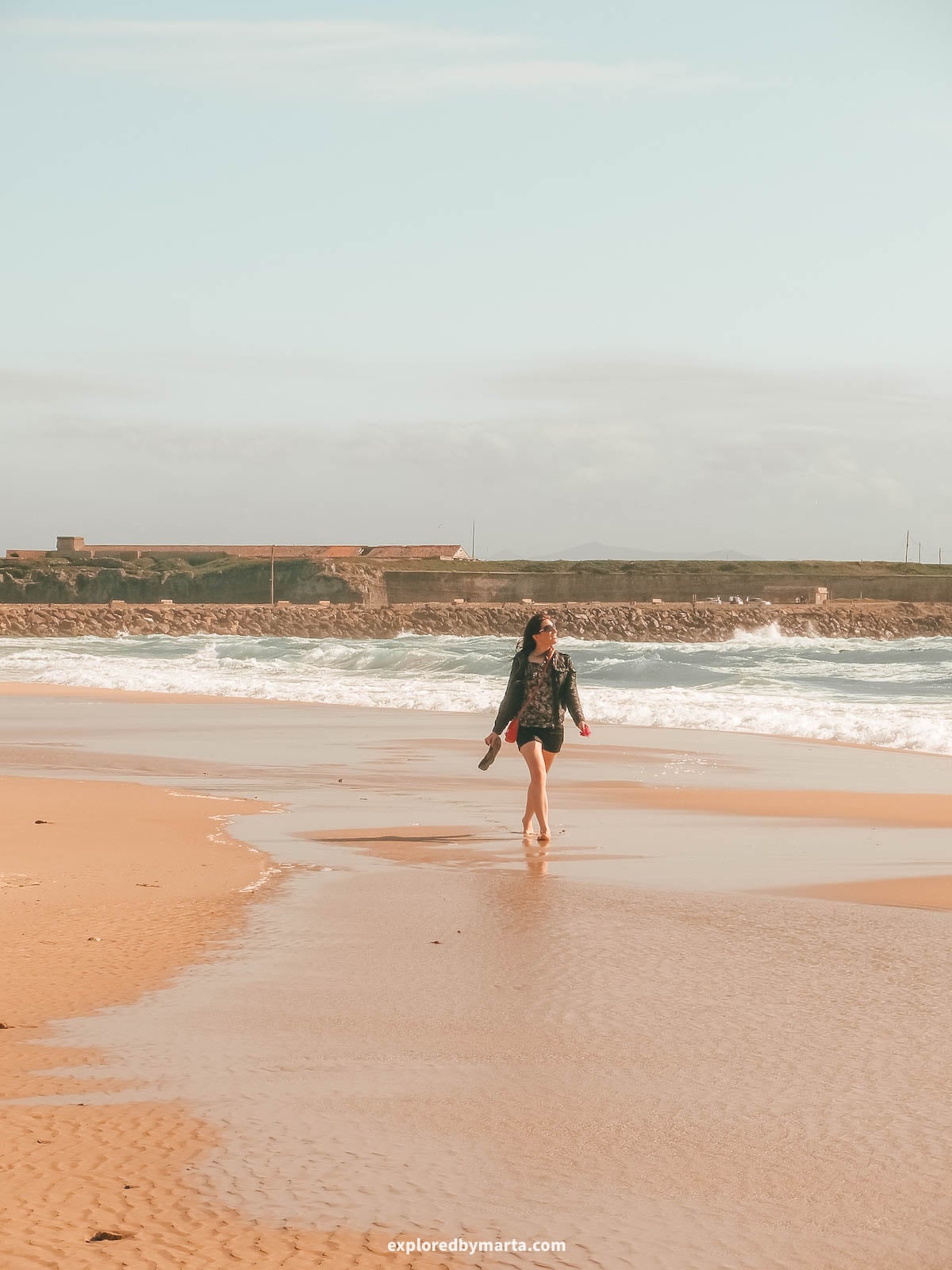
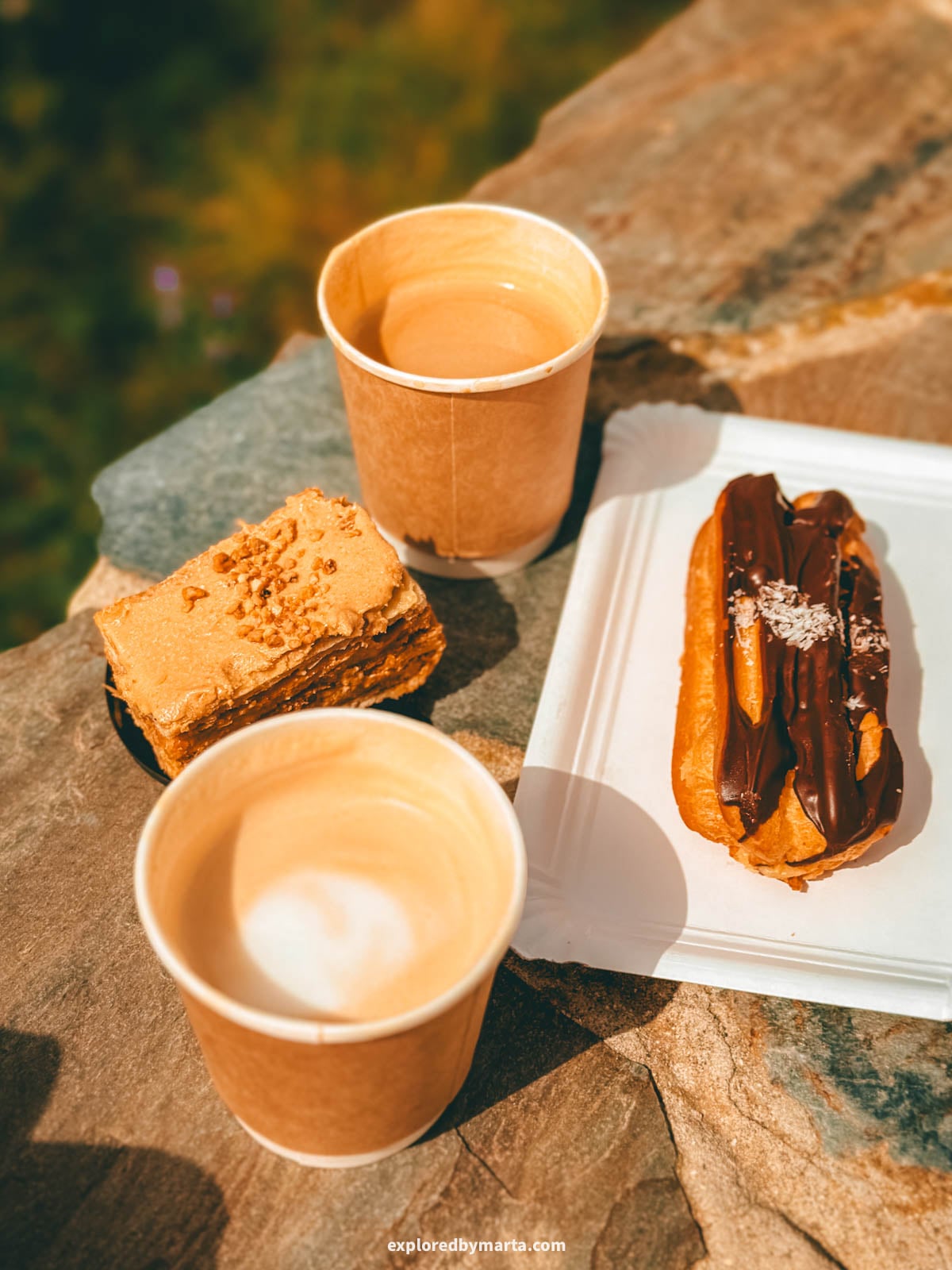
We visited Tarifa in spring, so we were not really there for swimming or sunbathing. But the windy conditions that day were perfect for the kitesurfers and windsurfers, and the water was full of them.
Honestly, watching them ride the waves and jump into the air was a whole show in itself – so we grabbed coffee from Espresso Bar Numero C, some pastries from the old town, and had a little picnic at the promenade. 🥐
Did you know that Tarifa is considered the wind and kitesurfing capital of Europe?
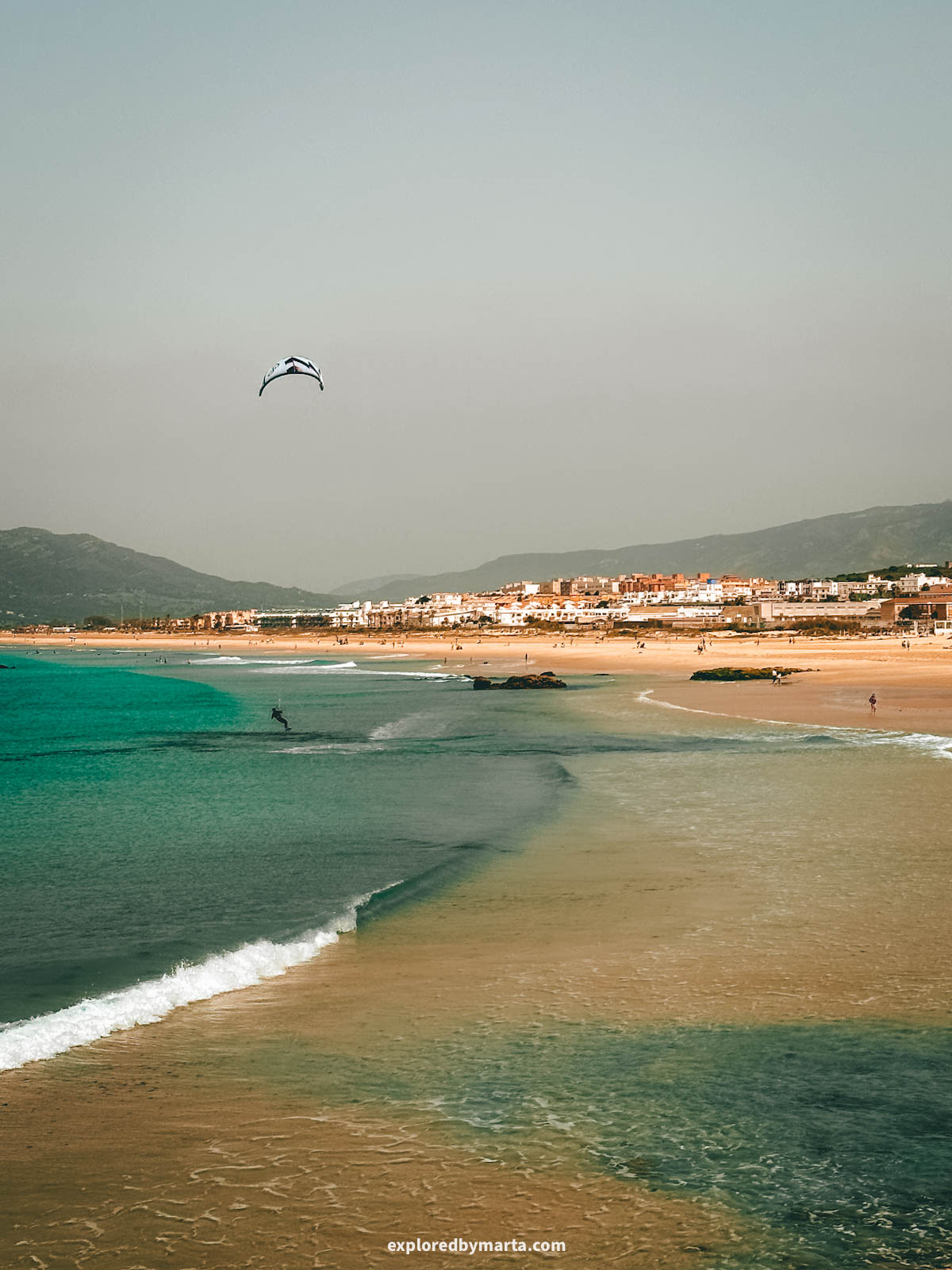
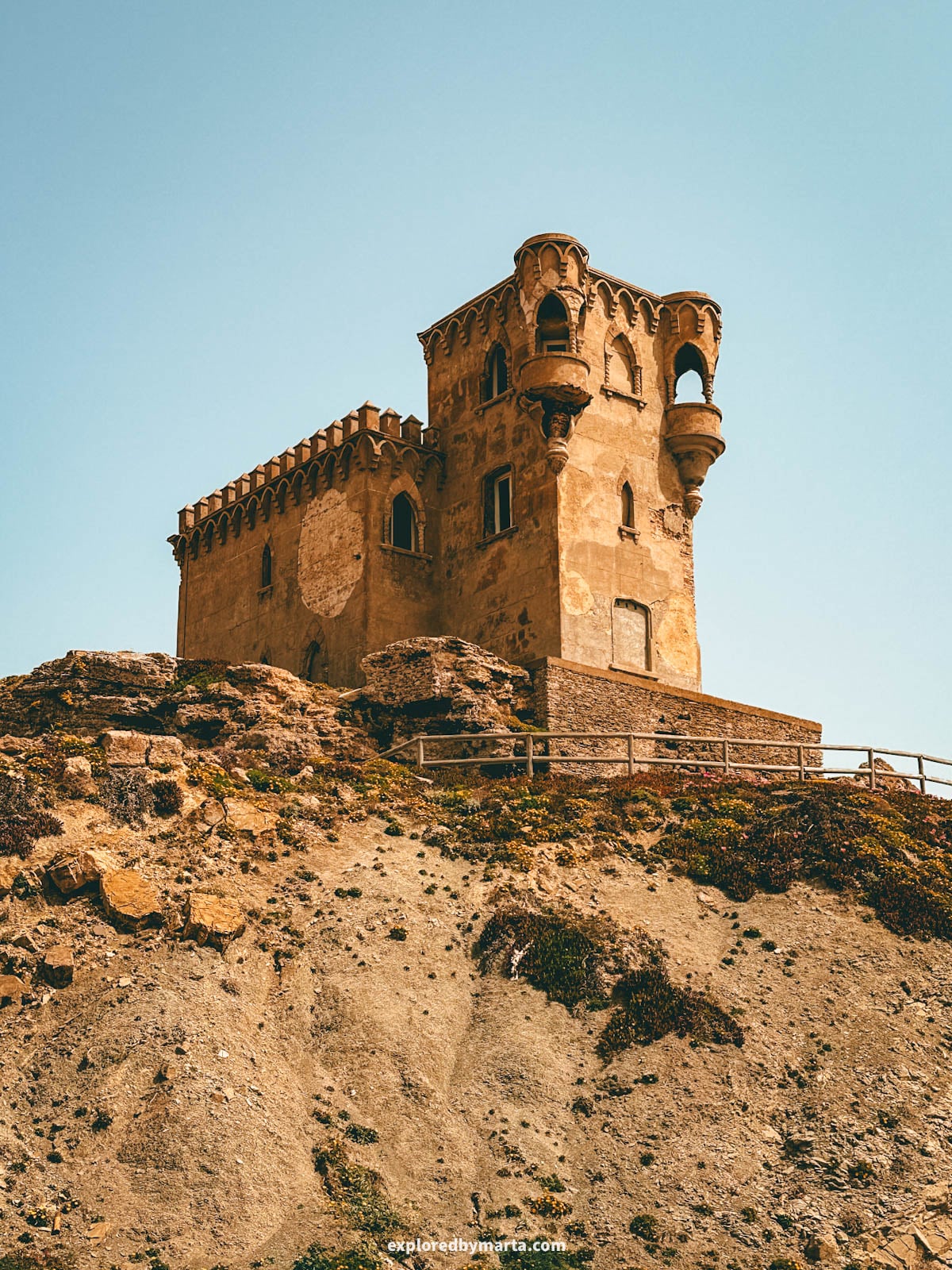
The two main winds here, the Levante (from the east, blowing in from the Mediterranean) and the Poniente (from the west, coming off the Atlantic), create some of the most consistent and strongest wind conditions in the world.
That is why so many windsurfers and kitesurfers come here from all over the world!
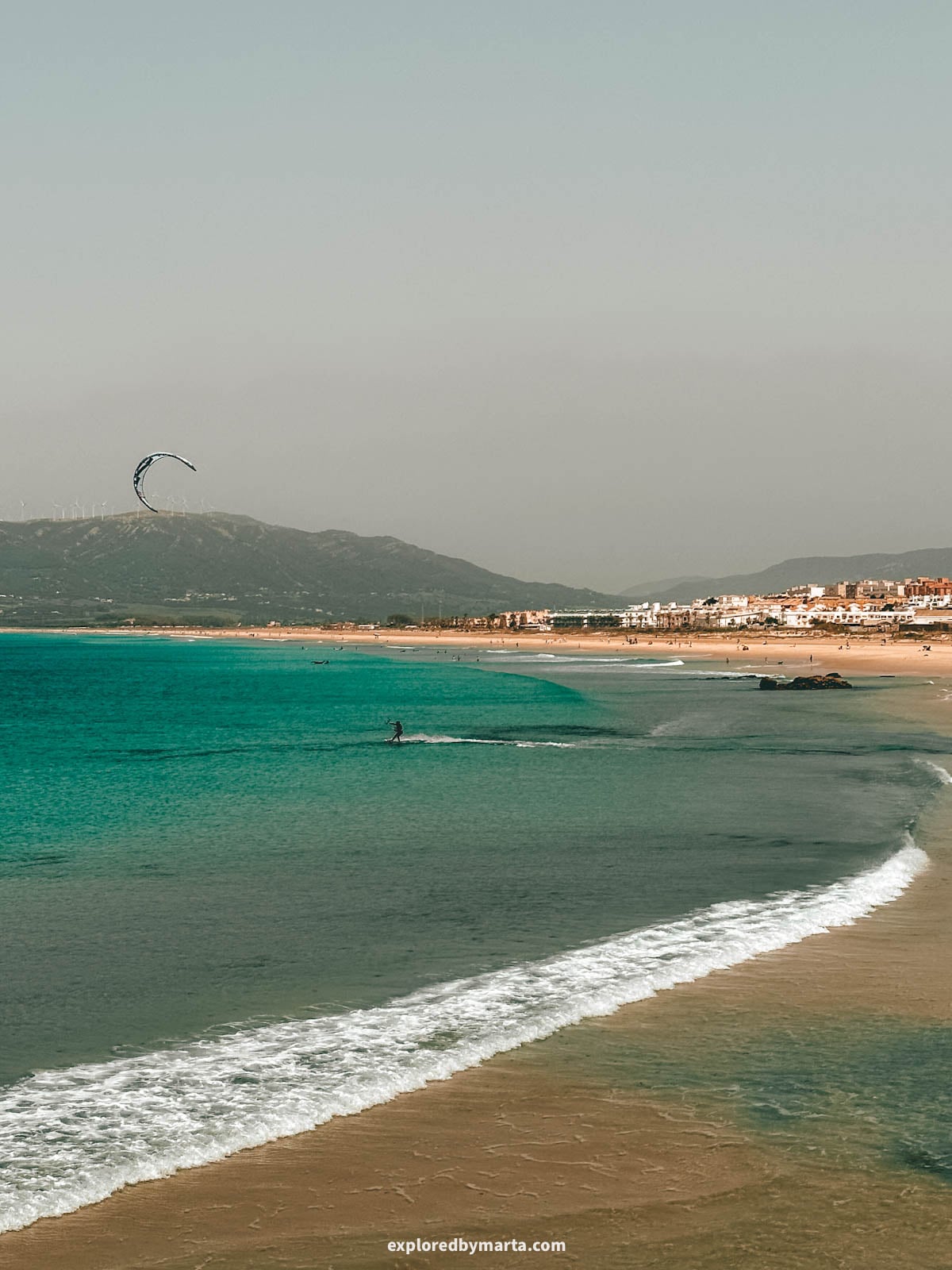
As you walk along the promenade near the border between the Atlantic and Mediterranean, you might notice a small hill with an old building on top – Castillo de Santa Catalina de Tarifa.
Despite the name, it was never really a castle – it was built around 1930 and used as a meteorological observatory, the southernmost weather station in Europe. It has been abandoned in recent years, as you can see.
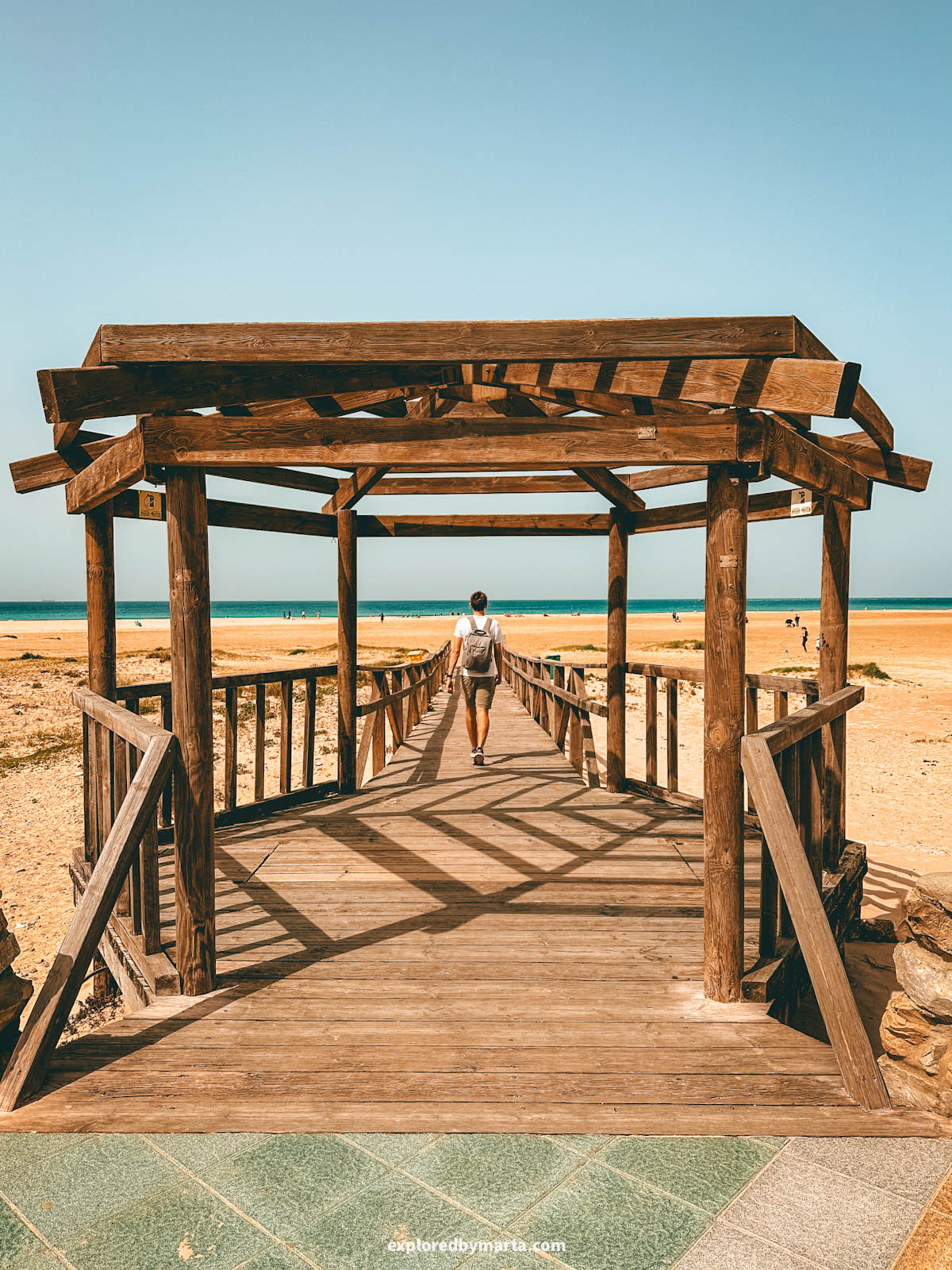
Here is a quick guide to the best beaches around Tarifa:
- Playa Chica – a small, sheltered beach right next to the causeway. The calmest option and the best for swimming and sunbathing with kids since it is protected from the wind and waves.
- Playa de los Lances – the main beach in town, long, sandy, and great for sunbathing, walking, and watching kitesurfers. Some sections are designated for kitesurfing in summer.
- Playa de Valdevaqueros – about 10 km north of Tarifa, this is the most popular spot for kitesurfing in the area. There are also beach bars (chiringuitos), kite schools, and the famous Punta Paloma sand dune nearby.
- Playa de Bolonia – often considered one of the most beautiful beaches in Andalusia. Great for sunbathing, surfing, and combining a beach day with a visit to the nearby Roman ruins of Baelo Claudia.
Whether you come to swim, sunbathe, kitesurf, or just sit and watch others fly across the waves, Tarifa has a beach moment for everyone. I hope this beach guide will help you choose the right beach for you!
8. Take a whale and orca watching tour
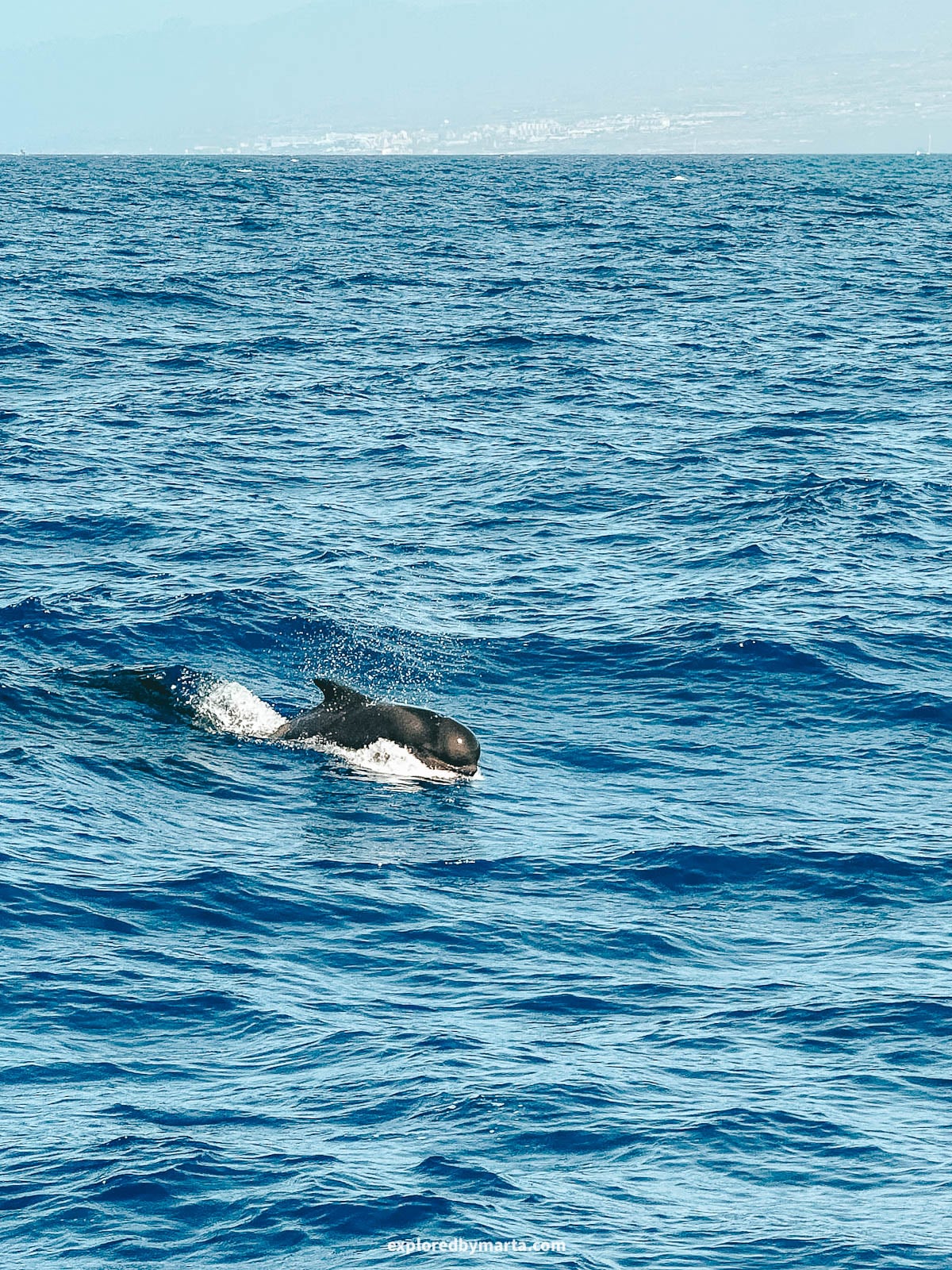
One of the coolest things to do in Tarifa is hop on a boat and head out into the Strait of Gibraltar to spot some of the incredible marine life that lives in these waters.
Did you know that the Strait of Gibraltar is one of the only places in the Mediterranean where you can regularly see orcas (killer whales)?
They follow tuna migrations through the strait, mostly during the summer months. Beyond orcas, you can also spot sperm whales, fin whales, pilot whales, and several species of dolphins, depending on the time of year.
The strait is one of the busiest maritime corridors in the world, and it just happens to also be one of the richest in marine life.
You can take a 3-hour boat cruise from Tarifa for a deeper experience, or this 2-hour whale-watching boat tour if you have less time. Both depart from the Tarifa port and run multiple times a day during peak season.
The best time for orca sightings is July and August, when they come closer to shore to hunt tuna. For dolphins, you can spot them year-round, though spring through autumn are the most reliable months.
If you have the chance, definitely include this activity in your Tarifa itinerary!
9. Sample local tapas (and try bluefin tuna!)


No visit to any town in Andalusia is complete without trying local tapas, and Tarifa is no exception. The town has plenty of tapas bars and traditional restaurants, mostly hidden in the narrow streets of the old town.
After a long day of walking around, sitting down with a few small plates and a cold drink is honestly one of the best parts of visiting any Andalusian town. Cervezas, tinto de verano, sangría – take your pick. 🍷Tinto de verano is our go-to drink anytime.
Here are some spots worth checking out:
- Bar Ola Ola Tarifa – where we ended up eating
- Bar El Frances – we wanted to go here, but it was packed (always a good sign!)
- Brasería Vaca Loca – great for grilled meats
- Bar El Tapeo – classic tapas spot
- Bar Los Mellis – local favorite
- El Lola – Bar de Tapas y Flamenco – tapas with a side of flamenco
- Mesón Picoteo – cozy and traditional
Did you know that Tarifa is famous for its fresh seafood, especially tuna? The town has a long fishing tradition, and the almadraba tuna fishing technique used here dates back to Phoenician times – over 3,000 years ago!
If you see atún rojo (bluefin tuna) on the menu, definitely try it. It is a true local specialty.
10. Find the colorful Tarifa street art spots
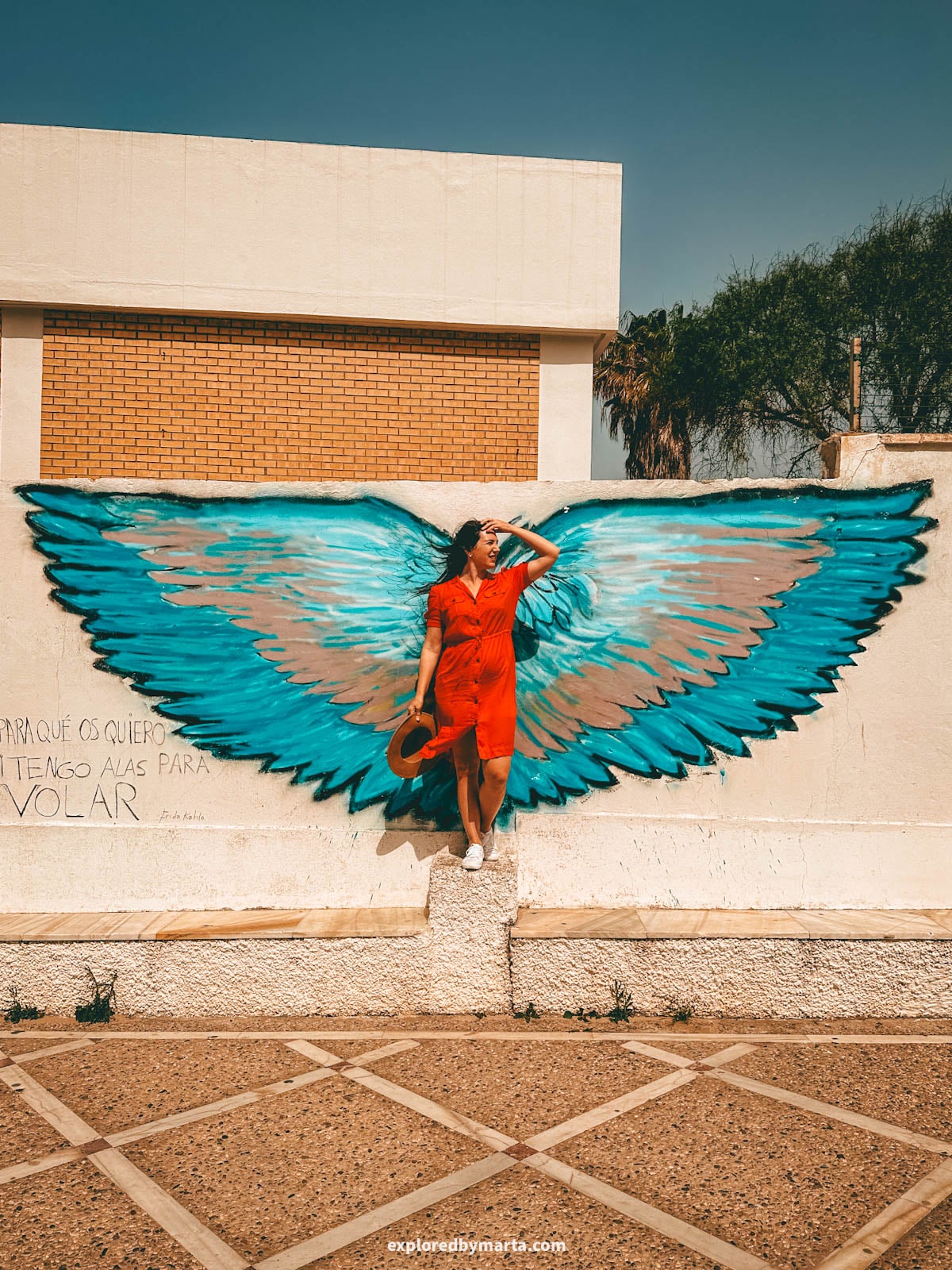
Tarifa has a few fun street art spots that are easy to miss but worth seeking out, especially if you love a colorful photo. Most of them are right next to the promenade, so you can combine them with a beach walk.
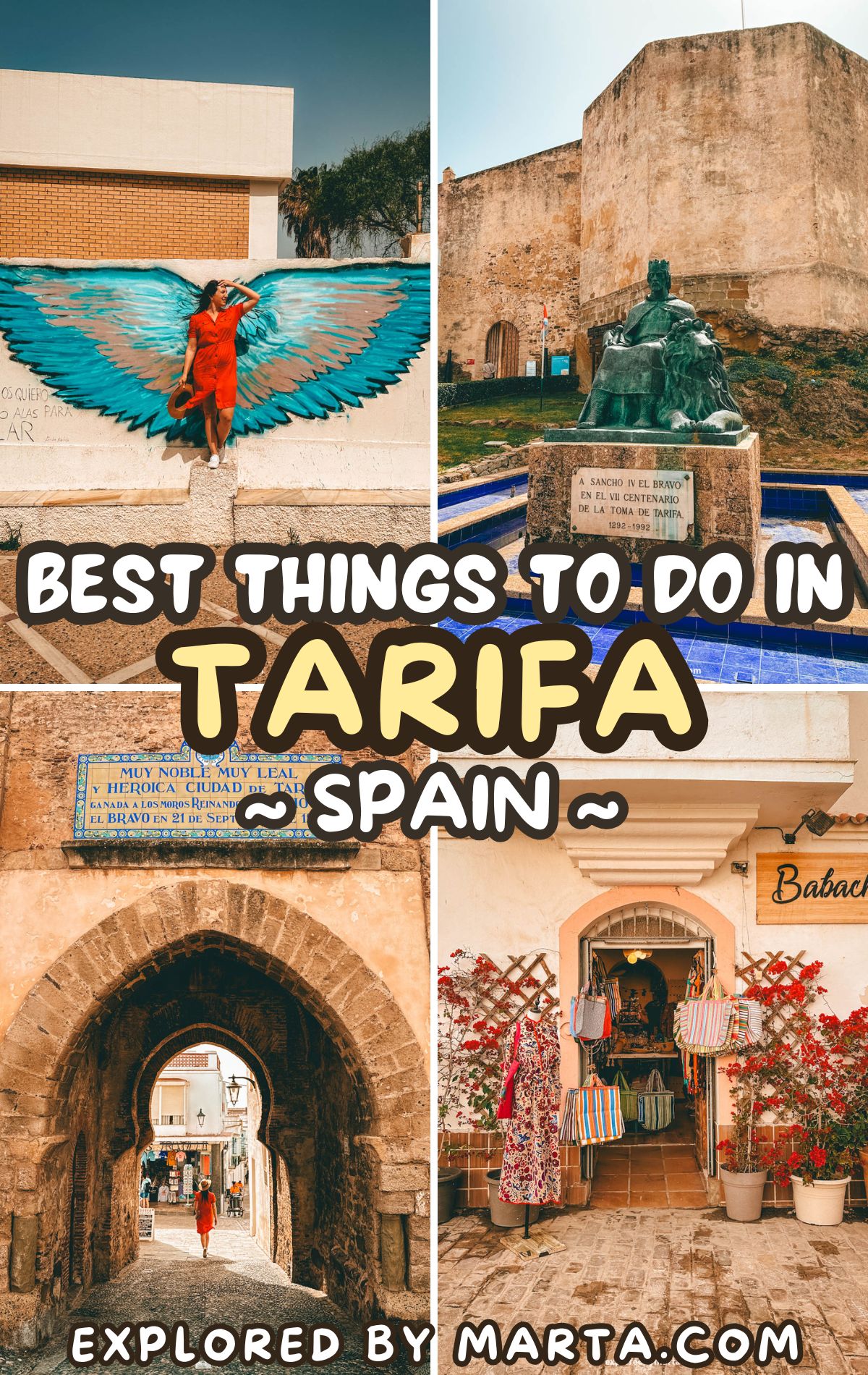
I personally really loved the blue wings on the wall. We stumbled upon them while walking from the old town toward the beach, and they make for a really fun photo.
They also suit the town’s character because Tarifa is all about wind and flying, just usually with kites instead of wings.
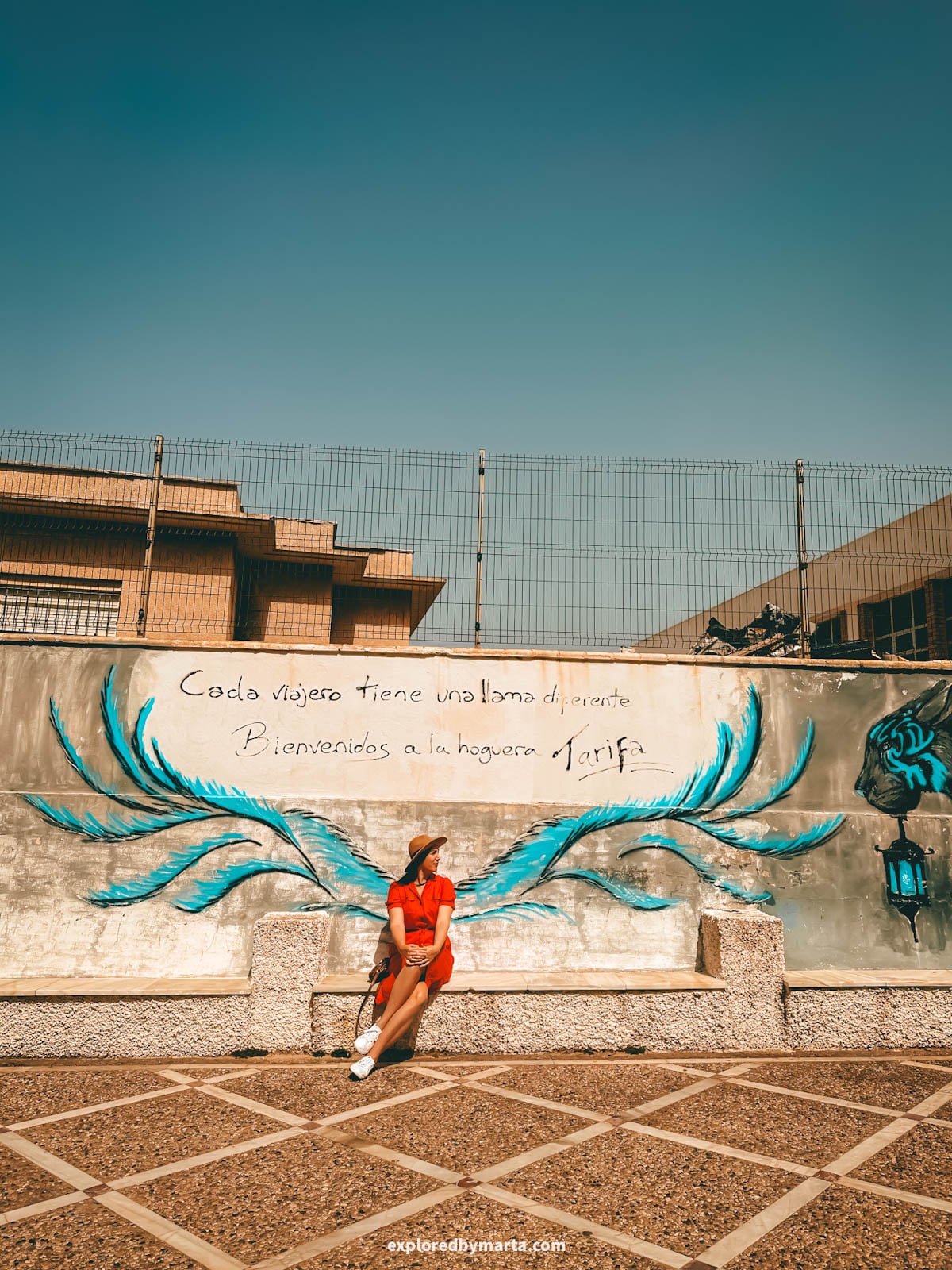
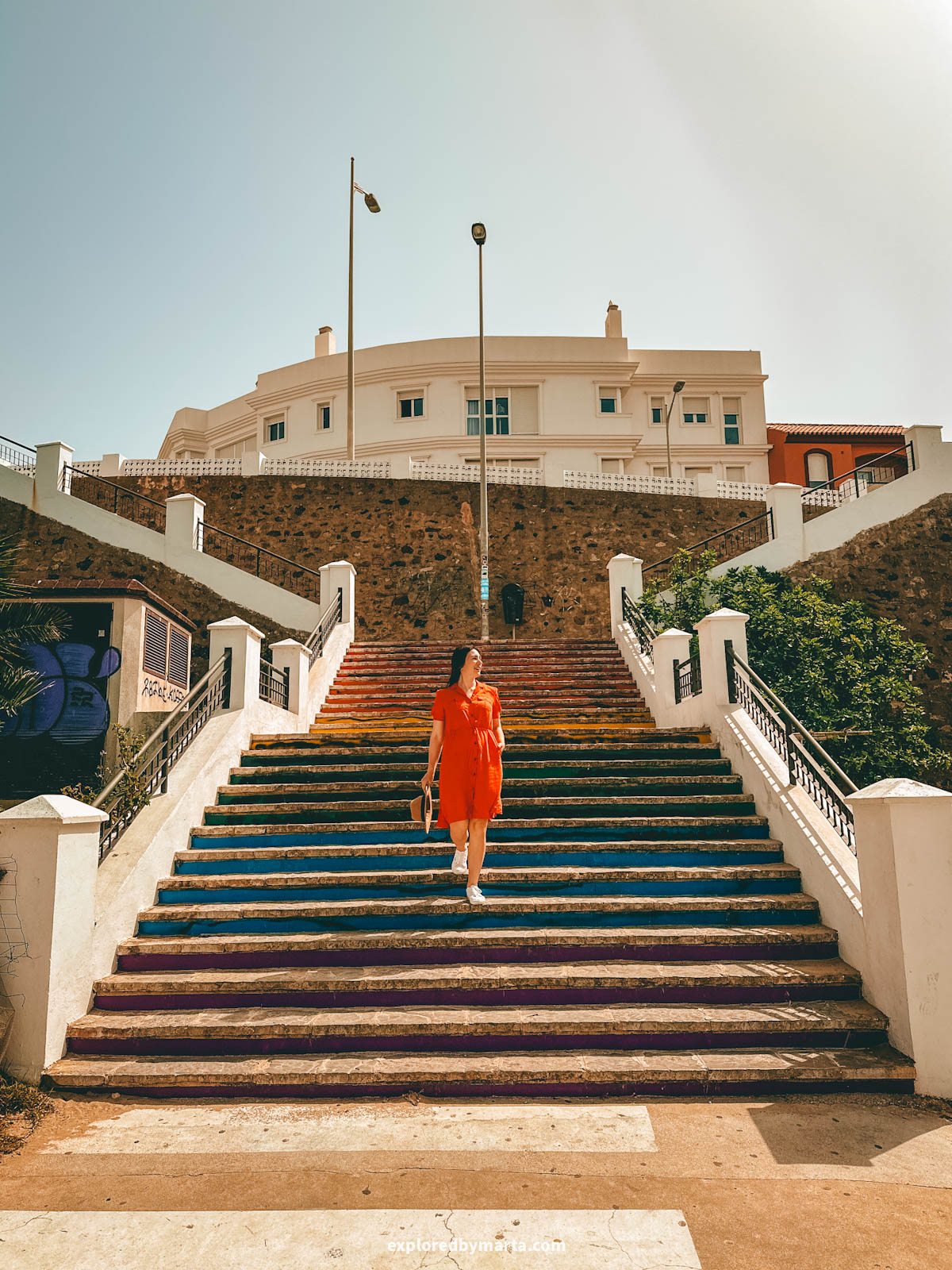
Right next to the wings, you will also find the rainbow stairs – a small staircase painted in rainbow colors. I do hope they renew the paint from time to time. They look so picture-perfect!
The whole little street art corner is on Calle Grupo Cardenal Cisneros, just a short walk from the old town and the beach.
If you want to see more, head to Calle San Sebastián next to the football and paddle tennis courts. There are several colorful street murals along the walls of the buildings. A nice little detour!
Location: Blue wings – Rainbow stairs – Calle San Sebastián street murals
FAQs about things to do in Tarifa
Is Tarifa worth visiting?
Yes, absolutely. Tarifa is one of the most unique small towns in Spain – it is the southernmost point of mainland Europe, where the Atlantic Ocean meets the Mediterranean Sea, and where you can see Africa across the strait. Add to that a charming old town, beautiful beaches, and a laid-back kitesurfing vibe, and Tarifa is well worth a stop on any Andalusia trip.
How many days do you need in Tarifa?
One full day is enough to see the main things to do in Tarifa – the old town, the castle, the border between two seas, and a beach moment. If you want to do a whale watching tour, kitesurf, or visit nearby beaches like Bolonia or Valdevaqueros, plan for two or three days.
Is Tarifa or Cádiz better to visit?
They are very different. Cádiz is a bigger historic city with more sights, museums, and nightlife. Tarifa is a smaller laid-back town with a stronger kitesurfing scene, beautiful beaches, and that unique southernmost-point-of-Europe feel. If you have time, visiting both is the best option.
Can you see Africa from Tarifa?
Yes, you can. Africa is only 14 kilometers (8.7 miles) across the Strait of Gibraltar, so on a clear day you can clearly see the mountains of Morocco from pretty much anywhere along Tarifa’s coast.
What is the best time to visit Tarifa?
Spring (April to June) and early autumn (September to October) are the best months. The weather is warm but not too hot, and the wind is more manageable than in peak summer. July and August are popular but very windy and crowded with kitesurfers.
Is Tarifa good for swimming?
Yes, but it depends on the beach and the wind. Playa Chica is the calmest and best for swimming and sunbathing. Playa de los Lances is great too on calmer days. The Atlantic side can have stronger waves and currents, especially when the Levante or Poniente winds are blowing.
How do you get to Tarifa?
Tarifa is about a 1-hour drive from both Gibraltar and Algeciras, and around 2 hours from Málaga or Cádiz. There is no train station in Tarifa, but regular buses connect it to Algeciras, Cádiz, Seville, and Málaga. You can also reach Tarifa by ferry from Tangier in Morocco – the crossing takes about 1 hour.
Is Tarifa a good base for exploring Andalusia?
It depends on what you want to see. Tarifa is a great base for exploring the southwestern coast of Andalusia, including Bolonia, Cádiz, Vejer de la Frontera, and Gibraltar. However, if you want to explore inland Andalusia (Seville, Granada, Ronda), you might want to base yourself somewhere more central.
Read more about traveling in Southern Spain
Tarifa really surprised us. We came expecting a quick stop on our Andalusia road trip, and ended up loving the laid-back vibe, the wind, the views over to Africa, and the feeling of standing at the very edge of Europe.
It is a small town, but it has so much character – and that mix of history, beaches, and unique geography is hard to find anywhere else in Spain.
Don’t just drive past it on your way to Cádiz or Gibraltar. Stop, walk through the old town, watch the kitesurfers fly across the waves, and let yourself enjoy this little corner of Europe.
If you are planning your trip to Andalusia, here are some of my other guides to help you plan further:
More Andalusia travel inspiration:
- 21 most beautiful white villages in Andalusia
- 27 hidden gems you should see in Andalusia
- 17 most beautiful castles in Andalusia, Spain
- 20 best things to do in Malaga, Spain (+locations & tips!)
- Córdoba bucket list: 18 best things to do in Córdoba, Spain
- 15 best things to do in Granada, Spain for your first trip
Travel guides to nearby towns:
- Ronda bucket list: 15 best things to do in Ronda, Spain
- 12 best things to do in Cádiz, Western Europe’s oldest city
- 10 best things to do in Jerez de la Frontera, Spain
- Fairytale Frigiliana: 13 things to do in Frigiliana, Spain
- 10 things to do in Iznájar, Spain (flower village)
- 10 best things to do in Setenil de las Bodegas, Spain
PIN FOR LATER!