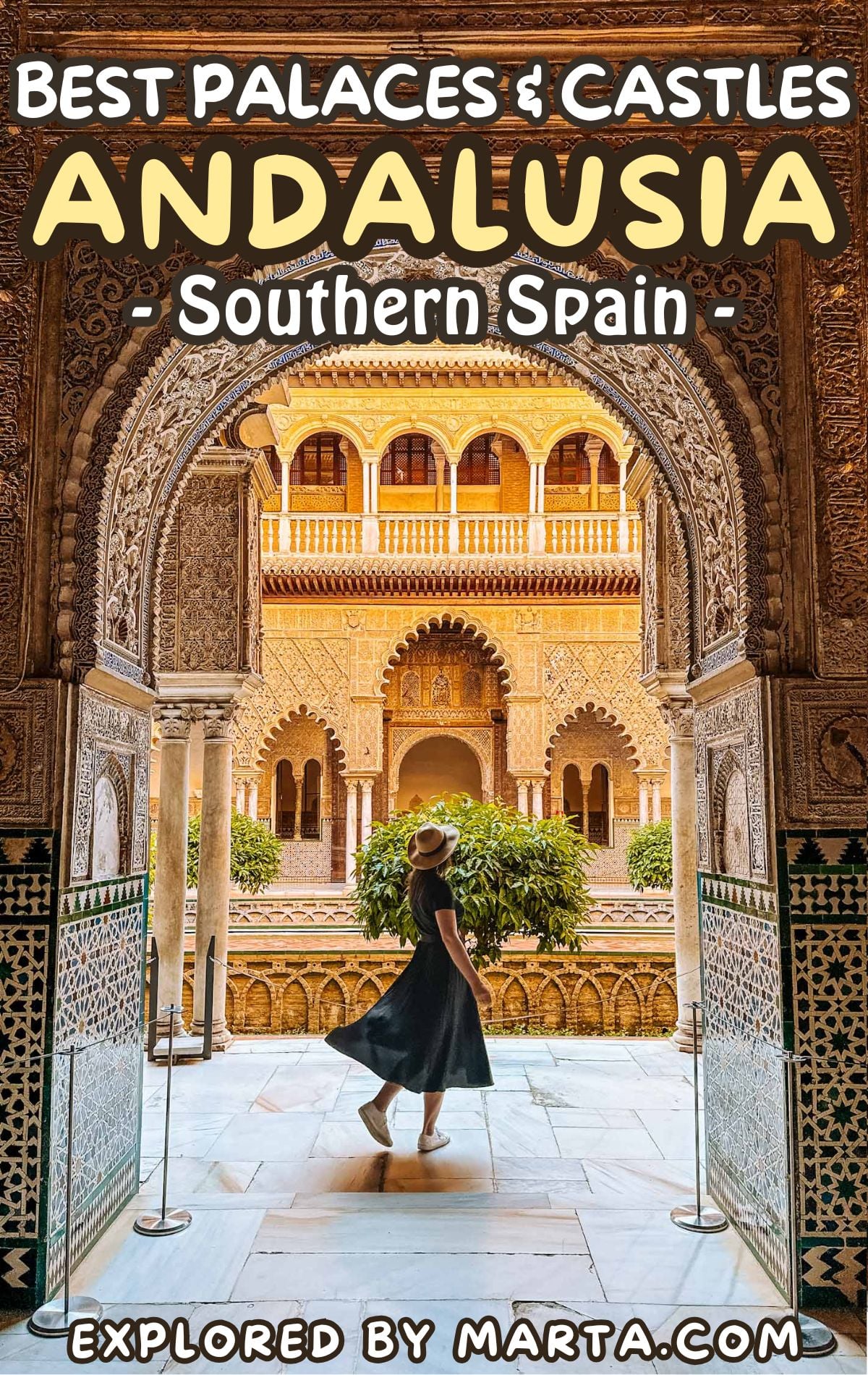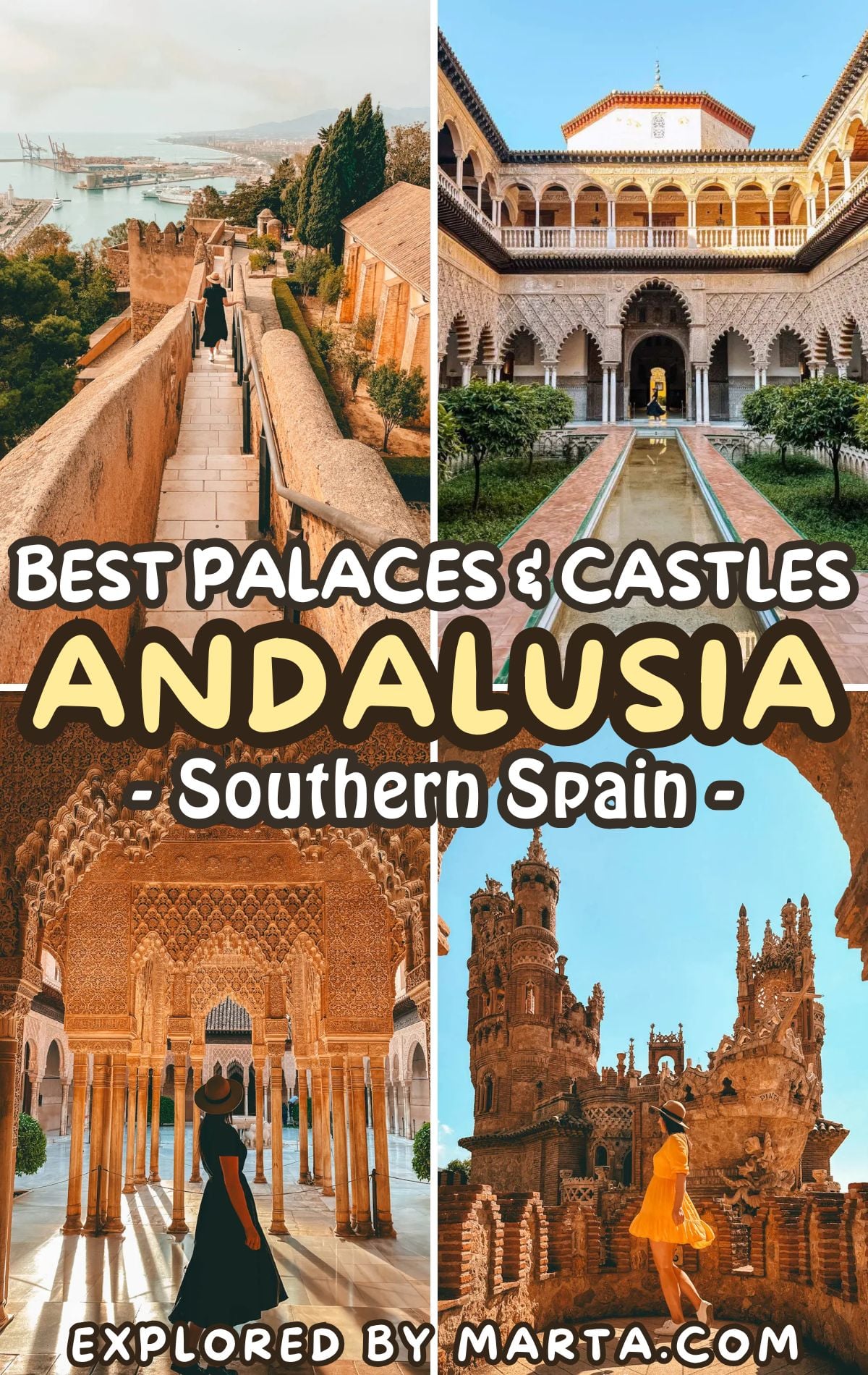
20 best palaces and castles in Andalusia, Southern Spain
This post may contain affiliate links. If you use these links to make a purchase or booking, I may earn a small commission at no extra cost to you! Thank you for your support!
If you love castles and palaces, Andalusia is kind of the jackpot. After months of road-tripping around southern Spain, I’ve seen a LOT of them. Of course, including all the best ones!
This region has seen Romans, Moorish dynasties, and Christian kings come and go, and they all left castles behind. That layered history is exactly what makes the castles in Andalusia so different from one another.
We spent more than two months driving around Andalusia (we’ve visited Andalusia multiple times), from big cities and royal palaces to tiny villages with castles you can spot from miles away. These are the best ones we visited.
In this guide, I’m sharing the most iconic palaces and castles in Andalusia with my honest thoughts, photos, and locations on Google Maps.
Quick guide to castles in Andalusia
Before we get into the list, here are a few things that help make sense of Andalusia. You’ll notice these places aren’t all called “castle.” Some are an alcázar, some an alcazaba, and, of course, some a castillo, some a palacio.
Why so many different names? Here’s the quick backstory: Moorish rulers from North Africa controlled most of this region for nearly 800 years (8th to 15th centuries), which is why so many places in southern Spain still have Arabic-based names today.
So once you know a few of these words, the whole region makes a lot more sense:
Alcazaba comes from the Arabic al-qasbah, meaning citadel. It’s a Moorish fortress, the military, defensive kind, usually walls and towers on a hilltop. The two most famous alcazabas are in the Alhambra in Granada and in Almería.
Alcázar comes from the Arabic al-qasr (which itself traces back to the Latin castrum, a fort). This one leans more toward a fortified palace or royal residence, like the Royal Alcázar of Seville.
Castillo is simply the Spanish word for castle, and it’s the most common term across Spain. In Andalusia you’ll often see it used for the Reconquista-era fortresses, though many sit on much older Moorish or even Roman foundations.
Palacio is a palace, built as a grand residence rather than a fortress. Think Palacio de Viana in Córdoba or Palacio de las Dueñas in Seville.
So when you see all these names on one list, you’re really looking at layers of history stacked on top of each other. A lot of these buildings were fought over, conquered, and rebuilt by each new ruler, which is why so many of them mix architectural styles.
Alright, let’s get into the most iconic palaces and castles in Andalusia!
1. Royal Alcázar of Seville
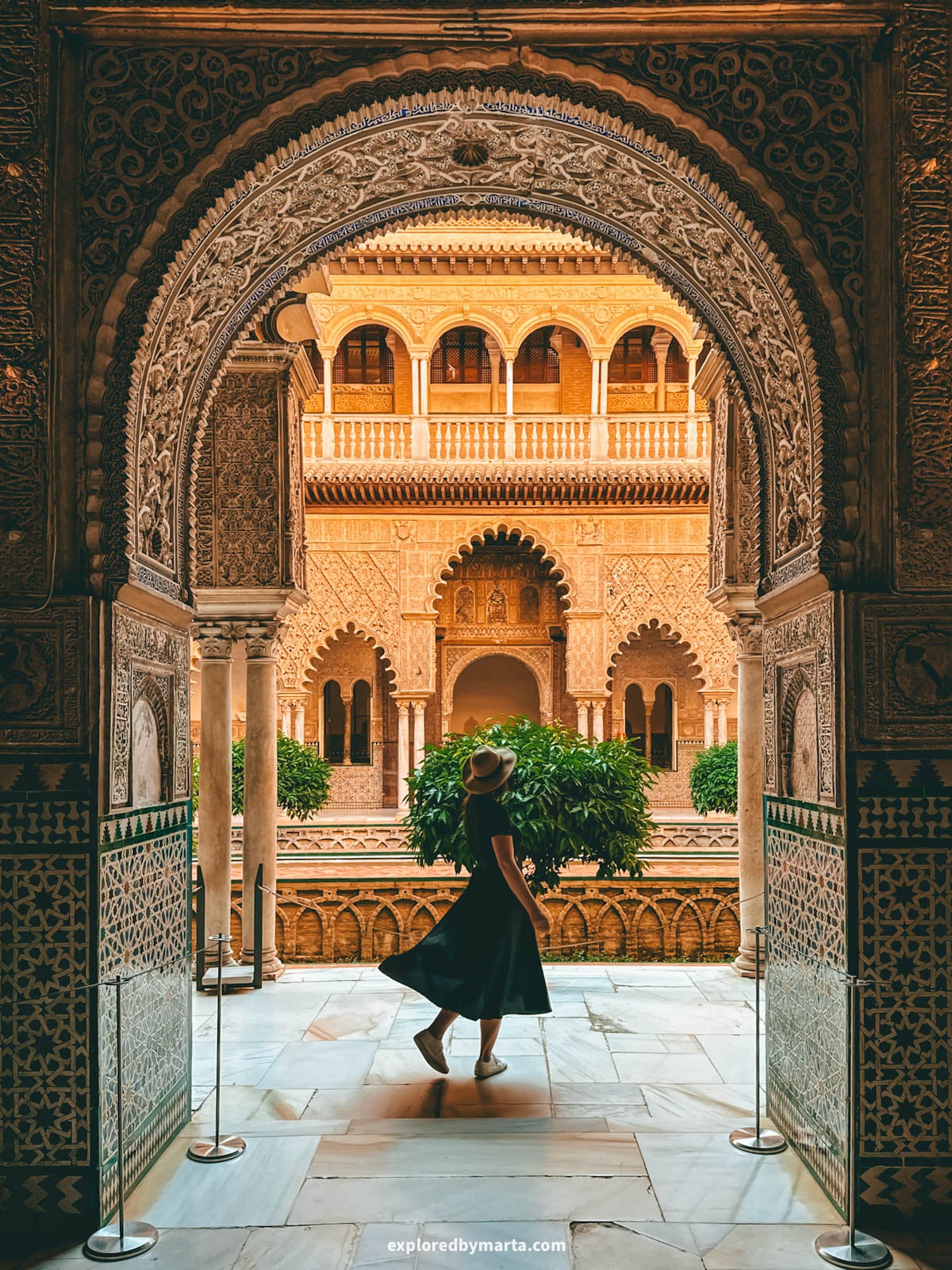
The Royal Alcázar of Seville has to be the crown jewel of the city, and, really, the most beautiful palace in all of Andalusia. And quite literally a jewel for royals, because it was built as a home for kings and still is one.
I learned that it’s the oldest royal palace still in use in Europe, and the Spanish royal family still stays in the upper floors when they visit Seville. So you’re walking around an actual working royal residence. Pretty cool!
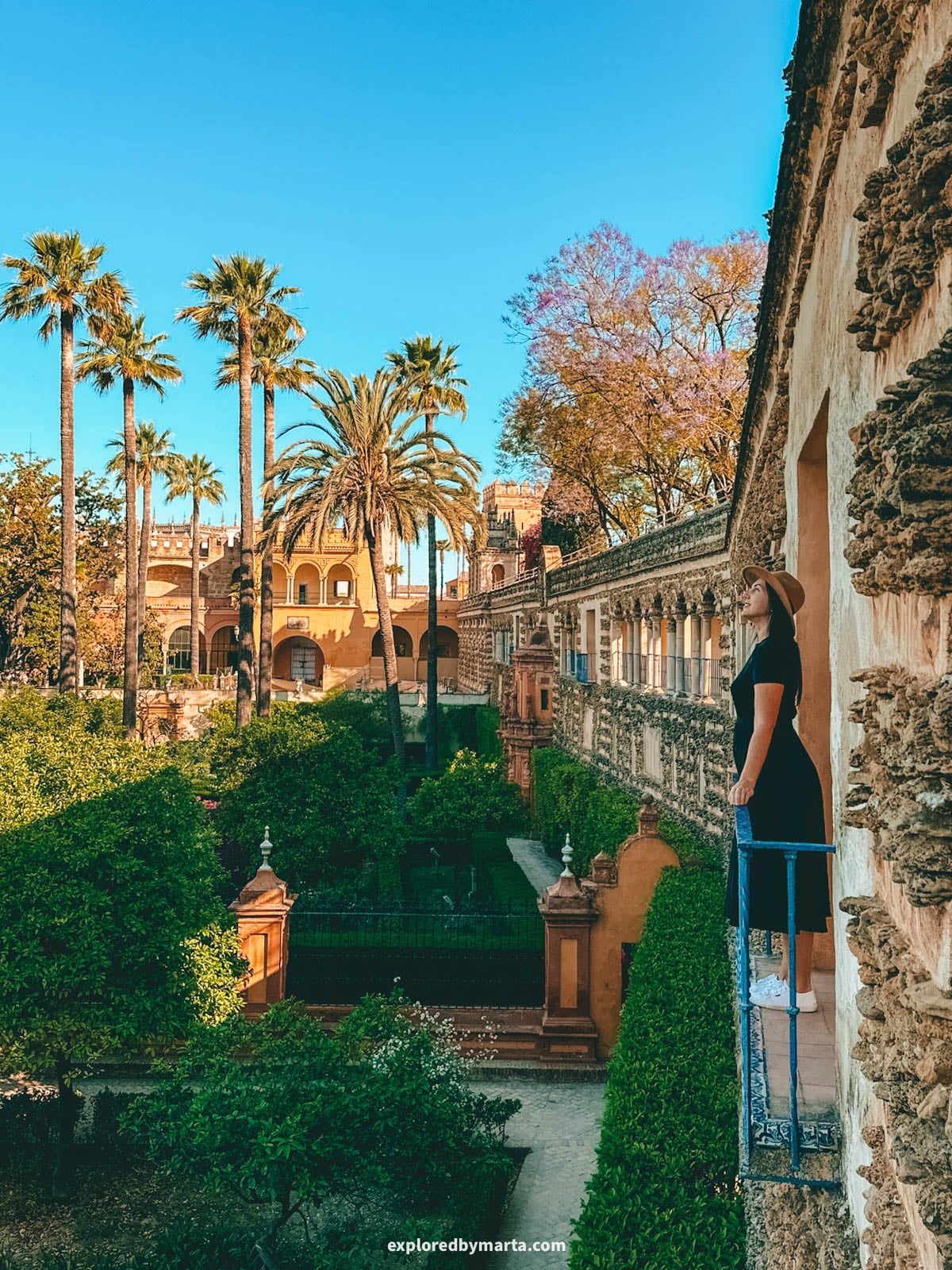
The Alcázar is a whole complex really, with palaces, patios, courtyards, staterooms, unique bathing rooms, and massive gardens full of pathways, ponds, fountains, trees, flowers, and even a maze. It’s going to take around 1.5 hours to explore it!
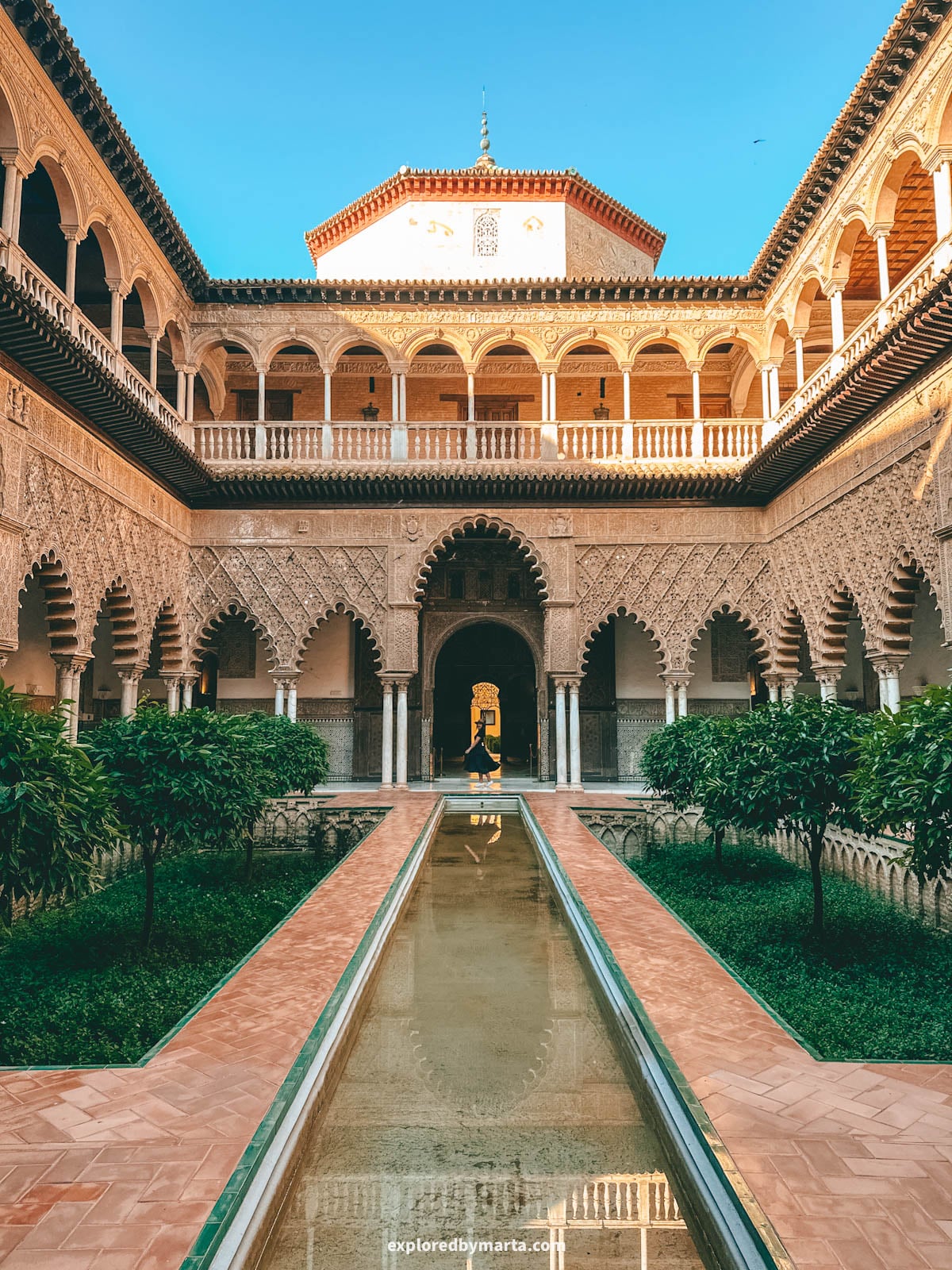
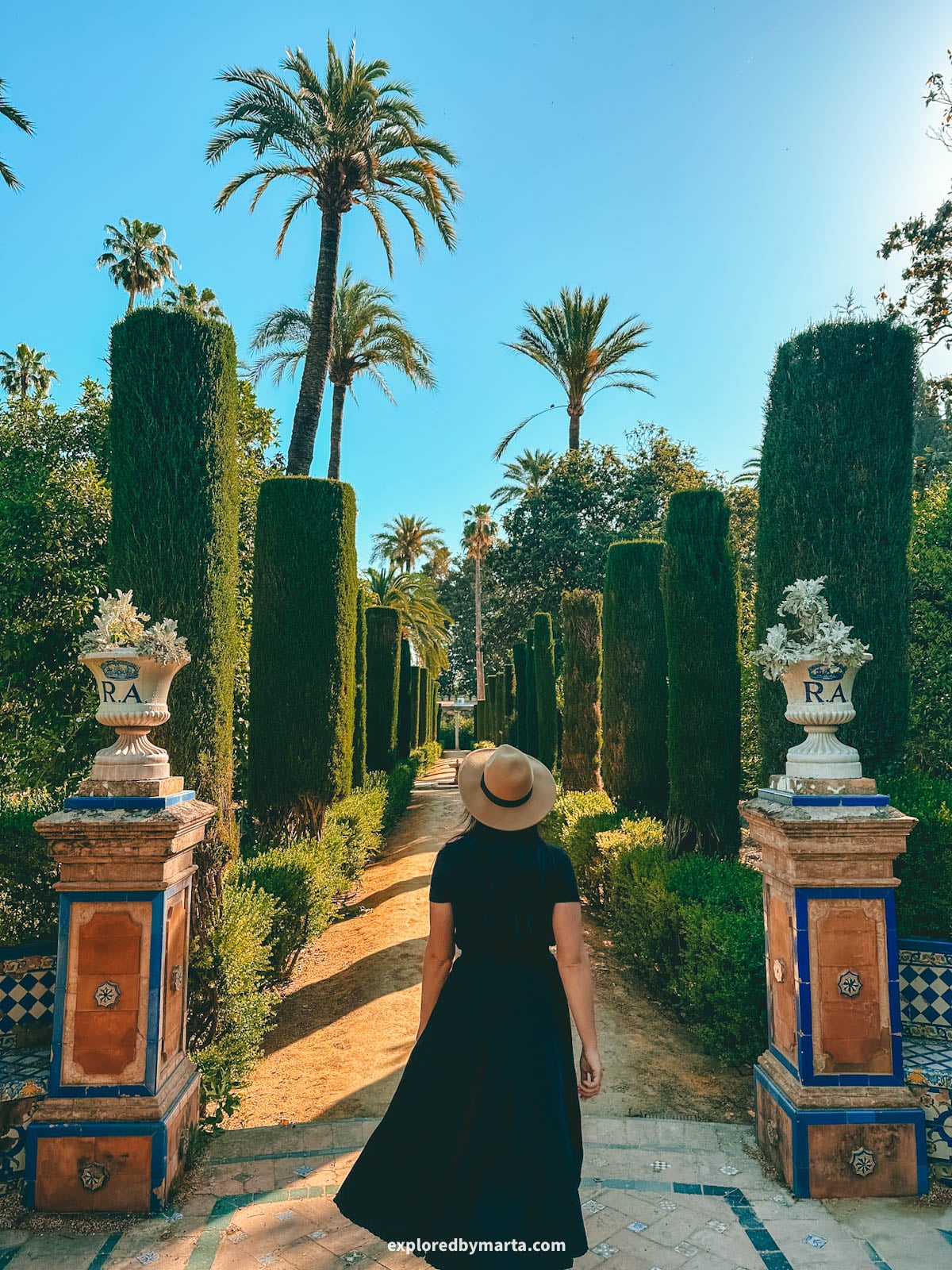
It’s also one of the best examples of Mudéjar architecture you’ll find anywhere. By the way, Mudéjar is a style built under Christian rule that blends Moorish and Christian elements together, which is why it looks so similar to the Nasrid Palaces in the Alhambra.
The site goes way back. I read that there’s been a fortress here since the 10th century, when it started as a Moorish stronghold. But the palace you mostly see today was built in the 14th century for the Christian king Pedro I.
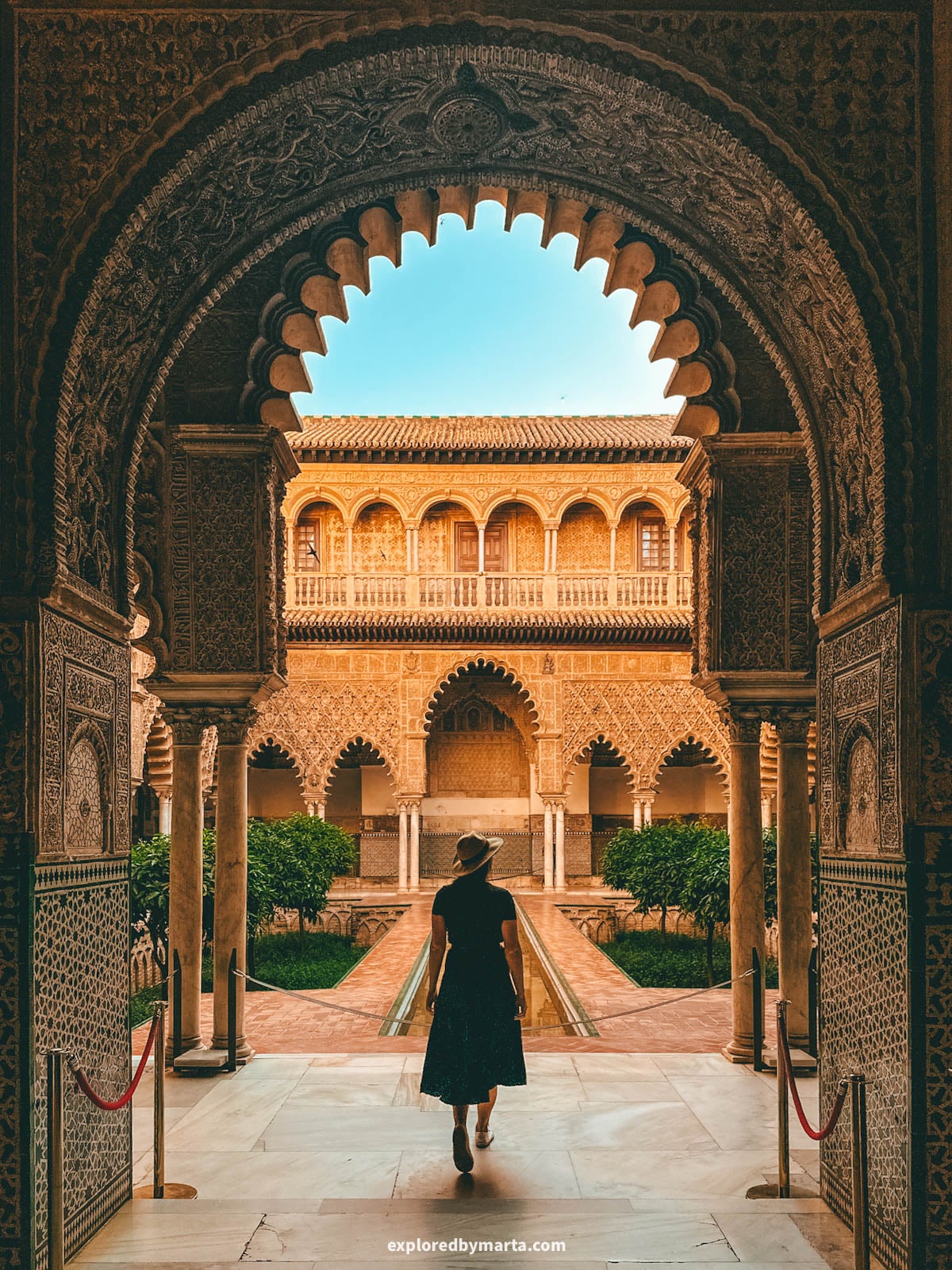
My favorite spots inside were the Patio de las Doncellas, the main courtyard with its long reflecting pool, and the Salón de Embajadores, which has some of the most jaw-dropping detail in the whole place. The architecture is insane!
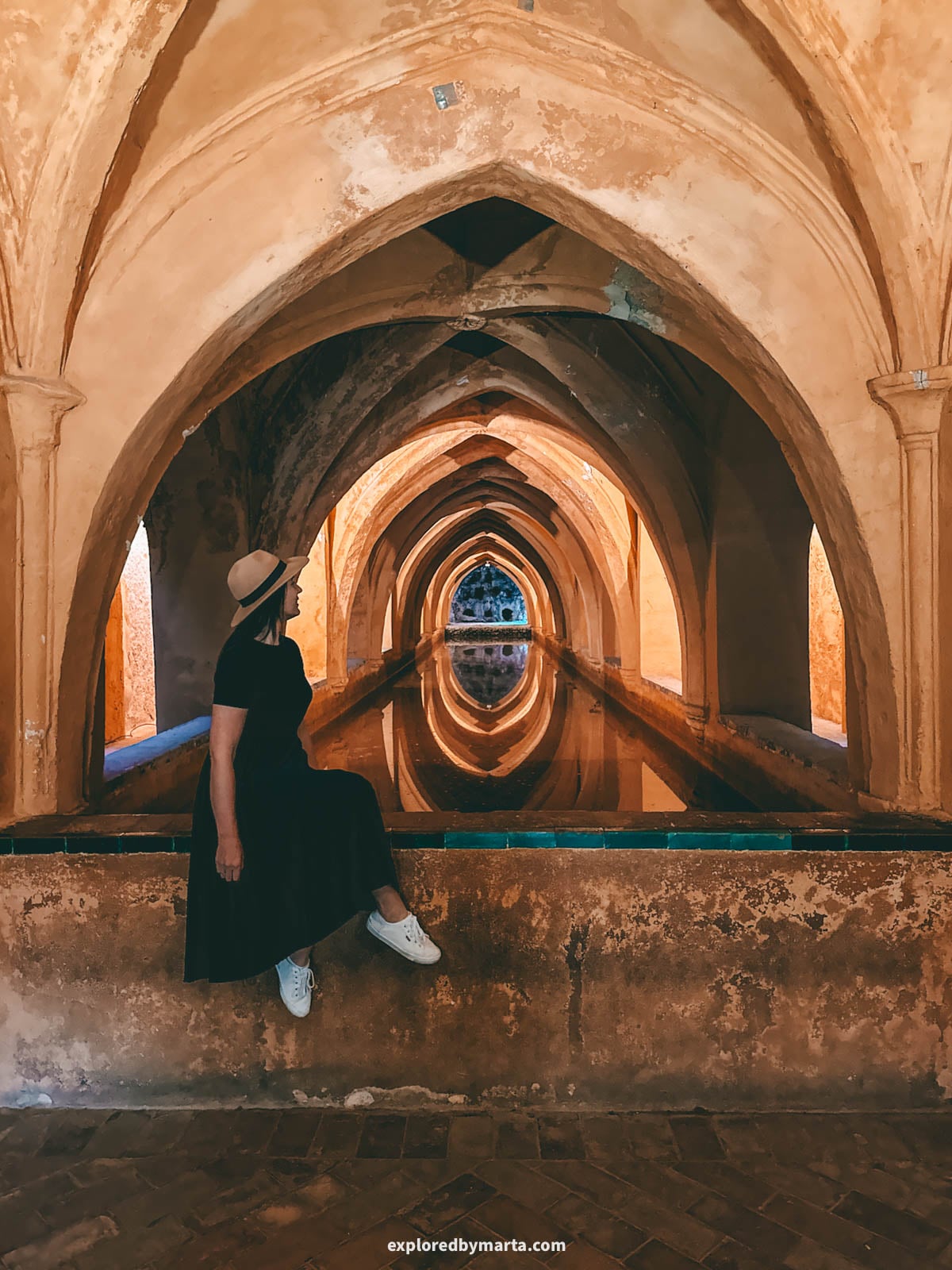
Don’t miss the Baños de Doña María de Padilla either, a bathing house with a pool in an arched room down in the basement. It looks really cool, like something out of a movie set (see my photo above!).
And take your time in the gardens. With all the palm trees, fountains, and shaded pathways, they’re the perfect place to slow down after the busy palace rooms. Fun fact for fans: parts of the Alcázar were used as a filming location for Game of Thrones.
Take my word for it, get here as early as you can and book your tickets online in advance. This is one of the most visited places in all of Seville, and there was a long line of people before it even opened when we went!
On the other hand, once you’re inside, the crowds kind of spread out, so it wasn’t so bad. If there is one thing you visit in Seville, this must be it!
Location: Royal Alcázar of Seville
2. Palace of the Lions in the Alhambra, Granada
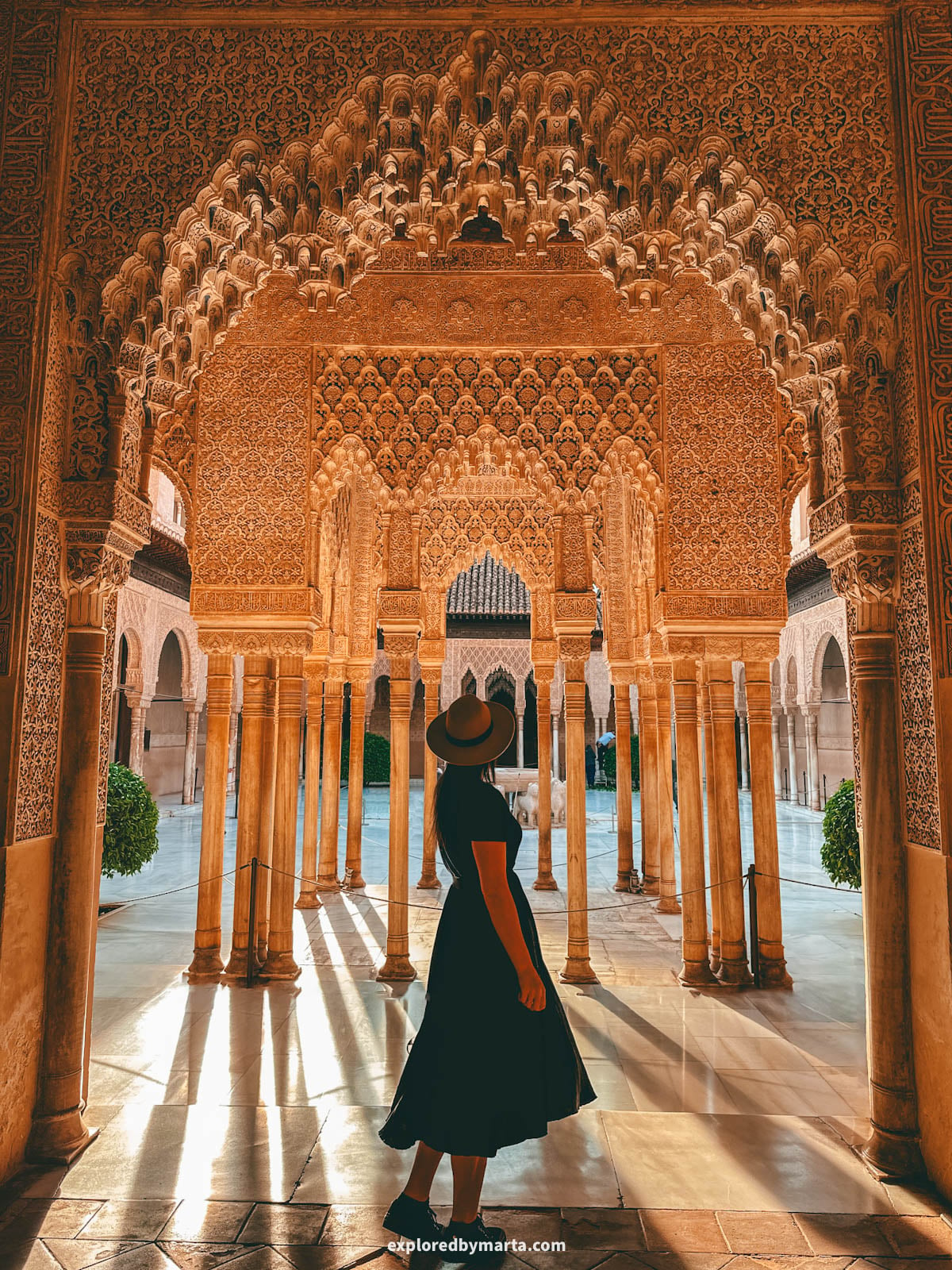
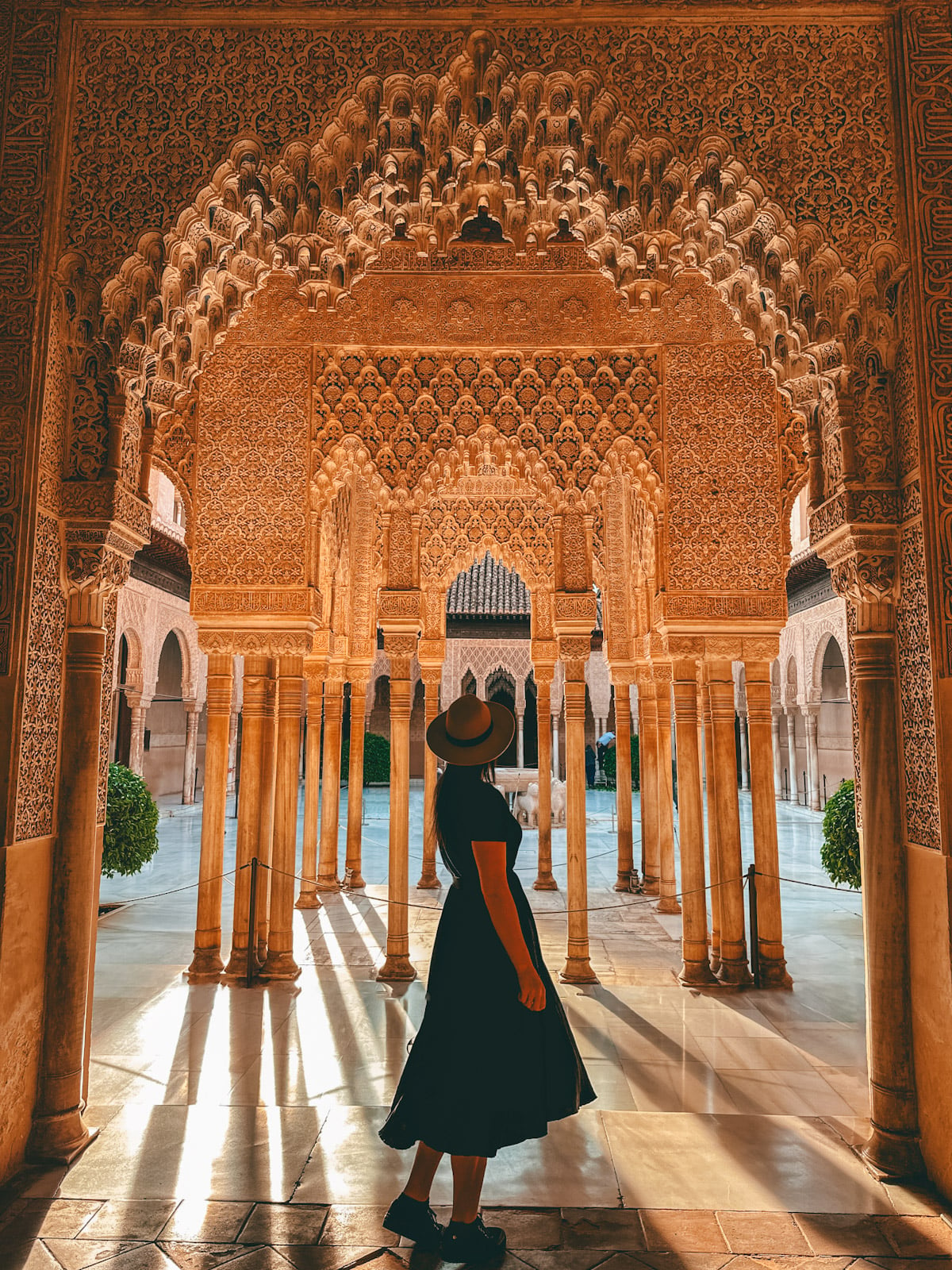
The Palace of the Lions, inside the Alhambra in Granada, was hands down my favorite place in the famous Alhambra complex. And honestly, one of the most beautiful palaces I’ve seen anywhere.
It’s part of the famous Nasrid Palaces, the most spectacular section of the Alhambra and the part everyone pictures when they dream about visiting. So you’ll need a Nasrid Palaces ticket to see it (more on Alhambra tickets in my full Alhambra guide).
The centerpiece is the Patio de los Leones, the Courtyard of the Lions. It’s a wide courtyard surrounded by a forest of slender columns, with carved arches and Arabic inscriptions everywhere you look.
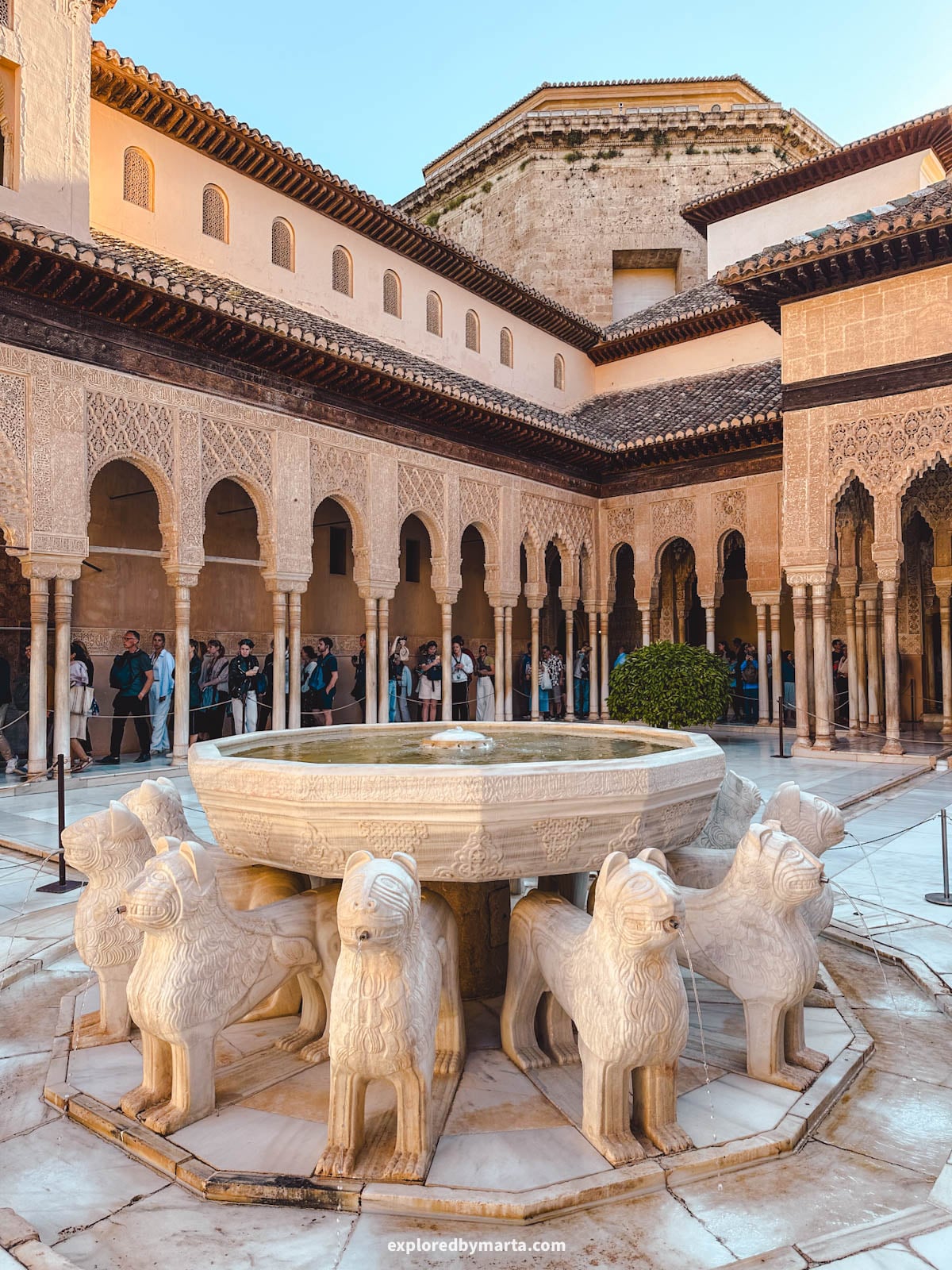
In the middle sits a marble fountain held up by twelve sculpted lions, which is exactly where the palace gets its name. The whole setting is just breathtaking.
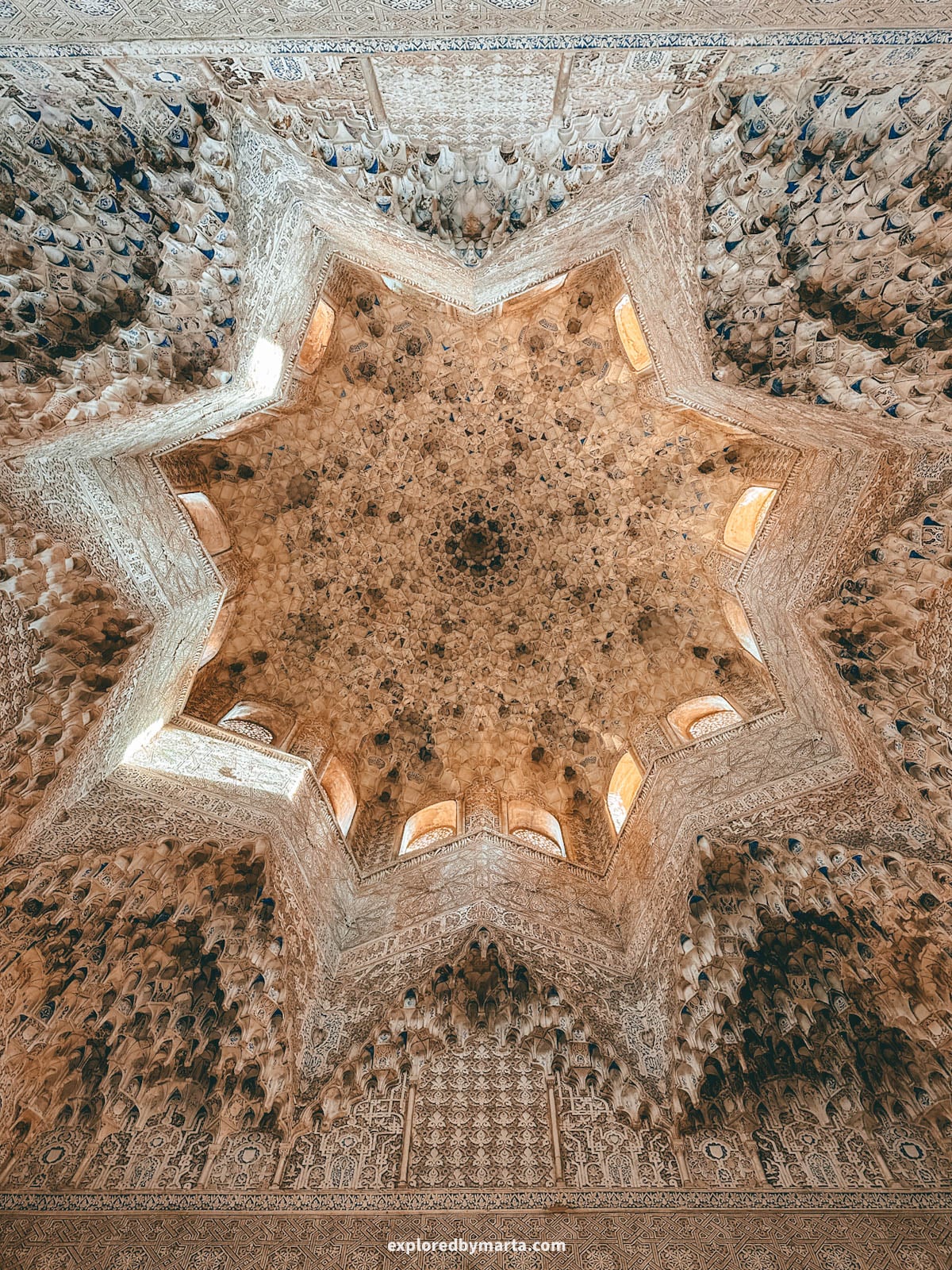
My biggest tip here? Don’t forget to look up. The ceilings of the surrounding halls have these incredible stalactite-like carvings called muqarnas, and they are part of the show.
I seriously cannot comprehend the amount of work that went into creating them. I just stood there with my neck craned for ages, haha. 😆 It is, for sure, my favorite Alhambra palace!
We booked the first Nasrid Palaces time slot of the morning and arrived early, and somehow ended up first in line. For a few minutes, we had the courtyards almost to ourselves, which felt like a small miracle at one of the most visited places in Spain.
Location: Patio de los Leones
3. Comares Palace in the Alhambra, Granada
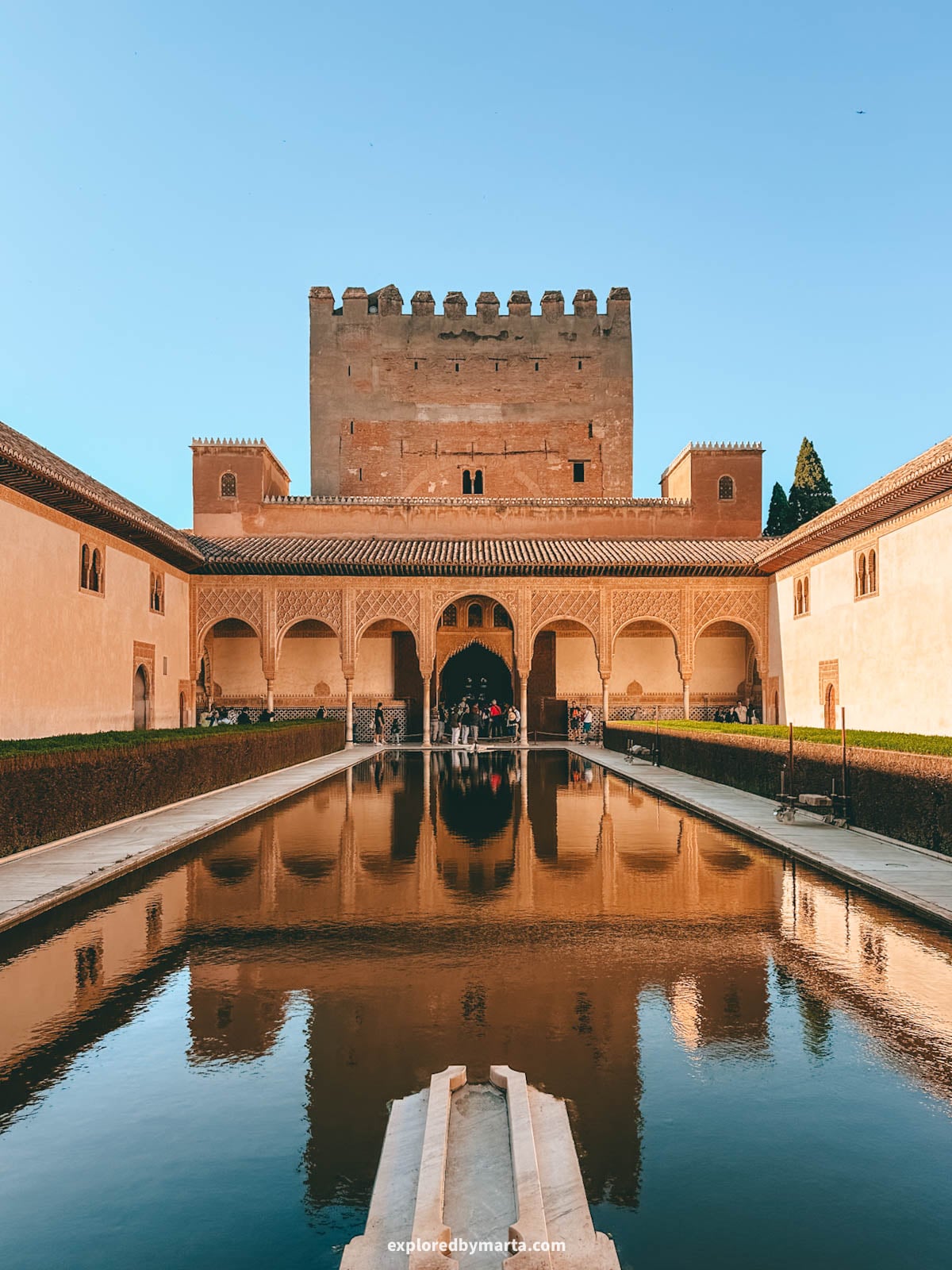
Comares Palace is one of the first palaces you’ll walk through inside the Nasrid Palaces, and it’s a stunning introduction to what the Alhambra is all about.
The star here is the Patio de los Arrayanes, also called the Patio de Comares, or the Court of the Myrtles. It’s an inner courtyard with a long rectangular reflecting pool, lined with myrtle hedges, very typical of Moorish architecture.
The reflection of the arches and tower in the still water is one of those classic Alhambra views you’ve definitely seen in photos. And it’s even prettier in person. Such a serene place!
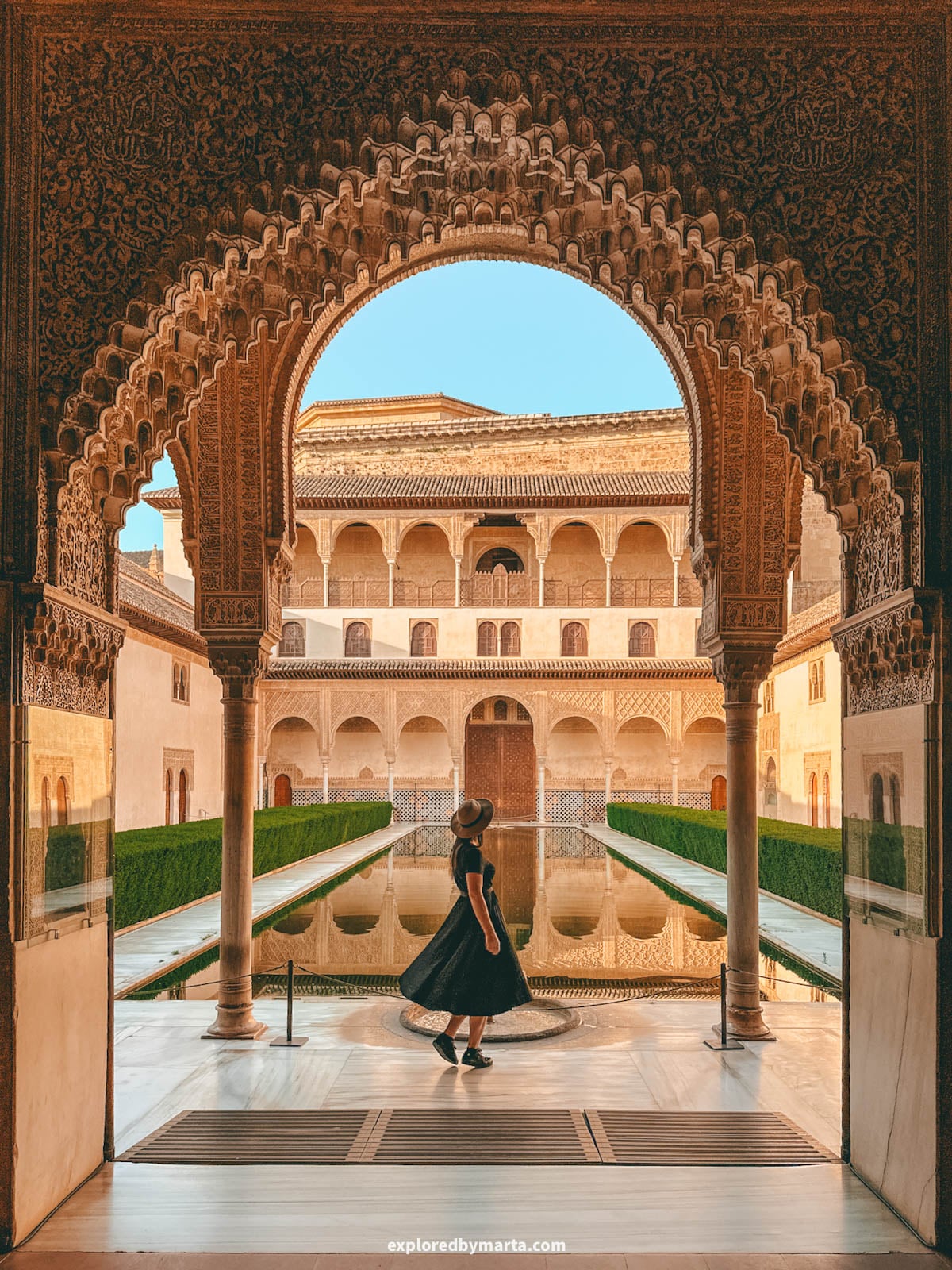
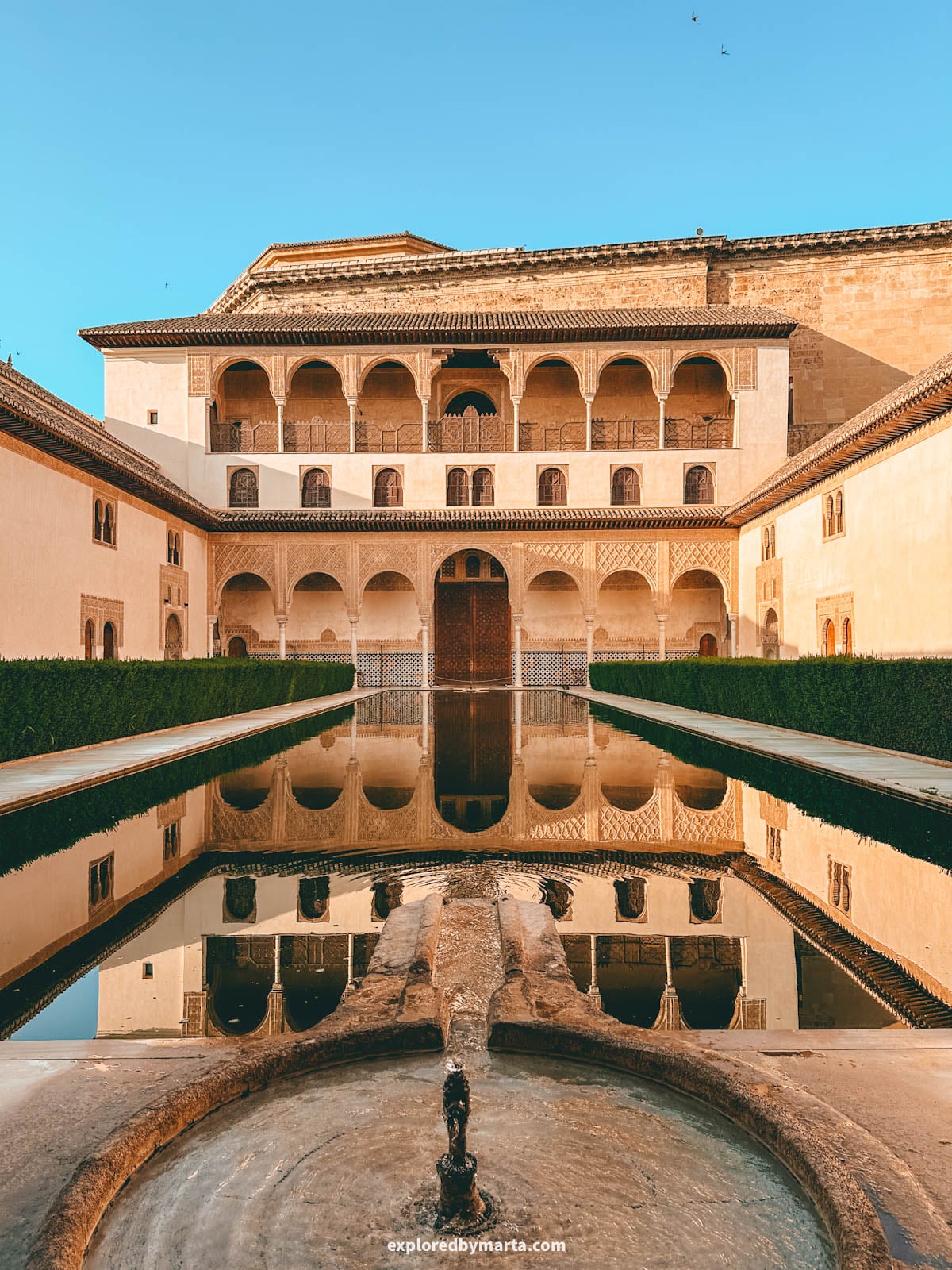
Because we arrived first thing in the morning, we got a beautiful, peaceful moment in the courtyard before the crowds came in. Standing there with the water perfectly still and almost no one around, it felt really special.
The detailing here is incredible too, from the carved archways to the patterns above them. The whole palace was built for a king, and it absolutely lives up to that. One of my favorite places in all of Granada!
By the way, I’ve been to the Alhambra twice – once with my husband when we got to be the first ones inside the Nasrid Palaces, and the second time I took my parents there, when we arrived in the evening, so my photos are a mix from both occasions.
Location: Comares Palace in the Alhambra
4. Generalife in the Alhambra, Granada
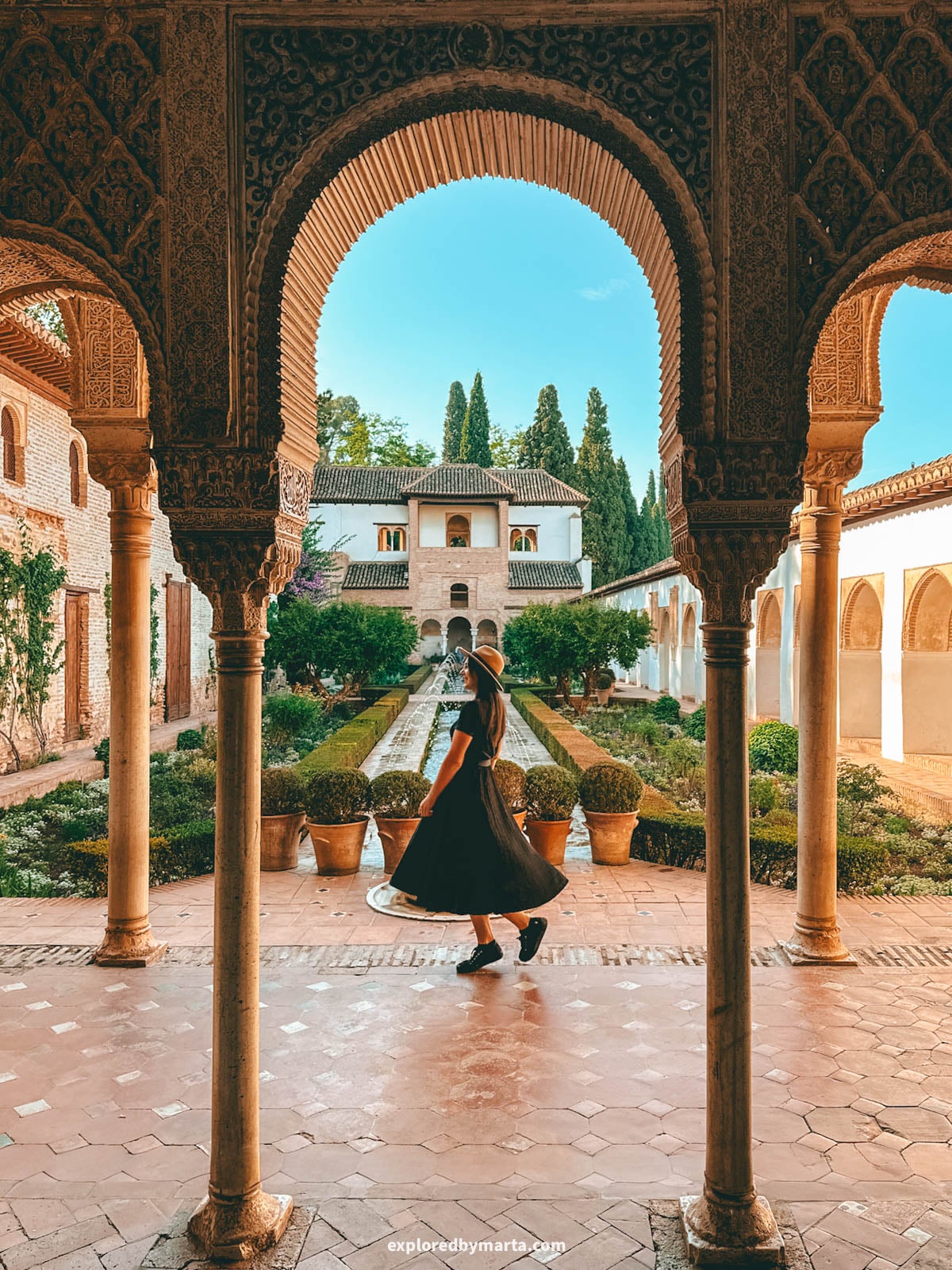
Generalife was the summer palace and garden retreat of the Nasrid rulers, and it’s the greenest, calmest part of the whole Alhambra. After the intense detail of the Nasrid Palaces, it feels like a deep breath.
It’s all about gardens here, with fountains, water channels, flowers, courtyards, and lovely views back toward the rest of the Alhambra.
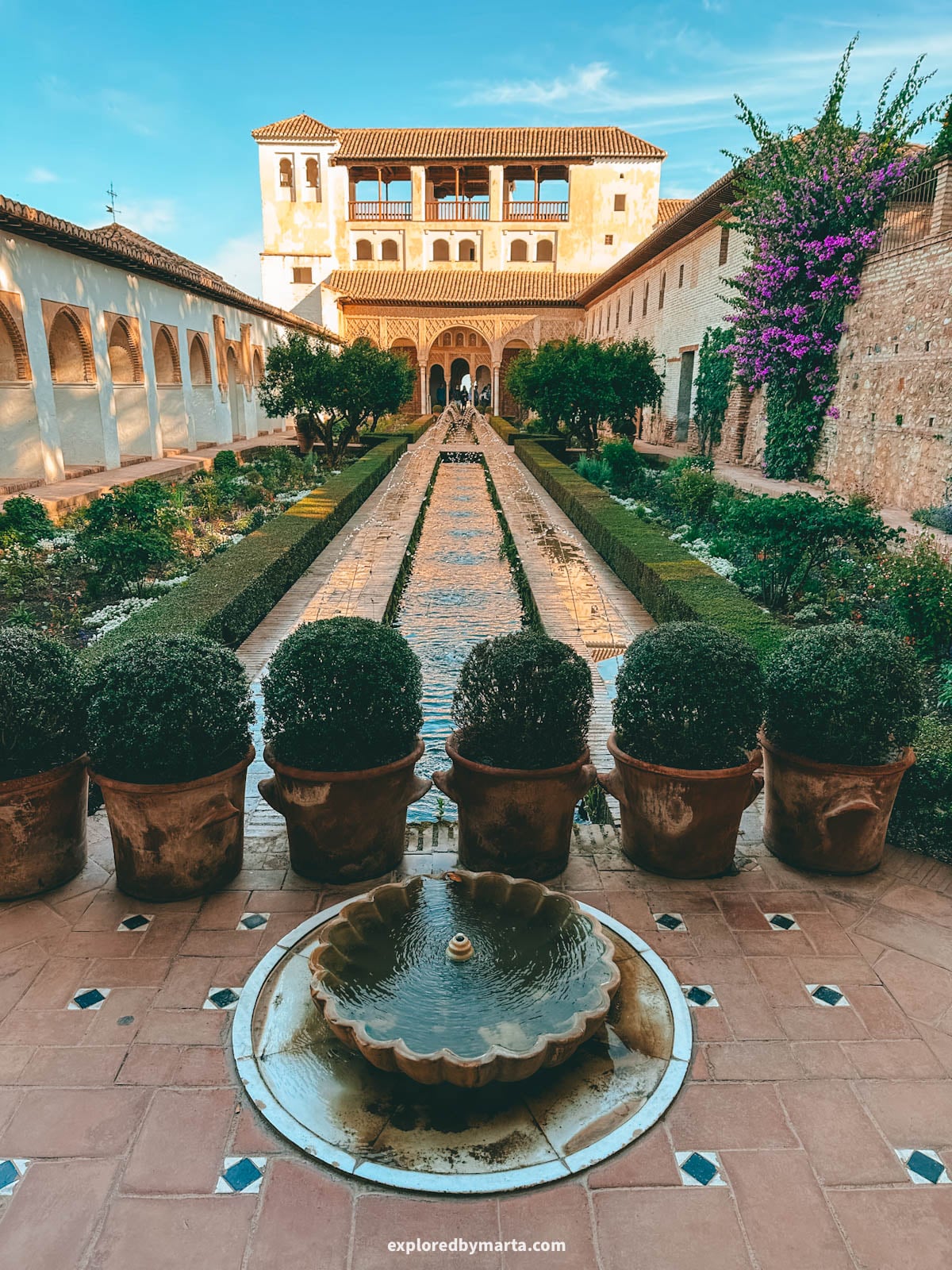
The most famous spot is the Patio de la Acequia, a long courtyard with a narrow pool running down the middle, fountains arcing over the water, and greenery on either side.
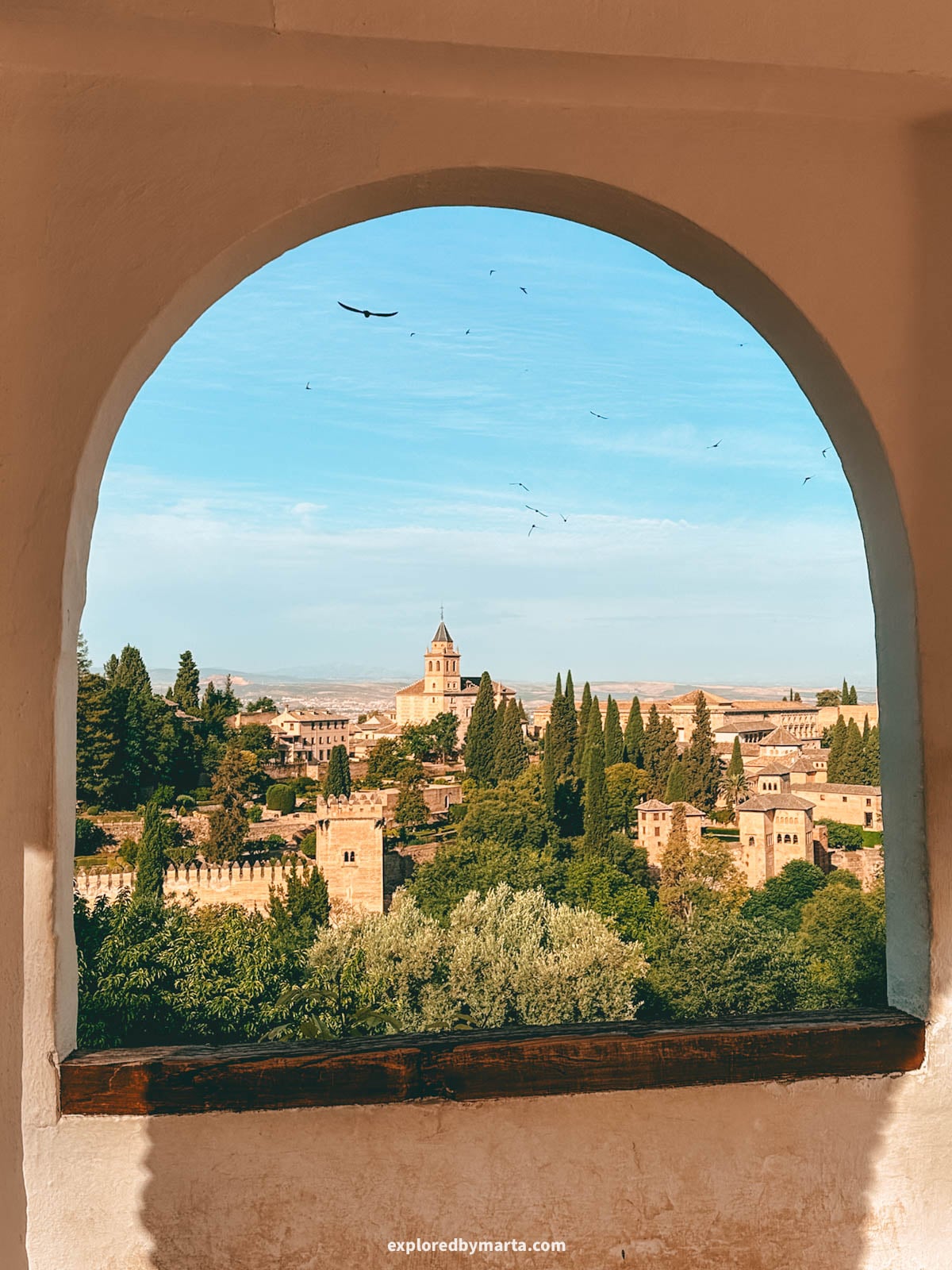
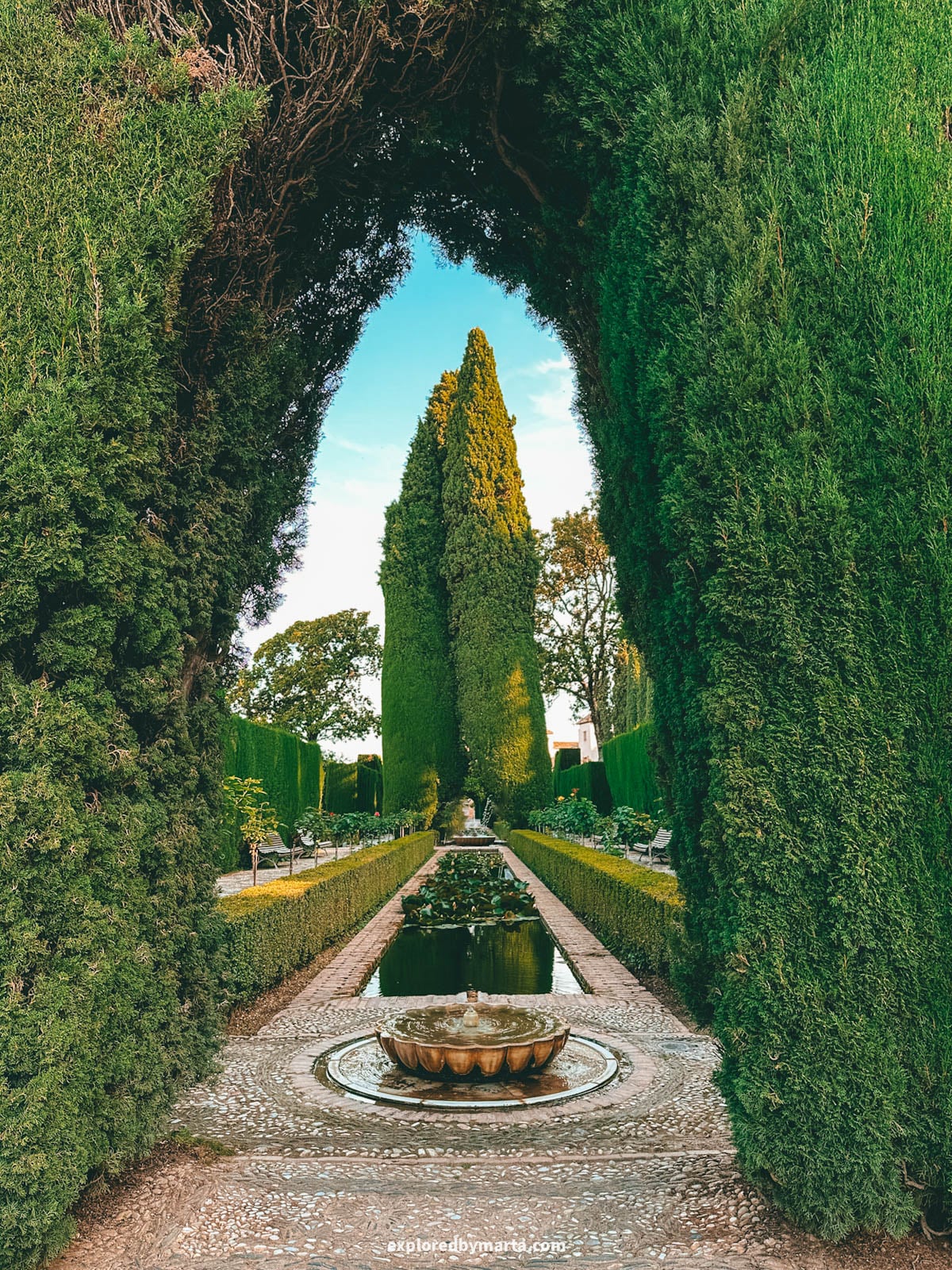
It’s seriously pretty! See my photos above? I told you!
One thing to know: Generalife isn’t right next to the Nasrid Palaces, so you’ll need to factor in some walking to get there. It’s part of why the Alhambra takes longer to visit than most people expect, but it’s worth every step.
There are pathways with arch-shaped windows looking out over Granada, plus quiet corners, viewpoints, and halls all decorated in that Moorish style. For me, Generalife was the oasis of the Alhambra.
Location: Generalife
5. Palace of Charles V in the Alhambra, Granada
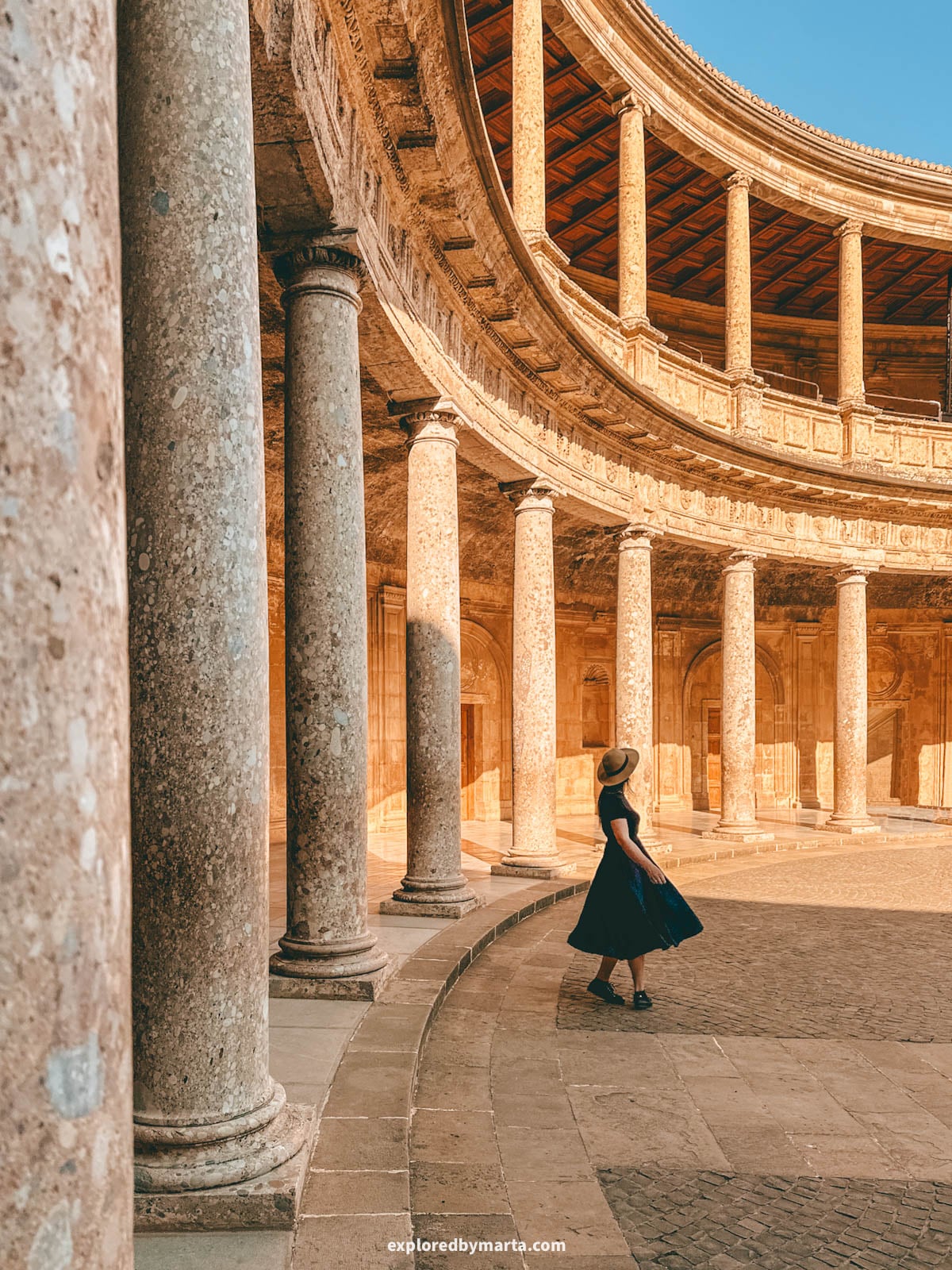
Here’s something that surprised me about the Alhambra: not everything inside requires a ticket. The Palace of Charles V is the best example, because you can step inside its courtyard for free, even without a Nasrid Palaces ticket.
That makes it really handy if Alhambra tickets are sold out, or if you just want a quick look at part of the complex without committing to the full visit (But really? You should just buy the full visit ticket!).
This palace was ordered by King Charles V in the 16th century, after the Christian conquest of Granada. And yes, building a Renaissance palace right inside the former Muslim royal city was definitely a statement.
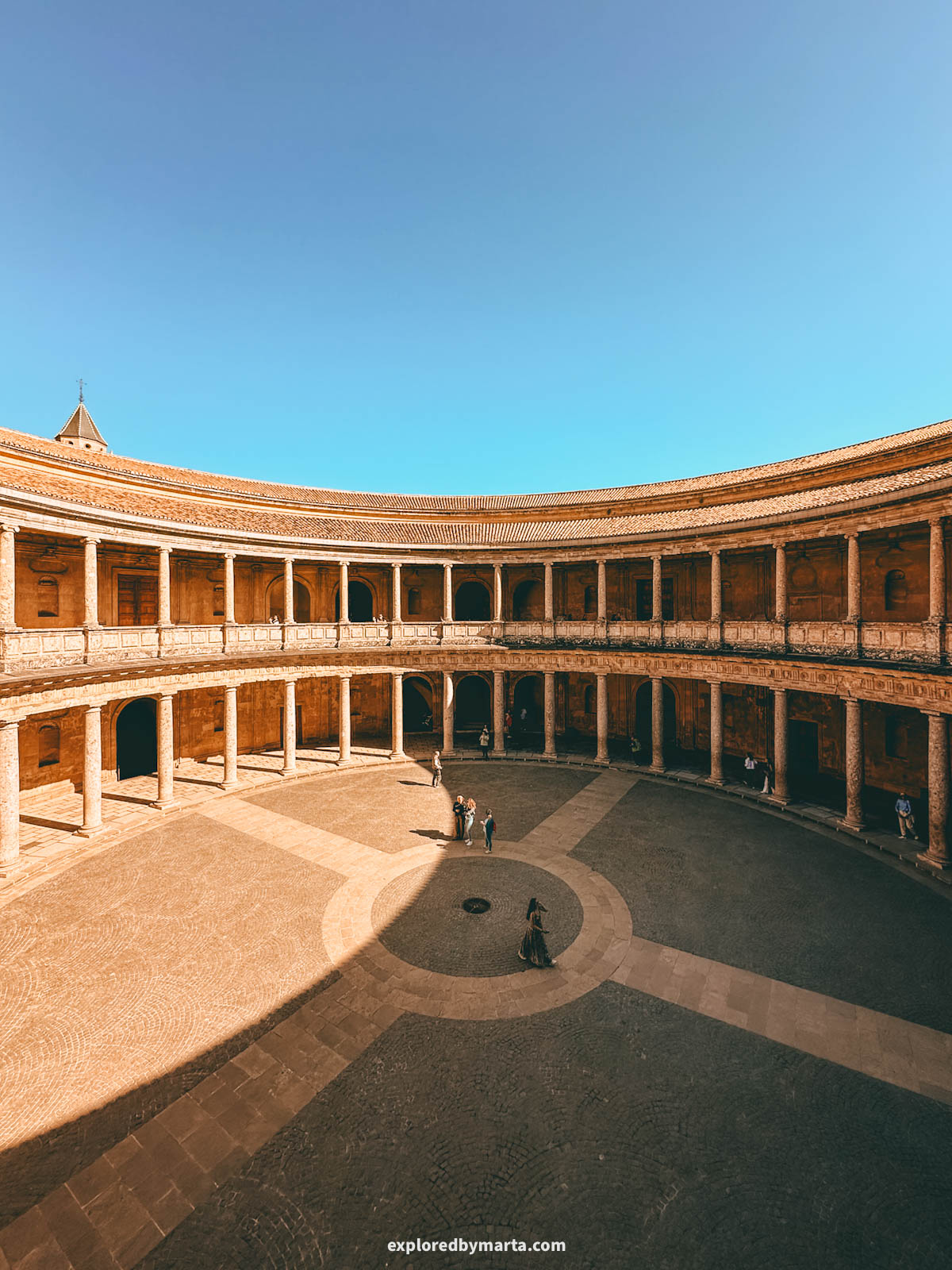
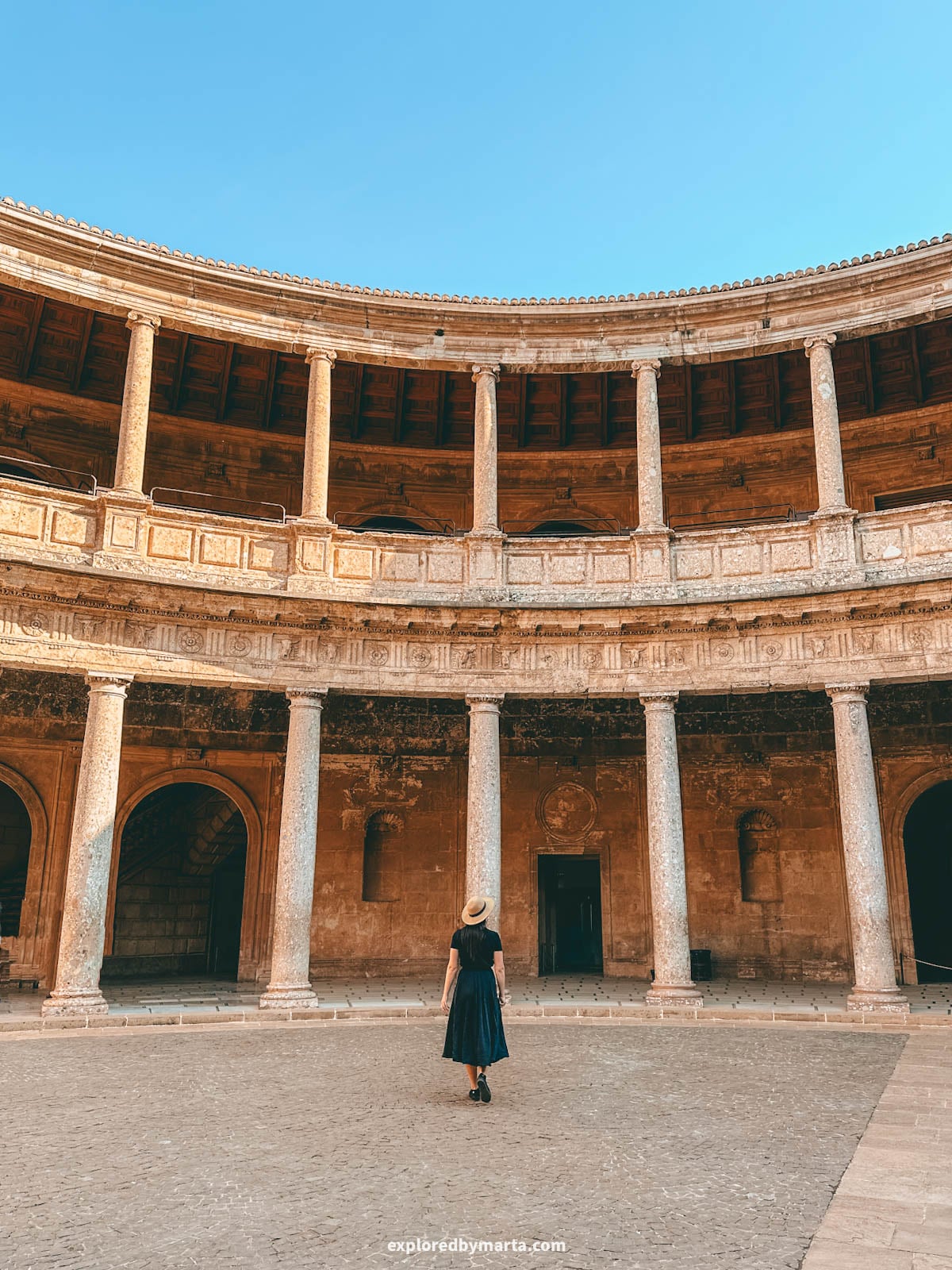
From the outside it looks quite serious and boxy, but the inside is what makes it worth a stop. The courtyard is completely circular, surrounded by two levels of columns, and it feels totally different from the Moorish architecture all around it.
Here’s a fun fact: this circular courtyard was the first of its kind ever built in a European royal palace. Pretty wild for a place a lot of travelers walk right past.
It’s not the most emotional spot in the Alhambra, at least it wasn’t for me, but the contrast is so cool. One minute you’re admiring delicate Nasrid details, and the next you’re standing in this huge Roman-inspired courtyard.
You don’t need long here, maybe 10 to 20 minutes unless you also want to visit the Alhambra Museum located inside the palace.
Location: Palace of Charles V
6. Alcázar de los Reyes Cristianos in Córdoba
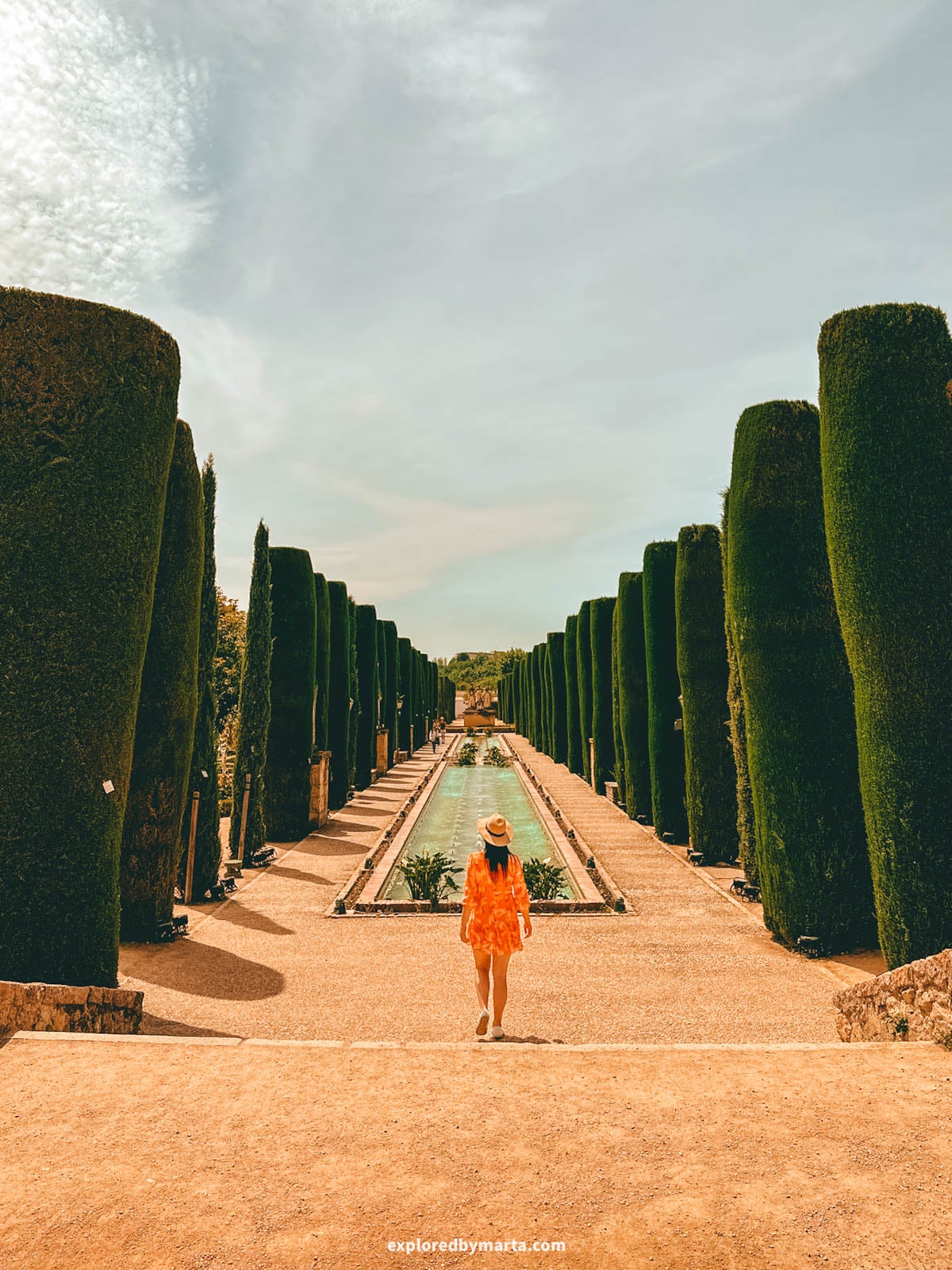
The Alcázar de los Reyes Cristianos (Castle of the Christian Monarchs) is one of the most important historic sites in Córdoba and an absolute must-visit if you love castles and palaces. The name is a mouthful, but the place is honestly worth the trip!
This 14th-century palace complex has towers, defensive walls, courtyards, and seriously beautiful gardens. It is basically a mix of castle and palace, with both fortress vibes and royal elegance in one place. So pretty!
One thing I did not know before visiting is that the Alcázar has a fascinating Christopher Columbus connection.
Turns out, while he was trying to get support for his voyage across the Atlantic, he spent time in Córdoba and actually met with the Catholic Monarchs, Isabella and Ferdinand, right here at the Alcázar.
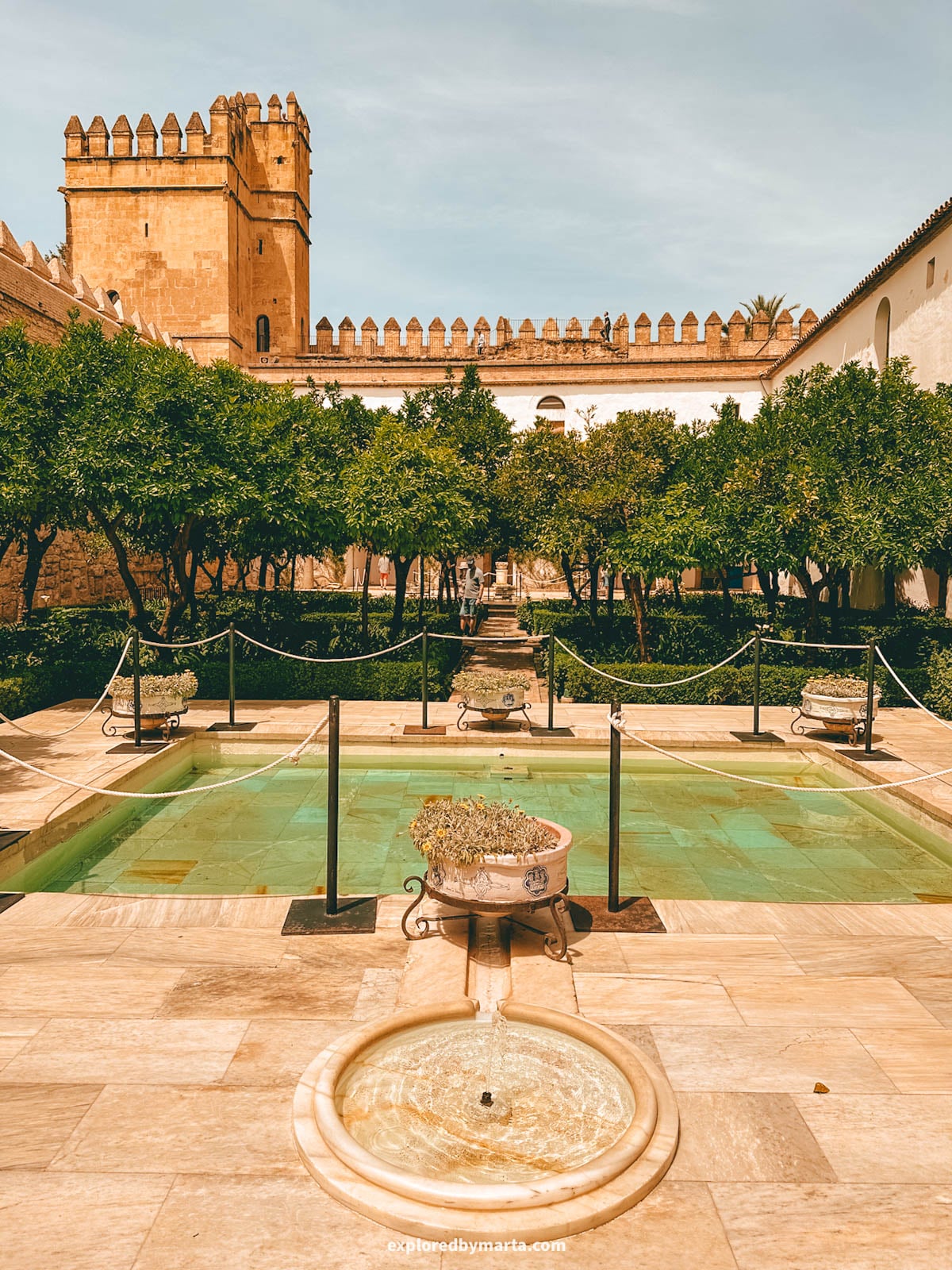
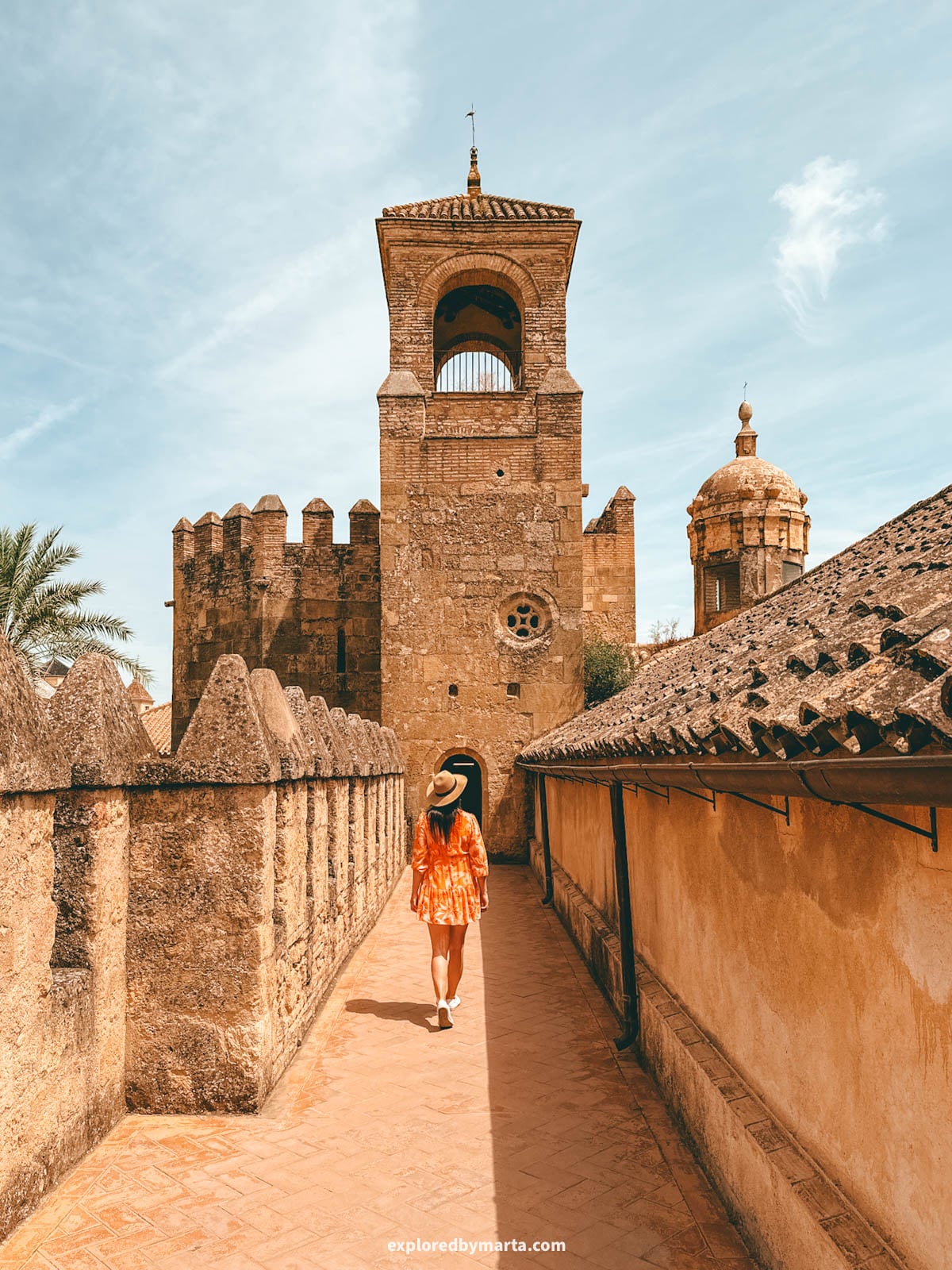
Columbus also met a local woman in Córdoba during his stay, and she later became the mother of his son, Hernando Colón. So yes, this place has some pretty big stories attached to it beyond just the towers and gardens.
The palace itself is nice but to be honest, it was not the most exciting part for us. The rooms are mostly empty with just a few exhibits.
But the real highlight here is the gardens. Oh my, the gardens! They are massive, super well-maintained, and absolutely stunning.
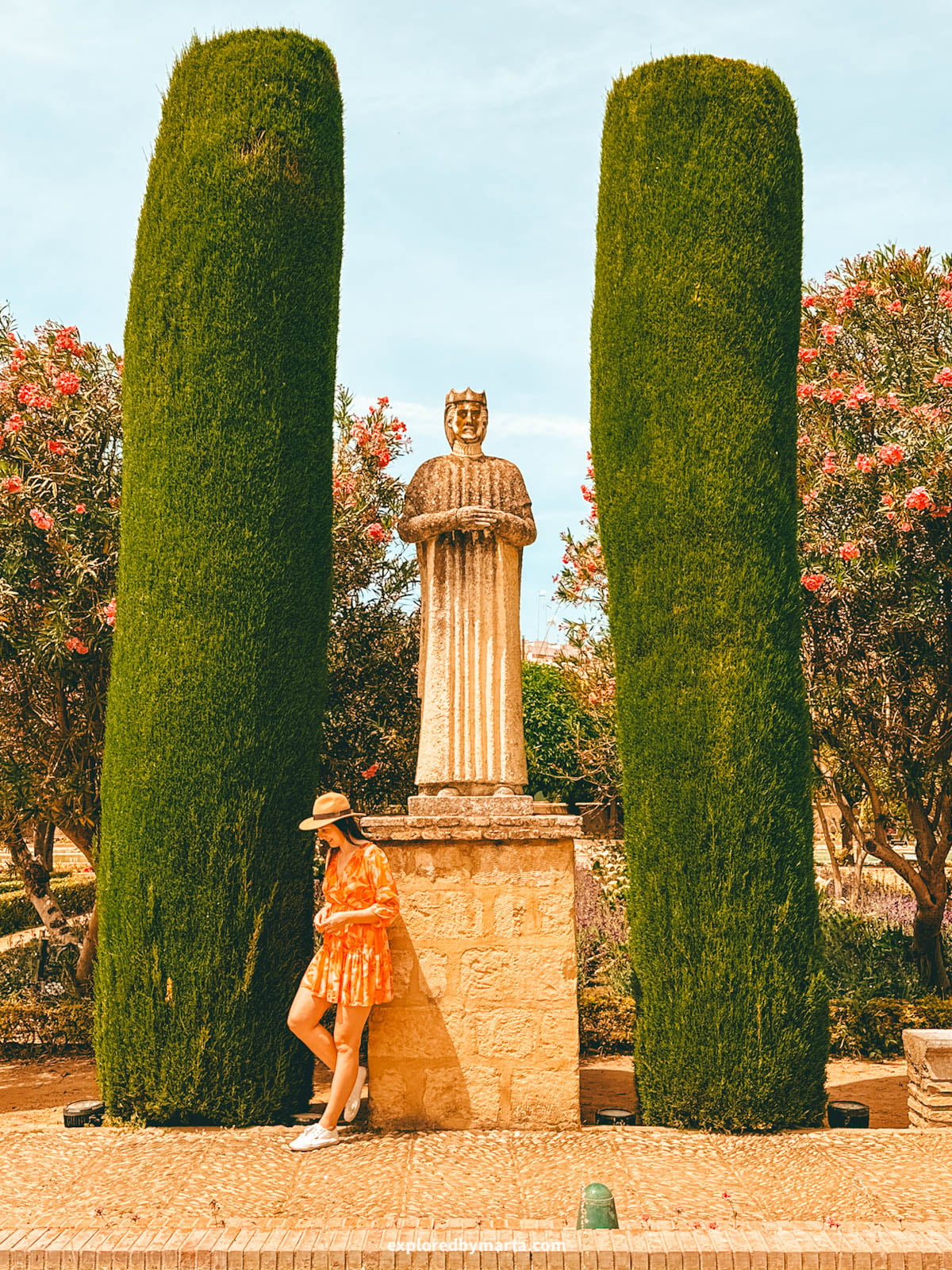
We are talking about long pools with fountains, decorative trees cut into different shapes, perfectly trimmed hedges, flowers everywhere, and statues of the Christian monarchs lined up alongside the walkways.
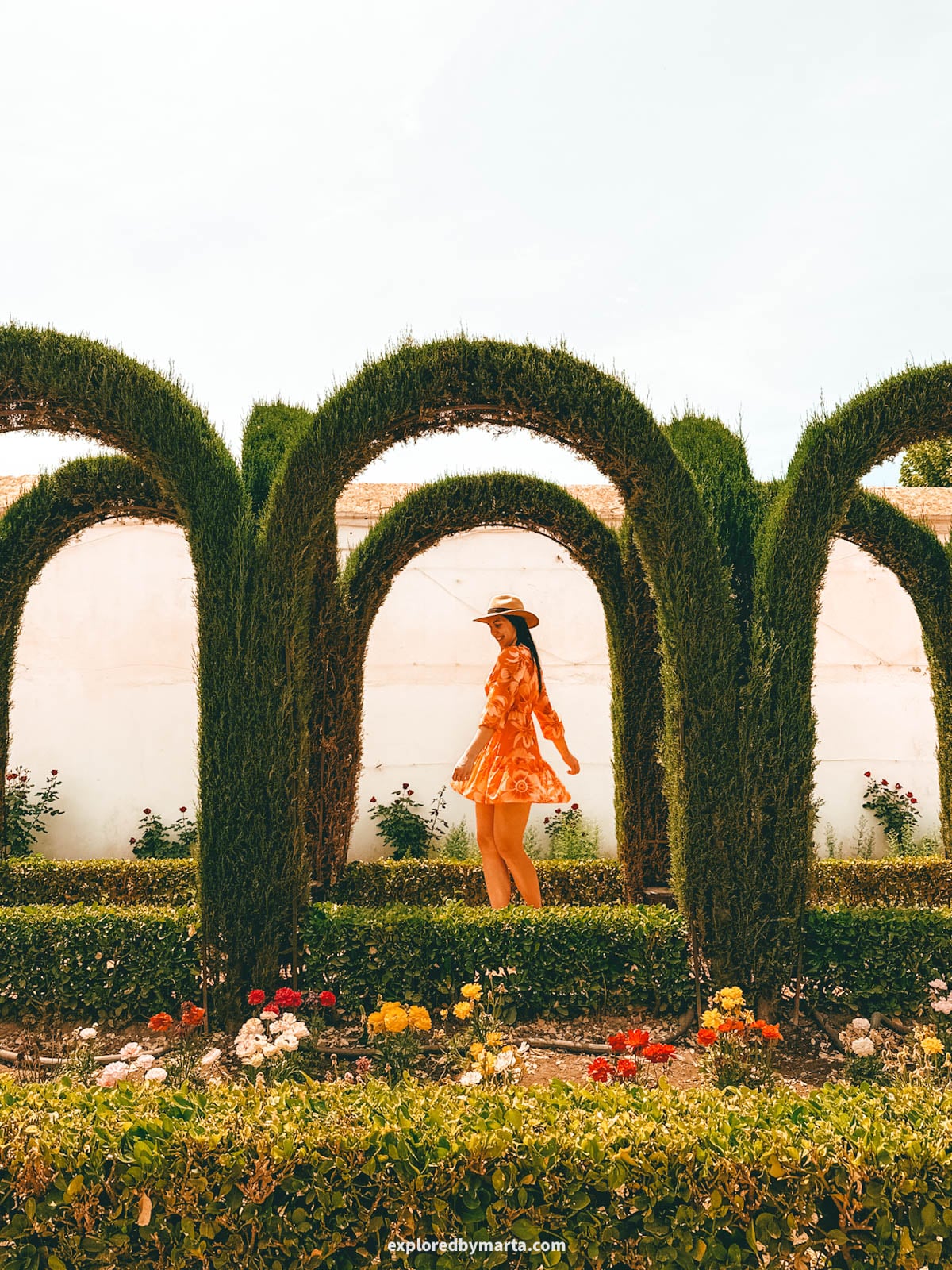
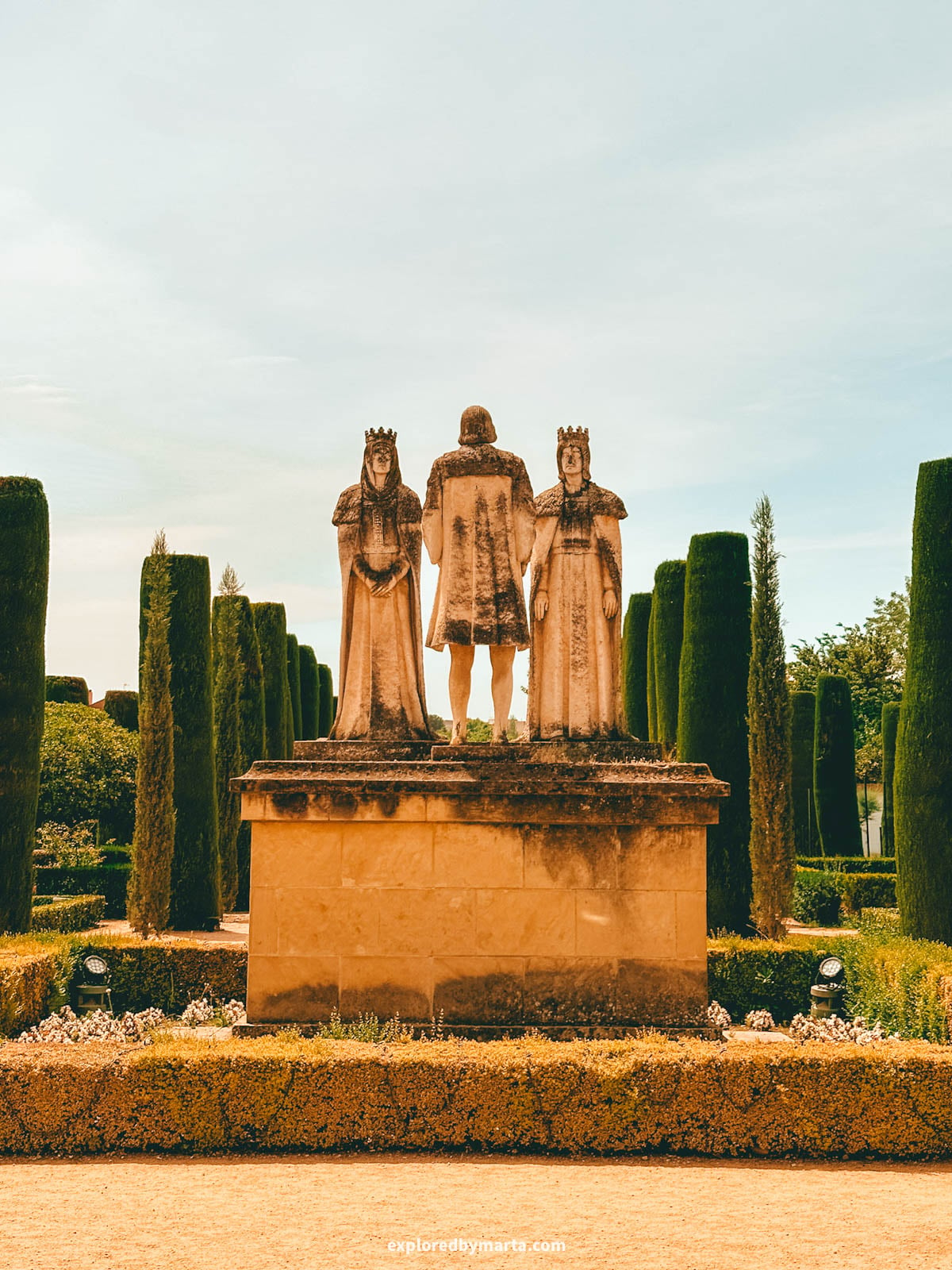
Honestly, the gardens of the Alcázar are among the most beautiful ones we saw in all of Andalusia! And considering how hot Córdoba gets, I kept thinking about how much effort it must take to keep them looking this good. 🥵
You can also climb up the defensive walls and towers for some great views over Córdoba. The Torre de los Leones, Torre del Homenaje, and Torre de la Inquisición are the main ones you can climb.
The views from the top show you the gardens, the Mezquita-Catedral, the river, and the rooftops of the historic center.
For the best experience, I really recommend giving yourself at least 1-2 hours here. There is a lot to see between the palace, the gardens, and the towers.
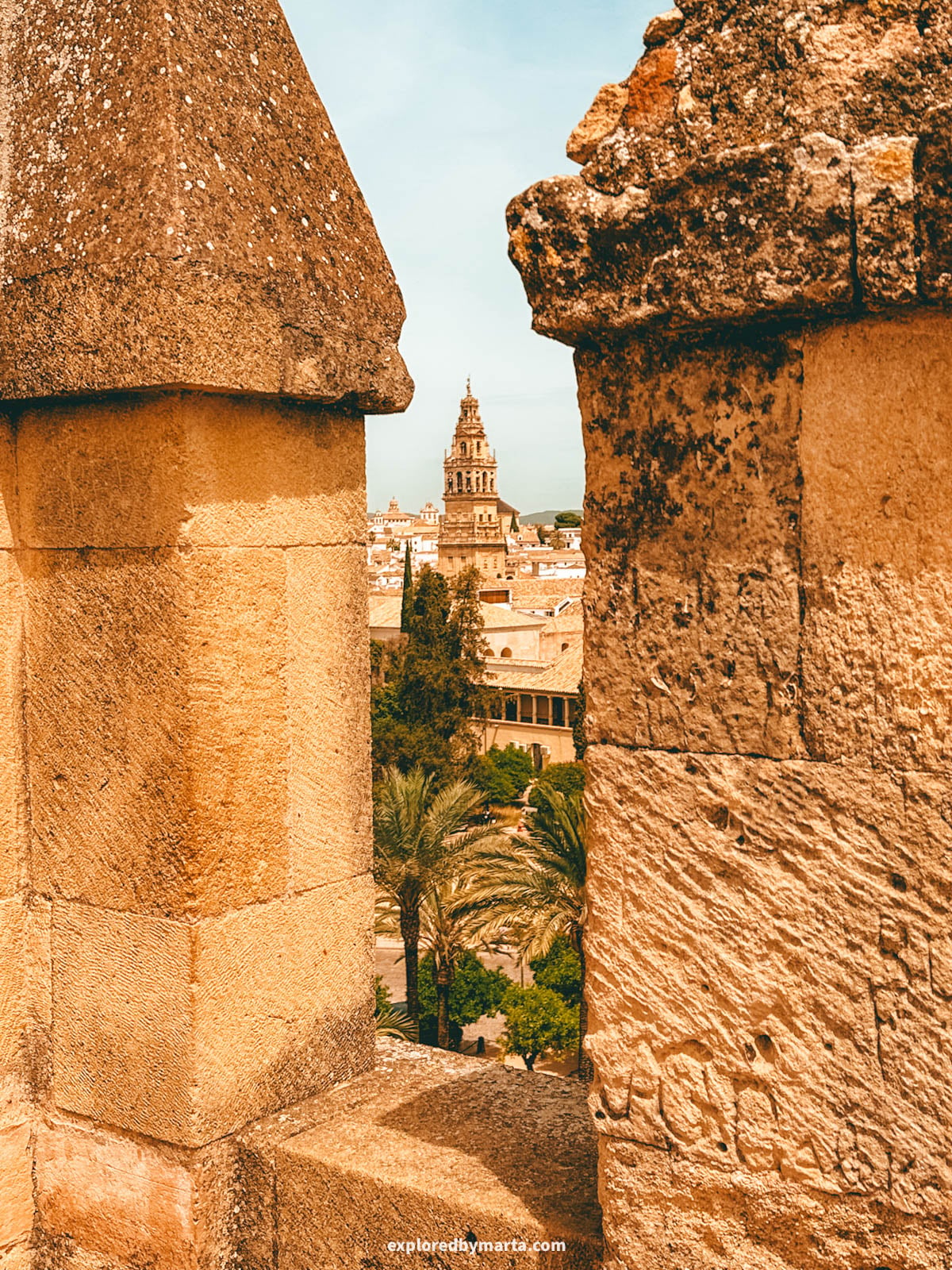
You need a ticket to enter the Alcázar, and the entrance fee is ~5 EUR per person. You can buy tickets online or at the ticket office in the nearby park.
If you are visiting during high season, I really recommend booking ahead or going early to avoid the lines. Or – my honest and a bit crazy tip – go in the middle of the day during the heat (like we did!).
People usually stay away from open spaces in the afternoon, so the gardens were almost empty when we showed up at 2 PM during a heat wave. 😂
The Alcázar de los Reyes Cristianos is one of those bucket list spots in Córdoba that combines history, architecture, and incredible gardens all in one place. Definitely add it to your Andalusia itinerary – you will not regret it!
Location: Alcázar de los Reyes Cristianos
7. Castillo de Almodóvar del Río
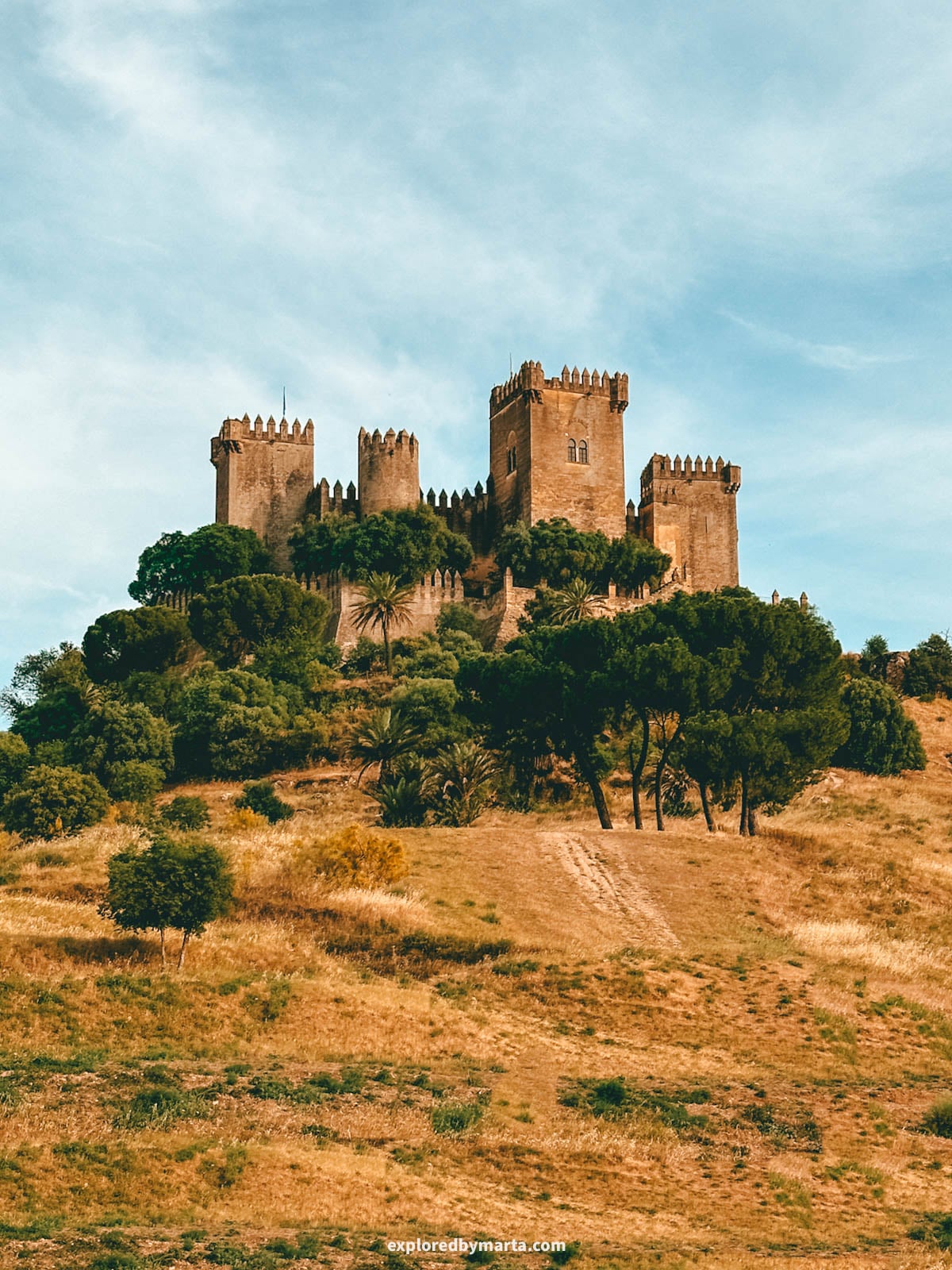
If you love medieval castles, Castillo de Almodóvar del Río has to be on your bucket list when visiting Andalusia. This majestic fortress sits on a hill above the small town of Almodóvar del Río, just a short 30-minute drive west of Córdoba, and you can spot it from miles away!
I am a huge fan of these kinds of castles – the ones with massive defensive towers and amazing views over the countryside. So when I found out we could visit one near Córdoba, I was so excited!
The castle origins go all the way back to the 8th century, though most of what you see today was rebuilt in later centuries. So we are talking about over a thousand years of history. It has been a Roman fortress, a Moorish stronghold, and a Christian royal palace – all in one place.
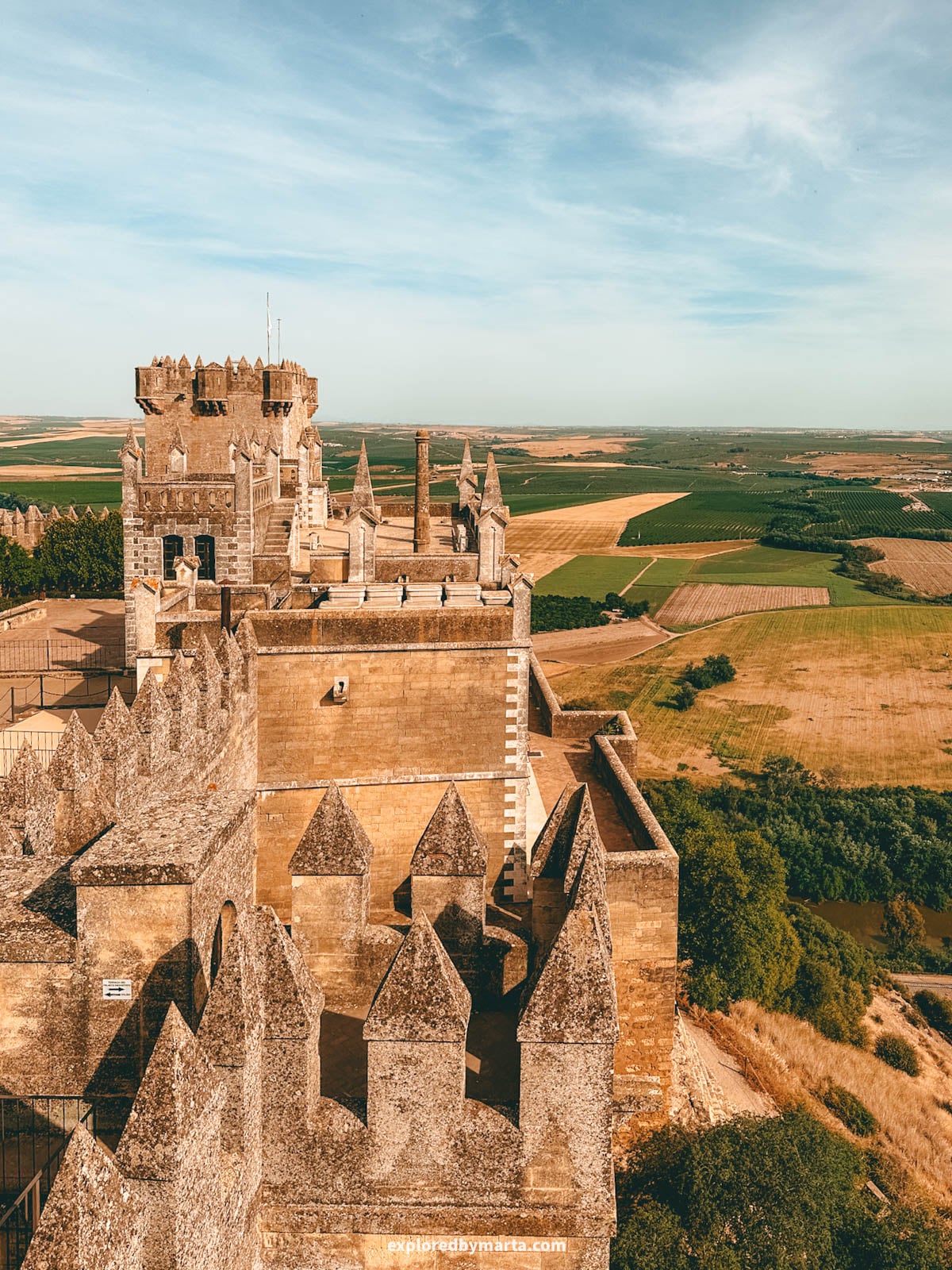
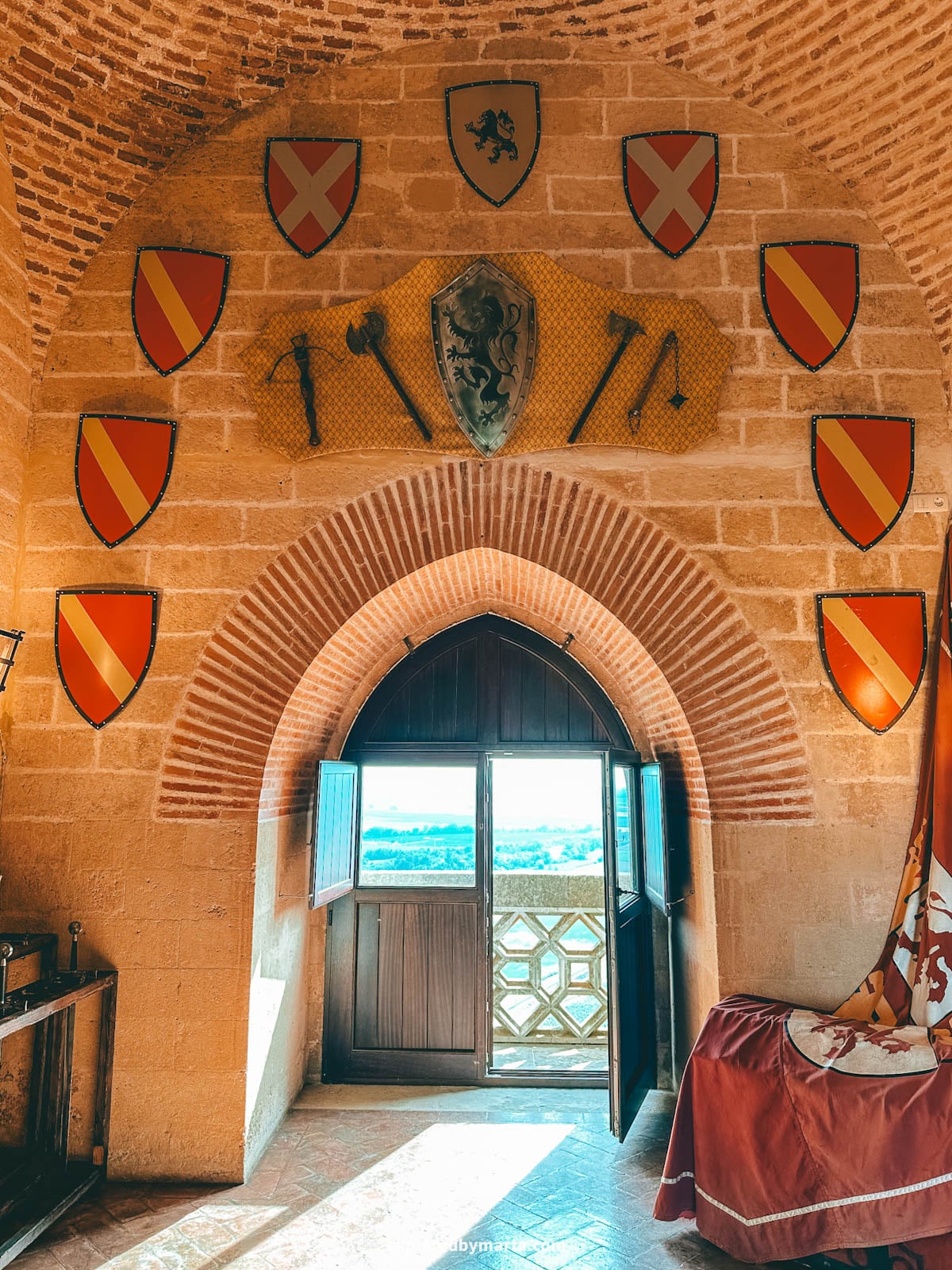
The castle was actually one of the most important strategic points in Andalusia during the Moorish period, because of its location overlooking the Guadalquivir River. Whoever controlled this hill basically controlled the river trade and the access route to Córdoba.
Now, here is the fun part for all the Game of Thrones fans out there. This castle was used as a filming location for the series!
It appeared as Highgarden, the home of House Tyrell, in seasons 7 and 8. Yes, this is THE castle you saw on TV. And once you see it in person, you will totally see why they picked it. 🤩
Walking through the castle is a whole experience. You can explore the towers, courtyards, stone corridors, dungeons, and chapels. There are some areas with reconstructed scenes showing how life used to be inside the castle. Pretty cool for the kids visiting, too!
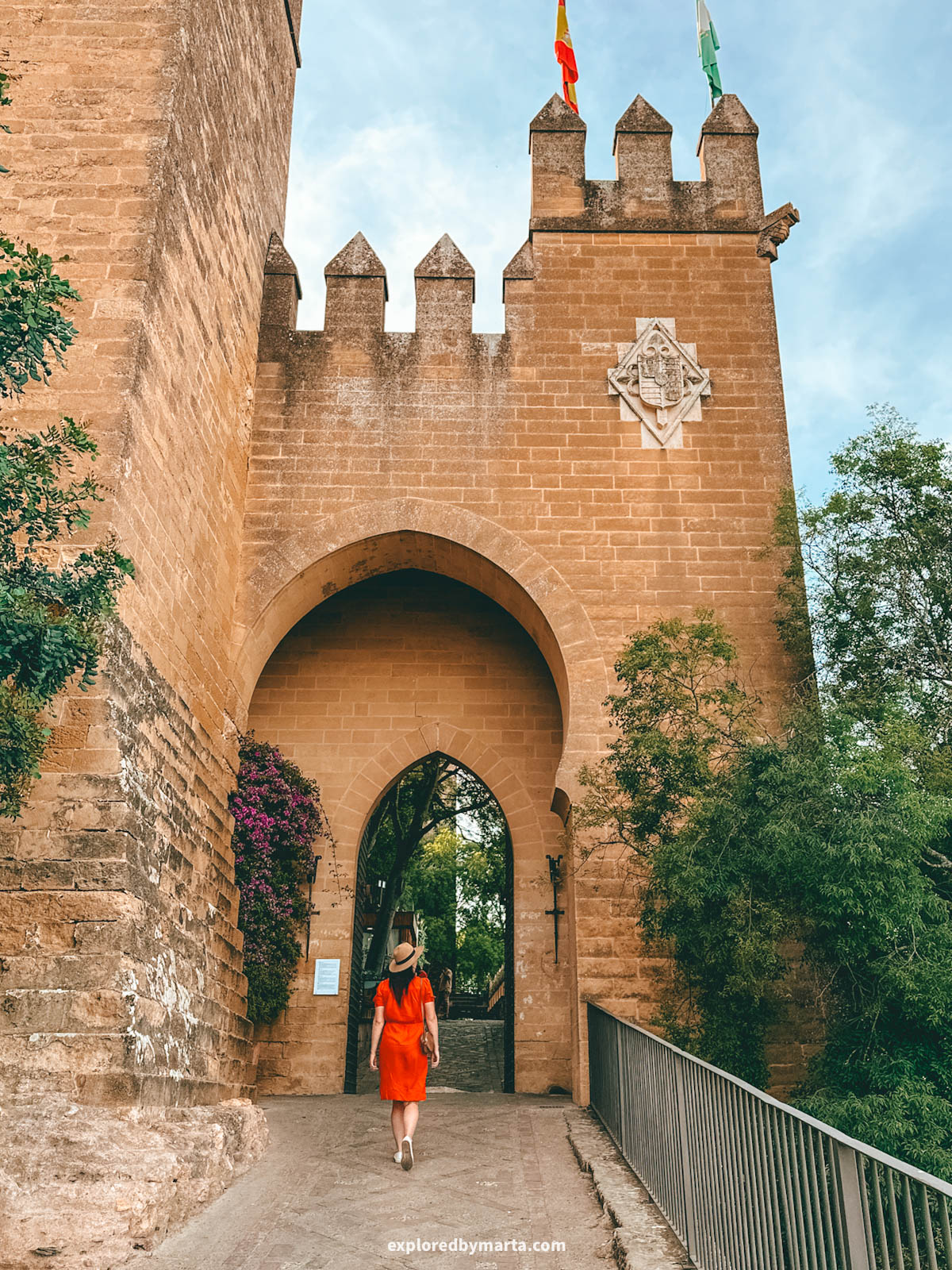
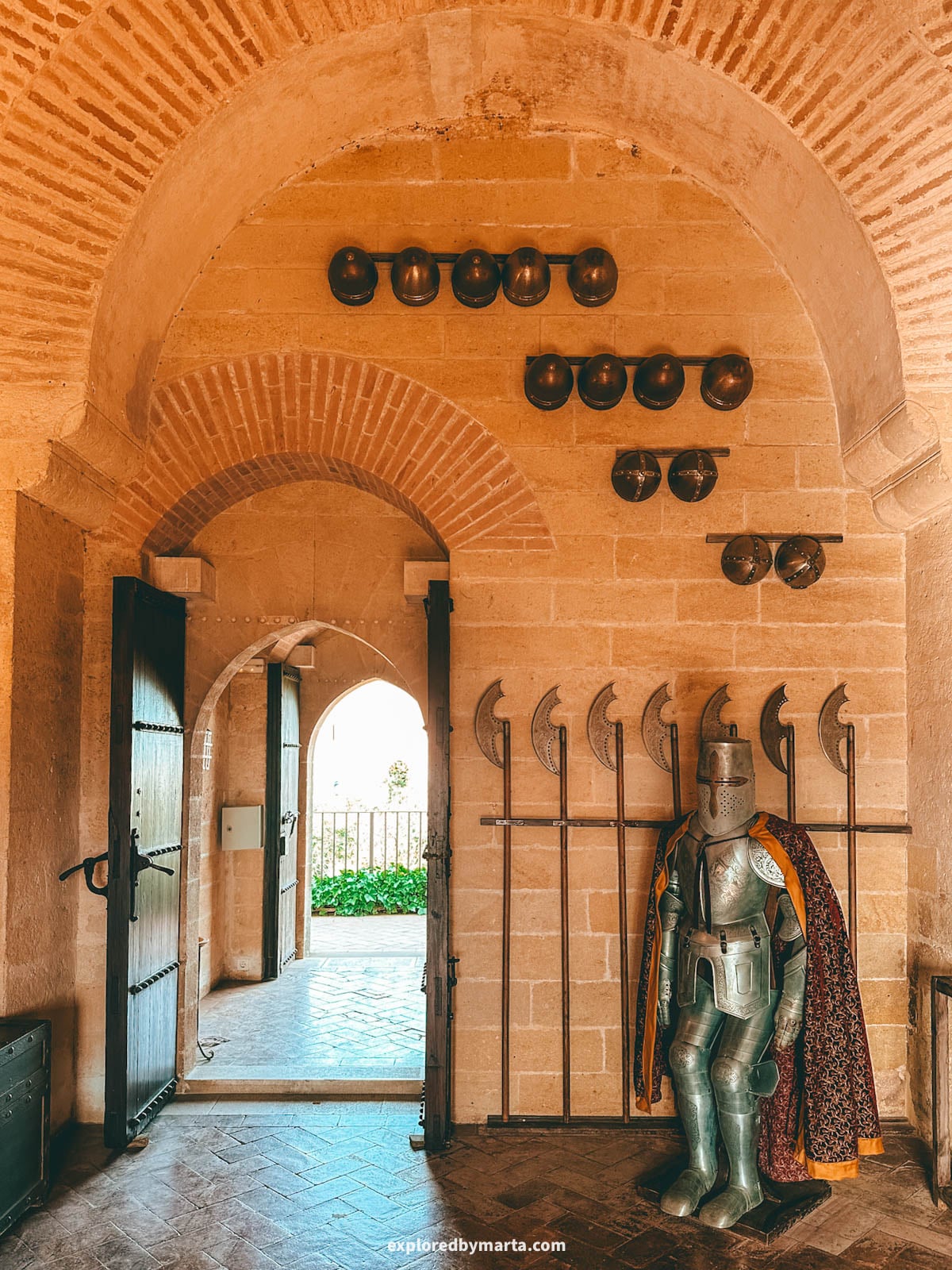
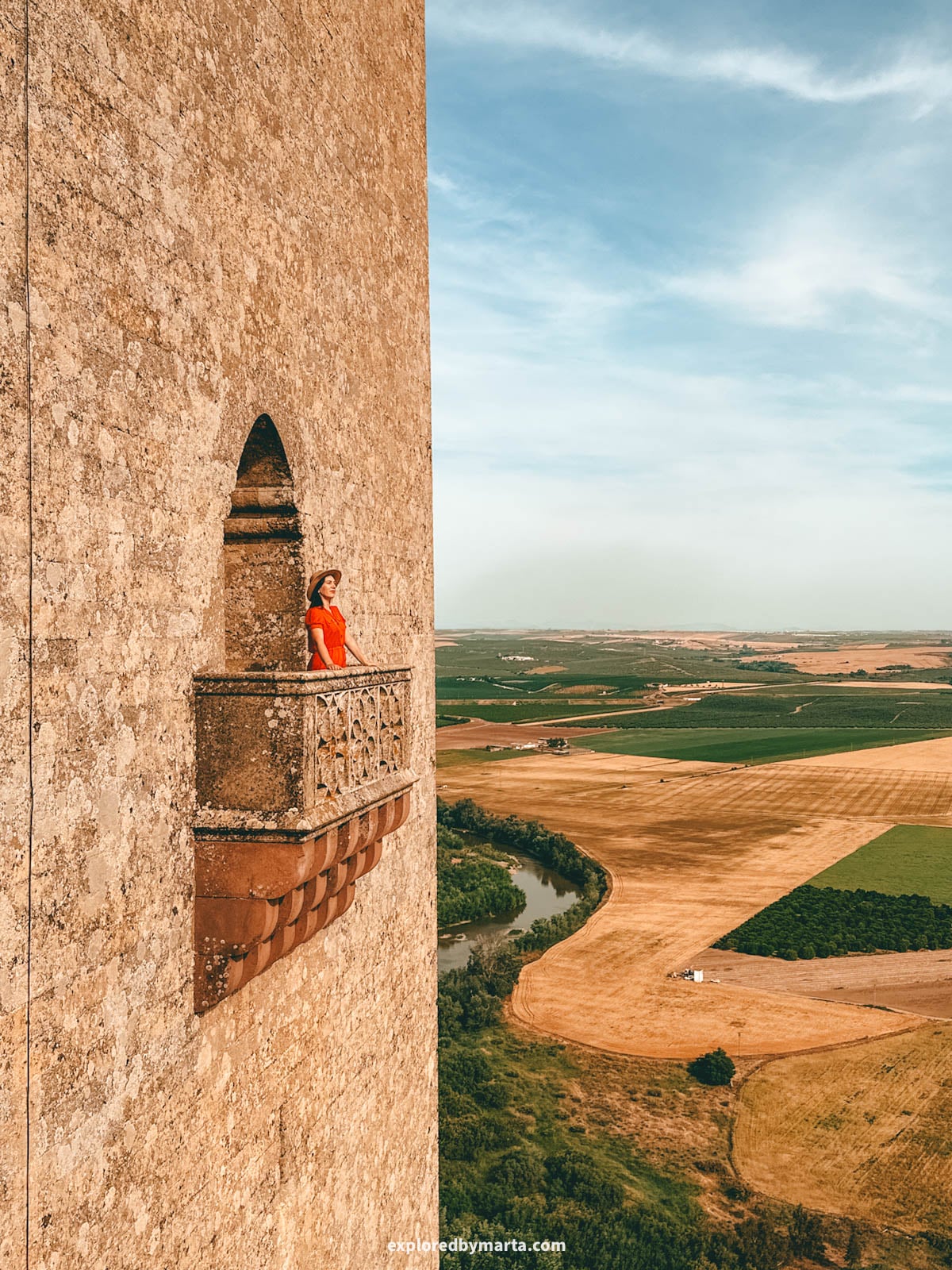
The views from the top are incredible. From the defensive walls and the highest towers, you can see the Guadalquivir River, the village below, and the countryside stretching out as far as the eye can see.
We climbed up the Torre del Homenaje, the main tower, and the photo from the balcony was one of my favorites from the whole trip. This exact view appeared in Game of Thrones, so I obviously had to take a photo there (see the first photo!).😉
The castle is open year-round and the entrance fee is 11 EUR per adult. It is a bit pricey compared to some other castles, but the place is huge, super well-preserved, and feels worth it. Plus, the entrance fee goes toward maintenance, and keeping a thousand-year-old castle in this condition is no joke!
Castillo de Almodóvar del Río was one of my favorite castles in Andalusia, and I would 100% recommend adding it to your itinerary. If you are spending time in Córdoba anyway, this is the perfect half-day trip!
Location: Castillo Almodóvar del Rio
8. Palacio de Viana in Córdoba
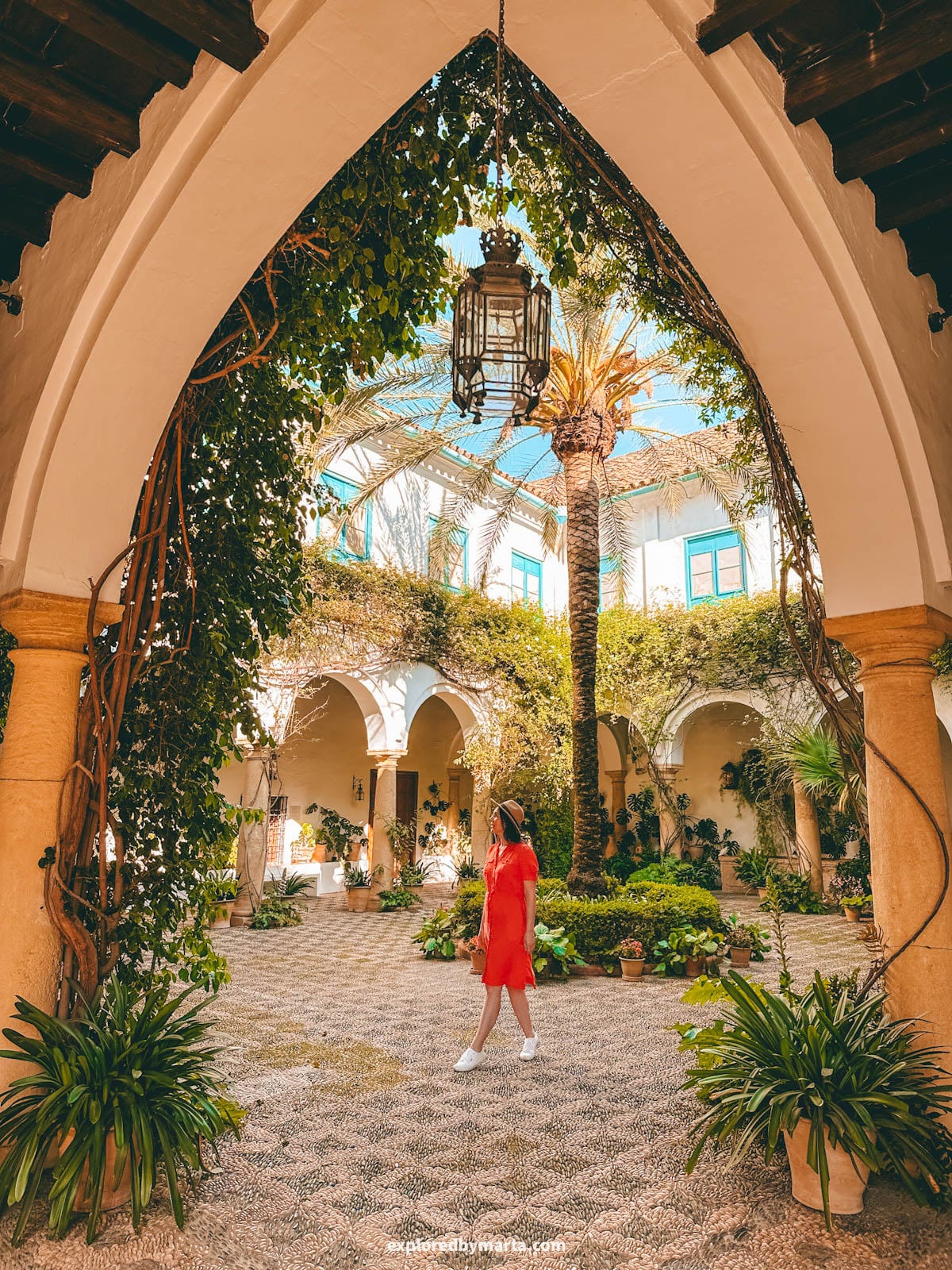
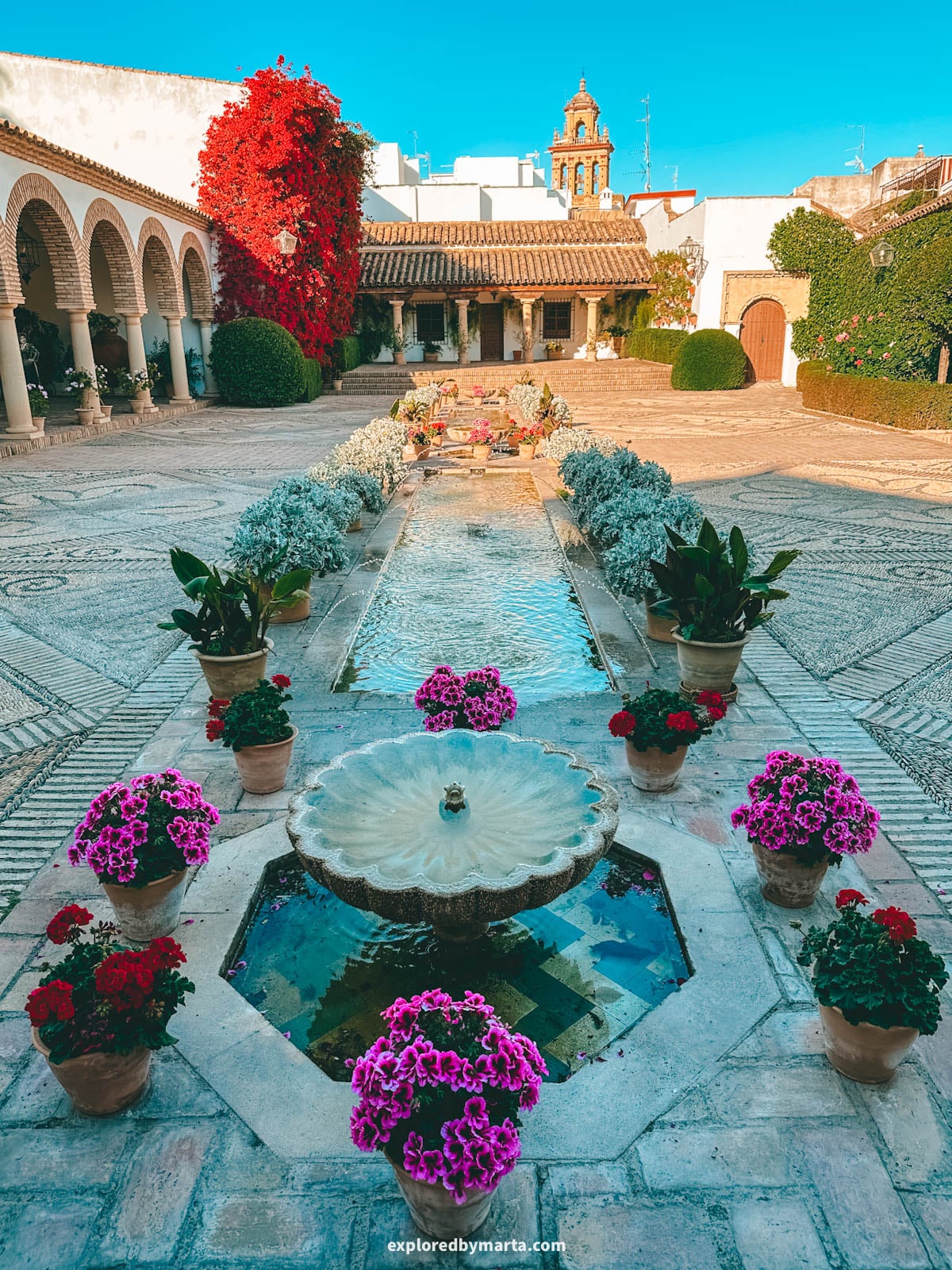
If you want to see one of the most stunning palaces in Andalusia, Palacio de Viana in Córdoba should be on your list. This Renaissance palace is famous for one very specific reason – it has a ton of incredible patios, each one with its own style, plants, and personality.
Honestly, I lost count of how many there are. A lot.
The palace dates back to the 14th century and was the home of aristocratic families for centuries. Today, the palace works as a museum and you can explore both the inside of the house and the patios.
The inside of the palace is filled with original furniture, tapestries, art collections, libraries, and even a weapons collection. Every room shows what life looked like for a wealthy Cordoban family back in the day. Pretty fascinating to see!
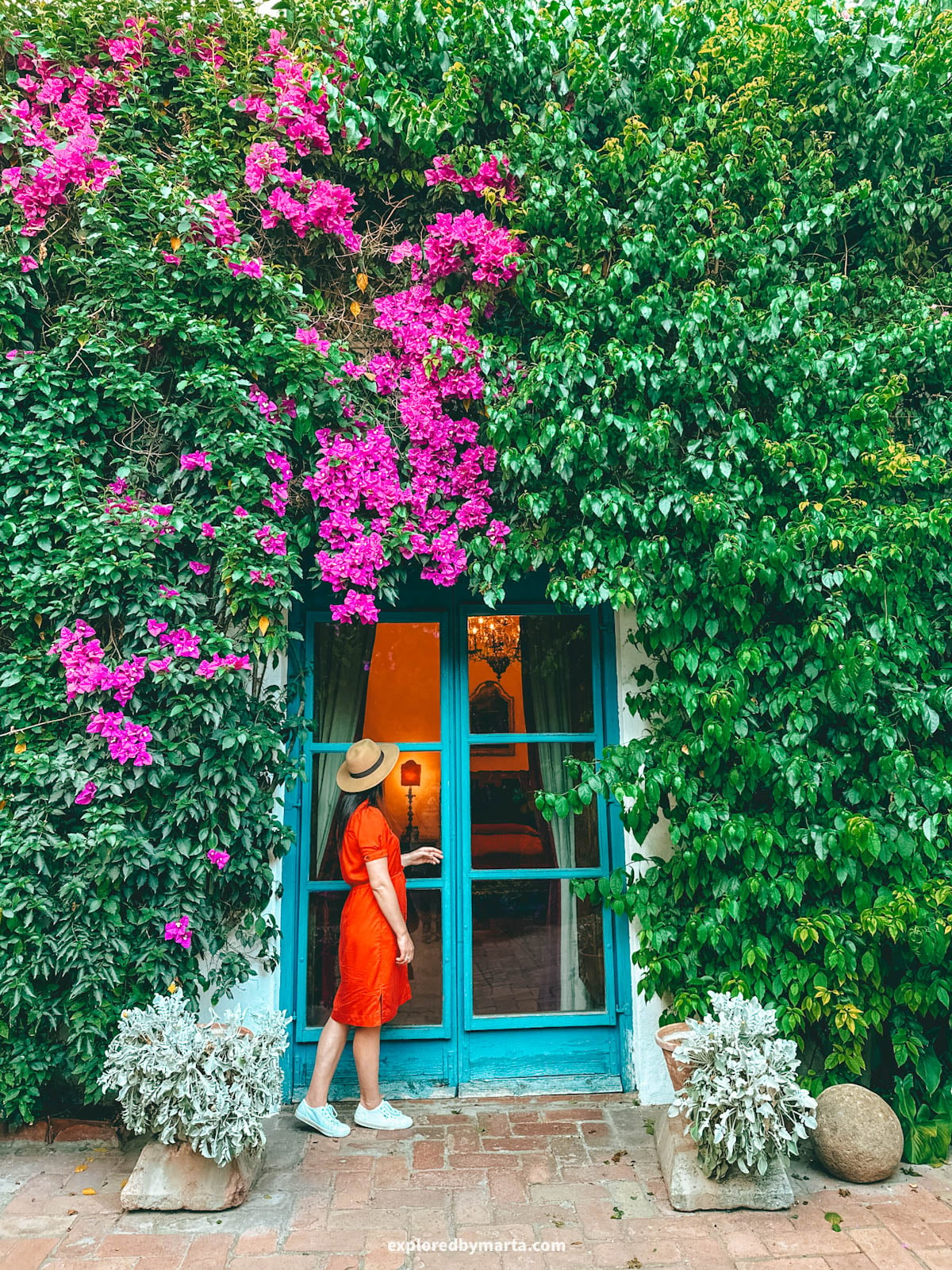
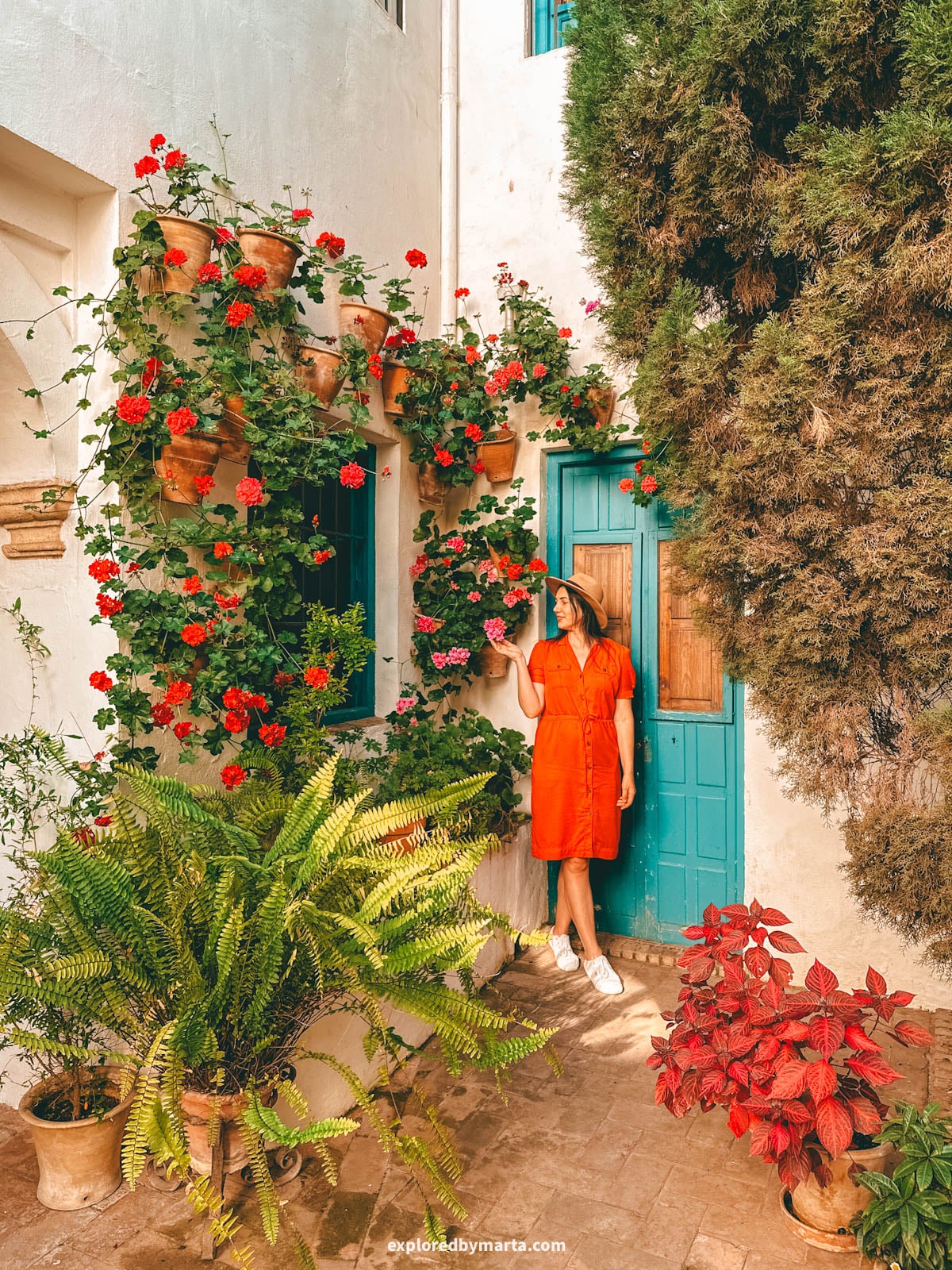
But truly, the real reason to visit Palacio de Viana is the patios. And I am not exaggerating when I say each one feels unique. Some are filled with orange trees, others with flowers and fountains. Some feel like Moorish gardens, others like English-style courtyards.
Walking from one to the next feels like a maze!
My favorite was the patio with a long pool stretching down the middle, surrounded by greenery, flower bushes, plants, and Andalusian architecture. So pretty!
The patios are a great alternative if you visit Córdoba outside the famous Fiesta de los Patios festival in May, when the city opens its private patios to the public. Palacio de Viana lets you see beautiful, well-maintained patios all year round, without the crazy crowds.
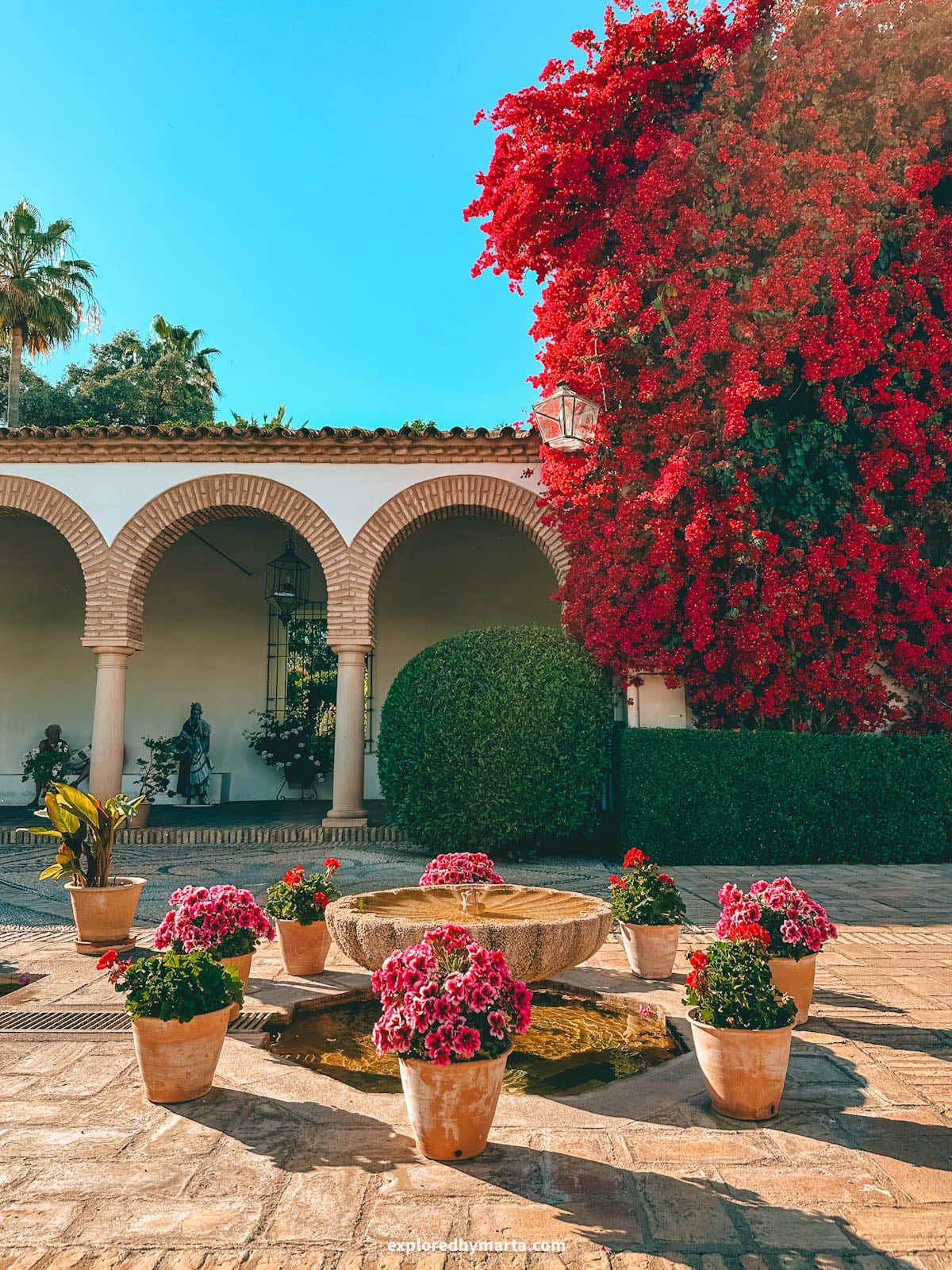
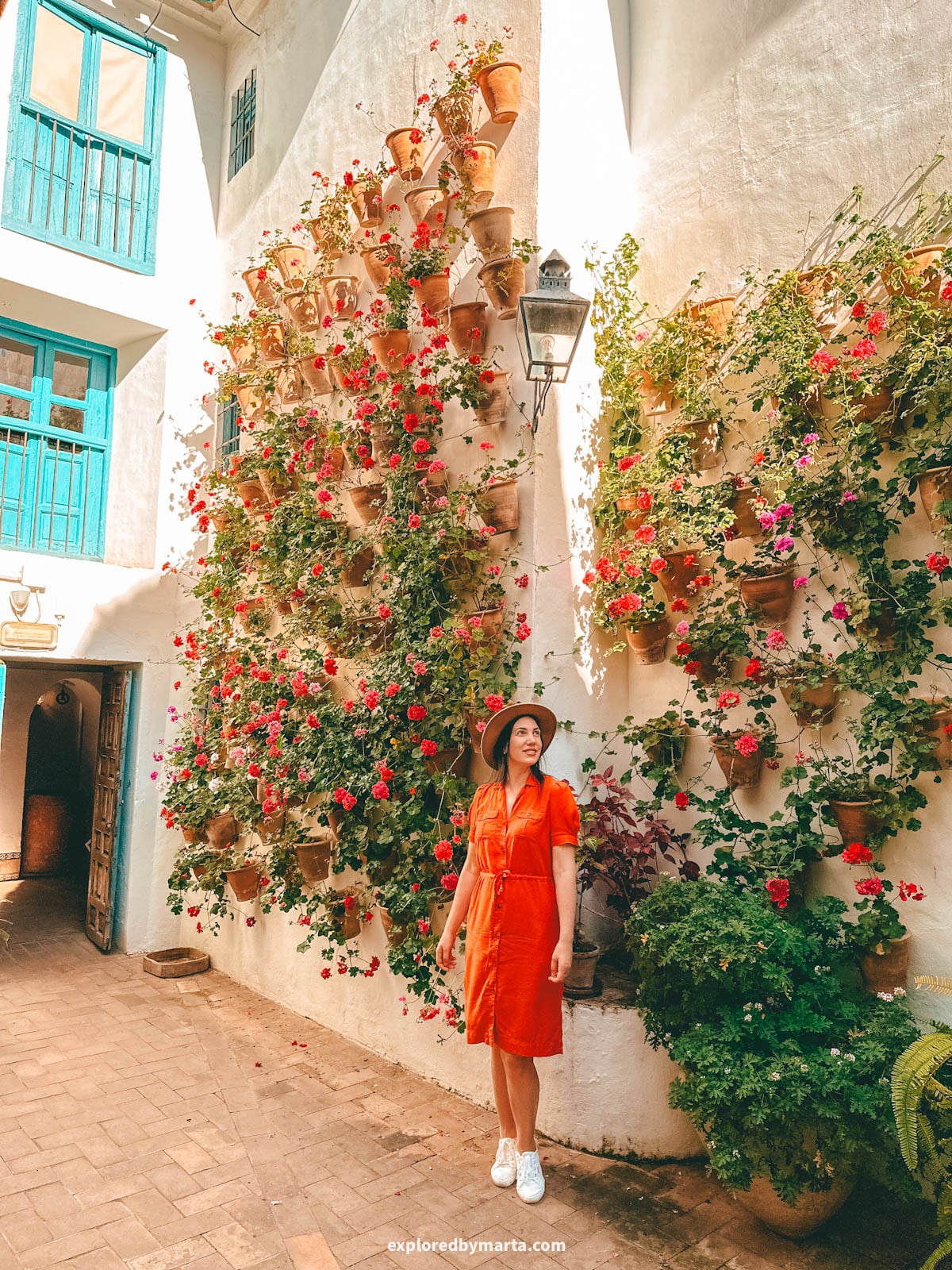
The palace is located a bit further from the main tourist area in Córdoba. We arrived not long before closing and did not have as much time as I would have liked. If I could do it again, I would come earlier in the day to wander slowly and really enjoy every patio.
The entrance fee is 8.50 EUR per adult for the ground floor (which is what we visited). It is a bit pricey, but considering they have to maintain all those plants and flowers (in the Córdoba heat!), I did not mind paying.
Make sure to check their website before going, because they are not open every day, and the opening hours change depending on the season.
Honestly, Palacio de Viana was one of the most beautiful places we visited in Córdoba, and I would 100% recommend including it in your itinerary. If you love patios, gardens, and Andalusian architecture, this place is a dream. 😍
Location: Palacio de Viana
9. Casa de Pilatos in Seville
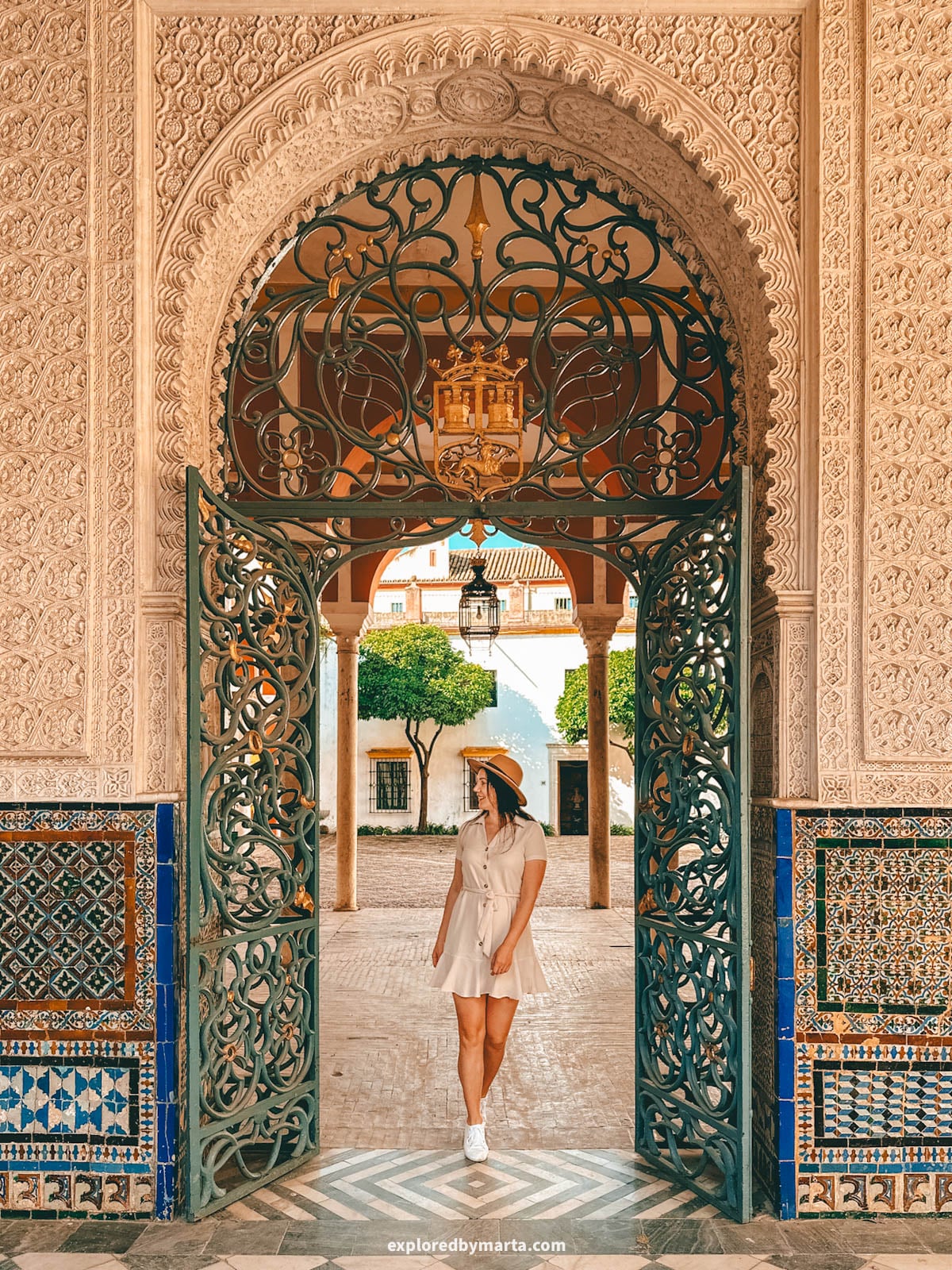
Casa de Pilatos is one of the most beautiful palaces in Seville (and one of the most underrated!). Most people make a beeline for the Royal Alcázar and never make it here, which means you often get to enjoy this one with way fewer crowds.
Except when a group tours arrive, haha.
Casa de Pilatos is a 16th-century palace, and the star of the show is the main courtyard. It blends Gothic, Mudéjar, and Renaissance styles all together, with statues, archways, marble columns, and the most gorgeous, colorful tilework. It really is stunning.
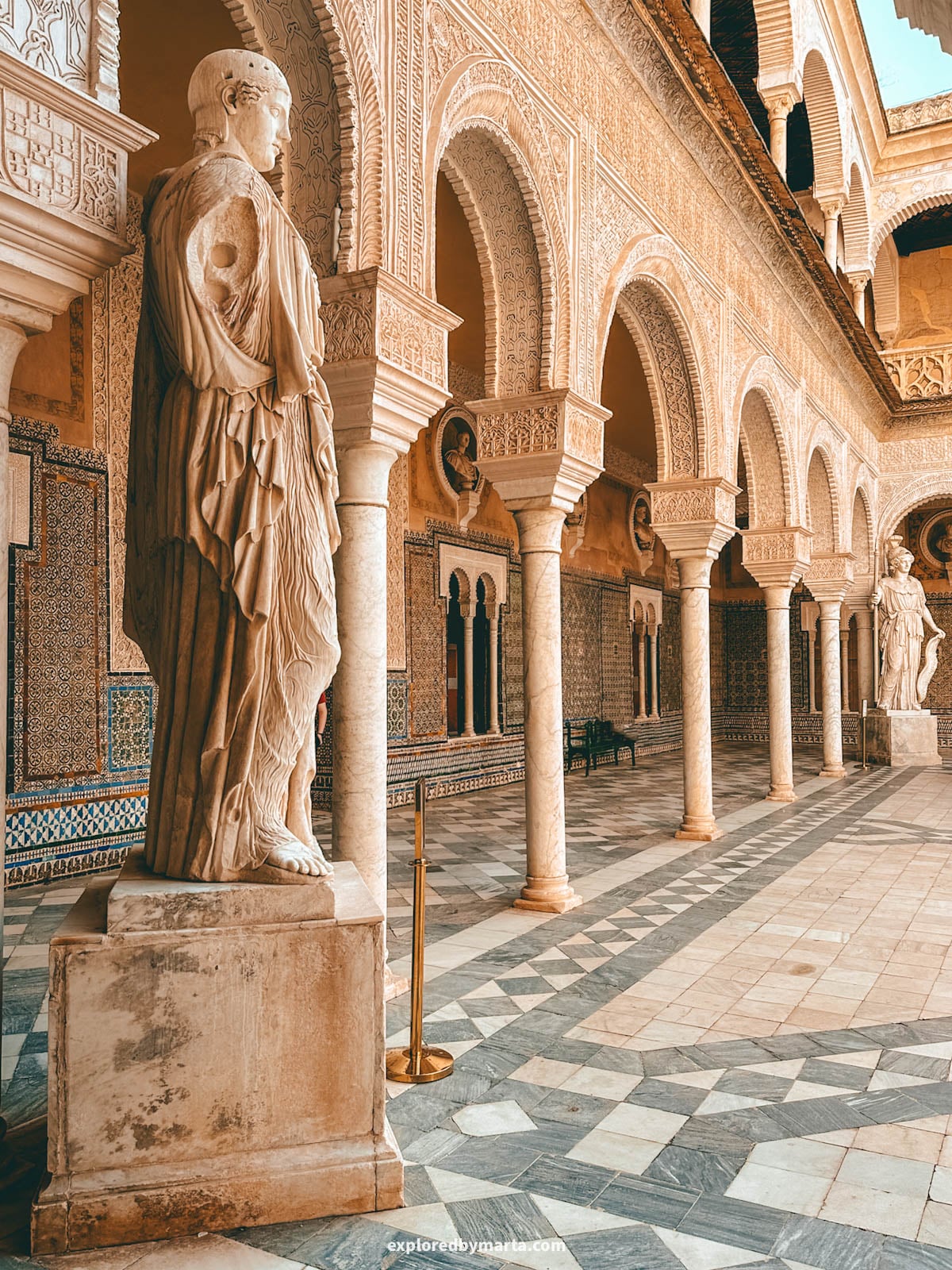
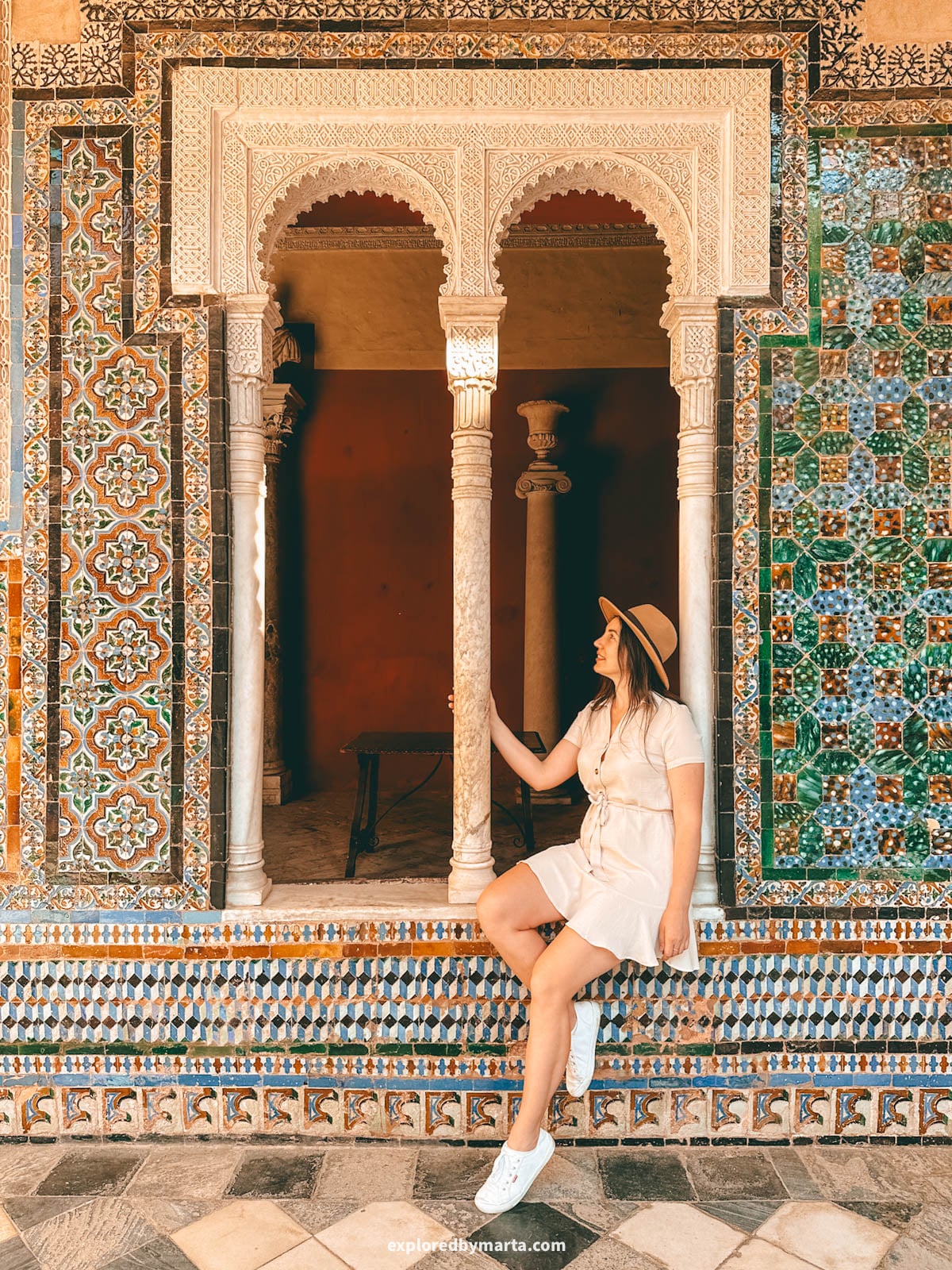
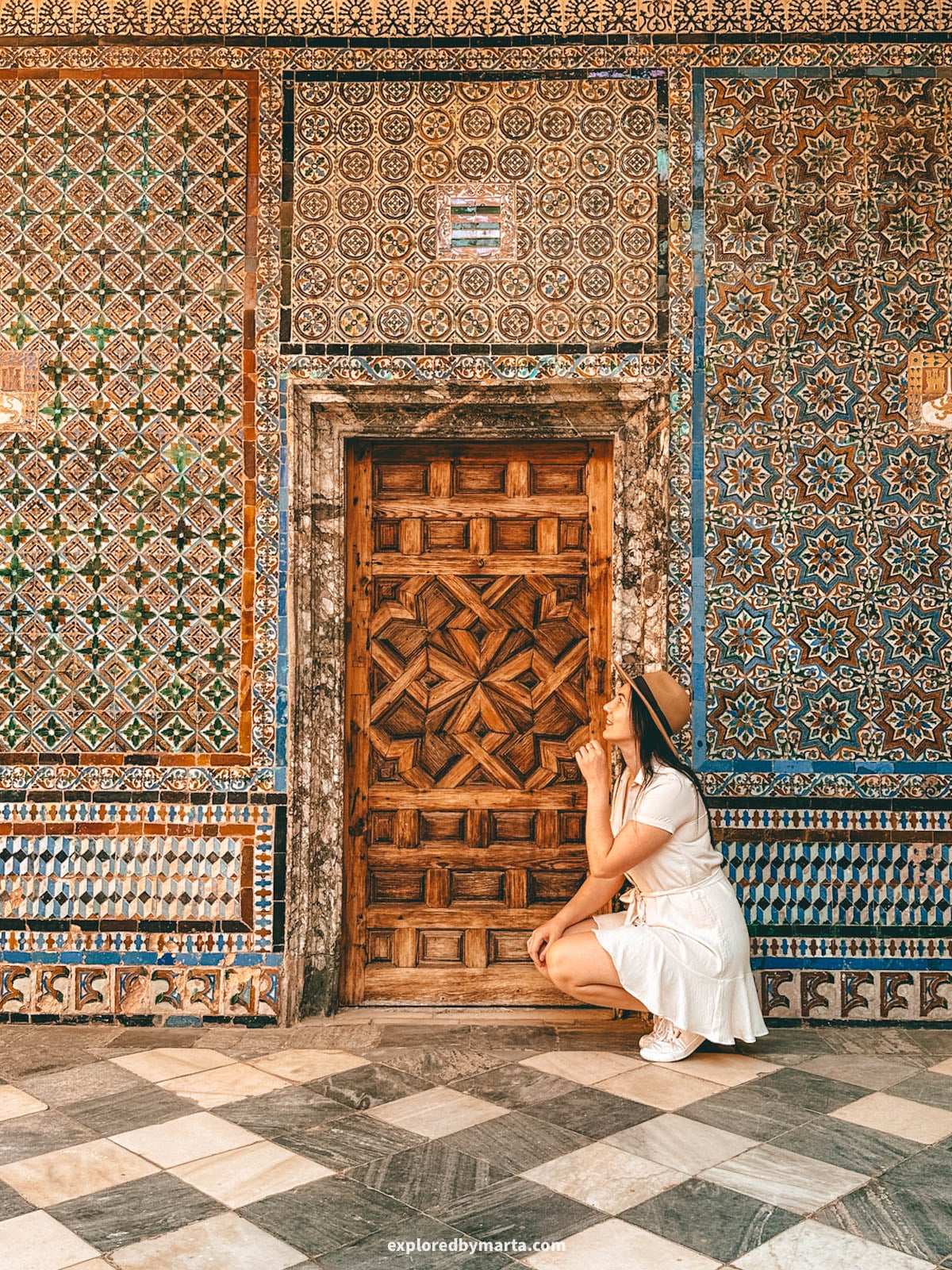
I read that the palace has around 150 different azulejo (glazed tile) designs, made back in the 1530s. It’s one of the largest tile collections of its kind in the world. After exploring the palace, I really believe that!
As you wander around the patio, you’ll be amazed by the details: the statues, the windows framed by columns and arches, and the colorful tiles forming delicate mosaics everywhere you look.
Here’s a fun detail I love: the palace gets its name, “Pilate’s House,” from a pilgrimage to Jerusalem made by one of its owners, Fadrique Enríquez de Ribera, in the early 1500s.
The story goes that he was inspired to recreate the house of Pontius Pilate back home in Seville.
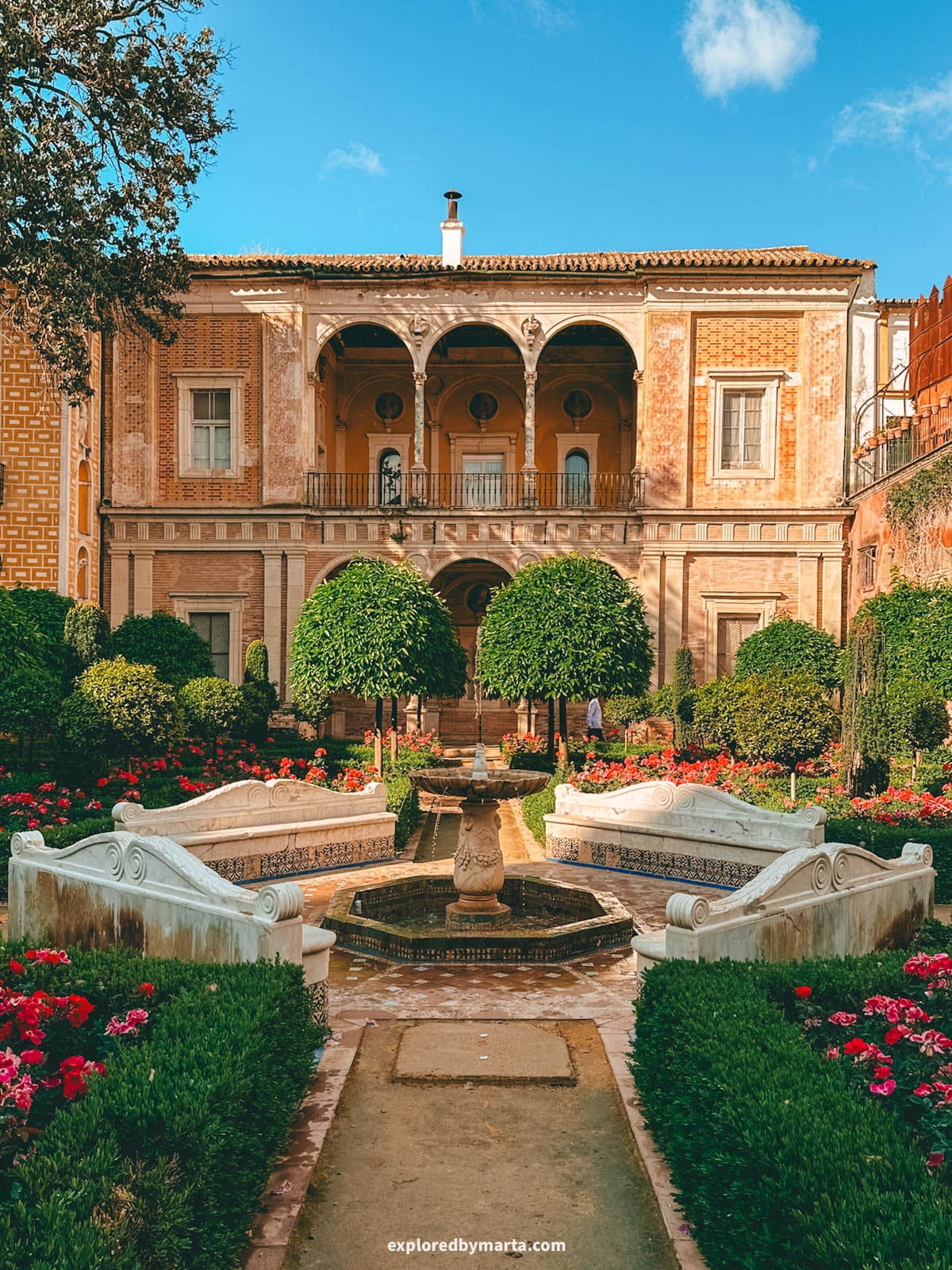
There are two gardens in the complex, and they’re a real oasis of peace. They’re full of lush plants, blooming flowers, colorful benches, fountains, flower pots, and trees. Truly beautiful.
Back in those days, having a garden was a status symbol in a place like Seville. They needed a lot of water for it, so it meant you had connections to people in high positions, aristocrats and royalty.
If you want one of the most beautiful palaces in Seville without the Alcázar-level crowds, this is the one. Take my word for it, it’s worth the detour.
Location: Casa de Pilatos
10. Castillo de Gibralfaro in Málaga
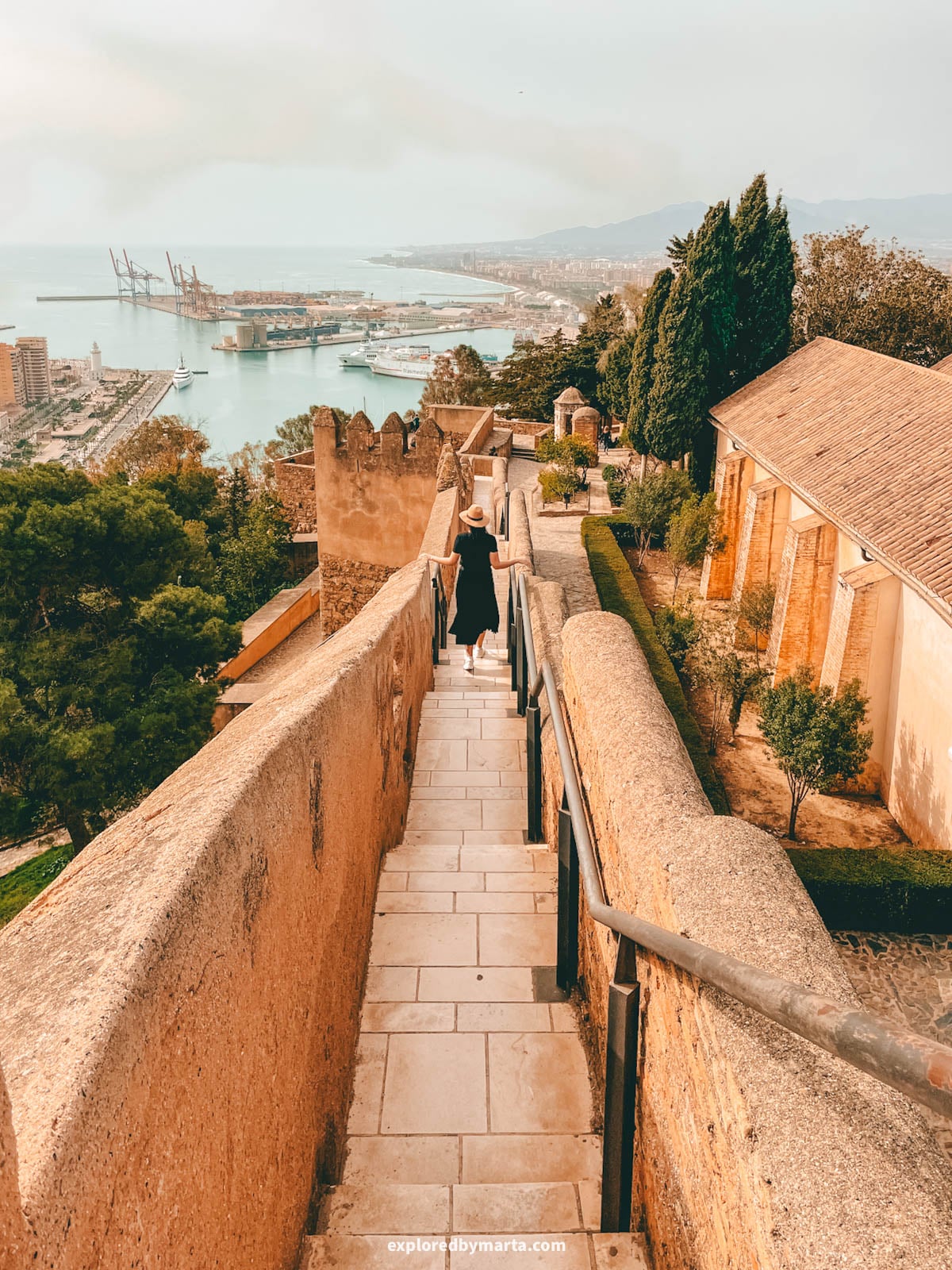
Standing on top of its own hill above Málaga, Castillo de Gibralfaro is one of the most impressive castles in Andalusia, and a must-see place if you’re visiting the city of Malaga.
I learned that the castle dates back to the 10th century, when it was built by the emir Abd al-Rahmān III. Later, in the 14th century, a Nasrid king expanded it and connected it to the Alcazaba below with a fortified walkway called La Coracha.
The whole complex was basically built to be impossible to attack. Pretty wild to think about all its history as you walk around those thick medieval walls!
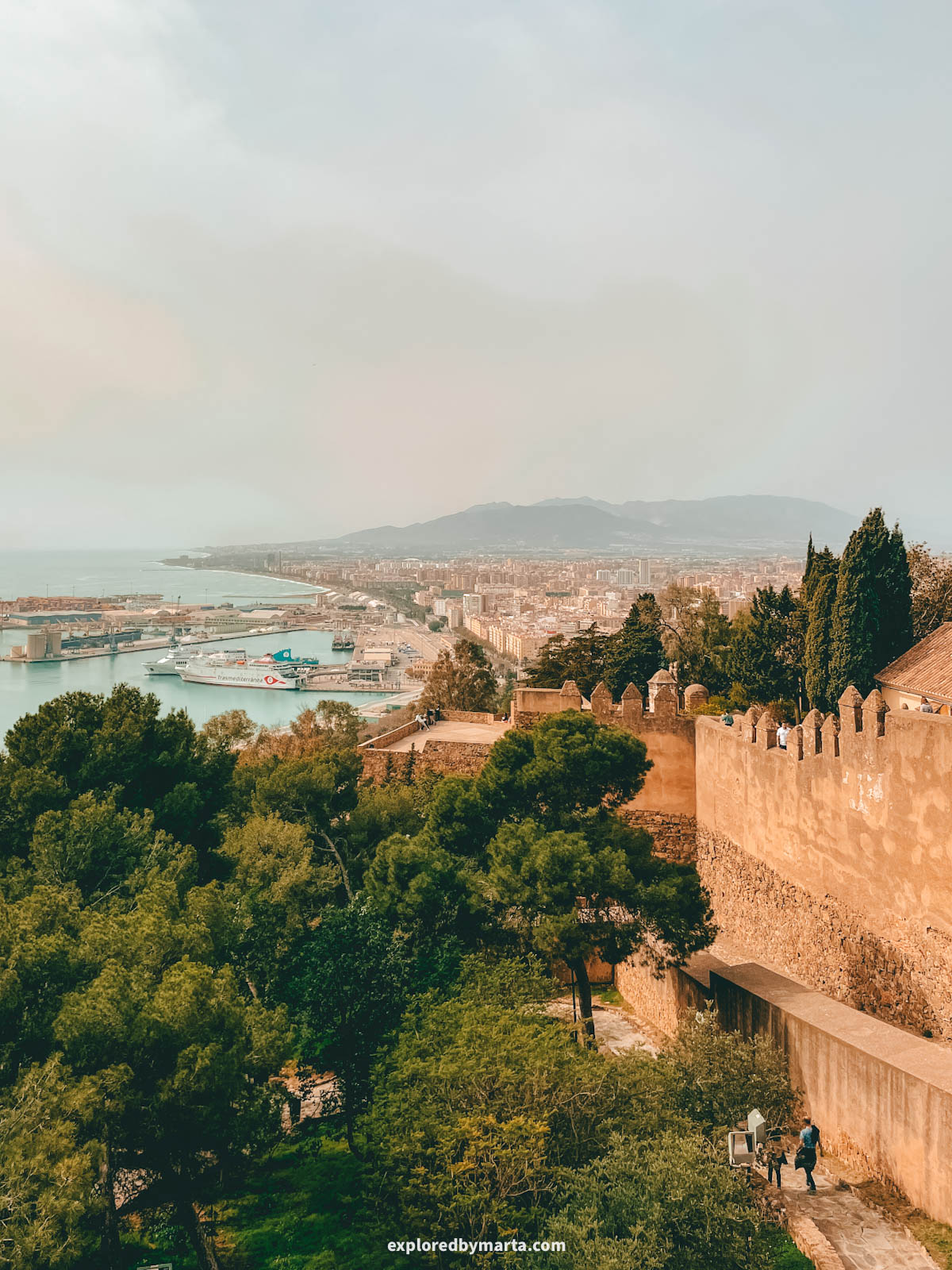
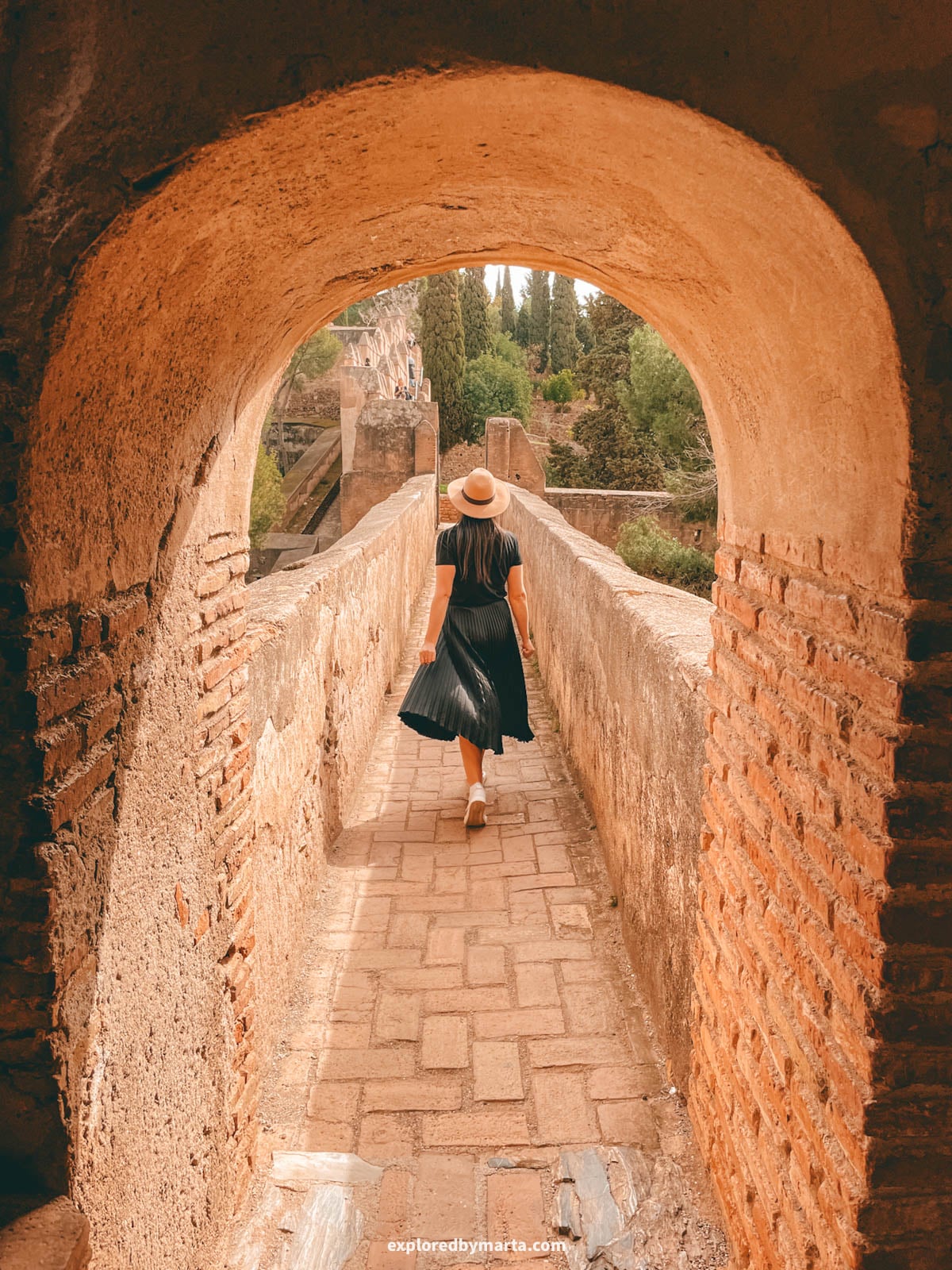
You won’t see much of the castle itself, since most of it didn’t survive the centuries, but the real experience is walking the route up to the watchtowers and along the defensive walls, just like a guard would have done centuries ago.
The castle grounds are bigger than you’d expect. We spent about an hour walking the walls, climbing every tower, and stopping at every single viewpoint. It feels pretty epic up there!
And okay, I have to mention the views, because they’re incredible. From the walls you look out over the whole city, the port, and the Mediterranean stretching out beyond. It’s one of the best views in all of Málaga.
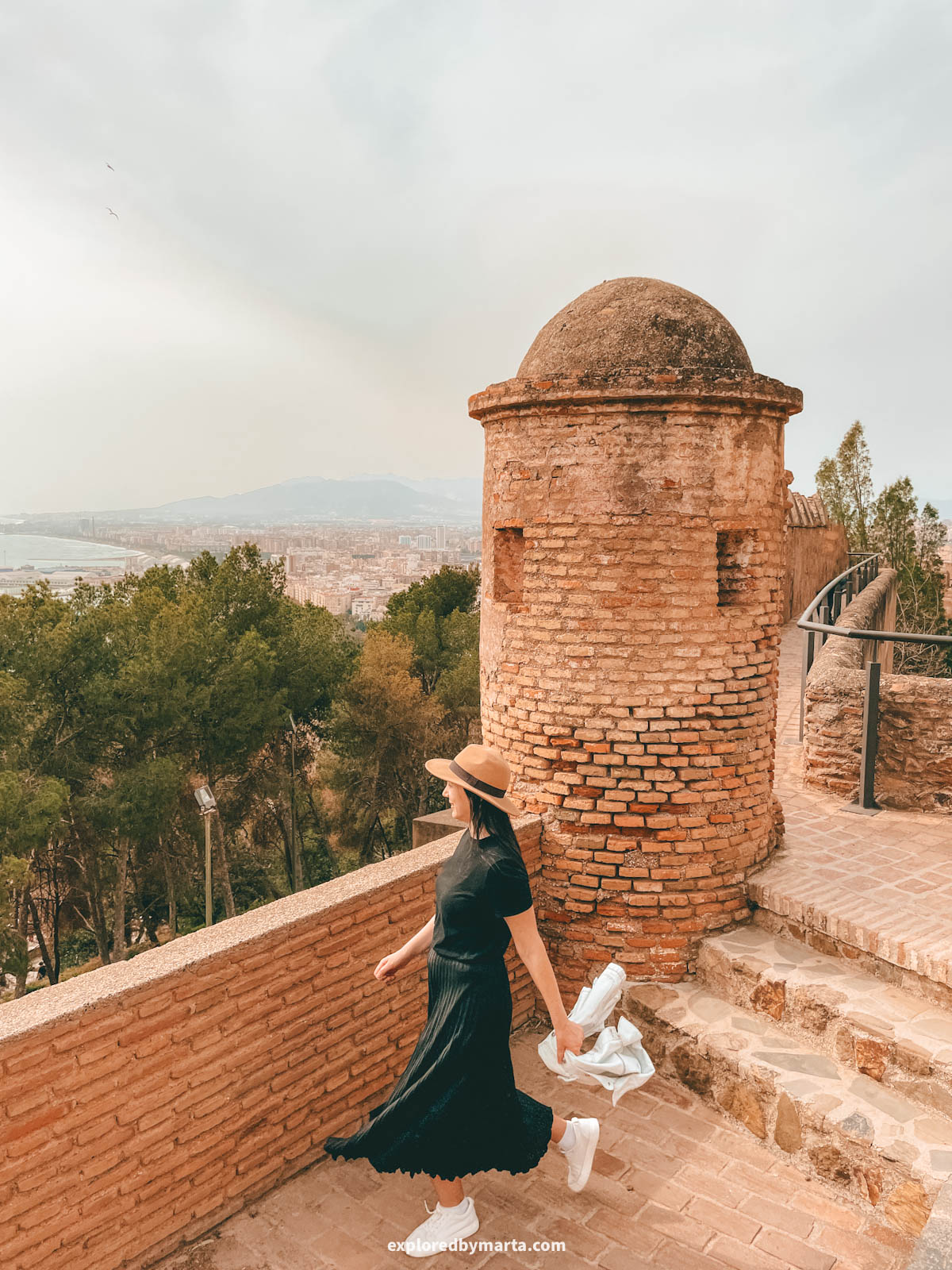
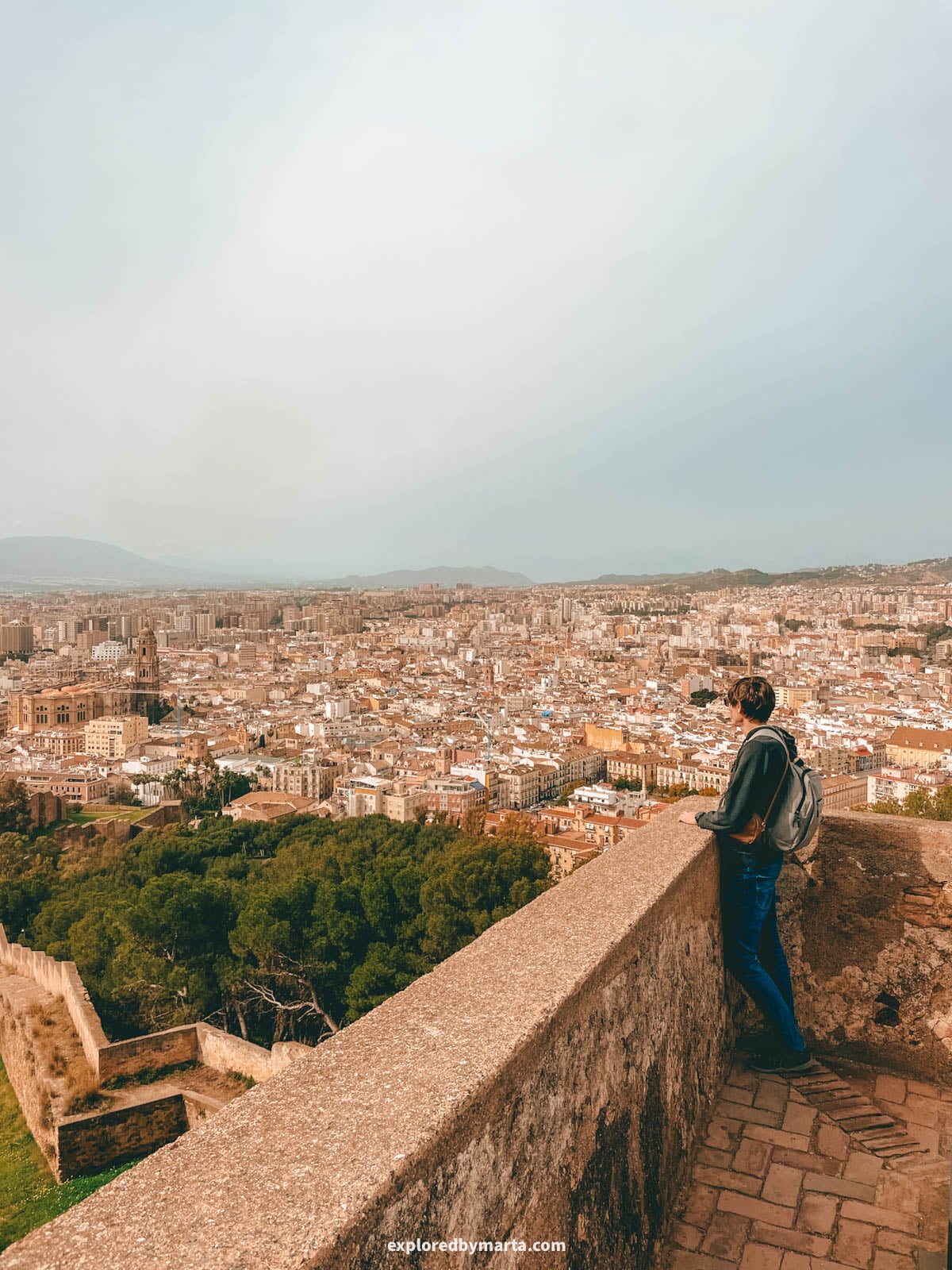
To get up there, you can drive (there’s parking on top), take bus #35, or hike up on foot like we did. Trust me, the hike is part of the experience, with viewpoints along the way, though I wouldn’t do it in the middle of the day in summer.
You can buy a combined ticket for 10 EUR that covers both Gibralfaro and the Alcazaba (it’s cheaper than buying them separately), either online or at the ticket machines on site.
Exploring Gibralfaro was honestly one of my favorite things we did in Málaga. If you love castles with a view, don’t skip it. Is it the most incredible castle in Andalusia? Probably not. Does it have the most incredible views? I think it’s right up there with the Alhambra for sure!
Location: Castillo de Gibralfaro
11. Palacio de las Dueñas in Seville
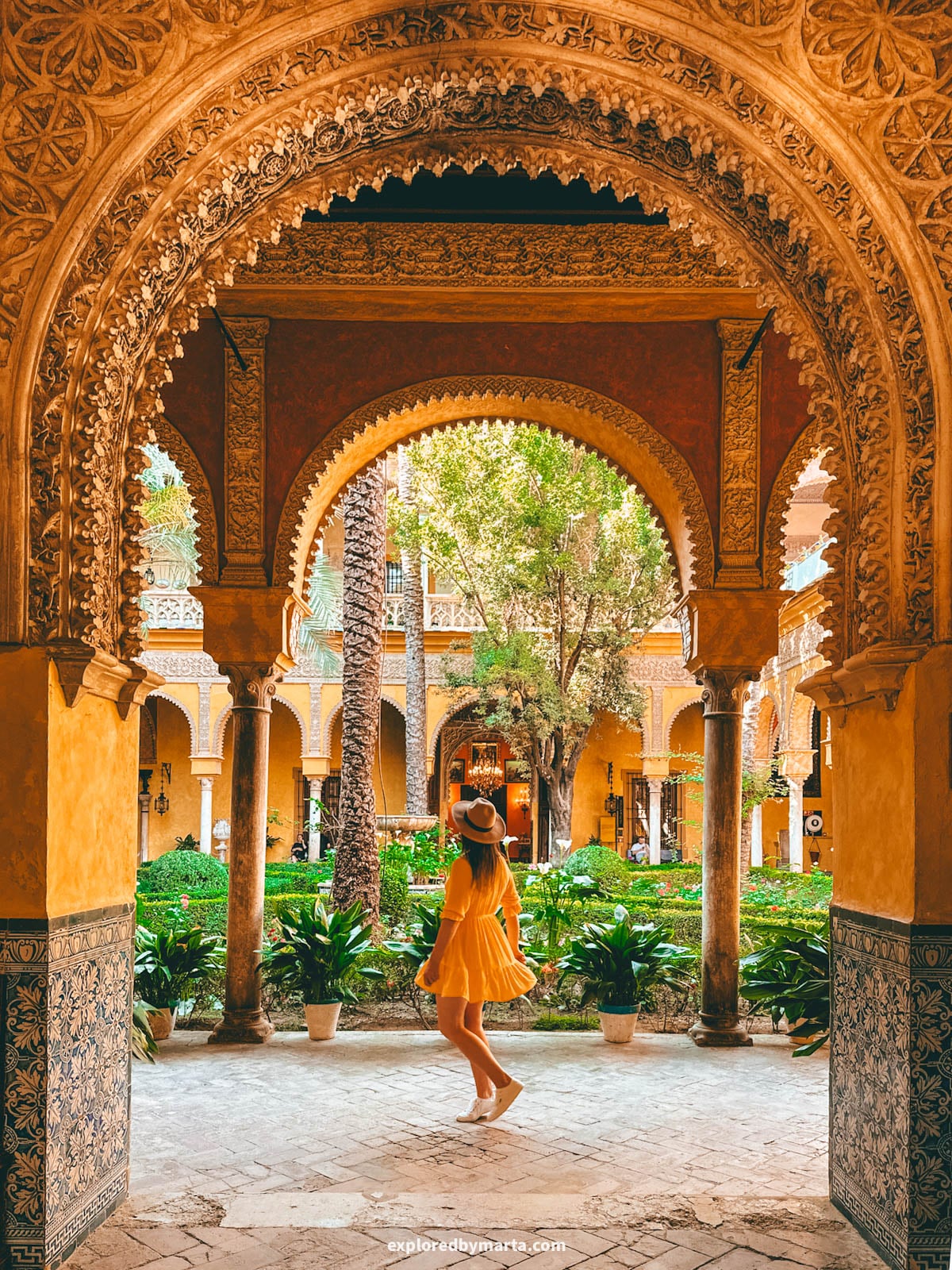
Palacio de las Dueñas is a 15th-century palace in Seville, and one of the most beautiful (and most underrated) palaces in all of Andalusia.
It still belongs to the noble House of Alba, one of Spain’s most famous aristocratic families (we saw their family photographs and paintings inside the rooms).
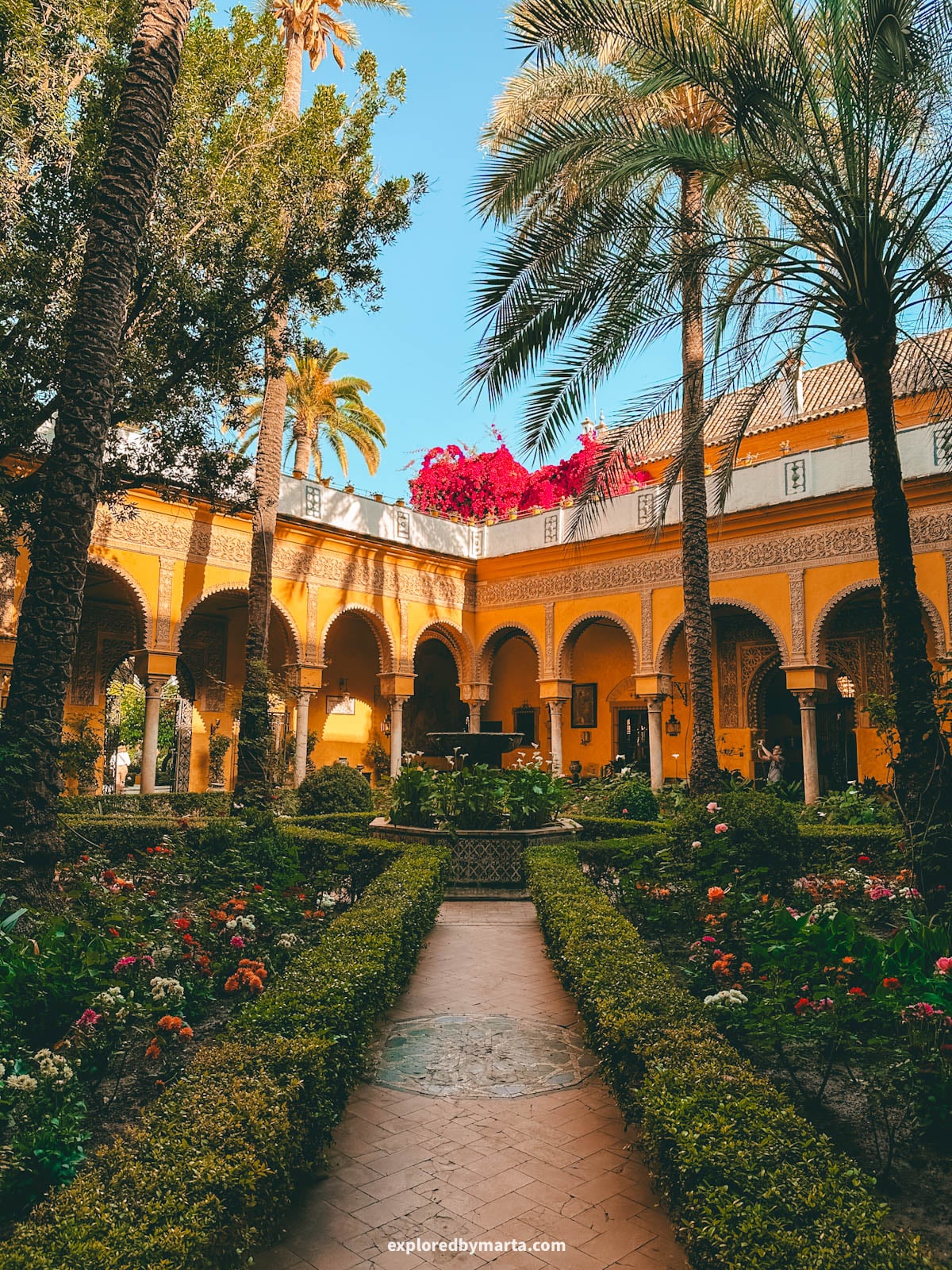
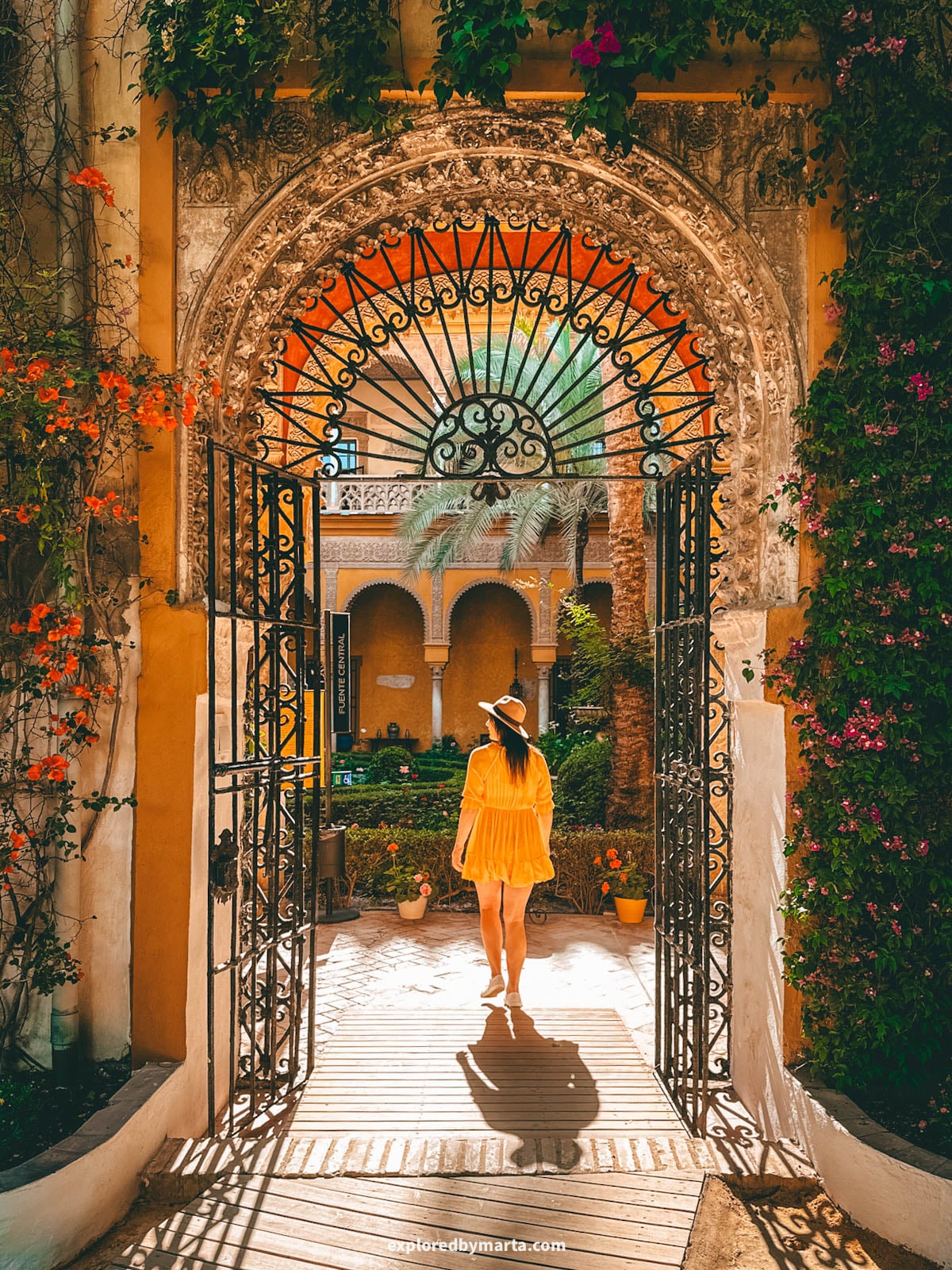
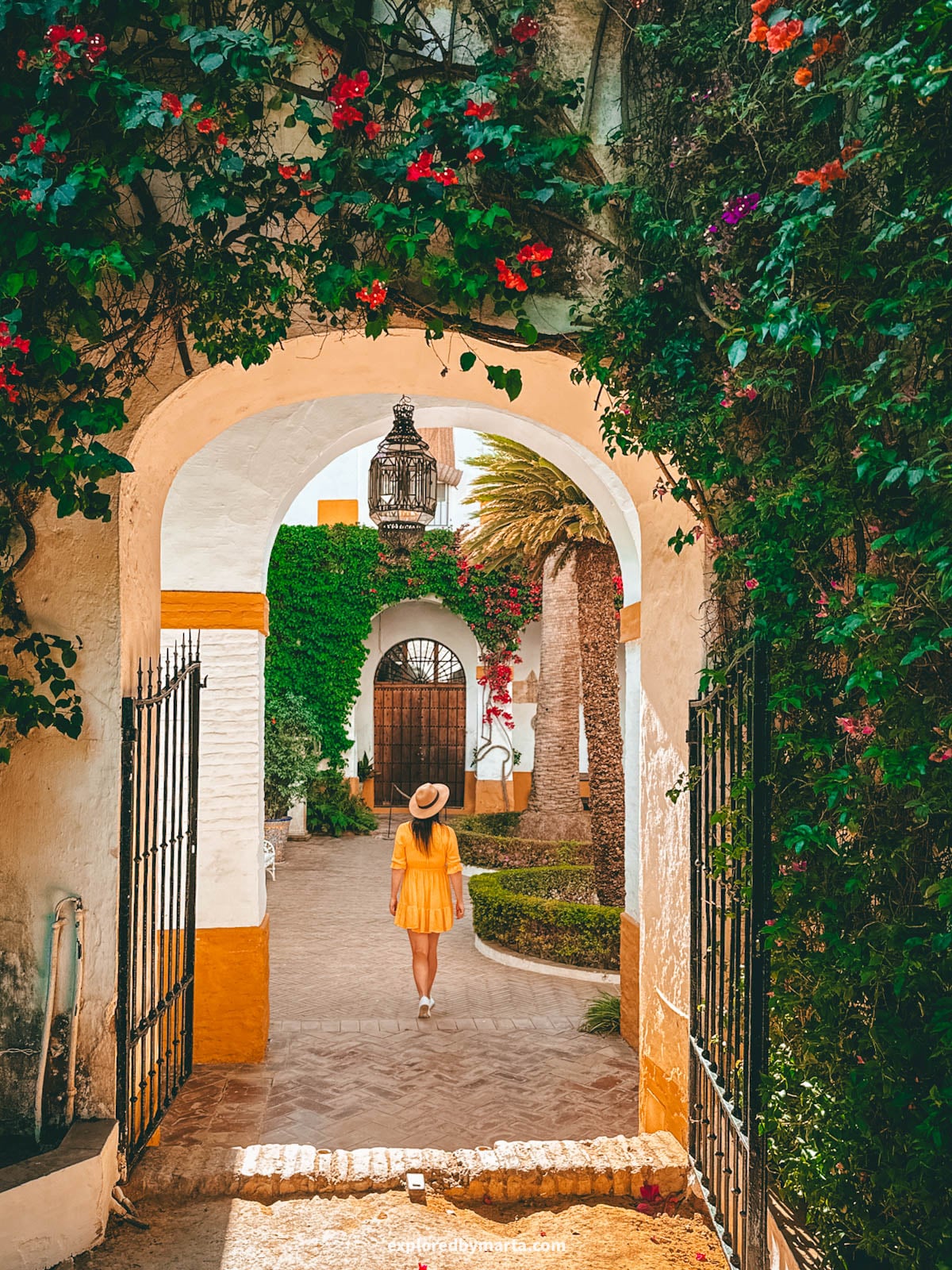
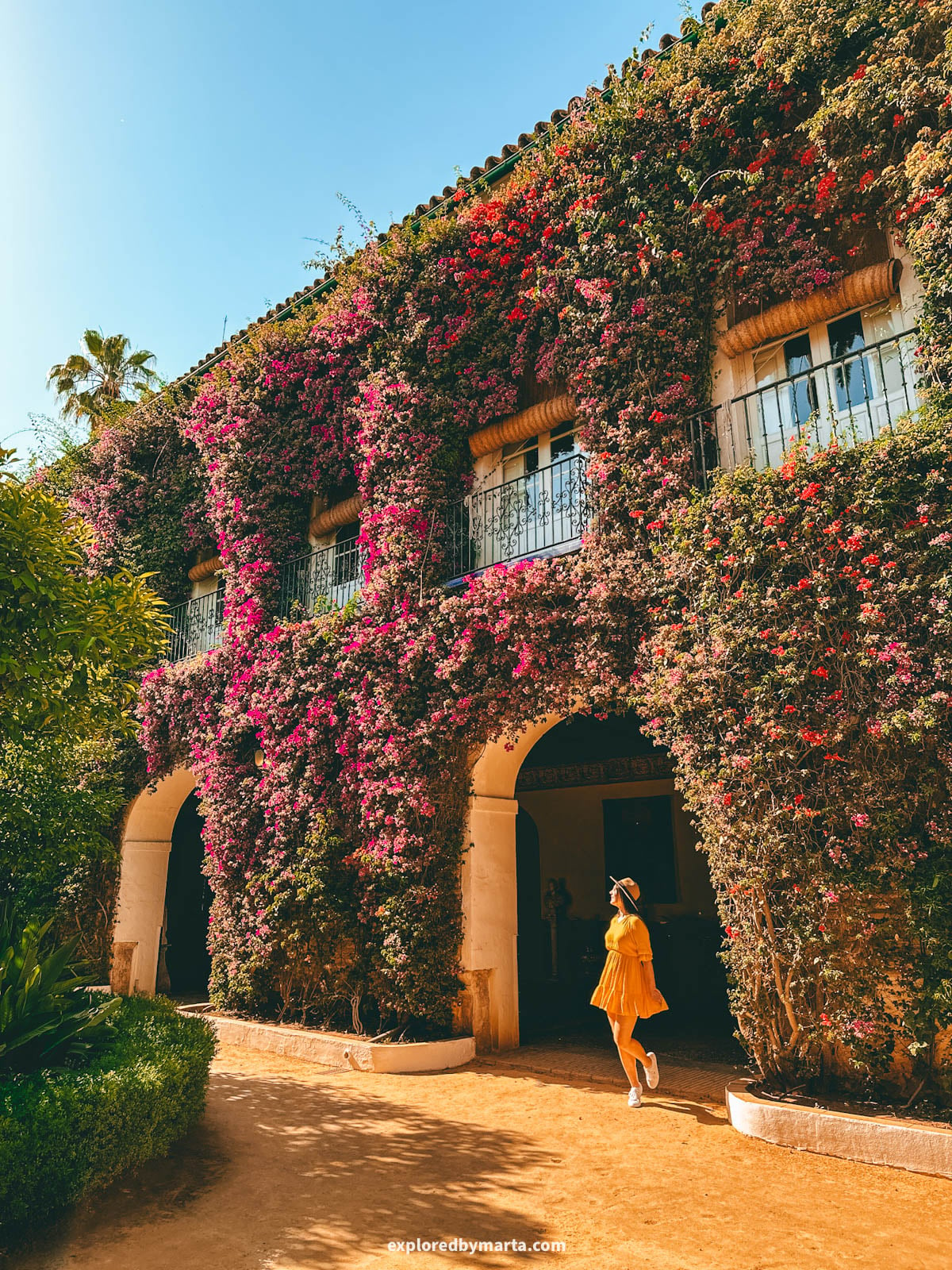
It’s a rather big complex, with multiple palace buildings, patios, and stunning gardens full of blooming trees, fountains, and water channels. For me, this is one of the most beautiful palaces in Seville, no question.
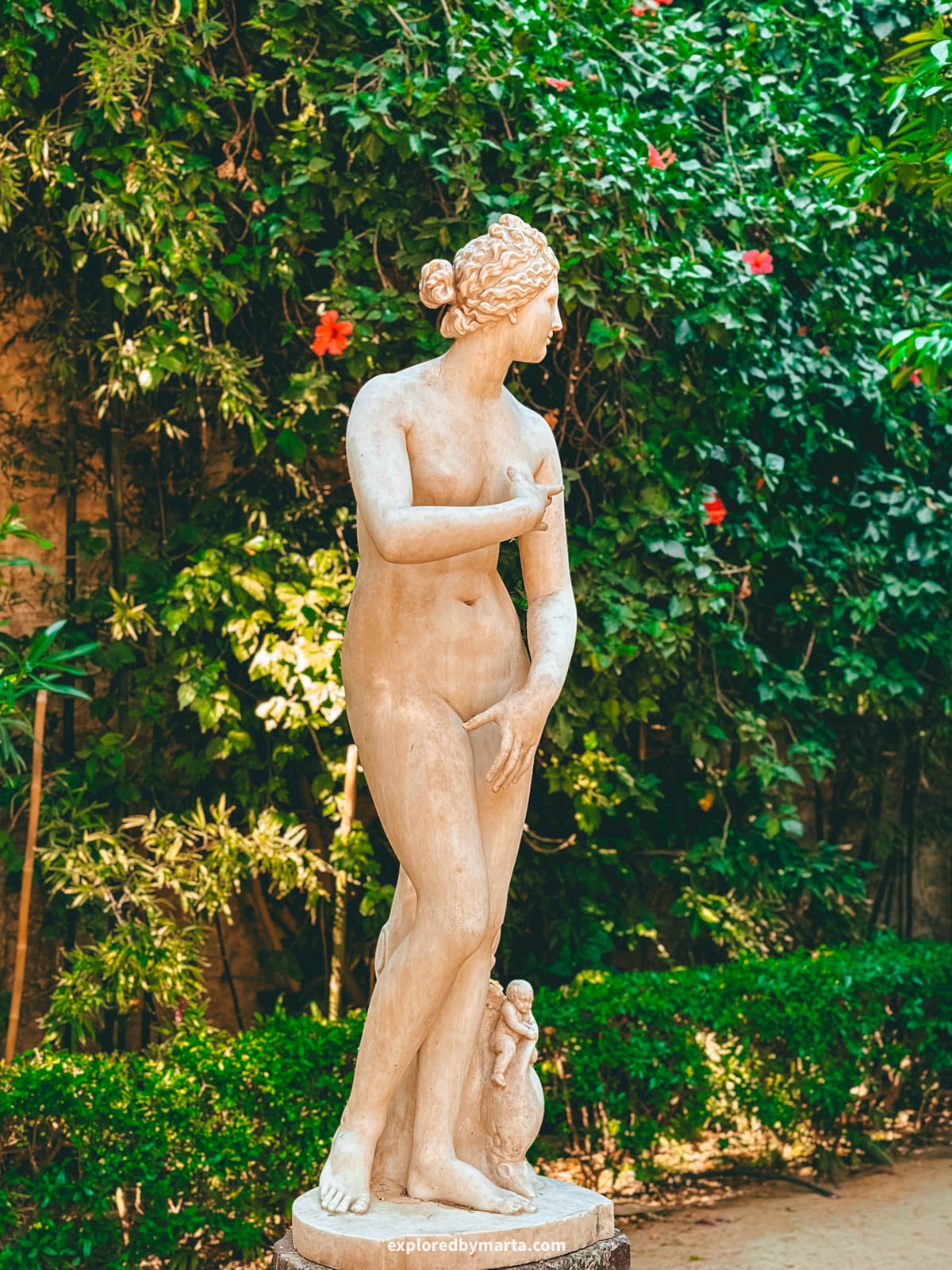
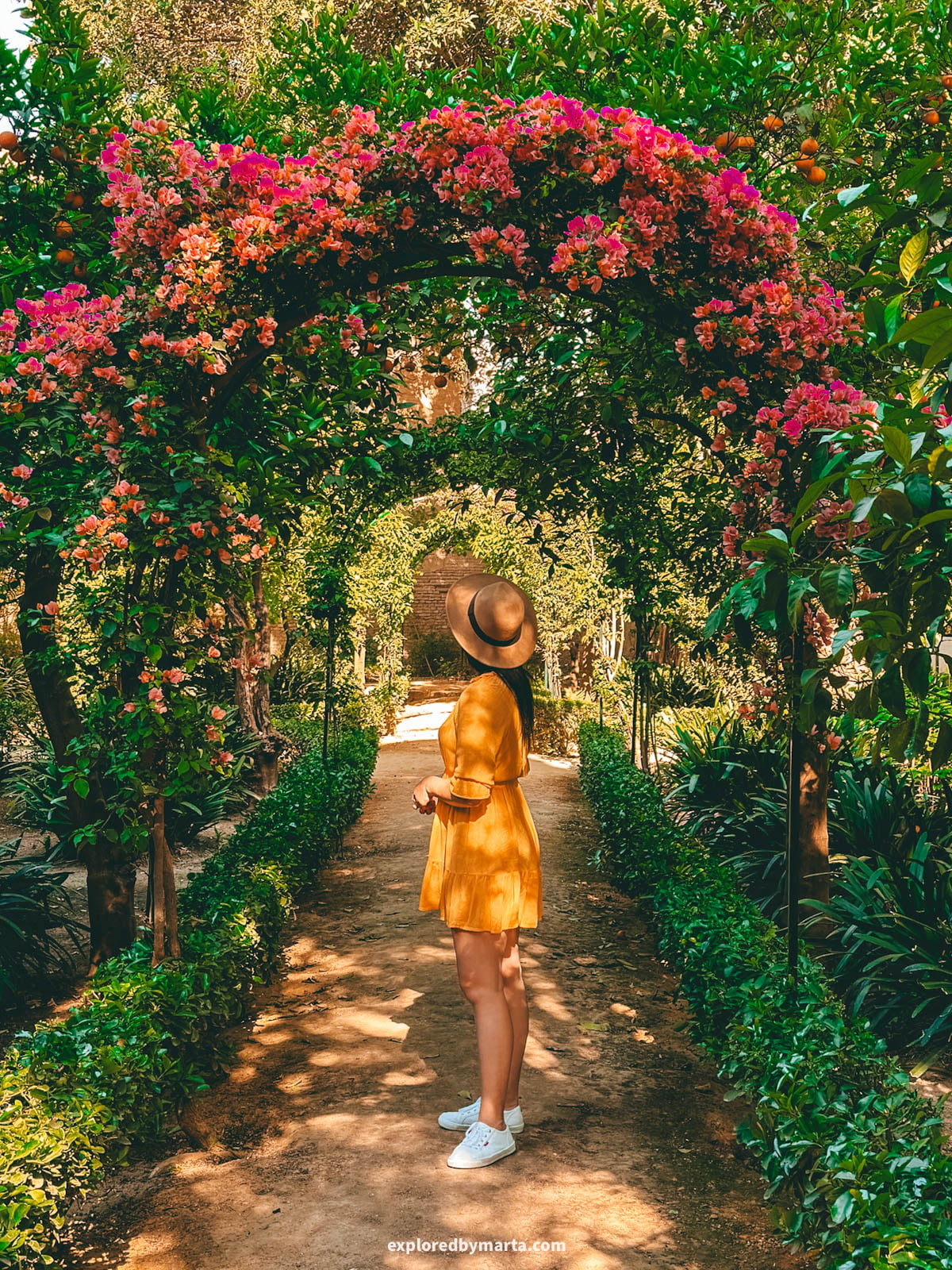
It will be especially beautiful if you come when the whole garden is blooming! It looks like a fairytale-style garden, and is full of picture-perfect photo opportunities. Get your camera ready!
The architecture, the gardens, the archways around the patios, the fountains, the sculptures, and the endless rooms full of art pieces all make this place a must-visit.
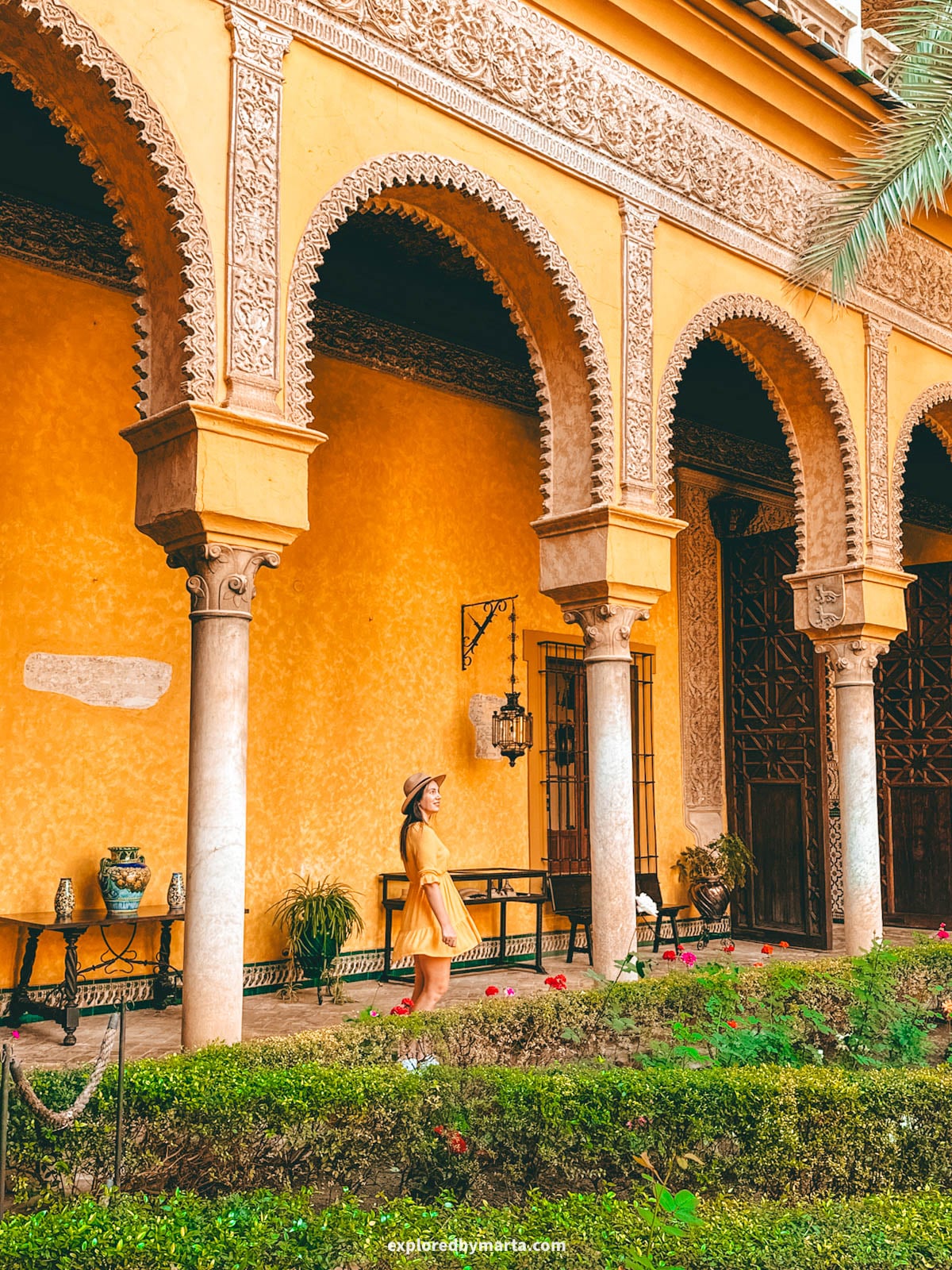
Every corner is beautiful and so well maintained. It’s honestly hard to pick a favorite spot, but if I had to, it would be the main patio with the yellow arches (see where the first photo was taken!). So pretty!
Here’s a fun bit of history: in the 20th century, the palace became a frequent meeting place for European royals and international celebrities. I learned that the likes of Jacqueline Kennedy, Wallis Simpson, and Grace Kelly all spent time here.
Well, apart from their relationship with the owners, I certainly see why they would like visiting such a place.
And now we get to explore it too. The entrance is a bit pricey – when we went, it was 12 EUR per adult, but now I checked that the prices are 15 EUR per adult, but it’s one of those places I felt was absolutely worth it.
We bought tickets on-site right before going in, and the entrance fee includes an audioguide so you learn as you wander. That’s definitely a plus!
Also, there is a possibility to visit the palace for free on Monday afternoons, however, these free tickets are limited and you need to book them in advance to get inside without paying.
Another thing to check before you go: they fairly often close the whole palace for private events, so look at their website first so you don’t turn up to closed doors. Other than that, this is a place I definitely recommend including in your Seville itinerary!
Location: Palacio de las Dueñas
12. Palacio de la Condesa de Lebrija in Seville
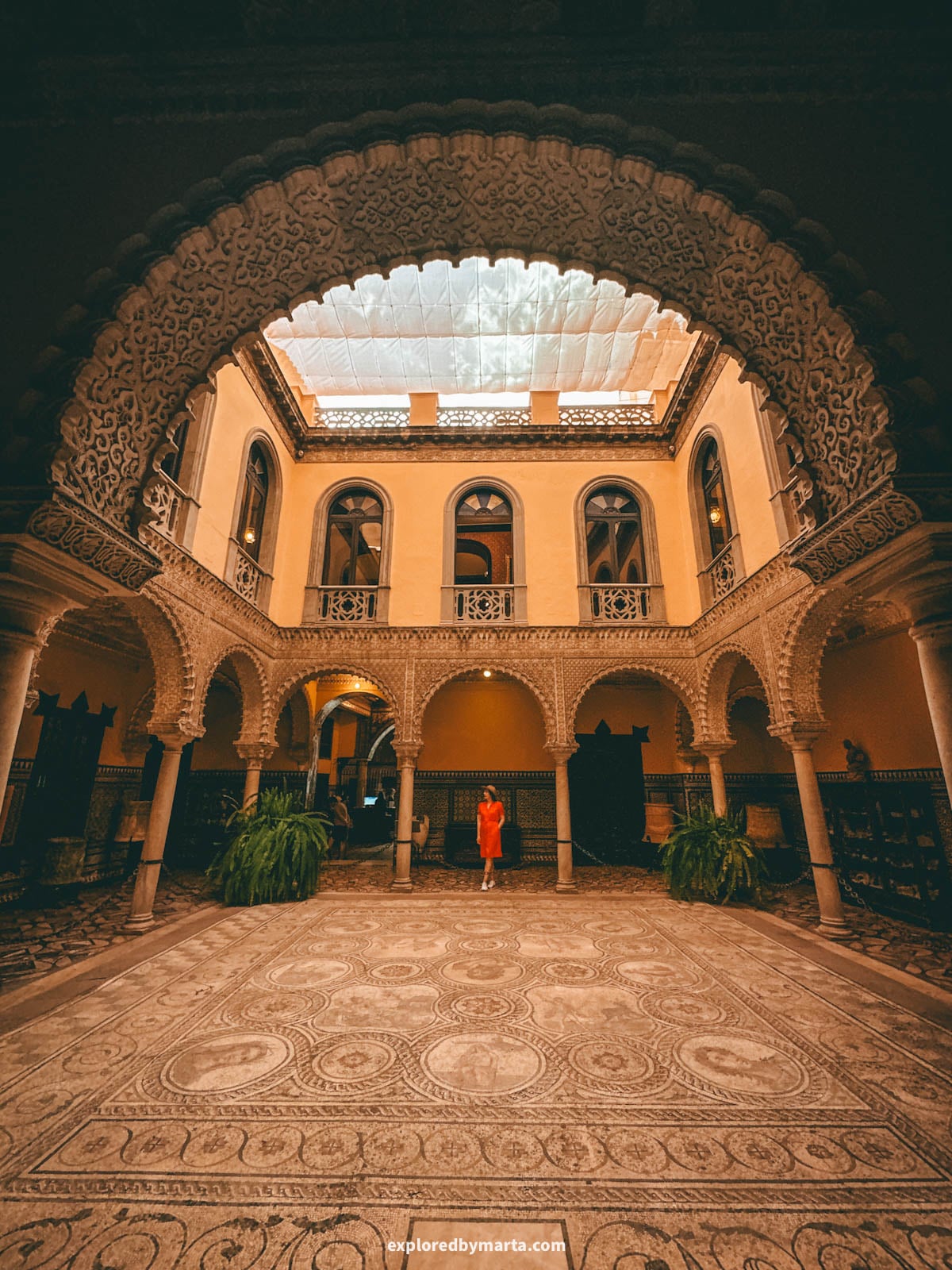
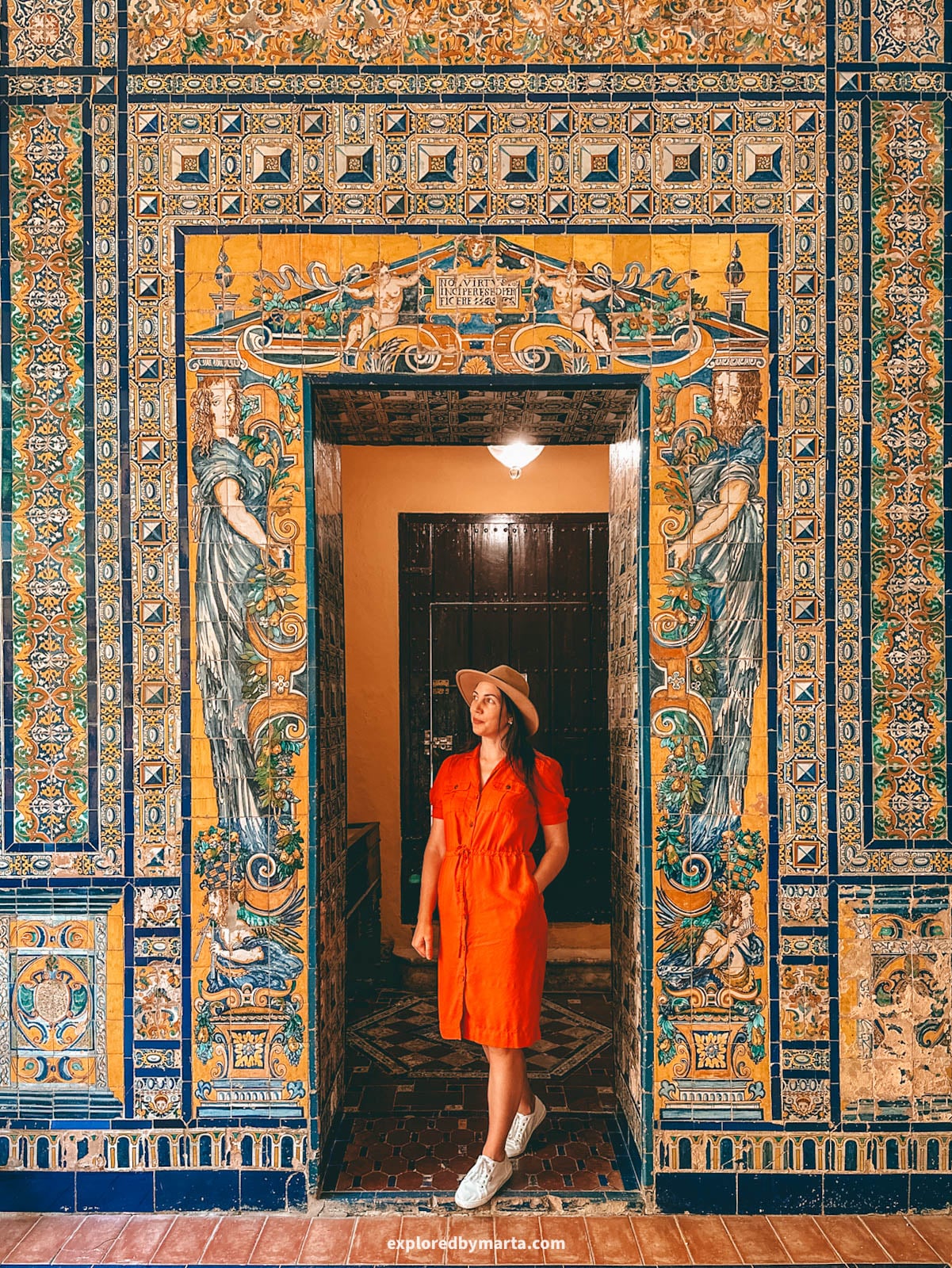
Palacio de la Condesa de Lebrija, or the Palace of the Countess of Lebrija, is one of the most beautiful hidden gems in Seville and one of the most underrated palaces in Andalusia.
It’s a 16th-century palatial home with Arabic-style arches around the patio, colorful tilework, and one of the most stunning Roman mosaic collections you’ll ever see.
I read that the countess brought many of these mosaics from the nearby Roman ruins of Itálica in the early 1900s and laid them right into the floors. Thoughts on that? But the result is incredible – the whole floor is ancient Roman art.
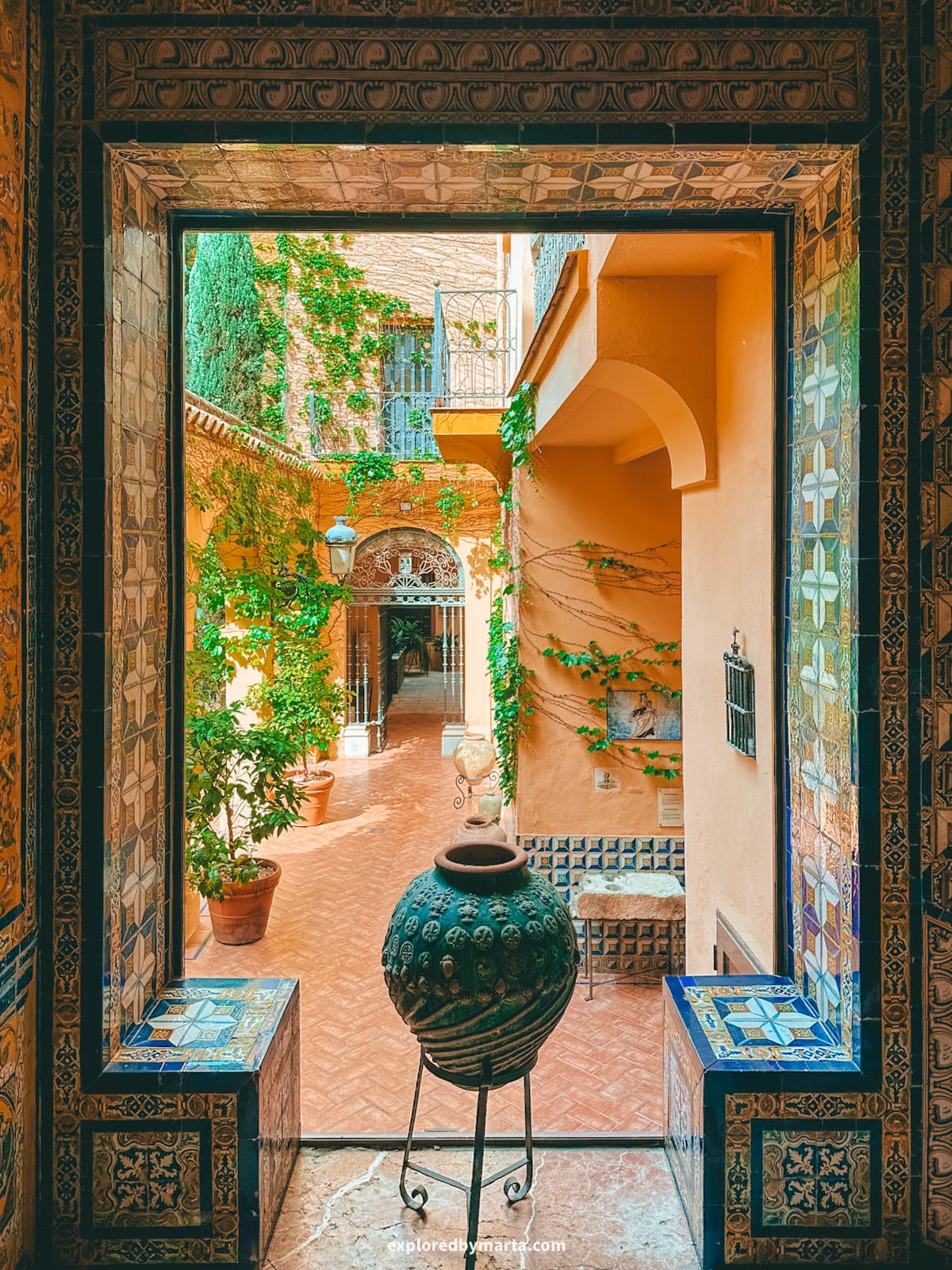
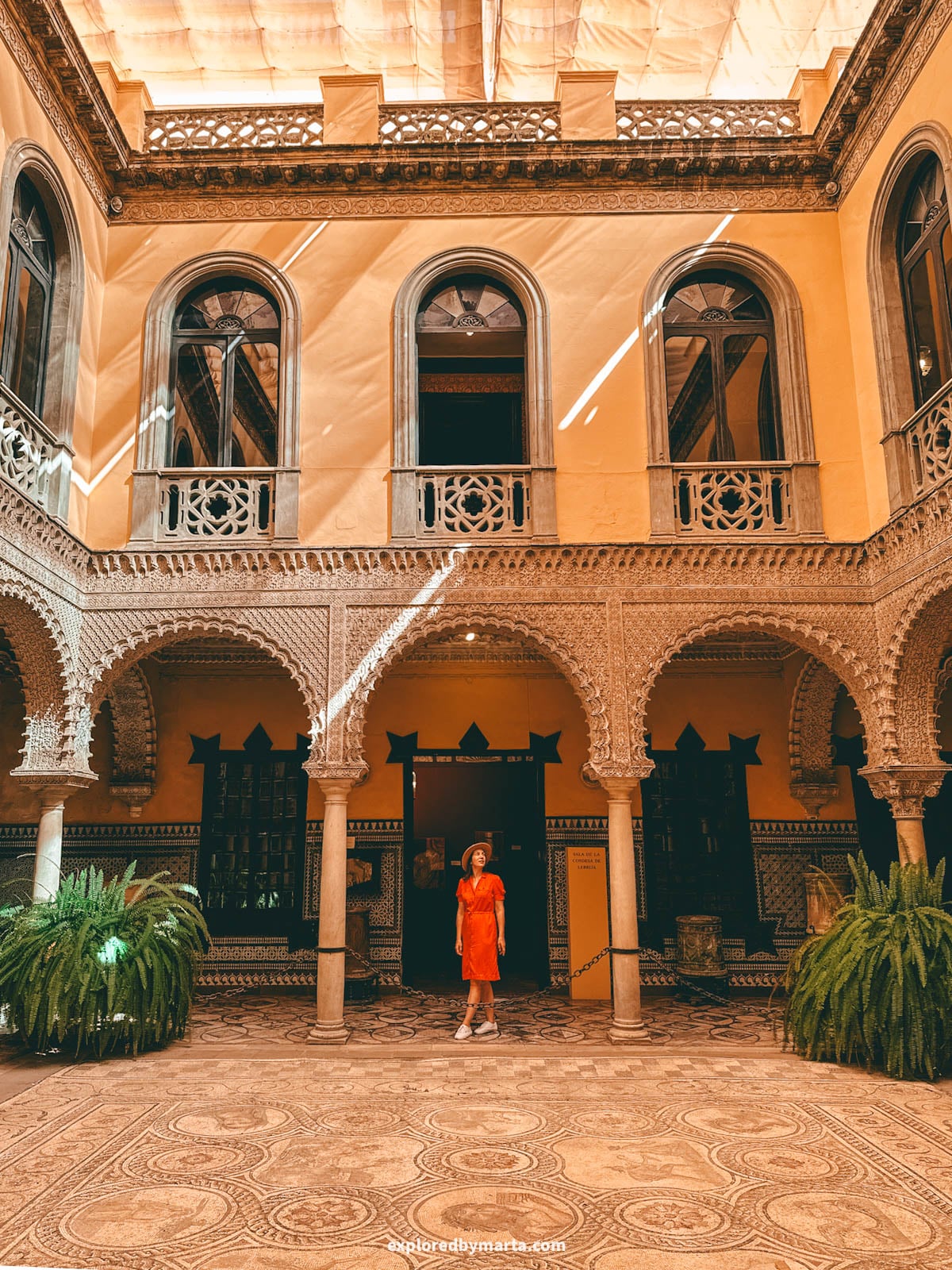
The palace is still a private home belonging to an aristocratic family. You can visit the ground floor, the patio, and the gardens on your own, and join a guided tour of the upper floor that runs on the hour.
The upper floor holds a rich collection of artifacts from all over the world, including pieces from China, Japan, and many other countries. It feels like stepping into a private museum. Well, it IS a private museum.
Entrance fee to the palace is 15 EUR per adult, but there’s a certain time when you can visit for free, so it’s worth checking their website before you go. But you need to book those tickets in advance – the space is limited, and the free tickets are limited too!
Location: Palacio de la Condesa de Lebrija
13. Alcazaba de Almería
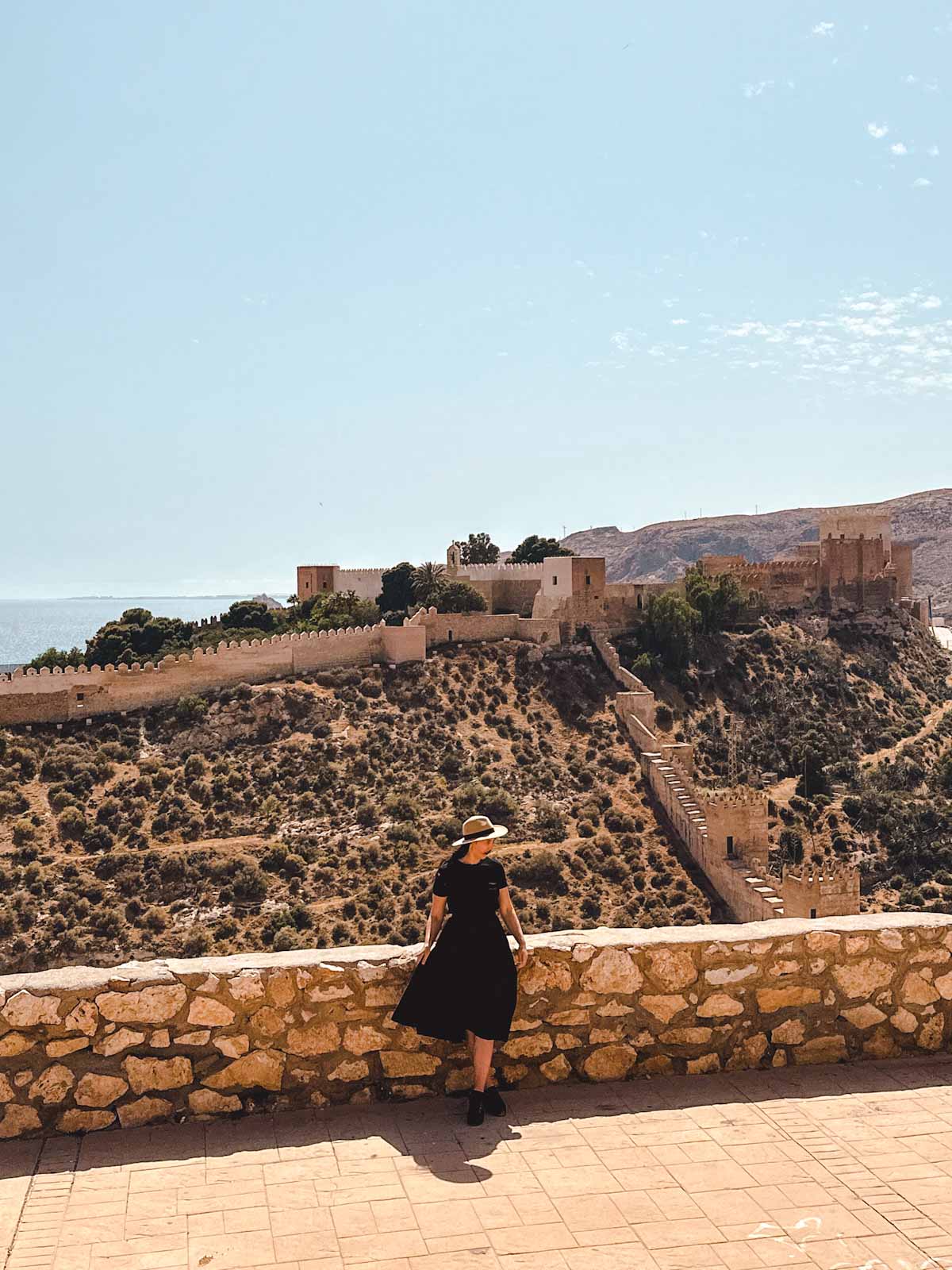
The Alcazaba de Almería is one of the most impressive Moorish fortresses in all of Andalusia, and one a lot of travelers never make it to, since Almería sits a bit off the main tourist trail.
I read that it’s the largest alcazaba the Moors ever built in Spain, second in size only to the Alhambra among Muslim fortresses. It’s huge, with three separate walled enclosures stretching across the hilltop.
It was founded in the 10th century by Abd al-Rahmán III, the Caliph of Córdoba, the same ruler behind the beautiful Medina Azahara city. It was built to protect the port of Almería, which became one of the most important in all of Al-Andalus.
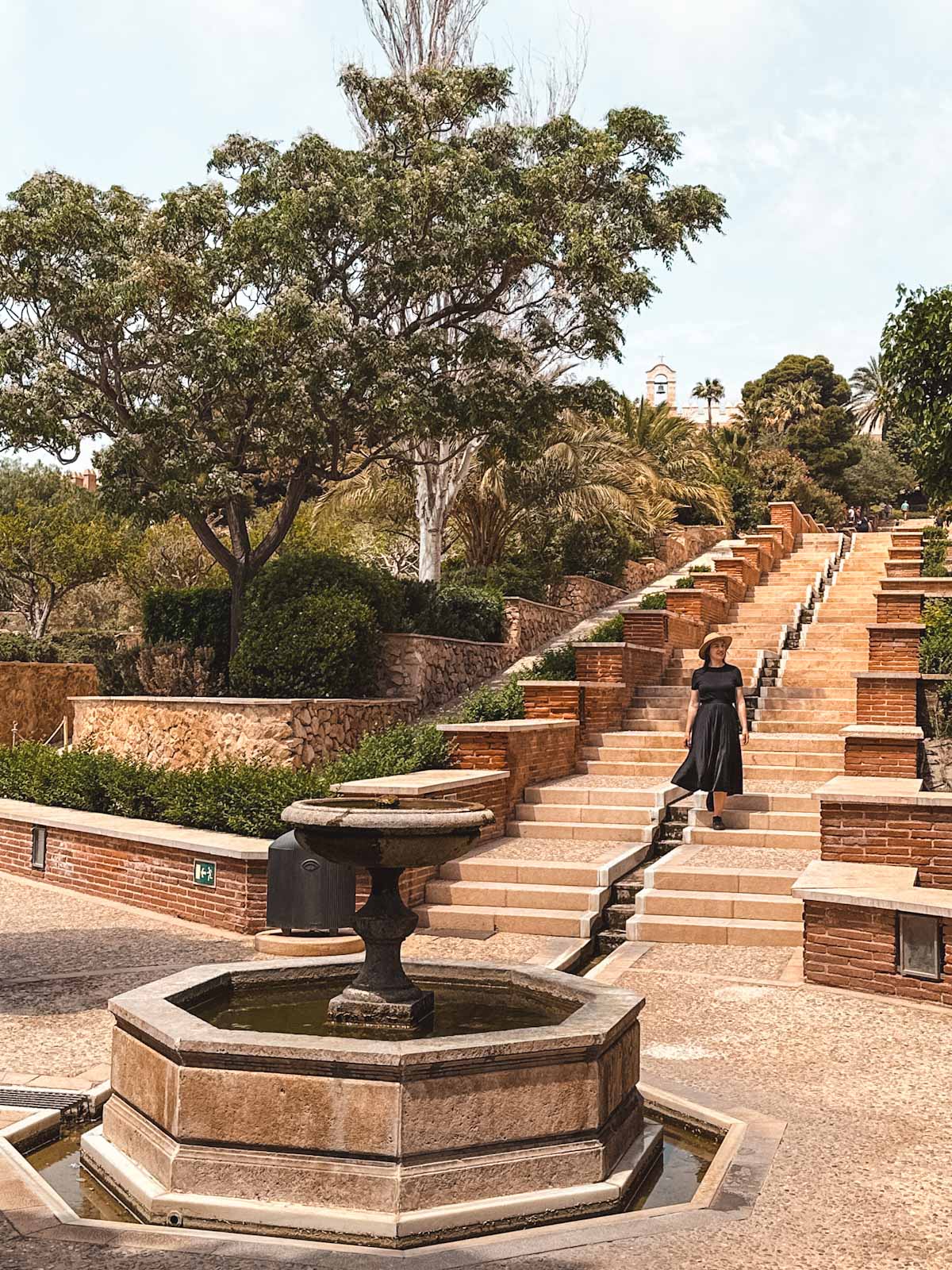
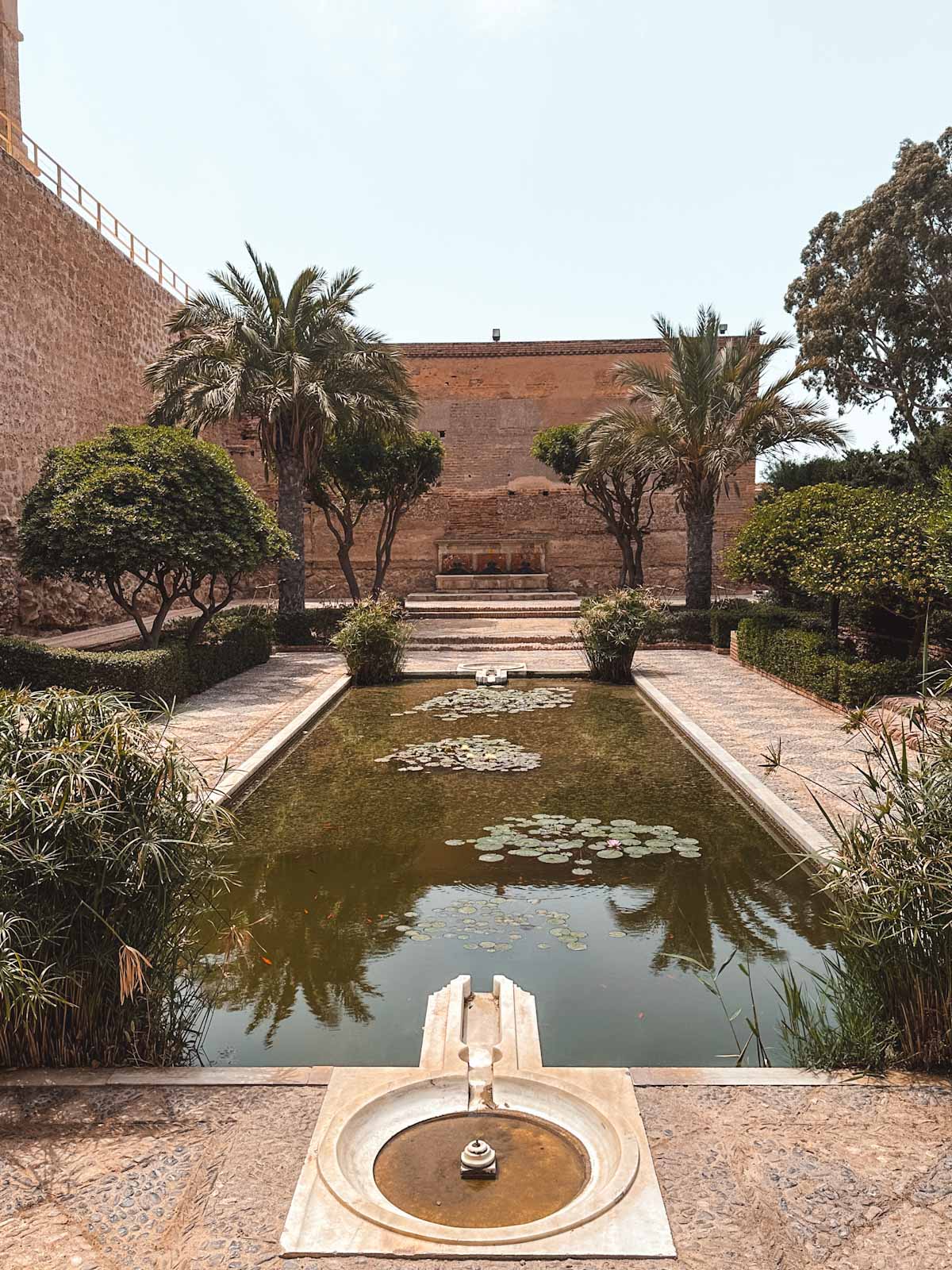
The first enclosure was a military zone and refuge for the city, and today it’s a beautiful garden with ponds, fountains, and water channels. Walking through it, you’d never guess it was once a defensive camp.
The second enclosure was the heart of the fortress, where the Moorish rulers lived, with palaces, baths, and homes. You can still see the remains, plus a Mudéjar chapel added after the Christian conquest.
The third and highest enclosure is a Christian castle, added by the Catholic Monarchs after they took the city in the 15th century. So in one visit you walk through both the Moorish and Christian layers of Almería’s history.
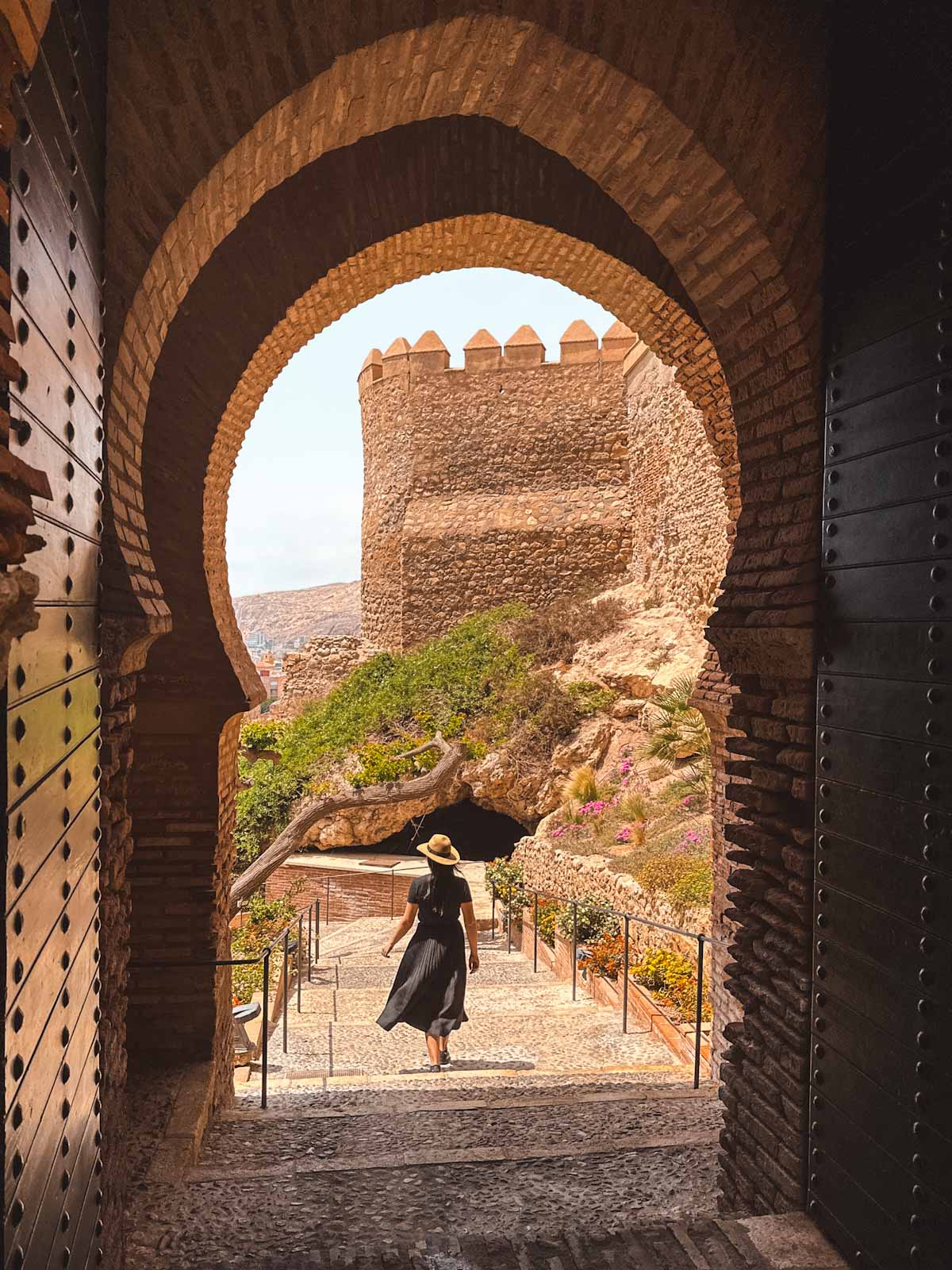
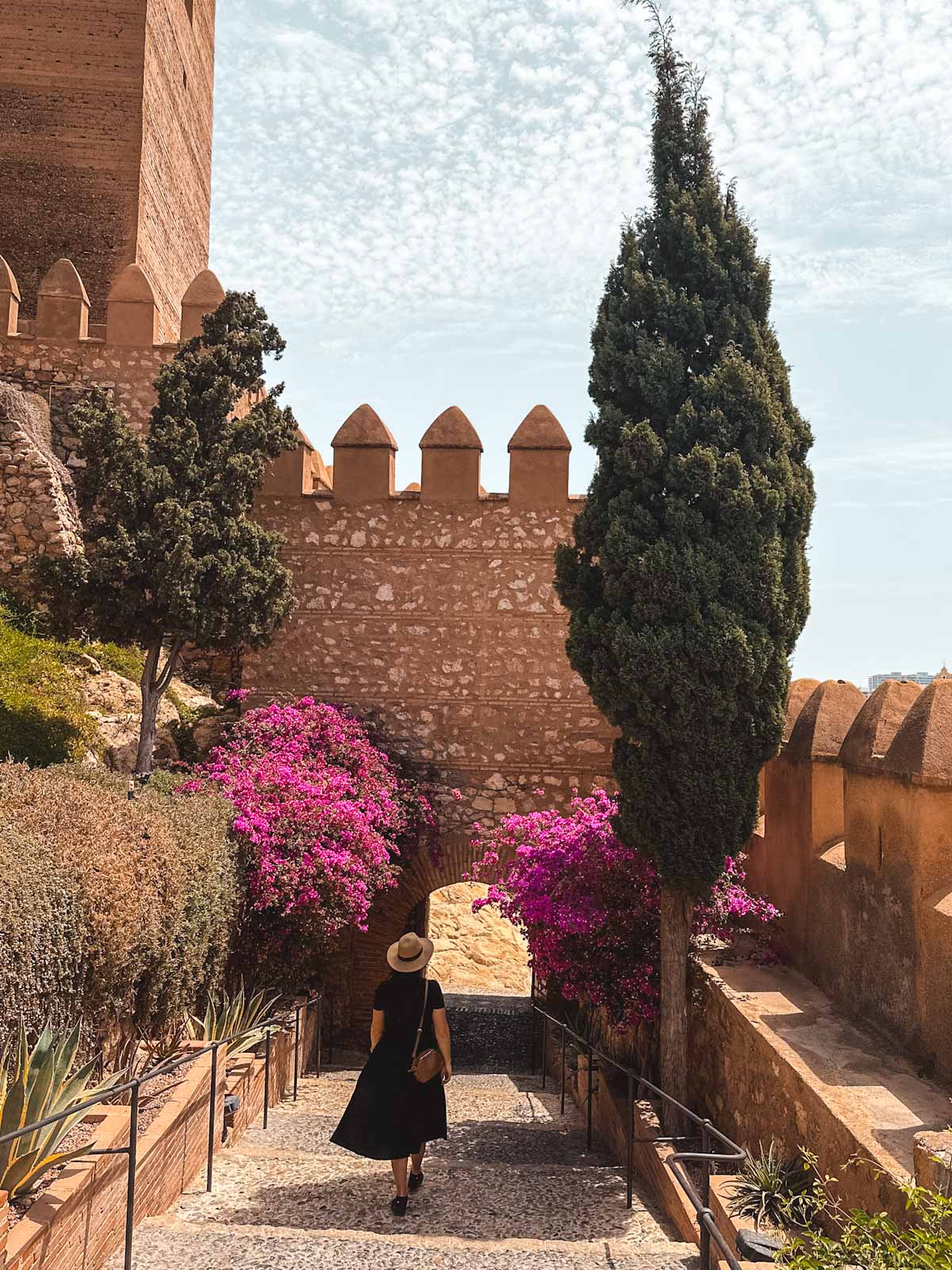
And the views? Incredible. From up here you look out over the old town, the port, and the Mediterranean Sea. The fortress sits right above the city, so the panoramas are seriously spectacular.
Alcazaba de Almería has been featured in numerous movies like Conan the Barbarian, Indiana Jones and the Last Crusade as well as in Wonder Woman 1984.
It was also used as one of the locations for the Game of Thrones TV series when Alcazaba de Almería served as the capital of Dorne during the sixth season of the show. They loved filming in Spain.
It’s also one of the best-value stops in Andalusia – citizens of the European Union can visit the alcazaba FOR FREE (1.50 EUR for other countries)! Give yourself a couple of hours, there’s a lot of ground to cover across those three enclosures.
Location: Alcazaba de Almería
14. Castillo de Guzmán el Bueno in Tarifa
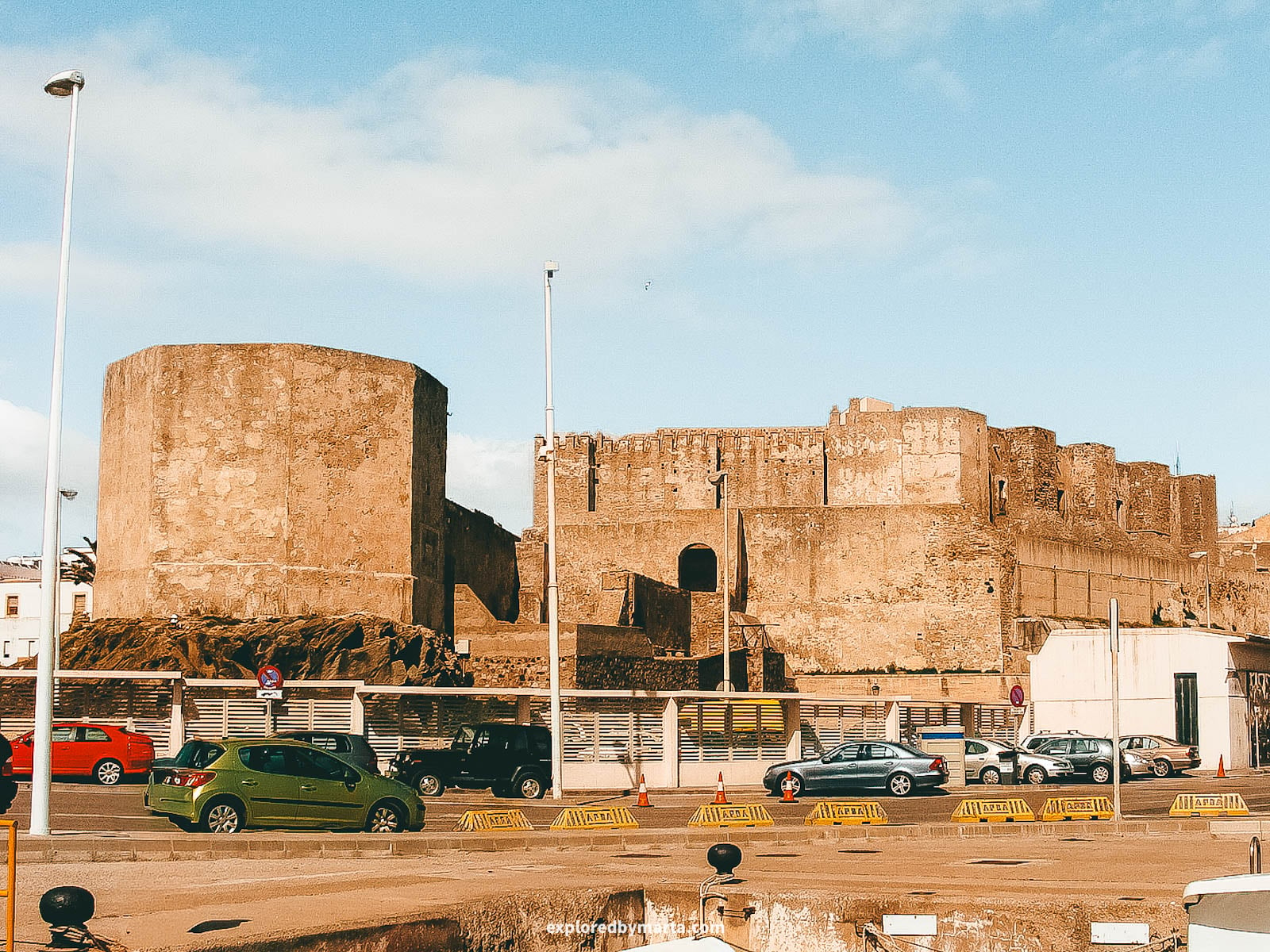
Castillo de Guzmán el Bueno is the main historical landmark in Tarifa, the southernmost town of mainland Europe. If you only have time for one castle visit on the south coast of Andalusia, this is the one to pick.
The castle dates back to the 10th century and was originally built during the Moorish period to defend the town from pirate attacks, since Tarifa sits by the ocean.
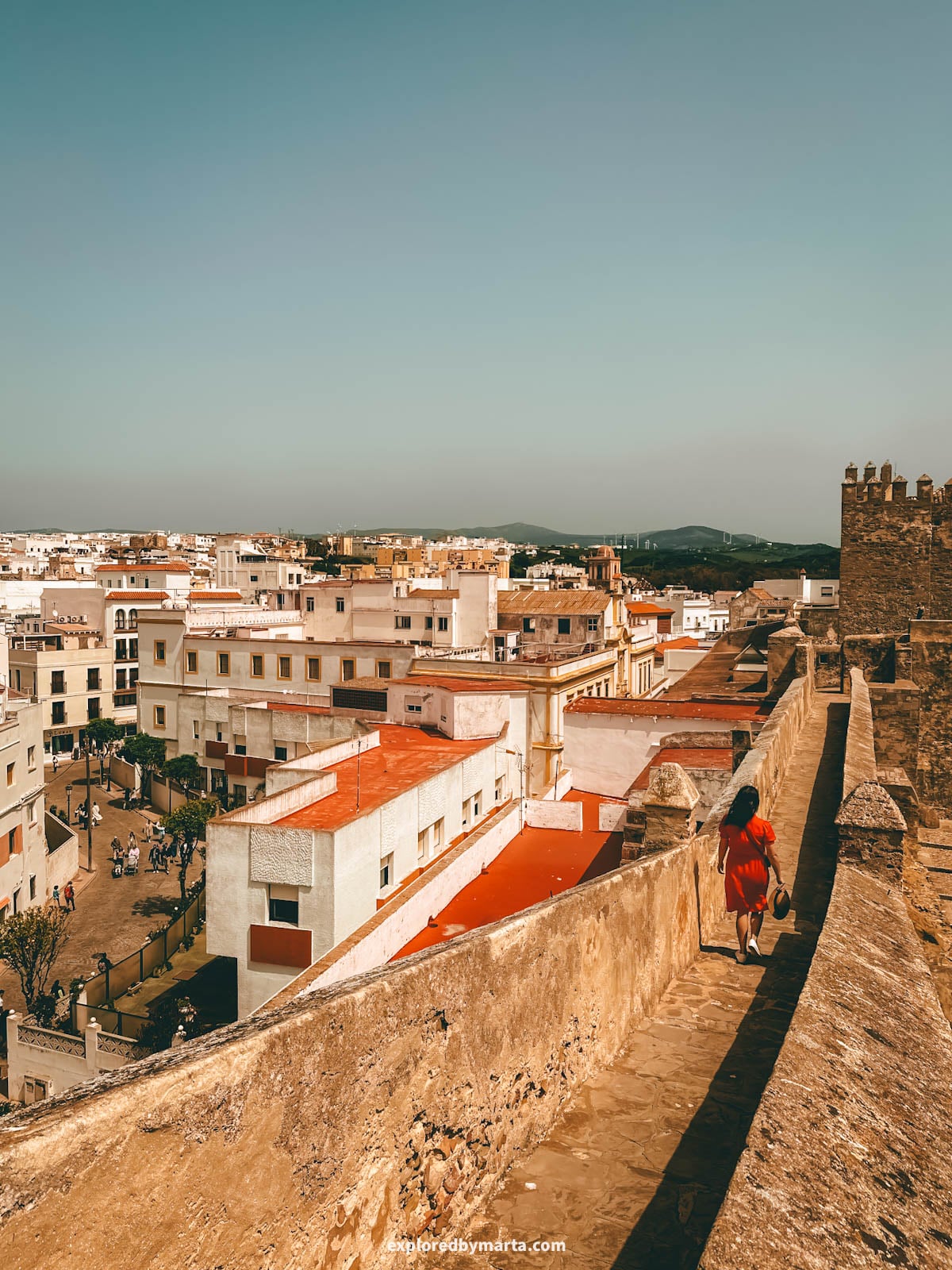
With its impressive defensive walls and watchtowers, it is honestly the kind of place that makes you stop and think about how much history this little town has seen. Plenty is the answer!
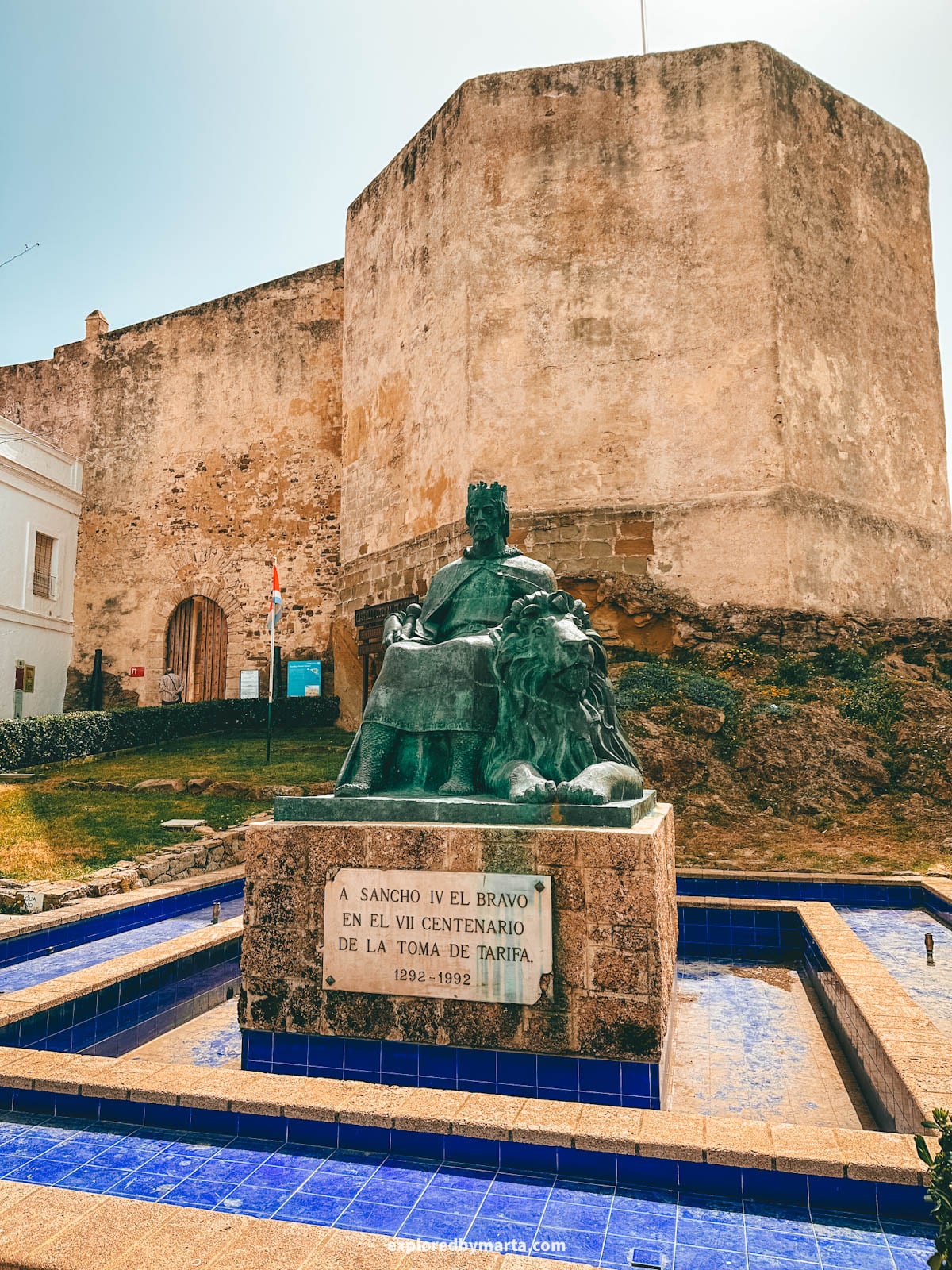
The castle is named after Alonso Pérez de Guzmán, also known as Guzmán el Bueno (Guzmán the Good), one of the most famous figures in Spanish medieval history.
The legend goes that during a siege in the 13th century, the enemy captured his son and threatened to kill him unless Guzmán surrendered the castle.
Instead of giving up, he reportedly threw down his own dagger from the wall, saying he would rather lose his son than betray his town. I don’t know what to think of that. 😬
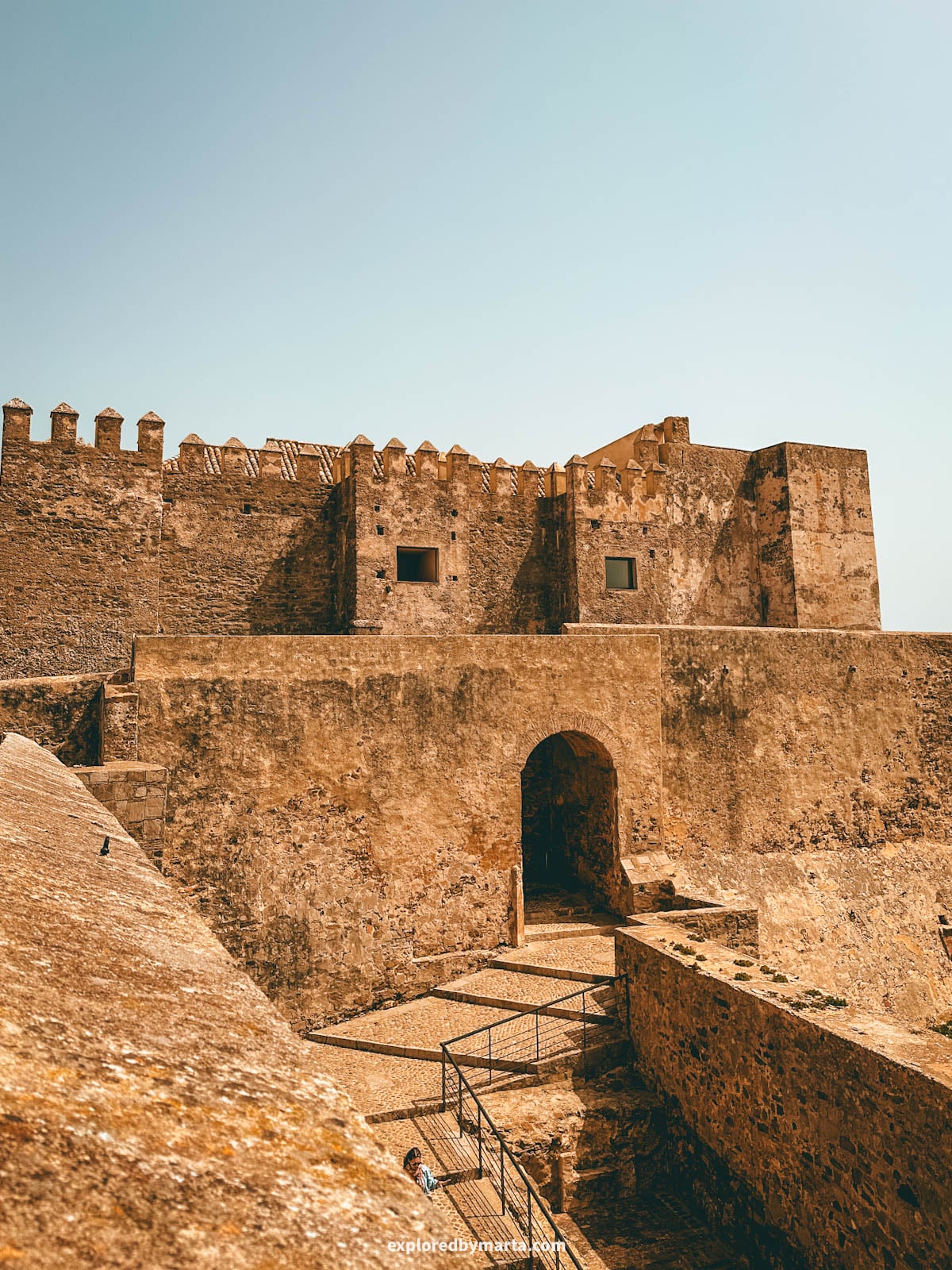
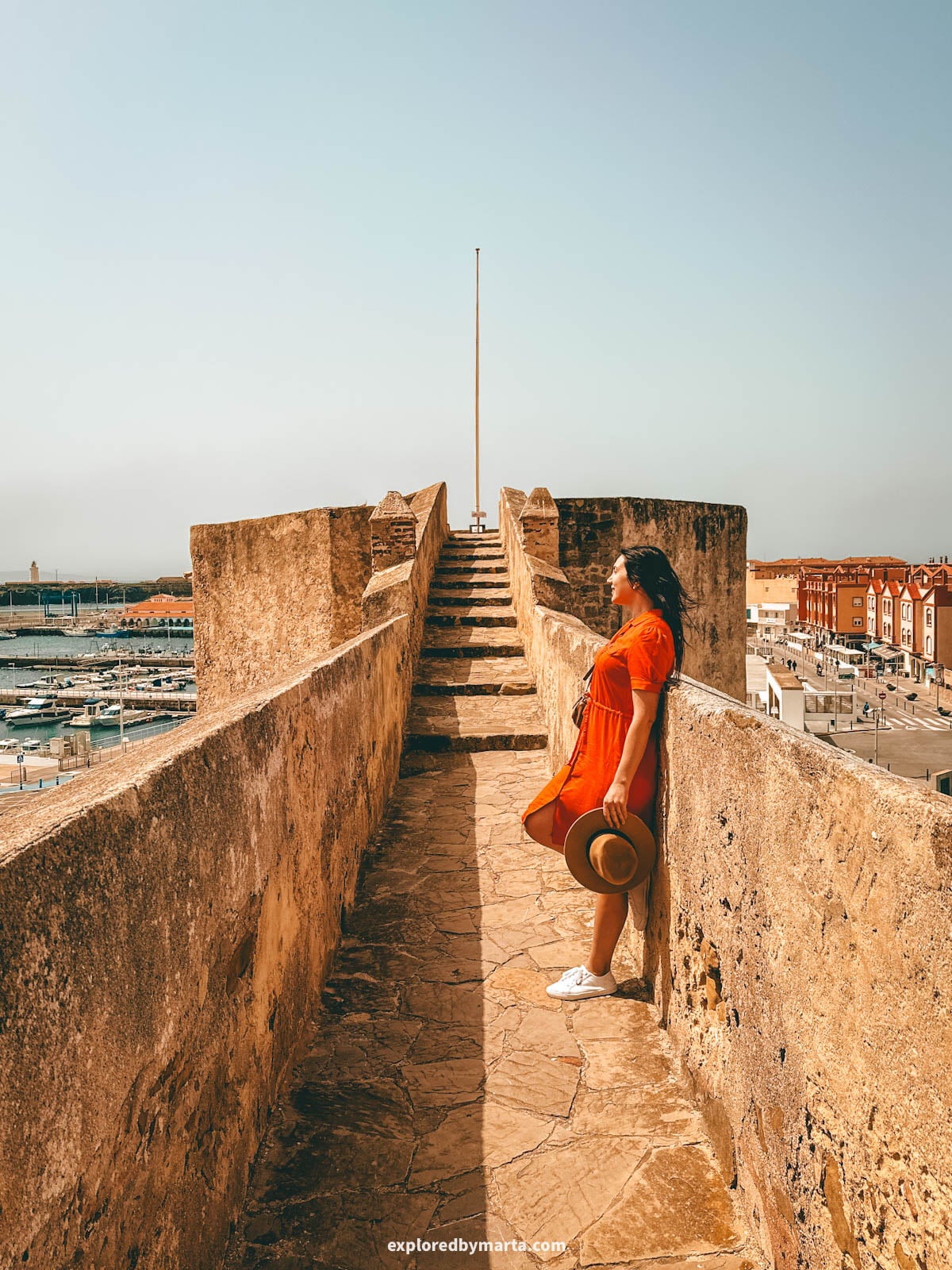
Inside the castle grounds, you can wander around the towers, see thousand-year-old artifacts, and read about the town’s history.
The route is self-guided, so you just follow the path and explore at your own pace. We spent about an hour here.
But the best part for us was the views from the top. You get a full panorama of Tarifa, the port, and on a clear day, even the mountains of Africa across the Strait of Gibraltar, just 14 km (8.7 miles) away. Pretty special view, if you ask me!
Location: Castillo de Guzmán el Bueno
15. Castillo de Santa Catalina in Cádiz
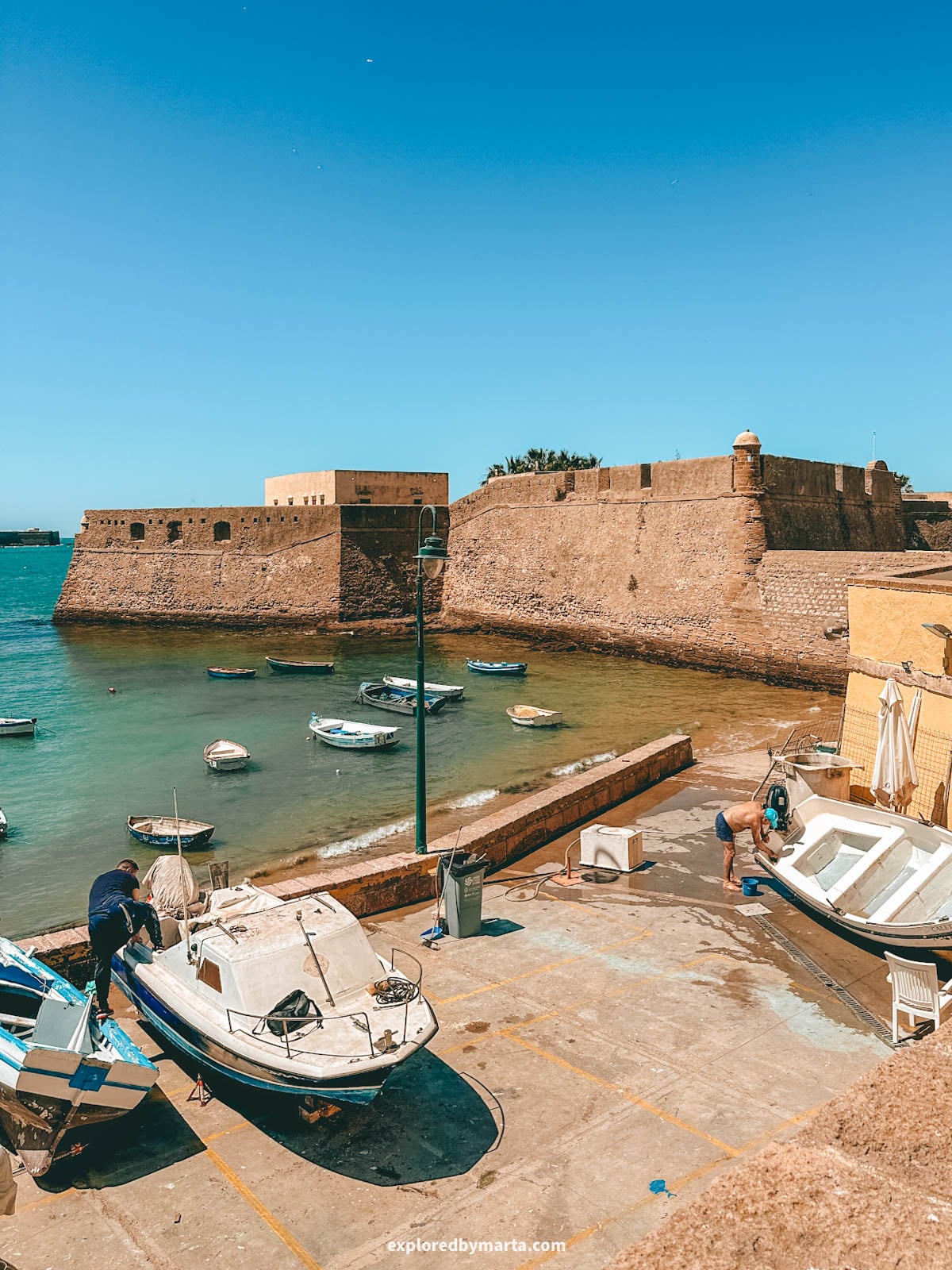
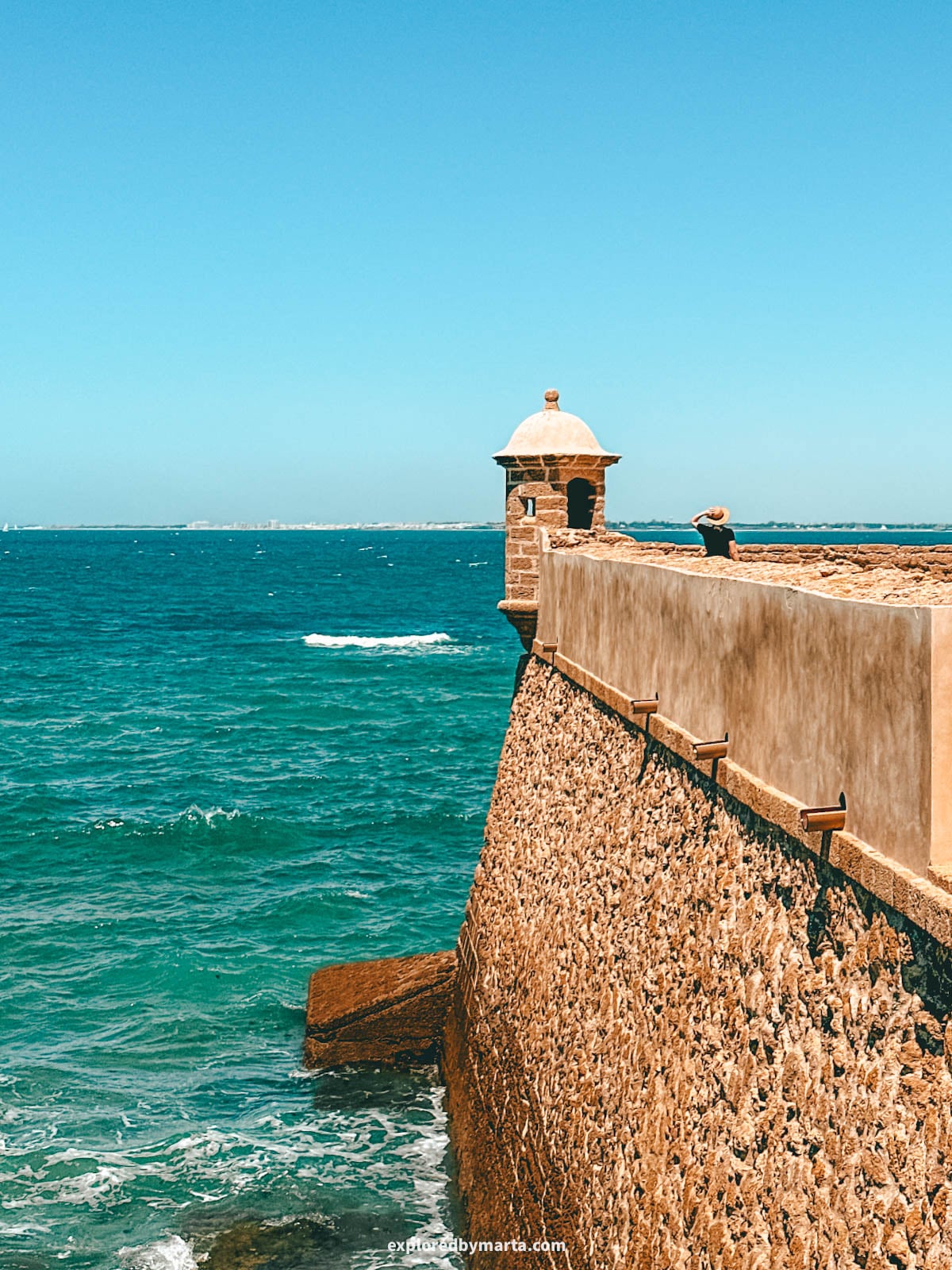
Castillo de Santa Catalina is one of the most popular spots to visit in Cádiz, the oldest city in Western Europe. This 16th-century star-shaped fortress sits on a small rocky outcrop, with the Atlantic Ocean wrapping around it on three sides.
The castle was built after a devastating English attack on Cádiz, when the city realized it desperately needed better defenses.
Spain was the wealthiest empire in the world back then, and Cádiz, as its main Atlantic port, was a constant target.
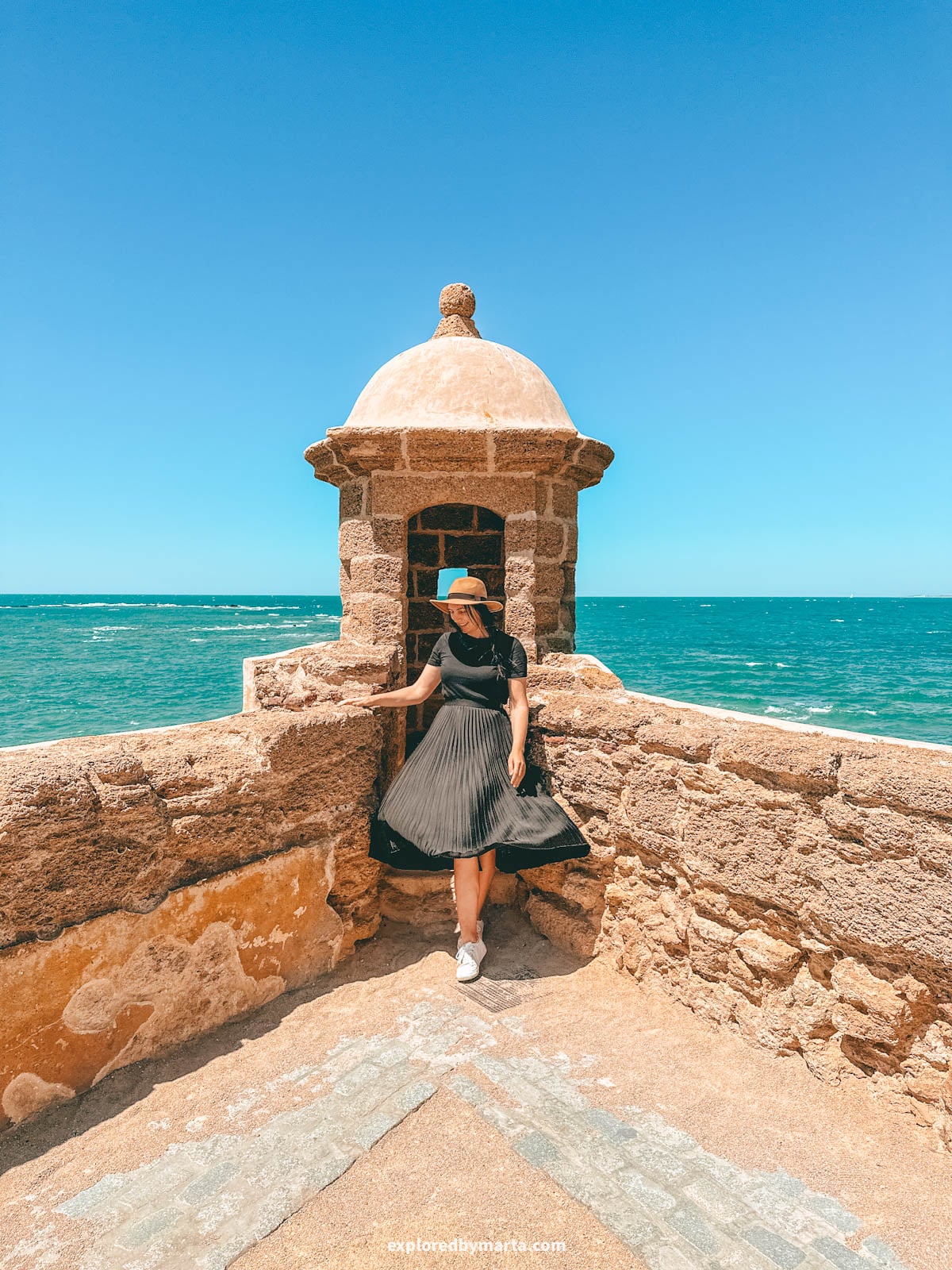
So this fortress is a real piece of that turbulent history of pirates, English raiders, and Dutch fleets all eyeing the city’s riches. I’m glad those times are over here in Europe and now we can explore these places as tourists.
The best part? Entry is completely free. There aren’t a ton of fortresses in Spain where you can just walk in for free, so it’s a really easy yes.
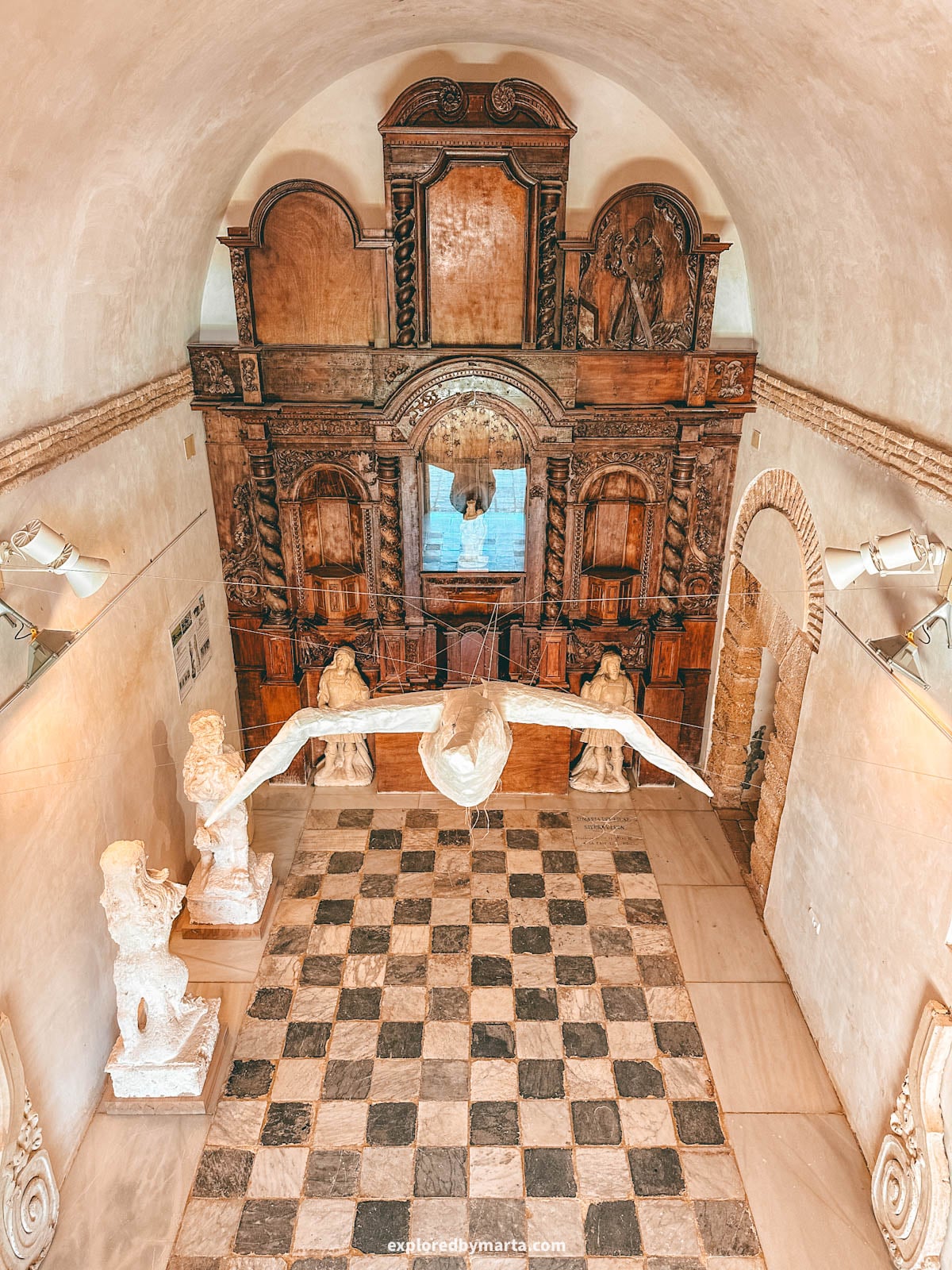
Once inside, you can wander around the defensive walls and ramparts, peek into the inner courtyard, explore the art exhibitions, and enjoy panoramic ocean views in every direction.
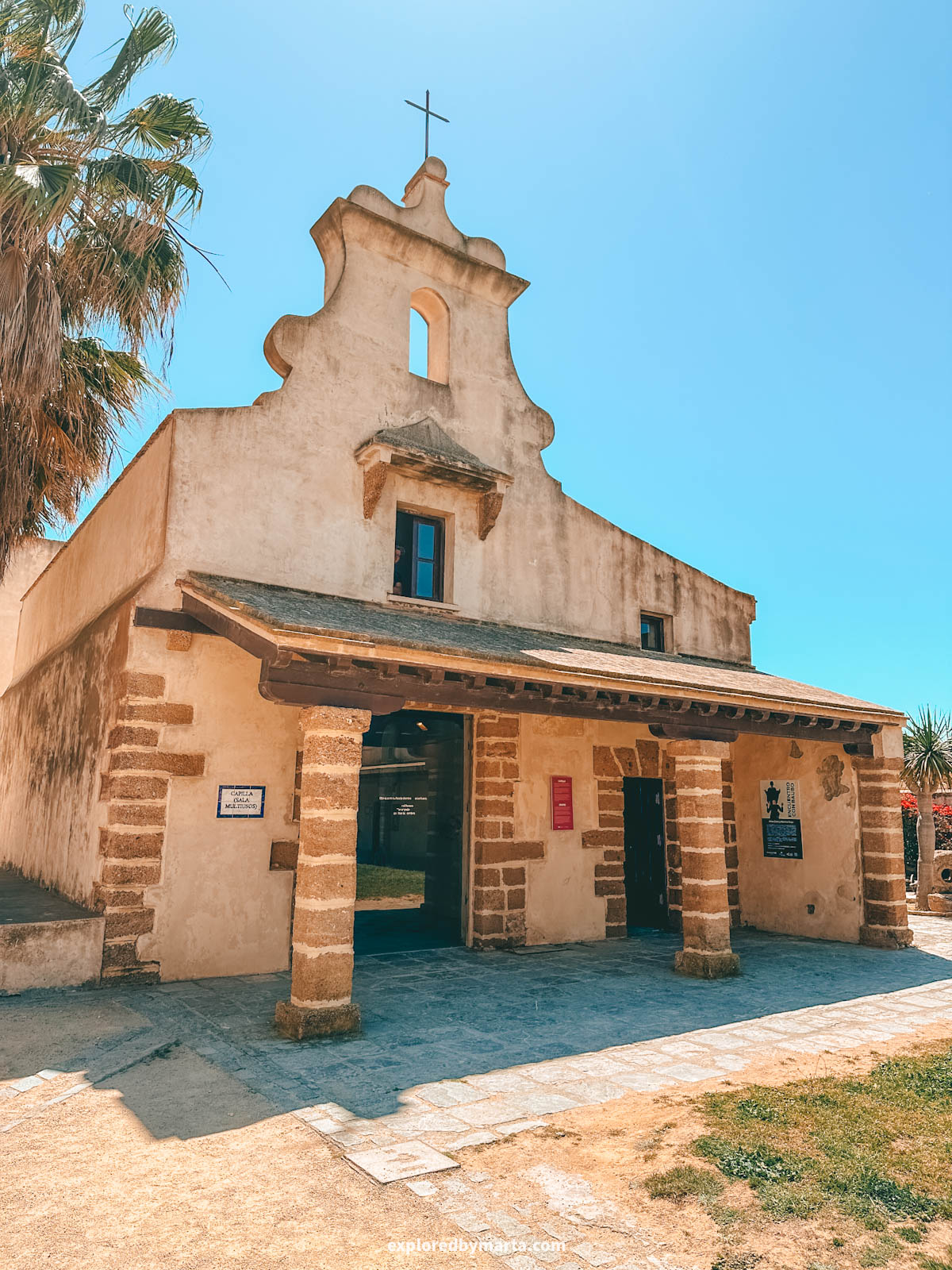
There’s also a small chapel inside the walls worth a quick peek.
The walls are thick, the cannons are gone, but you can still feel the military presence of what this place once was.
We spent about 20 to 30 minutes here, walking the walls, soaking in the views, and enjoying the salty Atlantic breeze. It sits right next to La Caleta Beach, so it’s super easy to combine the two.
One heads up: the castle has set opening hours and closes earlier in the winter months, so plan your visit so you don’t show up at closed gates.
Location: Castillo de Santa Catalina
16. Castillo de Olvera
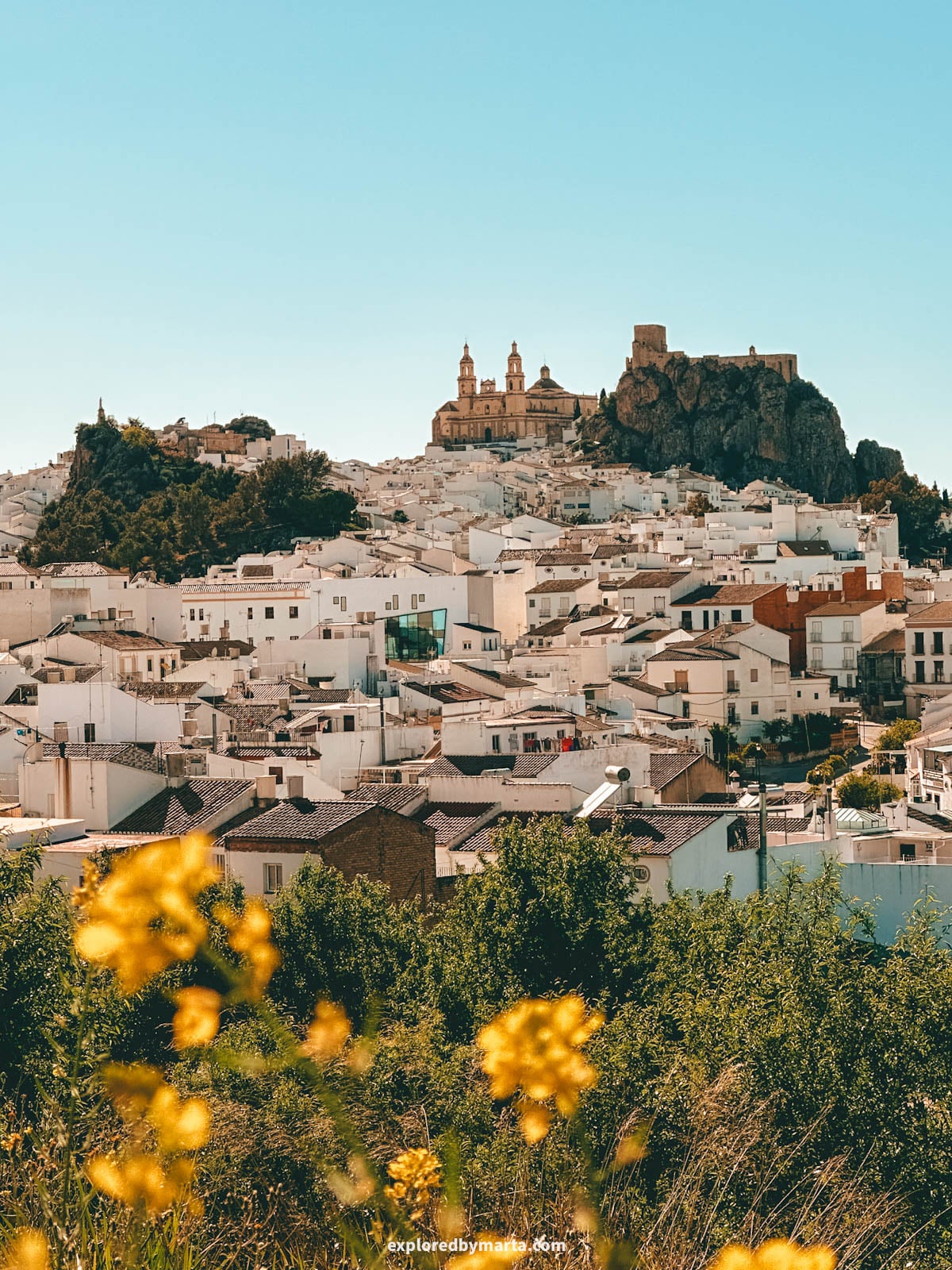
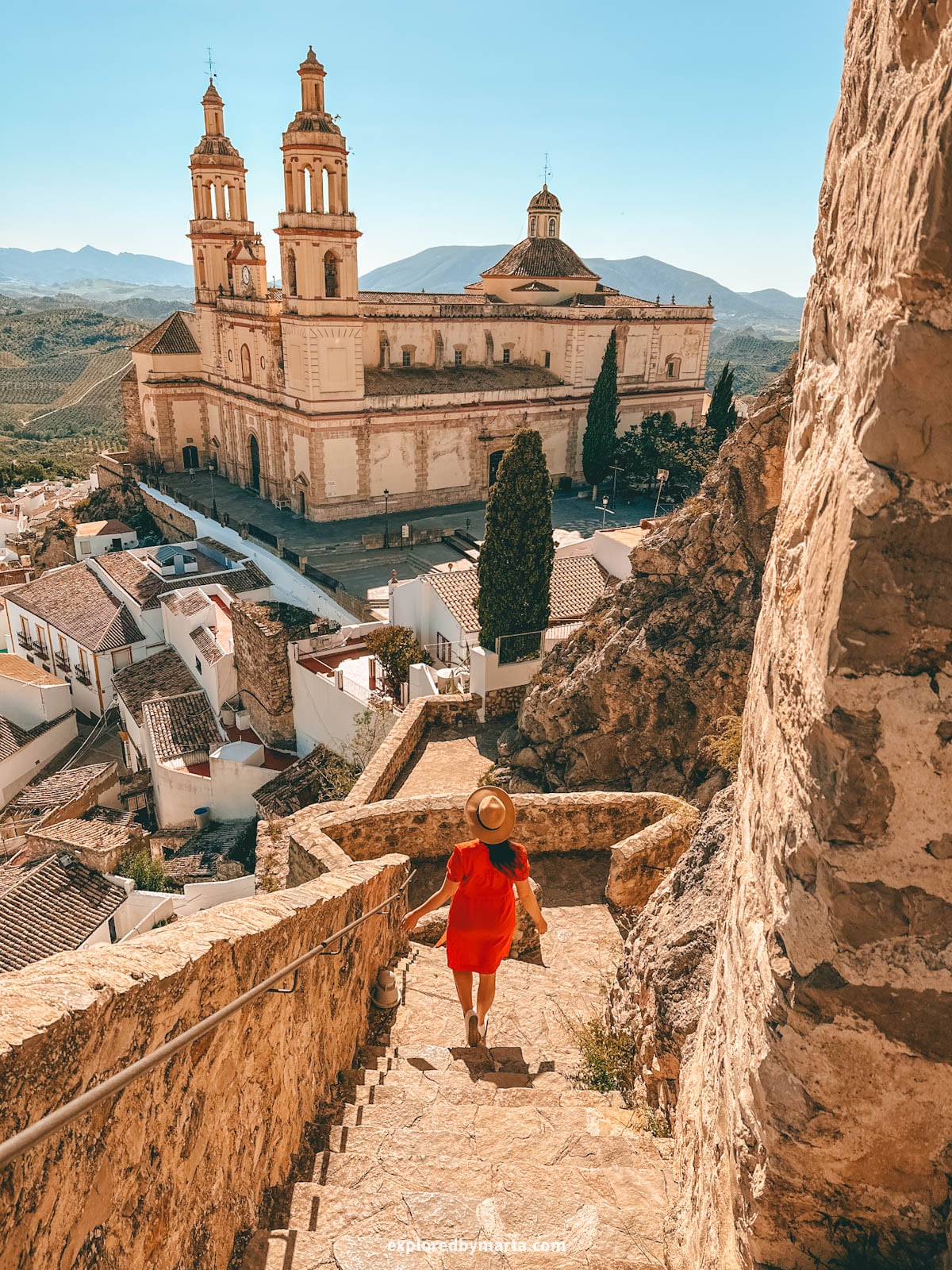
Castillo de Olvera sits at the very top of Olvera, one of the most beautiful white villages in Andalusia. The castle and the church stand high above the whitewashed houses, giving the whole village that dramatic hilltop skyline. So typical Andalusian!
I learned that the castle was built in the 12th century as part of the defensive system of the Nasrid Kingdom of Granada. It sits on a rock at 623 meters (2,044 feet) above sea level, so it was a serious lookout point back in the day. And still is!
To reach the castle, you climb up through the historic center along Calle Calzada to the hilltop, where you’ll also find the Iglesia Mayor Parroquial church right next to it. The walk up is part of the experience.
And the payoff? The views are some of the most jaw-dropping in all of Andalusia. It is one of my favorite places we visited in Andalusia! From the top you look out over the village below and the rolling countryside stretching as far as you can see. Worth the climb!
Location: Castillo de Olvera
17. Castillo de Iznájar
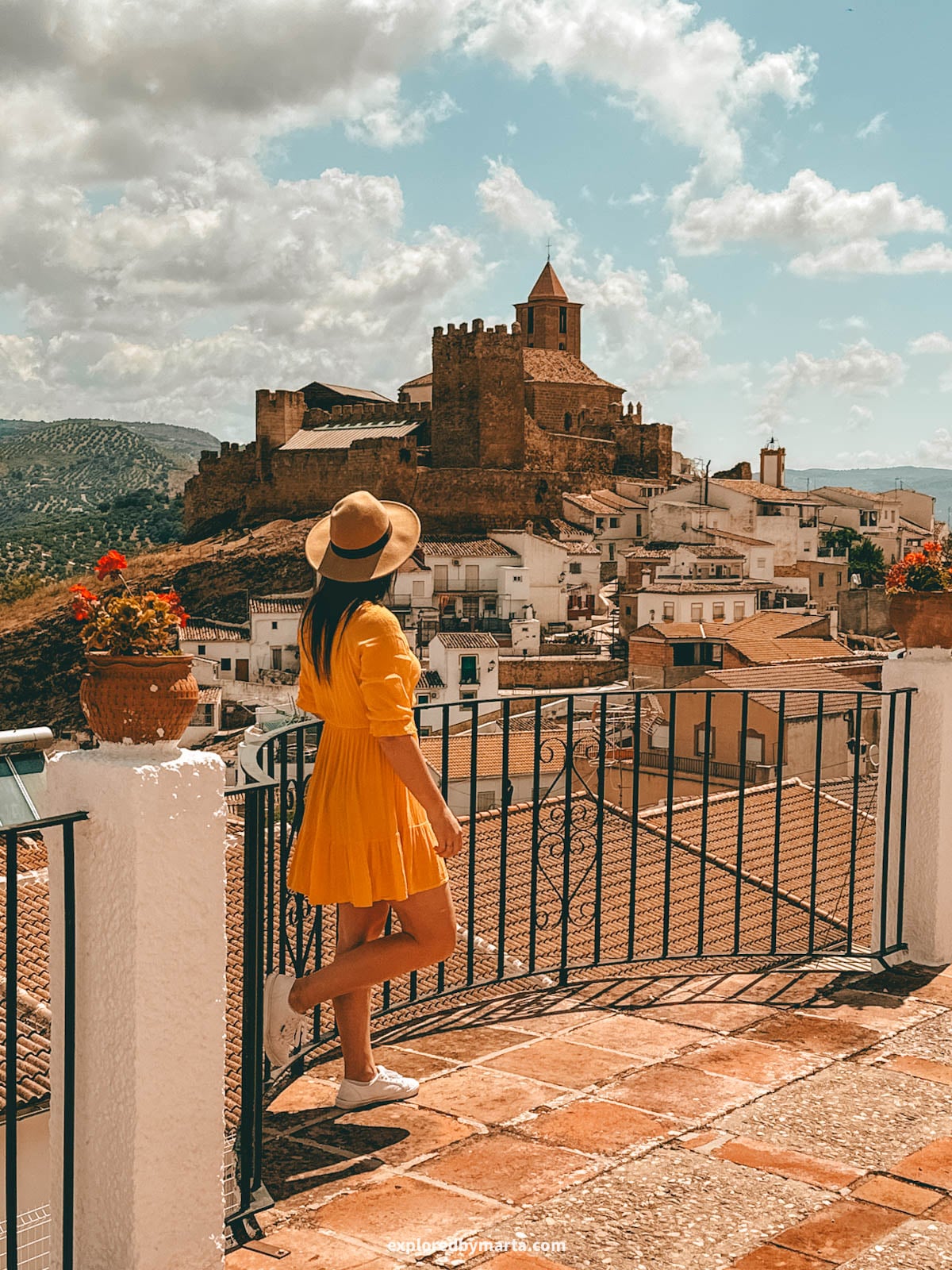
Castillo de Iznájar crowns the hilltop white village of Iznájar, one of the prettiest small villages in Andalusia. The castle gives the whole place that dramatic skyline that makes Iznájar so special and so scenic.
Or I should actually say – so typical Andalusian? Castles on top of hills are a thing here.
The Iznájar Castle is of Arabic origin, with its history going back to around the 9th century, during the time when much of southern Spain was under Moorish rule.
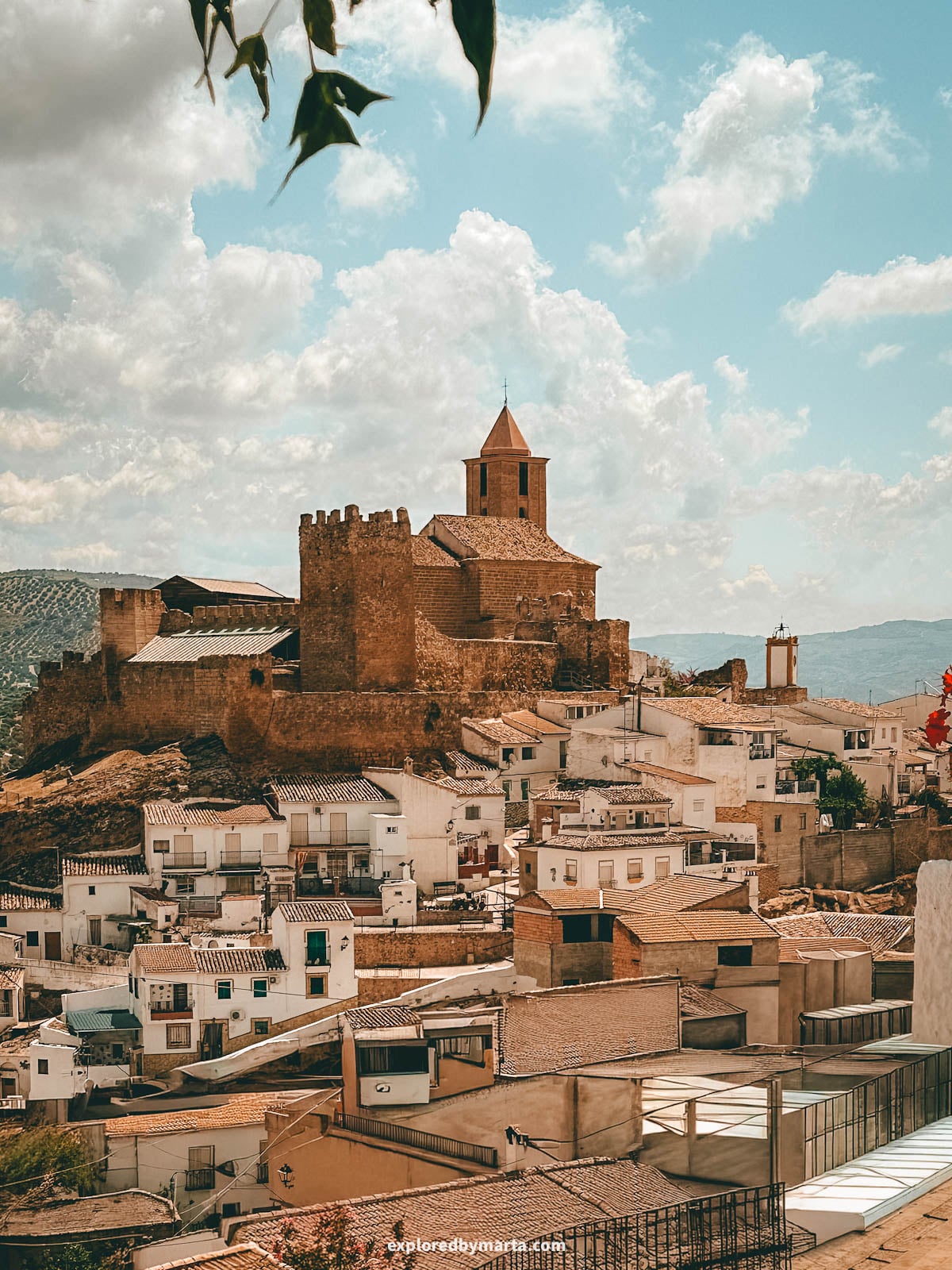
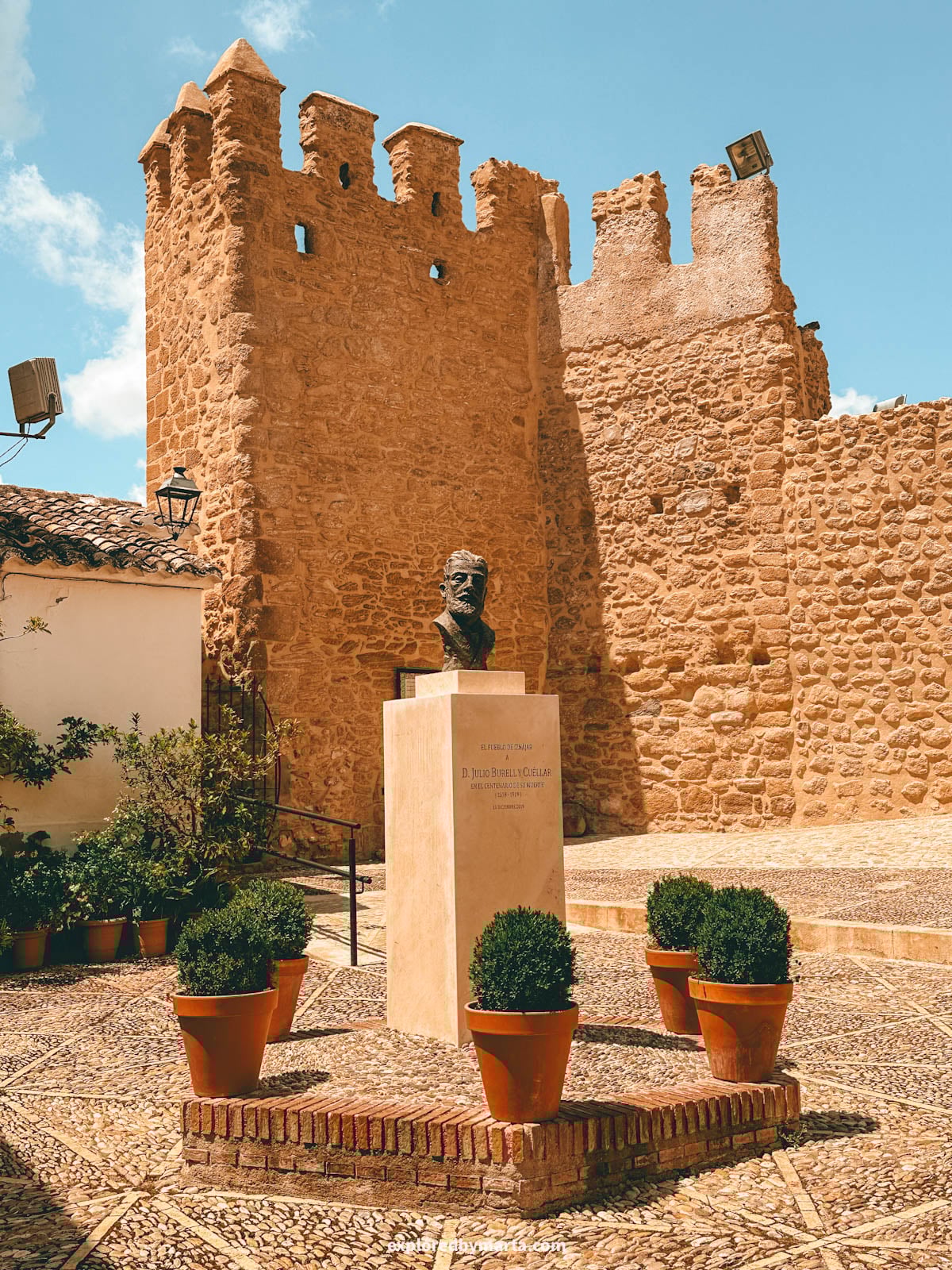
Here’s a detail I love: the name Iznájar comes from the Arabic term Hisn Ashar. “Hisn” means fortress or castle, and “Ashar” is often linked to liveliness or happiness. So the name basically means something like a “fortified place.” At least, they say so.
In other words, this castle isn’t just one of the main attractions in Iznájar, it’s the reason the whole village got its name in the first place. The town literally grew up around this hilltop fortress.
There’s a small entrance fee to visit (around 2 EUR when we went, super reasonable). But even if you don’t go inside, wandering up to the castle is one of the best things to do in the village, and the reservoir views from up here are stunning.
Location: Castillo de Iznájar
18. Castillo de La Calahorra
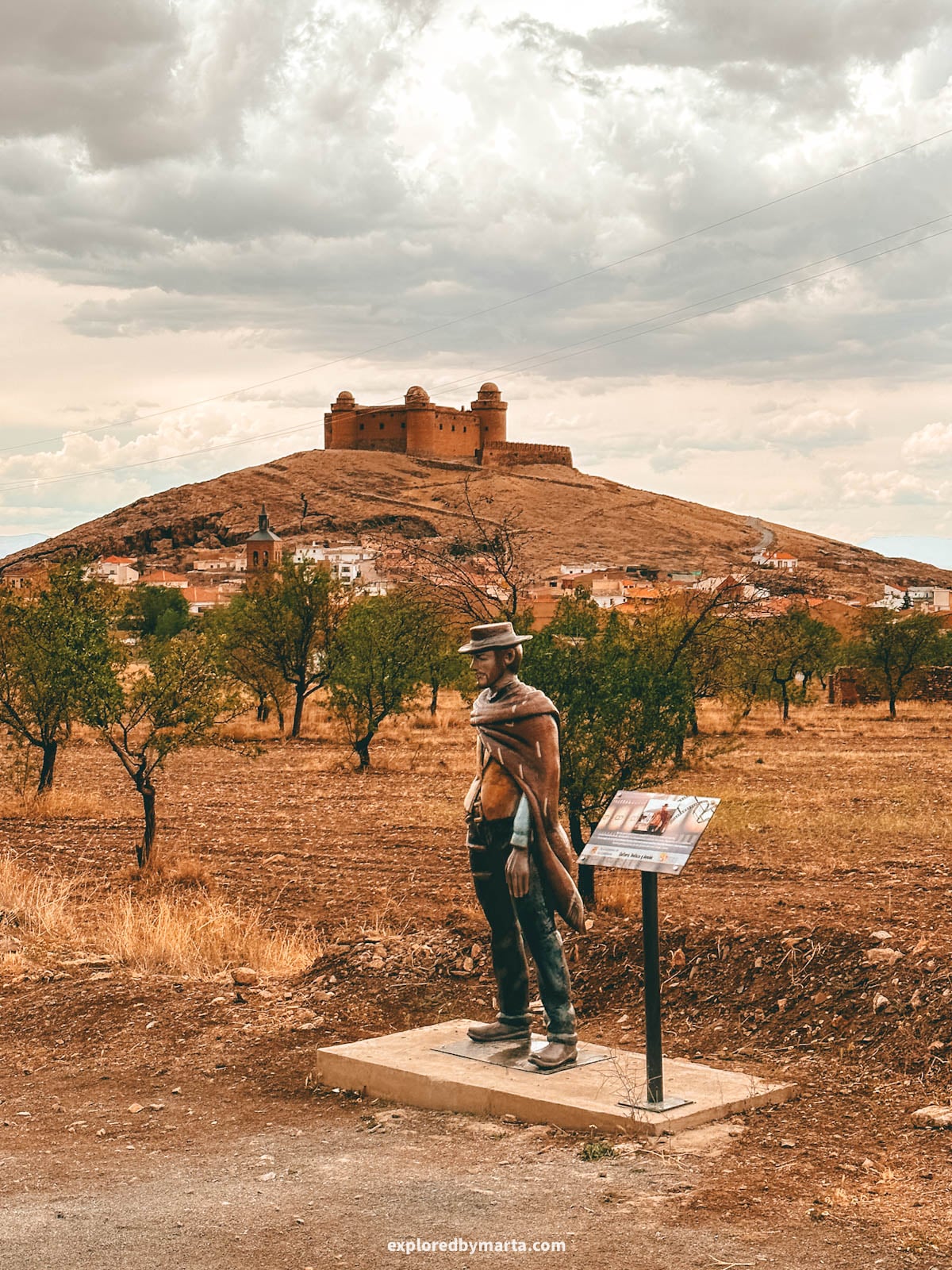
Castillo de La Calahorra is one of the most unique castles in Andalusia, and it has a setting to match. It sits on a hill above the tiny village of La Calahorra, in the foothills of the Sierra Nevada mountains, not far from Granada.
What makes it special? I read that it was built in the early 16th century and was one of the first Italian Renaissance castles built outside of Italy. From the outside it looks like a stark, fortress-like castle, but the inside hides an elegant Renaissance courtyard.
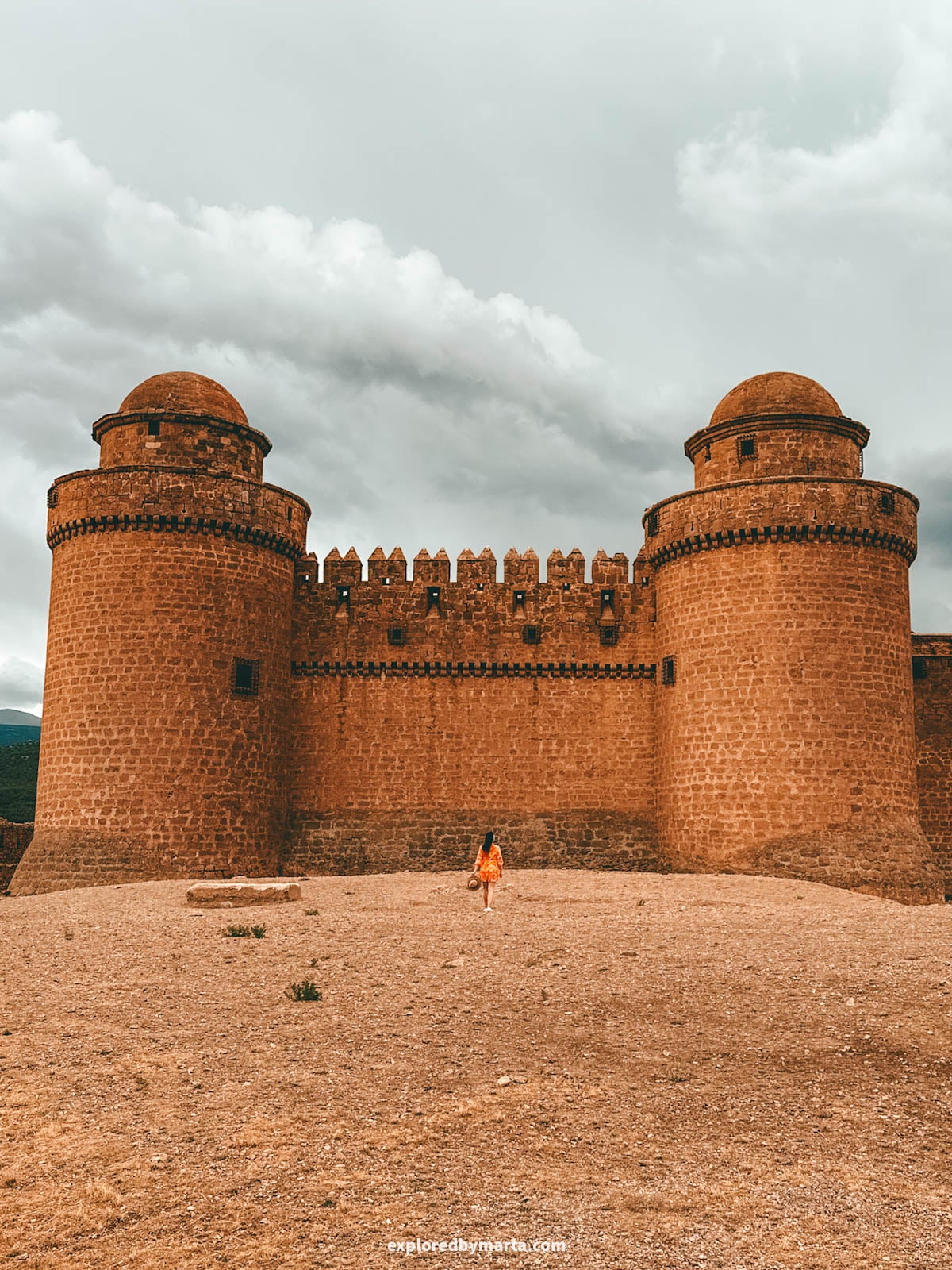
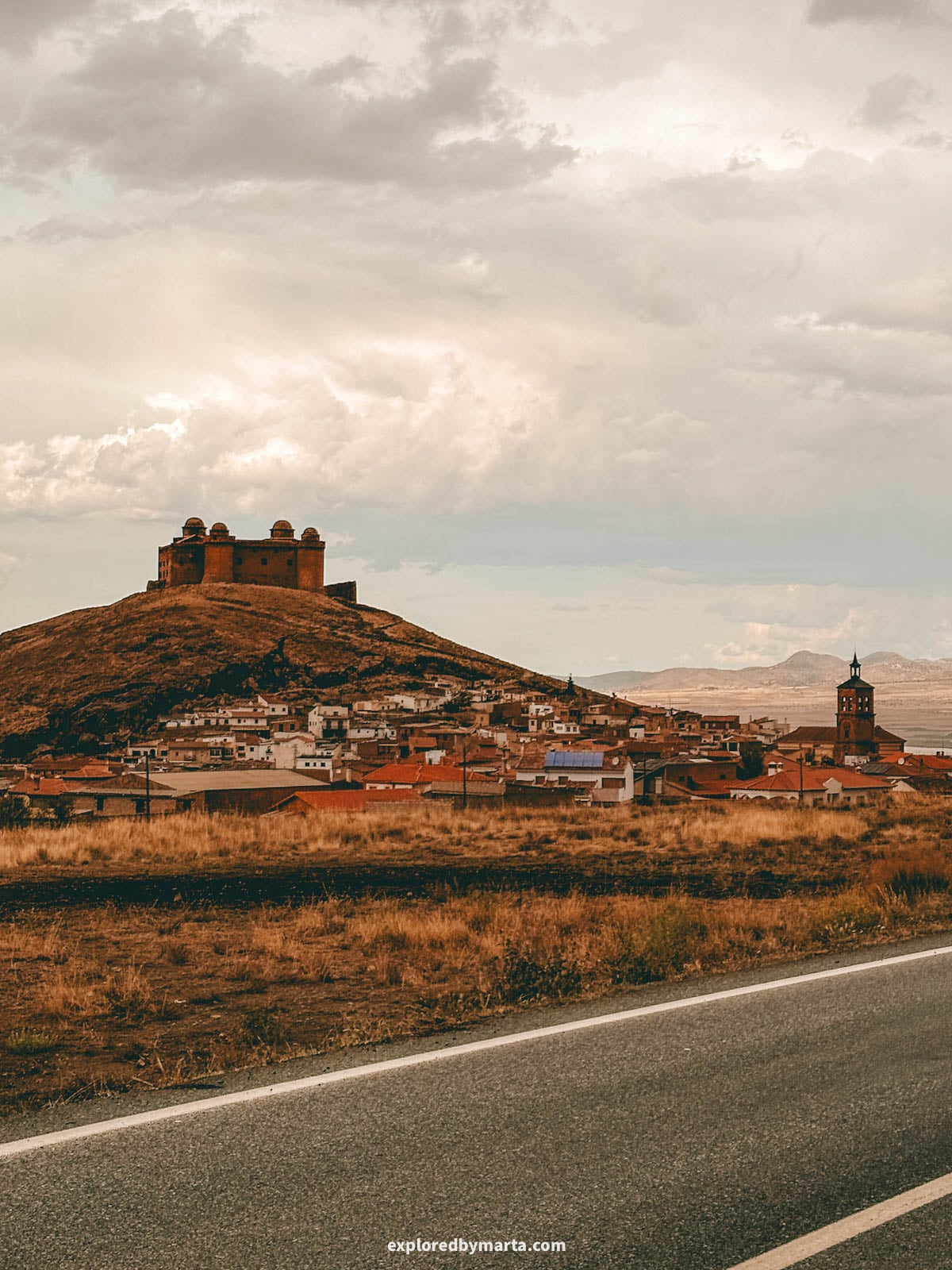
One thing to know before you go: you can see the outside of the castle any day, but visits to the inside are only available on Wednesdays. So plan around that if you want to see the famous courtyard.
And for the TV fans: this castle was featured in the 2022 series House of the Dragon (the Game of Thrones prequel), where it played a manse in the city of Pentos. So if it looks familiar, that’s why!
Location: Castillo de La Calahorra
19. Castillo de Santa Catalina in Jaén
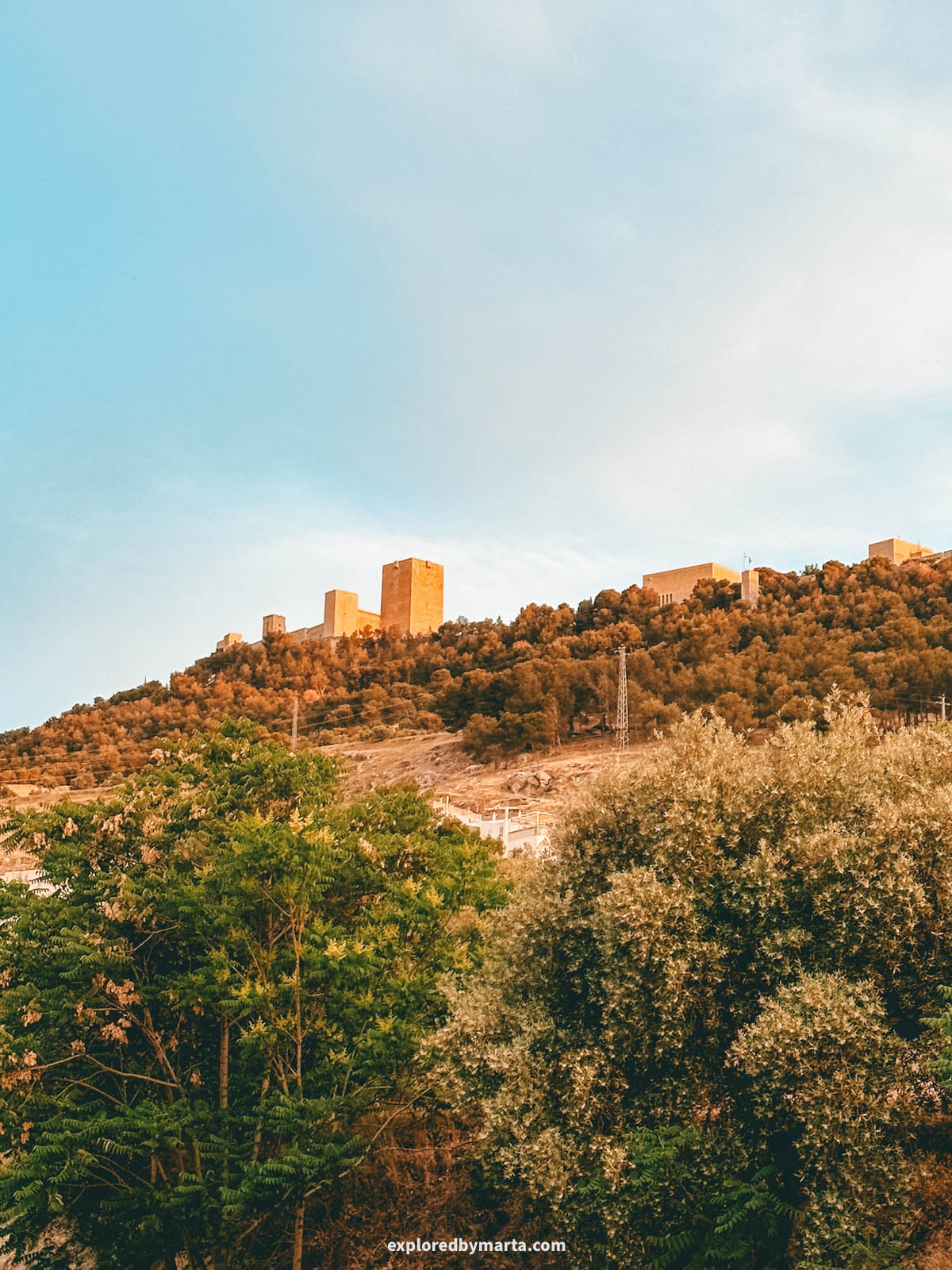
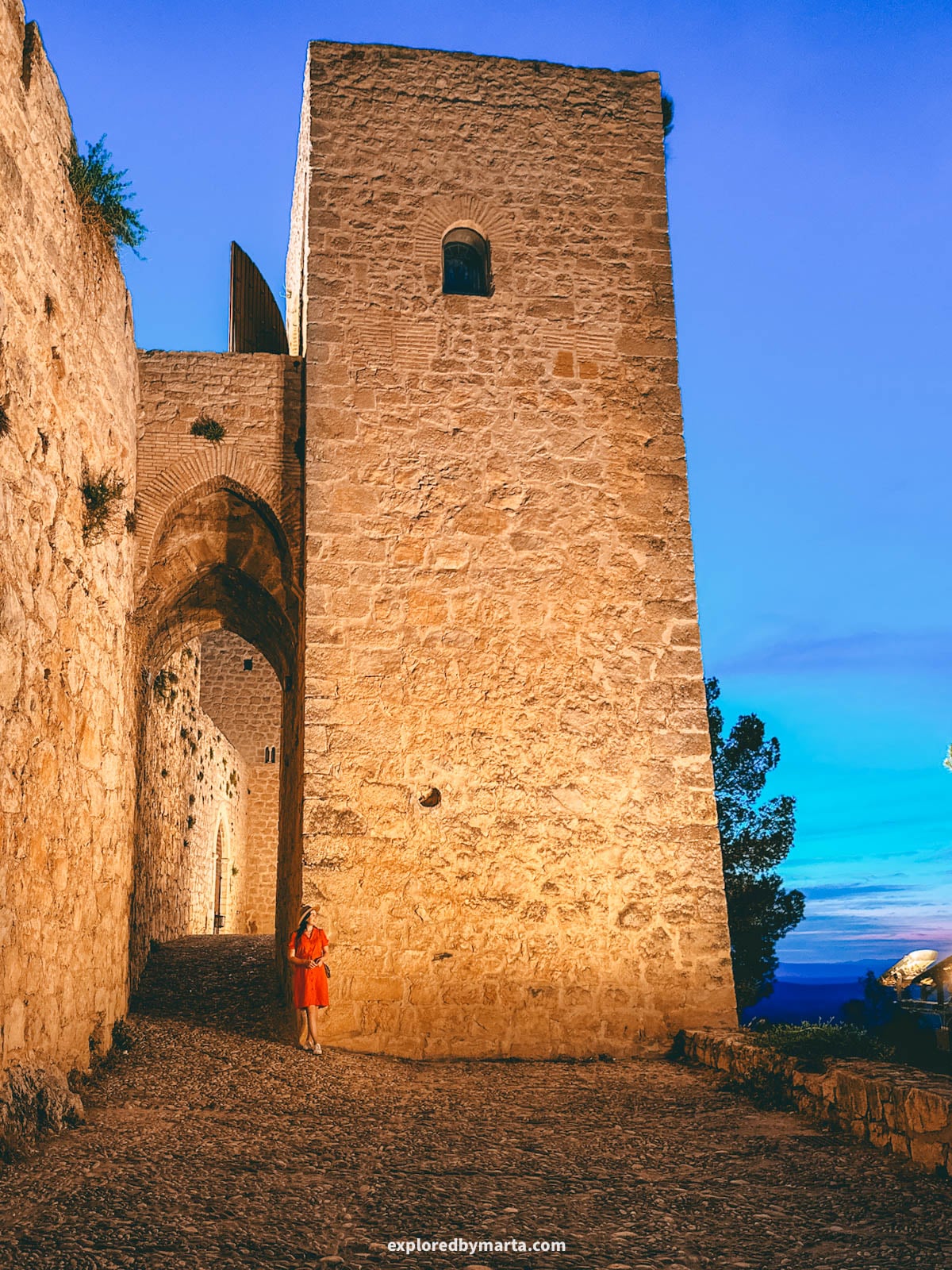
Not to be confused with the seafront fortress of the same name in Cádiz, this Castillo de Santa Catalina sits on a hill high above the city of Jaén, in the eastern part of Andalusia. We drove straight from Córdoba to visit this castle!
Apparently, it originated in the 8th century as a Moorish fortress, and was later transformed into a Christian castle after the Reconquista. So it carries that classic Andalusian castle life of Moorish beginnings and Christian conquest.
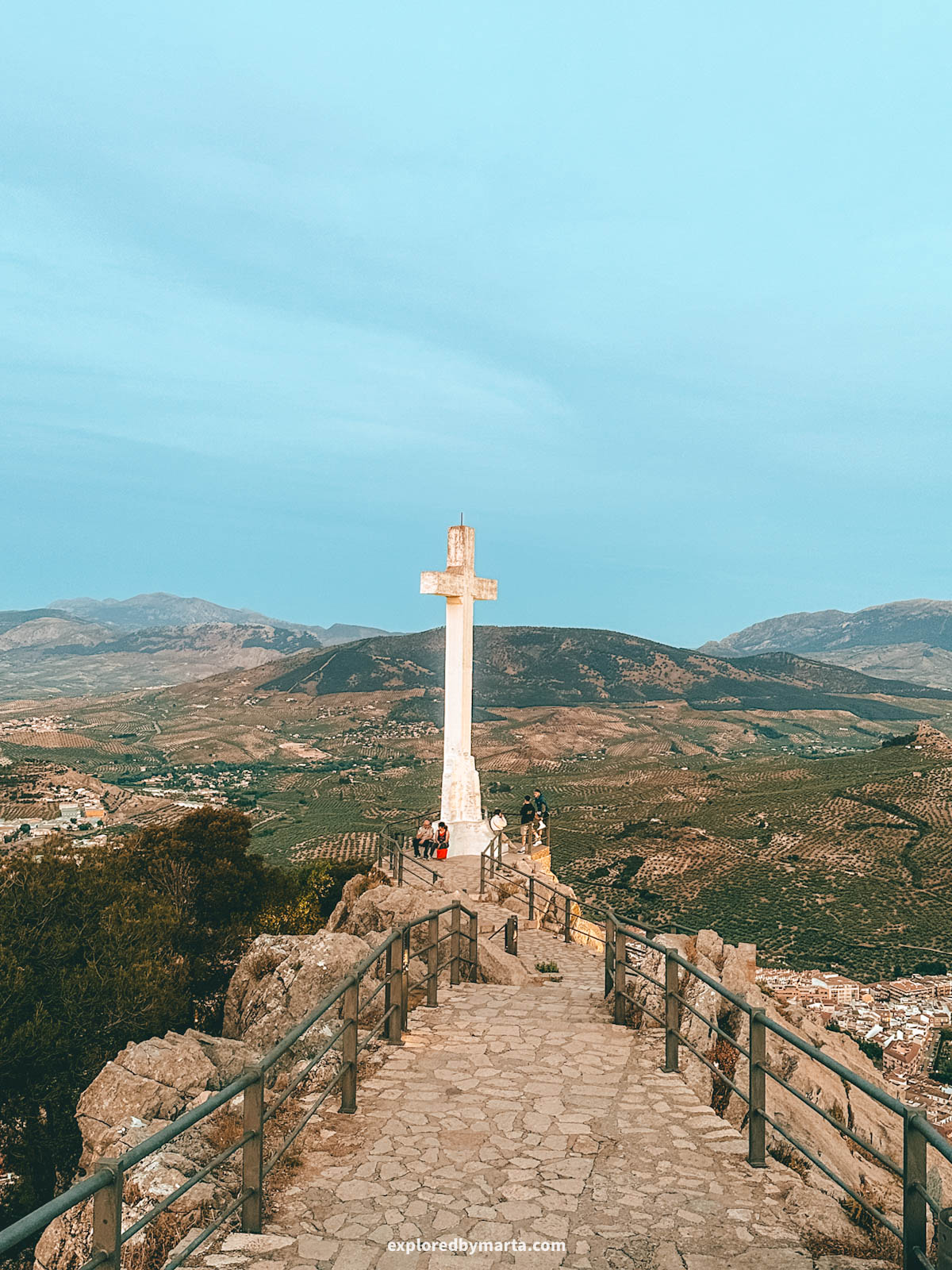
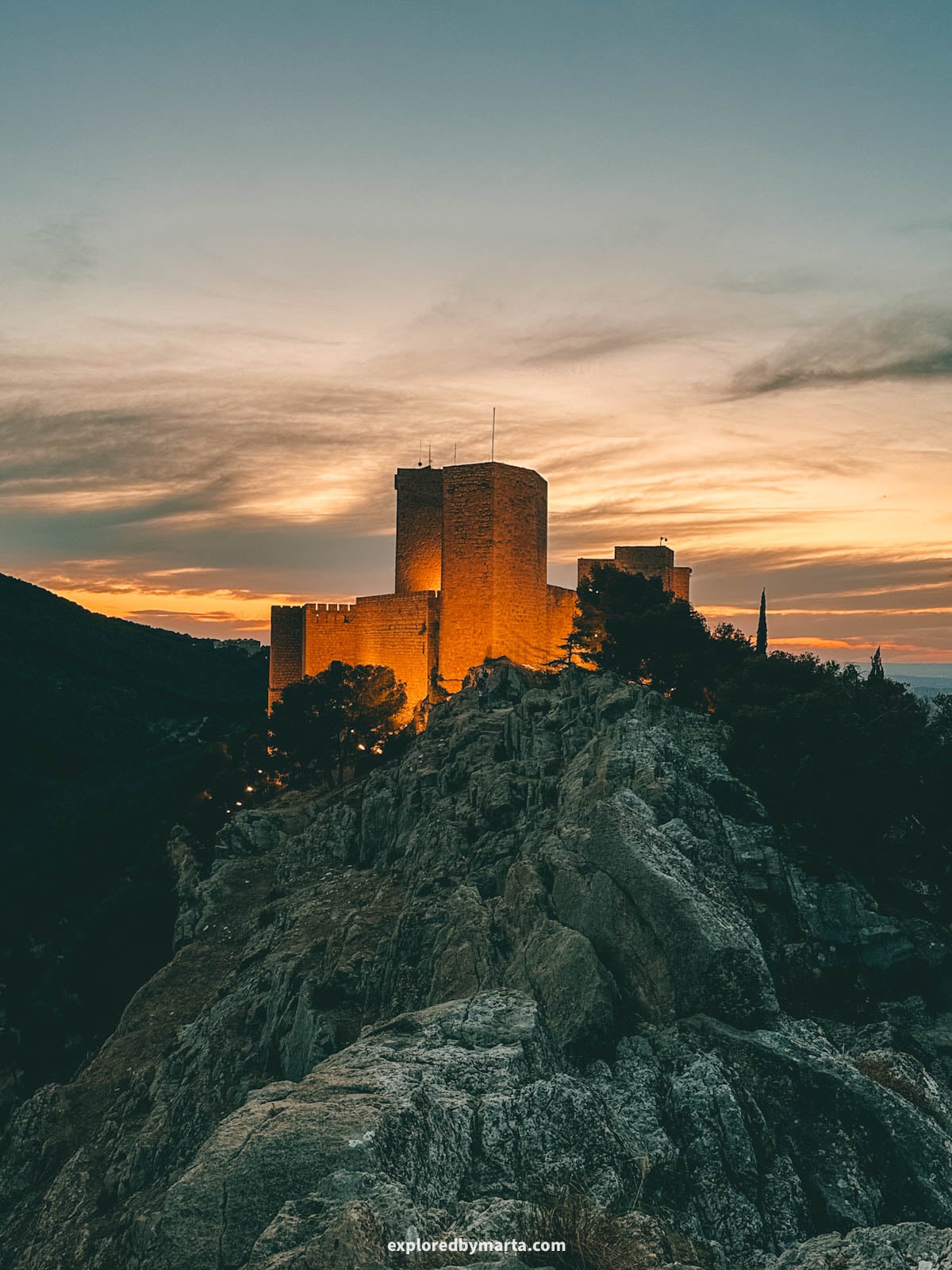
The great thing here is you can drive right up to the top of the hill. This is hands down the best place to watch the sunset in Jaén, so if you can time it right, come up in the evening. There are multiple spots with panoramic views over the city.
Here’s the most unique part: you can actually spend the night inside the castle. There’s a 4-star hotel, the Parador de Jaén, built into one part of it. How cool is that? Sleeping in a centuries-old castle is such a bucket list experience!
Location: Castillo de Santa Catalina
20. Castillo de Colomares near Málaga
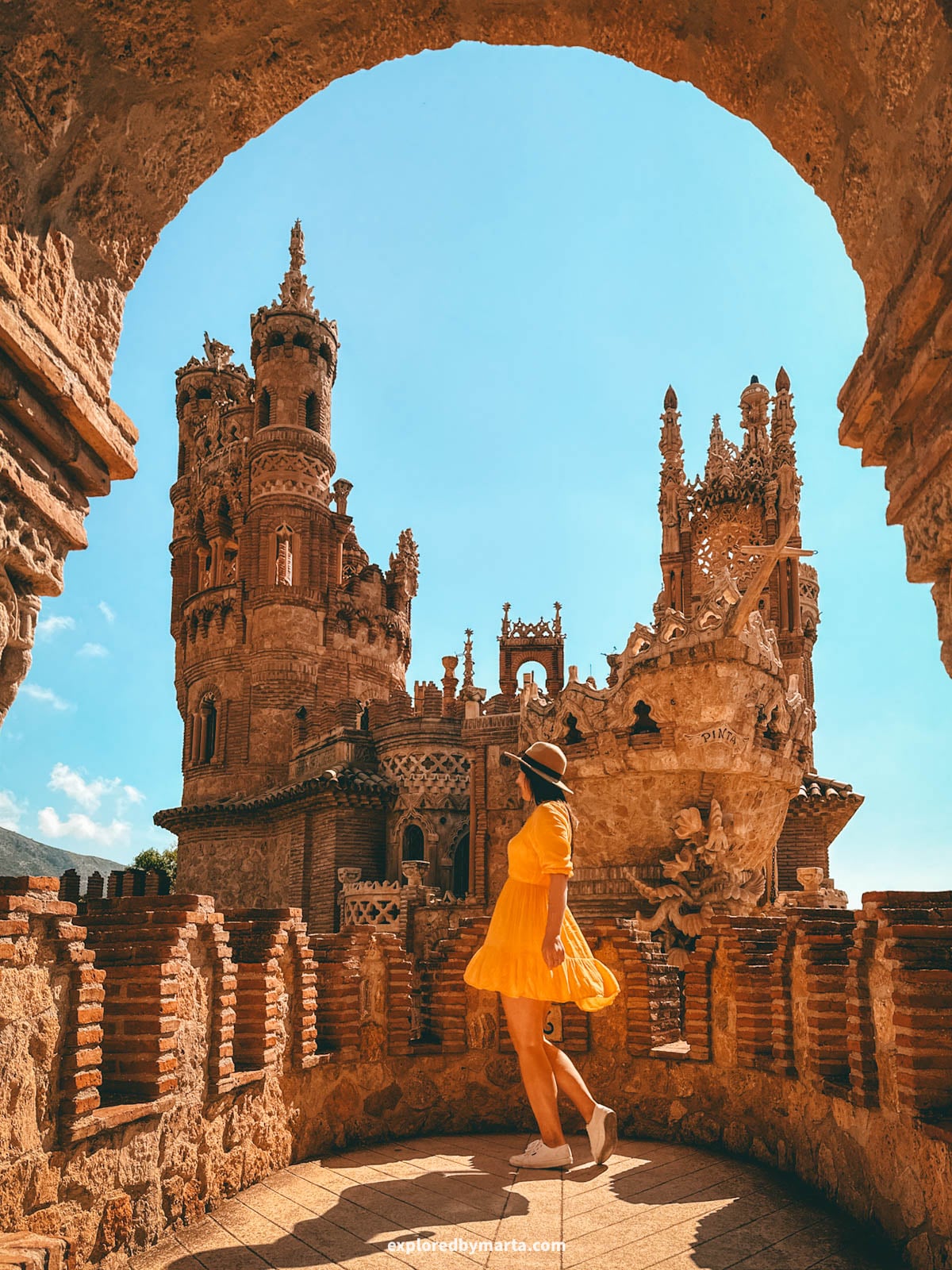
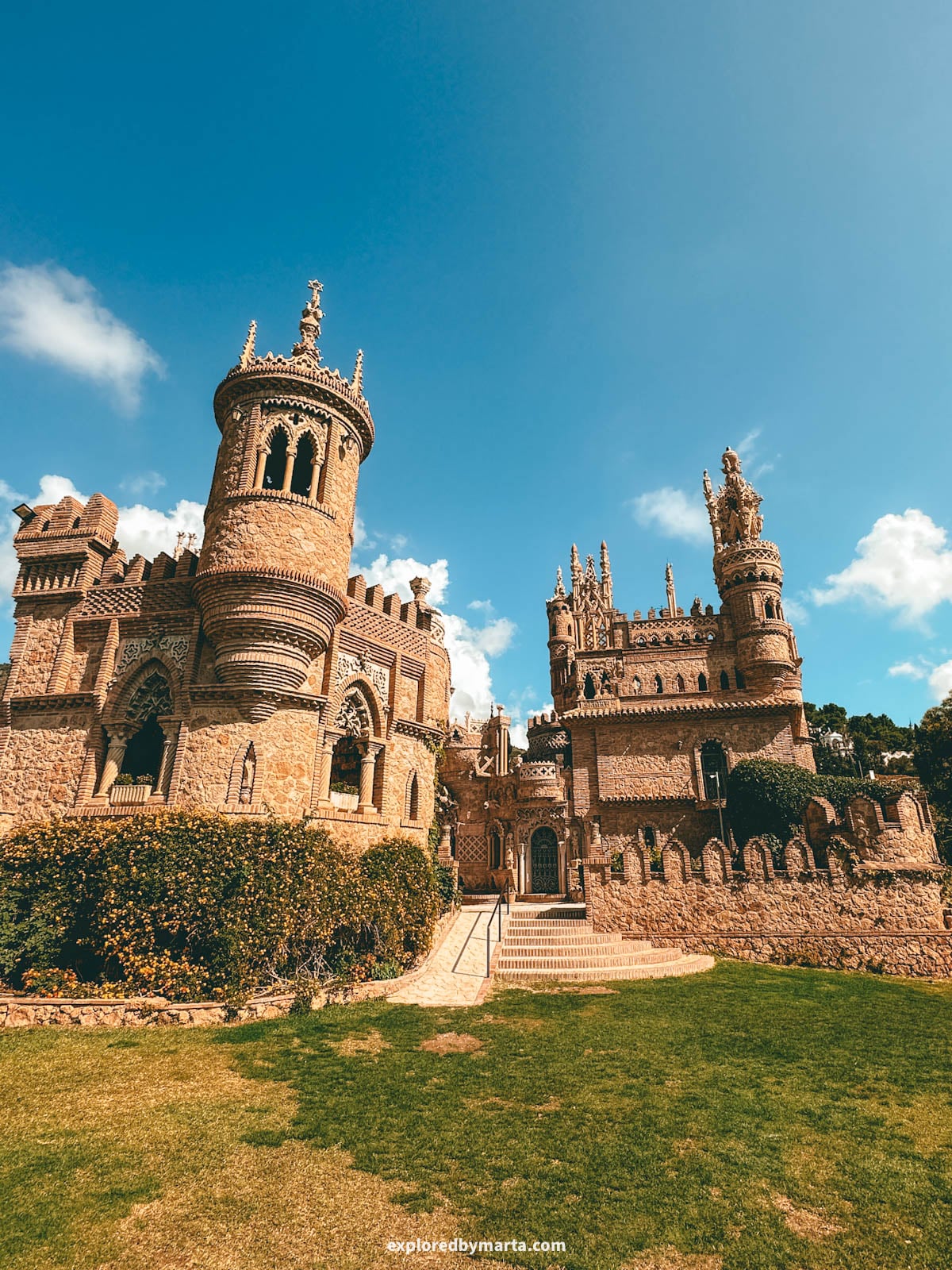
I saved the most unexpected one for last. Castillo de Colomares looks like it’s been standing for centuries, all turrets and stone detail, the kind of place you’d assume a king once lived in.
Then you find out it was finished in 1994. Yep. After only seven years of construction. So that “ancient castle” feeling? Completely made up, and I kind of like it that way.
Turns out it isn’t really a castle at all, but a monument built in the shape of one, dedicated to the life and voyages of Christopher Columbus. You’ll find it in Benalmádena, in Málaga province.
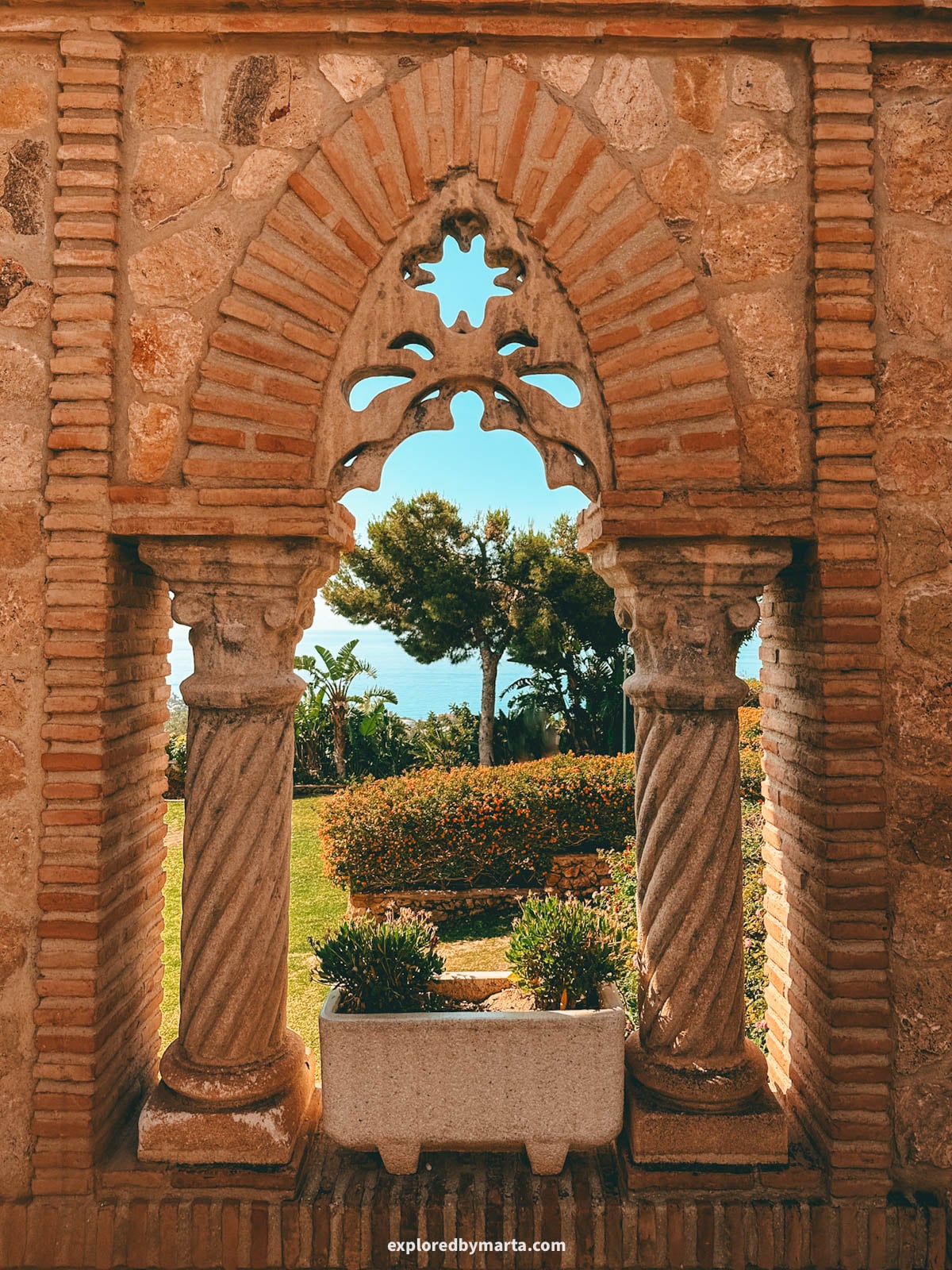
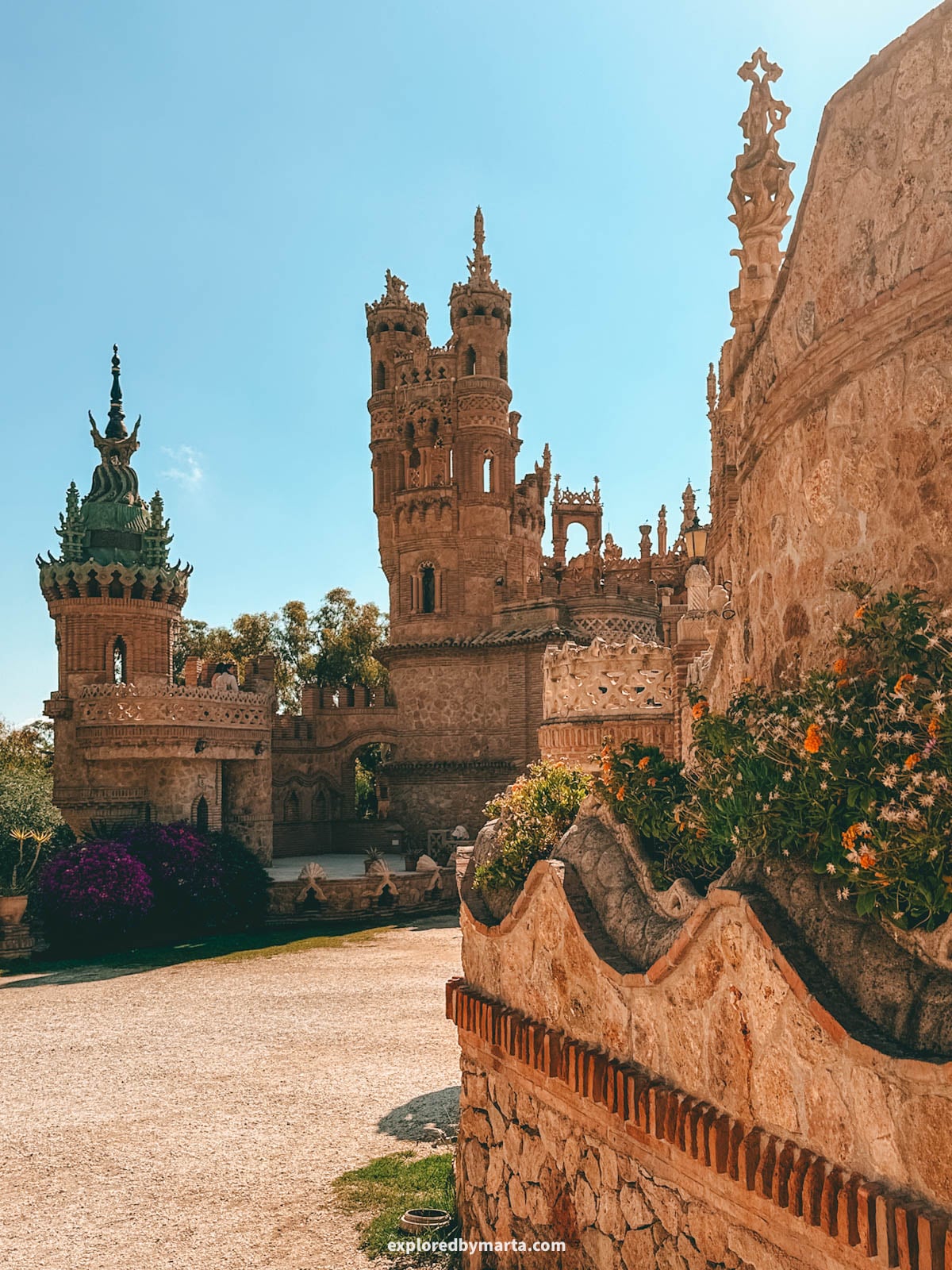
It was the work of a private artist, which is why it never made it onto most Málaga itineraries, and honestly a lot of travelers have no idea it even exists. Their loss, I say.
The architecture is wild, mixing all sorts of styles into one big storybook structure covered in carvings, towers, and little details that nod to Columbus and his ships.
And here’s the detail that gets everyone: the monument is home to the smallest church in the world, measuring less than 2 square meters. A church you basically can’t fit inside. I had to see it to believe it.
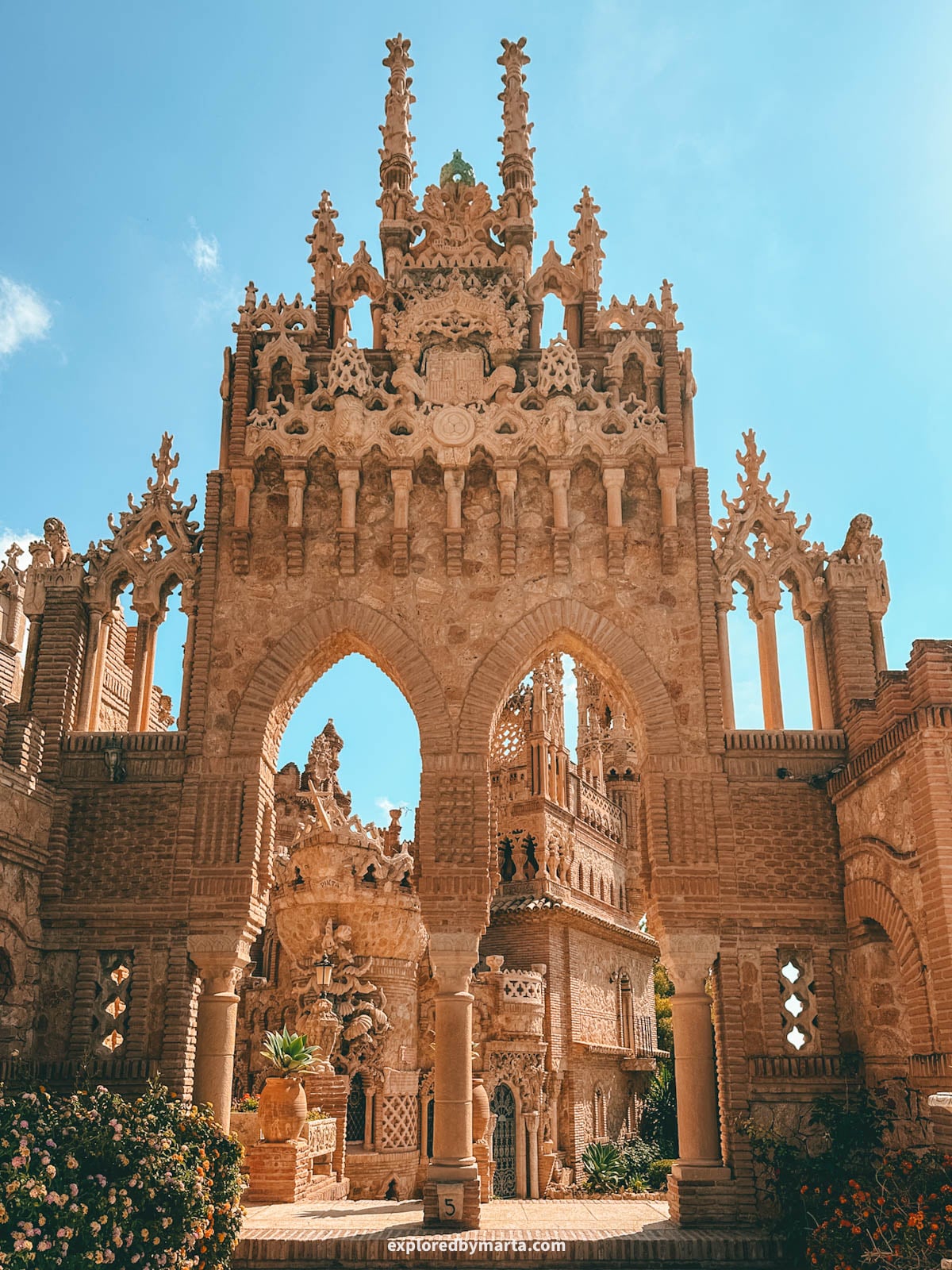
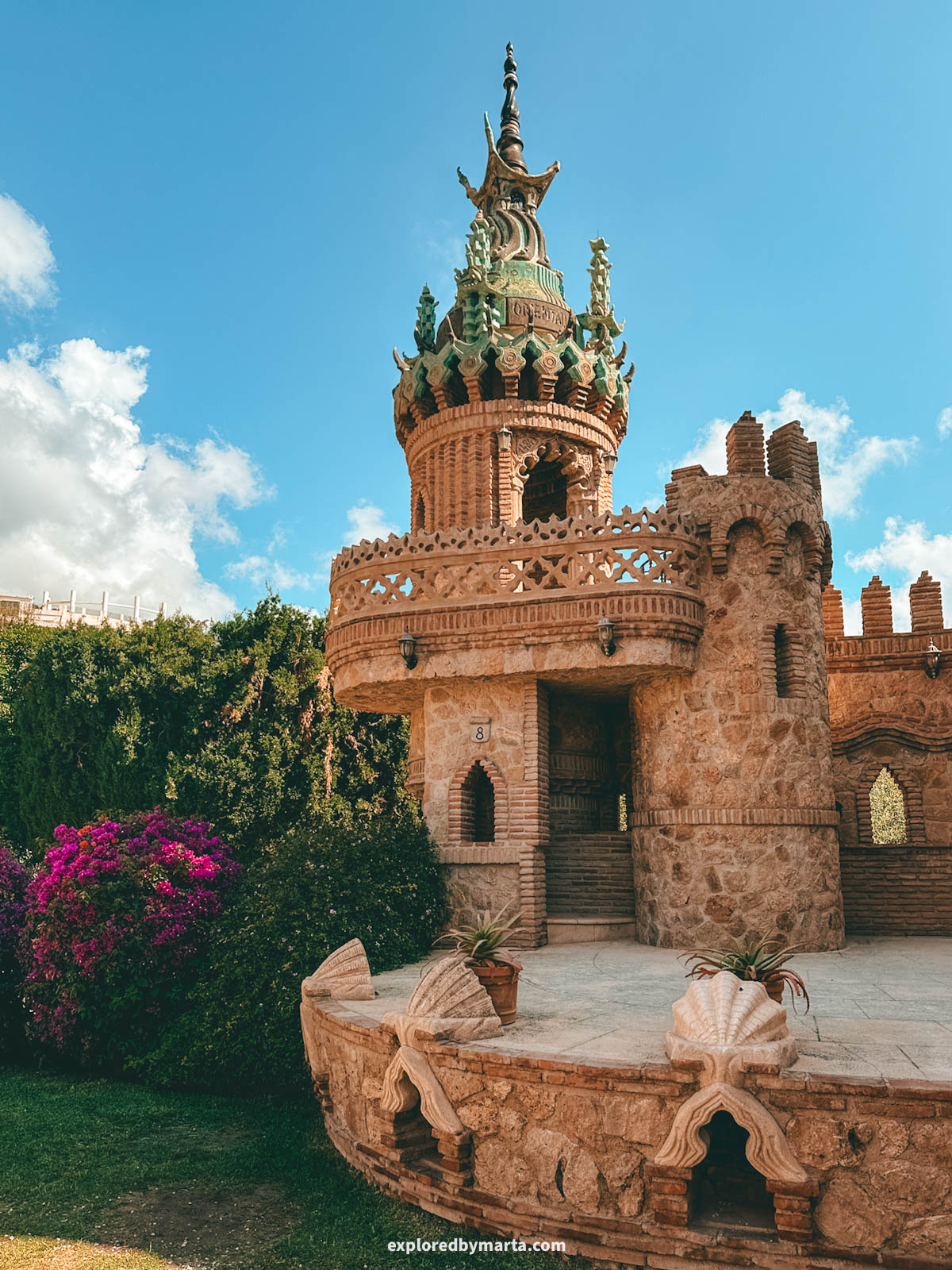
You can visit the whole place for a small entrance fee – when we went it was 3 EUR per adult, but now I checked that it costs 3.50 EUR, and it makes a fun, quirky stop if you’re already in the area.
It’s also one of the easiest day trips from Málaga – the castle sits only about 30 minutes away, and it’s super simple to reach by car. You can also take the train to Benalmádena and then a quick taxi to the monument.
And since it’s not a big place, you only need around 30 to 60 minutes here, so it’s easy to pair with nearby Marbella or a day along the coast. I love that not every castle in Andalusia is a thousand years old, and this one is proof the region can still catch you off guard.
Location: Castillo de Colomares
FAQs about palaces and castles in Andalusia
What is the most famous castle or palace in Andalusia?
The Alhambra in Granada is by far the most famous, and its Nasrid Palaces (the Palace of the Lions and Comares Palace) are the highlight. The Royal Alcázar of Seville is a close second and is the oldest royal palace still in use in Europe. Both are world-famous and absolutely worth booking ahead for.
What is the difference between an alcázar, an alcazaba, and a castillo?
An alcazaba is a Moorish fortress (the military, defensive kind), an alcázar is more of a fortified palace or royal residence with Moorish origins, and a castillo is simply the Spanish word for castle. All three appear on this list because Andalusia’s history layers Moorish and Christian building styles on top of each other.
Do you need to book tickets for the Alhambra and the Royal Alcázar in advance?
Yes, definitely. The Alhambra’s Nasrid Palaces sell out days or even weeks ahead, especially in high season, so book as early as you can. The Royal Alcázar of Seville also gets very busy, so buying tickets online in advance and arriving early will save you a long wait.
Are any castles or palaces in Andalusia free to visit?
Yes! The Palace of Charles V inside the Alhambra is free to enter, and Castillo de Santa Catalina in Cádiz is completely free. The Alcazaba de Almería is free for EU citizens, and several others (like Castillo de Gibralfaro, the Alcazaba de Málaga, and others) have free entry on certain days, so it’s worth checking before you go.
Which Andalusia castle was used in Game of Thrones?
Castillo de Almodóvar del Río near Córdoba appeared as Highgarden, home of House Tyrell, in seasons 7 and 8. The Royal Alcázar of Seville was the Water Gardens of Dorne, the Alcazaba de Almería stood in for Sunspear, the Dornish capital, and Castillo de La Calahorra near Granada featured in House of the Dragon as a manse in Pentos.
How many castles and palaces can you see in one Andalusia trip?
It depends on your route, but most travelers easily combine several by city. You can see four palaces in Granada’s Alhambra alone, three in Córdoba, several in Seville, and add coastal castles like Gibralfaro in Málaga or Guzmán el Bueno in Tarifa as you go. Grouping them by area makes a great loose itinerary.
Read more about traveling in Southern Spain
Andalusia really is the jackpot when it comes to castles and palaces. After two months of road-tripping around the south of Spain, I still can’t get over how much history is packed into this one region, from delicate Moorish palaces to dramatic hilltop fortresses.
If you only have time for a few, I’d make the Alhambra in Granada and the Royal Alcázar of Seville your priorities (and book them ahead!). But the smaller castles, like Almodóvar, Olvera, and Iznájar, were some of my favorite surprises along the way.
However you plan your trip, I hope this guide helps you discover at least some of the most beautiful palaces and castles in Andalusia. Take my word for it, this region is worth every minute.
More Andalusia travel inspiration:
- 40 ultimate best places to visit in Andalusia, Spain
- 21 most beautiful white villages in Andalusia
- 27 hidden gems you should see in Andalusia
City guides for the best castles and palaces:
- 15 best things to do in Granada, Spain (Alhambra and beyond)
- How to visit the Alhambra in Granada (tickets & tips)
- Seville, Spain: 19 awesome bucket list things to do in Seville
- Córdoba bucket list: 18 best things to do in Córdoba, Spain
- 20 best things to do in Málaga, Spain
Castle towns and nearby trips:
- 10 things to do in Tarifa, Spain’s southernmost town
- 12 best things to do in Cádiz, Western Europe’s oldest city
- 10 things to do in Iznájar, Spain (flower village)
- Ronda bucket list: 15 best things to do in Ronda, Spain
PIN FOR LATER!