7 best caves in Lanzarote, Spain (lava tubes & sea caves)
This post may contain affiliate links. If you use these links to make a purchase or booking, I may earn a small commission at no extra cost to you! Thank you for your support!
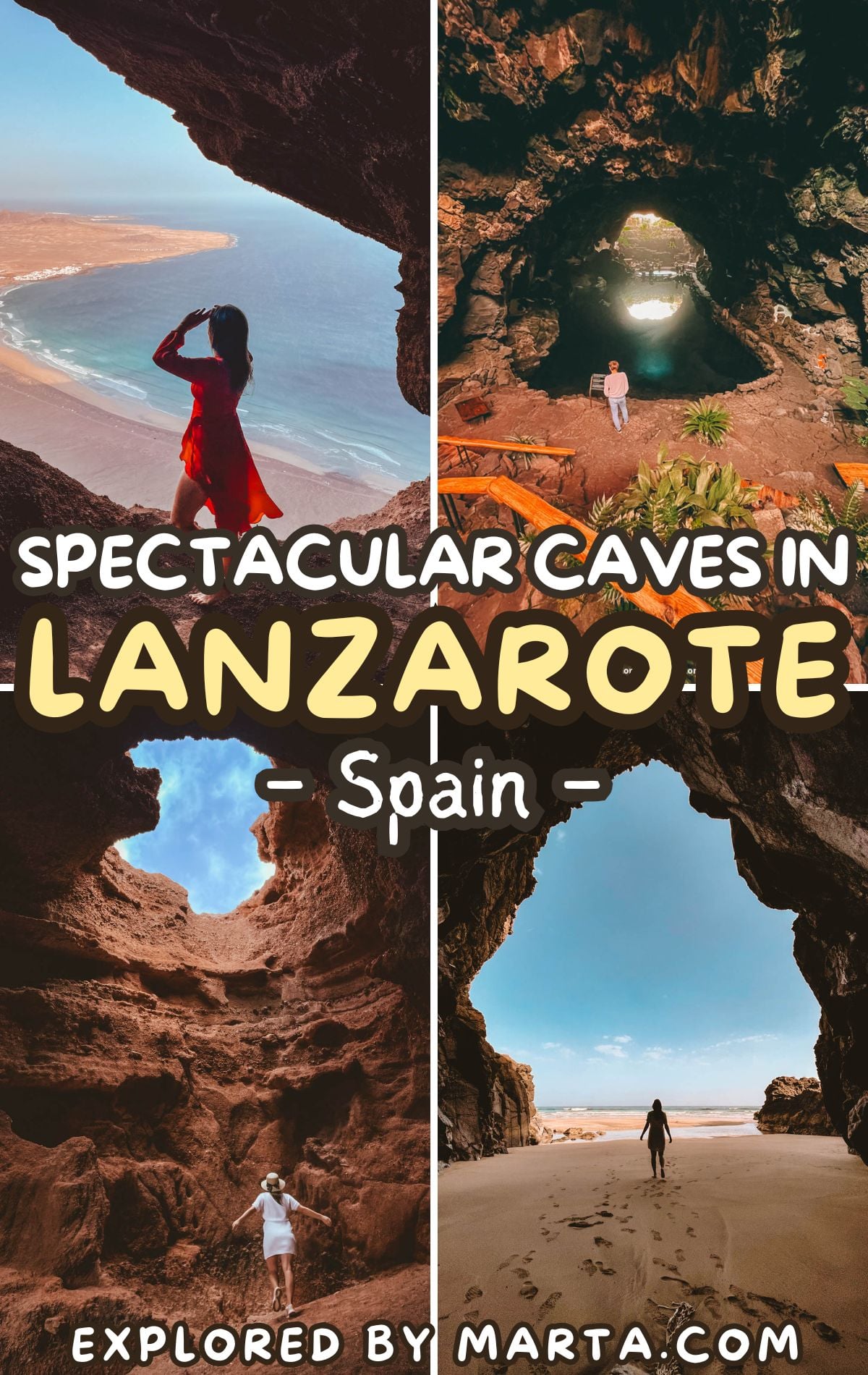
Did you know that beneath Lanzarote runs the longest underwater lava tube on Earth? Yep, and it’s just one of the caves in Lanzarote waiting to be explored, and no two are alike.
Caves in Lanzarote come in three kinds: giant lava tubes left by ancient eruptions, wild volcanic caverns with no signs or trails, and sea caves the Atlantic cut into the coast.
We spent four weeks in Lanzarote, and exploring its caves was one of my favorite things we did here. In this guide, you’ll find the best caves in Lanzarote, including two with paid entry and a couple you can find on your own and visit for free. Let’s get into it!
1. Cueva de los Verdes
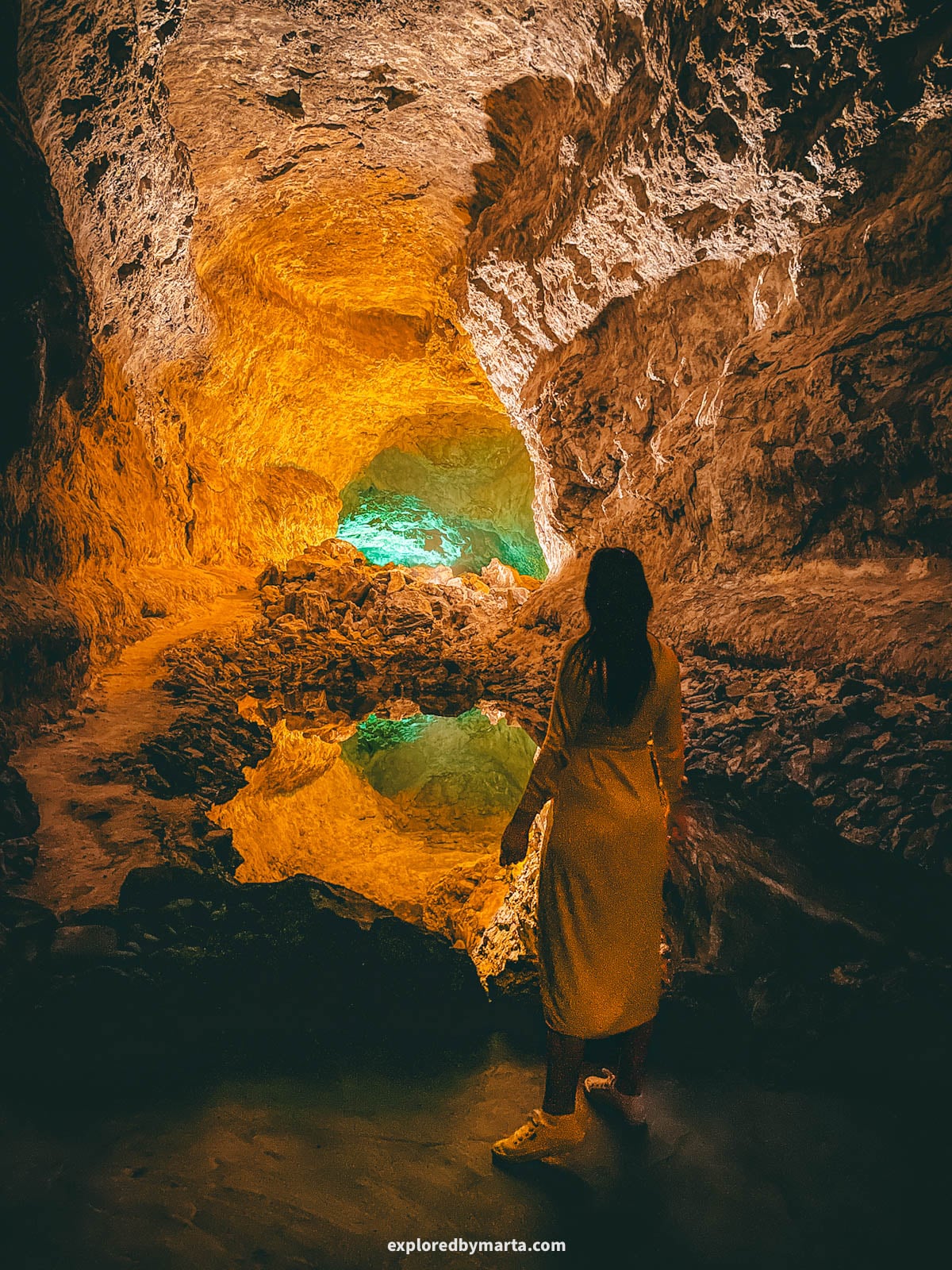
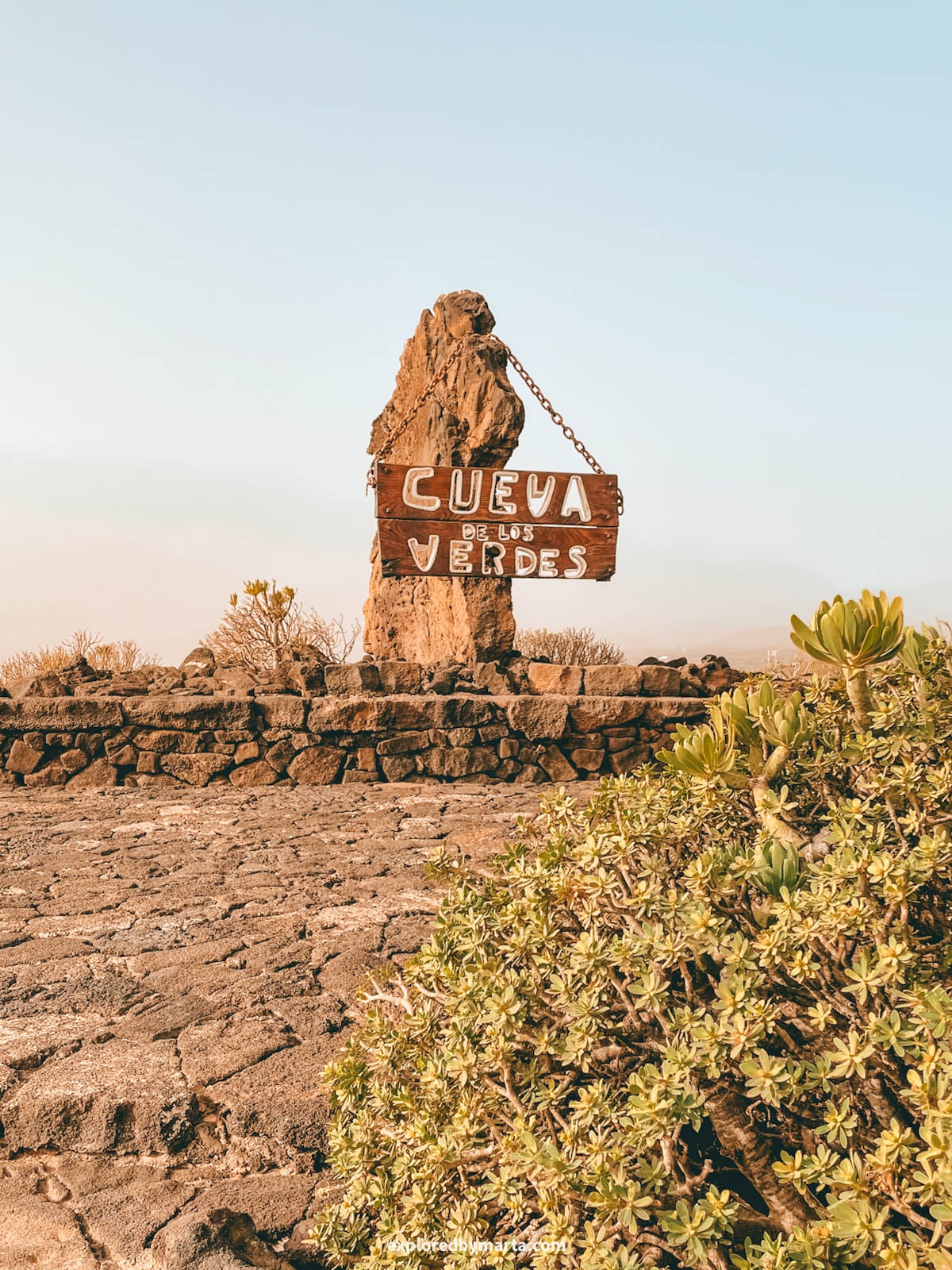
Cueva de los Verdes is the most famous cave in Lanzarote and the best place to include in your Lanzarote itinerary. It’s an underground lava tube you explore on a guided tour, deep beneath the island’s north.
Cueva de los Verdes formed thousands of years ago when the Monte Corona volcano erupted and sent lava flows racing to the ocean. The molten rock left behind a tunnel more than six kilometers (about four miles) long.
And, yes, you will actually walk through a tunnel that was made by flowing hot lava!
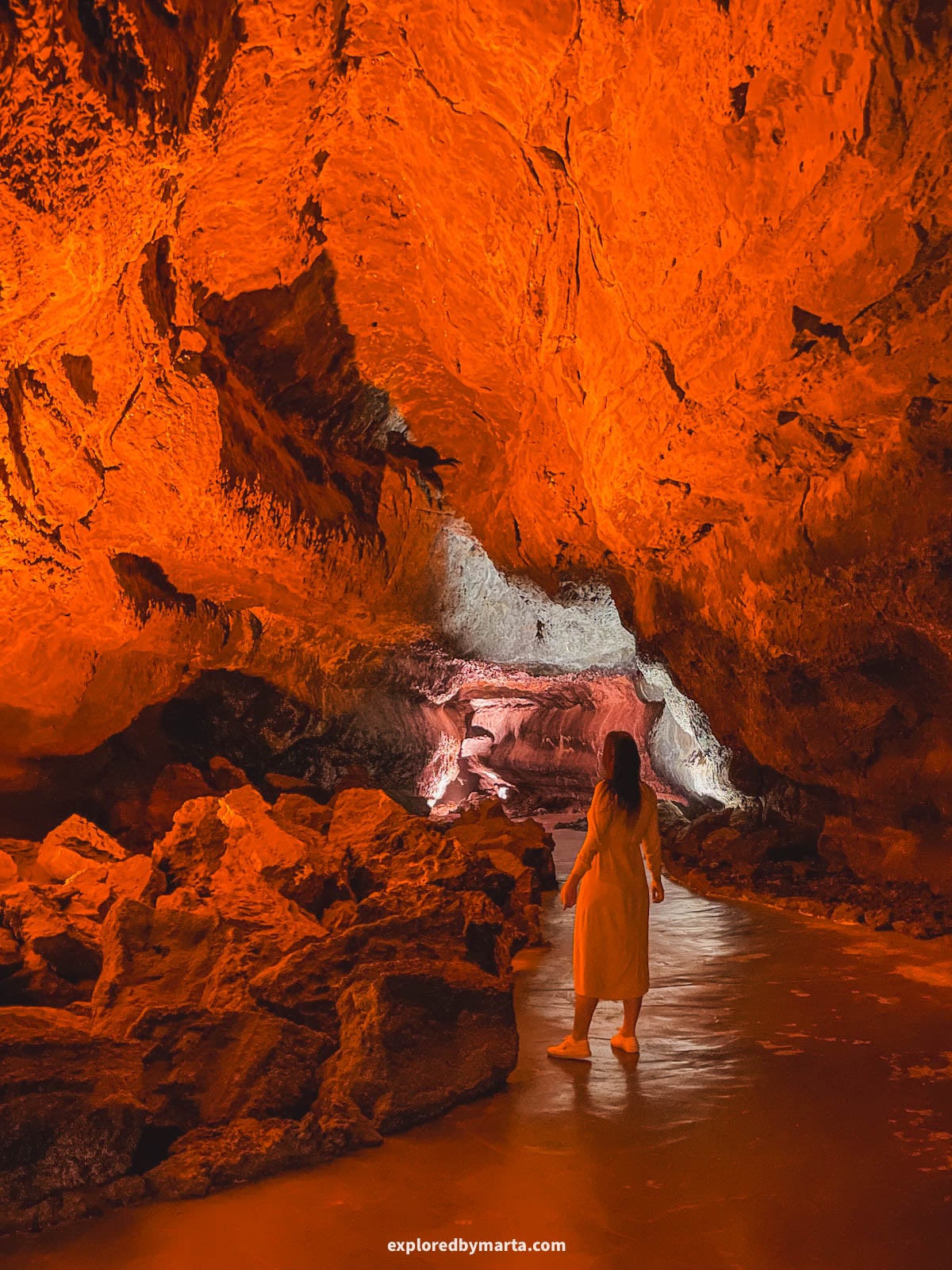
I learned that part of that lava tube runs out under the Atlantic Ocean as the Túnel de la Atlántida (The Tunnel of Atlantis), a 1.5-kilometer (0.9-mile) underwater section that’s the longest known volcanic submarine lava tube on Earth. How cool is that!?
Funny that the name may translate as the Cave of the Greens, but its name has nothing to do with the color green. Despite translating to “the greens,” it turns out that the cave is simply named after a local family, Los Verdes, who once grazed animals on the land above it.
During the tour, our guide told us that for centuries, locals used the tunnel as a hideout during pirate raids, sealing themselves in the dark to wait out the attacks. Standing inside, you can see exactly why it worked – it is deep and dark!
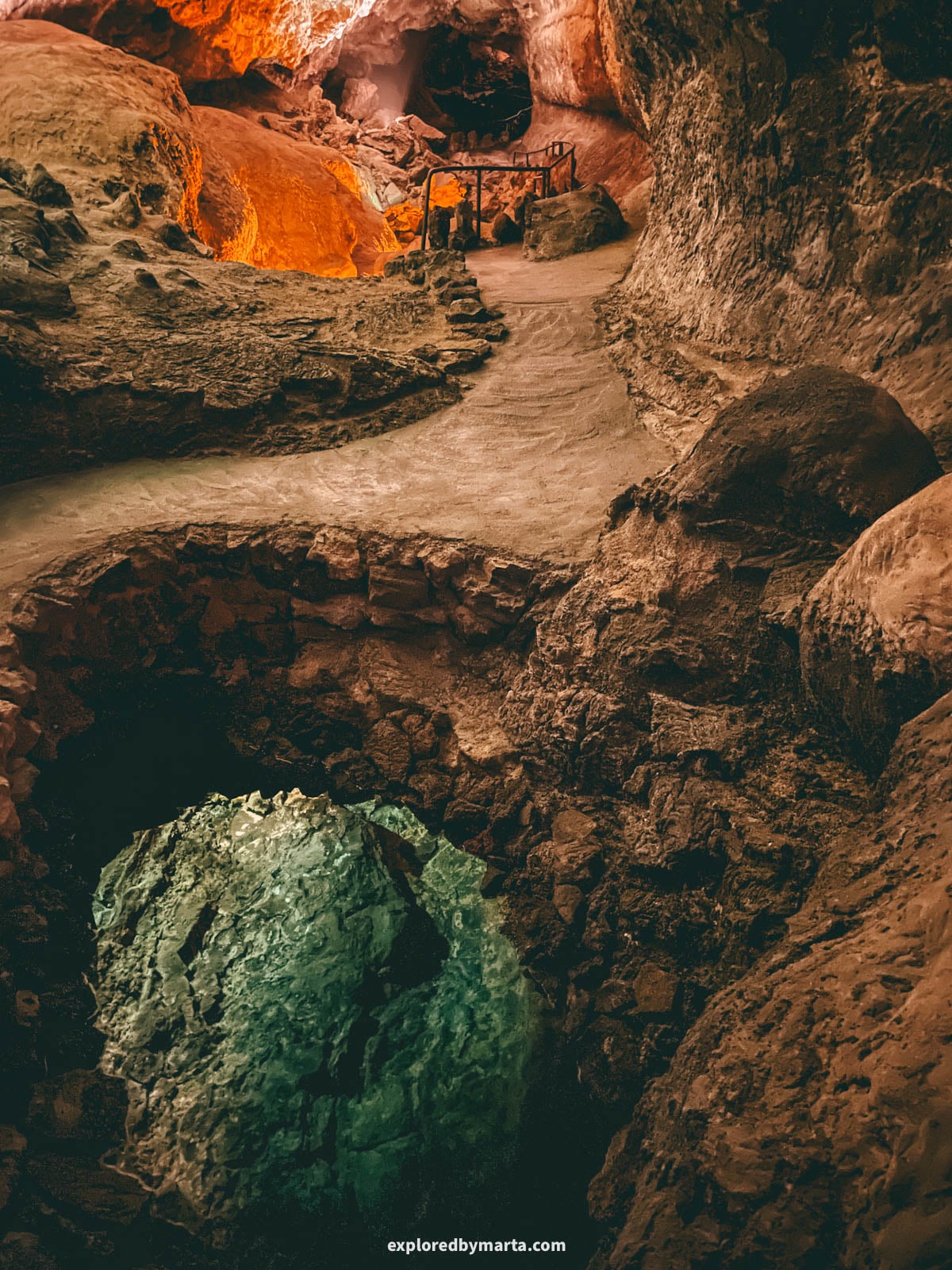
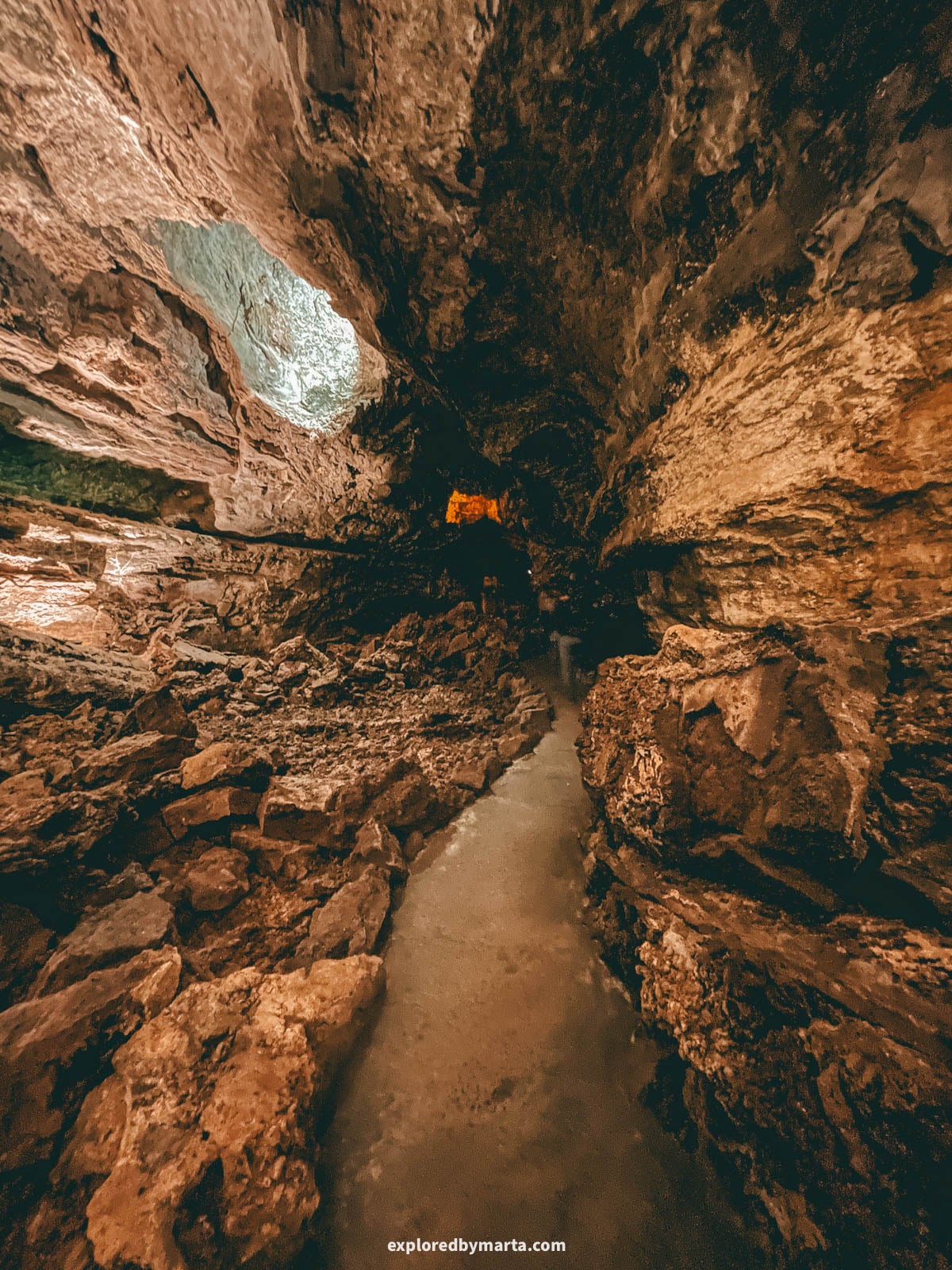
As you go with the group, the tour winds through chambers lit to show off the rock, and even hides an underground auditorium still used for classical music. There’s an optical illusion near the end I won’t spoil – I knew something wasn’t right there, haha!
The cave is open every day, but you must buy tickets online prior to your visit. Do not forget to do that because this cave is extremely popular! And I’m not surprised – walking through an underground lava tunnel is really a once-in-a-lifetime activity.
To have parking space and smaller crowds, we decided to go at the earliest time possible. And, despite its popularity, we really loved this place. The cave is deep and long, and the guide explains everything both in English and in Spanish, so you learn a lot, too.
Tip! Wear sturdy shoes, because you will be climbing and walking on uneven surfaces quite a bit.
For me, this is one of the caves in Lanzarote you shouldn’t skip.
Location: Cueva de los Verdes
2. Jameos del Agua
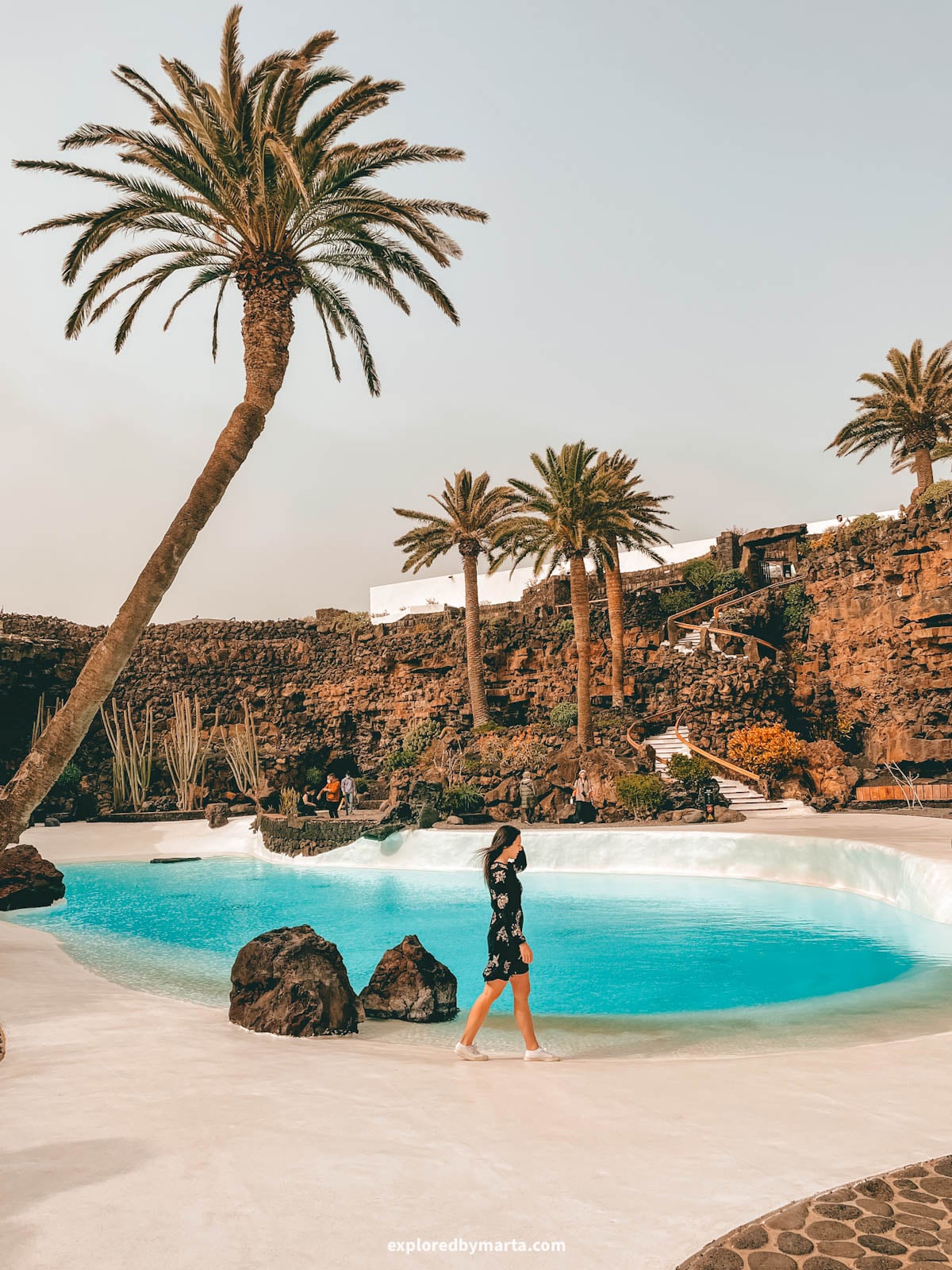
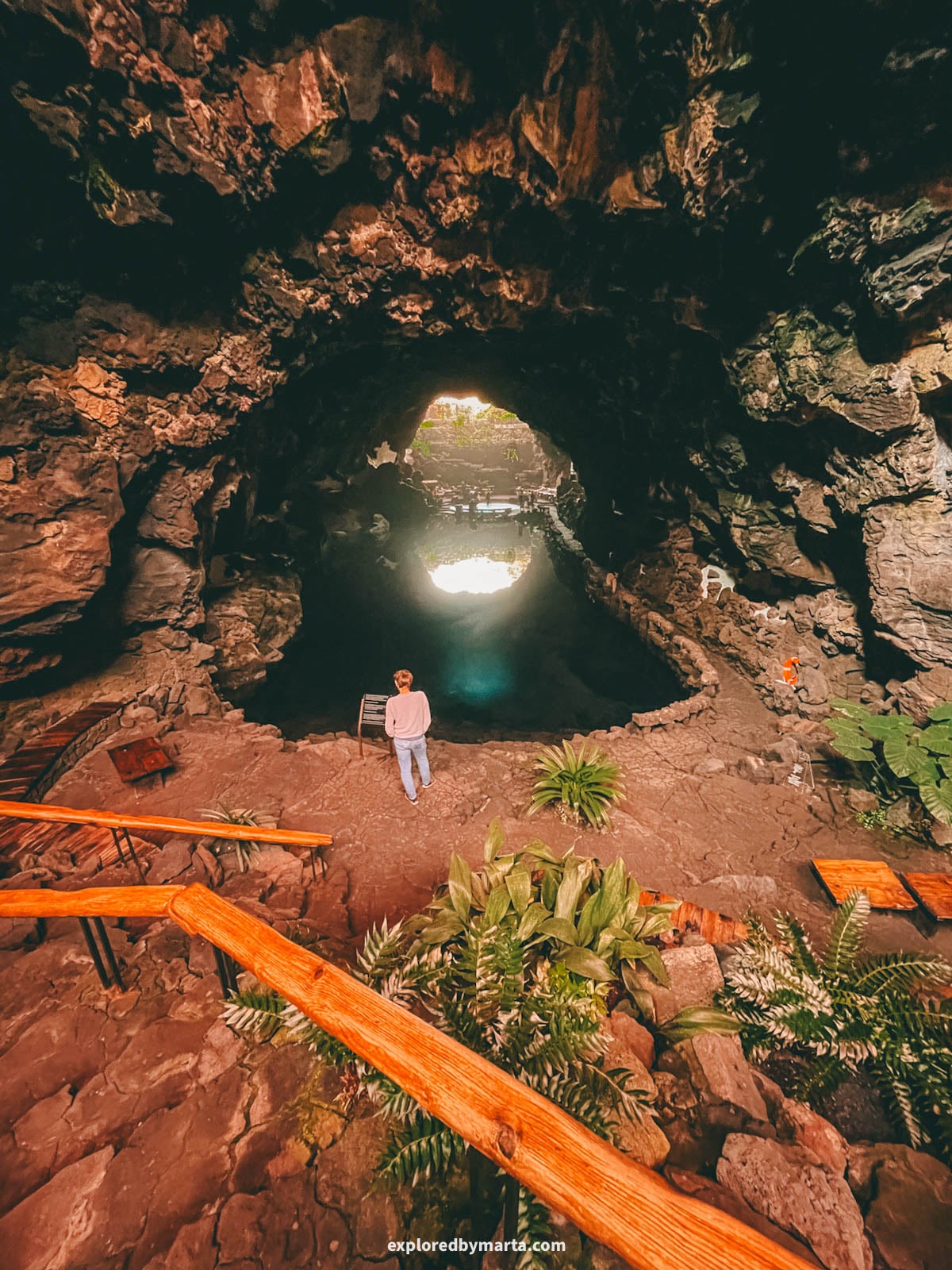
Jameos del Agua sits just a stone’s throw from Cueva de los Verdes – only a couple of hundred meters apart, which is exactly why most people visit both in one go.
And did you know that Jameos del Agua cave is actually part of the very same lava tube you explore at Cueva de los Verdes? Yep!
But to understand Jameos del Agua, you first need to know one name: César Manrique.
He was a Lanzarote-born artist, and more than anyone, he shaped how the island looks today. He fought to keep it free of high-rise resorts and turned its volcanic landscape into art instead.
Some of his signature “art built into the volcanic landscape” examples include Mirador del Río, Jardín de Cactus, El Diablo restaurant and, of course, Jameos del Agua.
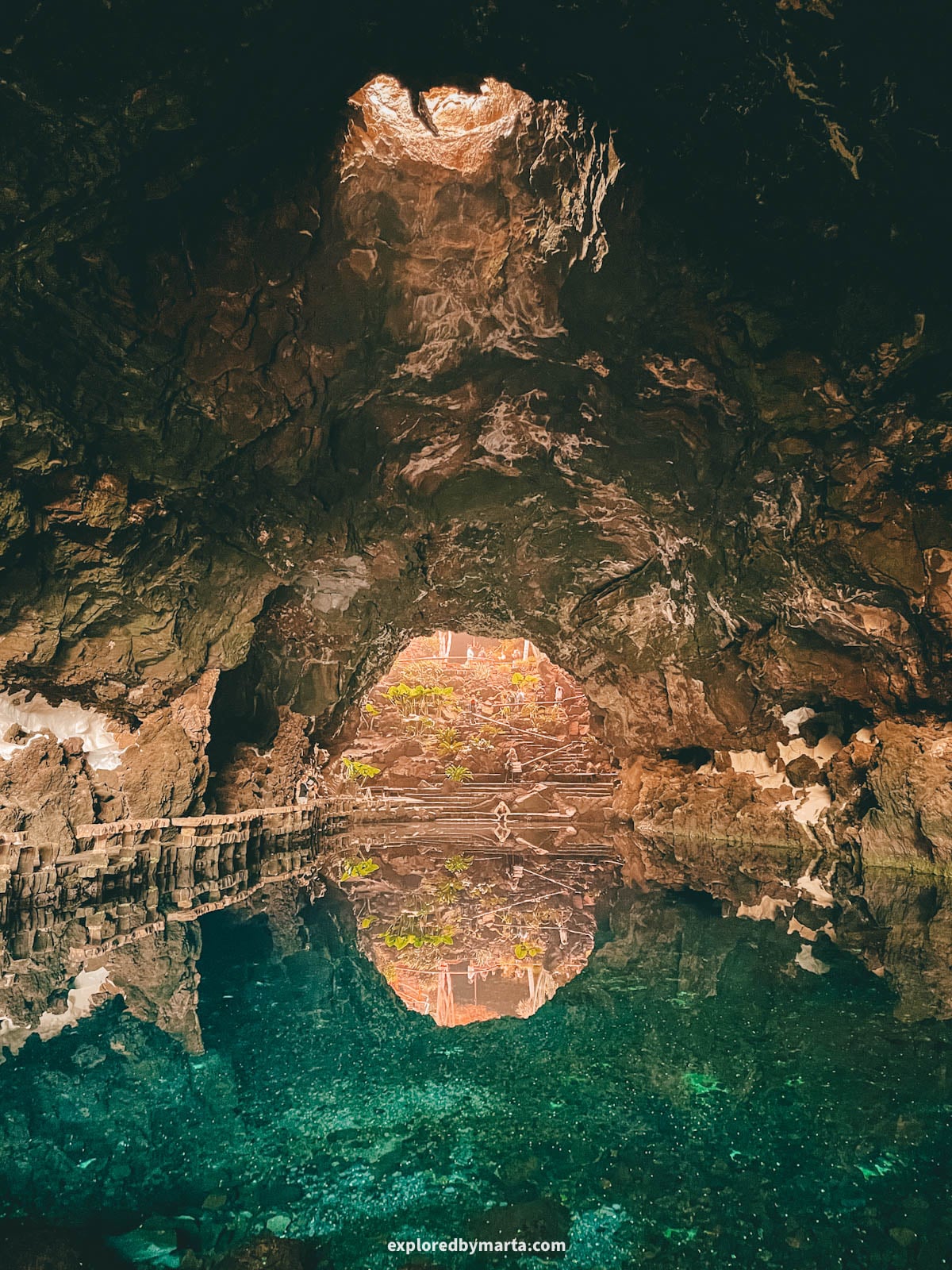
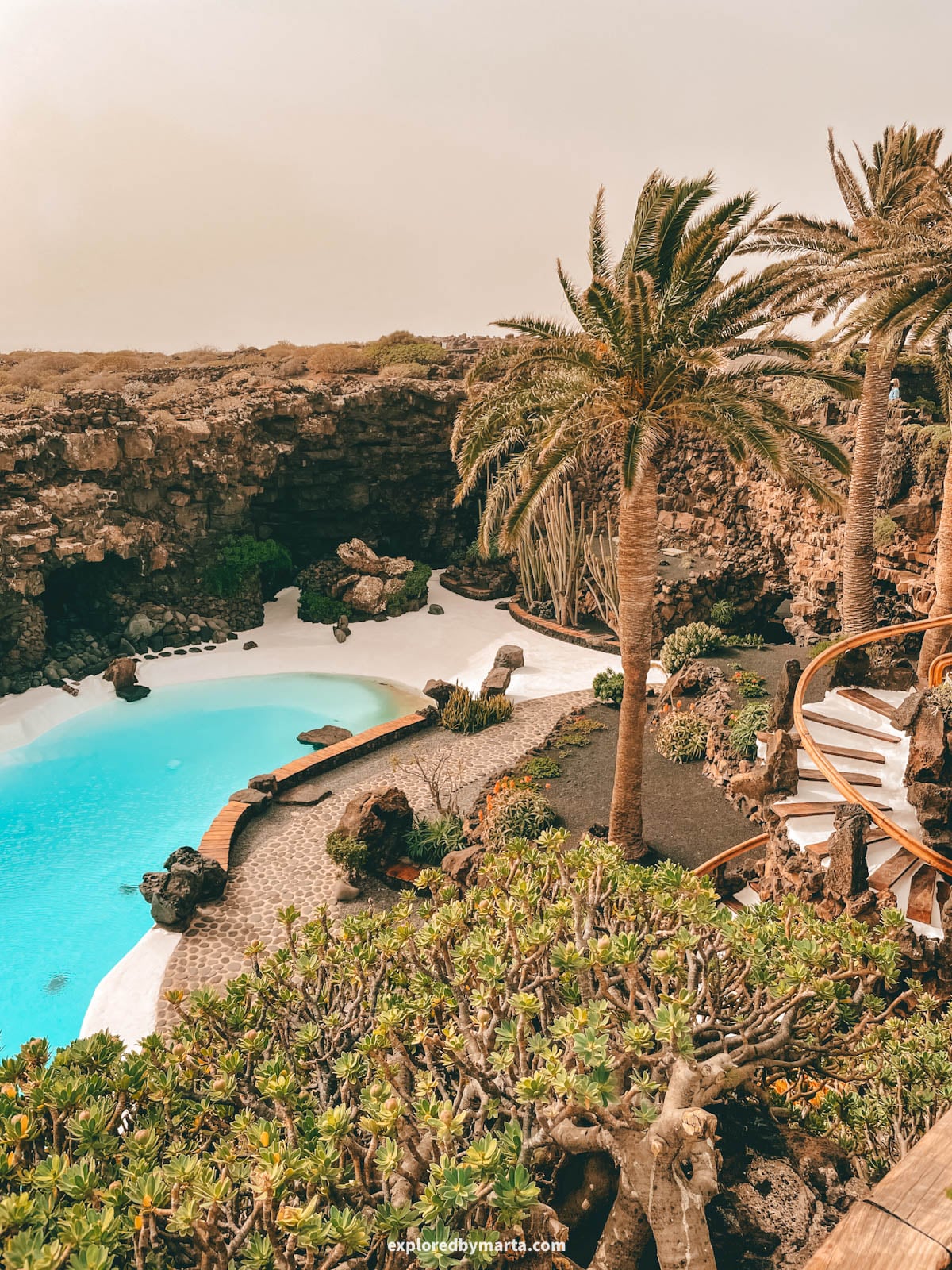
In Jameos del Agua, Manrique took a collapsed section of lava tube and built something extraordinary – a kind of oasis with a restaurant, a lake, gardens, a blue pool, a concert auditorium, and a museum, all woven into the volcanic rock. Pretty spectacular!
And “jameo,” by the way, is that open skylight where the tube’s roof caved in (see my photo and look above the lake).
Once you pass the ticket office, you will walk downstairs, and the section with a lake inside the lava cave is the first part of the visit. It’s basically a dramatic, tunnel-like space with a still, crystal-clear lake at the bottom.
As you pass by the lake, look closely, and you’ll spot tiny white crabs.
I learned these blind, albino crabs live nowhere else on the entire planet – only here. And Lanzarote loved them so much it made them its animal symbol!
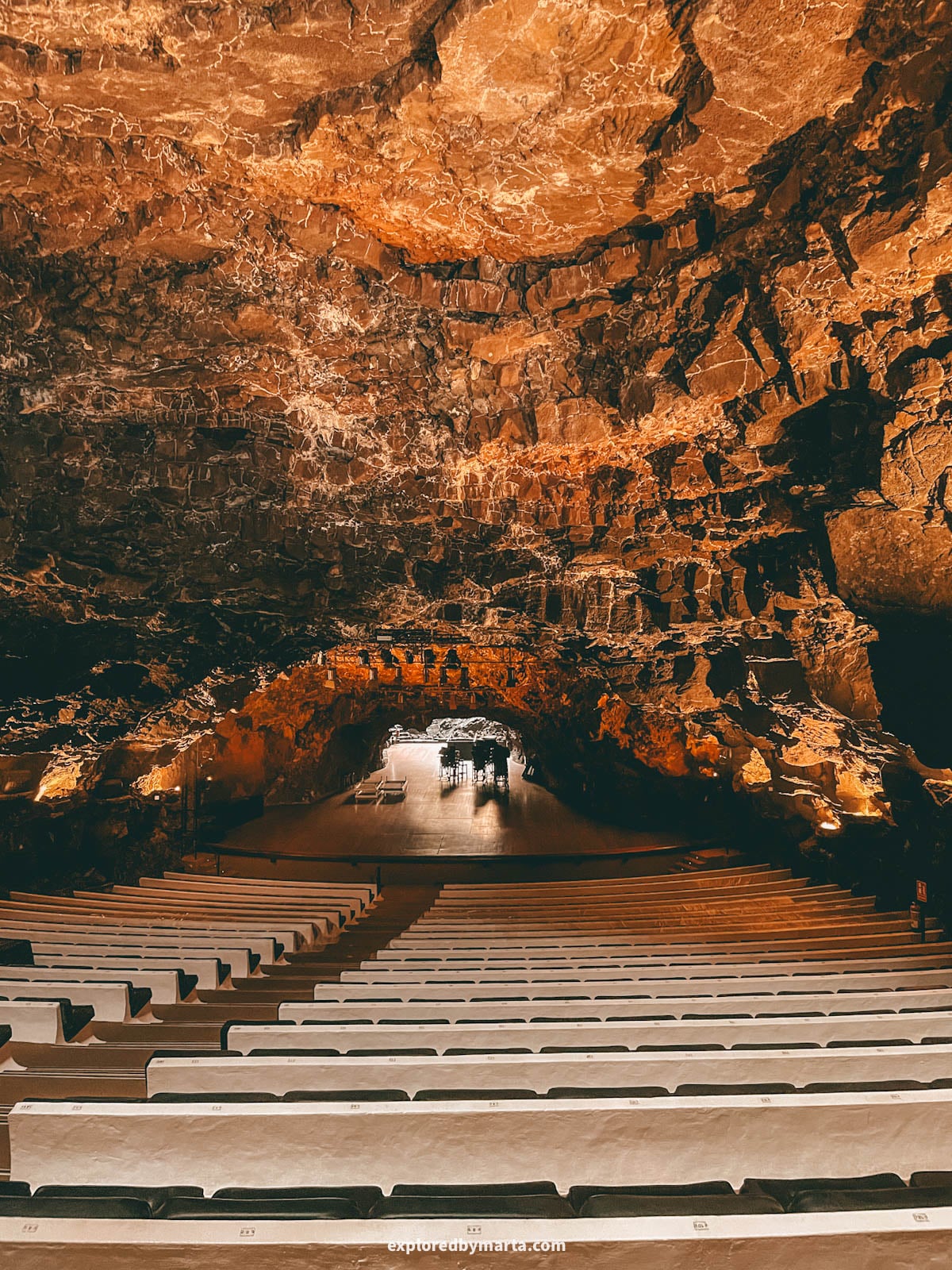
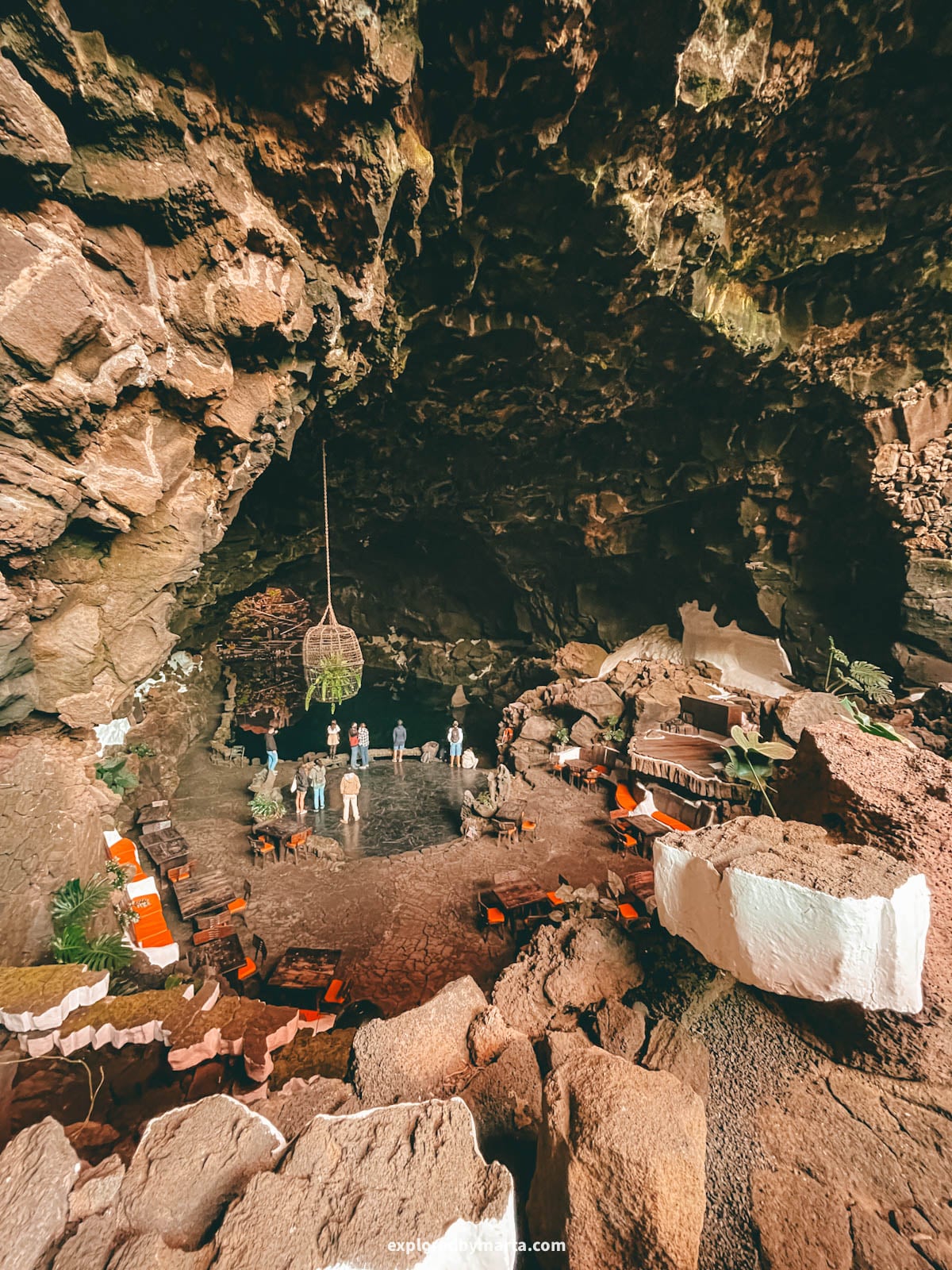
When we passed through the lava cave, at the end of the tunnel we found a café with tables right under the cave ceiling. It was morning, so we sat down for a cup of café con leche and a Spanish pastry – coffee inside a volcano, basically. No big deal, haha.
After that, we came out into the oasis part, and this was the showstopper: a bright blue pool ringed by volcanic rock, palm trees, and little viewpoints looking down over it all. It’s easily one of the most photogenic places in Lanzarote!
They sometimes host events and concerts here as well. As we walked around the pool and explored some of the rooms inside the rock wall, we found an auditorium built right into the rock. Manrique really outdid himself with this one!
After that, we slowly made our way toward the exit, where we also saw some exhibitions as well as walked through a beautiful souvenir shop where you can buy some volcanic Lanzarote souvenirs.
On a practical note: Jameos is one of the most popular spots on the island, so buy tickets ahead on the official site and go as early as you can. You can also join guided tours if you are without a car.
Location: Jameos del Agua
3. Cueva de las Cabras
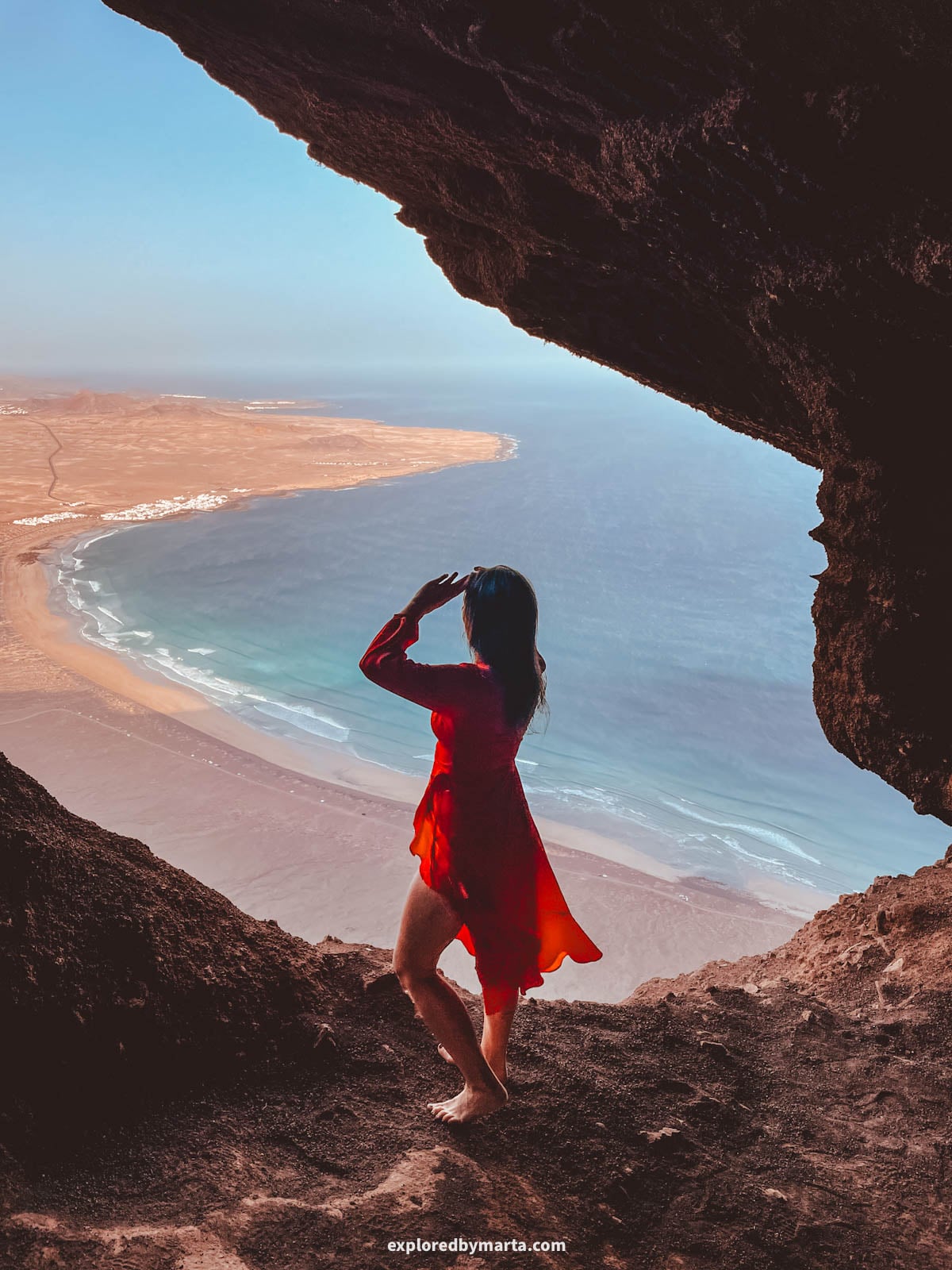
Now for the wild, free caves. The whole Lanzarote island is of volcanic origin, so it comes as no surprise that there are tons of unique rock formations on the island, including caves and crevices.
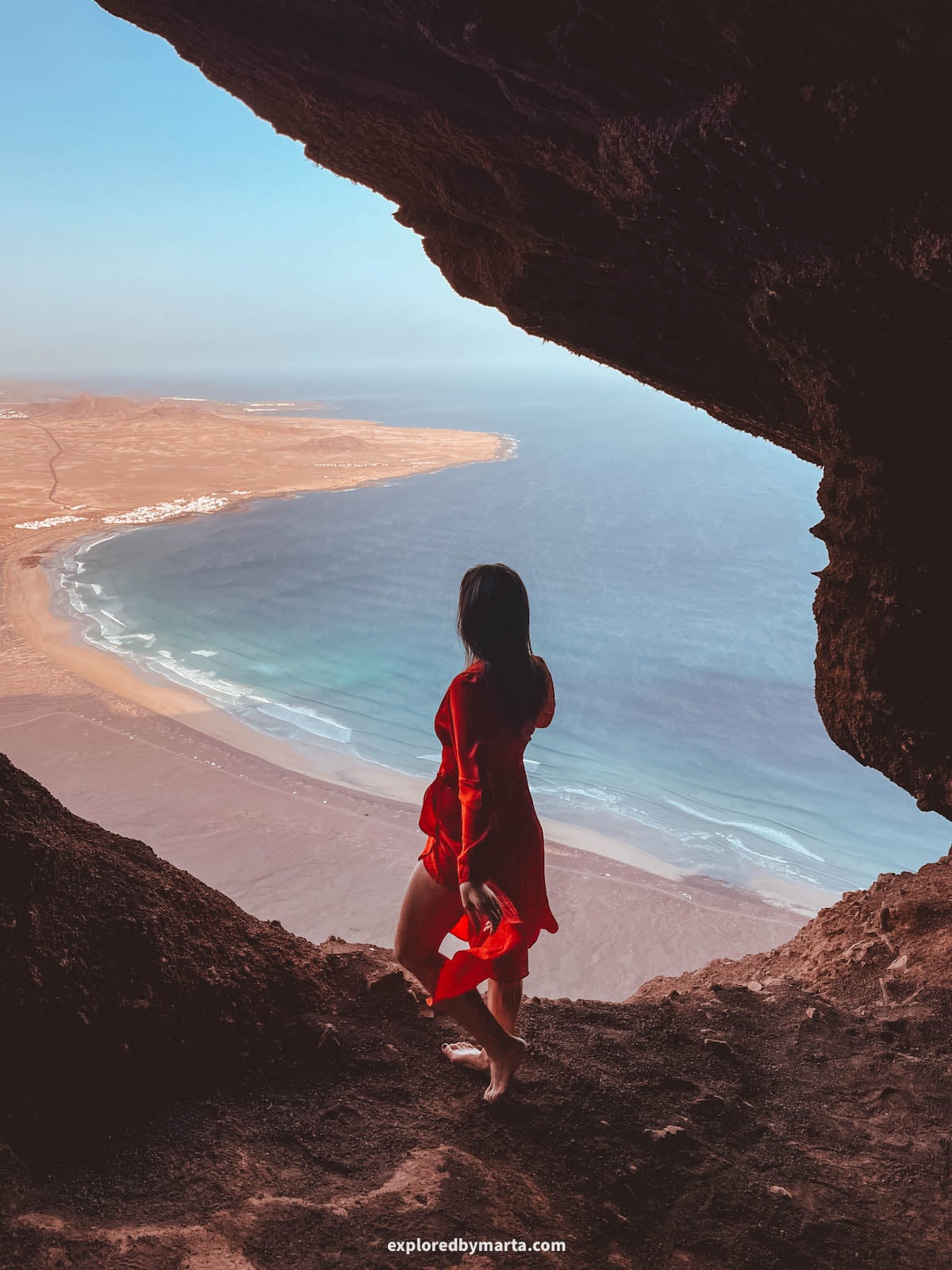
Cueva de las Cabras, also called Cueva de los Suecos, is one of the cooler ones you will find in Lanzarote. Why? This cave sits at the top part of the Famara cliffs, and has an opening towards the beautiful Famara Beach below. Like a window!
While this cave is not big at all and is not for everyone, for us, the view alone was worth the trip.
However, it is not easy to visit – Cueva de las Cabras is not an official cave, there are no signs, and it basically hangs in the cliff wall with a massive drop below. One wrong step can truly turn into a tragic accident, so beware.
However, if you are an adventurer like me, and you are visiting the top of Famara Cliffs, you might as well check this place out. But if you see the cave and feel like it’s too risky, just enjoy the view from the top – it is the same as from the cave, honestly.
To get up there, you need a car and some patience. The road leading to the top of the cliffs is bumpy, slow, and narrow in some parts. We parked in the Aparcamiento El Bosquecillo parking lot at the top and followed a dirt path for about 200 meters (660 feet) to the cave.
This area is a popular place for watching the sunset, so it will almost always be the busiest time with the most cars up there. For that reason, we went there in the morning and had the cave completely to ourselves.
Skip it on low-cloud days, when the mist from the ocean swallows the whole view. Yep, it happens.
Overall, the top of the cliffs at Mirador de El Risco de Famara is one of the best places to visit in Lanzarote, so I highly recommend visiting this clifftop area. And, if you feel brave enough, you can check out the cave, too.
Location: Cueva de las Cabras
4. Cueva de Montaña Cabrera
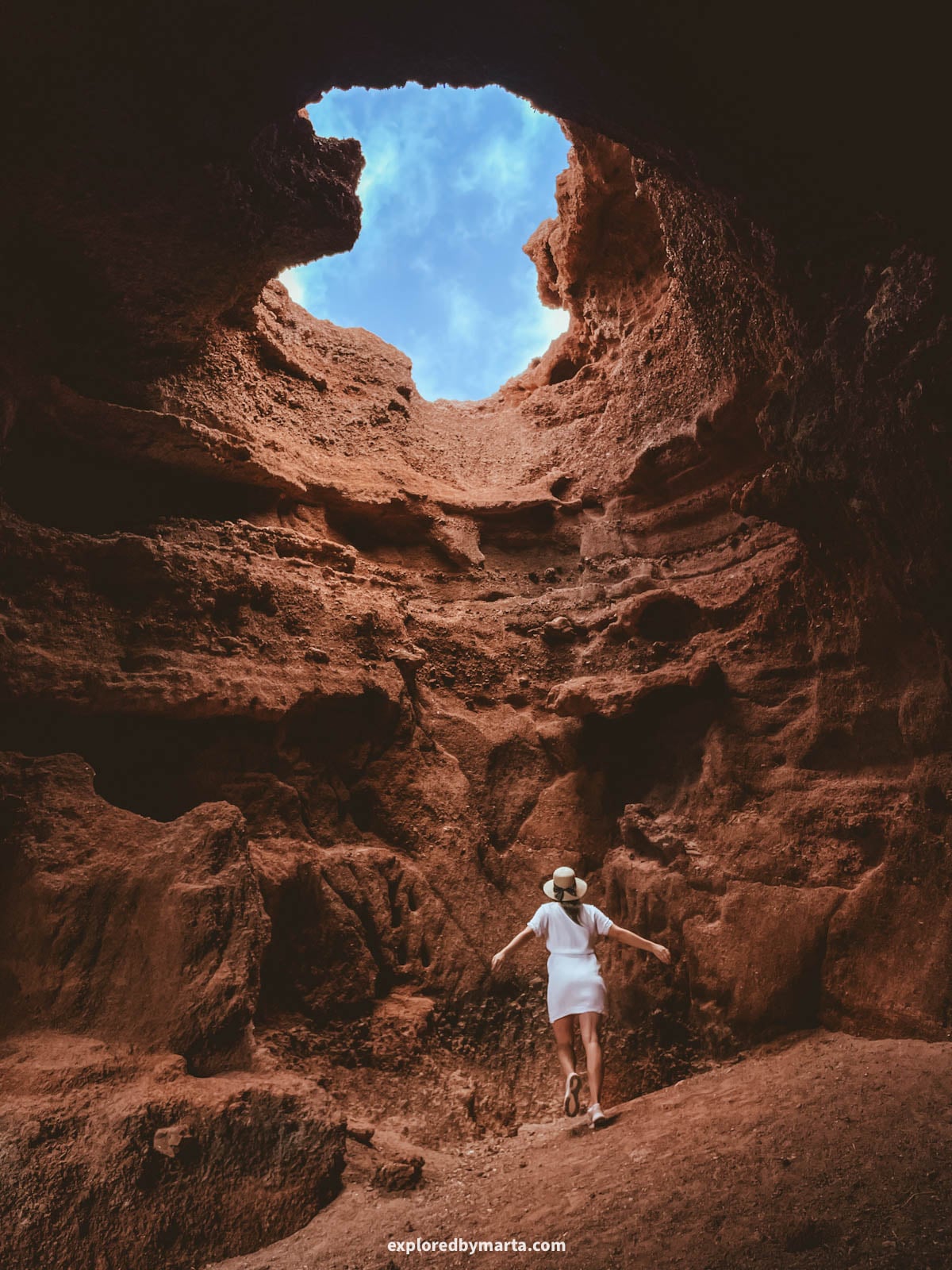
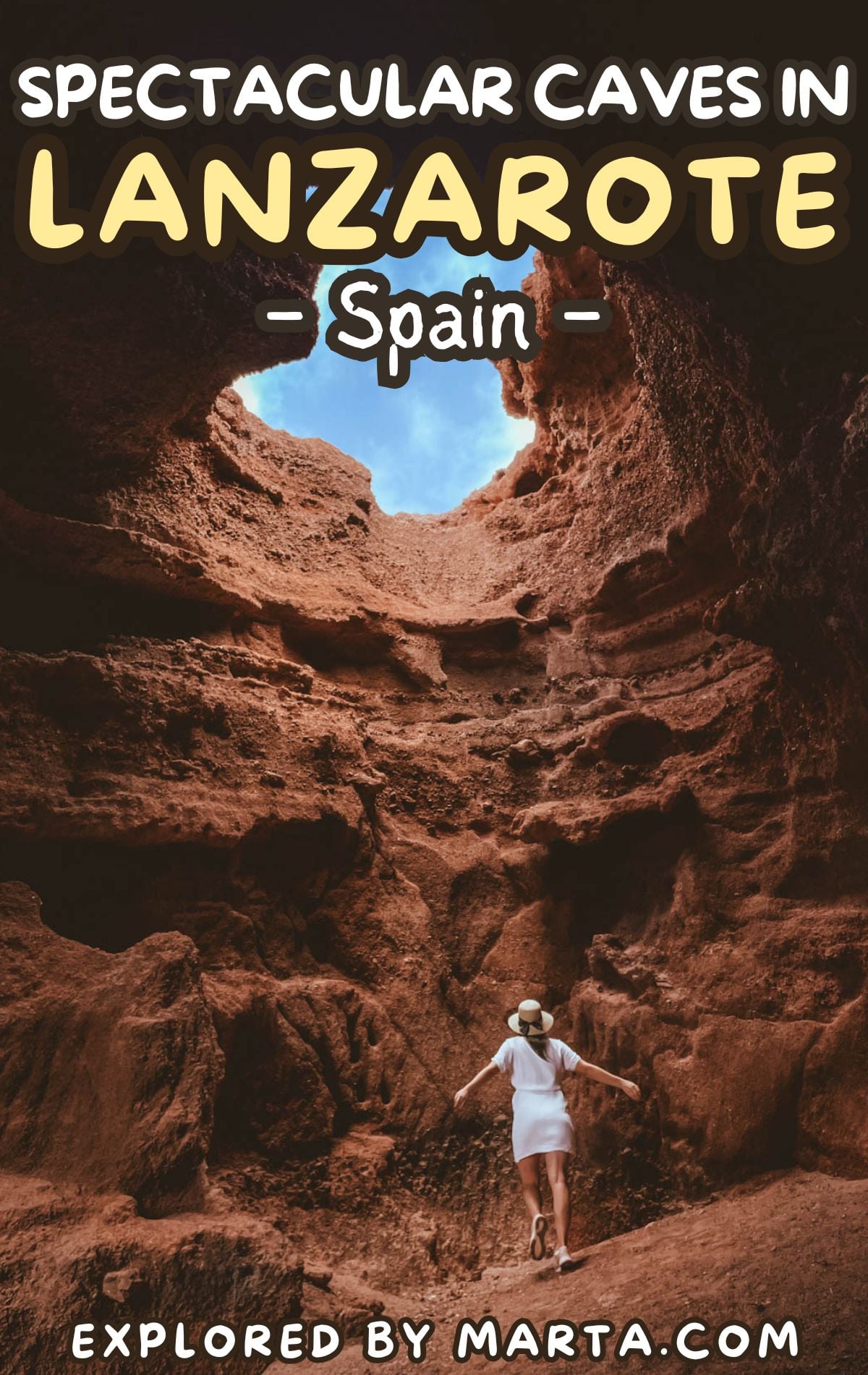
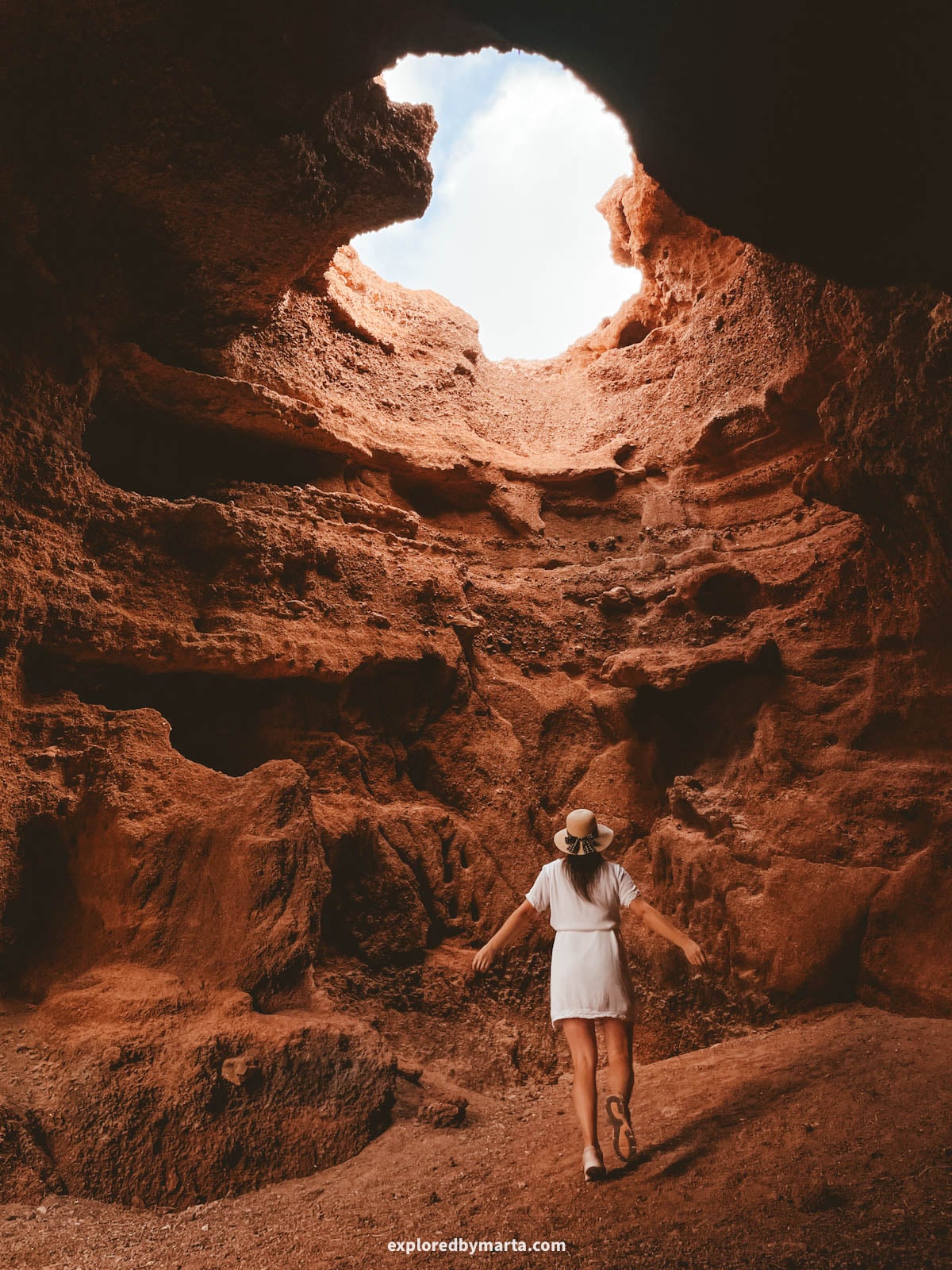
Cueva de Montaña Cabrera is another adventure. It’s a secret cave inside a volcano, with an open ceiling. Looks pretty cool in a photo! And don’t worry, you don’t need to climb down through the ceiling hole, haha! It has a side entrance!
However, it is another random unofficial cave, and there are no marked trails, no signs, or a parking lot. It’s just one of those gifts from a volcanic island you stumble upon by accident!
It took us 45 minutes of searching the mountain to find it (but only because I had no exact location – you will have it much easier!), and there are a few more caves in the same volcano if you want to be an explorer.
So, how to get there?
First we drove to the base of Montaña Cabrera, then parked near the houses, and hiked up following a small dirt trail up the mountain (or should I say – volcano?). Yes, it’s an uphill hike, but it is in no shape or form a dangerous hike if you have proper shoes.
In all seriousness, no flip-flops, please! There are loose stones everywhere, and you’ll need at least some grip to comfortably get up and down the mountain!
So, as you hike up, you will notice that halfway up the mountain there are pits and holes in the mountain. If you actually switch to satellite view of Google Maps, you will see them very clearly.
To find this cave, you need to aim for the one that is most to the right side. Or simply open my Google Maps link (below) and go towards the pinned location. It shouldn’t be too difficult to find the right spot.
It is more of a hidden gem in Lanzarote, so don’t expect world wonders here – just a cool cave inside a volcano away from the regular tourist trails.
Location: Cueva de Montaña Cabrera
5. Cueva de Órzola
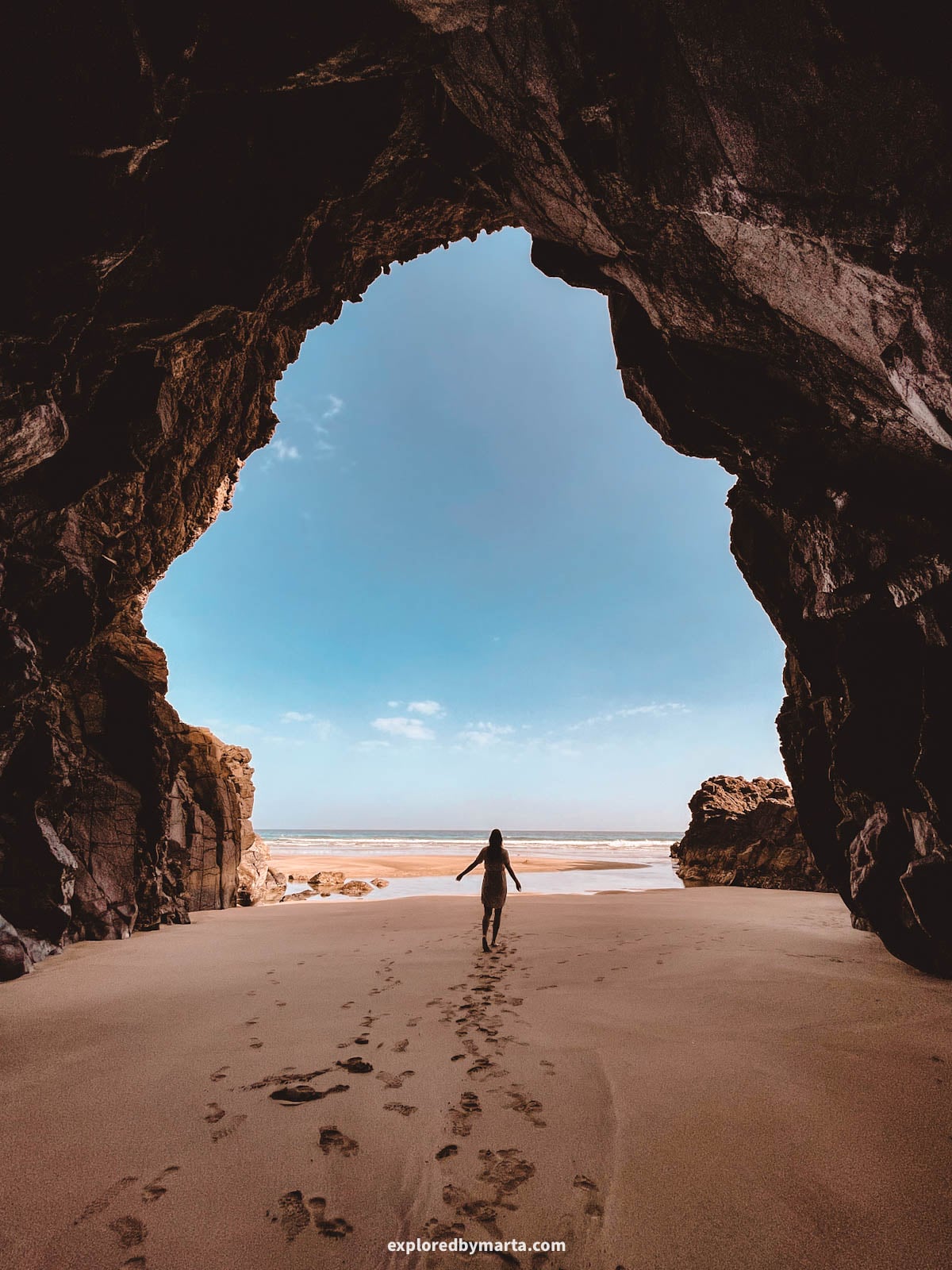
Okay, now it’s time to explore some of Lanzarote’s beautiful sea caves!
Sea caves are openings inside the coastal rocks, so the most important thing here is timing. Lanzarote is surrounded by the Atlantic Ocean, so you absolutely have to wait for low tide in order to visit these caves.
And I really mean it – there’s just no way to get to sea caves unless the tide is low.
Cueva de Órzola is not an exception. This cave is located up in the far north of Lanzarote next to a town with the same name – Órzola.
To get there, we drove to the town and parked right by Playa de Órzola beach. As you walk along the beach toward the cliffs, you’ll see a dark cluster of rocks rising out of the sand. The cave sits just behind them.
During high tide, everything is under the water with strong waves crashing against the rocks, so it’s a big no to try to get there. However, at low tide, you can easily walk around the rocks.
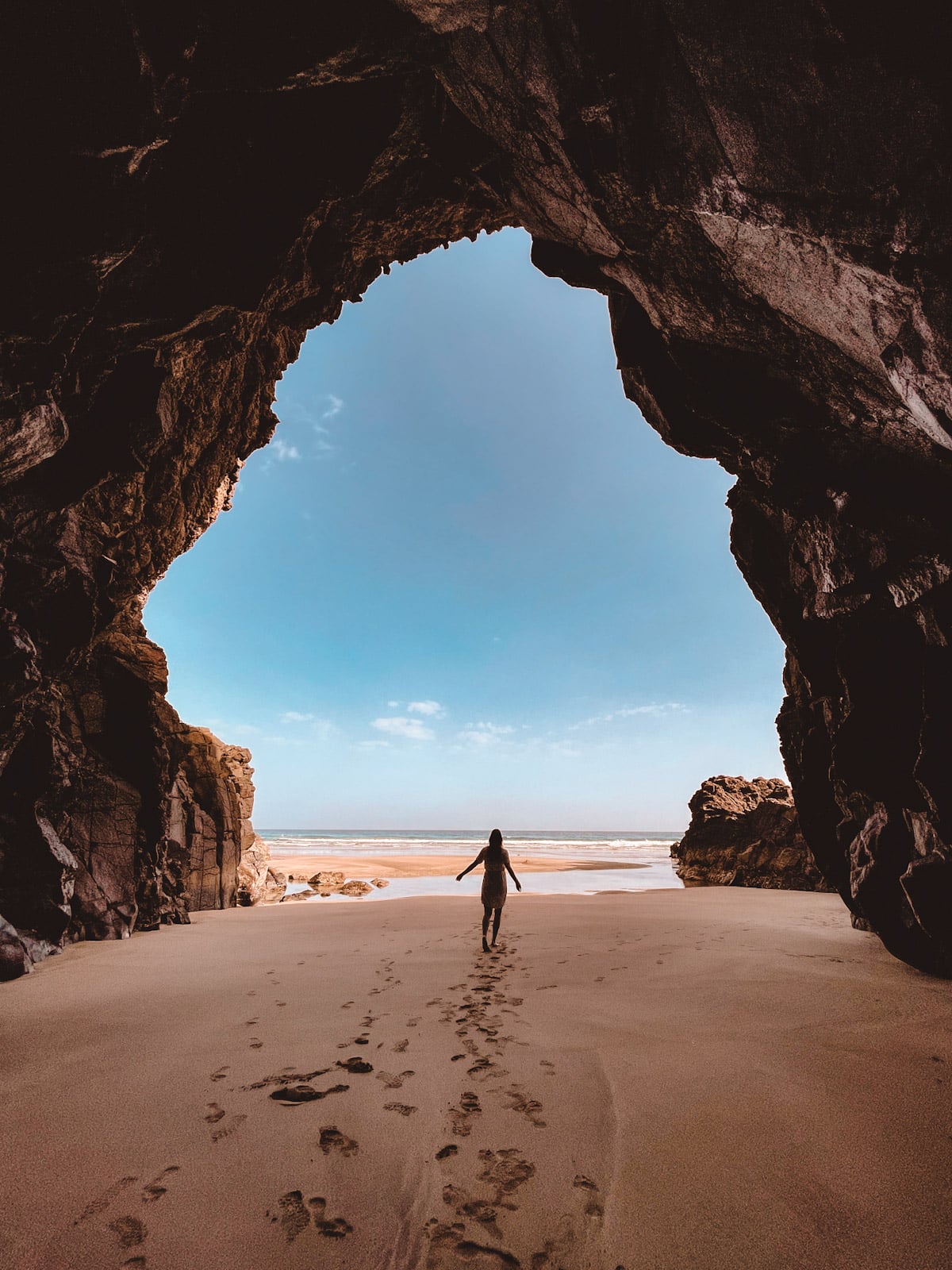
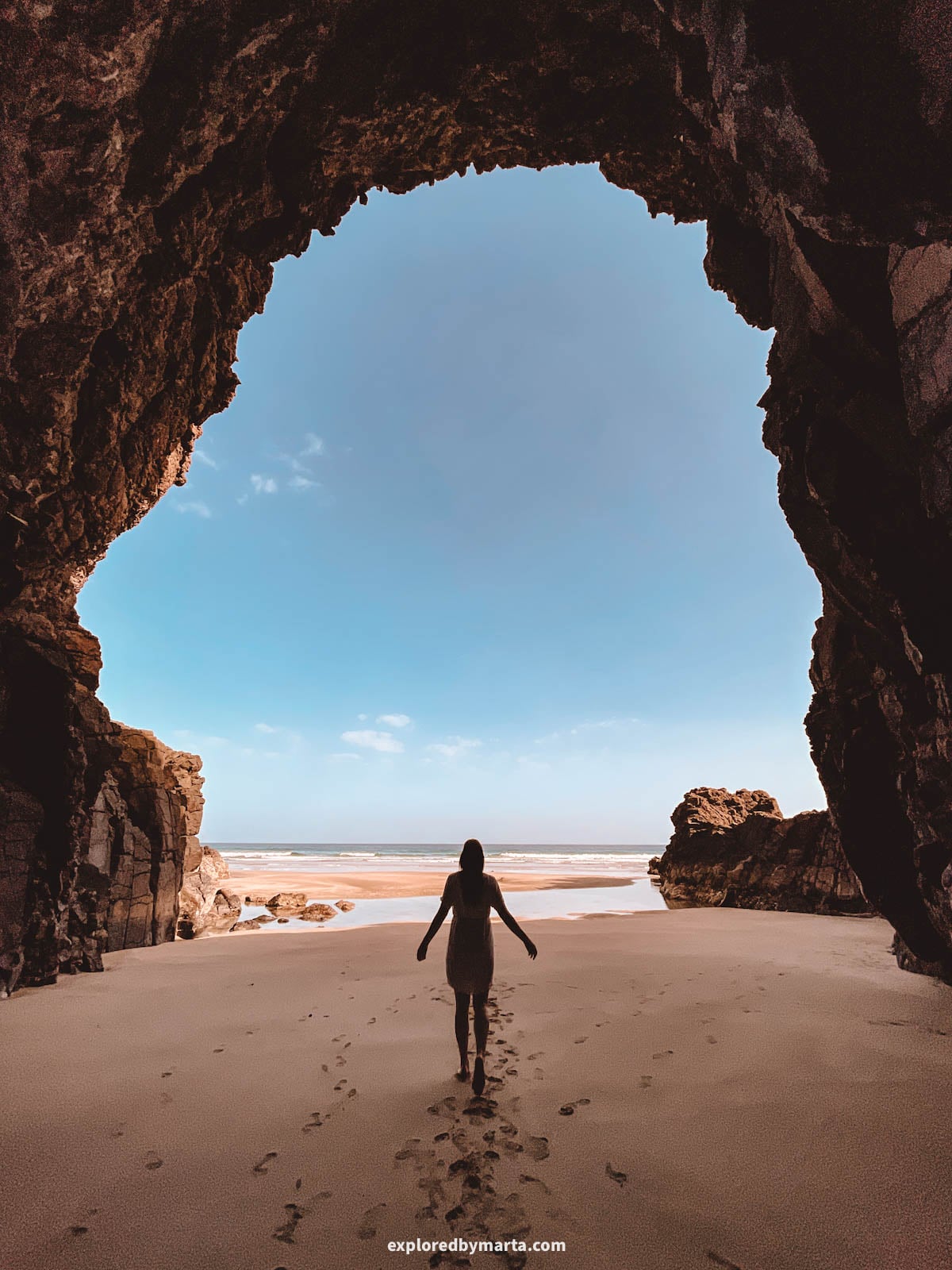
The cave is not deep at all, and when I first looked at it, it didn’t look like a cave to me, haha. I had imagined that it was much deeper and more dramatic and defined, so the photo is a bit of a visual effect.
But if you crawl as deep inside the cave as you can and switch your camera to wide angle (I used 0.5x of my iPhone), then you will get the same kind of photo I have above. I just want you to manage your expectations.
Although it’s not the most dramatic cave in Lanzarote, it sits in a very beautiful area and definitely deserves to be explored. Besides, if you come at low tide, you can easily walk to the cave in just a couple of minutes.
Location: Cueva de Órzola
6. Cueva Paloma

Cueva Paloma is another sea cave on the island of Lanzarote, and you will find it on the northeast coast not too far from Cueva de los Verdes and Jameos del Agua.
This is also another unofficial cave we stumbled upon during our travels, but, lucky for us all, Cueva Paloma is quite easy to find and visit. It’s honestly one of the easiest caves to reach in Lanzarote.
To get there, we just drove to Charco del Palo village, parked our car right by the ocean at the end of Calle Seifio street, and walked straight over to the shore.
If you check the location of the cave on Google Maps and go in that direction, you should have no problems finding it. There’s a side entrance facing the coast, so you can climb right in with dry feet – no scrambling, no hiking up the mountains (silent ‘yay!’).
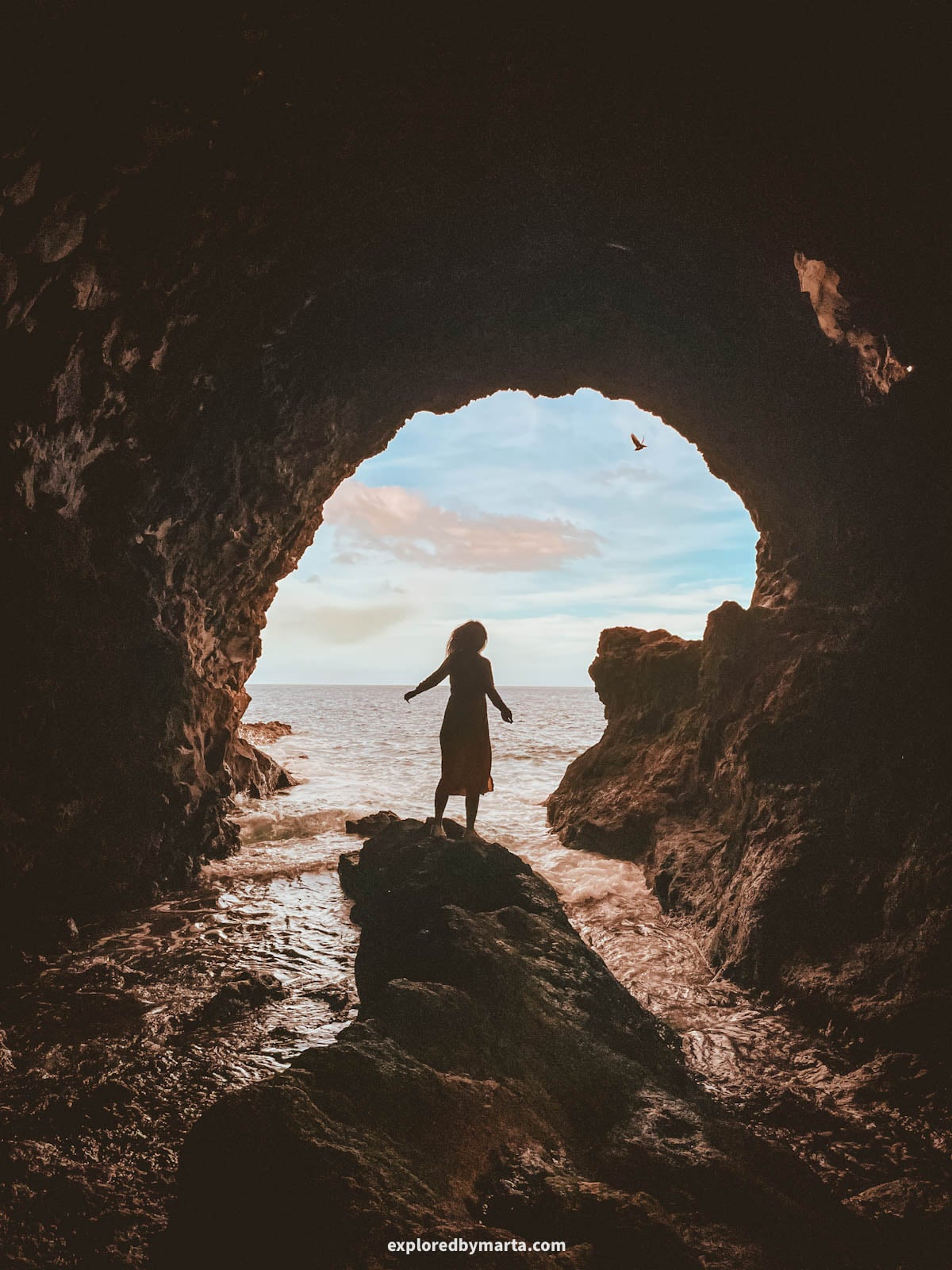
The opening is easy to spot, and inside it looks like a big lava tube that opens straight out onto the sea. It’s not huge, but there’s something about standing in a cave mouth with the ocean right there that always gets me, hehe.
Its name translates to the ‘Dove Cave’, and – look! – we caught one dove in the photo!
Like any sea cave, timing matters, so make sure to come closer to low tide and pick a day with smaller waves, so it is safer to explore the inside of the cave. With bigger waves, the water pushes right inside the cave, splashing everywhere. Not too fun.
This is another hidden gem in Lanzarote, and for me, Cueva Paloma is the perfect low-effort stop – if you’re already driving the east coast, it’s a quick detour that pays off. Caves like this are always worth a look, if you ask me!
Location: Cueva Paloma
7. Cuevas del Papagayo
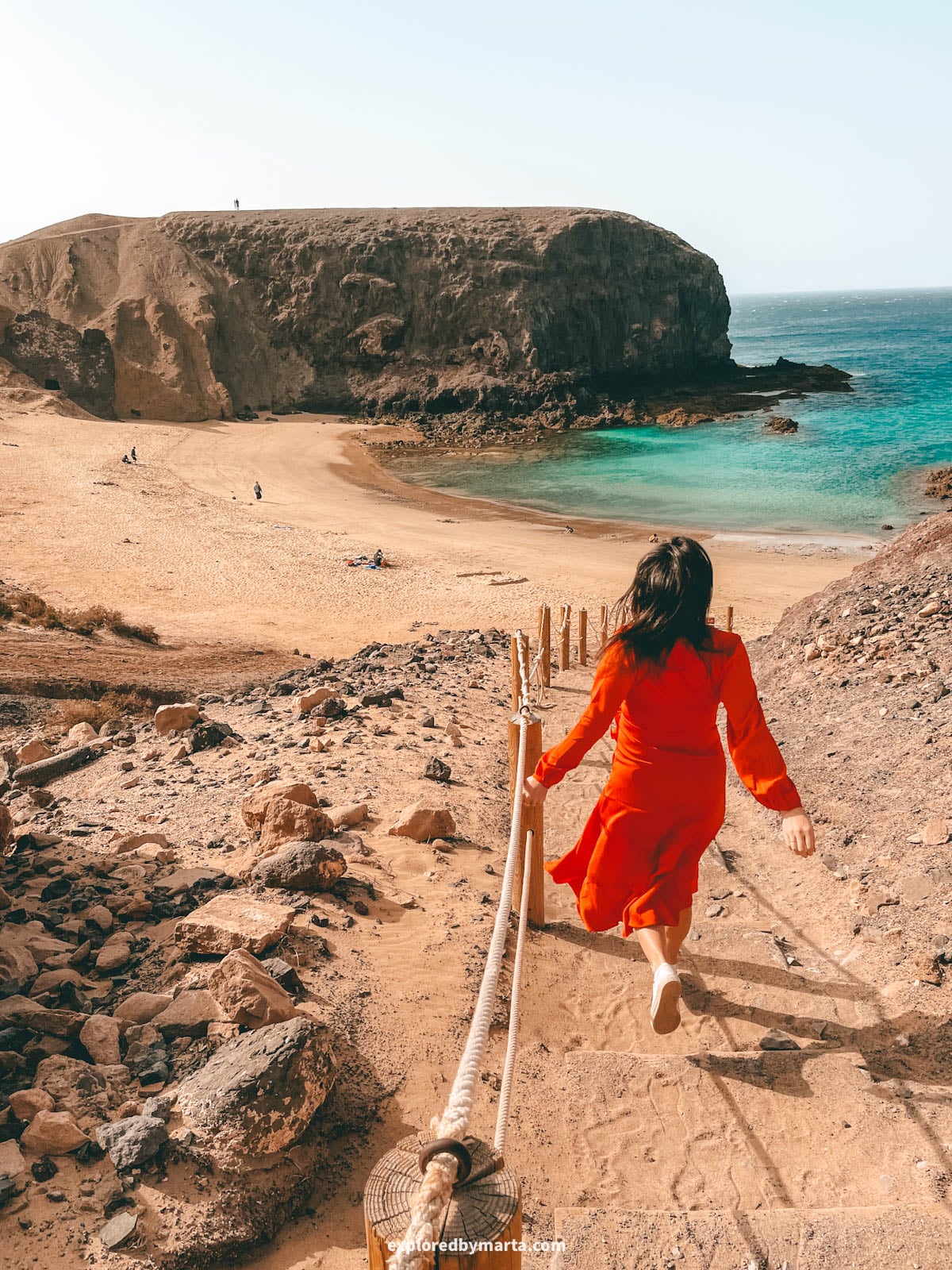
We’re ending in the south, at Playa Papagayo – one of the most beautiful beaches in Lanzarote, and one that hides multiple sea caves along its rocky shore.
First, getting there is a little adventure of its own.
Playa Papagayo sits inside the Los Ajaches Natural Monument, a protected area, so you need to drive in on a bumpy gravel road, stop at a tollbooth along the way to pay a 3 EUR nature tax per car, and then park at the official Papagayo parking lot (it’s massive).
Then you can walk over to the Playa Papagayo beach, and enjoy the most beautiful beach in Lanzarote with the most beautiful crystal clear water.
The beach itself is a gorgeous golden crescent, sheltered from the wind, with calm, clear water that’s perfect for a swim. Honestly, you could easily spend the whole day here and never touch the caves.
But if you time it right and arrive at low tide, the caves are the reward.
They sit along the coastal rocks just past the beach (North side of the beach) – only about 50 meters (165 feet) away – and at low tide (and preferably with small waves!), you can walk right over to them from the sand.
A word of caution, because this is the part I want you to get right: you truly need low tide and calm water here. At high tide, the rocks are awash, and it’s not safe. And even at low tide, those coastal rocks are sharp and slippery.
So if I were you, I’d wear proper shoes or water shoes because regular sandals will have you wincing and wobbling, while a bit of grip makes the short scramble easy and comfortable.
Unfortunately, we didn’t time our visit at low tide, so we could only wave to the sea caves from the shore, but we enjoyed Papagayo beach itself and had a wonderful time there.
Location: Cuevas del Papagayo
FAQs about caves in Lanzarote
What is the best cave in Lanzarote?
Cueva de los Verdes is the most famous and the best all-rounder. It’s a vast lava tube you explore on a guided tour, with colorful lighting, an underground auditorium, and a clever optical illusion near the end.
Do you need to book a tour for the Lanzarote caves?
Only the two show caves, Cueva de los Verdes and Jameos del Agua, need tickets and run on set hours. The wild caves like Montaña Cabrera and the sea caves are free and open, but you find them yourself.
What is the Tunel de la Atlantida?
It’s the underwater part of the Cueva de los Verdes lava tube, running out beneath the Atlantic. At about 1.5 kilometers, it’s the longest known volcanic submarine lava tube on Earth, but it isn’t open to regular visitors.
Are the caves in Lanzarote suitable for children?
Cueva de los Verdes and Jameos del Agua have proper paths and steps and suit families well. The wild caves and sea caves involve hiking, climbing, or tide timing, so they need more care with young children.
When is the best time to visit the Lanzarote caves?
Go early in the morning for the two show caves to beat the crowds and lines. For the sea caves like Órzola and Cuevas del Papagayo, visit at low tide, since they fill with water when the tide is high.
Read more about traveling in the Canary Islands
Of everything we did in four weeks in Lanzarote, the caves surprised me the most. I came for the beaches and the volcanoes, but standing inside a tunnel that flowing lava carved thousands of years ago was truly a one-of-a-kind experience.
If you only have time for one, make it Cueva de los Verdes. But if you have time, the wild, free ones are where the real adventure hides, so grab your shoes, check the tide, and go find some of them yourself.
If you’re planning a trip to Lanzarote or the Canary Islands and want to learn more about these volcanic islands, check out my other guides below.
Read more about Lanzarote:
- 23 best things to do in Lanzarote, Spain (bucket list spots)
- 20 best photo spots in Lanzarote, Spain (with locations!)
- 15 unreal rock formations in Lanzarote, Spain
- Ultimate places to see on nearby La Graciosa island
Read more about the Canary Islands:
- The best caves to visit in Fuerteventura
- The best beaches in Fuerteventura
- The best photo spots in Tenerife
- Things to do and places to see in La Palma
- Hidden gems and secret spots in Gran Canaria
PIN FOR LATER!