15 best beaches in Fuerteventura, from famous to hidden
This post may contain affiliate links. If you use these links to make a purchase or booking, I may earn a small commission at no extra cost to you! Thank you for your support!
Did you know Fuerteventura has around 80 designated beaches – more sand than any other island in the Canaries? If there’s one thing this island does better than anywhere else, it’s beaches.
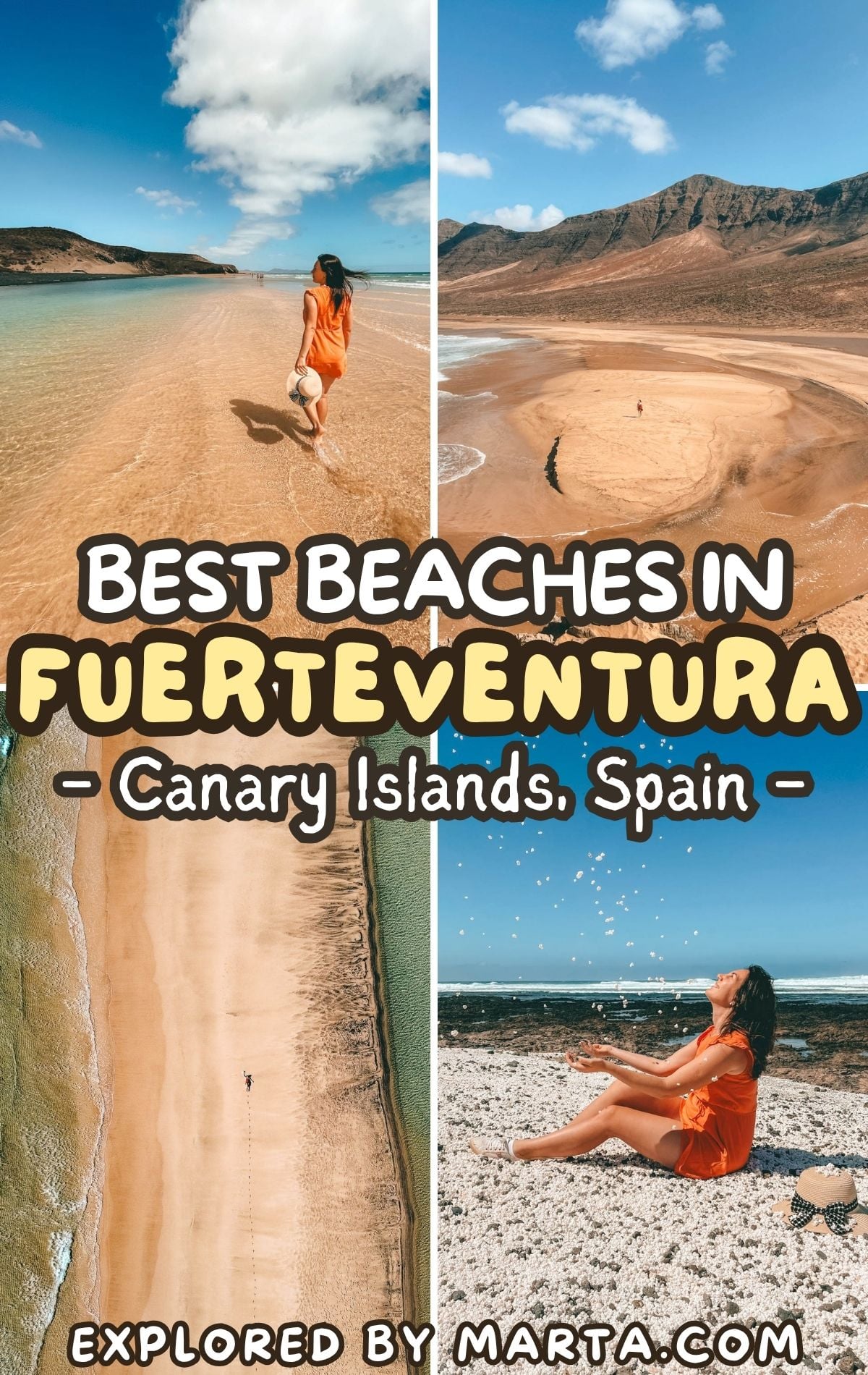
And the best beaches in Fuerteventura come in every style you can imagine: endless white-sand dunes, turquoise lagoons, rocky black sand beaches, wild golden bays with mountain backdrops, and even a beach covered in “popcorn.”
We spent four weeks exploring the island from tip to tip, and hunting down its beaches became our favorite activity. Some on this list are famous for a reason, and some you’d drive right past without ever knowing they’re there. Let’s hit the sand!
1. Playa de Cofete
Best for: wild scenery, epic views, and feeling tiny (not swimming!)
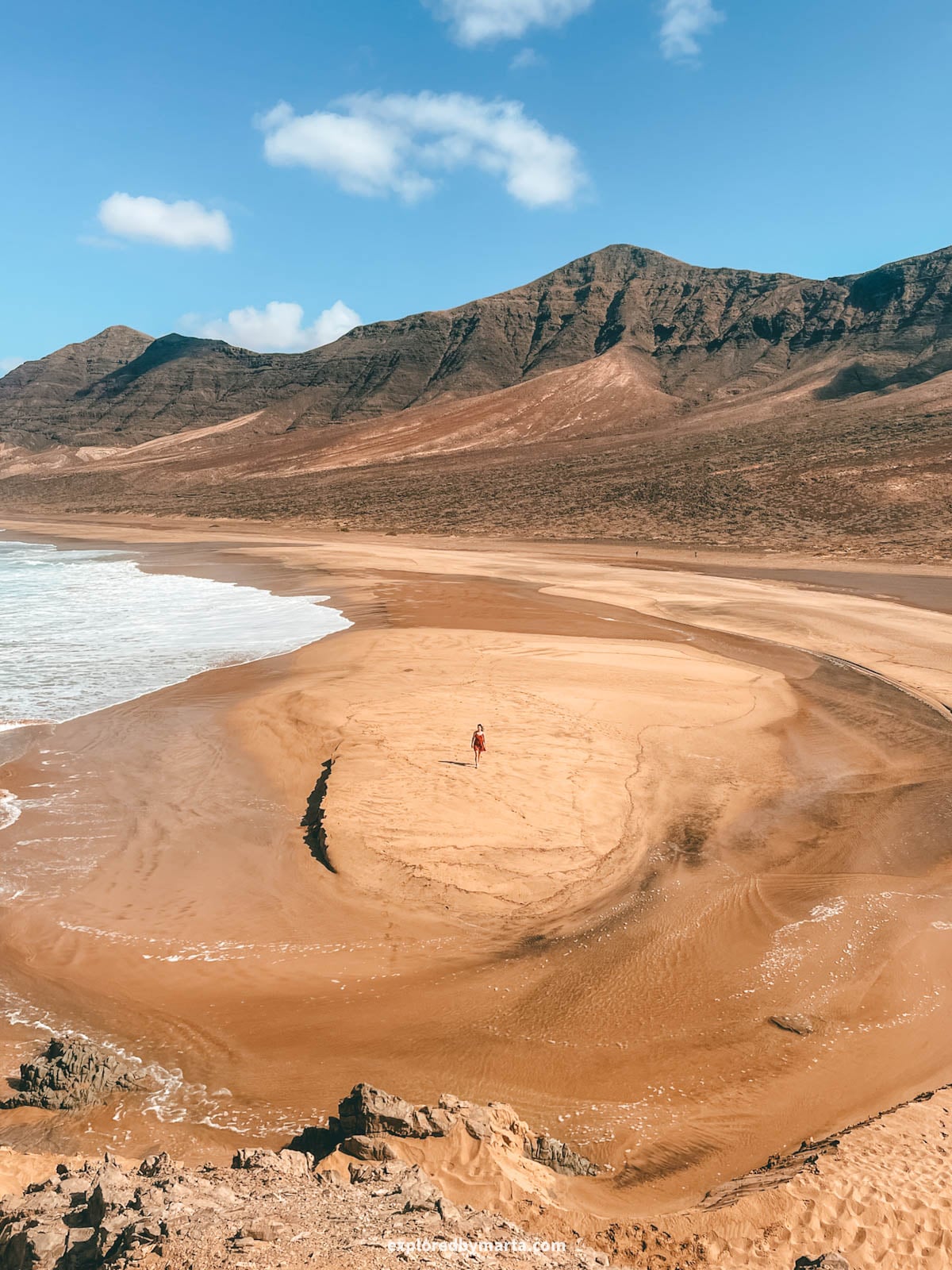
Playa de Cofete is one of those places you have to see to believe – and for many, the most beautiful of all the beaches in Fuerteventura. This wild beach runs along the remote southwest coast, inside the protected Jandía Natural Park.
It’s a 14-kilometer (9-mile) long sandy beach with a dramatic mountain backdrop on one side and the open Atlantic Ocean on the other. The scale of it is hard to describe – even on a busy day, everyone gets their own piece of golden sand. Yes, it is that long!
Getting there is part of the adventure. The only way in is a dirt/gravel road of almost 20 kilometers (12 miles), including a section over the mountains – bumpy and slow, but I have to say that the views along the way are worth every pothole. 😄
Once you start driving downhill towards the beach, remember to pull over along the downhill section, as this is the best spot to see the whole beach from above. Down from the sand, it’s a different angle.
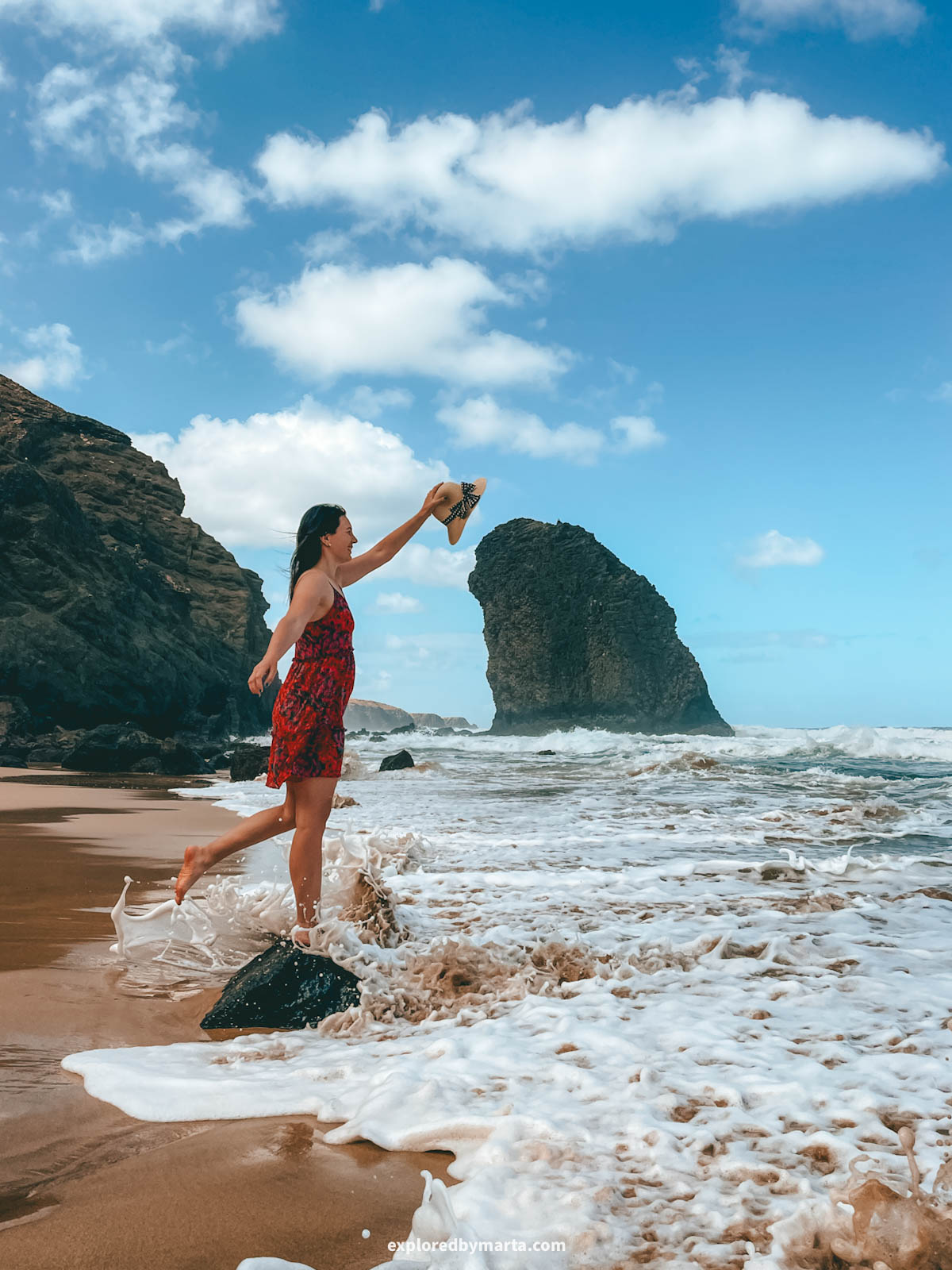
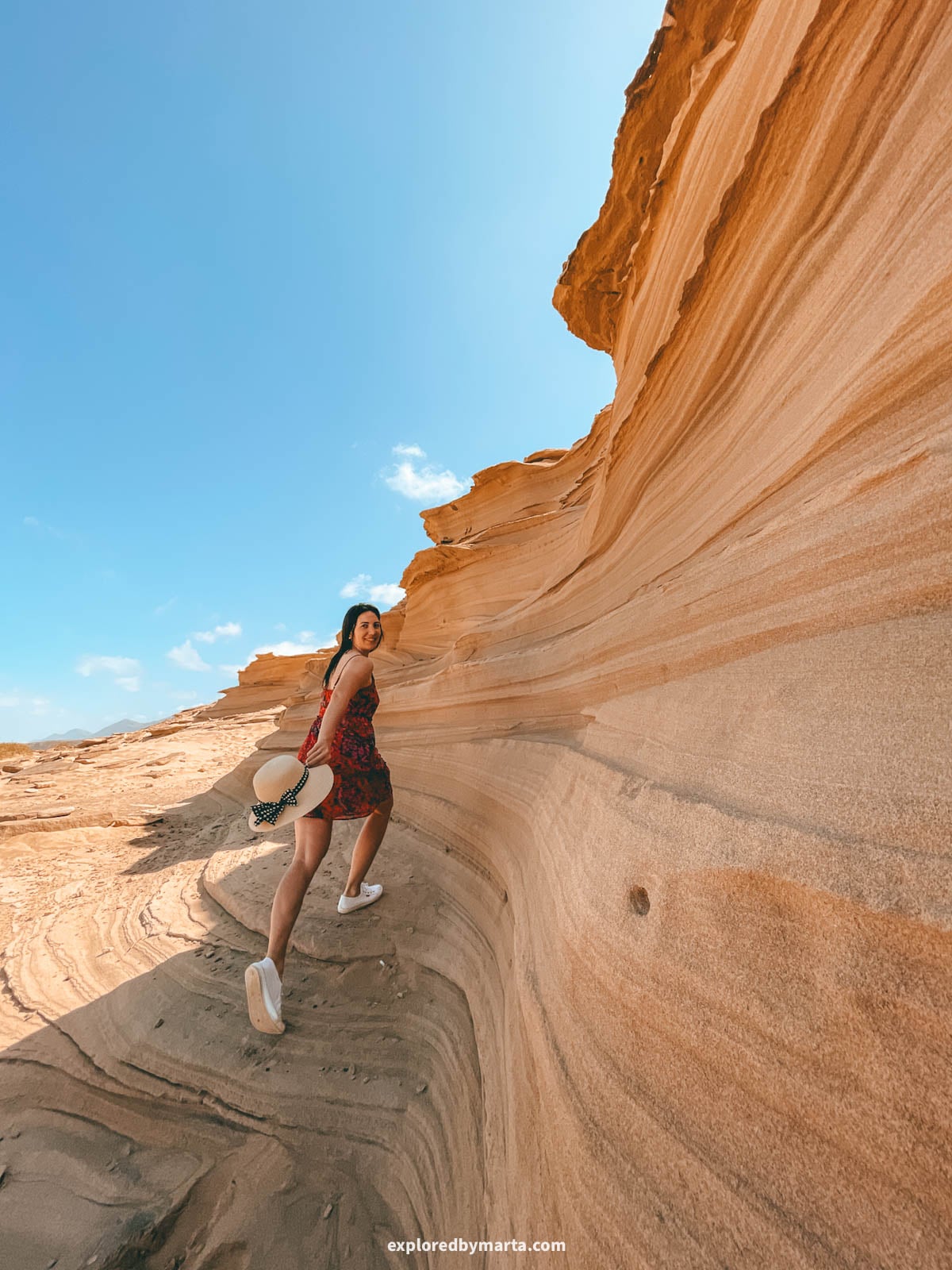
When we parked by the sand, we started a long stroll along the beach towards one of my favorite spots here – the little El Islote, the little islet you can walk up to. From there, you get the classic view back down the whole endless sweep of Cofete (see photo above!).
El Islote is a 3.5-kilometer hike from the parking area, so be prepared for a solid 2-hour adventure!
However, on the other side of the parking area, you can find some of the most unusual rock formations in Fuerteventura – the huge Roque del Moro sea stack and the unique striped sandstone wave wall (a sandstone wall with lines like waves).
Besides these unique spots, what I liked most about Cofete Beach is how remote it feels and how powerful nature felt here – the strong ocean waves, the massive, endless beach, and the sharp mountains in the background. I was in awe.
One important thing: Cofete is for admiring, not so much for swimming. The strong currents here are genuinely dangerous, so better to stay on the sand and soak up the wild, untouched natural beauty instead.
Location: Playa de Cofete
2. Grandes Playas de Corralejo
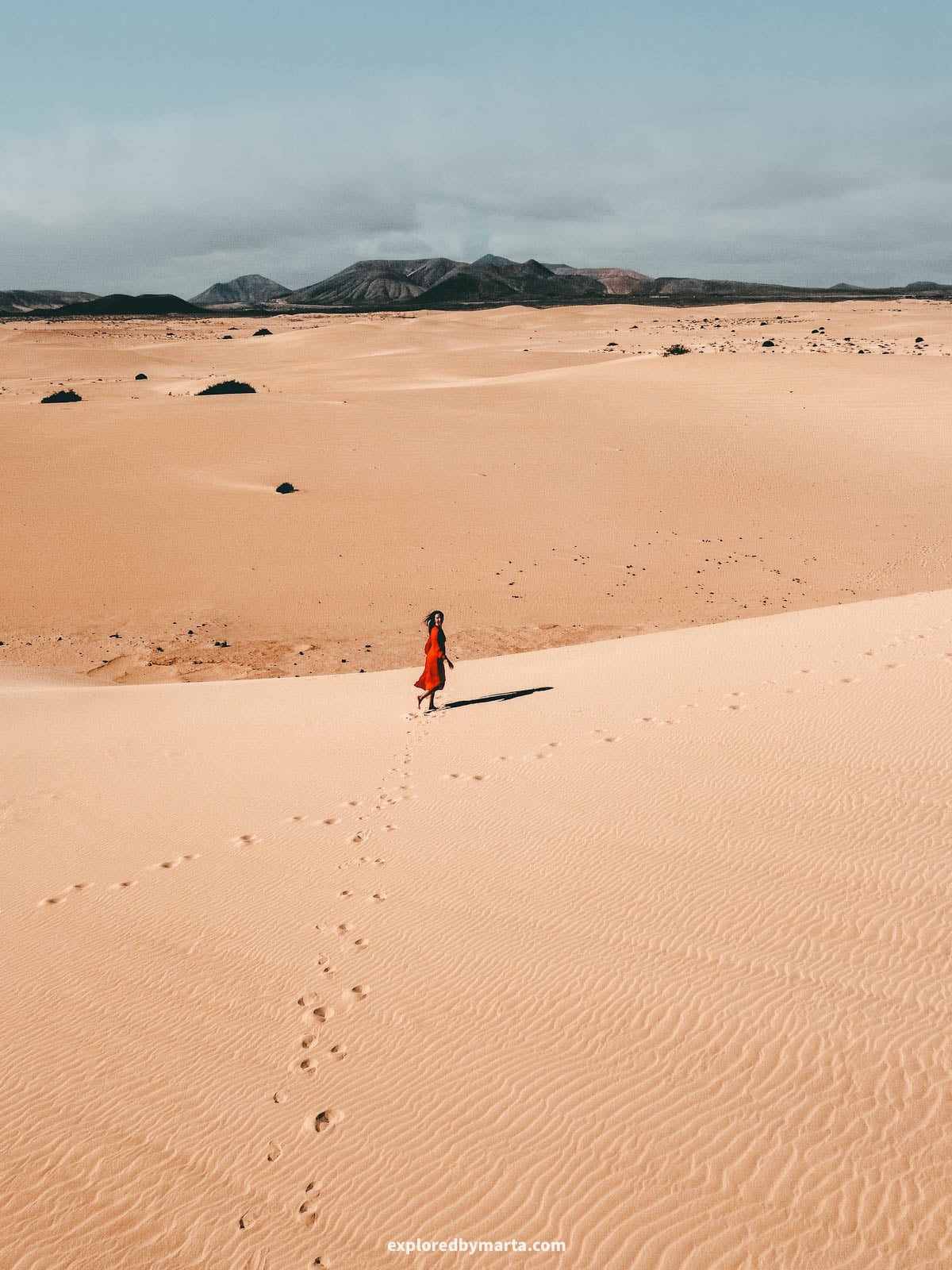
Best for: water sports, lazy beach days (but bring wind protection), and taking desert-like photos
In the north of the island, just outside Corralejo town, the Grandes Playas de Corralejo are one of the best beach areas in Fuerteventura.
This endless stretch of white sand beaches and clear blue water is a paradise for water sports – it’s one of the best kitesurfing and windsurfing areas on the island.
But with so much fine white sand to go around, there’s plenty of room for a lazy beach day too! We did come here for a short picnic, but we didn’t know how windy it is, so make sure you get a windbreak for your beach day!
On Fuerteventura you’ll also see little stone horseshoe walls on beaches like Grandes Playas de Corralejo and Sotavento. Those are called wind shelters (corralitos). People build them from volcanic rocks for the same reason.
However, we only saw a few of them, so don’t rely on getting one!
The truly special part of Grandes Playas de Corralejo rises right behind the beach: the Corralejo Natural Park, a protected area of rolling white sand dunes stretching about 10 kilometers (6 miles).
It looks exactly like a proper desert! The dunes even have a movie career – Hollywood filmed scenes for Wonder Woman 1984 here!
With easy access right off the main road and the desert next door, Grandes Playas de Corralejo is one of the best places to visit on the island.
For me, what I liked most about this beach area is that I have nothing in common with water sports, however, it was incredibly entertaining to watch all those surfers do their thing. 😄 If you want a beach day with entertainment, this is a great spot!
Location: Grandes Playas de Corralejo
3. Playa de Sotavento
Best for: kitesurfing, swimming, beach days for families, low-tide beach walks, and sandbar photos
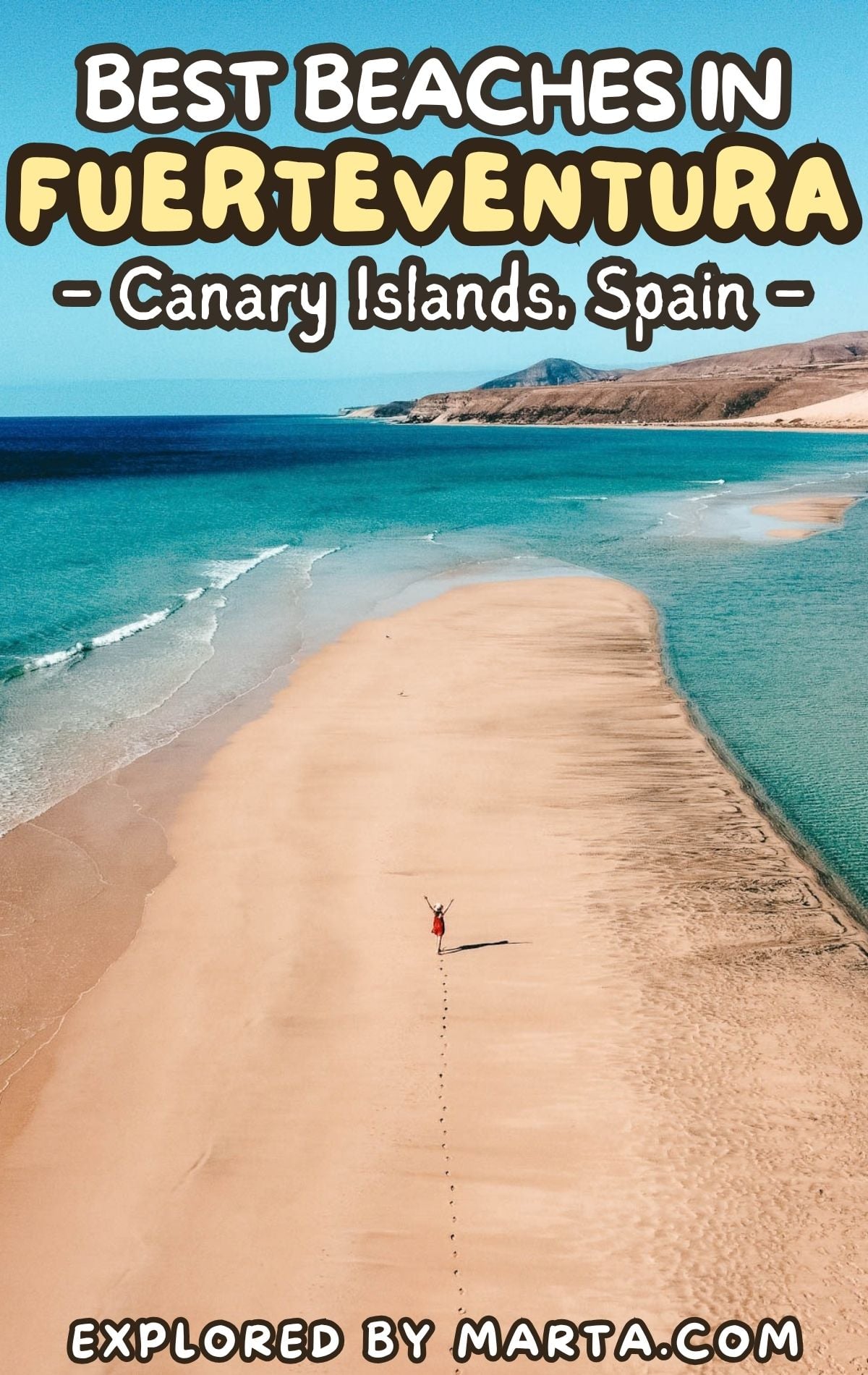
Playa de Sotavento, south of Costa Calma, is a chameleon beach and one of the most famous beaches in Fuerteventura – it completely changes its look with the tide.
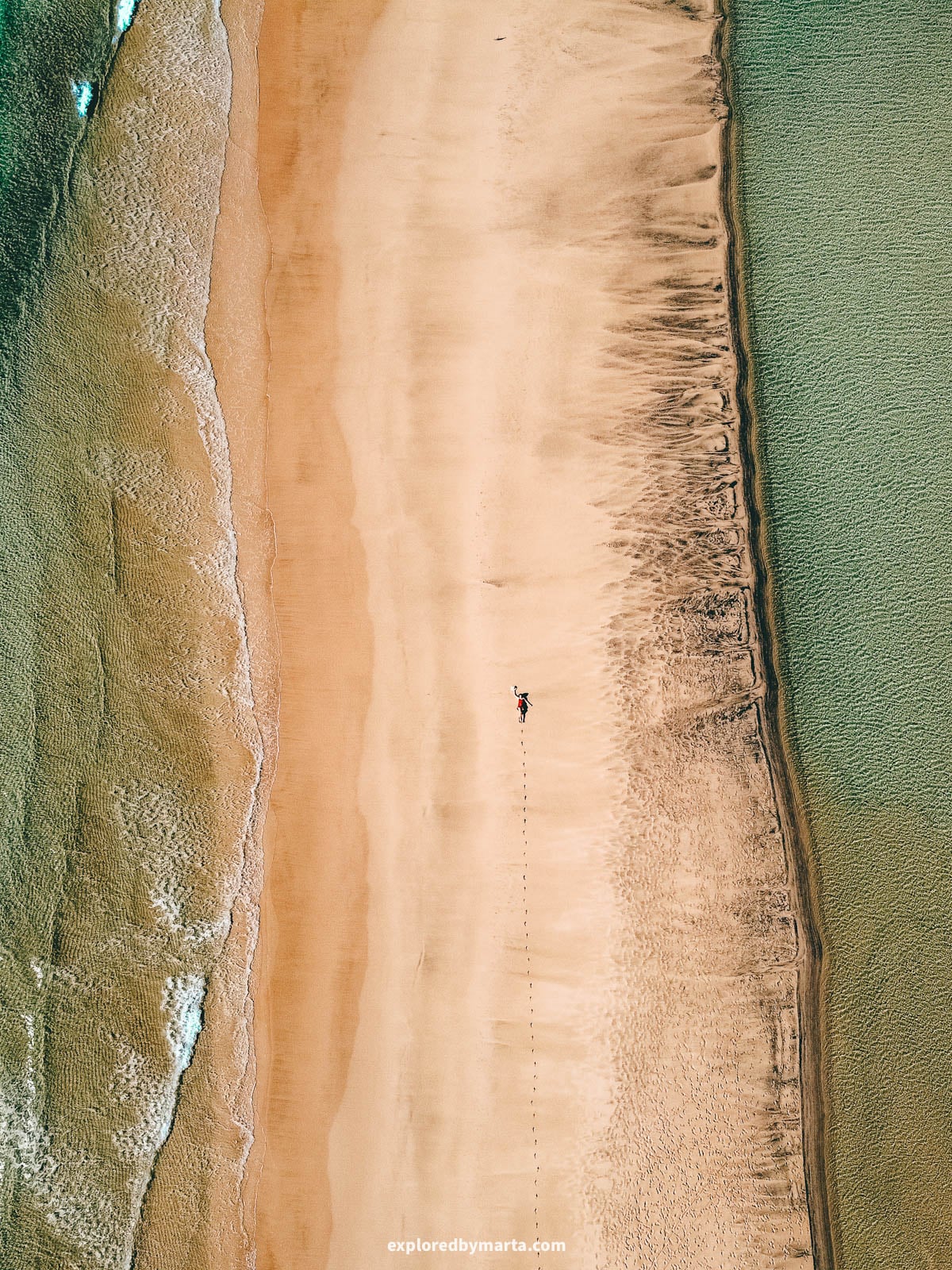
During low tide, it looks like a white-sand desert – an incredible emptiness stretching as far as you can see. Then the Atlantic comes back in and transforms it.
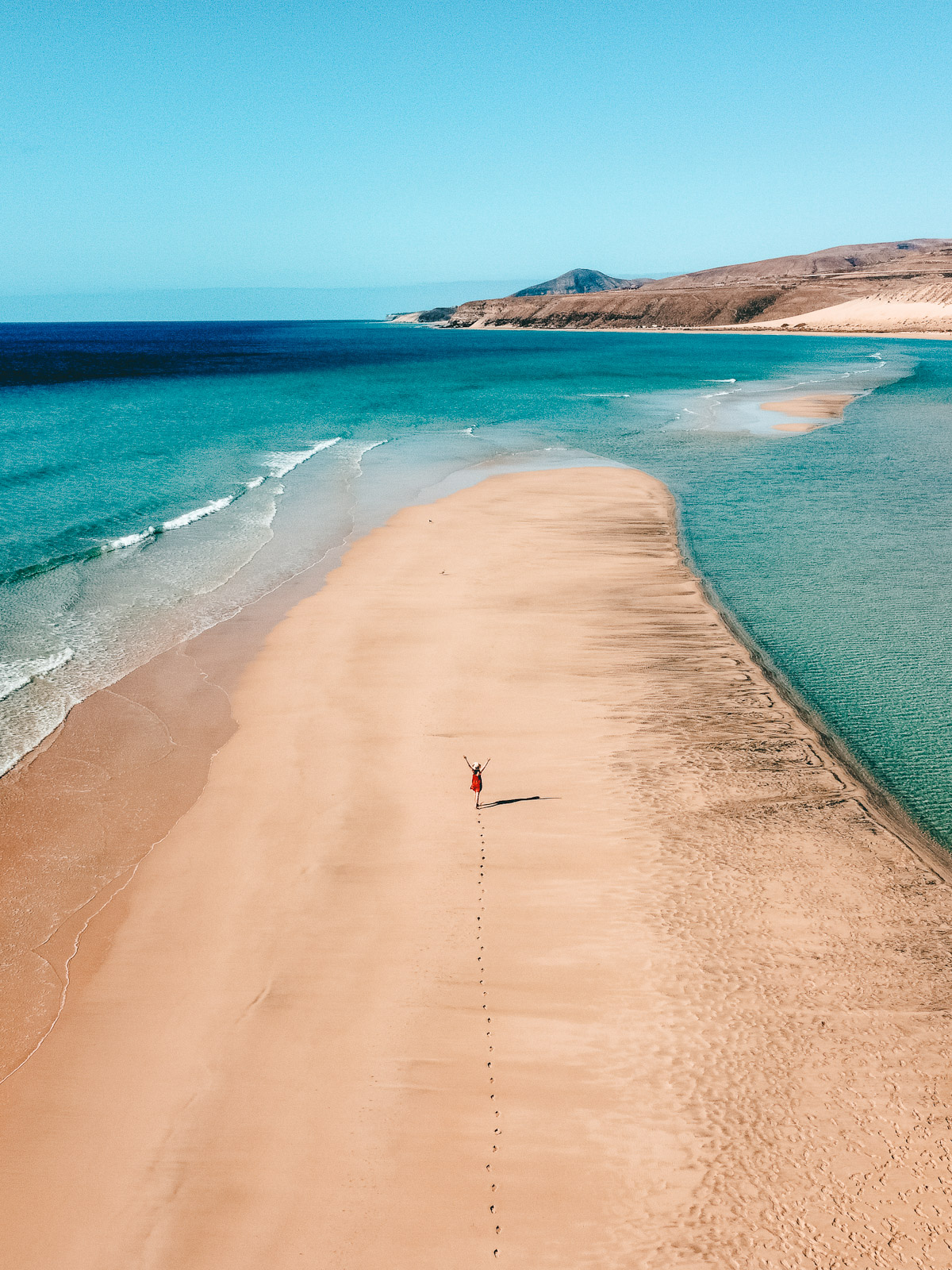
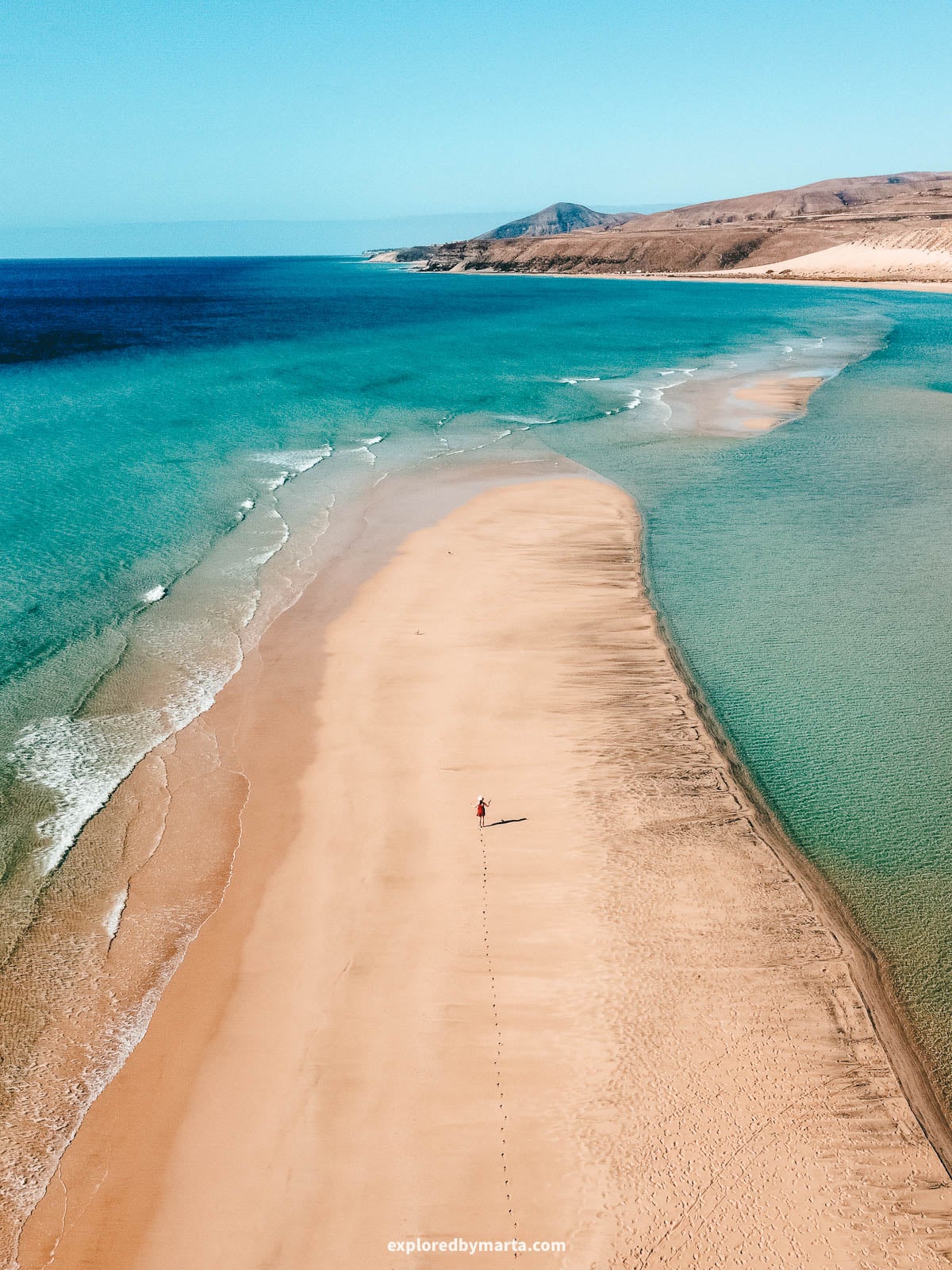
At high tide, sandbars stay above the shallow waters, creating that famous lagoon look people travel here for – perfect for long walks and photos from the slopes above.
One honest note: not all high tides are equal. The sandbars are dramatic on some tides and barely visible on others – we caught a less impressive one, and it was still a stunning look (see my photo above!).
Sotavento is also the stage of the Windsurfing & Kiteboarding World Cup, held here every summer from July to August for over 30 years – the world’s best riders compete right on the lagoon at La Barca, and watching is completely free.
My favorite thing about this beach was definitely its unique look – I had never seen such beautiful sandbars on a beach when the tide comes in.
We did go for a longer walk here, and no, I wasn’t afraid to be “stuck” on them because the water there is shallow, so we easily escaped back to the land.
It is also super easy to visit as there are multiple large parking lots where you can leave your car for free. Beware that access roads are a bit bumpy, like in many places and beaches in Fuerteventura!
Taking a walk along those strips of sand with crystal-clear waters on both sides was one of my favorite memories from our four-week trip to Fuerteventura!
Location: Playa de Sotavento
4. Playa del Mal Nombre
Best for: turquoise shallows without big crowds
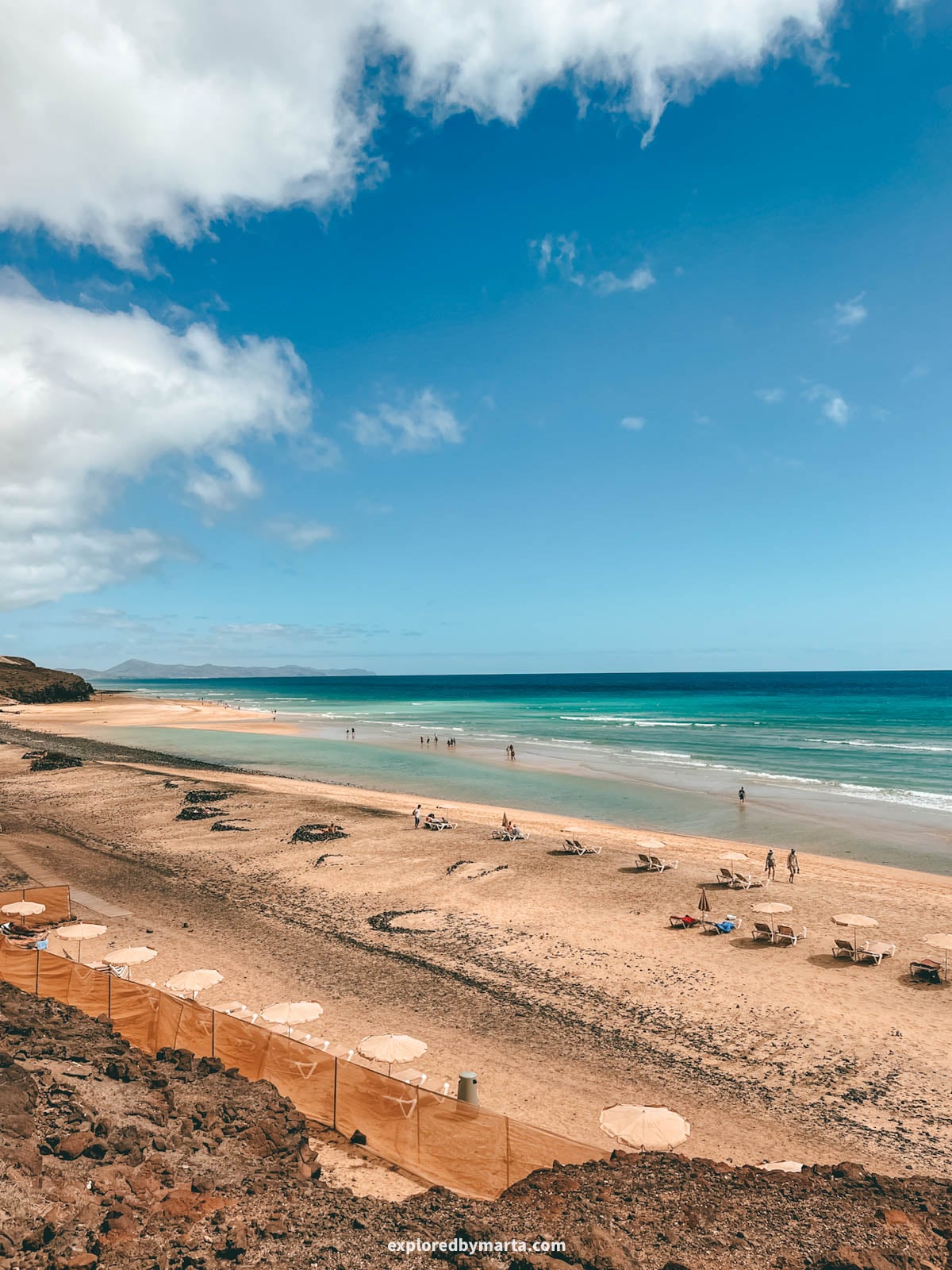
Playa del Mal Nombre – “the beach with the bad name” – is a great option if you’re staying in the south of the island and craving white sand and turquoise waters without the crowds.
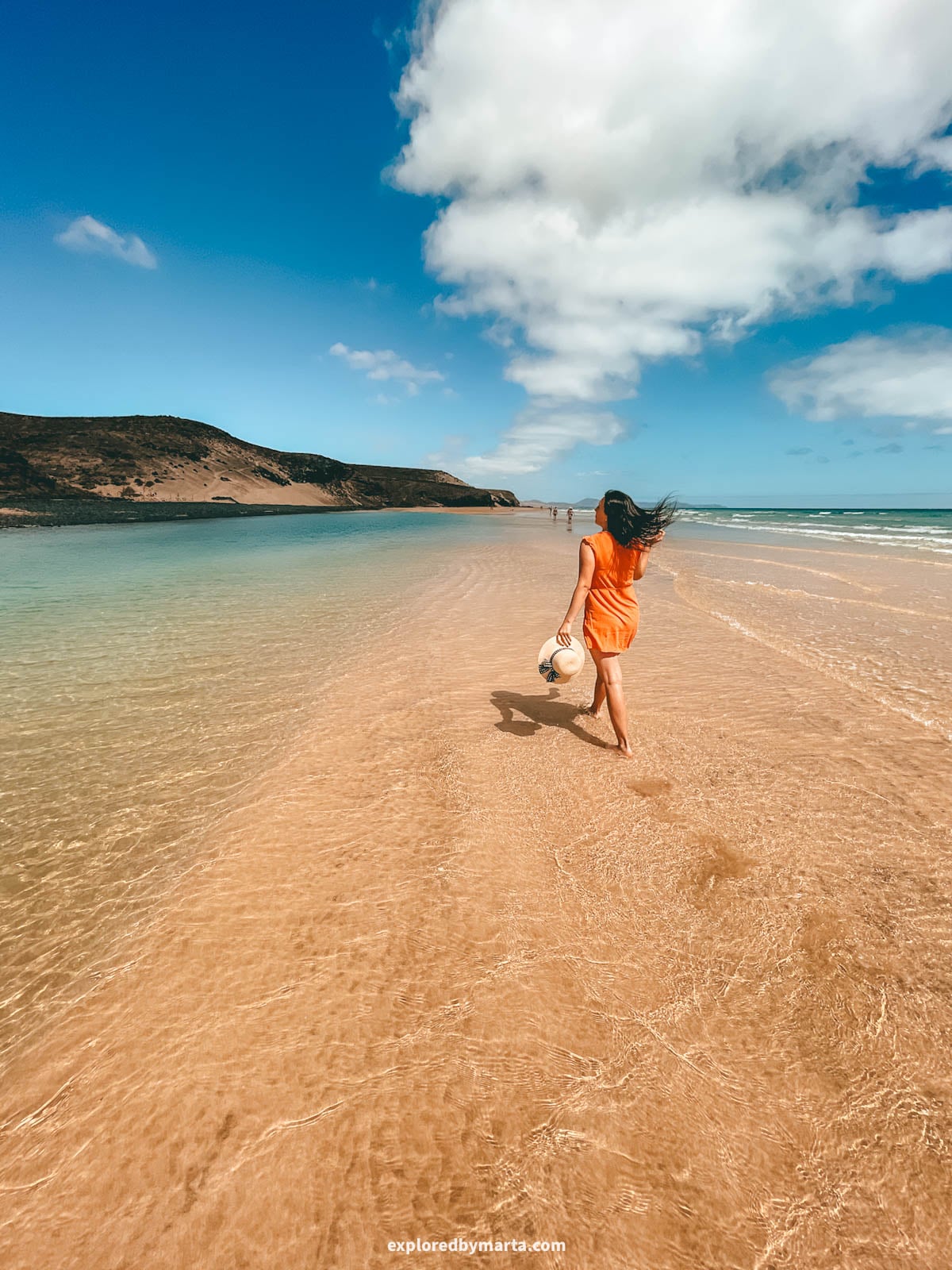
It’s like a smaller, quieter Sotavento – it has its own sand strip in the shallow water where people love to walk, wade, and photograph the colors.
At high tide, the strip can slip underwater, like in my photo – but the water stays super shallow, so you can still walk it or float around in the warm shallows. It was so fun!
There’s a café right next to the beach, which makes it an easy full beach day: shallow water, turquoise colors, fine white sand, and drinks and snacks within reach.
This is Fuerteventura at its most relaxed. Definitely one of my favorite places we visited in Fuerteventura!
Location: Playa del Mal Nombre
5. Playa del Matorral in Morro Jable
Best for: easy family beach days, swimming, sunbathing, and resort comforts
Another gorgeous golden beach on the east coast is Playa del Matorral. This beautiful, long golden sand beach runs along Morro Jable town in the south of Fuerteventura and has everything you need for a comfortable beach day.
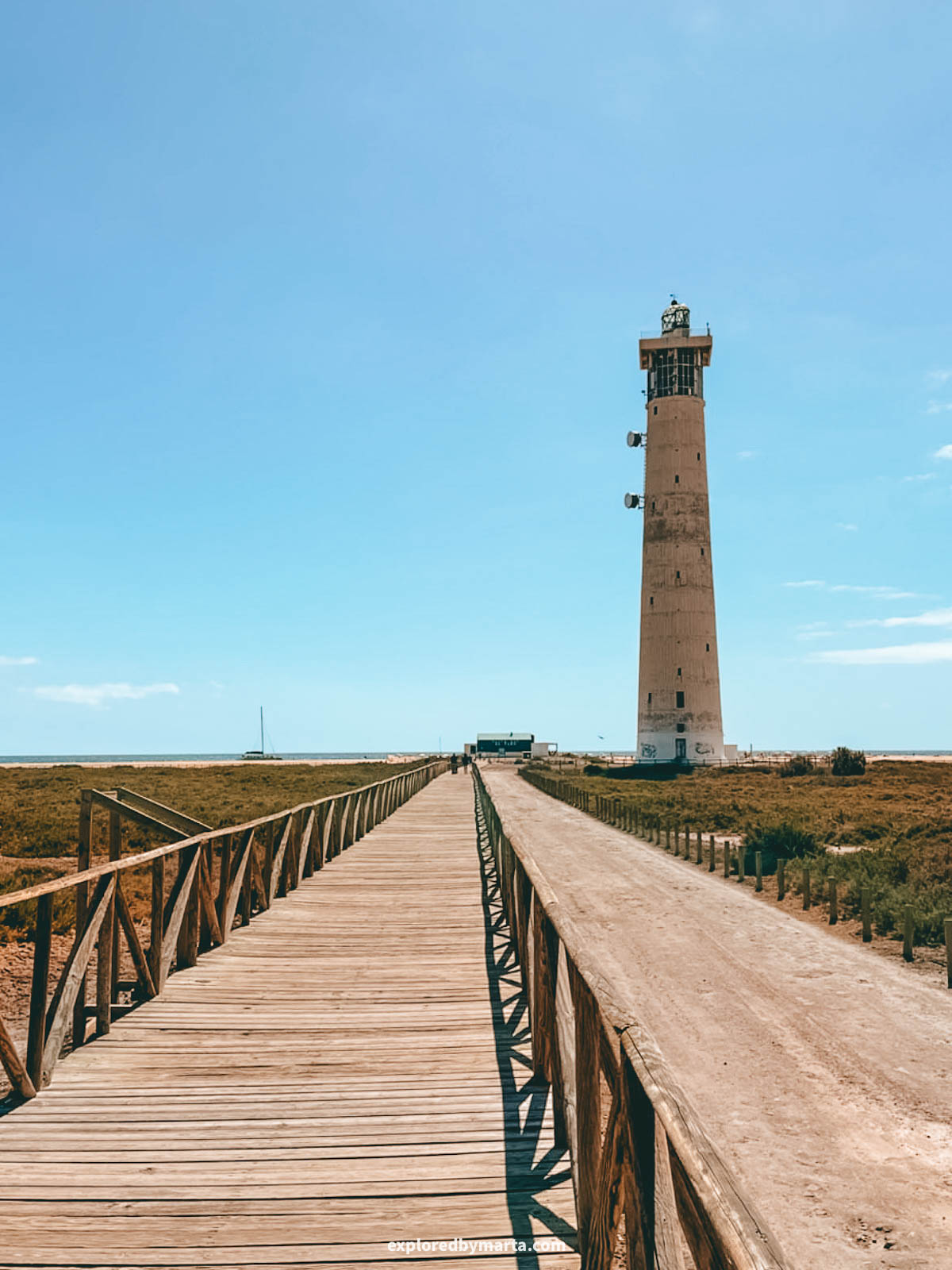
What makes it so special? Playa del Matorral beach stretches for about 4 kilometers (2.5 miles), with fine sand, calm waters on most days, and the white Morro Jable lighthouse standing right in the middle.
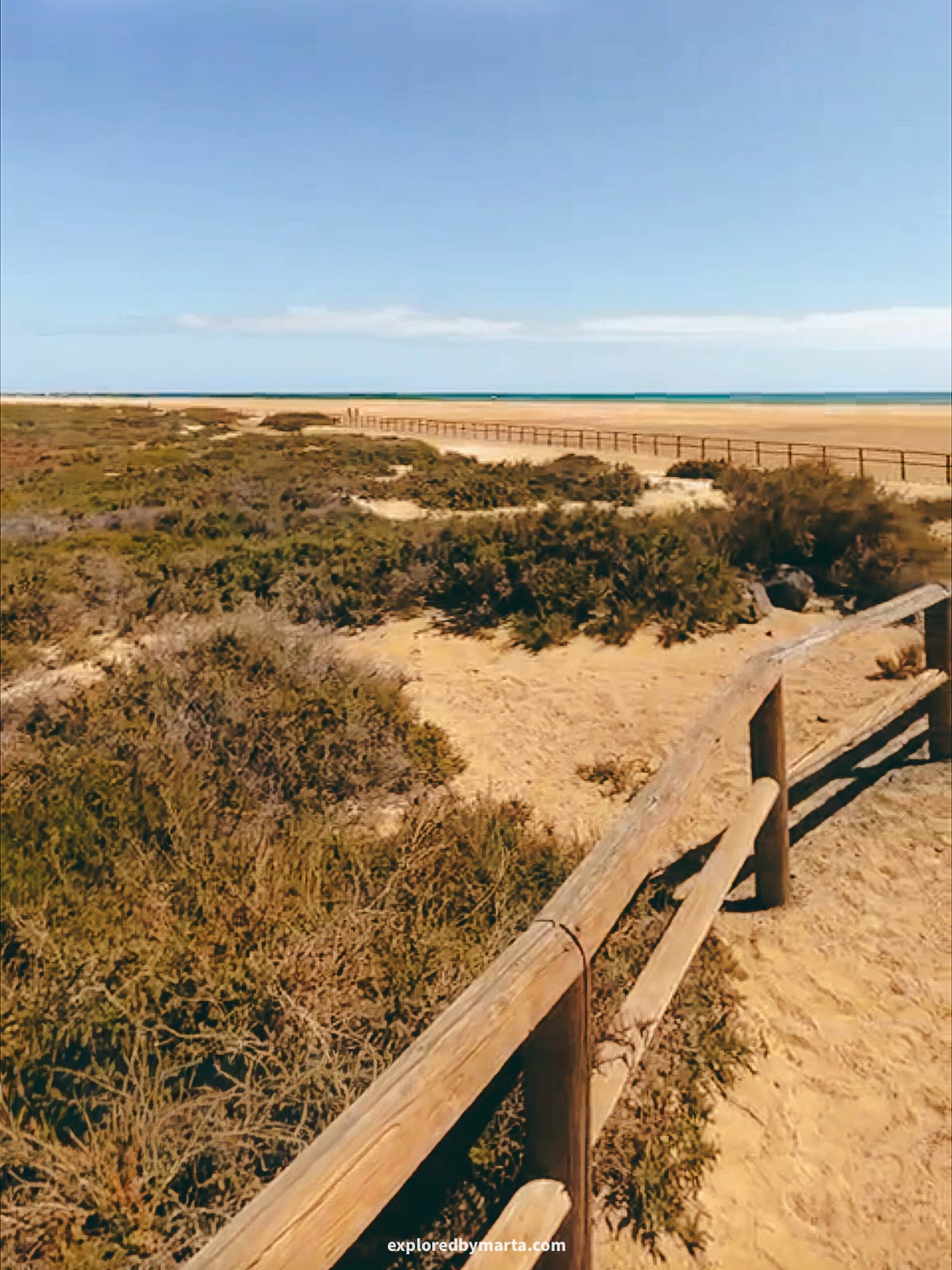
But behind the beach lies a protected salt marsh – we crossed it via a wooden boardwalk towards the lighthouse. Such a unique place for Fuerteventura!
Playa del Matorral is the main beach of the south – beach bars, sunbeds, showers, and the Morro Jable promenade with its restaurants right behind the sand – make it an easy place to visit.
However, the downside is its popularity. This is one of the most visited beaches on this list. But if you enjoy comfort, Playa del Matorral is all you need.
Location: Playa del Matorral
6. Playa de la Concha & the El Cotillo lagoons
Best for: swimming in calm shallow waters, family beach days
On the northwest coast, the little surf town of El Cotillo hides some of the best swimming spots in Fuerteventura.
Playa de la Concha is a white sand bay so beautiful it’s regularly named among the best beaches in Europe.
But around it you’ll find the El Cotillo lagoons (Los Lagos) – shallow turquoise pools protected by volcanic reefs. Some bigger, some smaller.
They boast some of the calmest waters on the whole island, with soft white sand and water shallow enough for small kids.
Although the west coast beaches are usually windy, these beaches have a natural volcanic rock barrier that breaks the ocean swell, so the water inside the bay stays calm and clear.
When we came to Playa de la Concha, we could clearly see the wild waves farther into the ocean, but the waters inside the little bay stayed calm. So cool!
Between La Concha beach and the lagoons, you can easily fill a whole day here, with El Cotillo’s seafood restaurants a few minutes away for lunch. If swimming in crystal-clear waters is what you’re looking for, this is the corner of the island to head for.
Location: Playa de la Concha
7. Playa del Bajo de la Burra (Popcorn Beach)
Best for: one-of-a-kind photos and bragging rights 😂
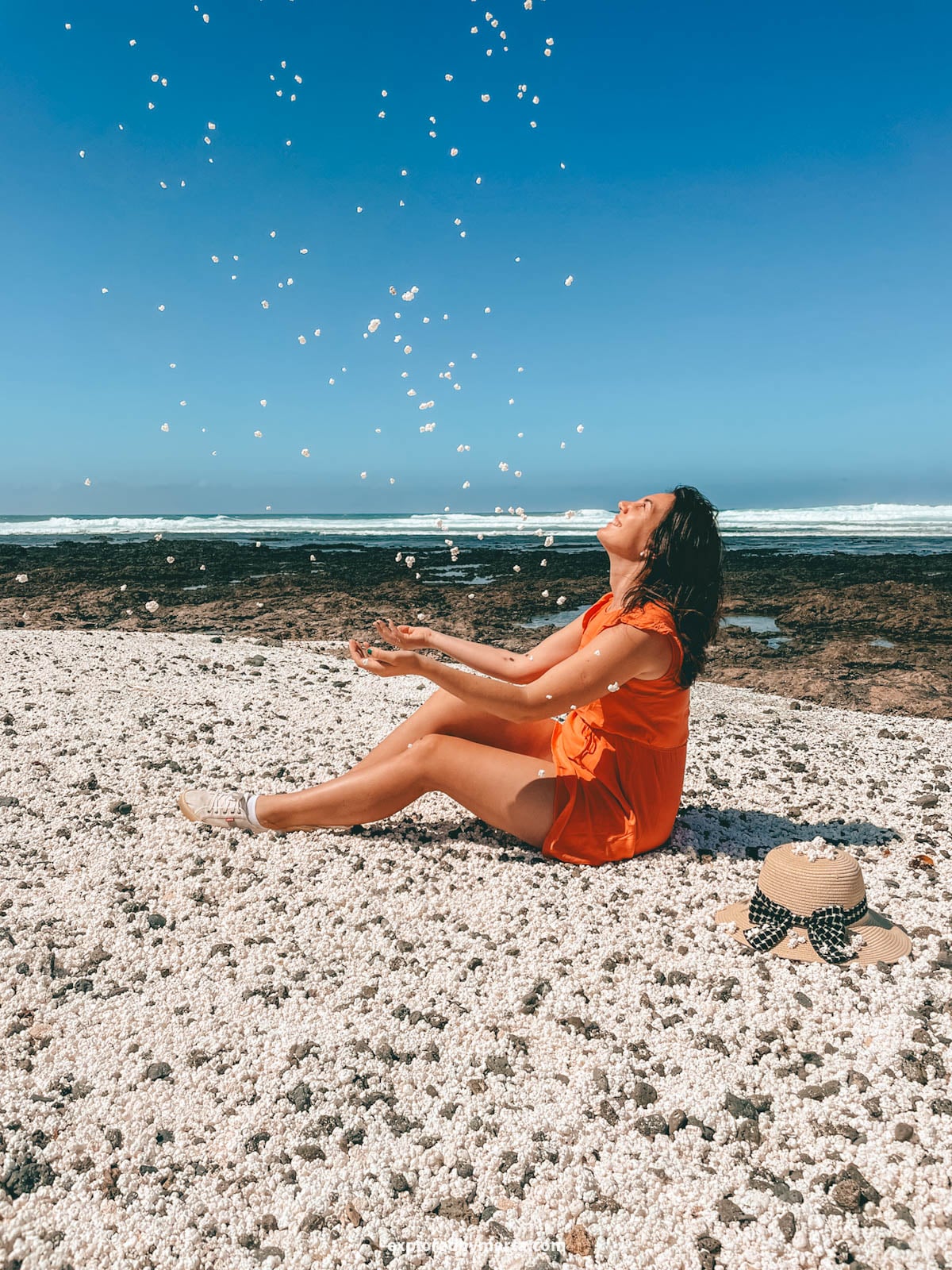
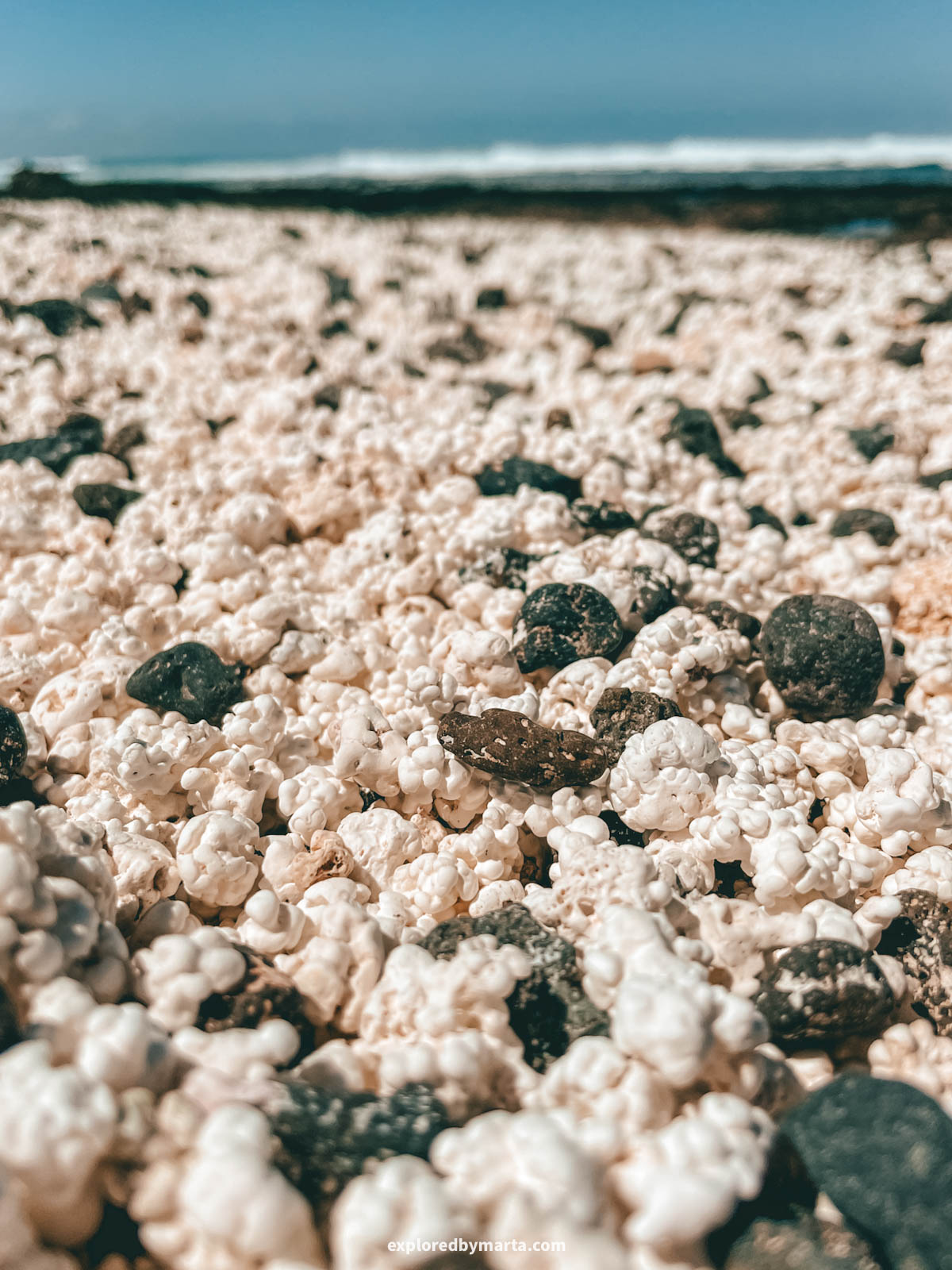
Popcorn Beach is easily among the most unusual and most famous beaches in Fuerteventura – and not because it’s a great place for a swim. On the contrary!
The entire beach is covered in small white pieces that look exactly like popcorn. They’re actually rhodoliths, a coral-like marine algae washed ashore by the Atlantic Ocean over thousands of years.
Swimming isn’t really the point here – the shore is rocky – but as a one-of-a-kind sight and a photo stop, nothing else on the island compares. Where else can you stand on a beach made of popcorn!?
You’ll find it on the north coast near Majanicho – park at the side of the road and walk over. And please remember: taking rhodoliths home is forbidden. They’re a protected part of the beach, and their home is there, not on your souvenir shelf.
Location: Playa del Bajo de la Burra
8. Playa de Ajuy
Best for: black sand, the famous caves, and fresh seafood
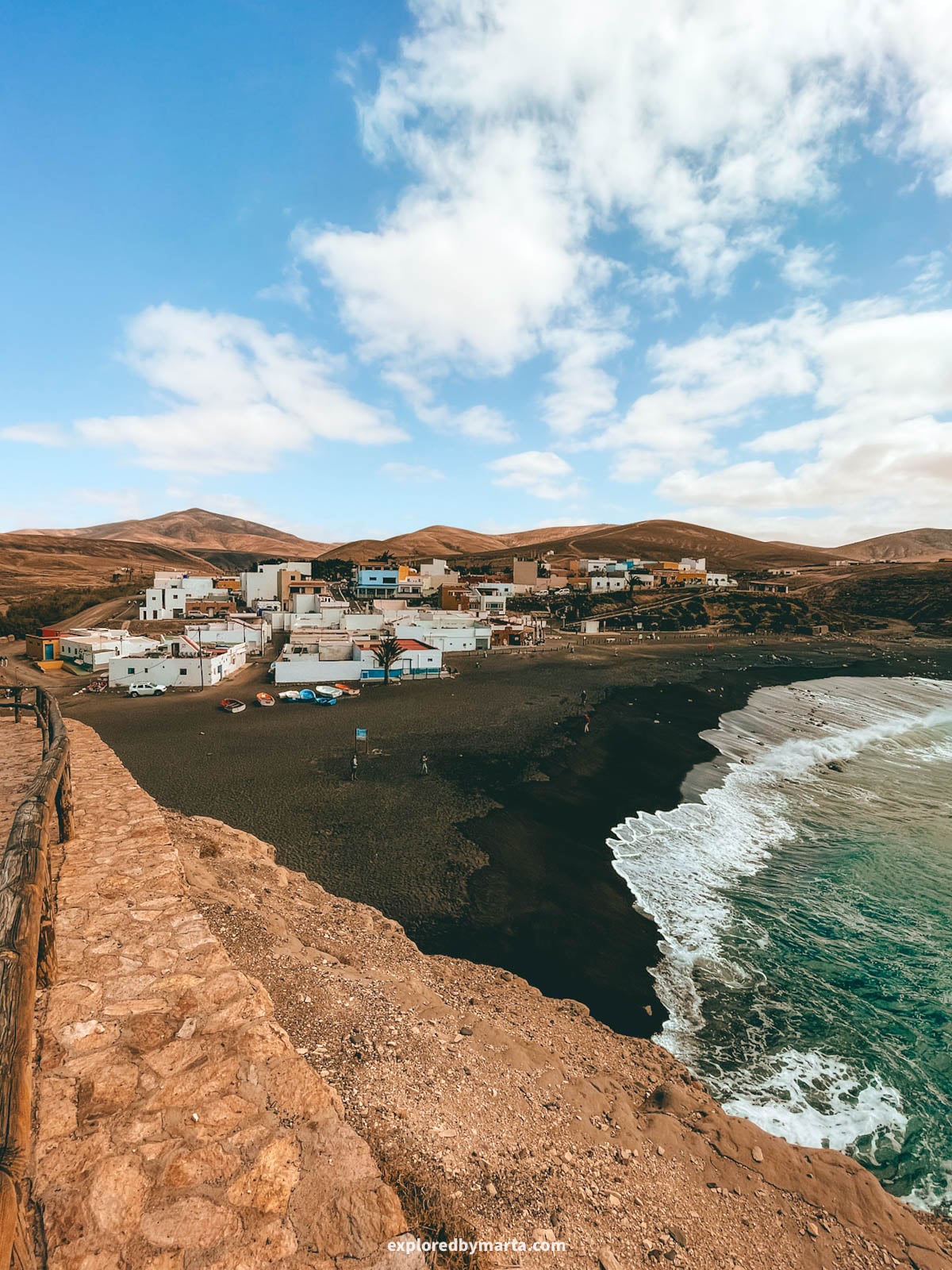
Playa de Ajuy is a black sand beach in a tiny fishing village on the west coast, and the cliffs around it hold a story millions of years in the making.
Here’s the part that blew my mind: the cliffs around Ajuy are made of sediments that settled on the deep ocean floor during the Cretaceous period, around 100 million years ago. That makes them older than Fuerteventura itself.
Volcanic activity later pushed this ancient seabed up above the waves, and today you walk right past it on the path to the caves. Turns out you won’t find older rocks anywhere in the Canary Islands, and the Ajuy area is protected as a natural monument because of it.
The famous Ajuy caves are huge, dramatic sea caves carved into the cliffs. They wait at the end of a short coastal path from the beach and are one of the most visited places in Fuerteventura.
But the beach? The beach itself is a moody, beautiful spot – dark volcanic sand, fishing boats, and the Atlantic rolling in. The village behind it has a couple of seafood restaurants where lunch tastes like it came off the boat that morning (because it did).
Try restaurants like La Jaula de Oro, La Pescadora Ajuy, or Café del Mar Ajuy.
However, swimming needs caution here – the waves and currents are strong. But if you do a trip combining black sand, caves, and fresh fish, Ajuy is hard to beat. I cover the caves in depth in my guide to the best caves in Fuerteventura.
Location: Playa de Ajuy
9. Playa de la Solapa
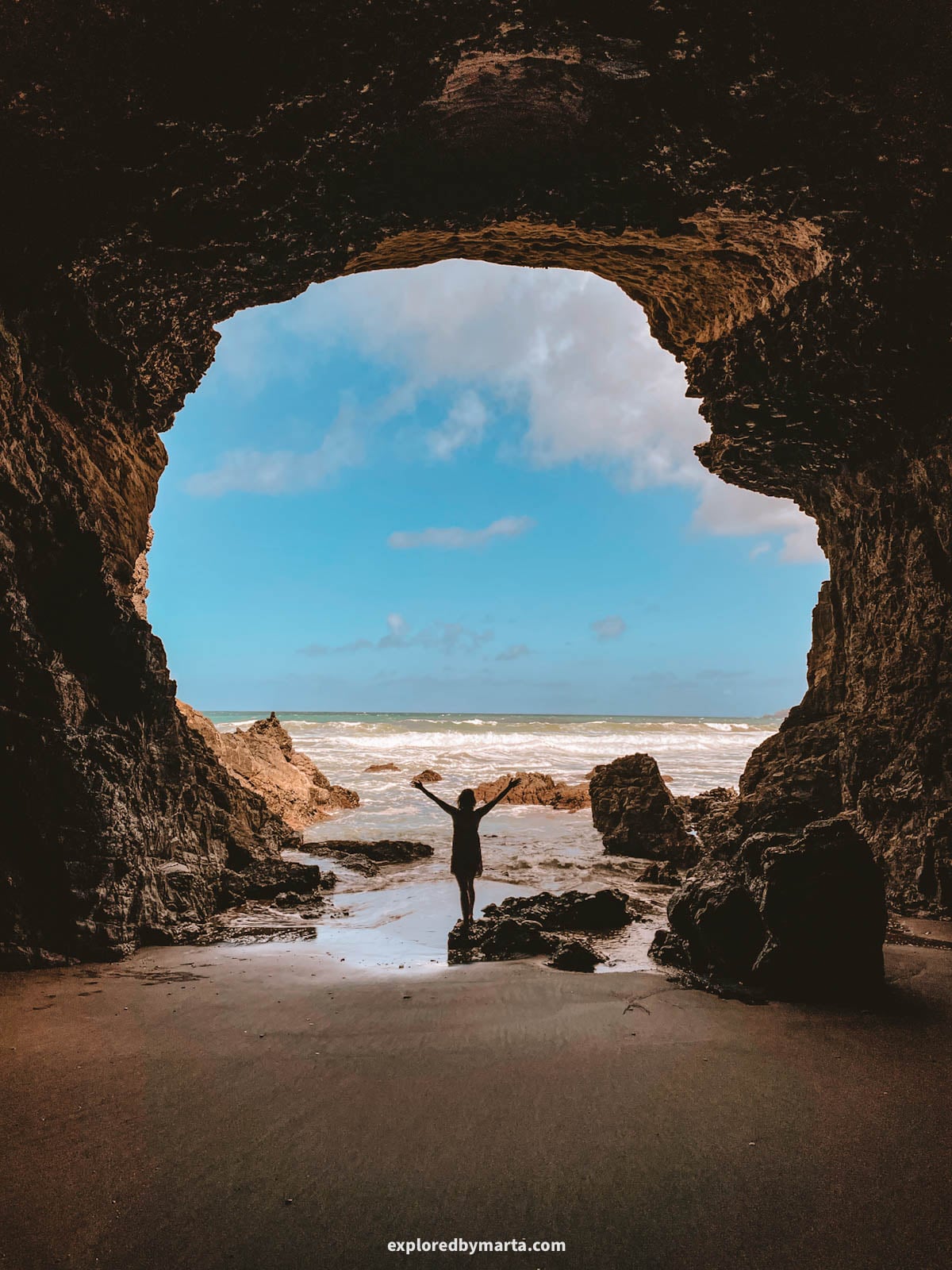
Best for: black sand, cool photos and sea cave exploring at low tide
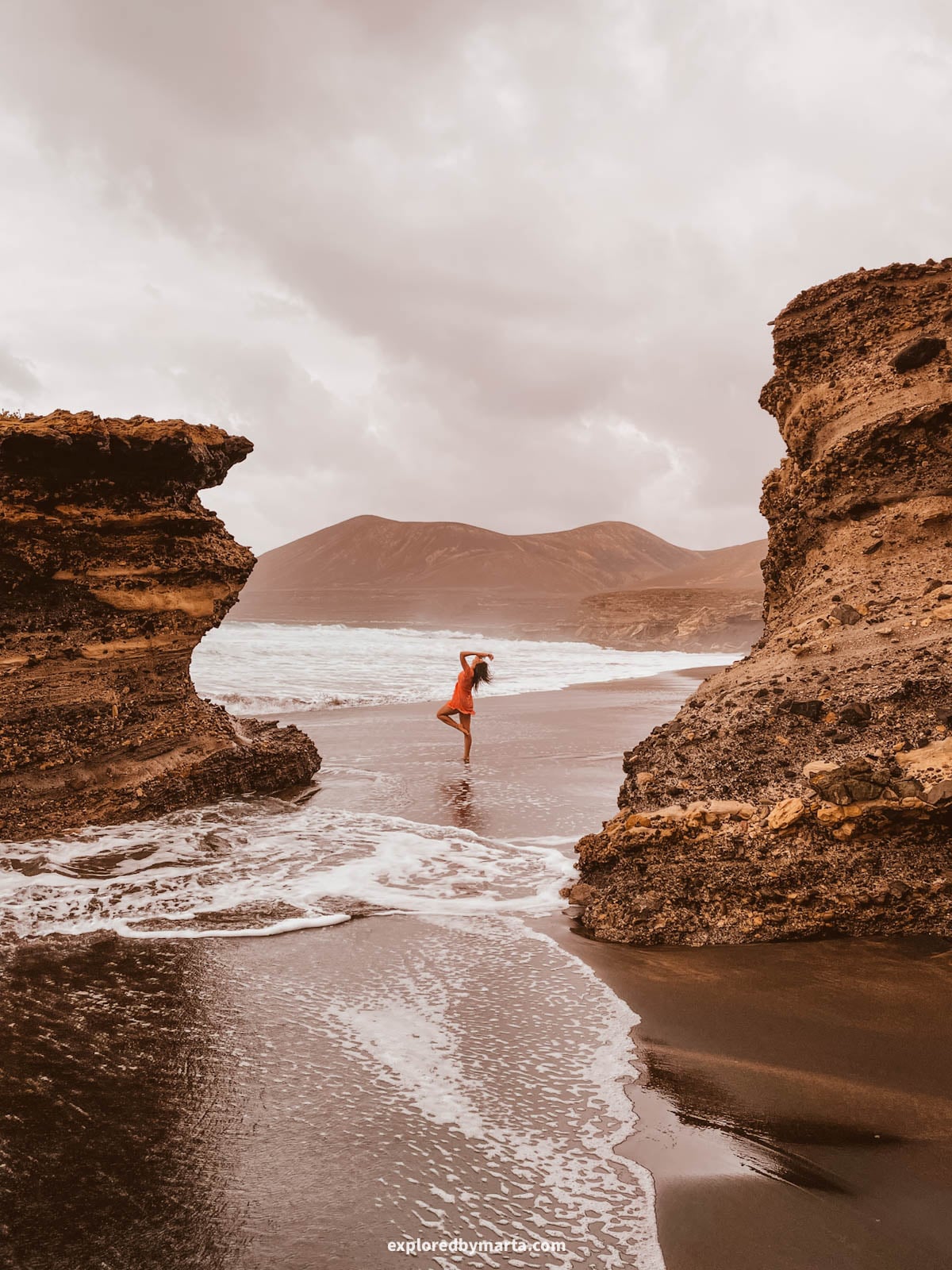
Playa de la Solapa is a moody black sand beach on the west coast. To me, it really stood out – not only because of the black sand, but also because it has something that none of the other beaches in Fuerteventura have: lots of sea caves.
The shore is also lined with giant rock formations that are cool for moody photos.
Fun fact: Marvel filmed scenes for Eternals right here, and Angelina Jolie came to the island to shoot on this very beach!
Playa de la Solapa is less of a towel-and-sunbathe beach and more of an explorer’s playground. But you can definitely lie down in the sand, too – it’s a wonderful beach spot away from the crowds.
But if you want to explore the coastline, the timing matters the most. You need to come here at low tide, when the caves become accessible and safe to walk into. It is not possible to access them during high tide.
Getting to Playa de la Solapa is not difficult. Yes, there is a section of gravel road you need to manage, but overall it’s pretty easy. Once there, park on top of the cliff before the beach, then walk down to the sand.
For the caves, walk towards the ocean, and then turn left – we counted 3 or 4 bigger caves, and they are all within 100-200 meters of the beach. You’ll find them one after another as you get past the big rocks.
Location: Playa de la Solapa
10. Playa del Castillo in Caleta de Fuste
Best for: families, calm shallow waters, and convenience
If you are looking for convenience, Playa del Castillo in Caleta de Fuste is hard to beat.
It is one of the most convenient beaches in Fuerteventura – it is a sheltered, horseshoe-shaped bay on the east coast of the island, just ten minutes from the airport and Puerto del Rosario.
The bay’s calm, shallow waters make it one of the best family beaches in Fuerteventura – you’ll get baby waves instead of Atlantic rollers, with golden sand and gentle slopes into the sea.
The beach is ringed by a marina, restaurants, and resorts, so everything is just steps away.
If you’re traveling with kids, or you just want a good book, soft sand, and zero logistics, this is your spot on the east coast.
Location: Playa del Castillo
11. Playa de las Hermosas
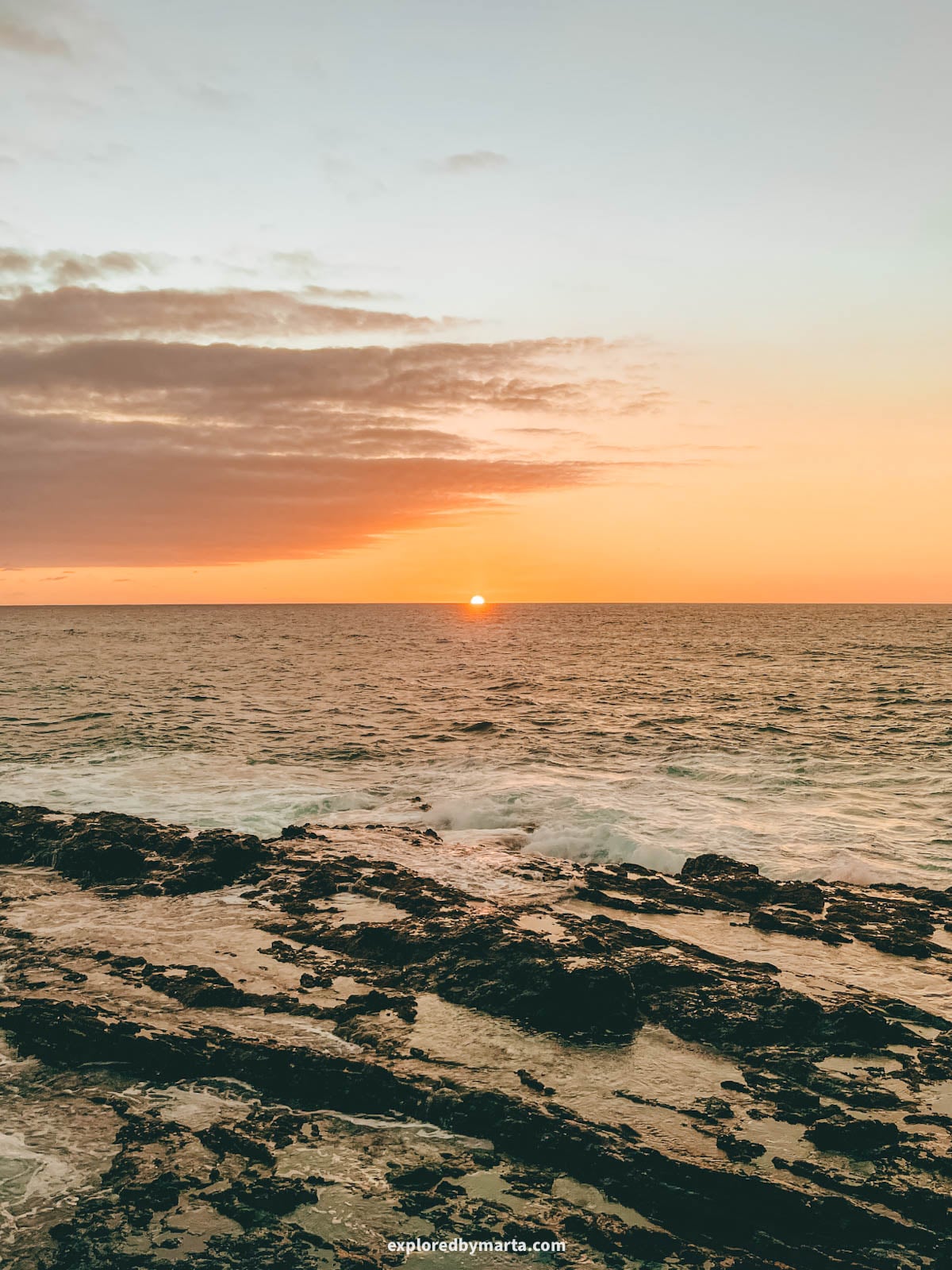
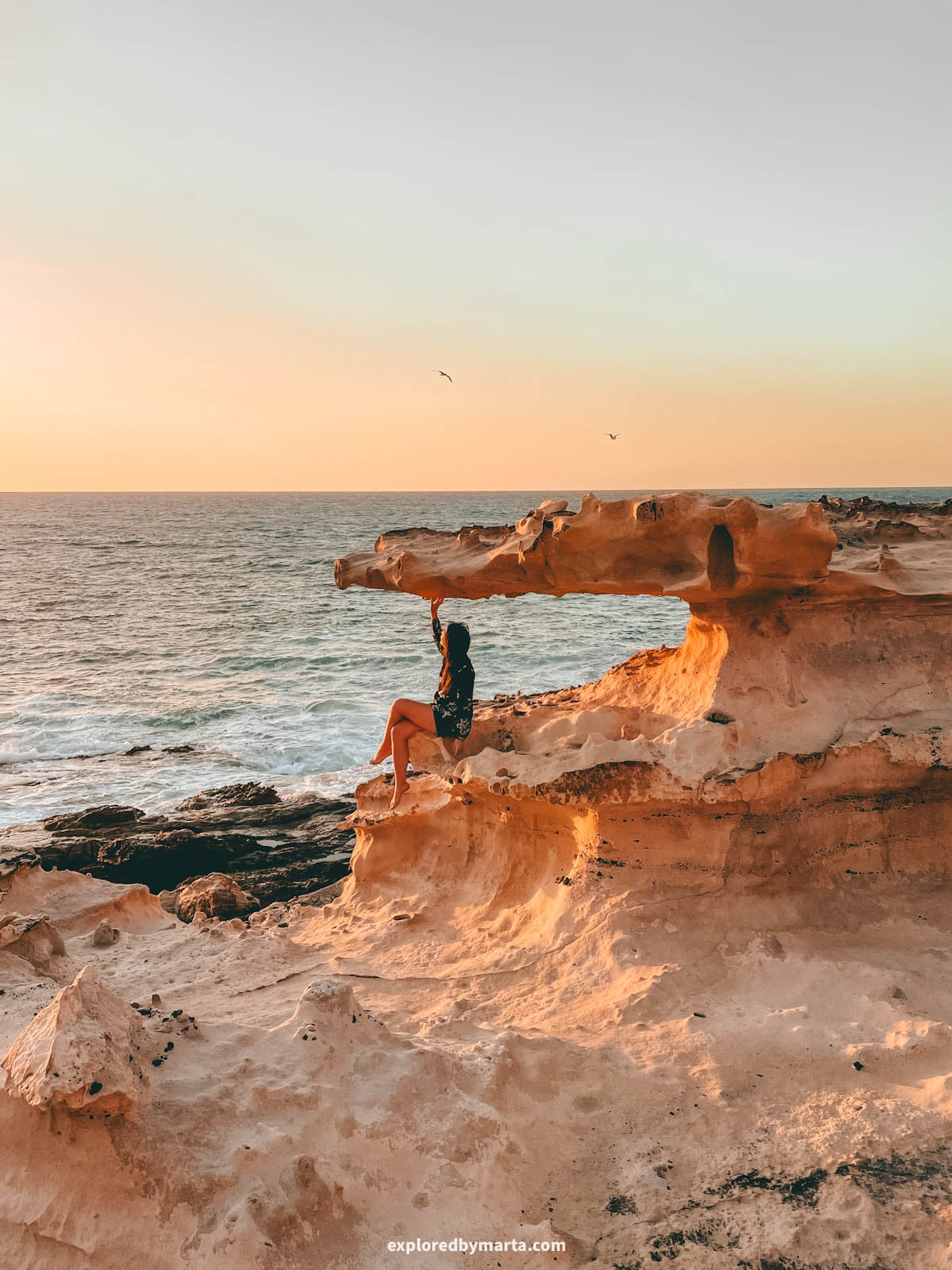
Best for: quiet picnics, sunsets, and the Crocodile Rock
Playa de las Hermosas is a little black sand and rock beach made for a quiet getaway – cliffs rise on both sides, sheltering you from the wind and the world.
If you prefer relaxing in quieter spots on the island, this tiny but iconic beach might be the one for you!
What makes it special hides just up the coast: the Crocodile Rock. Climb the cliff and hike a couple of minutes north, and you’ll stumble upon a rock formation that looks exactly like a crocodile with its mouth wide open.
The whole area is full of unique rock formations, but the crocodile truly steals the show!
Bring a picnic, stay for the sunset, and enjoy having a beach nearly to yourself – it’s a bit remote, but still easily reachable by car.
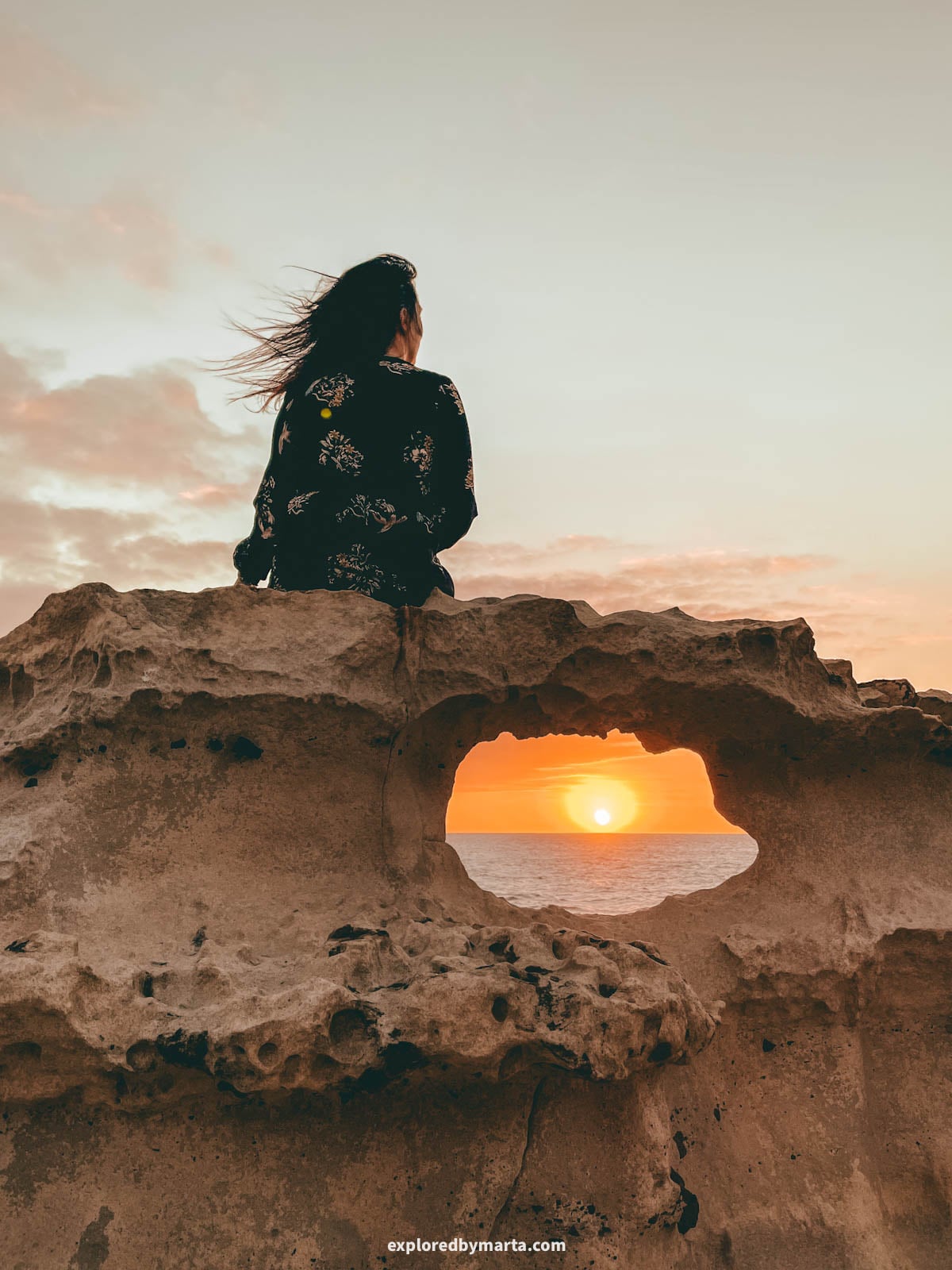
We came here right before the sun went down, and it was one of our favorite moments from our Fuerteventura trip! Just look at that golden glow!
Location: Playa de las Hermosas
12. Playa de la Pared
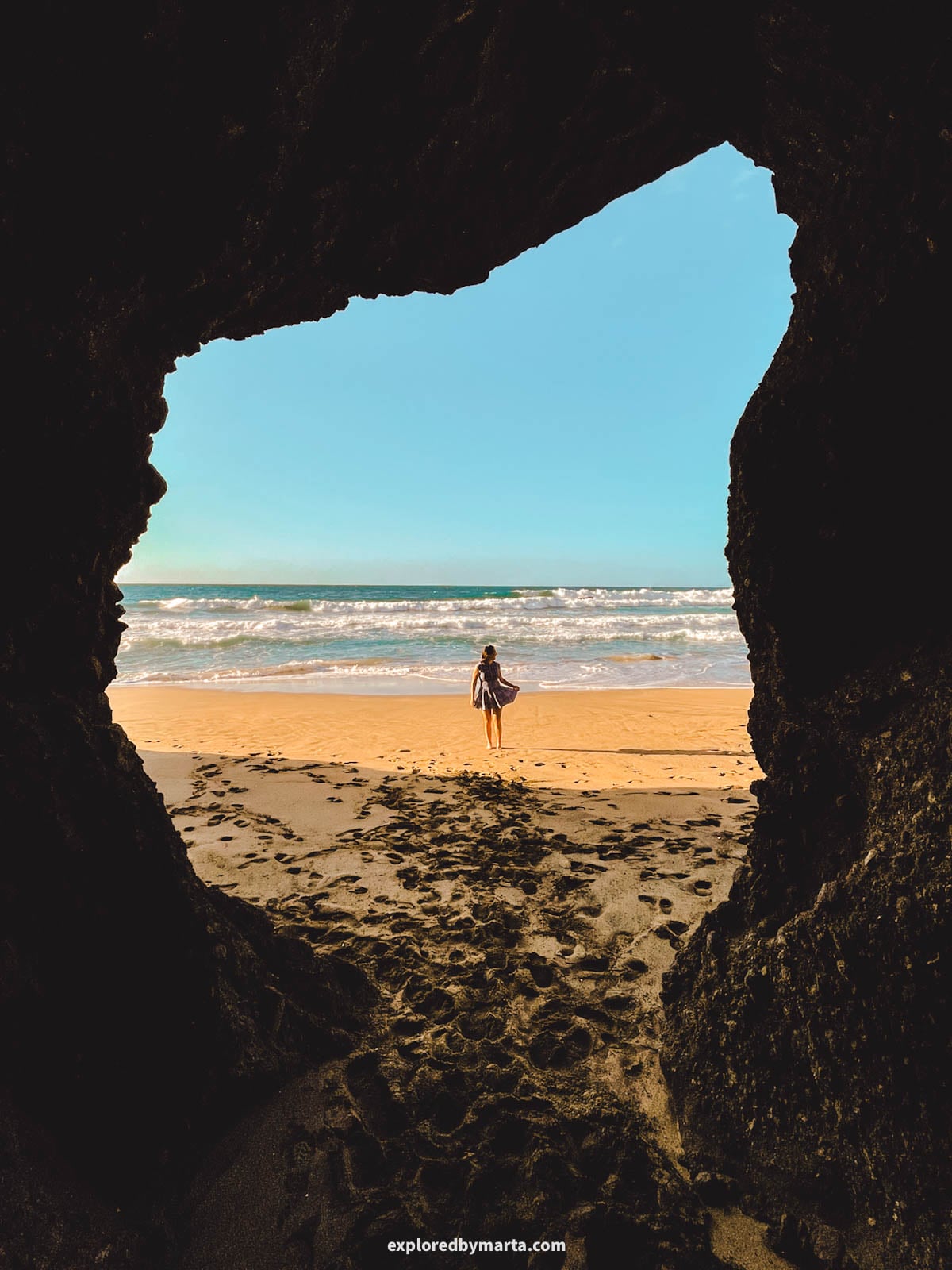
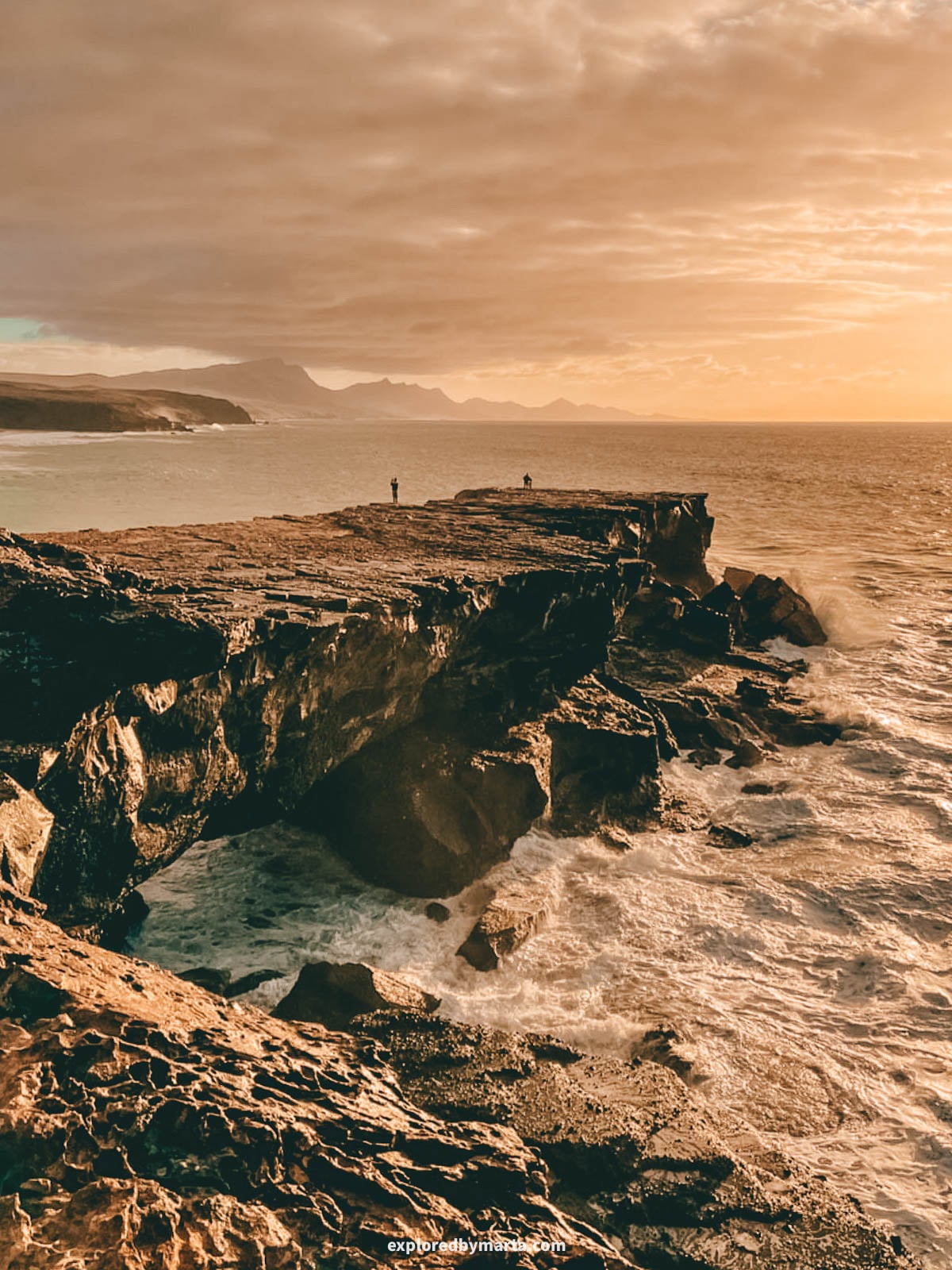
Best for: sunsets, beach walks, surfing, wave watching
Playa de La Pared sits at the narrowest point of the island, where you can watch the sun set into the Atlantic from a wild golden beach backed by volcanic rock cliffs.
This is one of the best sunset spots in Fuerteventura – the west-facing beach and the cliffs above it glow orange as the sun drops, and the famous Punta Guadalupe viewpoint above the bay makes it easy to take in the whole scene.
When we went to the beach, it was pretty windy, and the waves came crashing down against the Punta Guadalupe rock. It was raining seawater on the viewpoint, haha.
It’s also a well-known surf beach, with consistent waves that draw surf schools and independent surfers year-round. Swimming, though, needs care – the currents on this coast are strong, but on a calm day it is very much possible to enjoy the water, too.
Come in the late afternoon, watch the surfers, and stay for the sunset. There’s a restaurant near the beach for dinner with a view afterward. But if you come in the morning, definitely stop by Café Caveto – their coffee and cakes were simply amazing!
Location: Playa de La Pared
13. Playa de Garcey
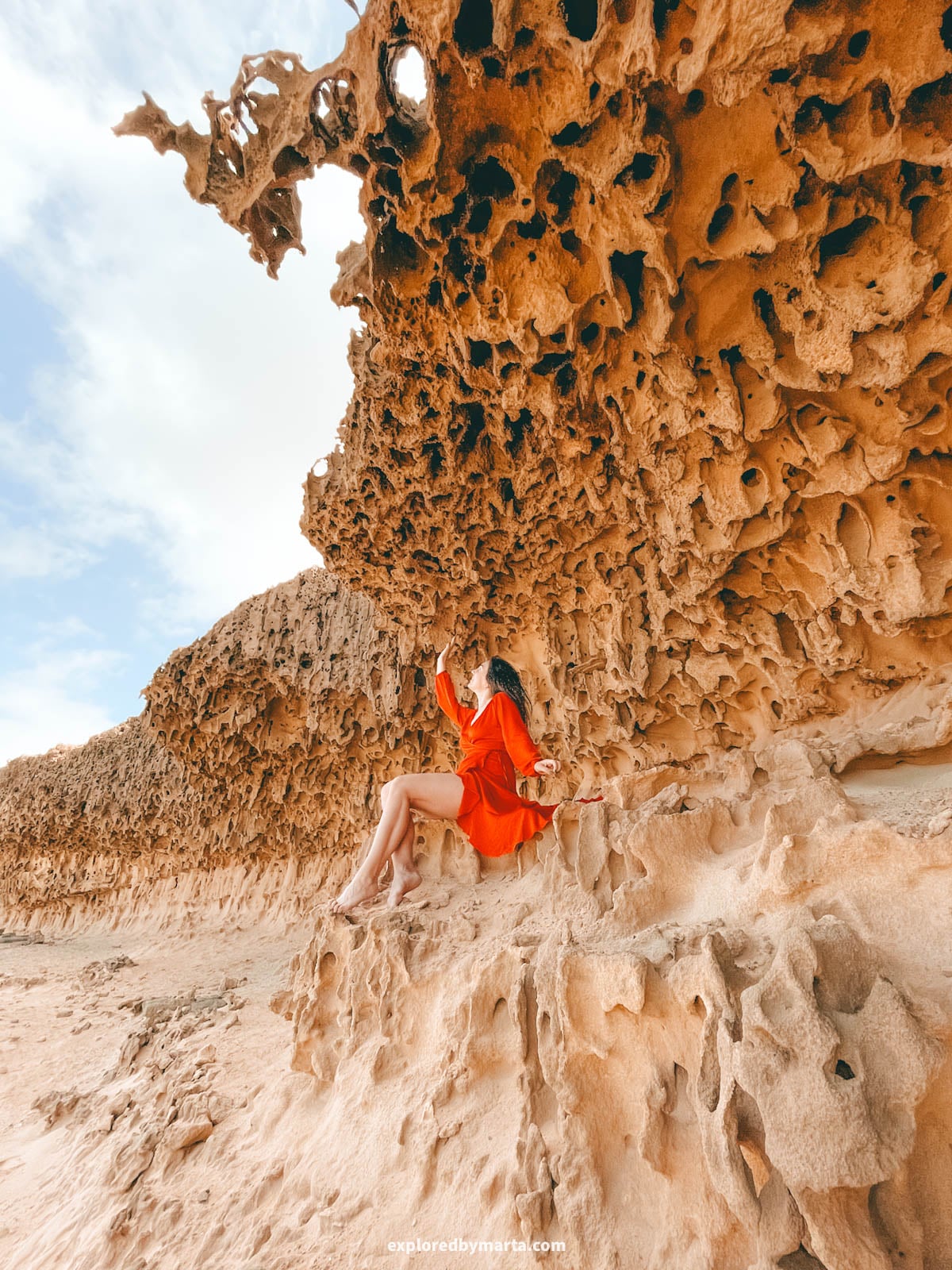
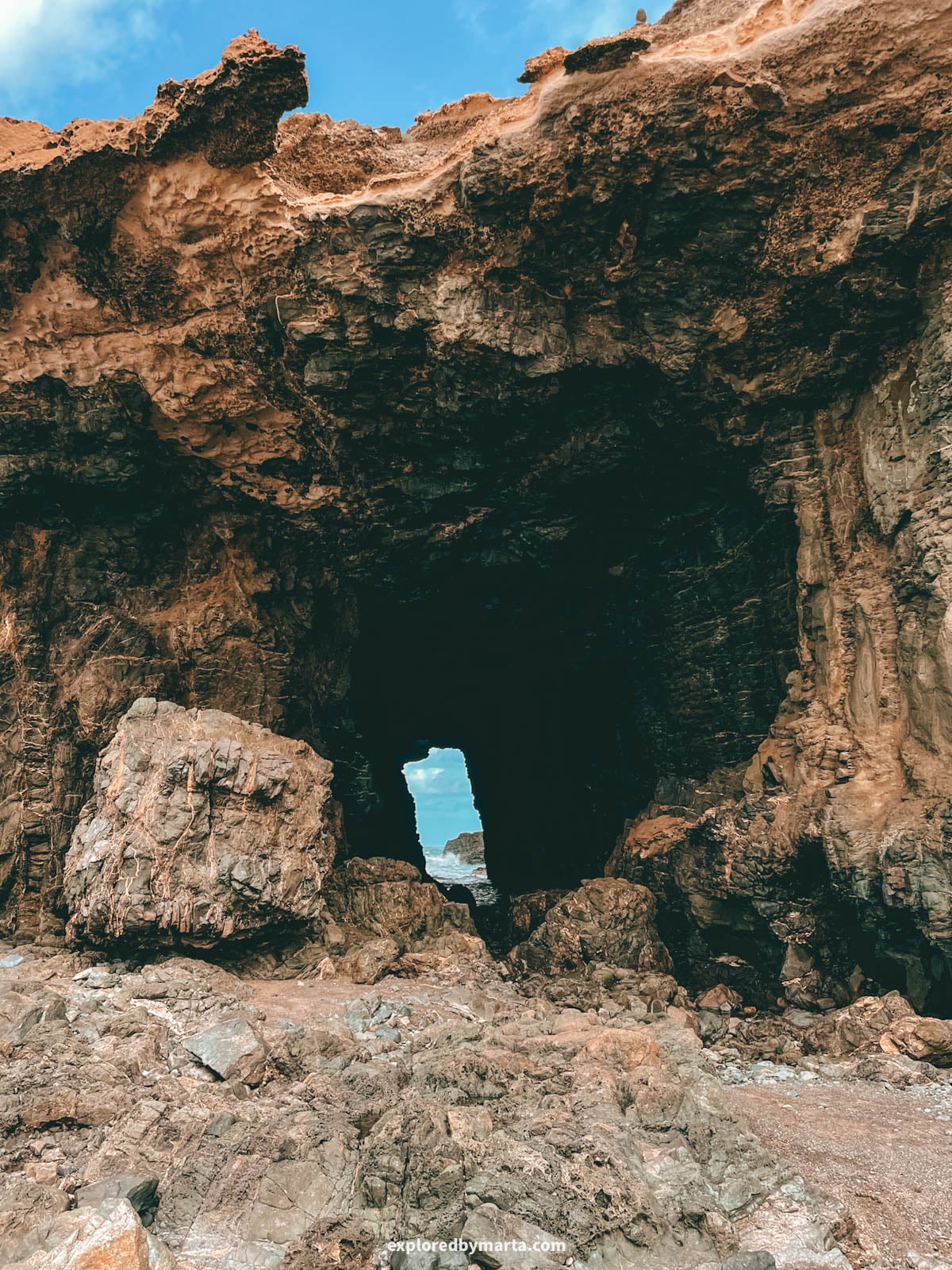
Best for: remote nature, wild coastline, and cave hunting
At first, Playa de Garcey may seem just like any other beach in Fuerteventura, but it has a couple of unique things you should know about.
First, it is home to the American Star shipwreck, which ran aground here in the nineties and stood rusting off the beach for years. The ocean has almost fully swallowed it now.
Second, right by the beach, you’ll also find a natural rock window carved right through the cliff, with the waves crashing on both sides. We saw some people walking through it. So cool!
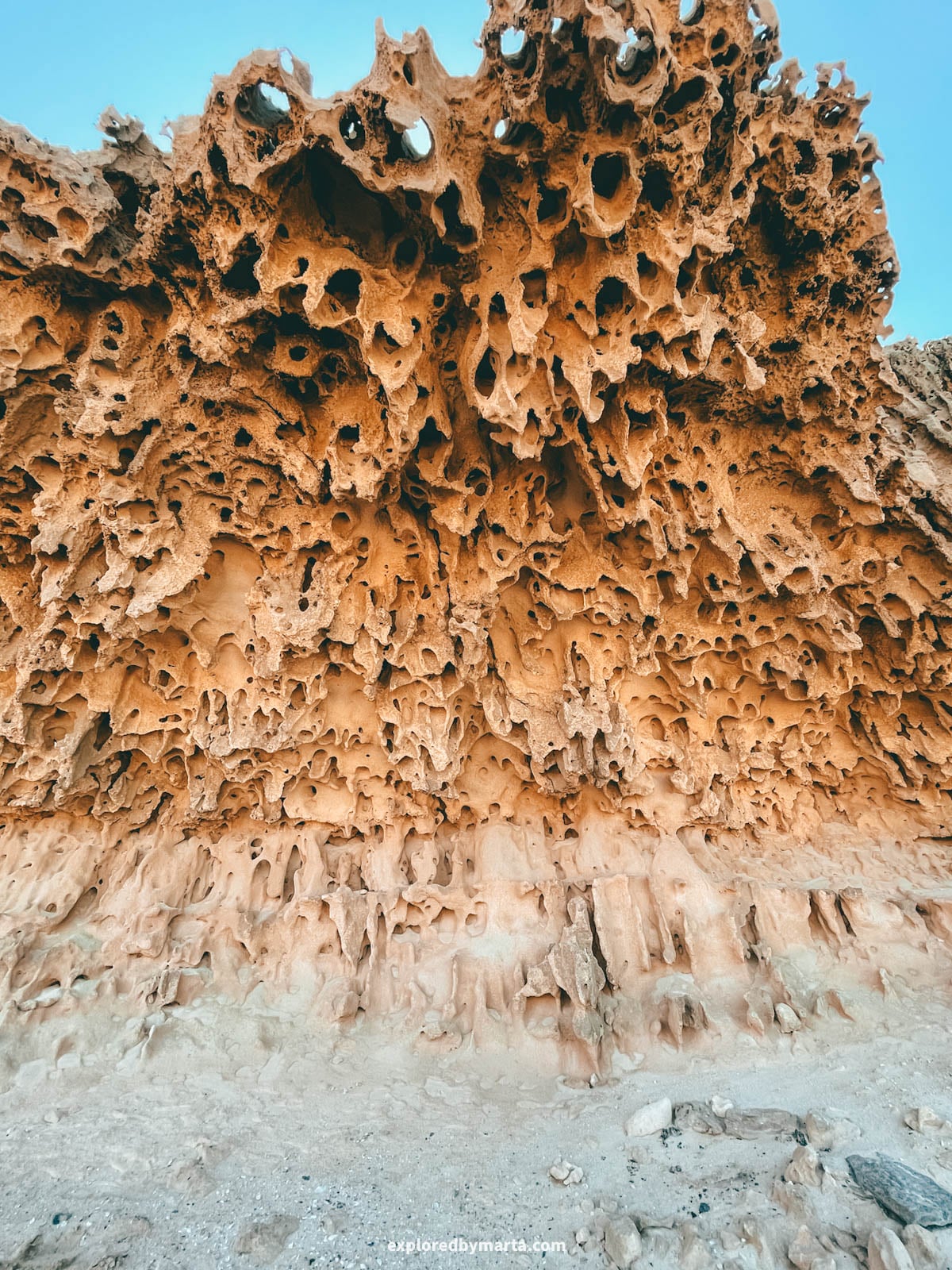
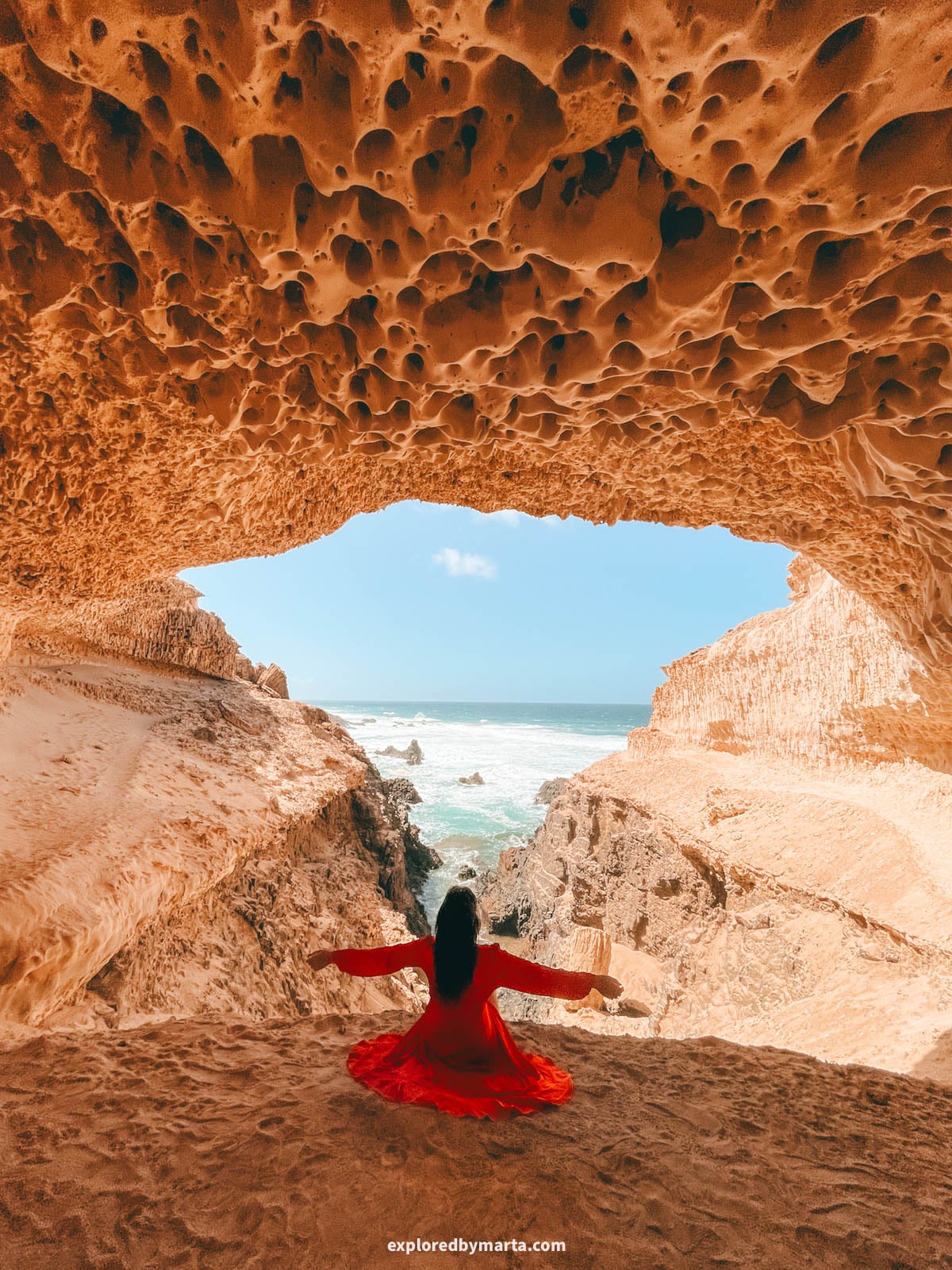
The third and coolest thing about this beach – about a 10- to 15-minute walk south of the beach (about 1 kilometer/0.6 miles) – you will find one of the coolest hidden gems in Fuerteventura: the Bee Cave.
I wrote a whole guide on how to find the Bee Cave with all the details. But even before you reach the cave, there are beautiful rock formations that look like beehives and honeycombs, carved into the cliffs. Pretty amazing what nature does here!
By the way, these holes are called tafoni. Sea spray gets into the soft sandstone, and when the salt dries, it slowly crumbles the rock from the inside. Nature’s art at its best!
Location: Playa de Garcey
14. El Puertito in Isla de Lobos
Best for: snorkeling, turquoise lagoons, and a car-free day trip
If you are better at trip planning than me, you will plan some time for a day trip to Isla de Lobos, a tiny protected island and biosphere reserve just off the north coast of Fuerteventura.
You can reach this island by a short boat or ferry ride from Corralejo town in the north.
The islet boasts gorgeous turquoise waters in many bays around it, but the star here is El Puertito, a shallow turquoise lagoon ringed by volcanic rock.
On a sunny day, the colors look tropical, and the calm, clear water is perfect for snorkeling.
The ferry takes about 15 minutes, and visitor numbers are limited to protect the island, so book your crossing (and the free visitor permit) ahead!
There’s almost nothing on Lobos Island – one tiny restaurant, a lighthouse, walking trails, and a lot of untouched nature, so bring water, sun cover, and snacks.
By the way, we had everything planned out, but on the day of our trip, we missed the ferry, so no Isla de Lobos for us this time. 🥲
Location: El Puertito
15. Playa de los Ojos
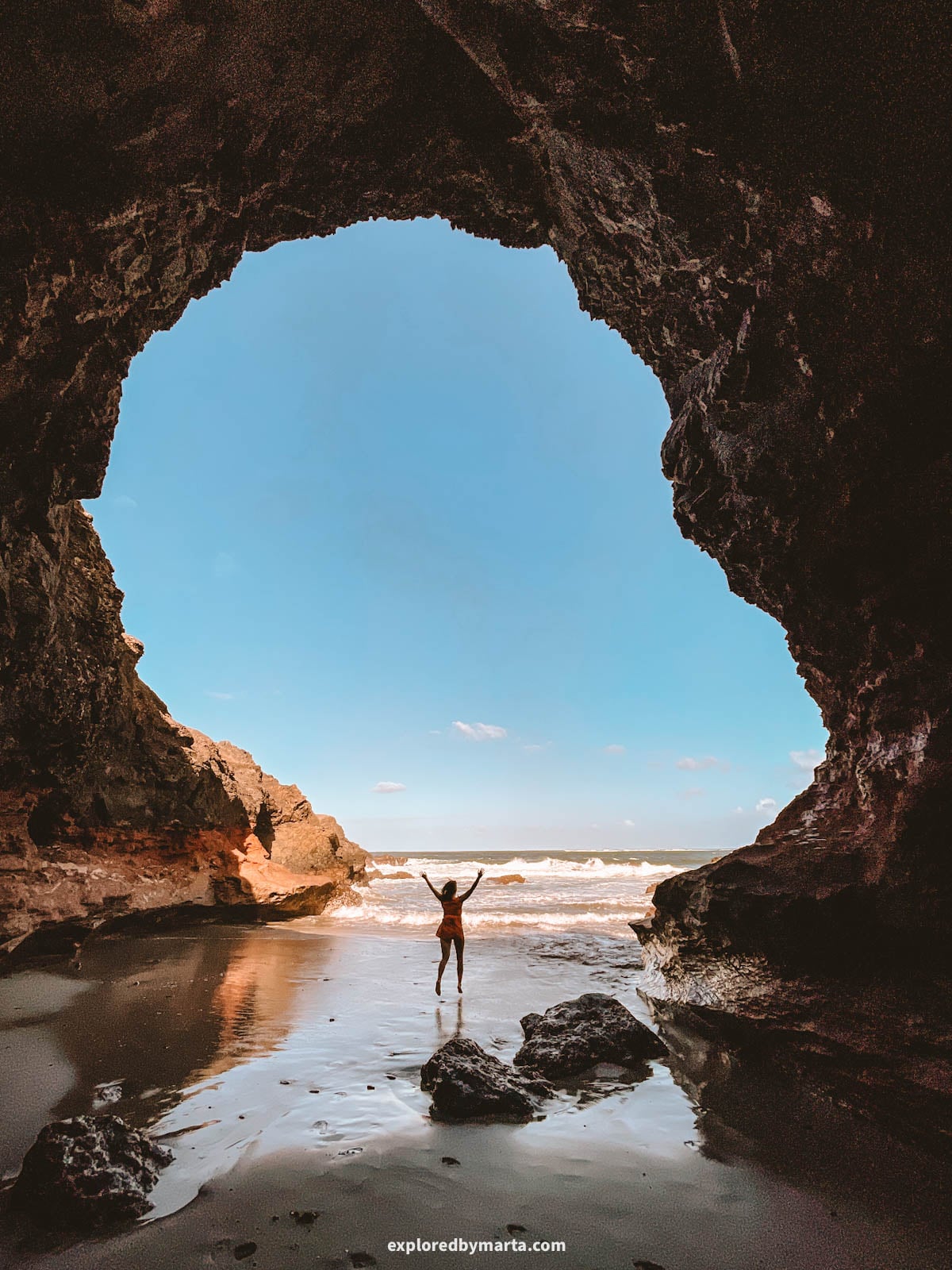
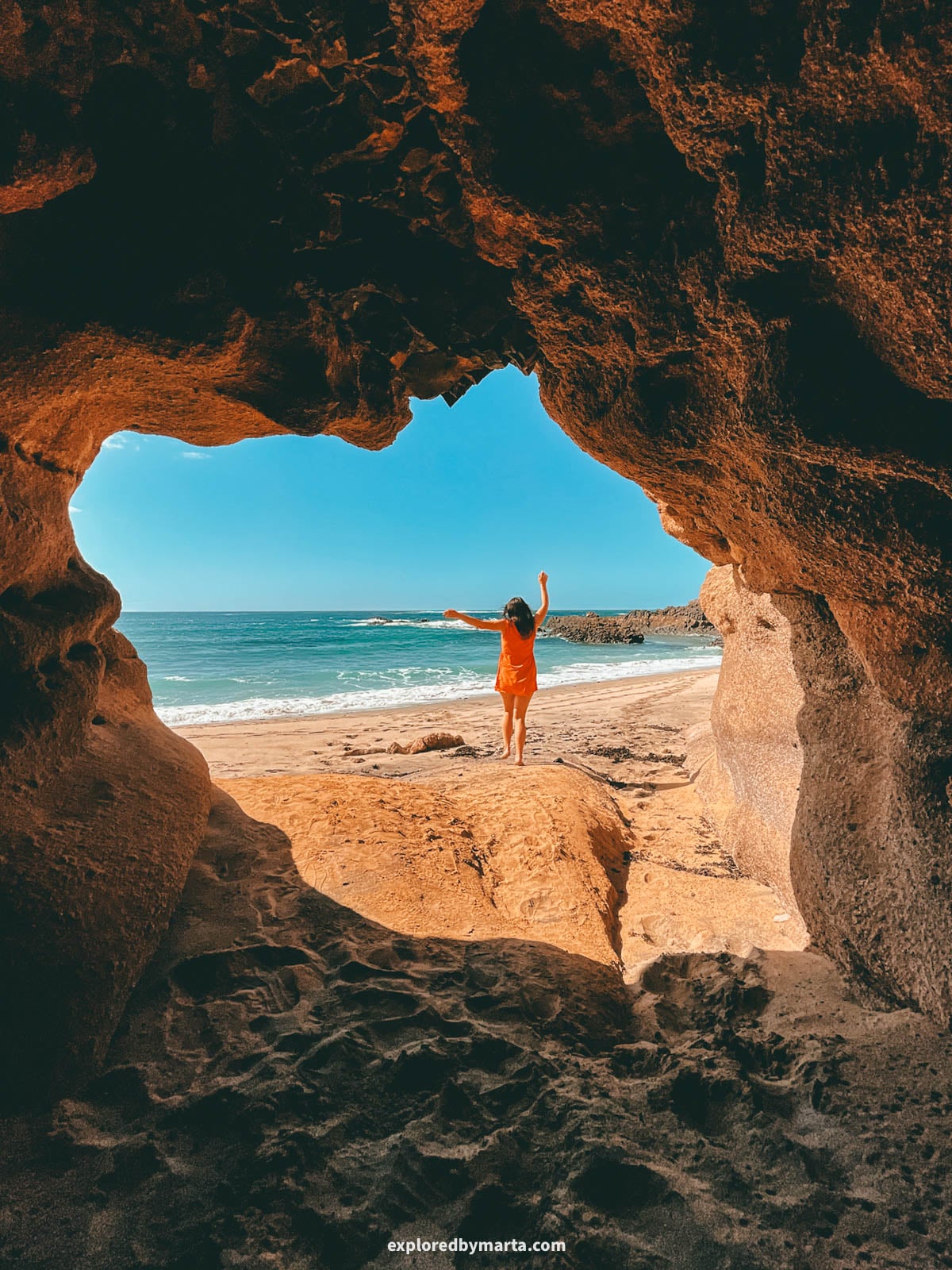
Best for: remote beach days far from crowds, sunbathing and sea cave exploring
Playa de los Ojos is a sandy cove at the far southwestern tip of the island, near the Punta de Jandía lighthouse – about as far from everything as a beach in Fuerteventura can get.
So, if you are a real fan of remote places, this is the beach for you!
Low cliffs wrap around the beach and block the wind, so the cove feels sheltered and a bit hidden. On calm days, it really is a great spot for a swim.
The bonus for explorers: there are two caves at the beach – a bigger one you can reach during low tide, and a smaller one that’s accessible more or less any time.
We came to this beach right when the tide came in, so there were some waves, but not too big, so we were able to visit both caves without any problems.
Getting to Playa de los Ojos means a long drive on a dirt road past Morro Jable, which is not for everyone. But you can combine your trip with a visit to Playa de Cofete and the nearby Faro de Jandía lighthouse.
If you make it, you’ll likely share the cove with only a handful of people.
Location: Playa de los Ojos
FAQs about the best beaches in Fuerteventura
What is the most beautiful beach in Fuerteventura?
Playa de Cofete is the most spectacular – a wild, endless beach below the Jandia mountains. For classic postcard beauty with calm water, Playa de la Concha in El Cotillo is regularly named among the best beaches in Europe. At high tide, white sandbars at Playa de Sotavento are gorgeous.
Which beaches in Fuerteventura are best for swimming?
Head to the sheltered ones: Playa de la Concha and the El Cotillo lagoons for calm, shallow turquoise water, Caleta de Fuste for families, and Playa del Matorral in Morro Jable for an easy resort beach day. The wild Playa de Sotavento lagoon is also a great option.
Can you swim at Playa de Cofete?
Swimming at Cofete can be dangerous. The currents are very strong, and there are no lifeguards, so the beach is for walking and admiring the wild scenery, not the best for going in the water, unless it’s a calm day and you stay by the shore.
What is the white stuff on Popcorn Beach?
The popcorn pieces are rhodoliths – a coral-like marine algae washed ashore over thousands of years. They are a protected part of the beach, so taking them home is forbidden.
Which side of Fuerteventura has the best beaches?
Both, for different reasons. The east and south have the calm, swimmable golden sand beaches like Sotavento and Playa del Matorral, while the wild west coast features dramatic black sand beaches with sea caves and empty coves with big waves.
Read more about traveling in the Canary Islands
After four weeks of beach hunting on the island, my biggest takeaway is this: don’t pick just one style. The magic of Fuerteventura is having a calm turquoise lagoon in the morning and a wild, empty black sand cove by sunset.
The famous beaches like Cofete and Corralejo are famous for good reason. But some of my favorite days were on the beaches nobody talks about, like Playa de Solapa or Playa de las Hermosas – so leave a little room in your plans for those too.
If you’re planning a trip to Fuerteventura or the Canary Islands and want to learn more about these volcanic islands, check out my other guides below.
Read more about Fuerteventura:
- Secret places and hidden gems in Fuerteventura
- Amazing rock formations in Fuerteventura
- The best caves to visit in Fuerteventura
- The best photo spots in Fuerteventura
Read more about the Canary Islands:
- 23 best things to do in Lanzarote, Spain (bucket list spots)
- 20 best photo spots in Lanzarote, Spain (& locations!)
- 15 unreal rock formations in Lanzarote, Spain
- 7 best caves in Lanzarote, Spain (lava tubes & sea caves)
PIN FOR LATER!