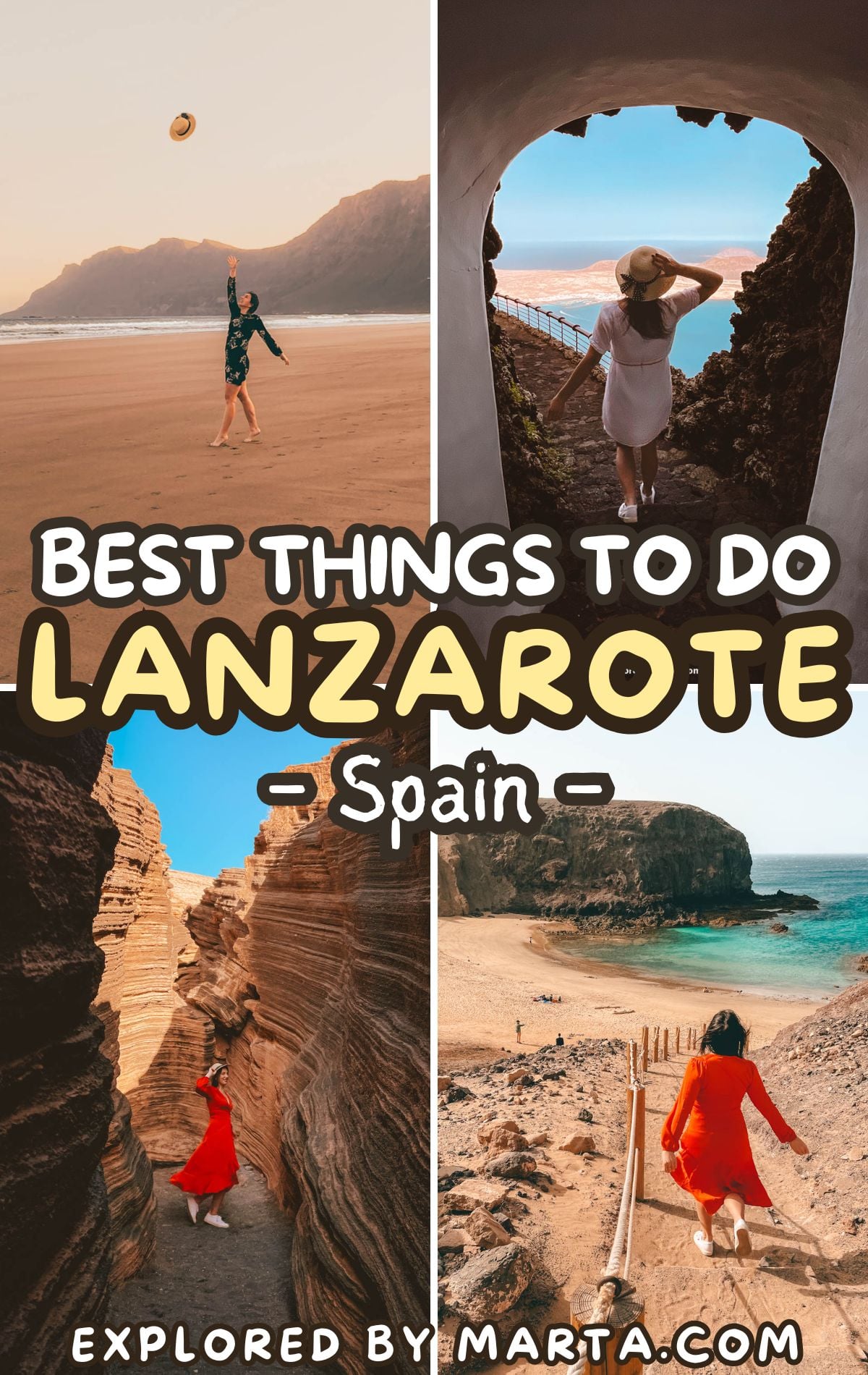

23 best things to do in Lanzarote, Spain (bucket list spots)
This post may contain affiliate links. If you use these links to make a purchase or booking, I may earn a small commission at no extra cost to you! Thank you for your support!
Did you know that in Timanfaya National Park, the ground is so hot just below the surface that a restaurant there grills its food straight over the volcano’s heat? That’s just one of the many wild things to do in Lanzarote.
This is not your typical beach island. Lanzarote is entirely volcanic, and its landscape of black lava fields, red craters, and green lagoons feels less like Spain and more like another planet.
We spent four weeks exploring every corner of the island, from the famous volcanoes and beaches to the quiet spots most visitors drive straight past. This list brings together the very best of what Lanzarote has to offer.
From volcanoes and lava caves to golden beaches, local wine, and the odd hidden gem, there’s something here for every kind of traveler. Get yourself a rental car, and let’s get into it!
Lanzarote at a glance: what to know before you go
A little context first, because Lanzarote isn’t quite like anywhere else you’ve been – and knowing a bit about it makes everything on this list click into place.
1. Tour the Fire Mountains in Timanfaya National Park
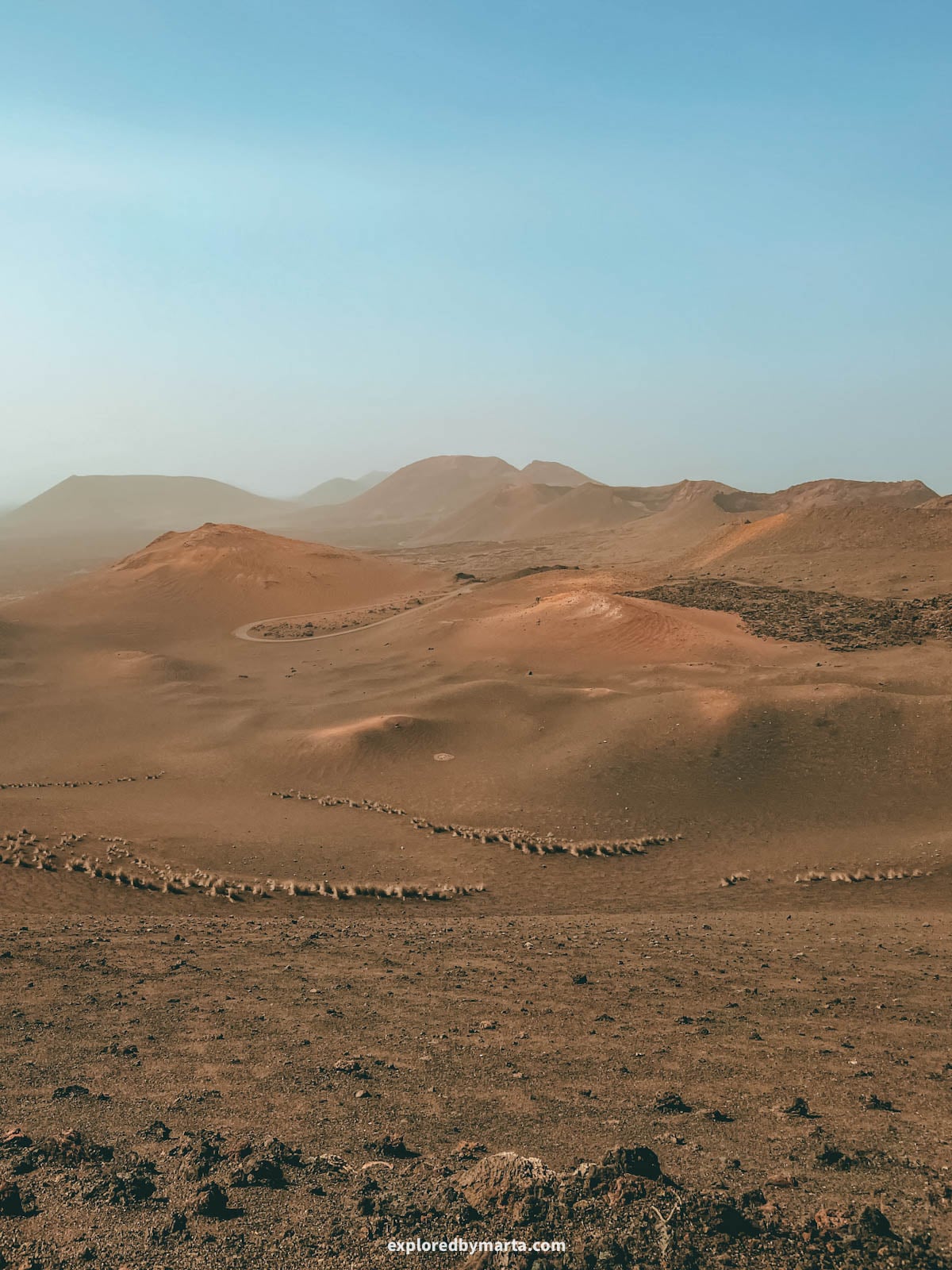
If you do one thing in Lanzarote, make it Timanfaya. This is the island’s showpiece – a national park of raw, red-black volcanoes and frozen lava fields that looks like the surface of another planet.
The whole park was created by the eruptions of 1730 to 1736, which buried a quarter of the island in lava. The ground here is still volcanically hot just below the surface!
To protect the fragile landscape, you can’t drive or wander through the park on your own, so the way you can experience this alien place is by joining a tour: Route of the Volcanoes.
Entry is 30 EUR for adults, and it includes a roughly 30-minute bus tour through the volcanic landscape along a road winding through the craters and lava, as well as demonstrations back at the visitor center.
The bus ride was pretty thrilling, and I thought we might end up in one of the craters because of how fast the driver went and how narrow and winding the paved road is that goes along all the volcanoes, haha.
Then after the bus ride (by the way, they have commentary in multiple languages along the way), back at Islote de Hilario (the visitor center), we had guides show us demonstrations of how volcanic heat is very much present in this area.
They tossed dry hay into a pit, and it burst into flame. Then they poured water into a hole in the ground that erupted back out just like a geyser in Iceland. We also got to see a volcanic heat oven that is used to grill meat and vegetables in the nearby restaurant.
This was all pretty mindblowing, so while a bit pricey, I think the tour is definitely worth doing for all the things you get to see, learn, and experience.
This is one of the busiest attractions on the island, so book your tickets well in advance for a set time slot (do not be late!), drive to the entrance of Timanfaya Park, then head to the visitor center and wait for your bus tour to depart. Experience of a lifetime!
If you don’t have a car, you can join a guided tour to Timanfaya with pick-up service!
Location: Timanfaya National Park
2. Eat food grilled over volcanic heat at El Diablo
If you happen to do the Volcano Route around lunchtime, don’t go home just yet!
Right in the middle of Timanfaya, at the Islote de Hilario, sits one of the most unusual restaurants you’ll ever eat at: El Diablo, where the food is grilled over the natural heat of the volcano itself.
A volcano oven! 🤯
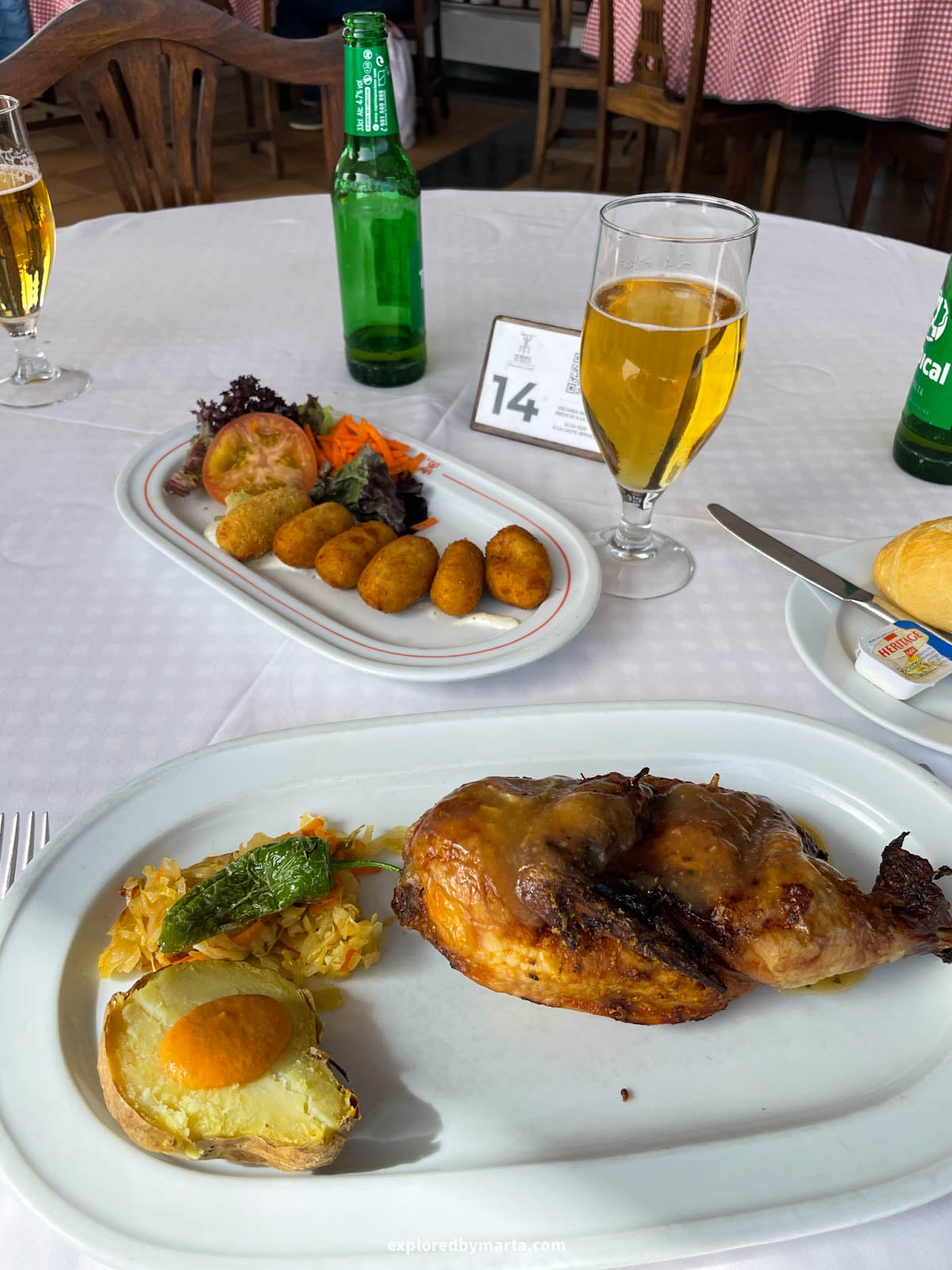
There’s basically a large iron grill that sits over an open pit dug straight into the ground, and the heat rising from below – around 400 to 600 degrees Celsius (750 to 1,110 Fahrenheit) – cooks the meat and fish.
No gas, no charcoal, just the volcano.
If you do the Volcano Tour, you will be able to see the volcanic oven, but you have an option to actually taste the volcanic meat or vegetables if you stay for lunch!
After the tour, we were pretty tired and hungry, so we decided to stay for early lunch. We ordered volcano grilled chicken with vegetables plus some Spanish tapas, and I got a barraquito drink.
The food is quite simple, and honestly the setting is the actual main course.
The restaurant building itself is the work of César Manrique – a Lanzarote-born artist who shaped how the whole island looks, banning high-rise resorts and building his art straight into the volcanic landscape.
This restaurant is one of his many creations in Lanzarote. It’s all glass and circular walls, so you look straight out over the lava fields while you eat. Not a bad view!
You don’t need a separate ticket – it’s inside the park, so you reach it with your Timanfaya entry. Have a coffee at least, even if you don’t stay for a full meal!
Location: El Diablo restaurant
3. Tour the underground lava tube, Cueva de los Verdes
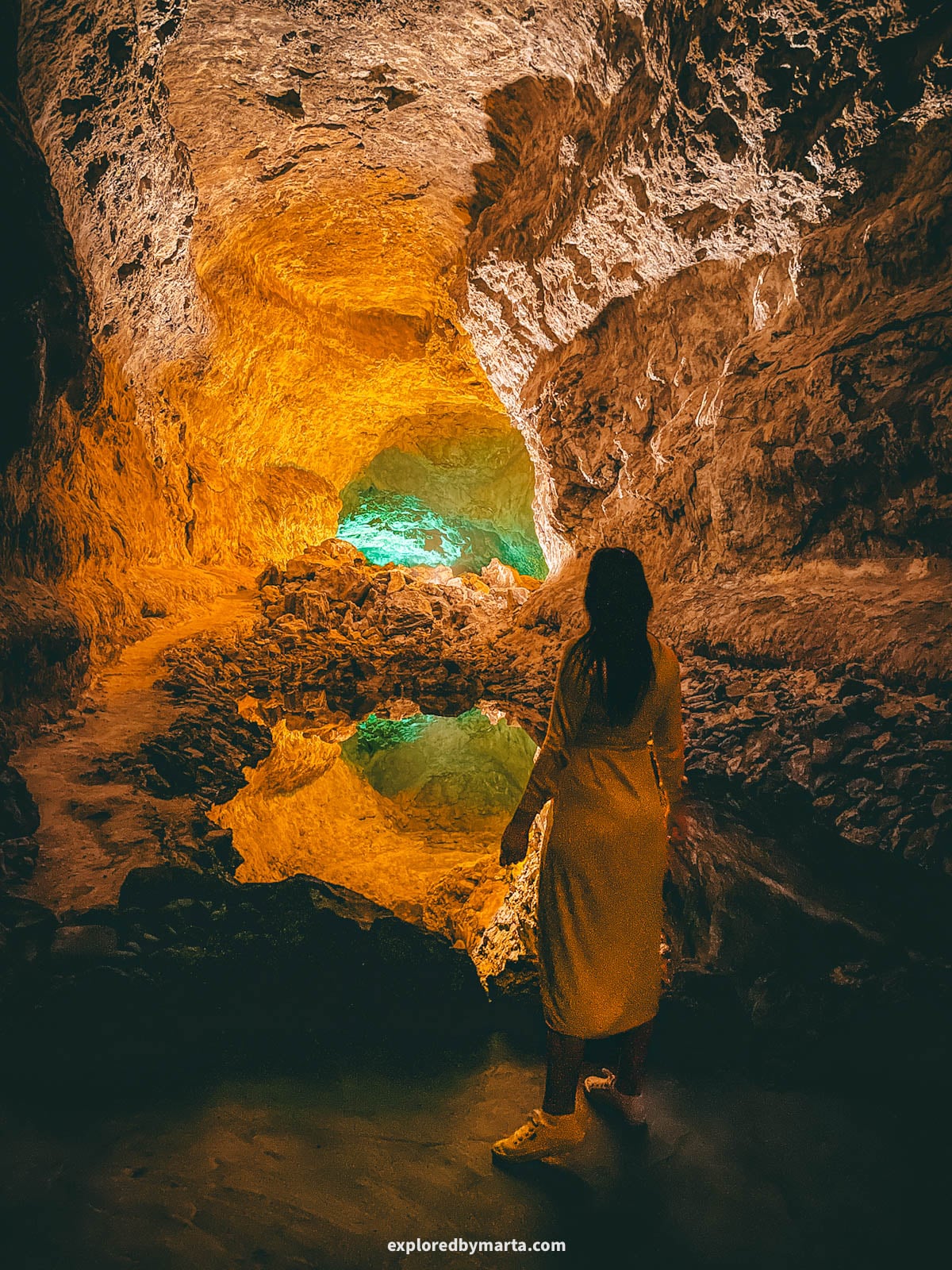
Cueva de los Verdes is an underground lava tube you can explore on a guided tour, and it’s one of the most spectacular things to do in Lanzarote – all sculpted rock, deep shadows, and clever lighting. This was my favorite cave we visited on the island!
Cueva de los Verdes formed thousands of years ago when the Monte Corona volcano erupted and sent a river of lava racing to the sea, leaving behind a tube more than six kilometers (four miles) long.
The tube runs all the way out under the Atlantic Ocean, ending in a 1.5-kilometer (0.9-mile) underwater section called the Túnel de la Atlántida – the longest known volcanic submarine lava tube on Earth. Unbelievable.
We were really excited to explore an underground lava tube, and the tour did not disappoint!
The interior lighting was designed by artist Jesús Soto to bring out the textures and colors of the rock, so the whole walk is set up to look dramatic. There’s a famous optical illusion near the end (can you see it in the photo above?).
There are some narrower sections with lower ceilings, but overall the cave is very much walkable.
Entry is 17 EUR for adults, and I highly recommend booking tickets in advance for a set time slot. This is one of the busiest spots on the island, so do not miss it!
Location: Cueva de los Verdes
4. Try volcanic wine in the famous La Geria vineyards
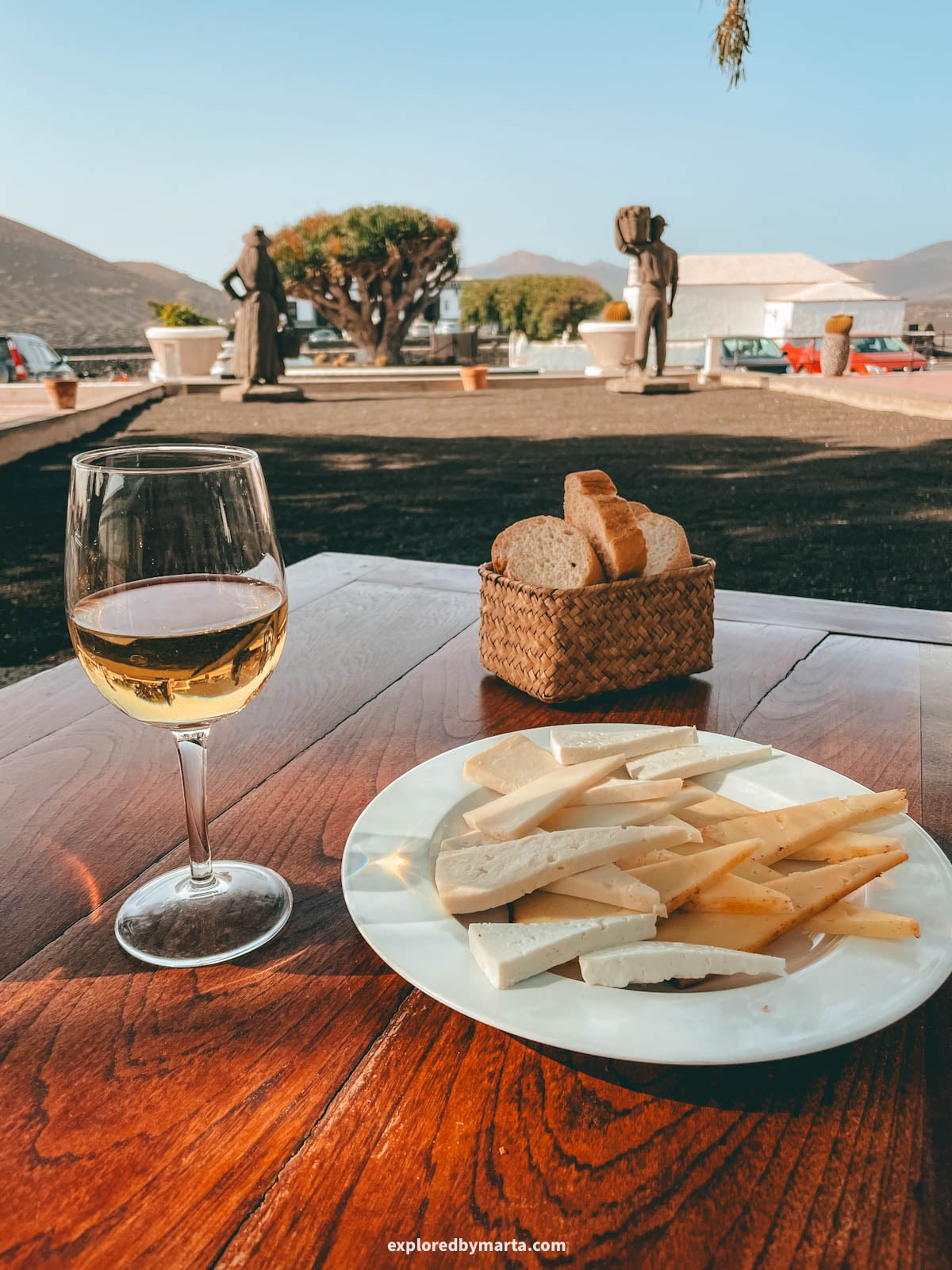
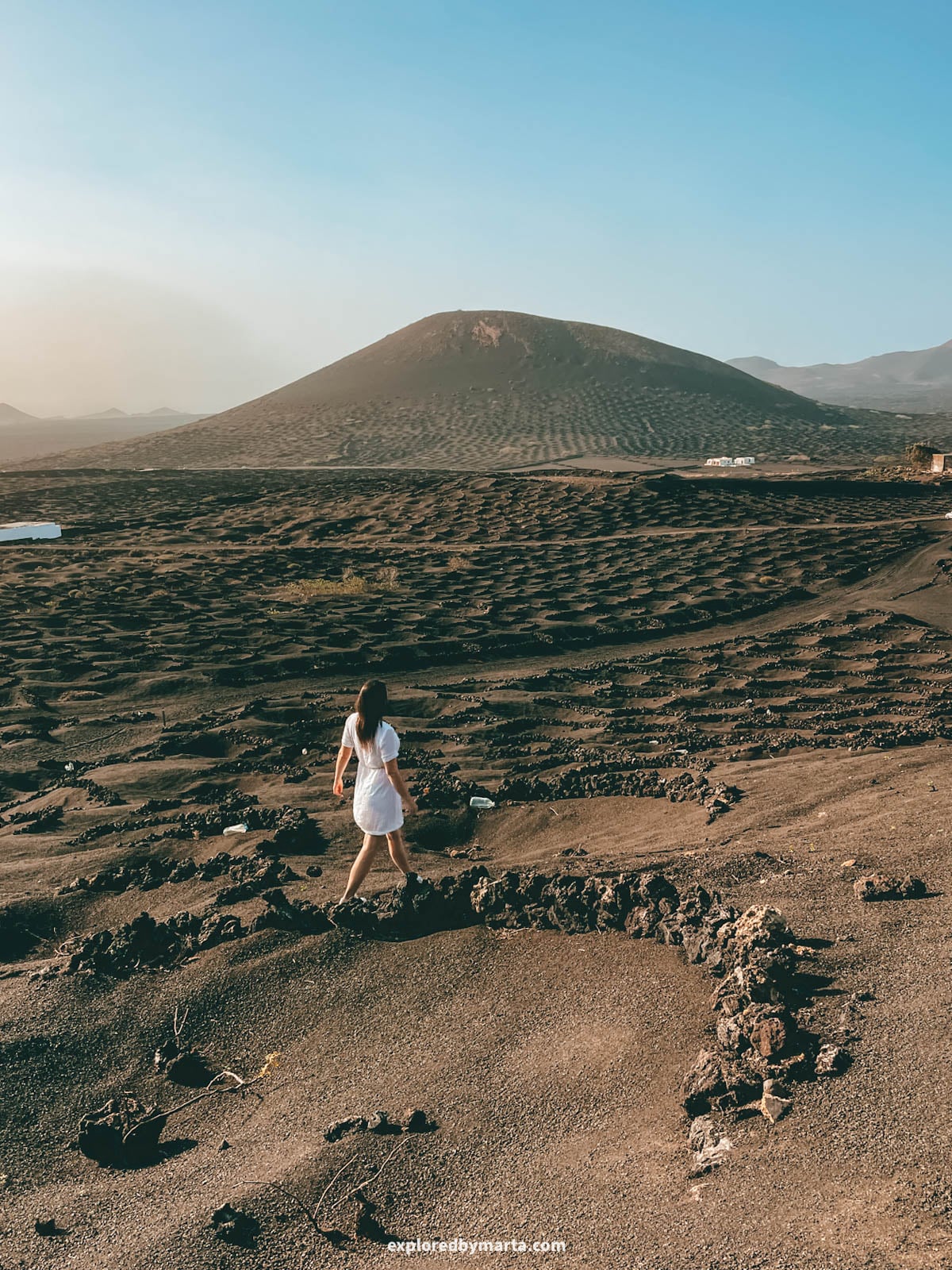
Have you ever seen a vineyard that looks like this? La Geria is a whole valley of vines, each one growing in its own black lava pit – a landscape you won’t find anywhere else on Earth.
After the 1730s eruptions buried this land in ash, farmers dug thousands of hollows down to the soil below, then ringed each one with a low stone wall to block the relentless wind. That’s what gives the valley its strange, cratered look.
Here’s the clever part: the black volcanic ash traps what little moisture there is, which is how the vines grow with almost no rain. And those black pits produce some seriously good wine!
The best way to experience it is to stop at a bodega (we went to Bodegas Rubicón) for a wine tasting and some tapas, then wander out among the pits. The local Malvasía white is the one to try.
I drink a glass of white wine from time to time, but this was seriously so good and so memorable! I’d go back to Lanzarote just to grab a bottle of this wine!
Location: La Geria
5. Visit the unique Las Grietas volcanic cracks
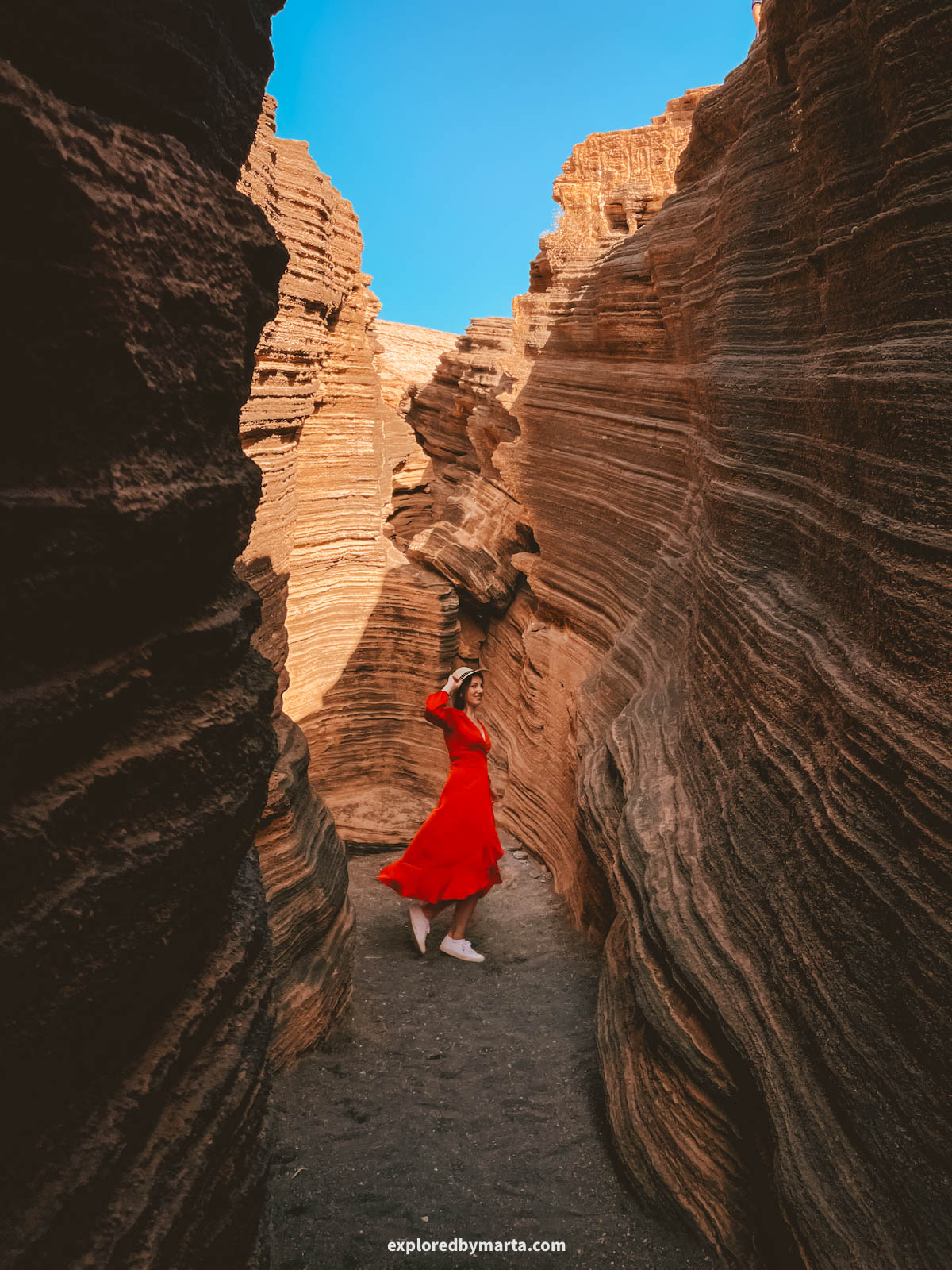
Las Grietas means “the cracks” in Spanish, and that’s exactly what you get – deep, narrow slots carved into the side of the Montaña Blanca volcano, just wide enough to walk right into.
Erosion opened these cracks in the volcanic rock and has been slowly widening them ever since, leaving a maze of twisting corridors tall enough to swallow you up.
It’s a quick, free, and genuinely fun stop. Definitely one of my favorite places to take photos of the unreal Lanzarote wonders!
If you walk from the parking area, the first crack you reach is the widest and most popular, so it’s where everyone stops. But follow the dirt path, and you’ll find more – narrower, twistier, and much quieter.
There are no signs, so use the map pins below and switch to satellite view to find them. We came in the morning when the sun spilled down into the cracks, and nearly had the place to ourselves. It does get more crowded during the day.
Location: Las Grietas – Parking lot
6. Drive the iconic LZ-67 road through the lava fields

Even if you never set foot inside Timanfaya on the tour, there’s one part of it everyone can experience for free: driving the LZ-67, the road that cuts straight through the lava fields between Yaiza and Mancha Blanca.
For long stretches, black and red volcanic rock rises on both sides of the road as far as you can see, with no buildings, no trees, nothing – just the raw aftermath of the eruptions. It’s genuinely humbling.
This is the “looks like another planet” place.
This is where the scale of what happened here really lands. You’re driving through a quarter of an island that got buried in lava, and from the car window it looks like the ground is still smoking!
Location: LZ-67 through Timanfaya
7. See the albino crabs at the Jameos del Agua oasis
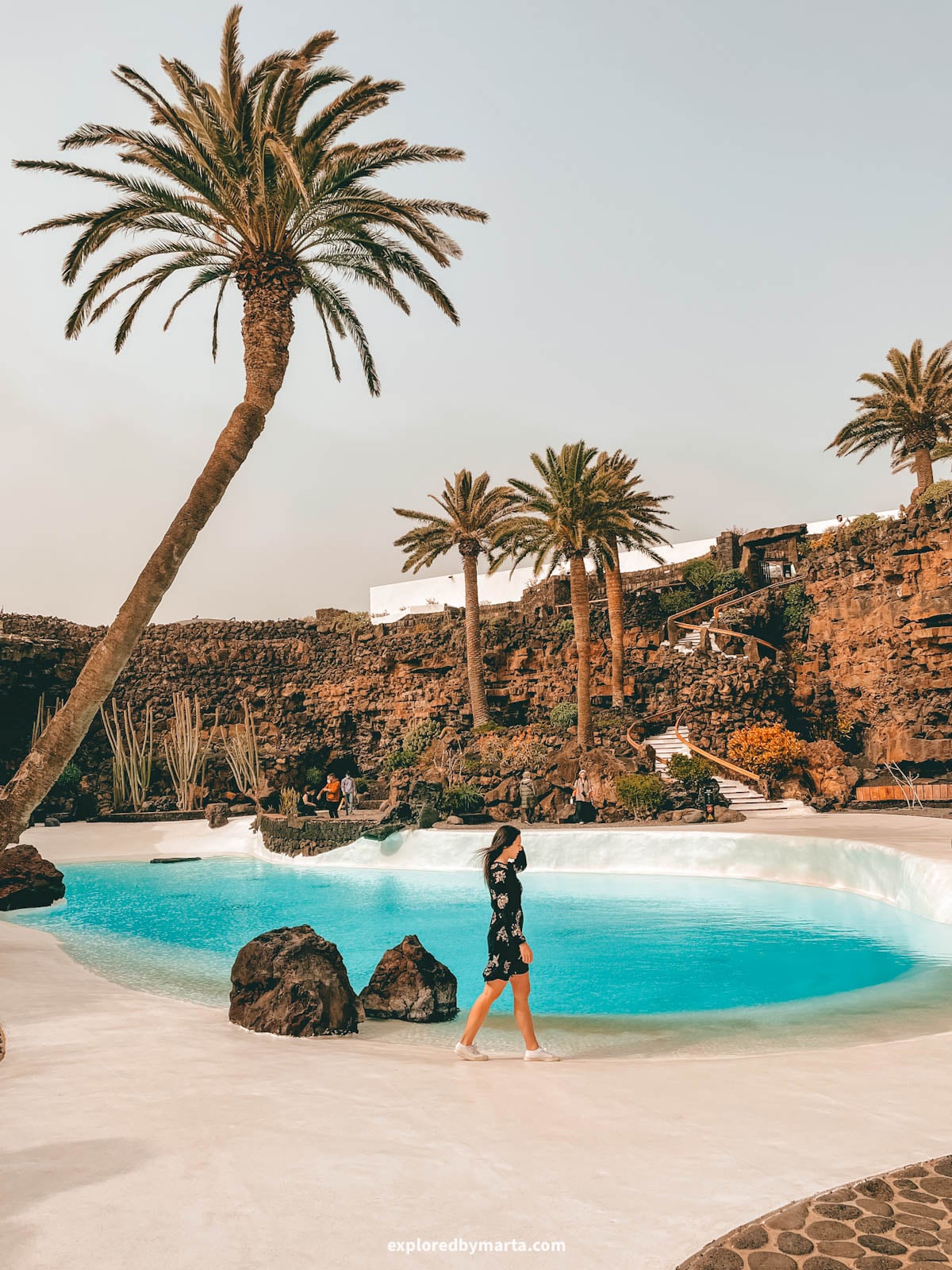
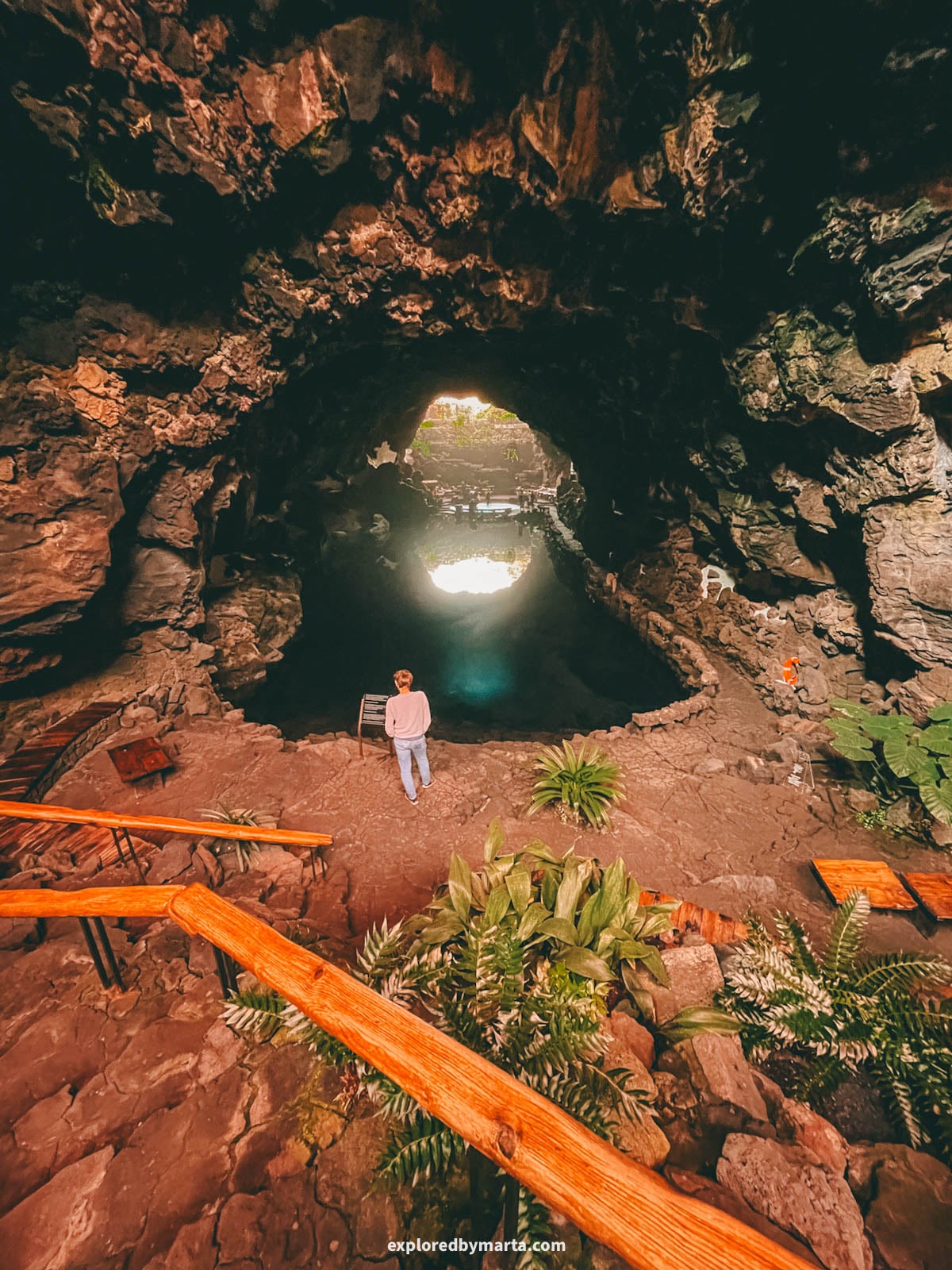
Just a couple hundred meters from Cueva de los Verdes, and part of the very same lava tube, Jameos del Agua is another César Manrique masterpiece – an oasis he built right inside the collapsed volcanic rock.
As you enter, you go down into the lava tube section, where there’s a still, crystal-clear natural lake. Look closely, and you’ll spot tiny blind albino crabs living in it – a rare species found nowhere else on Earth.
When we passed through the lava cave, at the end of the tunnel we found a café with tables right under the cave ceiling. It was morning, so we sat down for a cup of café con leche and a Spanish pastry – coffee inside a volcano, basically. No big deal, haha.
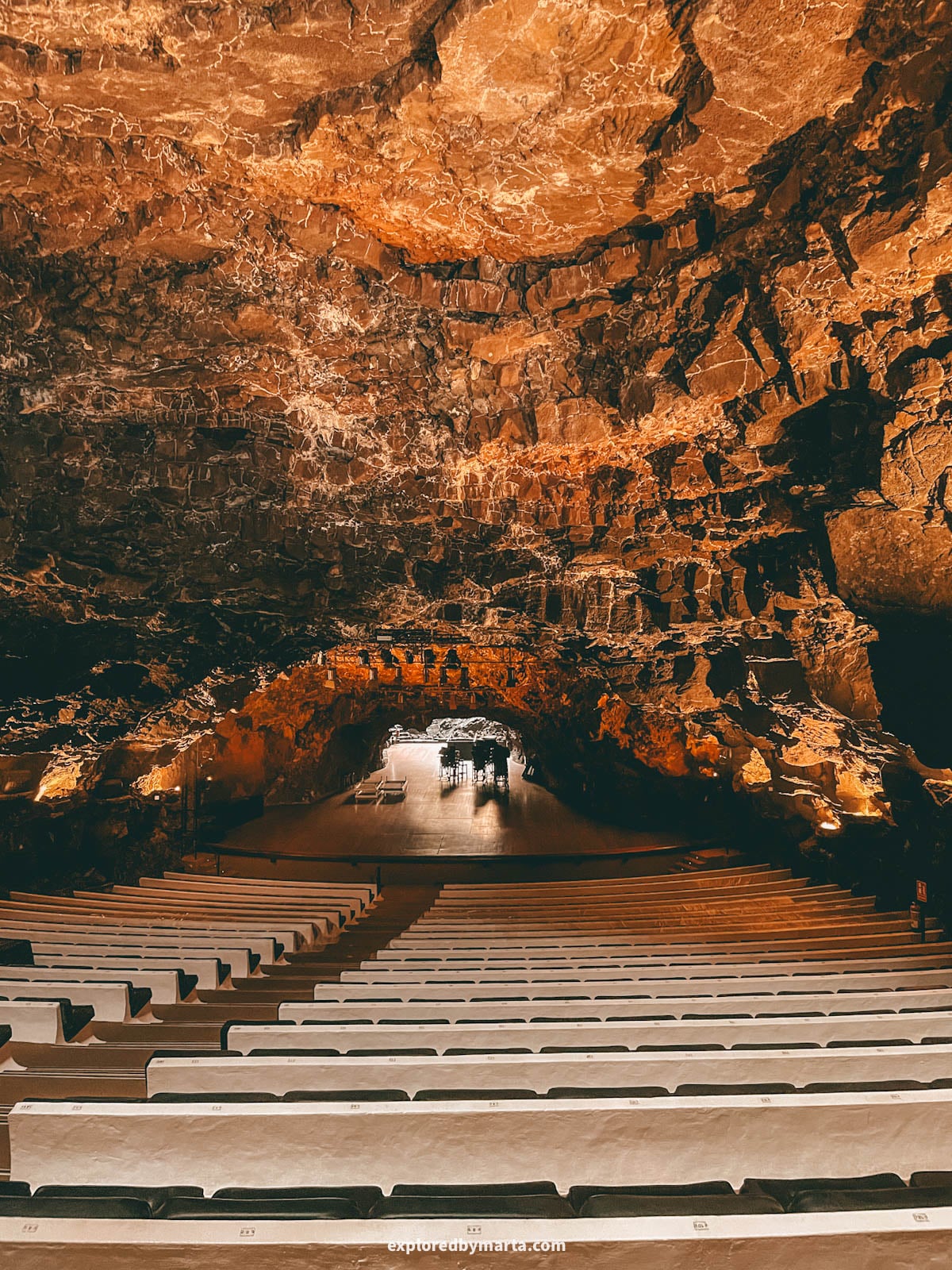
After the cave and café section, you reach another showstopper: the oasis at Jameo Grande. It’s a bright blue man-made pool ringed by a white floor, palm trees, rock walls, and little viewpoints looking down over it all.
There’s also an auditorium built right into the rock, where concerts are still held.
Entry to visit the Jameos del Agua oasis is 17 EUR for adults. You can either buy the tickets online on the CACT Lanzarote site or at the ticket office on site.
If you want to enjoy the atmosphere and explore everything in a relaxed manner, I recommend arriving in the morning, not too long after the opening time. Visiting the Jameos del Agua is among the best things to do in Lanzarote, so it fills up fast, especially when the tour groups arrive.
Location: Jameos del Agua
8. Walk inside the unique El Cuervo volcano crater
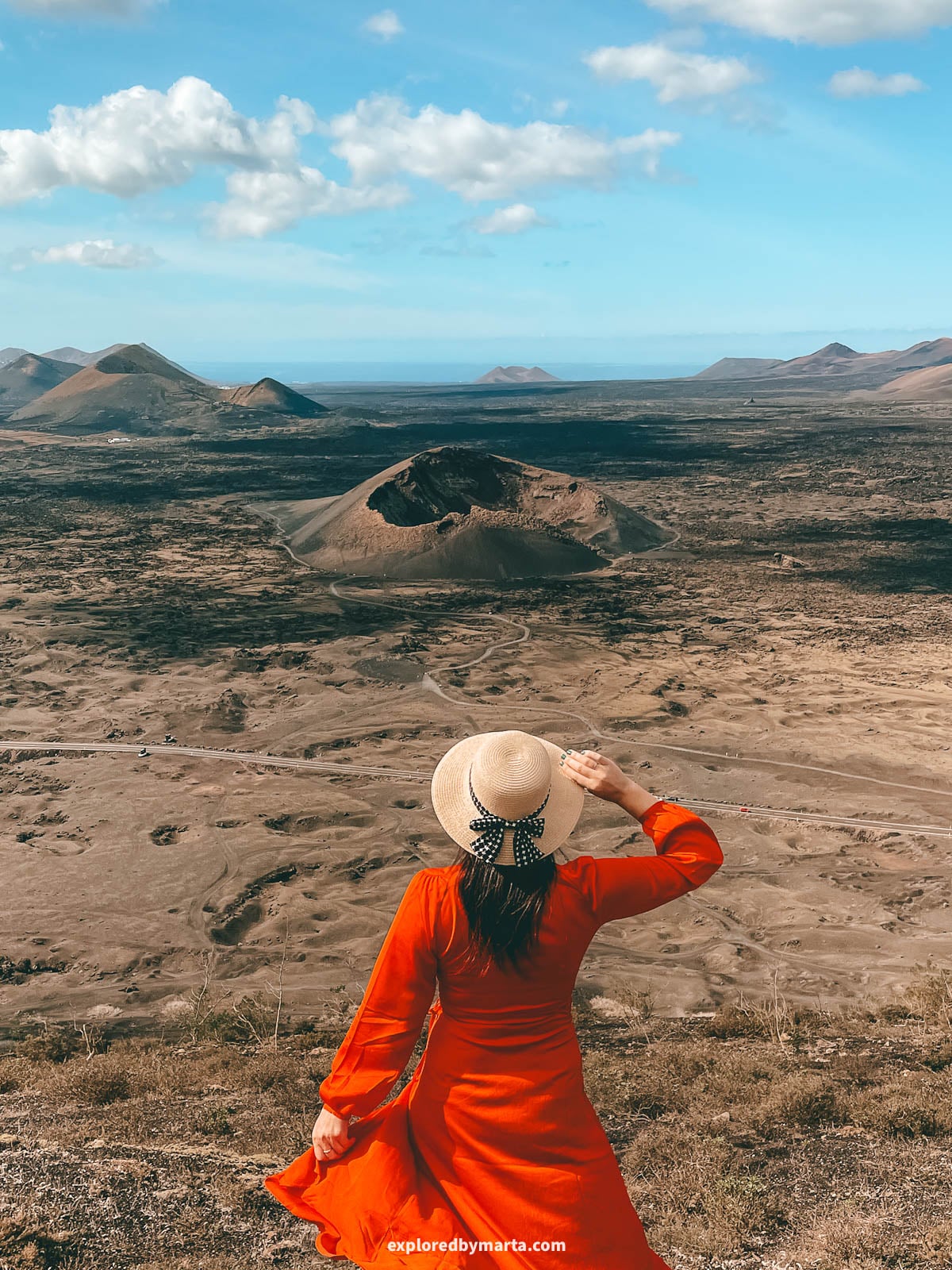
El Cuervo is probably the most famous volcano on the island, and one of the few whose crater you can actually walk inside. A flat trail loops around it and leads in through a gap in the crater wall.
On the night of September 1, 1730, El Cuervo was the very first volcano to erupt in the great event that reshaped Lanzarote, so you’re visiting the place where the island’s most dramatic chapter began.
We know the date so precisely because the priest of nearby Yaiza wrote the whole thing down as it happened – his diary is still one of the most famous eyewitness accounts of the massive eruptions that took place in Lanzarote.
Inside the crater you’re ringed by dark red-black walls, and it feels like stepping onto another planet. It’s an easy, mostly flat walk of about 4 kilometers (2.5 miles) round trip, so it works even with kids.
Location: El Cuervo volcano – Parking lot
9. Stop by the Green Lake at El Golfo
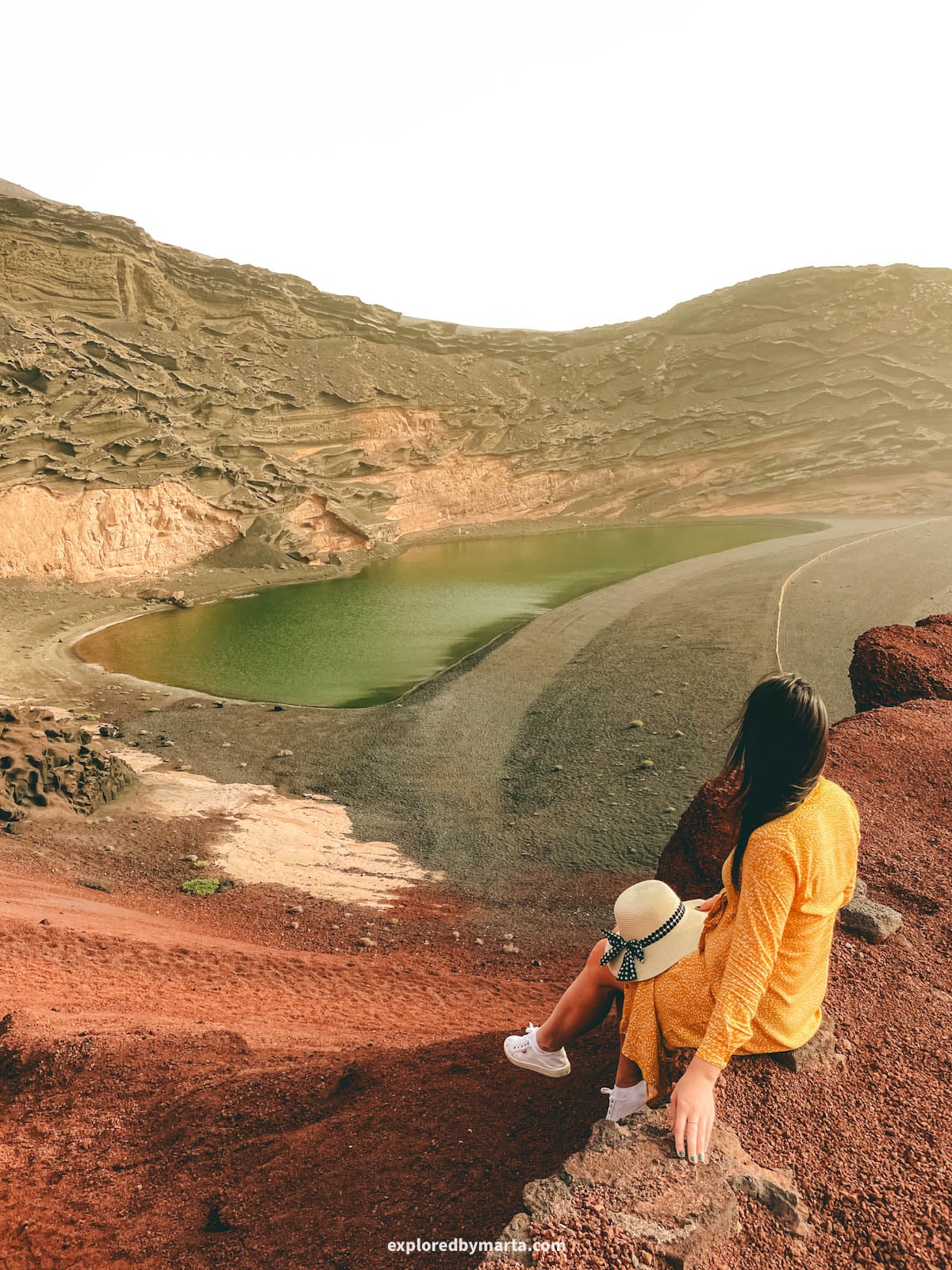
It’s not often you get to see a bright green lake, but Lanzarote has one – the Charco de los Clicos, a vivid green pool sitting against black sand and a backdrop of red-brown cliffs. It’s one of the most unique places to visit in Lanzarote.
By the way, I recognized this place IMMEDIATELY when I was watching Apple TV’s Foundation series! 😏
The startling green color comes from algae living in the water, and the contrast with the black sand beach and the Atlantic Ocean beyond makes it one of the most unreal scenes on the island.
For the best view, park next to the coffee shop and walk the coastal path about 200 meters (660 feet) to the lookout point. You can’t go right up to the lake – there’s a fence protecting it – so the elevated lookout is the spot you want to be.
A small tip: on a clear day with the sun above, you’ll get the brightest green shade. On a cloudy day it looks a bit muddy and faded.
If you want to hang around, the little nearby fishing village of El Golfo is known for its seafood restaurants overlooking the water, like Restaurante El Caleton, Restaurante Bogavante, and Restaurante Mar Azul.
Time your visit for lunch, and you’ve got fresh fish with an ocean view – the perfect pairing!
Location: El Lago Verde – Mirador del Charco de Los Clicos
10. Wander the Cactus Garden built in a volcanic quarry
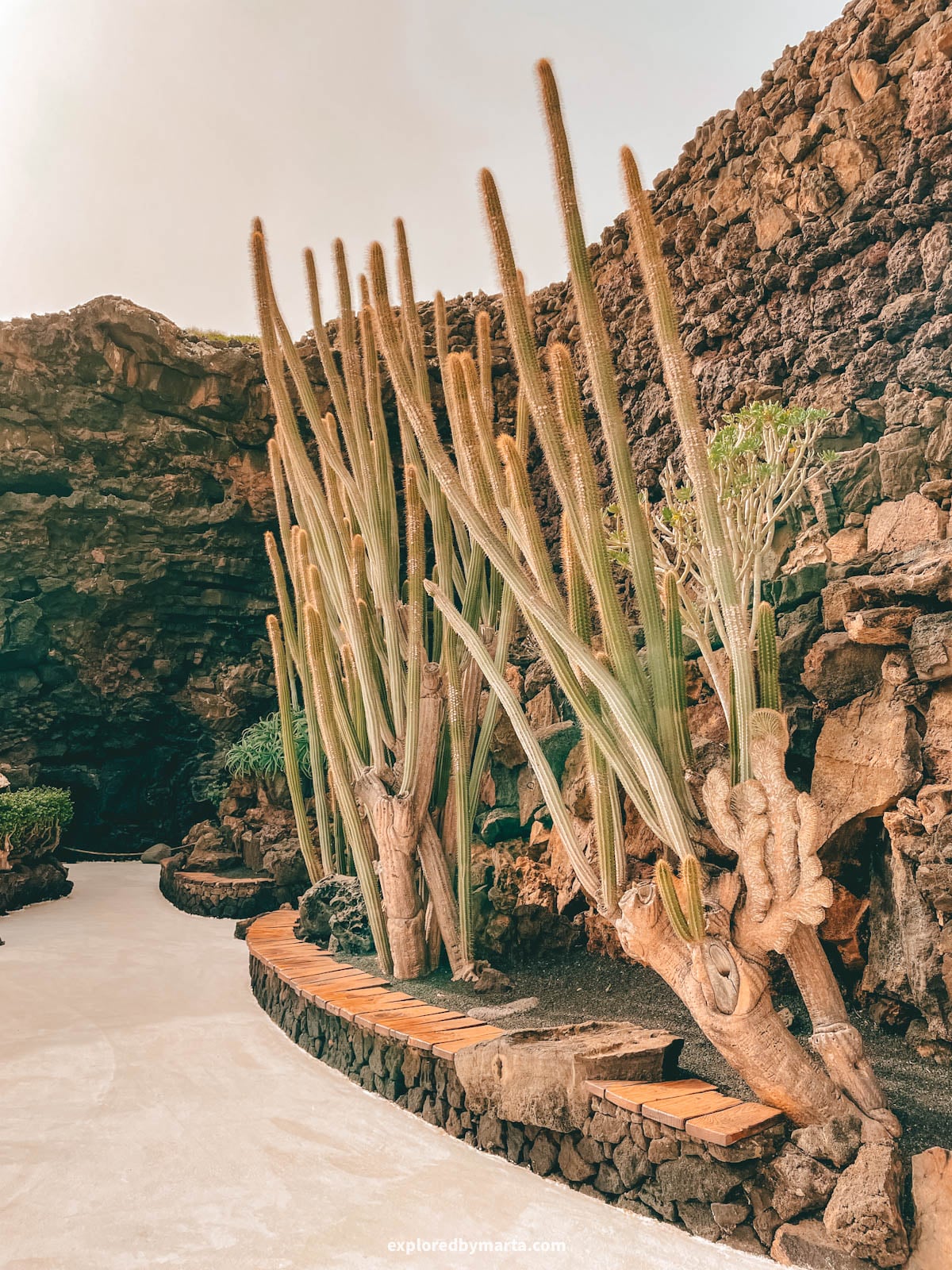
The Jardín de Cactus is one of the top attractions in Lanzarote, and it was César Manrique’s final great work – a spectacular cactus garden built inside an old volcanic quarry near Guatiza.
The garden holds around 4,500 cacti of hundreds of species from all over the world, planted in terraces that curve around the old quarry like an amphitheater, with a restored windmill watching over it all. It’s so scenic!
From what I understand, the green of the cacti against the black volcanic soil and blue sky is exactly the kind of contrast Manrique loved. If you love nature, plants and art, this is the perfect place for you!
Don’t forget to climb up to the windmill for a panoramic view over the whole garden!
Entry is 9 EUR for adults, and there’s a café inside where you can try cactus specialties – yes, even a cactus burger! 🌵You can buy tickets on cactlanzarote.com.
Location: Jardín de Cactus
11. Visit the windy Playa de Famara surfer beach
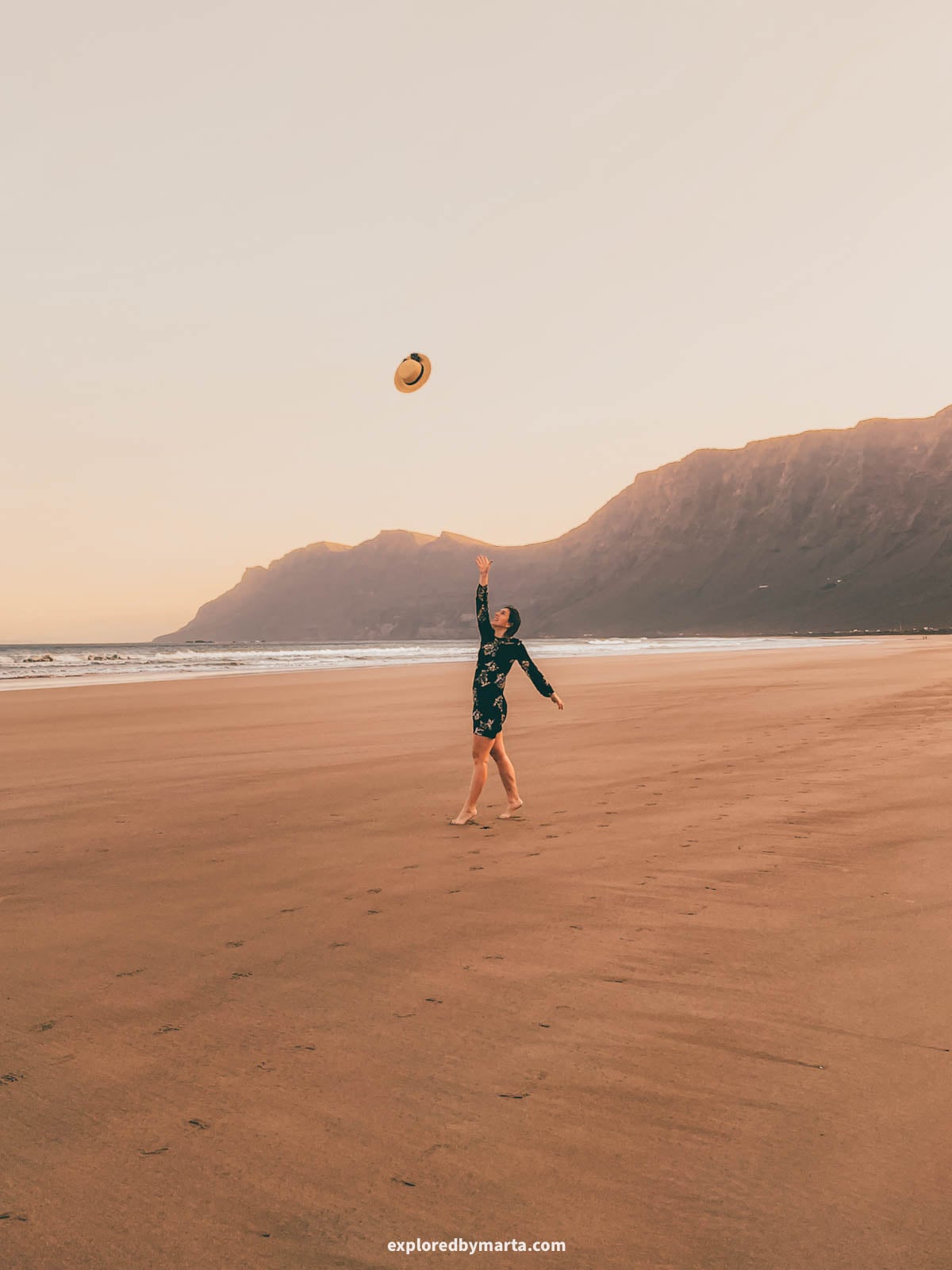
Famara was a real highlight of our trip – a vast, wide stretch of golden sand with the dramatic Famara cliffs rising right behind it. One look and you understand why it’s one of the most famous beaches on the island!
The cliffs climb to around 600 meters (1,970 feet), including Peñas del Chache, the highest point in Lanzarote at 671 meters (2,201 feet). They make the whole beach feel epic!
One thing’s guaranteed here: wind. It’s what makes Famara a favorite with surfers, and you’ll see plenty of them out on the water. If you’ve ever wanted to learn to surf, this is the place to do it.
Come in the morning for empty sand, or in the evening when the sunset light glows on the cliffs. Both give you very different and very beautiful experiences.
We visited in the morning, and it was the right time to go for a relaxed morning walk along the beach. Beautiful!
Location: Playa de Famara – Parking along the road
12. Try papas arrugadas and local Canarian food

You can’t leave the Canary Islands without trying papas arrugadas – the famous “wrinkly potatoes.” They’re small potatoes boiled in heavily salted water until the skins wrinkle, and they’re on nearly every traditional menu.
The essential part is the mojo sauce that comes with them – red mojo picón with a bit of spice, and green mojo verde made with garlic and herbs. During our travels around the Canary Islands, we tried these potatoes several times.
Beyond the wrinkled potatoes, other dishes to try are fresh grilled fish and seafood (the El Golfo village restaurants are perfect for this), local goat cheese, and of course a glass of Malvasía wine from the La Geria vineyards.
13. See the spectacular views from Mirador del Río
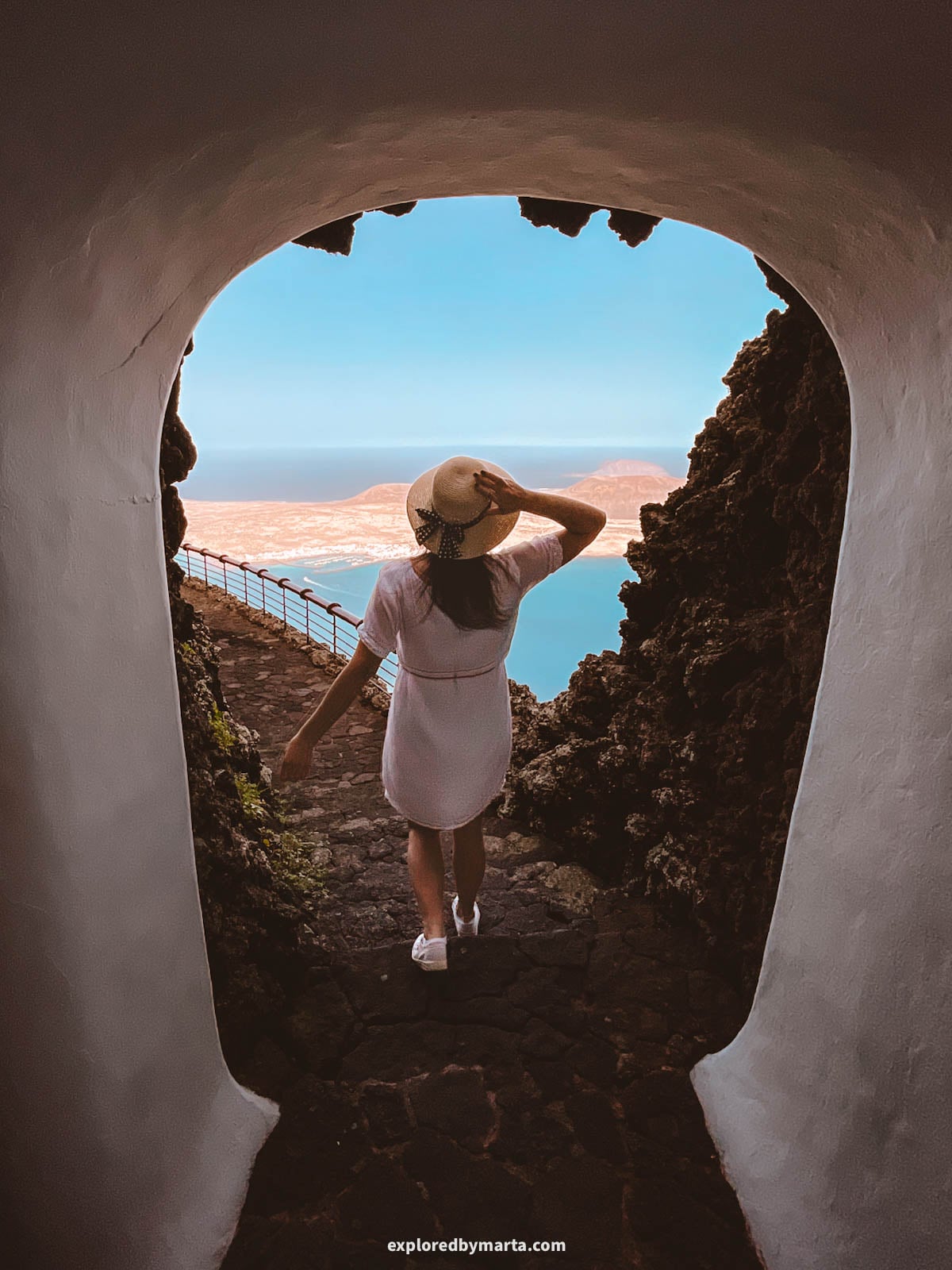
Mirador del Río is the most famous viewpoint on the island and an absolute must-see in Lanzarote. It’s another César Manrique work, carved into the clifftop so cleverly that it’s almost invisible until you’re standing inside it.
Once you step inside, the artwork opens right up – sweeping curved windows, smooth white arches, and organic stone shapes framing the ocean. The building itself is half the reason to come!
Through that glass you look out over La Graciosa, the little Canary Island just off the north coast of Lanzarote, its full shape laid out across the water with the smaller islets of the Chinijo Archipelago beyond. Spectacular views, if you ask me!
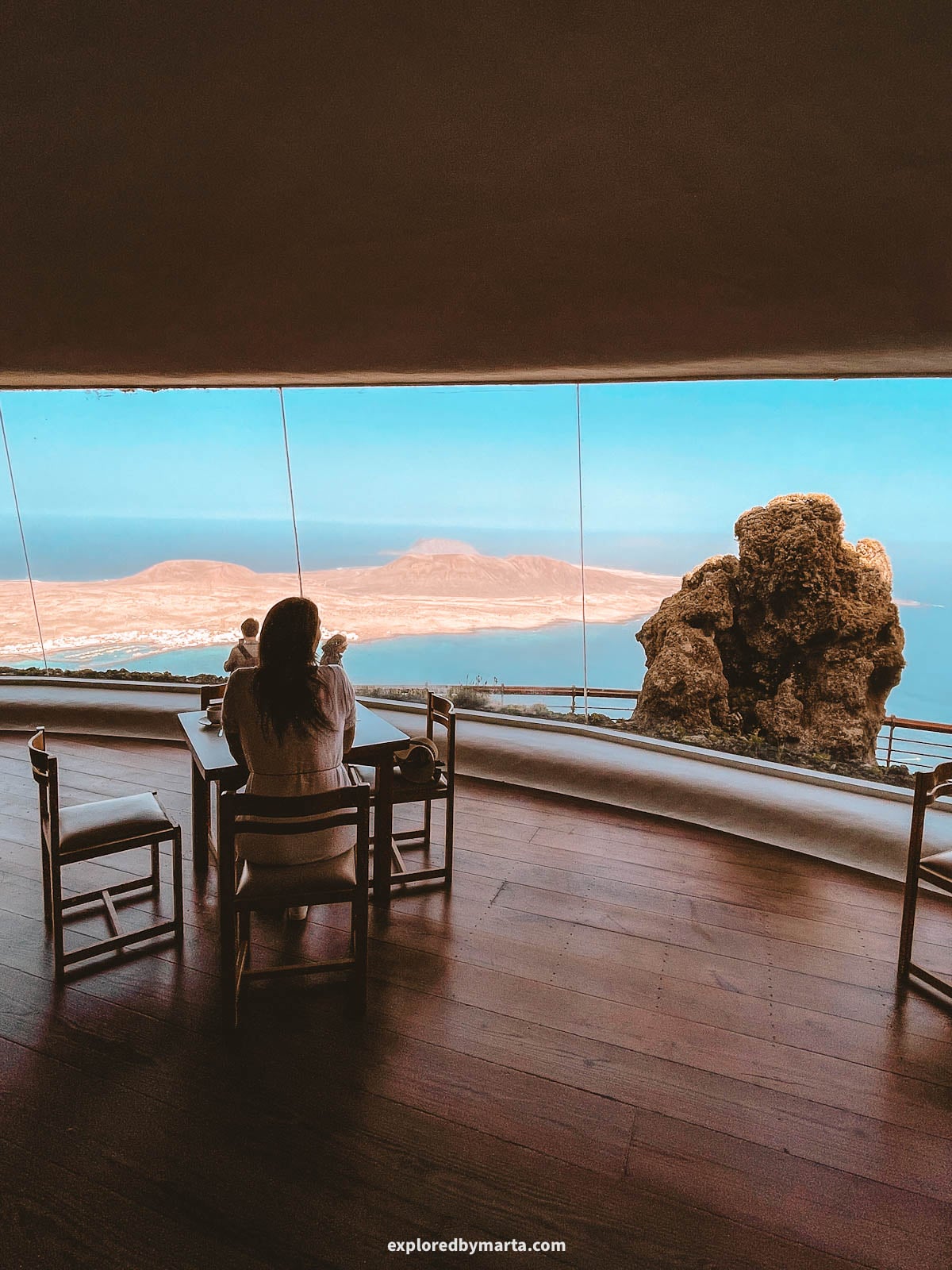
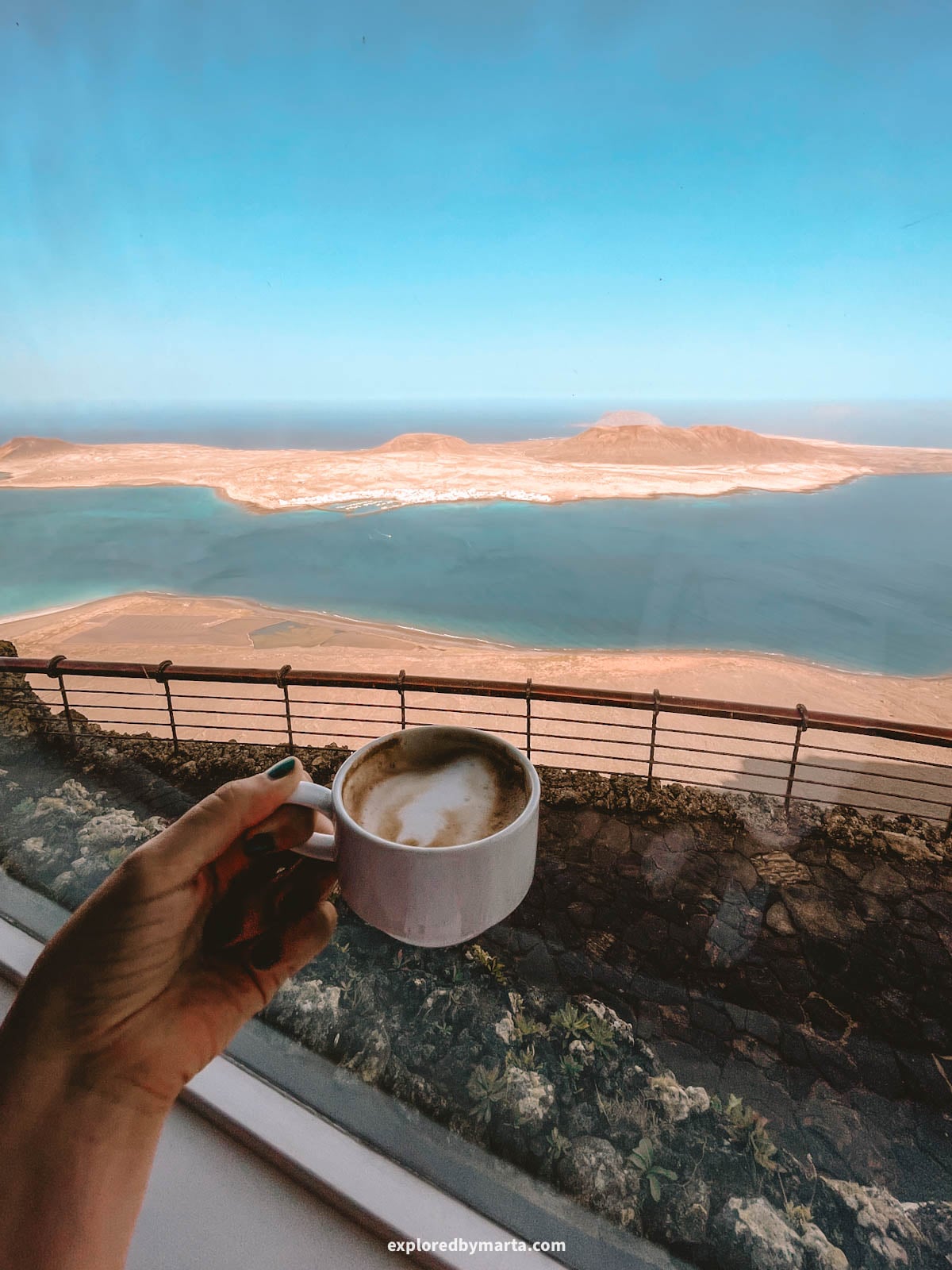
The ground floor has a café with almost floor-to-ceiling glass, so you can sit right in front of that view. We ordered a café con leche and a Spanish pastry and just took it all in. So nice!
The outside viewpoint area is free, and many people stop just for that. But going inside the building costs 9 EUR for adults, and I’d say it’s worth it – the architecture and the huge curved windows are what make this place special.
If you want to spend a relaxing morning in a unique environment and enjoy art, fantastic views and a cup of café con leche, Mirador del Río might be one of the best options for you in Lanzarote. You can buy tickets on cactlanzarote.com or on site.
Location: Mirador del Río
14. Spend a day at the beautiful Playa de Papagayo
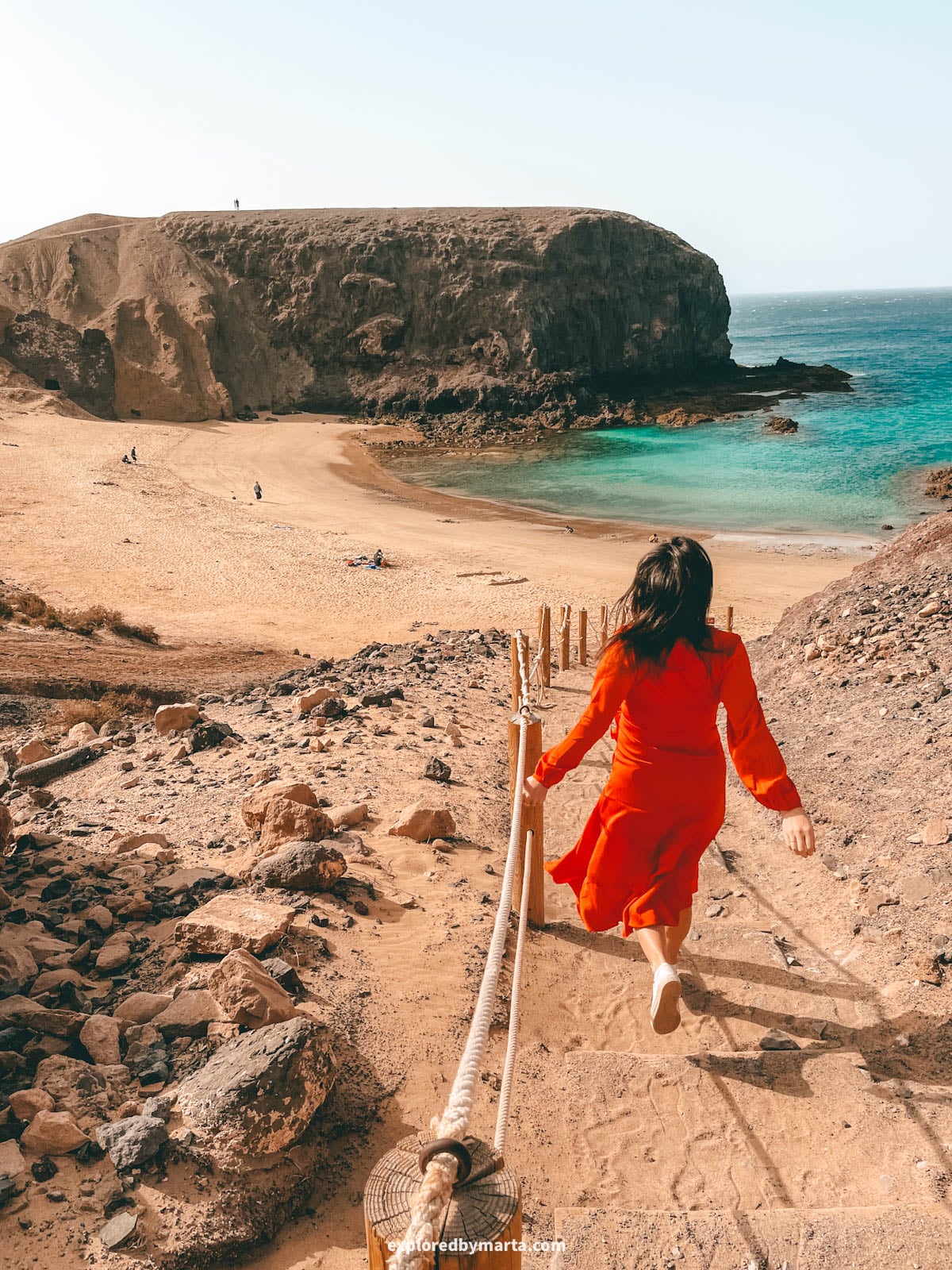
Playa de Papagayo is considered the most beautiful beach on the island – a shell-shaped cove of golden sand between tall cliffs, which shelter it from the wind and give it that postcard look from above.
The best view is from the cliff looking down, where you get the whole curve of the bay and the turquoise water. It’s one of those beaches you’ll want to admire before you even head down to the sand.
Getting there is part of the adventure – if you drive from the Playa Blanca direction, it will be a 6-kilometer (3.7-mile) drive on rough, bumpy roads. There’s a small hut along the way where you pay a 3 EUR per car nature fee (by card only), since it’s a protected area.
Honestly, it’s a small price for one of the best places to visit on the whole island. If you plan to stay longer, there’s even a beach restaurant right by the beach where you can grab lunch. But I do hope they fix those roads one day, haha!
Location: Playa de Papagayo
15. See the giant volcanic bomb at Montaña Colorada
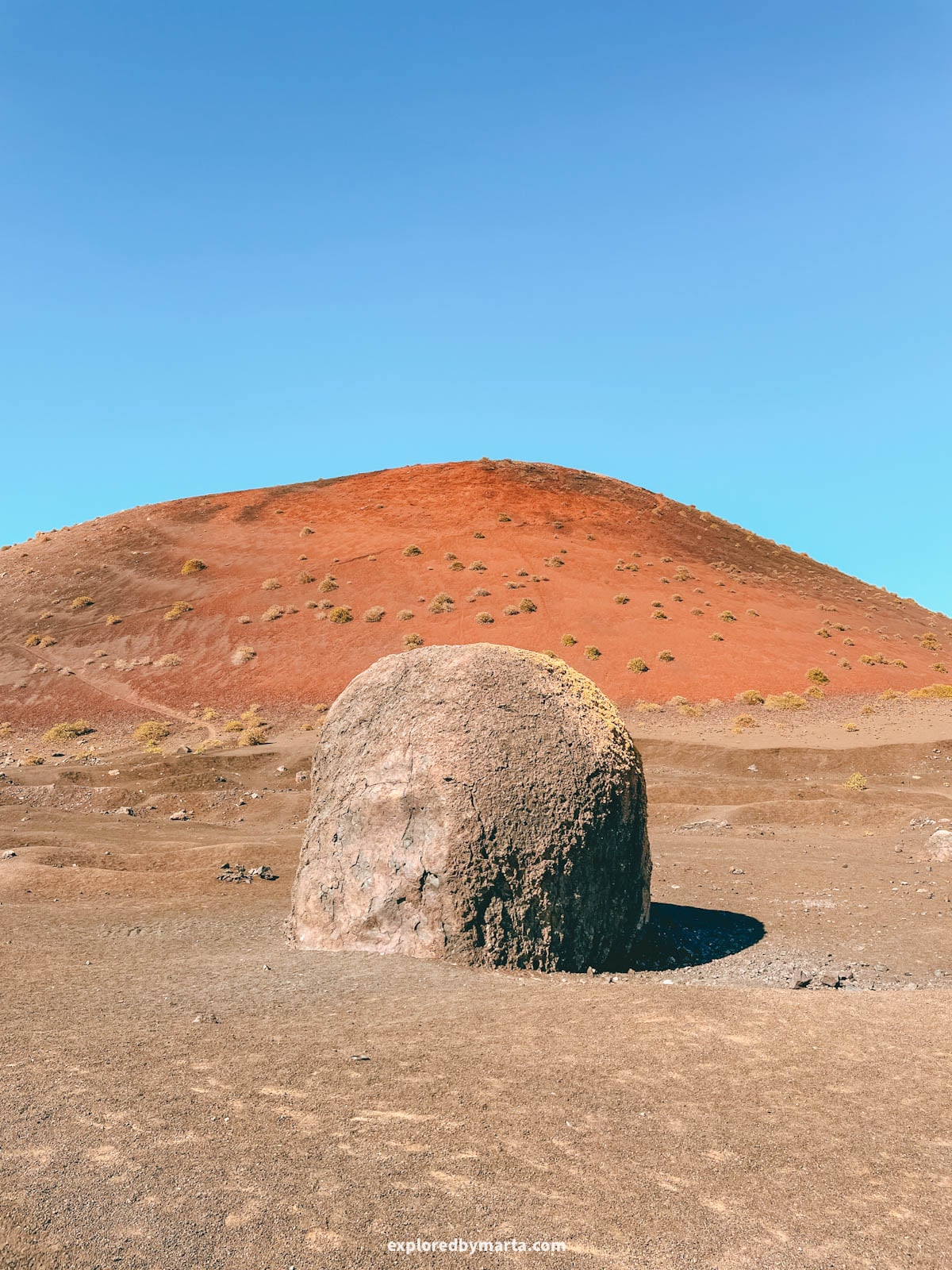
If you fancy an easy hike around a volcano, this one is for you!
One of the most unusual sights in Lanzarote is a single rock – a giant volcanic bomb sitting beside the red-black cone of Montaña Colorada.
A volcanic bomb is a blob of molten rock flung out of a volcano mid-eruption, cooling into a solid lump as it flies. Most are rather small, but this one is truly gigantic – well over head height, and said to be one of the largest in the world.
You reach it on the flat trail that loops around the red Montaña Colorada, about 800 meters (half a mile) from the parking lot. The full loop around the volcano is 3 to 4 kilometers (2 to 2.5 miles). It is one of the easiest fun hikes to do in Lanzarote!
Location: Volcanic bomb – Parking lot
16. Watch the sunset from Mirador de El Risco de Famara
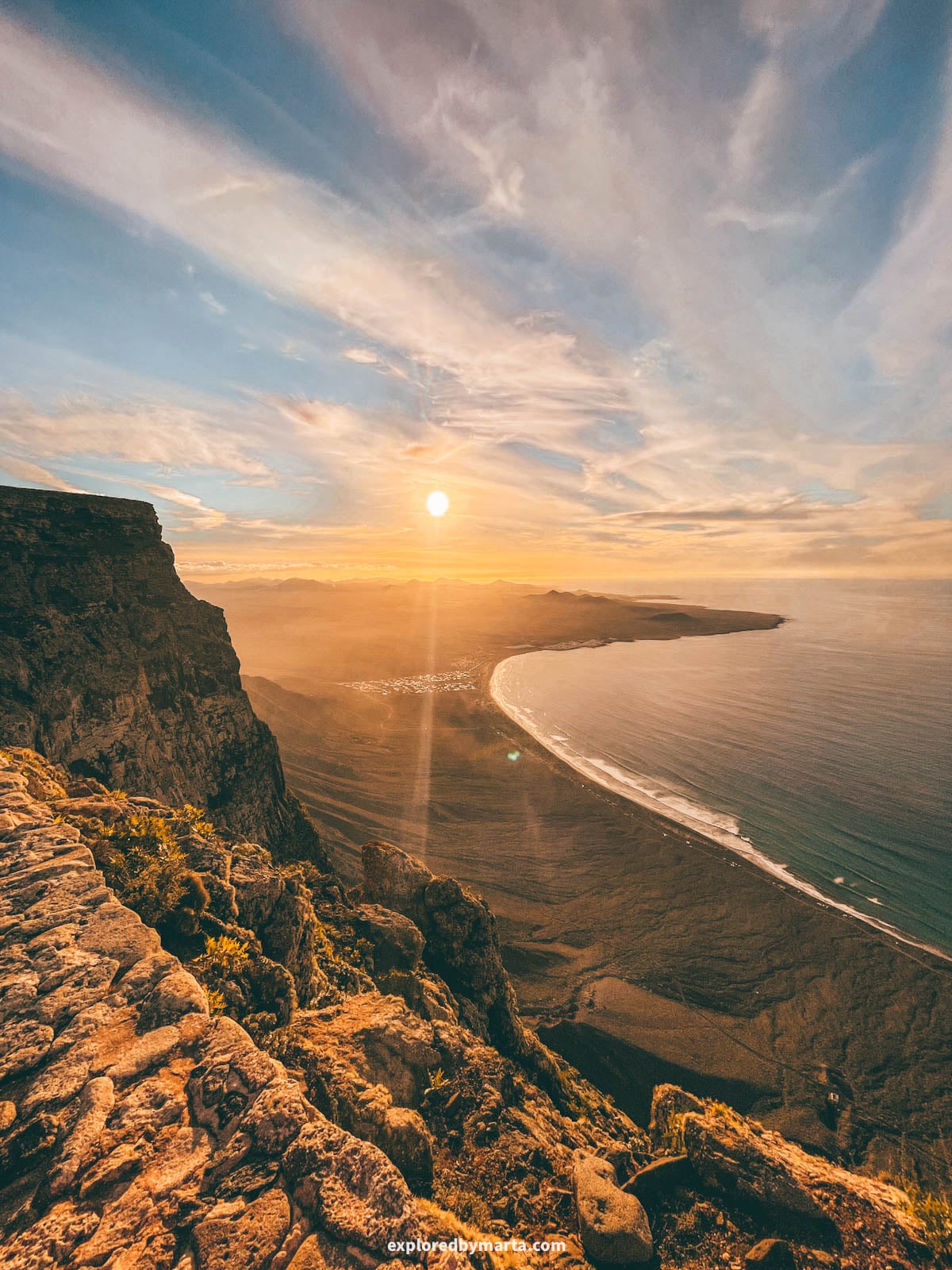
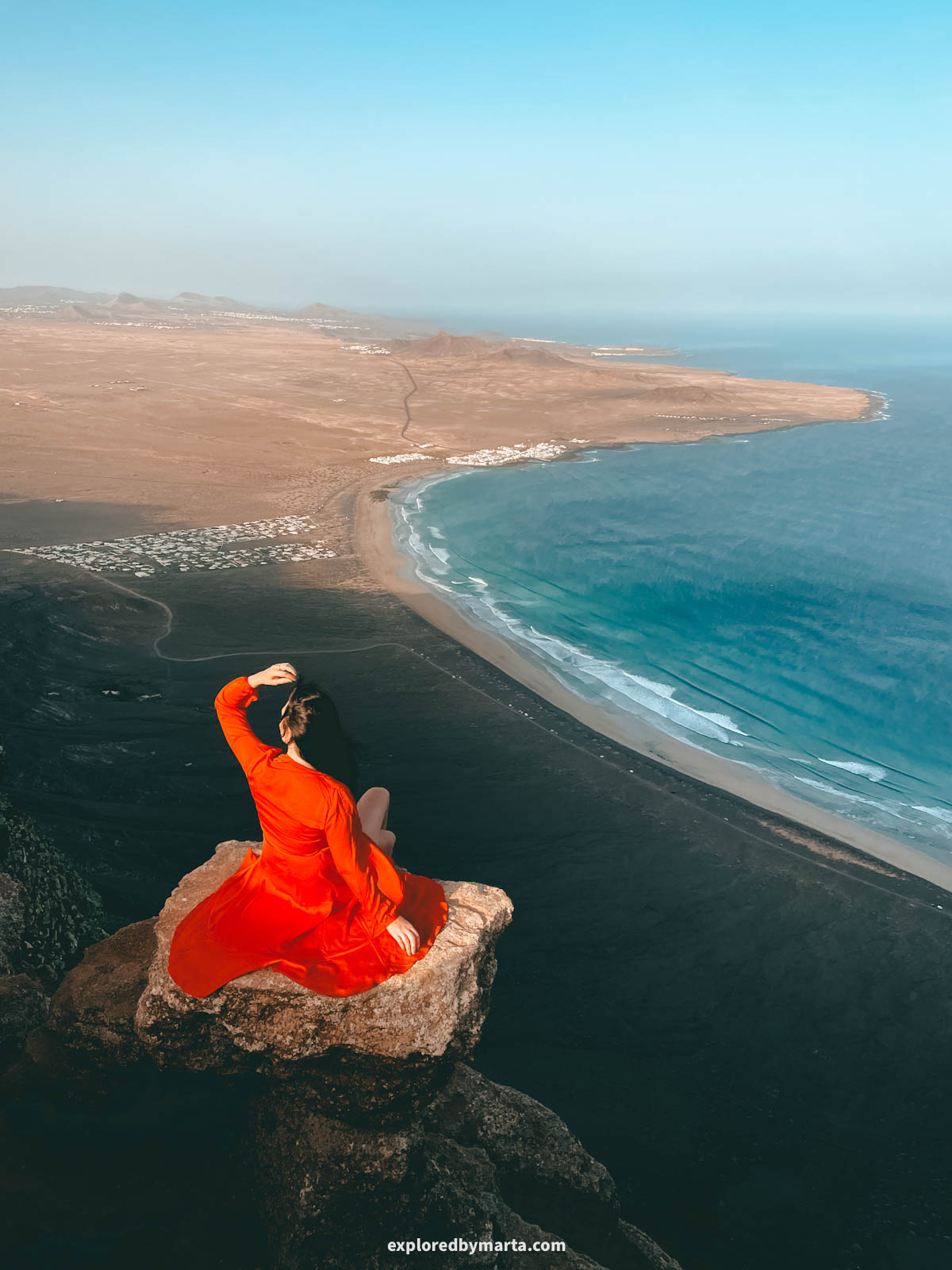
For one of the best free things to do in Lanzarote, drive up to Mirador de El Risco de Famara for sunset. It might just be the most famous sunset spot on the whole island!
What’s so special about this place?
Well, you’re basically standing on top of the Famara cliffs, the highest cliffs in Lanzarote, looking down over Caleta de Famara village, the wide sweep of Playa de Famara, and the volcanic landscapes behind – all glowing at golden hour.
It really is beautiful. So beautiful that we actually went there twice.
Getting up there takes a car and some patience – the road to the top is bumpy, slow, and narrow in parts. Park at the Aparcamiento El Bosquecillo lot at the top, and the viewpoints are a short walk away.
While exploring the clifftop area, we found a wild bonus spot: the floating rock. It’s a flat rock pillar separated from the main cliff, so it looks like it’s floating in thin air.
Sunset is the busy time, so expect company and come a bit early for a good spot.
But no matter what time you come, the views are stunning either way. This clifftop was one of my favorite places on the whole island.
Location: Mirador de El Risco de Famara
17. Visit Museo Lagomar, Omar Sharif’s old house
Museo Lagomar in Nazaret is one of the most surprising places to visit in Lanzarote – a house built right into a volcanic quarry, with rooms, tunnels, and pools woven through the rock itself.
And it comes with a legendary story: actor Omar Sharif bought the house on impulse while filming here in the 1970s – then lost it in a game of bridge just days later. Quite funny, honestly.
The house has that classic Lanzarote look – white walls, art, and rooms built straight into the volcanic rock. That’s no accident: Jesús Soto, who worked with César Manrique on many of the island’s famous sights, helped design this place too.
Today it’s part museum, part bar and restaurant, so you can spend a couple of fun-filled hours in this place. Entry is 10 EUR for adults.
Location: Museo Lagomar
18. See the splashing waves at Los Hervideros
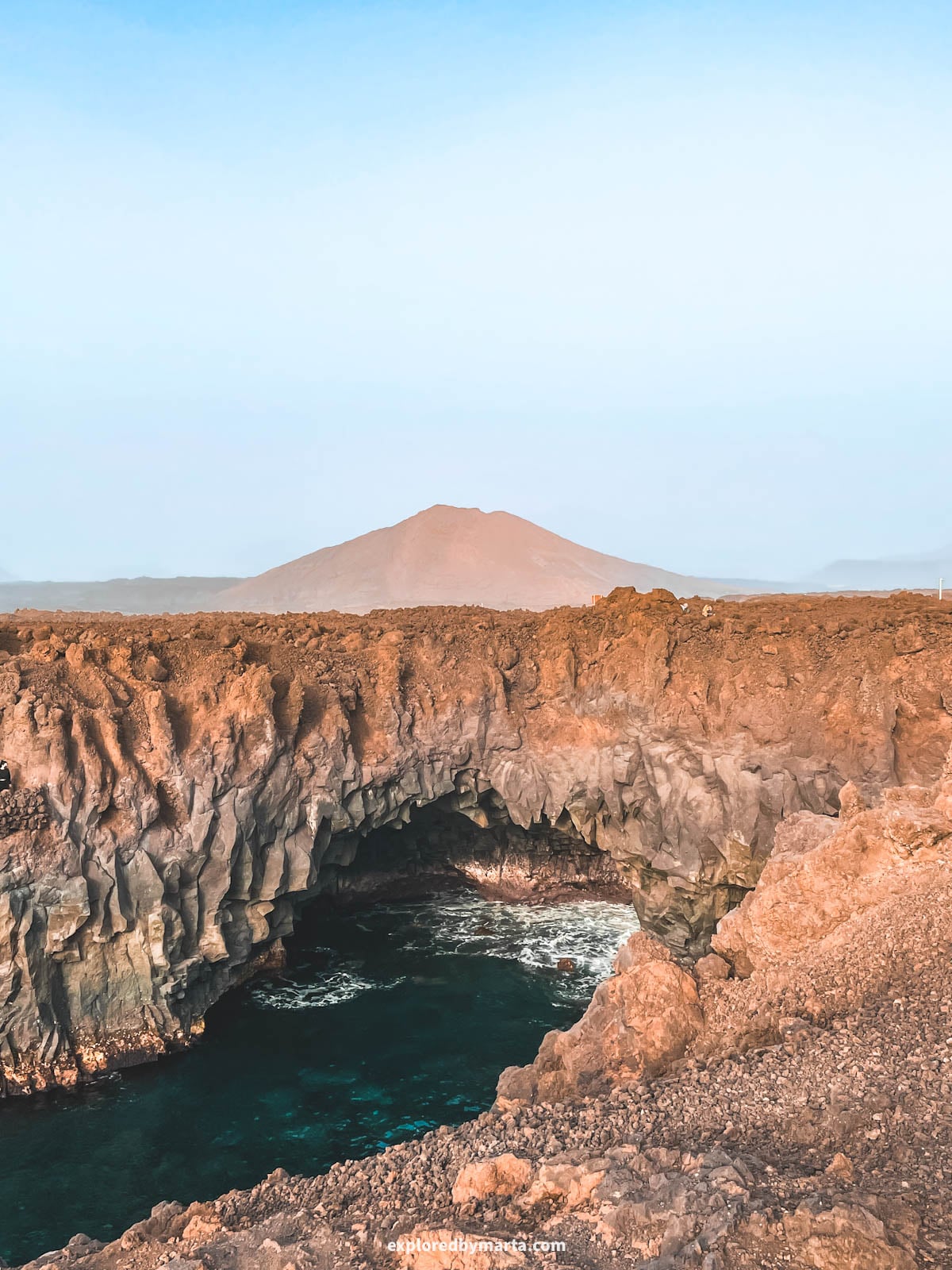
Los Hervideros is a stretch of wild lava coastline on the west coast, where the sea has carved caves, holes, and channels into the black volcanic rock. This place has some of the coolest rock formations you will find in Lanzarote!
Los Hervideros name means “the boiling waters” – and when the waves roll in, you’ll see why. The ocean pushes into the holes in the rock and bursts up through them in sprays of white foam, so, basically, the whole coast looks like it’s boiling.
This is the place you will want to visit at high tide (and with waves!). That way the whole spectacle will be even more impressive. Although we didn’t have the biggest waves when we visited, it was still really fun to wach.
We found small walking paths and viewpoints built right into the rock there, so we could actually wander along the edge and look down into the blowholes! The best part? It’s free to visit.
Location: Los Hervideros
19. Visit the Sunday market in Teguise, the island’s old capital
Teguise was the capital of Lanzarote for centuries, and it’s one of the oldest towns in the Canary Islands – all cobbled streets, white colonial buildings, and quiet plazas that feel a world away from the beach resorts. Super charming!
Its biggest draw is the Sunday market, the largest on the island, when the old town fills with stalls selling crafts, local products, and food, with live music in the squares. If your trip includes a Sunday, this is where you will want to spend the morning!
Even though we didn’t come to Teguise on Sunday, we loved stopping by here for a bit of history and local sightseeing between all the volcanoes and craters, haha.
Location: Teguise Sunday Market
20. Hike around the rim of the Caldera Blanca white crater
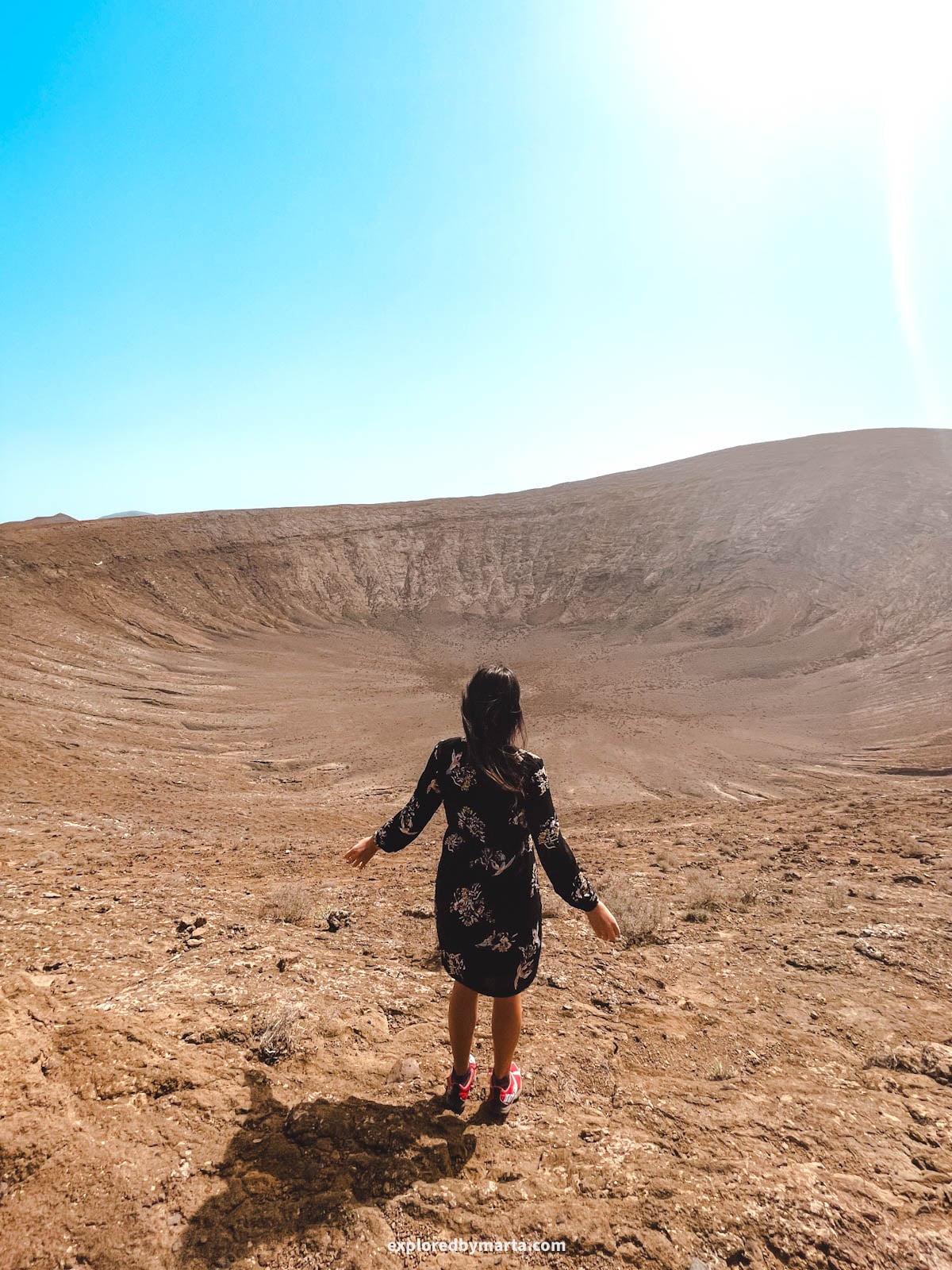
For the best hike on the island, head to Caldera Blanca, the “white cauldron” – the most impressive volcanic crater in Lanzarote.
Unlike the young 1730s volcanoes, Caldera Blanca is ancient – its rocks have bleached pale with age, which is exactly where the “white” in its name comes from.
When the eruptions flooded this area, Caldera Blanca and its little neighbor Montaña Caldereta rose above the black lava like two white islands – locals call these untouched patches “islotes.” Switch your map to satellite view, and you’ll see it clearly.
The crater is enormous – roughly 1.2 kilometers (0.75 miles) across, almost perfectly circular, with high walls all the way around. Standing on the rim looking down into that giant bowl was pretty humbling.
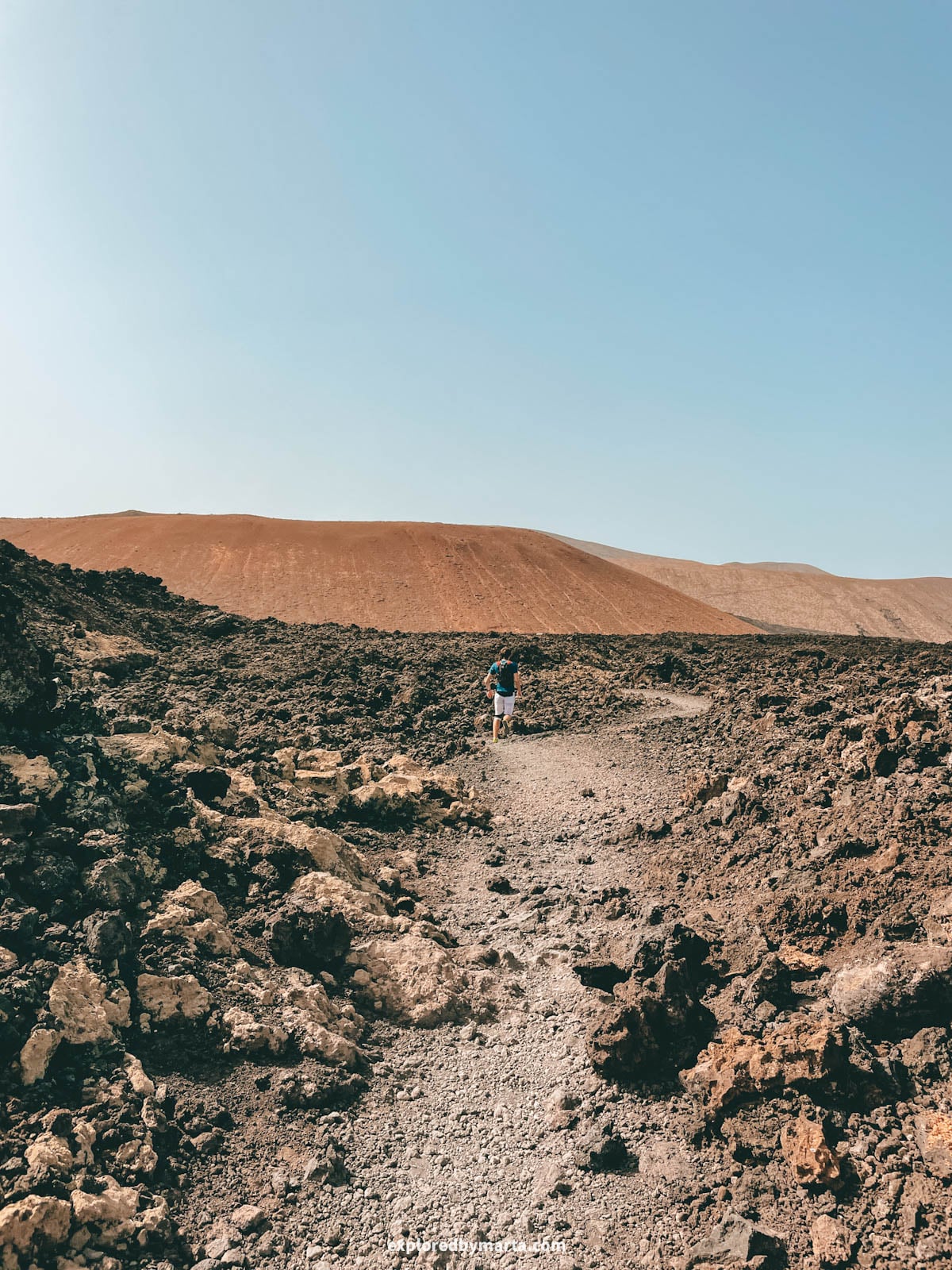
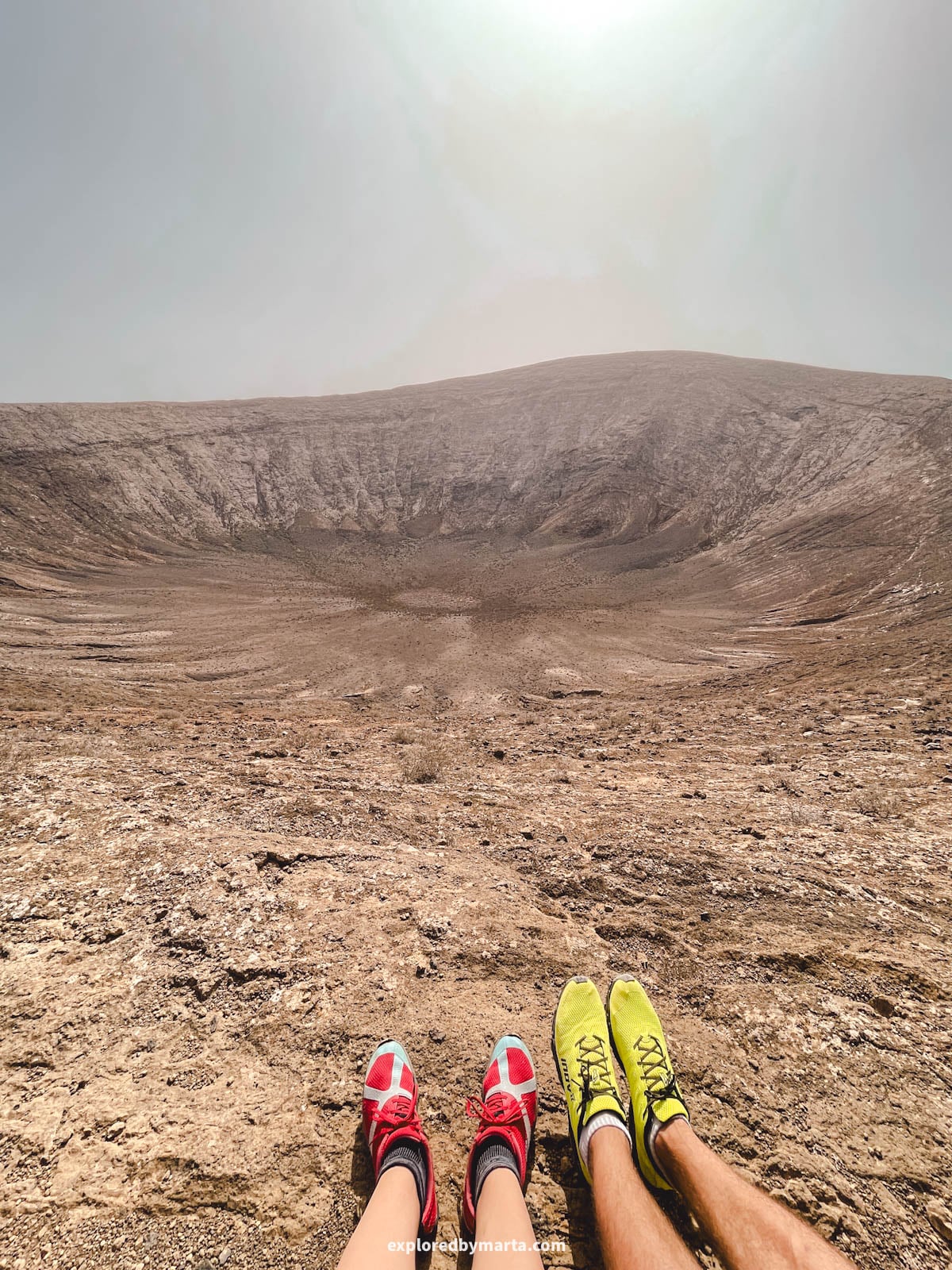
If you just want a taste of hiking, you can climb up to the rim, soak in that first view over the crater, and head back down the same way.
But if you have the time and the legs, I highly recommend going for the full loop hike as we did.
The whole hike from the parking lot, up the crater and around the rim is about 10 kilometers (6 miles) round trip, and you’re walking the edge of a giant volcano the entire time, with views changing at every turn. It’s a proper little adventure. And it’s wiiiindddyyy!
One honest warning though: there is zero shade out there, not a single tree, and the sun gets relentless. Bring plenty of water, sun cover, and proper shoes, and you’ll have a much better time up there. Trust me on this!
Location: Caldera Blanca – Parking lot
21. Explore the La Rofera rocks (Stratified City)
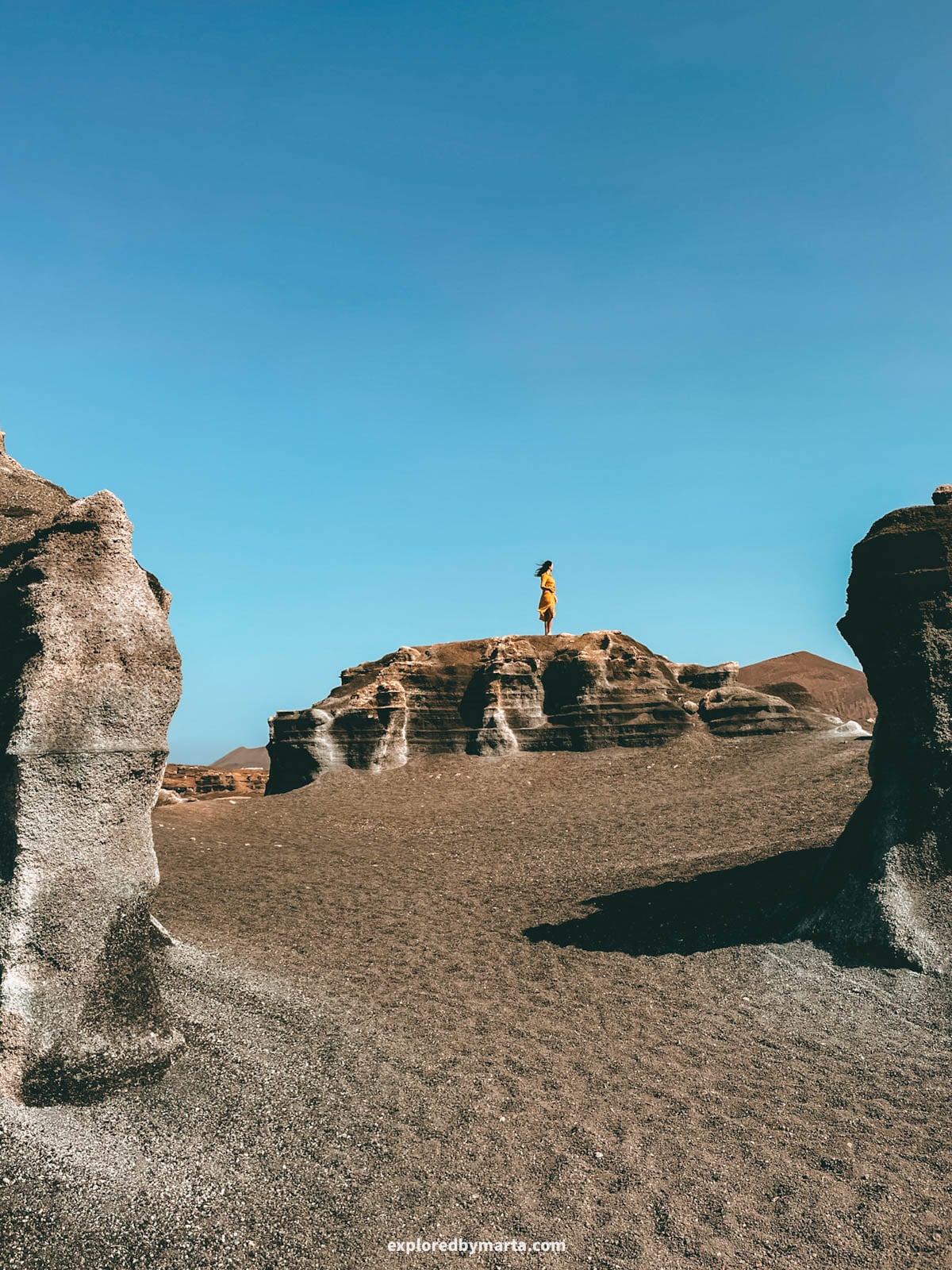
This was one of my favorite stops on the whole island! La Rofera, better known as the Stratified City, is a large area of dark grey and black rock formations that looks like it belongs on another planet.
What makes it special is that it’s part nature, part human hands. I learned that this was actually an old, abandoned quarry where locals once dug out “rofe,” a coarse volcanic sand farmers spread on their fields to trap moisture.
Between the digging and thousands of years of wind, sun, and rain, the ground has been carved into layered, rounded mounds full of little caves – and the erosion isn’t finished, so the place keeps slowly changing shape. Pretty cool to see that with your own eyes!
I also loved that it’s completely free and out in the open – no gates, no tickets, no set hours. We just parked at the side of the road and walked right in.
My tip: don’t stop at the first rocks you see. We wandered deeper into the area and found the strangest shapes further in, with almost nobody else around. Such a cool place to visit if you have time to spare (by the way, 20 minutes is enough to see a glimpse of it all)!
Location: La Rofera (Stratified City)
22. See the pink salt-mining lagoons of Salinas de Janubio
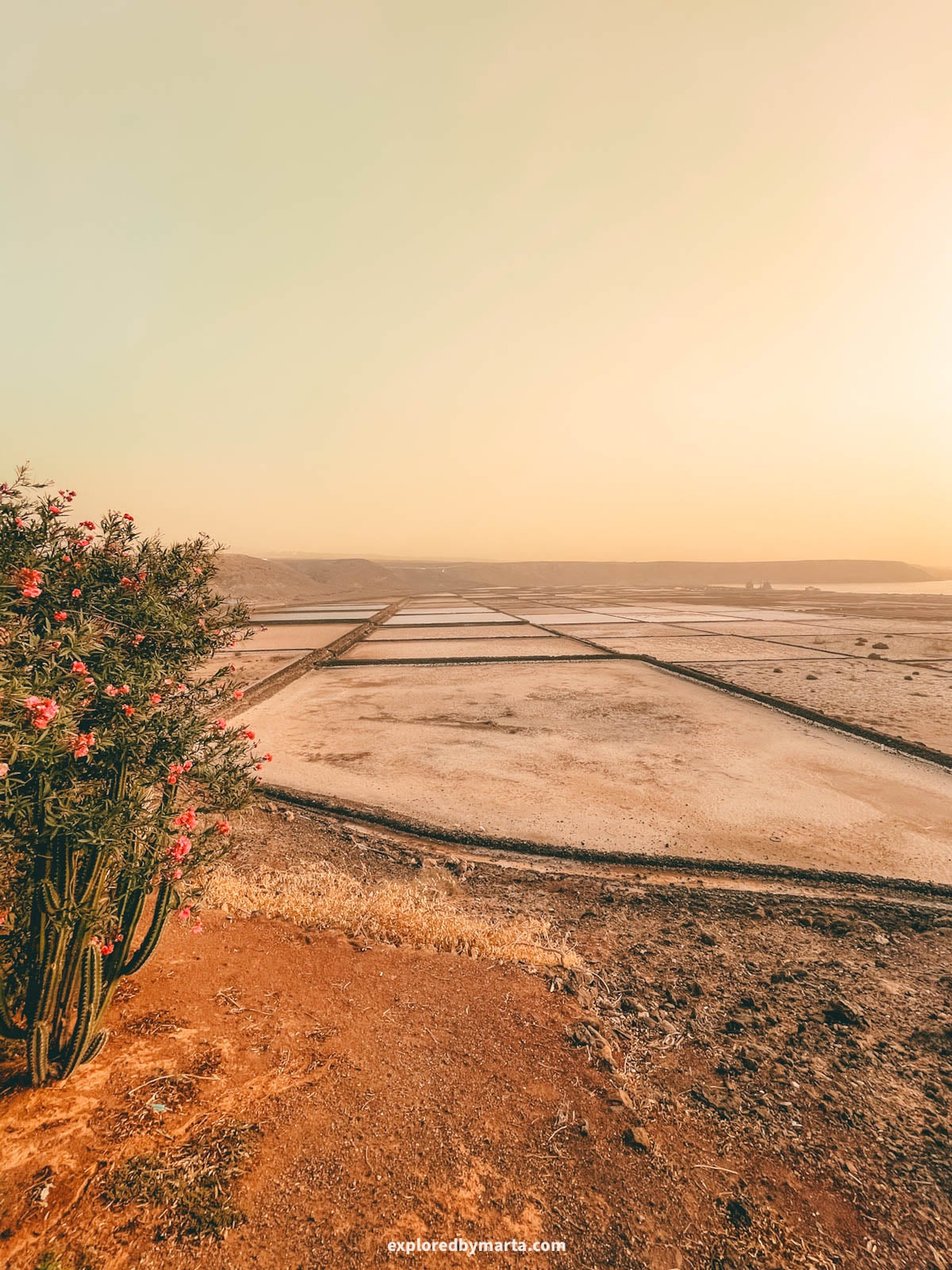
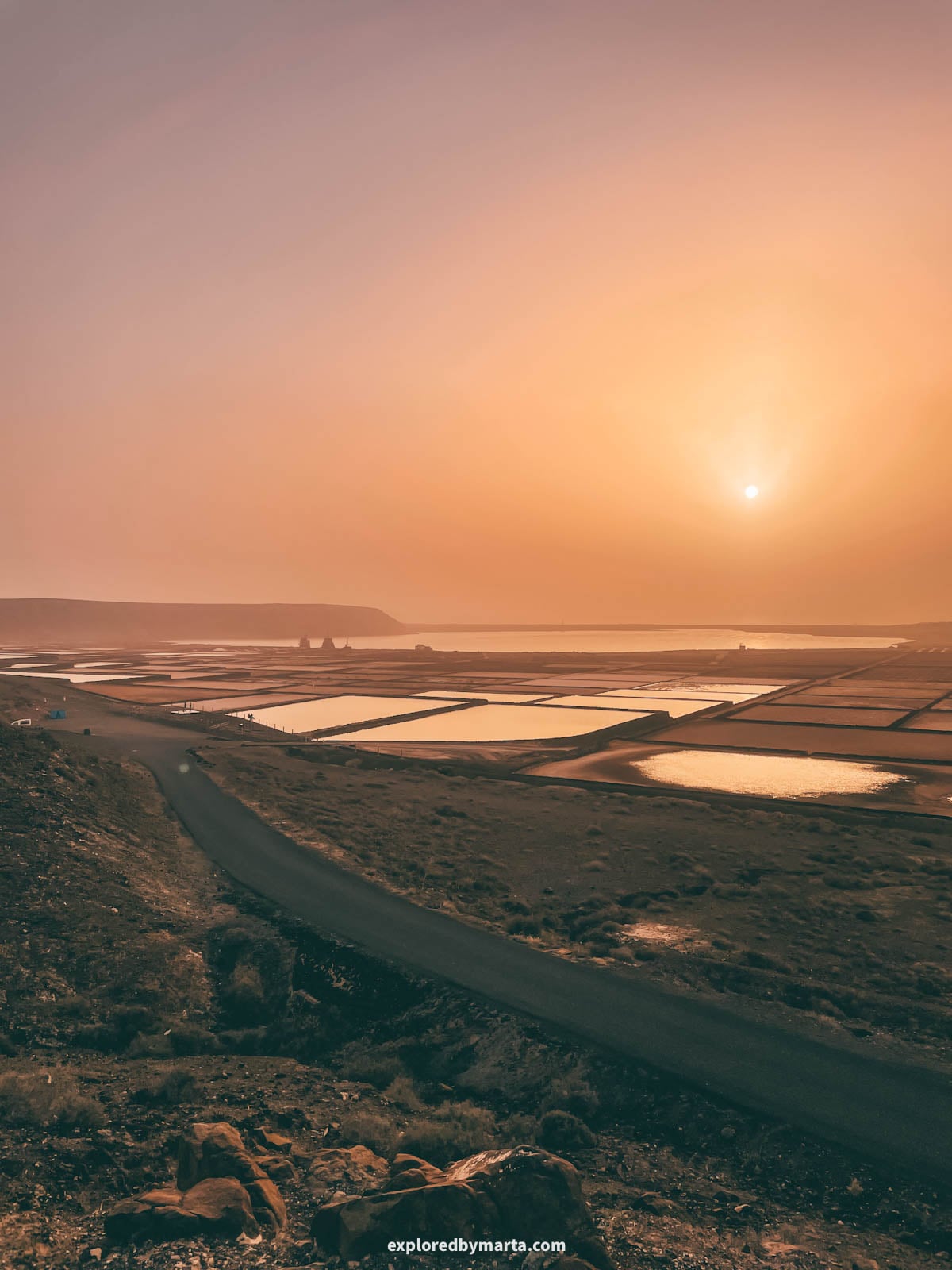
Down in the southwest, the Salinas de Janubio are the largest salt flats in the Canary Islands – a huge grid of shallow lagoons where sea salt is still harvested the traditional way, as it has been since the late 1800s. It was amazing to see!
The pools shift in color from white to green to pink depending on the light and the salt concentration, and against the black volcanic coast it’s a strange, beautiful sight.
We stopped at the viewpoint overlooking the salt baths closer to sunset hours, and everything was golden and beautiful – the pans, the lagoon, the ocean behind. If you can time it, that’s the hour to come.
If you have more time and you are interested in salt production in the Canary Islands, you can go to their visitor center where they offer guided tours through the salt flats, and you can even buy some of their salt to take home.
The best souvenir from Lanzarote (okay, that wine is amazing, too!)!
It’s an easy stop to combine with Los Hervideros and the Green Lake, since all three line up along the same stretch of the west coast.
Location: Salinas de Janubio
23. Take a day trip to La Graciosa, the smallest Canary Island
By the last week of our four-week stay, we had seen La Graciosa from so many viewpoints that we finally had to go. So one morning we drove up to Órzola, left the car at the free parking by the harbor, and hopped on the ferry for a day trip to the smallest inhabited Canary island.
The moment you land, you feel how different it is. There’s not a single paved road on the island – just sandy streets, white houses, and a handful of cars.
Most visitors rent bikes in Caleta del Sebo, the little main village, and set off to explore. We decided to…run. But don’t be ridiculous like us. Just rent a bike.
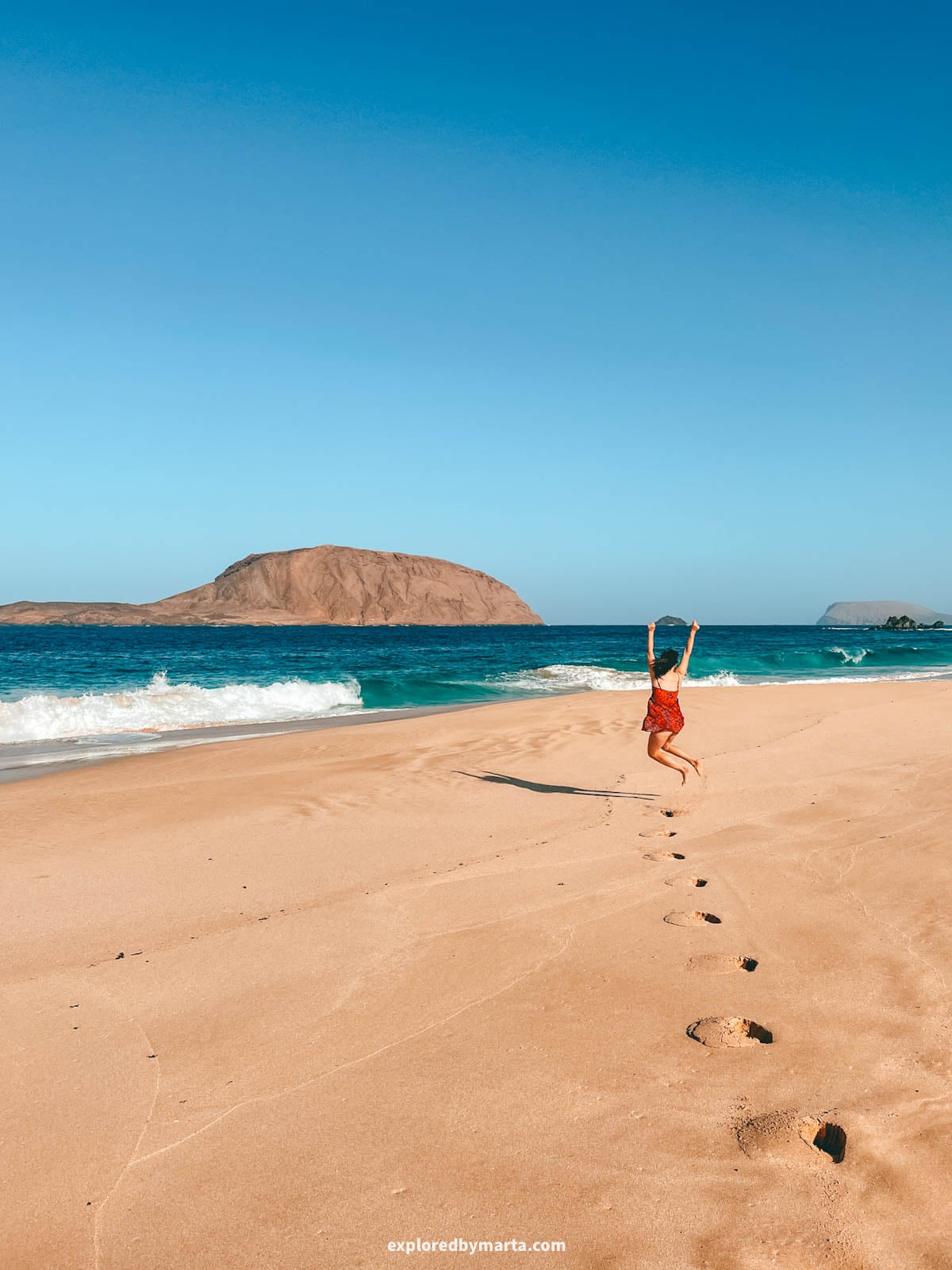
Our first big stop was Playa de las Conchas, the island’s showstopper – a long white-sand beach against deep blue Atlantic water, with the red island of Montaña Clara rising across the strait. Stunning to look at, though the currents make it unsafe for swimming.
Right beside the beach rises the red volcano Montaña Bermeja. It’s an easy climb – just 157 meters (515 feet) – and from the top you get sweeping views over Las Conchas and the whole north of the island.
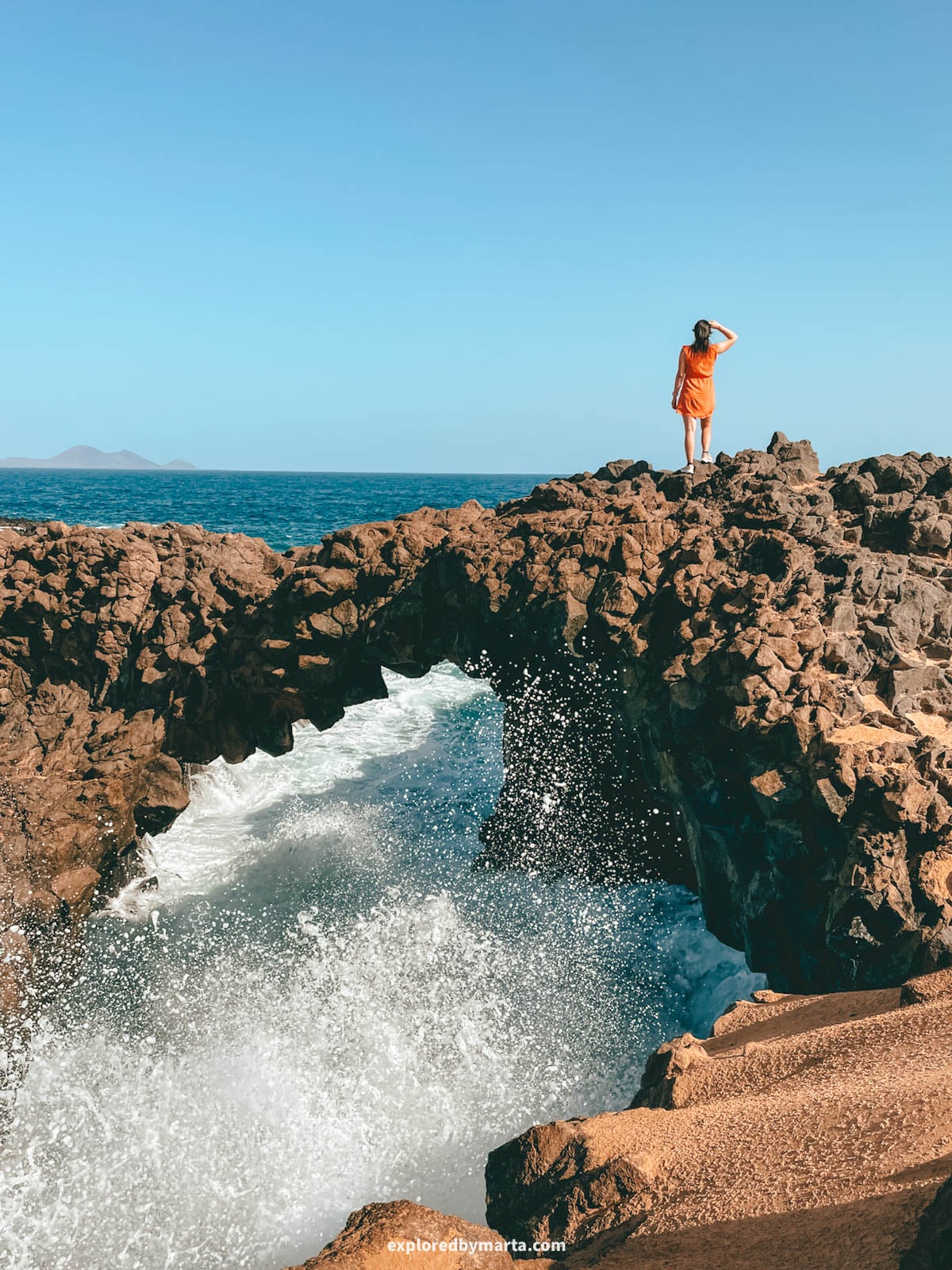
Further along the north coast, the waves crash through the Arco de los Caletones, a natural rock bridge that makes for a dramatic stop on the bike loop.
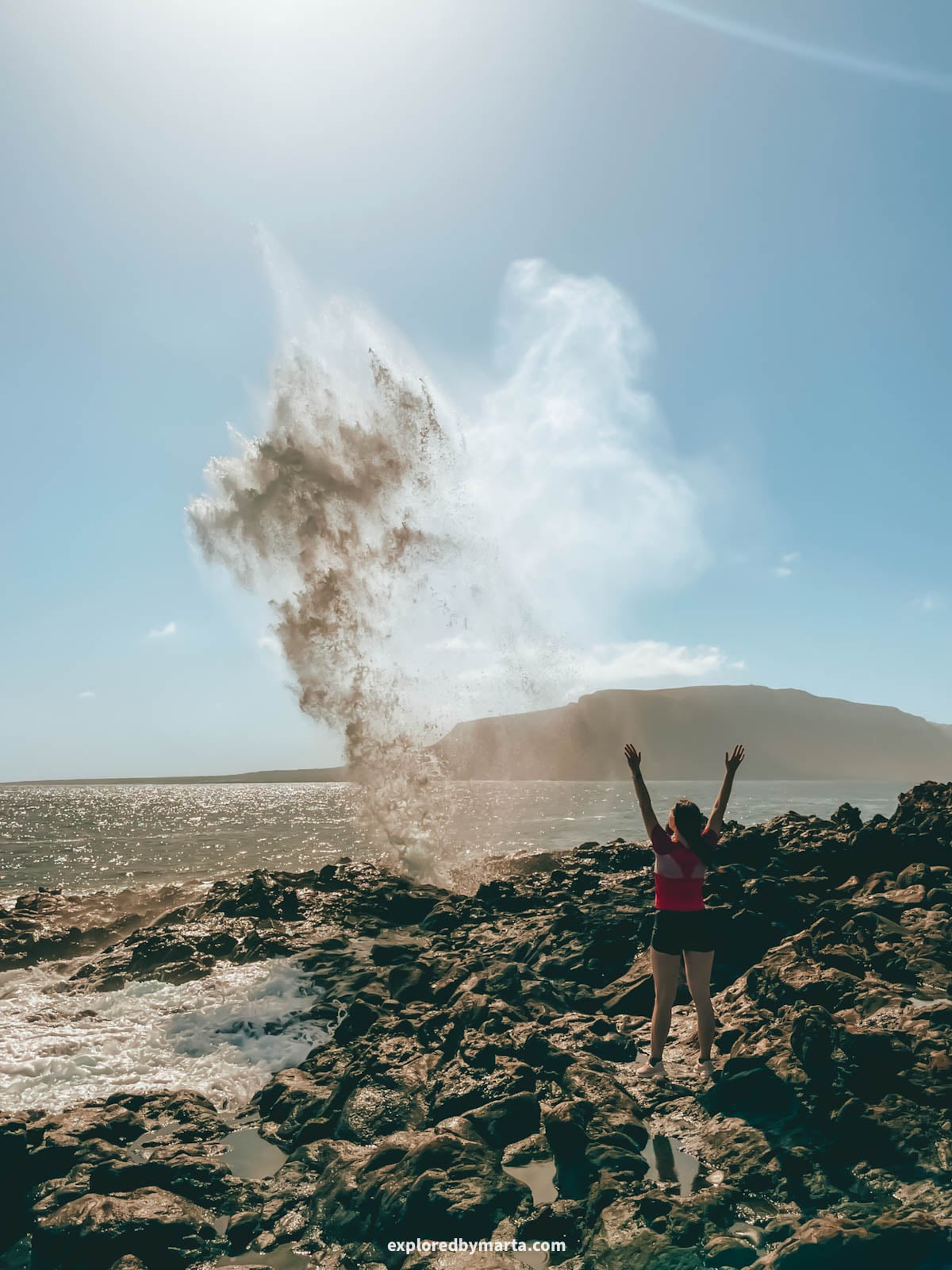
My favorite moment of the day was El Bufón de Graciosa, a blowhole where the ocean surges through a gap in the coastal cliff and shoots up like a geyser. We stood there watching it erupt for a good 15 minutes.
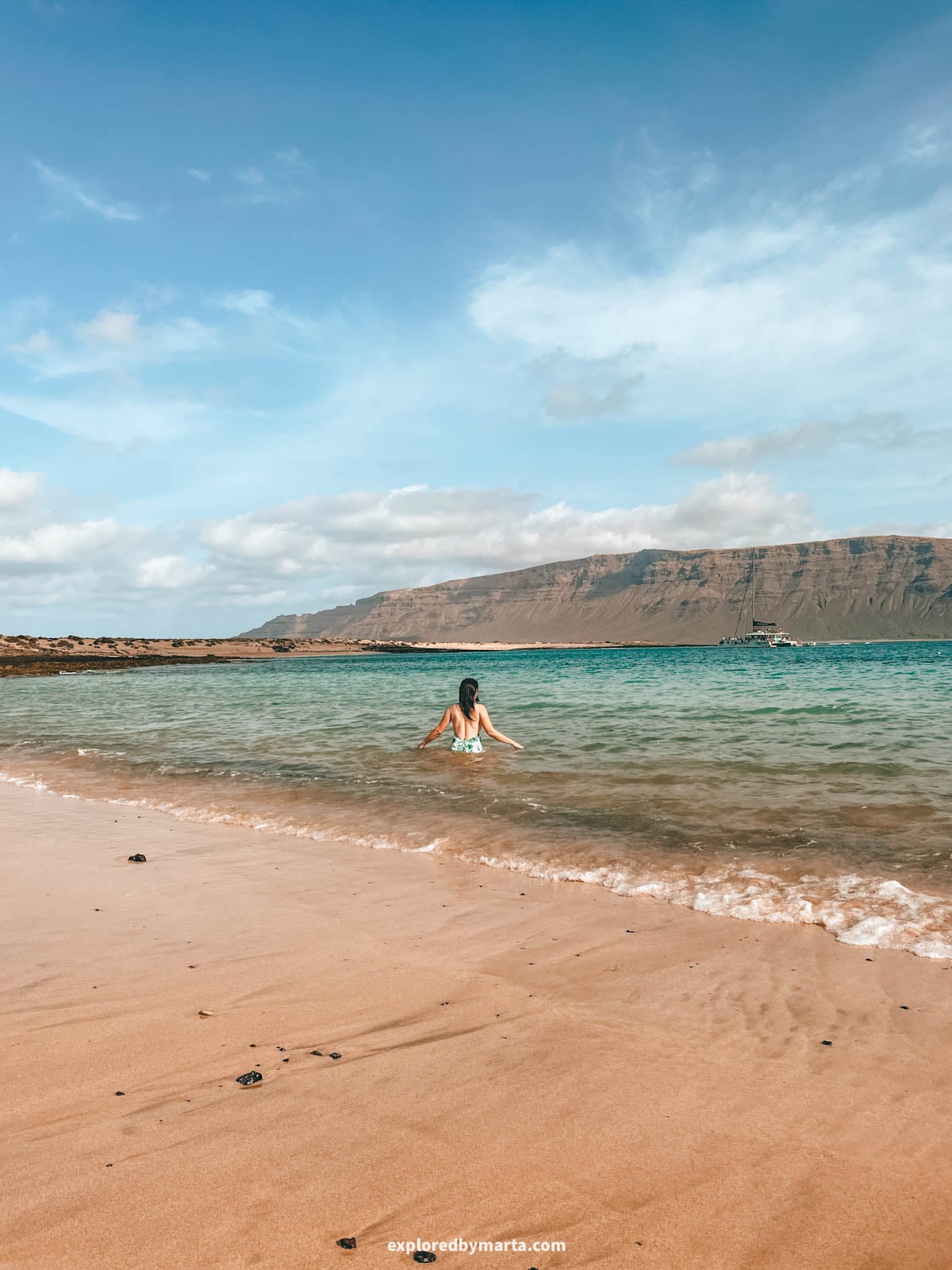
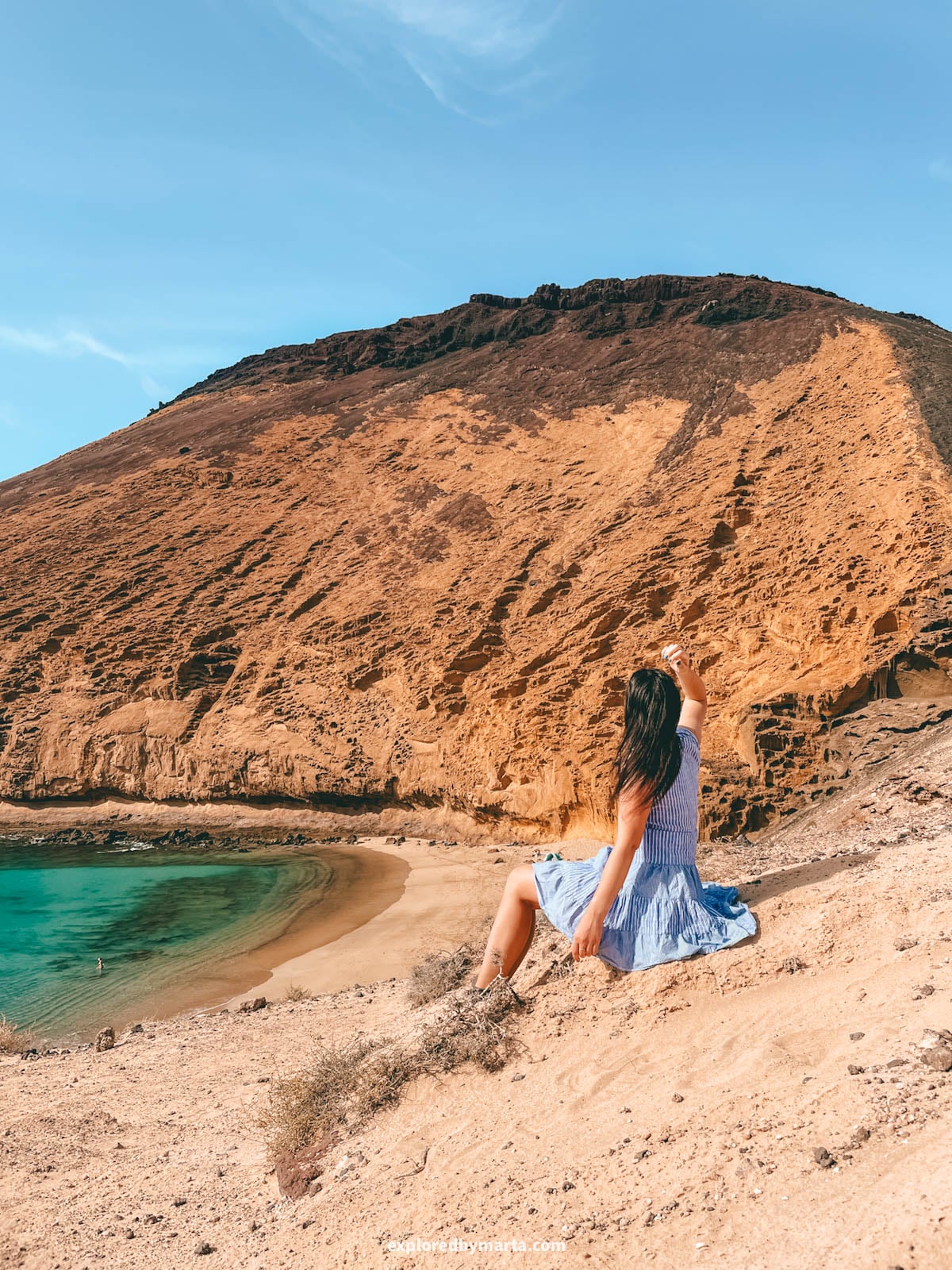
For a swim, we loved the calmer beaches – Playa Francesa, looking straight back at the Famara cliffs of Lanzarote, and Playa La Cocina, a little turquoise bay hidden under the yellow volcano Montaña Amarilla.
One day is enough to see the whole island – we covered all of it, had some lunch and an ice cream in the main village, and still caught the afternoon ferry back.
Where to stay in Lanzarote
Lanzarote is small enough that you can base yourself anywhere and still reach everything on this list, but for that, you’ll need a rental car. Here are the best places to stay in Lanzarote:
Puerto del Carmen – the island’s biggest resort town. This is where we stayed for 4 weeks during winter. A long beach, a lively promenade full of restaurants, and a central location that made day trips easy in every direction. A solid first-timer’s choice.
Playa Blanca – the south tip, calmer and more polished, with the Marina Rubicón and the Papagayo beaches on your doorstep. Great for couples and families who want quieter evenings.
Costa Teguise – a purpose-built resort town on the east coast. It was designed in the 1970s as a holiday town, and today it’s calm, flat, and family-friendly, with sheltered beaches and a windsurfing scene at Playa de las Cucharas. A good pick for families!
Arrecife – the island’s capital. Not a resort at all, and that’s the appeal: real local life, a seafront promenade, good restaurants where you’ll hear more Spanish than English, and usually better prices. A smart base for budget travelers, and you’re right in the middle of the island for day trips in every direction.
Caleta de Famara – a small, laid-back surf village right under the huge Famara cliffs, with sandy streets and one of the best beaches on the island. There are no big hotels here, just apartments and surf houses. Perfect if you’re coming for the waves, the sunsets, and a slower pace.
FAQs about things to do in Lanzarote
How many days do you need in Lanzarote?
Three to four days cover the main highlights like Timanfaya, Jameos del Agua, and the beaches. A week lets you add the hikes, the quieter spots, and a day trip to La Graciosa without rushing.
What is Lanzarote famous for?
Lanzarote is famous for its volcanic landscape – the Timanfaya fire mountains, lava tubes like Cueva de los Verdes, wine grown in black ash, and the art of César Manrique, who shaped how the whole island looks.
Do you need a car in Lanzarote?
Yes, a rental car is the best way to explore. Many of the best places to visit are spread across the island, and some sit at the end of gravel roads with no public transport at all. But you can always get a taxi or join guided tours.
Is Lanzarote worth visiting?
Absolutely. It packs volcanoes, caves, vineyards, beaches, and unique art into one small island, and the weather is warm and dry all year. There is genuinely nowhere else on Earth quite like Lanzarote.
What is the number one attraction in Lanzarote?
Timanfaya National Park is the island’s top attraction – a protected landscape of raw volcanoes where the ground is still hot just below the surface. The bus route through the Fire Mountains (Montañas del Fuego) is unmissable.
Read more about traveling in the Canary Islands
Out of our four weeks on the island, what stuck with me most was the sheer variety packed into such a small place. One day we were walking through an underground lava tunnel, the next lazing on a golden beach, and the day after that standing on the rim of a giant crater.
And through it all runs that strange volcanic thread – the black fields, the wine growing out of ash, the food cooked over a volcano’s heat. Lanzarote wears its dramatic history on its sleeve, and it makes every day of exploring feel a little unreal.
Whether you have three days or three weeks, this island will fill them. If you’re planning a trip to Lanzarote or the Canary Islands and want to learn more about these volcanic islands, check out my other guides below.
Read more about Lanzarote:
- 20 best photo spots in Lanzarote, Spain (with locations!)
- 15 unreal rock formations in Lanzarote, Spain
- 7 best caves in Lanzarote, Spain (lava tubes and sea caves)
- Ultimate places to see on La Graciosa island
Read more about the Canary Islands:
- Amazing rock formations in Fuerteventura
- The best caves to visit in Fuerteventura
- Things to do and places to see in La Palma
- Hidden gems and secret spots in Gran Canaria
PIN FOR LATER!