10 epic caves in Fuerteventura, Spain (& how to find them)
This post may contain affiliate links. If you use these links to make a purchase or booking, I may earn a small commission at no extra cost to you! Thank you for your support!
Exploring caves in Fuerteventura turned out to be one of our favorite adventures on the whole island. We spent four weeks there, and some of our best days were spent climbing over rocks at low tide to find a cave nobody else was visiting.
The famous Ajuy caves are the easy ones – signposted, free, and a short walk from a beautiful black sand beach. But most caves on this list have no signs at all, and a few took us some serious searching to find.
That’s why in this blog post for every cave, I’m sharing exactly how to find it: where to park, which way to walk (with Google Maps coordinates), and when the tide lets you in. Let’s go cave exploring in Fuerteventura, Spain! 🔦
1. Cuevas de Ajuy
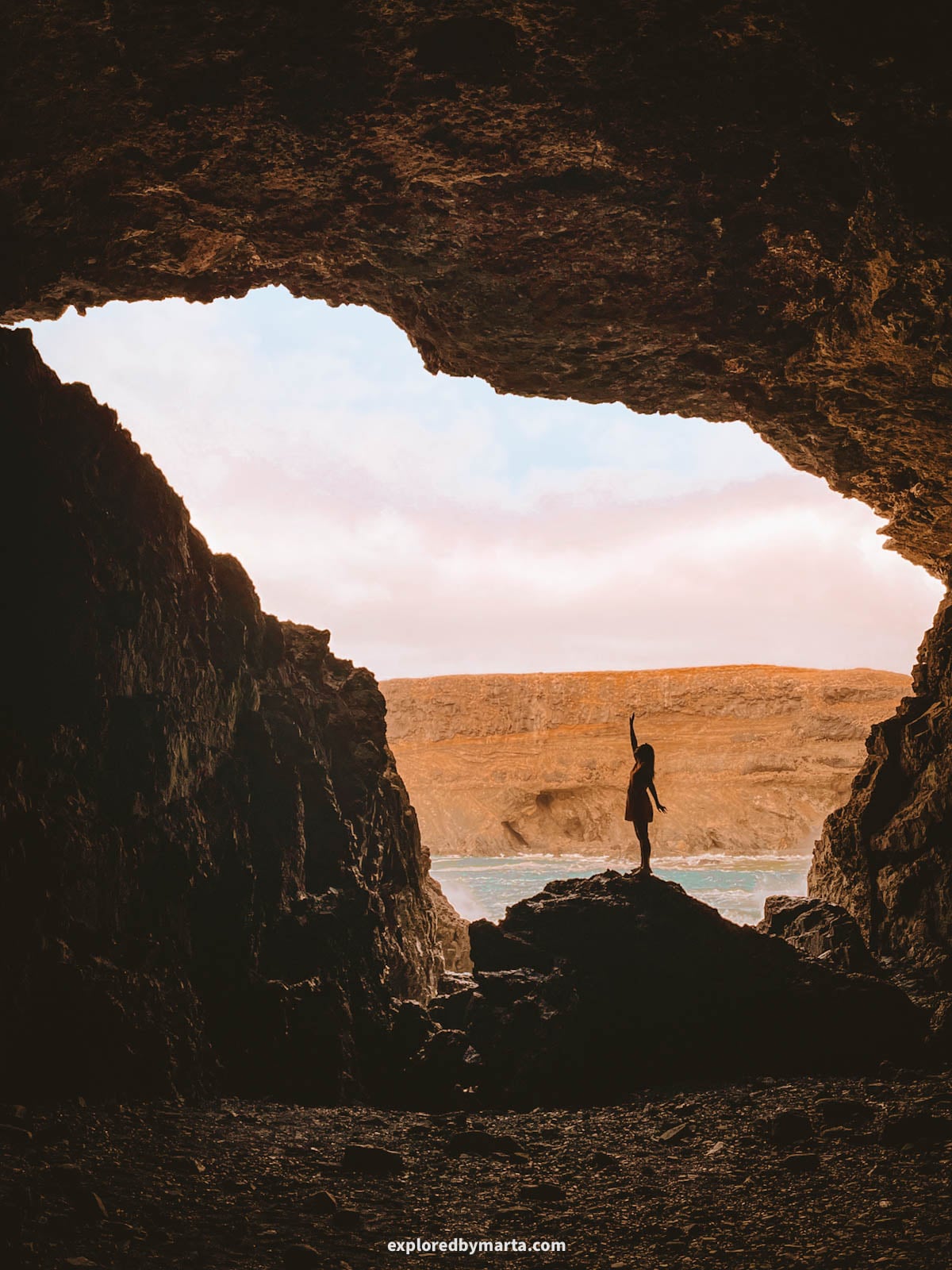
The Cuevas de Ajuy are the most famous caves in Fuerteventura, and the only ones on this list with signposts, info boards, and a proper path.
These caves sit in the cliffs by the ocean just north of Ajuy, a tiny fishing village with a beautiful black sand beach, Playa de Ajuy, on the west coast of Fuerteventura.
This little village has a big place in the island’s history. In 1402, the Norman explorer Jean de Béthencourt landed right here to start the conquest of Fuerteventura, and for centuries, Ajuy was one of the most important ports on the island.
Local legend also says that pirates once hid their treasure in these caves. Well, we didn’t find any gold there, if you were wondering, haha.
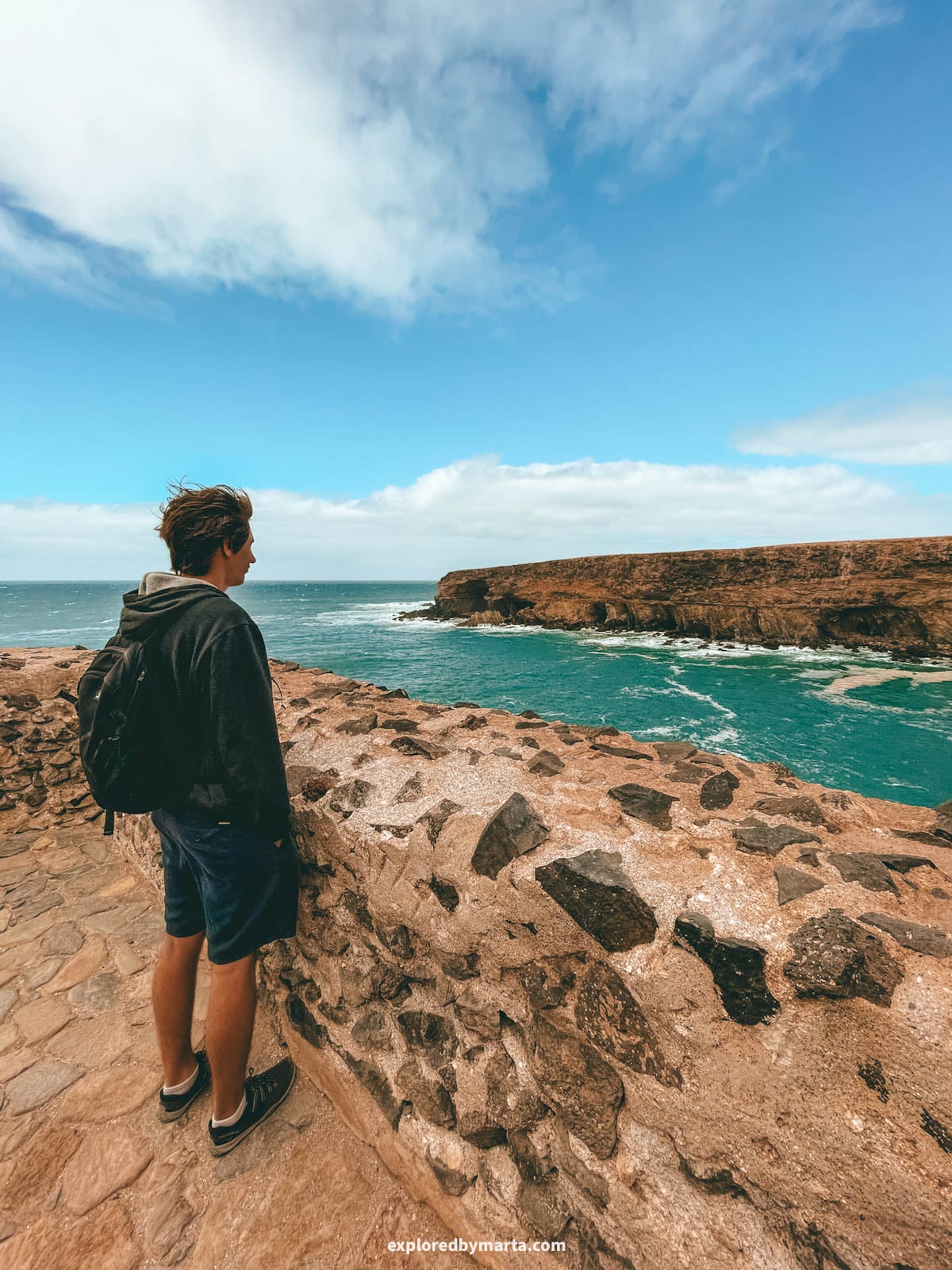
To get there, park in the car park next to Ajuy beach and take the path that starts on the right side of the beach. It’s about a 10-minute walk along the cliffs, past old lime kilns and layers of petrified sand from an ancient seabed.
At the end of the path, stairs lead down into the caves. There are two huge caves right next to each other, with ceilings over 15 meters (49 feet) high. If you only look from the top, you’ll miss the second one completely.
To get to the second cave, go down the stairs and climb through the opening in the rock wall between the caves. It’s quite easy, but most people never bother, so the second cave was much quieter when we were there.
At the back of the caves, you’ll notice some holes that look man-made. Turns out, they’re the start of an old tunnel that was meant to carry cobblestones to the nearby port of Puerto de la Peña.
The tunnel was never finished, and lime workers used it as a place to sleep instead.
When to go? This is the most popular cave on the island, so come in the morning or late afternoon to avoid the crowds. We went in the middle of the day, and it was busy, but still fine. There is no entrance fee.
For me, Caves of Ajuy are the perfect caves to visit in Fuerteventura – easy, relatively safe (it’s tricky in bad weather or with big waves), and huge.
We spent about an hour visiting the caves, but plan more time if you want to grab lunch at one of the famous seafood restaurants in the village! Check out restaurants like La Jaula de Oro, La Pescadora Ajuy, or Café del Mar Ajuy.
Location: Cuevas de Ajuy – Parking lot
2. Sea caves at Playa de la Solapa
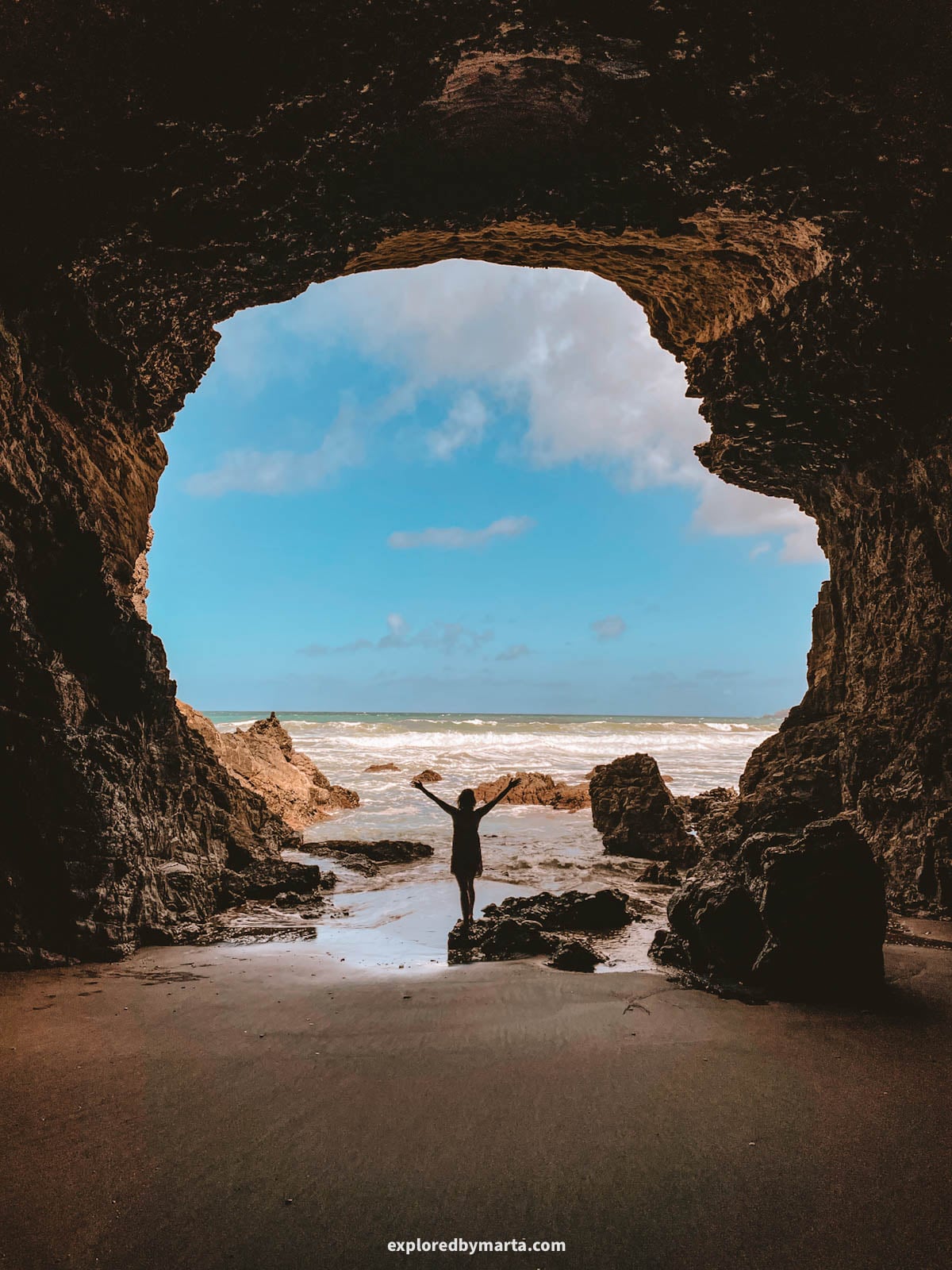
Playa de la Solapa is one of my favorite beaches in Fuerteventura, and one of the main reasons is that this beach is home to some of the coolest sea caves in Fuerteventura!
Playa de la Solapa is a wild black sand beach on the west coast, and the cliffs just south of it are full of caves you can walk into at low tide.
The whole moody beach with black sand and rocks feels like another planet – so much so that Marvel chose this beach as a filming location for Eternals. Yes, Angelina Jolie came to the island to shoot on this very beach!
Getting to the beach is not difficult, but the final access part is a gravel road. However, it was fine for our small Fiat 500. Park it at the top of the cliff right before the beach and walk down to the sand.
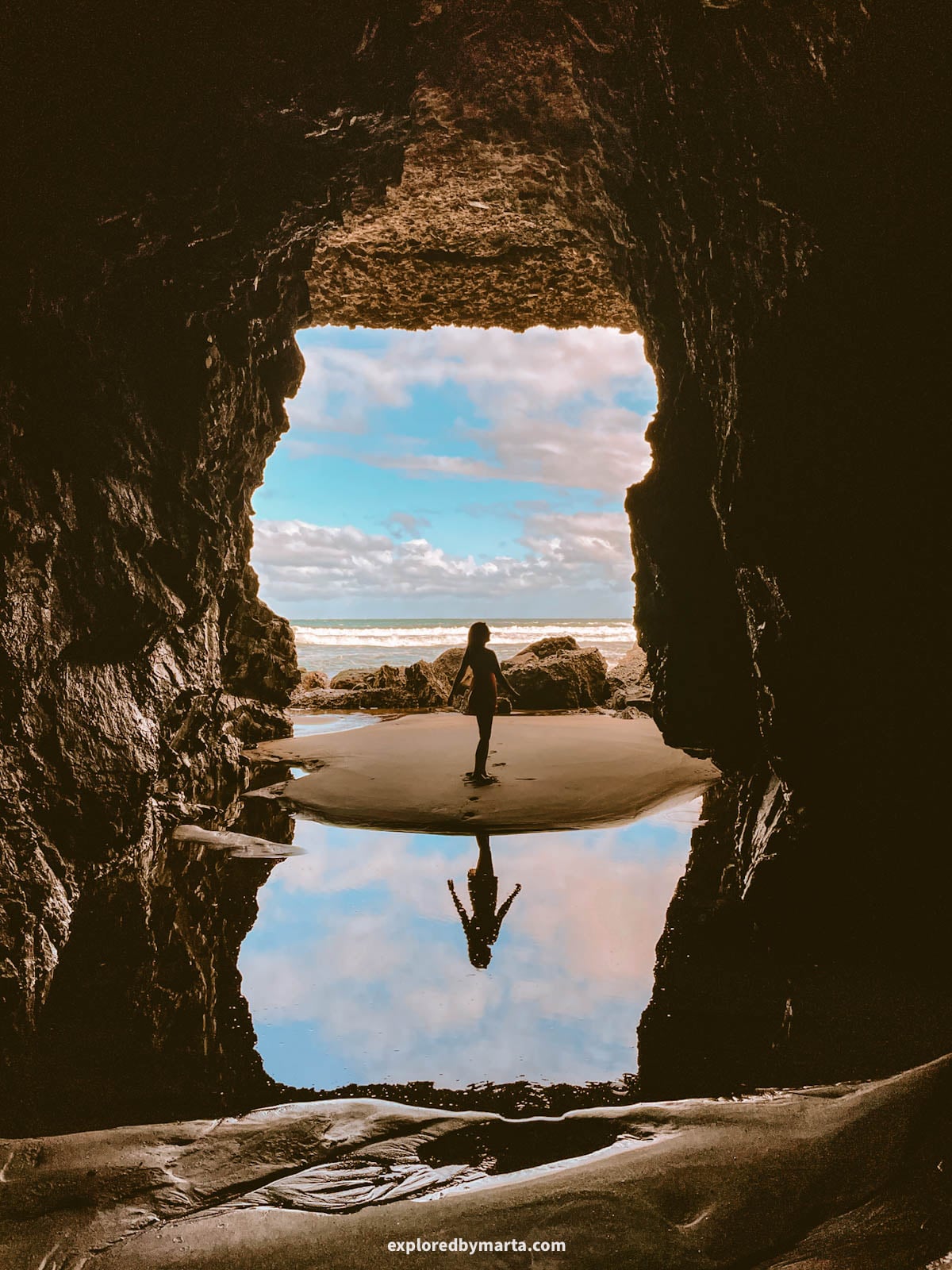
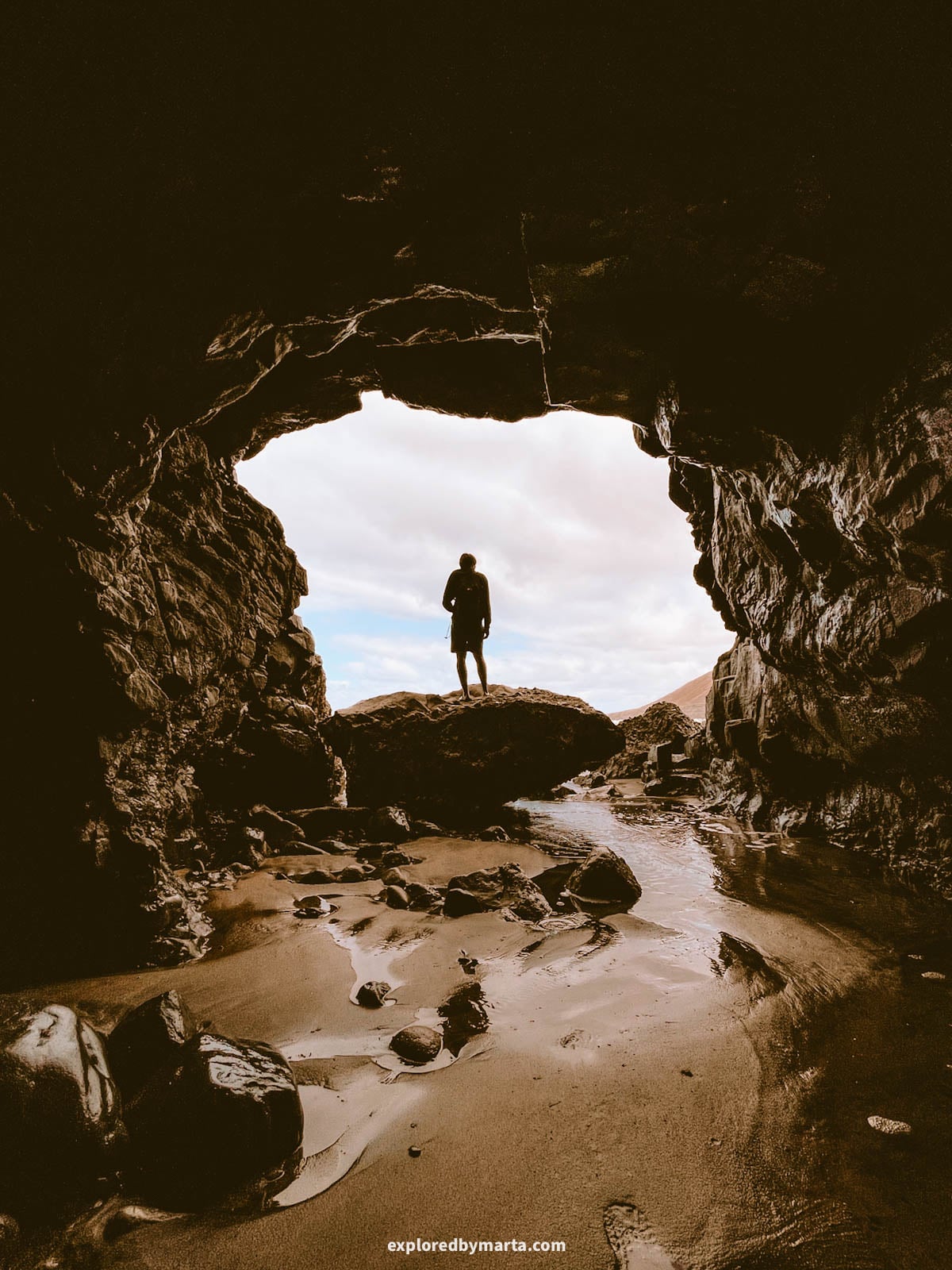
For the caves, walk towards the ocean and turn left to follow the shore south.
You’ll pass (and sometimes climb over) big rocks that have fallen onto the beach. The best caves are about 100 to 200 meters from the beach. So, basically, all the caves are within a 5-minute walk. There are about 3 or 4 bigger caves along the shore.
When to go? These are real sea caves, so you must come at low tide. If you have options, choose the lowest of the low tides (yes, low tides differ a lot). The west coast can be wild, and even some low tides are too rough for these caves.
If the ocean looks angry, come back another day. The caves aren’t going anywhere. 😄
Location: Playa de la Solapa – Sea cave at Playa de la Solapa
3. Bee Cave near Playa de Garcey
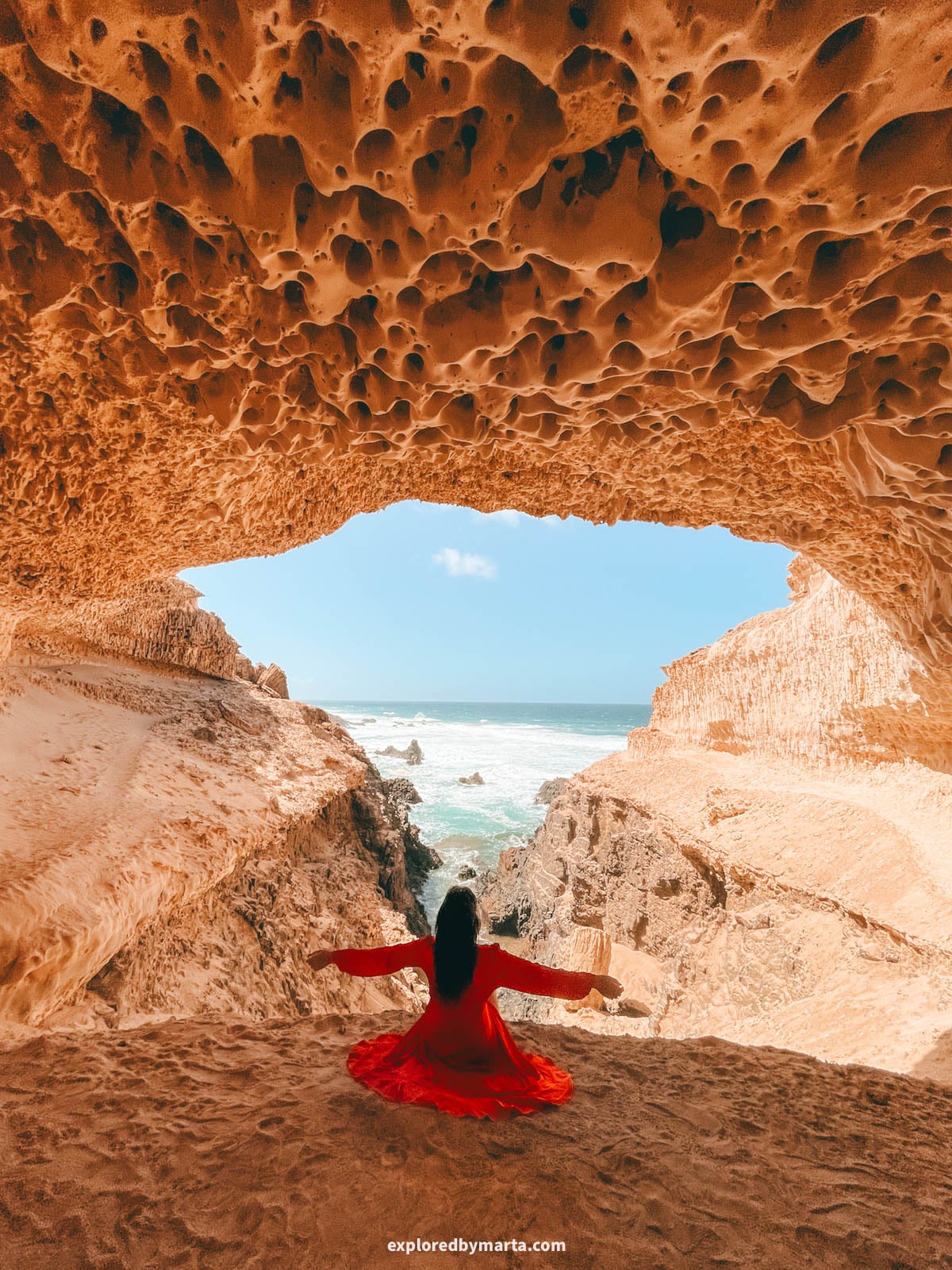
The Bee Cave is one of the most unique places in Fuerteventura, and I named it myself. It’s not an official cave, it’s just a beautiful hidden spot made by the wild nature in Fuerteventura.
Bee Cave is a small sandstone cave hidden at the end of a narrow cove, about 1 kilometer (0.6 miles) south of Playa de Garcey on the west coast.
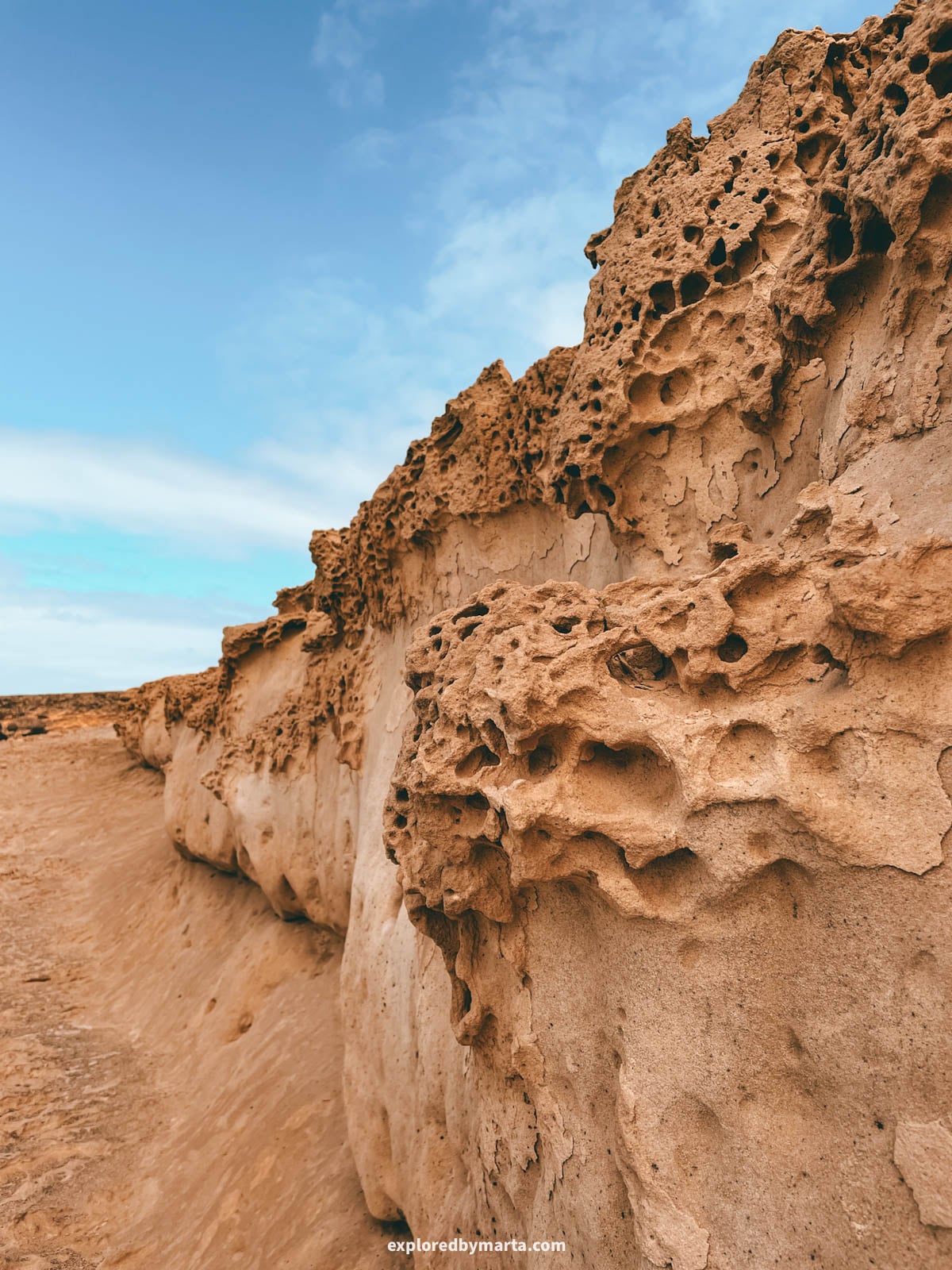
I call it the Bee Cave because its yellow ceiling is covered in little holes that look like honeycomb cells in a beehive. It’s such a unique place!
And, turns out, this rock is actually called honeycomb weathering. Salt from the sea spray gets into the soft sandstone and slowly breaks it apart, one tiny hole at a time. How cool?
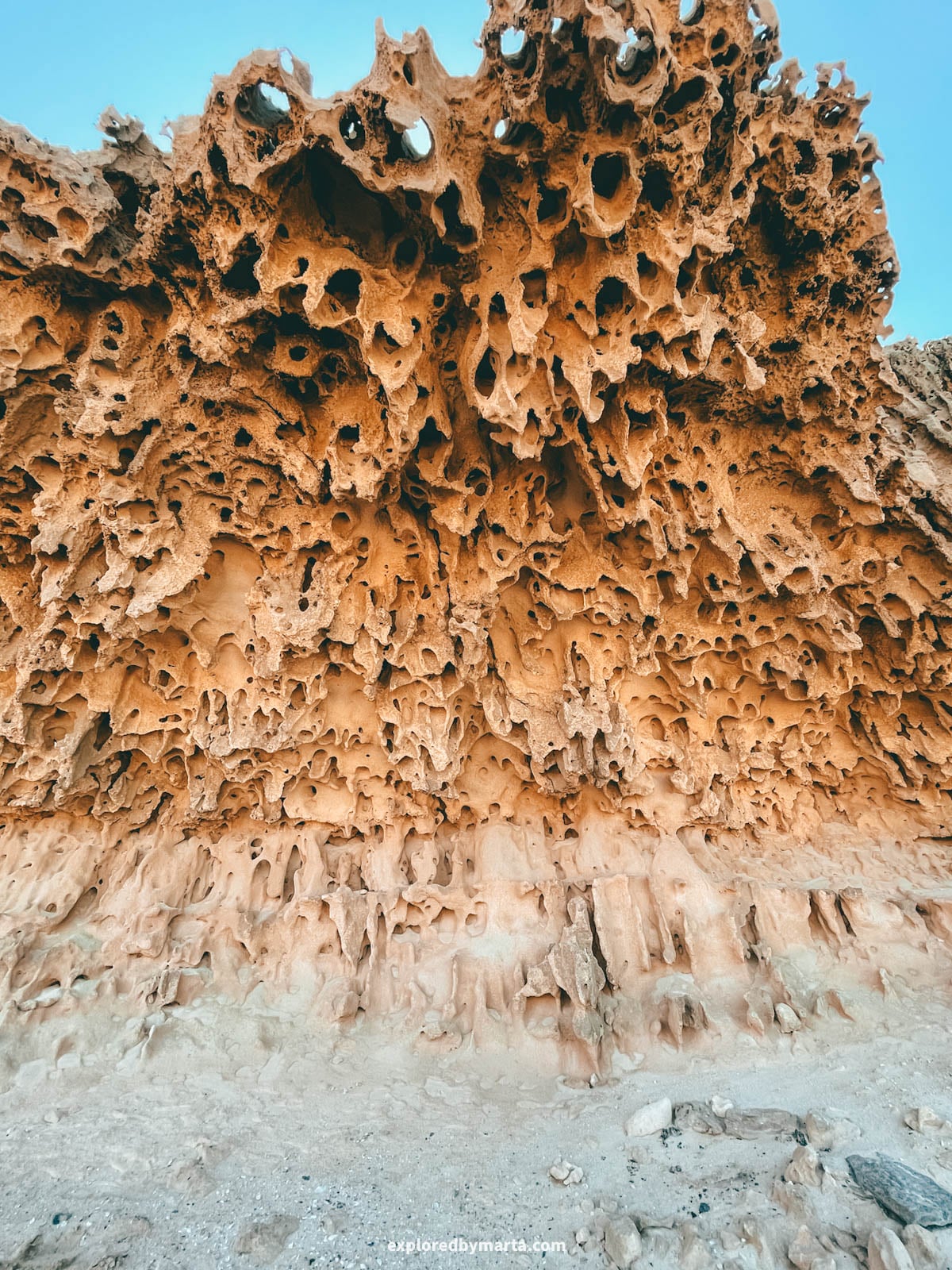
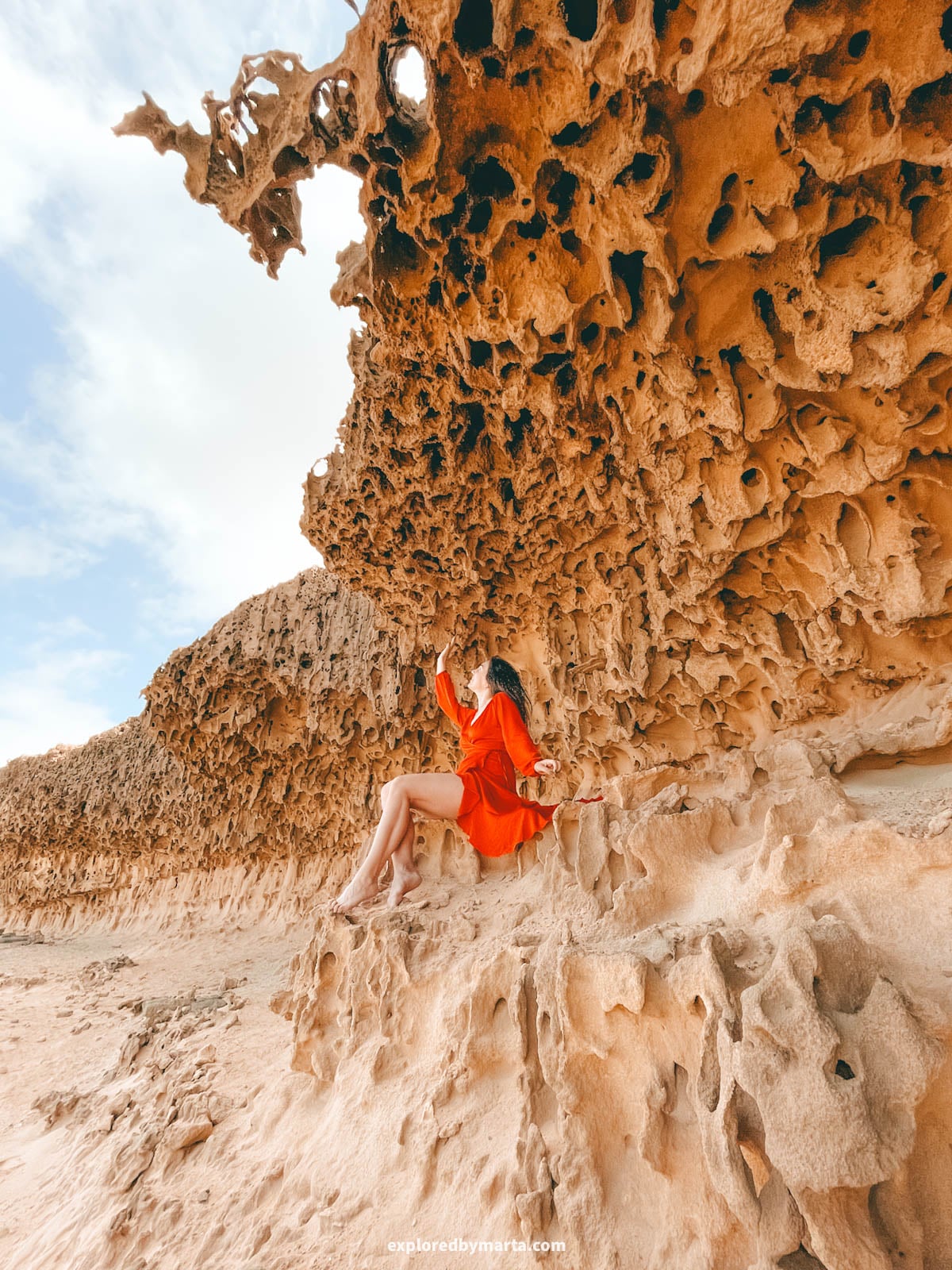
Besides, the cave is not the only place where you can find this beautiful honeycomb rock pattern. A big area close to the cave has it too, so you don’t need to visit the cave to see this unique rock formation.
When to go? This isn’t a sea cave, so the tides don’t matter much, but it still is located right by the water, so I would not go there during strong winds, big waves, or rain, because there’s no real path, the sand can slide, and it’s a remote place to get into trouble.
Yep, you won’t even have cell service there (or a super bad one)!
I wrote a full guide on how to find the Bee Cave with all the details and exact locations, so check it out before you go. For me, this was one of my favorite hidden gems we found on the island.
Location: Playa de Garcey – Bee Cave
4. Cave tunnel at Playa de Vigocho
While you’re there visiting the Bee Cave…
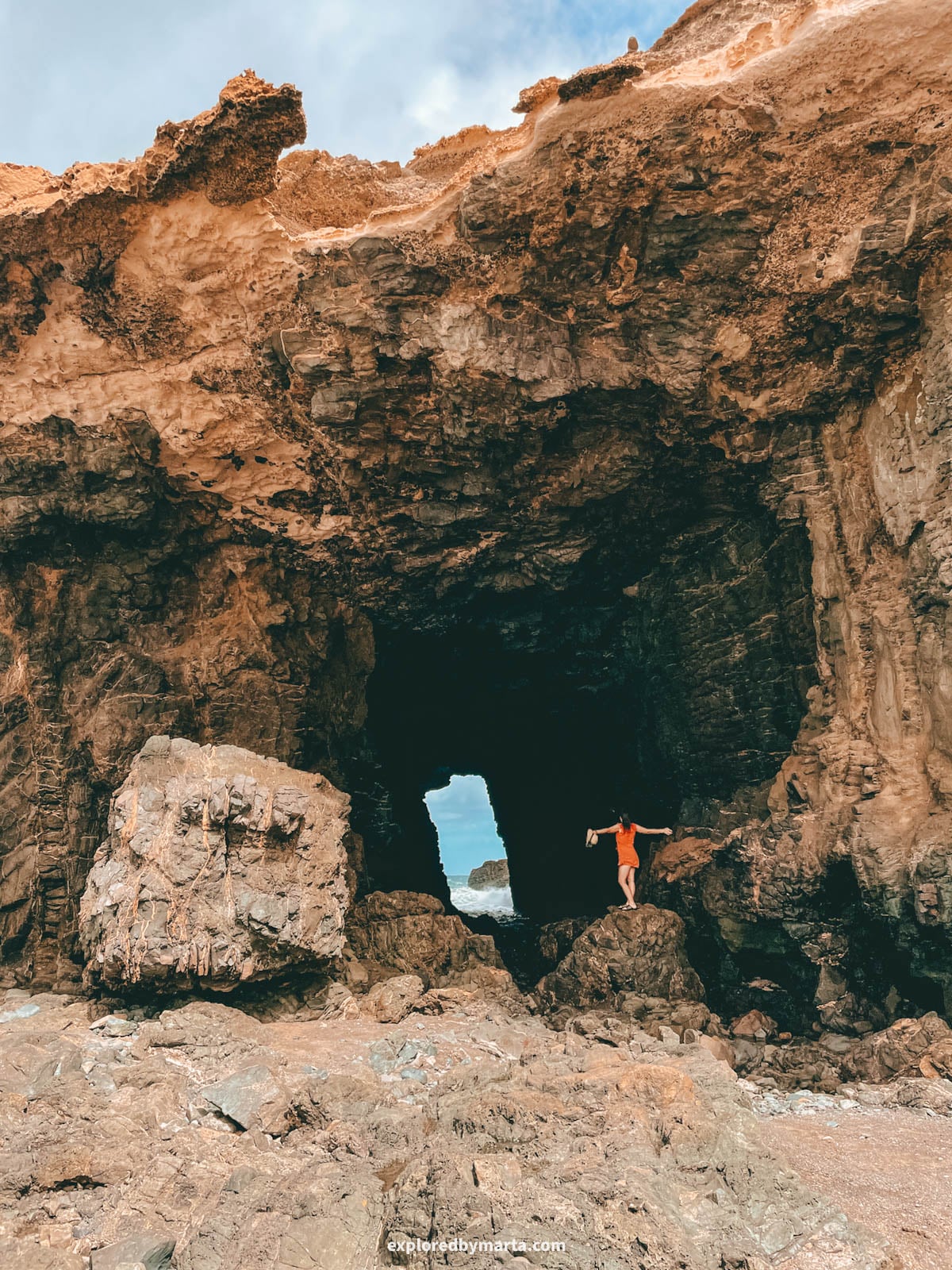
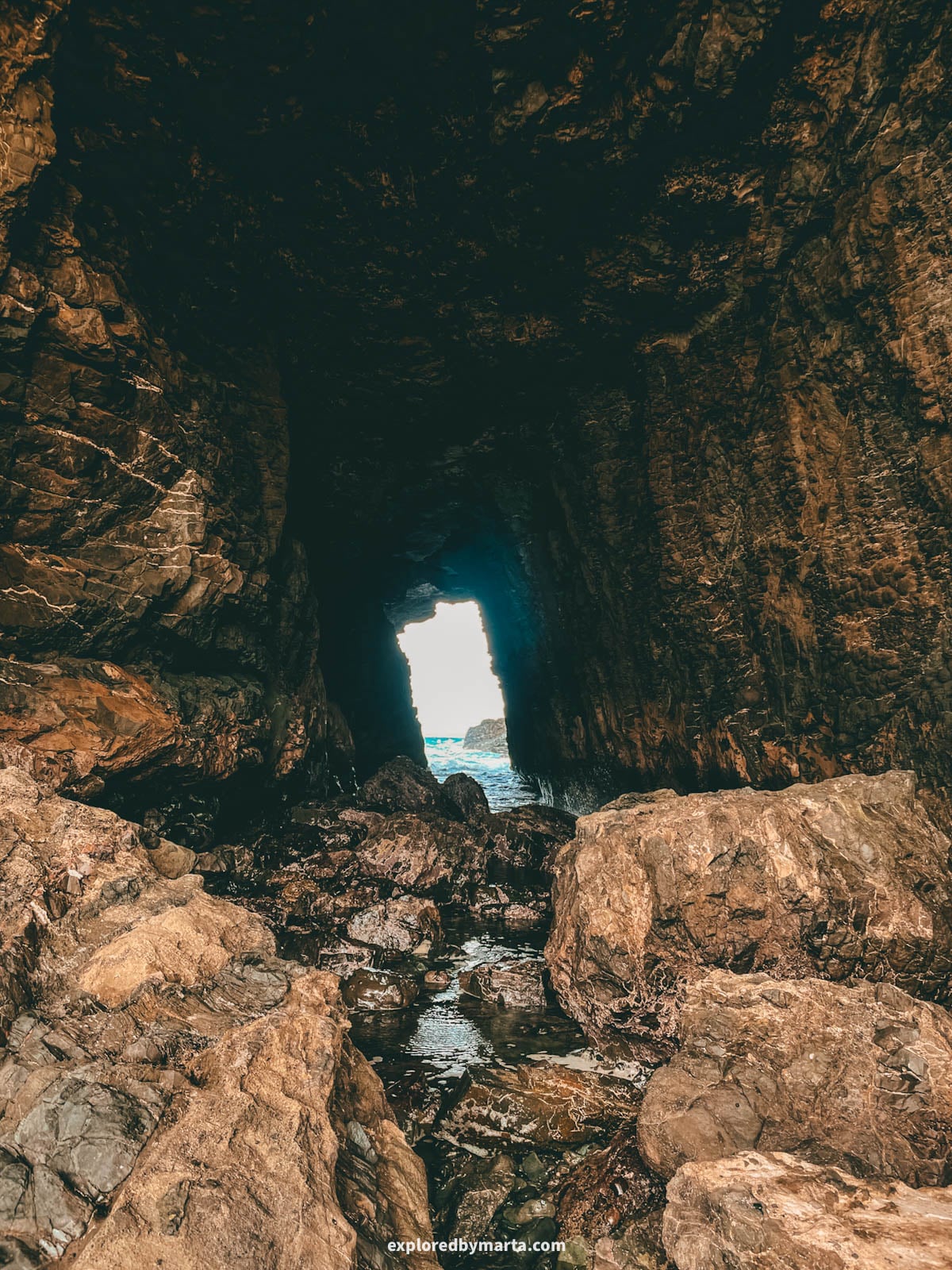
On the way to the Bee Cave, don’t miss the huge rock tunnel at Playa de Vigocho – right next to Playa de Garcey. It’s a big cave(?) that goes right through the cliff, so you can see the ocean on the other side. Like a giant window!
To be fair, it’s hard to say if it’s a tunnel, an arch, or a cave. The waves have carved all the way through the rock here, so one end opens onto the beach and the other straight onto the Atlantic.
At low tide, you can even walk inside it and feel the wind and the waves!
Getting there is easy. A gravel road leads to Playa de Vigocho, and the tunnel is on the north side of the beach. We saw some people walking all the way through it, with the waves crashing at the far end. I was happy to stay by the opening, haha.
It’s a great add-on to the Bee Cave or the Solapa sea caves, since they’re all on the same stretch of the west coast. If you like exploring remote places, you can easily see all three spots in one day.
When to go? Come closer to low tide. We visited after hunting the Solapa caves at low tide, and it looked like the tunnel might actually be reachable closer to high tide, too – but don’t count on it.
Location: Playa de Vigocho – Tunnel of Playa de Vigocho
5. Cueva de Playa de los Ojos
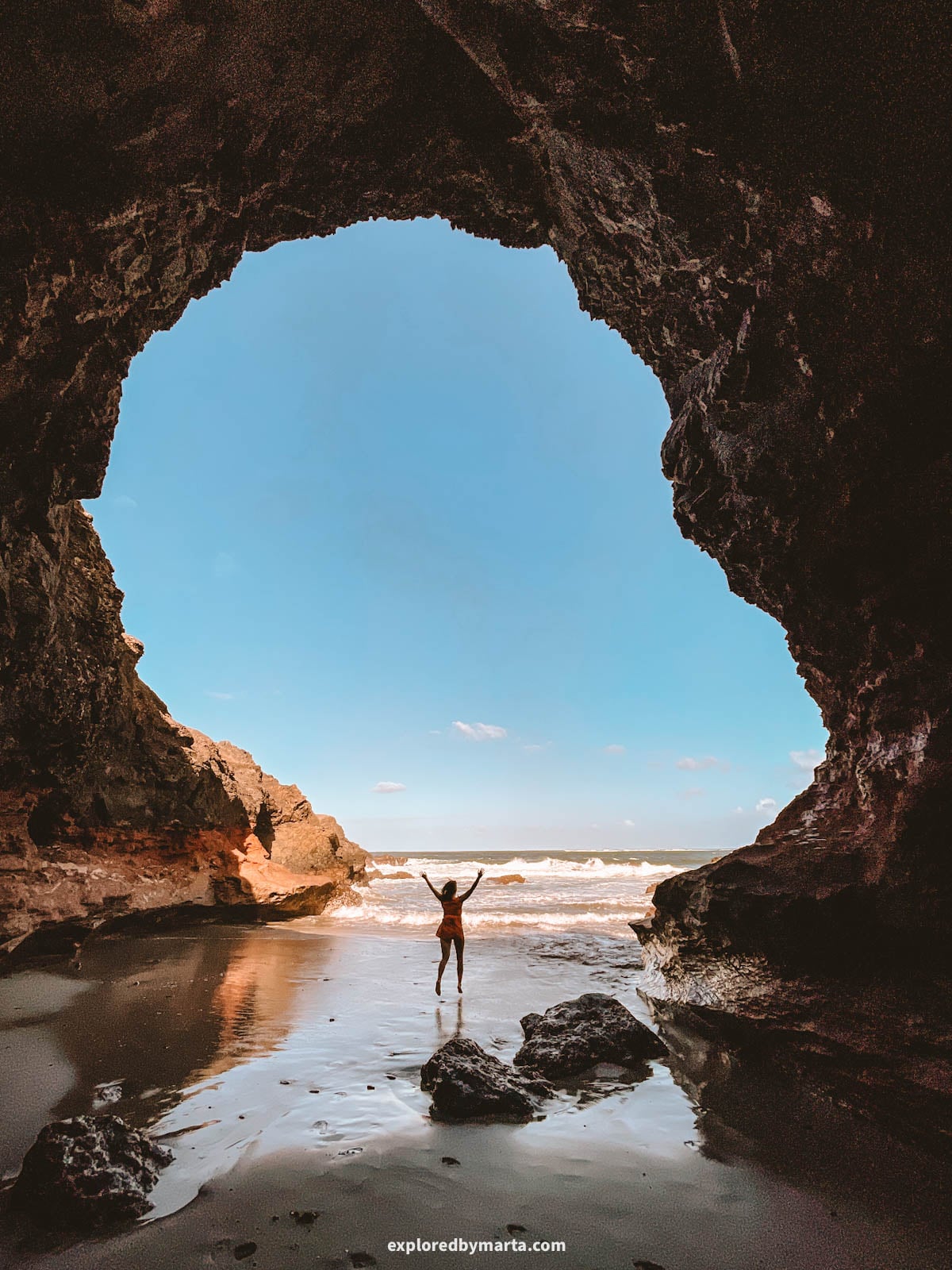
Playa de los Ojos is a remote little cove at the far southwestern tip of Fuerteventura, and it hides one of the biggest sea caves on the island that you can actually get into.
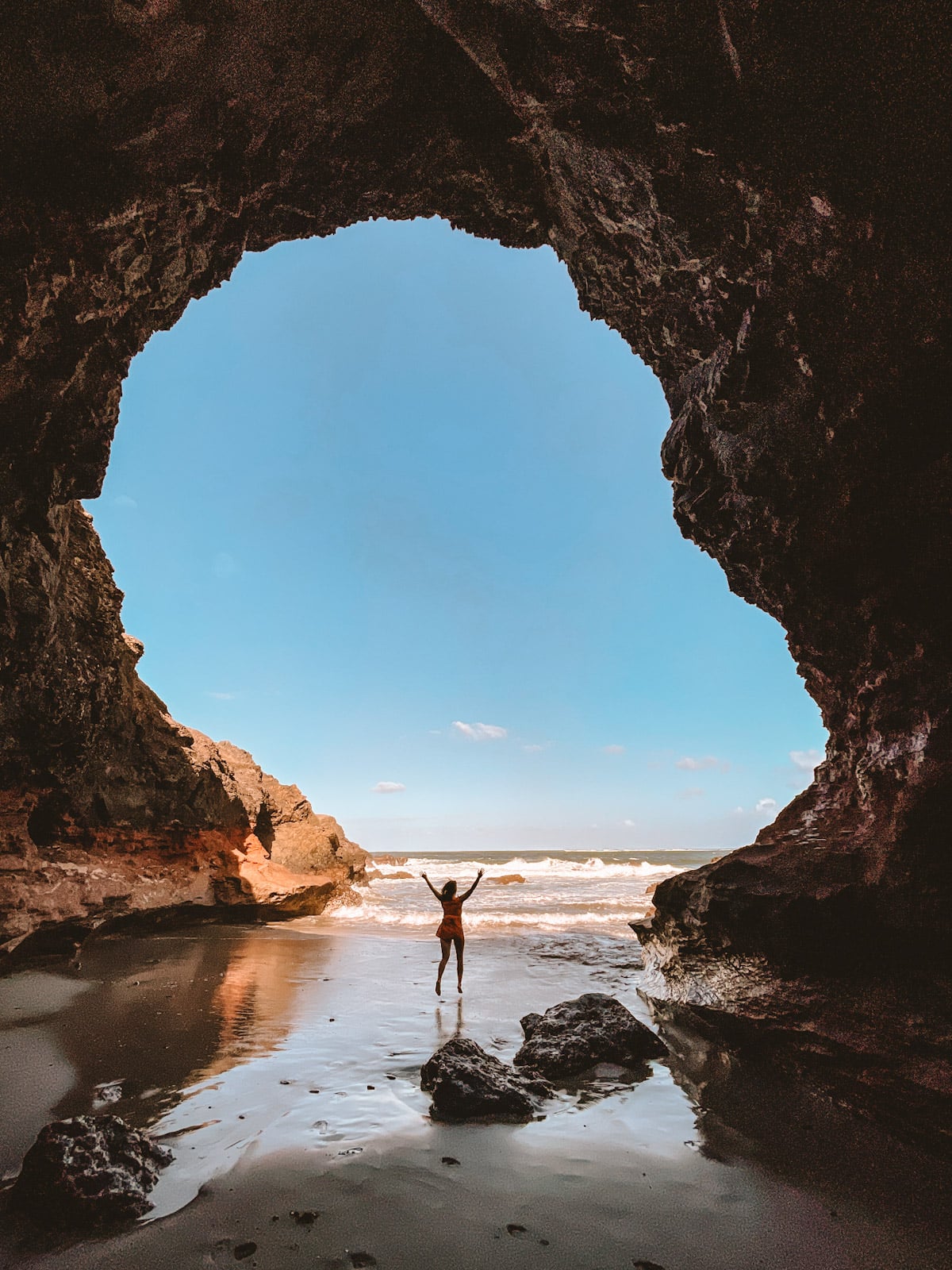
Well, we actually found two caves, but one is a tiny one, and the other one is the star of the show here (see photo above).
The big cave is only accessible at low tide, since it can fill up with water when the tide comes in, so you need to make sure you plan your visit at the right time. You can access the cave down from the beach – it’s behind a small rock outcrop that stretches into the ocean.
What about the small cave? The small cave is located to the right, a short distance from the stairs where you walked down to the beach. It’s not big at all, but it was a fun spot to stop by during our beach walk.
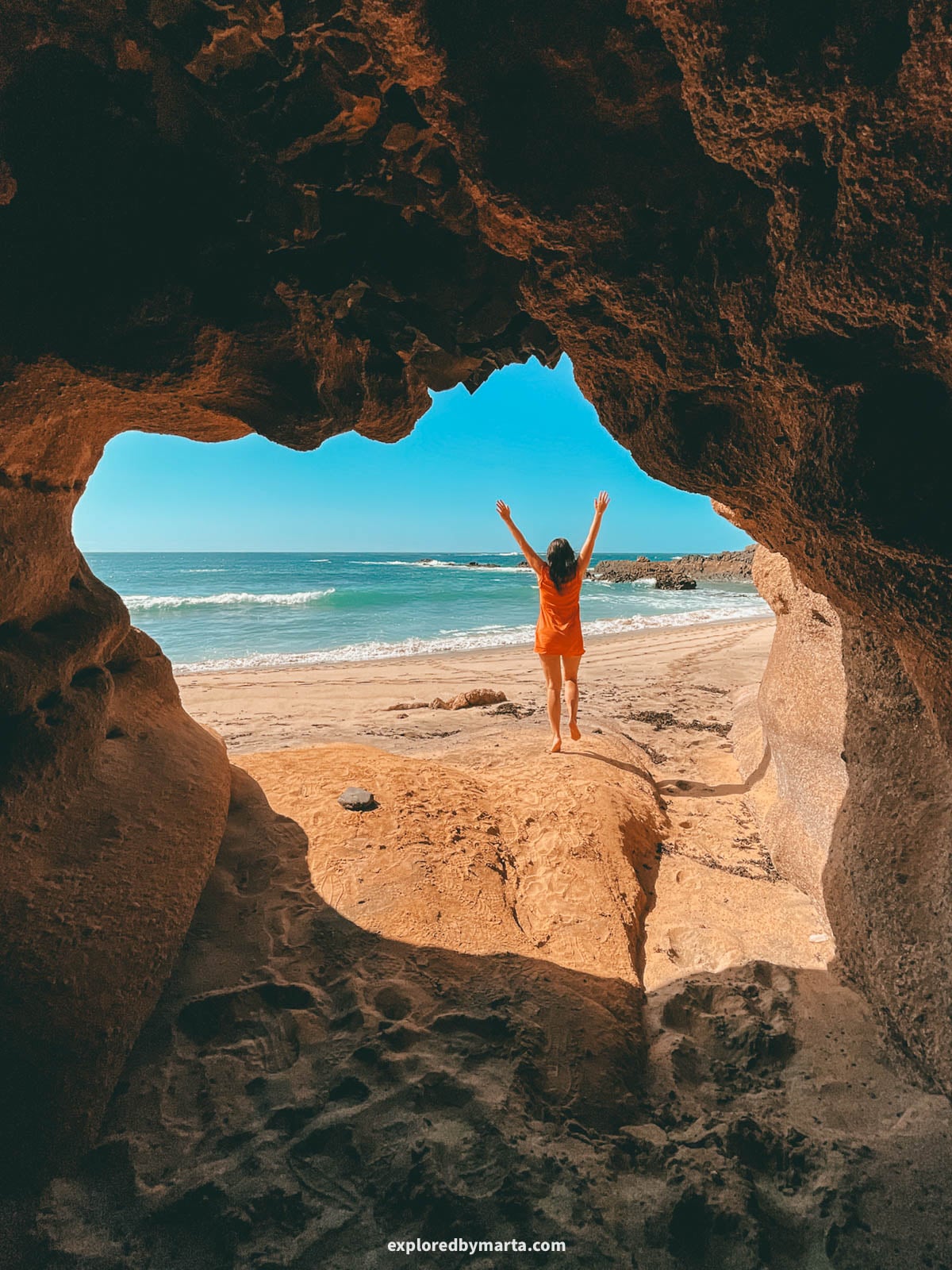
When to go? Aim for low tide and a calm day. We arrived right as the tide was coming in, but the waves weren’t too big, so we still made it into the big cave.
Playa de los Ojos is one of the remotest beaches in Fuerteventura (the only way in is a long gravel road from Morro Jable), and it’s a long drive for a cave, so make a day of it and combine it with Playa de Cofete and Faro de Punta Jandía lighthouse.
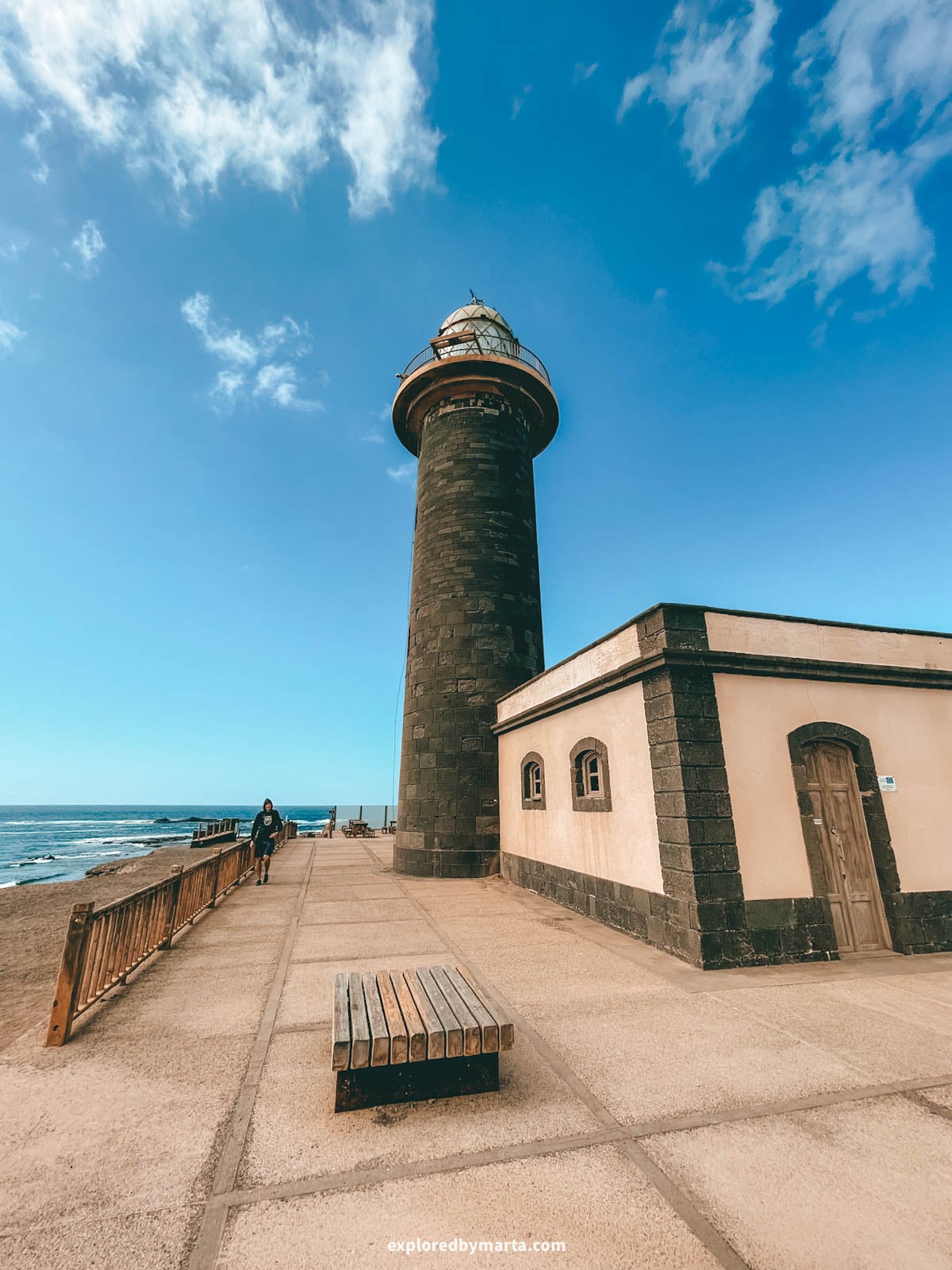
The lighthouse has been guiding ships since 1864 and is one of the oldest in the Canary Islands – worth a quick stop on the way. This area felt like the end of the world, honestly.
Location: Playa de los Ojos – Cueva de Playa de los Ojos – Small cave
6. Cueva de los Estancos (lava caves)
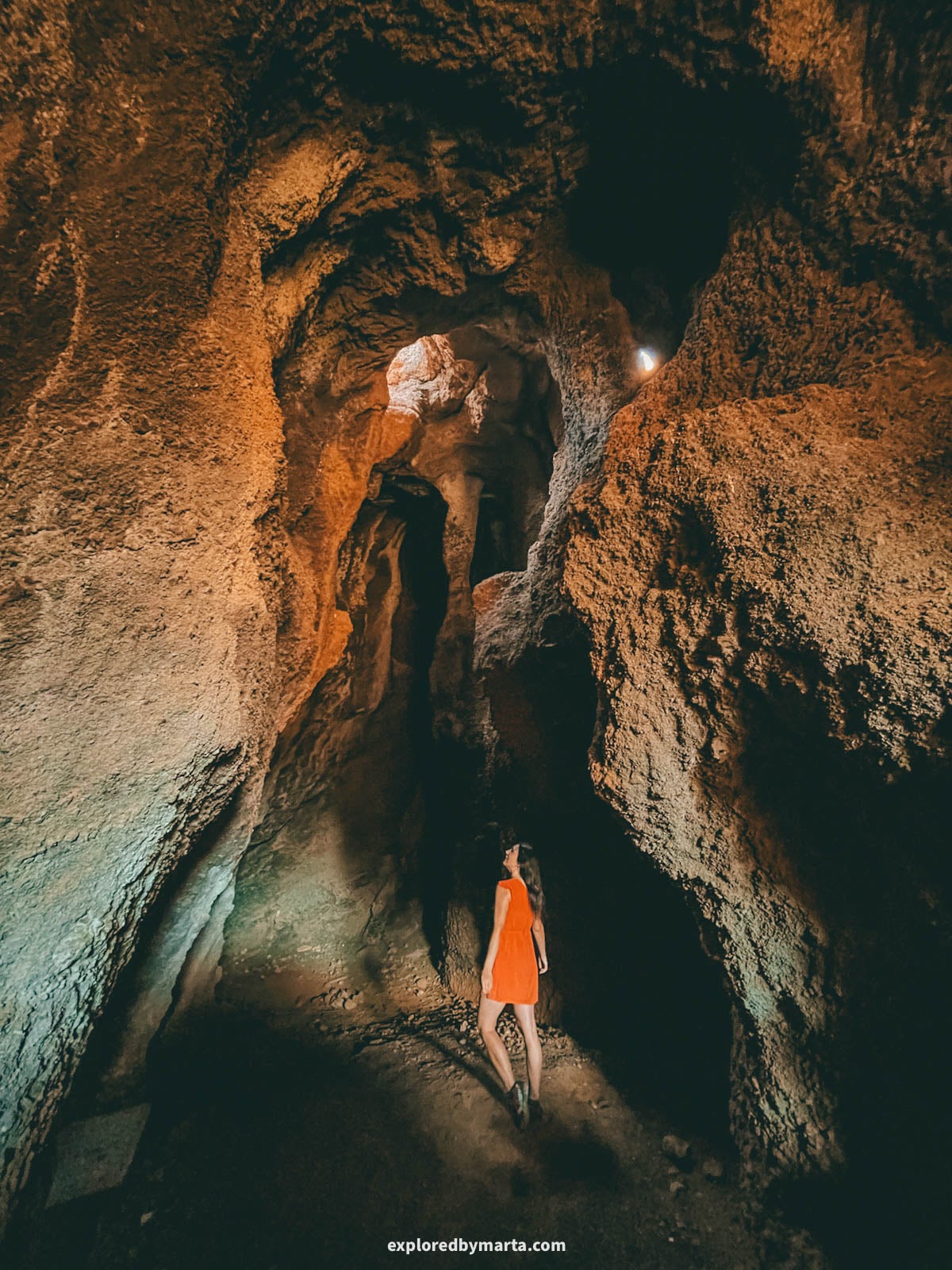
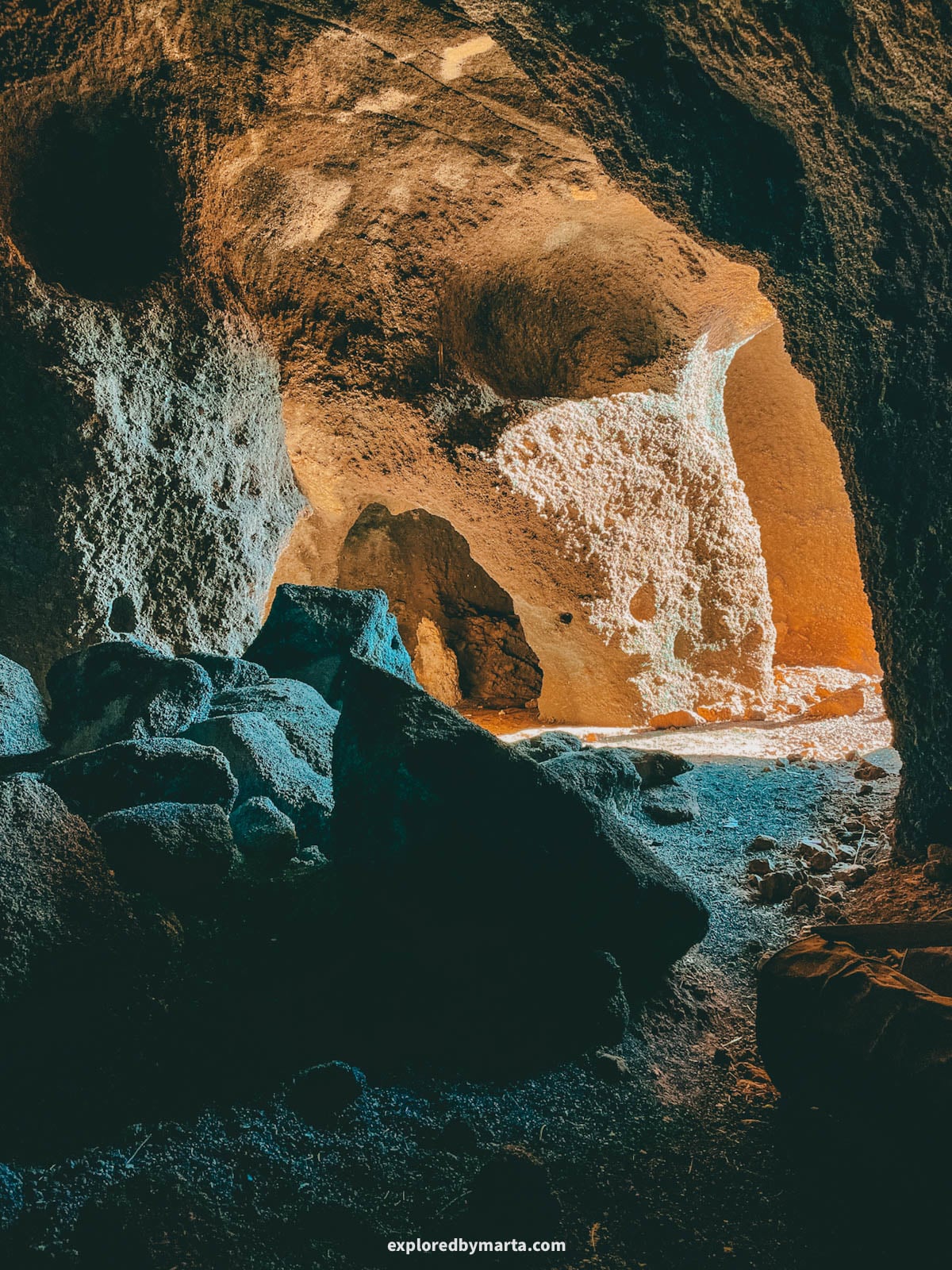
The lava caves near Los Estancos are completely different from the sea caves on this list. They’re hidden on the side of a small volcano near Los Estancos, a village just inland from Puerto del Rosario, the capital of the island.
These caves are lava tubes, formed when the outside of a lava flow cooled and hardened while hot lava kept running inside. Once the lava drained out, it left these hollow tunnels behind.
They’re not an official tourist attraction, so there are no signs. Park at the side of the road that goes up the volcano, then follow the path to the caves.
We spent a good 15 minutes just walking around and peeking into every opening, finding more and more caves. Some of the bigger openings are easy to walk into and explore. We didn’t see anything like this anywhere else on the island.
When to go? Skip rainy days. The ground is made of tiny pieces of volcanic rock, and it’s fragile, so it breaks more easily when wet. Also, only come in daylight – there are deep holes that drop almost straight down.
If you’d rather not explore on your own, a local guide now runs small-group tours into the Los Estancos lava caves. For me, though, finding them ourselves was half the fun.
Location: Lava caves · Parking place
7. Cueva de Playa del Jurado
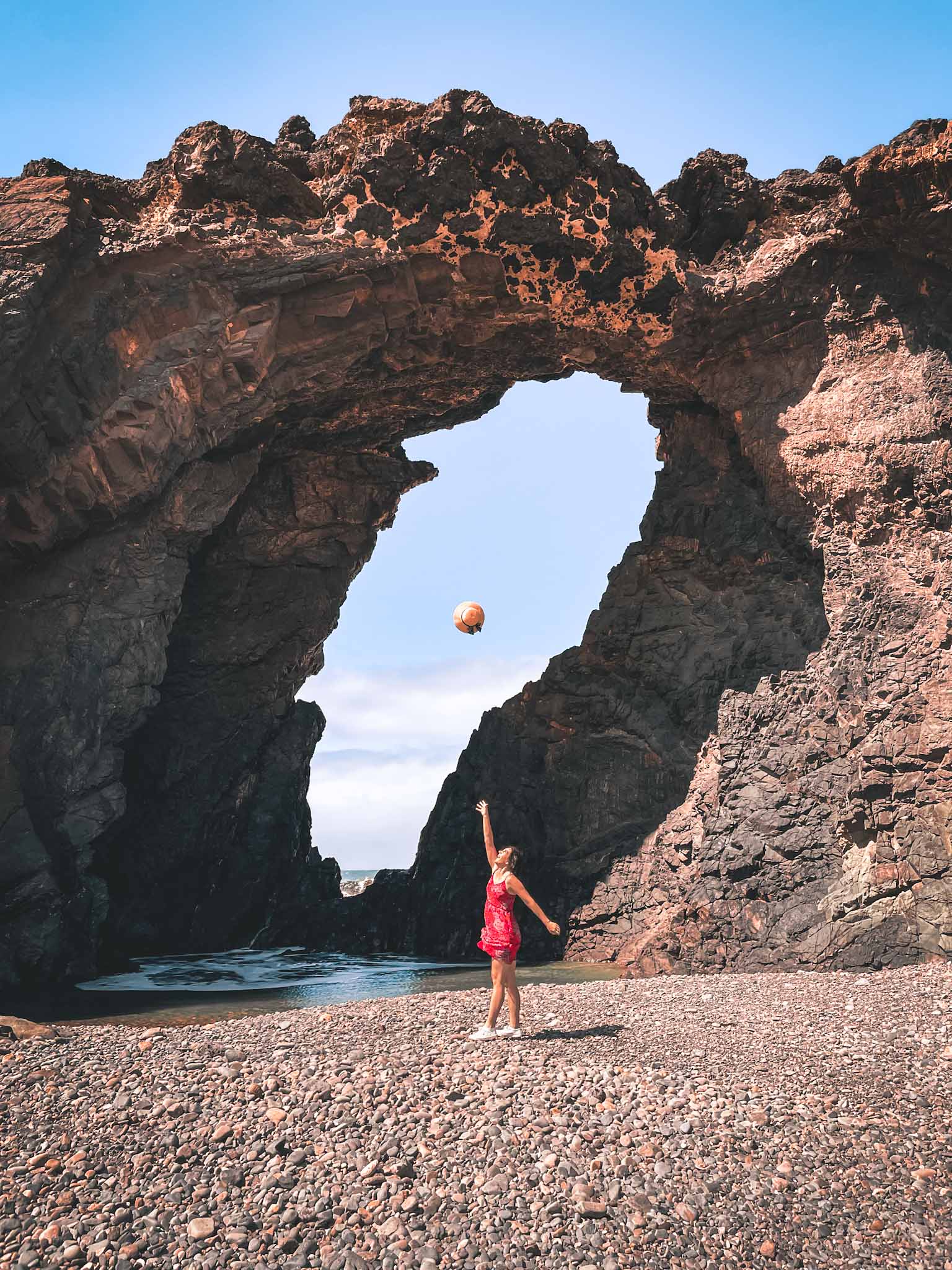
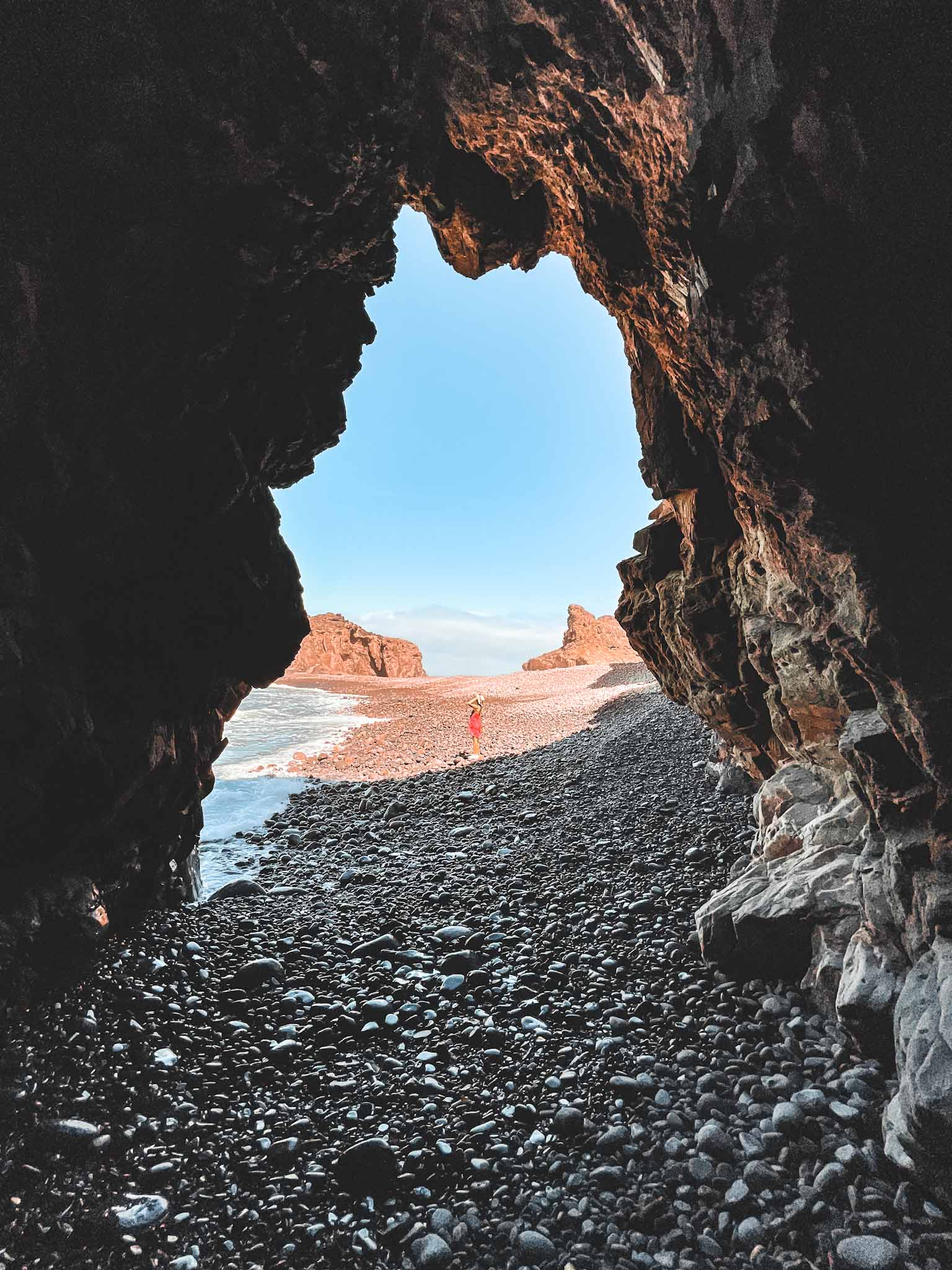
Playa del Jurado is a must if you love unique rock formations. Most people come here for the Arco del Jurado, also called Peña Horadada – a huge cliff with a giant oval hole right through it.
Horadada means “pierced” in Spanish, and it’s easy to see why. The ocean has punched straight through the rock, leaving an arch so big that people standing under it look tiny.
You can drive here on a bumpy gravel road – we did it in our little Fiat 500 rental car, but it was stressful. Or park in Ajuy and walk about 1.5 kilometers (0.9 miles) along the coast, past the Ajuy caves.
Many people are so busy with the arch that they miss the cave. You’ll find it at the south end of the beach. It’s not the biggest or most impressive cave on this list, but since you’re already there, it’s worth a look.
When to go? Come around low tide. The cave is close to the water, and at high tide the waves reach far up the beach, so you could get stuck between the ocean and the cliff.
For me, the best plan is to combine it with the Ajuy caves. Walk from the village, see the caves, continue to the arch, and you’ve got one of the best short hikes on the west coast.
Location: Cueva de Playa del Jurado · Arco del Jurado
8. Cueva de Playa del Viejo Rey near La Pared
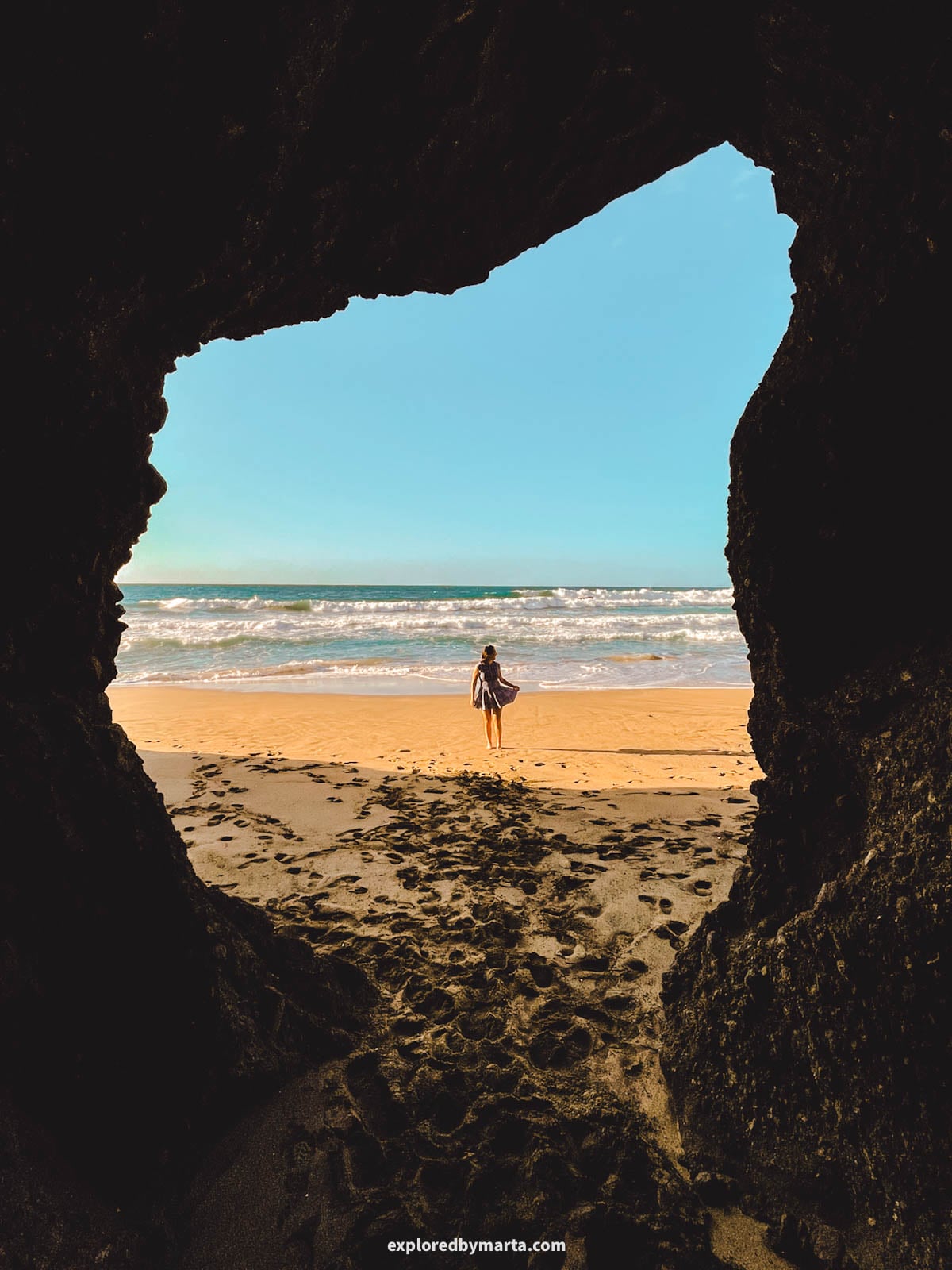
This beach cave sits at Playa del Viejo Rey, right next to the town of La Pared on the west coast. We found it during a beach walk, and it gave me one of my favorite photos from this part of Fuerteventura.
Apparently, La Pared (“the wall”) is named after an ancient stone wall that once ran across this narrow part of the island. It’s said to have divided Fuerteventura into two aboriginal kingdoms long before the Spanish arrived.
The cave is easy to find. Drive to the beach, take the stairs down to the sand, and walk along the beach until you see it. It’s not huge, but it frames the ocean nicely for photos.
When to go? It’s more of a beach cave than a sea cave. When we went, the tide was coming in, and some waves almost reached it, but we could avoid them easily. Lower tide is better, but it’s often doable at other times, too.
Combine it with the Punta Guadalupe viewpoint (there are various viewpoints on coastal cliffs) and a sunset at Playa de la Pared, and you’ve got a perfect afternoon in this corner of the island.
Location: Cueva de Playa del Viejo Reyes – Parking lot
9. Cueva de Playa de Tarajalejo
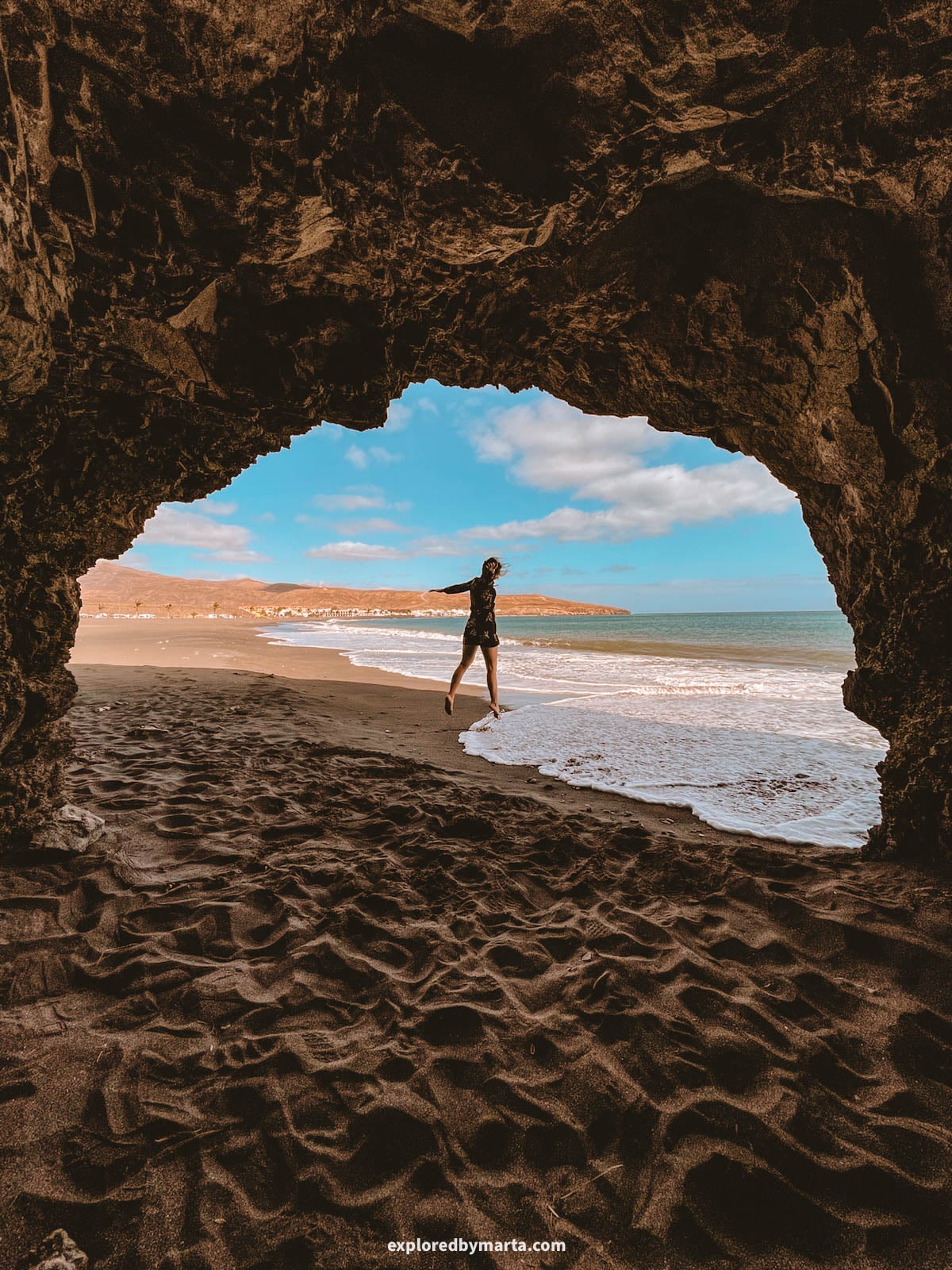
Here’s an easy and cute beach cave for you if you’re staying in the south of Fuerteventura – Cueva de Playa de Tarajalejo.
This is an easy stop. It’s a black sand beach in a quiet village, Tarajalejo, with a nice promenade and benches where you can sit and watch the ocean.
The waves on this side of the island are usually smaller, which makes it a relaxed beach for a swim. However, at the south end of the beach, you’ll find a small beach cave – a fun little bonus most visitors walk right past.
When to go? The waves usually don’t reach this cave, so you can come any time of day. It’s not a big cave, so don’t get overly excited, but it’s worth a few minutes if you’re nearby.
Location: Cueva de Playa de Tarajalejo
10. Cueva de Agua Liques
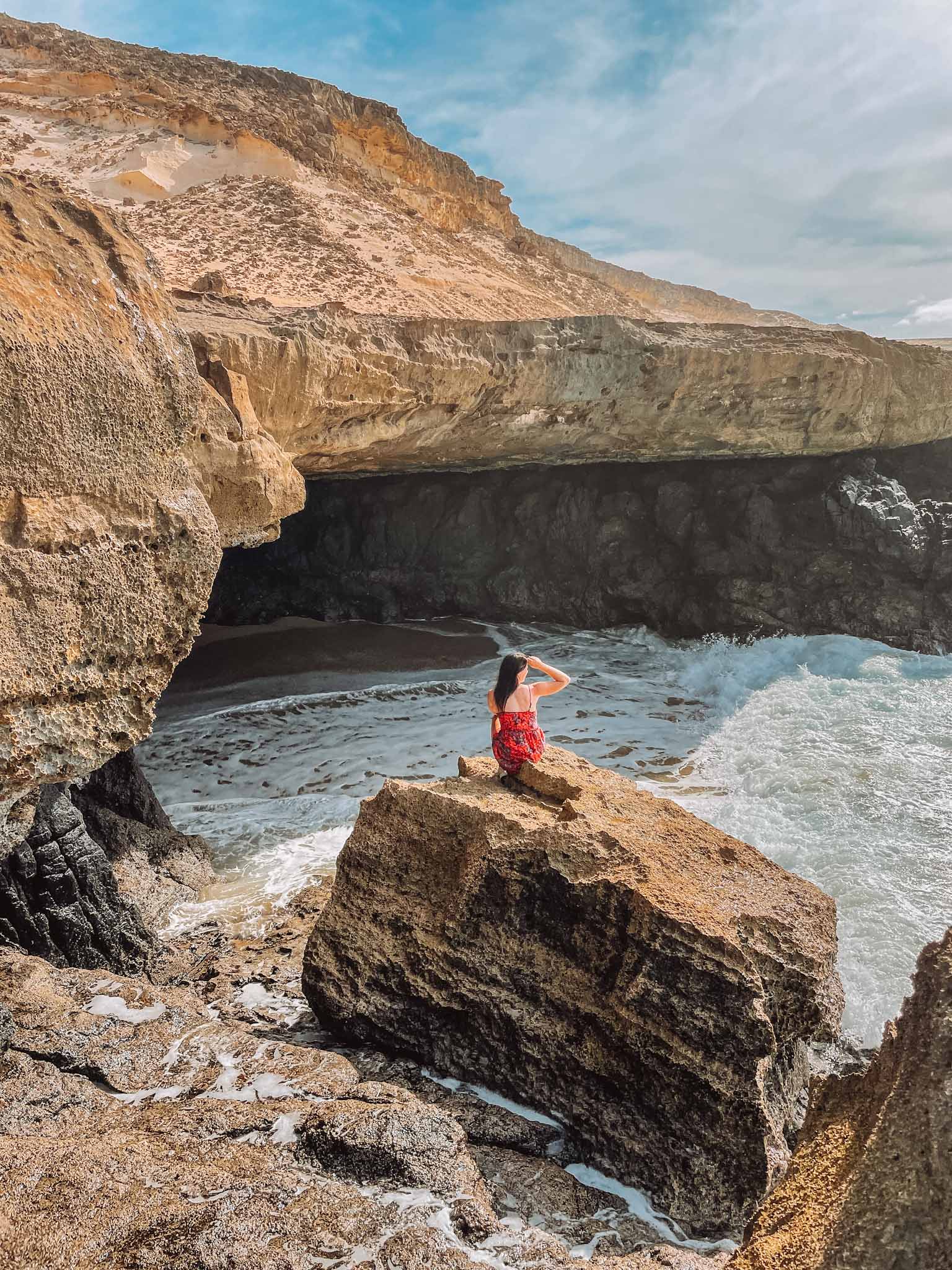
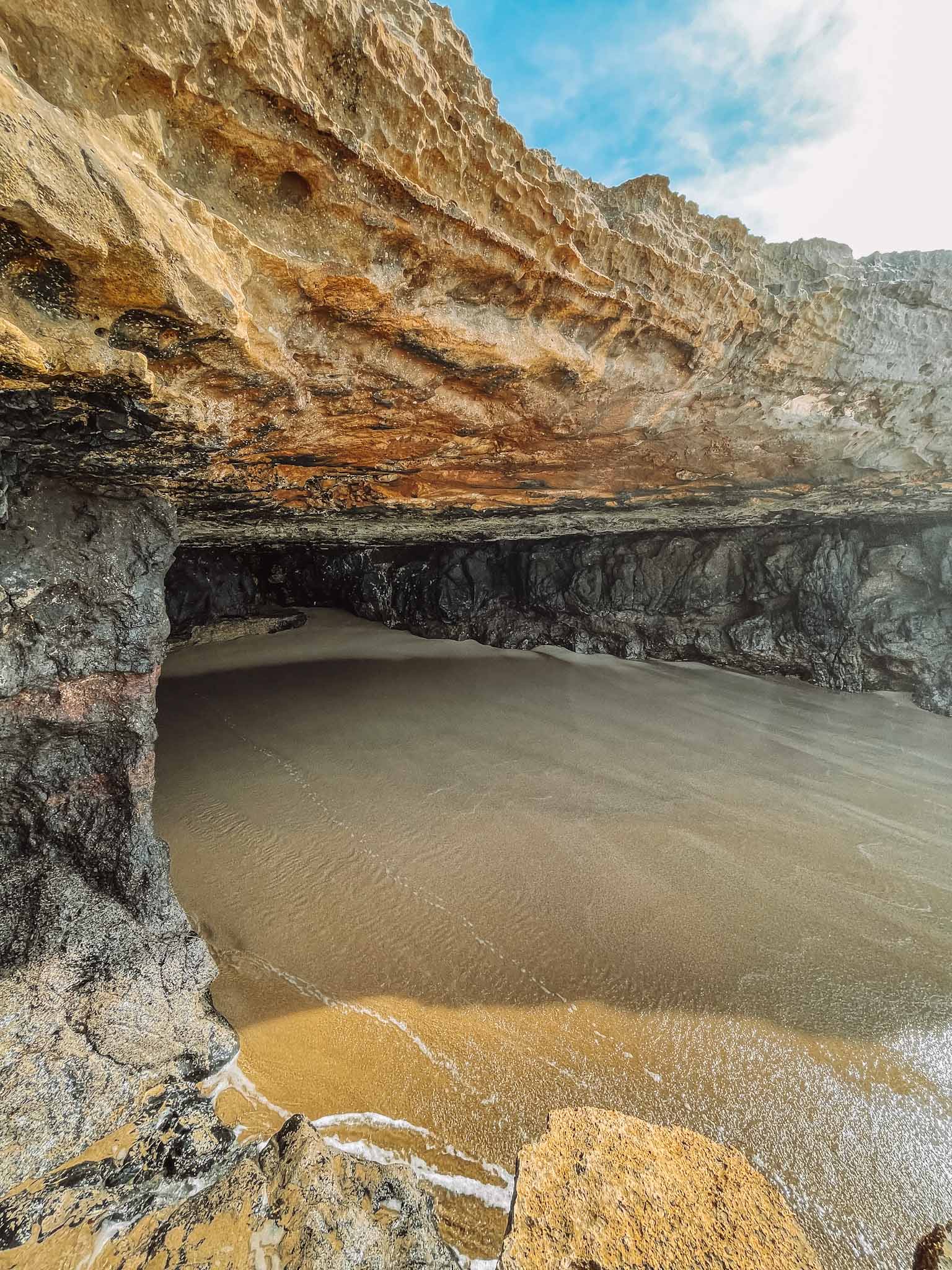
Cueva de Agua Liques is a big, simple sea cave on the wild coast south of La Pared. If you’re doing a coastal hike from La Pared, it’s a nice spot to add to your route.
To get there, you can walk along the coast from La Pared or drive one of the extra-terribly-bumpy dirt roads like we did. There are two roads: one closer to the ocean (too sandy for our Fiat 500) and one further inland.
We took the inland one, and I’m still not sure how we didn’t get a flat tire. 😅 Once you’re there, climb down the rocks on the right (north) side of the cave to reach the ocean.
I’ll be honest: it’s not worth coming here just for the cave. The road is long and rough, and the cave itself is simple. But if you’re already exploring the coast around La Pared, it’s a fun extra stop.
When to go? Come at low tide and on a calm day. The west coast is windy and the ocean is wild. When we visited, the waves were too big, so we only admired the cave from the outside.
Location: Cueva de Agua Liques
FAQs about caves in Fuerteventura
What is the most famous cave in Fuerteventura?
The Cuevas de Ajuy on the west coast. They’re free, signposted, and about a 10-minute walk from Ajuy beach. The rocks around them are the oldest in the Canary Islands, around 100 million years old.
When is the best time to visit the sea caves in Fuerteventura?
Go at low tide on a calm day. Many sea caves, like the ones at Solapa and Los Ojos, can only be reached when the water is out. Check a tide chart before you go, especially on the wild west coast.
Do you need a 4×4 to reach the caves in Fuerteventura?
No. We reached every cave on this list in a small Fiat 500, although some gravel roads were very bumpy. The roads to Playa del Jurado and Agua Liques were the roughest, so drive slowly.
Are the caves in Fuerteventura safe to visit?
Mostly yes, if you’re careful. Avoid sea caves at high tide or with big waves, skip remote spots in bad weather, and watch your step at the Los Estancos lava caves, where the ground has deep holes.
Read more about traveling in the Canary Islands
Looking back, the caves were some of the most exciting moments of our four weeks in Fuerteventura. Some were easy, like Ajuy, and some took a bumpy road, a tide chart, and a bit of rock climbing.
The best part? Most of them are still quiet. Outside of Ajuy, we often had a whole cave to ourselves, with just the sound of the waves. Pick a calm day, check the tides, and go explore.
Planning more of your trip to Fuerteventura or the Canary Islands? Here are more of my guides to help you out.
Read more about Fuerteventura:
- The best beaches in Fuerteventura, from famous to hidden
- Secret places and hidden gems in Fuerteventura
- Amazing rock formations in Fuerteventura
- How to find the secret Bee Cave in Fuerteventura
Read more about the Canary Islands:
- The best caves in Lanzarote (lava tubes and sea caves)
- Unreal rock formations in Lanzarote
- Things to do and places to see in La Palma
- Hidden gems and secret spots in Gran Canaria
PIN FOR LATER!