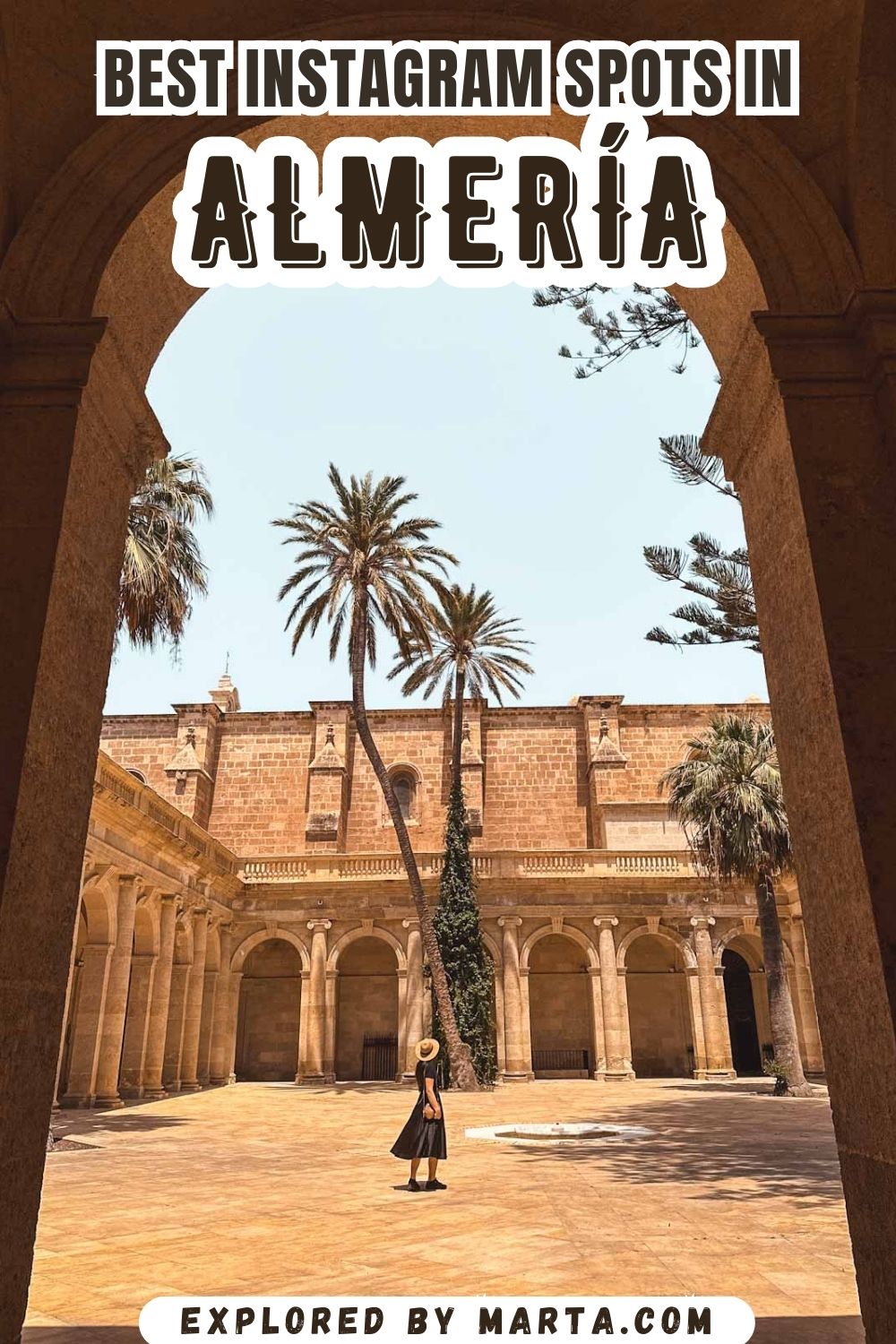
15 best (and most unusual) things to do in Almería, Spain
This post may contain affiliate links. If you use these links to make a purchase or booking, I may earn a small commission at no extra cost to you! Thank you for your support!
Looking for the best things to do in Almería, Spain? Then you’ve landed in the right spot! This sunny corner of Andalusia doesn’t get half the attention that Seville or Granada get, and truly, that is part of the appeal.
Almería city has a huge Moorish fortress on one hill, a cathedral built to fight off pirates, an underground network of Civil War shelters, and one of the prettiest old towns in southern Spain. And that is before you even leave the city center.
Head out a bit further and you get the only desert in Europe (yes, really), a natural park full of volcanic cliffs and beaches, and a giant underground crystal geode that most people have never heard of. So many good places to explore!
In this post, I’m sharing all the best things to do in Almería with photos, honest tips, and Google Maps locations for each spot. From the top tourist attractions in the city center to a few unusual ones you won’t find on every guide. Let’s dive right in.
A quick story of Almería (so the sights make sense)
Almería was founded by the Moors in the 10th century. Turns out the Cordoban Caliph Abd al-Rahman III chose this spot in 955 AD to build a huge fortress on the hill, and the city grew from there.
The name Almería comes from the Arabic “Al-Mariyyat,” which basically means watchtower – pretty fitting given how the fortress still watches over everything.
By the 11th century, Almería was one of the richest port cities in the entire Mediterranean Sea. But everything changed in 1147, when the Christian troops of Alfonso VII took the city.
Then in 1489, the Catholic Monarchs completed the reconquest of this part of southern Spain, and the whole character of the city started to shift.
Here is where things get interesting. After the reconquest, Berber pirates from North Africa kept raiding the coast, so the locals had to build churches and public buildings like fortresses.
That is why the 16th century cathedral has turrets, cannon holes, and giant walls – it’s not a normal cathedral at all. More on that below.
Fast forward to the Spanish Civil War, and Almería got hit really hard by aerial bombings. The city built one of the biggest underground shelter networks in all of Europe to keep the people of Almería safe.
Every one of these layers of history is still visible in the city center today – and that is honestly what makes visiting Almería so much fun.
So, what are the best things to do in Almería? Let’s dive in!
1. Explore the impressive Alcazaba de Almería
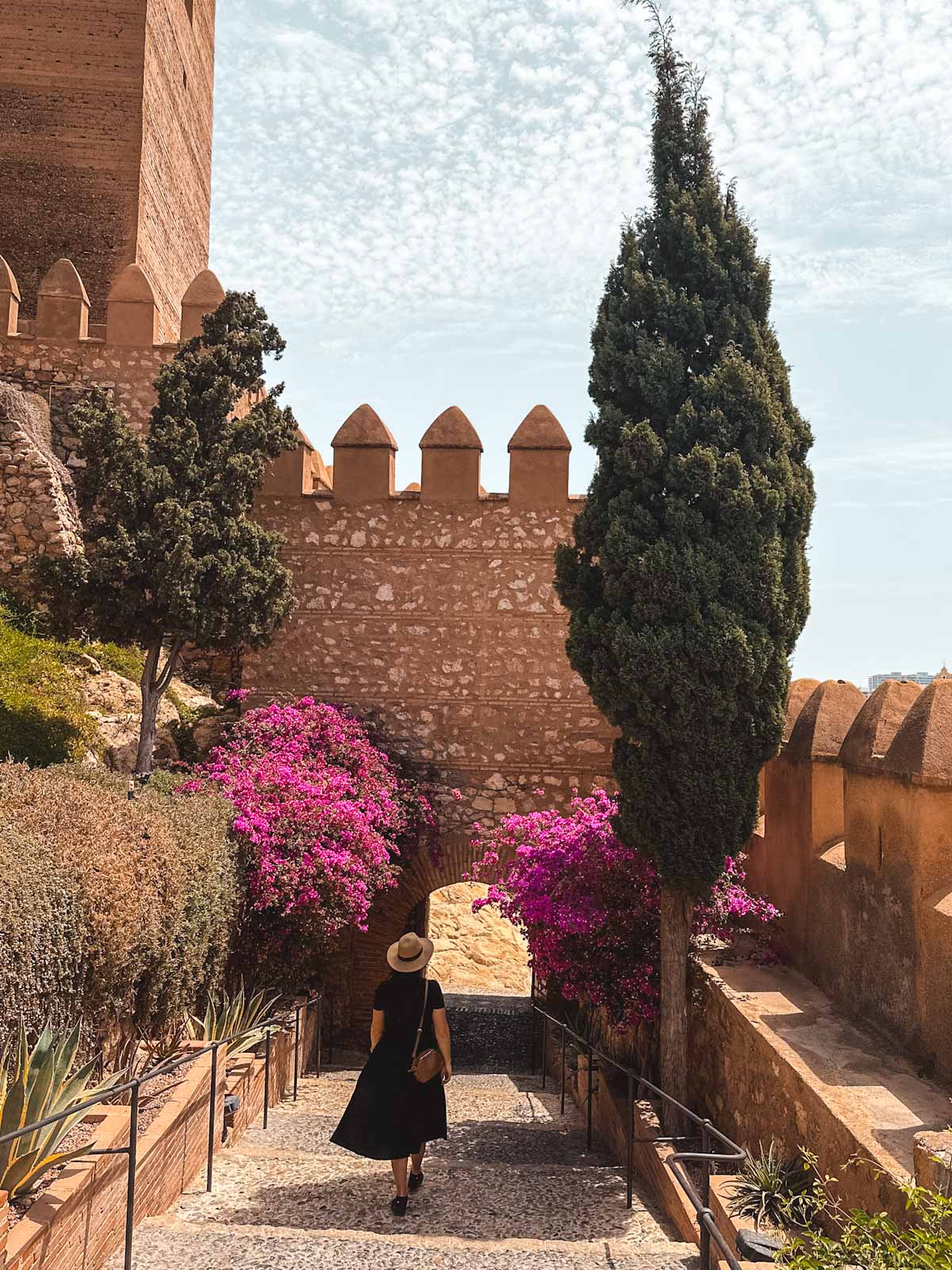
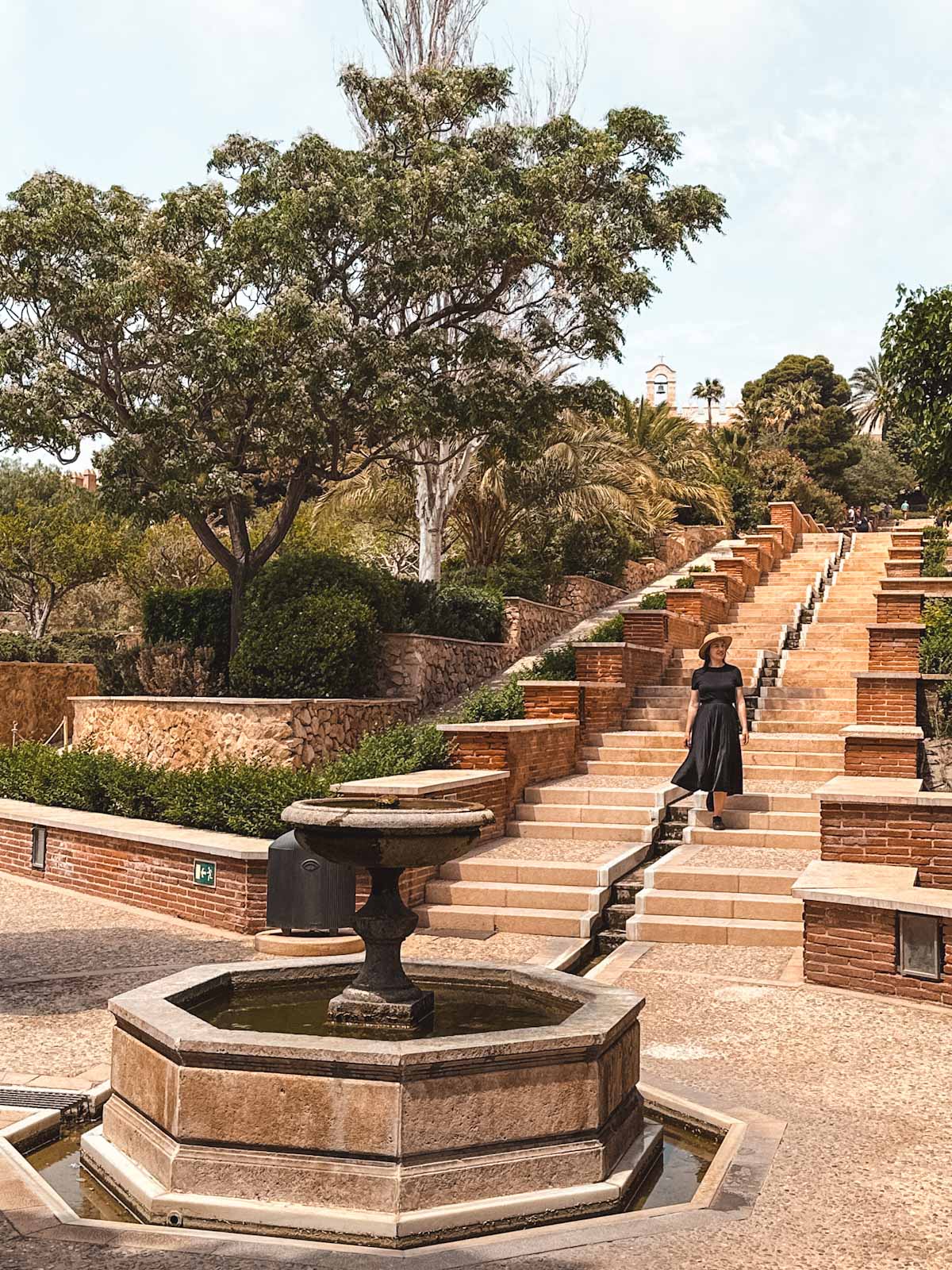
Visiting the Alcazaba of Almería is the top thing to do in the city, no question. It sits on a rocky hill above the old town, and truly it is one of the largest Moorish fortresses in all of Spain – second only to the majestic Alhambra in Granada!
I learned that “alcazaba” comes from Arabic and just means a walled fortification.
You will see these alcazabas all over Andalusia, but this one is special because construction began way back in 955 AD, ordered by Caliph Abd al-Rahman III to protect his fleet in the port. And, wow, did he build a massive one!
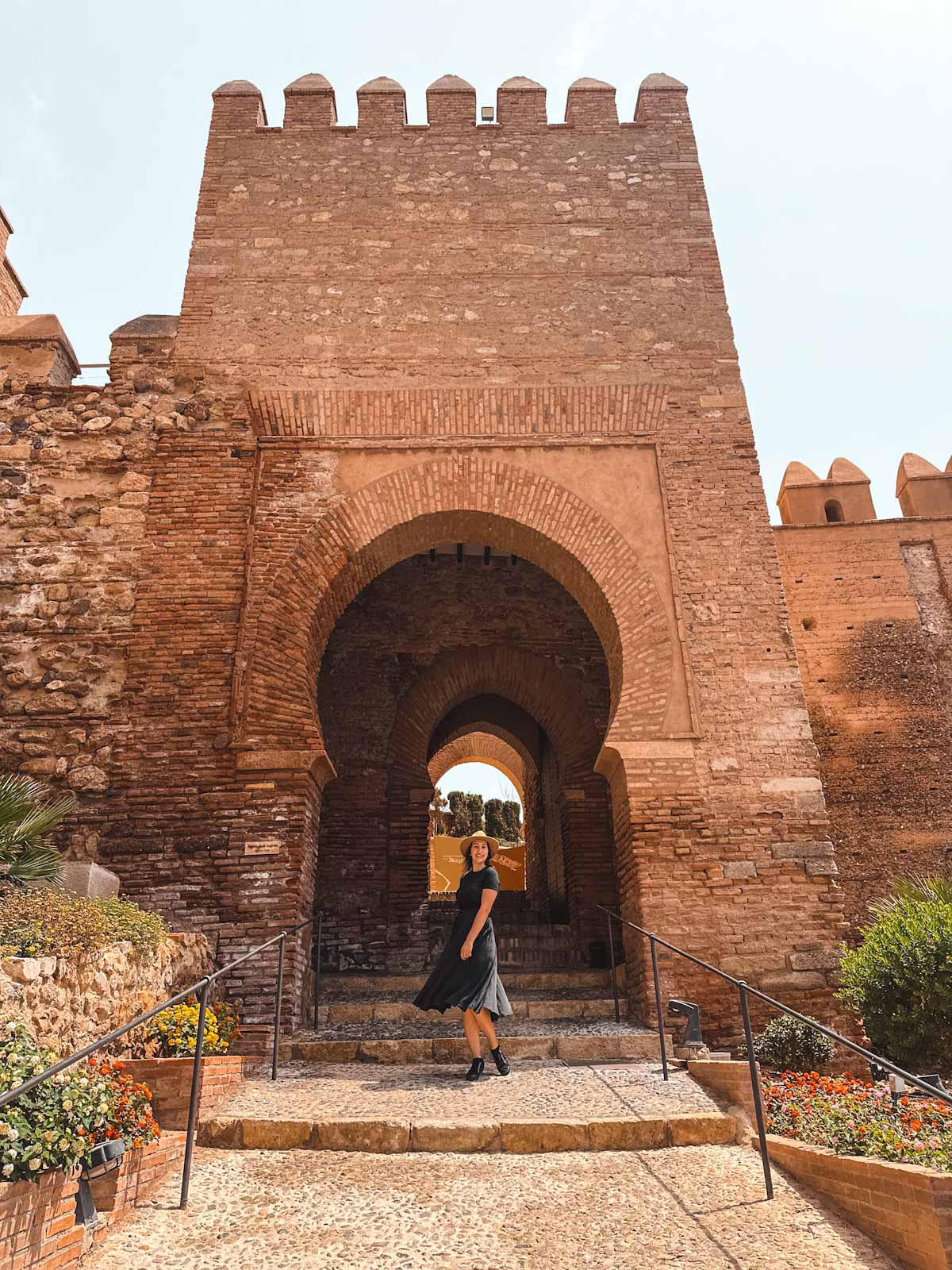
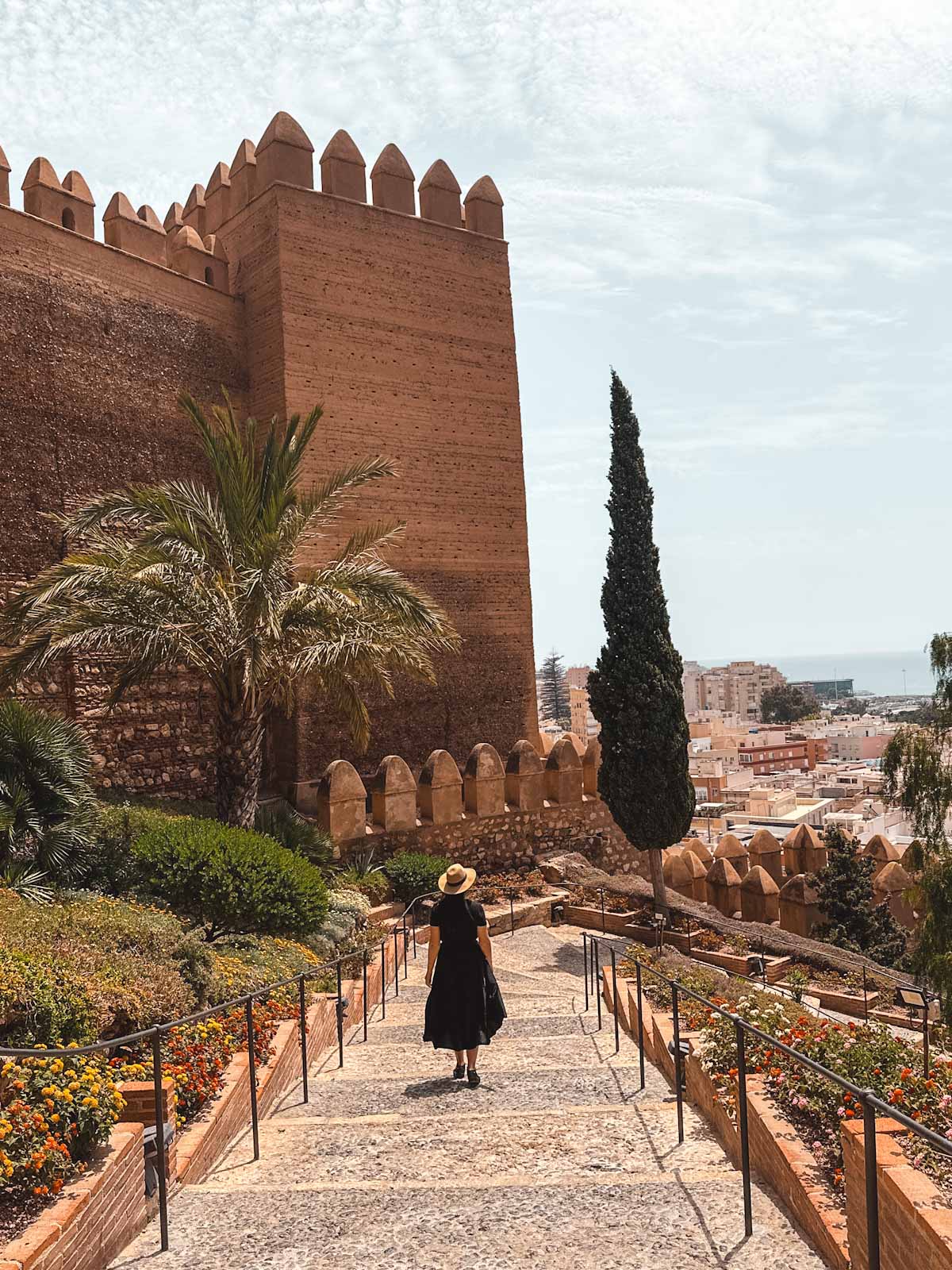
Back in the day, this place had houses, a mosque, water cisterns, baths, gardens, and even living quarters for the ruling family. It was basically a small walled city on top of a hill.
A huge earthquake in 1522 destroyed a lot of it, and the Catholic Monarchs later added a Christian castle on the top level – which you can still walk through today.
The fortress covers around 43,000 square meters (10 acres) in total, so definitely set aside at least two hours to walk through it properly. You go through three enclosures as you climb up.
The first enclosure has the beautiful gardens, the second has the ruins of the old Moorish palace, and the third is the Christian castle at the top with the best views over the city and coast.
For me, it definitely can’t compete with the Alhambra (there are no grand palaces or rooms with intricate carvings as you get in the Alhambra), but it still is majestic and worth visiting.
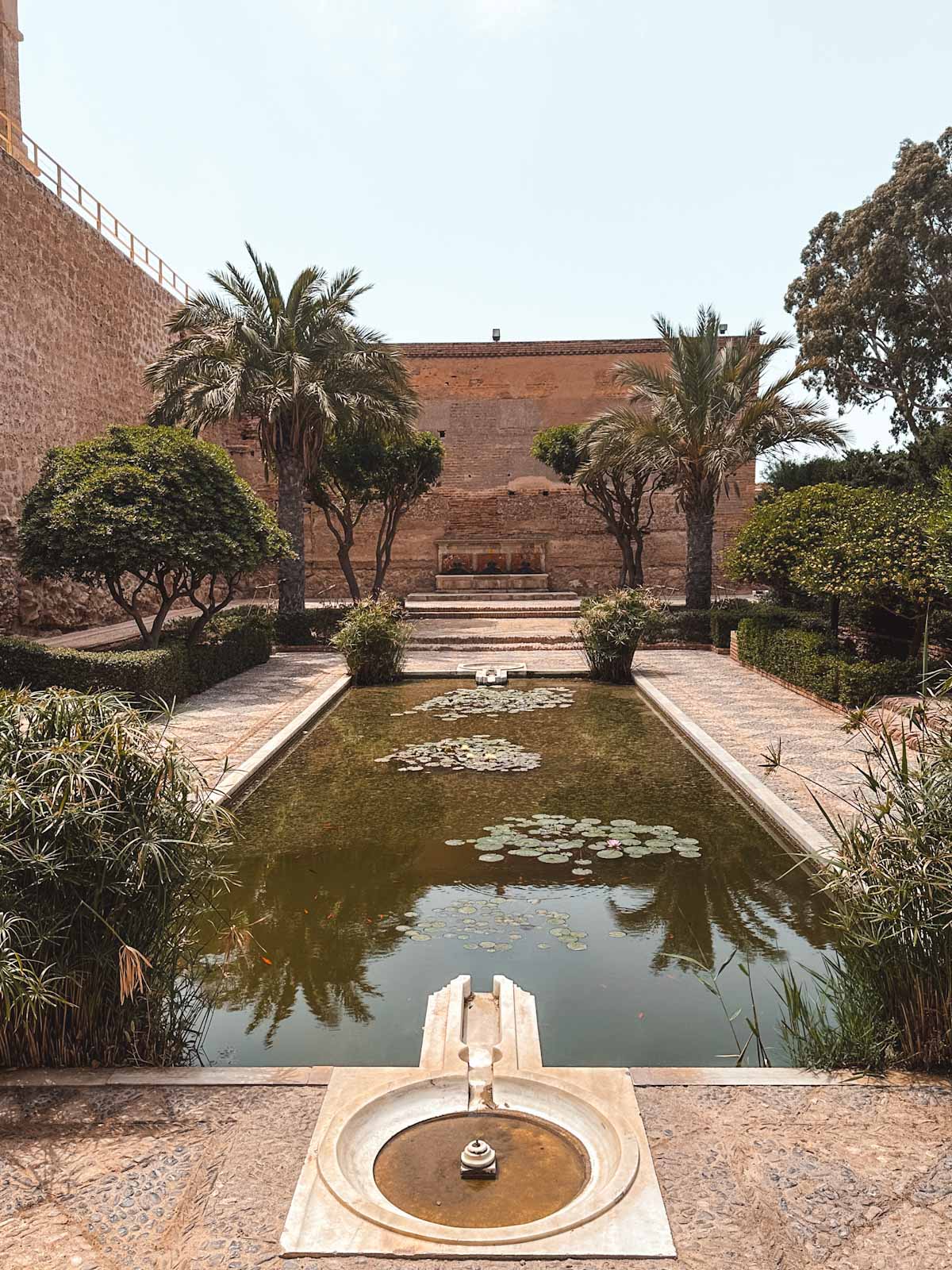
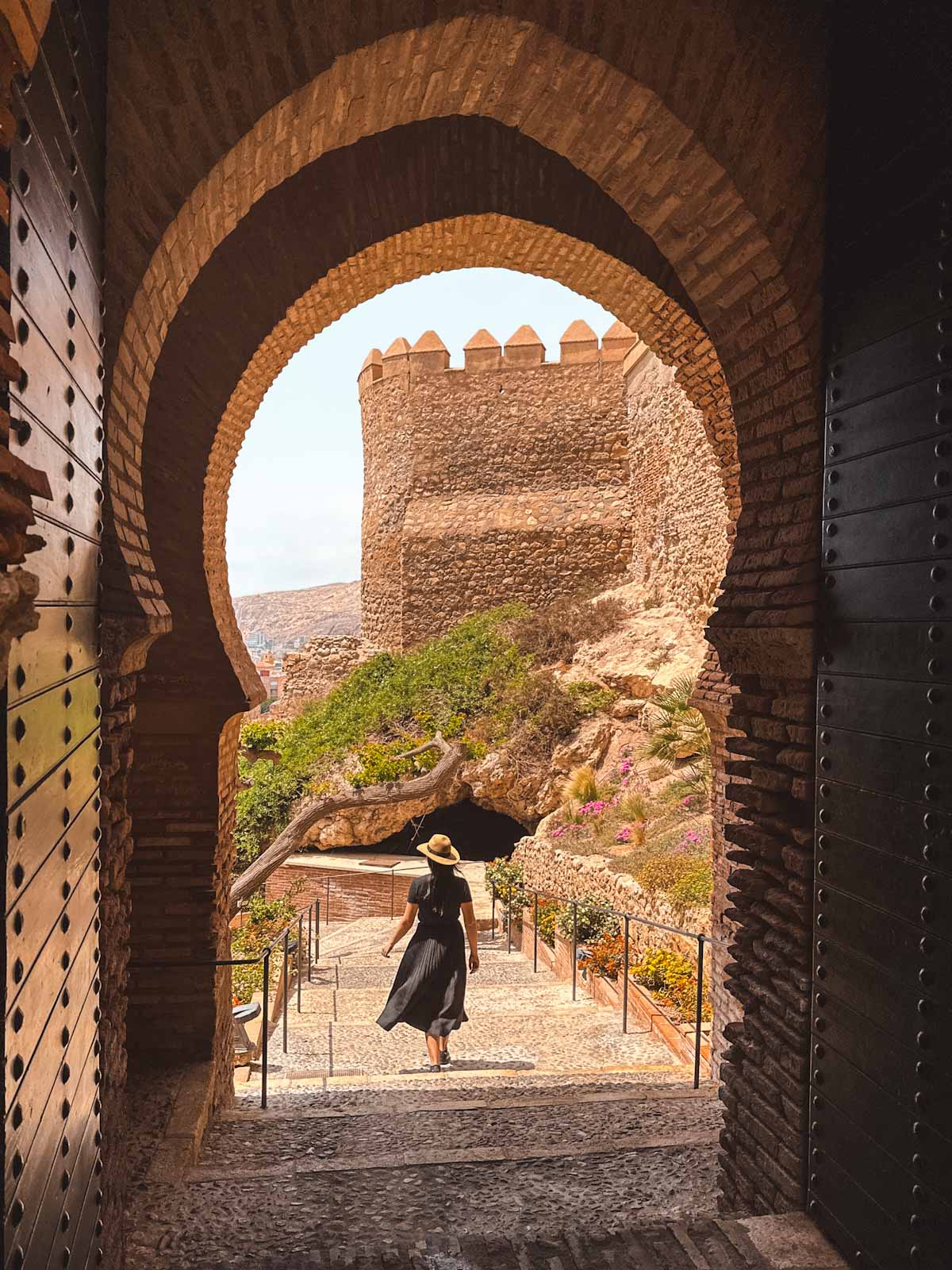
Fun fact – the Alcazaba has been a filming location for a huge number of movies. It’s been in Conan the Barbarian, Indiana Jones and the Last Crusade, and Wonder Woman 1984.
And it also stood in for the capital of Dorne in season six of Game of Thrones. I’ll be honest, spotting the angles from the show made walking around way more fun. Are you a Game of Thrones fan?
Now for the best part – entry is completely free for EU citizens and just 1.50 EUR for everyone else. For one of the top tourist attractions in Andalusia, that is basically a gift. 🫨
There are also free guided tours in Spanish every Saturday at 9 AM, if you want a bit more historical context along the way.
A few practical tips – wear comfortable shoes (there are a lot of cobblestone paths and stairs), bring water in summer, and try to go early morning or late afternoon to avoid the heat.
Location: Alcazaba de Almería
2. Climb up to Cerro San Cristobal, the balcony of Almería
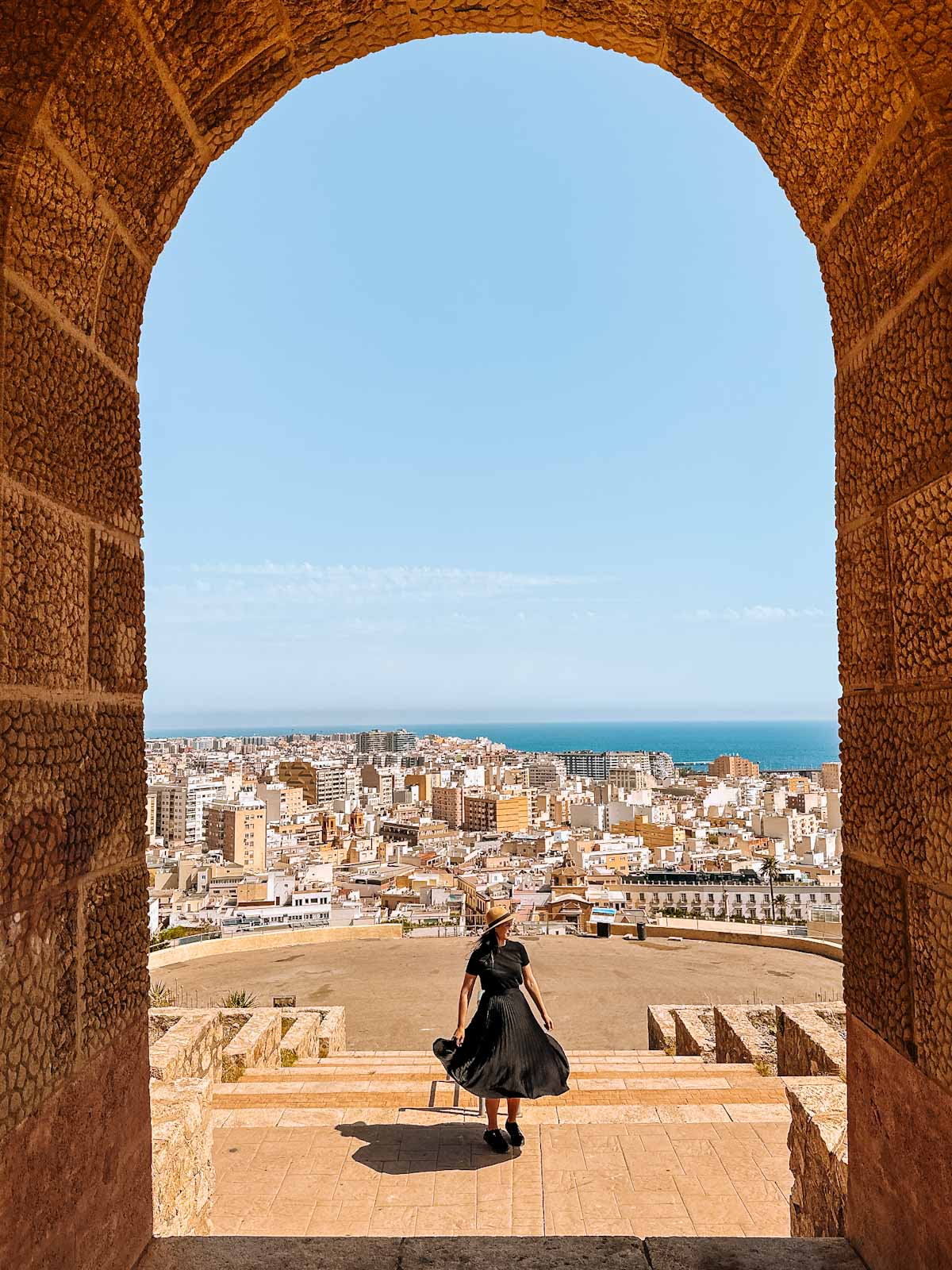
Want the best views in Almería? Head up to Cerro San Cristobal! It is a viewpoint on a hill right next to the Alcazaba, and locals call it the “balcony of Almería” for a good reason.
You basically have the whole city at your feet, plus the sea, plus the massive Alcazaba fortress in the background. Truly the best place for panoramic photos of Almería!
The hill itself has some serious history. I read that the walls up here are part of the Muralla de Jayrán, built by King Jayrán in the early 11th century. The full wall system actually runs all the way down from the Alcazaba.
The hilltop section alone has seven towers – three square Muslim ones, and four semicircular Christian ones added by the Templars of Alfonso VII after the Christian conquest – two eras, one wall. There are even more defensive towers along the slopes.
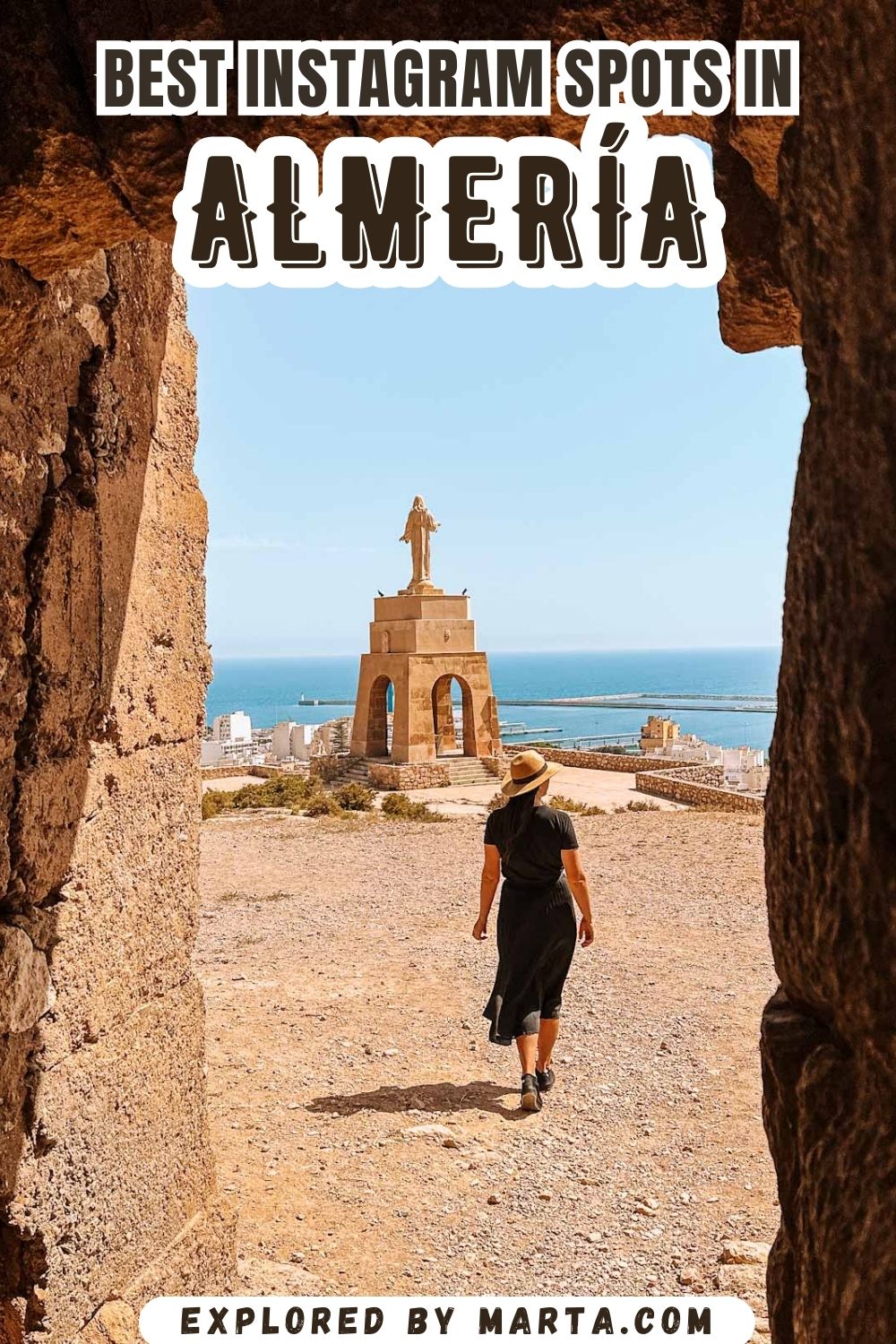
The huge statue at the top is the Sacred Heart of Jesus, made from local Macael marble. Apparently the original was put up in 1928, destroyed during the Spanish Civil War, rebuilt in 1944, and restored again in 2000.
It stands on a big pedestal with a hollow bottom, so you can actually walk right underneath the monument, which is such a fun little detail (from there, we took the first photo!).
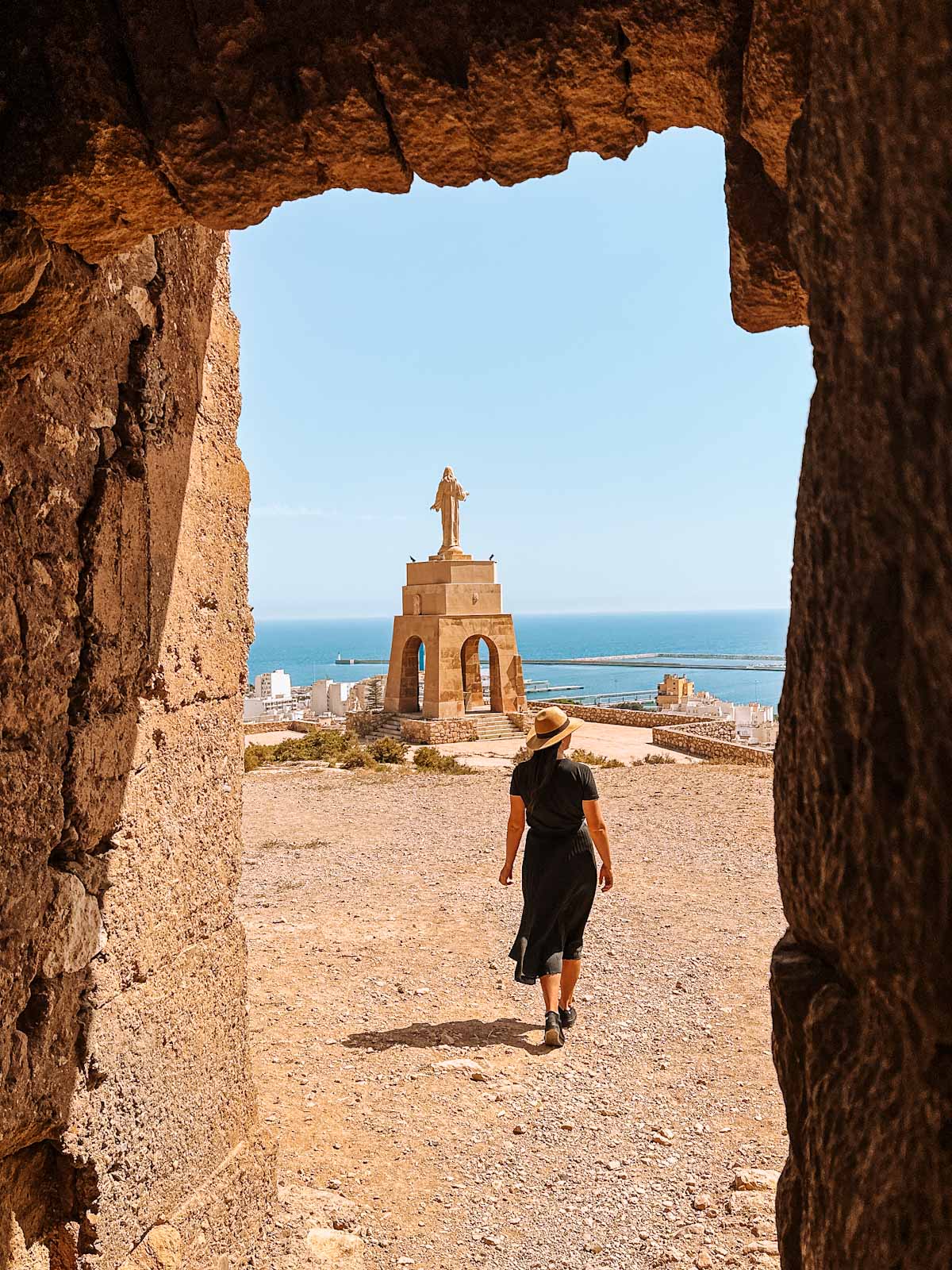
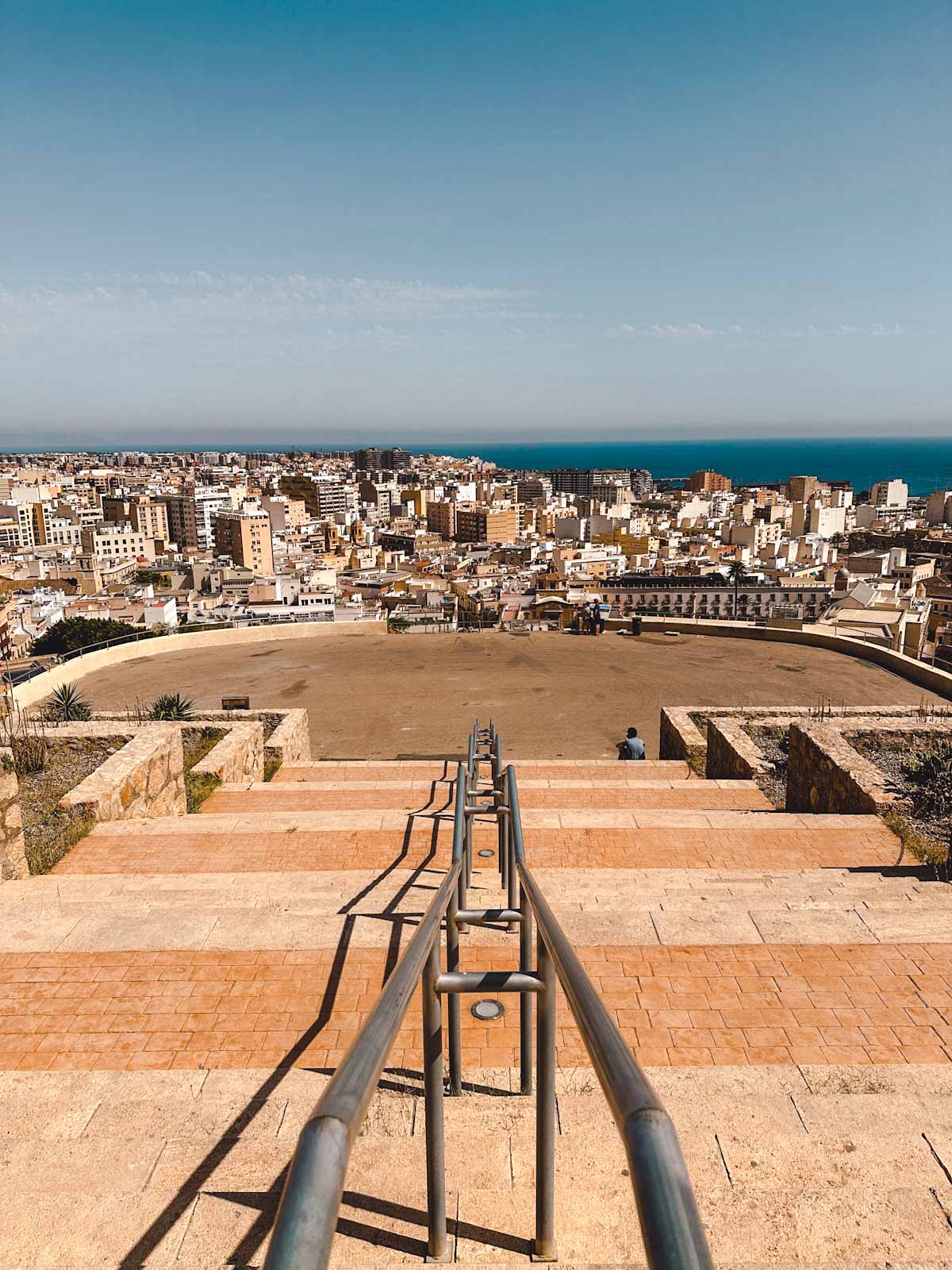
Now, real talk – getting to the top means walking up a steep hill, and it can be a tough climb in summer. It is about a 10 to 15-minute walk from the Alcazaba, so if you can time it right, do both in one go.
We had a car, so we drove to the parking lot at the bottom of the hill and walked up from there. Taking a taxi to make the climb easier also works if you’re already exhausted from all the walking and climbing (no judging from my side, haha!).
The area is a little rough around the edges (some brushwood, not much cleaning), but the views are hands down better than what you get from the Alcazaba itself, so, despite the surroundings, this was one of my favorite things to do in Almería.
Don’t forget to look back at the Alcazaba while you are up here. With its massive walls in the background, the fortress looks like something straight out of the Middle Ages!
Location: Cerro San Cristobal
3. Visit Almería’s unique fortress-cathedral
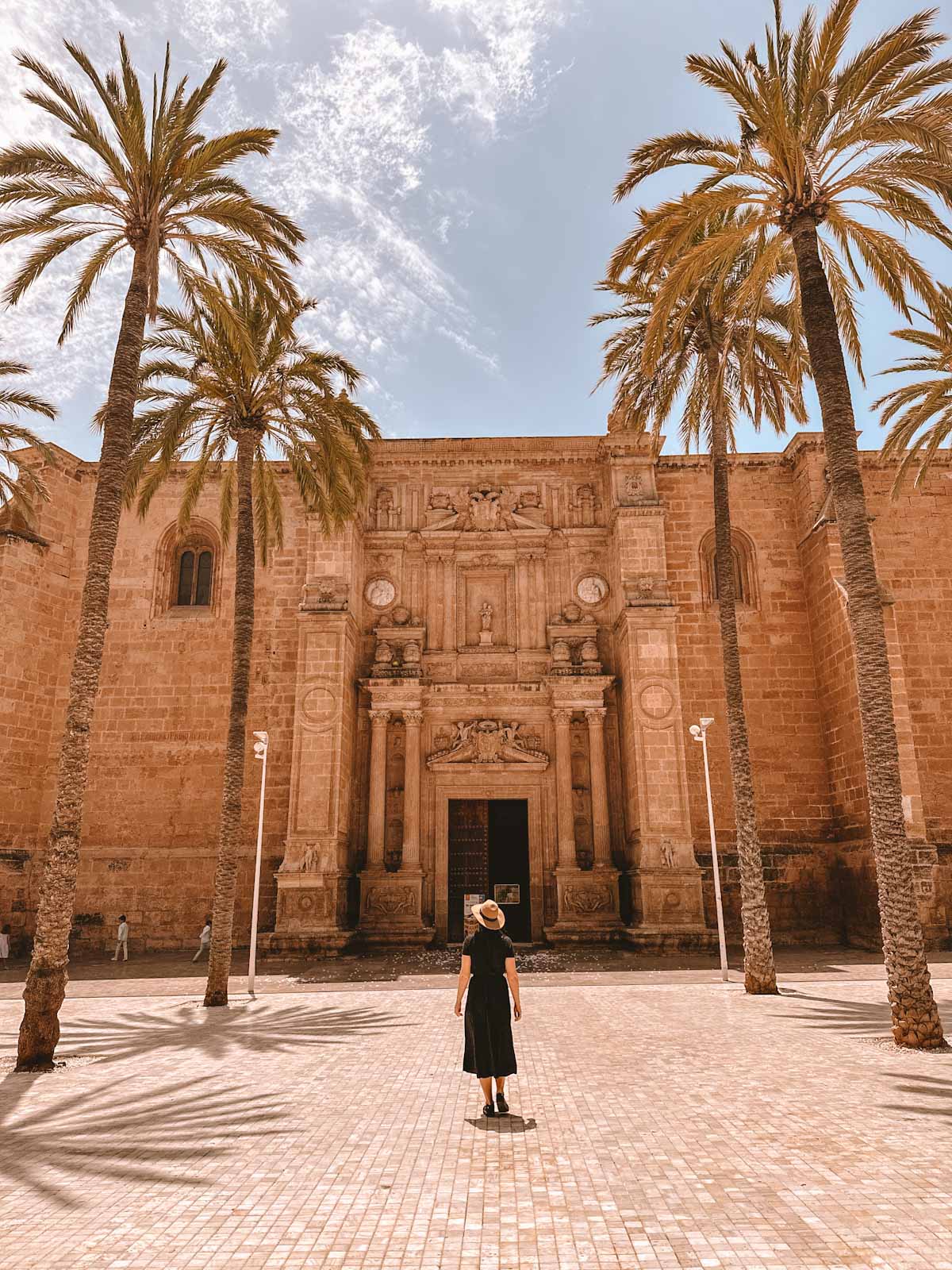
Almería Cathedral is one of the most iconic buildings in the city, and one of the strangest cathedrals in all of Spain. It was actually built to double as a fortress against pirate raids from North Africa! Not something you see every day, right?
Here is the story. A massive earthquake destroyed the previous church (built on top of the old Great Mosque) in 1522. Construction of the new cathedral started just two years later, in 1524, under Bishop Fray Diego Fernández de Villalán.
At that point, Almería was constantly being attacked by Berber pirates, so the new cathedral had to protect the people too. Practical solution!
Take a look at the front facade and you will see straight away that this is not a normal cathedral. It has massive high defensive walls, corner towers, thick buttresses, and even holes that were used for cannons.
The flat roof was actually designed to hold artillery too. It is the only cathedral like this in all of Spain from that century – truly one of a kind! For me, it somewhat resembled an Egyptian temple or something like that when I first saw it! 😀
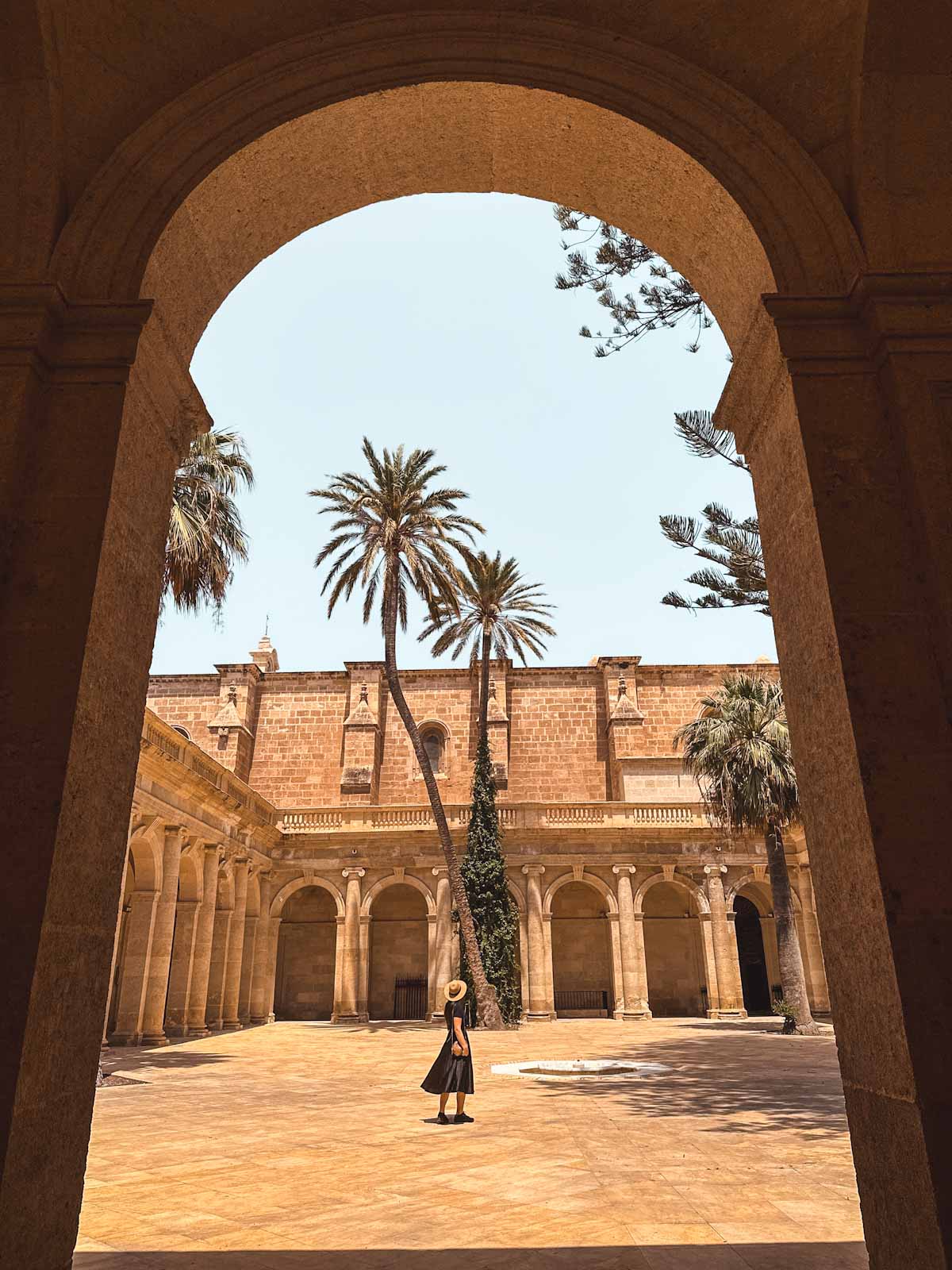
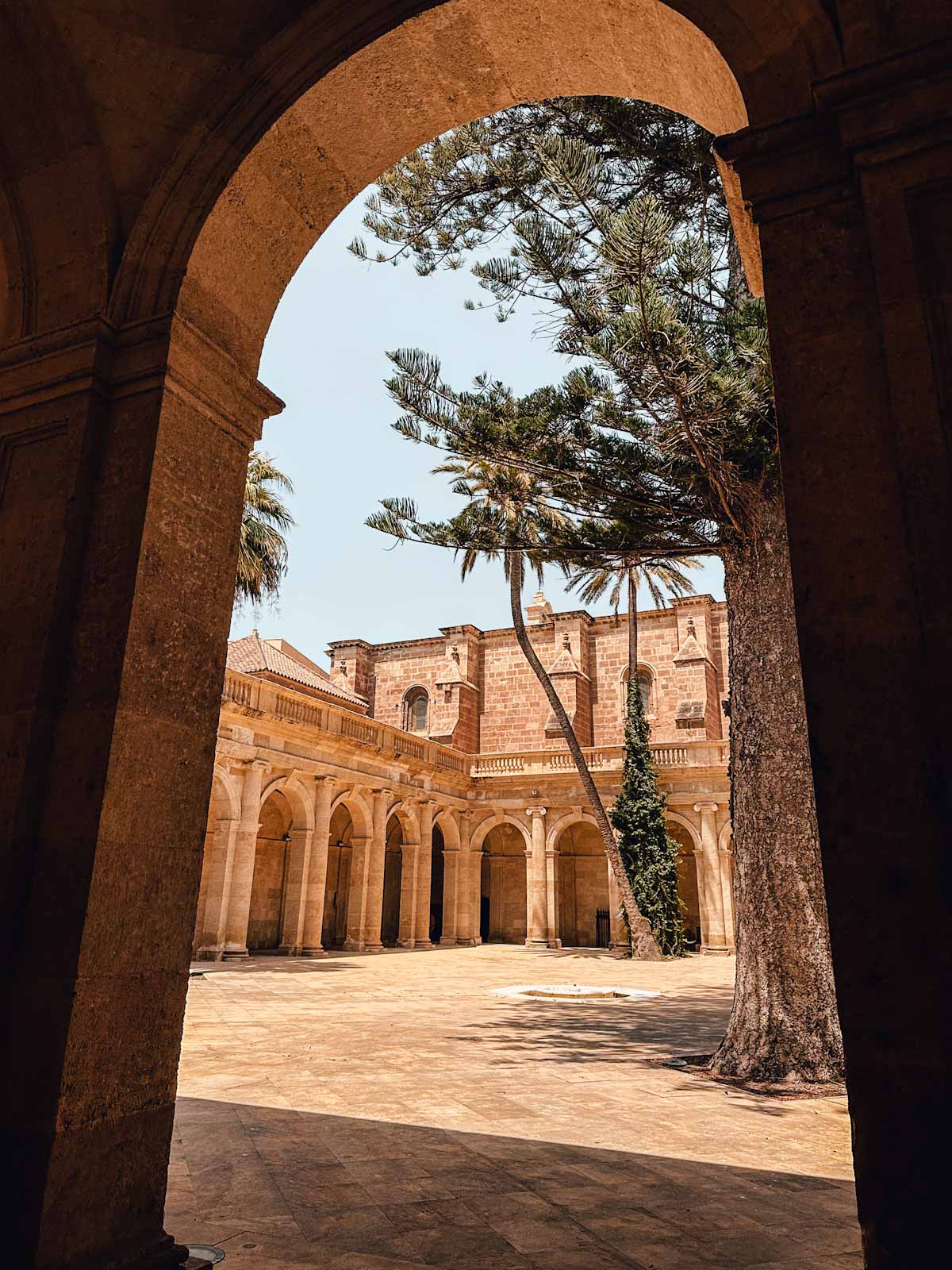
The mix of styles is also really cool. The facade is Gothic and Renaissance, and the interior is late Gothic with Baroque and Neoclassical touches added over the centuries.
Then when you look at the huge doors and towers, you can absolutely picture the pirates trying to break in. Not something you say about most cathedrals.
In front of the cathedral, there is a beautiful big square with tall palm trees – this is for sure one of the most beautiful places of the old town.
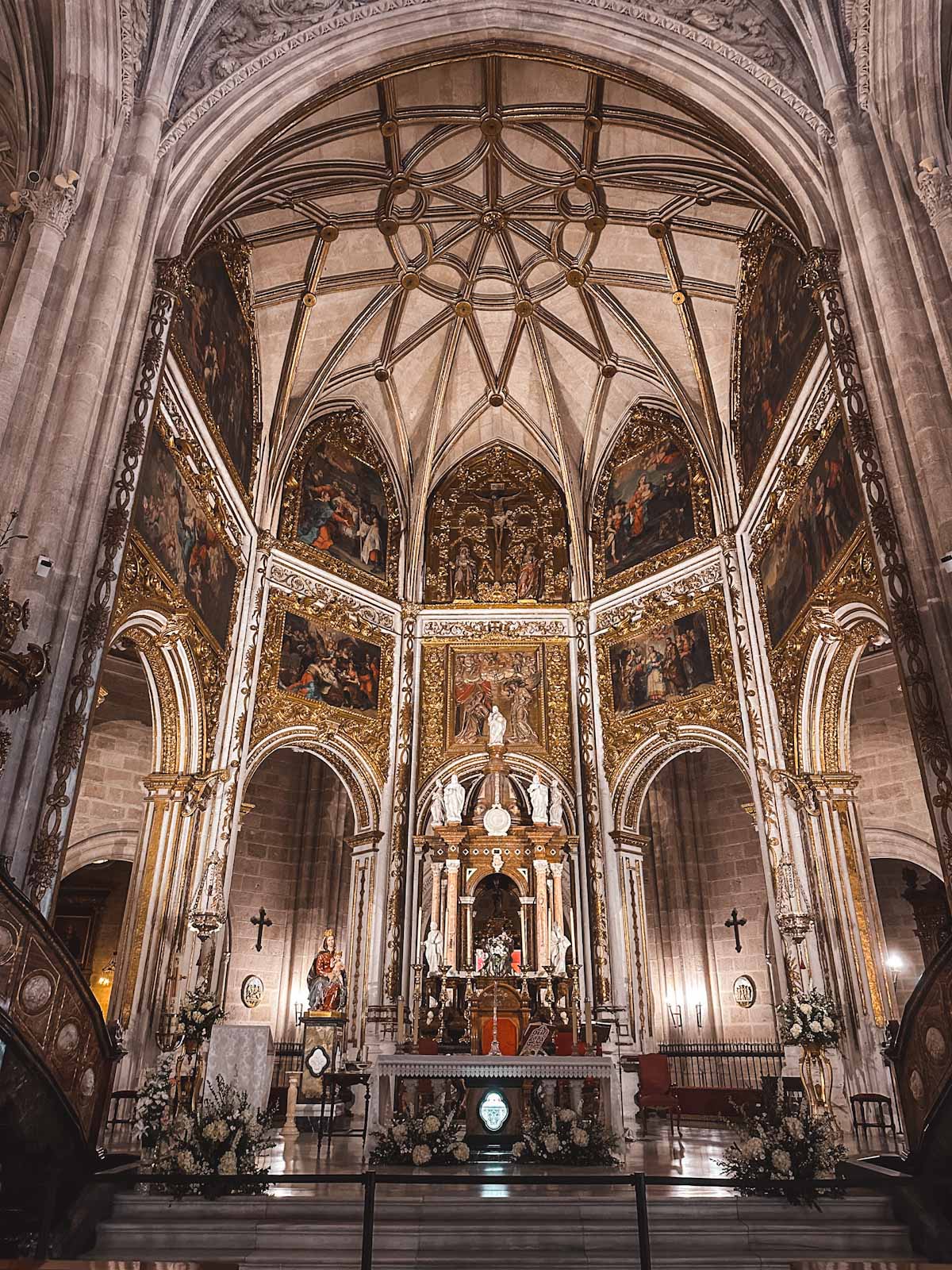
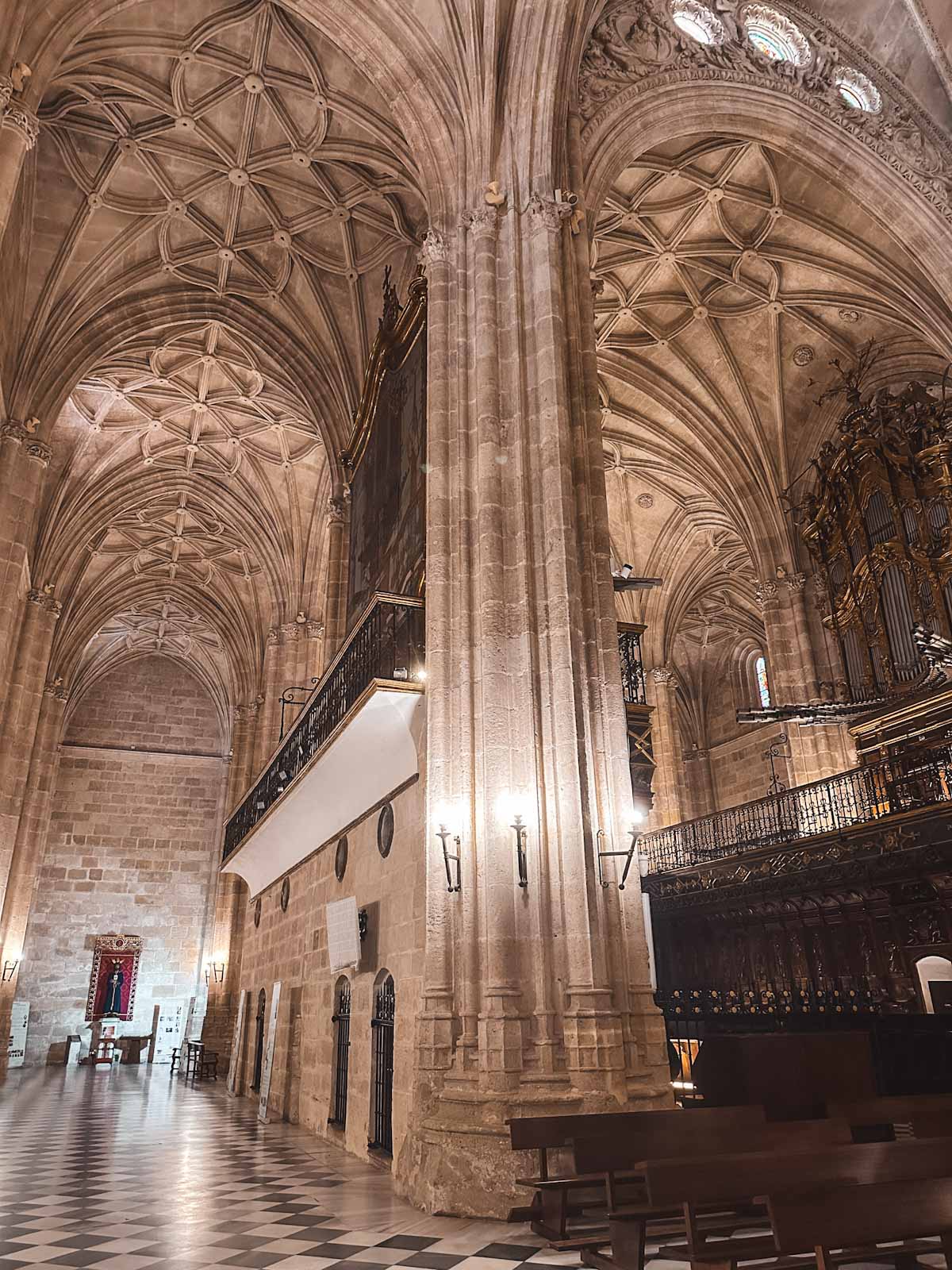
It is also a great place to grab a coffee and just look at how strange this building really is. When we visited, people were hanging out in this square, and kids were running around playing ball. Vibes!
To visit inside, you go through the Museo de la Catedral (not the main front doors). Once you buy your ticket, you can wander around the inner courtyard, the cathedral itself, the sacristy, and back rooms with sacred art collections.
We spent around 30 to 40 minutes exploring the inside. I especially loved the cloister – it feels so peaceful compared to the fortress facade outside. Truly a different world in there. Pretty majestic!
Location: Catedral de la Encarnación de Almería
4. Taste and smell Almería at the Mercado Central
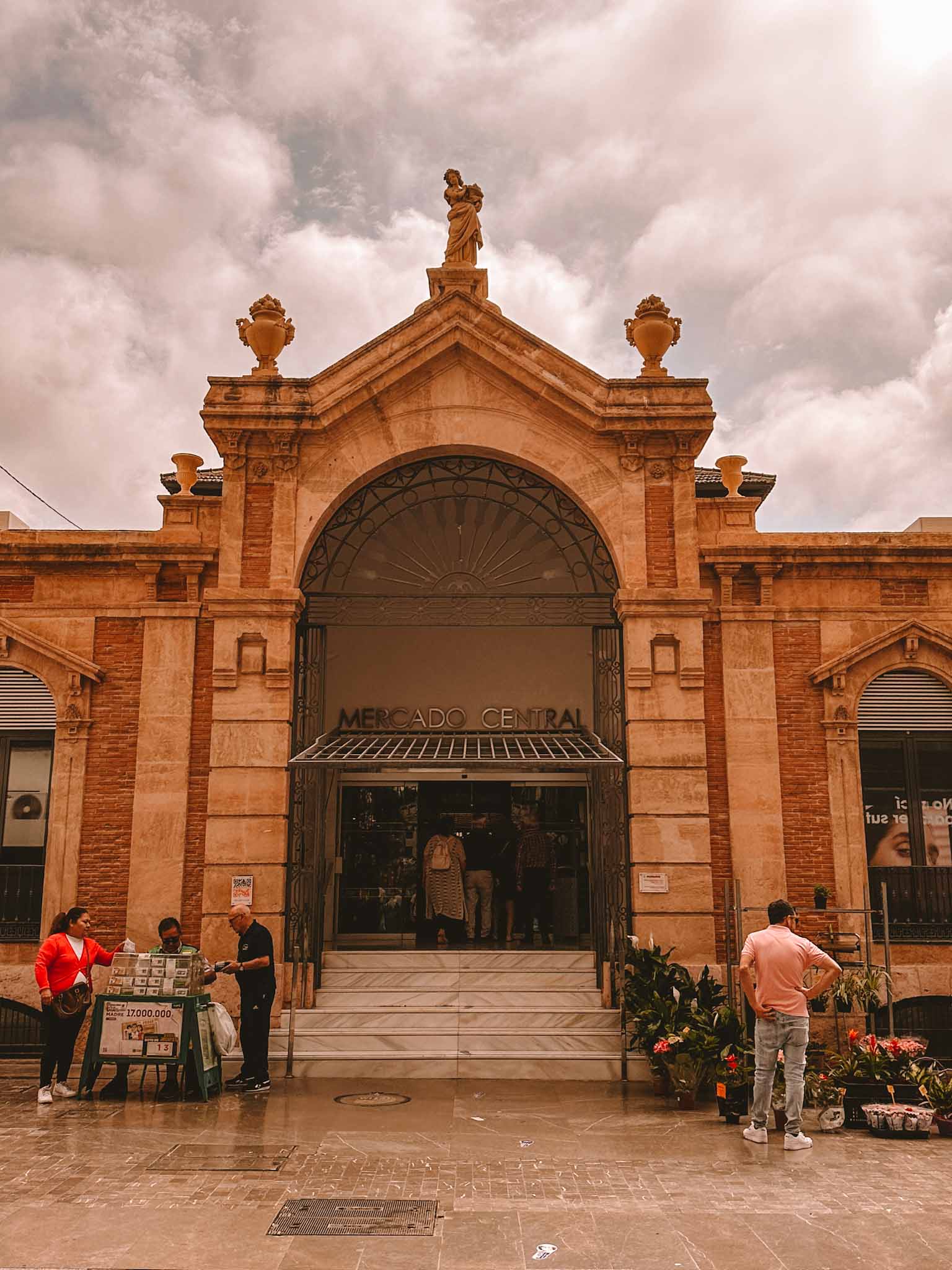

Visiting the local market is one of the coolest ways to feel the vibe of any Spanish city, and Mercado Central de Almería is no exception. I love going to markets because you get to taste and smell the local produce.
This one sits right in the heart of the old town, on Paseo de Almería, so it is super easy to fit into your day of sightseeing.
The building itself is worth a look. It was designed by architect Trinidad Cuartara Cassinello in 1892 and built between 1893 and 1897 – a really nice example of 19th-century iron and glass architecture.
The main facade even has a female sculpture holding a basket of fruit, which is a symbol of abundance. So sweet, and you can spot her from the street.
Fun fact – the market was restored between 2009 and 2012, so today it feels really fresh, clean, and well organized. There is a huge fresh produce section on the ground floor.
Plus a whole basement with fish and seafood – and this being a port city, the seafood is truly incredible. Even if you don’t buy anything, walking through is a treat.


You will find pretty much everything here – fresh fruit and veg, local cheeses, jamón, olives, wine, honey. It is not a massive market, so you can walk through it in maybe half an hour.
The atmosphere is fantastic though – lots of locals chatting, vendors calling out prices, that classic Spanish market energy you don’t get in a supermarket.
Opening hours are Monday to Saturday, morning until 3 PM and then again 5 to 8:30 PM (though the afternoon opening is winter only – in summer it’s mornings only). Closed on Sundays. So plan around that or you might turn up to closed doors.
If you go in the morning and need the best coffee in the city, stand in line at Cafés Ortega – MardeCafé, a specialist coffee shop right next to the market. Perfect place for coffee enthusiasts and you can grab a bag of beans to take home too.
Location: Mercado Central – Cafés Ortega – MardeCafé
5. Check out the main square – Plaza Vieja
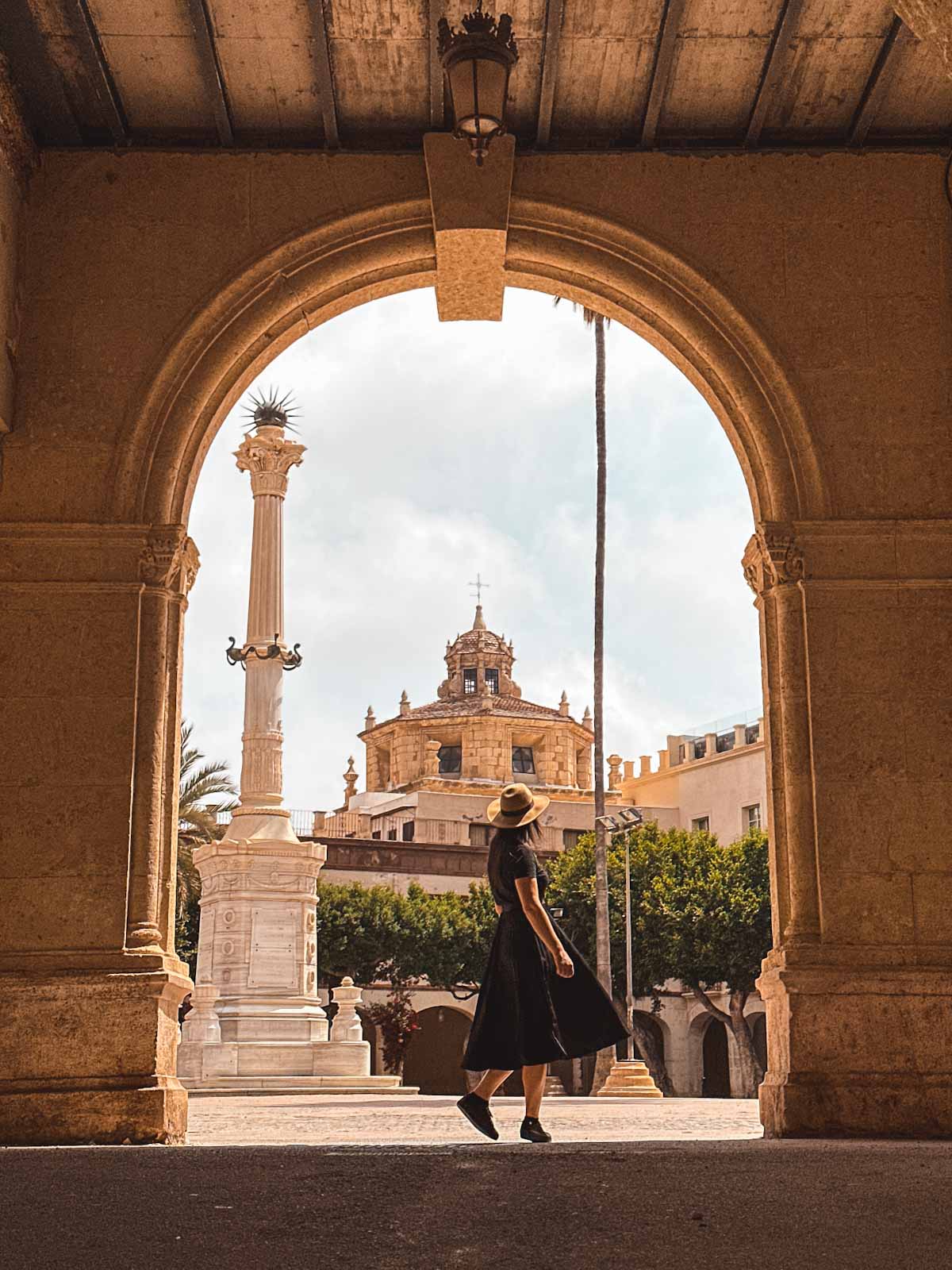
Plaza Vieja – officially called Plaza de la Constitución – is the main square in Almería, and one of the prettiest little corners of the old town. It has a tall monument in the middle, arcades all around it, and palm trees everywhere. Such a charming spot!
I read that this square has been the heart of the city for over a thousand years. It started out as a bustling zoco (market) back in the Moorish era.
It sat right at the intersection of the two main streets that went from the Mosque to the port, and it has been the center of local life ever since.
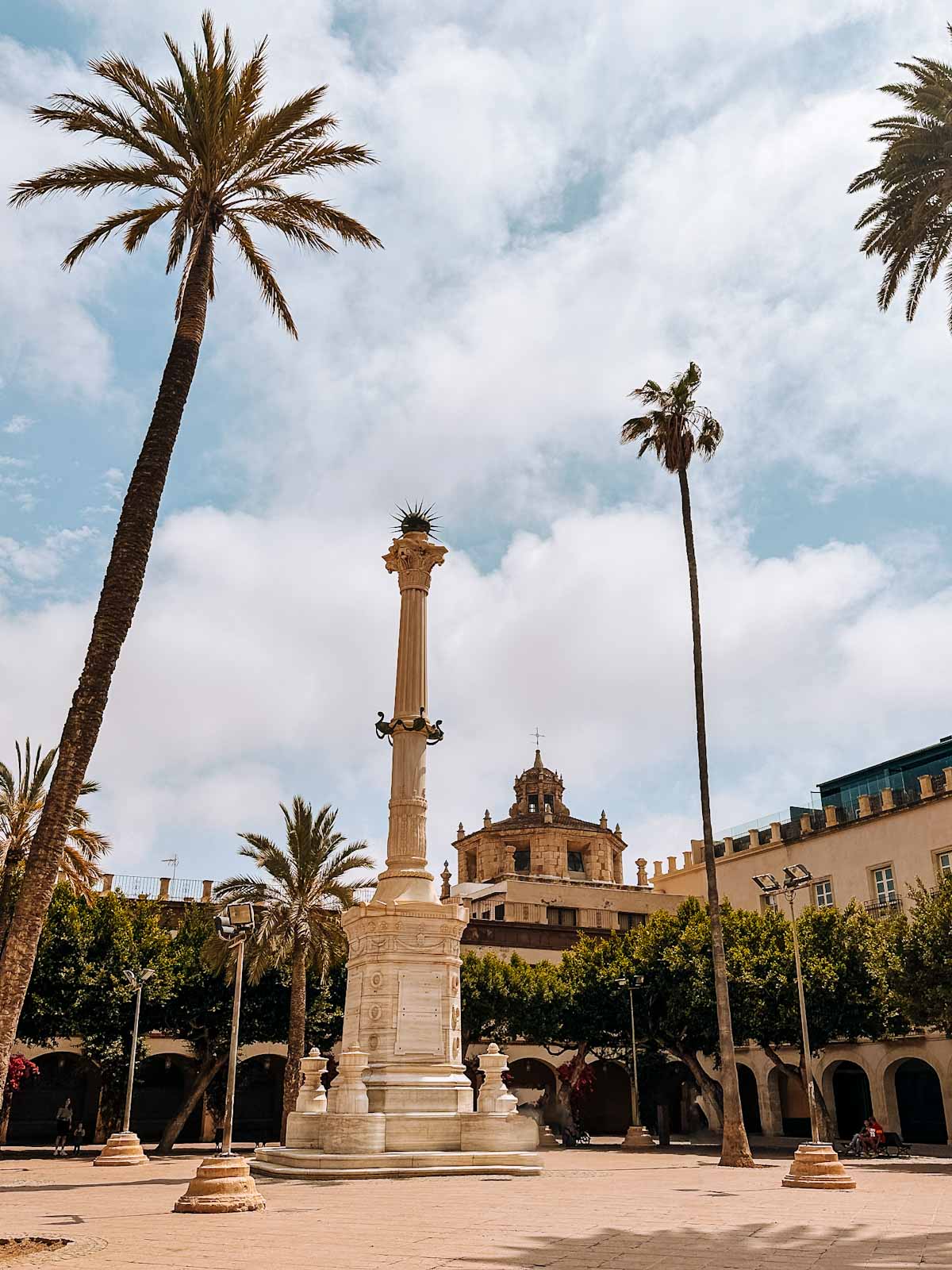
The tall column in the middle is called the Monument to the Martyrs of Liberty – or by its local nickname, “Pingurucho de los Coloraos.” It is made of white Macael marble.
It remembers 24 liberal fighters who landed on the beaches of Almería in 1824 wearing red coats (hence “coloraos”) to fight the absolutist rule of King Ferdinand VII.
They were executed on August 24th of that same year. So sad, but such an important part of Almería’s history.
The original monument was actually put up in a different square in 1870, then moved here to Plaza Vieja in 1900. It was torn down in 1943 (Franco was not a fan of liberal heroes).
The current version was rebuilt in 1988 by public subscription. So really, this obelisk has quite the story of its own.
The gorgeous building on one side of the square is the Almería City Hall (Ayuntamiento), designed by Trinidad Cuartara in the late 19th century.
Fun detail – when the clock strikes the hour, the bell tower plays the first few notes of the Fandanguillo de Almería, a local song. So sweet, and something you don’t hear anywhere else.
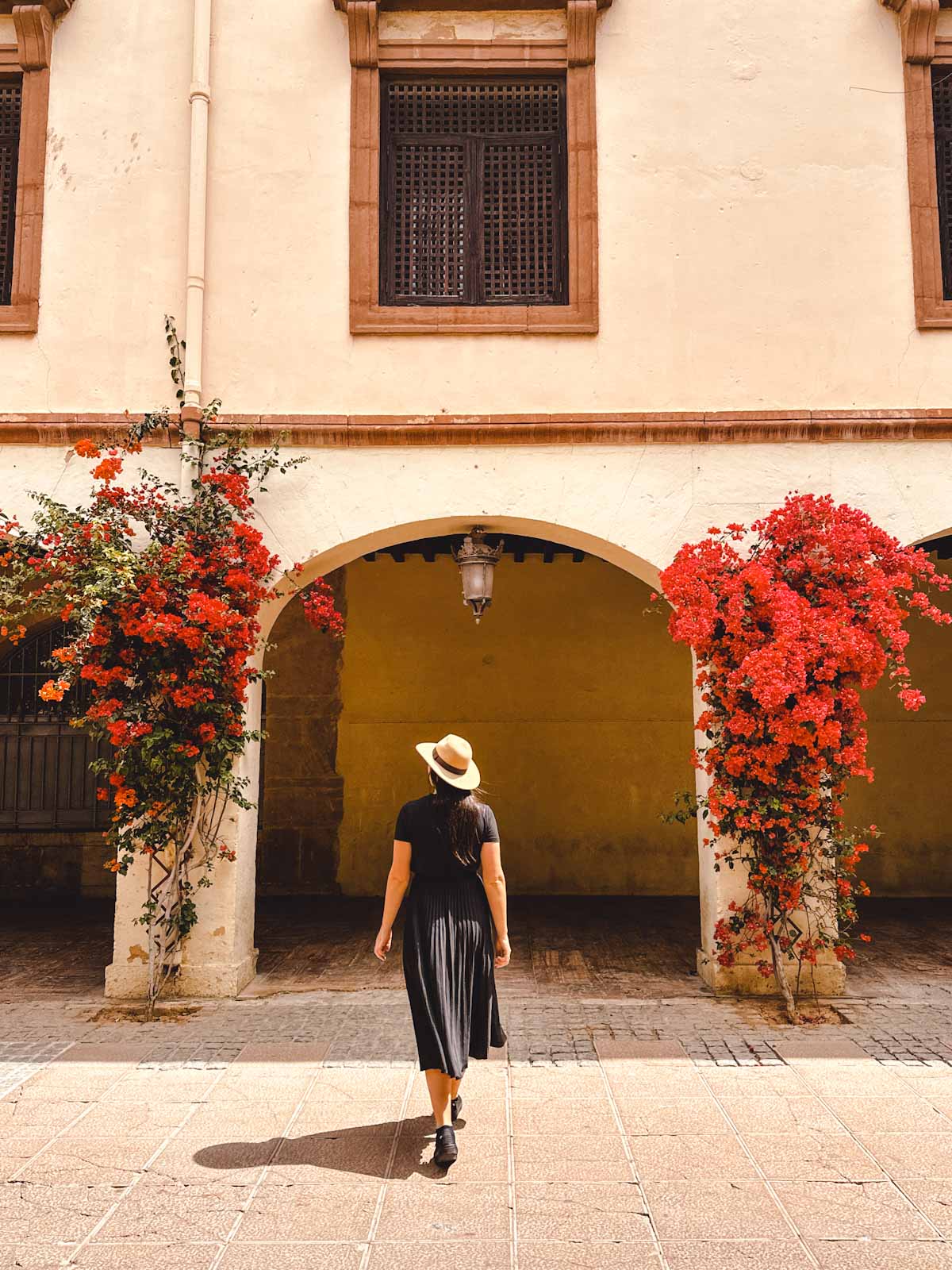
My favorite little detail here was a tunnel that goes under the City Hall building from the square. Walk through it and you get a totally different view back at the monument and the tower.
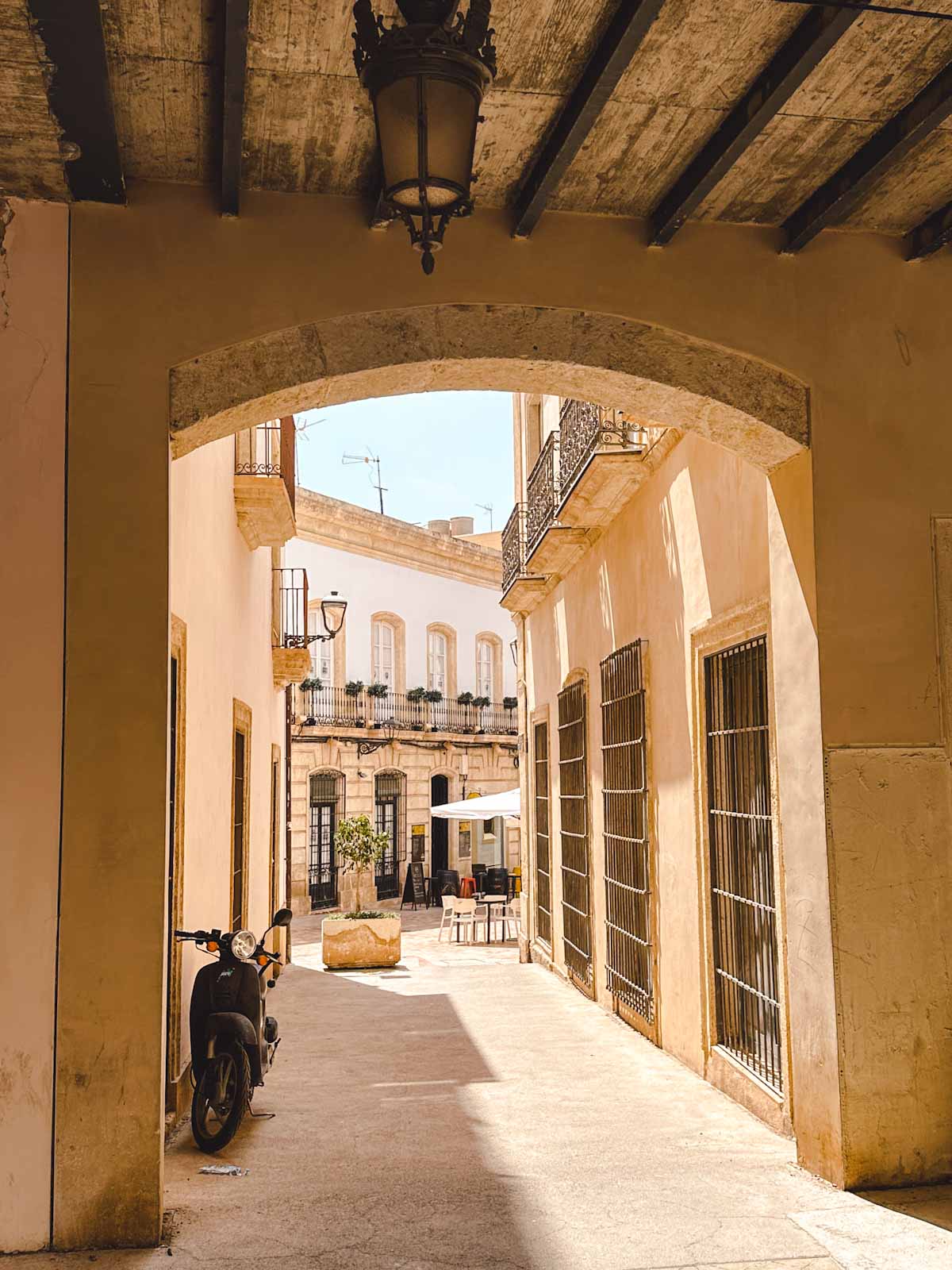
I recommend walking around the whole square under the arcades – you will spot other tunnels connecting to nearby streets, plus flower bushes that are really pretty.
The arcades also give you nice shade during the hottest hours of the day. And the whole square is buzzing in the afternoon with kids running around and people chatting on benches.
Locals stop by the surrounding cafes for a drink at all hours. Grab a coffee at one of the terraces and just soak it all in.
One more thing – recent excavations under the square actually revealed one of the entrances to the underground Civil War shelters (more on those below). So even standing in the square, you are literally on top of layers of Almería’s history.
Location: Plaza Vieja – Tunnel under the building
6. Say hi to the John Lennon bench
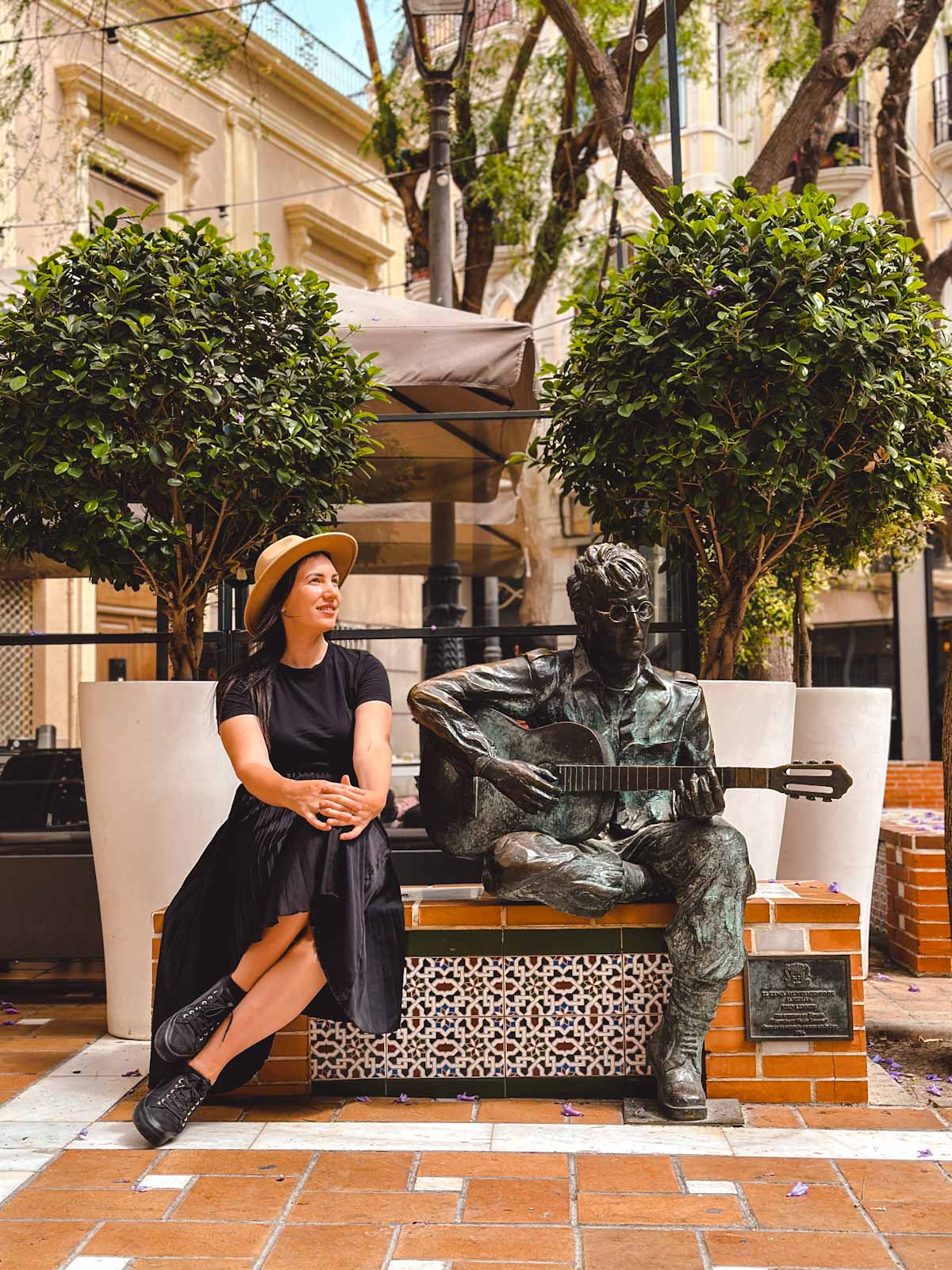
Did you know that John Lennon actually lived in Almería for a short while? Turns out he spent several weeks here in the autumn of 1966 to film How I Won the War, a satirical war movie directed by Richard Lester. Fun connection, right?
The really cool part is that between filming days, Lennon started writing what would become one of the Beatles’ most famous songs – Strawberry Fields Forever. And a lot of it was actually composed here in Almería. Truly a piece of music history.
To celebrate that connection, there is a bronze statue of Lennon sitting on a bench with his guitar in the middle of Plaza Flores. It was designed by artist Carmen Mudarra, and he is shown wearing his movie costume – military jacket and those iconic round glasses.
Fun little detail – the statue was originally installed in 2007 on the Rambla, but was later moved to Plaza Flores because vandals kept stealing the glasses. The city council keeps replacing them, but the current spot next to two bar terraces is much safer.
Plaza Flores itself is a very small and quiet square, right in front of Hotel Nuevo Torreluz. Just a couple of minutes from the cathedral. Sit down on the bench next to Lennon, snap a photo, and you have one of the most fun and unique things to do in Almería.
By the way, 2026 marks the 60th anniversary of Lennon’s stay in Almería, and the city is organizing special events, exhibitions, and tribute concerts to mark it. Good time to visit if you are a Beatles fan.
Location: The John Lennon bench
7. Stroll along the Rambla de Almería
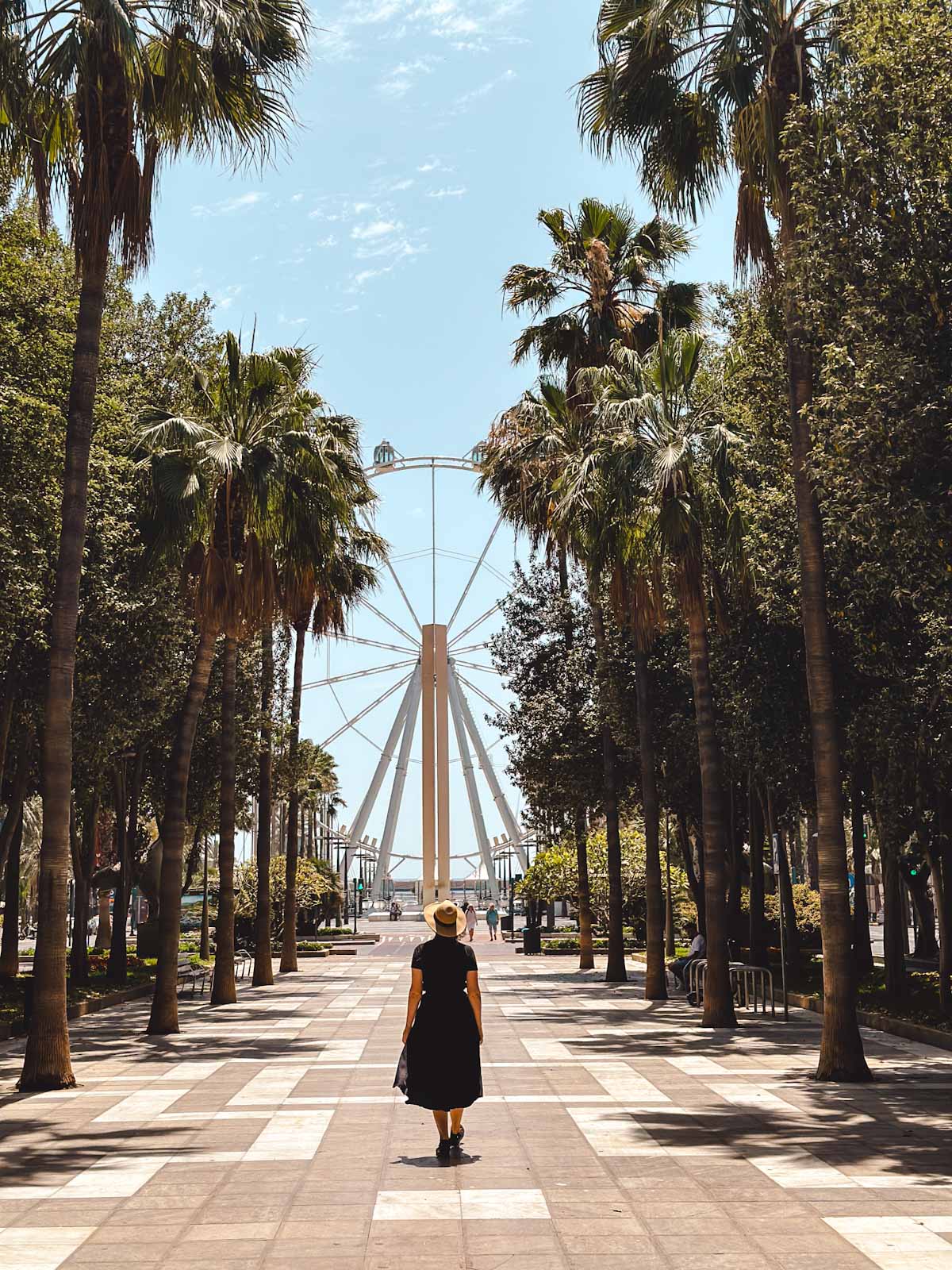
The Rambla de Almería is one of my favorite spots in the city. It is a wide, tree-lined pedestrian boulevard that cuts right through the center, and it feels like the main artery where the whole city comes together.
Here is a fun bit of context – the word “rambla” in Spain actually means “dry riverbed.” That is because until pretty recently, this was a real seasonal riverbed running through the city.
Almería’s Rambla is actually made up of three ramblas (Obispo, Belén, and Amatisteros) merging into one. The whole thing was covered over between 1994 and 2000 to create the beautiful boulevard you walk on today. Turns out that flooding was a real problem.
Officially the street is now called Avenida Federico García Lorca, named after the Spanish poet. But everyone still calls it the Rambla. Confusing but charming.
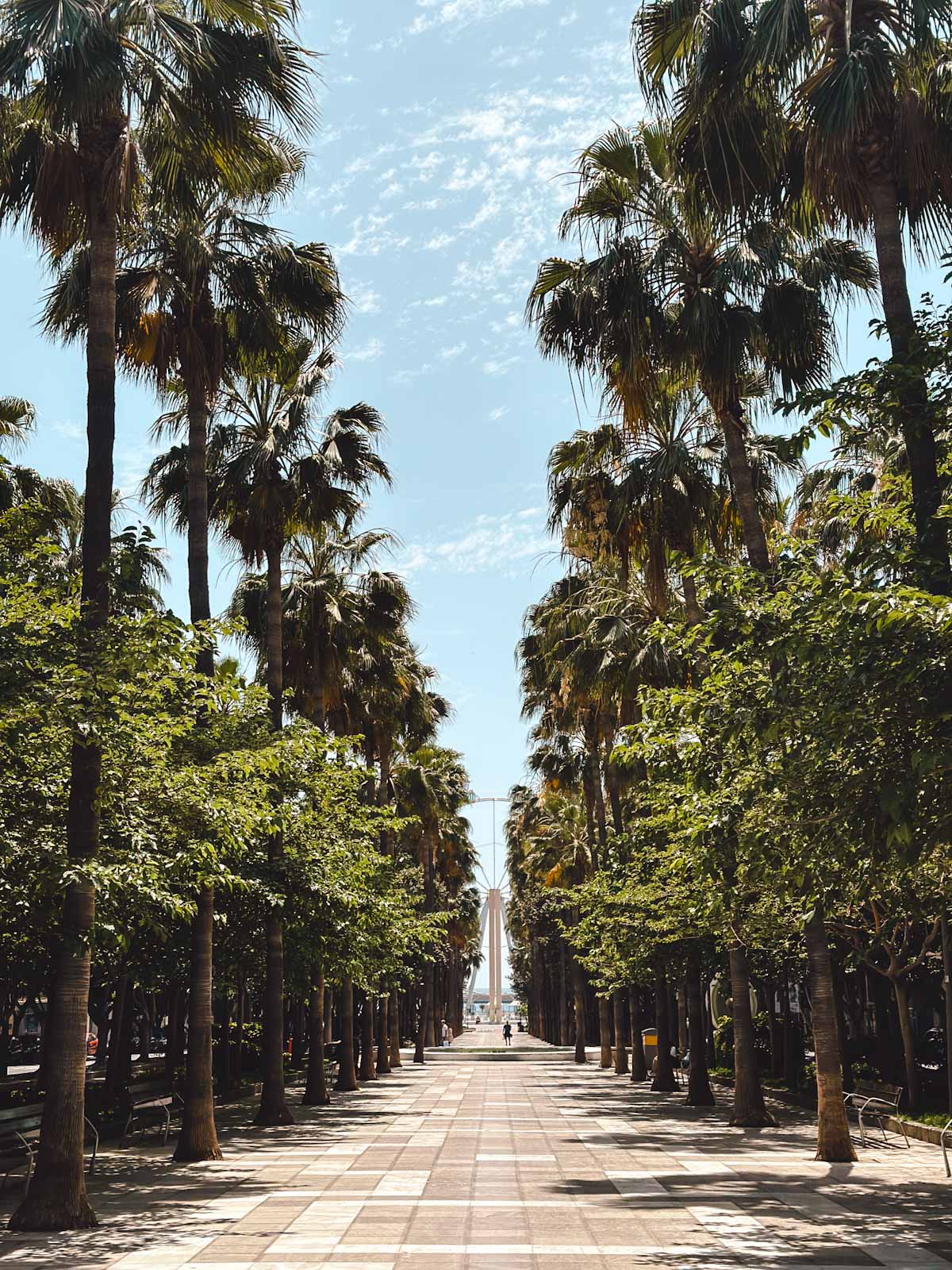
You will see palm trees, benches, fountains, sculptures, and a mix of shops and cafes on both sides. There is even a small dam at the top of the boulevard that still helps prevent flooding, which I thought was a nice detail.
The Rambla is a great place to just wander around – grab an ice cream, sit on a bench, watch the world go by. At the very end of the boulevard, you get to Plaza de las Velas and the harbor, which is the next spot on this list.
We visited in the middle of the day when everyone was on siesta, so we practically had the whole boulevard to ourselves – great for photos. But it truly comes alive in the evening when locals do their paseo (evening walk). Grab a coffee and just soak in the vibe.
Location: Rambla de Almería
8. Take a photo with the Almería letters and ferris wheel
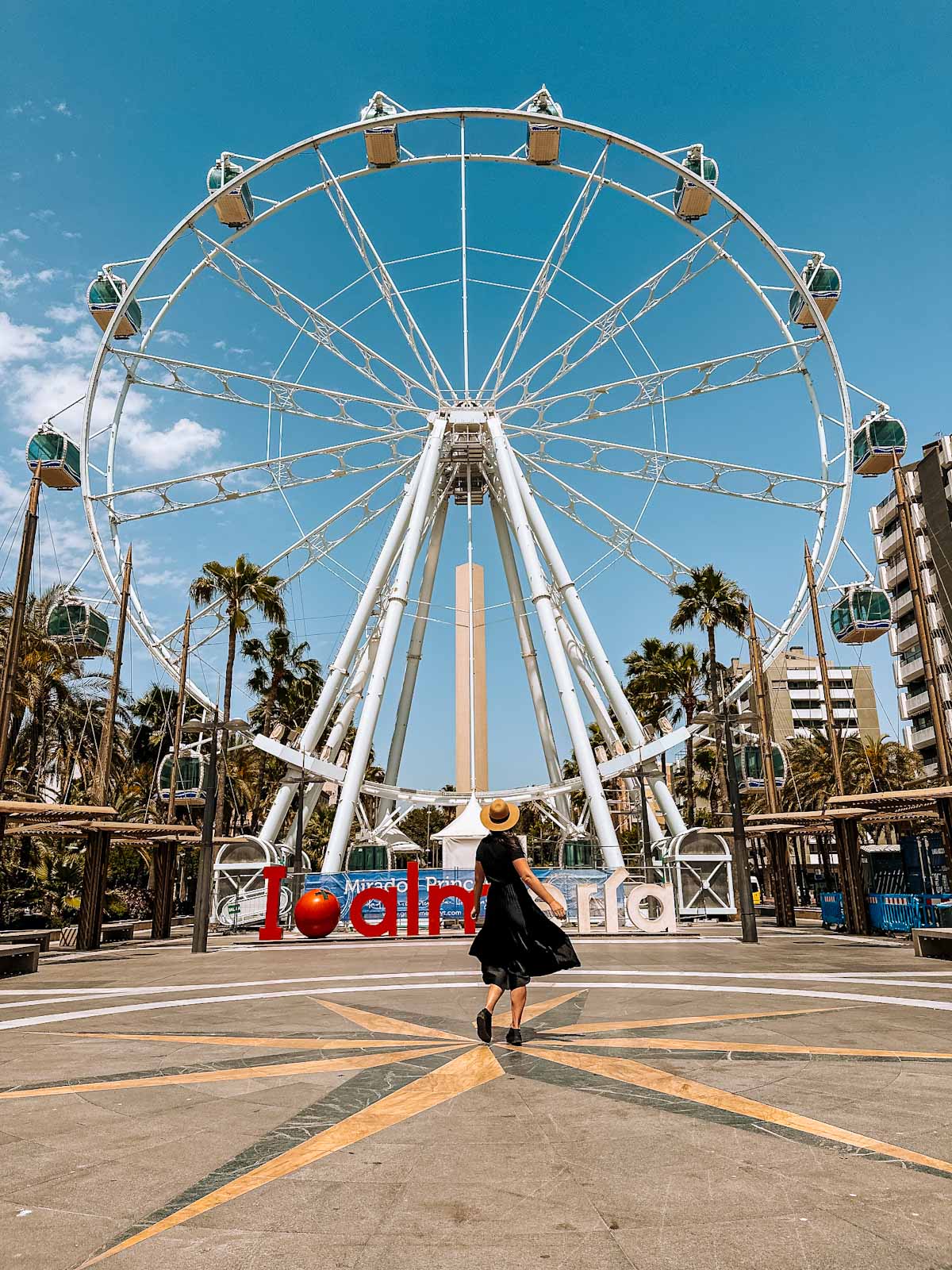
Right at the end of the Rambla, where it meets the harbor, is Plaza de las Velas – a nice little viewpoint square with one of the most iconic photo backdrops in the whole city.
The setup is basically perfect for a photo. You have the giant “I LOVE ALMERÍA” letters, a huge compass rose painted on the ground, and a 40-meter (131-foot) ferris wheel behind it all. Great way to remember your trip.
Real talk though – the ferris wheel is not always operating and sometimes it gets taken down entirely for events or maintenance. On the day we visited, it was there but not working. Just something to keep in mind.
If you get there when it is running, it is a fun ride up to the top with panoramic views over the harbor, the Alcazaba on the hill, and Cabo de Gata off in the distance. Perfect for a first-time overview of the city.
The plaza also has fountains, benches, palm trees, and a few sculptures spread along the green strip between the road lanes. Truly the best time to come here is around sunset – the light hits the letters and the harbor really nicely.
Location: Plaza de las Velas
9. Walk out onto El Cable Inglés
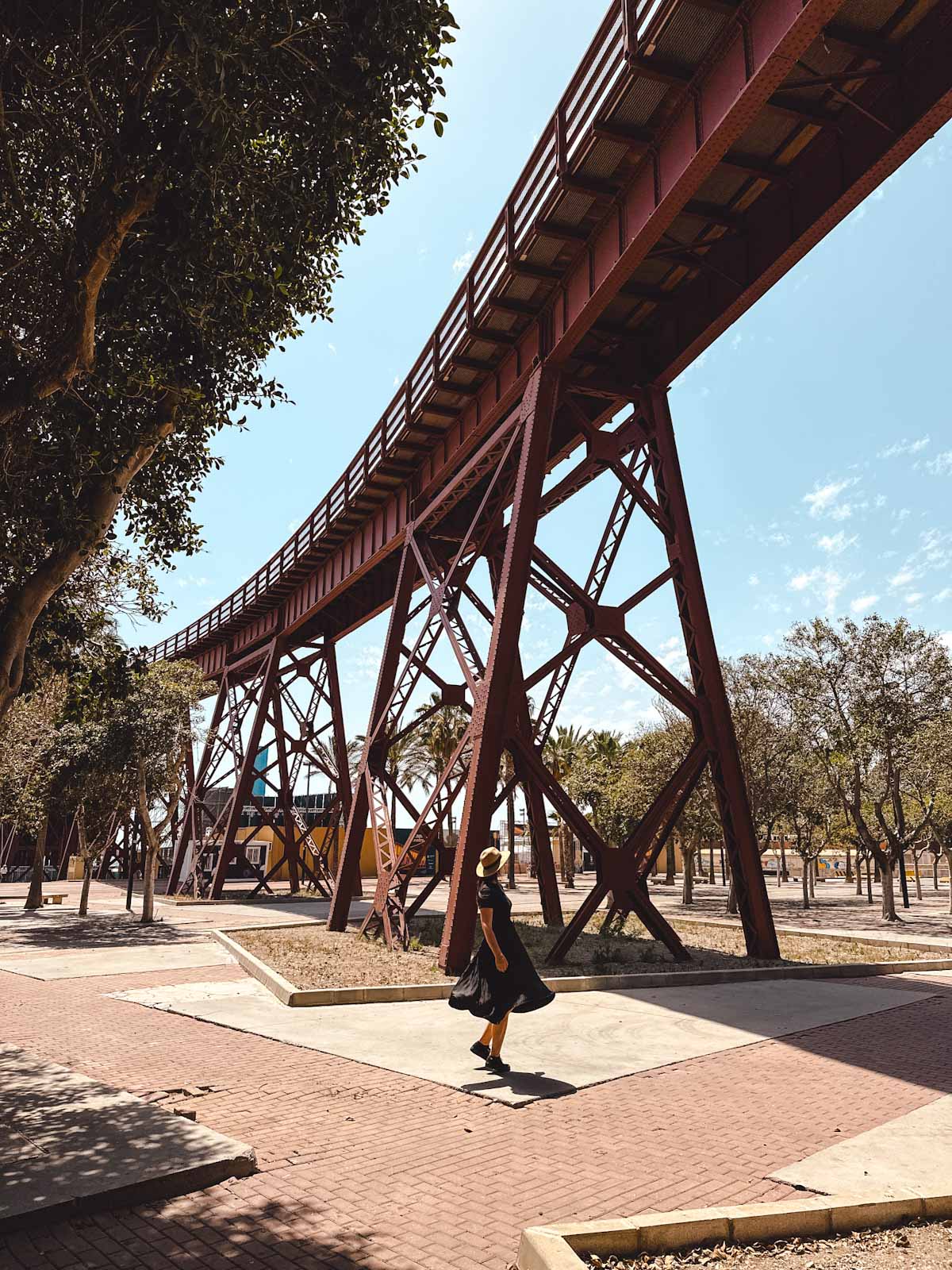
El Cable Inglés – or “the English Cable” – is easily one of the most unique things to see in Almería. It is a huge iron pier from the early 20th century that runs straight out into the sea.
The design looks like something the Eiffel Tower engineers might have built. Because they basically did, following the same school. So cool.
Here is the story. In the early 1900s, iron ore was being mined 90 km (56 miles) away at Alquife, and needed to get onto ships fast.
The British company Alquife Mines and Railway Company Limited (the “English” bit of the name) built the pier to solve exactly that problem.
It was designed by Scottish engineer John Ernest Harrison, following the school of Gustave Eiffel, and inaugurated by King Alfonso XIII himself on April 20, 1904. So, yeah – the king came for the opening. Kind of a big deal.
The trick was that trains could roll all the way to the end of the pier and unload directly into cargo ships waiting below. That reduced loading time for an 8,000-ton ship from over a week to just 10 hours. Absolutely wild for the time.
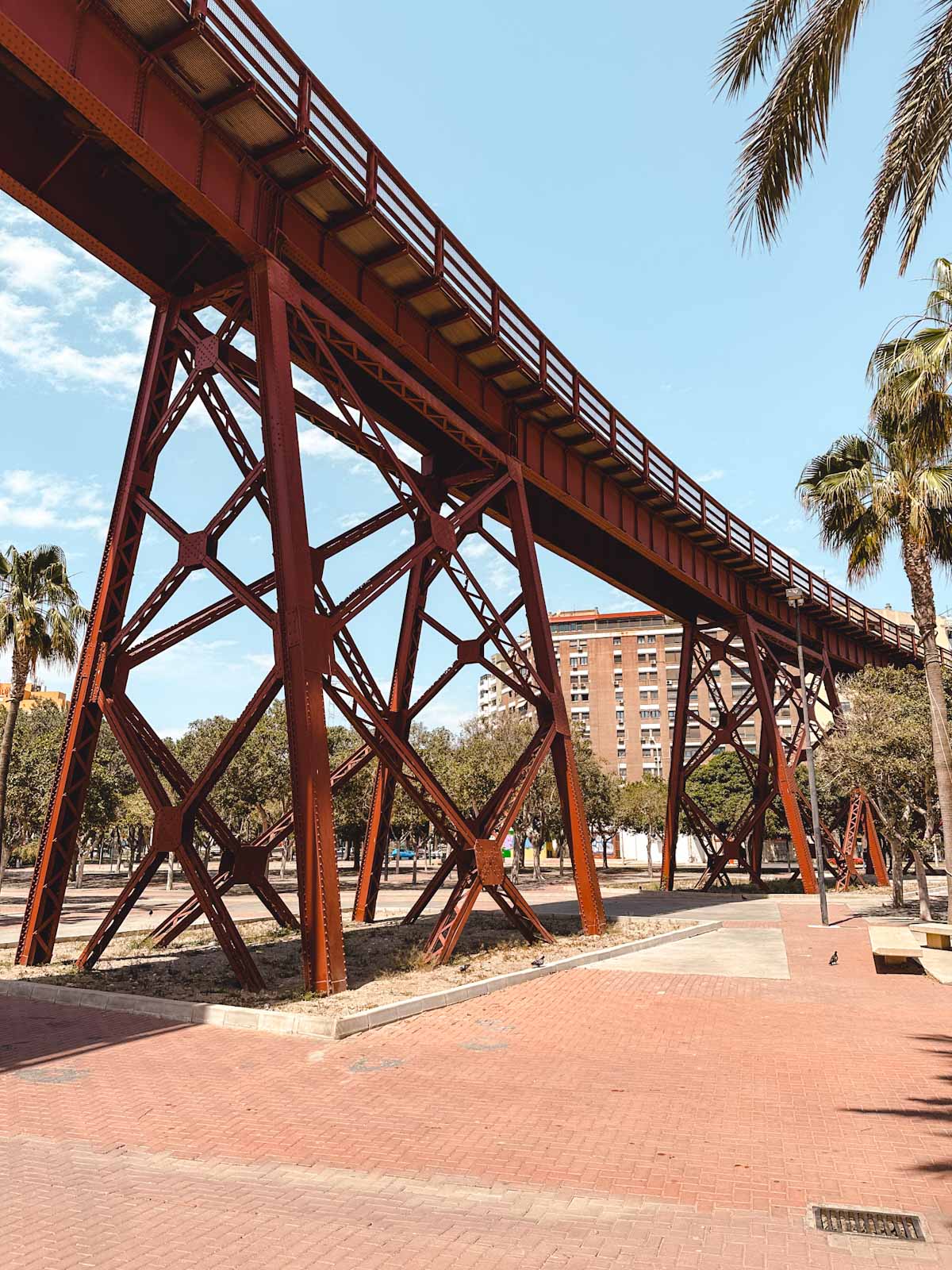
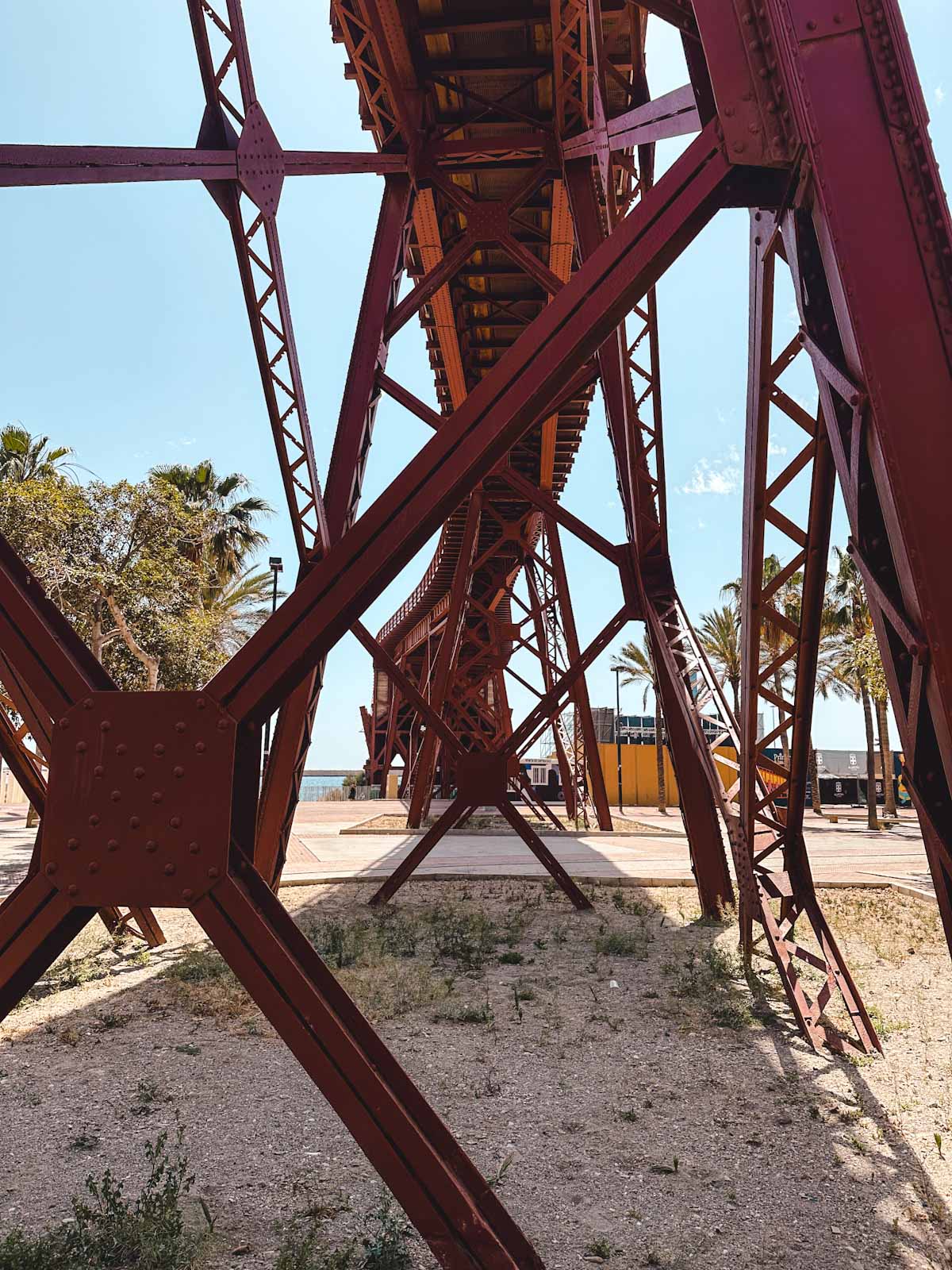
Fun numbers to appreciate. The pier used 3,824 tons of Scottish steel, 8,000 square meters of wood, and over 1,000 meters (3,281 feet) of railway track. It rises 17 meters (56 feet) high above the sea.
The pier was in use until 1973, when the mining boom finally ended. It was then declared an Asset of Cultural Interest in 1998, and restored in 2012 – so today you can actually walk out onto the top of it. Yes, the whole way to the sea.
You get the best views of the pier itself from Parque de las Almadrabillas park or from the beach next to the Monument to the Almerian Victims of Mauthausen.
This is a really important local memorial to 142 Almerian Jews who died in the Nazi concentration camp in Austria in 1939-1945. Worth a quiet moment when you visit.
One more fun little detail – next to the pier you will spot a strange triangular warehouse. Locals nicknamed it “the Toblerone” because of the shape. So great!
Location: El Cable Inglés
10. Chill at Playa del Zapillo
Once you have done the sightseeing, you will want a break by the water. Almería has a whole stretch of city beach right in the center – Playa del Zapillo – and it is a great way to spend an afternoon.
Zapillo is about 2.6 km (1.6 miles) of soft grey and gold sand, and it has been awarded the Blue Flag for water quality. Truly clean, calm waters even in high season – perfect for families and slow swimming.
Fun fact – the whole area used to be a fishing village on the outskirts of the old town. It only really became part of the city in the last 50 or 60 years, and the paseo marítimo that runs along it all was built to open it up.
The seaside promenade is honestly one of the nicest parts. It stretches from Playa Nueva Almería in the east all the way to El Cable Inglés and the port. So you can basically walk from the beach right into the historic center and back again.
Along the paseo you will find lots of chiringuitos (beach bars), ice cream places, seafood restaurants, and shady palm trees. There are also showers, lifeguards in summer, and wooden walkways for accessibility, which is nice.
Water sports fans – Zapillo also has decent conditions for windsurfing and kitesurfing when the wind picks up. And in the evening, the whole promenade fills up with locals doing their after-dinner walk. Such a nice place to be.
Getting there is easy – it’s about a 15 minute walk from the city center, or you can take bus lines 11, 12, or 18. Parking gets full fast in summer, so bus or walking is the way.
Location: Playa del Zapillo
11. Go tapas hopping around the old town
If there is one thing you truly cannot skip in Almería, it is the tapas culture. And here is the best part – Almería is one of only three cities in Spain (along with Granada and Jaén) where the tapa comes free with your drink. Truly a great deal.
The tradition is simple. You order a drink (usually a beer, wine, or vermut) at the bar, and the bartender brings you a tapa to go with it. Different plate every time, so you kind of just take what you get.
The idea is to hop from bar to bar – one drink, one tapa, and then you move on to the next. Locals call it “tapear” or “ir de tapas.” A great way to eat a full meal in tiny portions across the old town.
Timing is important. Tapas usually happen from 1 PM (for lunch) or from around 8:30 PM (for dinner). Bars close in the afternoon during siesta, then reopen in the evening. Weekend nights they stay open until 1 AM or later.
I have not been to Almería’s tapas bars personally yet, but based on what locals and travelers keep recommending, these are some of the most highly-rated spots to start:
- Casa Puga – dating back to 1870, this is often called the most iconic tapas bar in the city. Hams hanging from the ceiling, wine bottles on every shelf, always buzzing.
- El Quinto Toro – family-run since 1947, currently owned by the third generation. Old-school, traditional, and popular for a reason.
- La Encina – a classic locals’ favorite for tapas in the old town.
- La Mala – near the cathedral, known for its excellent croquetas and cozy atmosphere.
- La Virgen Chica – a modern, popular spot along Avenida Mediterráneo.
The best area to base your tapas hop is around the “Cuatro Calles” (Four Streets) neighborhood in the old town center. This is basically the beating heart of Almería’s nightlife. Lots of bars packed into a few small streets.
Some tips – go with an empty stomach, order a bebida chica (small drink) so you can hop to more places, and don’t be shy about ordering half raciones (larger shared portions) if you find something you love. Perfect way to end a day of sightseeing.
12. Explore the underground Civil War shelters
Note before you plan a visit – the Civil War shelters have been closed to the public since an electrical fire in March 2025. Reopening is expected around late 2026 after a full restoration and museum renovation.
Definitely check the official Almería city website before your trip for the latest updates.
Even so, this is one of the most fascinating and unusual things to do in Almería, and I want to leave it on the list because the story is so worth knowing about.
Here is the context. During the Spanish Civil War, Almería was actually the Republicans’ last holdout in Andalusia, which made it a target for repeated bombings from air raids.
In 1936, local architect Guillermo Langle Rubio designed a huge network of underground shelters to protect the people of Almería. Construction started in February 1937 and was completed in 1938.
The scale of it is honestly hard to picture. The network runs for 4.5 km (2.8 miles) under the city, 9 meters (30 feet) below ground, and was designed to hold up to 40,000 people during raids. It is truly one of the largest air-raid shelter networks in Europe.
About 1 km (0.6 miles) of the tunnels have been restored and are open for guided tours, running under the main boulevard (Paseo de Almería). You go through storage rooms, living quarters, a recreated operating theater, and even a food cellar.
There are also historical graffiti still on the walls from people who sheltered here during the war – which is actually a big part of why the current restoration is taking so long. The city is doing a full conservation to protect those pieces of history.
Once it reopens, tours will include a short intro film with survivor testimonies (in Spanish with English subtitles), new audio guides, augmented reality content, and better accessibility features. Truly worth planning a trip around.
Tickets before the closure were around 3 EUR – one of the best deals in the city for such an incredible piece of history. Booking online in advance was required, so plan ahead when it reopens.
Location: Refugios de la Guerra Civil
13. Take a day trip to Cabo de Gata Natural Park
If you have even one extra day in the area, get yourself to Cabo de Gata Natural Park. It is one of the most beautiful stretches of the Mediterranean coast, and it truly feels like a world away from the city.
Fun fact – Cabo de Gata is one of the very few volcanic landscapes in Andalusia, formed by a series of ancient underwater eruptions. That is why the cliffs, coves, and rock formations look so unique.
The park covers about 380 square kilometers (147 square miles) of protected land, plus a huge marine reserve. Great mix of desert-like hills, dramatic cliffs, hidden coves, and a few tiny fishing villages.
The beaches are the main draw and they are seriously some of the most beautiful beaches in Spain. My top picks based on what I have seen and what locals recommend:
- Playa de los Genoveses – a long stretch of golden sand backed by dunes and a volcanic hill. No facilities, so bring water.
- Playa de Mónsul – the most iconic beach in the park, with a huge volcanic rock formation and giant sand dune. Famous for being in Indiana Jones and the Last Crusade.
- Playa de los Muertos – “Beach of the Dead” (dark name, gorgeous place). Long stretch of white pebbles with turquoise water. A bit of a hike down.
- Playa de San José – the beach in the main village, family-friendly with facilities and restaurants right there.
Beyond the beaches, don’t miss the Mirador de las Sirenas (Mermaid Reef viewpoint) at the lighthouse, and the salt flats near the town of Cabo de Gata (great spot for flamingos if you time it right).
A tip – in summer, access by car to Genoveses and Mónsul is restricted. You have to leave the car in San José and take a shuttle bus in. Do it, or come outside July-August when access is free.
Cabo de Gata is about 40 km (25 miles) east of Almería city, so 40-50 minutes by car. You can also do a boat tour from Almería if you don’t have transport – great way to see the coast from the water. So many good options.
Location: Cabo de Gata Natural Park
14. Feel like a cowboy in the Tabernas Desert
Did you know that Europe has its own desert? And it is right here in Almería. The Tabernas Desert is officially the only true desert on the whole European continent, and it is a really unique experience.
Here is where the fun really starts. Back in the 1960s, Italian director Sergio Leone came to Tabernas and used the desert landscape to film his famous spaghetti westerns. And that changed everything for the region.
Leone shot his Dollars Trilogy here – A Fistful of Dollars, For a Few Dollars More, and The Good, the Bad and the Ugly – all starring a young Clint Eastwood. Truly a piece of movie history.
Between 1960 and 1980, over 600 European westerns were filmed here. And it was not just westerns – Lawrence of Arabia, Cleopatra, Indiana Jones and the Last Crusade, and hundreds of others were shot in the area too.
To this day, three of the original western towns are still standing and open to visitors as theme parks. So cool. Each one has a slightly different vibe:
- Oasys MiniHollywood – the biggest and most popular. Full western town with daily cowboy stunt shows, cancan dancers, a cactus garden, and even a small zoo. Great for families.
- Fort Bravo / Texas Hollywood – the second biggest, still used for filming today. Also has cowboy shows and horseback rides.
- Western Leone – the smallest and quietest, built for Once Upon a Time in the West. Kind of a hidden gem for real fans of Sergio Leone.
The three parks are within about 5 minutes of each other by car, so you could technically visit more than one in a day. Or just pick one and take your time – each visit takes about 2-3 hours with a show.
The desert itself is about 30 minutes’ drive from Almería city, so it makes a really doable half-day trip. If you want the full cowboy experience, some tours also include horseback rides or 4WD tours through the desert.
Real talk – it gets brutally hot here in summer (40°C / 104°F is common), so bring water, sun cream, and a hat. Truly avoid July-August afternoon visits. Spring or autumn is much better.
Location: Tabernas Desert – Oasys MiniHollywood – Fort Bravo
15. Discover the giant Pulpí Geode
Saving one of the most unusual things to do in Almería for last – the Pulpí Geode. This is a truly wild one, and easily the least-known spot on this whole list. Most people who visit Almería have no idea it exists.
What is a geode? Basically a hollow rock lined with crystals on the inside. Most are the size of an egg or a football, which you might have seen in a museum. This one, though – it is 8 meters (26 feet) long.
It is officially the second-largest geode in the world, and the only “giant” geode anywhere on Earth that you can actually go into. Truly one of a kind. It is also the largest one in all of Europe.
The story of how it was found is amazing. In December 1999, mineralogists from Madrid were exploring an abandoned iron and silver mine called Mina Rica, 50 meters (164 feet) below ground. And they stumbled into this crystal-filled cave.
The crystals inside are transparent gypsum (selenite), some over 2 meters (6.5 feet) long. So clear you can almost see straight through them. Scientists think it took at least 60,000 years to form. Wild stuff!
It took another 20 years and a lot of work (over 600 tonnes of debris cleared out) before it finally opened to the public in August 2019. Now it is one of the most unique places to visit in Spain.
Visits are by guided tour only, and they take about 2 hours in total. You walk through 350 meters (1,148 feet) of tunnels inside the old mine, learning about the mining history, before descending into the geode chamber itself.
Practical stuff – you need to book online in advance because tours are in small groups. You have to wear a hard hat, and children under 8 are not allowed. Photos inside the geode chamber are limited but you get plenty of time to just take it all in.
The Pulpí Geode is located in the town of Pulpí, in the northeastern corner of Almería province, about 2 hours’ drive from Almería city. Truly worth the trip – it is a genuine hidden gem you can absolutely not see anywhere else in the world.
Location: Geoda de Pulpí (Mina Rica)
FAQs about things to do in Almería
Is Almería worth visiting?
Yes, absolutely! Almería is one of the most underrated cities in Andalusia. You get a huge Moorish fortress, a fortress-cathedral, a real old town, and access to Europe’s only desert – all without the crowds of Seville or Granada. History fans will love it.
What is Almería known for?
Almería is best known for the Alcazaba (one of the largest Moorish fortresses in Spain), the Tabernas Desert (Europe’s only true desert, filming location for spaghetti westerns), Cabo de Gata Natural Park, and its famous free tapas culture.
How many days do you need in Almería?
Two full days is a good minimum for the city itself – one for the Alcazaba, cathedral, and old town, another for the seaside and Zapillo Beach. Add day trips to Cabo de Gata and Tabernas Desert and you are at 4-5 days total.
Are tapas really free in Almería?
Yes, they truly are! Almería is one of only three cities in Spain (along with Granada and Jaén) where you get a free tapa with every drink at a bar. Different plate every time, and you can hop from bar to bar.
What is the best time to visit Almería?
Spring (April to June) and autumn (September to October) are the best times. Temperatures are warm but not brutal, and the sea is swimmable. Summer is too hot for sightseeing (often over 35°C / 95°F), and winter is mild.
Is Almería good for families with kids?
Yes, it is a great family destination. Kids love climbing around the Alcazaba, running around Plaza Vieja, and Zapillo Beach. Oasys MiniHollywood in the Tabernas Desert is a western theme park with stunt shows – a hit with kids.
Read more about traveling in Andalusia
Almería took me by surprise. I came expecting a fairly quiet stopover between the bigger Andalusian cities, and left thinking it was one of the most interesting places I visited in the whole region. So different from anywhere else in Spain.
What I loved most is how many stories are packed into this little corner of the coast. Moorish caliphs and Christian conquest, pirate raids and Civil War shelters, all layered on top of each other.
Then add in John Lennon writing Strawberry Fields, spaghetti westerns, and giant underground crystals. Truly one of a kind.
And it is truly off the tourist radar, which means you get to explore without the crowds. So take your time here – you will find your own favorite corners in this beautiful city. Happy travels!
If you are planning a longer Andalusia trip, here are a few more guides from the region that might come in handy. Enjoy planning!
More Andalusia travel inspiration:
- 21 most beautiful white villages in Andalusia
- 27 hidden gems you should see in Andalusia
- 17 most beautiful castles in Andalusia, Spain
- Córdoba bucket list: 18 best things to do in Córdoba, Spain
- Seville, Spain: 19 awesome bucket list things to do in Seville
- 20 best things to do in Malaga, Spain (+locations & tips!)
Travel guides to nearby towns:
- Ronda bucket list: 15 best things to do in Ronda, Spain
- 12 best things to do in Cádiz, Western Europe’s oldest city
- Fairytale Frigiliana: 13 things to do in Frigiliana, Spain
- 10 things to do in Iznájar, Spain (flower village)
- 10 best things to do in Jerez de la Frontera, Spain
- 10 things to do in Tarifa, Spain’s southernmost town
PIN FOR LATER!