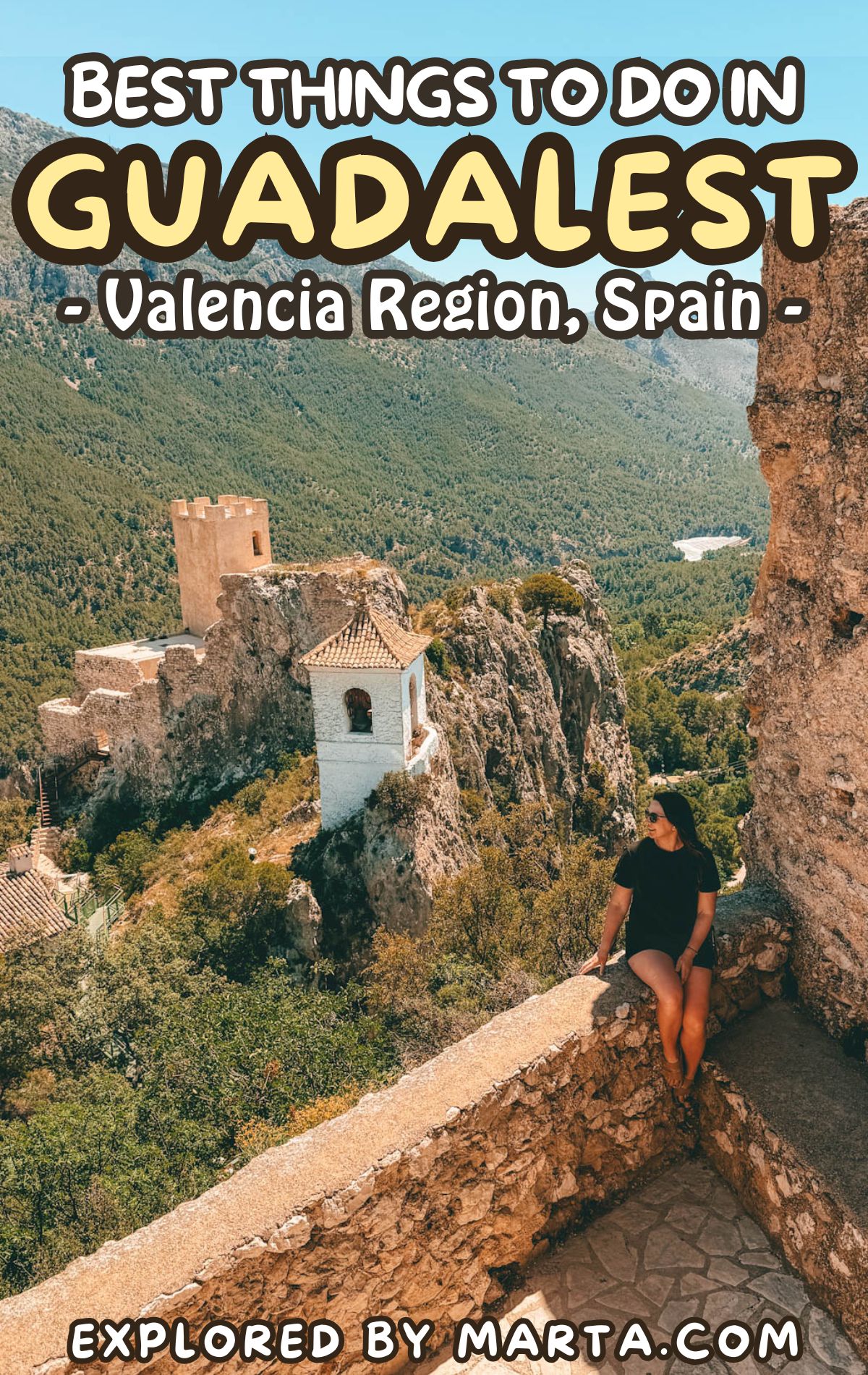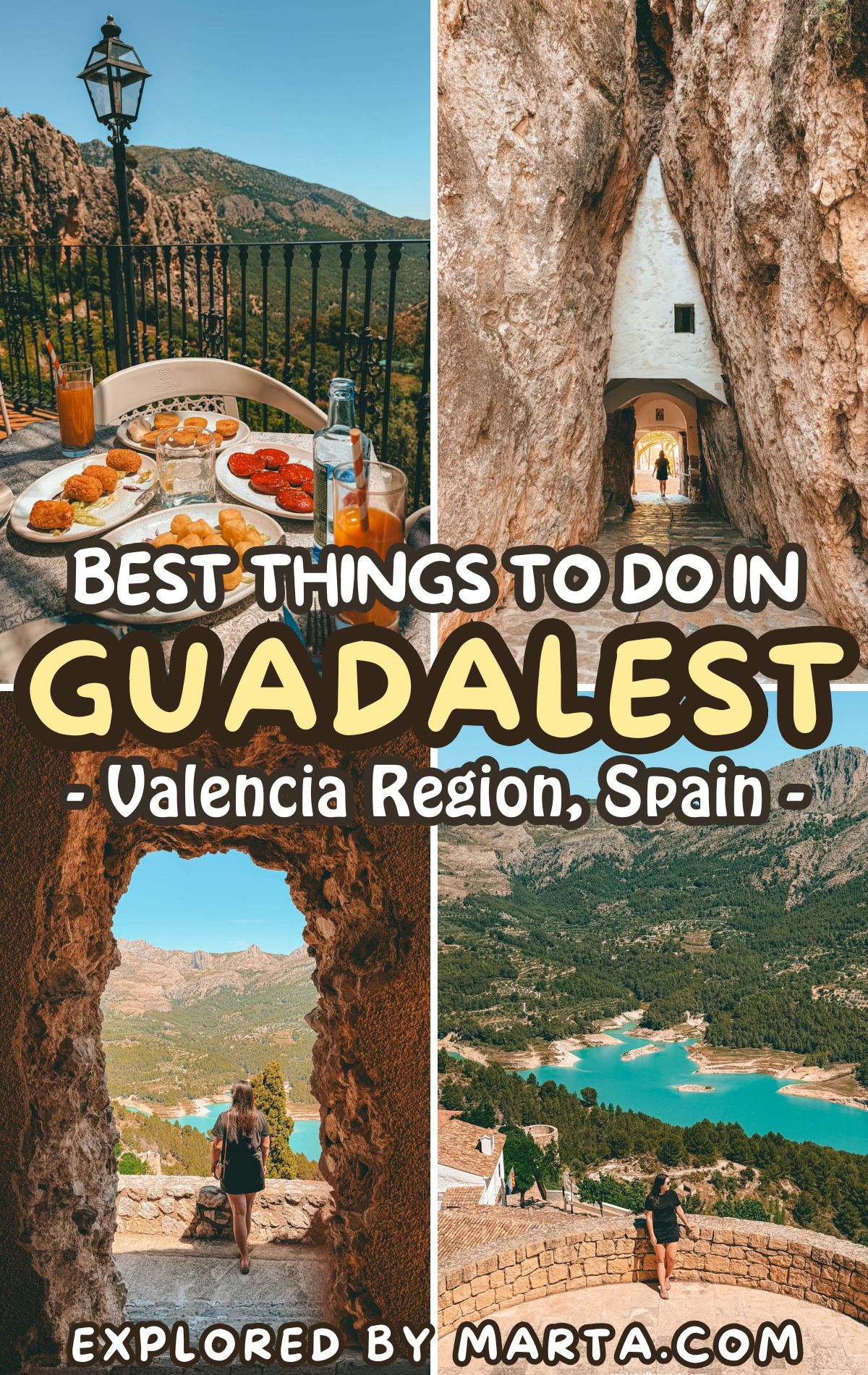
12 best things to do in Guadalest, Spain (the Eagle’s Nest)
This post may contain affiliate links. If you use these links to make a purchase or booking, I may earn a small commission at no extra cost to you! Thank you for your support!
If you’re looking for the best things to do in Guadalest, Spain, I’ll be honest with you: the view alone is worth the drive. After years of traveling, I’ve become pretty hard to impress, but Guadalest got me. No wonder it’s regarded as one of the most beautiful villages in Spain!
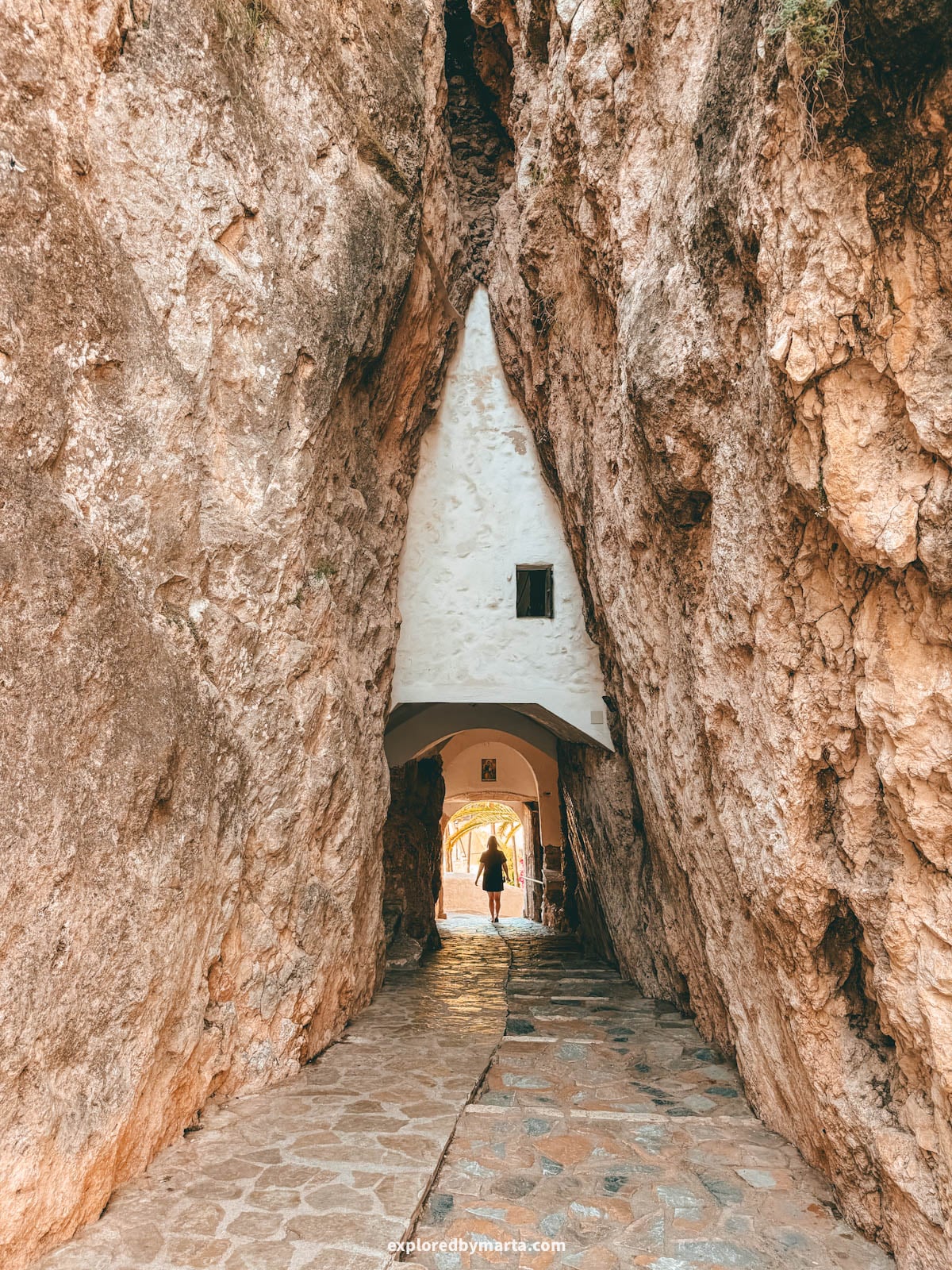
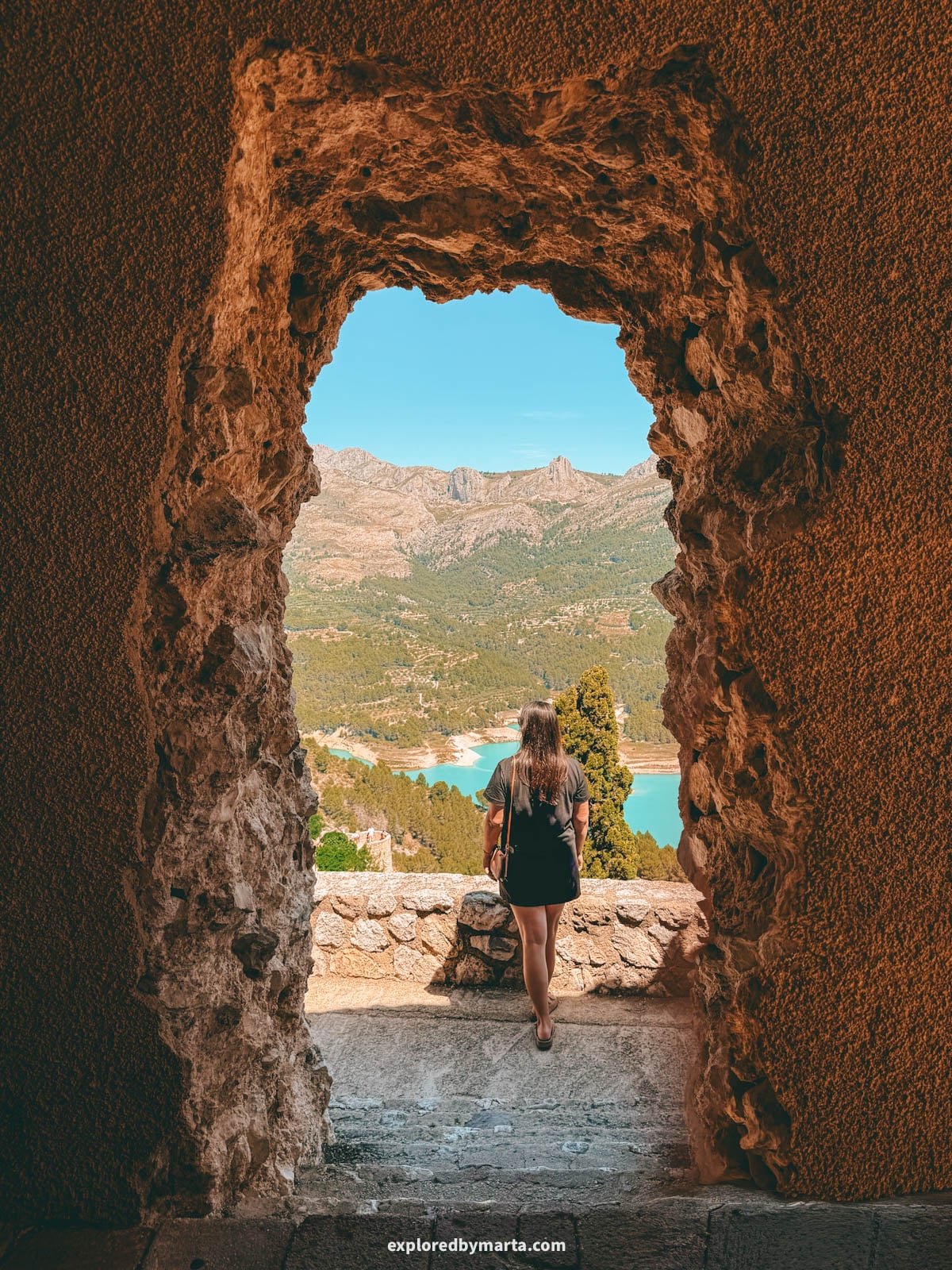
This tiny medieval village sits on a rocky cliff in the mountains of the Costa Blanca, high above the bright blue reservoir (that’s why it’s nicknamed the Eagle’s Nest!). You actually get into the old village through a tunnel cut into the stone, which is pretty special.
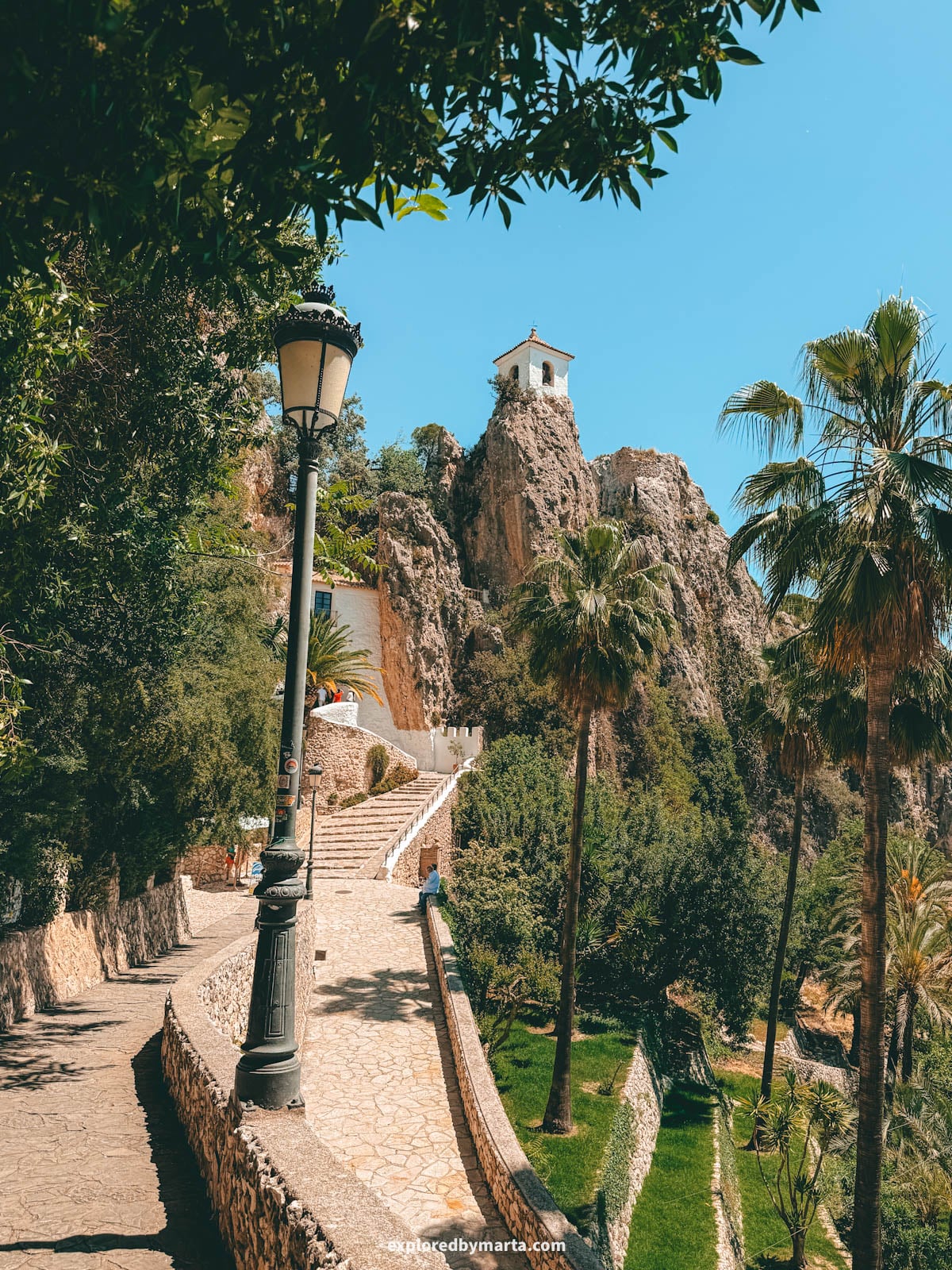
Then, once you walk through and reach the main square, Guadalest opens up with huge views over the reservoir, old houses lining the cobblestone streets, and that little white bell tower standing on its own rock. I totally get why it’s one of the most photographed villages in Spain.
The good news is that Guadalest is small and easy to explore, which makes it perfect for a day trip from the coast. In this guide, I’ll walk you through the best things to do in Guadalest, Spain, from the castle and viewpoints to the tiny museums. Enjoy!
A few things to know about Guadalest
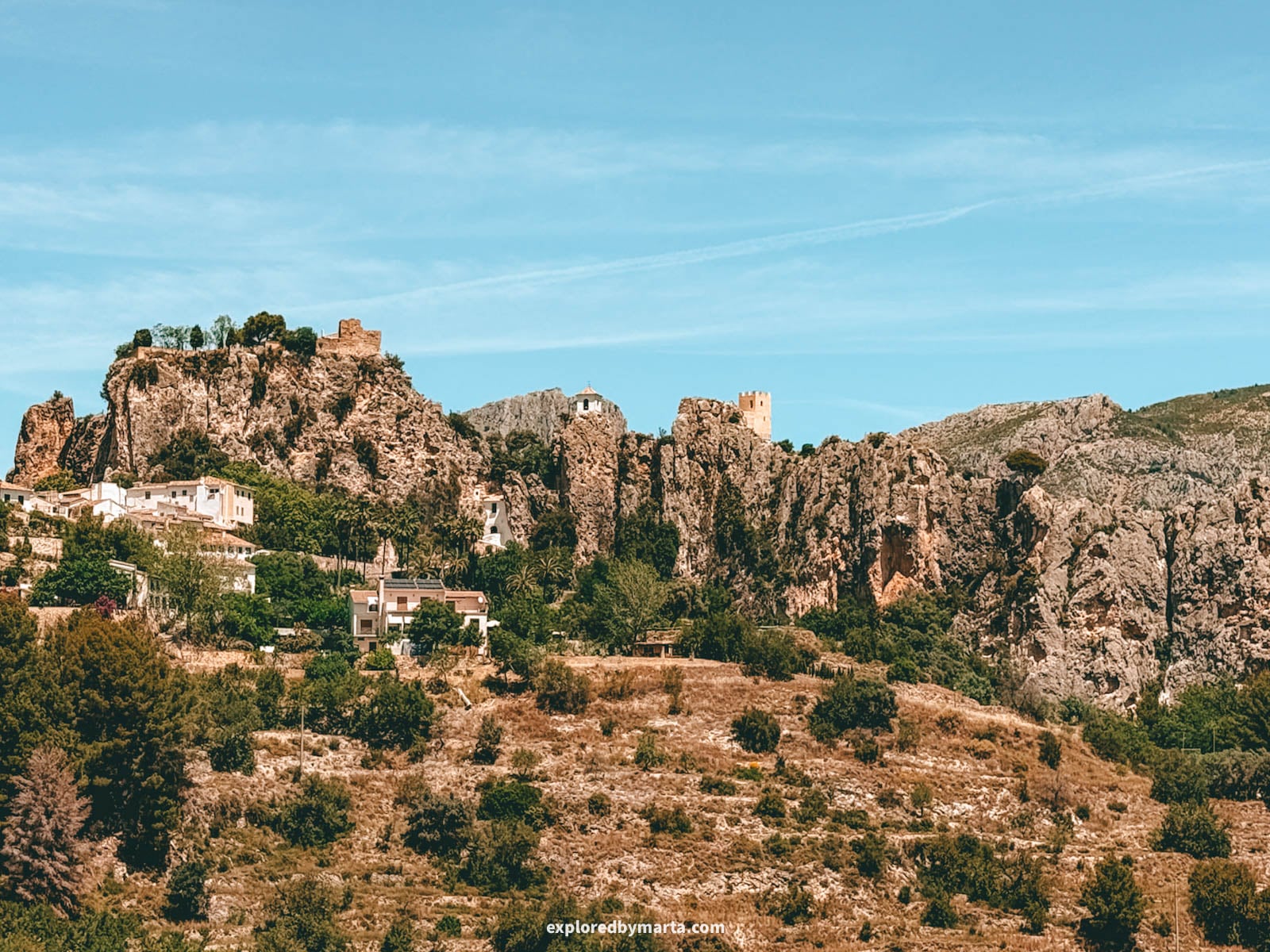
Guadalest is tiny, even though it is one of the most visited villages in Spain. Only around 200 people live here permanently, but during the day, the old town is filled with visitors, little museums, shops, and restaurants.
The village’s full name is El Castell de Guadalest, which makes sense because the castle has shaped the whole village for centuries. The first fortress dates back to the Muslim period in Spain, around the 11th century.
Today, the castle is mostly ruins because Guadalest had a rough few centuries, including a major earthquake in 1644 and damage during the War of the Spanish Succession in 1708.
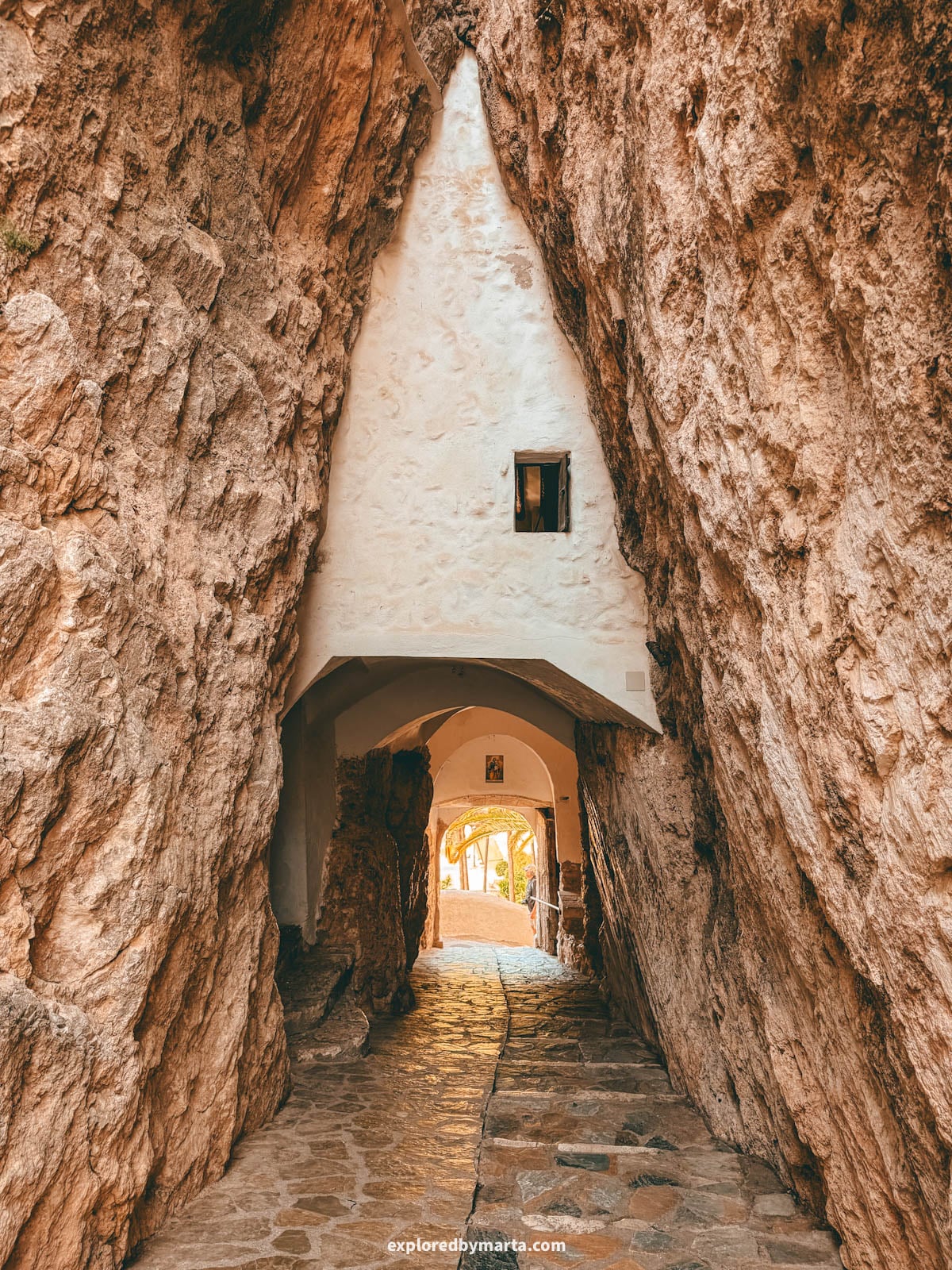
One of the coolest things about Guadalest is that you enter the historic upper village through the Portal de Sant Josep, a doorway cut straight through the rock. Once you pass through it, you reach the old houses, castle ruins, viewpoints, and that famous bell tower.
And then there is the reservoir. The bright blue Guadalest reservoir below the village is actually one of the main reasons the views here are so memorable.
So, what are the best things to do in Guadalest?
1. Walk through the Portal de Sant Josep
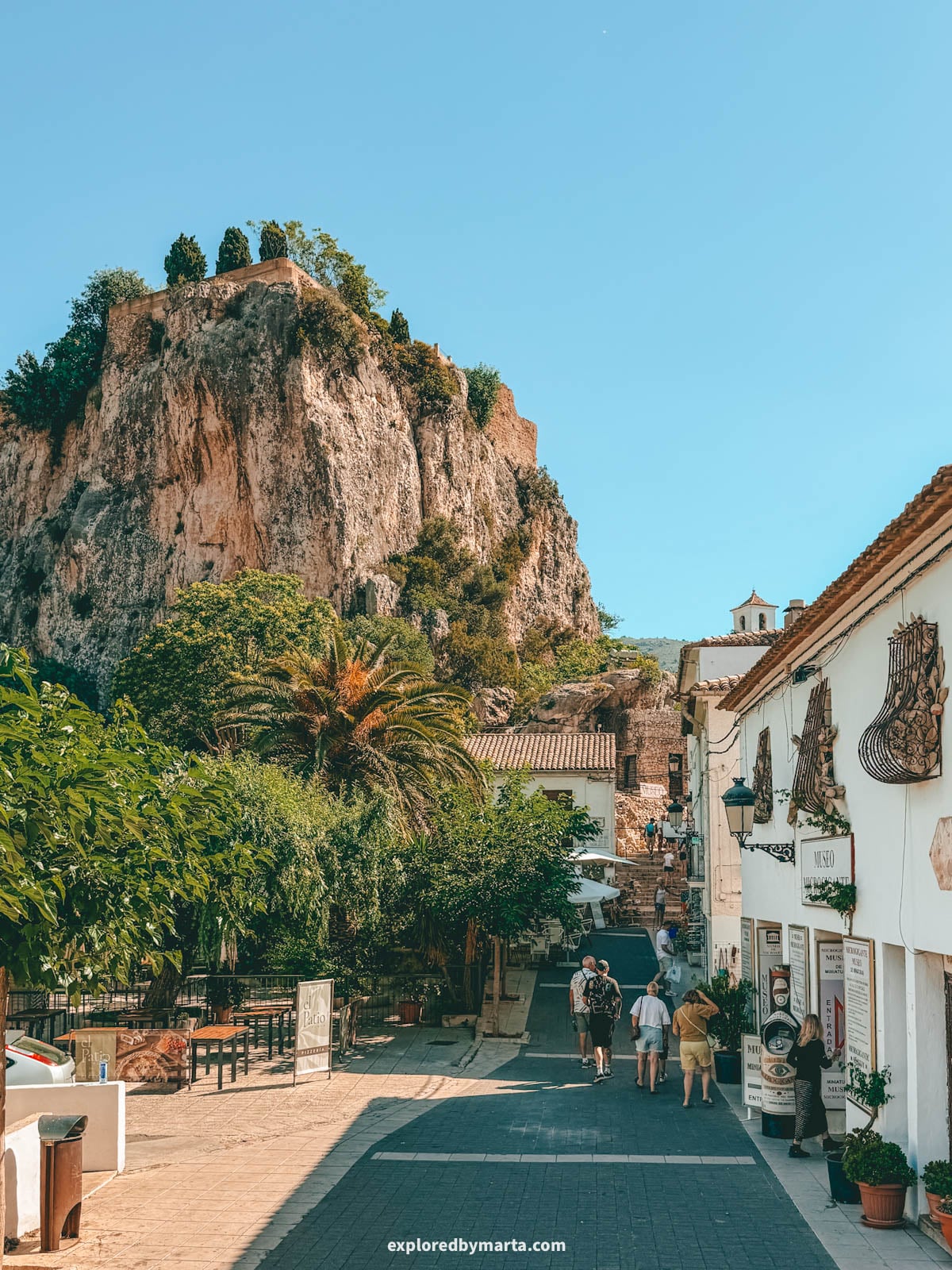
If you park downhill in the newer part of Guadalest, the walk up to the old town already gives you a little preview of what’s coming.
We started walking up the street, and I could already see the white bell tower high above us. That was the moment I realized, oh great, we are definitely climbing up there, haha. 😅
At the end of the street, you reach the Portal de Sant Josep, the old entrance to the historic upper village. It is basically a doorway and tunnel cut straight through the rock.
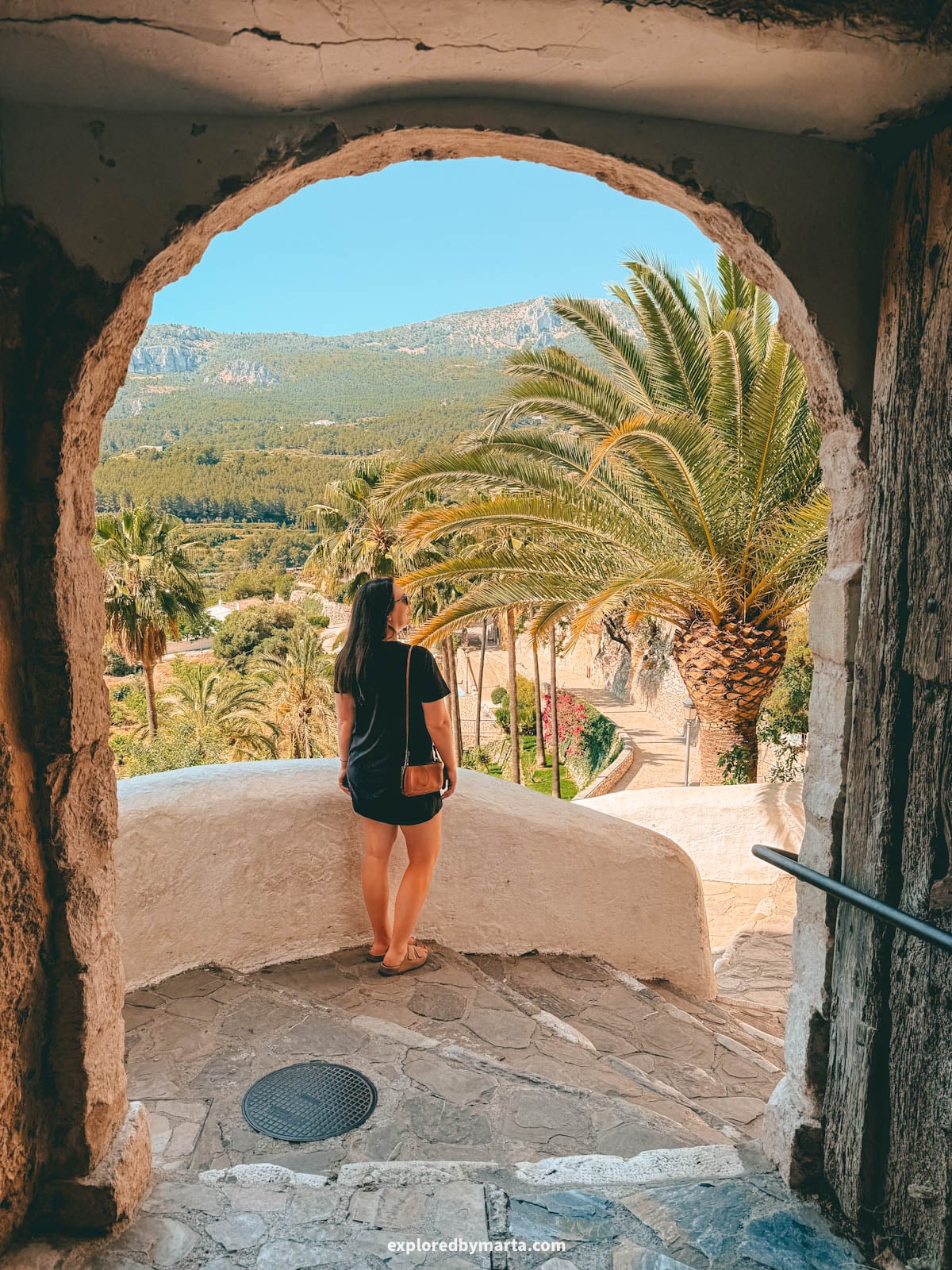
And honestly, for medieval times, this was a pretty clever idea. If there is only one way into the village, it is not exactly easy to conquer.
But then again, what do you do if the enemy just decides to lay siege? Yeah, different times.
Today, the portal is one of the coolest photo spots in Guadalest. From the outside, it looks like a dramatic stone entrance, but I actually think you notice the rock carving better once you look back from the inside.
So don’t just rush through it. Walk in, turn around, and take a second to see how the whole entrance is literally carved into the mountain.
Location: Portal de Sant Josep
2. Go through Casa Orduña on your way to the castle
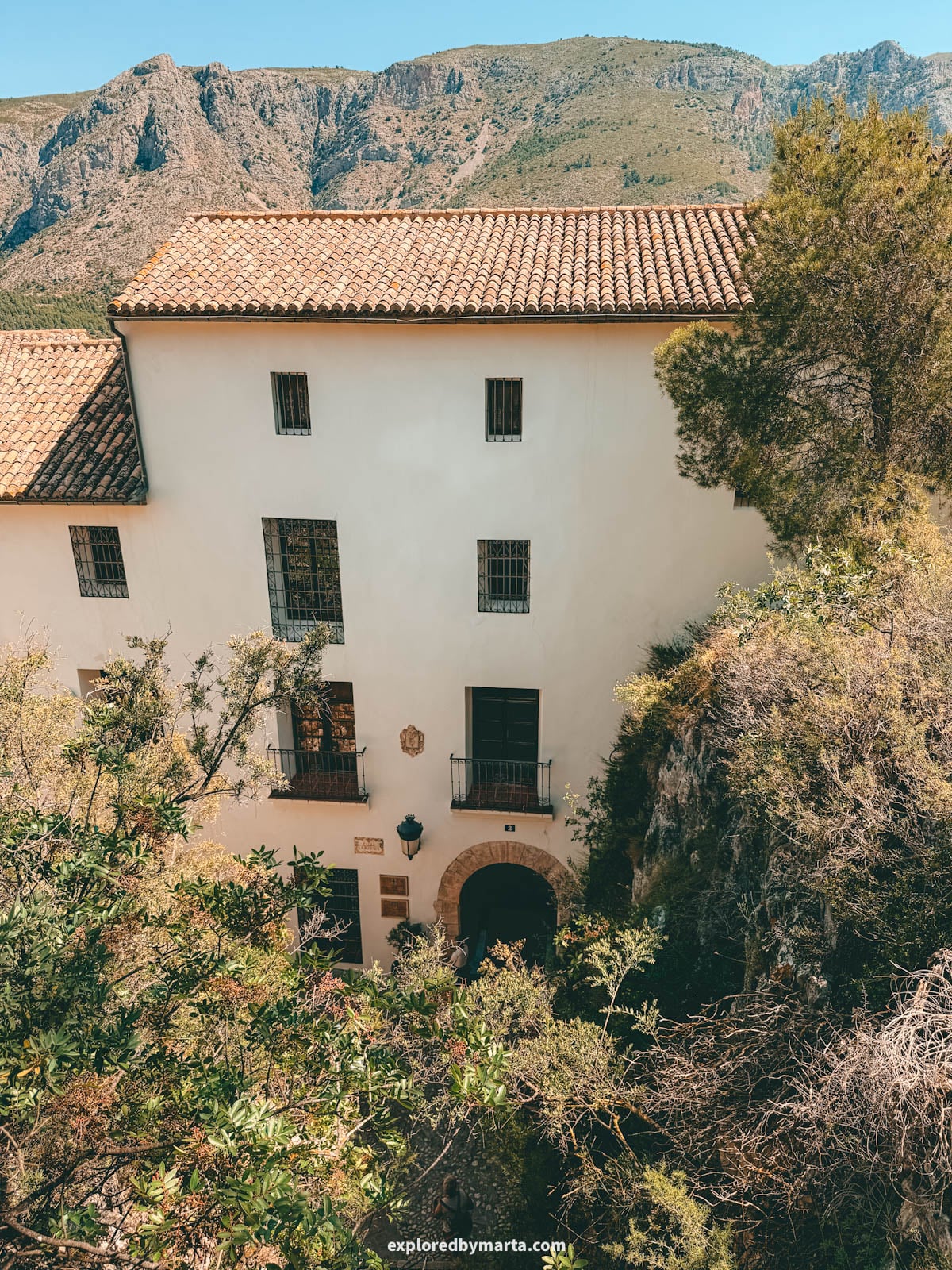
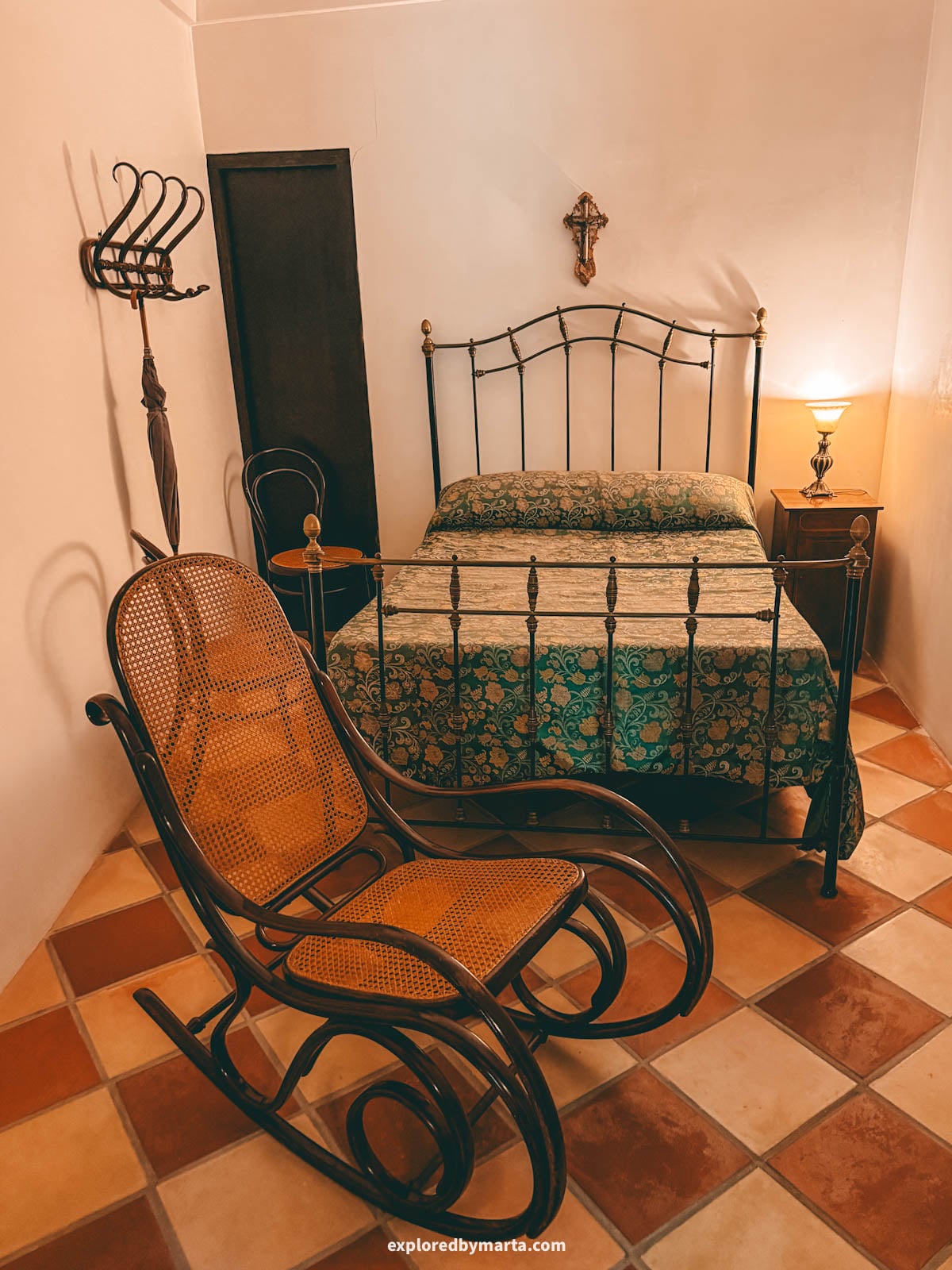
If you came to Guadalest for the castle, Casa Orduña is a mandatory part of the visit. To reach the castle ruins, you first walk through this historic house right beside the rock tunnel. Yep, you can’t skip it.
At the ticket desk, they gave us a brochure, and the rooms also had information panels in different languages. I really appreciated that because I like knowing what I’m looking at, not just staring at old furniture and guessing, haha.
Turns out, Casa Orduña was built after the big earthquake of 1644, when parts of the castle were seriously damaged.
The house belonged to the Orduña family, a wealthy family originally from the Basque Country. They came to Guadalest as trusted people of the Cardona family, who were the Marquesses of Guadalest.
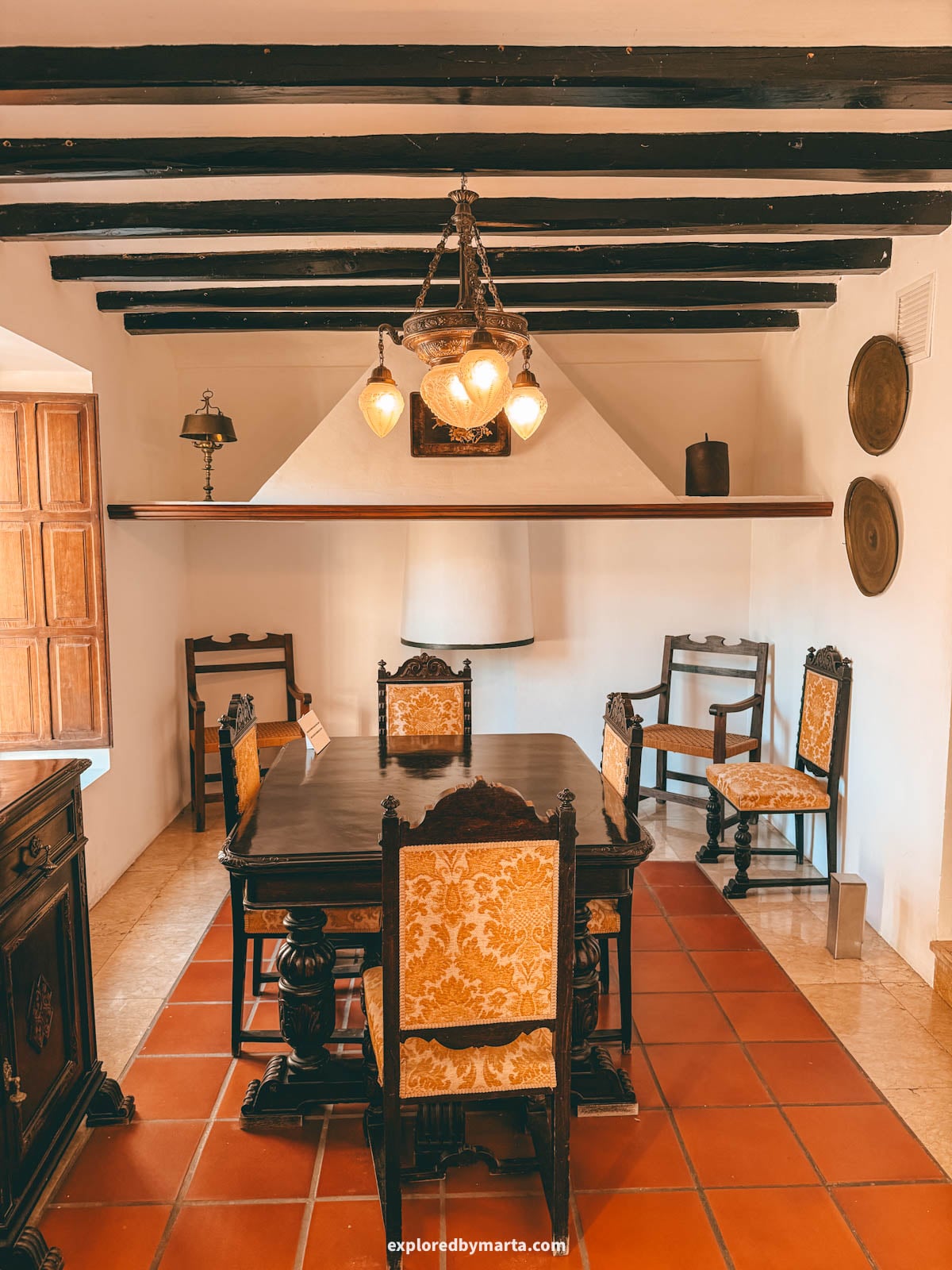
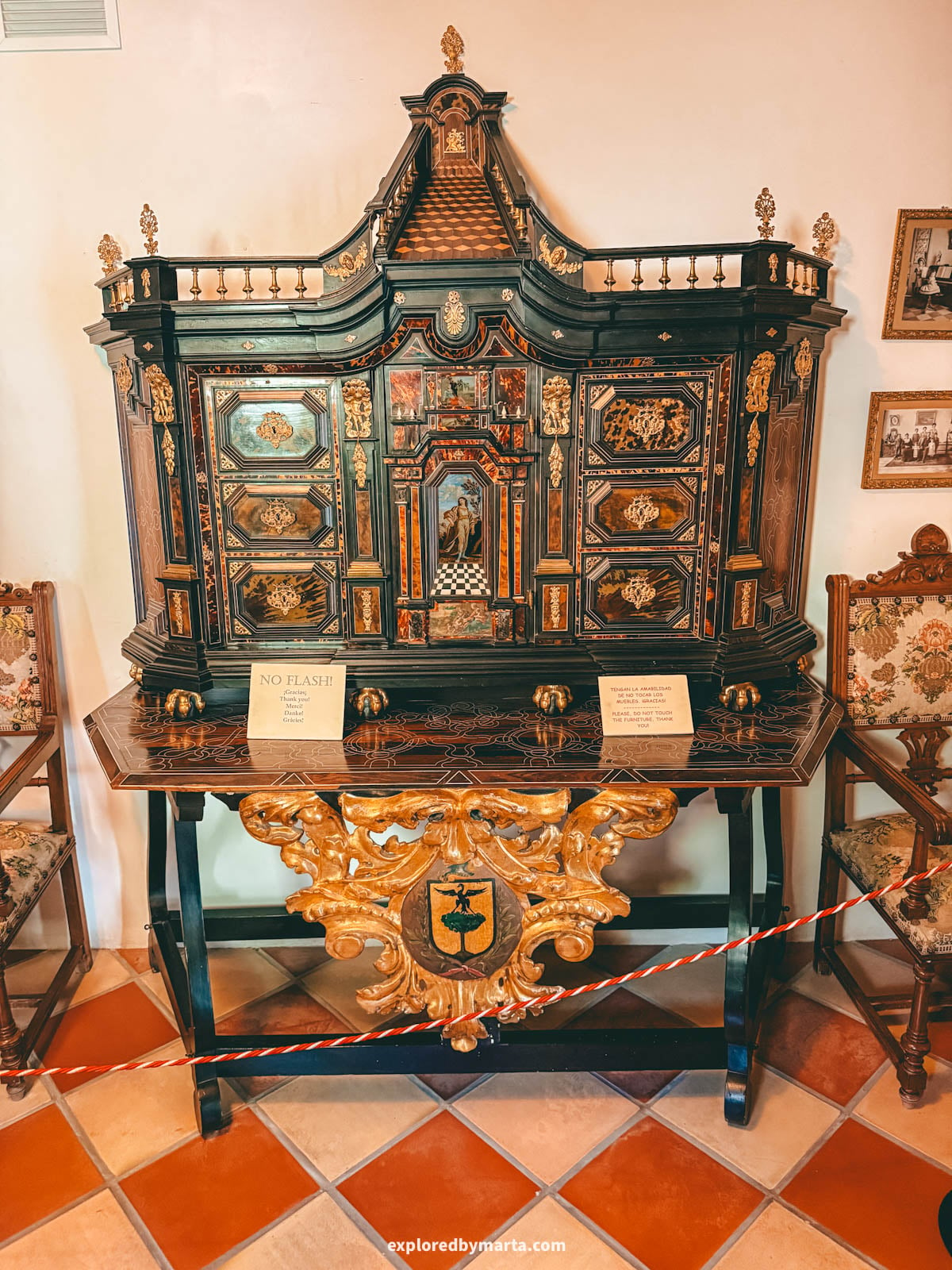
I learned that the Orduñas served as governors of the fortress and the surrounding estates. So this was not just a random rich family house – it was tied to the power and management of the whole valley.
And really, you can tell. In a tiny mountain village like Guadalest, a house this big must have been a serious status symbol.
Only after we visited the house and started climbing up to the castle did I look back and realize Casa Orduña had four floors. Such a massive house for that time, especially in such a tiny village!
The visit is self-guided, but the route is clearly marked, so you move through the house room by room.
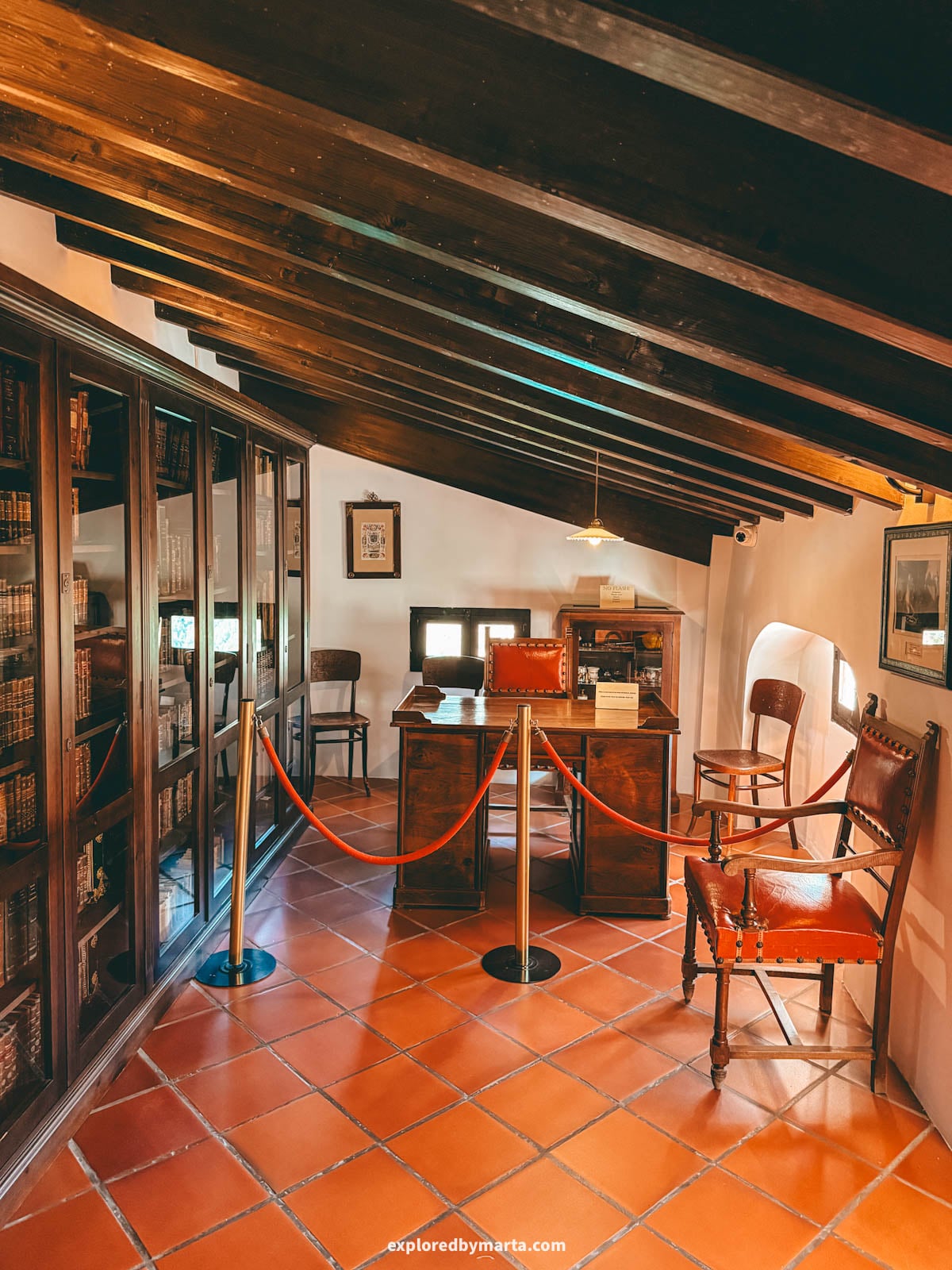
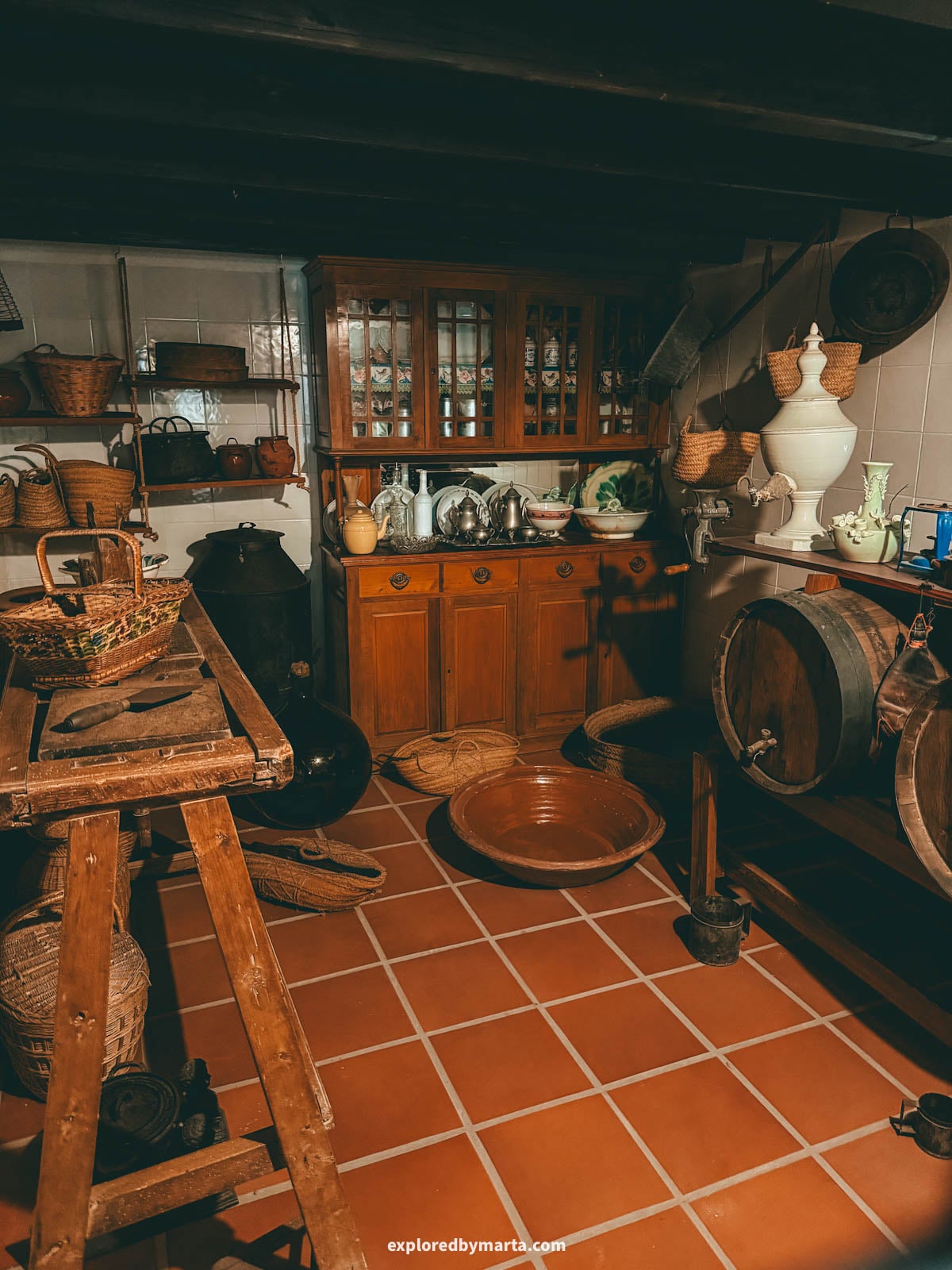
You pass through noble rooms, old bedrooms, the kitchen, dining room, map room, exhibition spaces, and the library. There are paintings, family photos, ceramics, religious art, period furniture, and lots of little details from daily life. Such a contrast to our time!
I especially liked the painted furniture and the historical library. Apparently, the library has more than 1,200 volumes, including a large old collection from between the 16th and 18th centuries.
It looked like there were so many cool books in there. If only we could read them. Although let’s be honest, I probably wouldn’t understand half of what they said anyway.
Casa Orduña is more interesting than I expected, and it gives you a better idea of Guadalest before you climb up to the ruins. By the end of the marked route, you are ready to continue toward Castillo de San José.
Location: Casa Orduña
3. See Guadalest’s second castle from Mirador del Calvari
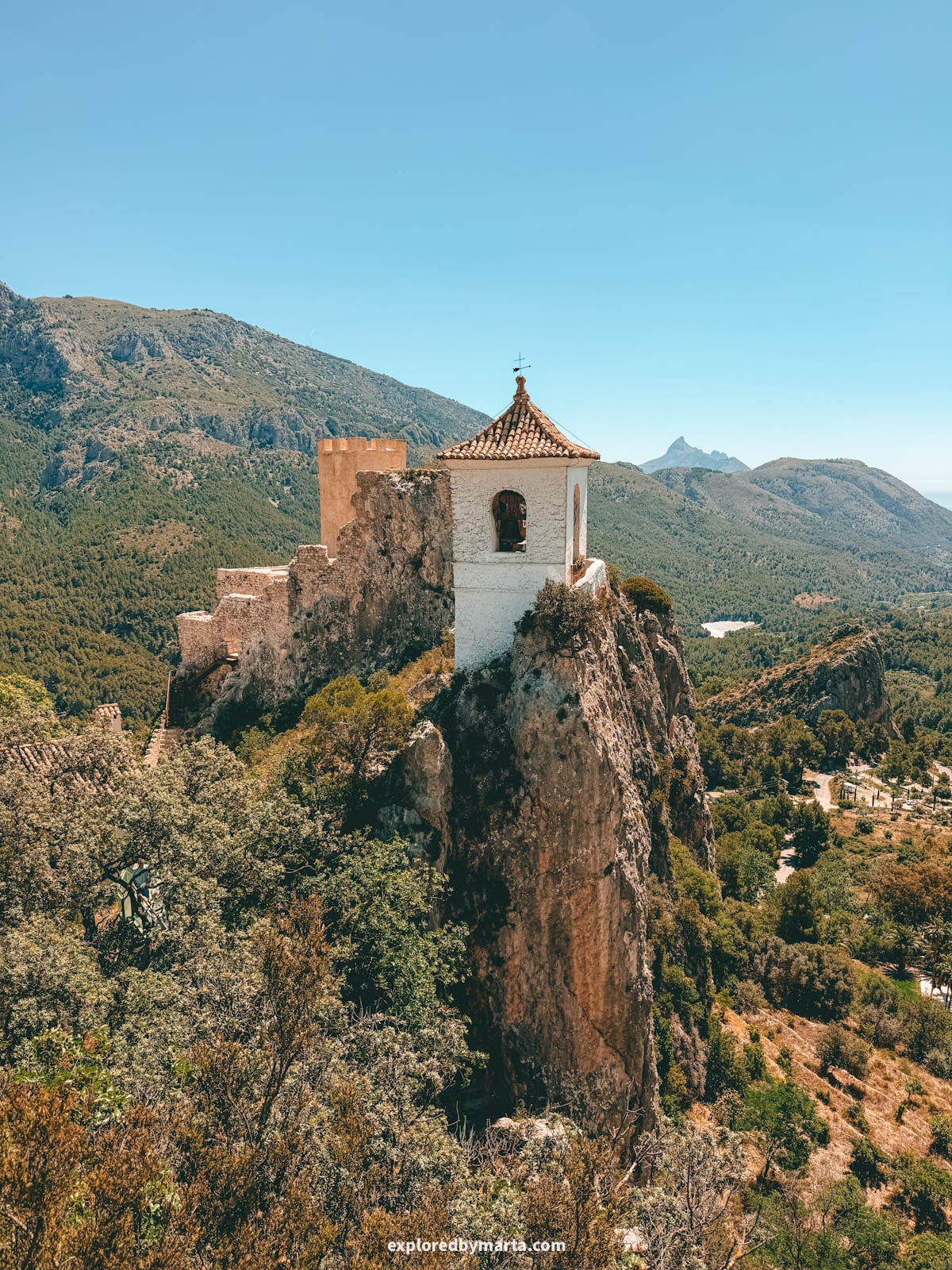
It’s time to tell you a little secret – Guadalest actually has two castles! Castillo de San José is the one you can actually climb up to, but Castell de la Alcozaiba is the other one. It’s now mostly ruined and not accessible, but you can still see it!
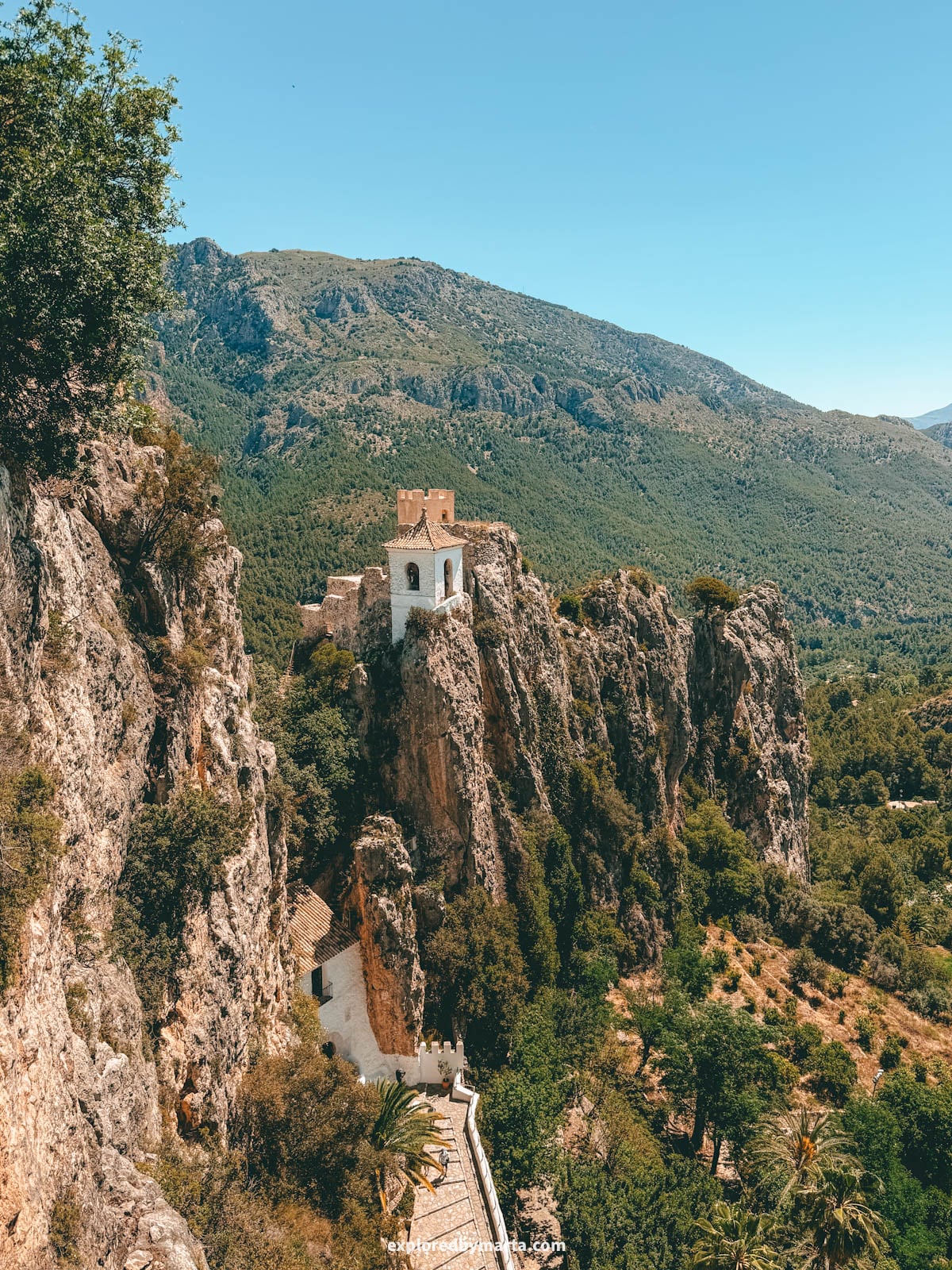
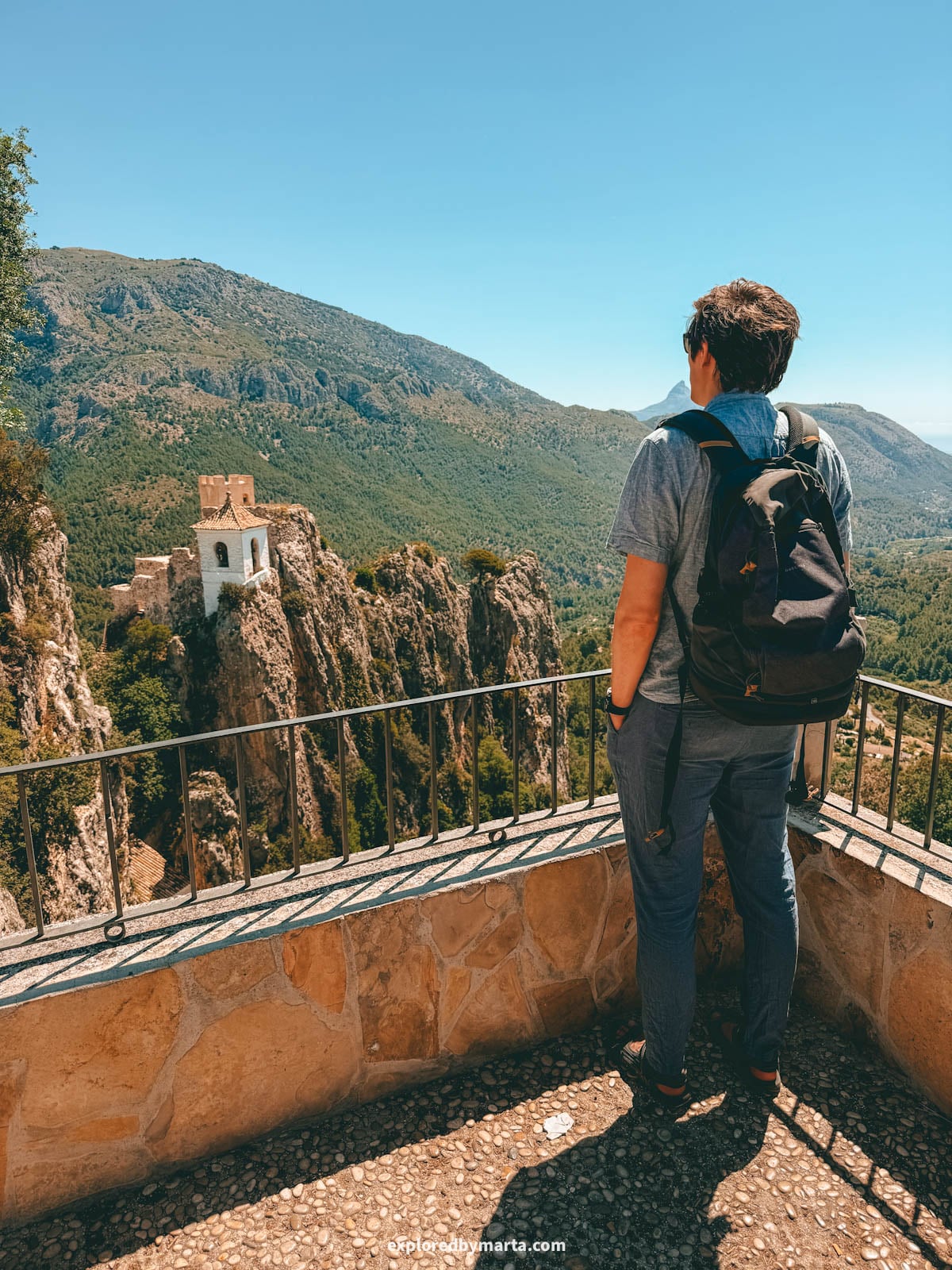
As you climb up the hill from Casa Orduña, you’ll soon reach the Mirador del Calvari viewing platform. And this is probably one of the best places to see the old Alcozaiba Castle (or its ruins).
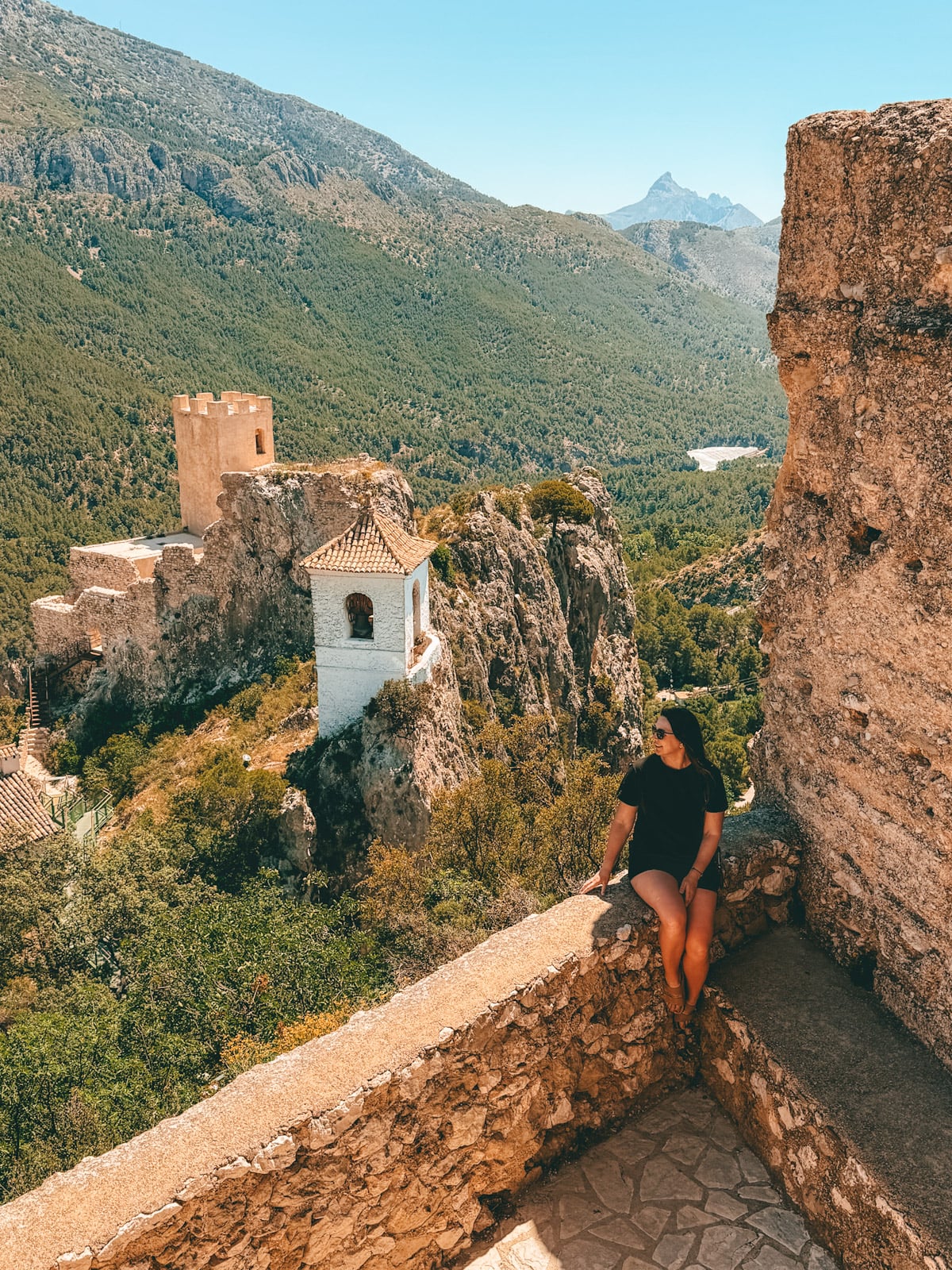
First, you’ll notice that little white bell tower, which looks even cooler from this angle, sitting on its own rocky peak like it was placed there for photos. This one is called the Campanario del Peñón de la Alcalá, and it’s probably the most photographed thing in all of Guadalest.
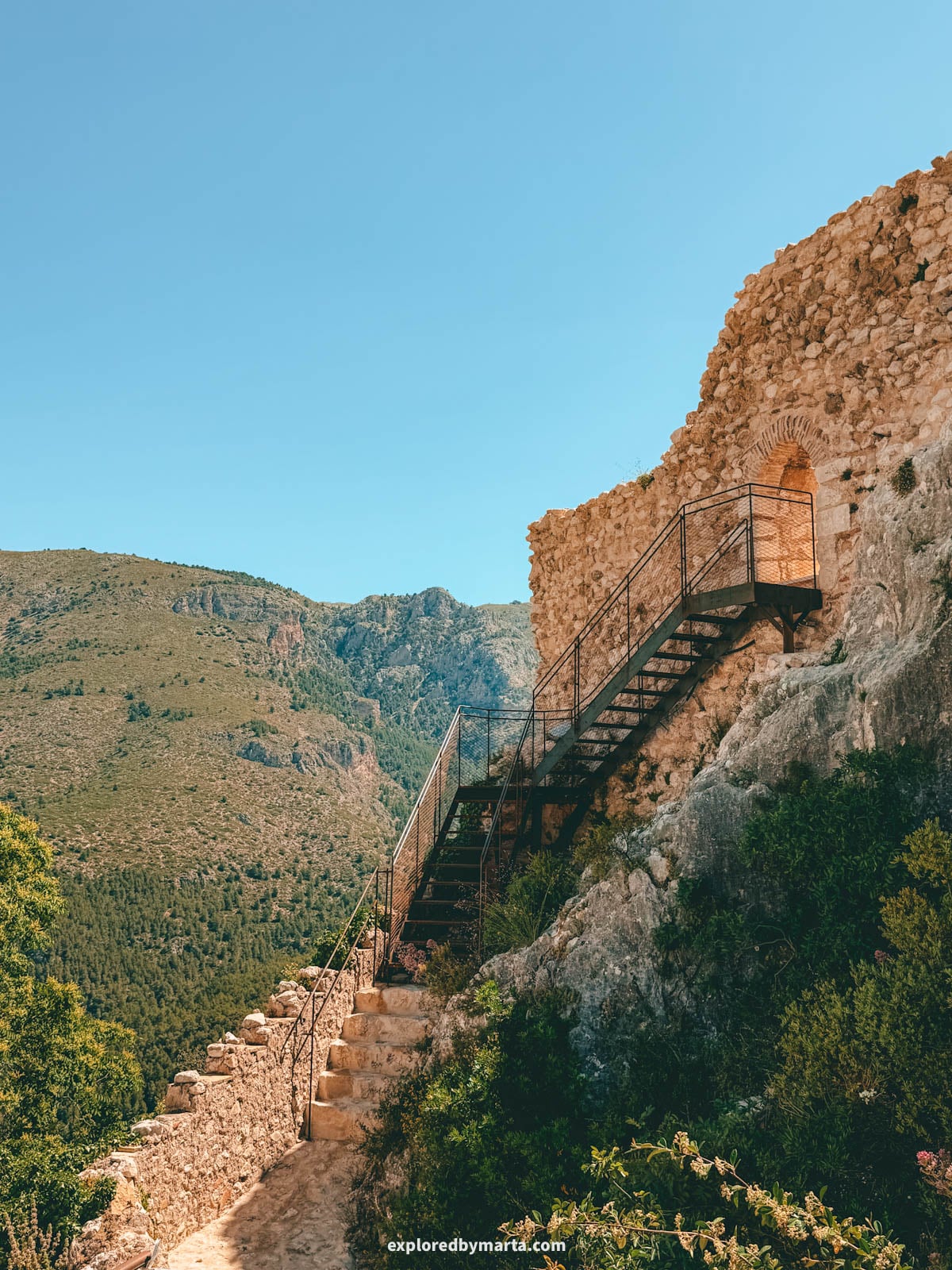
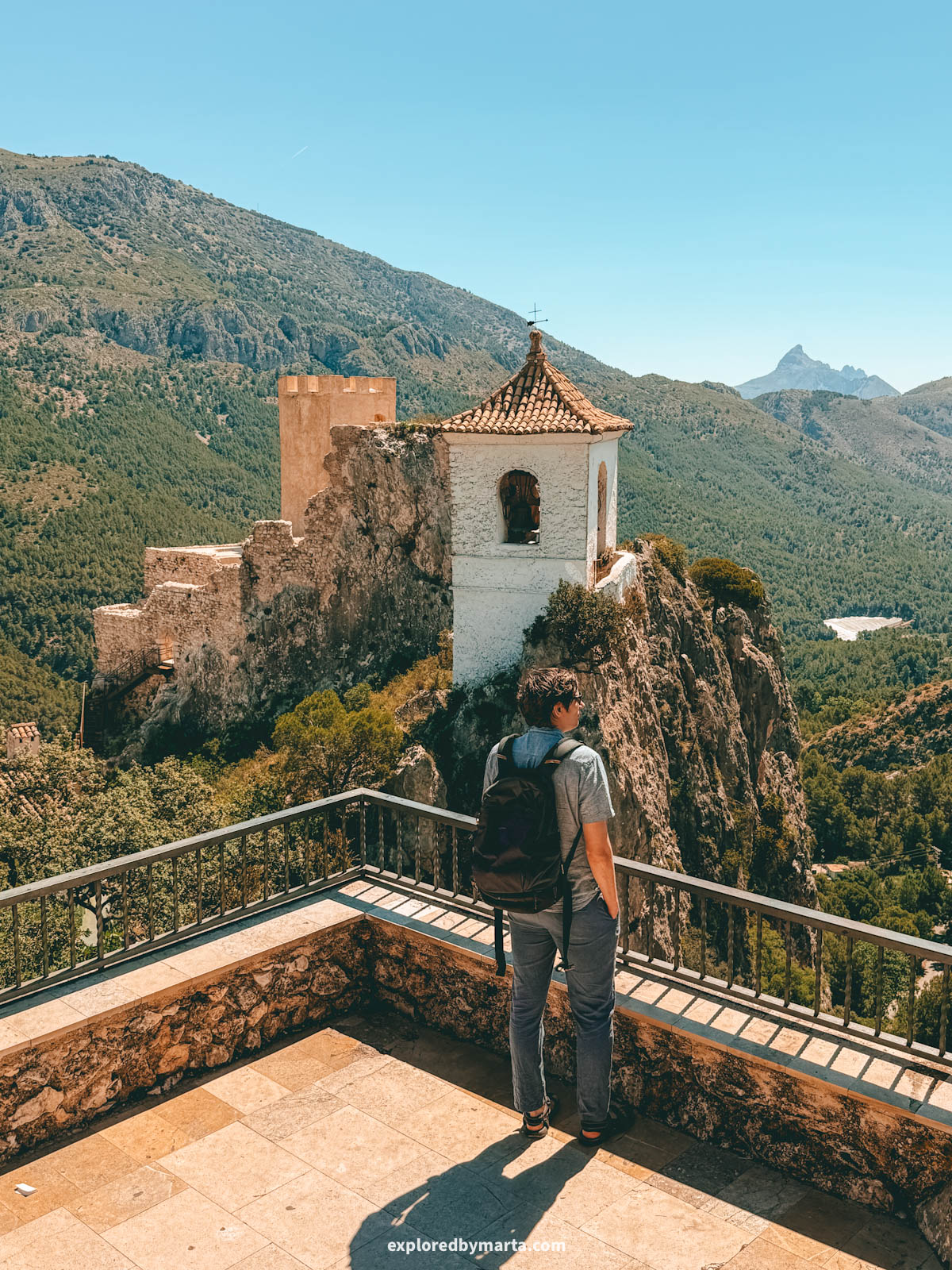
But look a bit further, and you’ll spot a big defensive tower nearby. That square stone tower is what remains of Castillo de la Alcozaiba, one of Guadalest’s two original 11th-century castles.
Both Guadalest castles date back to the Muslim period, when the village’s position on the rock made it a key defensive spot. And to be honest, standing at this viewpoint, it makes total sense why they built here.
You can see why this place was hard to attack – everything is cliffs, rocks, narrow access points, and views in every direction.
Today, you can’t really visit Castillo de la Alcozaiba. From what I saw, there seemed to be a path or some access built up toward the tower, so maybe that will change one day? Let’s hope so.
But for now, Mirador del Calvari is probably the best and easiest place to see it.
Location: Mirador del Calvari
4. Peek inside the old cemetery for a different view
Let’s keep climbing – Guadalest is not done with the uphill part yet!
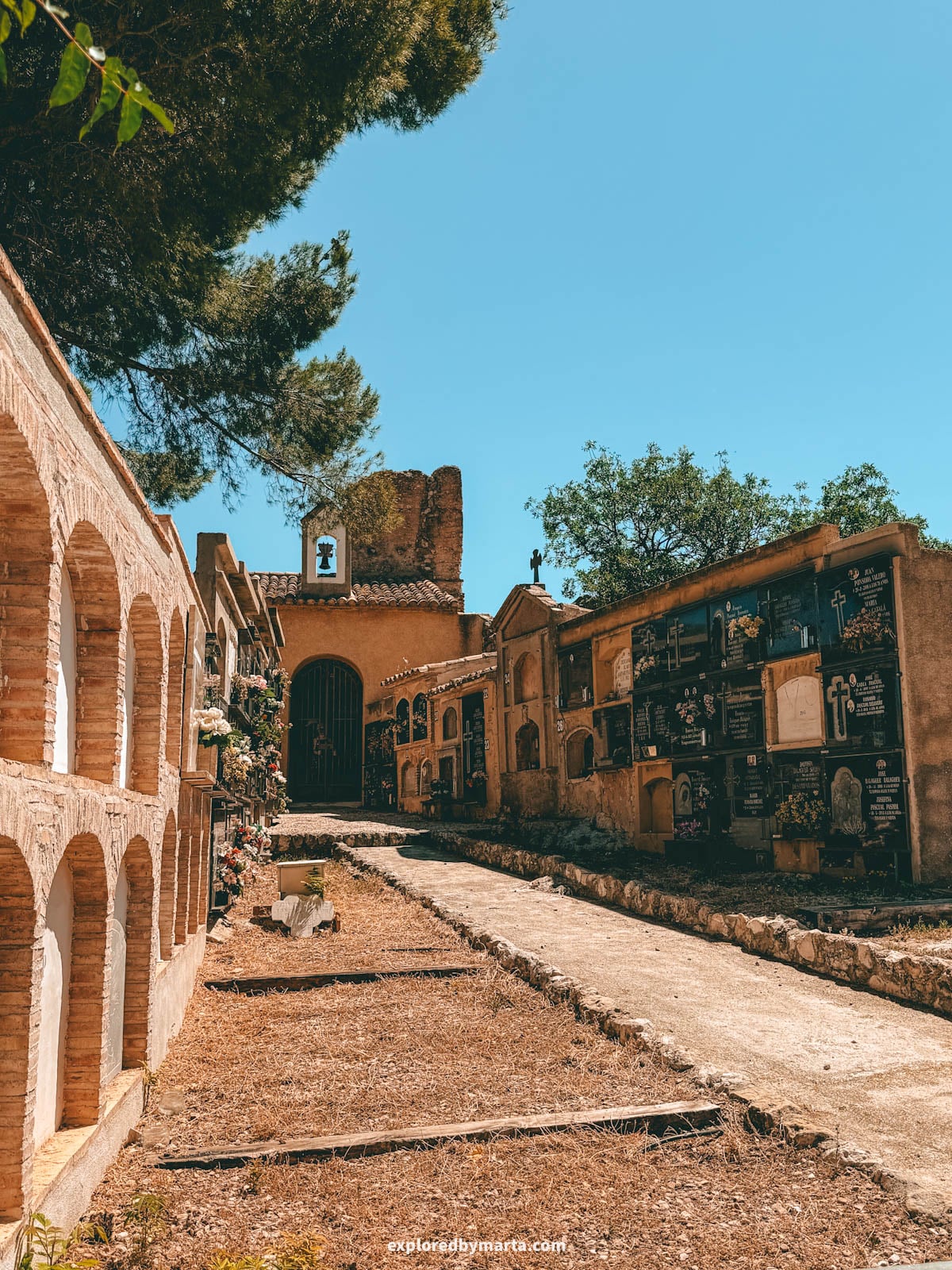
Once you reach the upper part of the castle area, one of the first places you can stop by is actually the old cemetery. And yes, that sounds like a slightly unusual attraction.
But in Guadalest, it makes total sense (and, yes, it truly is a place to visit!).
Turns out, Castillo de San José, or Castillo de Saint Joseph, sits on the highest part of the village, and today this upper castle area includes the cemetery – on one side of the hilltop are the defensive castle ruins, and on the other side – the cemetery.
So you are not just randomly walking into a cemetery – you are walking through one of the highest, oldest parts of Guadalest. And it’s an official attraction and part of the visit to the castle!
The cemetery itself is small and quiet, so I wouldn’t treat it like a big sightseeing stop. It is more of a quick peek while you are already up there.
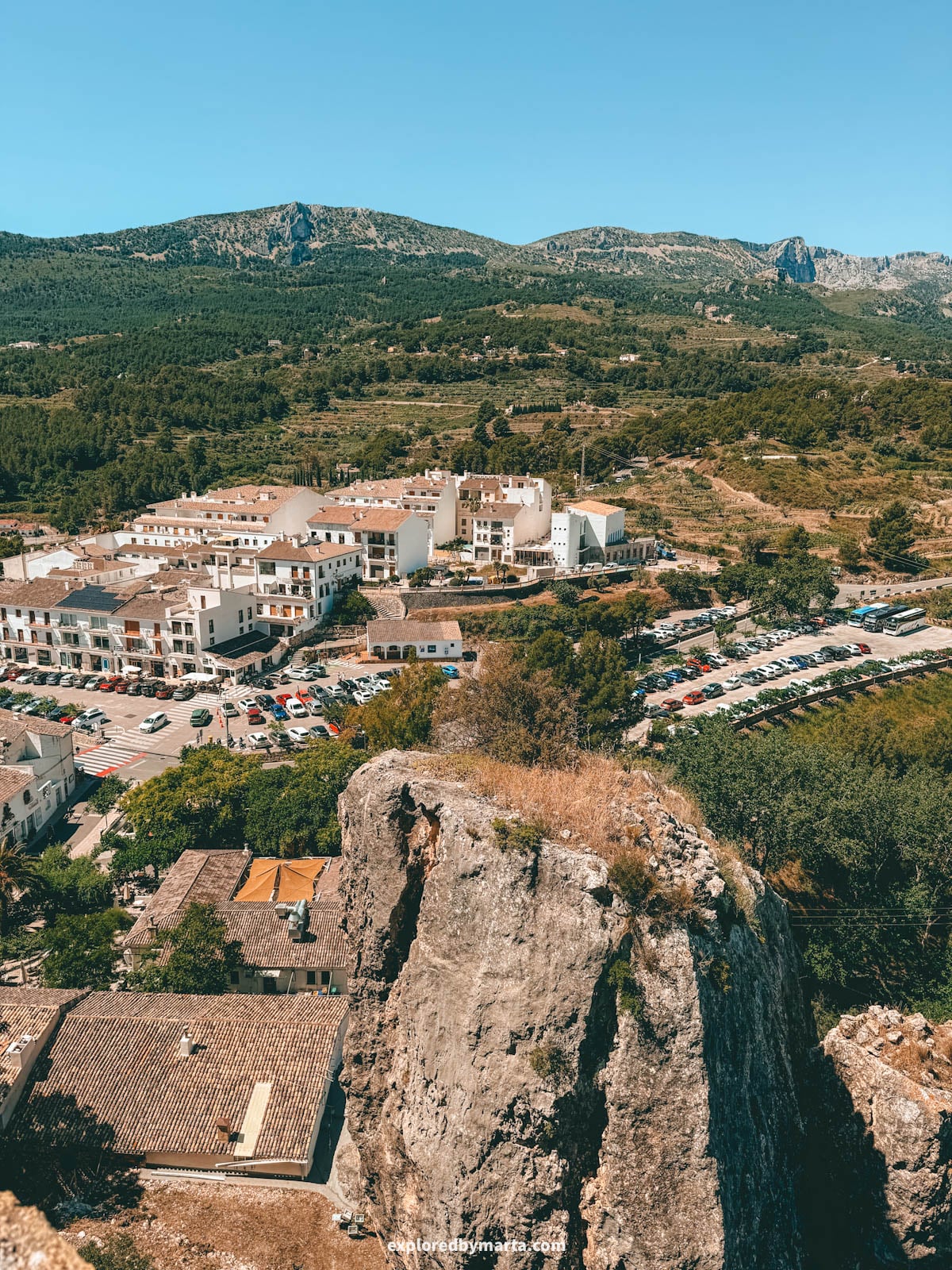
But if you walk through it, you’ll reach a small viewpoint overlooking the newer side of Guadalest and the mountains around it.
And I liked that because most Guadalest viewpoints are all about the reservoir, the castle ruins, or the Alcozaiba tower. This one gives you a completely different angle.
Instead of looking down at the famous blue water, you see the newer village, the valley, and the mountains around Guadalest (and the large parking lots where you probably also parked your car).
It was a small surprise for me, so don’t skip it when you’re up there! The view takes, what, two minutes to see?
Location: Cementerio de Guadalest
5. Reach the top of Castillo de San José
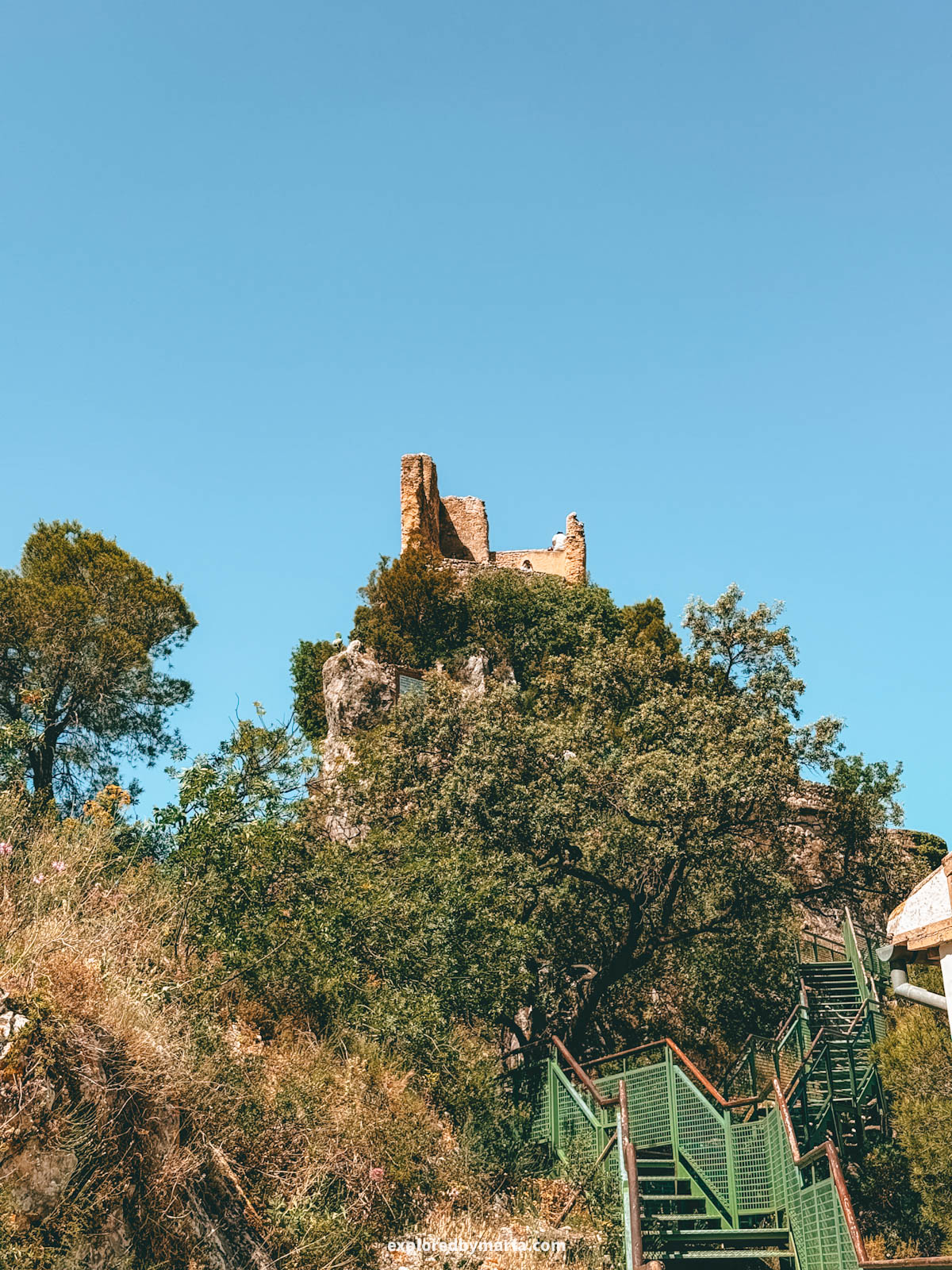
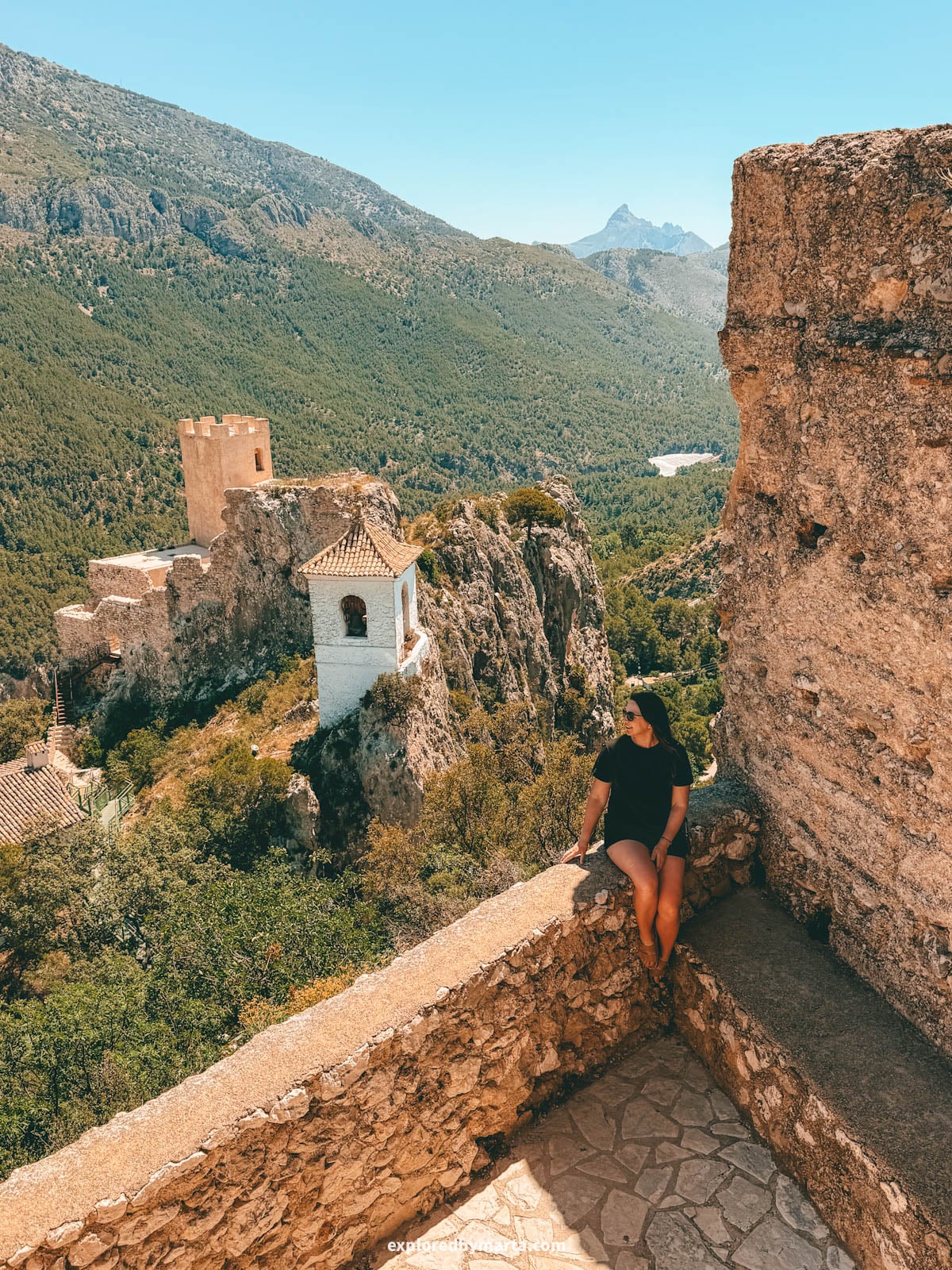
After all the viewpoints along the way, you finally reach Castillo de San José – the main attraction in Guadalest.
And yes, this is the main Guadalest castle people usually mean when they say “Guadalest Castle.”
But just so you know, it is mostly ruins. This is not one of those castles where you walk through rooms, towers, halls, and secret corners. There’s basically nothing left.
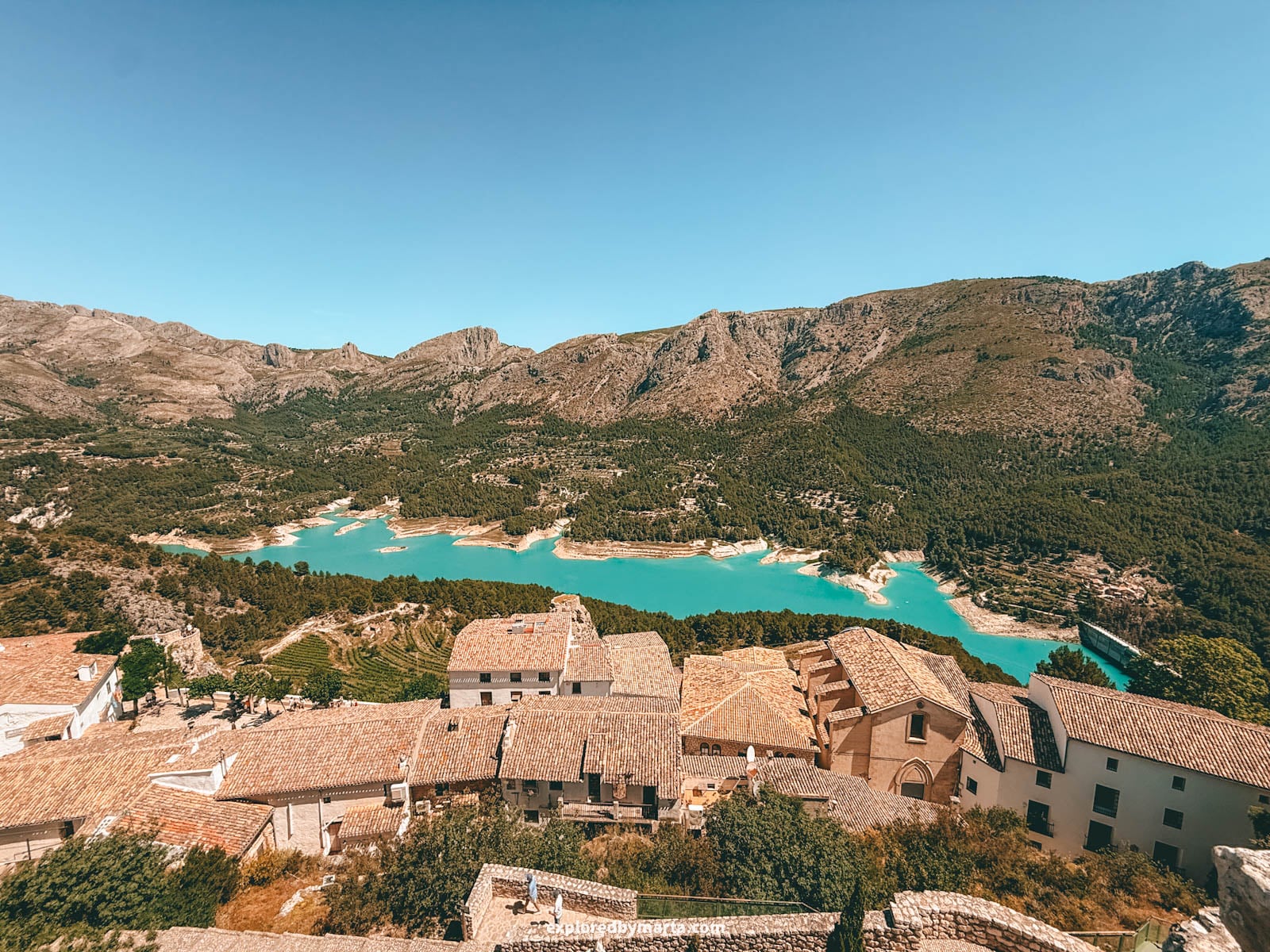
Here, the main thing to do is keep climbing until the stairs basically stop. And then just look around. Because yeah, that’s exactly the point of this scenic hilltop castle. 😉
The view from the top is the best one in Guadalest. The whole village sits far below you, the reservoir is even farther down, and even the Alcozaiba tower suddenly looks low from up here.
Everything feels below you, except the Serra de la Xortà mountains around the valley.
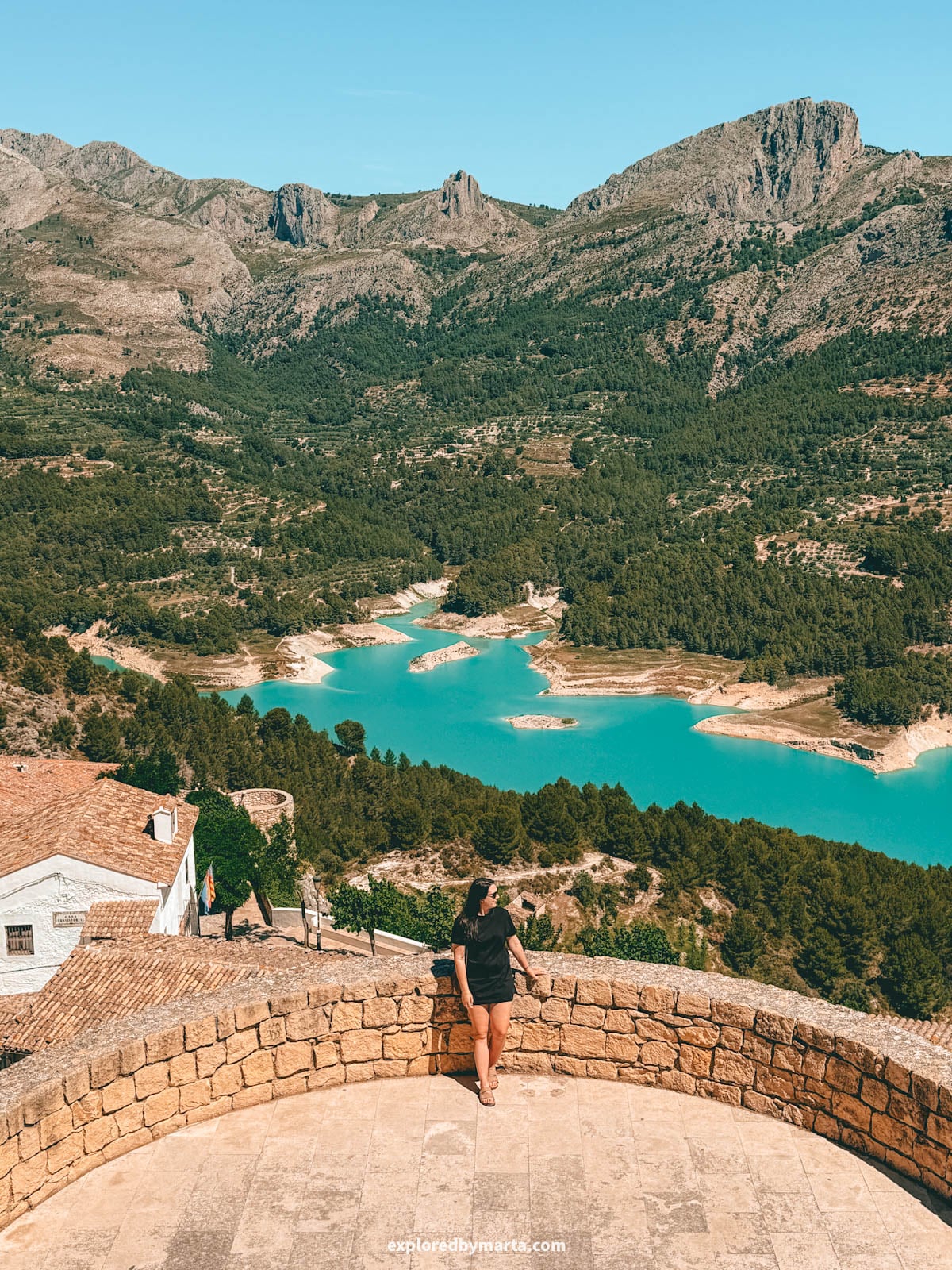
The castle was badly damaged over time by earthquakes and an explosion during the War of the Spanish Succession, so only parts of the structure remain today.
That explains why there is not much “castle” left to explore. But the location? Still impressive.
Overall, this whole castle route took us about 1 hour, including Casa Orduña, the viewpoints, the cemetery, and Castillo de San José.
We paid 4 EUR per adult, which felt fair for the house, the castle access, and all those views.
Location: Castillo de San José
6. Hang out in Plaza de San Gregorio
Once you are done exploring the castle, the exit path leads you along the Vía Crucis, or Way of the Cross, before you pass through a gate and end up back in the old town.
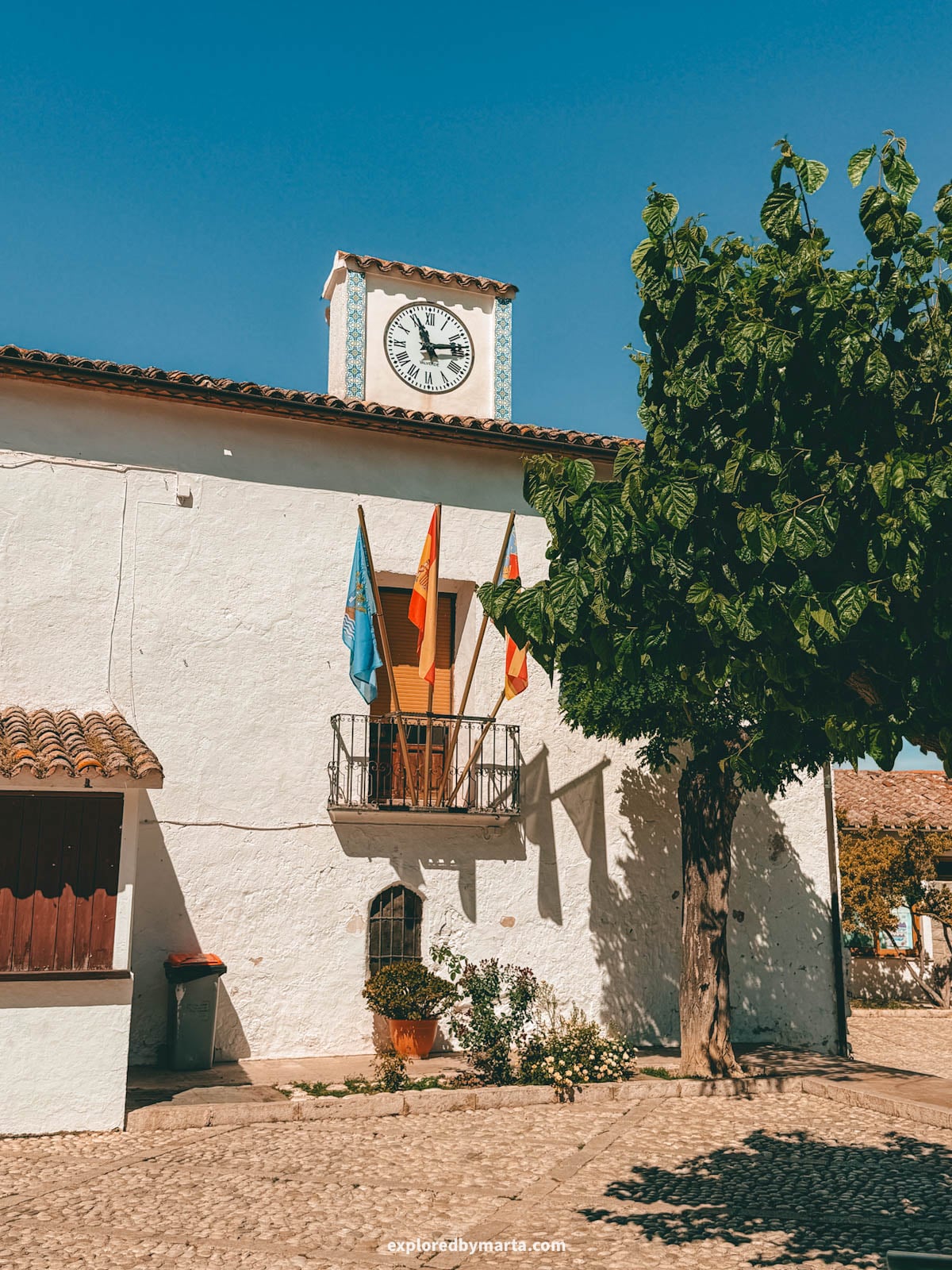
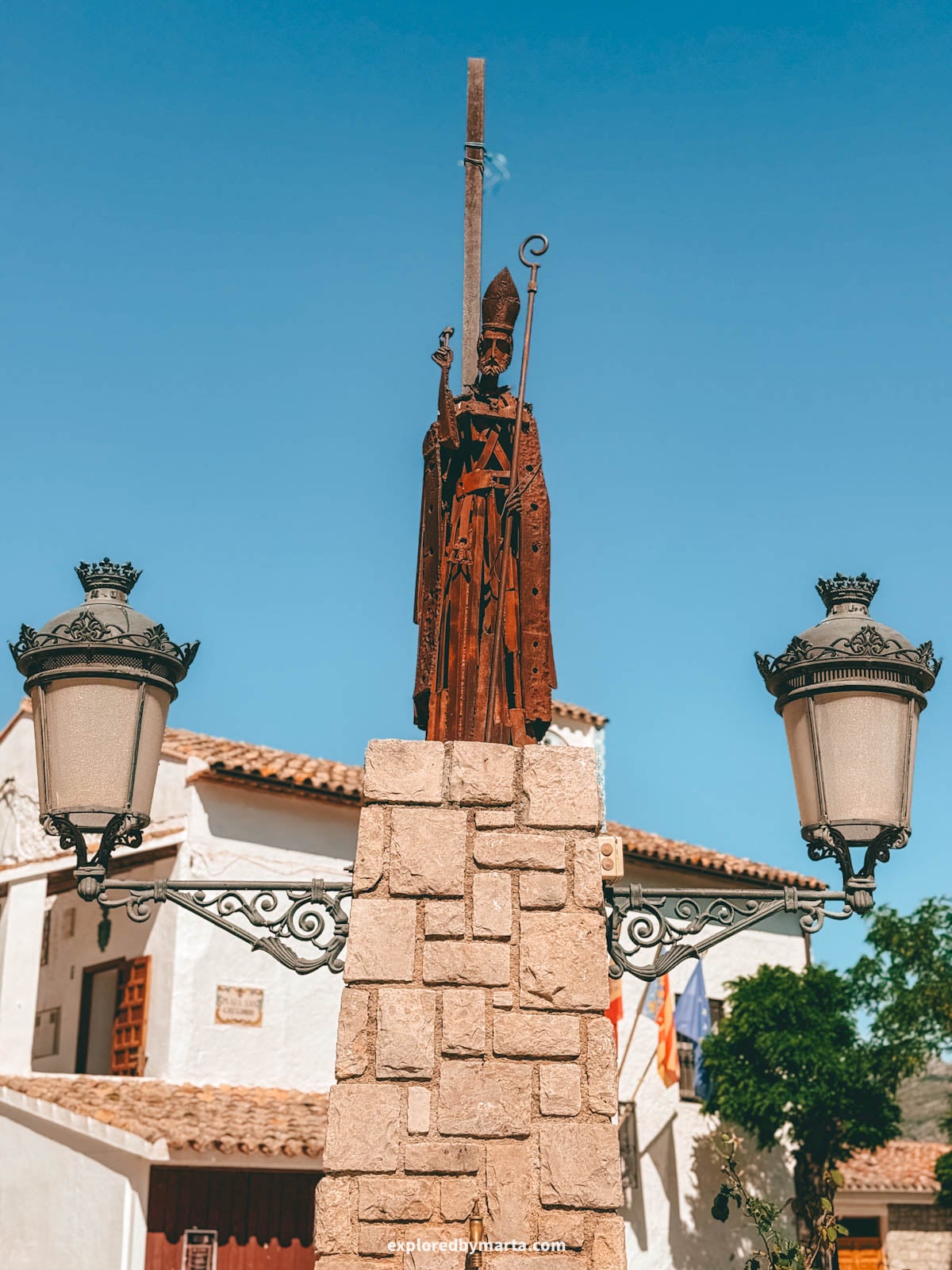
And then suddenly you are in Plaza de San Gregorio, the main square in the historic upper village of Guadalest. And this is finally the place to slow down a little after all that climbing.
In the middle of the main plaza, you’ll see the monument to San Gregorio, the patron saint of El Castell de Guadalest. So the square is not just “the main square” – it is named after the village’s patron.
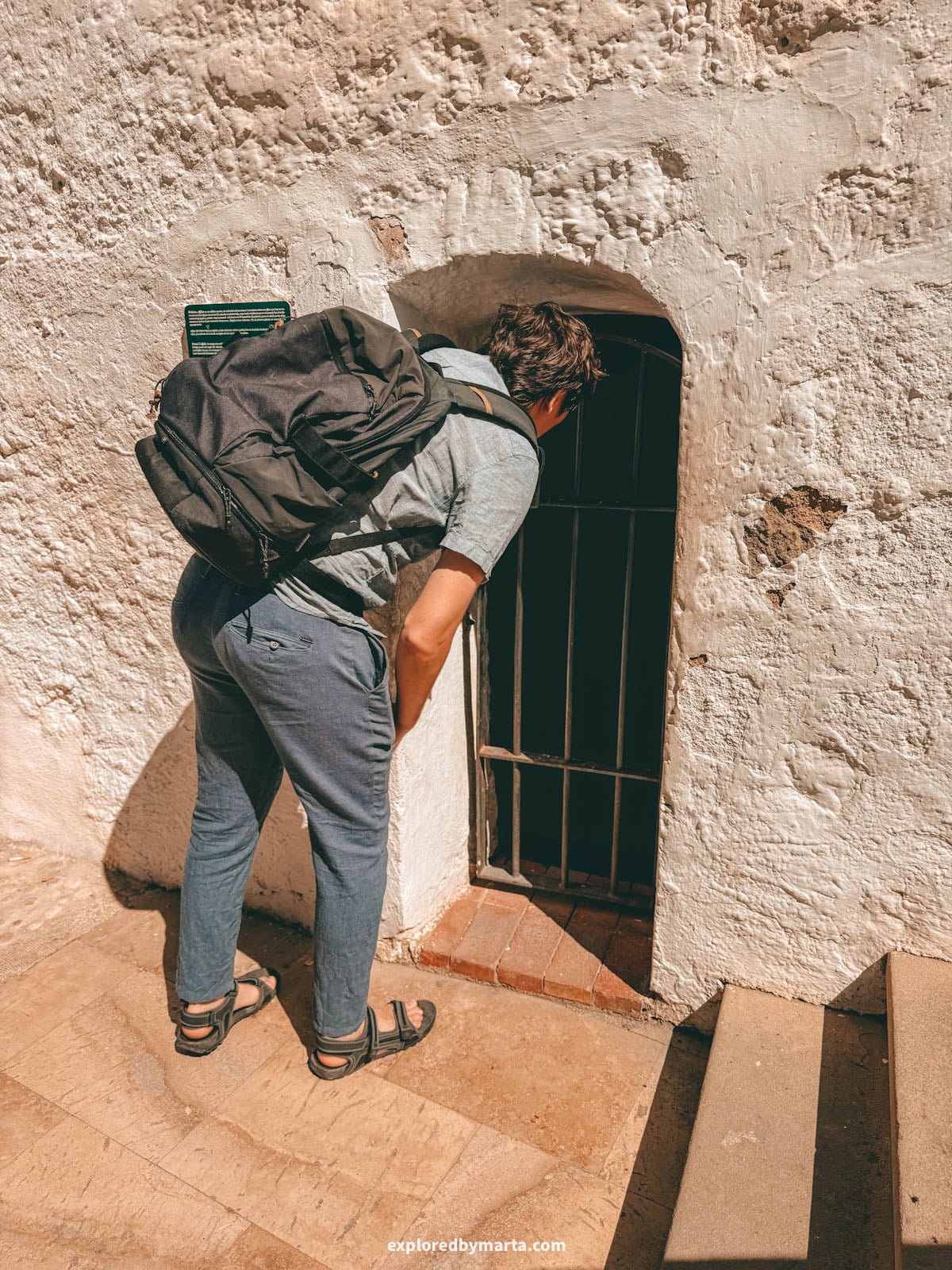
The square is also where you’ll find the Ayuntamiento, or town hall. It is a pretty small building, but there is a fun little surprise hidden next to it.
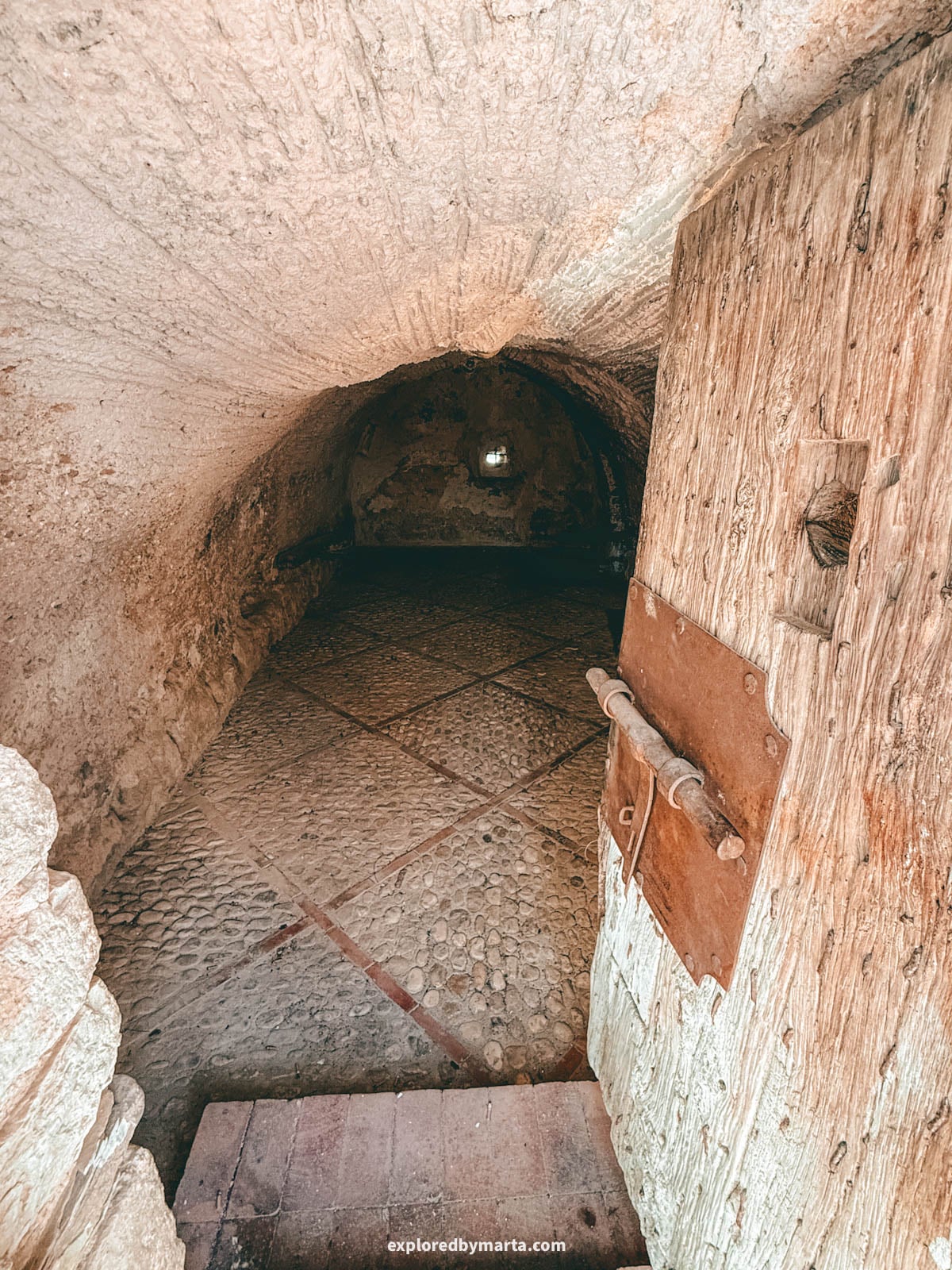
On one side of the Ayuntamiento, away from the reservoir view, you can peek inside the old prison. When we visited, the door was open, so we could look in.
I learned that this old space under the town hall was actually an old cistern that was later used as a prison. And yeah, it looks exactly as cheerful as you’d expect an old stone prison to look.
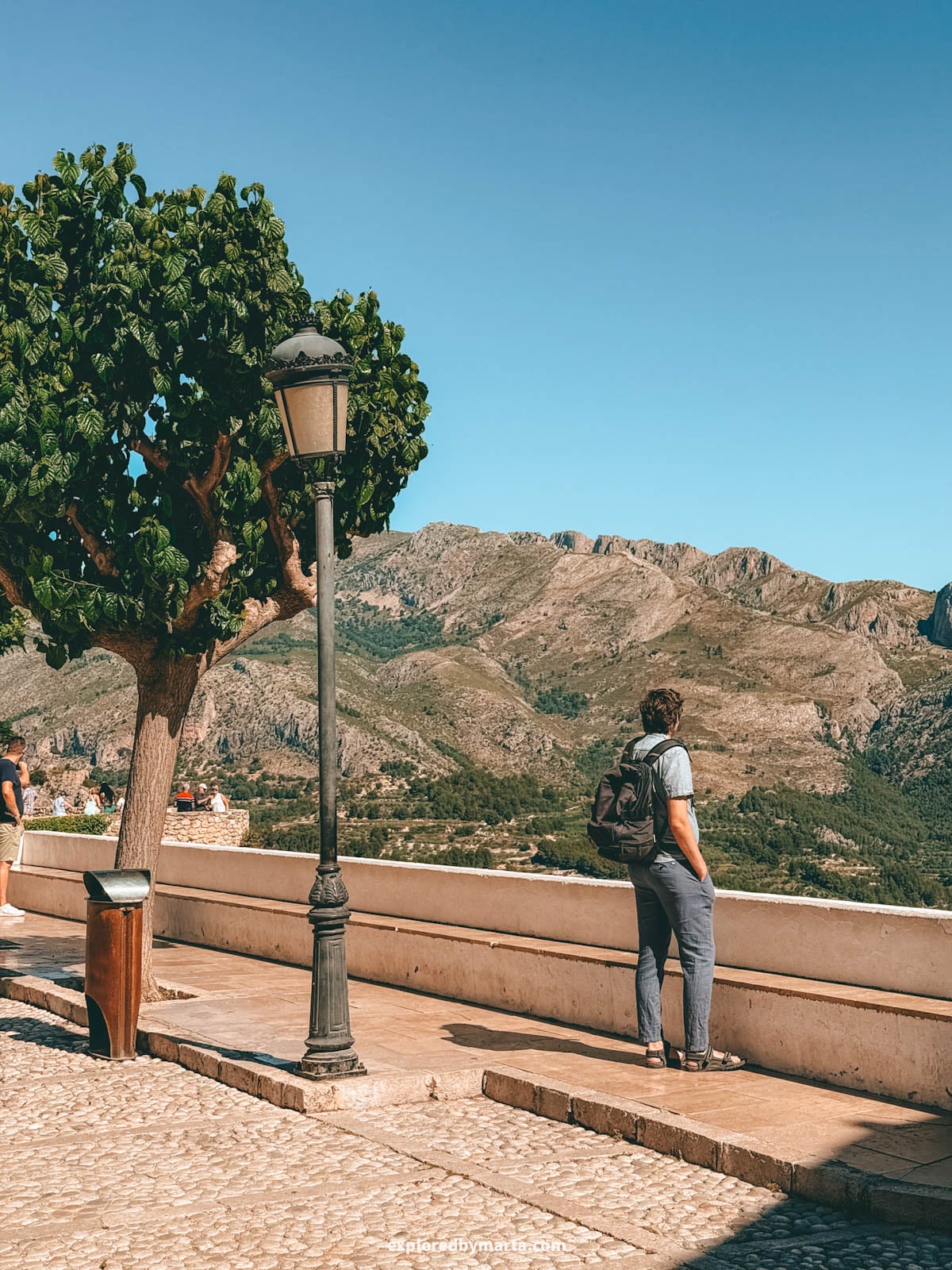
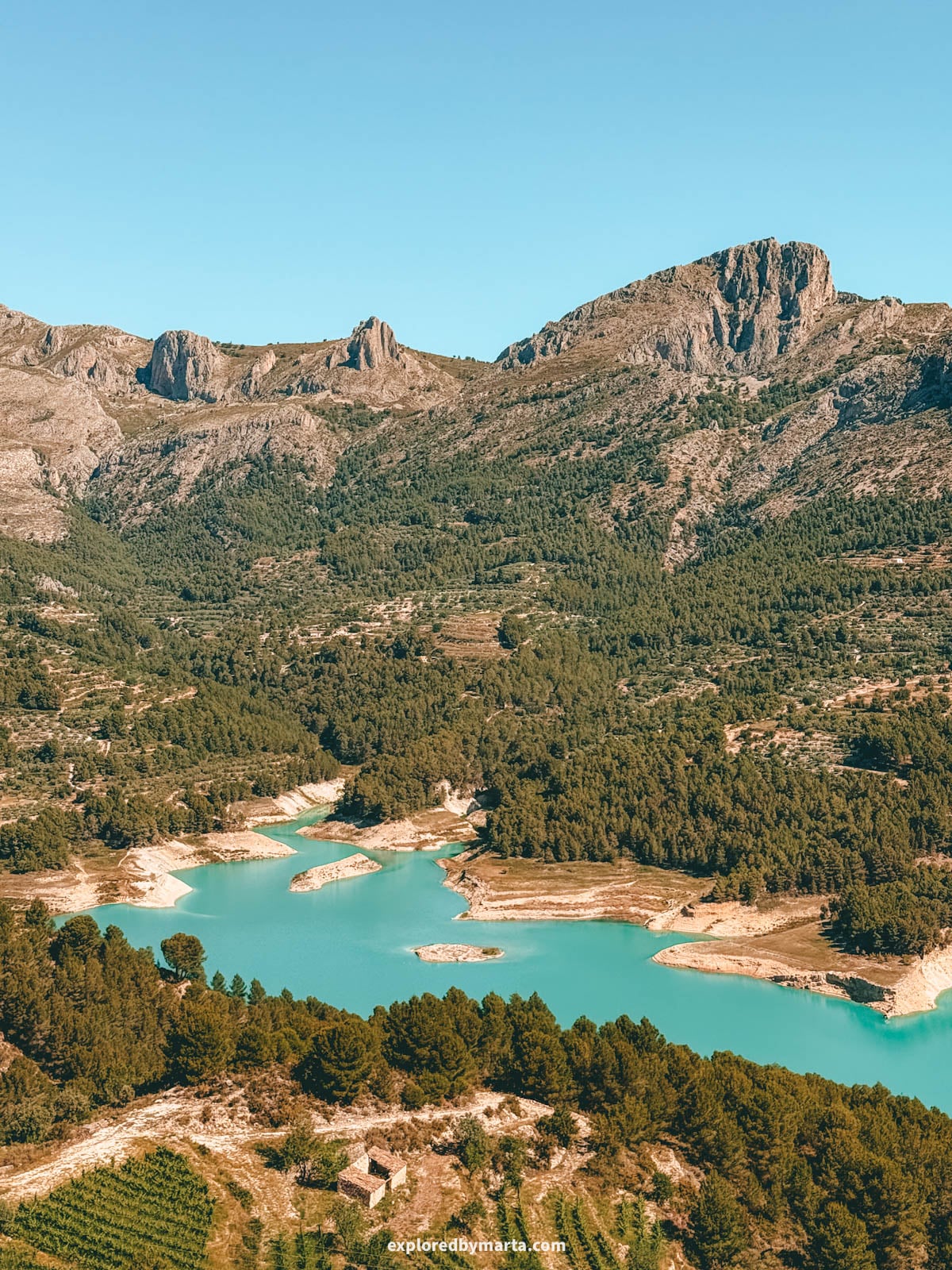
But for me, the best part of Plaza de San Gregorio is still the view.
From the edge of the square, you get panoramic views over the iconic Embalse de Guadalest, the bright blue reservoir that makes the whole village look wayyyy more special than a tiny mountain village has any right to look.
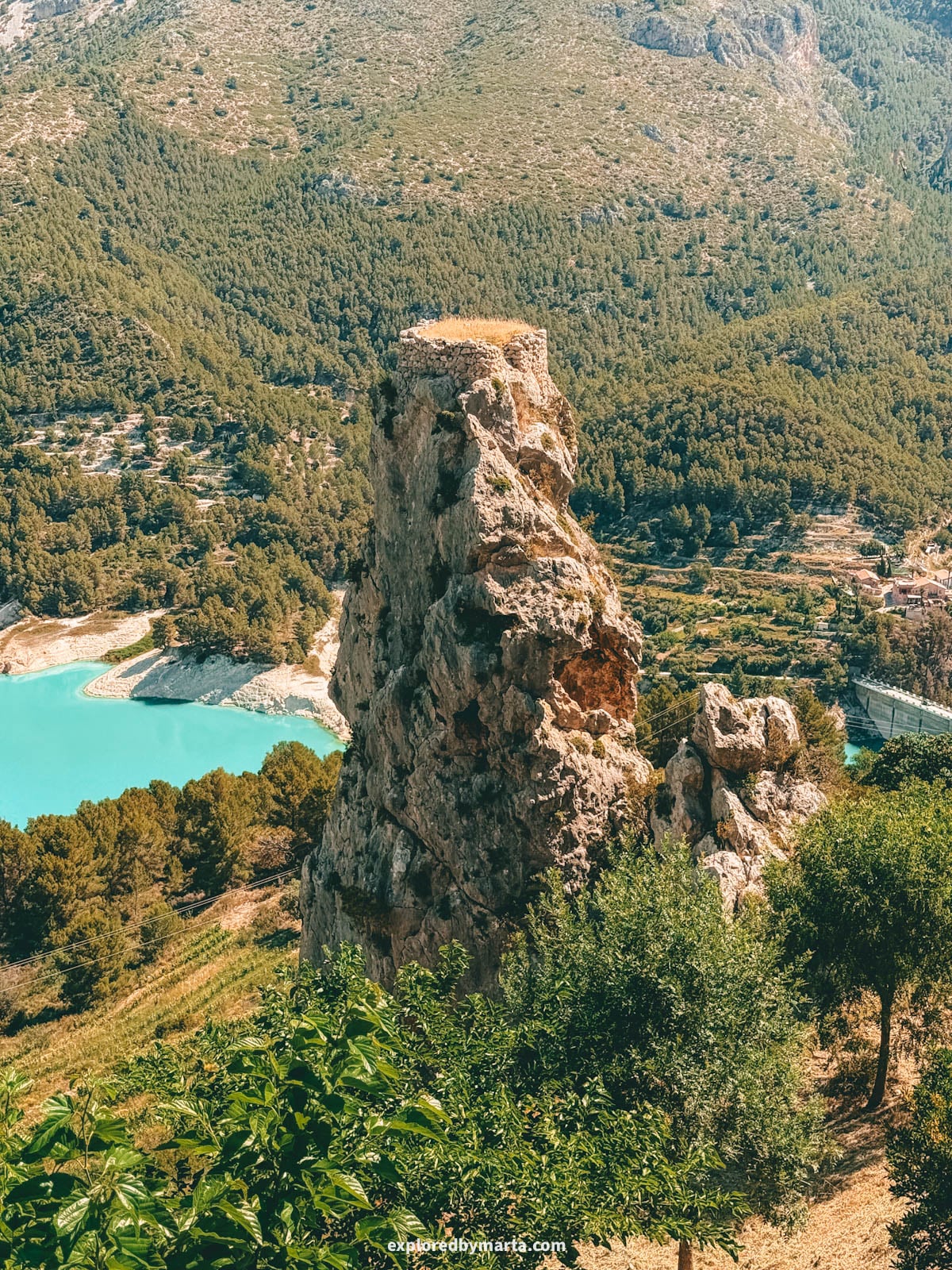
From the square, you also get a great view of the Torre de la Penya d’Alcalà, an old watchtower sitting on its own rocky pinnacle (there’s just ruins). As the round tower ruins balance on top of a rock, I only have one question – how did the guards get over there? 😃
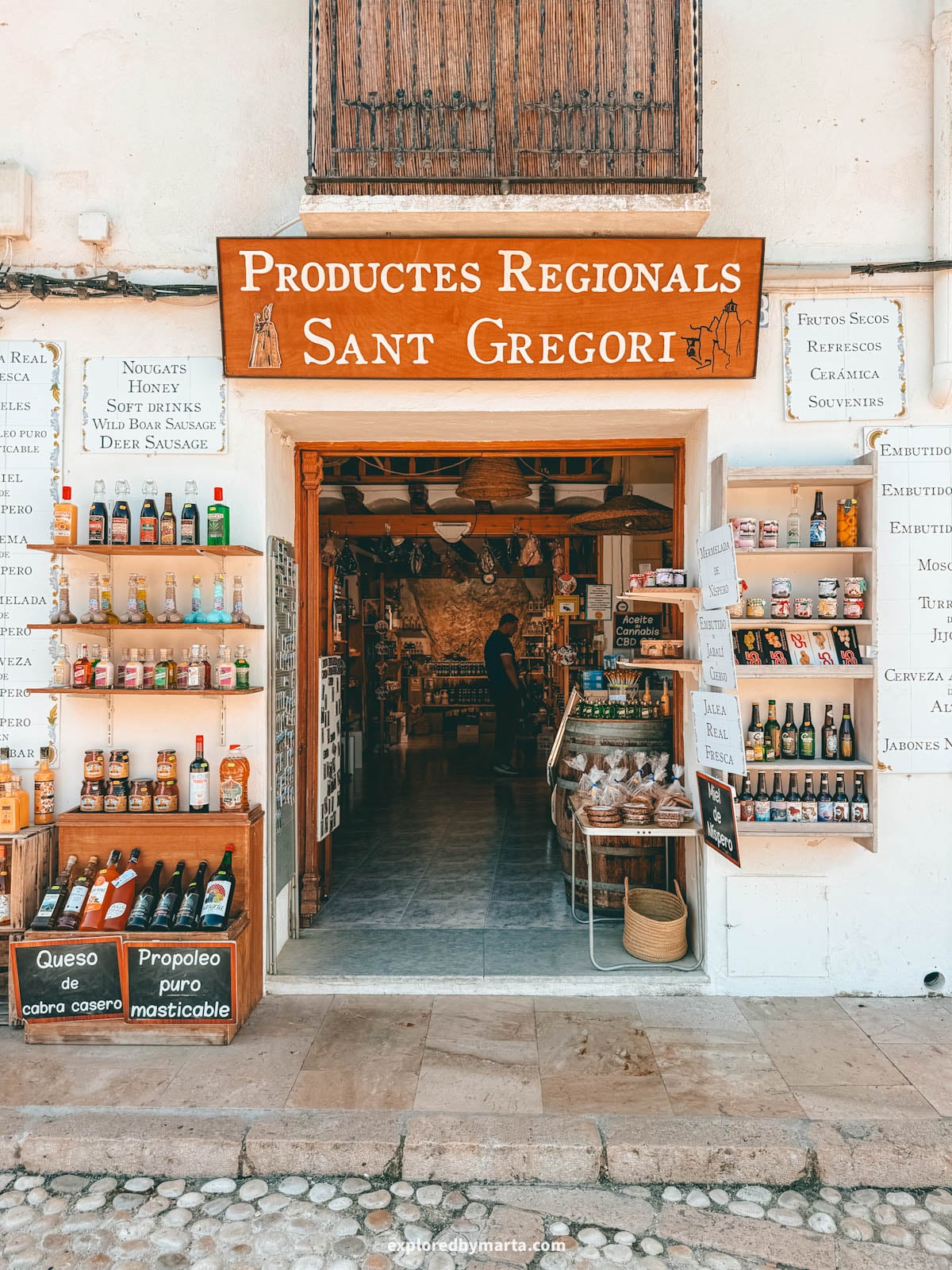
Plaza de San Gregorio is also a good place to browse the souvenir shops. We saw plenty of local-style products like honey, liqueurs, oils, jams, turrón, ceramics, and little gifts. There are some shops right in the square and some further along the street.
And after the castle climb, I also fully support sitting down here for coffee or ice cream. Not everything has to be productive sightseeing. Sometimes the best thing to do in Guadalest is just sit in the square and enjoy the view for a bit.
We passed through this little square multiple times. It is probably the liveliest place in the village! Such a scenic place!
Location: Plaza de San Gregorio
7. Walk over to Mirador des de la Muralla
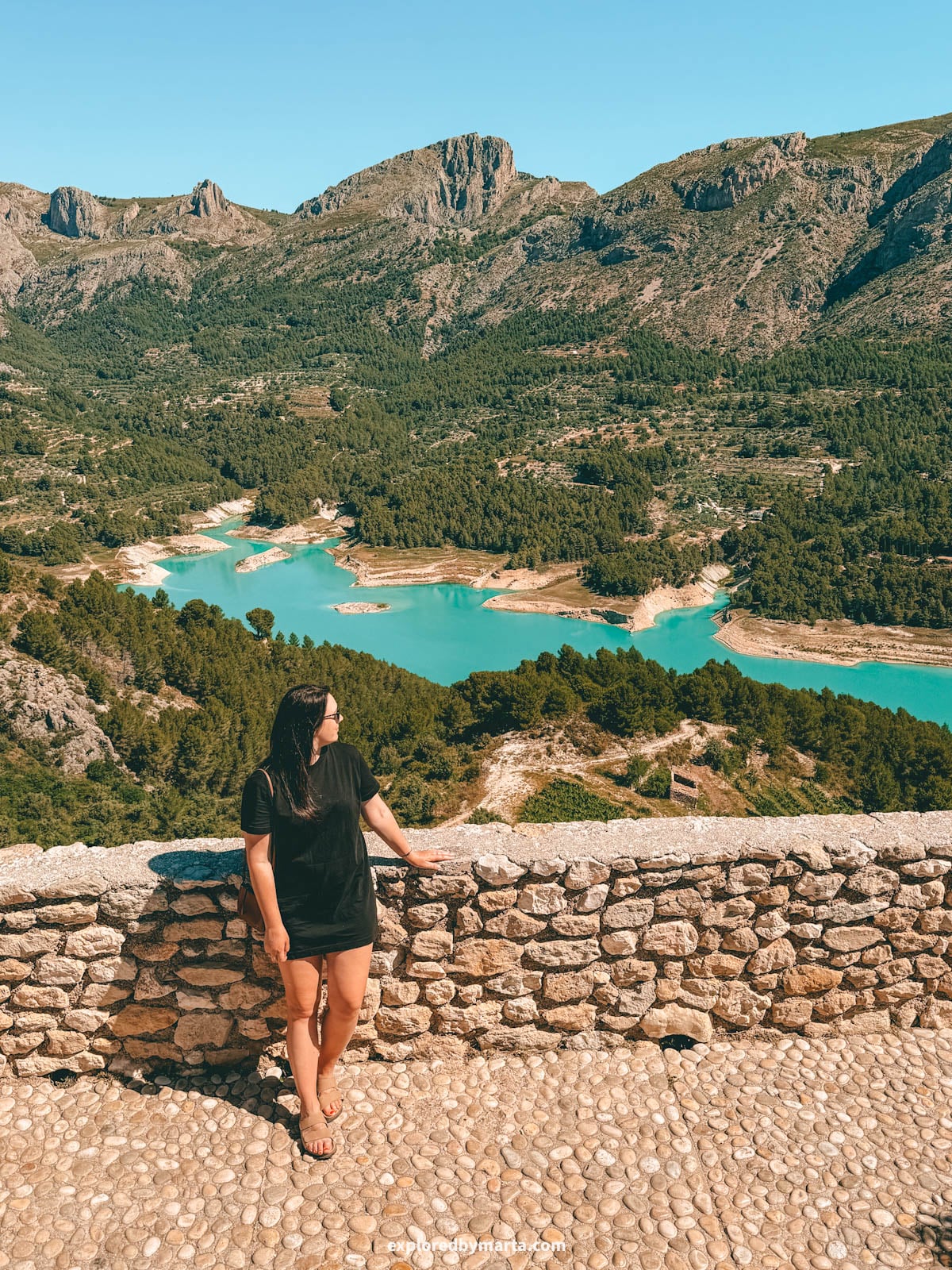
Once you’ve taken in the main square, keep walking west along the cliffside until you reach Mirador des de la Muralla, the westernmost viewpoint in old Guadalest.
This is basically the farthest you can go in the old part of the village before the clifftop drops away. And that’s exactly what makes it worth the extra few minutes of walking – uninterrupted views everywhere!
Yes, by now you’ve already seen the reservoir and the surrounding mountains from a few different viewpoints in Guadalest. The view here is similar, but not quite the same.
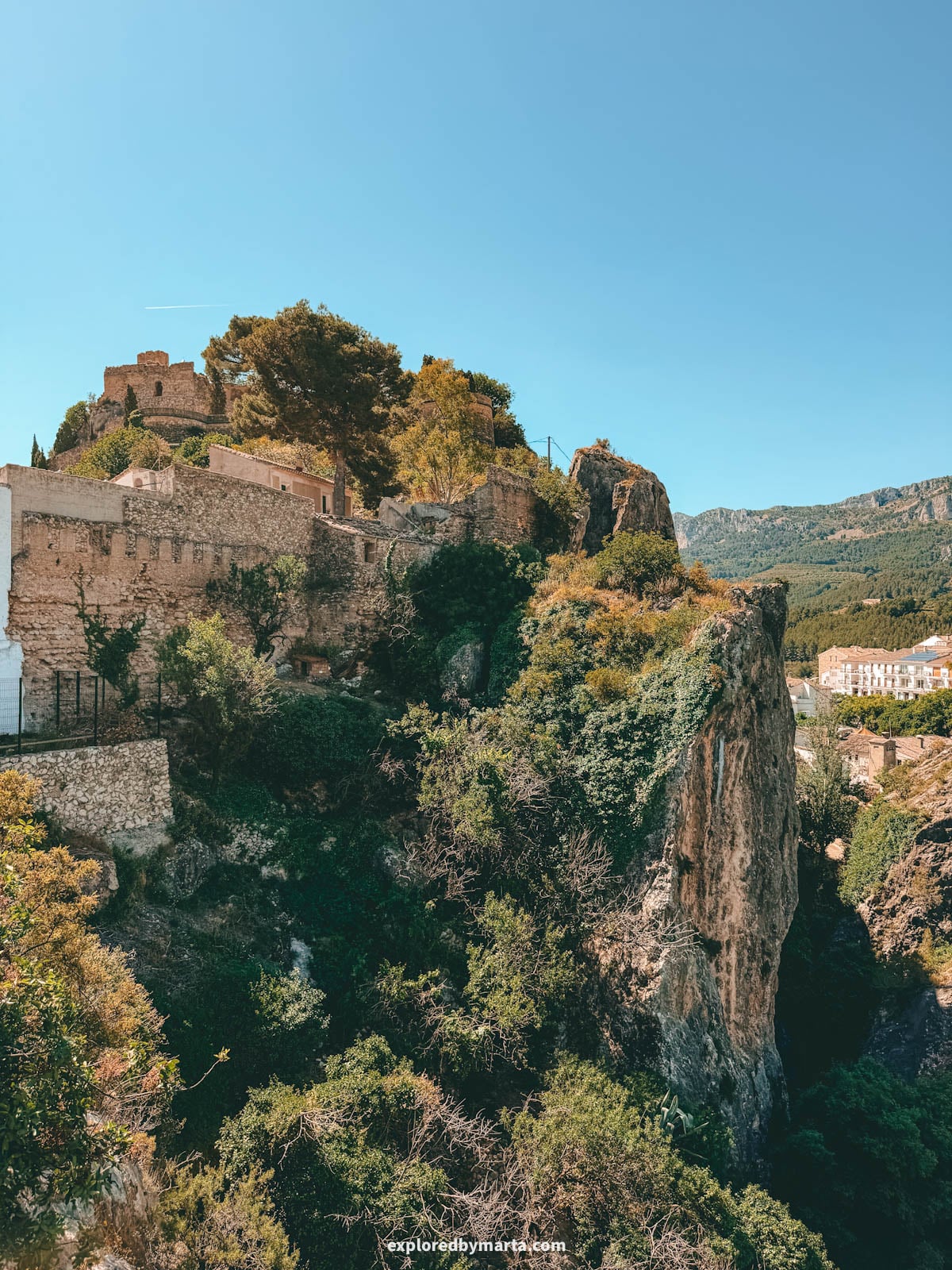
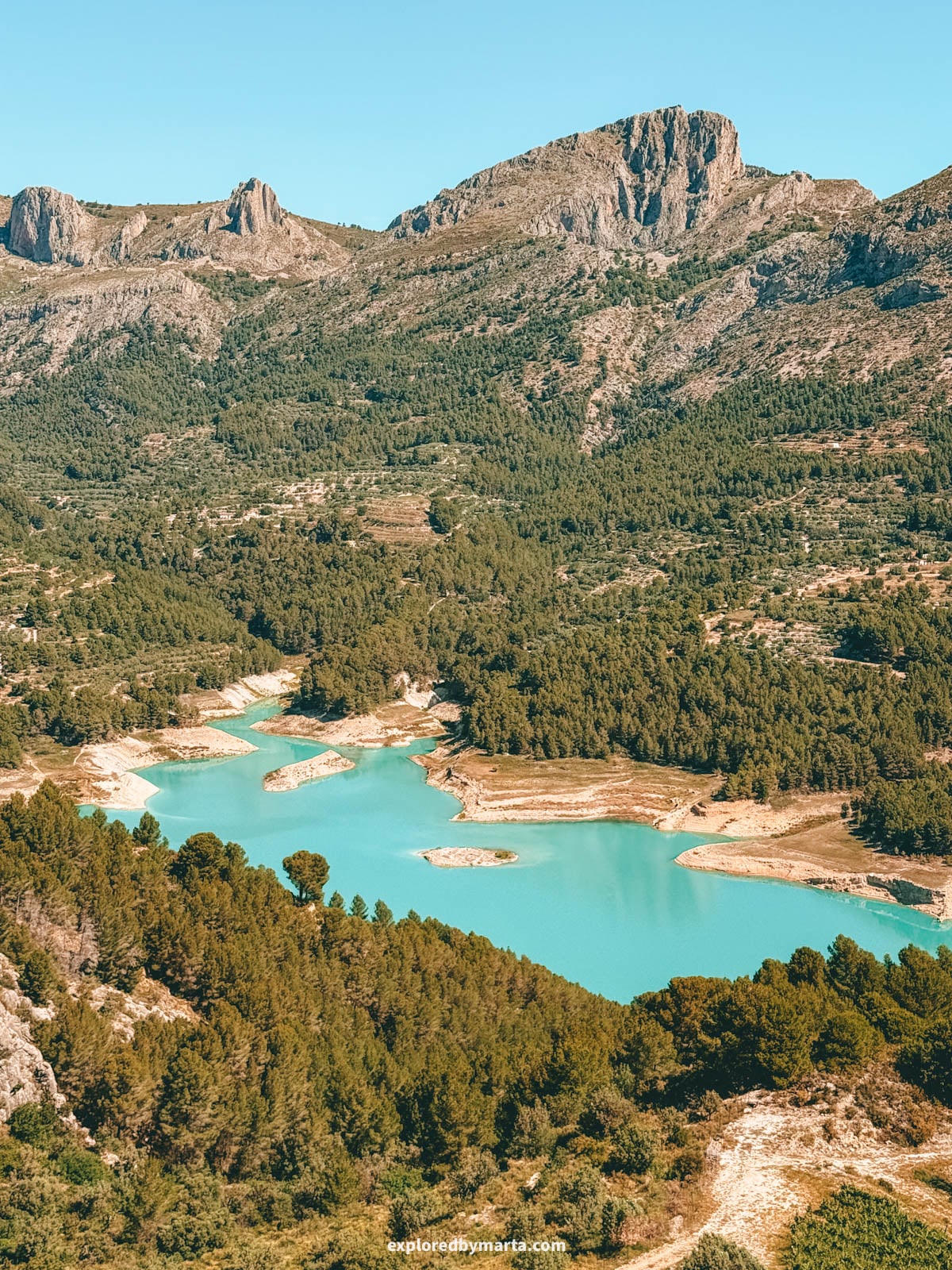
Each spot gives you a slightly different angle on the valley, and once you see how scenic this whole area is, you’ll want to take it in properly from every side.
What I liked most about Mirador des de la Muralla was that it was so quiet.
Plaza de San Gregorio and the main streets can get pretty busy with day-trippers, especially in high season, so it was really nice to step away from the crowds for a few minutes. We had this corner almost to ourselves!
So even if you’ve seen “enough” of the reservoir by this point, do yourself a favor and walk all the way to the western edge of the village. The walk is short, the views are still beautiful, and the quiet is really a nice change of pace.
Location: Mirador des de la Muralla
8. Peek inside the charming Església de l’Assumpció
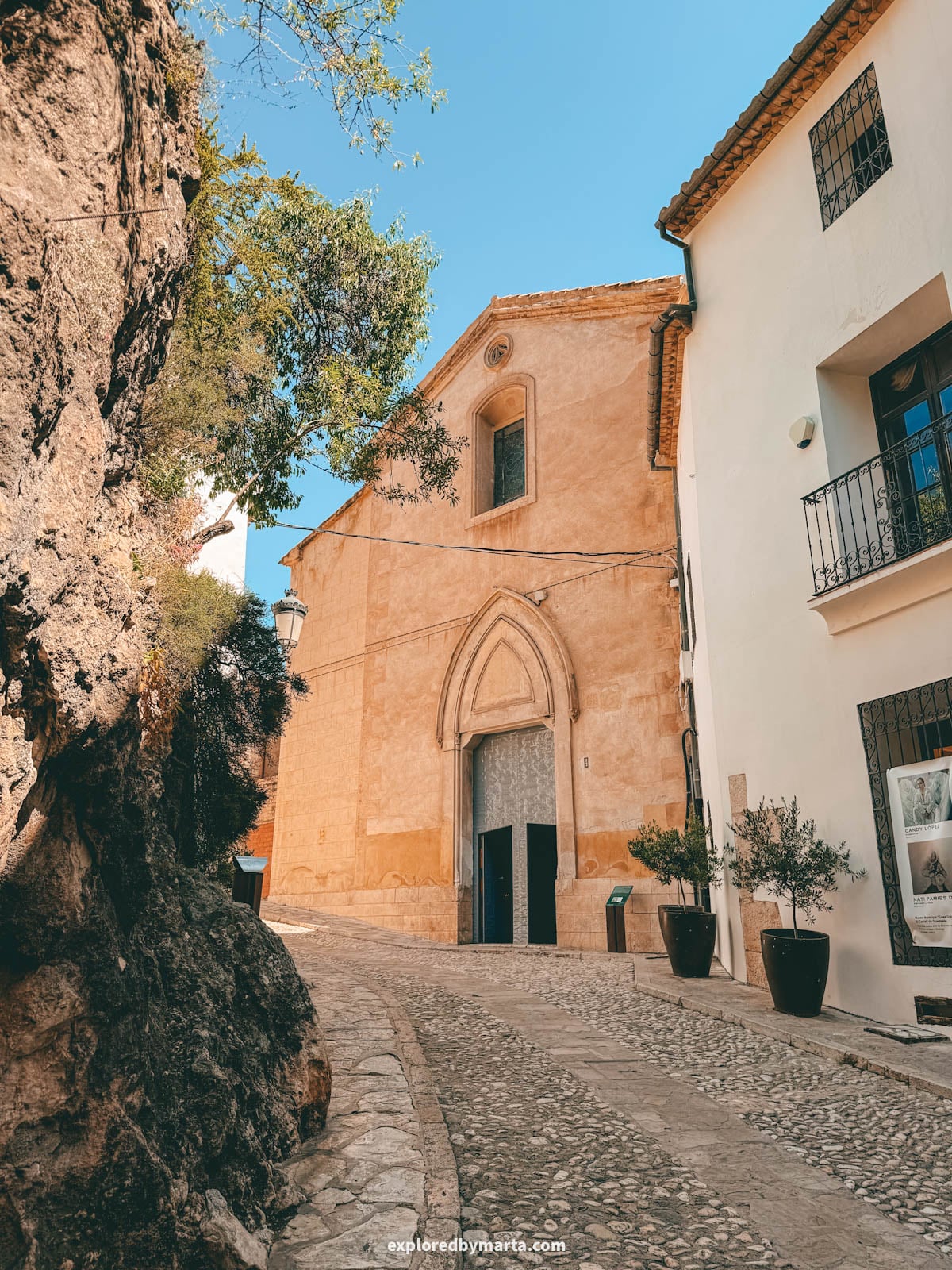
Right next to Plaza de San Gregorio, you’ll find the village’s main church, Església de l’Assumpció (also known as Nuestra Señora de la Asunción, or Church of Our Lady of the Assumption). It’s a very quick stop, but a worthwhile one.
The current church was built in the 18th century in Baroque style, and it sits on the site of an even older 13th-century temple that was built right after the Christian Reconquest. So this corner of Guadalest has been a place of worship for around 800 years!
Inside, the main altarpiece is the highlight. It’s actually pretty recent (from 2011) and features ten paintings showing scenes from the life of the Virgin Mary.
It was a quick visit, and we probably only spent about 5 minutes inside, but here’s the fun thing I noticed, and the reason this church is actually worth your time.
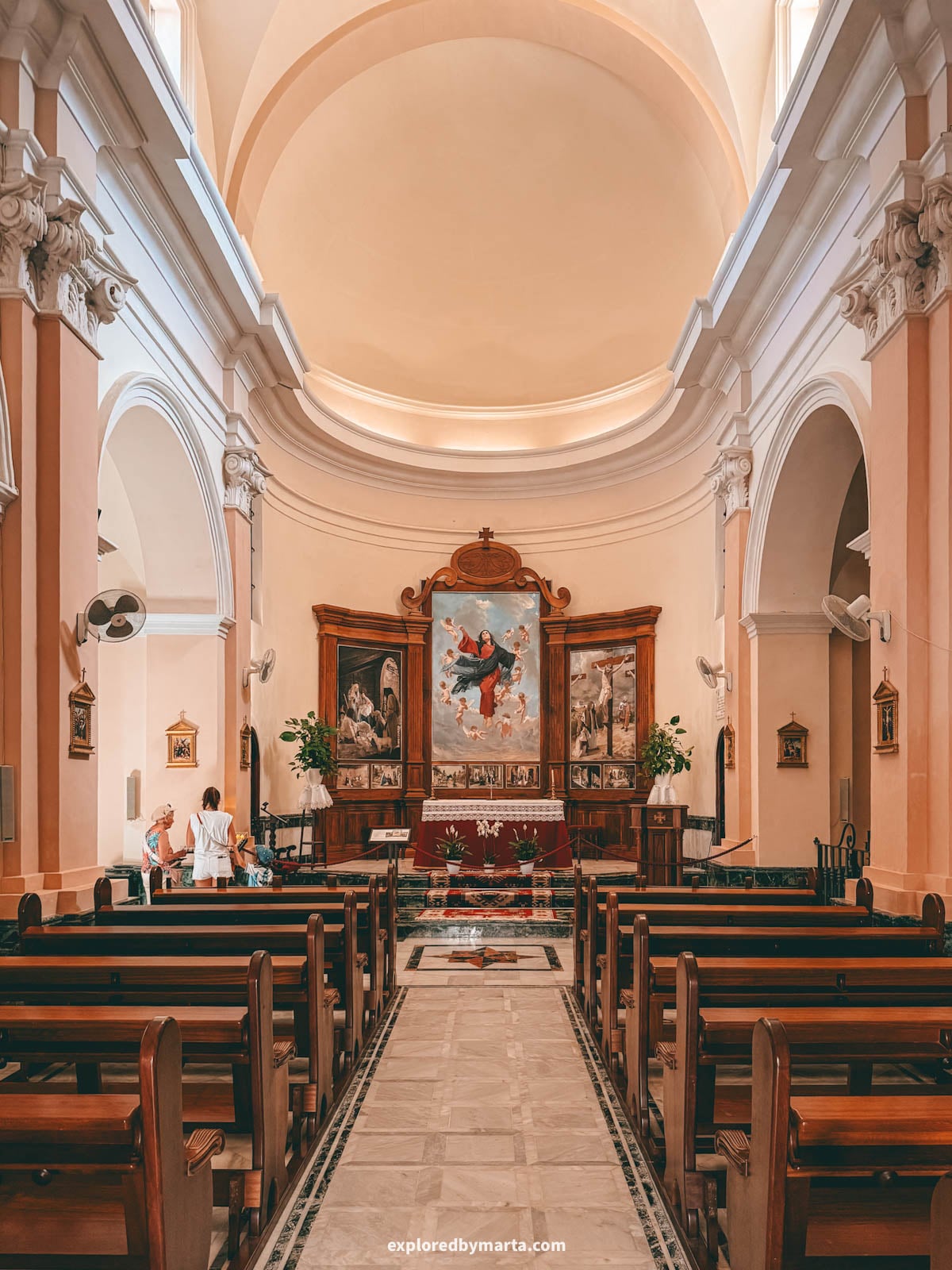
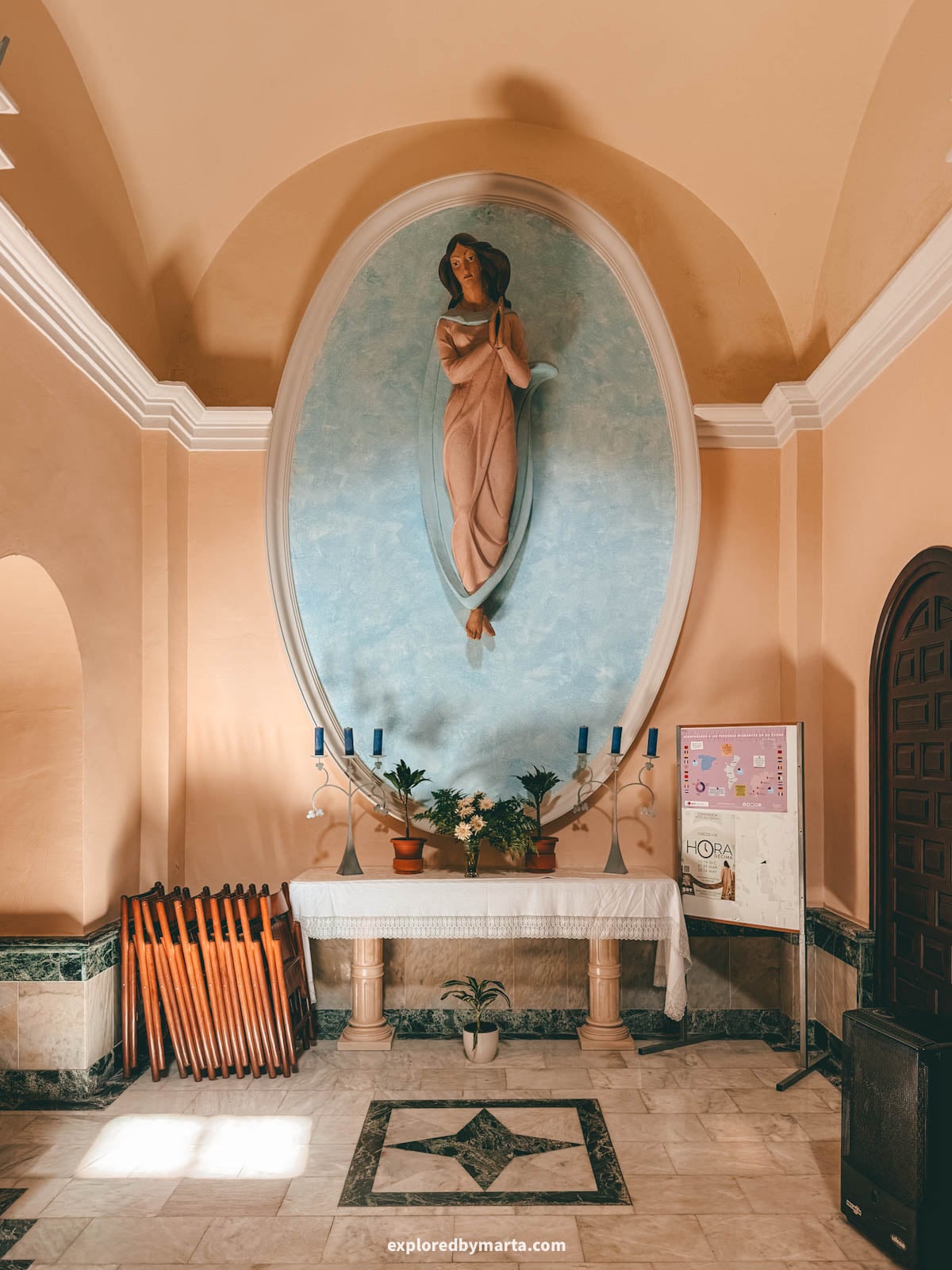
The church sits right next to Casa Orduña, the noble family’s house from earlier in this guide. When we were visiting Casa Orduña, we noticed something curious on one of the upper floors: a small window that looked straight into the church.
Yep, the Orduña family had their own private window into the church! Pretty cool? They could attend mass from the comfort of their own house, without ever mixing with the rest of the village. Talk about VIP treatment!
So if you missed it from the Casa Orduña side, here’s what to do: once you’re inside the church, look at the right-hand wall close to the altar, and look up a little. You should be able to spot the window that connects to Casa Orduña.
Suddenly, a quick 5-minute stop became so much more interesting!
Location: Església de l’Assumpció
9. Explore one of Guadalest’s quirky mini-museums
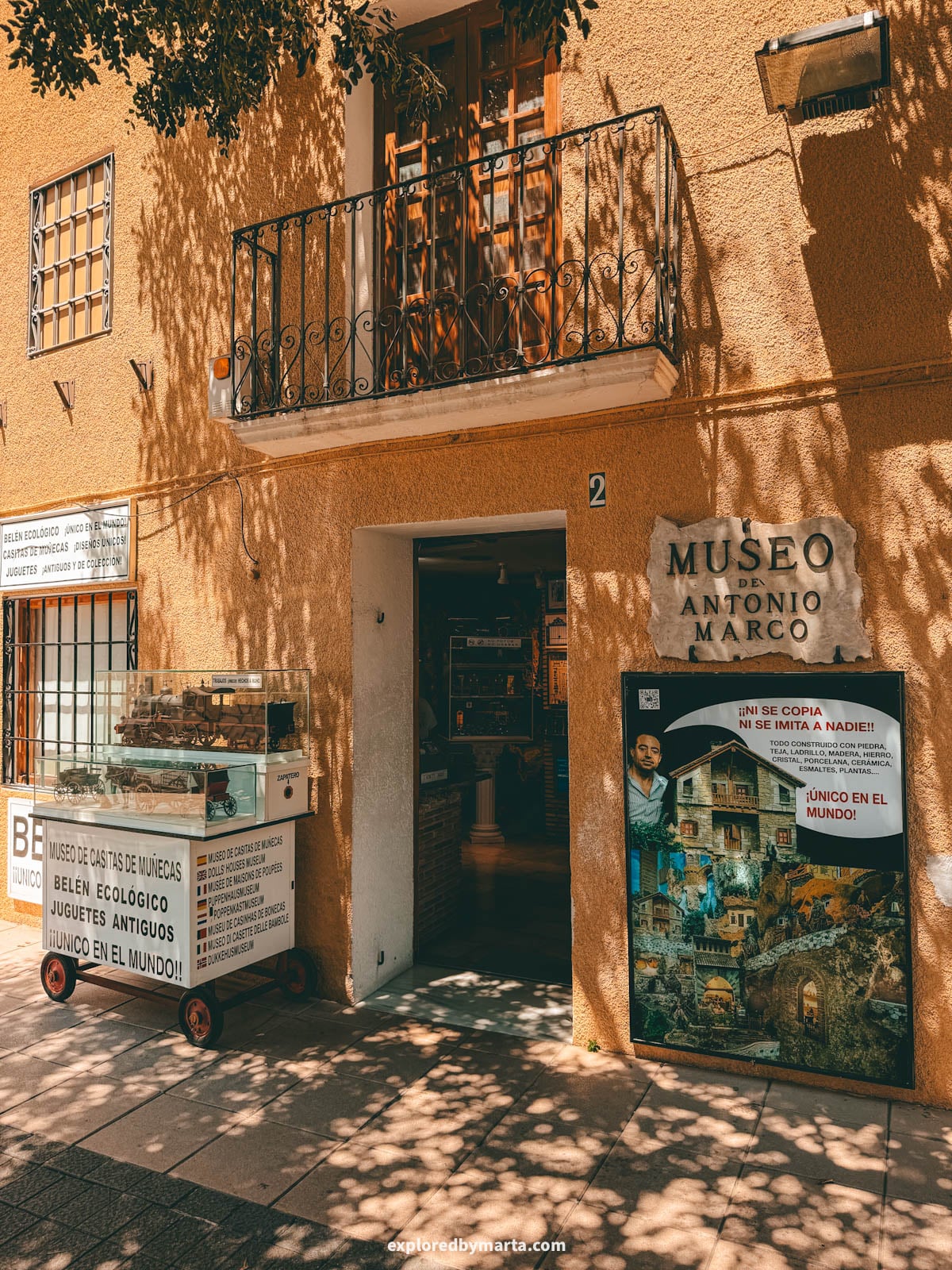
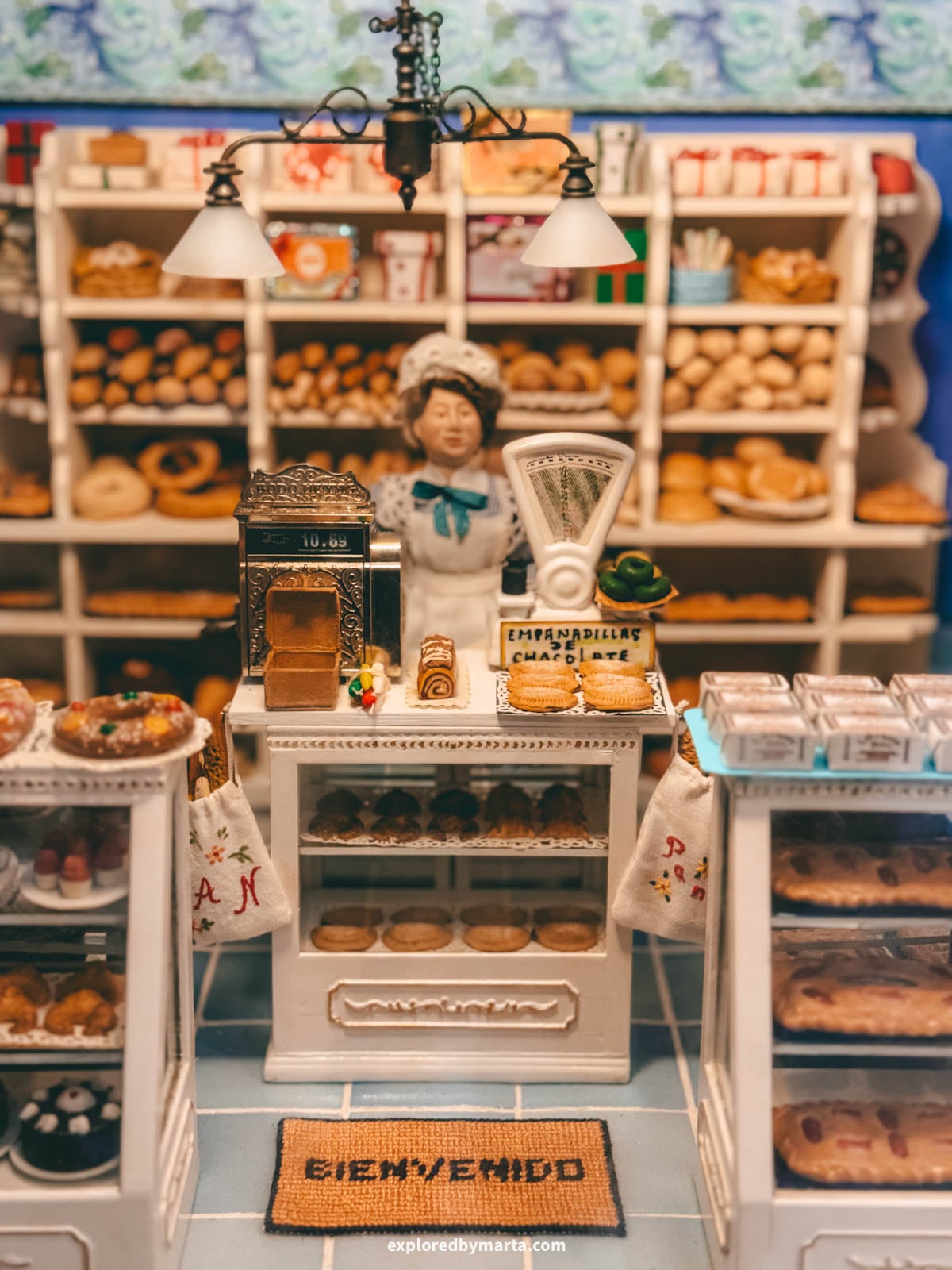
One of the funniest things about Guadalest is that, for such a tiny village, it has a surprising number of museums. And not just any museums, but the most unusual collections about the most unusual things you can think of!
You won’t have time (or honestly, the need) to visit all of them, but I think picking one or two is a fun way to add something different to your Guadalest day. Here’s the full lineup so you can pick what sounds most “you”:
- Museu Antoni Marc de Pessebres i Casetes de Nines (Antonio Marco Dolls’ Houses Museum) – tiny doll houses, mini scenes of everyday life, and a massive 12-ton miniature nativity. More on this below!
- Museo de Tortura Medieval (Medieval Torture Museum) – around 70 instruments of torture used during the Spanish Inquisition. Not for the faint-hearted!
- Museo de Microminiaturas (Microminiature Museum) – the works of micro-artist Manuel Ussá, including the Statue of Liberty in the eye of a needle, Goya’s paintings on a grain of rice, and a flea dressed as a bullfighter. Yes, really.
- Museo Microgigante (Micro-Giant Museum) – the opposite concept: handmade miniature scenes alongside giant sculptures, all in one place.
- Museo de Saleros y Pimenteros (Salt and Pepper Shaker Museum) – more than 20,000 salt and pepper shakers from around the world. Yes, twenty thousand.
- Museo Etnológico (Ethnological Museum) – traditional tools, costumes, and household objects showing daily life in old Guadalest.
- Museo de Vehículos Históricos (Historical Vehicles Museum) – a private collection of vintage cars and motorbikes, located just outside the village.
We wanted to visit two: the Medieval Torture Museum and the Antonio Marco Museum.
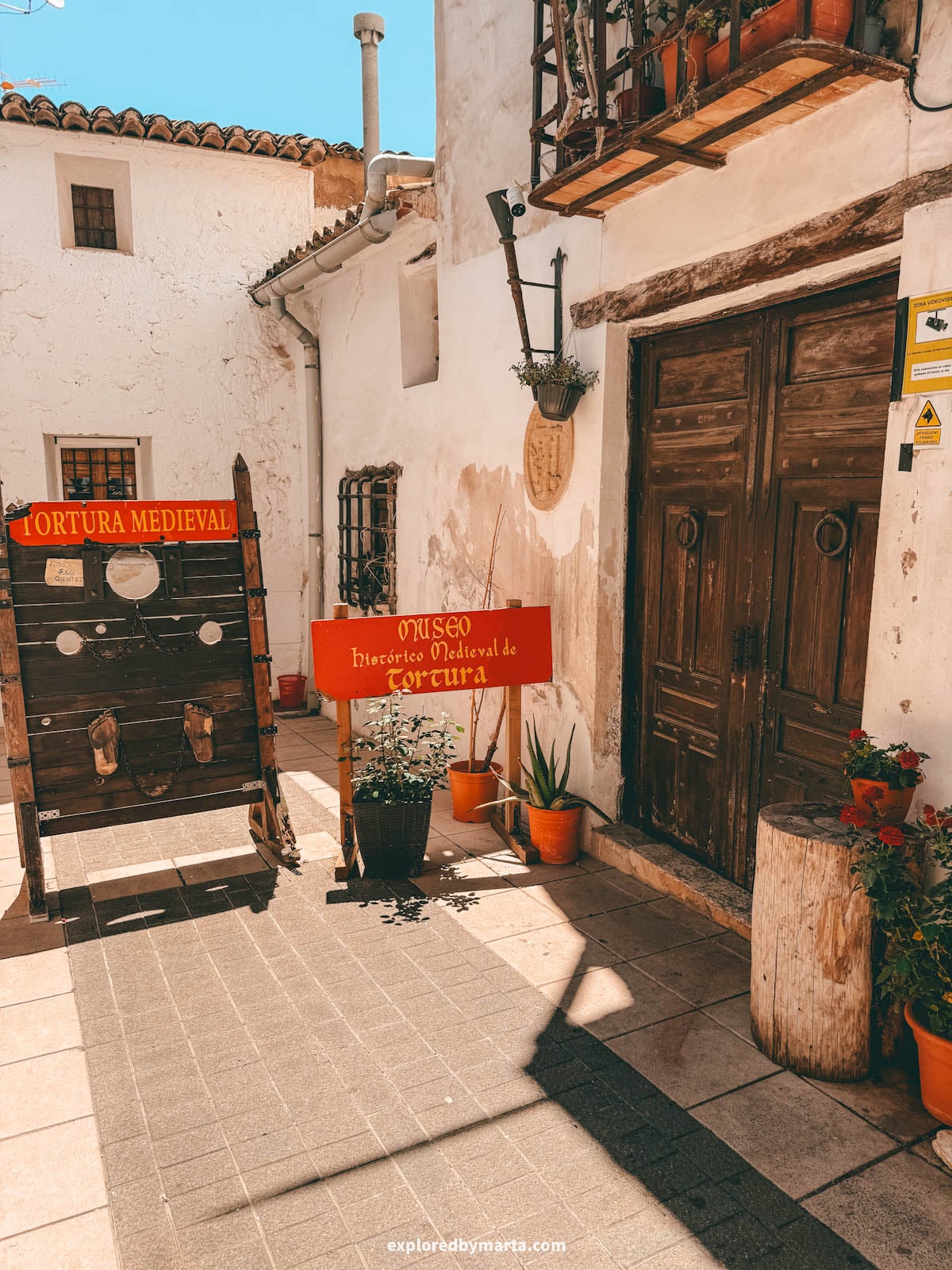
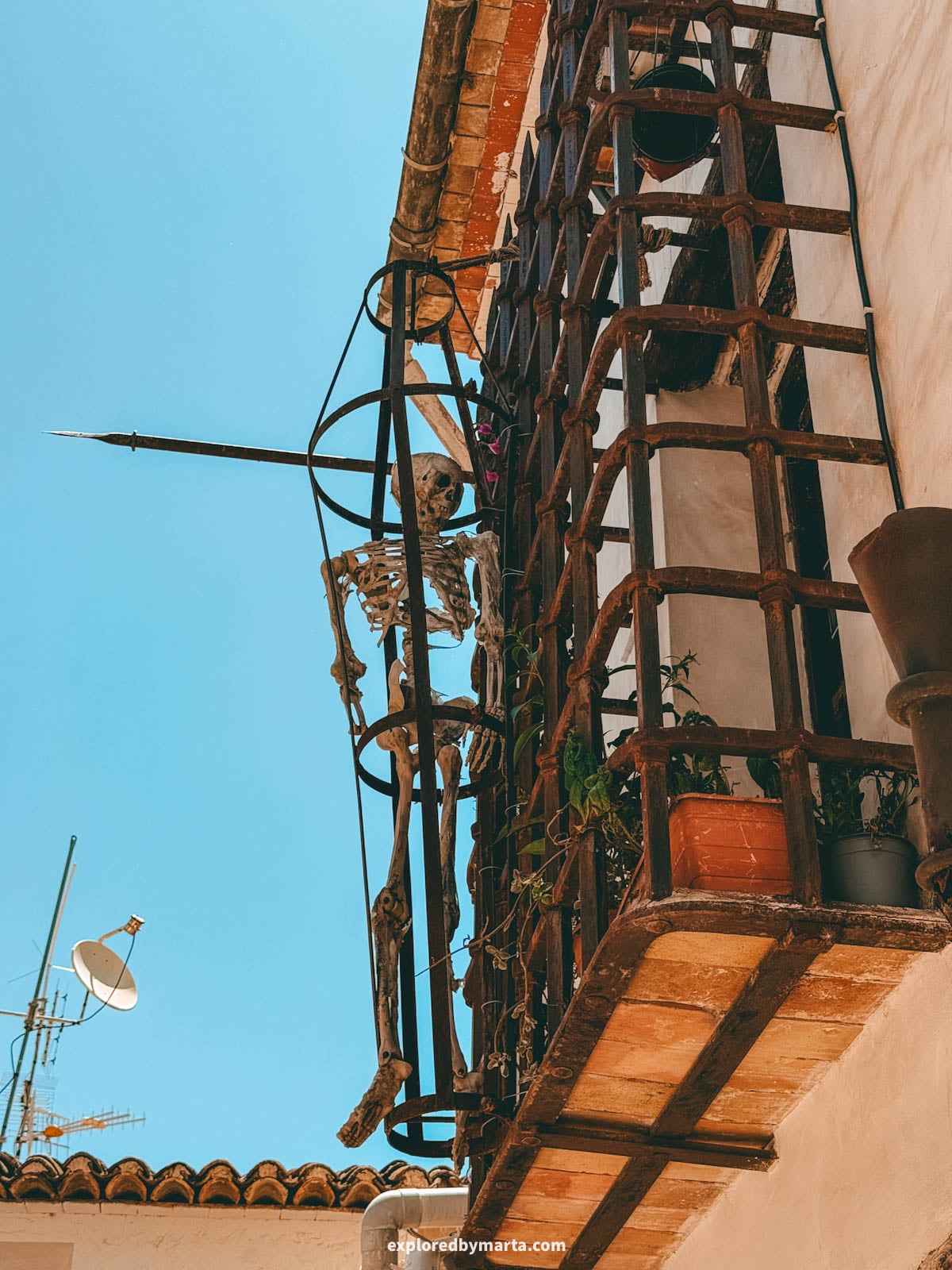
I have to say, I was really curious about the torture museum, but it was strangely closed when we showed up, even though it should have been open.
Later, my husband read the reviews and apparently this is a common complaint. So many people show up to a closed door at hours when it’s supposed to be open. Such a shame, I would have loved to see it!
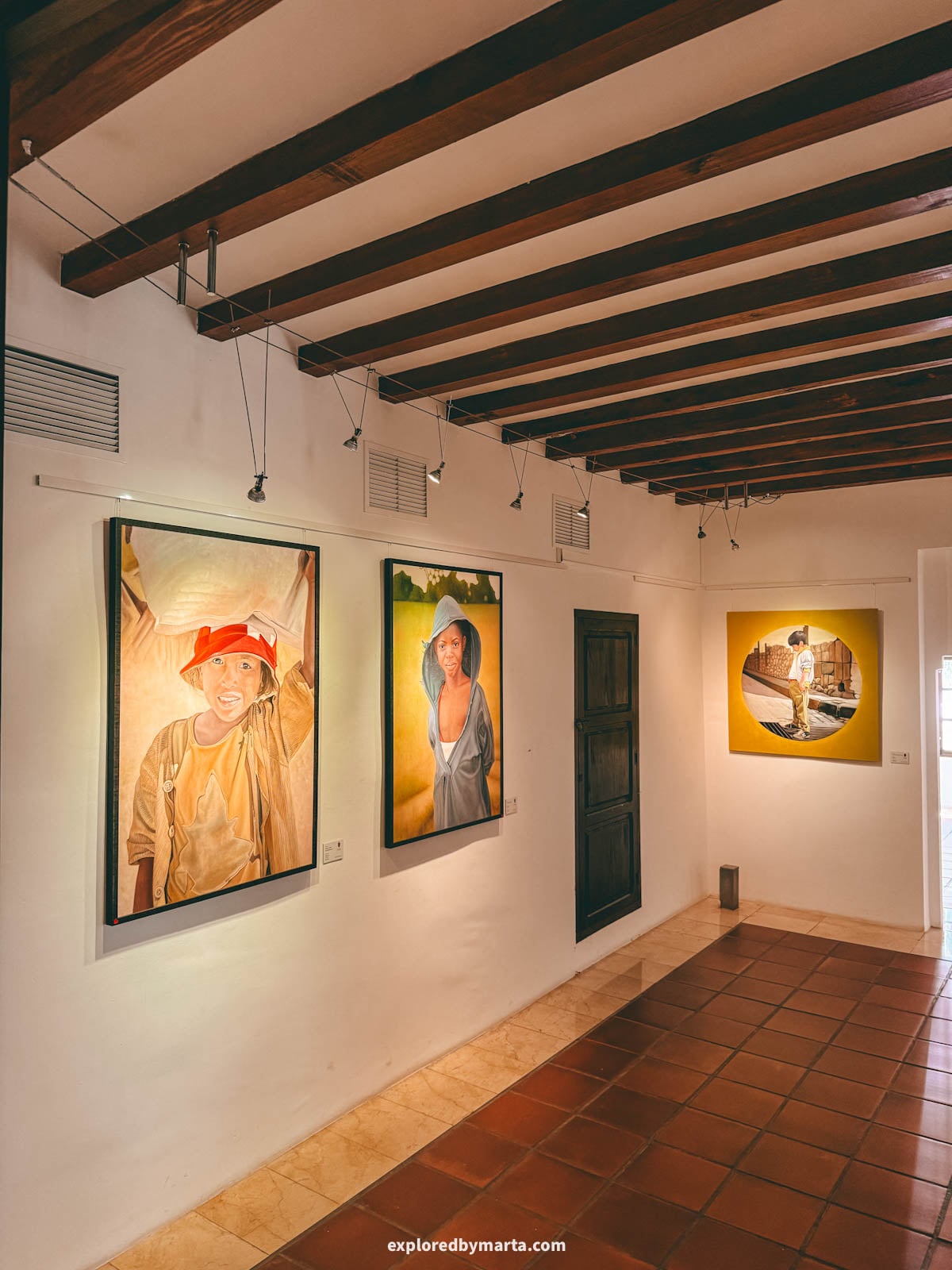
But we did make it into the Dolls’ Houses Museum, and it ended up being one of the most charming little stops in Guadalest! This is the cutest museum of tiny doll houses, but it’s actually so much more than that.
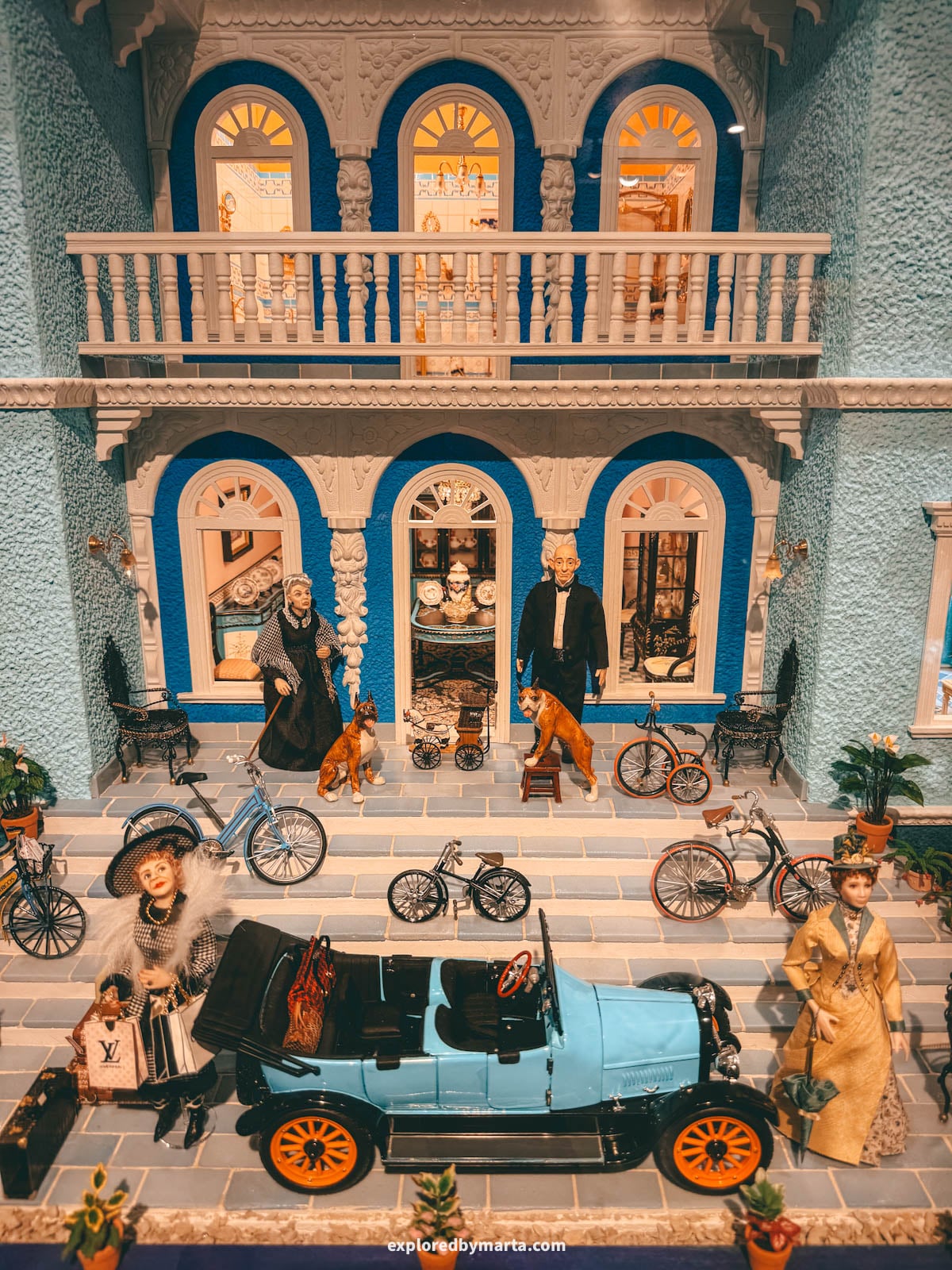
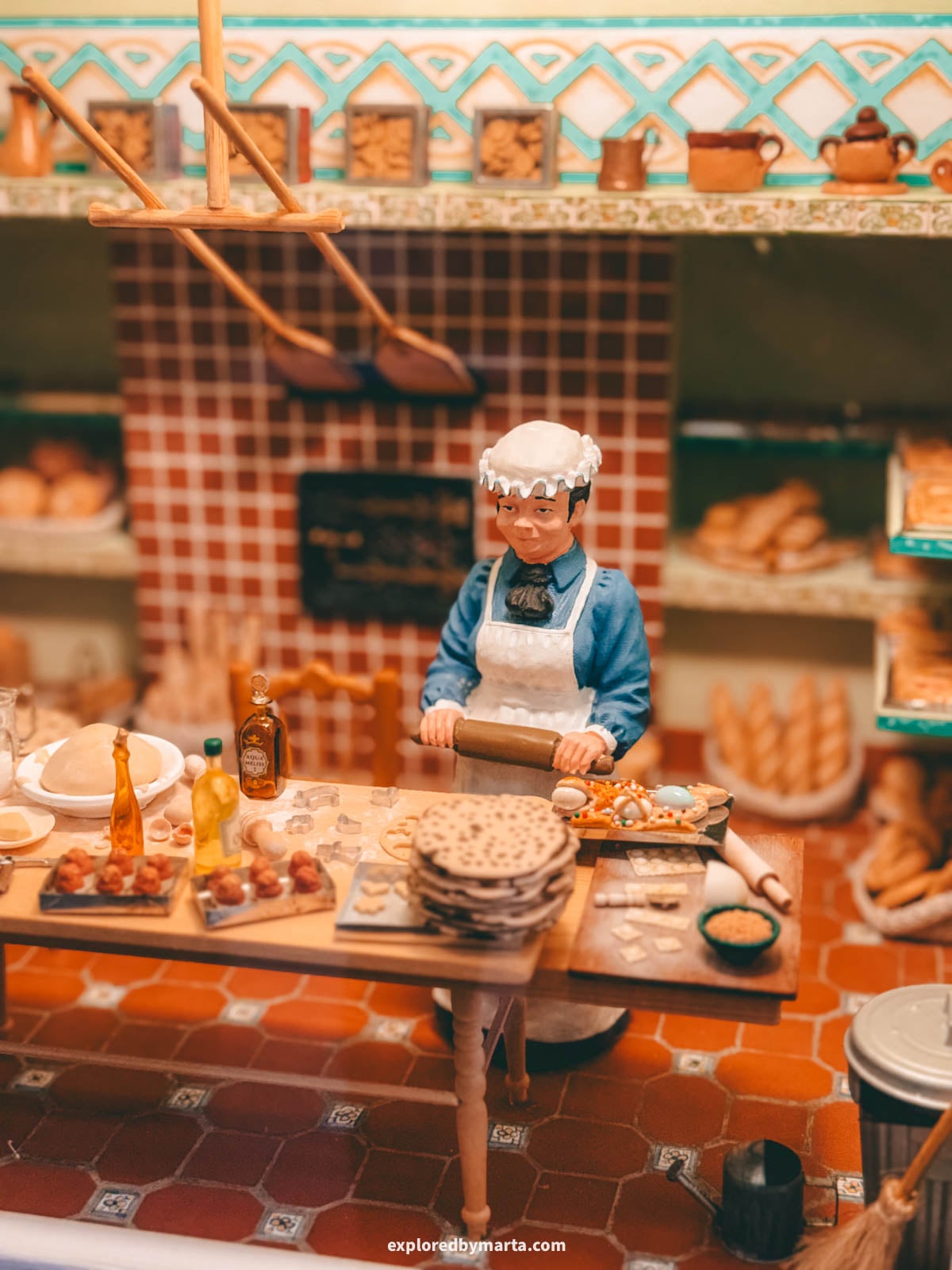
The collection is spread across three floors and includes miniature scenes from all kinds of everyday life: a baker, a pharmacy, a greengrocer, a dentist, a shoe shop, a hairdresser, plus tiny vehicles, antique toys, and all the little objects you’d find in a real house.
The whole thing is the work of one man, Antonio Marco, who spent his entire life making these miniatures by hand using natural materials like stone, wood, brick, and clay tiles. He made his first piece at age 8 and his last at age 80.
The upper floor holds his masterpiece: a massive nativity scene that weighs 12 tons and looks like a whole ancient city in miniature.
It cost us 6 EUR per adult, and I really didn’t mind paying, somebody did a loooooot of work to make all this happen! I think the author must have had really sharp eyesight to create everything at this tiny scale, haha.
So if you’re going to pick a museum in Guadalest, this is a good and interesting option to pick!
10. Browse the boutique and souvenir shops
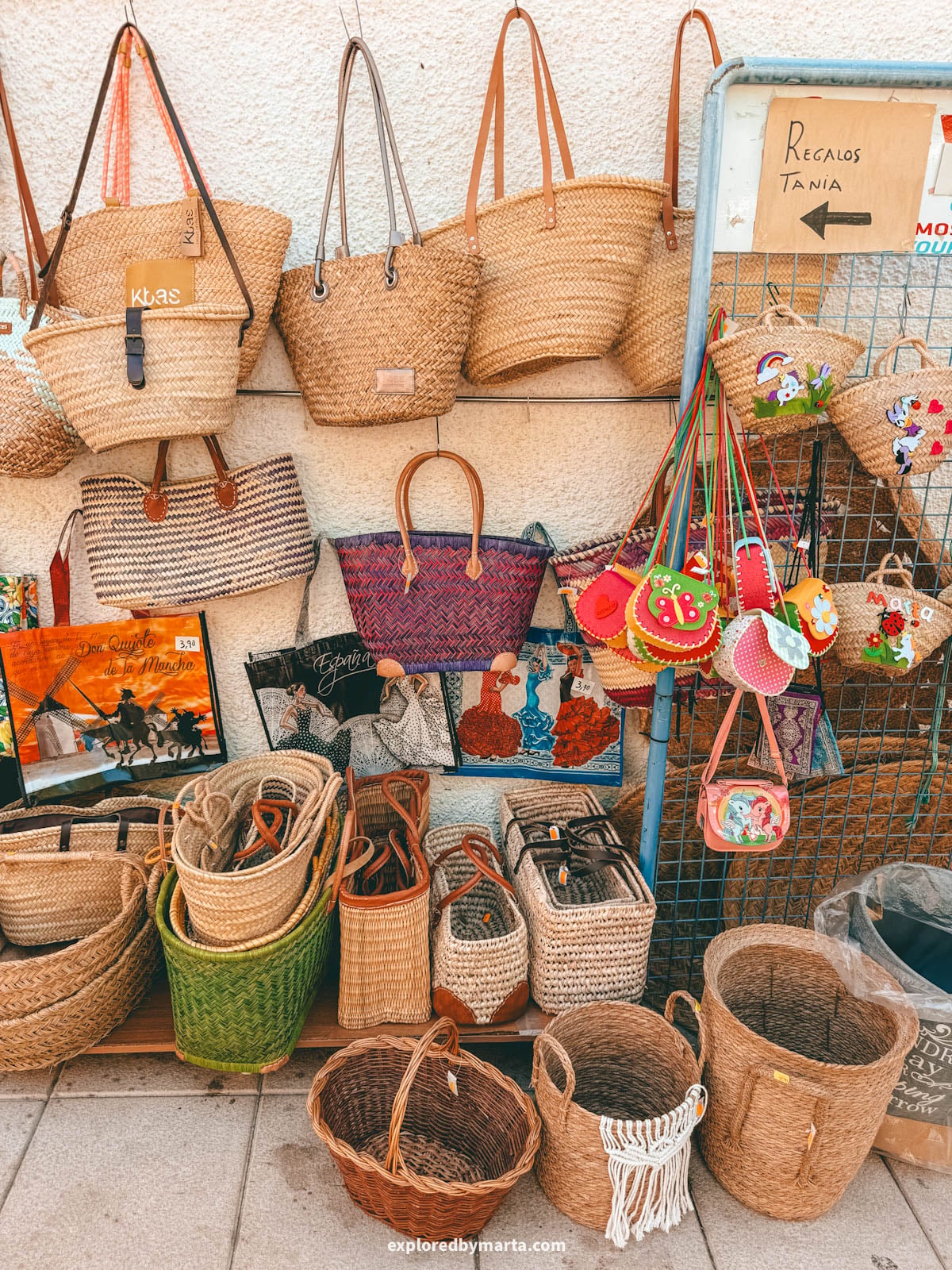
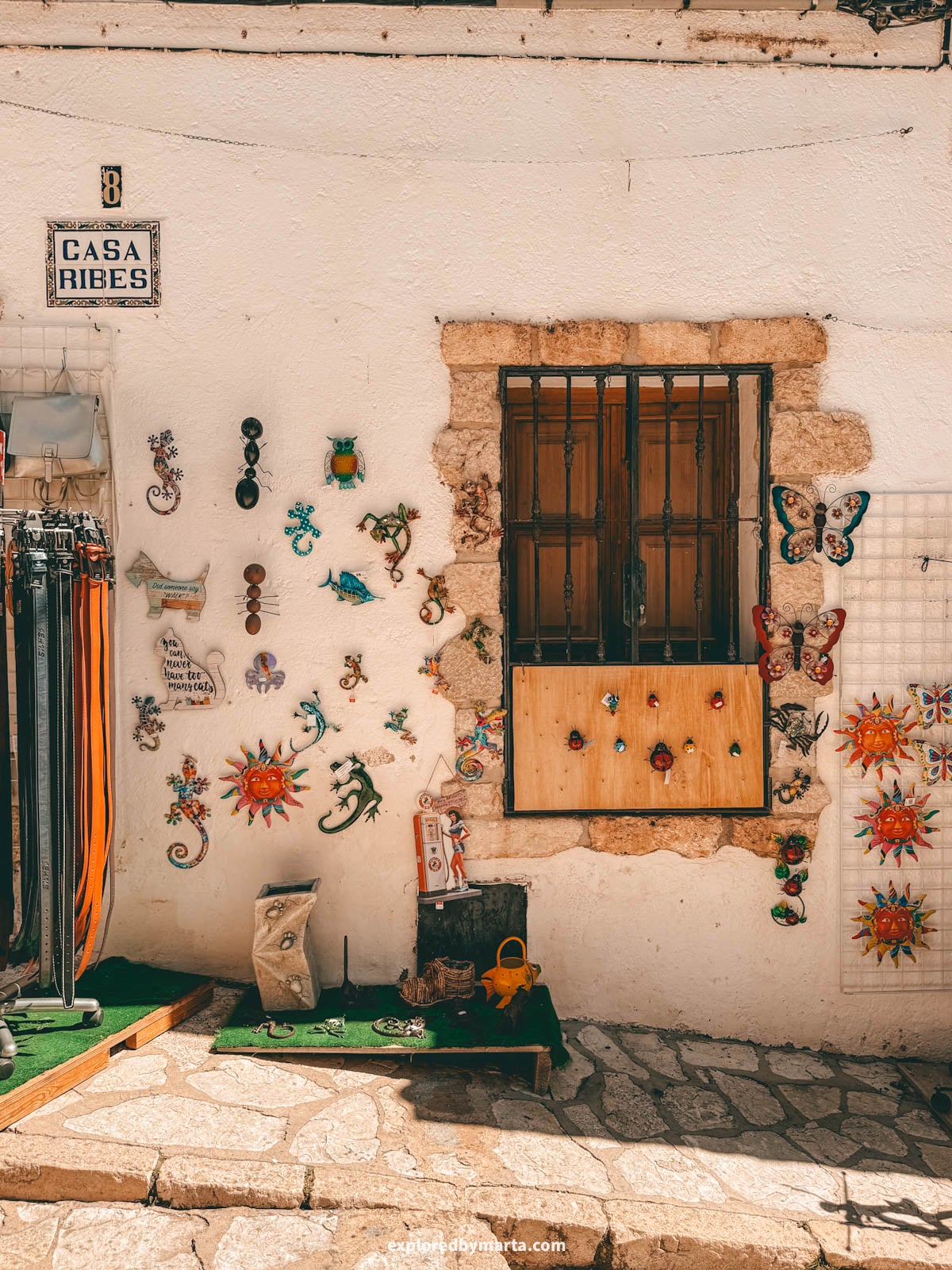
One thing you can’t miss in Guadalest, whether you want to or not, is the boutique shopping. The streets leading up to the old town are lined with little shops, so you’ll pass right by them on your way up to the castle.
Down in the newer part of the village, Calle Sol and Calle de la Virgen are the main streets visitors walk up to reach the historic center. They’re packed with boutique shops, so you’ll be browsing before you even reach the rock tunnel.
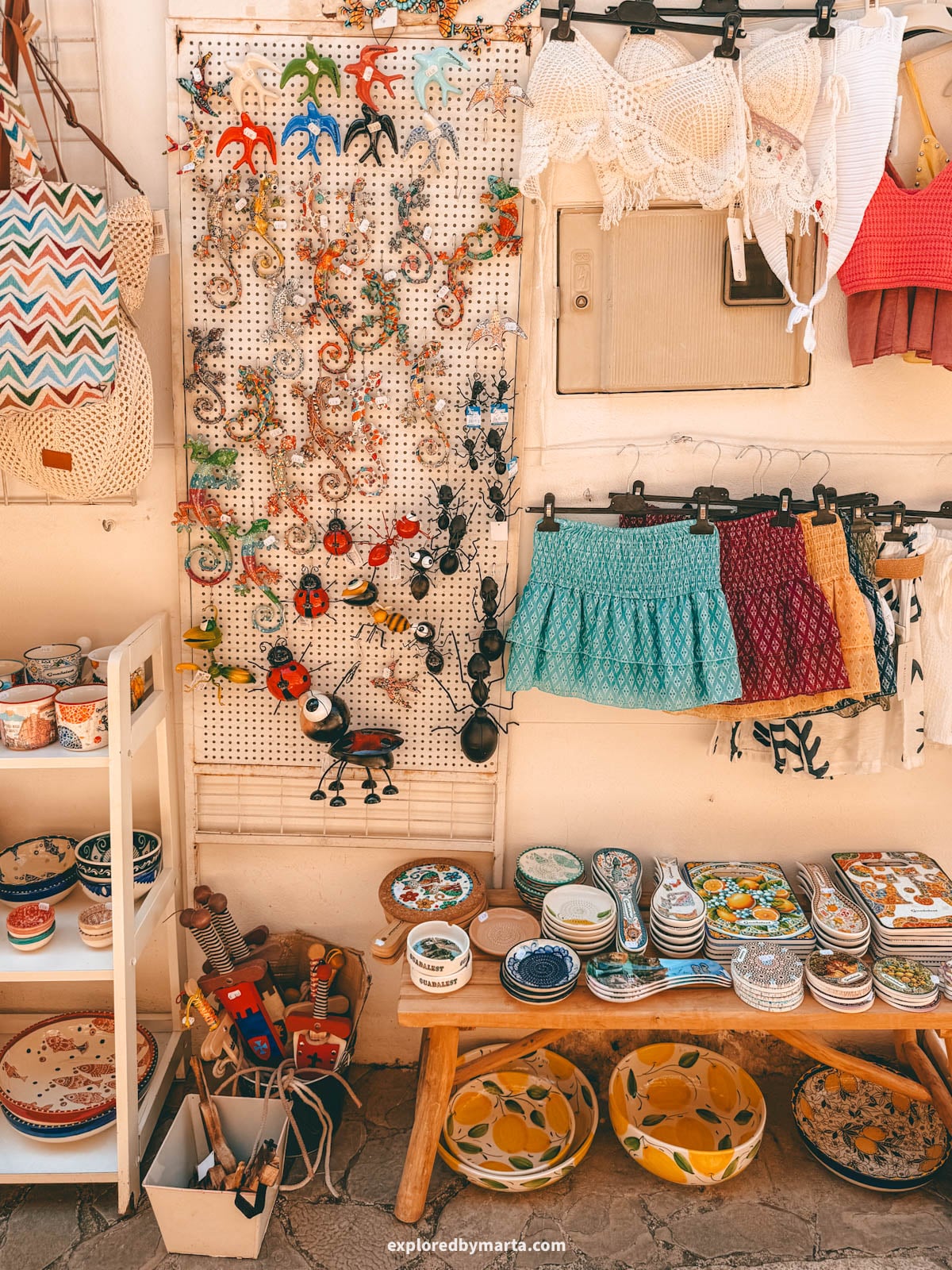
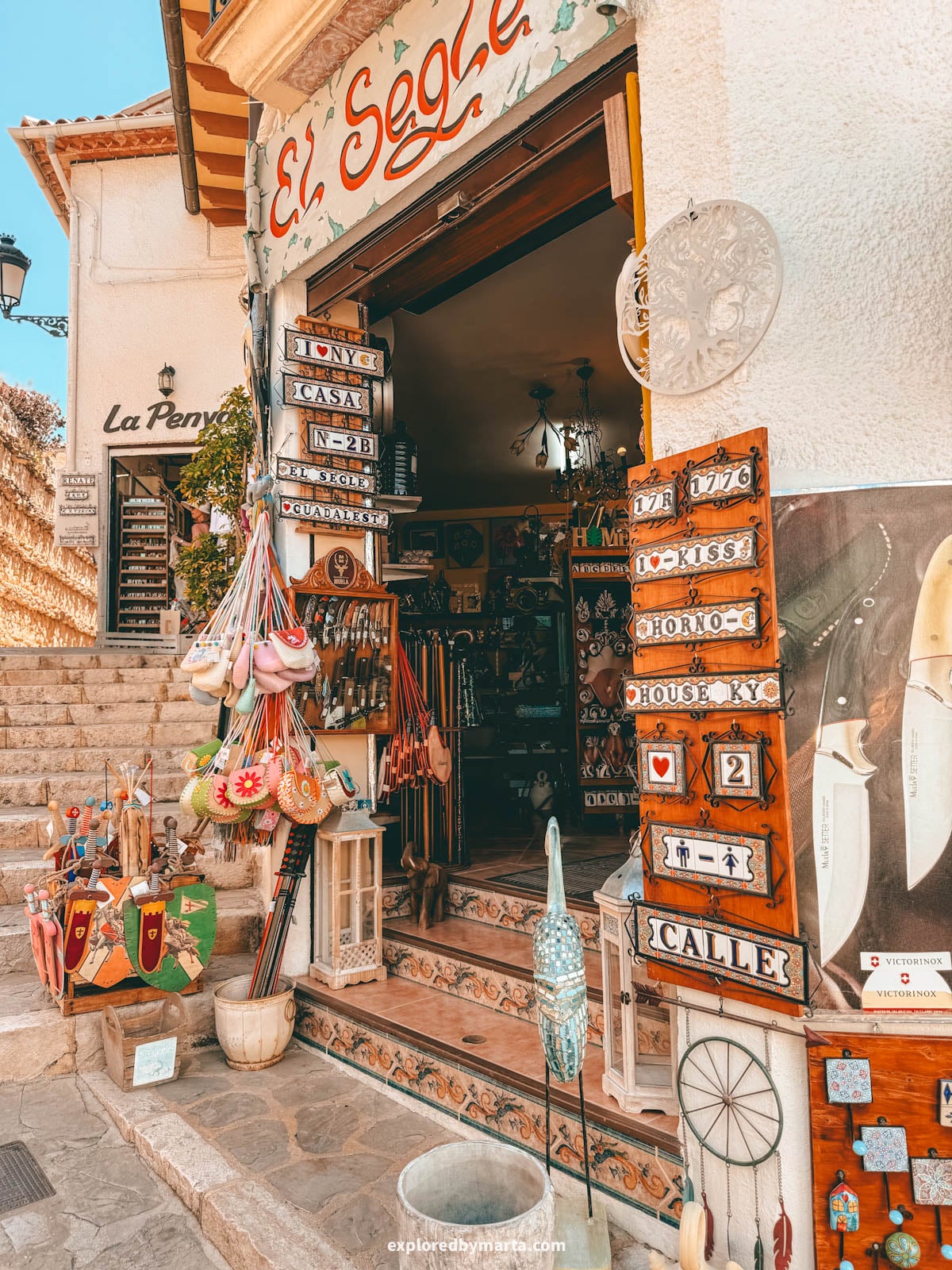
Then up top, around Plaza de San Gregorio, you’ll find even more. We spotted the local products, things like honey, liqueurs, oils, jams, turrón, and ceramics, alongside all the usual souvenirs.
And the cute stuff is everywhere. Colorful metal wall art, painted ceramics, woven baskets, hand-painted tiles, little gifts. We kept stopping to look – I was especially intrigued by the painted ceramics, but couldn’t find the one I liked.
So even if shopping isn’t usually your thing, you’ll end up window-shopping here anyway. It’s part of the Guadalest experience, and a good chance to pick up a local treat or a little souvenir to take home.
11. Sit down for tapas with a view
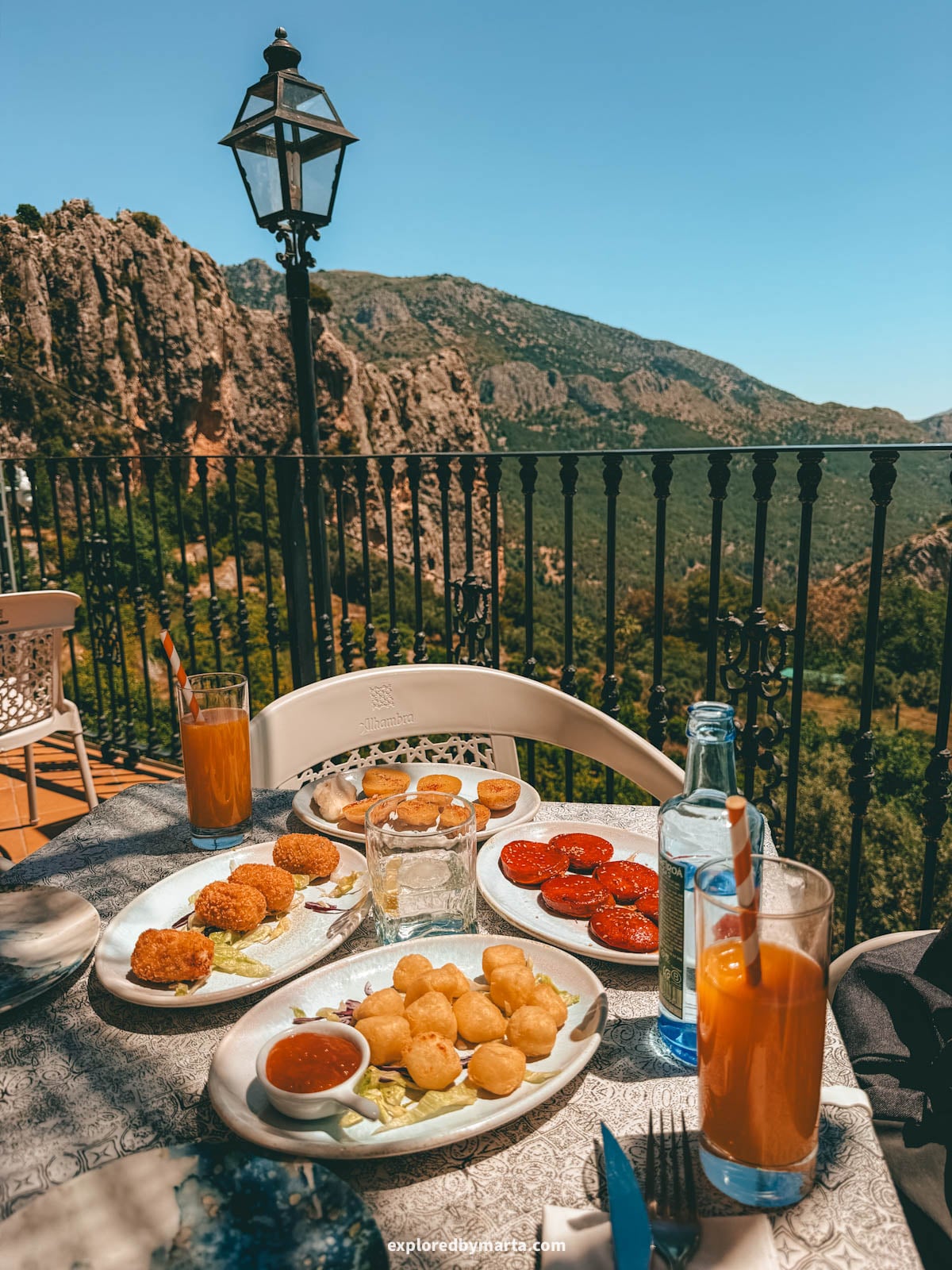
After a few hours of walking around Guadalest, climbing up to the castle, and getting lost in mini-museums, sitting down for tapas felt like the perfect way to end our visit.
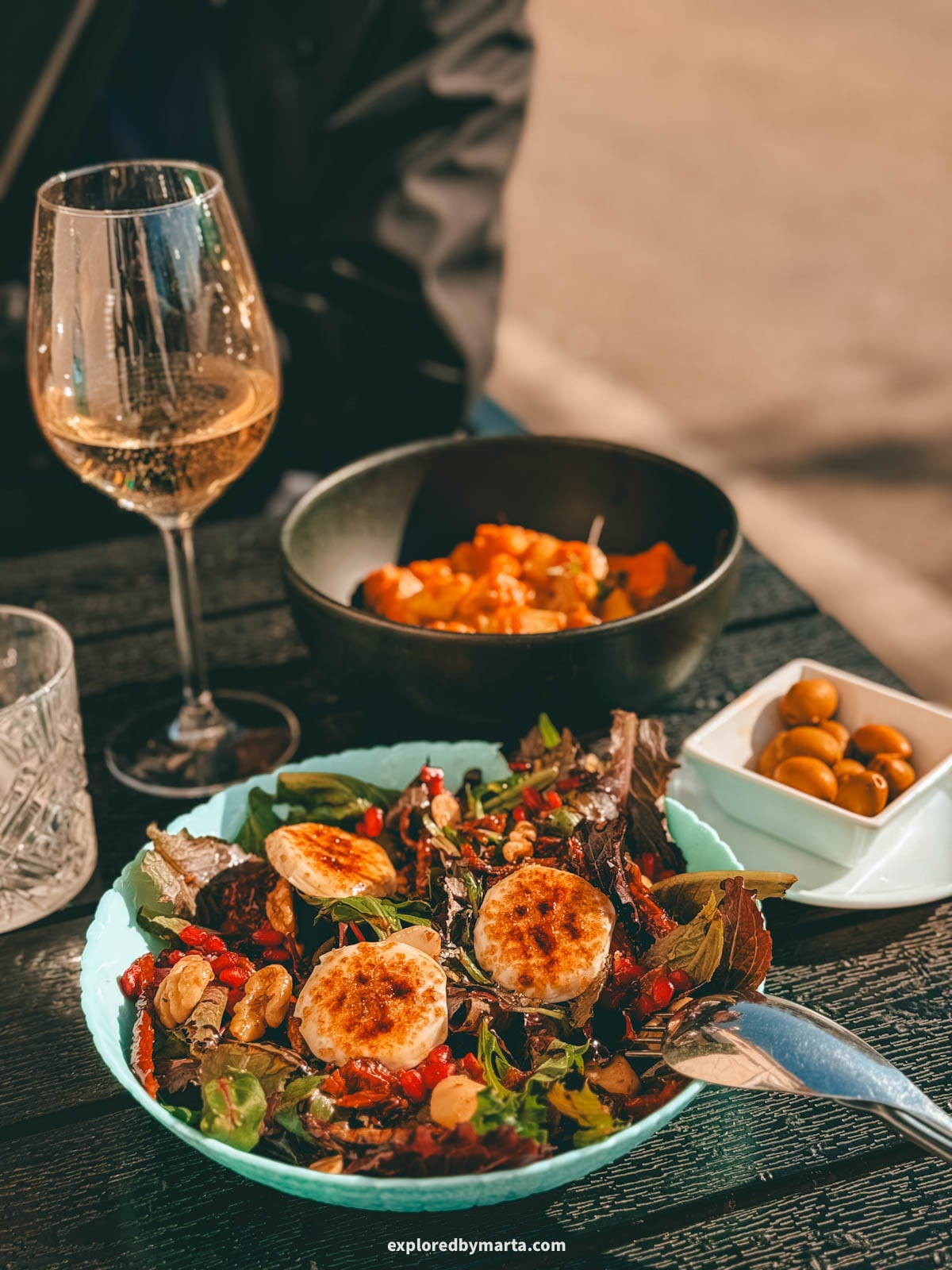
The good news is, there’s no shortage of tapas spots in the village. We tried two different ones on different visits, and I genuinely can’t pick a favorite, they’re great for different reasons!
Gastro-Bar Tapetece is the one I’d pick for the food. We ordered a glass of local wine and a few of their gourmet tapas (cheese, salad, croquettes, patatas bravas), and everything was fantastic. The dishes feel like classic tapas with a little twist, so if you want something a bit more elevated than the usual, this is the place to come.
Restaurante L’Hort, on the other hand, is the one I’d pick for the views. The food here is more traditional Mediterranean (classic tapas, fish and meat mains, desserts), and we shared a selection of tapas: sobrasada, grilled cheese, patatas with aioli, and croquettes. All really tasty.

But the most special thing about L’Hort is that it sits right next to the hillside, with sweeping views over the surrounding mountains and valleys. On a clear day, you can actually see all the way to the Mediterranean in the distance!
Sitting there with a drink, sharing tapas, looking out into the distance after hours of walking around the village… it was such a relaxing way to wrap up the day.
So which one should you pick? Tapetece for the food, L’Hort for the location and views. Or, if you have time and a hungry appetite, do what we did and try both on separate visits!
Location: Gastro-Bar Tapetece – Restaurante L’Hort
12. Hike around the Guadalest reservoir
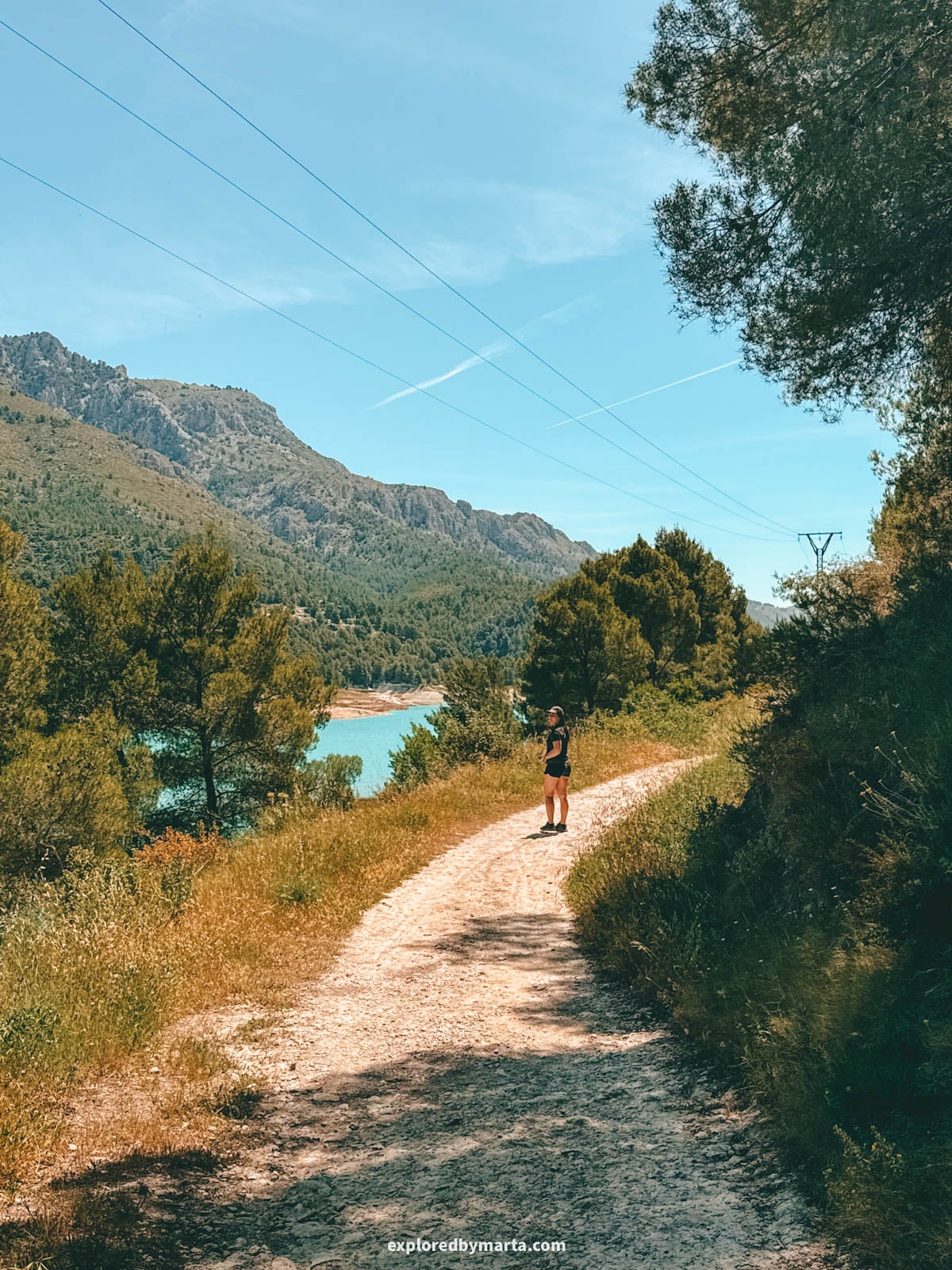
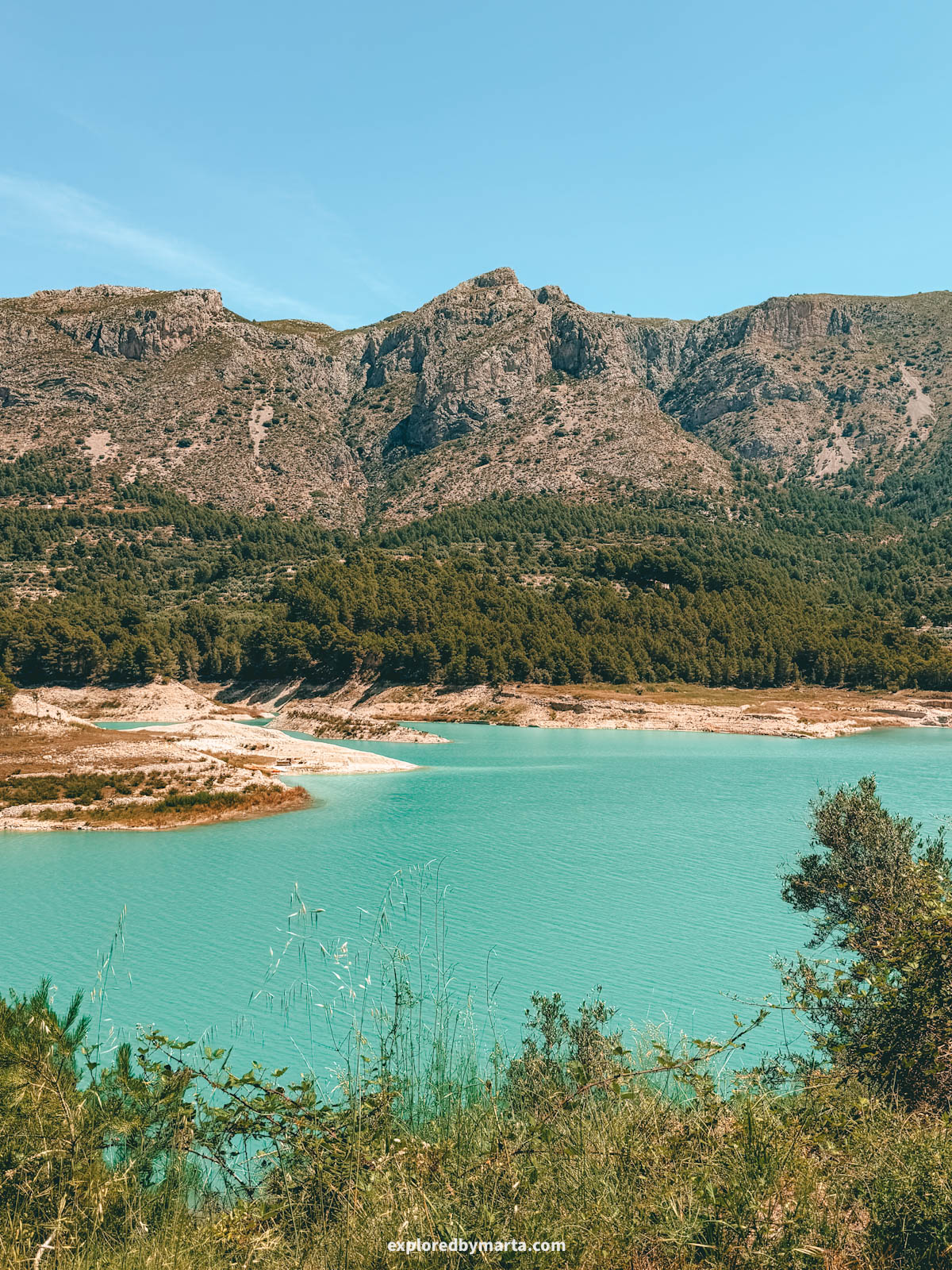
If you have a bit more time, one of my favorite things we did was hike all the way around the Guadalest reservoir. We were staying nearby, so we came back another morning just to do this, and it was truly one of my favorite experiences we had!
We drove down to the reservoir dam, where there’s a free parking lot for about 10 cars. We grabbed one of the last spots, but most people only stop there quickly to see the reservoir, so I’d guess a short wait would free one up if it’s full.
You can also start the hike from the town, but that route would add quite a bit of elevation, so only do it if you’re ready for some uphill!
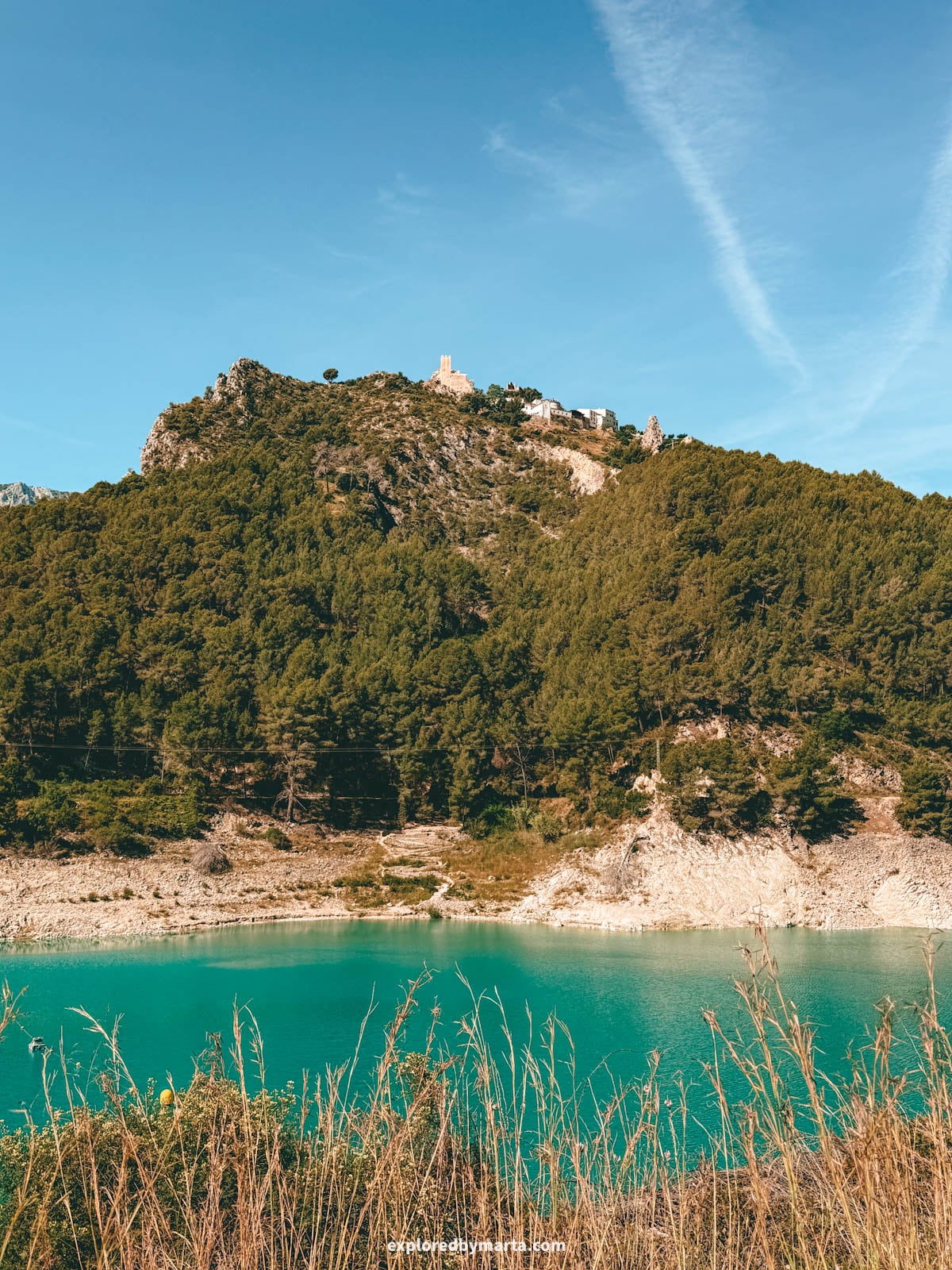
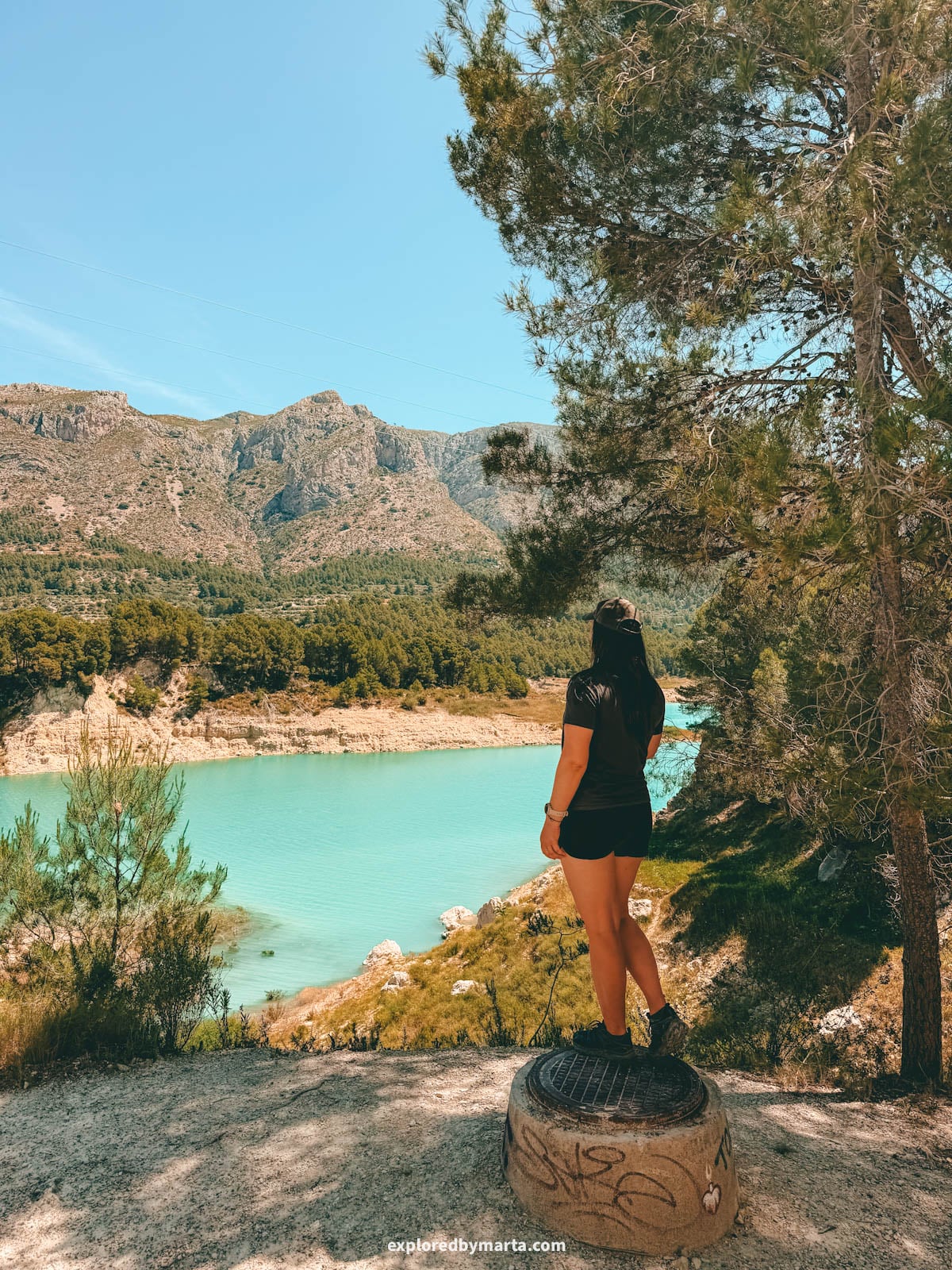
We walked counterclockwise, starting by crossing the dam and then just following the road that loops around the water. It’s very straightforward, you really can’t get lost on this one!
And the views? Amazing the whole way. The bright turquoise water with the Serra de la Xortà mountains all around sometimes made it feel more like an alpine lake than a reservoir in the Costa Blanca hills, haha.
But really, I kept stopping for photos the whole way. Every turn came with another beautiful angle of the village and the reservoir. 😄
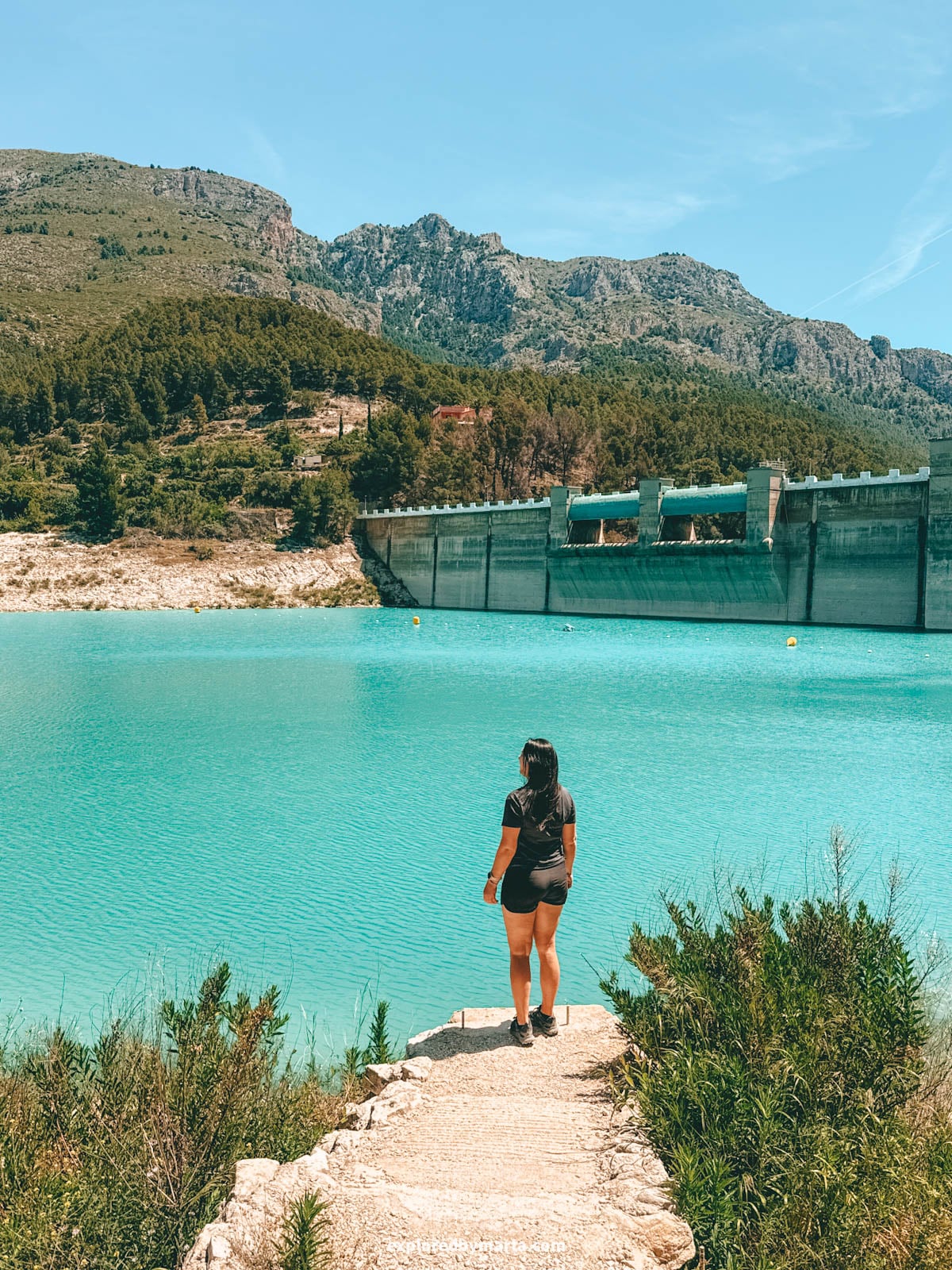
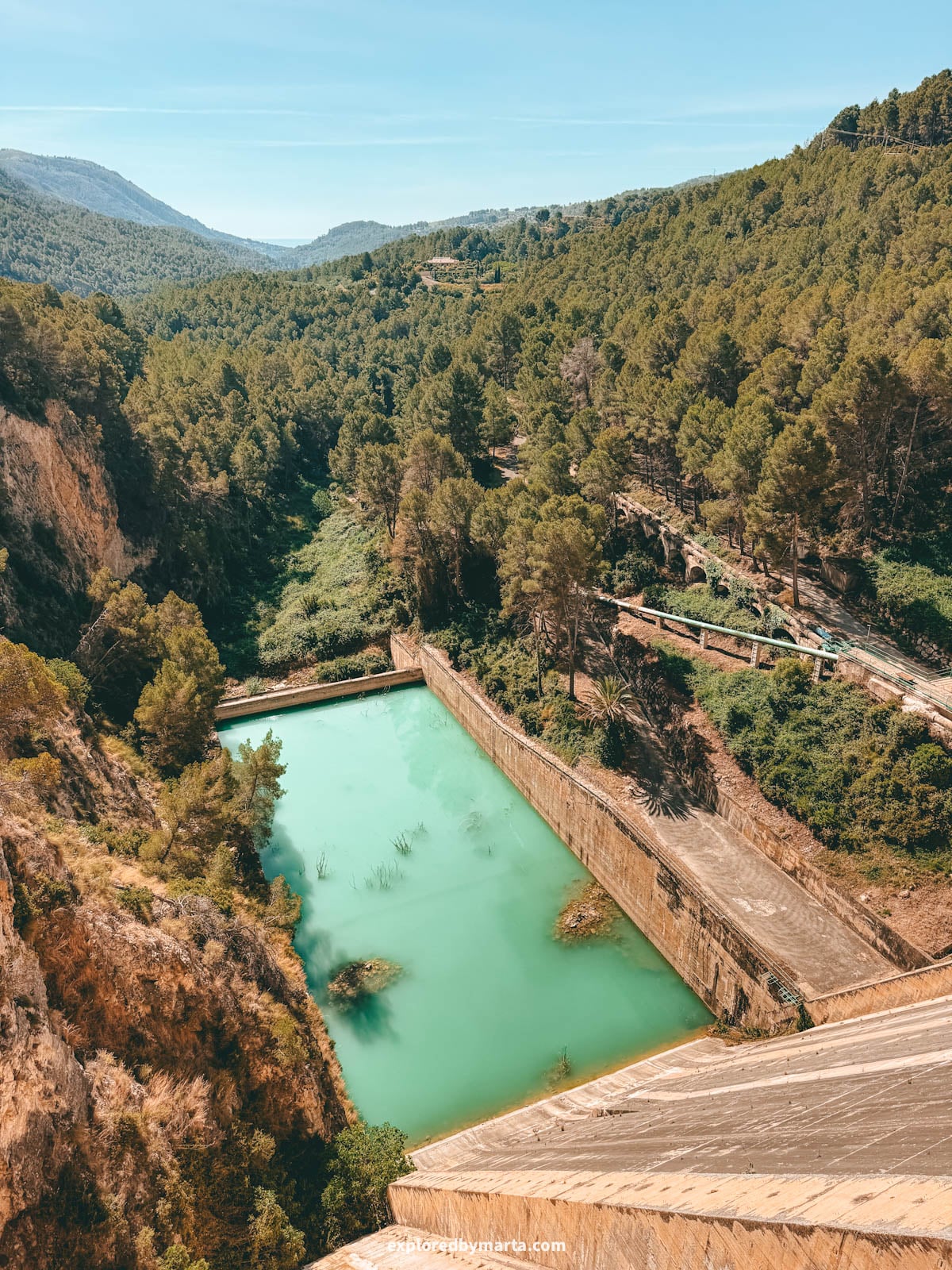
Once we hiked along the whole far side and turned back toward the finish, the road turned into a proper trail, but it was still easy to follow. Nothing technical, just a clear path the whole way around (with one small stream we had to cross!).
The whole loop is about 10 km (6.2 miles) and took us just over 2 hours at a relaxed pace. It’s an easy hike, no steep climbs or tricky sections, so you don’t need to be a serious hiker to enjoy it.
Best of all, it was so quiet. We only saw two other hikers the entire way. So if you love scenic walks and want to see Guadalest from a completely different perspective, this is a great one to add to your day.
Our hiking route around the Guadalest reservoir:
Location: Guadalest reservoir parking
FAQs about visiting Guadalest
Is Guadalest worth visiting?
Yes, Guadalest is absolutely worth visiting! This tiny medieval village sits on a rocky cliff in the mountains of the Costa Blanca, with sweeping views over a turquoise reservoir and a historic upper village reached through a tunnel carved into the rock. It’s one of the most photographed villages in Spain, and after a lot of traveling, this is one of those places that genuinely stood out for me.
How long do you need in Guadalest?
You can experience all the best things to do in Guadalest in about half a day. The village is small and walkable, so 3 to 4 hours is enough to walk up through the rock tunnel, visit the castle and Casa Orduña, see the viewpoints, and stop for tapas. If you also want to explore one or two of the mini-museums, plan for closer to a full day.
How do you get to Guadalest?
Guadalest is in the mountains inland from the Costa Blanca, in the Province of Alicante. The easiest way to get there is by car: it’s about a 1-hour drive from Alicante and around 2 hours from Valencia. You park in the lower part of the village and walk uphill to the historic center.
Why is Guadalest called the Eagle’s Nest?
Guadalest is nicknamed the Eagle’s Nest because of its dramatic location, the medieval village sits on top of a rocky crag high above the valley, almost like a bird’s nest perched on a peak. Once you’re standing up there looking down at the bright blue reservoir below, you completely get why the name stuck.
How much does it cost to visit Guadalest Castle?
Entry to Castillo de San José costs 4 EUR per adult, and this includes access to Casa Orduña, the castle ruins, the cemetery, and all the viewpoints along the route. We thought it was great value for everything you get to see.
Is Guadalest a good day trip from Alicante or Benidorm?
Yes! Guadalest is one of the most popular day trips on the Costa Blanca, and for good reason. It’s about a 1-hour drive from Alicante and only 30 minutes from Benidorm, so it makes an easy and very rewarding half-day or full-day trip if you’re staying on the coast. Many people combine it with a visit to the nearby Algar Waterfalls.
Read more about traveling in the Valencia Region
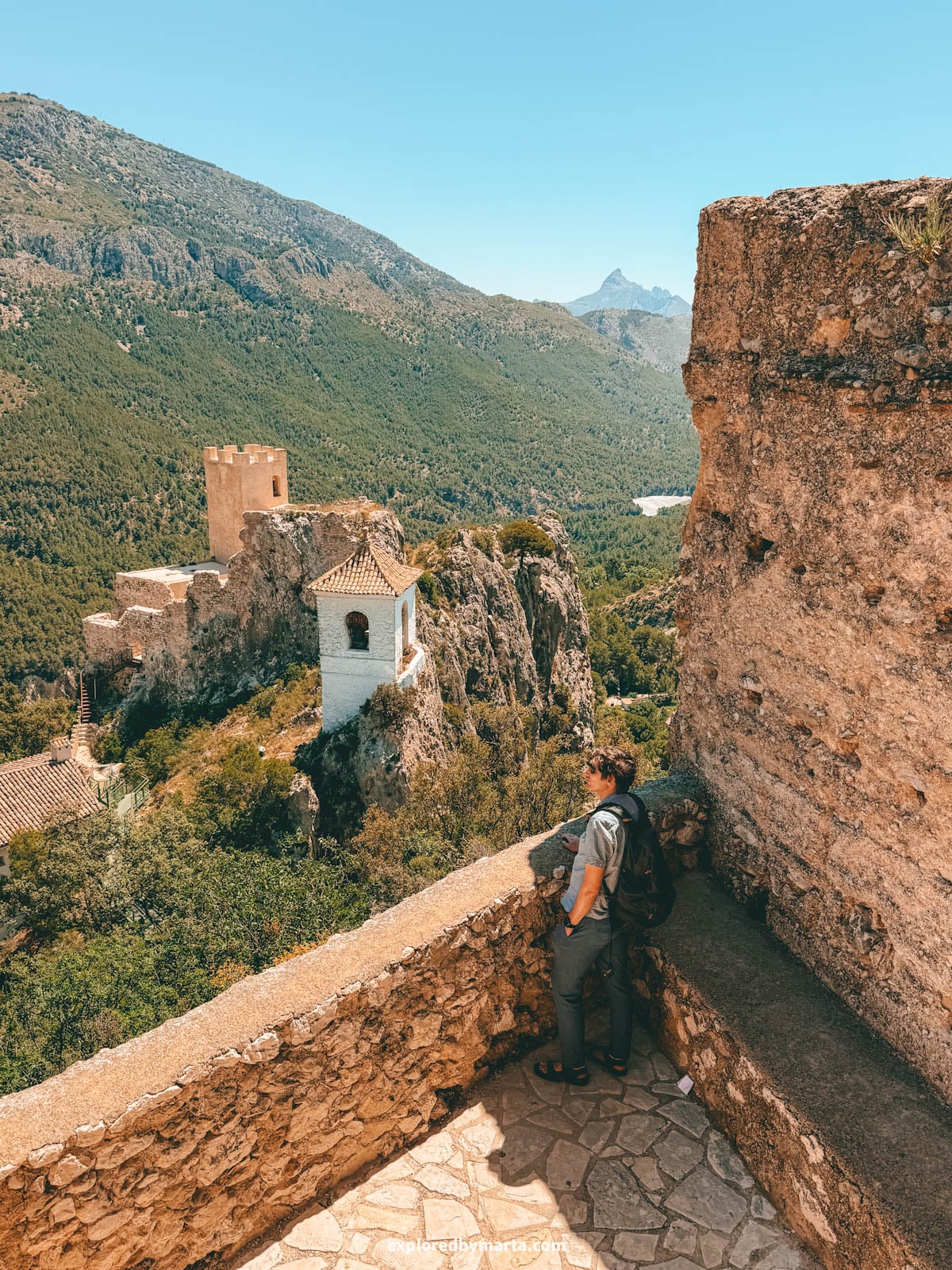
Of all the small villages we’ve visited in Spain, Guadalest is one that genuinely stuck with me. The setting is unreal, the rock tunnel entrance feels like stepping into a different world, and those views over the turquoise reservoir just don’t get old.
Yes, it gets busy with day-trippers, and yes, you can see the highlights in just a few hours. But it’s the kind of place where slowing down really pays off, walking to the quieter corners, sitting with a drink at a viewpoint, and just letting the location do its thing.
I hope this guide helps you plan your visit. If you’re spending time on the Costa Blanca, Guadalest is one of those stops I’d put right at the top of your list.
More travel guides to the Valencia Region:
- 10 best things to do in Xàtiva, Spain: castle, views & food
- Beautiful Bocairent: 10 top things to do in Bocairent, Spain
- Visiting Vilafamés: 10 things to do in Vilafamés, Spain
PIN FOR LATER!