10 best things to do in Xàtiva, Spain: castle, views & food
This post may contain affiliate links. If you use these links to make a purchase or booking, I may earn a small commission at no extra cost to you! Thank you for your support!
Xàtiva is a historic town known for its impressive hilltop castle, grand churches, and long, layered history. With its lively old town, scenic viewpoints, and delicious food, there are plenty of things to do in Xàtiva for a day trip or a longer visit.
And that’s how it happened with us – we came for Xativa Castle and stayed for all the other things this town had to offer. Although you can visit Xàtiva in about half a day, we ended up coming back here three times to enjoy it to the fullest!
In this blog post, I’ll share all the best places to visit in Xàtiva, from the iconic Castell de Xàtiva and Bellveret viewpoint to the Collegiate Basilica, Plaça del Mercat, and historic spots like the Antic Hospital Reial and Almudín, so you can make the most of your visit. Enjoy!
A few things to know about Xàtiva
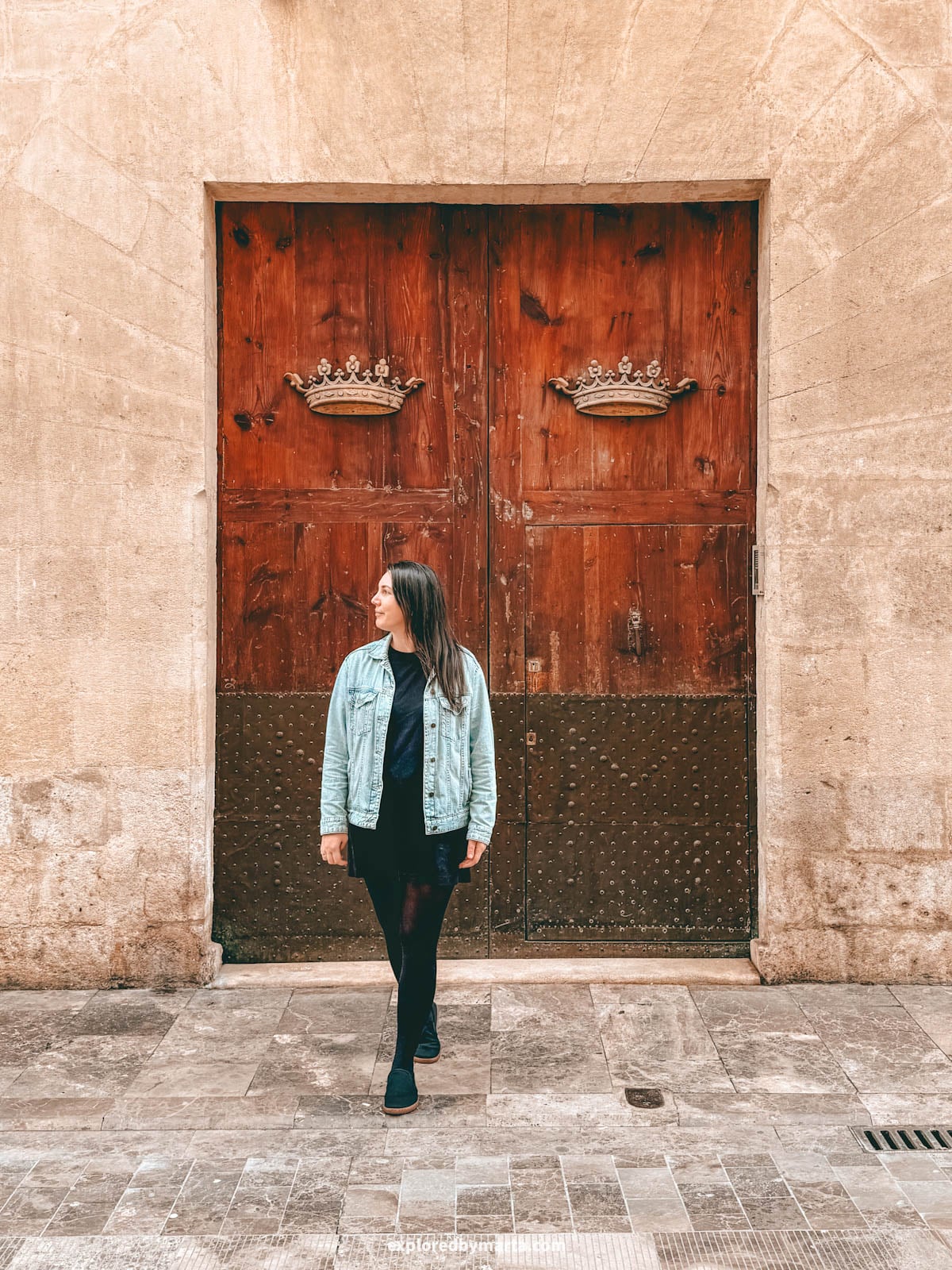
With a population of around 30,000 people, Xàtiva is a town with a surprisingly important past.
It was once one of the most powerful towns in the Kingdom of Valencia and is famously the birthplace of two popes, Calixtus III and Alexander VI, who ruled during the 15th and 16th centuries. Both members of the well-known House of Borgia (Casa de Borja).
Xàtiva has roots going back to Roman times, and later became a key Muslim settlement before being conquered during the Reconquista.
One of the most dramatic moments in Xativa’s history came after the War of the Spanish Succession, when the town was burned down by order of King Philip V.
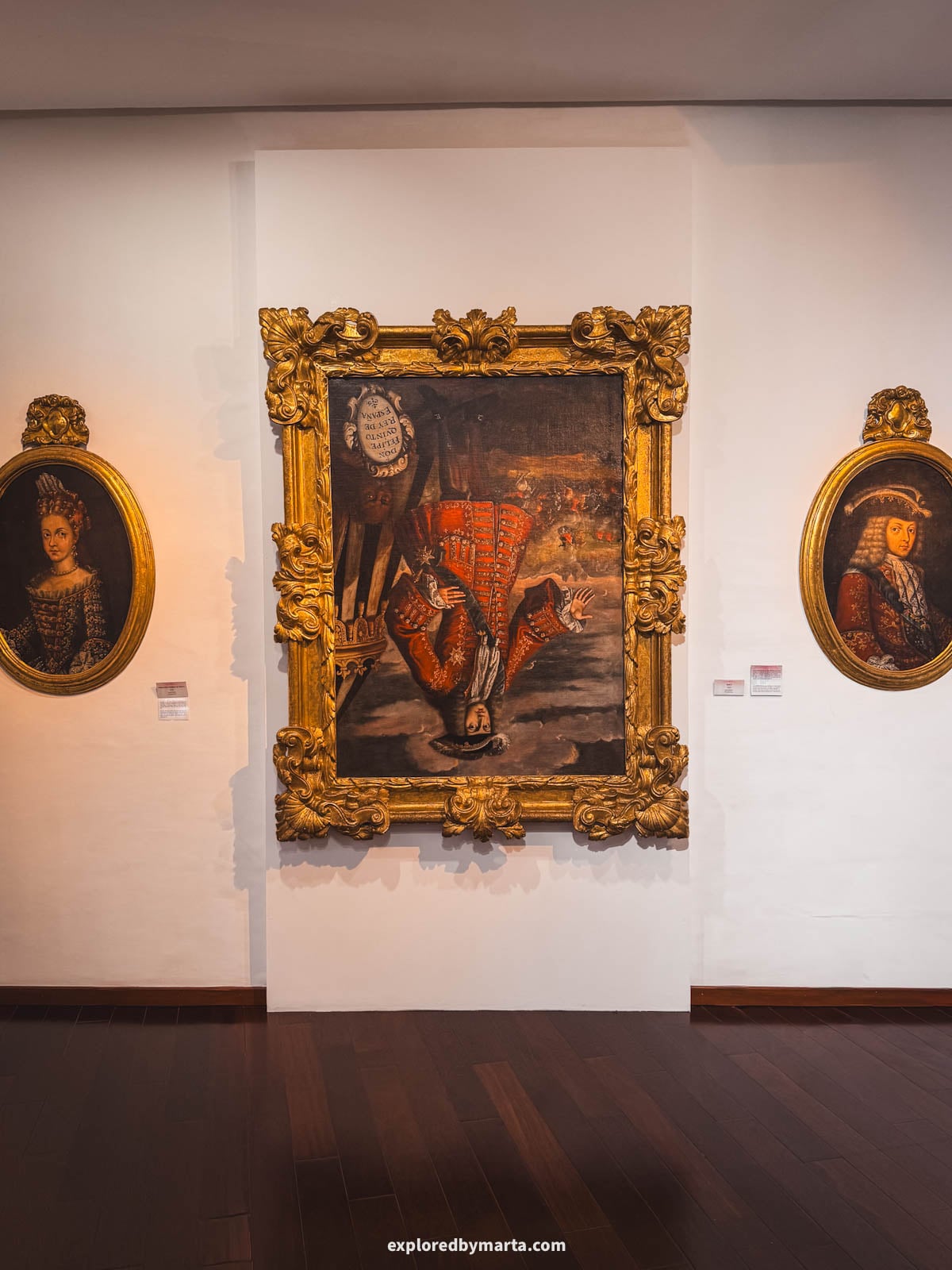
This fact is remembered to this day, and that’s why King Philip V’s portrait is hanging upside down at Xativa’s Museum of Fine Arts (you can visit for free by showing the entrance ticket to the castle).
The most famous landmarks in Xativa include its castle, which stretches along a long ridge above the town, as well as the impressive Collegiate Basilica of Xàtiva, often called “La Seu,” a massive church that dominates the old town.
So, what are the best things to do in Xàtiva?
1. Explore the iconic Castell de Xàtiva
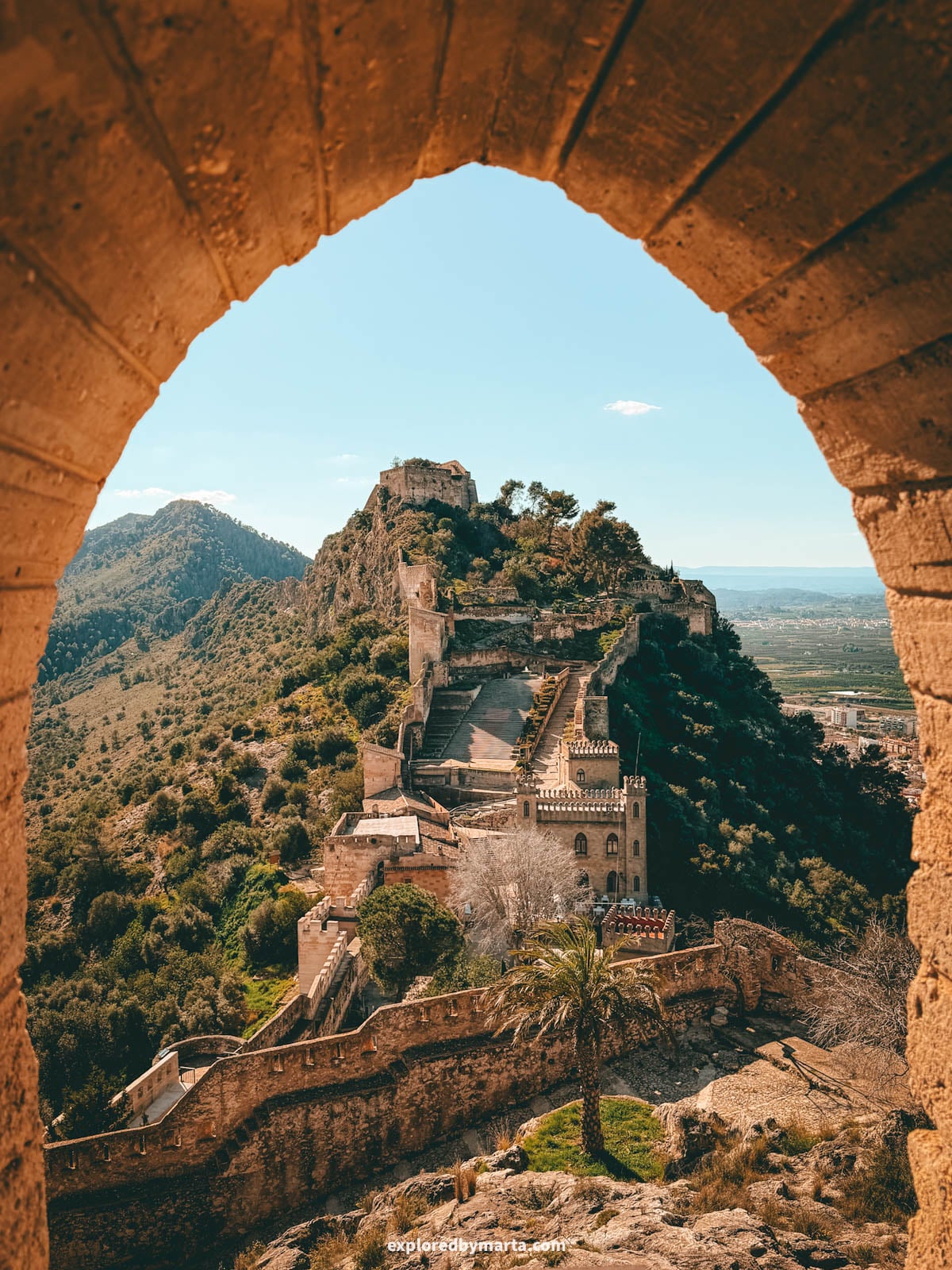
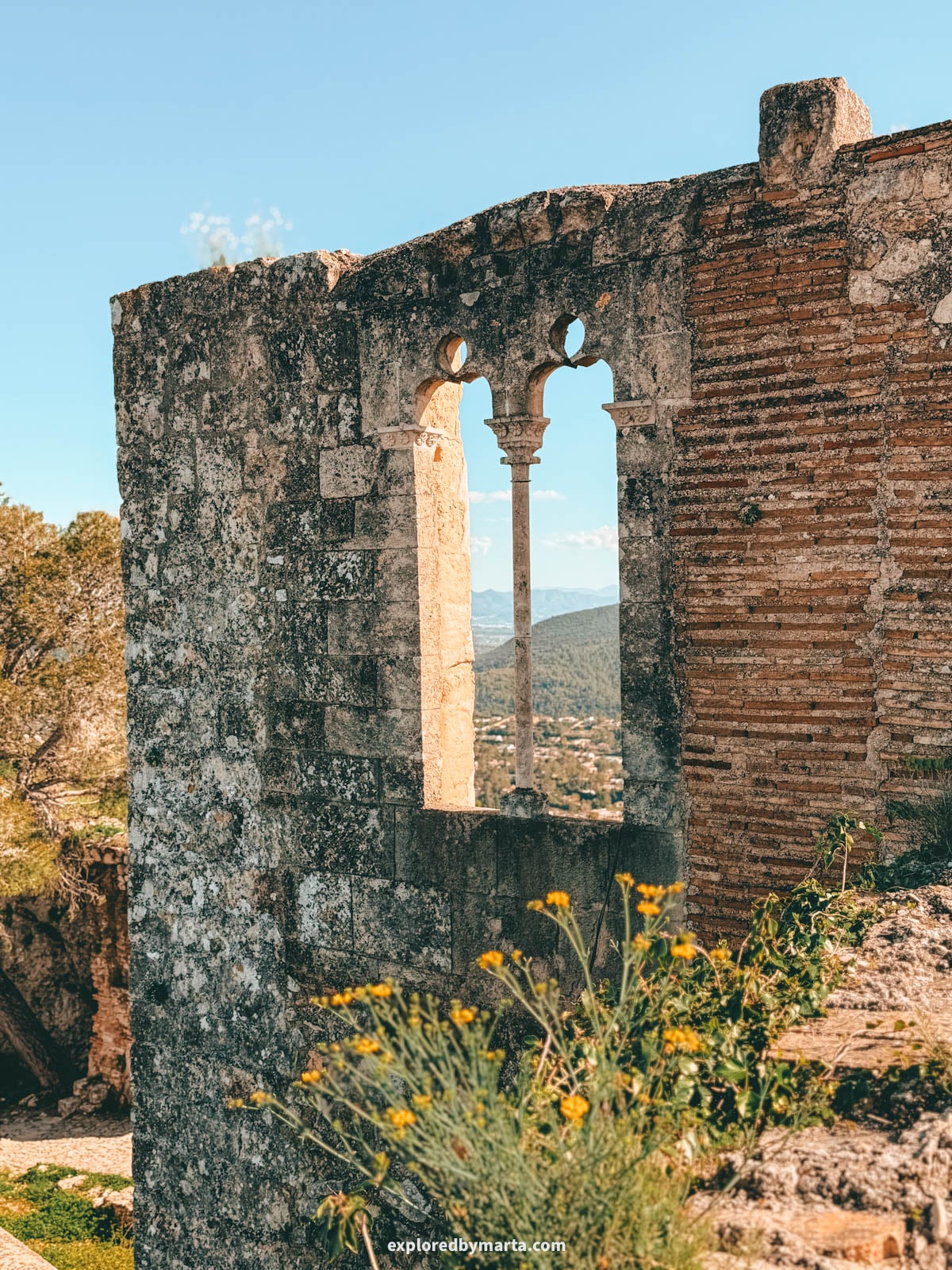
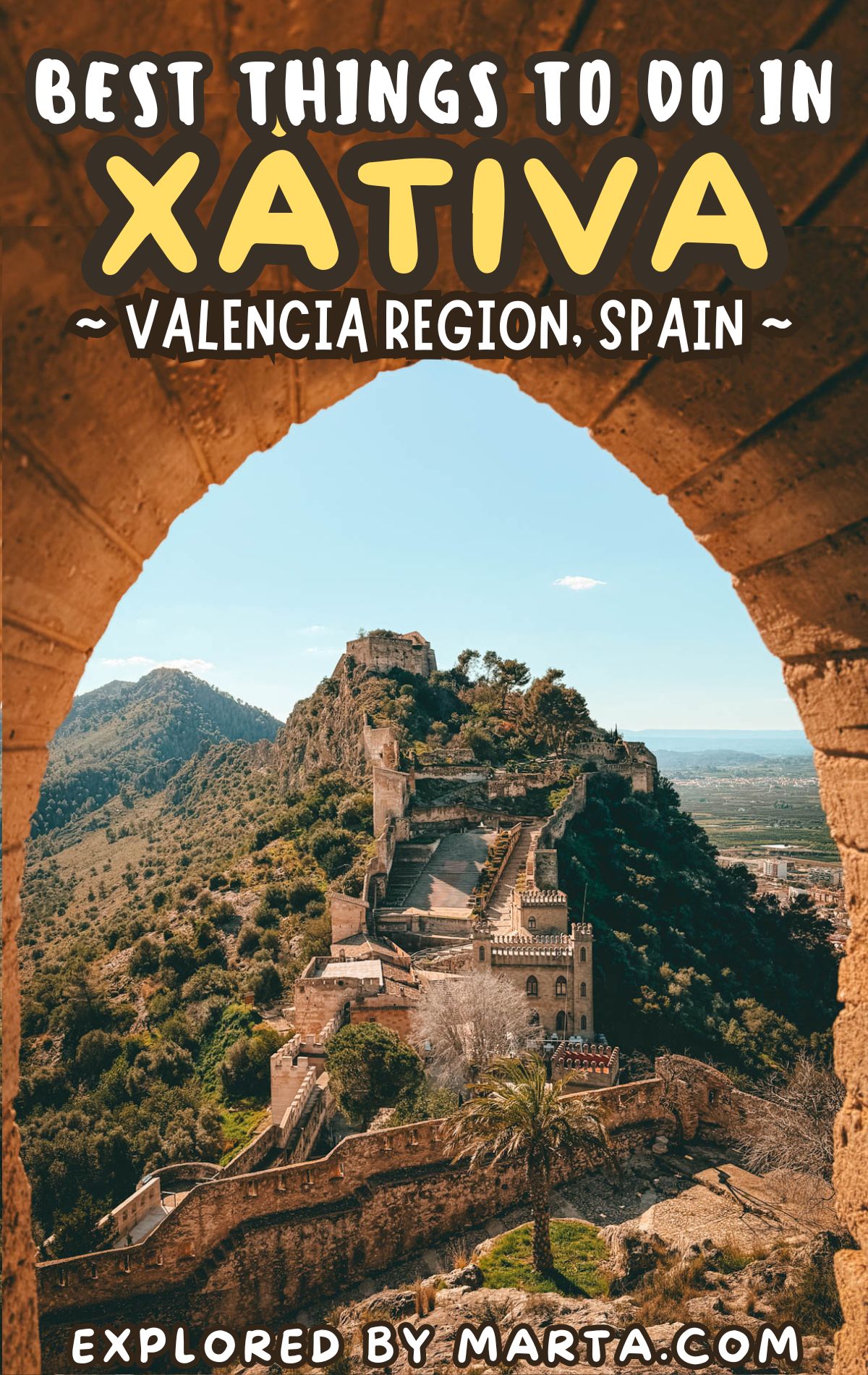
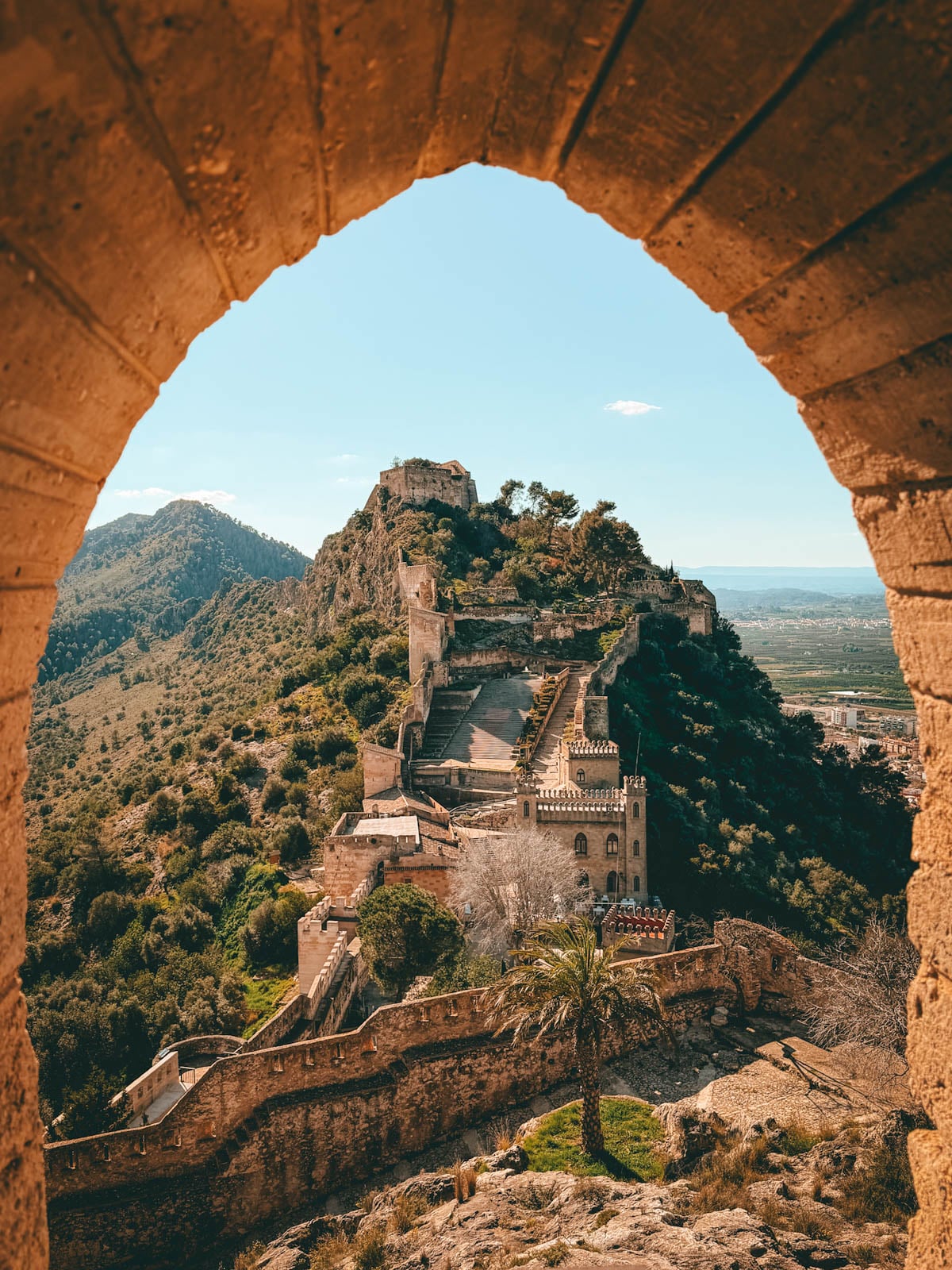
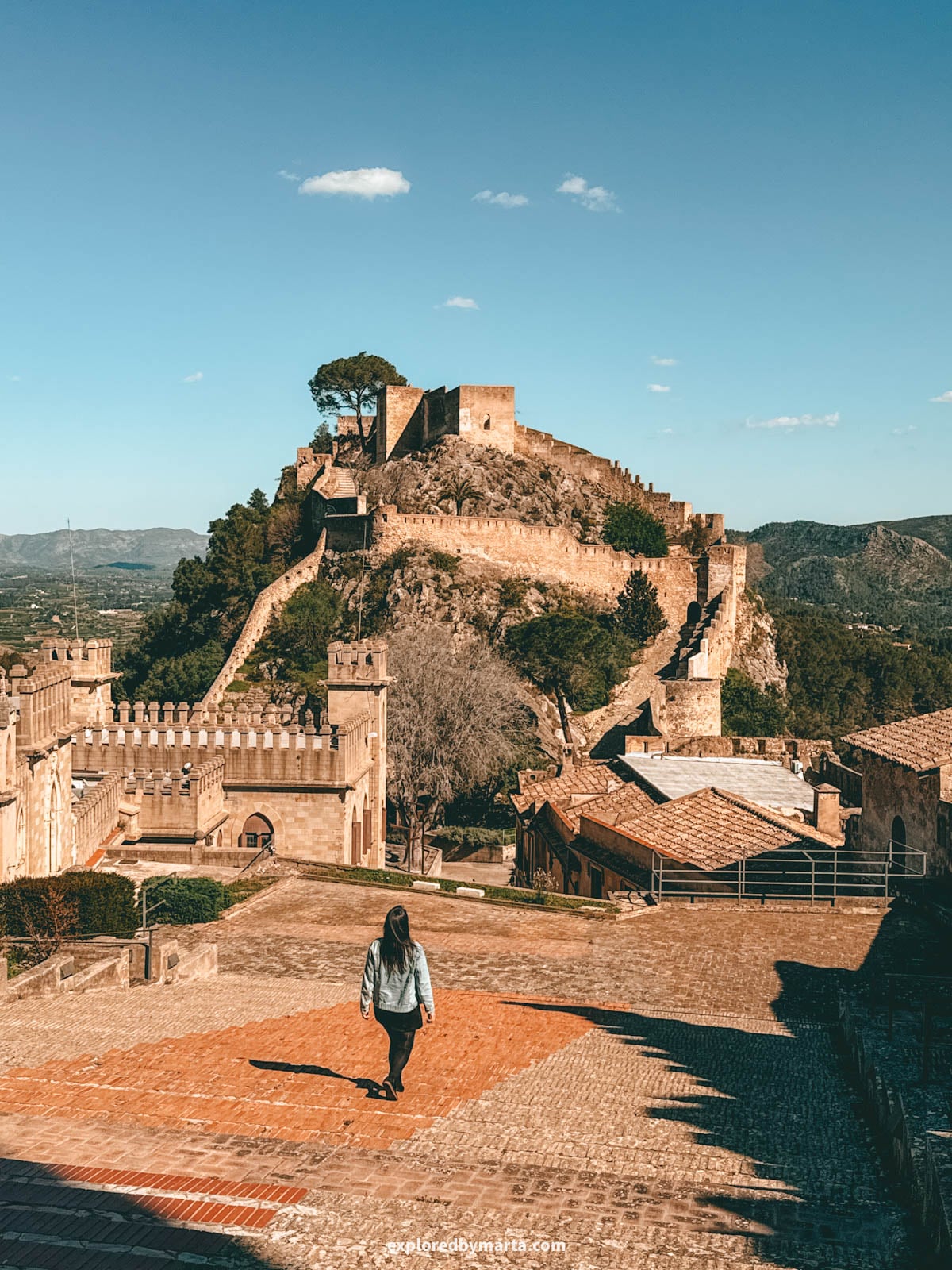
The Castell de Xàtiva is the main landmark in the town, sitting on a long mountain ridge above Xàtiva with views across the surrounding area.
There are actually two parts to the castle: Castell Menor and Castell Major, and together they form one of the most important castles you will find in the Valencia Region.
The origins of Xativa Castle go all the way back to prehistoric times before our era. Later, the Moors expanded it heavily during the Islamic period in Spain (between the 11th and 13th centuries).
Every history buff will love this place!
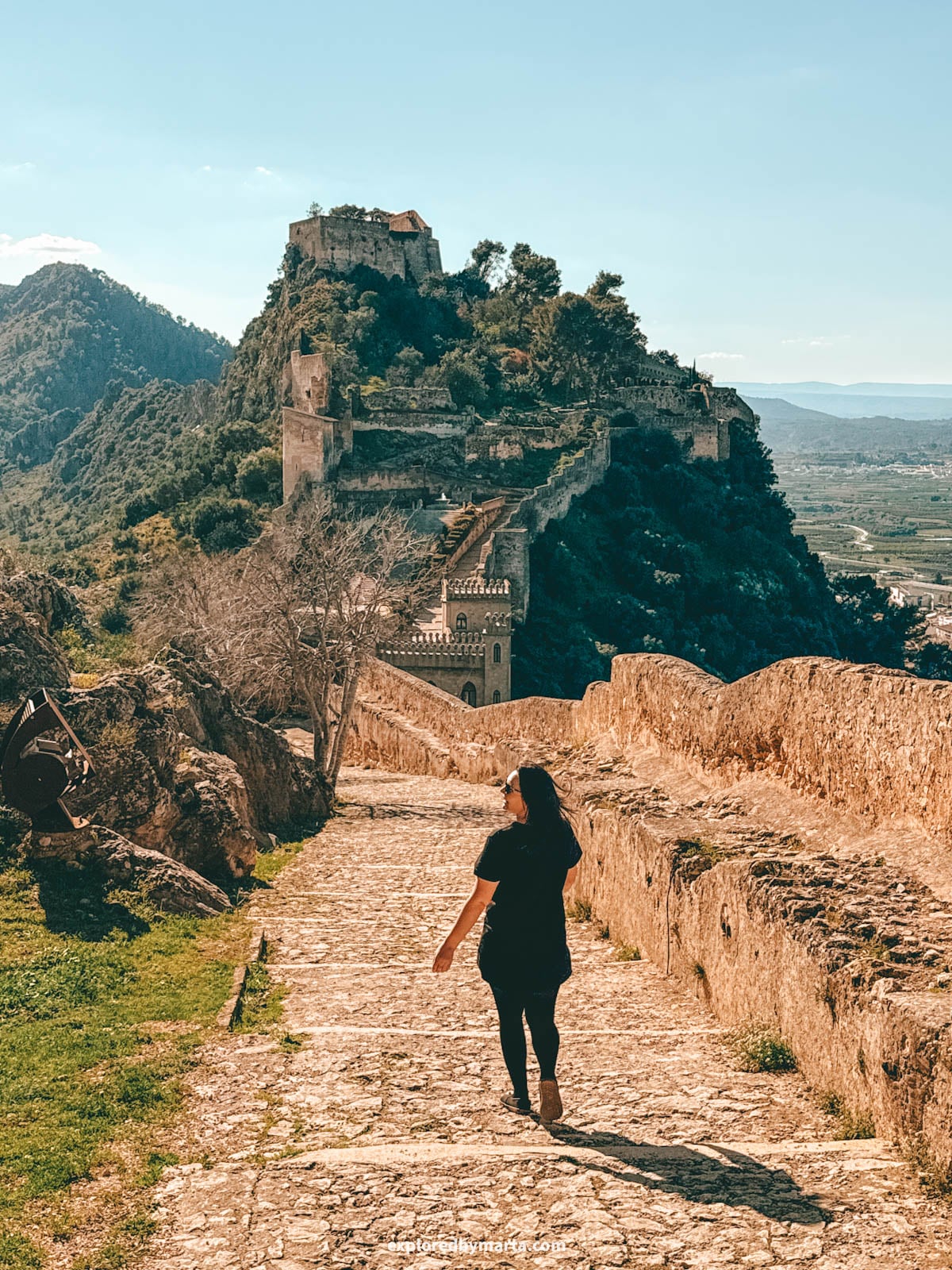
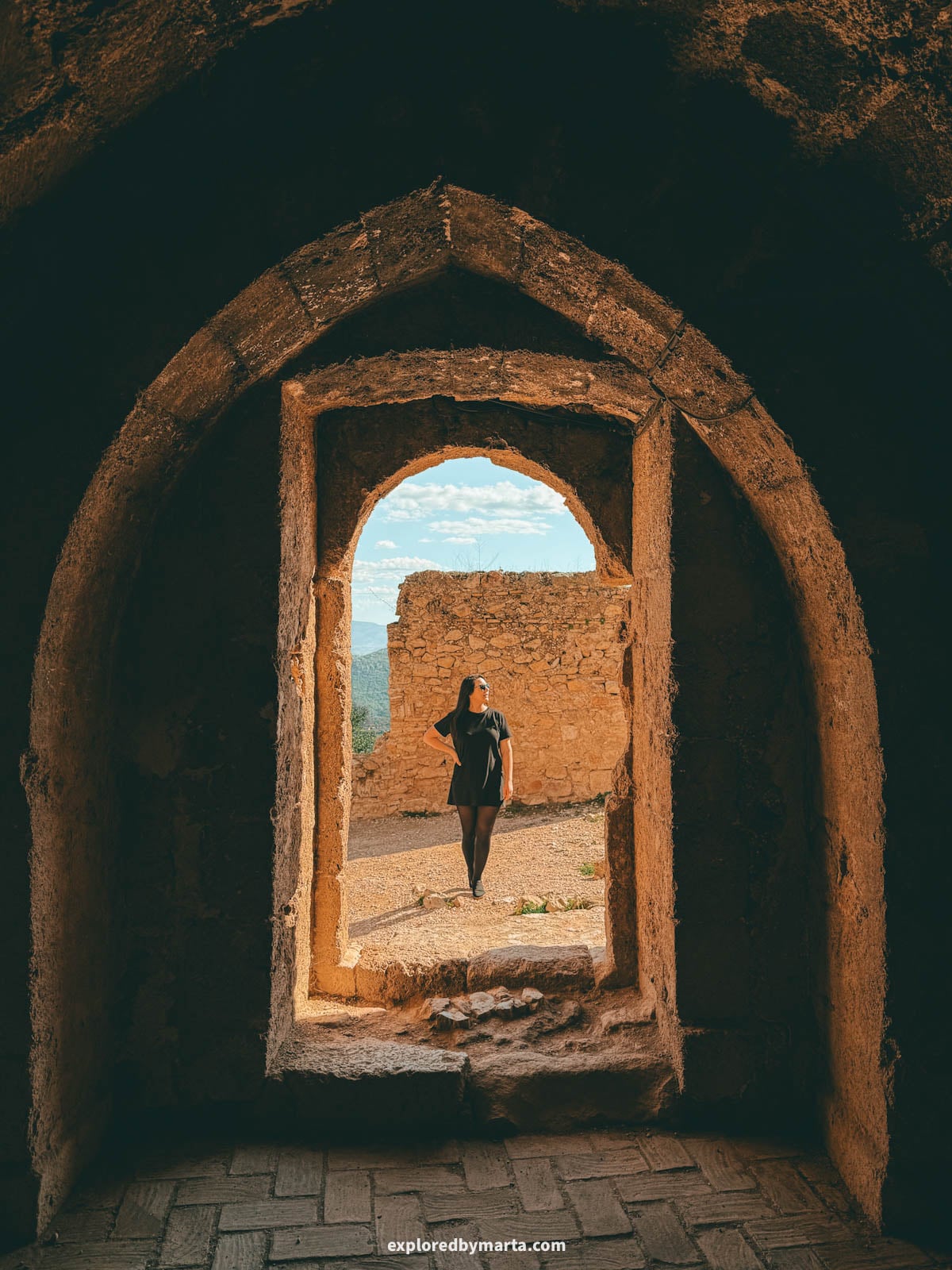
This massive fortress also played an important role during the War of the Spanish Succession in the 18th century, when Xàtiva was burned down to the ground.
You can reach the castle in different ways.
There is a winding road that goes almost all the way up, where you can park your car near the castle entrance, and there’s also a charming tourist train that runs to the castle from the tourist office in the old town.
We decided to hike up on foot after a hearty lunch, mostly because we wanted to burn off all the calories we ate, haha! The hike took us about 25 minutes from the centre.
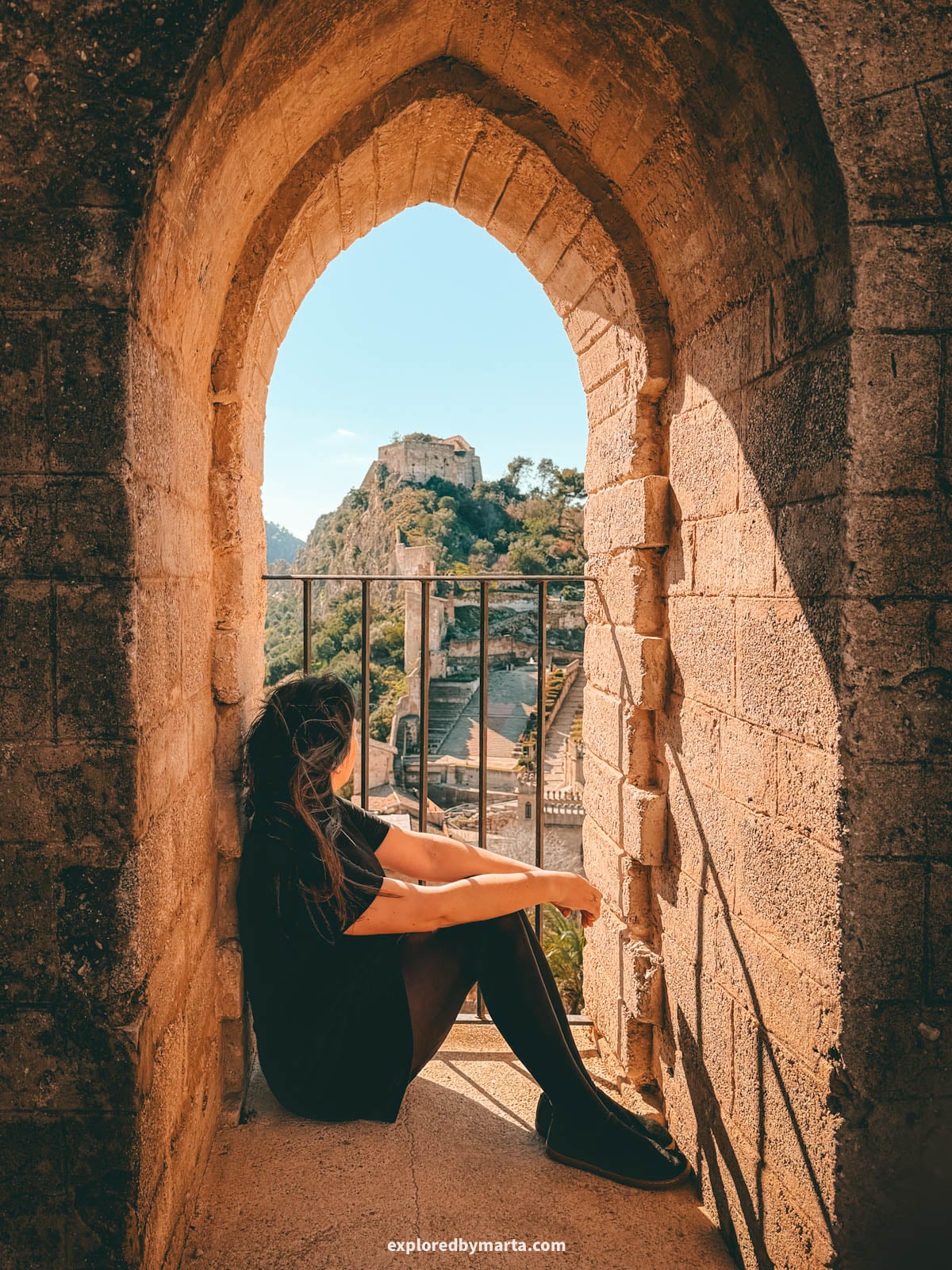
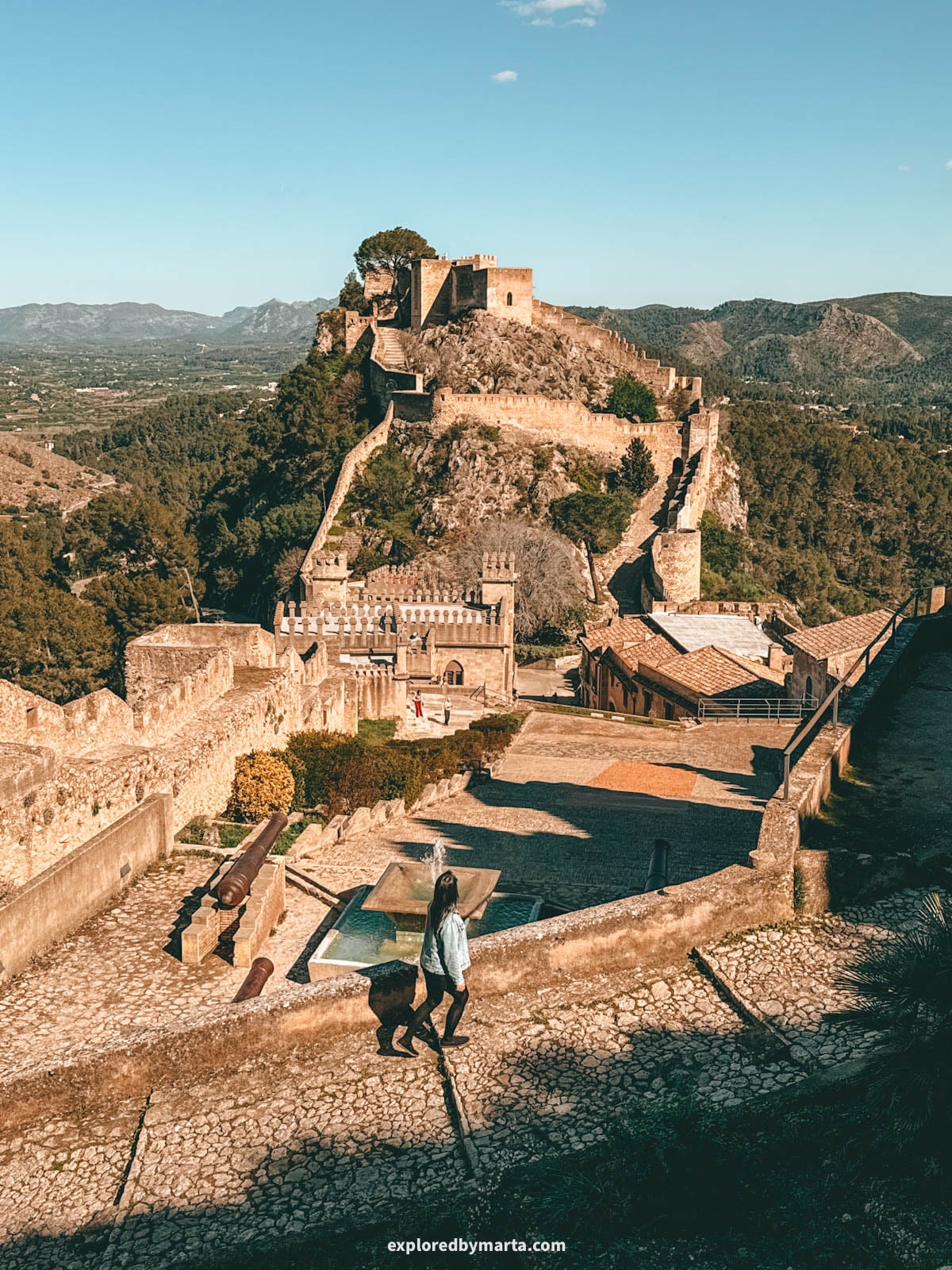
Inside, you can walk through both the upper and lower parts of the castle, along the old walls and pathways. It’s quite a big complex, so it’s worth giving yourself time to explore properly. I’d say you need at least 1.5 hours to explore everything.
We bought tickets on site, as we visited during the off-season, but you can also get them online on the Xàtiva Turismo website, if you want to skip queues in busy months.
My favorite part of the whole visit was the views from the top. You can see the whole town of Xàtiva below you, plus the surrounding hills and farmland.
It is the coolest castle and the kind of place where you just stop for a while and take it all in!
Location: Castell de Xàtiva
2. Enjoy views from Bellveret Viewpoint
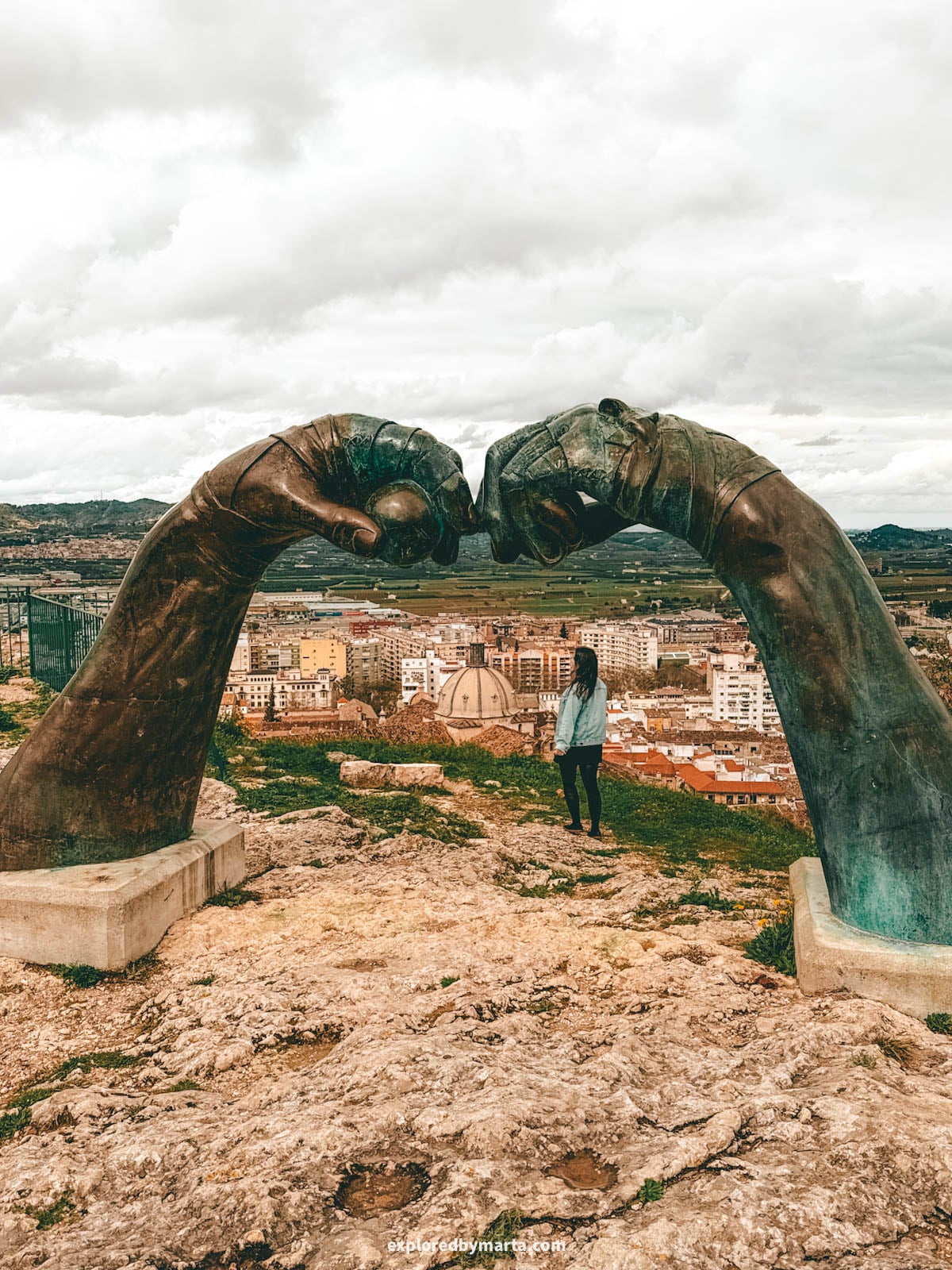
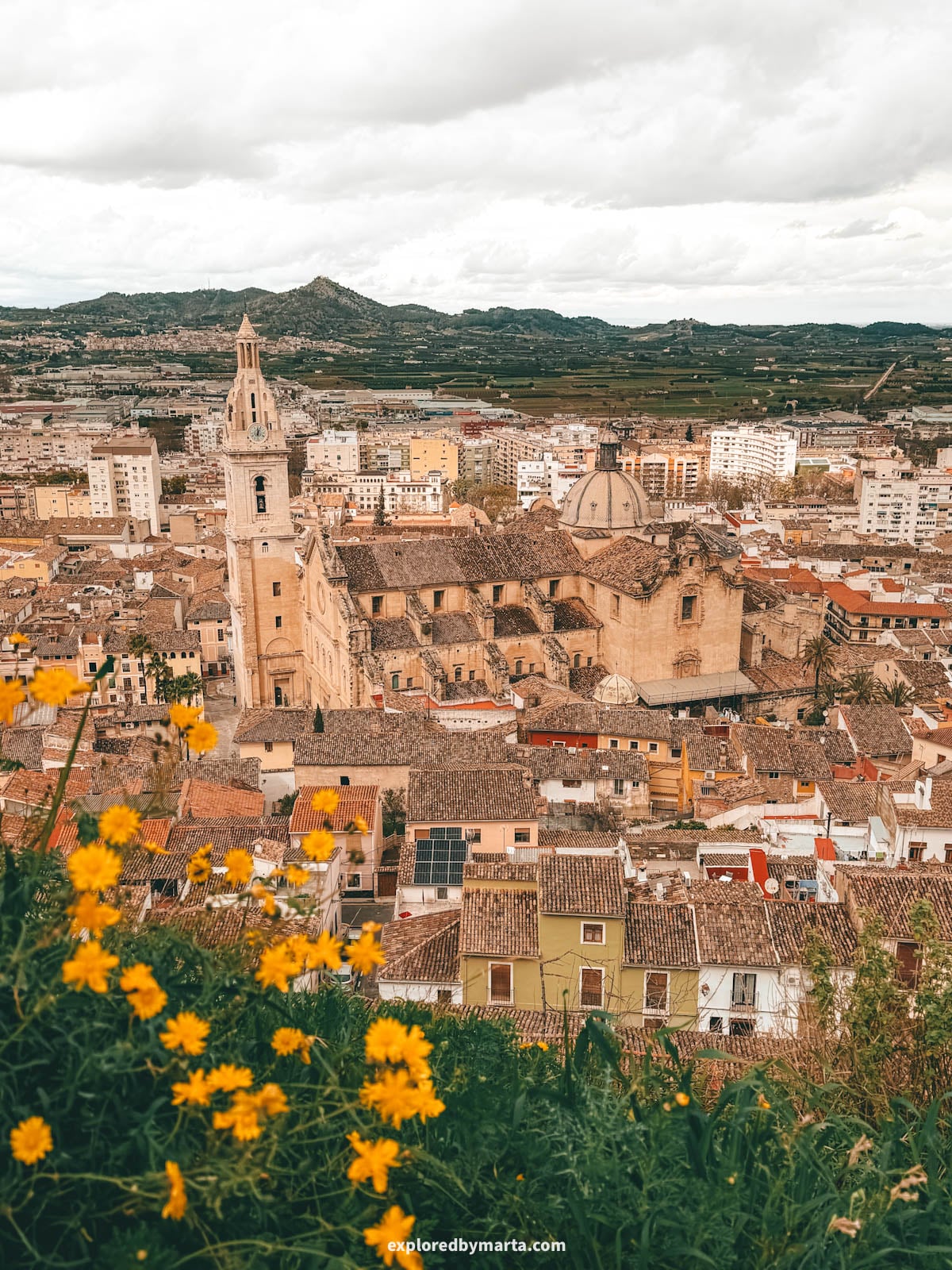
If you decide to walk back down from Castell de Xàtiva instead of taking the car or train, make sure to stop at Bellveret Viewpoint or Vistes de Sant Josep viewpoint (both are nearby).
These are some of the best viewpoints to see Xàtiva from above! There are a couple of benches to sit down and relax, as well as a monument of two arms together forming an arch.
From here, you get a clear view over the historic centre of Xàtiva, with its rooftops, narrow streets, and the impressive Collegiate Basilica of Xàtiva standing out right in the middle.
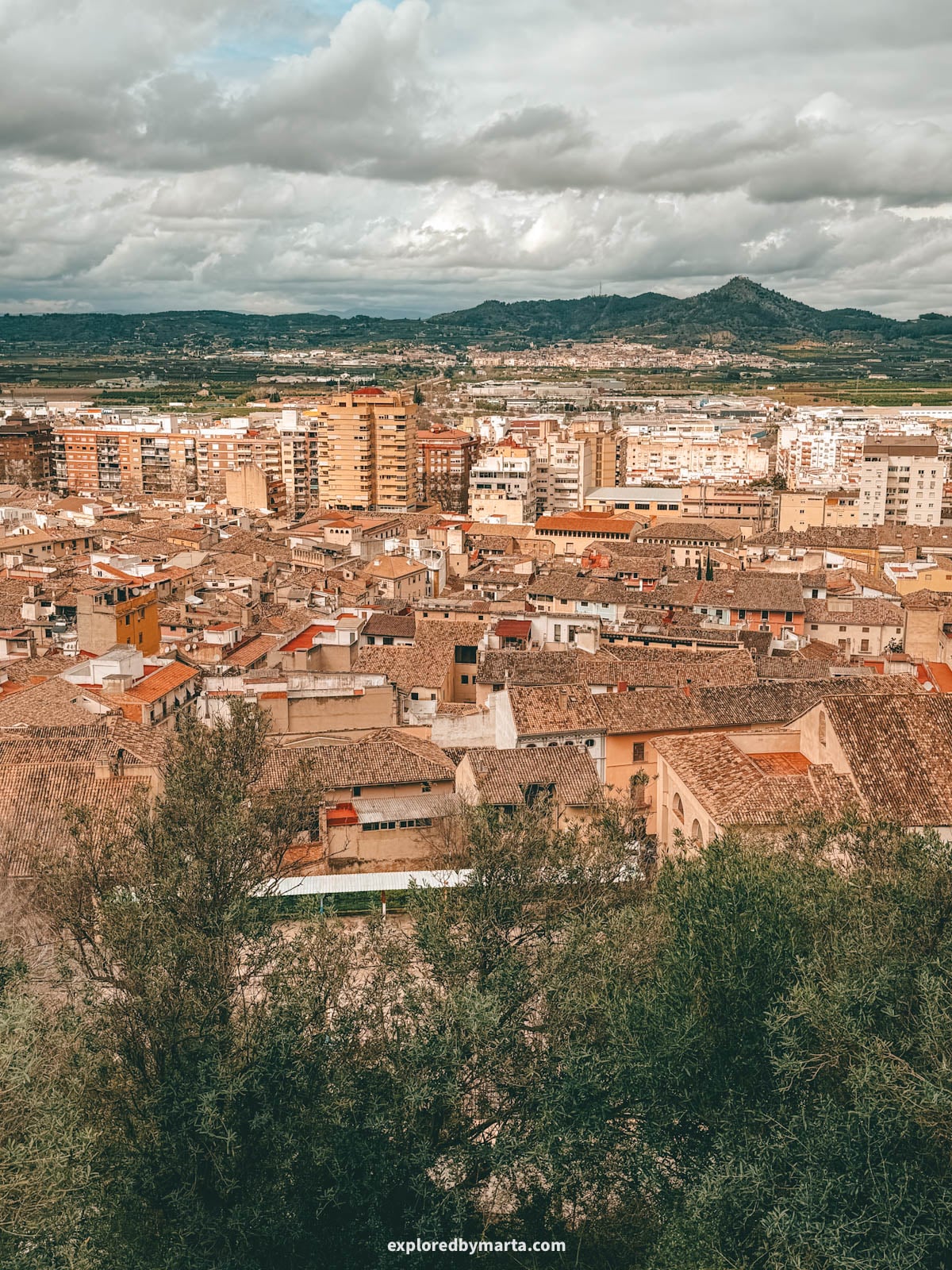
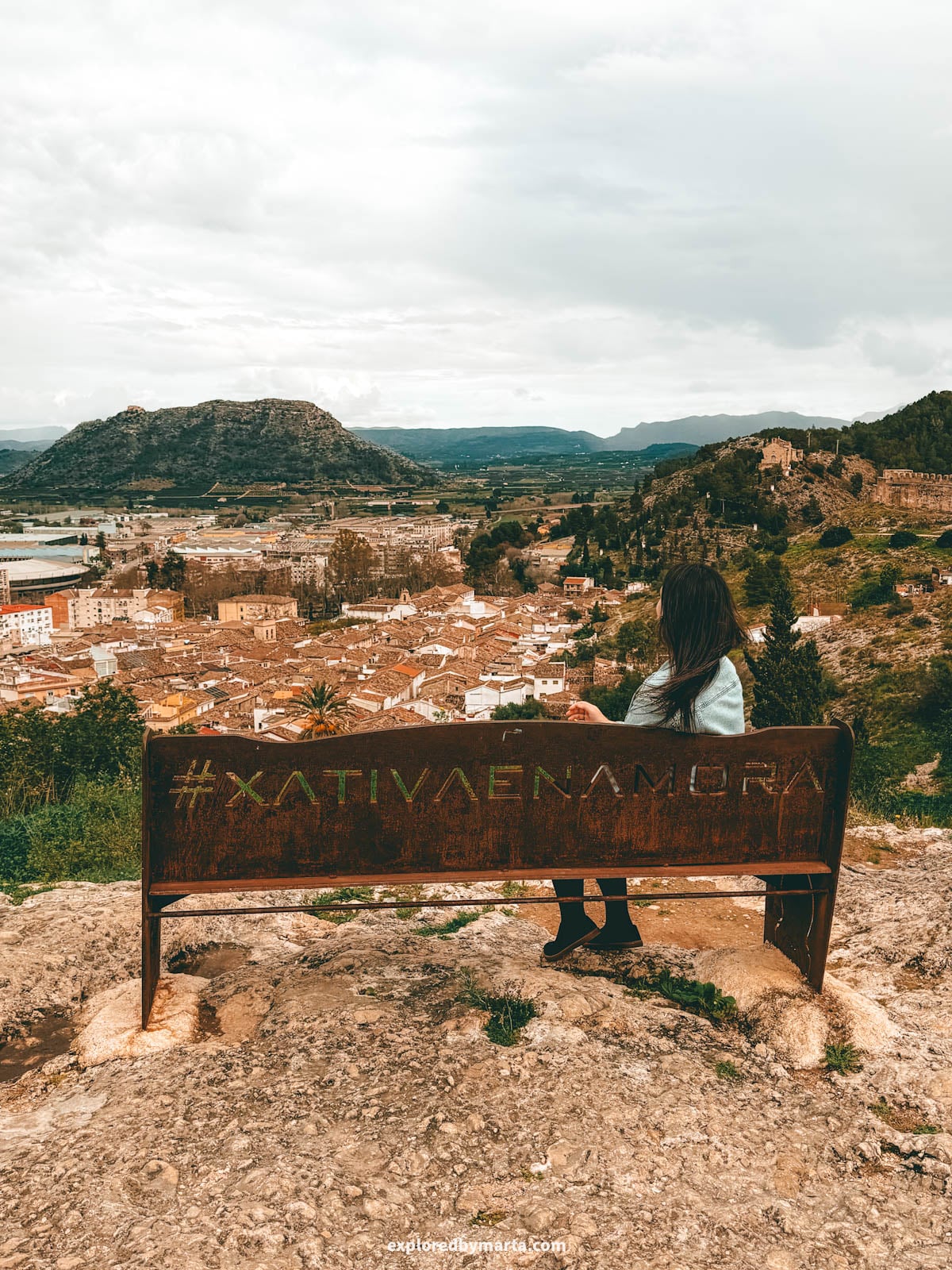
It’s a simple stop, but I love seeing places from above, and the castle views were a bit too far from the old town, and it was difficult to see all the tiny buildings down below. This spot is much better for that!
The viewpoint is also one of the most photogenic spots in Xàtiva. If you’re walking down from the castle, it’s worth stopping here for a few minutes before continuing into the old streets below.
I can also imagine this to be a wonderful spot for sunset views over Xàtiva!
Location: Bellveret – Vistes de Sant Josep
3. Stop for a drink & snacks at Plaça del Mercat
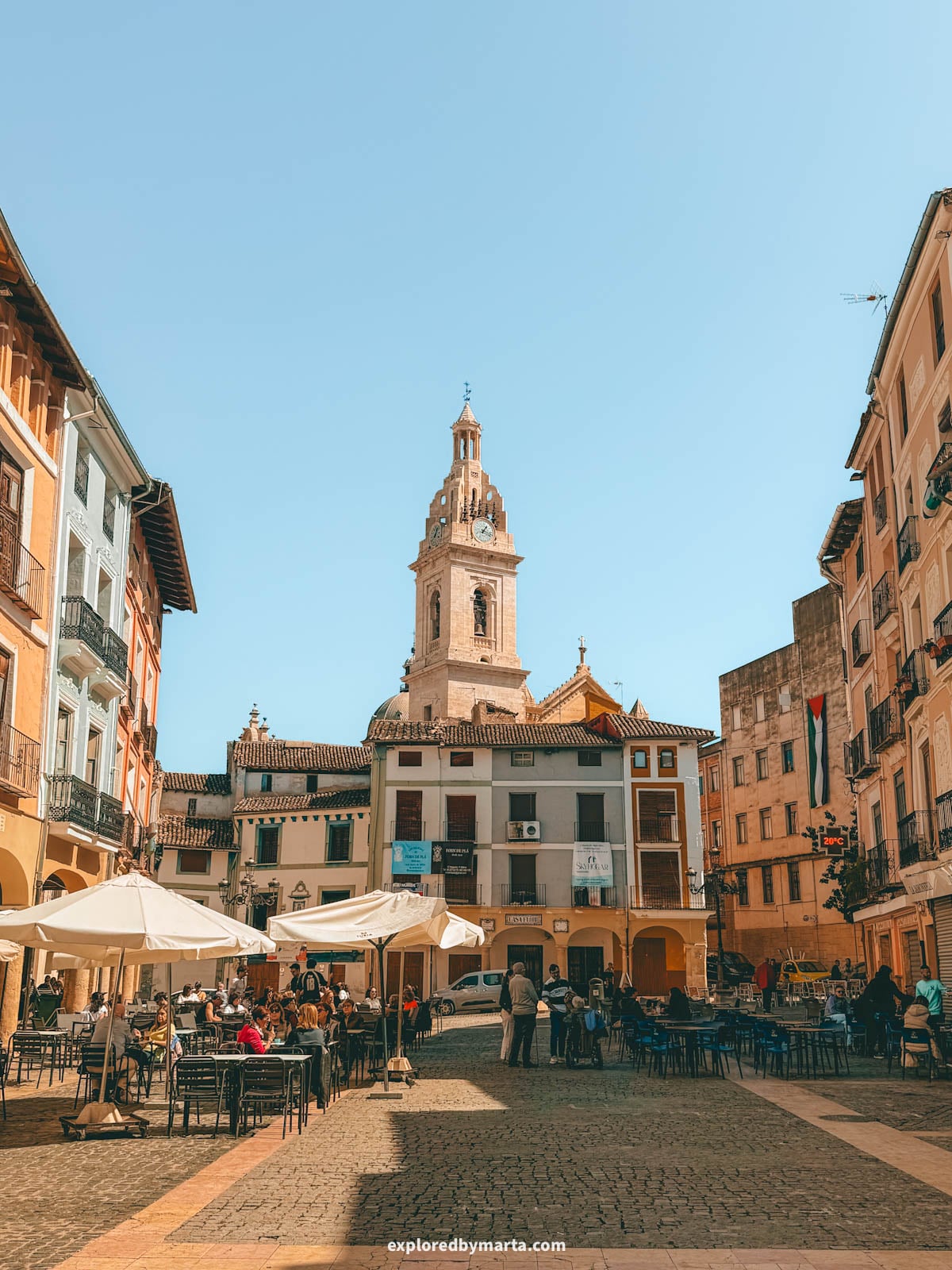
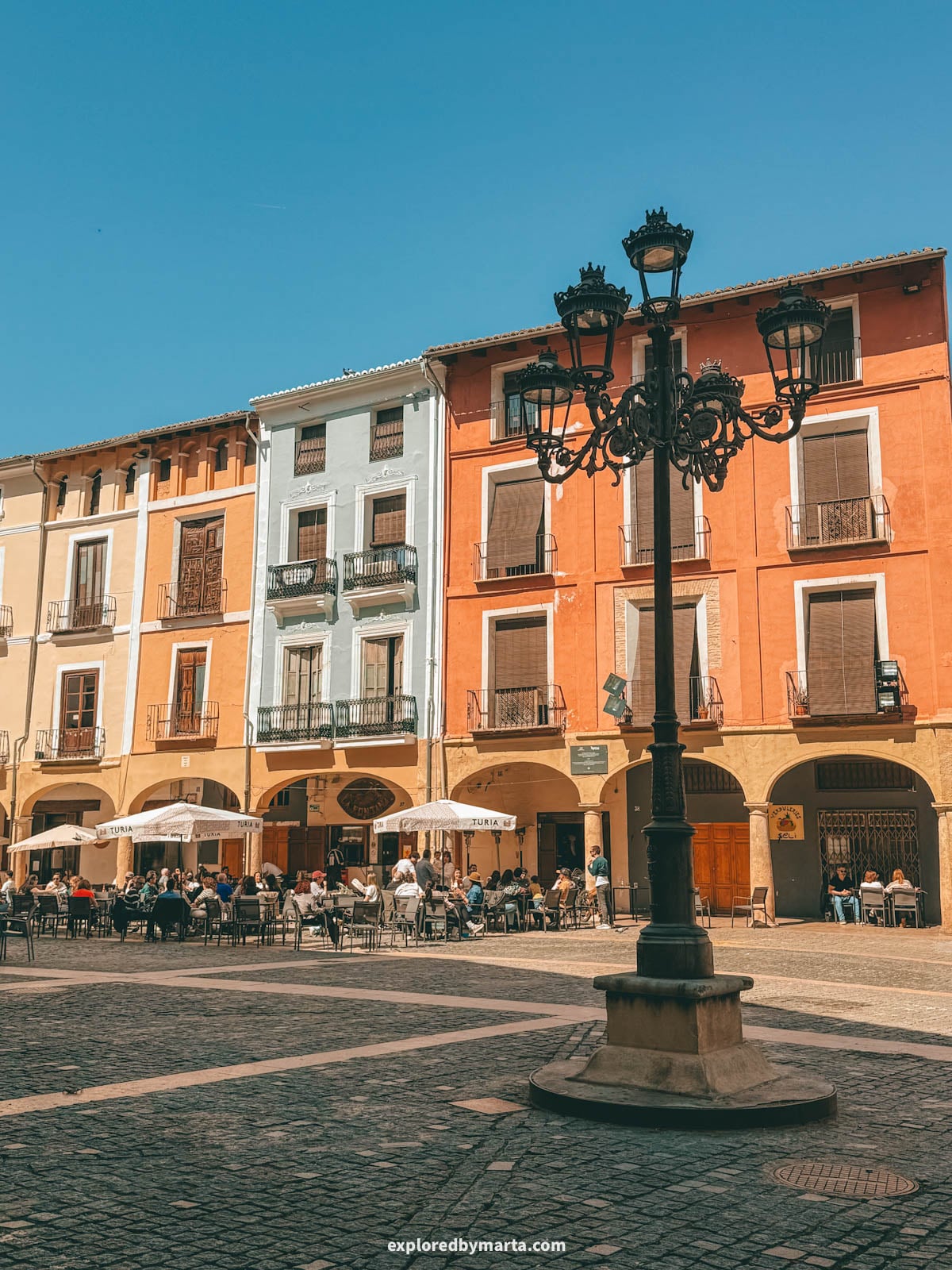
Plaça del Mercat is one of the liveliest squares in Xàtiva and a great place to take a break while exploring the old town (or after hiking up and down the castle hill, hehe!).
It’s a busy local spot, especially in the afternoons and evenings, and it really feels like a typical Spanish square where people come just to sit by the tables outside, relax, and chat.
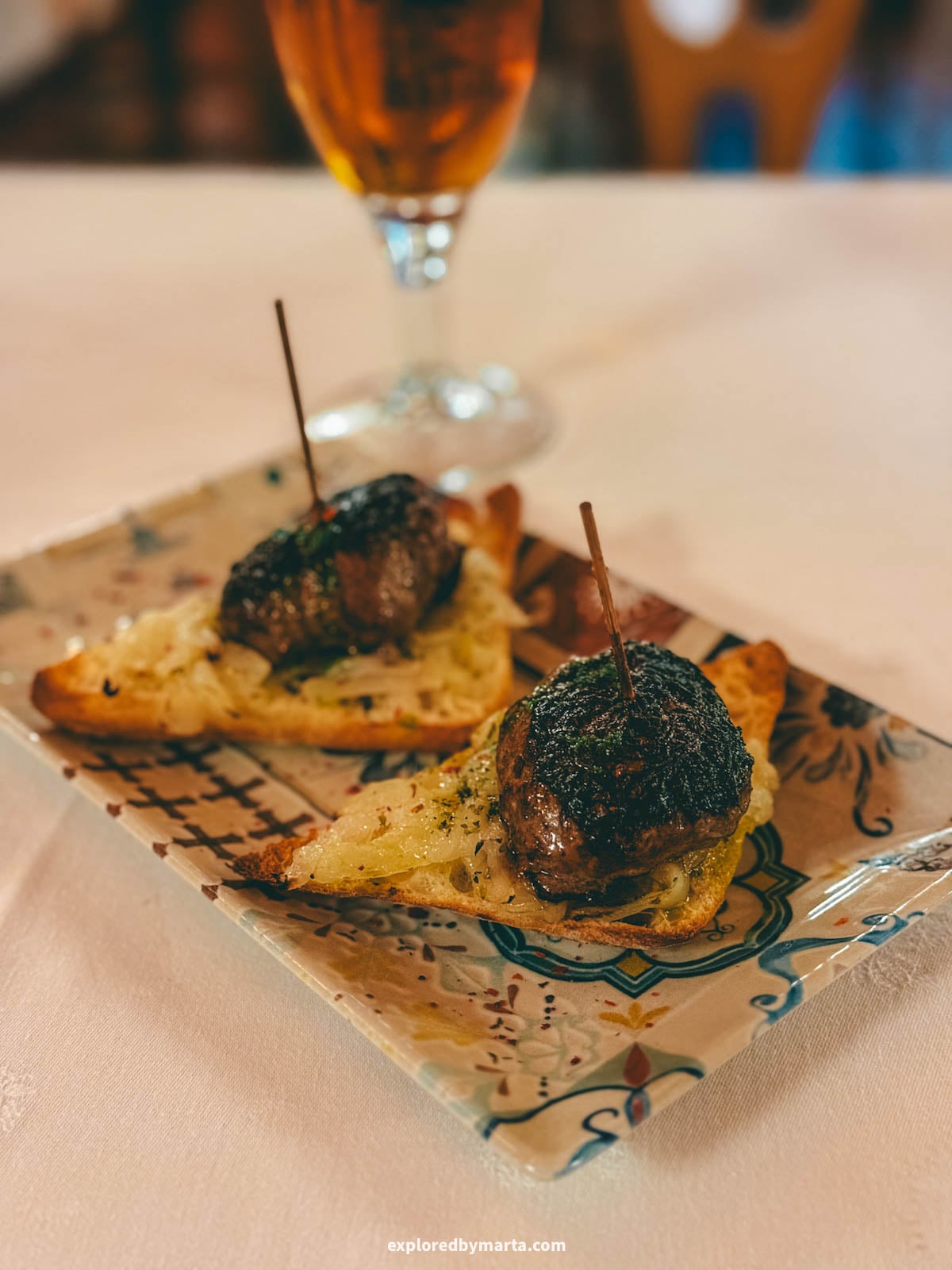
The most common thing here is to get a table, order a drink, and just watch daily life go by. Most locals come for a beer or a glass of wine, but you can also get simple tapas or a quick bite.
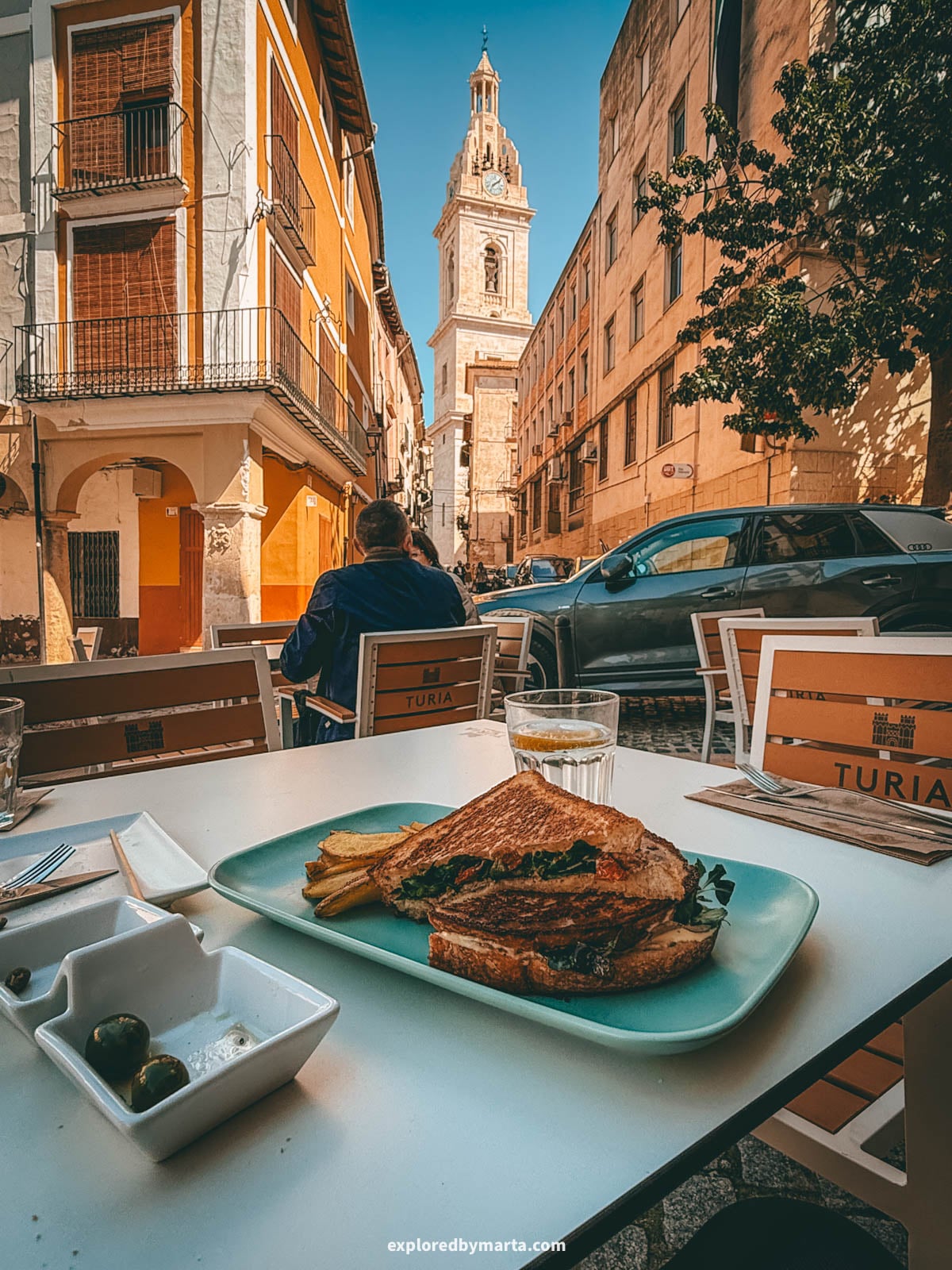
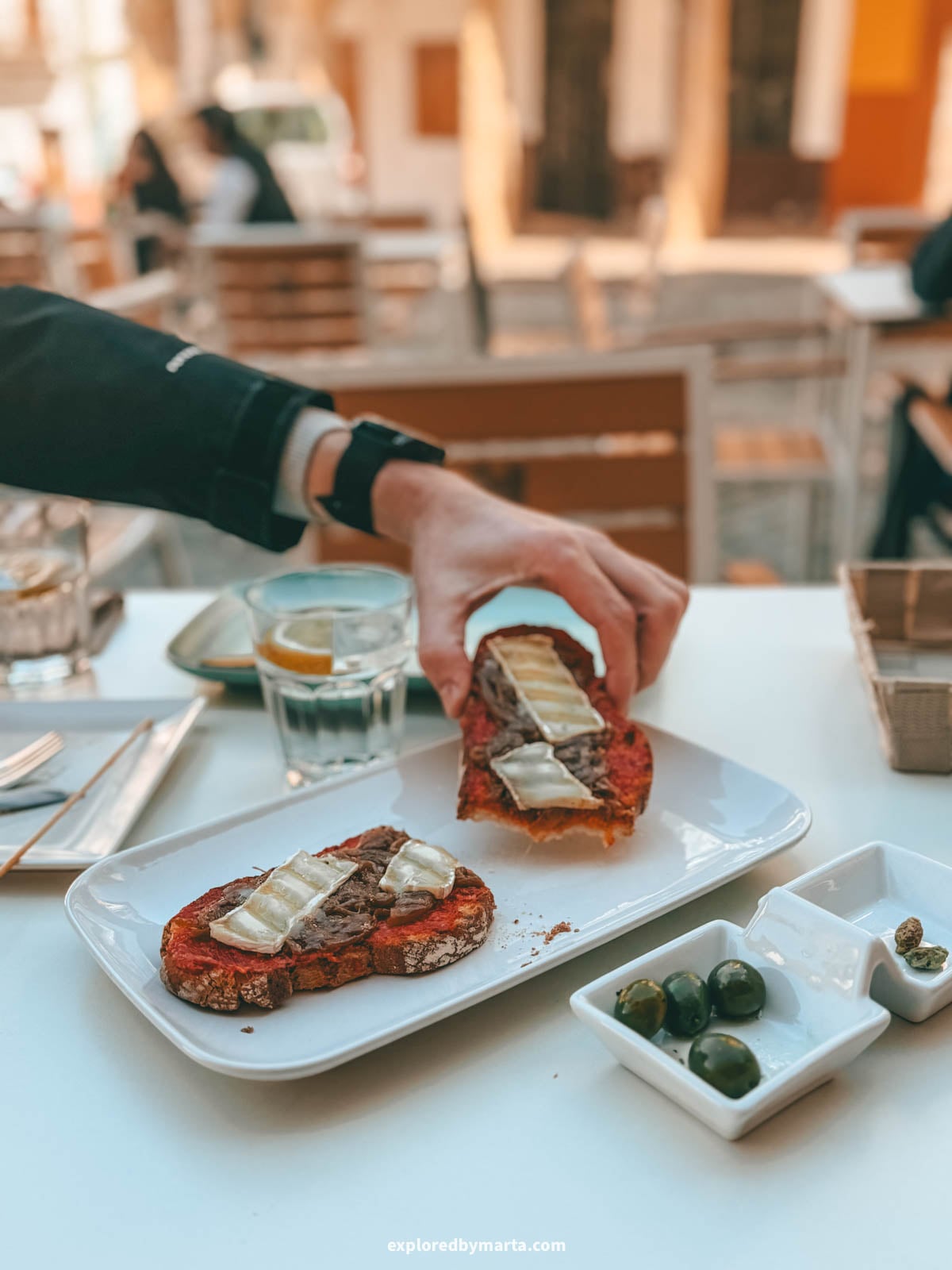
We were a bit hungry when we stopped here, so we ordered a sobrasada toast and two grilled sandwiches. Yum!
The square is surrounded by historic buildings, and, if you look from the right angle, you’ll see the view of the bell tower of the Collegiate Basilica nearby, towering above the skyline.
I’ve realized that sometimes it’s not those major landmarks that give me the best impression of places I visit, but rather such squares as this, where you can feel the local atmosphere the best.
Location: Plaça del Mercat
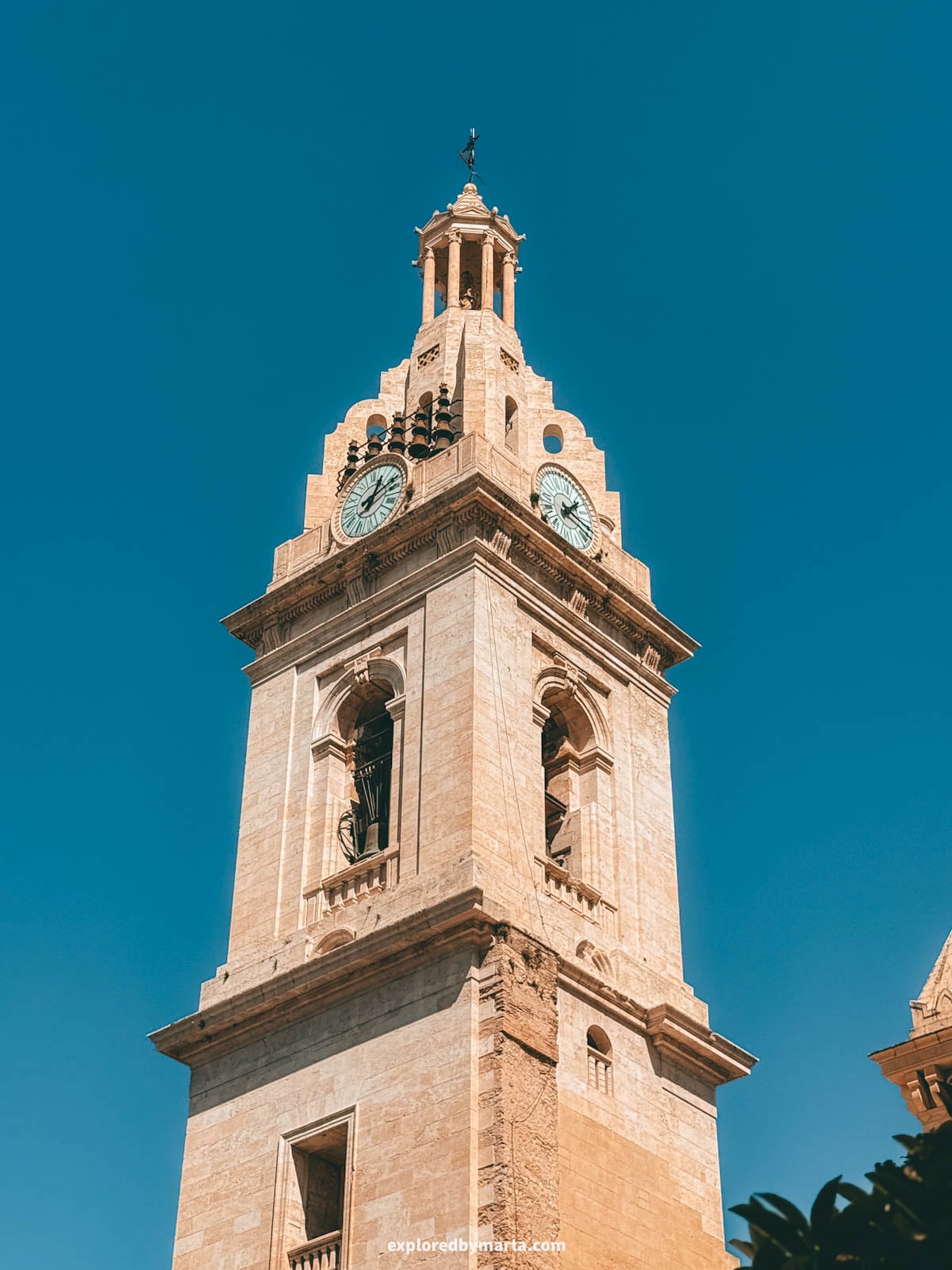
4. Climb up the 60-meter bell tower of La Seu
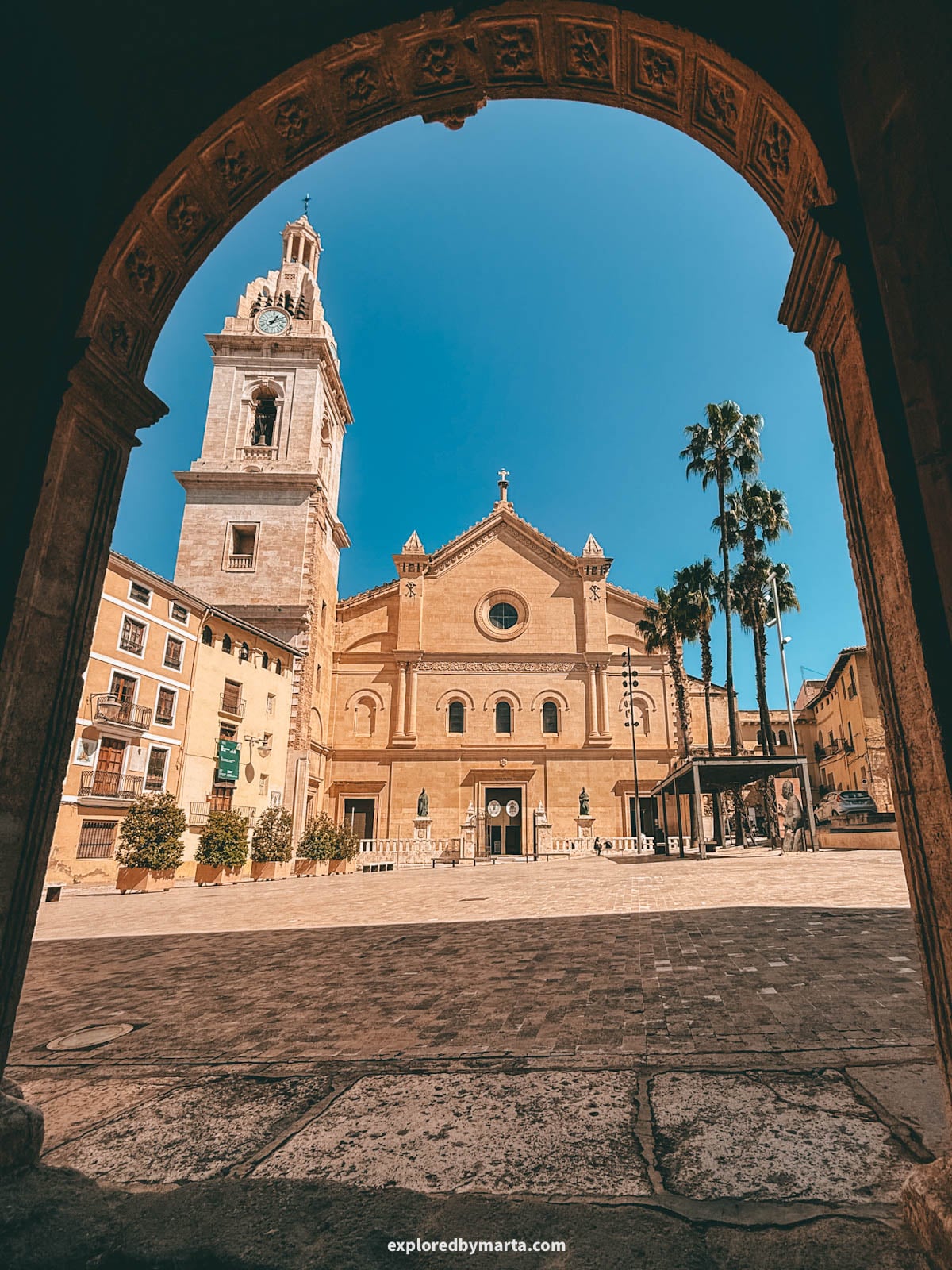
The Collegiate Basilica of Xàtiva, also known as La Seu, is one of the most impressive buildings in the town. It definitely stands out among the rest of the buildings in Xàtiva!
It feels quite massive for a place of this size, which really shows how important religion and church power were here in past centuries!
However, at the same time, it makes perfect sense, because this town produced two Popes, so it simply HAD TO have a large church! By the way, you can see the statues of both Popes next to the main entrance.
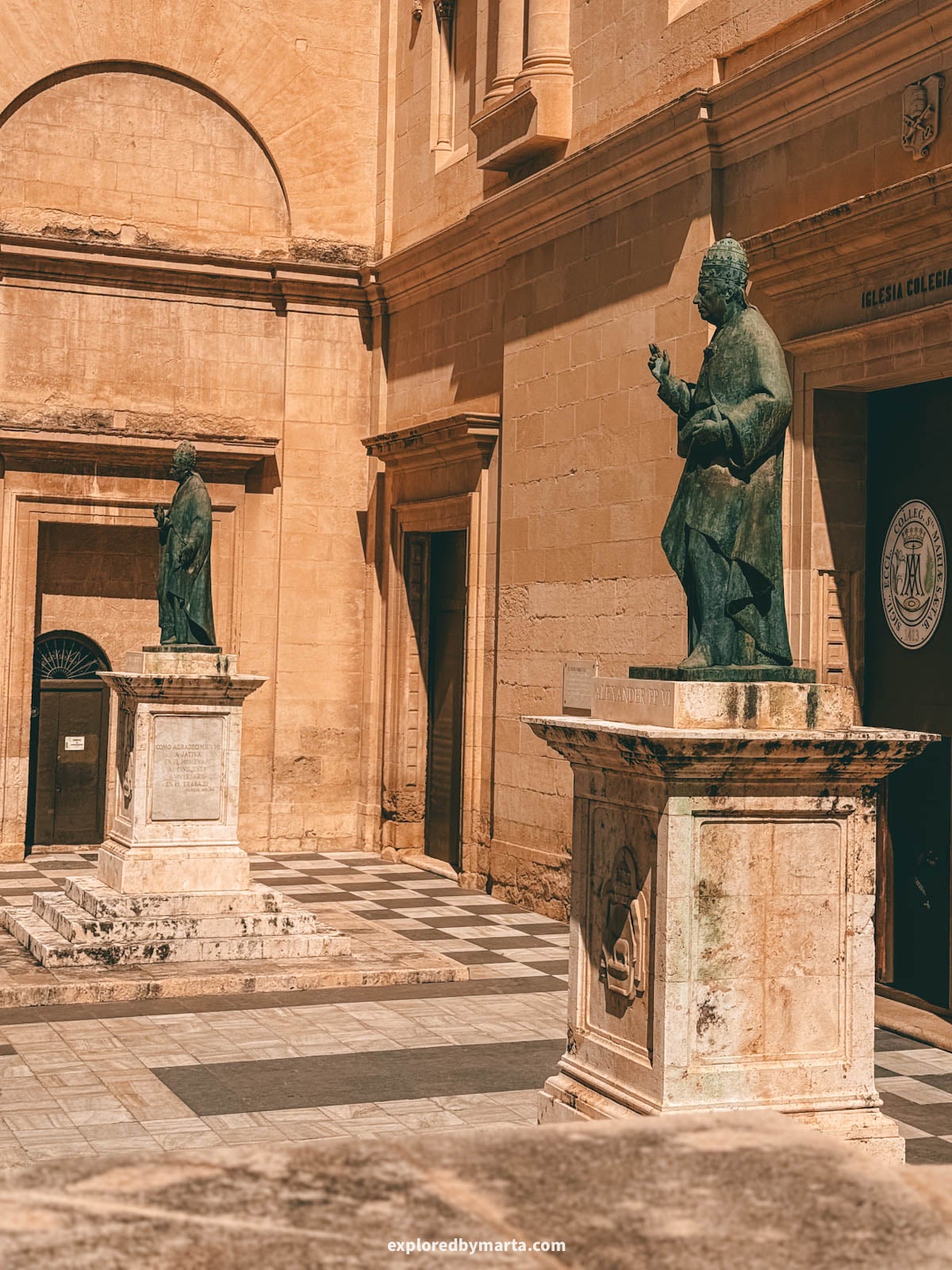
The current church dates back to the 16th century, and it was built over a mosque (just like many churches and cathedrals across the southern part of Spain).
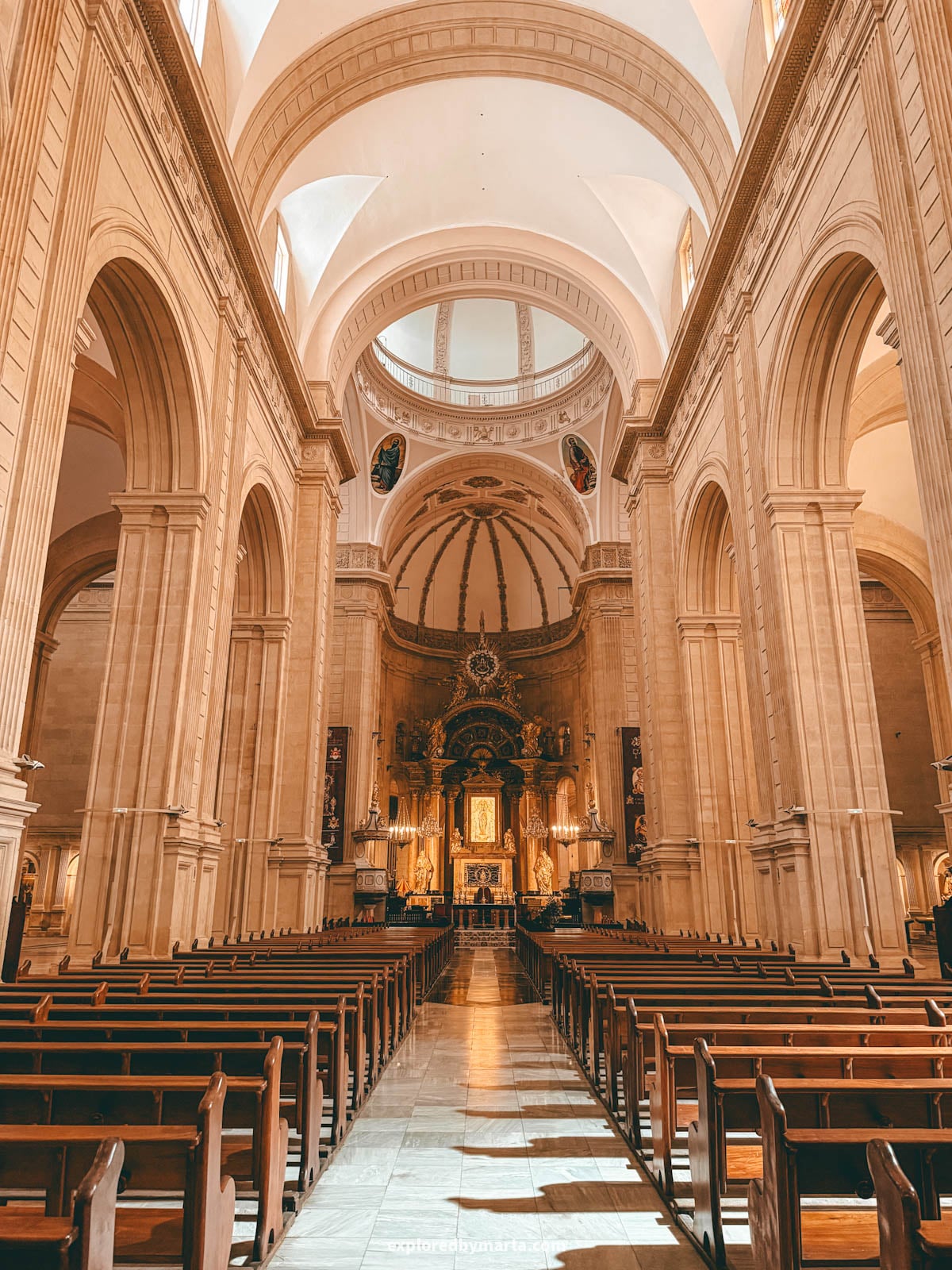
If you have time, I highly recommend peeking inside. It has a small entrance fee, but we felt like it was worth it, especially because it includes visiting the gorgeous bell tower and climbing all the way up there by the bells!
The central nave of the church is majestic! Although simple, it is quite an elegant space with chapels, artwork, and a calm atmosphere. Such a contrast with the busy streets and squares outside!
You can also explore some of the rooms and areas behind the main nave – there’s a museum featuring some religious artifacts, including some connected to Xàtiva’s Popes.
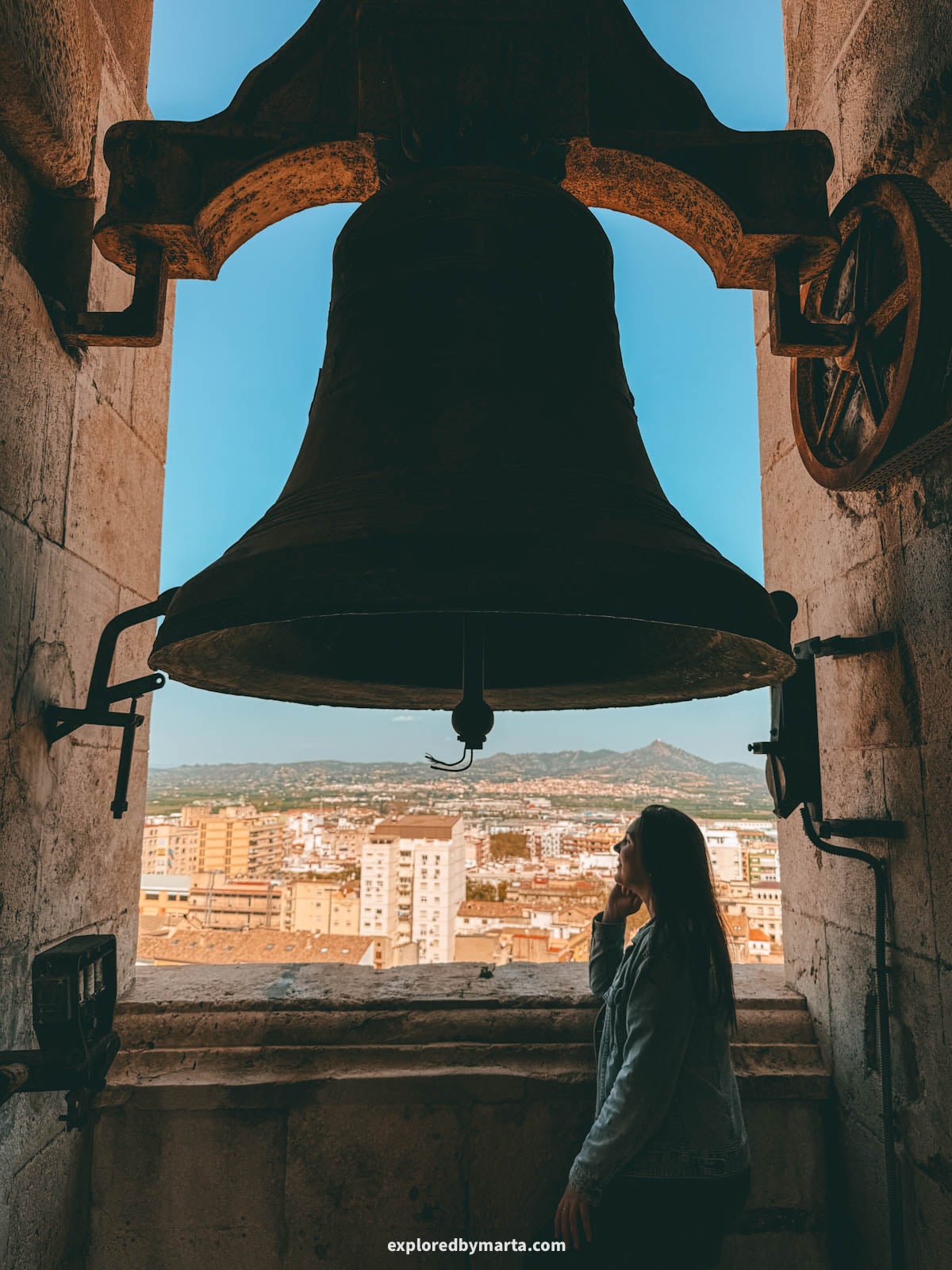
However, the highlight of the whole visit was actually climbing the 60-meter bell tower – it was one of my favorite things to do in Xàtiva.
I have been to many bell towers, but this was the first time we were able to climb up to the highest possible point in the tower – even above all the bells!
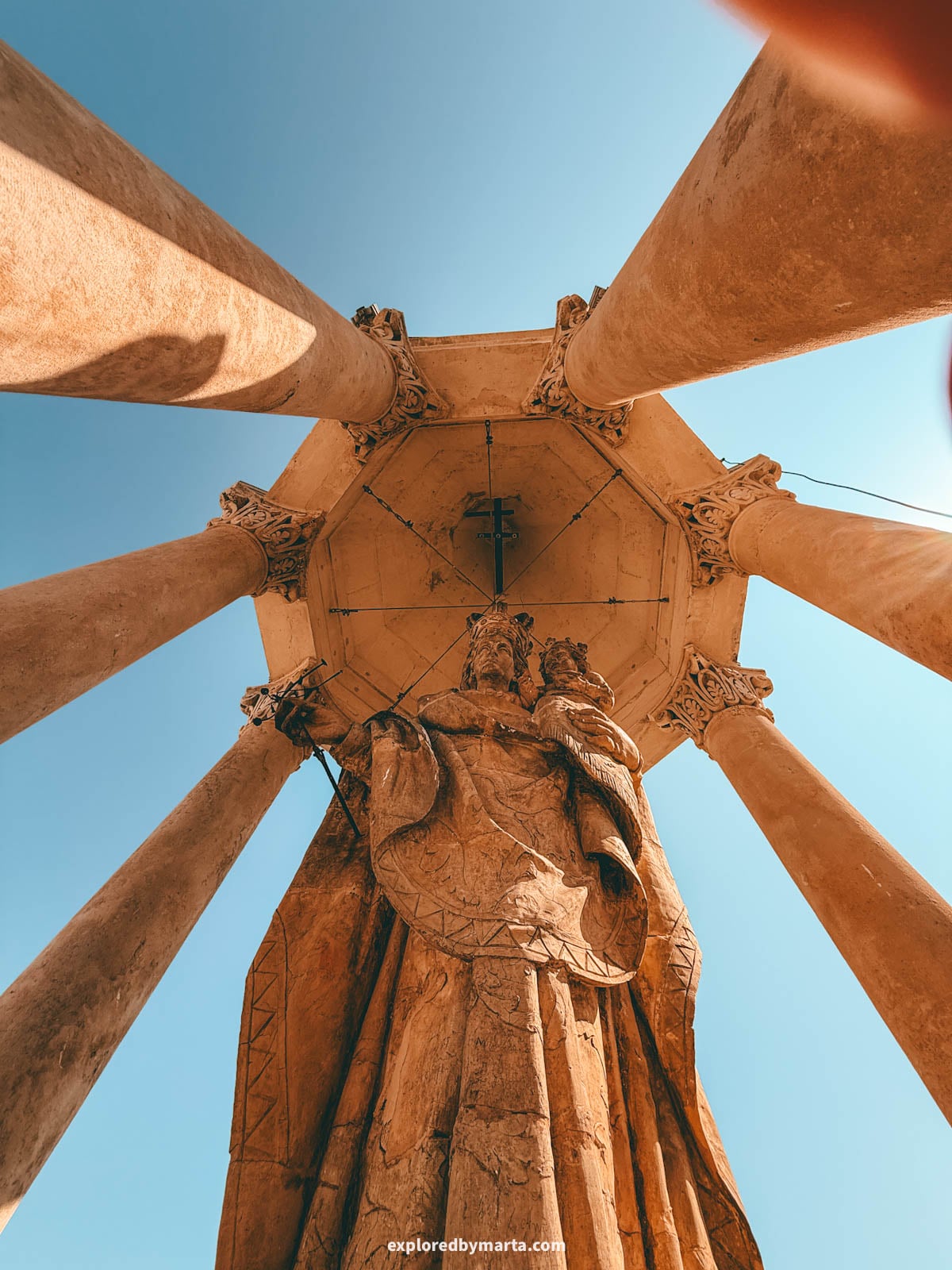
You can check the first photo, where you see the whole church – notice the tiny rotunda at the top of the tower (the one with columns), that’s the point you can climb up to!
In most cases, when you visit church towers, you can climb to the first level of bells, and then that’s it, but not here – this one’s a special one for sure.
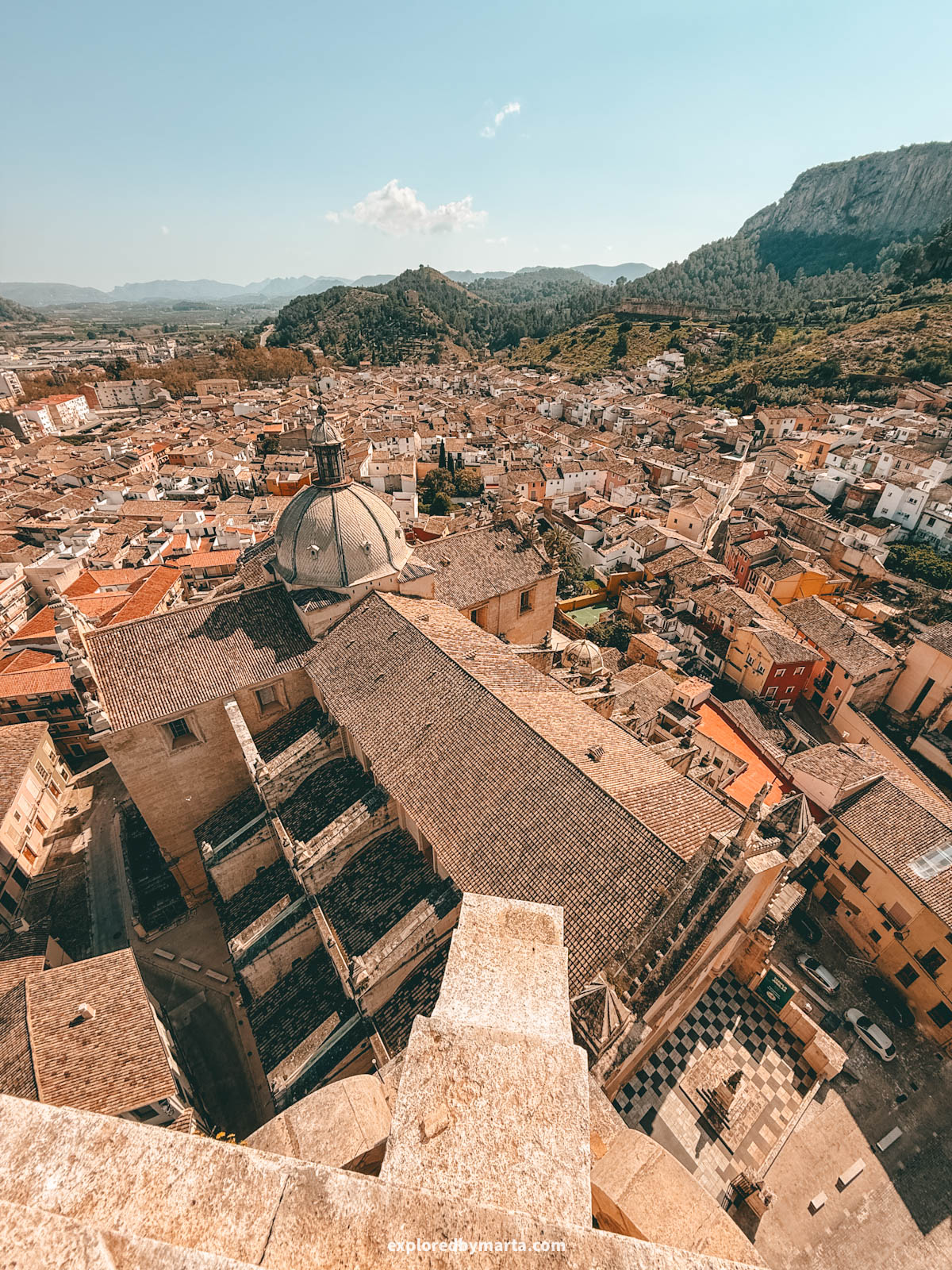
We climbed and climbed, and climbed… The stairs got narrower and narrower until we reached the very tip of the tower. It was pretty epic! There’s a beautiful statue on top and 360-degree views over the surrounding area.
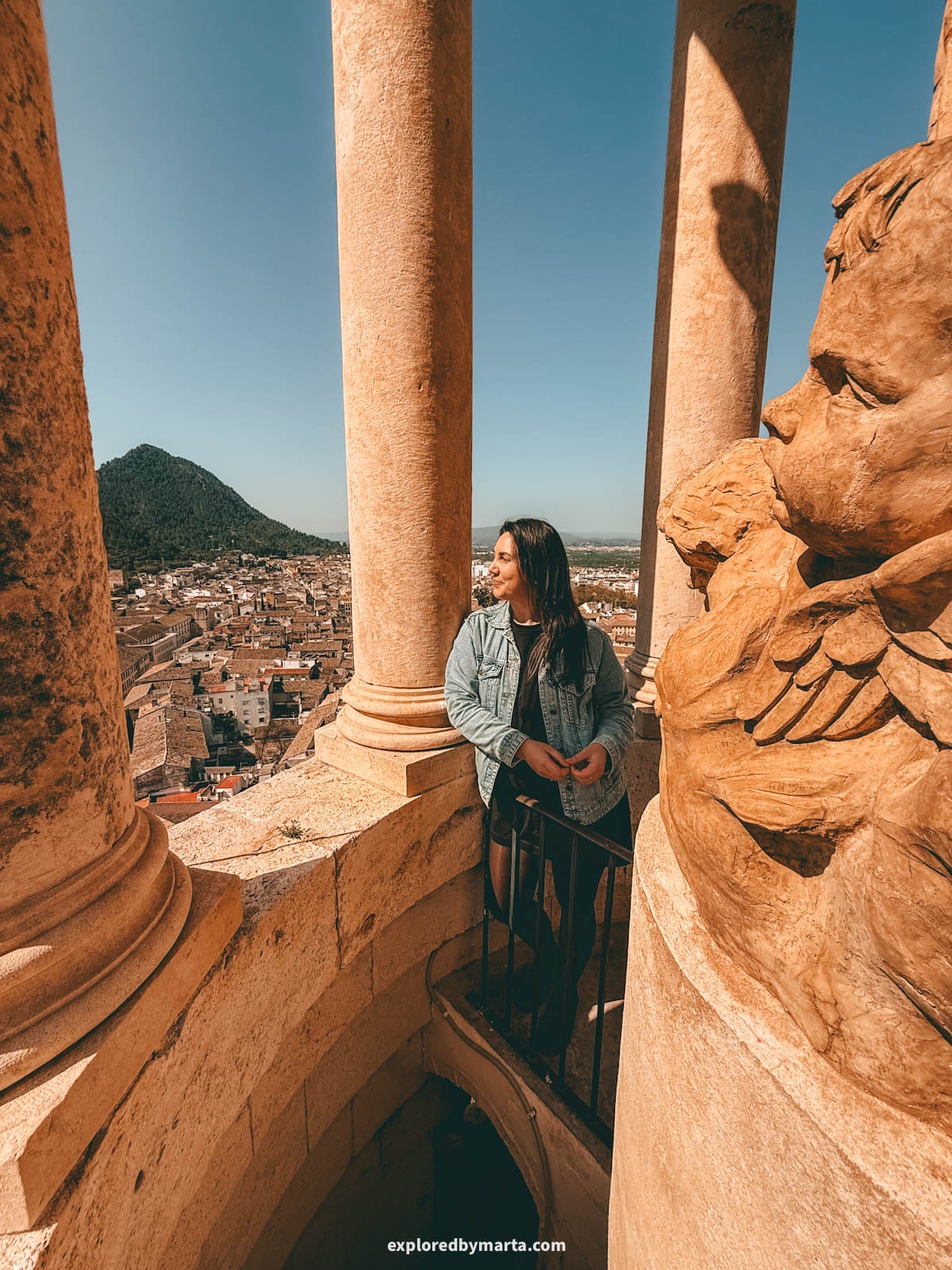
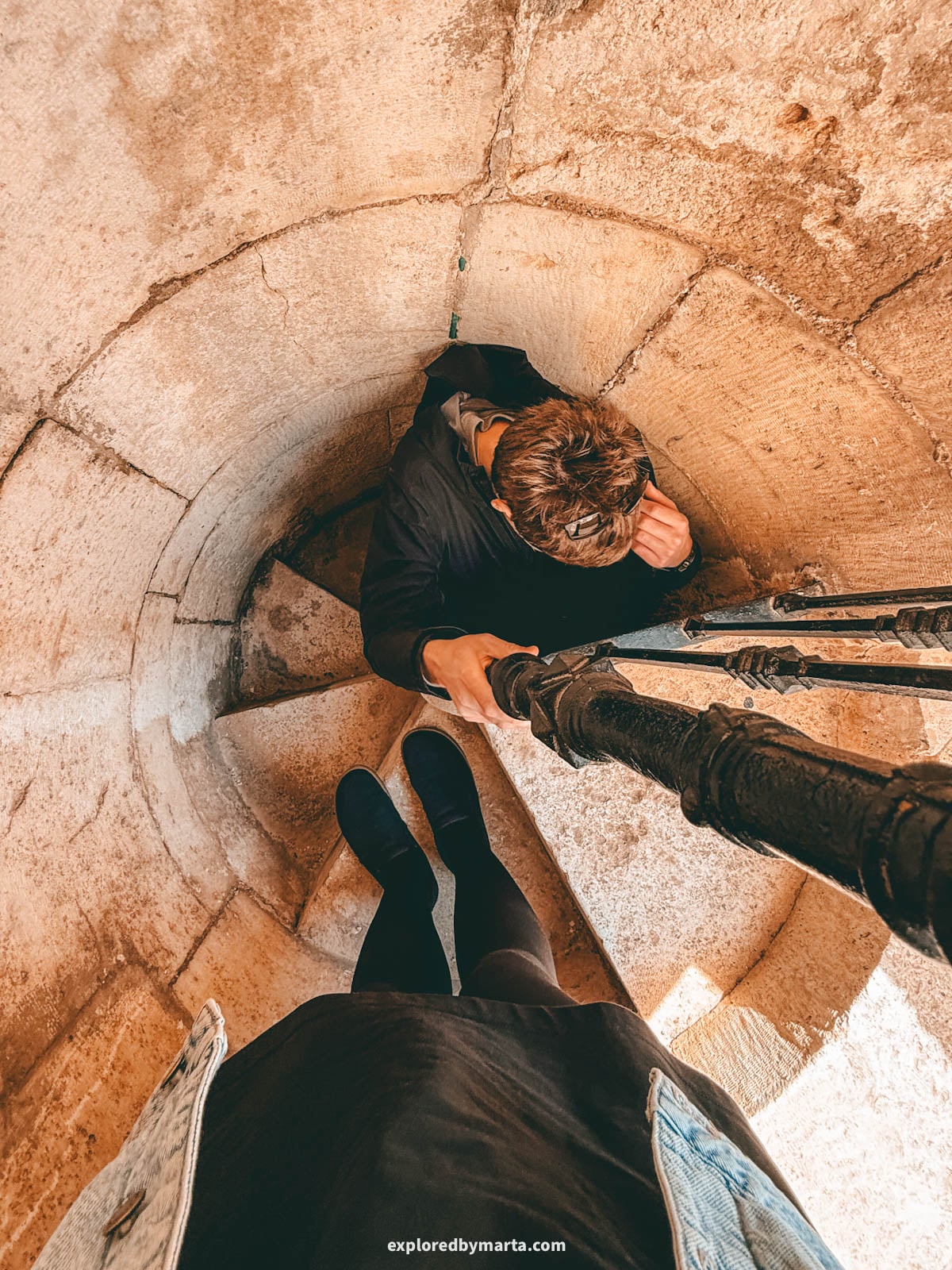
We got the most amazing views over the church below, the rooftops of Xàtiva’s old town, as well as the castle on top of the nearby hill. This was one of the most memorable experiences we had in Xàtiva.
The bell tower stands around 60 meters tall and is one of the tallest bell towers in the Valencia Region. It definitely felt like that while we were climbing. 😅
Fun fact! You might also see it listed as 69 meters in some places. That’s because La Seu sits on sloping ground, so depending on where you measure from (the lower side of the hill or the higher side), you get a different number. Either way, it’s a tall one, and the climb is absolutely worth it!
Even if you’re not usually into churches, it’s worth stepping inside just to see the beautiful architecture and climb up the bell tower for those views.
The only downside of the visit is that they only open the doors for a limited time during the day (like, 2 or so hours at midday), so you have to really plan your day and make sure you arrive on time if you want to climb up the bell tower and see the church.
Location: Collegiate Basilica of Xàtiva
5. Admire the facade of the Antic Hospital Reial
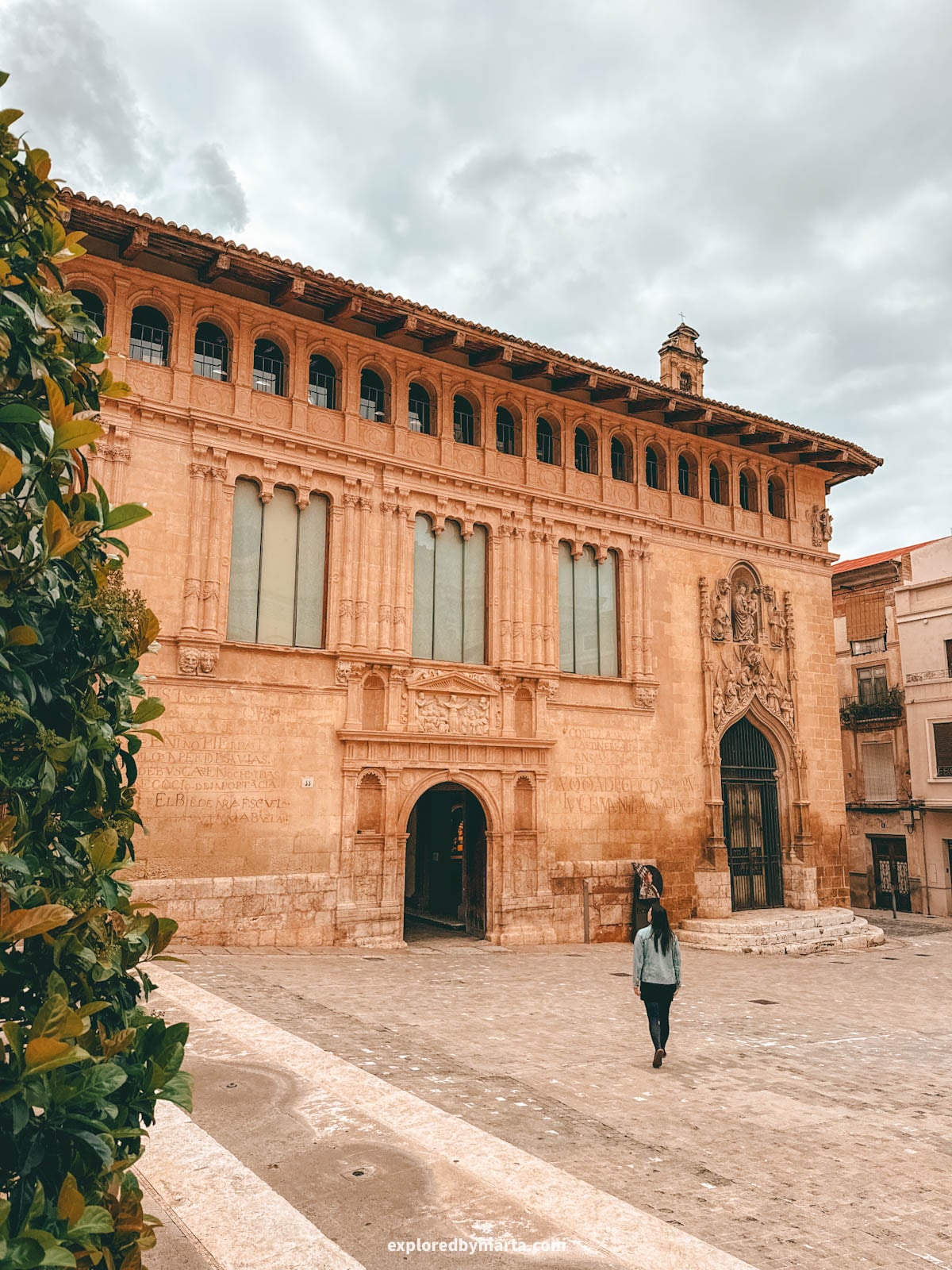
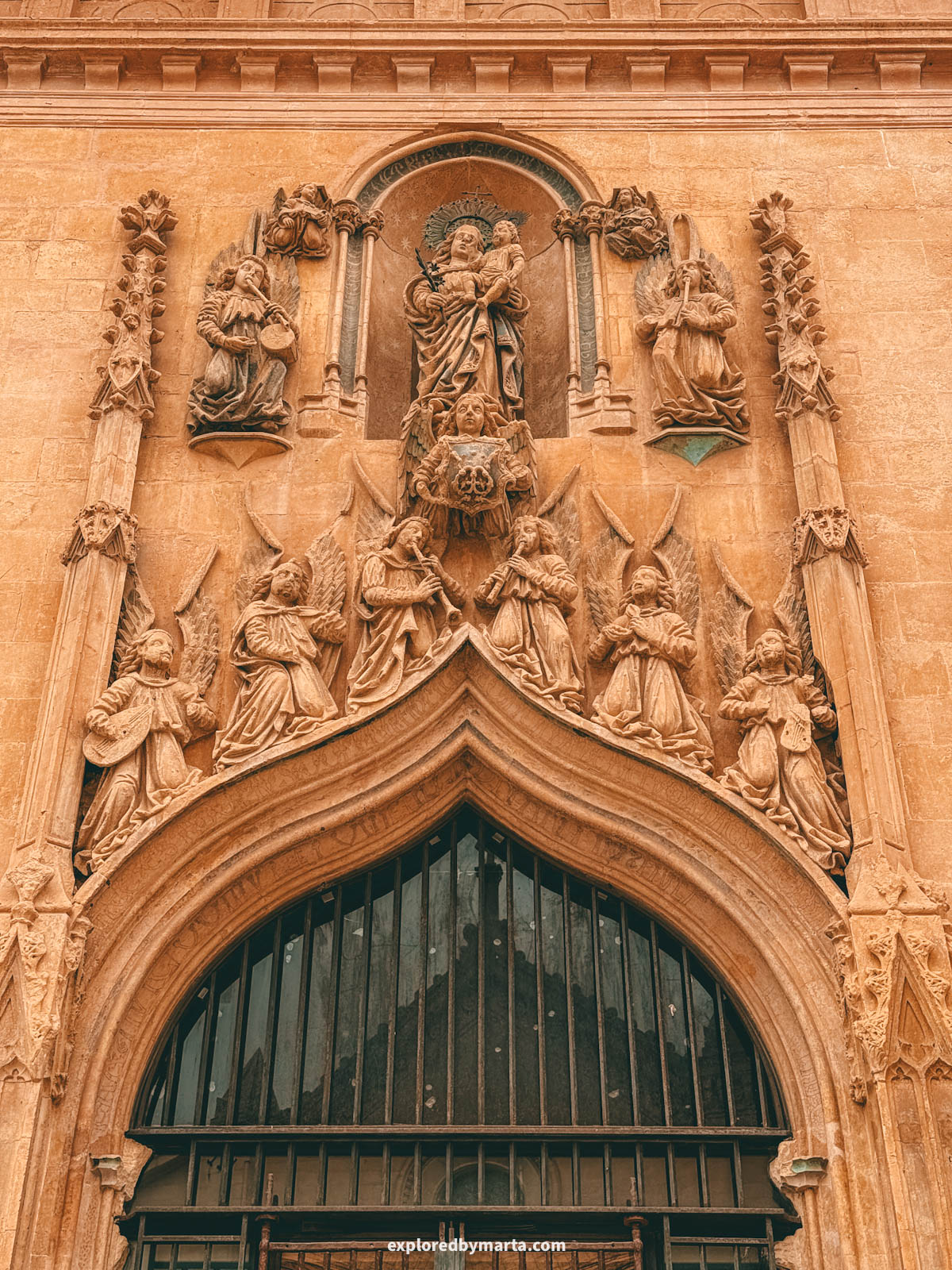
Right in front of the Collegiate Basilica, you’ll find the Antic Hospital Reial, now the Centre d’Interpretació Borja. In my opinion, it is one of the most beautiful buildings (if not the most beautiful!) in Xàtiva!
The hospital was founded in the 13th century by King James I after the Christian reconquest of the city, making it one of the oldest public hospitals in the region.
The current building was later expanded and rebuilt, which is why today you see a mix of Gothic and Renaissance architectural details on its striking facade. Do not miss this spot in Xàtiva!
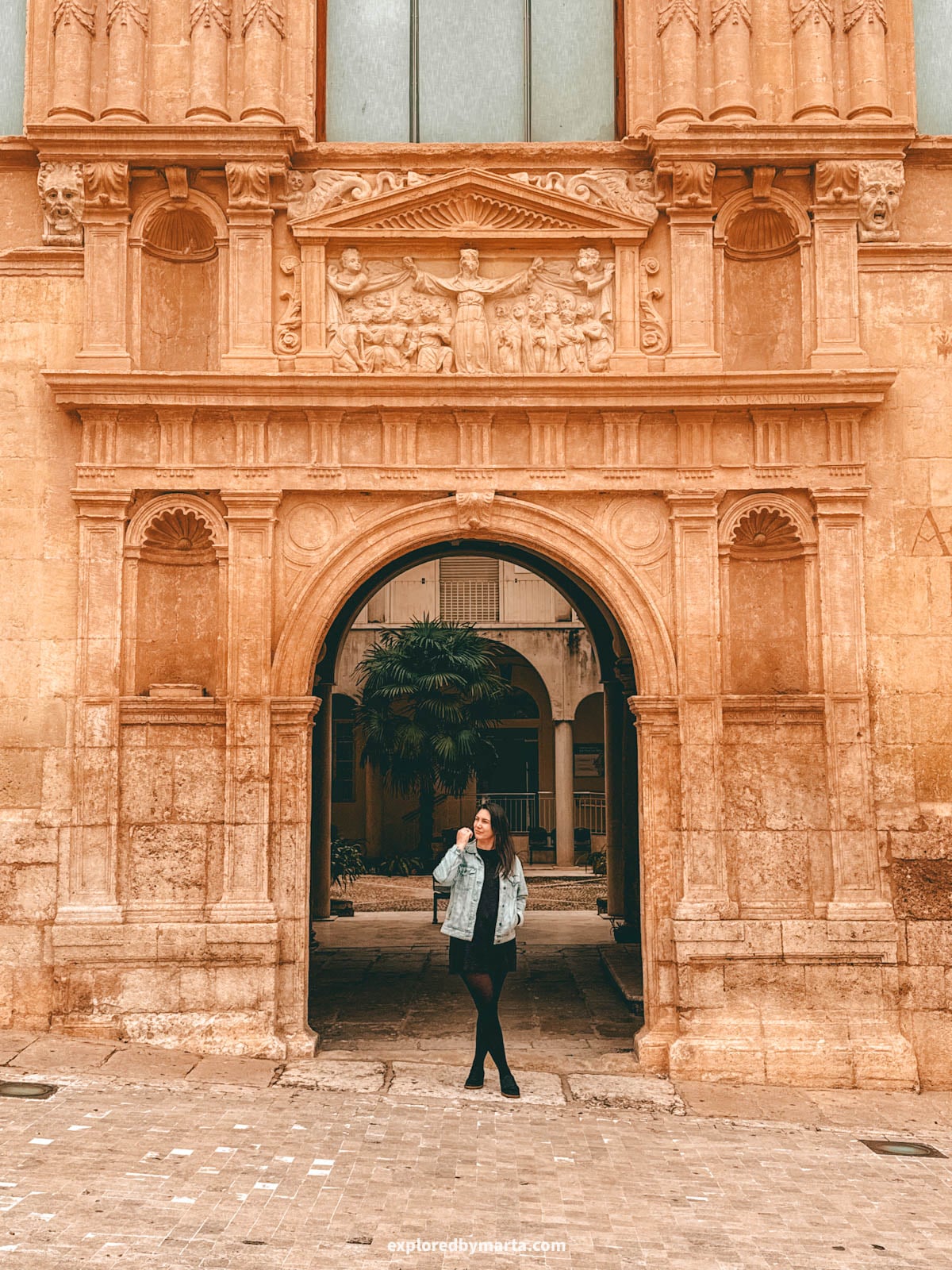
It originally served as a royal hospital and cared for the local population for over five centuries. As the town grew, the hospital had to be enlarged multiple times.
We didn’t go inside (but you can!), but even just from the outside, it’s one of those buildings that really stands out and adds a lot of character to the old town.
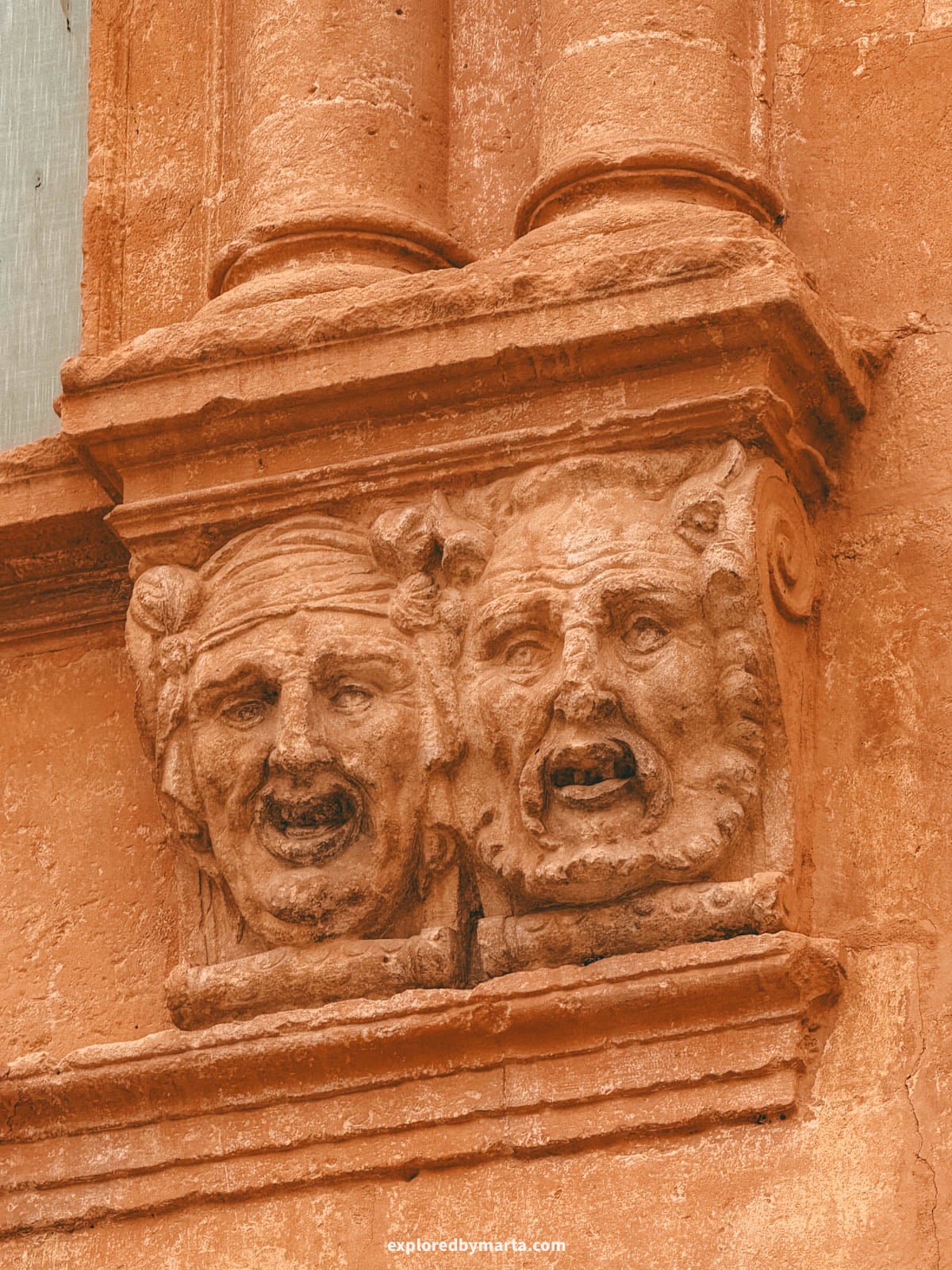
I especially loved the weird-looking heads on the facade, as well as the beautiful angel statues surrounding the entrance door to the Gothic chapel. Such beautiful work!
Location: Antic Hospital Reial
6. Try traditional Xàtiva dishes, like Arroz al Horno
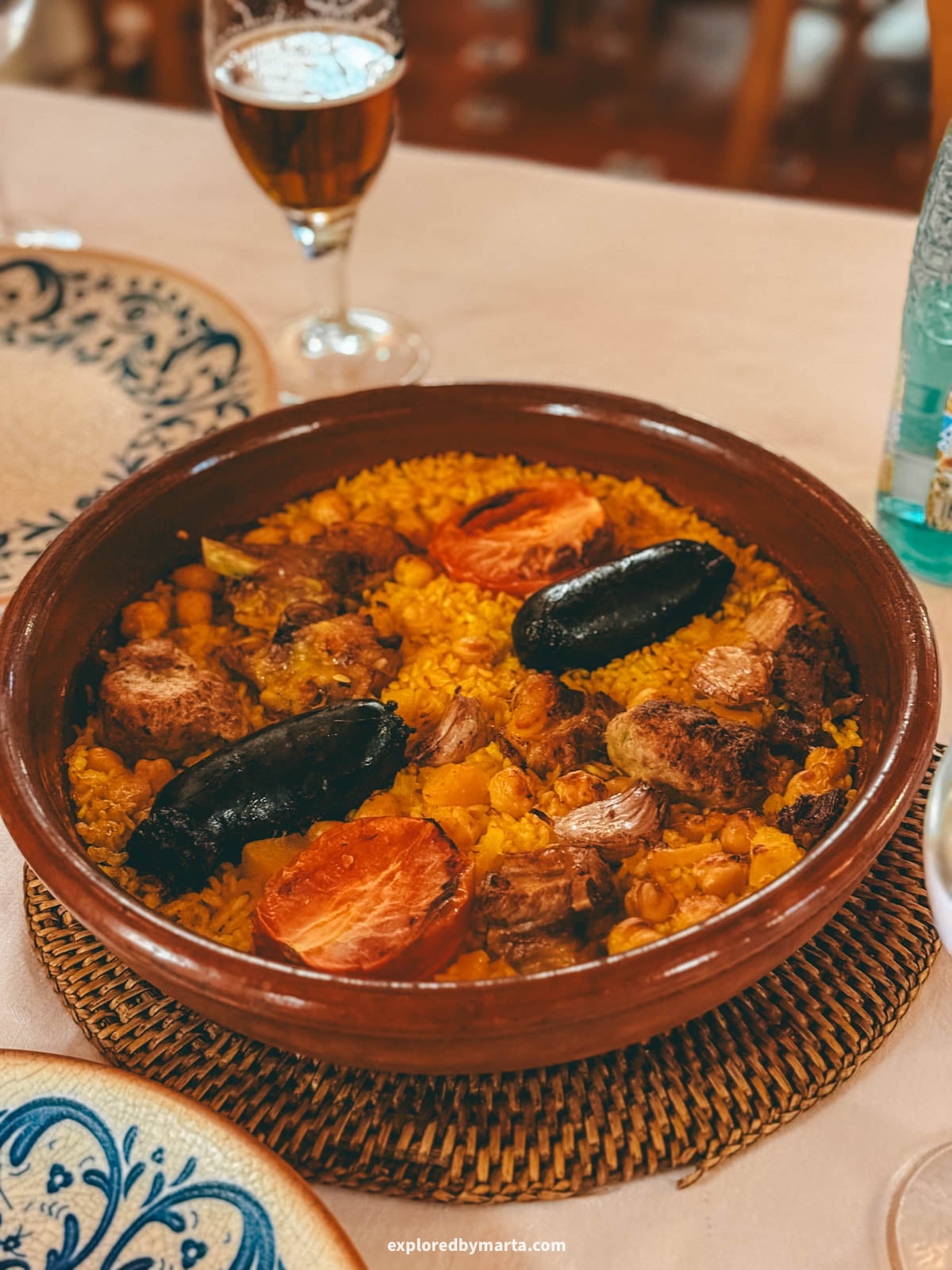
After all the sightseeing, time for one of my favorite things to do in Xàtiva – sit down and try some local food.
Xàtiva has a few traditional dishes that are typical for this part of the Valencia Region, and it would be a shame to leave without trying at least one of them.
One of the most popular dishes here is arroz al horno – a baked rice dish cooked in a clay pot with ingredients like pork, chickpeas, tomato, garlic, potato, and blood sausage.
My husband, who is not a fan of seafood, was a fan of this rice dish, because there were no sea creatures there, haha!
Although it is a very common dish in many towns in the Valencian Community, each place has its own different variation, and the one in Xàtiva is especially renowned.
In May, Xàtiva even hosts a competition for the preparation of arroz al horno! The dish is pretty hearty, very filling, and very different from paella, and we really enjoyed it.
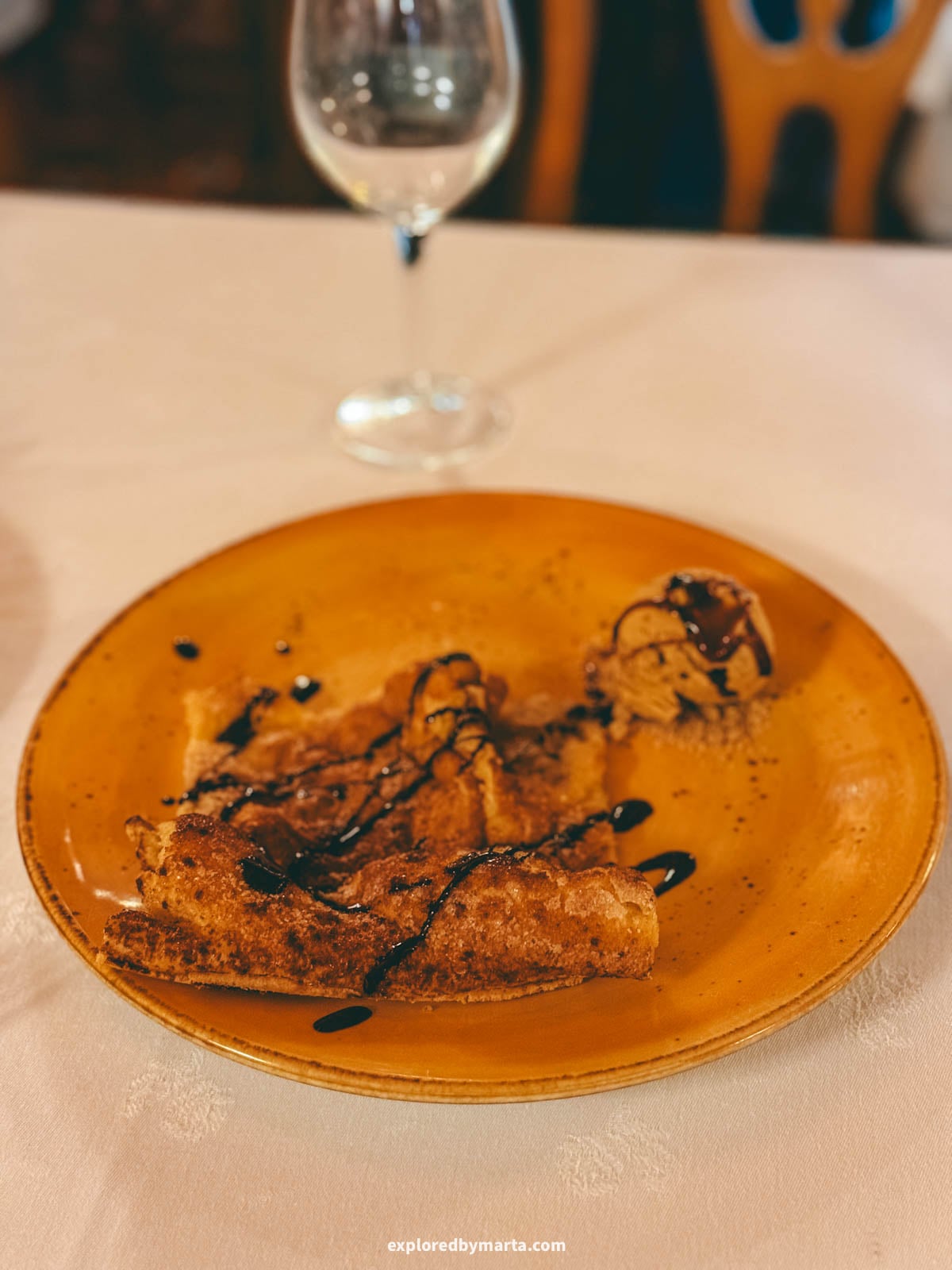
If you are looking to try something for dessert, then try Monjavina! It is a sweet pastry dating back to the arab times, and it is made with a thin dough base, topped with sugar, oil, and cinnamon.
It’s simple, but really good. When we ordered it, it came with a scoop of turrón ice cream and chocolate sauce. Delicious!
To try local dishes in Xàtiva, we decided to go to Casa la Abuela, a traditional restaurant in the old town that’s been around for many decades. They accept online reservations.
However, you don’t have to go to the same spot – there are plenty of good restaurants and small places around the old town where try some local dishes, like Restaurante El Túnel.
Location: Casa la Abuela
7. See the upside-down king at Casa de l’Ensenyament
In case you have some more time to spare in Xàtiva, I recommend paying a visit to Casa de l’Ensenyament, now home to the Museu de Belles Arts de Xàtiva.
When we visited, if you had a ticket to the castle, you could visit this museum for free!
The building dates back to the 18th century and was originally used as a teaching place – hence the name Casa de l’Ensenyament, or House of Teaching.
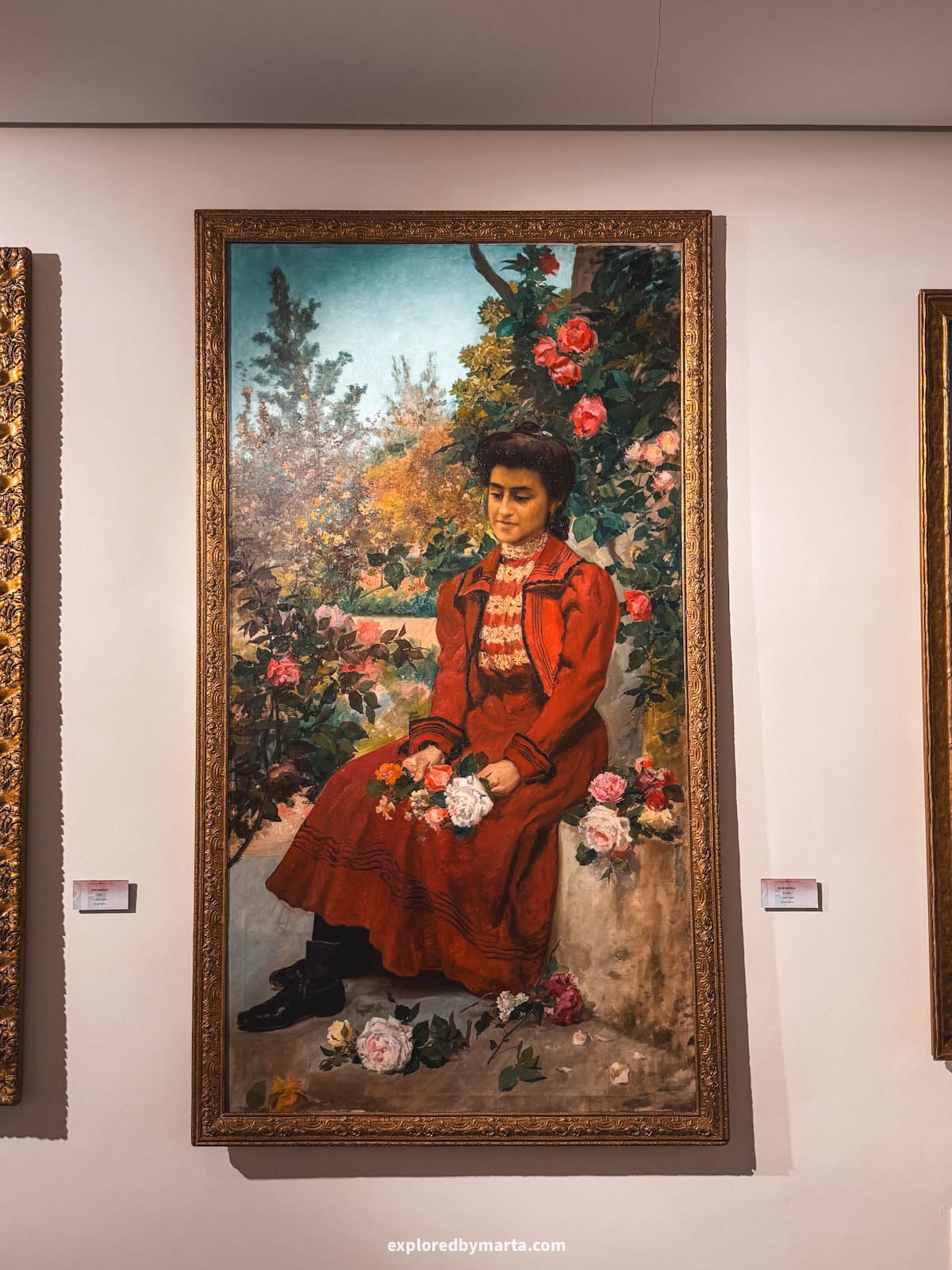
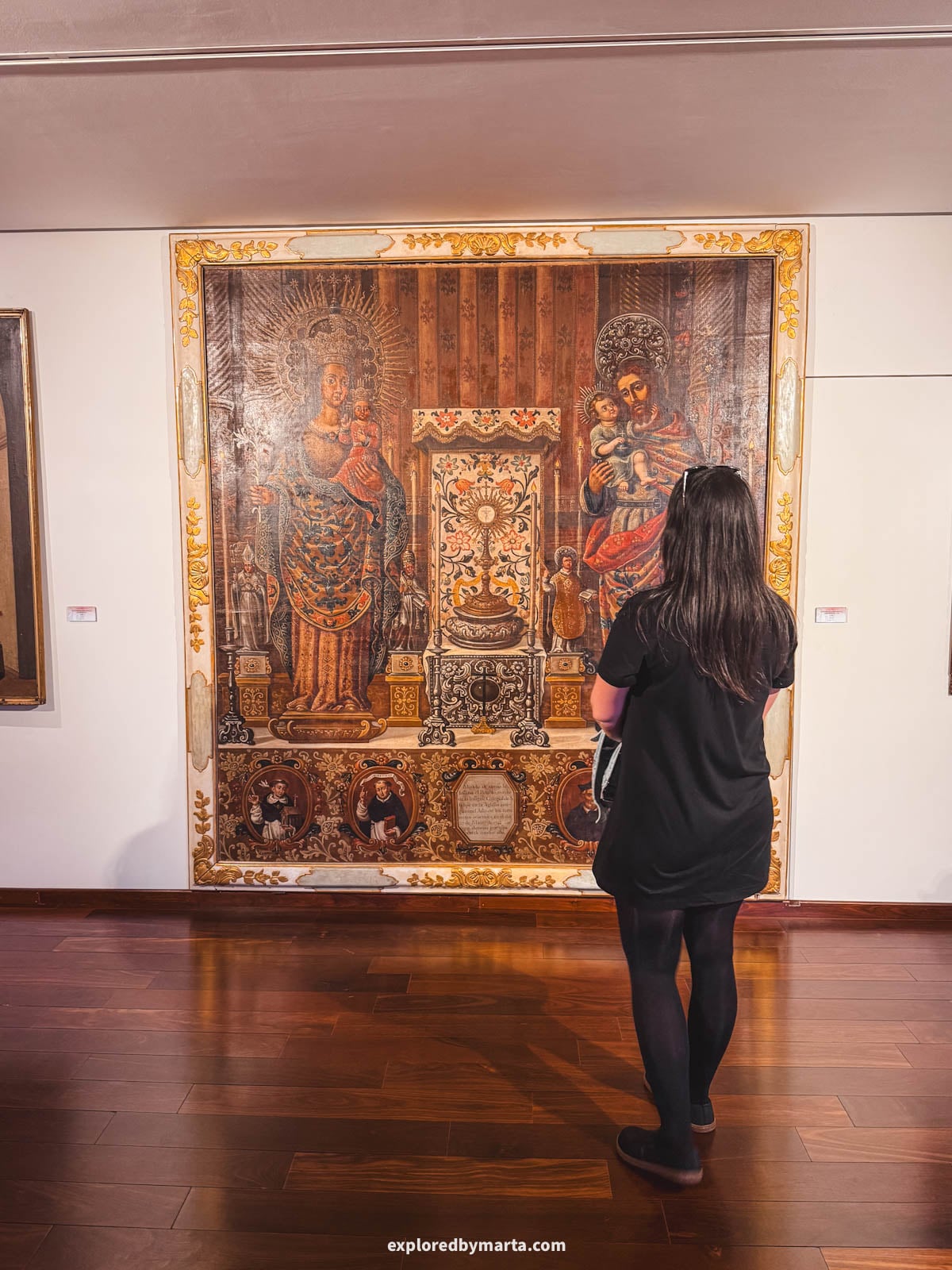
Today, it houses a collection of beautiful paintings and artworks spanning several centuries.
The main highlight here, of course, is the famous upside-down portrait of King Philip V.
After the War of the Spanish Succession, he ordered Xàtiva to be burned and even had the city renamed.
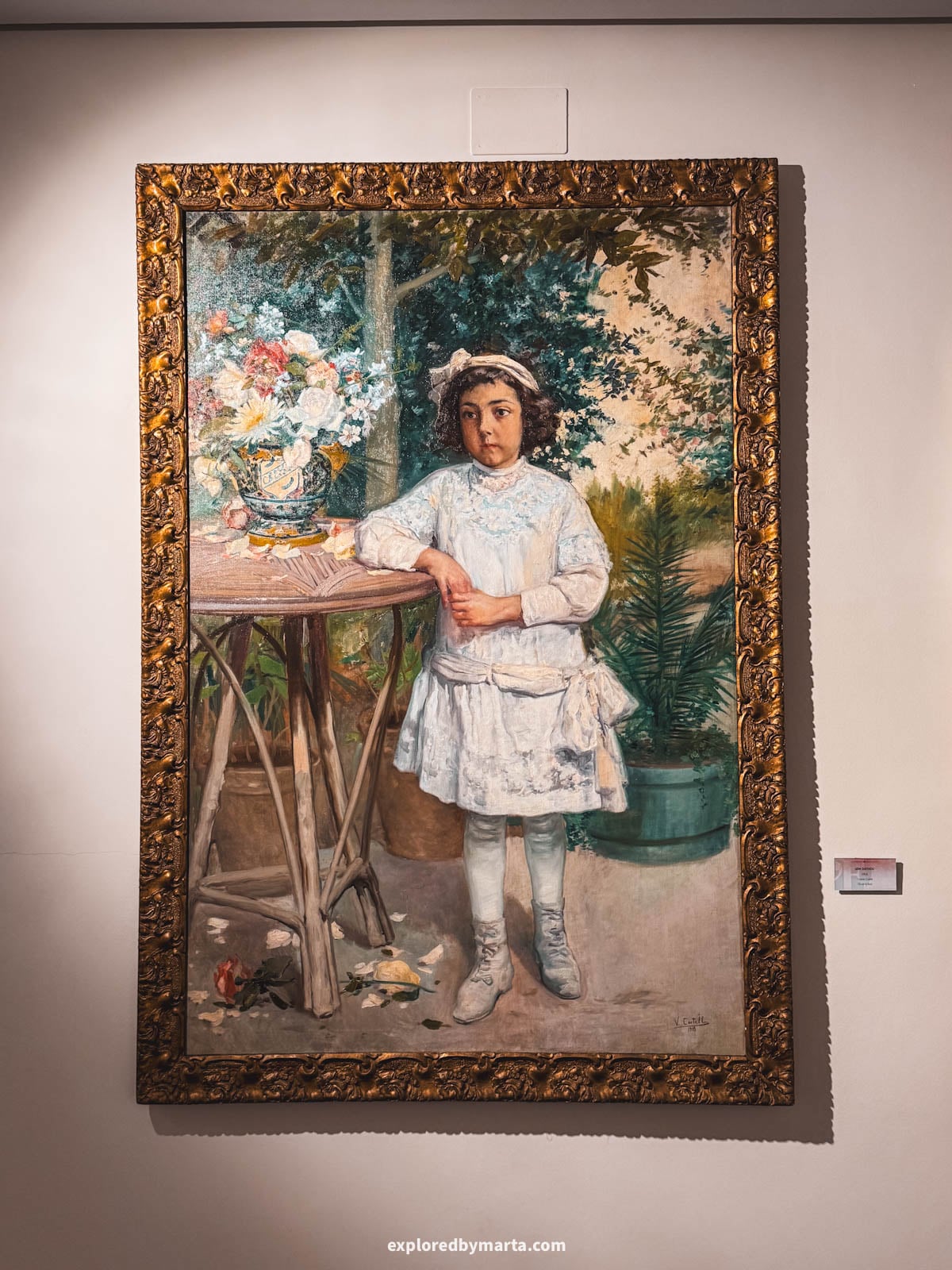
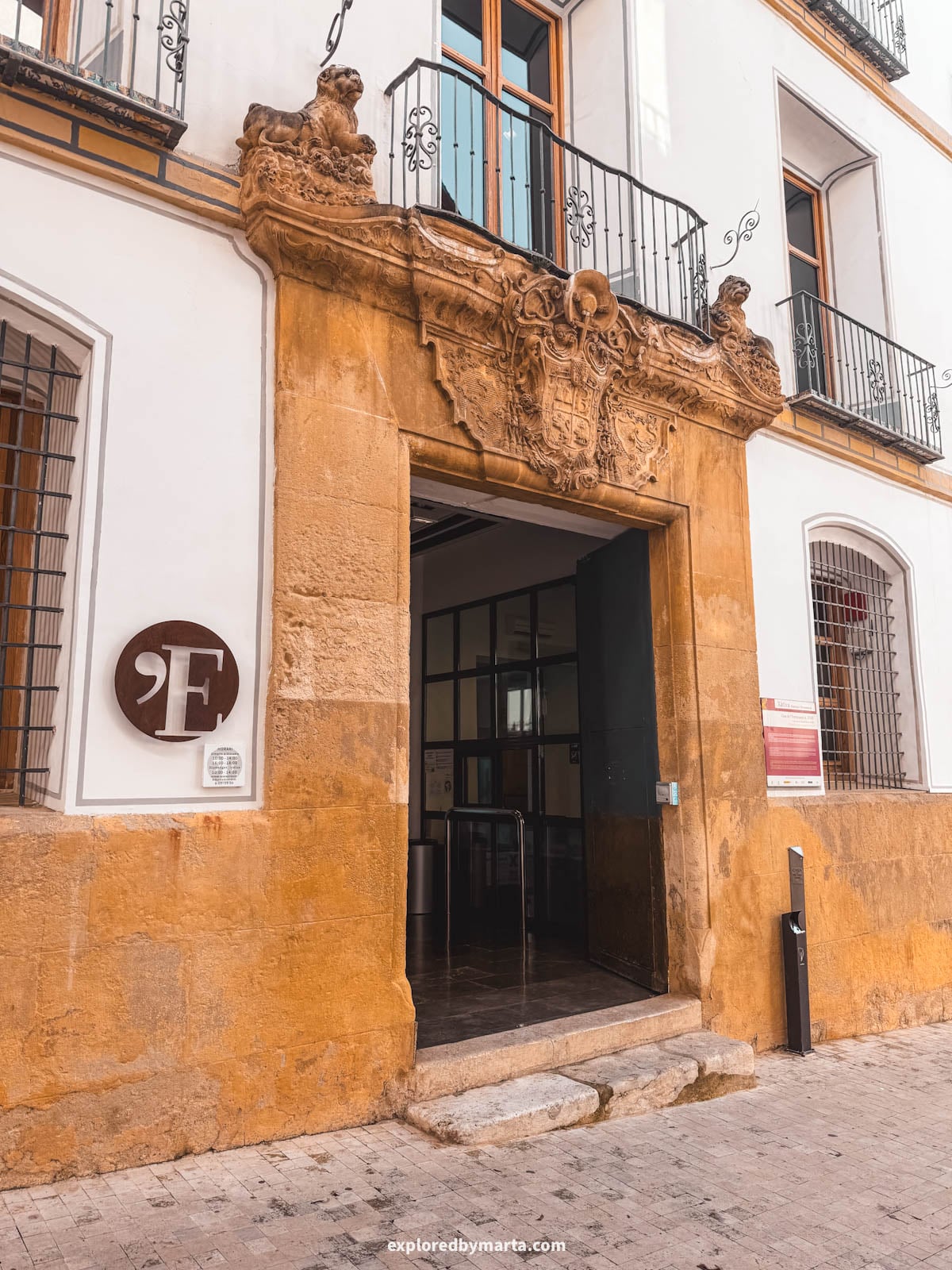
Locals never forgot that, so his portrait is still displayed upside down as a symbol of protest. We went there and checked – yes, it is still upside down, haha.
If you want to go straight to this portrait, then know that it is in one of the upper floors (I don’t know if they change its location from time to time, but at least they told me that the ground floor is for temporary exhibitions).
Although the paintings were stunning, we only paid a quick visit to this museum, maybe 20 minutes in total. But I’m glad we got to see the famous painting of the king. Pretty memorable!
Location: Casa de l’Ensenyament
8. Stop by the historic Almudín de Xàtiva
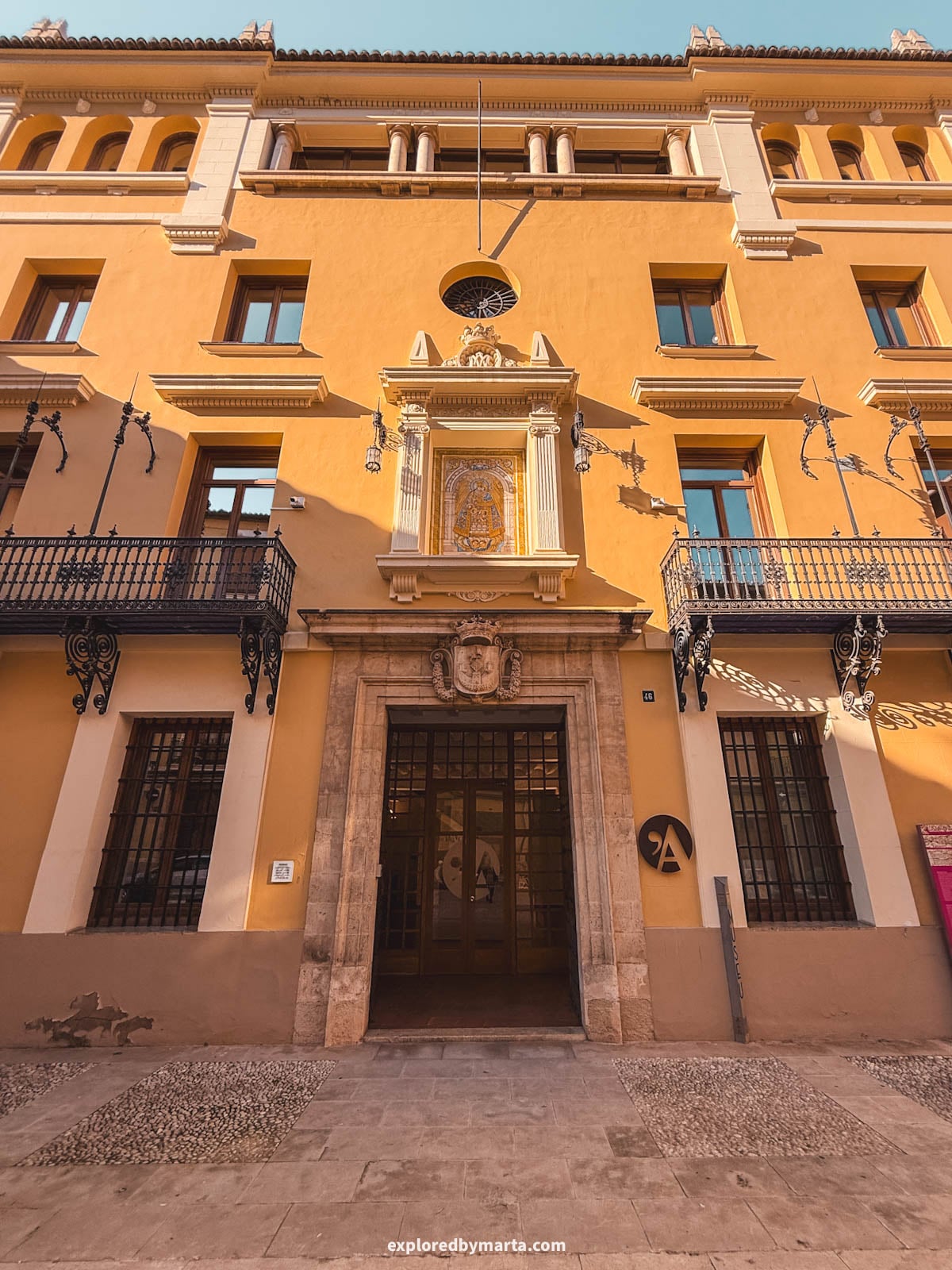
Another interesting stop in the old town is the Almudín de Xàtiva, a historic building that once served as a grain store.
And, yes, when we visited, this was another place included with the castle ticket, so we could enter for free, which made it an easy extra stop while exploring the old town.
The building dates back to the 16th century and was an important part of daily life here, as grain was stored and distributed to the local population from this very place.
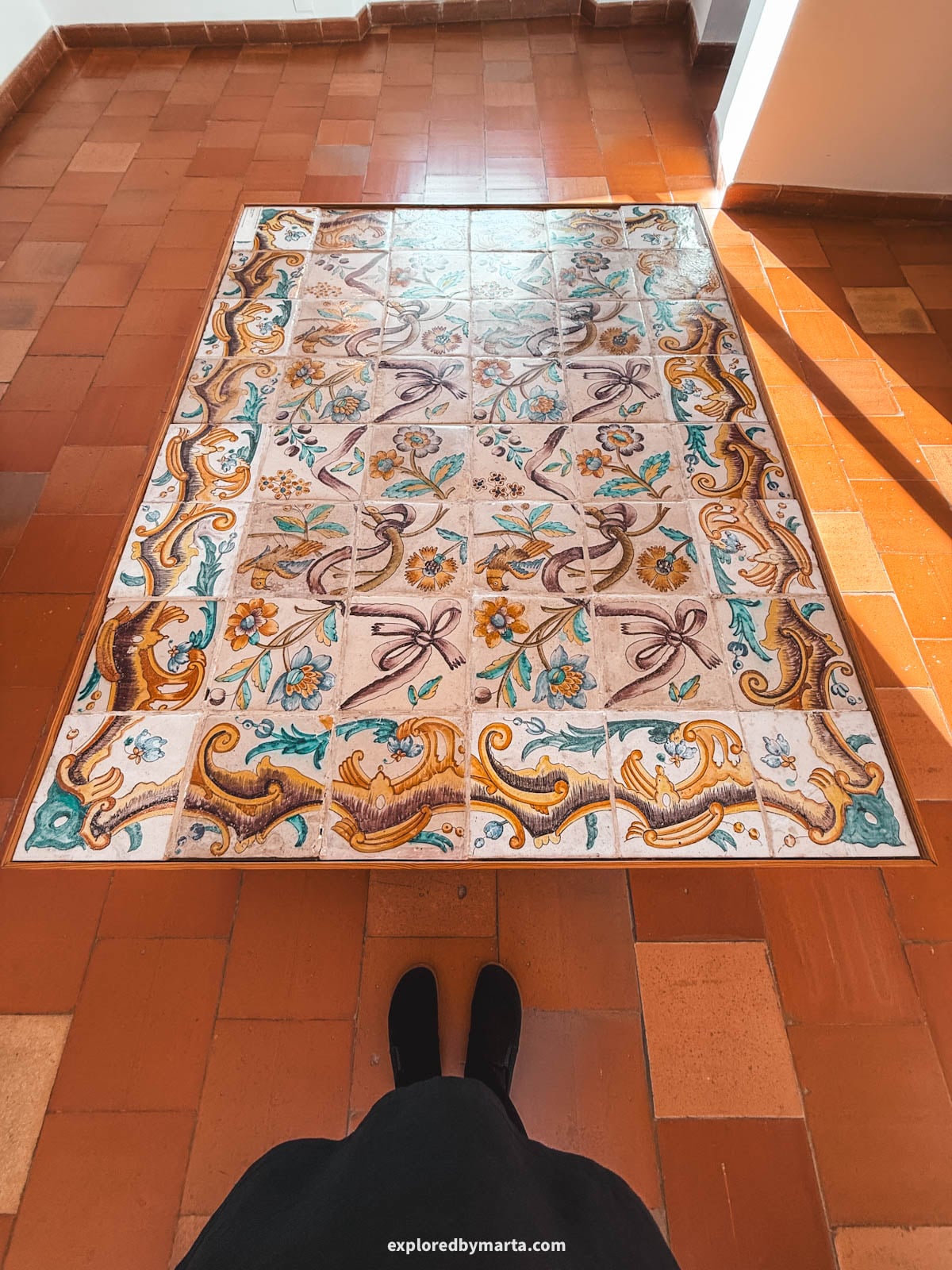
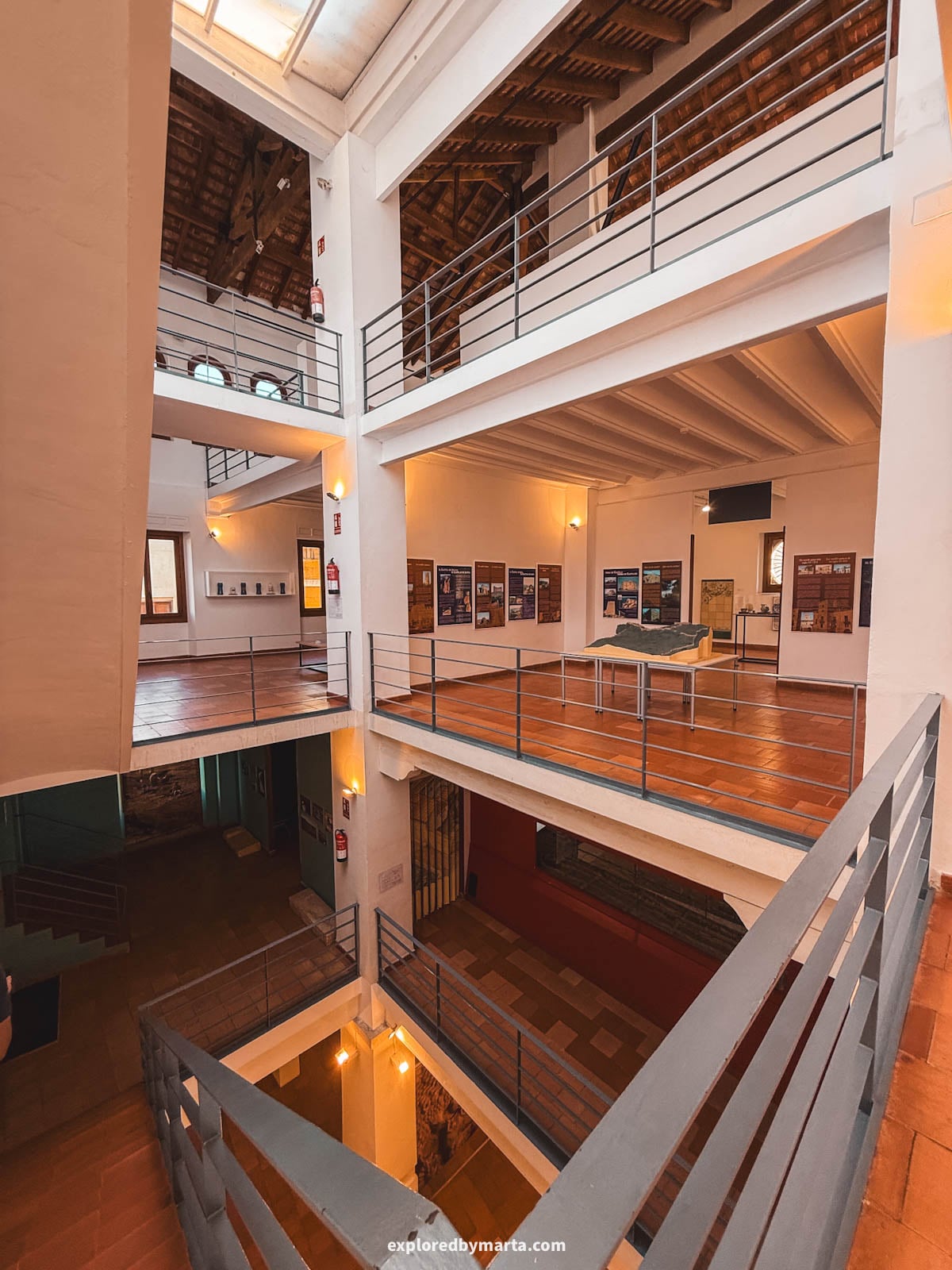
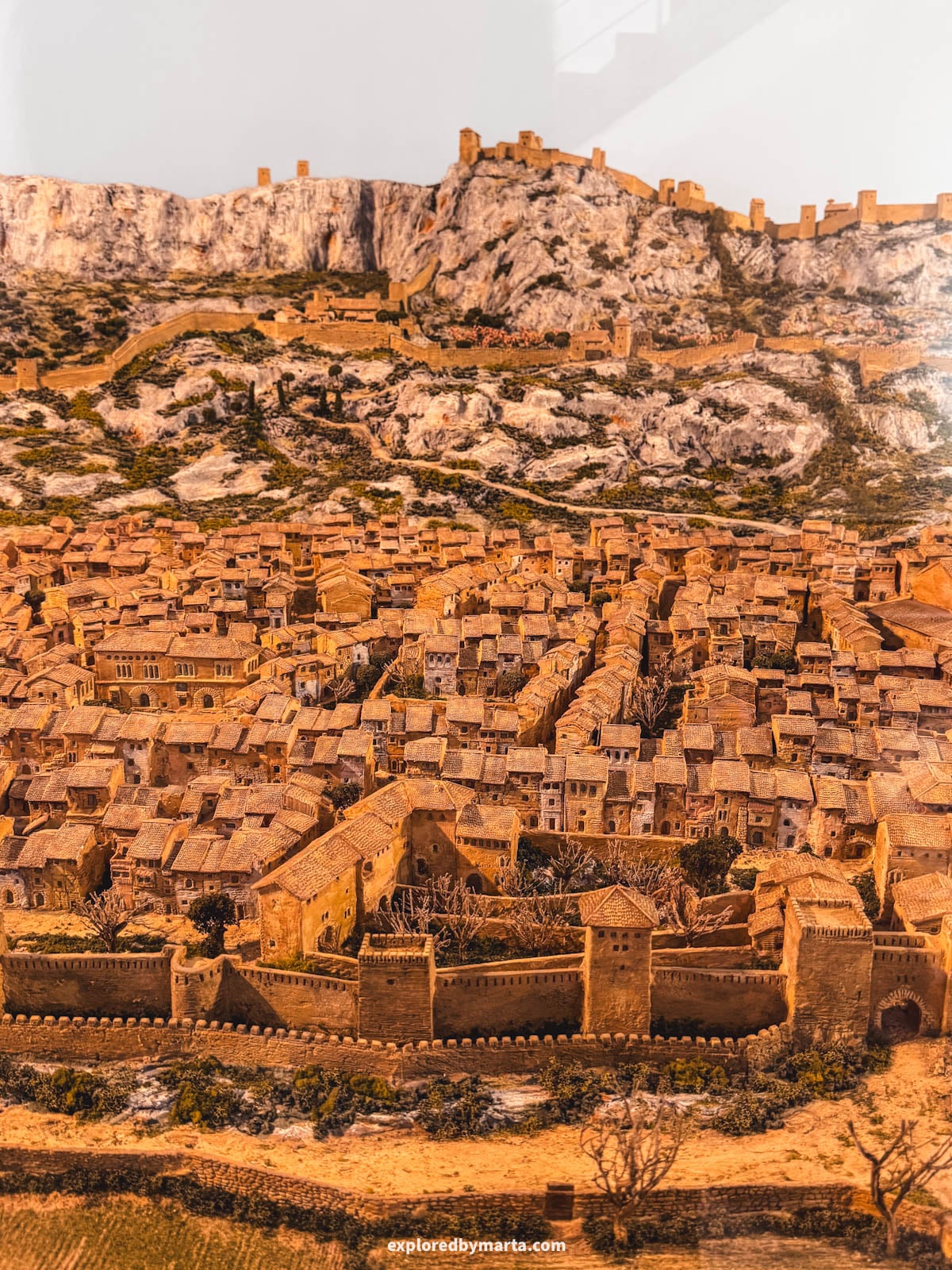
Today, the building has been turned into a small museum focused on the history of Xàtiva.
Each floor is dedicated to a different period, so as you move through the building, you get a simple walk-through of how the city developed over time.
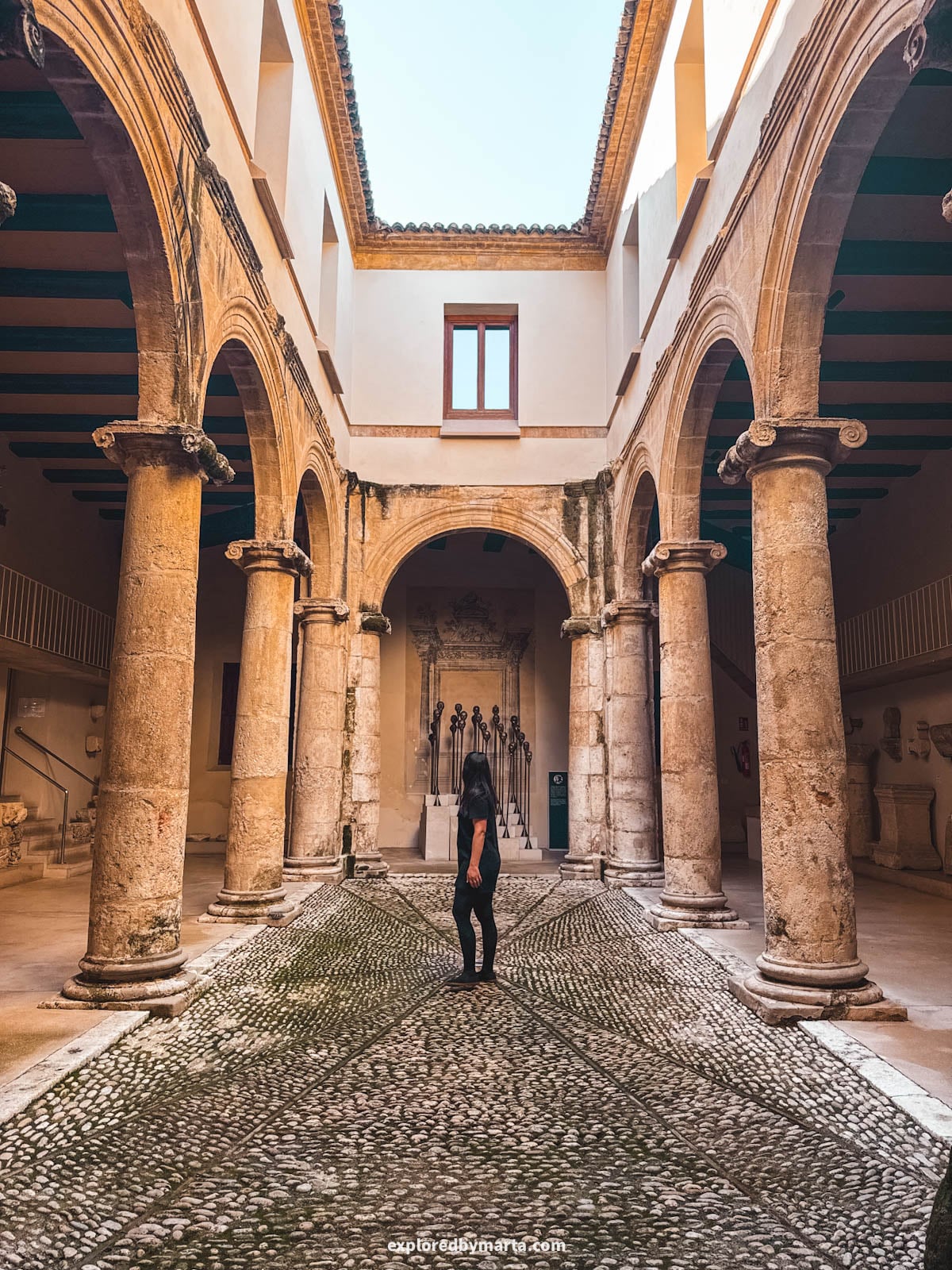
But honestly, what I enjoyed the most here was not even the exhibitions – it was the building itself. There’s a beautiful inner courtyard lined with stone arches and statues and covered with cobblestones.
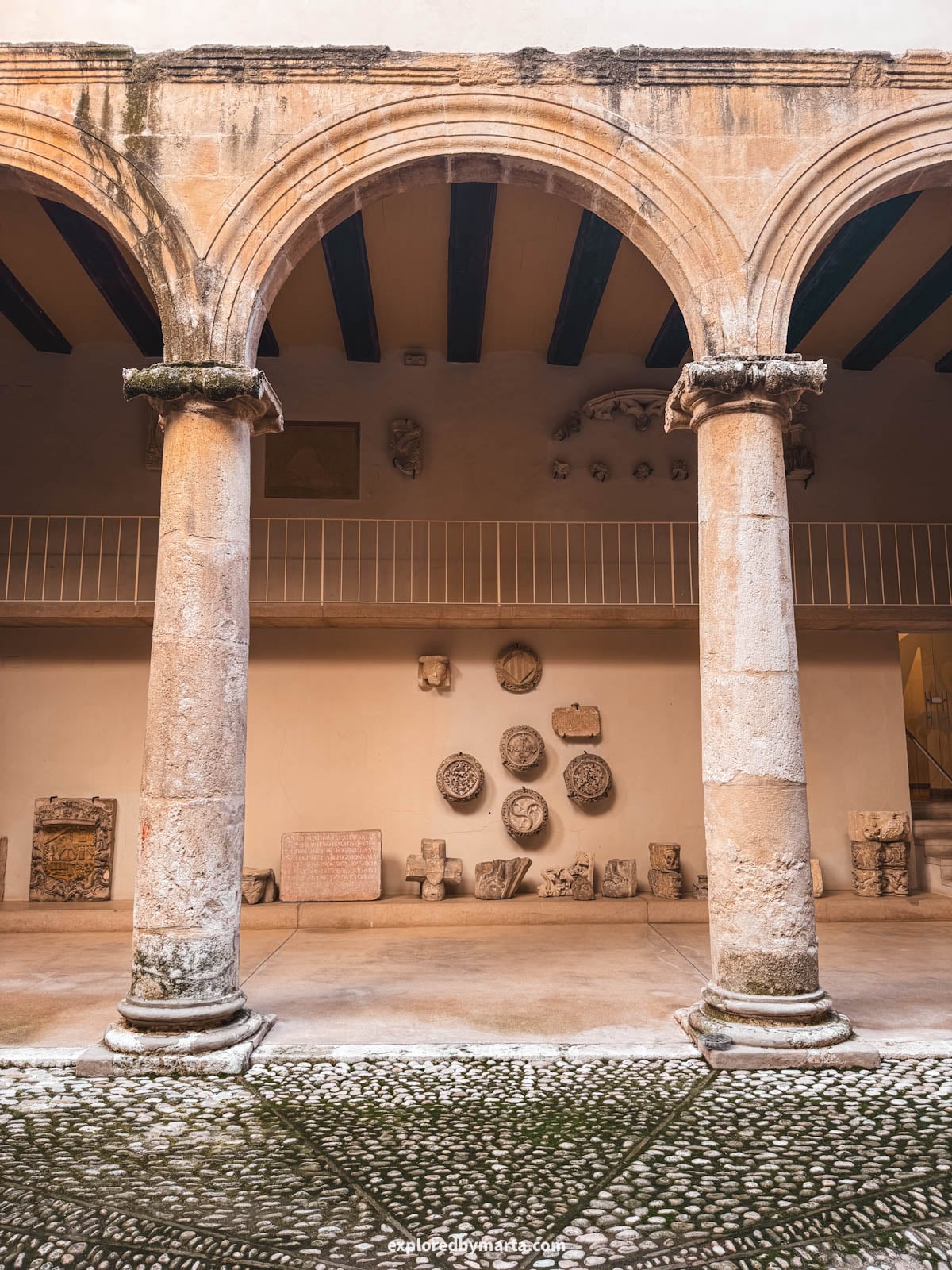
We were the only ones there, and it was such a cool atmosphere, like stepping back in time.
By the way, if you go to the museum and want to go straight to the beautiful courtyard, then stop. First, we explored the three floors inside the museum, and only at the end, a woman at the entrance guided us to the patio. It is next door!
The museum is not a must-see for everyone, but if you enjoy historic buildings or want a bit more context about Xàtiva beyond the main landmarks, it’s a nice place to include among the things to do in Xàtiva.
Plus, it is rather small, so we again only spent about 15 to 20 minutes here.
Location: Almudín de Xàtiva
9. Step inside Convent de Sant Domènec
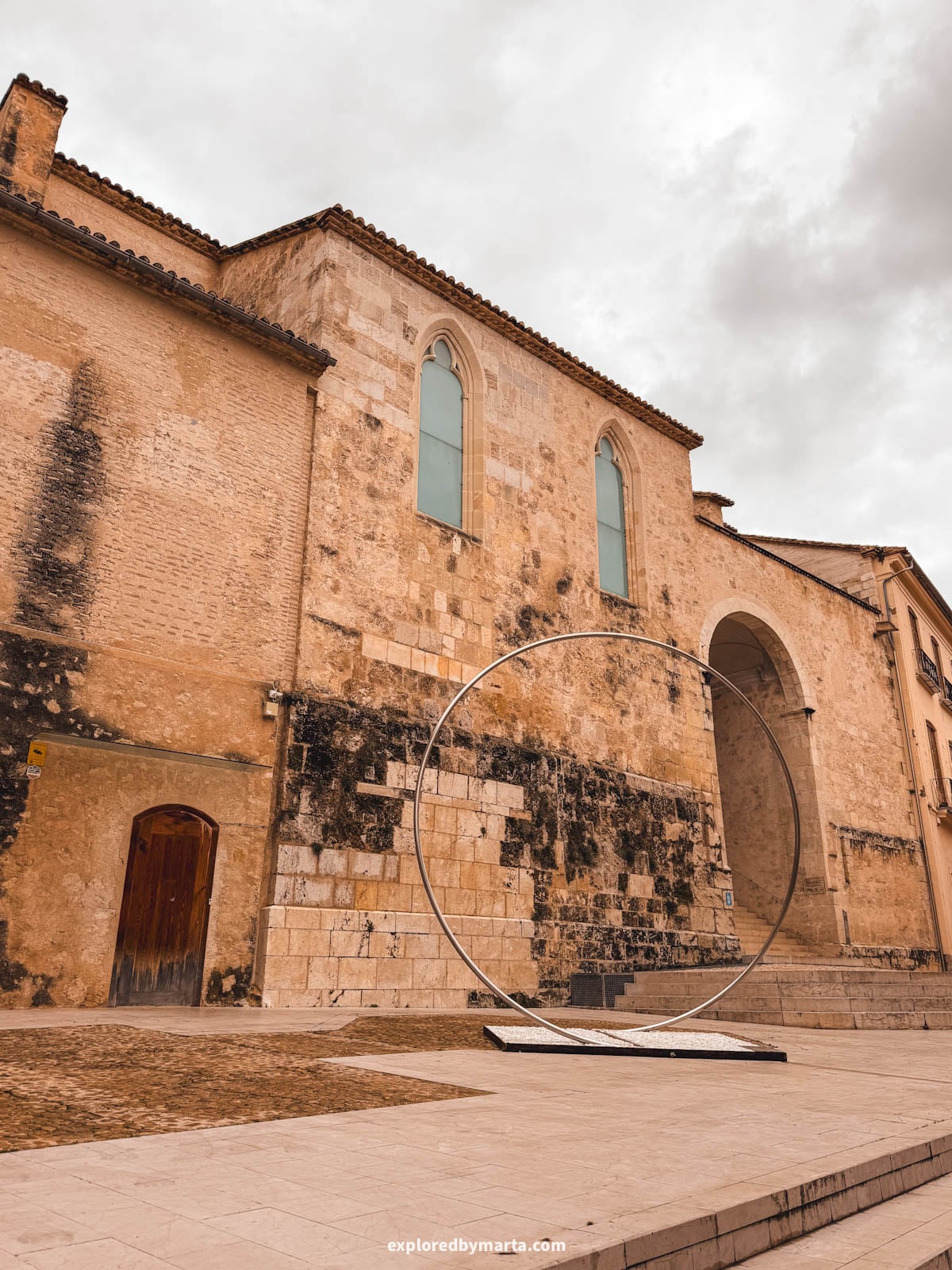
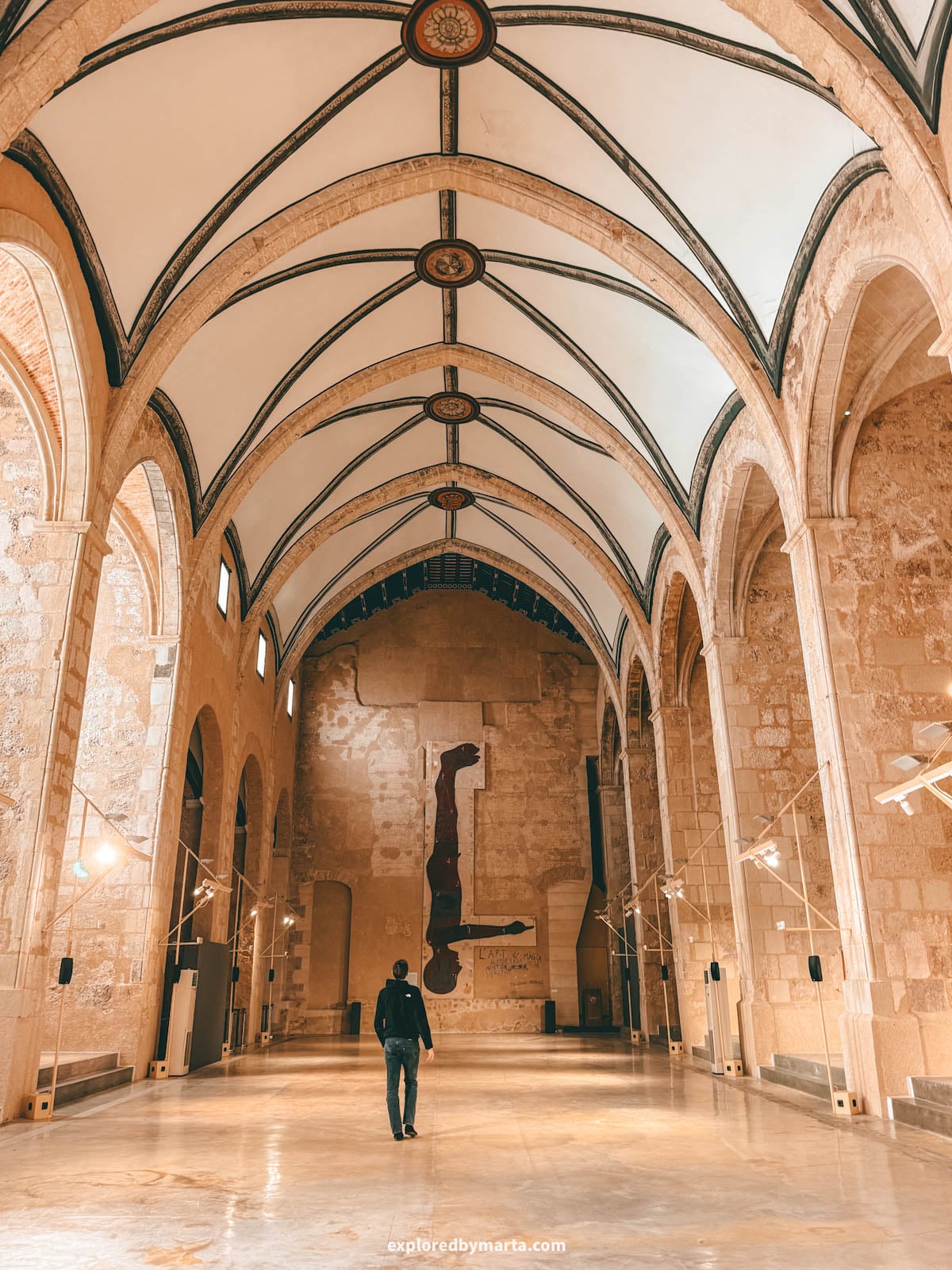
Near the basilica, we stumbled upon the Convent de Sant Domènec almost by accident – and it turned out to be a really interesting quick stop in Xàtiva.
The convent dates back to the 13th and 14th centuries and originally belonged to the Dominican order.
Like many places in Xàtiva, it has gone through different uses over time, but parts of the historic structure are still preserved today.
When we visited, the doors were wide open, so we just walked in – and it’s actually free to visit.
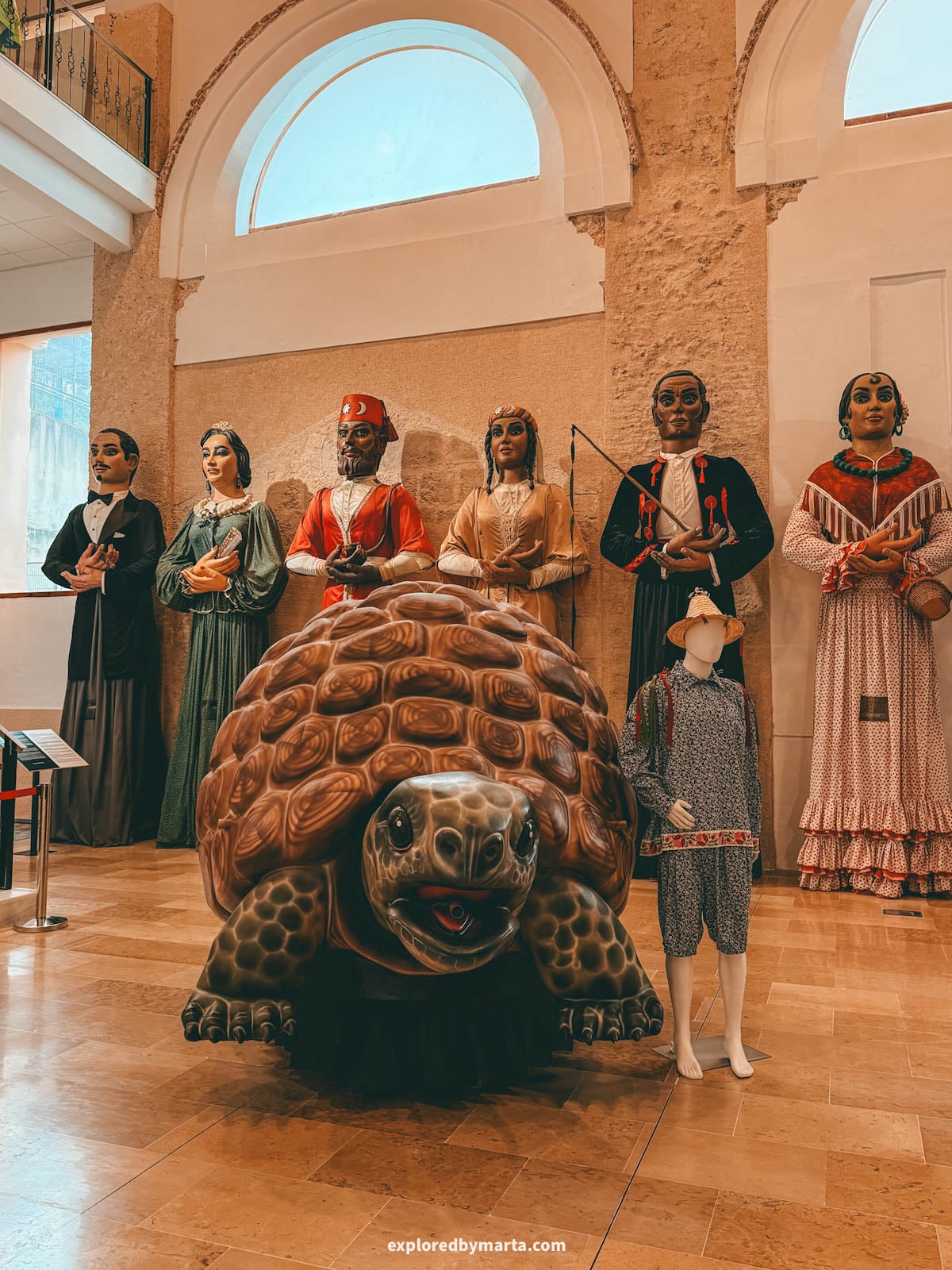
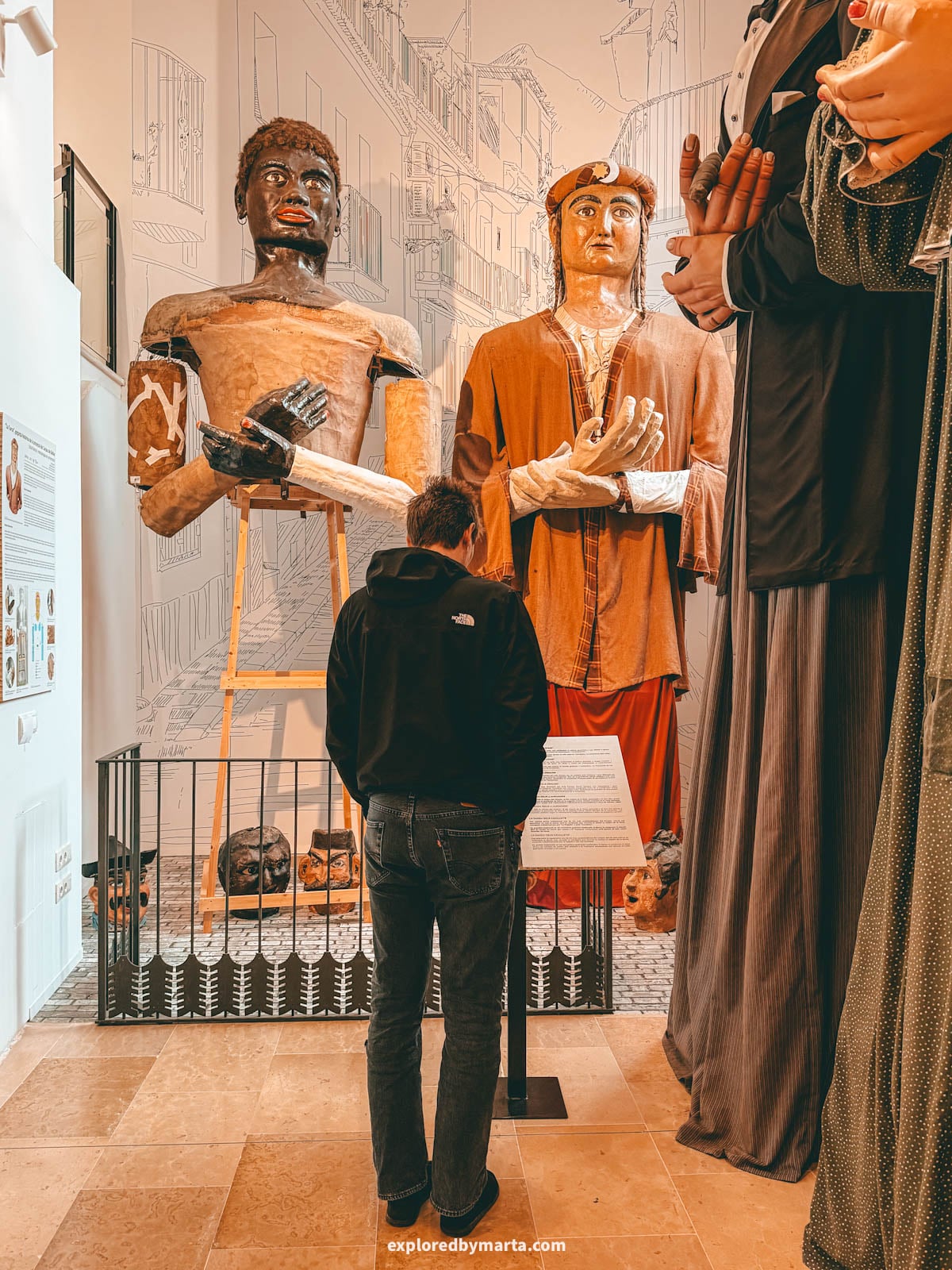
Inside, we found the giant figures used during the Corpus Christi celebrations – large, colorful festival dolls that are carried through the streets during local events. This is a great place to see them up close if you still haven’t.
We saw a collection of these dolls while exploring Valencia – there’s a whole museum full of Corpus Christi dolls, so this wasn’t new for us, but still interesting to see.
I’m not sure the dolls will always be there, but it seems to be a place where they host different exhibitions.
You won’t spend a lot of time in Convent de Sant Domènec, but it’s perfect for a quick 5 to 10-minute stop, especially since it’s right in the center of the old town and easy to visit as you explore around.
Location: Convent de Sant Domènec
10. Find the most beautiful fountains around Xàtiva
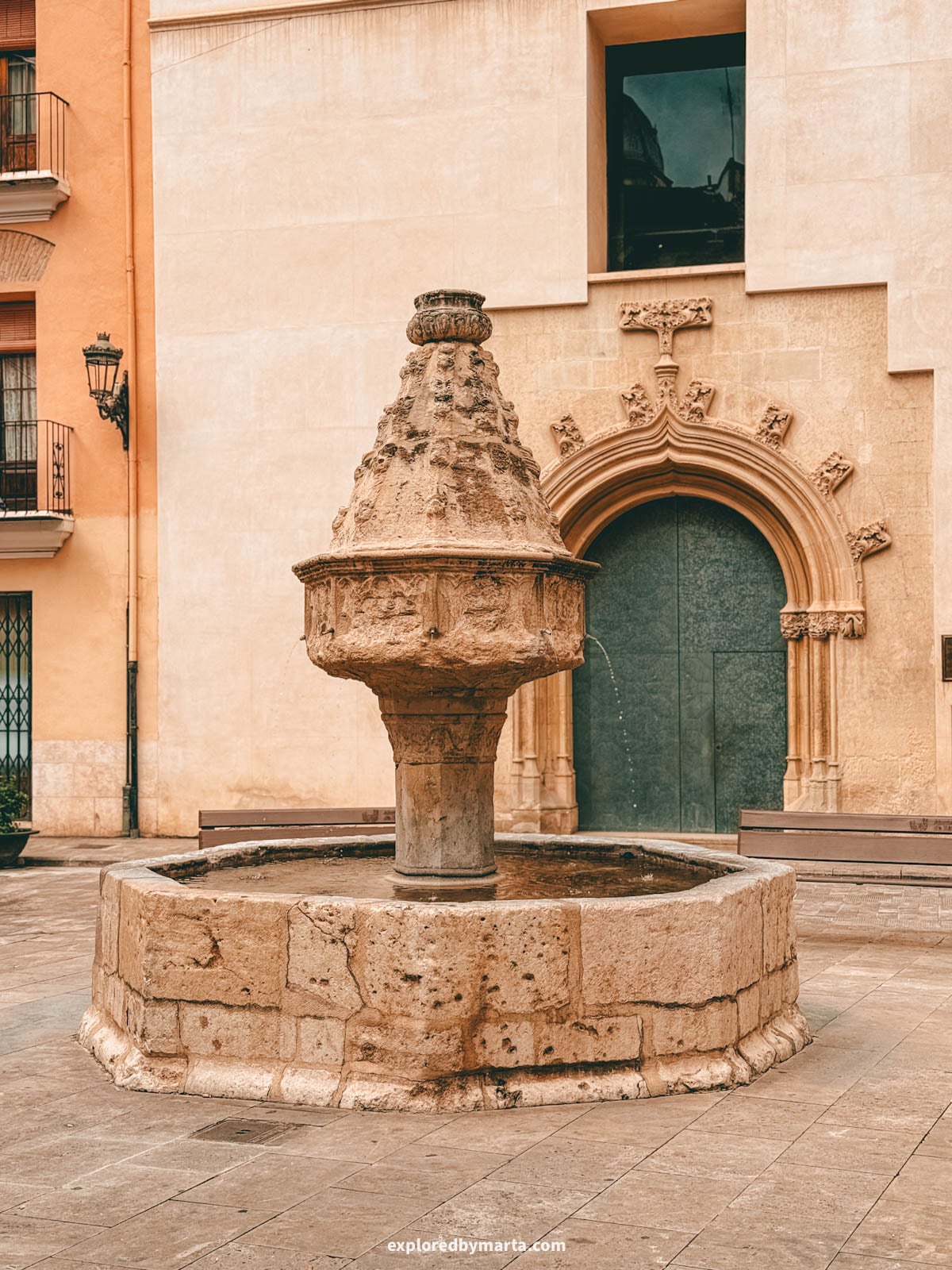
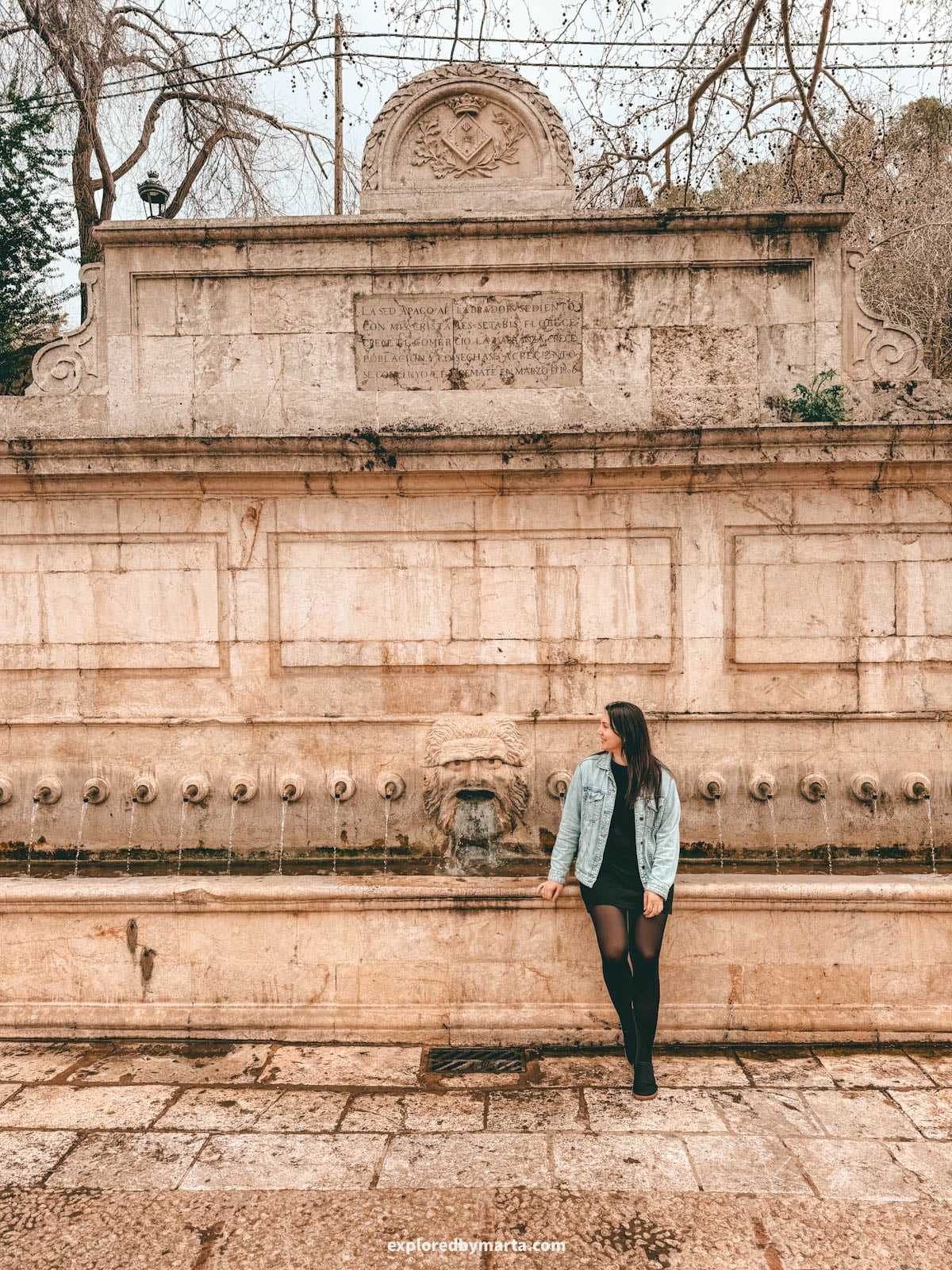
As you walk around the old town, keep an eye out for one of Xàtiva’s most underrated features – its historic fountains.
Did you know that Xàtiva is actually often referred to as “the city of a thousand fountains” (la ciutat de les mil fonts)?
Yep, it comes from the fact that the town historically had a very strong water system due to its natural springs, and once you start noticing them, you’ll see them everywhere!
Hunting down the most beautiful fountains was one of my favorite things to do in Xàtiva!
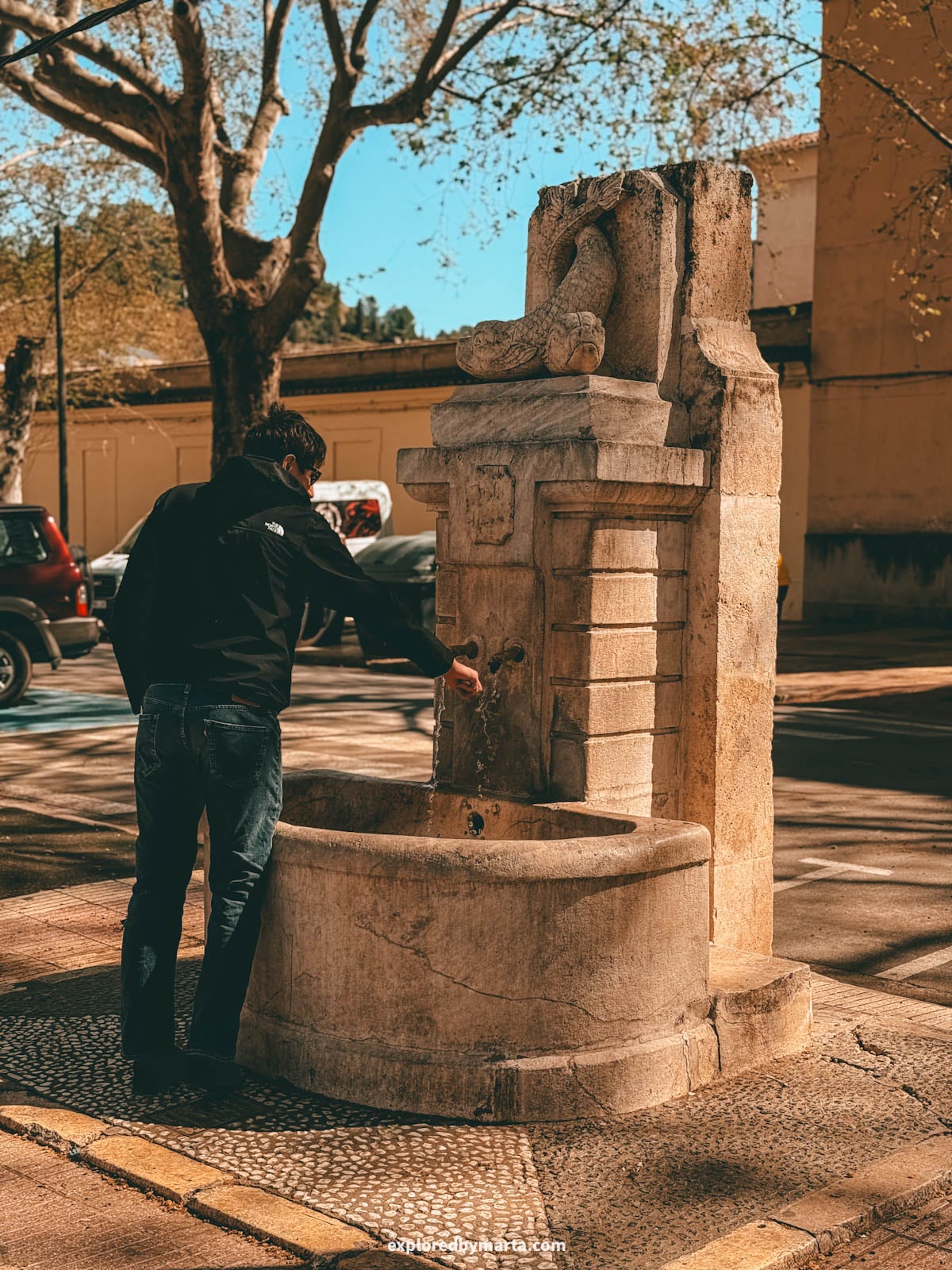
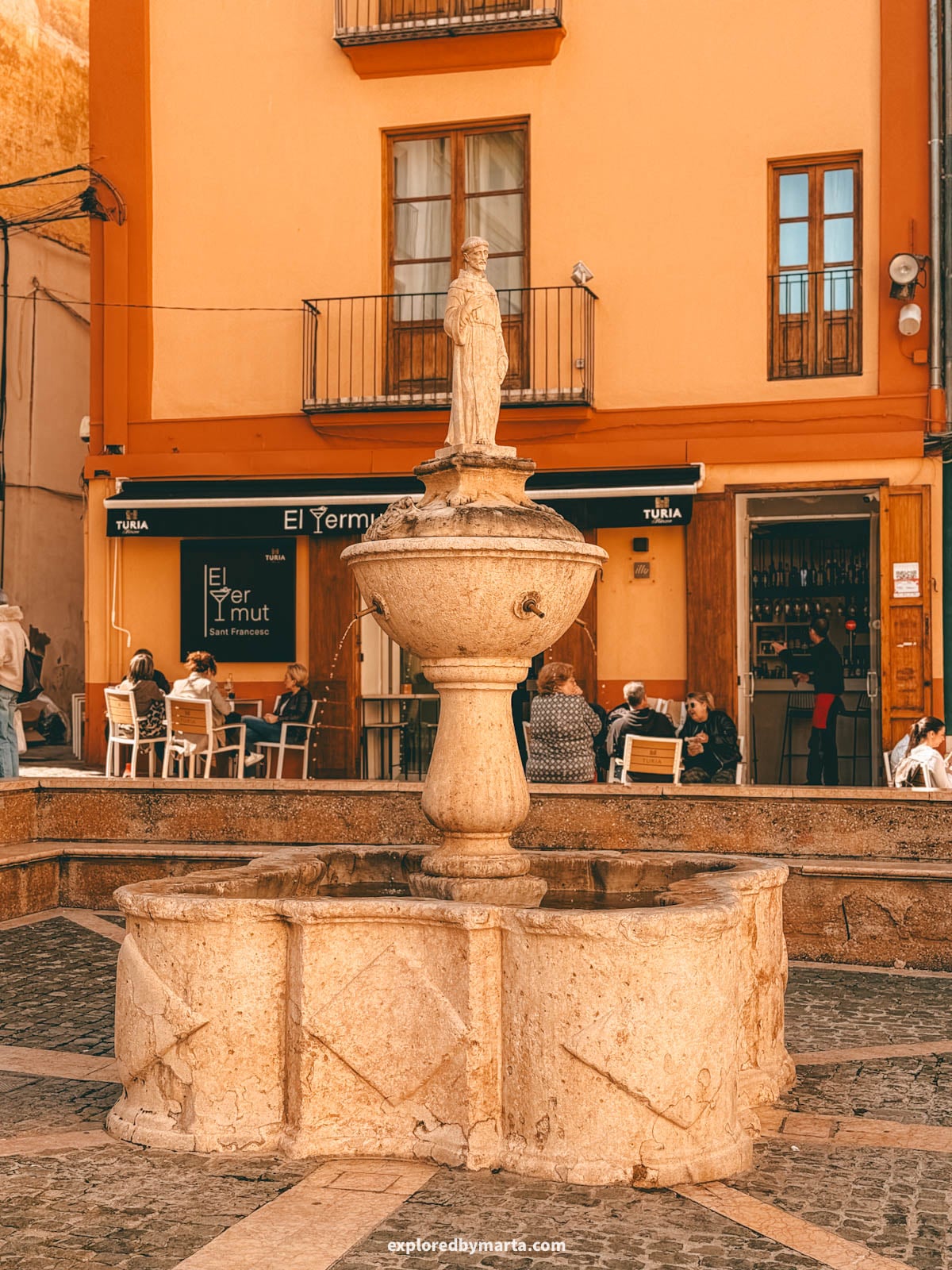
Many of these fountains date back centuries and were once essential for daily life. Today, they’re more of a decorative feature, but each one has its own design and character, which makes exploring them super fun to check out.
We made a bit of a game out of it and tried to find as many as we could.
Some of the ones we visited were Font Reial de Sant Francesc, Fuente del León, Fuente Real de la Trinidad (this one was my favorite!), the fountain right in front of Casa Natalícia d’Alexandre VI, as well as Font dels Vint-i-cinc Dolls and Font dels Peixos.
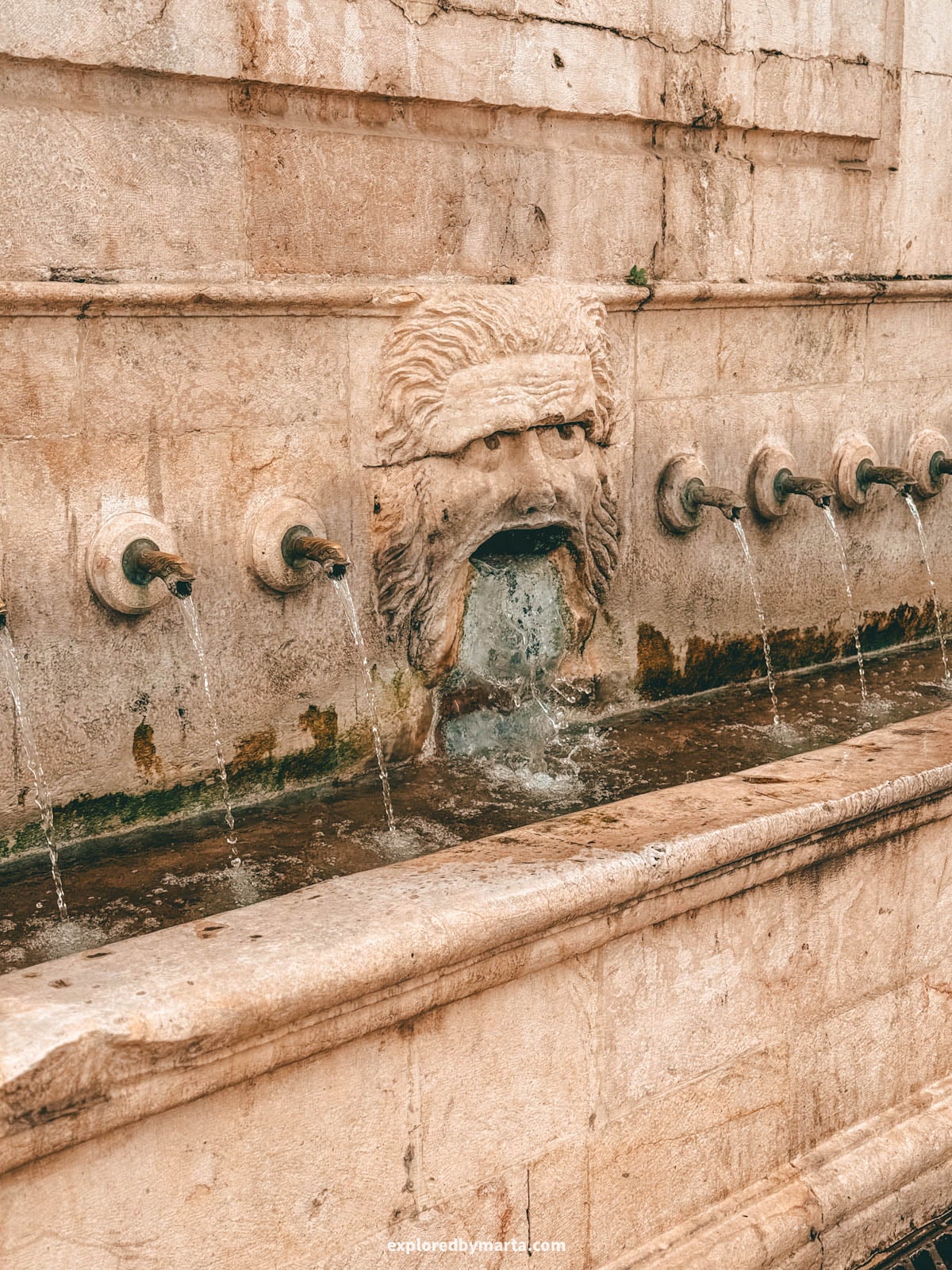
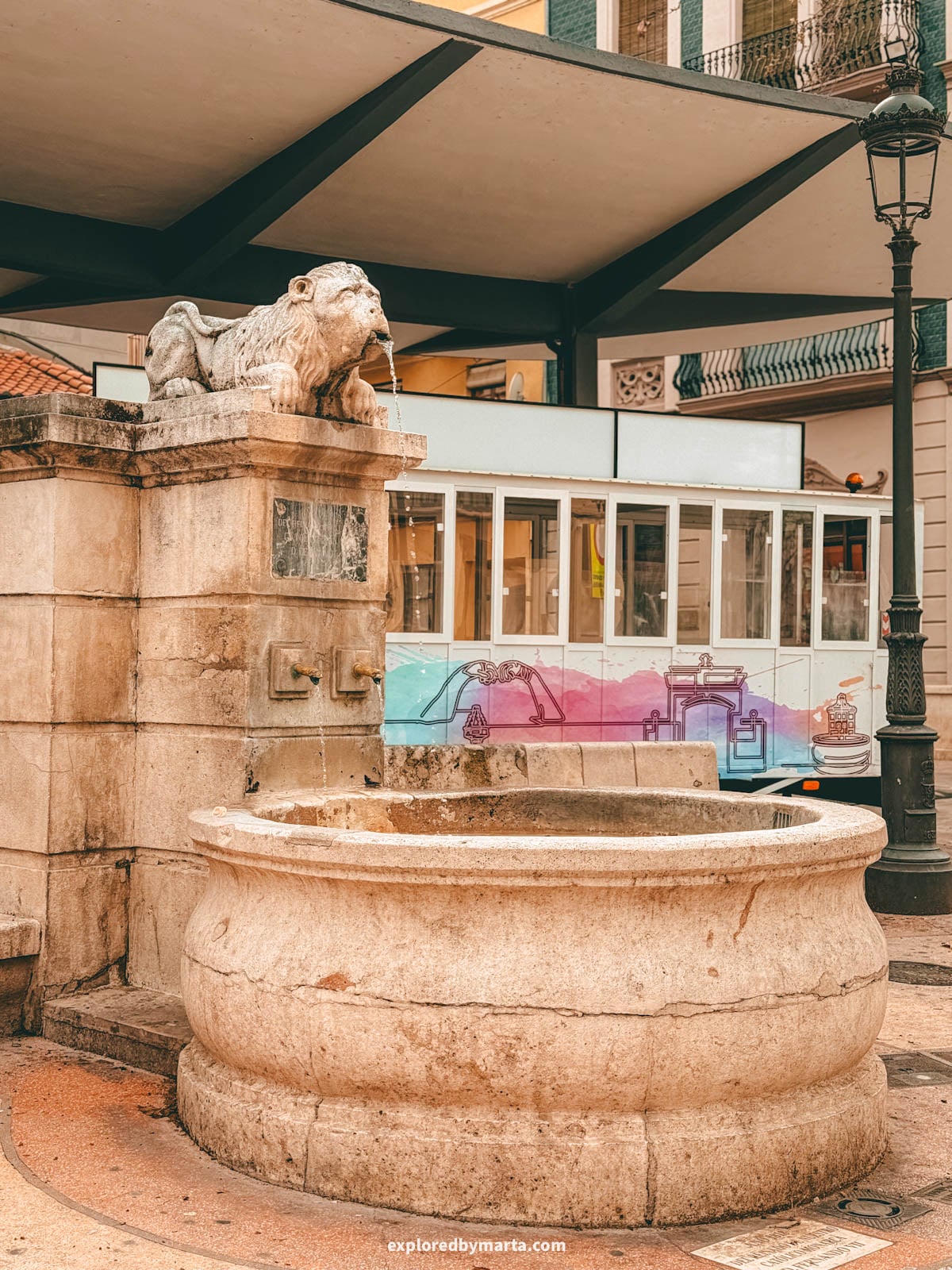
You can check them out in the photos, and I’ve added Google Maps locations for each of them below! I think I covered the most unique and beautiful ones in the town!
I really liked how each fountain looks completely different – some are simple, others are more decorative, but all have historical significance in Xàtiva.
If you’re exploring Xàtiva on foot, I definitely recommend keeping this in mind and turning it into a little challenge – try to spot as many of these historic fountains as you can. Let me know if you find a good one!
Location: Font Reial de Sant Francesc – Fuente del León – Fuente Real de la Trinidad – Casa Natalícia d’Alexandre VI – Font dels Vint-i-cinc Dolls – Font dels Peixos
FAQs about visiting Xàtiva
Is Xàtiva worth visiting?
Yes, Xàtiva is absolutely worth visiting! It’s one of the most historic towns in the Valencia Region, with an impressive hilltop castle, the grand Collegiate Basilica (La Seu), beautiful viewpoints, historic fountains, and great local food. It’s the birthplace of two Borgia popes and has a fascinating, layered history going back to Roman times.
How long do you need in Xàtiva?
For the main things to do in Xàtiva, it takes about half a day, but it’s easy to spend a full day if you want to explore the castle properly, climb the bell tower, try the local food, and wander the old town. We actually came back three times because there was so much to enjoy!
How do you get to the castle in Xàtiva?
You can reach Castell de Xàtiva in a few ways: drive up the winding road and park near the entrance, take the tourist train that runs from the old town, or hike up on foot (it takes about 25 minutes from the centre). The castle is a big complex, so give yourself at least 1.5 hours to explore it.
What food is Xàtiva known for?
Xàtiva is known for arroz al horno, a hearty baked rice dish cooked in a clay pot with pork, chickpeas, potato, and blood sausage. It’s quite different from paella and very filling. For dessert, try Monjavina, a sweet pastry dating back to Arab times, topped with sugar, oil, and cinnamon.
Why is the portrait of King Philip V hung upside down in Xàtiva?
After the War of the Spanish Succession, King Philip V ordered Xàtiva to be burned down and even had the town renamed. Locals never forgave him, so his portrait still hangs upside down as a symbol of protest in the Museu de Belles Arts (the Fine Arts Museum). You can visit it for free with a castle ticket.
Is Xàtiva a good day trip from Valencia?
Yes! Xàtiva makes an excellent day trip from Valencia, easily reachable by car or train in under an hour. With its castle, historic old town, viewpoints, and local food, it’s one of the best day trips in the Valencia Region for history and culture lovers.
Read more about traveling in the Valencia Region
Xàtiva turned out to be so much more than just its famous castle. The deeper we explored, the more we found. Maybe that’s why we came back to Xàtiva again and again.
From the hilltop Castell de Xàtiva and the winding streets of the old town to the Collegiate Basilica, Plaça del Mercat, fountains, and viewpoints, there’s a really nice mix of history, local life, and great views all around the city.
I hope this travel guide helps you plan your visit and gives you a good feel for what Xàtiva is like beyond just the main sights. It’s definitely one of those places that’s worth slowing down for if you’re exploring inland Valencia.
More travel guides to the Valencia Region:
- Eagle’s Nest Guadalest: 12 things to do in Guadalest, Spain
- Beautiful Bocairent: 10 top things to do in Bocairent, Spain
- Visiting Vilafamés: 10 things to do in Vilafamés, Spain
PIN FOR LATER!